A bill to provide for the relief of the parents of Theresa Marie Schiavo.
Legislative Activity
Stay on top of the latest movement without scrolling through every action
Became Public Law No: 109-3.
March 21, 2005
View full timeline
Introduced in Senate
March 20, 2005
Introduced in the Senate, read twice, considered, read the third time, and passed without amendment by Voice Vote. (consideration: CR S3099-3103; text as passed Senate: CR S3103; text of measure as introduced: CR S3105)
March 20, 2005
Message on Senate action sent to the House.
March 20, 2005
Received in the House.
March 20, 2005 • 9:02 PM
Held at the desk.
March 20, 2005 • 9:02 PM
Mr. Sensenbrenner moved to suspend the rules and pass the bill.
March 20, 2005 • 9:02 PM
Considered under suspension of the rules. (consideration: CR H1700-1723, CR 3/21/2005 H1723-1728)
March 20, 2005 • 9:03 PM
DEBATE - Pursuant to a previous special order, the House proceeded with 3 hours of debate on the motion to suspend the rules and pass S. 686.
March 20, 2005 • 9:03 PM
Passed/agreed to in House: On motion to suspend the rules and pass the bill Agreed to by the Yeas and Nays: (2/3 required): 203 - 58 (Roll no. 90).(text: CR 3/20/2005 H1700-1701)
March 21, 2005 • 12:41 AM
On motion to suspend the rules and pass the bill Agreed to by the Yeas and Nays: (2/3 required): 203 - 58 (Roll no. 90). (text: CR 3/20/2005 H1700-1701)
March 21, 2005 • 12:41 AM
Motion to reconsider laid on the table Agreed to without objection.
March 21, 2005 • 12:41 AM
Rules Committee Resolution H. Res. 182 Reported to House. Rule provides for consideration of S. 686 with 10 minutes of general debate. Previous question shall be considered as ordered without intervening motions except motion to recommit with or without instructions. Measure will be considered read. Bill is closed to amendments.
March 21, 2005 • 12:45 AM
Cleared for White House.
March 21, 2005
Presented to President.
March 21, 2005
Signed by President.
March 21, 2005
Became Public Law No: 109-3.
March 21, 2005
Voting History
1 vote recorded • Roll call available
Floor Debate
24 membersWhat members said about S. 686 on the floor
 DWS
DWS FJS
FJS RCB
RCB BF
BF SHH+19
Floor Debate
24 membersWhat members said about S. 686 on the floor
Mr. Speaker, I thank the gentleman from Massachusetts (Mr. Frank) for yielding me time. There are a number of things that I would like to correct for the record before I begin. I apologize for not…
Mr. Speaker, I thank the gentleman from Massachusetts (Mr. Frank) for yielding me time.
There are a number of things that I would like to correct for the record before I begin. I apologize for not knowing the State that the gentleman is from, but the representation regarding the care of Theresa Schiavo by her husband as represented in the Chamber is totally inaccurate. Theresa's husband, and I am quoting from the guardian ad litem report, the independent guardian ad litem report that was required by Florida law during the special session in October of 2003, it says: ``Theresa's husband, Michael Schiavo, and her mother, Mary Schindler, were virtually partners in their care of and dedication to Theresa. There is no question but that complete trust, mutual caring, explicit love, and a common goal of caring for and rehabilitating Theresa were the shared intentions of Michael Schiavo and the Schindlers. Despite aggressive therapies, physician and other clinical assessments consistently revealed no functional abilities, only reflexive rather than cognitive moments, random eye opening, no communication system, and little change cognitively or functionally.''
And the gentleman referenced the percentage of the medical malpractice damage award being $486,000 going to attorneys' fees and to helping her reach her demise. That is also totally inaccurate. Also quoting from the guardian ad litem report: There was a medical malpractice case filed and pursued. Michael Schiavo and Terri Schiavo were awarded $750,000 in economic damages. The economic damages were put into a trust that was meticulously cared for according to the guardian ad litem and which was managed by South Trust Bank as the guardian and independent trustee. This fund was accounted for and Michael Schiavo had absolutely no control over its use. Michael Schiavo was awarded $300,000 for loss of consortium damages.
That is money that was awarded to him. There is not very much of that left. And there is no truth to the accusation that he would benefit financially from that damage award and there certainly was not $2 million in damages awarded.
Mr. Speaker, I submit for the Record the report of the guardian ad litem.
[Dec. 1, 2003]
A Report to Governor Jeb Bush and the 6th Judicial Circuit in the
Matter of Theresa Marie Schiavo
(Submitted by Jay Wolfson, DrPH, JD, Guardian Ad Litem for Theresa
Marie Schiavo)
Theresa Marie Schiavo was born in the Philadelphia,
Pennsylvania area on 3 December 1963 to Robert and Mary
Schindler. She has two younger siblings, Robert Jr., and
Susan. Through the age of 18, Theresa was, according to her
parents, very overweight, until she chose to lose weight with
the guidance of a physician. She dropped from 250 pounds to
around 150 pounds, at which time she met Michael Schiavo.
They dated for many months and married in November of 1984.
The Schiavo and Schindler families were close and friendly.
Theresa and Michael moved to Florida in 1986 and were
followed shortly thereafter by Theresa's parents and
siblings. Theresa worked for the Prudential Life Insurance
Company and Michael was a restaurant manager.
About three years later, without the apparent knowledge of
her parents, Theresa and Michael sought assistance in
becoming pregnant through an obstetrician who specialized in
fertility services. For over a year, Theresa and Michael
received fertility services and counseling in order to
enhance their strongly held desire to have a child. By this
time, Theresa's weight had dropped even further, to 110
pounds. She was very proud of her fabulous figure and her
stunning appearance, wearing bikini bathing suits for the
first time and taking great pride in her improved good looks.
Testimony and photographs bare witness to these facts.
On the tragic early morning of 25 February 1990, Theresa
collapsed in the hallway of her apartment, waking Michael,
who called Theresa's family and 911. The lives of Theresa,
Michael and the Schindlers were to change forever.
Theresa suffered a cardiac arrest. During the several
minutes it took for paramedics to arrive, Theresa experienced
loss of oxygen to the brain, or anoxia, for a period
sufficiently long to cause permanent loss of brain function.
Despite heroic efforts to resuscitate, Theresa remained
unconscious and slipped into a coma. She was intubated,
ventilated and trached, meaning that she was given life
saving medical technological interventions, without which she
surely would have died that day.
The cause of the cardiac arrest was adduced to a
dramatically reduced potassium level in Theresa's body.
Sodium and potassium maintain a vital, chemical balance in
the human body that helps define the electrolyte levels. The
cause of the imbalance was not clearly identified, but may be
linked, in theory, to her drinking 10-15 glasses of iced tea
each day. While no formal proof emerged, the medical records
note that the combination of aggressive weight loss, diet
control and excessive hydration raised questions about
Theresa suffering from bulimia, an eating disorder, more
common among women than men, in which purging through
vomiting, laxatives and other methods of diet control becomes
obsessive.
Theresa spent two and a half months as an inpatient at
Humana Northside Hospital, eventually emerging from her coma
state, but not recovering consciousness. On 12 May 1990,
following extensive testing, therapy and observation, she was
discharged to the College Park skilled care and
rehabilitation facility. Forty-nine days later, she was
transferred again to Bayfront Hospital for additional,
aggressive rehabilitation efforts. In September of 1990, she
was brought home, but following only three weeks, she was
returned to the College Park facility because the ``family
was overwhelmed by Terry's care needs.''
On 18 June 1990, Michael was formally appointed by the
court to serve as Theresa's legal guardian, because she was
adjudicated to be incompetent by law. Michael's appointment
was undisputed by the parties.
The clinical records within the massive case file indicate
that Theresa was not responsive to neurological and
swallowing tests. She received regular and intense physical,
occupational and speech therapies.
Theresa's husband, Michael Schiavo and her mother, Mary
Schindler, were virtual partners in their care of and
dedication to Theresa. There is no question but that complete
trust, mutual caring, explicit love and a common goal of
caring for and rehabilitating Theresa, were the shared
intentions of Michael Schiavo and the Schindlers. In late
Autumn of 1990, following months of therapy and testing,
formal diagnoses of persistent vegetative state with no
evidence of improvement, Michael took Theresa to California,
where she received an experimental thalamic stimulator
implant in her brain. Michael remained in California caring
for Theresa during a period of several months and returned to
Florida with her in January of 1991. Theresa was transferred
to the Mediplex Rehabilitation Center in Brandon, where she
received 24-hour skilled care, physical, occupational, speech
and recreational therapies.
Despite aggressive therapies, physician and other clinical
assessments consistently revealed no functional abilities,
only reflexive, rather than cognitive movements, random eye
opening, no communication system and little change
cognitively or functionally. On 19 July 1991 Theresa was
transferred to the Sable Palms skilled care facility.
Periodic neurological exams, regular and aggressive physical,
occupational and speech therapy continued through 1994.
Michael Schiavo, on Theresa's and his own behalf, initiated
a medical malpractice lawsuit against the obstetrician who
had been overseeing Theresa's fertility therapy. In 1993, the
malpractice action concluded in Theresa and Michael's favor,
resulting in a
two element award: More than $750,000 in economic damages for
Theresa, and a loss of consortium award (non economic
damages) of $300,000 to Michael. The court established a
trust fund for Theresa's financial award, with South Trust
Bank as the Guardian and an independent trustee. This fund
was meticulously managed and accounted for and Michael
Schiavo had no control over its use. There is no evidence
in the record of the trust administration documents of any
mismanagement of Theresa's estate, and the records on this
matter are excellently maintained.
After the malpractice case judgment, evidence of
disaffection between the Schindlers and Michael Schiavo
openly emerged for the first time. The Schindlers petitioned
the court to remove Michael as Guardian. They made
allegations that he was not caring for Theresa, and that his
behavior was disruptive to Theresa's treatment and condition.
Proceedings concluded that there was no basis for the removal
of Michael as Guardian Further, it was determined that he had
been very aggressive and attentive in his care of Theresa.
His demanding concern for her well being and meticulous care
by the nursing home earned him the characterization by the
administrator as ``a nursing home administrator's
nightmare''. It is notable that through more than thirteen
years after Theresa's collapse, she has never had a bedsore.
By 1994, Michael's attitude and perspective about Theresa's
condition changed. During the previous four years, he had
insistently held to the premise that Theresa could recover
and the evidence is incontrovertible that he gave his heart
and soul to her treatment and care. This was in the face of
consistent medical reports indicating that there was little
or no likelihood for her improvement.
In early 1994 Theresa contracted a urinary tract infection
and Michael, in consultation with Theresa's treating
physician, elected not to treat the infection and
simultaneously imposed a ``do not resuscitate'' order should
Theresa experience cardiac arrest. When the nursing facility
initiated an intervention to challenge this decision, Michael
canceled the orders. Following the incident involving the
infection, Theresa was transferred to another skilled nursing
facility.
Michael's decision not to treat was based upon discussions
and consultation with Theresa's doctor, and was predicated on
his reasoned belief that there was no longer any hope for
Theresa's recovery. It had taken Michael more than three
years to accommodate this reality and he was beginning to
accept the idea of allowing Theresa to die naturally rather
than remain in the non-cognitive, vegetative state. It took
Michael a long time to consider the prospect of getting on
with his life--something he was actively encouraged to do by
the Schindlers, long before enmity tore them apart. He was
even encouraged by the Schindlers to date, and introduced his
in-law family to women he was dating. But this was just prior
to the malpractice case ending.
As part of the first challenge to Michael's Guardianship,
the court appointed John H. Pecarek as Guardian Ad Litem to
determine if there had been any abuse by Michael Schiavo. His
report, issued 1 March 1994, found no inappropriate actions
and indicated that Michael had been very attentive to
Theresa. After two more years of legal contention, the
Schindlers action against Michael was dismissed with
prejudice. Efforts to remove Michael as Guardian were
attempted in subsequent years, without success.
Hostilities increased and the Schindlers and Michael
Schiavo did not communicate directly. By June of 1996, the
court had to order that copies of medical reports be shared
with the Schindlers and that all health care providers be
permitted to discuss Theresa's condition with the
Schindlers--something Michael had temporarily precluded.
In 1997, six years after Theresa's tragic collapse, Michael
elected to initiate an action to withdraw artificial life
support from Theresa. More than a year later, in May of 1998,
the first petition to discontinue life support was entered.
The court appointed Richard Pearse, Esq., to serve as
Guardian Ad Litem to review the request for withdrawal, a
standard procedure.
Mr. Pearse's report, submitted to the court on 20 December
1998 contains what appear to be objective and challenging
findings. His review of the clinical record confirmed that
Theresa's condition was that of a diagnosed persistent
vegetative state with no chance of improvement. Mr. Pearse's
investigation concluded that the statements of Mrs.
Schindler, Theresa's mother, indicated that Theresa displayed
special responses, mostly to her, but that these were not
observed or documented.
Mr. Pearse documents the evolving disaffections between the
Schindlers and Michael Schiavo. He concludes that Michael
Schiavo's testimony regarding the basis for his decision to
withdraw life support--a conversation he had with his wife,
Theresa, was not clear and convincing, and that potential
conflicts of interest regarding the disposition of residual
funds in Theresa's trust account following her death affected
Michael and the Schindlers--but he placed greater emphasis on
the impact it might have had on Michael's decision to
discontinue artificial life support. At the time of Mr.
Pearse's report, more than $700,000 remained in the
guardianship estate.
Mr. Pearse concludes that Michael's hearsay testimony about
Theresa's intent is ``necessarily adversely affected by the
obvious financial benefit to him of being the sole heir at
law . . .'' and ``. . . by the chronology of this case . .
.'', specifically referencing Michael's change in position
relative to maintaining Theresa following the malpractice
award.
Mr. Pearse recommended that the petition for removal of the
feeding tube be denied, or in the alternative, if the court
found the evidence to be clear and convincing, the feeding
tube should be withdrawn.
Mr. Pearse also recommended that a Guardian Ad Litem
continue to serve in all subsequent proceedings.
In response to Mr. Pearse's report, Michael Schiavo filed a
Suggestion of Bias against Mr. Pearse. This document notes
that Mr. Pearse failed to mention in his report that Michael
Schiavo had earlier, formally offered to divest himself
entirely of his financial interest in the guardianship
estate. The criticism continues to note that Mr. Pearse's
concern about abuse of inheritance potential was directly
solely at Michael, not at the Schindlers in the event they
might become the heirs and also choose to terminate
artificial life support. Further, significant chronological
deficits and factual errors are noted, detracting from and
prejudicing the objective credibility of Mr. Pearse's
report.
The Suggestion of Bias challenges premises and findings of
Mr. Pearse, establishing a well pleaded case for bias. In
February of 1999, Mr. Pearse tendered his petition for
additional authority or discharge. He was discharged in June
of 1999 and no new Guardian Ad Litem was named.
Actions by the Schindlers to remove Michael as Guardian and
to block the petition to remove artificial life support took
on a frenetic quality at this juncture. More external parties
on both sides made appearances as potential interveners.
On 11 February 2000, consequent to hearings and the
presentation of competent evidence, Judge Greer ordered the
removal of Theresa's artificial life support. The Schindlers
aggressively sought means by which to stop the removal of
Theresa's feeding tube. Most of the motions in these efforts
were denied, but not without apparent careful and detailed
review by the court, often involving hearings at which
considerable latitude was afforded the Schindlers in their
efforts to proffer testimony and admit evidence.
The motion and hearing process continued through 2000. Then
the Schindlers sought to introduce new evidence that was
believed to be of a sufficiently substantial nature as to
change the court's decision regarding the removal of the
feeding tube. The hearings and testimony before the trial
court leading to the decision to discontinue artificial life
support included admitted hearsay from Theresa's brother-in-
law (Michael Schiavo's brother) and his wife (Michael
Schiavo's sister-in-law) along with testimony from Michael.
The testimony of these parties referenced specific
conversations in which Theresa commented about her desire
never to be placed on artificial life support. The testimony
reflected conversations at or proximate to funerals of close
family members who had been on artificial life support. The
context and content of the testimony, while hearsay, was
deemed credible and consistent and was used by the court as a
supporting basis for its decision to discontinue artificial
life support.
The Schindlers' new evidence ostensibly reflected adversely
on Michael Schiavo's role as Guardian. It related to his
personal romantic life, the fact that he had relationships
with other women, that he had allegedly failed to provide
appropriate care and treatment for Theresa, that he was
wasting the assets within the guardianship account, and that
he was no longer competent to represent Theresa's best
interests.
Testimony provided by members of the Schindler family
included very personal statements about their desire and
intention to ensure that Theresa remain alive. Throughout the
course of the litigation, deposition and trial testimony by
members of the Schindler family voiced the disturbing belief
that they would keep Theresa alive at any and all costs.
Nearly gruesome examples were given, eliciting agreement by
family members that in the event Theresa should contract
diabetes and subsequent gangrene in each of her limbs, they
would agree to amputate each limb, and would then, were she
to be diagnosed with heart disease, perform open heart
surgery. There was additional, difficult testimony that
appeared to establish that despite the sad and undesirable
condition of Theresa, the parents still derived joy from
having her alive, even if Theresa might not be at all aware
of her environment given the persistent vegetative state.
Within the testimony, as part of the hypotheticals presented,
Schindler family members stated that even if Theresa had told
them of her intention to have artificial nutrition withdrawn,
they would not do it. Throughout this painful and difficult
trial, the family acknowledged that Theresa was in a
diagnosed persistent vegetative state.
The court denied the Schindlers' motions to remove the
guardian, allowing that the evidence was not sufficient and
in some instances, not relevant. It set a date for the
artificial life support to be discontinued, as of 24 April
2001.
The decision was appealed to the Florida 2nd District Court
of Appeals (DCA), and was affirmed in January 2001. The
requested appeal to the Florida Supreme Court was denied on
23 April 2001, one day before the
scheduled removal of Theresa's feeding tube. On 24 April
2001, Theresa Schiavo's artificial feeding tube was clamped,
and she ceased receiving nutrition and hydration. Under
normal circumstances, Theresa would die naturally within a
week to ten days.
Two days after the clamping of Theresa's feeding tube, the
Schindlers filed a civil action in their capacity as
``natural guardians'' for Theresa. The trial court, in
emergency review, granted a temporary injunction and the tube
was unclamped. Michael Schiavo filed an emergency motion to
vacate the injunction. This led to the second review and
appeal to the 2nd DCA.
The 2nd DCA found that the intention of Florida Statute 765
with respect to matters such as Theresa's, is to help
expedite proceedings of the court when decisions have been
made by the bona fide guardian. The 2nd DCA also noted that
the Court had acted independently as proxy decision maker
regarding the removal of artificial life support.
In October 2001, the 2nd DCA concluded that the Schindlers
``have presented no credible evidence suggesting new
treatment can restore Mrs. Schiavo.'' The injunction was
lifted and plans moved forward to discontinue artificial
nutrition.
Fresh and exhaustive motions regarding new evidence were
again crafted and proffered to the trial court by the
Schindlers resulting in a lengthy hearing. Affidavits from
medical doctors and others alleged that Theresa's condition
could be improved.
In particular, the sworn statement of a single, osteopathic
physician, Dr. Webber, claimed that he could improve
Theresa's condition and had done so in like and similar
cases.
The quality of evidence in this affidavit was marginal, but
the court allowed it to create a colorable entitlement to
additional medical review. The case was remanded to the trial
court with the charge that each side would select two expert
physicians (a neurologist or a neurosurgeon, according to the
court) and agree between them regarding a fifth, and if they
could not agree on the fifth, the court would select it.
By May of 2002, the physicians were selected by both sides,
but no agreement could be reached about a fifth, so the court
selected one. Curiously and surprisingly, Dr. Webber, who had
served as the basis for this entire process at the 2nd DCA,
did not participate in the exams or the procedure.
Each of the physicians was afforded access to Theresa for
the purpose of conducting a thorough examination. Video tape
recordings were made of some of the examinations along with
segments in which family members interacted with Theresa. The
physicians were deposed and proffered testimony regarding
their findings. Written reports of the examinations were
prepared by all five physicians, and a very detailed hearing
was held in October of 2002.
The clinical evidence presented by the five physicians
reflected their examinations and reviews of the medical
records. Four of the physicians were board certified in
neurology, as suggested by the court, and one physician was
board certified in radiology and hyperbaric medicine. All of
the physicians had excellent pedigrees of medical training.
The scientific quality, value and relevance of the testimony
varied. The two neurologists testifying for Michael Schiavo
provided strong, academically based, and scientifically
supported evidence that was reasonably deemed clear and
convincing by the court. Of the two physicians testifying for
the Schindlers, only one was a neurologist, the other was a
radiologist/hyperbaric physician. The testimony of the
Schindler's physicians was substantially anecdotal, and was
reasonably deemed to be not clear and convincing.
The fifth physician, chosen by the court because the two
parties could not agree, presented scientifically grounded,
academically based evidence that was reasonably deemed to be
clear and convincing by the court.
Following exhaustive testimony and the viewing of video
tapes, the trial court concluded that no substantial evidence
had been presented to indicate any promising treatment that
might improve Theresa's cognition. The court sought to glean
scientific, case, researchbased foundations for the
contentions of the Schindler's physician experts, but
received principally anecdotal information.
Evidence presented by Michael Schiavo's two physicians and
the fifth physician selected by the court was reasonably
deemed clear and convincing in support of Theresa being in a
persistent vegetative state with no hope for improvement.
Simultaneous appeals of this decision and renewed actions to
remove Michael Schiavo as Guardian were initiated based upon
new evidence.
The June 2003 appeal to the 2nd DCA was Schiavo IV. The 2nd
DCA panel of judges engaged in what approximated a de novo
review of all of the facts, testimony and video tapes
presented at trial. The appellate court affirmed the trial
court's ruling and its conclusions, and in addition, ordered
the trial court to set a hearing date for removal of the
artificial life support.
The trial court set 15 October 2003 as the date for the
removal of Theresa's artificial nutrition tube.
The Schindler's renewed efforts to remove Michael Schiavo
as Guardian, and to disqualify judges, were not successful.
Multiple amicus briefs and affidavits from parties supporting
the Schindlers were submitted through the Schindler's actions
and in some instances, independently to the court.
By mid 2003, the landscape and texture of Theresa Schiavo's
case underwent profound changes. National media coverage,
active involvement by groups advocating right to life, and
the attention of the Governor's office and the Florida
Legislature, catapulted Theresa's case into a different
dimension.
The Schindlers, acting on behalf of Theresa, filed a motion
in federal district court seeking a preliminary injunction to
stay the removal of the artificial life support from Theresa,
scheduled to occur on 15 October 2003. On 6 October 2003,
Florida Governor Jeb Bush filed an Amicus brief in support of
the motion for a preliminary injunction. The brief argues
that removal of artificial nutrition, resulting in death,
should be avoided if that person can take oral nutrition and
hydration. The Governor predicates his memorandum on the
pivotal question as to whether Theresa could ingest food and
water on her own. That Theresa is in a diagnosed, persistent
vegetative state is explicitly recognized.
On 15 October 2003, Theresa Maria Schiavo's artificial
feeding tube was disconnected, for the second time.
The Florida legislature, in special session, passed HB 35 E
on 21 October 2003, authorizing the Governor to stay the
disconnection of the artificial feeding tube and required,
among other things, the appointment of a Guardian Ad Litem to
produce this report.
On that same day, 21 October 2003, the artificial feeding
tube was re-inserted per the stay ordered by Governor Bush.
Other suits and actions were initiated immediately the
governor became a named party in the matters involving
Theresa Schiavo.
I just wanted to correct some of those facts for the record, Mr. Speaker. The circumstances that bring us here today are horribly tragic. No matter where you may fall on this issue, the details of Terri's case are heart-wrenching. No one in this Chamber questions the pain, heartache, and personal struggles that every member of Ms. Schiavo's family has had to deal with over the last 15 years. But heartbreaking decisions like this are deeply intimate, personal, and private matters; and the Federal Government and this body, in particular, should not inject itself into the middle of this private family matter.
This very personal matter should not be politicized as it is being here today. Just a few hours ago, I had an opportunity to sit down with Ms. Schiavo's brother, Bobby Schindler. I know that he speaks with great sincerity as I told him about his sister. Indeed, it is important to emphasize that this type of gut-wrenching, angst-ridden decision happens every day across the country among families dealing with the tragic circumstances of a loved one. And I know the pain that this causes families only too well because it happened in my own family not even 5 weeks ago. My husband's family had to make the identical decision to withdraw sustenance to disconnect the feeding tube of my husband's aunt.
Her children came together to make that very difficult decision, and no one in my family felt it was essential that I or any other Member of Congress file legislation to stop it. This type of decision happens every single day to thousands of families across America. Where will we stop if we allow this to go forward? Today will be Terri Schiavo. Tomorrow it will be someone's brother or a constituent's uncle or next week a family member, God forbid, of one of my colleagues or another constituent.
Do we really want to set the precedent of this great body, the United States Congress, to insert ourselves in the middle of families' private matters all across America?
If we do this, we will end up throwing end-of-life decisions into utter and complete chaos; and we cannot and should not do that. We are Members of Congress. We are not doctors. We are not medical experts. We are not bio-ethicists. We are Members of Congress.
When I ran for Congress, I did not ask my constituents for the right to insert myself in their private, personal families decisions; and they do not want me to make those for them. They do not want you to make those for them either. That is the bottom line.
I cannot get into the kind of questions that we are getting into being asked here because we do not know. I have never met Michael Schiavo or Terri Schiavo or the Schindlers and the vast majority of people in this body have not either.
We do not have the expertise or the facts in enough detail to get into these kinds of decisions and make decisions on these kind of cases. We are not God and we are not Terri Schiavo's husband, sister, brother, uncle or relation. We are Members of Congress. We make
laws and we uphold the law and we swore to uphold and protect the Constitution and we are thumbing our noses at the Constitution if we do this here tonight.
Now, I have heard a lot of things said about this legislation and about the very proceeding that we are engaging in this evening. I have heard accusations that because this body is debating this legislation, we are threatening somehow the life of Ms. Schiavo. I think it is really important to note that this is a legislative body created by our forefathers for the express purpose of deliberations and representation.
The accusation that because we have 3 hours of debate on an unprecedented piece of legislation that seeks to insert the Federal Government in between a family while overruling State courts and circumventing the Constitution, that is an outrageous accusation and not worthy of a representative elected to craft and debate legislation.
I notice today that President Bush has returned from Crawford hoping to sign this legislation if it is passed by Congress. I think it is important to note that President Bush when he was Governor of Texas in 1999 signed a Texas law that is on the books today that was just used a few days ago to allow a hospital to withdraw, over the parents' objections, the life support of a 6-month-old boy, over the parents' objections.
President Bush signed a law called the Texas Advanced Directives Act, when he was Governor of Texas. This law, that has been used several times and as recently as a few days ago, liberalized the situations under which a person in Texas can avoid artificial life support. Under it, life support can be withheld or withdrawn if you have an irreversible condition in Texas from which you are expected to eventually pass away.
Indeed, this law, signed by then Governor Bush, allows doctors to remove a patient from life support if the hospital's ethics committee agrees, even over the objections of a family member, only allowing the family 10 days to find another facility that might accept the patient, barring any State judicial intervention.
It appears that President Bush felt, as Governor, that there was a point at which, when doctors felt there was no further hope for the patient, that it is appropriate for an end-of-life decision to be made, even over the objections of family members. That was a law that President Bush did not just allow to become law without his signature, he came back from a campaign trip to sign it.
There is an obvious conflict here between the President's feelings on this matter now as compared to when he was Governor of Texas, so I thought that was an important conflict that should be raised here this evening in our discussion.
Let me just close my remarks by reiterating there is no room for the Federal Government in this most personal of private angst-ridden family matters, in which a family has to make the most personal of decisions when dealing with the course of care of a loved one. We should not politicize this very personal family matter.
Ms. Schiavo made it clear, as opposed to what the gentleman from Wisconsin said, that she would not have wished to remain in a persistent vegetative state, and the guardian ad litem report well documents that. In fact, it documents it to such a degree that it cites the specific conversations referenced by her family members when she attended funerals of loved ones who were in similar situations when they had life support removed; and she had stated that if, God forbid, she was ever in this situation, that she would not have wished to remain on life support.
The court heard that testimony not from Terri Schiavo's husband, not from her parents, but from other family members and friends who heard her say these things. They said that there was enough evidence to render the belief that she had made those statements. She made it clear that she wished not to remain in a persistent vegetative state, which she is in today. And this U.S. Government should not step in to circumvent the wishes of one dying woman.
Mr. Speaker, our colleagues have spent this evening reiterating factually inaccurate information, and I want to make sure we clear it up.
The independent guardian ad litem appointed to represent Terri Schiavo has said in his report that, despite the facts cited by my colleagues on the other side of the aisle who have said that Terri felt pain and laughs and cries, that that is factually inaccurate; that her cerebral cortex has been liquefied, and that is the area of the brain that responds to emotion and reason. So that is impossible what they have detailed here tonight.
Additionally, they talk about six neurologists and eight physicians that have said that she is not in a persistent vegetative state. Also factually inaccurate. Those physicians to which they refer have only viewed Terri via videotape. The five court-appointed physicians that have examined Terri, two appointed on Michael Schiavo's side, two on the Schindlers' side, and one court-appointed physician, who have all examined her, the board certified neurologists who had scientifically- based academically-researched testimony, their testimony was deemed to be clear and convincing by the court that she was and is in a persistent vegetative state. The other physicians' testimony was discounted as anecdotal only.
In addition to that, I want to just close with the commentary from the guardian ad litem. He spent 20 of 30 days with her. He put his face up close to hers and tried to make eye contact, pleading desperately, trying to will her into giving him any kind of sign. He said, I would beg her, please, Terri, help me. You want to believe there is some connection. You hope she is going to sit up in bed and say, ``Hey, I'm really here, but don't tell anybody.'' Or, ``I'm really here, tell everybody.''
But Schiavo never made eye contact. When Wolfson visited her when her parents were there, she never made eye contact with them either, he said. And for all of Wolfson's pleadings and coaxings, he never got what he most wanted: A sign. He said, I felt like there was something distinctive about whoever Terri is, but I was not clear it was there, inside the vessel.
During those 30 days, Wolfson was plagued by nightmares. He concluded that the medical and legal evidence behind Schiavo's diagnosis of being in a persistent vegetative state was credible, but he still felt that for all their expertise, those medical experts would never truly know where Schiavo was.
He was dismayed to learn Friday that Barbara Weller, an attorney for the Schindlers, claimed Schiavo tried to speak. He said, Terri does not speak. To claim otherwise reduces her to a fiction.''
Mr. Speaker, pursuant to the order of the House of today, I move to suspend the rules and pass the Senate bill (S. 686) for the relief of the parents of Theresa Marie Schiavo Mr. Speaker, I ask…
Mr. Speaker, pursuant to the order of the House of today, I move to suspend the rules and pass the Senate bill (S. 686) for the relief of the parents of Theresa Marie Schiavo
Mr. Speaker, I ask unanimous consent that all Members may have 5 legislative days within which to revise and extend their remarks and include extraneous material on S. 686.
Mr. Speaker, I yield myself such time as I may consume.
Mr. Speaker, I rise in support of S. 686, For the relief of the parents of Theresa Marie Schiavo. As the House convenes this Palm Sunday, the Florida courts are enforcing a merciless directive to deprive Terri Schiavo of her right to life.
Terri Schiavo, a person whose humanity is as undeniable as her emotional responses to her family's tender care-giving, has committed no crime and has done nothing wrong. Yet the Florida courts have brought Terri and the Nation to an ugly crossroads by commanding medical professionals sworn to protect life to end Terri's life. This Congress must reinforce the law's commitment to justice and compassion for all Americans, particularly the most vulnerable.
On March 16, the House passed legislation to avert the tragedy now unfolding in Florida. The House bill, H.R. 1332, The Protection of Incapacitated Persons Act of 2005, passed the House by voice vote. Earlier today, I introduced H.R. 1452, For the Relief of the Parents of Theresa Marie Schiavo. The Senate-passed legislation now before us is identical to that bill.
Mr. Speaker, while our federalist structure reserves broad authority to the States, America's Federal courts have played a historic role in defending the constitutional rights of all Americans, including the disadvantaged, disabled, and dispossessed. Among the God-given rights protected by the Constitution, no right is more sacred than the right to life.
The legislation we will consider today will ensure that Terri Schiavo's constitutional right to life will be given the Federal court review that her situation demands. Unlike legislation passed by the Senate a day after House passage of H.R. 1332, the legislation received from the Senate today is not a private bill. Also, and of critical importance, S. 686 does not contain a provision that might have authorized the Federal court to deny desperately needed nutritional support to Terri Schiavo during the pendency of her claim.
Unlike earlier Senate legislation, S. 686 also contains a bicameral and bipartisan commitment that Congress will examine the legal rights of incapacitated individuals who are unable to make decisions concerning the provision or withdrawal of life-sustaining treatment. Broad consideration of this issue is necessary to ensure that similarly situated individuals are accorded the equal protection under law that is both a fundamental constitutional right and an indispensable ingredient of justice.
It is important to note that this legislation does not create a new cause of action. Rather, it merely provides de novo Federal court review of alleged violations of Terri Schiavo's rights under the Constitution or laws of the United States. Furthermore, Senate 686 makes it clear that ``nothing in this act shall be construed to create substantive rights not otherwise secured by the Constitution and laws of the United States or of several States.''
In addition, the legislation does not reopen or direct the reopening of a final judgment; it merely ensures that opportunity for the review of any violation of Terri Schiavo's Federal and constitutional rights in a Federal court. As a result, the legislation is clearly consistent with both the separation of powers envisioned by our Founders and the weight of judicial precedent on point. As the Supreme Court held in Plaut v. Spendthrift Farms, ``While legislatures usually act through laws of general applicability, that is by no means their only legitimate mode of action.''
Finally, S. 686 presents no problems regarding retrospective application. As the Supreme Court held in Landgraf v. USI Film Products, ``A statute does not operate `retrospectively' merely because it is applied in a case arising from conduct antedating the statute's enactment.'' Rather, the court must ask whether the new provision attaches new legal consequences to events completed before its enactment. S. 686 does not attach any new legal consequences to events completed before its enactment; it merely changes the tribunal to hear the case by providing Federal court jurisdiction to review alleged violations of Terri Schiavo's Federal and constitutional rights.
Mr. Speaker, the measure of a Nation's commitment to the sanctity of life is reflected in its laws to the extent those laws honor and defend its most vulnerable citizens. When a person's intentions regarding whether to receive lifesaving treatment are unclear, the responsibility of a compassionate Nation is to affirm that person's right to life. In our deeds and in our public actions, we must build a culture of life that welcomes and defends all human life. The compassionate traditions and highest values of our country command us to action.
We must work diligently not to not only help Terri Schiavo continue her own fight for life, but to join the fight of all those who have lost capacity to fight on their own. As millions of Americans observe the beginning of Holy Week this Palm Sunday, we are reminded that every life has purpose, and none is without meaning. The battle to defend the preciousness of every life in a culture that respects and defends life is not only Terri's fight, but it is America's fight.
I commend the other body for passing this legislation without objection, and urge my colleagues across the aisle to join us in this fight by passing S. 686 to affirm the sanctity of life and to permit Terri to continue hers.
Mr. Speaker, I include for the Record a supplemental legislative history on this bill and a letter addressed to me dated today from Professor Robert A. Destro, who is the attorney for Robert and Mary Schindler, who is next friend of their daughter Theresa Marie Schindler Schiavo and is a professor of law at the Columbus School of Law in the Catholic University of America.
The Catholic University of America Columbus School of
Law, Office of the Faculty,
Washington, DC, March 20, 2005.
Hon. James Sensenbrenner,
Chairman, Committee on the Judiciary,
House of Representatives, Washington, DC.
Re S. 686 (identical to H.R. 1452)--A Bill for the Relief of
the Parents of Theresa Marie Schiavo
Dear Mr. Chairman: You have asked me to comment on the
proposed ``Bill for the Relief of the Parents of Theresa
Marie Schiavo'' (to be brought up in the House today, which
is the same bill the Senate passed earlier today) in my
capacity as co-counsel in the Federal litigation filed by
Robert and Mary Schindler on behalf of their daughter,
Theresa Marie Schiavo. On behalf of the legal team and the
family, we thank you and your colleagues in both the House
and the Senate for your efforts, and those of your respective
staffs, on behalf of Terri Schiavo.
Terri Schiavo's Federal Claims
This case has attracted worldwide attention--including that
of the United States Congress and the political branches of
the State of Florida--for two reasons. The first is that the
situation in which the members of Terri Schiavo's family find
themselves is a human tragedy with ``real-time'' life and
death consequences. The second reason is the one that brings
us before Congress and the federal courts. Terri's parents,
Robert and Mary Schindler, allege that neither they nor their
daughter got a fair trial in the Florida courts. Terri
Schiavo is the first incapacitated person in the history of
the State of Florida to have been involved in a ``substituted
judgment'' proceeding where there is a significant difference
of opinion over both the nature of her condition (i.e. ``Is
Terri actually in a persistent vegetative state [PVS]?'') and
her wishes (i.e. ``What would Terri say about continued
nutrition and hydration if she could speak to us today?''
Getting accurate answers to both of these questions is
critical. Not only does Terri's life hang in the balance, so
too does the Nation's understanding of how a society
committed to both individual rights and the rule of law
should determine the wishes of persons with severe brain
injuries. The Florida courts spent many years trying to
figure out what to do in such a case. Unfortunately for Terri
Schiavo--and for the nation--they did not apply the Florida
statutes that usually govern such cases. They created new
constitutional laws.
Terri's parents have alleged that the law created by
Florida courts in Terri's case violated both Terri's rights
and theirs because:
1. The guardianship court compromised his judicial
independence when the he appointed himself, rather than an
independent guardian ad litem, to serve as Terri Schiavo's
health care proxy.
2. The Florida courts permitted Terri's husband, Michael
Schiavo and his attorney to represent Terri's interests
notwithstanding the Florida courts own admission that his
interests were adverse to hers.
3. The Florida courts did not appoint a guardian ad litem
for Terri, nor did they provide her with counsel to argue and
protect her interests. The result was a situation in which
Terri herself had no assistance of counsel in a case in which
her life hangs in the balance.
4. The way the Florida courts applied the state's law and
constitution to incapacitated persons with severe cognitive
disabilities violated her rights under the Equal Protection
Clause of the Fourteen Amendment. After Terri's case, the
only persons in the State of Florida who are not entitled to
an independent judiciary and effective representation are
incapacitated persons who cannot speak for themselves.
5. The state court order for under which Terri's nutrition
and hydration is currently being withheld was entered after a
proceeding tainted by ``structural defects'' that call the
integrity of the entire fact finding process in to question.
As a result, we simply do not know either ``what Terri
wants'' or what her current medical condition actually is.
6. The state court order violates the standards set out in
both federal and state precedents that recognize the right to
self-determination in health-care decisionmaking. Cruzan v.
Director, Missouri Department of Health, 497 U.S. 261, 280
(1990) and Guardianship of Browning, 568 So.2d 4, 12 (Fla.
1990). Both of those cases recognize that accuracy, not
finality, is essential in any case where a guardian has asked
for a judicial decree authorizing the death of the a person
with a severe disability such as Terri's.
The Need for the Proposed Legislation
Review of Terri's federal claims by a federal court is an
essential step in protecting her right to privacy. We have
argued in federal court that Terri's federal rights were
violated by the state courts, and that her continued custody
in the guardianship violates her constitutional rights.
Generally speaking, such reviews can take place in only two
ways: 1) direct review by the Supreme Court of the United
States by Petition for Certiorari; or 2) a federal writ of
habeas corpus.
Because Terri will die within two weeks from starvation and
dehydration, the traditional option of a petition to the
Supreme Court of the United States is not an option. It
simply takes too long. We did try an emergency motion for a
stay, but the Court denied it on Thursday, March 17, 2005. As
a result, Mr. and Mrs. Schindler's only option was a petition
to the United States District Court for the Middle District
of Florida asking for a writ of habeas corpus.
Unfortunately for Terri, the habeas corpus statutes are
focused almost exclusively on prisoners. Getting the courts
to understand that people in Terri's situation are also
entitled to habeas relief is both difficult and time
consuming. On Friday, March 18, 2005 the United States
District Court for the Middle District of Florida dismissed
Mr. and Mrs. Schindler's attempt to get a fair trial for
Terri because Judge Moody believed: (a) that Terri is not a
``person in custody'' entitled to habeas relief; (b) that
Mr. and Mrs. Schindler do not have standing to argue that
Terri did not get a fair trial; and (c) that the federal
courts are duty bound to respect the findings of the
Florida courts concerning her wishes.
Because we believe that federal law is to the contrary, we
asked for, and received, a ``Certificate of Appealability''
from the United States Court of Appeals for the Eleventh
Circuit, which is currently considering our request that the
District Court give Terri and her parents a hearing on their
federal claims.
S. 686 (which is identical to H.R. 1542) is absolutely
necessary to guarantee a federal hearing of Terri's claims.
This law is absolutely necessary to cut through the
procedural barriers that were designed by Congress to make it
difficult to litigate the claims of convicted criminals.
Terri, however, is no criminal. She is a person with a severe
brain injury whose only ``crime'' is that she is
incapacitated.
Section 5 guarantees that this law protects only Terri's
existing rights under federal law. It neither creates new
rights, nor any power for federal courts that does not
already exist. This provision also resolves any problems that
I may have had with prior drafts of the legislation proposed
in the Senate. Since the law will not change any law already
applicable to Terri, it should eliminate any claim that the
law is designed to overturn either a state or federal
judicial decree, see Plant v. Spendthrift Farm.
Section 1 gives the United States District Court for the
Middle District of Florida specific jurisdiction to hear
Terri's federal claims. We believe that it has that
jurisdiction already, but Judge Moody disagreed. Since we do
not have time to appeal to the Supreme Court if the Eleventh
Circuit agrees with Judge Moody, we need this law if Terri's
rights are to be vindicated before she dies from starvation
and dehydration.
Section 2 resolves any questions concerning the right of
Terri's parents to argue in court on Terri's behalf. Judge
Moody questioned their standing. This bill eliminates that
procedural hurdle.
Section 3 allows the court to grant an injunction against
further interference with Terri's rights should we prevail in
our claim that she did not get a fair trial. This provision
guarantees that Terri will have the same remedies as a
condemned criminal.
Section 4 is both a ``sunset provision'' and a guarantee
that we have the time we need to bring her case to court.
Rest assured, the case will be filed as soon as the President
signs this bill.
Section 6--Terri's case has nothing to do with ``assisted
suicide'' or ``the right to die.'' This case is about one
thing: Did Terri get a fair trail?
Section 7--We read this as a promise that Congress will
give serious attention to the rights of persons with severe
cognitive disabilities. We applaud its sponsors for making
that promise.
The House Bill Does Not Violate Either Separation of Powers or
Federalism
I raised questions concerning the federal court's
unwillingness to undertake a review of state court
proceedings, not only because of the respect that federal
courts owe the Florida courts, but also because two cases
urge caution in framing private legislation. We cannot afford
to create a problem that would make this private relief bill
unconstitutional.
The changes Congress proposes to make in the House bill to
be brought up in the House today provide an even more
effective means that attempted by Governor Bush and the
Florida Legislature in ``Terri's Law,'' Laws of Florida,
Chapter 2003-418. Governor Bush has conceded that Terri did
not get a fair trial, and urged the Supreme Court of the
United States to review the proceedings in the Florida
courts. There is no violation of either separation of powers
or federalism here.
Finally, I concur with the legal analysis Chairman
Sensenbrenner will be submitting into the Congressional
Record regarding the constitutionality of the House bill to
be brought up today.
conclusion
We hope that this answers the questions that Members and
Senators may have. We thank you, once again, on behalf of the
family and on behalf of our client, Terri Schiavo.
Sincerely,
Robert A. Destro,
Attorney for Robert and Mary Schindler, as next friend of
their Daughter, Theresa Marie Schindler Schiavo.
Mr. Speaker, I yield 3 minutes to the gentleman from Iowa (Mr. King), a member of the Committee on the Judiciary.
Mr. Speaker, I yield myself such time as I may consume.
Mr. Speaker, Federal courts have always reviewed whether or not a person's Federal constitutional or legal rights have been violated, and that is all this bill does. It gives a Federal Court the opportunity to review the Federal questions that are presented here.
Now, if we accepted the position that has been made by the opponents of this legislation, we would not have had a civil rights revolution in this country if rural courts in the South decided Federal questions that were opposed by those who were petitioning to have their civil rights protected. That required Federal judicial action. And this country is better because of that Federal judicial action. That is all that is being proposed here today, and that is why the bill ought to pass.
Now, secondly, I would like to correct some of the representations my colleague from Florida has made. Terri Schiavo is not on life support. She is not on a ventilator. She is not on any kind of artificial heart pump. All she has is a feeding tube, or had a feeding tube until it was removed 2 days ago, and that is not life support. That is simply requiring somebody to have the nutrition and the hydration they need as a living human being.
To starve someone to death or to have them die of dehydration slowly is one of the most cruel and inhumane ways to die, and what this bill does is it requires the reinsertion of the feeding tube for so long as it takes for a Federal Court to determine whether or not her Federal constitutional or statutory rights are violated. And that is reasonable, because she should not be allowed to die while the courts are determining what her legal rights are and whether anybody has violated them.
Mr. Speaker, I yield 3 minutes to the gentleman from Iowa (Mr. King).
Mr. Speaker, I yield myself 15 seconds.
Mr. Speaker, in 1995, my friend from Massachusetts said, in a habeas corpus bill, ``I want judicial review in a reasonable way. I want people who may have had their rights interfered with to be able to sue in reasonable fora.''
That is what this bill does. He was right then. I think this bill is right now.
Mr. Speaker, I yield 3 minutes to the gentleman from Arizona (Mr. Franks), a member of the committee.
Mr. Speaker, I yield 2 minutes to the gentleman from Florida (Mr. Miller).
(Mr. MILLER of Florida asked and was given permission to revise and extend his remarks.)
Mr. Speaker, I yield 2 minutes to the gentlewoman from North Carolina (Ms. Foxx).
Mr. Speaker, I yield myself 30 seconds.
Mr. Speaker, this bill does not make a decision on whether or not the feeding tube should be reinserted. It does not make a final decision on the issues that are being decided in Florida. What it does do is that it says that a Federal court, a judge, will review the Federal constitutional and legal rights that belong to Terri Schiavo, and that Federal judge will make a decision on Federal issues, and that is all the bill does.
Mr. Speaker, I yield 2 minutes to the gentleman from New Jersey (Mr. Smith).
Mr. Speaker, I yield 2 minutes to the gentleman from Georgia (Mr. Gingrey).
(Mr. GINGREY asked and was given permission to revise and extend his remarks, and include extraneous material.)
Mr. Speaker, I yield 2 minutes to the gentleman from Nebraska (Mr. Fortenberry).
Mr. Speaker, I yield 2 minutes to the gentleman from Pennsylvania (Mr. Pitts).
Mr. Speaker, I yield 2 minutes to the gentleman from Alabama (Mr. Aderholt).
Mr. Speaker, I yield 2 minutes to the gentleman from Kansas (Mr. Ryun).
Mr. Speaker, I yield 2 minutes to the gentlewoman from Tennessee (Mrs. Blackburn).
Mr. Speaker, I yield 2 minutes to the gentleman from Florida (Mr. Weldon).
Mr. Speaker, I yield 2 minutes to the gentleman from Georgia (Mr. Kingston).
Mr. Speaker, I yield 2 minutes to the gentleman from Georgia (Mr. Price).
Mr. Speaker, I yield myself 1 minute.
Mr. Speaker, I am a little bit puzzled, listening to my friend from New York. At 151 Congressional Record, page H1599, the gentleman from New York (Mr. Nadler) said, ``If a person thinks a court in a State is depriving someone of civil rights, they can go into Federal Court.'' And at volume 150 Congressional Record at page H6580, the gentleman from New York noted that without Federal courts, ``Obviously, the progress we have witnessed in the area of civil rights would have been, at the very least, stymied, and most likely prevented altogether.''
Now, all this bill does is to allow the parents of Terri Schiavo to go into Federal Court to adjudicate her Federal constitutional and legal rights. No more, no less.
Mr. Speaker, I yield 2 minutes to the gentleman from Michigan (Mr. Schwarz).
Mr. Speaker, I yield 2 minutes to the gentlewoman from Colorado (Mrs. Musgrave).
Mr. Speaker, I yield 2 minutes to the gentleman from Arizona (Mr. Renzi).
Mr. Speaker, I yield 2 minutes to the gentleman from Indiana (Mr. Souder).
Mr. Speaker, I yield 2 minutes to the gentleman from Texas (Mr. Conaway).
Mr. Speaker, I yield 3 minutes to the gentleman from Missouri (Mr. Blunt), the distinguished whip.
Mr. Speaker, I yield 2 minutes to the gentleman from Colorado (Mr. Beauprez).
Mr. Speaker, I yield myself 1 minute to correct the record.
There have been statements made on the actions of then-Governor George W. Bush of Texas. I would like to correct the record on this.
In 1997, then-Governor Bush vetoed an advanced directives bill precisely because it would have given specific legal sanction to such involuntary denial of lifesaving treatment. An effort in the Texas legislature to amend the bill to require treatment pending transfer to a health care provider willing to provide the lifesaving treatment had been defeated.
With no legal protections at all under Texas law, and ongoing programs in Texas hospitals denying treatment with no opportunity to even seek
transfer, pro-life groups entered into negotiations with medical groups that finally resulted in the bill that, one, formalized more protections for in-hospital review; two, gave patients 10 days of treatment while seeking transfer; and, three, authorized court proceedings to extend the 10 days for reasonable additional periods of time to accomplish transfer. That is what the Governor signed.
Mr. Speaker, I yield 2 minutes to the gentleman from Oklahoma (Mr. Cole).
Mr. Speaker, I yield 2 minutes to the gentleman from Tennessee (Mr. Wamp).
Mr. Speaker, I yield 2 minutes to the gentleman from North Carolina (Mr. McHenry).
Mr. Speaker, I yield 2 minutes to the gentleman from Minnesota (Mr. Kennedy).
Mr. Speaker, I yield myself 5 minutes.
Mr. Speaker, I have listened to this debate intently; and the complaints that I have heard from people who are opposed to this bill, feelings that are sincerely held and emotions that are sincerely held is why are we picking on this one case, the case of Terri Schiavo?
That was not my desire in the beginning, and it was not the desire of the entire House of Representatives either.
Wednesday night the House passed H.R. 1332, which was a bill which I introduced that applied to everybody who is in an incapacitated state, a major protection for people who are disabled. Everybody who is disabled could get a Federal review of their Federal constitutional and legal rights, including that under the Americans With Disability Act.
We had a debate on the floor, and it passed unanimously. And there was a move in the other body to bring it up, and it was objected to; and that is why this issue was not resolved with a general law of general application. I hope we revisit that issue some time in the future so that we do not have to deal with a specific case again. But we are here because we could not get H.R. 1332 passed in the other body.
I also think this is an issue of priorities, priorities of what we put a higher priority on in terms of how we provide food and nourishment to living human beings. In Florida they have a statute number 828.12 that says if you do not feed an animal you can go to jail for a year and be fined $5,000. So in Florida an animal has a higher right than this woman, and that is a wrong priority, and this bill attempts to correct it.
No Federal court has agreed to hear Terri Schiavo's Federal claims while her State court remedies were not yet exhausted. Now that her State courts remedies are exhausted, she has only two means of obtaining Federal court review under current law.
The first means is in the lower Federal court through the habeas corpus statute, and the second is by petitioning the Supreme Court directly. First she can try to obtain habeas relief under the current Federal law. On Friday she was denied that relief by the Florida Federal District Court. That denial has been appealed to the 11th Circuit Court of Appeals which requested the briefs of her husband's lawyers by seven o'clock tonight. No one knows when the 11th circuit will make a final decision, and they may yet deny her habeas relief. So time is of the essence.
In any case, even if she is granted a habeas review of her case, she faces a major obstacle in that the Federal habeas corpus statute essentially requires the Federal court to defer to the State court's determination regarding the facts of this case. So even if the habeas petition is granted, the deck is stacked against her.
Second, Terri Schiavo's lawyers can try to obtain relief in the Supreme Court. So far her lawyers have petitioned for and been denied an emergency hearing. Her lawyers are currently pursuing an ordinary appeal directly to the Supreme Court, but that appeal process will extend for weeks at least; and in any case, her appeal will likely be denied because the Supreme Court will generally not take a case without a lower Federal court's first establishing a record.
The bottom line is that first, the 11th circuit may yet deny Terri Schiavo her habeas petition. Second, even if they granted it, she would likely lose her case under the very difficult procedural hurdles any habeas petitioner faces. Third, she has already been denied an emergency review by the Supreme Court. And, fourth, the ordinary review process in the Supreme Court will take far too long. She will probably die in the interim.
Consequently, Terri Schiavo's only hope is the current bill which will guarantee a fresh review of her case in the lower Federal court immediately, without any deference to State court determination and with the lower Federal court issuing a stay of the State court order until it can determine the Federal claims the court is required to hear under this bill on its merits.
That is what Terri Schiavo needs, and that is what this bill will get her, and that is why it should pass.
Mr. Speaker, I reserve the balance of my time.
Mr. Speaker, I yield the balance of my time to the gentleman from Texas (Mr. DeLay), the majority leader.
Mr. President, opponents of free speech and debate claim that, during my tenure as majority leader in the United States Senate, I established precedents that now justify a proposal for a misguided…
Mr. President, opponents of free speech and debate claim that, during my tenure as majority leader in the United States Senate, I established precedents that now justify a proposal for a misguided attempt to end debate on a judicial nomination by a simple majority vote, rather than by a three-fifths vote of all Senators duly chosen and sworn as required by paragraph two of Senate rule XXII. Their claims are false.
Proponents of the so-called nuclear option cite several instances in which they inaccurately allege that I ``blazed a procedural path'' toward an inappropriate change in Senate rules. They are dead wrong. Dead wrong. They draw analogies where none exist and create cock-eyed comparisons that fail to withstand even the slightest intellectual scrutiny.
Simply put, no action of mine ever denied a minority of the Senate a right to full debate on the final disposition of a measure or matter pending before the Senate. Not in 1977, not in 1979, not in 1980, or in 1987--the dates cited by critics as grounds for the nuclear option. The Congressional Research Service confirms that only six amendments have been adopted since the cloture rule was enacted in 1917, and ``each of these changes was made within the framework of the existing or `entrenched' rules of the Senate, including rule XXII.''
In none of the instances cited by those who threaten to invoke the nuclear option did my participation in any action deny the minority in the Senate, regardless of party, its right to debate the real matter at hand.
Let us examine each of these so-called precedents in greater detail.
October 3, 1977--Enforcing Senate Rule XXII Against Improper Post- Cloture Delay: In 1977, the Senate invoked cloture on S. 2104, described as ``a bill to establish a comprehensive natural gas policy.'' Shortly thereafter, two Senators began a postcloture ``filibuster by amendment,'' after a supermajority of the Senate had already chosen to invoke cloture (under the Senate rules) and had made clear its desire to bring debate on the bill to close. Though the Senate had voted to invoke cloture by an overwhelming vote of 77 to 17, two Senators nonetheless continued to offer amendments, to request quorum calls, and to offer amendments to amendments to preserve and extend time on the bill post-cloture. Their efforts, as confirmed by the Chair, ran directly contrary to the purpose of rule XXII, which is to limit debate.
The tactics employed were sufficiently egregious that the Senate spent 13 days and 1 night debating the bill, which included 121 rollcalls and 34 live quorums. Cloture having been invoked by an overwhelming vote, I then made the point of order that:
when the Senate is operating under cloture, the Chair is
required to take the initiative under rule XXII to rule out
of order all amendments which are dilatory or which on their
face are out of order.
Critics have alleged that my actions in this instance ``cut off debate'' and somehow constitute a precedent for ending a filibuster of a judicial nominee by 51 votes before cloture has been invoked. But that argument is erroneous.
The Senate was operating postcloture. The Senate had voted 77 to 17 to end debate. I didn't do that; the Senate took that action.
If anything, my actions clarified that rule XXII means what it says. The text of rule XXII provides explicitly that, once cloture is invoked, ``no dilatory motion, or dilatory amendment, or amendment not germane shall be in order.'' Therefore, once Members have voted to invoke cloture, dilatory amendments or actions are simply out of order. Senators still retain their hour of postcloture debate. Senators still have the right of appeal.
Some have falsely alleged that I even acted to impede debate on that appeal,
but they are mistaken yet again: Under the provisions of rule XXII, appeals from rulings of the Chair were not and are not debatable postcloture.
Nothing that was done in 1977 changed rule XXII or sent a shock wave through the Senate. Nothing that was done restricted the right of Senators to wage a filibuster against a nominee or legislation before cloture is invoked. No action taken affected the fundamental right of Senators to debate the natural gas deregulation bill; they had already debated the bill and, of their own volition, had decided to end their debate by an overwhelming vote. Instead, I sought to end dilatory tactics postcloture, when such tactics were, and remain today, prohibited by the plain text of paragraph two of rule XXII. I simply sought a ruling from the Chair to enforce Senate rule XXII.
In fact, when, in 1977, my point of order was sustained, the Chair in so doing noted that the point of order was consistent with the purpose of rule XXII, which ``is to require action by the Senate on a pending measure following cloture within a period of reasonable dispatch.'' When the Chair's ruling in support of my point of order was thereafter appealed, that appeal was tabled in the Senate by another overwhelming vote of 79 to 14.
No Member of the minority in the Senate lost his right to debate the natural gas deregulation bill. Their ability to debate the bill was not tampered with or impeded in any way. Each Senator retained the right to debate, under the Senate rules, the bill both precloture and in the hour that was provided to each Senator under rule XXII postcloture.
Thus, contrary to current assertions, in 1977, a strong, bipartisan, supermajority of the Senate, supported by, among others, Minority Leader Howard Baker and myself, endorsed this necessary effort to halt postcloture dilatory tactics consistent with Rule XXII of the Standing Rules of the Senate. That is completely unlike the so-called nuclear option that is currently being discussed by some in the Senate. I sought to enforce rule XXII; not to destroy it.
January 15, 1979--Enforcing Rule XXII Against Improper Post-Cloture Delay: At the beginning of the new Congress in 1979, I, as Senate majority leader, introduced a resolution to make various changes to Senate rule XXII, the bulk of which addressed circumstances postcloture. Recently, on March 10, 2005, a Senator spoke on the Senate floor and stated that this resolution serves as a precedent for the nuclear option. However, my resolution served to enforce rule XXII, not to destroy it. My introduction of S. Res. 9 was influenced by the postcloture dilatory tactics that were suffered by the Senate during its consideration of the natural gas deregulation bill during the preceding Congress.
My efforts in that regard were supported, on a bipartisan basis, by Minority Leader Howard Baker who stated in response to my introduction of S. Res. 9:
I point out, as I am sure most of our colleagues are aware
and will recall, that in the case of the most recent post-
cloture filibuster, it was the majority leader and the
minority leader, with the distinguished occupant of the
chair, the Vice President, in the chair at the time, who
managed to establish a line and series of precedents that
created the possibility to at least accelerate the
disposition of the controversy and conflict.
The point of the matter is that this is not, nor has it
been, a matter that is purely partisan in its character. . .
.
He added:
I share with the majority leader the belief that the post-
cloture filibuster, a creature of fairly young age and recent
development, is one that the Senate has not focused on
adequately. I am prepared to do that and I want to do that.
As the minority leader in the Senate recognized at the time, the text of rule XXII provides explicitly that, once cloture is invoked, ``no dilatory motion, or dilatory amendment, or amendment not germane shall be in order.'' Therefore, once Members vote to invoke cloture, dilatory amendments or actions are impermissible. No proposal of mine in 1979 restricted the right of Senators to filibuster a nominee or a piece of legislation prior to the invocation of cloture, consistent with Rule XXII of the Standing Rules of the Senate. And the position I took at the time enjoyed support on both sides of the aisle.
November 9, 1979--Strengthening Rule XVI Against Legislation on Appropriations Bills: Opponents of free speech and debate in the Senate cite a third event as a supposed basis for their proposed ``nuclear option.'' In November 1979, during consideration of a Department of Defense Appropriations bill, Senator Stennis raised a point of order that an amendment to change the rate of pay for military personnel, which had been offered by Senator Armstrong, constituted legislation on an appropriations bill and was therefore out of order under the express terms of Senate rule XVI. Legislative amendments to appropriations bills violate Senate rule XVI. However, by precedent, the ``defense of germaneness'' arose. According to this practice, which evolved outside the text of rule XVI, if the House has acted first to ``open the door'' to legislate on an appropriations measure, a Senator could respond with a legislative amendment, provided that it is germane to some House legislative language. If a point of order were made that an amendment constituted legislation, a ruling by the Chair on that question would be preempted by a vote on the germaneness of the amendment to the House language. This practice was justified only if the House had included legislative language in its bill. But this practice made a mockery of the rule if the House had not included any legislative language.
When Senator Stennis raised the point of order that the Armstrong amendment constituted legislation on an appropriations bill, Senator Armstrong asserted the defense of germaneness, meaning that his amendment was germane because it was relevant to the House bill. At that point, I made the following point of order:
I make the point of order that this is a misuse of the
precedents of the Senate, since there is no House language to
which this amendment could be germane and that, therefore,
the Chair is required to rule on the point of order as to its
being legislation on an appropriation bill and cannot submit
this question of germaneness to the Senate.
I was concerned that, as a threshold matter, the amendment should not be considered because there was no House language to which the proposed amendment could possibly be germane. The Chair noted that while this was a case of first impression, my point was ``well taken,'' and he sustained my point of order. Senator Armstrong then appealed the ruling of the Chair, and I moved to table that appeal. My motion was adopted by the Senate.
Critics claim that my actions in this instance were contrary to the plain language of rule XVI, because rule XVI at paragraph four states, ``all questions of relevancy of amendments under this rule, when raised, shall be submitted to the Senate and be decided without debate.'' But their assertion that I acted in a manner contrary to rule XVI is false.
My point of order went not to the issue of legislating on an appropriations bill, but to a different issue: The concept of ``defense of germaneness.'' Nowhere in rule XVI is there a reference to the concept of ``defense of germaneness.'' The source and subsequent application of defense of germaneness and its threshold test is not rooted in any Senate rule. Instead, it dates back to a precedent, which is identified by Riddick's Senate Procedure as a ``theory,'' which was ``enunciated'' by Vice President Marshall in 1916, that, ``Notwithstanding the rule of the Senate . . . when the House of Representatives opens the door and proceeds to enter upon a field of general legislation . . . the Chair is going to rule, but of course the Senate can reverse the ruling of the Chair, that the House having opened the door the Senate of the United States can walk through the door and pursue the field.''
Second, my efforts were to avoid the misuse of precedent and thereby enforce the express provisions of Senate rule XVI, which prohibits legislation on an appropriations bill. It is only by precedent that germaneness justified a legislative amendment on an appropriations bill, and only if the House opened the door. My goal was to preserve proper precedent and strengthen rule XVI; not to weaken it, as the nuclear option would do to rule XXII. My actions did not establish any precedent to destroy the right of extended debate in the Senate. In fact, the Senate's action affected only the ability to offer certain amendments to particular legislation, and, even then, the Senate minority's rights to appeal a ruling of the Chair were fully preserved.
March 5, 1980--Enhancing the Right of Debate of Nominations on the Executive Calendar: Critics of extended debate also reference a motion I made in 1980 to proceed directly to a nomination on the Executive Calendar. They claim that this created a precedent making a motion to proceed to any nomination on the Executive Calendar nondebatable. It did no such thing.
At the time, a nondebatable motion to go into executive session automatically put the Senate on the first treaty on the Executive Calendar. This meant that moving to the Executive Calendar required consideration of treaties before nominations, simply because the Senate's Executive Calendar prints both treaties and nominations in the order in which they are reported out of their respective committees of jurisdiction, and treaties are then printed in the first section of the Calendar.
But the placement of treaties and nominations on the Senate Calendar was not and is not based on any great precedent or legal requirement that would elevate treaties to a position of prominence greater than nominations. Instead, the placement of treaties and nominations on the Senate Executive Calendar is simply the result of a clerical printing convention. There has never been a logical reason for the Senate to distinguish between a motion to proceed to a nomination and a motion to proceed to the first treaty. Because there is no substantive reason that the Senate should have to go to treaties before being able to consider a nomination, it seemed logical that the Senate should be able to proceed directly to a nomination on the Executive Calendar.
My motion to proceed directly to the first nomination, rather than a treaty, did not inhibit or frustrate Senate debate in any way. The Chair explicitly confirmed that it did not contravene any precedent or Standing Rule of the Senate. Moreover, it also did not restrict the ability of the Senate to filibuster the nomination itself. In fact, disposition of the nomination remained, as it is today, fully debatable in several respects. A nomination remains fully debatable when it comes before the Senate, and motions to proceed from one nomination to another are also fully debatable when the Senate is in executive session.
May 13, 1987--Enforcing Rule IV Against Improper Debate of a Motion To Approve the Journal: In 1987, a Republican minority led a filibuster seeking to prevent the Senate from considering a defense authorization bill. Prior to moving to the bill, I sought unanimous consent that the Journal of the preceding day ``be approved to date,'' a routine request in the course of Senate business. The Journal is the official record of the proceedings of the Senate, and under Senate rule IV, the Journal of the preceding day must be read following the prayer by the Chaplain unless, by nondebatable motion, the reading of the Journal is waived.
In this instance, Senator Dole objected to my request that the Journal be approved by unanimous consent, and the question of whether the Journal should be approved was put to a vote. Under Senate rule XII, if a Senator declines to vote during a rollcall, he or she must, at the time his or her name is called, give a reason for not voting. In an unusual occurrence, Senator Warner advised the Chair that he ``decline[d] to vote for the reason that I have not read the Journal.'' Rule XII requires that if a Senator declines to vote, the Presiding Officer must put a nondebatable question to the Senate on whether it is ``permissible for the Senator to decline his right to vote on the issue.''
The Chair called for the vote to determine whether Senator Warner should be excused from voting on the Journal. However, before that vote was completed, Senator Dan Quayle stated that he, too, declined to vote, because he said, ``I do not believe a Senator should be compelled to vote.'' The Chair asked the clerk to call the roll on whether to excuse Senator Quayle from voting, when Senator Symms stated that he, too, declined to vote for the same reason. At this point, there were four Senate votes pending. if additional Senators in the Chamber similarly chose to decline to vote, seriatim, the process could have continued forever.
Recognizing that, just a bit over a year previously, the Senate had deliberately amended rule IV to make the motion to approve the Journal a nondebatable motion, I made a point of order that the requests of the Senators to decline to vote were not in order. I stated:
that in amending rule IV, the Senate intended that a majority
of the Senate could resolve the question of the reading of
the Journal. I make my point of order that a request of a
Senator to be excused from voting on a motion to approve the
Journal is, therefore, out of order and that the Chair
proceed immediately, without further delay, to announce the
vote on the motion to approve the Journal.
Through a series of subsequent motions and votes, I prevailed in rectifying what I observed at the time was an extraordinary situation illustrated by a series of, in essence, ``votes within a vote.''
Contrary to erroneous allegations by some, my actions in this regard did not set a precedent that ``changed Senate procedure to run contrary to the plain text of a Standing Senate Rule.'' In fact, the action I took achieved exactly the opposite result: It ensured that Senate procedure would conform more closely to both the intent and the plain text of Senate rule IV.
At the time, one Senator mistakenly stated that the Chair could not entertain a unanimous consent request to suspend the application of rule XII in this instance. But that is an incorrect understanding by a Senator who was referring to rule XII, paragraph 1--where Senators cannot seek to be added to a vote that they missed, and the Chair may not do it or entertain a request to do so, a rule that was not in question and has always been strictly enforced by the Chair--not rule XII, paragraph 2, which was in dispute at the time.
Again, the actions I took were to enforce both rules IV and XII. Should I, instead, have endorsed a procedure whereby one Senator after another could simply decline to vote and put each Senator's reasons for declining to vote to another vote? Should Senators have been permitted, one after another, to decline to vote, then force a vote on each one's reason for not voting, on what is a nondebatable question in a nondebatable posture? Had I not raised a point of order against this abusive practice, it could have been used in innumerable future circumstances, and the Senate would not be able to complete a vote on any measure or matter, ever. It would, again, have made a mockery of the Senate's rules. Keep in mind that, if the tactic were ever legitimized, it could be employed to prevent a judicial nominee from ever receiving a vote.
It should be further noted that the point of order I made applies only to proceedings on motions to approve the Journal. Both the Presiding Officer and I confirmed this specifically in response to a question from Senator Alan Simpson. As I then stated:
where Senators decline to vote on other rollcall votes in
other situations--this point of order does not go to those.
This point of order only goes to the unusual situation, the
extraordinary circumstances, in which the Senate found itself
today, when it was trying to act on a motion to approve the
Journal to date, and when three Senators in succession stood
to say, ``Mr. President, I decline to vote on this rollcall
for the following reasons.''
Elsewhere, I also expressly stated that, ``for the legislative history,'' the precedential value of my point of order was ``confined only to that situation in which the Senate is trying to complete a vote on a motion to approve the Journal to date . . . It is confined to that very narrow purpose.''
The Senate's decision on that day was fully consistent with the text of rules IV and XII, which provides expressly that the question of whether a Senator could decline to vote, ``shall be decided without debate.'' The decision, once again, further enforced the existing rules of the Senate. This stands in stark contrast to the proposed nuclear option, which would contravene, by a simple majority vote, the express text of rule XXII, which applies to ``any measure, motion, or other matter pending before the Senate,'' and which requires an affirmative vote of three-fifths of the Senators duly chosen and sworn.
Let me state, once again, that no action of mine cited by the proponents of the nuclear options has ever denied a minority in the Senate its right to full debate on the final disposition of a measure or matter pending before the Senate.
The steps discussed here have all gone toward strengthening or enforcing
Senate rules, or clarifying the application of Senate precedents--not undermining them. The Senate has been the last fortress of minority rights and freedom of speech in this Republic for more than two centuries. I pray that Senators will pause and reflect before ignoring that history and tradition in favor of the political priority of the movement.
Mr. Speaker, I yield such time as she may consume to the gentlewoman from Florida (Ms. Wasserman Schultz), who both as a Member of this body and previously as a member of the Florida legislature has…
Mr. Speaker, I yield such time as she may consume to the gentlewoman from Florida (Ms. Wasserman Schultz), who both as a Member of this body and previously as a member of the Florida legislature has a rare commodity on the floor today, genuine knowledge on the subject of which we are speaking.
Mr. Speaker, I yield myself 6 minutes.
Mr. Speaker, it is never a good recommendation for a bill when its proponents deny its plain meaning. The gentleman from Wisconsin said this is not a private bill. Well, perhaps in the technical and irrelevant terms of the House calendar it is not a private bill. It is in fact a very private bill. It is so private that it deals only with the Schiavo case and her parents.
And in an admission that it is not a very good idea, a provision of this bill, really quite unusual, says by the way, we hope no one will pay attention to this in the future. In legal language, that is, this is not to be precedent setting. Well, if this is such a good idea, if Congress acting as the super Supreme Court of Florida is the right thing to do for Ms. Schiavo, why go to such pains, those of you who wrote the bill, to say it should not be a precedent?
By the way, anyone who thinks it will not be a precedent, of course, is not paying attention. What you will do today, if this bill passes, is invite every family dispute of this terrible, painful, heartrending nature to come to the Congress. When brothers and sisters disagree, when parents disagree, the courts of the States will have no relevance; probably the Federal courts will not. Every single dispute will come here.
Now, here is what we are doing here, and it is not the Federalism argument that bothers me as much as it is the separation of powers. We have already heard debates. What was the fee in the legal case? What about the hospice? Does she or does she not, this poor woman who was so terribly hurt, does she or does she not have brain function? Does she or does she not respond?
Nobody in here knows. Nobody in here has any way of knowing. What we have are Members choosing a side based on their ideologies. There are people who believe, in what is described as pro life, that nothing that terminates a life is ever justified. In fact, people have said, well, if she had said so, but many of those who hold that do not think you have a right to say that. There are others of us who believe, and I must tell you, from what I have read, if I were a member of the Schiavo family, if a member of my family were involved, I would have made the same decision. But I haven't made the decision. I have no right to make that decision, and I have no information for it.
Separation of powers. When they wrote the Constitution, they were not kidding around. They made some sensible distinctions. We legislate on broad policy. When you get to individual ajudications, when you get to the case, people have said, well, we disagree with the medical report. We had the eminent Dr. Frist looking at it on television and making his diagnosis. We have people making specific judgments about her wishes. We have people making specific judgments about her medical condition. We have not spent very much time on that. Judges have done that, lawyers have done that, in adversarial proceedings they have done that.
Now, I know we heard a disparagement of the Supreme Court of Florida. People did not like the way they voted 4 years ago, but what does that have to do with whether or not the husband's wishes and wife's wishes are carried out in this case? That is why we should not be making this decision.
If you listen to the debate, this is confirmation of what the writers of the Constitution did when they said separation of powers. Congress deals with broad policy. Individual adjudications are made by judges, with cases of lawyers and presentations and evidence. None of that has happened here. You are asking to make a decision based on most of us knowing very little, if anything, at all. Ideology is driving this, and that is why we have a separation of powers.
This is not a bill, by the way. This is a court decision. What happened has been that this has been very well litigated in Florida, litigated on a number of occasions, with lawyers on all sides. Because the majority, for their ideological reasons, do not like the decision of the Florida courts, we have now a new principle; that the Congress of the United States will be the super Supreme Court of a State.
In lawyers terms, we can vacate a judgment and then remand it. But not even remand it. Not send it back to the court that decided it, to a better court. Talk about forum shopping. People wanted to get rid of forum shopping. This is the grandparent of all forum shops. We dislike what the courts in Florida have done, so we cancel their decision and we send it elsewhere.
The gentleman from Wisconsin said this does not create any new rights. Well, it gives standing by its own terms to the parents. And, by the way, if it does not create any new rights, why is it necessary? If in fact without this bill no new rights have been created, why could they not have gone to court without us? The answer is they could not. Because that is not what American jurisprudence has said.
I believe, as I said, if I were making this decision for myself or anyone close to me, I would make the same decision Michael Schiavo made. But I would not try to defend my judgment in this case. I do not know her medical condition. I do not know what her wishes were. But neither do any of you.
This is as difficult a decision as human beings can make. I am proud to be a politician, but I think we would all agree that you should not make this kind of a decision, this kind of a decision about life, in these terribly emotional circumstances. It should not be made politically. I think we would all agree to that. But then let us look at the corollary. If you do not want a decision to be made politically, why in the world do you ask 535 politicians to make it?
Does anyone think that this decision will be made without consideration of electoral support or party of ideology? Of course not. And again, this is not the only case. People should understand that, those who are watching what we do. Despite your argument that this is not setting a precedent, every aggrieved party in any similar litigation can now come to Congress and ask us to make a series of decisions.
This is the point. This is a terribly difficult decision, which we are institutionally totally incompetent to make.
To allow ideology to triumph in that context is a shame.
Mr. Speaker, I yield myself 1 minute.
The gentleman from Wisconsin in an effort to find an inconsistency quoted me as being for habeas corpus so people can have their day in court. I am. I do not ever remember supporting a bill in Congress where we decided person by person who got the right of habeas corpus and who did not. My argument is a separation-of-powers argument. Yes, I believe a general right to go to court when you have claimed there has been an error in your criminal procedure makes sense, but we are not talking about that here. We are talking about, despite his claim that this is not a private bill, a private bill, a bill that names one individual and allows this individual to do it. So if the question is would I be in favor of this House deciding who got the right to bring habeas petitions and in what circumstances on a case-by-case basis, the answer is, I would not. It would be a failure to understand the separation of powers, what is an appropriate function for a legislative body and what is an appropriate case-by-case adjudication for the court system.
Mr. Speaker, I yield 5 minutes to the gentleman from Oregon (Mr. Wu).
(Mr. WU asked and was given permission to revise and extend his remarks.)
Mr. Speaker, I yield 8 minutes to the gentleman from Florida (Mr. Davis), again someone who has worked on this for quite some time.
Mr. Speaker, I yield 4 minutes to the gentleman from New Jersey (Mr. Holt).
Mr. Speaker, I yield myself 1 minute.
Mr. Speaker, the previous impassioned speech from a gentleman who legitimately and genuinely holds a very strong opinion here is exactly why we should not, as a Congress, be deciding this issue. He made a number of statements about her medical condition. None of us are in a position to know what her medical condition is. There are procedures in the State of Florida which have been gone through exhaustively to determine that. Doctors have testified one way or another. Doctors have examined her, some doctors have not examined her. That is precisely the point. The arguments the gentleman is making exemplify why this needs to be a case-by-case decision, not a legislative decision.
Mr. Speaker, I yield 30 seconds to the gentleman from New Jersey (Mr. Smith).
Mr. Speaker, I yield myself 1 minute.
The caption tonight ought to be ``We are not doctors. We just play them on C-SPAN.'' The point is this: The gentleman is making specific medical arguments. He has said, in strong criticism of the entire judicial system of the State of Florida, that they did not give her a fair chance; that the entire judicial system, all of those appeals, all of those trials, all of that litigation, that that did not give her a fair chance and we will now vacate the judgment of Florida. And why? Not because any of us know one thing or another, but because many Members here genuinely have a strong ideological interest, and that is precisely why this ought to be a judicial decision and not a legislative decision.
Mr. Speaker, I yield 5 minutes to the gentleman from Virginia (Mr. Moran).
Mr. Speaker, I reserve my time.
Mr. Speaker, I yield 3\1/2\ minutes to the gentlewoman from Washington, D.C. (Ms. Norton).
Mr. Speaker, I yield myself 1\1/4\ minutes to deal with two arguments that have been presented here as precedents.
This is an unprecedented piece of individual case decision. One, we are told, well, we did this previously with civil rights. After years of determining and establishing that there was a discriminatory pattern, we made an exception. The rule remains that States decide these kinds of decisions; but because there was an overwhelming showing of a pattern of discrimination based on race, outlawed specifically by an amendment to the Constitution, we made an exception. There is no showing here of any such pattern of discrimination.
Secondly, we are told this is just a general principle like habeas corpus. I have to ask people on the side who are pushing this, if this is such a good idea, why is it limited to this case and why do you say it is not to be a precedent? If, in fact, it is to be the rule that people should have this appeal, why do you limit it to only one individual?
That suggests that this is a response to a particular dispute. You are responding to a particular dispute because it did not come out ideologically and for whatever reason you say you wanted. But if it is a principle, why is it written as a bill applying only to these individuals, and it specifically says it cannot be a precedent?
Clearly, this is an individualized response to a controversy that attracted attention, and if you believed in the principle, you would have made it uniform.
Mr. Speaker, I reserve the balance of my time.
Mr. Speaker, I yield 3 minutes to the gentleman from Georgia (Mr. Lewis), someone who knows something about Federal intervention when it is called for.
Mr. Speaker, I yield myself 45 seconds.
The gentleman's remarks again emphasize that this is a judicial and not a legislative case. He says there are aspects of this case that call for judicial review. That is why we have courts.
Yes, other people can get other Federal review by general statutes. None of the other cases he mentioned are in Federal courts because a particular bill was passed in a particular situation to send them there based on a review of those facts.
The gentleman is entitled to his view of the facts as he said. There are aspects of this case that lead him to think that it should go back into court. That is what courts are for. He has just described the antithesis of a legislative decision, particularly since almost none of the Members have either as much information as he does.
Mr. Speaker, I yield 2\1/2\ minutes to the gentleman from Washington (Mr. Baird).
Mr. Speaker, I yield myself 30 seconds.
It is true that the Constitution gives Congress the right to provide the jurisdiction of the courts. This bill does that for one individual, which, as the gentleman from Georgia's comments make clear, it is based on the facts of the one case.
This is not an act of legislation, this is a case-by-case adjudication because Members here genuinely dislike the outcome of the Florida court system.
Mr. Speaker, I yield 6 minutes to the gentleman from New York (Mr. Nadler).
Mr. Speaker, I yield 30 seconds to the gentleman from New York (Mr. Nadler).
Mr. Speaker, I yield 3\1/2\ minutes to the gentleman from Washington (Mr. McDermott).
(Mr. McDERMOTT asked and was given permission to revise and extend his remarks.)
Mr. Speaker, I yield myself 15 seconds.
We just heard what would have made an excellent summary in the legal case in this matter, but not a legislative argument. We heard very specific allegations and arguments which are hotly contested about the individual case. The Americans with Disabilities Act was a general law. It has nothing to do with this individual case here.
Mr. Speaker, I yield 5 minutes to the gentlewoman from Florida (Ms. Ginny Brown-Waite).
Mr. Speaker, I yield 3 minutes to the gentleman from Connecticut (Mr. Shays).
Mr. Speaker, I yield 5\1/2\ minutes to the gentleman from Michigan (Mr. Conyers), ranking member of the Committee on the Judiciary.
Mr. Speaker, I yield 1 minute to the gentleman from Massachusetts (Mr. Capuano).
Mr. Speaker, I yield 2 minutes to the gentleman from Michigan (Mr. Levin).
(Mr. LEVIN asked and was given permission to revise and extend his remarks.)
Mr. Speaker, I yield 2\1/2\ minutes to the gentleman from Virginia (Mr. Scott).
Mr. Speaker, I yield 2\1/2\ minutes to the gentleman from North Carolina (Mr. Watt).
Mr. Speaker, I yield myself 20 seconds.
The gentleman from Wisconsin (Mr. Sensenbrenner) earlier implied that I was being inconsistent because I said I was for habeas corpus. He quoted something. He has just cited the inadequacy of habeas corpus in this case. Yes, I am for habeas corpus. This goes, as he just acknowledged, far beyond it.
Secondly, he acknowledged our objections to this individual private bill on one case by blaming the Senate. In other words, he has acknowledged that this is an inappropriate bill and that is all we have said.
Mr. Speaker, I yield 1 minute to the gentleman from Missouri (Mr. Cleaver).
Mr. Speaker, I yield for purposes of a unanimous-consent request to the gentleman from Maryland (Mr. Cardin).
(Mr. CARDIN asked and was given permission to revise and extend his remarks.)
Mr. Speaker, I yield 1 minute to the gentlewoman from Indiana (Ms. Carson).
Mr. Speaker, I yield 1 minute to the gentlewoman from Ohio (Ms. Kaptur).
Mr. Speaker, I yield 2\1/4\ minutes to the gentlewoman from Florida (Ms. Wasserman Schultz).
Mr. Speaker, I yield the balance of my time to the gentleman from Maryland (Mr. Hoyer), our whip, the ranking member on our side who is here tonight, to close on our side. The minority leader, who is traveling overseas, is unable, obviously, to be here.
Mr. Speaker, on that I demand the yeas and nays.
Mr. Speaker, this has been an extraordinarily serious debate. It has been in many ways a real debate, with each Member rising and understanding the seriousness of the issues which we consider. On the…
Mr. Speaker, this has been an extraordinarily serious debate. It has been in many ways a real debate, with each Member rising and understanding the seriousness of the issues which we consider. On the one hand, we consider the life of one young woman, a young woman struck by tragedy, shared by her family and by her friends and by her country.
One of the striking facts of American life and American culture is the great importance that America puts on the individual: One life, one swallow that God cares for and plans for. We are here as colleagues who have almost to a person experienced the same kind of pain and trauma that the Schiavo family now faces.
The gentlewoman from Ohio correctly stated that Terri is loved by her husband, by her parents, by her brother, by others in her family. Those of us who have been in that place know how difficult it is.
I had not expected, as my colleagues had not expected, to be back in this House to consider this legislation. When we were called back by the Speaker, and the leader and I discussed the circumstances under which the call would come, trying to accommodate Members as best as possible, I did what I presumed many of you did. I referred to the facts that I could find.
On the one hand, my reaction was that I am concerned that we appear to be a Congress that is flexible on the jurisdiction of courts. When we agree with the decisions that courts make, we leave them jurisdiction. When we think they may make a decision that we want, we try to give them additional jurisdiction. But when we disagree with the courts, we have had legislation on this floor in recent months to take from them jurisdiction. If we pursue that course as a country, I suggest to you that we will become a Nation of men and of politicians, not a Nation of laws.
The fact that we are a Nation of laws has distinguished us very greatly from many other nations of the world, and we have held up that distinction as a critically important one. We now have troops arrayed in Iraq to support that principle, of the individual, of freedom, and of law.
So I believe tonight, Mr. Speaker, that every Member will vote on behalf of Terri Schiavo tonight, but they will see their responsibility in that act differently. I believe, Mr. Speaker, they will see it honestly and sincerely, and realizing the duty they have by lifting their hand and swearing an oath to our constitution and to our country.
So, Mr. Speaker, I did, as I said what I suppose many have done, I went to the proceedings that have occurred in the Terri Schiavo case, caused by the absence of a written directive. I have three daughters, Mr. Speaker. They are all adults. They do not live with me now, but I see them regularly and I love them dearly. And since the loss of their mother, we have become even more close. And I heard the gentlewoman from Florida (Ms. Ginny Brown-Waite) speak, and as I heard her speak I felt a tear when she referred to Mr. Wolfson, whom I do not know, but whose report I have read.
Mr. Wolfson was asked not by the mother and father, not by the husband, but by the State to try to determine as best he could what the medical evidence led him to conclude. He was not an advocate of the parents or of the husband. He perceived himself correctly as the advocate of Terri Schiavo. His report is a compelling one.
The gentlewoman from Florida (Ms. Ginny Brown-Waite) said that she knows Mr. Wolfson, and knows him to be a man of wisdom and deep compassion and with a sense of responsibility. Then she spoke of her own daughter and such a condition, and the discussion she had with her daughter, and I hope many of you heard her say this, that her daughter said to her that if she was in that state she would not want to be left in that state by her mother, and she said, ``No, Mom, if you really loved me, you would let me go to my rest and be with God.''
If I thought the Florida courts had dealt with this in a superficial and uncareful way, perhaps, perhaps I would feel that we ought to interpose our view. But no fair reading of the court's decision at the lower court, no fair reading of the disposition by the District Court of the United States, in which they said in quoting Judge Altobrand of the Supreme Court of Florida, ``Not only has Mrs. Schiavo's case been given due process, but few, if any similar cases, have ever been afforded this heightened level of process.''
This report is approximately 50 pages long that was issued by Mr. Wolfson. I urge my friend, the gentleman from Missouri (Mr. Blunt) to read this. He said he had not. All of us ought to read it. This case, tragically, is not alone in the circumstances that have occurred. The report says that the Schindler family members stated that even if Theresa's family had been told of her intention, the family members, mom and dad, had been told of her intention to have artificial nutrition withdrawn, they would not do it.
All of us can understand that, hopefully. The wrenching decision that it would be for a parent to take an action which would inevitably lead to the loss of life of their daughter. Throughout this painful and difficult trial, Mr. Wolfson went on, the family acknowledged that Teresa was in a diagnosed persistent vegetative state.
The report seems to indicate to me that any fair reading of it would say that very careful consideration had been given. I know that there are some doctors among us who have looked at reports and perhaps looked at tapes and concluded, contrary to the doctors who have examined her, that this was not the case.
The court, however, in an evidentiary hearing and after due consideration said clear and convincing evidence at the time of trial supported a determination that Mrs. Schiavo would have chosen in February 2000 to withdraw the life-prolonging procedures, so that it has been concluded by all of the fact finders in the court systems of the United States, in the State of Florida, under the statutes, as the chairman has pointed out, established by the State of Florida to deal with this extraordinarily difficult human issue because, like birth, death will come to us all.
To some of us it will come in a way that will not raise such wrenching questions, but some few of us will individually and with our families have to face this decision; and properly the system should be followed to protect us so that neither a husband nor a mother nor a father nor anybody else can make that decision in a manner that is not fair, that does not have due process and does not protect us as individuals.
In reading the record, Mr. Speaker, I have concluded that the State of Florida in its wisdom provided for that process and accomplished that end. Because of that and because I care about our Federal system and because I care about our Constitution and, yes, because I care not knowing her individually but because I care for her as a child of God, I believe that this legislation should not pass.
Show 8 more
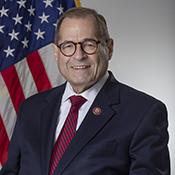
Mr. Speaker, I thank the gentleman for yielding me this time. Mr. Speaker, this bill is a dangerously reckless way to deal with one of the most serious issues we will ever confront. There is no way…
Mr. Speaker, I thank the gentleman for yielding me this time.
Mr. Speaker, this bill is a dangerously reckless way to deal with one of the most serious issues we will ever confront. There is no way to make these judgments easy, even when the express desires of the patients are clear and unambiguous. Where there is disagreement on the medical facts or on the wishes of the patient, these cases can be heartrending and sometimes bitter, beyond the comprehension of those who have been fortunate not to have to make these decisions.
So what does this bill do? This bill would place a Federal judge in the middle of this case after the State courts have adjudicated it, after doctors and family members and counsel and clergy and the courts in Florida have struggled with it for years. After everything is over, after all the facts have been established to the satisfaction of the courts, all the appeals exhausted, the writ of certiary denied by the Supreme Court of the United States, now we start all over again.
My colleagues wish to put one of those unelected Federal judges they always denounce right in the middle of this and say the trial starts de novo. Ignore everything the Florida courts have done. This expresses contempt for the Florida courts, contempt for the Florida legislature. Nothing is to be considered res judicata. No facts are to be considered established.
This is not establishing a Federal appeal from the Florida courts on the grounds that the Florida courts have violated some constitutional rights we are familiar with; those kinds of procedures. No, this does not do that. This simply says the Florida courts are incompetent. The Florida legislature is incompetent. The Florida people are not to be trusted in electing their judges and their legislators.
Instead, we are going to put this case, and only this case, in the Federal courts from the very beginning and we instruct the Federal courts to ignore the evidence in the Florida courts; to ignore the procedures in the Florida courts; to ignore the testimony in the Florida courts and to start all over, because we have contempt, because we do not like the judgments of the Florida courts.
We have never, ever done such a thing in the history of this country, and we should not start now. The Constitution of the United States says there should be no ex poste facto law because it is fundamentally unfair. This is not ex poste facto, it is not a criminal court, but it is the same kind of legislation. It is a bill of attainder, in effect. There is a reason why the
Constitution prohibits bills of attainder and ex post fact laws, and although this is not technically an ex poste facto law or a bill of attainder, it violates all those reasons, and we should respect the spirit of the Constitution of the United States.
Mr. Speaker, it is an uncontradicted fact, uncontradicted except for the speculations of some orators in this Chamber, that Terri Schiavo told her husband, told her sister-in-law, told her brother-in-law, told various of her friends when attending funerals of close family members who had been on life support, that she would ``not want to live like that.'' The Florida court found that to be the case, to be the fact. The guardian ad litem appointed by the court, in his report to the court, found that.
This is not the case of a perhaps self-interested, conflict of interested husband testifying to that. It is the case of the husband saying that she told him that, the friends, the brothers-in-law, the sisters-in-law. They all said the same thing. And the court found that, as a matter of fact, that is what Terri Schiavo said that was her wish.
The doctors' testimony. The doctors testified, doctors who examined her, not doctors standing up on the floor here who say, well, from the video tape we can infer. Doctors can be deprived of their license for making diagnoses from afar. But doctors who have actually examined this patient have testified her cerebral cortex is liquefied; that it is destroyed. Without a cerebral cortex there is no sensations, there is no consciousness, there is no feeling, there is no pain, there is no possibility of recovery.
That is what a persistent vegetative state is. There is no possibility of recovery, despite the wishes, despite the fervent hopes, despite the illusions of desperate relatives. We should not feed those illusions.
And what has happened to family values that we talk about here? This bill would invade the sanctity of the family, would invade the decision of the husband. George Will, a noted conservative comentator and philosopher, conservative enough so that he famously helped coach Ronald Reagan for his debates in the Presidential debates in 1980, said on television this morning, and I quote, ``Unless we are prepared to overturn centuries of common law and more than two centuries of constitutional law that says that husband and wife are one, therefore clearly this is a decision to be made by the husband.''
Now, this is not just a decision made by the husband. This is a decision made by Terri Schiavo, according to the testimony of the husband and the brothers-in-law and the sisters-in-law. This is a decision made by the husband and Terri Schiavo, according to all the testimony. So we have no respect for the carefully established procedures our States have set up to wrestle with these difficult cases; no respect for the elected representatives of the Florida State legislature or their judges.
Who are we to say they are wrong? Who are we to say Terri Schiavo and her husband are wrong? Who are we to say that Terri Schiavo's husband is self-interested? And who are we to say this is any different from the thousands of cases of do-not-resuscitate orders that are given effect in our courts and in our hospitals every day, other than the fact that this case has gotten a lot of publicity and a lot of public official intervention? This is hypocrisy at its greatest, and we ought not to pass this bill.
Mr. Speaker, I did indeed say that there can be Federal court review of due process, obviously.
That has happened here. And the Federal court said, ``Not only has Ms. Schiavo's case been given due process in State court, but few if any similar cases have ever been afforded this heightened level of process.''
The difference in this bill is not that it is a review of State court, but it orders a de novo proceeding to ignore everything that happened in State court as if the State courts did not exist. That is unprecedented, that is contemptuous, that is different; and that should not be done.
She got the appellate review already. The appellate courts and Federal court did not agree with the distinguished chairman. That is not an indication for a new bill.
Mr. Speaker, I submit this article for the Record. This bill must be passed. This Congress is right to stand up for a woman who is incapacitated to some extent yes, but does not require extraordinary…
Mr. Speaker, I submit this article for the Record. This bill must be passed. This Congress is right to stand up for a woman who is incapacitated to some extent yes, but does not require extraordinary measures to live. We must allow a thorough review of her case. The love of her family is so great we should honor it.
[From the Pittsburg Post-Gazette, Mar. 20, 2005]
Starving for the Truth
(By Dennis Roddy)
When Mary Jane Owen thinks of Terri Schiavo, she remembers
a day in 1986 and the hospital in Washington. Pneumonia was
filling Owen's lungs. Owen cannot walk and is half deaf. At
the time she was also blind. The doctor leaned into her good
ear and said, ``Don't ask for antibiotics. Pneumonia is a
friend of the elderly. It's a great way to die.''
Without enough breath to shriek, Owen, in her early 60s at
the time, had to speak clearly enough to let this doctor know
he was fired.
``Get out of my room,'' she told him. ``Get out of my
life.'' Pneumonia might be a great friend to those who want
to die. Owen, who took antibiotics, was later cured of her
blindness and currently works as a disabled rights advocate
in Washington, D.C., wasn't in the mood to chumbuddy with
death. Possibly, because she arrived in a wheelchair, doctors
assumed she'd prefer to leave on a gurney.
That's why she wonders about Terri Schiavo, whose husband
wants her out of not only his life, but her own, too.
Described alternately as in a ``persistent vegetative state''
and ``a locked-in'' condition, Schiavo, who has lived with
brain damage since 1990, either does or does not understand
what is going on around her. Her husband, Michael, says she
is an empty vessel who would not have wanted to remain
present in body only. Her parents and some former caregivers
say she reacts to their voices, seems to recognize them. On
Friday, a Senate committee, trying to forestall the
withdrawal of feeding, subpoenaed her, though unsuccessfully.
The action is not as silly as it sounds. At one point, after
she presumably became vegetative, Terri Schiavo was taken to
a shopping mall.
When it comes to the disabled, or at least those too
disabled to advocate for themselves, deliberation about their
fates resembles property law. Michael Schiavo, as Terri's
husband--who has started a new family with a fiancee--holds
the powers of guardianship over his wife. He has persuaded a
Florida judge to allow hospital workers to withhold
nourishment and allow Terri to die. Judge George Greer has
declined a request by the family to allow Terri to be fed and
given water orally. That is to say, Terri Schiavo's parents
think she can be fed by mouth and the judge in the case
declines to find out if this is so. On Friday, Judge Greer
reinstated an earlier order and Schiavo's feeding tube was
removed.
One former caregiver, Heidi Law, has said under oath that
``on three or four occasions I personally fed Terri small
mouthfuls of Jell-O, which she was able to swallow and
enjoyed immensely.''
It is one thing to withdraw a feeding tube; another
entirely to withhold that day's meal tray.
That is why debating Terri Schiavo as a right-to-die
argument misses the point.
``Would it seem inappropriate at some point to emphasize
that people with disabilities feel threatened by the idea
that a `flawed' life can be judicially eliminated?'' Owen
asked. It only seems inappropriate because the arguments
being made about the ``right'' of the brain dead to die are
being framed around a woman whose brain death is far from
proven.
The facts are these: Terri Schiavo collapsed in 1990. She
has been in hospitals and nursing homes since then.
Videotapes depict a young woman who seems to respond to some
voice stimuli, but does not communicate. At least three
affidavits are on file from former nursing home attendants
who insist Terri showed some hope of making progress, but
that her husband insisted she be given no rehabilitation.
One nurse, Carla Sauer Iyer, said Terri ``spoke on a
regular basis, saying such things as `Mommy' and `help me.'
`` Iyer said that when she put a washcloth in Terri's hands
to keep her fingers from curling together, ``Michael saw it
and made me take it out, saying that was therapy.''
Michael Schiavo's reticence could well have been an
unwillingness to open himself to the cruelties of false hope.
Terri's family is convinced he wants rid of her so he can
marry his live-in girlfriend and use up the $50,000 or so
that remains of a $1 million medical malpractice settlement.
The underlying argument for protecting Terri Schiavo is
predicated on the idea that life, at its core, is sacrosanct,
something with which we interfere at peril to our own places
in the universal order. The problem with Terri's most
prominent defenders is that they seem to find it easiest to
defend someone who cannot interfere with the debate by
expressing her own views. Televangelist D. James Kennedy
wants a law passed. Christian Defense Coalition head Patrick
Mahoney warns of a ``rescue'' attempt at the nursing home.
Militia extremist Bo Gritz said he is going to Florida to
perform a citizens arrest of Michael Schiavo and Judge Greer.
None of them has pledged money to a trust fund to care for
Terri Schiavo and, more saliently, the many more just like
her. They are in this because of their politics, which
appears to be indistinguishable from their theology, which
appears to be self-promotional.
Owen worries that the sanctity of life issue misses the
point that Terri Schiavo is not vegetative and not a fetus.
She falls nowhere into the realm of what medical ethicist
James J. Hughes described as ``socially dead.''
``Most of the people in the disability community certainly
are not `pro-life' in the classical meaning of that, but we
sure as hell are against killing people with disabilities,''
Owen said. ``Terri was certainly, I think, rehabilitatable in
the early months and years of her travail. How far she can
come back now is a question. But I think she should certainly
be given a couple months trial before Michael's allowed to
kill her.''
After 15 years of despair, a few months of hope might tell
us something about ourselves.
Mr. Speaker, tonight I join millions of Floridians and Americans hoping and praying for Terri and her family at this incredibly difficult time. Terri Schiavo's case is a tragedy we all hope and pray…
Mr. Speaker, tonight I join millions of Floridians and Americans hoping and praying for Terri and her family at this incredibly difficult time. Terri Schiavo's case is a tragedy we all hope and pray our own families will never go through. And tonight this Congress is about to commit a travesty.
I think we can agree the impact of this legislation extends far beyond
Terri Schiavo. Tonight, congressional leaders are poised to appoint this Congress as a judge and a jury. These actions are a threat to our democracy. More than 200 years ago, our forefathers designed government with three separate, yet equal, branches. This Congress is about to overturn the separation of powers by disregarding the laws of Florida and the decision of a judge that have never been reversed. This Congress is on the verge of telling States and judges and juries that their laws, their decisions do not matter.
Multiple courts have had an opportunity to rule in Terri's case, including the United States Supreme Court, Federal district courts, and the Florida Supreme Court. As Justice Scalia has said himself in end- of-life cases like this, ``The Federal courts have no business in this field. American law has always accorded this power to the States.''
This Congress should respect the law and the rulings of courts and not trample the Constitution. If we do not draw a line in the sand tonight, what limit is there to the democratic principles that this Congress is prepared to violate? What limit is there to the liberties that we might trample upon?
For those of us that are Floridians, this is a very painful issue. Not just because we represent many, many people, Democrats, Republicans or people that are not particularly political who have living wills, who have wishes they expect to be honored and not interfered with. We are also deeply saddened because we have been in the middle of this saga for quite some time, and it is very important you know this is just the latest chapter.
In 2003, unhappy with the decisions of the court, the Governor and the State legislature in Florida attempted to change the rules that controlled Terri's wishes and to pass what was referred to as Terri's Law, giving Governor Bush the authority to reinsert the feeding tube. The Florida Supreme Court ruled that law unconstitutional, and the United States Supreme Court refused to hear Governor Bush's appeal.
Last week, the Florida legislature and the Governor attempted yet a second time to change the rules that would cover the enforcement of what was found to be Terri's wishes. For the good of Floridians, for the good of the country, after the House had passed the bill and the Governor continued to pursue it, very courageous members of the Florida senate and the Florida house, on both sides, Democrats and Republicans, refused to make the same mistake a second time. One of the top Republicans in the Florida house said, ``The legislature should stay out of family court issues.''
The State legislation that failed in the State senate died when some of the leading Republican Senators said, ``We cannot and should not sacrifice our oaths as political officers on the altar of political convenience.''
These were State legislators recognizing the limits of their power. Here tonight in the United States Congress, will we recognize the appropriate limits of our power?
Leading the charge in this debate are several physicians who are Members of Congress. I think it is fair to say none of them have examined Terri Schiavo. I seriously doubt any of them had a chance to review the medical records. Instead, many of them, many Members of Congress, are forced to rely upon a videotape that is several years old that does not begin to tell the story.
Let us keep in mind neither this House nor Senate has had a single hearing, has heard from a single witness, has provided any meaningful opportunity for the public to participate in this very important debate.
The bill under consideration tonight essentially does one thing: it starts the process all over again with a different judge, an attempt to achieve a different result, a different finding as to Terri's wishes or simply to delay the enforcement of her wishes.
It has been described by the chairman of the committee that what this bill does, if I heard him correctly, is to provide an opportunity for Terri's parents to assert their rights under the United States Constitution. They have always had that right. They had that right in State court. They had that right in Federal court. They had that right in the United States Supreme Court, which turned down the appeal.
This bill does not create any new rights. It simply creates a new judge in an attempt to achieve a different result or to delay a different decision.
One of the chief Senate sponsors of the bill said earlier today that the purpose and the effect of the bill in his judgment was to cause the Federal judge who will hear this case to reinsert the tube.
Before we vote tonight, I would like to ask the Members to ask one question of themselves. If this were their family, if they some day, and I hope they do not and I hope I do not, find themselves in this tragic situation, one of the most tragic we will ever experience in our lives, and they and their wife had come to a conclusion about what they want as a couple or individually as to how they end their life, how would they feel if elected officials they had never met who did not know them thought their judgment was superior to theirs? How would they feel if that affected them and their spouse?
I have followed this case for years. My views tonight are the same as they have been always. This case is about Terri's will as interpreted by the courts, God's will, and it should not be about the will of the United States Congress. Sadly, regardless of what this Congress does tonight, everyone may lose. Terri's husband may lose his wife. Their parents may lose a daughter.
My hearts and prayers go out to Terri and her family.
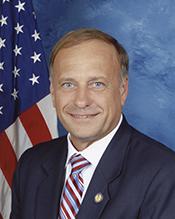
Mr. Speaker, I thank the chairman for yielding me time. I especially thank the chairman for his leadership on bringing this legislation to the floor in the condition that it is in, and I would like…
Mr. Speaker, I thank the chairman for yielding me time. I especially thank the chairman for his leadership on bringing this legislation to the floor in the condition that it is in, and I would like to compliment all the leadership in the House and on the Senate on both sides of the aisle that have worked so hard and so diligently throughout this weekend and given up their Palm Sunday weekend to serve a very important citizen of this country and someone whom we have an obligation to protect the constitutional rights of Terri Schiavo.
She has a right to due process under the 14th amendment, and she has a right to equal protection. She has a right to her day in court. We look at the circumstances that took place in the Florida courts and the continual appeals that we went back through and the relentless efforts to end her life by her guardian, her estranged husband, who may have a conflict of interest. And I look back into that to see what that might amount to because it is always important to understand the potential for the motives.
And as I added up these dollars, the settlement for medical malpractice, $250,000 preliminarily and the court then ruled another $1.4 million to Terri Schiavo and $600,000 awarded to Michael Schiavo, that is $2,225,000 awarded in her behalf. Of that one can assume approximately $800,000 went to attorneys fees and costs.
Now, additionally the court ordered $750,000 to go into the Terri Schiavo trust account. Now, that was pledged to go for her rehabilitation, her care, her medical treatment, and her tests. And that was a pledge made by her guardian, Michael Schiavo. But of that $750,000, these are the most conservative numbers that I can produce, there was $486,941 that went to attorneys' fees to promote her death, not her care; another $10,929 to Michael Schiavo for expenses; another $55,000 to the bank for, assumedly, administrative fees.
When you do the math on this and shake this down, it breaks down to this: approximately $2 million out of that $2.25 million against her interests
into the pockets of attorneys and into the pockets of Michael Schiavo and into the pockets of the bank for administrative fees. Less than $200,000 was committed to her care over all of these years, 13 or 14 years.
And I think this illustrates a potential for a conflict of interest. She is not on life support, Mr. Speaker. She needs only a feeding tube and the court ordered to remove the tube. And if it were determined that her food and fluid were to be stopped, all they had to do was stop adding it. It is a horrible way to die. She has been denied therapy, and she has been denied treatment. It has been stated that she does not show any electronic brain waves. She only had a CAT scan back in the early 90s. She has never had an MRI. She has never had a PET scan, and she has been denied treatment even for infection. And when they sent her to the hospice 5 years ago, a place where a person is sent to die, 5 years she has been there, Mr. Speaker, and 5 years she has been denied sunshine, denied even the ability to be rolled out into the sunshine in her wheelchair.
Mr. Speaker, I thank the gentleman from Wisconsin (Mr. Sensenbrenner) for yielding me this time.
I wanted the opportunity to address the issue of the funding that has gone in on behalf of Terri Schiavo, and the report that I have put together, I could easily add several hundred thousand dollars to that that have gone towards attorneys and towards the interests of Michael Schiavo as opposed to the interests of Terri Schiavo.
I would have a documented report that I would file with the Congressional Record, except that the trust fund for Terri Schiavo has been sealed at the request of the attorney on behalf of Michael Schiavo. So, therefore, we cannot get those records. We do not know what is going on behind the scenes. What we know is that she has not had tests, she has not had therapy, and she has been denied medical treatment.
The attorney of record for Michael Schiavo happens to also have been a former member of the board of directors of the hospice where Terri Schiavo is now being taken care of. And by the way, I happen to have another piece of information that flowed to me today, a GAO audit looked in on that and that organization paid $14.8 million back in Medicaid fees that were inappropriately collected.
Another question we have is, we do not know whether there is a life insurance policy that would name someone as beneficiary in the event of the death of Terri Schiavo. The question has been asked of the guardian several times, and he has refused to answer every time. So we cannot even evaluate the assets or the intent of the guardian. Those issues will be looked at by the court.
Another issue that should be addressed, and we will hear this continually as this 3-hour debate goes on, is the allegation that 19 judges have reviewed this and 19 judges have concurred. I have put together the full list of the judges that have heard the case of Terri Schiavo in the history of this, and throughout all of that I can identify Judge Greer, and I can identify a three-judge panel that heard her case en banc, and I can identify the Supreme Court of the State of Florida, which we saw perform a number of times in the year 2000, and also the United States Supreme Court, which simply refused or denied cert on the subpoenas last week.
So if we are going to count judges sitting en banc and if we are going to count supreme courts in totals of 7 and
9, that narrows it down pretty much to one judge that has seen and reviewed all this case and that is Judge Greer. And I believe that Terri Schiavo deserves her day in court. She deserves a de novo review. She deserves an opportunity to be heard and an opportunity at life.

Mr. Speaker, I rise in support of the U.S. Constitution, the principle of states' rights, and democracy. This private relief measure, as I asserted last Wednesday, March 16, 2005, while is a flat…
Mr. Speaker, I rise in support of the U.S. Constitution, the principle of states' rights, and democracy. This private relief measure, as I asserted last Wednesday, March 16, 2005, while is a flat rejection of a state's right to adjudicate these private matters, is a better vehicle than H.R. 1332 to allow interested parties to have full opportunity to address the dilemma that surrounds the case of Ms. Schiavo while at the same time preserving the right of Congress to fully debate the very important issues that lie beneath the special facts of this case.
Last Wednesday on the House Floor I expressed my reservations about H.R. 1332, the Protection of Incapacitated Persons Act of 2005. I indicated that the scope of H.R. 1332 requires, at the very least, hearings before the committees of jurisdiction. This legislation was introduced a few hours prior to its passage--that is incomprehensible for a public measure.
H.R. 1332 contains operative provisions that would amend the existing law of removal to allow parties to remove to federal court cases that involve the withdrawal of nutrition or hydration from an incapacitated person where the person did not leave a written advance directive as to treatment. That bill, as I suggested on the floor, is the wrong bill to fit the current situation because it does not sweep widely as a public bill should. Rather, it creates legal precedent while bringing relief to a private matter. A recent report by the Congressional Research Service states that ``[a] question does arise, however, whether this bill would have application to situations where an individual is not in a government facility and is not challenging a state law.''
Before legislation of this weight is passed so hastily, all areas of ambiguity or speculation require fixes by way of the committee markup process. First, the provision found in Section 2, page 3, lines 2-3 and 5-7 that limits the consideration of the federal court to federal questions, or whether authorizing the withdrawal of food or fluids or medical treatment to an incapacitated person constitutes ``a deprivation of any right, privilege, or immunity secured by the U.S. Constitution'' should be vetted by members of the House Judiciary Committee for consideration of the implications of limiting federal purview in this fashion.
Second, in Section 2, page 3, line 15, the drafters' reference to a ``born individual'' is ambiguous and merits committee scrutiny. While an ``unborn'' individual certainly cannot conceivably execute a ``written advance directive,'' as found on page 2, line 22, this reference is limiting and again, merits serious scrutiny in order to prevent floods of litigation over the interpretation of this term.
Thirdly, ``significant relationship'' as found on page 3, line 20 can mean virtually anything and simply invites voluminous litigation over semantics that can be clarified in legislative history by way of the proper legislative process--and hearings before committees of jurisdiction.
If the House Majority Leadership had worked with the other body last Thursday to find an agreement as to the private measure that passed, neither Ms. Schiavo nor the parties interested in her case would have endured the stress that surrounded the removal of feeding tubes that occurred on Friday.
My colleague, the Chairman of the House Judiciary Committee, responded to my words on the House Floor last Wednesday that ``[i]f the Private Relief Bill were introduced or came over from the [other body], Terri Schiavo would be dead before we could consider it.'' To the contrary, neither Ms. Schiavo is dead nor is the ability of the House to consider the private measure dead. The measure passed in the other body, S. 653, a private bill, is more appropriate, and the bill that we now consider is nearly identical to it. The only difference between the two bills is that the final House version contains a ``sense of Congress'' provision as to the need to ``consider policies regarding the status and legal rights of incapacitated individuals who are incapable of making decisions concerning the provision, withholding, or withdrawal of food, fluids, or medical care.'' The ``sense of Congress'' provision rather than an entire stand-alone bill, as suggested by the distinguished Chairman, is a more prudent way of stressing the need to consider these issues.
While I believe that the Private Bill is a better vehicle than the public bill in controversial
matters, I believe that this bill threatens the sanctity of democracy and the concept of the separation of powers. Eighteen state judges have already adjudicated this matter, so passage of this bill would amount to an appeal granted by the legislative branch of government--in clear contravention of the U.S. Constitution. The will of 536 elected officials should not affect the final disposition of a personal family matter. What is most important in this situation is the wish of Terri Schiavo, and Congress cannot properly dispense of this question without being politically motivated. As is the case with many measures that the Republican Congress has slid past this body that purport to expand rights, this measure will contract the States' rights to be the final arbiter in private matters.
For the reasons stated above, Mr. Speaker, I reject this legislation.
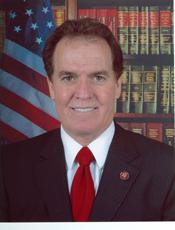
Mr. Speaker, in response to the remarks a few minutes ago from the gentleman from Massachusetts, I want to say that I am not sure whether or not I am on C-SPAN, but I am absolutely sure that I am not…
Mr. Speaker, in response to the remarks a few minutes ago from the gentleman from Massachusetts, I want to say that I am not sure whether or not I am on C-SPAN, but I am absolutely sure that I am not playing doctor, for indeed I am one.
Mr. Speaker, I want to thank my colleagues for returning to Washington on Palm Sunday to take up this very important issue. As my colleagues know, we are here today in an attempt to safe the life of Terry Schiavo. I particularly want to thank the gentleman from Illinois (Speaker Hastert), the gentleman
from Texas (Mr. DeLay), the gentleman from Wisconsin (Chairman Sensenbrenner), and the gentleman from Florida (Mr. Weldon) for their leadership on this issue. Although Congress cannot heal Terri, we do have the ability to save her from an inhumane death from forced starvation and dehydration.
Mr. Speaker, since Terri Schiavo's brain injury 15 years ago, she has been profoundly disabled. She is not, however, in a coma. She responds to the people around her; she smiles and she can feel. Terri is very much alive.
Mr. Speaker, listen to the words spoken just one year ago by Pope John Paul II to the International Congress of Catholic Physicians on life-sustaining treatments and the vegetative state: ``A man, even if seriously ill or disabled in the exercise of his highest functions, is and always will be a man, and he will never become a vegetable or a man animal. Even our brothers and sisters who find themselves in the clinical condition of a vegetative state retain their human dignity in all its fullness. The loving gaze of God the Father continues to fall upon them, acknowledging them as his sons and daughters, especially in need of help.''
The tragedy of this situation is that with proper treatment, now denied, Terri's condition can improve. Even though Terri's parents object to the removal of her feeding tube, the courts have rejected their pleas, and at this point it appears that all legal efforts to save her life have been exhausted, unless Congress acts swiftly.
Mr. Speaker, I believe we have a duty as Members of Congress to uphold a culture of life and compassion.
Terri has been incapable of making relevant decisions, particularly concerning her medical care, since she collapsed due to a potassium imbalance in 1990 at age 27, just a few years after her marriage to Michael Schiavo. Terri's parents want her to live. The governor of Florida, her state of residence, and many in the state legislature want her to live; however, the Florida Court system has ruled the husband's guardian rights should prevail. Unfortunately, his wishes have set his wife on a course of dehydration, starvation, and death.
It is important to note that Terri never had the opportunity to plead her own case in court and she never executed an advanced directive or living will in writing.
Terri responds to verbal, auditory, and visual stimuli, normally breathes on her own and can move her limbs on command. As a result of her parent's love, they have fought for years to prevent her court ordered death and have expressed their willingness to take care of her for the rest of her life.
Since the Florida state court has issued an order prohibiting Terri from even being given food or water by her mouth, once her tube is pulled she will not die from any disease, but from starvation and dehydration.
Florida law prohibits the starvation of dogs, yet will allow the starvation of Terri Schiavo. Florida law does not allow for physician assisted suicide or euthanasia, nor does my compassionate God fearing state of Georgia. Although I am not a neurologist by specialty, my basic courses in medical school taught me that dehydration is a horrific process.
It is a process that only the cruelest tyrants in history have used to ``cleanse'' populations. The patient's skin cracks, their nose bleeds, they vomit as the stomach lining dries out, and they have pangs of hunger and thirst. Starvation is a very painful death to which no one should be deliberately exposed.
The tragedy of this situation is that with proper treatment, now denied, Terri's condition can improve. Even though Terri's parents object to the removal of her feeding tube, the courts have rejected their pleas and, at this point, it appears that all legal efforts to save her life have been exhausted unless Congress acts swiftly.
Mr. Speaker, I believe we have a duty as Members of Congress to uphold a culture of life and compassion. It is important that we act today to save Terri Schiavo's life and uphold the moral and legal obligation of our nation, indeed this poor woman's Constitutional right to life.
In our nation of checks and balances, I believe it is time for Congress to check the Florida court's decision and pass this life saving measure.
I encourage bipartisan support of this legislation because we are here, at this ``11th hour,'' quite literally, to save Terri's life.

Mr. Speaker, I rise in opposition to the legislation. Mr. Speaker, I rise first to extend my thoughts and prayers to the loved ones of Teresa Marie Schiavo at this extraordinarily difficult time.…
Mr. Speaker, I rise in opposition to the legislation.
Mr. Speaker, I rise first to extend my thoughts and prayers to the loved ones of Teresa Marie Schiavo at this extraordinarily difficult time.
America has seen the anguish in the faces of Ms. Schiavo's family members. The legislation we are considering will determine whether we will send to federal court one case that has been adjudicated in Florida's state courts for nearly a decade.
For the past seven years, this particular case has traveled through Florida's state court system. The Florida courts determined through a review of testimony that, as her husband has testified, Terri Schiavo would not have wanted her life continued by artificial means. This Congress has chosen to disregard the ruling of the state court, the appeals court and Florida's Supreme Court. This bill stands in stark contrast to the principles of federalism, and it is the wrong direction for this Congress to take.
But as this debate is carried out before the entire world, it is clear that the issue is far more fundamental than state versus federal jurisdiction. The issue before us involves one of the most personal and controversial matters we face as humans: how do we deal with end-of- life care decisions for patients who cannot speak for themselves? Certainly not through this unprecedented act of intrusion into a personal family matter.
I believe the authors of this bill know that this is not the correct approach. Section 9 of this bill includes a ``Sense of Congress that the 109th Congress should consider policies regarding the status and legal rights of incapacitated individuals who are incapable of making decisions concerning the provision, withholding or withdrawal of foods, fluids, or medical care.''
When to stop life support when a person has no chance of recovery is an arduous decision. It is for that reason that Congress passed in 1990 the Patient Self-Determination Act as part of OBRA '90, which requires all hospitals, long term care facilities, home health agencies, hospice programs and HMOs that receive Medicare and Medicaid dollars to recognize a patient's living will and power of attorney for health care as advance directives. Health care organizations must provide patients with written information about establishing an advance directive and document if the patient has an advance directive that is placed in the patient's medical record. Patients are then able to decide in advance what medical treatment they want to receive if they become physically or mentally unable to communicate their wishes.
This piece of legislation gives patients the right to make choices and decisions about the types and extent of medical care they wish for themselves. With this act, patients can specify if they want to accept or refuse specific medical care. They can also identify a legal representative for urgent health care decision purposes. Then if they become unable to make decisions due to illness, the patients' wishes have been clearly documented at an earlier point of time.
Unfortunately, Ms. Schiavo did not execute an advance directive. There is conflicting information as to her wishes as expressed by her husband and parents. That conflict was resolved by the appropriate Florida court. It is not appropriate for Congress to pass special legislation for this one case.
Fifteen years after the passage of the Patient Self-Determination Act, the vast majority of Americans have not completed an advance directive. My colleague in the Senate, Bill Nelson, has introduced legislation that would improve compliance with the 1990 legislation and provide a benefit under Medicare for end-of-life consultation. That is the bill Congress should move as we debate this complex issue, not the bill that's currently before us.
If we enact this bill, it could very well result in an avalanche of cases in federal court. According to medical experts, as many as 35,000 Americans--nearly one-third of them children--are in a condition similar to that of Terri Schiavo. Their families face the same difficult decision-making process that Ms. Schiavo's parents and husband are contending with. I believe most Americans would agree that the last thing we want to do is encourage more divisive court cases and bills of this nature.
Regardless of the outcome of this vote, there will be no clear winners at the conclusion of this debate. Our judicial system and the rights of patients and their next-of-kin to make end-of-life decisions with their providers will be clear losers. Congress should never have considered this legislation.

Mr. Speaker, this legislation provides a clear lesson for the American public about how Congress and American politics operate today. Make no mistake, this is not about what Terri Schiavo wants. It…
Mr. Speaker, this legislation provides a clear lesson for the American public about how Congress and American politics operate today.
Make no mistake, this is not about what Terri Schiavo wants. It is clear from testimony of the family members who are fighting against Terri's husband that they would want the feeding tube reinserted no matter what Terri wants. Tom DeLay says he doesn't care what her husband wants. This is all about people who have chosen to use this poor woman as a political football. This legislative spectacle was an artful attempt to divert the public's attention.
But in your mind's eye, the face in the picture that you should be thinking about is not Terri Schiavo's: You should be worried about the face of you or your loved one in the middle of a media circus, or worse, denied the right to control your own fate.
This is not a narrow, specific bill about a single case. Their true intentions were revealed by H.R. 1332, the bill that Tom DeLay had the House pass last Wednesday. I led the debate against H.R. 1332 because it would have effectively overruled Oregon's Death with Dignity Act with language so broad and sweeping that it would call into question every living will and end of life directive. Anybody who wanted to force the issue, whether business partner, estranged family member, or friend could drag your loved ones into Federal court.
Make no mistake, the goal is to take away your choice in making end of life decisions, just as their agenda is to control your choices at the beginning of life, whether regarding contraception or a woman's right to choose.
The Schiavo case has received unbelievable attention and scrutiny by politicians and judges at every level in the State of Florida. For years, the battle has raged in a State that is controlled by Republicans and is governed by the President's brother. This is not about due process and letting the system work. Rather it is about some zealots who do not agree with the verdicts of the courts and the professional opinions of medical experts.
The hypocrisy of Tom DeLay and the Republican leadership in Congress is breathtaking. The only time they trust the Federal courts is when they are using them as a political tactic. This fall they passed in the House of Representatives, bills that declared the Federal courts incompetent to rule on cases involving the pledge of allegiance and same-sex marriage.
In a statement released early this morning, President Bush said he will ``continue to stand on the side of those defending life for all Americans.'' But the facts make it hard to believe that the President is standing on principle. In 1999, then Governor Bush signed a law that ``allows hospitals to discontinue life sustaining care, even if patient family members disagree.'' Just days ago the law permitted Texas Children's Hospital to remove the breathing tube from a 6-month-old boy named Sun Hudson. The law may soon be used to remove life support from Spiro Nikolouzos, a 68-year-old man. The President has not commented on either case.
Because of this media circus, attention is being diverted away from the seniors that will suffer and die in this country as a result of the Republican leadership's budget proposal to shortchange Medicaid. The very financial sources that have kept Terri alive for 15 years, Medicaid and her malpractice settlement, are under attack by the President and Tom Delay. For the time being, Republican leaders are succeeding in their effort to change the subject, and obscure this fact.
While Congress's involvement is another sad chapter in the fight against Terri's wishes, I'm glad that we forced them to narrow the reach of this bill, at least for the time being. It is still an unfortunate precedent of inappropriate Congressional intervention into a personal family matter.
In the final analysis, I'm pleased that the public was able to see what the stakes are and what some politicians and zealots are willing to do. Ultimately, it is this public awareness that will defeat efforts to take away the choice for each of us and of our families to control our own destinies.
Show 11 more
Mr. President, I ask unanimous consent that the Senate proceed to the immediate consideration of S. 686 introduced earlier today. Mr. President, I ask unanimous consent that the bill be read a third…
Mr. President, I ask unanimous consent that the Senate proceed to the immediate consideration of S. 686 introduced earlier today.
Mr. President, I ask unanimous consent that the bill be read a third time and the Senate proceed to a vote on passage.
Mr. President, I move to reconsider the vote, and I move to lay that motion on the table.
The motion to lay on the table was agreed to.
Mr. President, I rise today to speak about the bill we just passed that will give Terri Schiavo another chance. The bill we passed this afternoon centers on the sanctity of human life. It is bipartisan; it is bicameral. The House of Representatives is considering the exact same bill today. After the Senate and House pass this legislation, the President will immediately sign it into law.
There has been a lot of discussion about what this bill actually does. Let me point out several things.
Simply put, it allows Terri's case to be held in Federal court. The legislation permits a Federal district judge to consider a claim on behalf of Terri for alleged violations of constitutional rights or Federal laws relating to the withholding of food, water, or medical treatment necessary to sustain life.
The bill guarantees a process to help Terri but does not guarantee a particular outcome. Once a new case is filed, a Federal district judge can issue a stay at any time 24 hours a day. A stay would allow Terri to be fed once again. The judge has discretion on that particular decision. However, I would expect that a Federal judge would grant the stay under these circumstances because Terri would need to live in order for the court to consider the case. If a new suit goes forward, the Federal judge must conduct what is called de novo review of the case. De novo review means the judge must look at the case anew. The judge need not rely on or defer to the decision of previous judges.
The judge also may make new findings of fact, and from a practical standpoint this means that in a new case the judge can reevaluate and reassess Terri's medical condition.
I would like to make a few other points about the bill.
First, it is a unique bill passed under unique circumstances that should not serve as a precedent for future legislation.
Second, this bill would not impede any State's existing laws regarding assisted suicide.
Finally, in this bill Congress acknowledges that we should take a closer look in the future at the legal rights of incapacitated individuals.
While this bill will create a new Federal cause of action, I still encourage the Florida Legislature to act on Terri's behalf. This new Federal law will help Terri, but it should not be her only remaining option.
Remember, Terri is alive. Terri is not in a coma. Although there is a range of opinions, neurologists who have examined her insist today that she is not in a persistent vegetative state. She breathes on her own just like you and me. She is not on a respirator. She is not on life support of any type. She does not have a terminal condition.
Moreover, she has a mom and a dad and siblings, her closest blood relatives, who love her, who say she is responsive to them, who want her to live, and who will financially support her. These are the facts.
We in the Senate recognize that it is extraordinary that we, as a body, act. But these are extraordinary circumstances that center on the most fundamental of human values and virtues--the sanctity of human life.
The level of cooperation and thoughtful consideration surrounding this legislative effort on behalf of my colleagues has truly been remarkable. I thank Senate minority leader Harry Reid for his leadership on this issue. He and I have been in close contact throughout this process. I also thank my Democratic colleagues who expressed their concerns but have allowed us to move forward. In particular, I thank Senators Mel Martinez, Rick Santorum, Tom Harkin, and Kent Conrad for their dedication in shepherding this legislation. This is bipartisan, bicameral legislation.
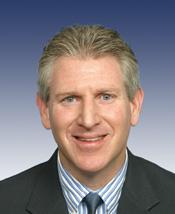
Mr. Speaker, I yield myself such time as I may consume. Mr. Speaker, for those of us from Florida, the heart-wrenching case involving Terri Schiavo is not new. In fact, for 15 years Mrs. Schiavo has…
Mr. Speaker, I yield myself such time as I may consume.
Mr. Speaker, for those of us from Florida, the heart-wrenching case involving Terri Schiavo is not new. In fact, for 15 years Mrs. Schiavo has remained in a persistent vegetative state. For 7 years the courts and the State of Florida have heard, ad nauseam, arguments of both sides.
There is this perception possibly that only one judge has been involved in this case. In fact, 19 judges in the State of Florida have participated in various legal proceedings regarding Terri Schiavo. The State of Florida, through our court system, has acted deliberatively, with justice and with due care. The State of Florida, through our judicial system, has taken testimony from everyone in the family and from everyone who knew Mrs. Schiavo that was capable of giving it. The courts in Florida have received expert testimony from many of the most prominent neurosurgeons and neurologists throughout the entire country.
The court system and the 19 judges in Florida have been unanimous, unanimous, in stating that from the evidence provided by a standard of clear and convincing evidence, that it is Mrs. Schiavo's wish that she not be required to continue in a persistent vegetative state.
So I would respectfully suggest for those of us that take exception to the proposed action by the chairman of the Committee on the Judiciary and by this Congress that we stand in the shoes of Terri Schiavo. We stand in her shoes, because what we are simply arguing is that the will of Terri Schiavo, as found by the legal system of Florida, which is the law of the land as of now, that her will be respected and that her will be carried out.
With all due respect to the proposed remedy, in effect if this bill were to pass what this Congress is designating is that the court system of Florida will lose its long history of jurisdiction of this matter and others like it, and the jurisdiction of the Federal Court will be substituted.
The majority would argue that this is a principal position. And while I would not dare suggest otherwise, I would ask the question, if the Florida courts had found in favor of Terri Schiavo's parents, would we be here this evening? I suspect not. So it is fair to conclude, therefore, that the reason we are here this evening is that the majority is unhappy, objects to the decision rightfully reached by the courts of the State of Florida; and as a result, the majority wishes to undermine over 200 years of jurisprudence and a long history in this country for respect for our judicial independence as well as the States court systems and the jurisdictions assigned to it.
In closing, Mr. Speaker, I would simply suggest this one thing, this is heart-wrenching for all Americans. Each American I believe tonight and today has been searching his or her soul wondering how they would react if, God forbid, they were in this position. But the issue before this Congress is not an emotional one. It is simply one that respects the rule of law, the rule of law in the State of Florida, the rule of law which has involved the participation of 19 judges, all unanimous in their view. Not a single medical piece of evidence has been provided by anybody who has diagnosed or in person witnessed Mrs. Schiavo that has said anything other than that she persists in an vegetative state.
And yet this Congress seeks to replace and substitute our judgment, even though not a single one of us as far as I understand has ever diagnosed Mrs. Schiavo, nor do we have the medical expertise to do so; and yet we are willing tonight to replace with our judgment the judgment of the most prominent doctors in our country and a court system which has labored extensively to yield a just result.
Mr. Speaker, I reserve the balance of my time.
Mr. Speaker, I ask unanimous consent to yield the balance of my time to the gentleman from Massachusetts (Mr. Frank) for purposes of control.
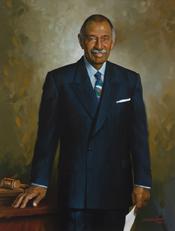
Mr. Speaker, I thank the gentleman from Massachusetts for his leadership tonight. Mr. Speaker, if we pass this bill, we will be intruding in the most sensitive possible family decision at the most…
Mr. Speaker, I thank the gentleman from Massachusetts for his leadership tonight.
Mr. Speaker, if we pass this bill, we will be intruding in the most sensitive possible family decision at the most ill-opportune time. It will be hard to envision a case or circumstance that Congress will not be willing to involve itself from now on if this precedent is approved this evening. By passing legislation which takes sides in an ongoing legal dispute, we will be casting aside the principle of the separation of powers. We will be abandoning our role as a serious legislative branch, and we will be taking on the role, as we have done during this debate, of judge, of doctor, of priest, of parent, or spouse.
By passing legislation which wrests jurisdiction away from a State judge and sends it to a single preselected Federal court, we will forego any pretense of federalism. The concept of a Jeffersonian democracy as envisioned by the Founders and the States as ``laboratories of democracy,'' as articulated by Justice Brandeis, will lie in tatters.
By passing this legislation in a complete absence of hearings, committee markups, no amendments, in complete violation of what we once called ``regular order,'' we will send a signal that the usual rules of conduct and procedure no longer apply when they are inconvenient to the majority party.
My friends on the other side of the aisle will declare that this legislation is about principle and morals and values. But if this legislation was only about principle, why would the majority party be distributing talking points in the other body declaring that ``this is a great political issue'' and that by passing this bill ``the pro-life base will be excited''?
If the President of the United States really cared about the issue of the removal of feeding tubes, then why did he sign a bill as Governor in Texas that allows hospitals to save money by removing feeding tubes over a family's objection?
If we really cared about saving lives, why would the Congress sit idly by while more than 40 million Americans have no health insurance, or while the President tries to cut billions of dollars from Medicaid, a virtual lifeline for health care for millions of our citizens?
When all is said and done, this bill is about taking sides in a legal dispute, which we should not be doing. Last year, the majority passed two bills stripping the Federal courts of their power to review cases involving the Defense of Marriage Act and the Pledge of Allegiance because they feared they would read the Constitution too broadly. Last month, the majority passed a class action bill that took jurisdiction away from State courts because they feared they would treat corporate wrongdoers too harshly. Today, we are sending a case from State courts to the Federal courts, even though it is already the most extensively litigated right-to-die case in the history of the United States.
There is only one principle at stake here: manipulating the court system to achieve predetermined, substantive outcomes. By passing this bill, it should be obvious to many that we are no longer a Nation of laws, but have been reduced to a Nation of men. By passing this law, we will be telling our friends abroad that even though we expect them to live by the rule of law, Congress can ignore it when it does not suit our needs. By passing this law, we diminish our Nation as a democracy and ourselves as legislators.
Do not let this bill pass.

Mr. Speaker, on December 3, 1963, Theresa Marie Schindler was born in Pennsylvania. At the time, I was pregnant with my first child and my beautiful daughter, Danene, was born 5 days later on…
Mr. Speaker, on December 3, 1963, Theresa Marie Schindler was born in Pennsylvania. At the time, I was pregnant with my first child and my beautiful daughter, Danene, was born 5 days later on December 8. She is my best friend and today she, too, is a mom.
I certainly can relate to Mr. and Mrs. Schindler's love for their daughter and
their passionate fight to keep her alive. Mothers have a precious bond with their daughters. The issues that we are discussing tonight are not because those who may speak on one side or the other are right or wrong or pro-life or pro-choice. The issue here is what Terri would have wanted. It is not what we would want for ourselves or even our loved ones. We should not be second-guessing a patient's wishes. That is not what we were elected to Congress to do, nor do I believe that our forefathers would have ever wanted us to be involved. Terri Schiavo's constitutional right to make the decision she felt comfortable with is being usurped by her parents and now this Congress by means of this private bill.
Jay Wolfson was appointed guardian ad litem for Theresa Marie Schiavo. I know Jay Wolfson and often called upon him when I was a State senator chairing the health care committee, because I knew that he could always give me an impartial review of controversial matters relating to health care. Jay Wolfson's report to Governor Bush and the Sixth Judicial Circuit dated December 1, 2003, reviewed the court testimony and statements made by all family members. It is important to know that the Schindler family members stated that even if Theresa had told them of her intention to have artificial nutrition withdrawn, they would not do it. Throughout this painful and difficult time, these same family members acknowledged that Terri was in an irreversible, persistent vegetative state.
Today, I burned up the phone calling health care professionals that I know back in Florida. These are people who make life-and-death decisions and realize that the 5-year-old video we see on TV of the eye blinking and apparent movements are an involuntary reflexive action known as part of the autonomic nervous system.
Almost everybody in the health care profession that I spoke to are avid pro-life people, but they know the sad facts. Their comments were almost to a person, something to the effect of 15 years of being in a persistent vegetative state is far too long to suffer. To second guess the Florida legislature, Florida courts, and Terri's choice is just plain wrong. We should not be engaged in second guessing many neurologists and on-site health care profession always who have seen the patient, performed tests, and attested to the courts that Terri is not going to recover.
This is a very difficult decision that I know does not come easily for any Member of this body. It is gut wrenching and reaches deep into our hearts. My daughter, who was born 5 days after Terri Schiavo, is a health care professional, who, when I asked if she would want me to battle to keep a feeding tube in if she had not signed a living will, said to me, and I want the Members to bear in mind that she is a health care professional who deals day in and day out with patients with feeding tubes, but the difference is that they are not in a vegetative state, her response to me was sufficient to help me make up my mind. She said to me, No, Mom. If you really loved me, you would want me to have rest and meet the Lord.''
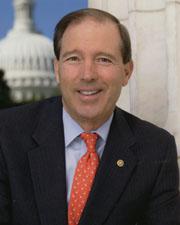
Mr. Speaker, the heart-wrenching details of Ms. Terri Schiavo's case are well known to all of us. Her personal case, not to mention the family rift that has resulted, is certainly a tragedy and my…
Mr. Speaker, the heart-wrenching details of Ms. Terri Schiavo's case are well known to all of us. Her personal case, not to mention the family rift that has resulted, is certainly a tragedy and my heart goes out to Terri, her husband, parents, and loved ones who all are trying to do what they believe is best for Terri.
However, Mr. Speaker, this is an issue that should be determined by those very people. This is not a matter for Congress to decide. Unfortunately, since Terri's family has been unable to agree on the best course of action, they have had to undergo, and continue to undergo today, lengthy legal battles. While it is unfortunate, that is what our legal process is for, and it has repeatedly ruled in favor of Terri's husband. Bringing this bill to the floor of the House marks yet another example of the Congressional leadership's subversion of the judicial process. Anytime the leadership disagrees with a ruling by a court, they strip its power. This is not the way these matters should be handled. It is not only subversion of the legal process, but of the Constitution of the United States of America.
In fact, in a 1990 case before the Supreme Court that pertained to some of the very same issues of the Schiavo case, Justice Antonin Scalia, one of the most conservative justices on the court, stated that he wished that the Supreme Court had stated, ``clearly and promptly, that the federal courts have no business in this field.'' He went on further to say, ``the point at which life becomes `worthless' and the point at which the means necessary to preserve it become `extraordinary' or `inappropriate' are neither set forth in the Constitution nor known to the nine justices of this court any better than they are known to nine people picked at random from the Kansas City telephone directory.''
Justice Scalia's statement highlights both the difficult nature of the issues involved, as well as his clear belief that matters such as these have no business in the federal courts. This is a highly private issue, and though it is unfortunate that Terri's family was forced to go to the courts, it should remain at the state level.
Congress should not have interfered by passing S. 686. It represents a gross overreach of Congressional power into a highly private issue. An issue, Mr. Speaker, that is at root between Mr. Schiavo and his wife Terri, and on the immediate periphery, between Mr. Schiavo and the Schindlers. It is amazing that some have chosen to play politics with this tragic family situation. My prayers are with the entire family, especially now that Terri has passed away.
This case does highlight, however, the need for individuals to make their personal and private health care decisions and embody them in a living will. At the very least, family members should have the comfort of knowing they're doing what their loved ones would have wanted. One of the best things that can emerge from this heartbreaking case will be an increase in families discussing and creating living wills.
Finally, I regret that I was unable to return in time for the debate and vote on S. 686. Once I received official notice of a recorded vote, it was impossible for me to arrive in Washington, DC in time for consideration of this measure. That being said Mr. Speaker, I rise now to state for the record that I would have voted against S. 686.

Mr. Speaker, 2,000 years ago Jesus Christ entered Jerusalem on Palm Sunday, marking the beginning of a week that throughout history and the world over has signified the sanctity of human life.…
Mr. Speaker, 2,000 years ago Jesus Christ entered Jerusalem on Palm Sunday, marking the beginning of a week that throughout history and the world over has signified the sanctity of human life. Tonight we are here on Palm Sunday to afford the greatest presumption of life possible under our United States Constitution to a woman who has never truly been afforded representation and whose wishes are truly unknown.
This is not about the sanctity of the Schiavo marriage. That is a matter between Terri and Michael. Mr. Schiavo has got some answering to do himself. Any insinuation otherwise is clear hypocrisy and nothing more. And this is not about congressional interference into a family issue. I agree that it should be a family issue.
The problem is Terri's parents want her to live, and Terri's husband wants her to die. And Terri did not use a living will to tell us what she would want. So before an irreversible decision is made, her country must afford her the due process to which she is entitled under the 14th amendment of our Constitution. That means that the State of Florida may not starve Terri to death unless every legal resource to prevent it has been taken. Death by starvation, as we have already heard tonight, is lengthy and incredibly painful. And Terri Schiavo can feel pain. The bill that we are going to pass is going to give her due process before she is sentenced to die in this painful manner.
Convicted serial killers and other death row inmates are afforded Federal review in their cases. The Constitution confers upon this Congress the power to effect the authority on the Federal courts to conduct this kind of review, and that is what I hope we do here tonight. It is square within our powers, it respects the separation between the legislative and the judicial branches, and it holds to the principles of federalism.
There is going to be hollow rhetoric in this Chamber tonight about the need for investigations and about reviewing facts before acting and about attempts to politicize religious beliefs. But where were these arguments last Wednesday night when we passed a bill for Terri unanimously under voice vote? And where were these arguments Friday afternoon when Judge Greer ignored a congressional subpoena designed to allow us the chance to get more information?
The Supreme Court has stated that the authority to subpoena is an ``indispensable ingredient'' of Congress' legislative power. Judge Greer's Friday order expressly disregards that authority, and he should be held in contempt of this body. Like Michael Schiavo, the Judge has some answering to do.
We have a woman who hasn't had food or drink in over two days. We made efforts in the ordinary course of legislative business to afford Terri Schiavo her constitutional rights, and they were rejected. Now, we are left with no choice but to implement extraordinary means in the middle of the night.
Whether you're using morality, or religion, or the Golden Rule, or legal analysis to guide your decision, at the root of all this is a living, breathing American citizen who has been deprived of her rights. This measure will correct that, so I urge all my colleagues to support it.
Mr. Speaker, this case, what we are doing here tonight, is not about Terri Schiavo. The evidence for that begins in the way this was brought to this body, being brought in on St. Patrick's Day at…
Mr. Speaker, this case, what we are doing here tonight, is not about Terri Schiavo. The evidence for that begins in the way this was brought to this body, being brought in on St. Patrick's Day at 11:30 at night, with no hearings, no notice to the body, nothing. It was going to be rammed through here without discussion.
And what troubles me, and I have heard my colleagues here, as a psychiatrist, I cannot make diagnoses of people that I have not examined. That is contrary to my profession, and I can be disciplined for doing that. The rest of you can be doctors. You can come out here and tell us anything you want. But a doctor cannot come out here and say anything really about somebody they have not examined.
So what you are now doing with this, and you want it both ways. This is what troubles me about this. On the one hand, you say this is not precedent. This is only one case. This is only one case. What am I supposed to do as a physician like the gentleman from Michigan (Mr. Schwarz)? As a psychiatrist, I dealt over and over and over again with family members facing this exact problem. It is gut-wrenching. You do not get any planning process here. You do not get any, well, this is going to happen in a month, why don't you get ready for it. It happens and then you have got to make a decision. And there you are as a family group. Everyone here is going to have this happen to them sometime.
When my father was 95 years old, he had had a couple of strokes. On his first stroke, we talked to him. He was 93 before we ever talked about a living will, okay? That is the way it is in America. That is why we do not have Terri's words in a will. You do not think about dying when you are young.
All right. So my father has had a stroke. We said to him, Dad, what do you want us to do in terms of extending your life? He said, Well, I don't want any of those paddles that they use on ER. They can do artificial resuscitation, but I don't want that paddle thing.
Okay. The doctor came to me and said to me, Jim, the paddles are much more humane than doing artificial resuscitation. If you press on an old man's chest to try and start his heart from the external massage, you break the ribs. Then he has got pain from broken ribs. Actually, the paddle is much more humane.
So I went back to my father, and my brothers and I, we had a talk with him, and he said, well, I want it done the way it should be done. Then came the day when he had his third stroke and he could no longer swallow, and he was on IVs. And so there were two brothers, a sister, and me and my mother, and we had to stand around and decide whether or not we were going to put in a stomach tube, a feeding tube. Anybody who stands out here and says that is not an extraordinary process is absolutely wrong. It is no different than being on a ventilator, forcing air into someone's lungs, than it is forcing food into them. That is exactly what it is.
You are throwing all that up in the air and leaving families and doctors with nowhere to go because this is not setting precedent; this is something to hide something else, some diversion of what is going on in this House.
Mr. Speaker, I thank the gentleman from Wisconsin for his humanity and courage to deal with this issue. Mr. Speaker, perhaps it is important for those of us in this Chamber to first remind ourselves…
Mr. Speaker, I thank the gentleman from Wisconsin for his humanity and courage to deal with this issue.
Mr. Speaker, perhaps it is important for those of us in this Chamber to first remind ourselves again of why we are really all here. Thomas Jefferson said, ``The care of human life and its happiness and not its destruction is the chief and only object of good government.''
Mr. Speaker, protecting the lives of our innocent citizens and their constitutional rights is why we are all here. The phrase in the 14th amendment capsulizes our entire Constitution. It says: ``No State shall deprive any person of life, liberty or property without due process of law.'' It is unconscionable that judges holding responsibility to protect Terri Schiavo's constitutional rights have chosen to abandon those responsibilities so that now Congress has no honorable alternative but to respond as we are.
Hubert Humphrey once said that a society is measured by how it treats those in the dawn of life, those in the shadows of life, and those in the twilight of life. It is true that Terri Schiavo lives among us in the shadows of life. But she is not brain dead or comatose. She is awake and she is able to hear, she is able to see, she is often alert. She can feel pain, she interacts with her environment, she laughs, she
cries. She expresses joy when her parents visit her and sorrow when they leave.
Mr. Speaker, she reminds me so much of another woman, whose name I will not mention, who was in much the same circumstance as Terri and a young nurse insisted every morning on singing to this patient. Of course, her colleagues upbraided her and said, well, she can't hear you; those are just reflex actions. But she continued day after day, year after year, to sing to her every morning. Finally she left the hospital, and yet a few years later, the patient regained her state of mind and came back, as it were, to a healthy, clear mind. And all of the nurses gathered around her and met with her and they said, Do you remember? Do you remember when we took care of you, when we turned you to keep you from getting bed sores? When we washed you? When we tried to feed you?
And she said, No, I don't remember anything except someone singing.
Mr. Speaker, Terri Schiavo represents the mortality and helplessness of us all as human beings. And whether we realize it or not, we are at this moment lying down beside her listening for that song of hope. If we as a Nation subject her to the torture and agony of starving and thirsting to death while her brother, her mother and her father are forced to watch, we will scar our own souls. And we will be allowing those judges who have lost their way to drag us all one more ominous step into a darkness where the light of human compassion has gone out and the predatory survival of the fittest prevails over humanity.
If the song of hope is to be silenced, Mr. Speaker, let it not be tonight.

Mr. Speaker, I thank the chairman for yielding me this time. I also want to thank the Speaker for the difficult decision to call the Members back, though the difficult decision maybe was made less…
Mr. Speaker, I thank the chairman for yielding me this time.
I also want to thank the Speaker for the difficult decision to call the Members back, though the difficult decision maybe was made less difficult by the circumstances. The hard work of the gentleman from Wisconsin (Mr. Sensenbrenner) over the last few days; of the gentleman from Texas (Mr. DeLay), majority leader; the work of the gentleman from Maryland (Mr. Hoyer), who may not be on the same side as I am when we take the vote tonight, but who has certainly worked hard to see what we could do to make this work in the best possible way for the Members, who were called back.
Terri Schiavo is in a terrible situation tonight. She has been in a terrible situation for a long time, a situation none of us would want to be in, a situation we would not want our loved ones in, a situation we would not have to decide about, but when this happens we do have to decide. And there is clearly a conflict between members of Terri's family about what she would want to happen.
Someone observed earlier that when one is her age they probably have not written that down yet, and of course that is right. When one is my age they
probably should have written that down, and sometime in the next few days I am going to check to see what I wrote 10 years ago and if I still agree with what I wrote 10 years ago, as I suspect many of us will. But she had not written it down.
Some people seem to think she would feel much differently about this than others. And what this legislation would do is let a judge come in and look at all the facts one more time and determine if what is happening should continue to happen.
I know others have said there is no real difference in just giving someone food and water and putting someone on incredible life support systems. I see a difference. I think most Americans see a difference. We will see if a judge sees a difference, if in fact we are able to give a judge that opportunity.
We are not deciding tonight anything that a family should be deciding. We are asking a judge to come in and decide what a family among themselves could not decide. I have heard other people here talk about family members getting together and making this tough decision. But nobody has talked about family members getting together and fighting over that decision and what they would want to happen if that fight happened in their family.
The vote tonight will be a bipartisan vote. This is not about Democrats or Republicans. I hope this is not about politics. I hope this is about Terri Schiavo. This bill also has a study that would require us to look at other circumstances and see if we should have the broader legislation that the gentleman from Florida (Mr. Weldon) and others, Democrats and Republicans, introduced last week.
Mr. Speaker, I urge that this legislation pass, that we get this done as quickly as possible.
Mr. Speaker, I thank the gentleman for yielding me time. Mr. Speaker, it is hard to know how to approach this case. Should you approach it as a mother or a member of the family on the opposite side,…
Mr. Speaker, I thank the gentleman for yielding me time.
Mr. Speaker, it is hard to know how to approach this case. Should you approach it as a mother or a member of the family on the opposite side, should you approach it as a member of the House of Representatives, should you try to approach it as a lawyer?
One thing is clear: choosing up sides, where you or I stand on our particular values, clearly will not do. That is why matters of this kind involving families have for more than 200 years been committed to State courts, because we are all over the place, State By State, person by person, on this issue. We are hopelessly divided.
Countless Americans have already made decisions like this, over and over again. Countless more have a different view. There are some who, if they had to choose, would side with the husband as the next of kin, because he believes he knows what his wife desired based on what she said to him and believes he would betray her trust if he simply walked away. Who can fail to be sympathetic with him?
Who can fail to be sympathetic with the parents, who almost instinctively have adopted the role of parent? When the mother said today, ``Save my little girl,'' she is not even any more for her a grown woman, the wife of somebody. She is her little girl, and always will be; and I understand that.
There are 50 different States, 51 including the District of Columbia, with wholly different approaches to the same matter. How shall we choose? Which is best in a Federal Republic? To give it to the Congress? To then instruct the Federal courts to violate every rule we have had for 215 years? I hardly think so.
Until today, there was no doubt how finality should be reached in a case like this. My only hope is that somehow this will finally be settled without a three-part constitutional crisis of the kind we are creating here, the crisis at the heart of federalism and the Federal Republic for which we stand, the bedrock of who we are, the State- Federal system, where State issues with State courts are final and our issues are final, except in very narrow circumstances given the limited vision of the Federal Government, of the Founders, or the crisis of separation of powers, which we were barely circuiting here, or the crisis of the constitutional right of privacy. Choose your crisis.
The victims here are real people, however, caught in a dispute of Shakespearean dimensions. The other side thinks that is right, it is life and death. That is what makes it different.
But my friends, never before in countless cases in Federal and State
courts in 215 years, life and death has not made a difference in my own lifetime and in the history of my country as I have read it. I wish that the fact that life and death were at issue had meant that we could go into Federal court every time we disagreed.

Mr. Speaker, there is no more difficult decision for a family than to remove a loved one from life support. My heart goes out to the Schiavo family in this very personal and difficult time. However,…
Mr. Speaker, there is no more difficult decision for a family than to remove a loved one from life support. My heart goes out to the Schiavo family in this very personal and difficult time. However, I believe this to be a private family matter to be decided based on their own faith and values, without the government's intervention.
The Schiavo case has been a long and difficult one for Ms. Schiavo's family and friends. Mr. Speaker, I trust that the multiple court decisions and the multiple court reviews were properly evaluated. Each time the evidence pointed to the same unbiased conclusion: Terri Schiavo's wishes were clear and convincing. Doctors who have examined Ms. Schiavo have consistently said that she is in a persistent vegetative state. The only ones who disagree are those who are deciding based on videotapes. In fact, the Florida State legislature has not overridden the decisions of their State courts.
There is no doubt that this is a family tragedy. But, there is no room for the Federal Government in this case or in any similar case. It is unfair that this family during their time of grief has become a political pawn in an ideological war the conservative leadership is inappropriately propelling.
Mr. Speaker, Congress intervening in this matter sets a bad precedent for our entire legal system. The Republican leadership has repeatedly made a point of calling for the removal of Federal court jurisdiction over issues, such as gay marriage or displaying the Ten Commandments in public buildings, when the Federal courts render a decision that does not meet with their political ideology. In fact, they have gone so far as to introduce several legislative initiatives to strip controversial religious and social issues from the jurisdiction of Federal courts. Now, ironically, when a State has
rendered a final decision that the Republican leadership disagrees with, they support reinstating the power of ``activist judges'' on the Federal level. The Republican leadership cannot have it both ways and should not interfere with the judicial process that has worked for over 200 years.
Instead we should be fighting to cover the 45 million Americans who are currently without health insurance and unable to get the services they need to live. We should be increasing scientific research funding to improve our medical procedures and help more people overcome the impossible.
Mr. Speaker, I am not here today to judge what is right or wrong in Ms. Schiavo's particular case. Only her loved ones can truly know in their hearts what is right for her, even if they cannot agree. But, what I do know is that whether someone has the right to live or die is not a decision that the Federal Government, and Members of Congress should not make.
Bill Text
4 versions available
        [Congressional Bills 109th Congress]
[From the U.S. Government Publishing Office]
[S. 686 Enrolled Bill (ENR)]

S.686

One Hundred Ninth Congress

of the

United States of America

AT THE FIRST SESSION

Begun and held at the City of Washington on Tuesday,
the fourth day of January, two thousand and five

An Act

For the relief of the parents of Theresa Marie Schiavo.

Be it enacted by the Senate and House of Representatives of the
United States of America in Congress assembled,

SECTION 1. RELIEF OF THE PARENTS OF THERESA MARIE SCHIAVO.

The United States District Court for the Middle District of Florida
shall have jurisdiction to hear, determine, and render judgment on a
suit or claim by or on behalf of Theresa Marie Schiavo for the alleged
violation of any right of Theresa Marie Schiavo under the Constitution
or laws of the United States relating to the withholding or withdrawal
of food, fluids, or medical treatment necessary to sustain her life.

SEC. 2. PROCEDURE.

Any parent of Theresa Marie Schiavo shall have standing to bring a
suit under this Act. The suit may be brought against any other person
who was a party to State court proceedings relating to the withholding
or withdrawal of food, fluids, or medical treatment necessary to
sustain the life of Theresa Marie Schiavo, or who may act pursuant to a
State court order authorizing or directing the withholding or
withdrawal of food, fluids, or medical treatment necessary to sustain
her life. In such a suit, the District Court shall determine de novo
any claim of a violation of any right of Theresa Marie Schiavo within
the scope of this Act, notwithstanding any prior State court
determination and regardless of whether such a claim has previously
been raised, considered, or decided in State court proceedings. The
District Court shall entertain and determine the suit without any delay
or abstention in favor of State court proceedings, and regardless of
whether remedies available in the State courts have been exhausted.

SEC. 3. RELIEF.

After a determination of the merits of a suit brought under this
Act, the District Court shall issue such declaratory and injunctive
relief as may be necessary to protect the rights of Theresa Marie
Schiavo under the Constitution and laws of the United States relating
to the withholding or withdrawal of food, fluids, or medical treatment
necessary to sustain her life.

SEC. 4. TIME FOR FILING.

Notwithstanding any other time limitation, any suit or claim under
this Act shall be timely if filed within 30 days after the date of
enactment of this Act.

SEC. 5. NO CHANGE OF SUBSTANTIVE RIGHTS.

Nothing in this Act shall be construed to create substantive rights
not otherwise secured by the Constitution and laws of the United States
or of the several States.

SEC. 6. NO EFFECT ON ASSISTING SUICIDE.

Nothing in this Act shall be construed to confer additional
jurisdiction on any court to consider any claim related--
(1) to assisting suicide, or
(2) a State law regarding assisting suicide.

SEC. 7. NO PRECEDENT FOR FUTURE LEGISLATION.

Nothing in this Act shall constitute a precedent with respect to
future legislation, including the provision of private relief bills.

SEC. 8. NO AFFECT ON THE PATIENT SELF-DETERMINATION ACT OF 1990.

Nothing in this Act shall affect the rights of any person under the
Patient Self-Determination Act of 1990.

SEC. 9. SENSE OF THE CONGRESS.

It is the Sense of Congress that the 109th Congress should consider
policies regarding the status and legal rights of incapacitated
individuals who are incapable of making decisions concerning the
provision, withholding, or withdrawal of foods, fluid, or medical care.

Speaker of the House of Representatives.

Vice President of the United States and
President of the Senate.