A concurrent resolution authorizing the remains of Rosa Parks to lie in honor in the rotunda of the Capitol.
Legislative Activity
Stay on top of the latest movement without scrolling through every action
Motion to reconsider laid on the table Agreed to without objection.
October 28, 2005 • 1:16 PM
View full timeline
Introduced in Senate
October 27, 2005
Submitted in the Senate, considered, and agreed to without amendment by Unanimous Consent. (consideration: CR S12026-12027; text as passed Senate: CR S12027; text of measure as introduced: CR S12018)
October 27, 2005
Received in the House.
October 28, 2005 • 9:03 AM
Message on Senate action sent to the House.
October 28, 2005
Referred to the House Committee on House Administration.
October 28, 2005
Committee on House Administration discharged.
October 28, 2005
Mr. Ehlers asked unanimous consent to discharge from committee and consider. (consideration: CR H9398-9407)
October 28, 2005 • 12:06 PM
RESERVATION OF OBJECTION - The House proceeded under a reservation of objection raised by Ms. Millender-McDonald.
October 28, 2005 • 12:06 PM
The House continued under Ms. Millender-McDonald's reservation of objection.
October 28, 2005 • 12:36 PM
REMOVAL OF RESERVATION OF OBJECTION - Subsequently, Ms. Millender-McDonald withdrew her reservation of objection to the committee discharge and consideration of S. Con. Res. 61.
October 28, 2005 • 1:16 PM
Passed/agreed to in House: On agreeing to the resolution Agreed to without objection.(text: CR H9407)
October 28, 2005 • 1:16 PM
On agreeing to the resolution Agreed to without objection. (text: CR H9407)
October 28, 2005 • 1:16 PM
Motion to reconsider laid on the table Agreed to without objection.
October 28, 2005 • 1:16 PM
Floor Debate
23 membersWhat members said about S.Con.Res. 61 on the floor
 EFH
EFH JM
JM MLW
MLW SJL
SJL JCJ+18
Floor Debate
23 membersWhat members said about S.Con.Res. 61 on the floor
Mr. Speaker, I thank the gentlewoman for yielding to me, and certainly want to first commend the chairman of the Committee on House Administration, the gentleman from Ohio (Chairman Ney), and our…
Mr. Speaker, I thank the gentlewoman for yielding to me, and certainly want to first commend the chairman of the Committee on House Administration, the gentleman from Ohio (Chairman Ney), and our ranking member of the committee, the gentlewoman from California (Ms. Millender-McDonald), for managing our portion of this important resolution that was introduced by Senator Dodd from Connecticut.
Mr. Speaker, I am very honored to be given this opportunity to speak on the occasion of honoring this great American. As vice chairman of our Asian Pacific Congressional Caucus, I know that the gentleman from California (Mr. Honda), our chairman, would have loved to be here, but he is necessarily absent, so I am doing this on behalf of our Asian Pacific American community.
History has not been very kind to the coming of various minority groups to our Nation. The history of the African American is replete with so much of the tremendous amount of racism and bigotry that has been heaped upon these good fellow Americans.
Mr. Speaker, we have a saying in the islands, ``The leaves of the coconut tree just do not swing by themselves.'' There is a reason for it. There is a cause for it.
I did not have the privilege of knowing personally this great American woman Mrs. Rosa Parks, but I stand here before my colleagues as one who is the beneficiary of the sacrifices and the tremendous examples she has set for all Americans. I would like to say that not only did she serve as a catalyst, but she planted a seed, a seed that was planted in fertile ground, as the good book says, and what has that seed produced?
Mr. Speaker, I would like to share with my colleagues, and I will include the full text of this speech for the record that I think probably every Member should read at least 1 year, the famous speech given by this great American minister on the steps of the Lincoln Memorial on that summer day in 1963. I want to share portions of this speech that was given by this great American as a result of the seed that was planted by Rosa Parks. This American minister made this most profound speech. I will share portions of that with my colleagues.
He said: ``I am happy to join you today in what will go down in history as the greatest demonstration for freedom in the history of our Nation.
``Four score years ago, a great American, in whose symbolic shadow we stand today, signed the Emancipation Proclamation. This momentous decree came as a great beacon light of hope to millions of Negro slaves who have been seared in the flames of withering injustice. It came as a joyous daybreak to end the long night of their captivity.
``But 100 years later, the Negro still is not free. One hundred years later, the life of the Negro is still sadly crippled by the manacles of segregation and the chains of discrimination. One hundred years later, the Negro still lives in the lonely island of poverty, in
the midst of a vast ocean of material prosperity. One hundred years later, the Negro is still languished in the corners of American society and finds himself in exile in his own land. And so we have come here today to dramatize a shameful condition.
``We have also come to this hallowed spot to remind America of the fierce urgency of now. This is no time to engage in the luxury of cooling off or to take the tranquilizing drug of gradualism. Now is the time to make real the promises of democracy. Now is the time to rise from the dark and desolate valley of segregation to the sunlit path of racial justice. Now is the time to lift our Nation from the quicksands of racial injustice to the solid rock of brotherhood. Now is the time to make justice a reality for all of God's children.
``But there is something that I must say to my people who stand in the warm, fresh hope which leads into the palace of justice: In the process of gaining our rightful place, we must not be guilty of wrongful deeds. Let us not seek to justify our thirst for freedom by drinking from the cup of bitterness and hatred. We must forever conduct our struggle on the high plane of dignity and discipline. We must not allow our creative protest to degenerate into physical violence. Again and again, we must rise to the majestic heights of meeting physical force with soul force.
``I have a dream that one day this Nation will rise up and live out the true meaning of its creed: `We hold these truths to be self- evident, that all men are created equal.'
``I have a dream that one day on the red hills of Georgia, the sons of former slaves and the sons of former slave owners will be able to sit down together at the table of brotherhood.
``I have a dream that one day even the State of Mississippi, a State sweltering with the heat of injustice, sweltering with the heat of oppression, will be transformed into an oasis of freedom and justice.
``I have a dream that my four little children one day will live in a Nation where they will not be judged by the color of their skin, but by the content of their character.''
This minister, Mr. Speaker, happens to be Martin Luther King, Jr., whom we all know.
This is the seed that Rosa Parks planted. The greatest American that I have ever, ever studied, idolized in my own little humble history, coming from a little village in one of those little islands, to know that this man stood, not because he is an African American, but because he was a human being, just as Rosa Parks was a human being, not because she was an African American.
I think this is what America is all about. This is what makes the greatness of our Nation, that we are able to correct those injustices and those wrongs that were committed against other people who have every perfect right to live as fellow Americans. It was done to the Japanese Americans during World War II, just as it was done to the African Americans in their history as they now just realize that the civil rights, the rights of all Americans, should be treated fairly under the Constitution and under our laws.
For that, Mr. Speaker, I make this humble homage and a special tribute to this great American lady, Rosa Parks; and I am just so happy that this resolution calls for her remains to be in the rotunda as the greatest honor of any American.
Mr. Speaker, I thank the gentlewoman for giving me this chance to speak.
Martin Luther King, Jr.: ``I Have a Dream''
I am happy to join with you today in what will go down in
history as the greatest demonstration for freedom in the
history of our nation.
Five score years ago, a great American, in whose symbolic
shadow we stand today, signed the Emancipation Proclamation.
This momentous decree came as a great beacon light of hope to
millions of Negro slaves who had been seared in the flames of
withering injustice. It came as a joyous daybreak to end the
long night of their captivity.
But one hundred years later, the Negro still is not free.
One hundred years later, the life of the Negro is still sadly
crippled by the manacles of segregation and the chains of
discrimination. One hundred years later, the Negro lives on a
lonely island of poverty in the midst of a vast ocean of
material prosperity. One hundred years later, the Negro is
still languished in the corners of American society and finds
himself an exile in his own land. And so we've come here
today to dramatize a shameful condition.
In a sense we've come to our nation's capital to cash a
check. When the architects of our republic wrote the
magnificent words of the Constitution and the Declaration of
Independence, they were signing a promissory note to which
every American was to fall heir. This note was a promise that
all men, yes, black men as well as white men, would be
guaranteed the ``unalienable Rights'' of ``Life, Liberty and
the pursuit of Happiness.'' It is obvious today that America
has defaulted on this promissory note, insofar as her
citizens of color are concerned. Instead of honoring this
sacred obligation, America has given the Negro people a bad
check, a check which has come back marked ``insufficient
funds.''
But we refuse to believe that the bank of justice is
bankrupt. We refuse to believe that there are insufficient
funds in the great vaults of opportunity of this nation. And
so, we've come to cash this check, a check that will give us
upon demand the riches of freedom and the security of
justice.
We have also come to this hallowed spot to remind America
of the fierce urgency of Now. This is no time to engage in
the luxury of cooling off or to take the tranquilizing drug
of gradualism. Now is the time to make real the promises of
democracy. Now is the time to rise from the dark and desolate
valley of segregation to the sunlit path of racial justice.
Now is the time to lift our nation from the quicksands of
racial injustice to the solid rock of brotherhood. Now is the
time to make justice a reality for all of God's children.
It would be fatal for the nation to overlook the urgency of
the moment. This sweltering summer of the Negro's legitimate
discontent will not pass until there is an invigorating
autumn of freedom and equality. Nineteen sixty-three is not
an end, but a beginning. And those who hope that the Negro
needed to blow off steam and will now be content will have a
rude awakening if the nation returns to business as usual.
And there will be neither rest nor tranquility in America
until the Negro is granted his citizenship rights. The
whirlwinds of revolt will continue to shake the foundations
of our nation until the bright day of justice I emerges.
But there is something that I must say to my people, who
stand on the warm threshold which leads into the palace of
justice: In the process of gaining our rightful place, we
must not be guilty of wrongful deeds.
Let us not seek to satisfy our thirst for freedom by
drinking from the cup of bitterness and hatred. We must
forever conduct our struggle on the high plane of dignity and
discipline. We must not allow our creative protest to
degenerate into physical violence. Again and again, we must
rise to the majestic heights of meeting physical force with
soul force.
The marvelous new militancy which has engulfed the Negro
community must not lead us to a distrust of all white people,
for many of our white brothers, as evidenced by their
presence here today, have come to realize that their destiny
is tied up with our destiny. And they have come to realize
that their freedom is inextricably bound to our freedom.
We cannot walk alone.
And as we walk, we must make the pledge that we shall
always march ahead.
We cannot turn back.
There are those who are asking the devotees of civil
rights, ``When will you be satisfied?'' We can never be
satisfied as long as the Negro is the victim of the
unspeakable horrors of police brutality. We can never be
satisfied as long as our bodies, heavy with the fatigue of
travel, cannot gain lodging in the motels of the highways and
the hotels of the cities. We cannot be satisfied as long as a
Negro in Mississippi cannot vote and a Negro in New York
believes he has nothing for which to vote. No, no, we are not
satisfied, and we will not be satisfied until ``justice rolls
down like waters, and righteousness like a mighty stream.''
I am not unmindful that some of you have come here out of
great trials and tribulations. Some of you have come fresh
from narrow jail cells. And some of you have come from areas
where your quest--quest for freedom left you battered by the
storms of persecution and staggered by the winds of police
brutality. You have been the veterans of creative suffering.
Continue to work with the faith that unearned suffering is
redemptive. Go back to Mississippi, go back to Alabama, go
back to South Carolina, go back to Georgia, go back to
Louisiana, go back to the slums and ghettos of our northern
cities, knowing that somehow this situation can and will be
change.
Let us not wallow in the valley of despair, I say to you
today, my friends.
And so even though we face the difficulties of today and
tomorrow, I still have a dream. It is a dream deeply rooted
in the American dream.
I have a dream that one day this nation will rise up and
live out the true meaning of its creed: ``We hold these
truths to be self-evident, that all men are created equal.''
I have a dream that one day on the red hills of Georgia,
the sons of former slaves and the sons of former slave owners
will be able to sit down together at the table of
brotherhood.
I have a dream that one day even the state of Mississippi,
a state sweltering with the heat of injustice, sweltering
with the heat of oppression, will be transformed into an
oasis of freedom and justice.
I have a dream that my four little children will one day
live in a nation where they will not be judged by he color of
their skin but by the content of their character.
I have a dream today!
I have a dream that one day, down in Alabama, with its
vicious racists, with its governor having his lips dripping
with the words of ``interposition'' and ``nullification''--
one day right there in Alabama little black boys and black
girls will be able to join hands with little white boys and
white girls as sisters and brothers.
I have a dream today!
I have a dream that one day every valley shall be exalted,
and every hill and mountain shall be made low, the rough
places will be made plain, and the crooked places will be
made straight; ``and the glory of the Lord shall be revealed
and all flesh shall see it together.''
This is our hope, and this is the faith that I go back to
the South with.
With this faith, we will be able to hew out of the mountain
of despair a stone of hope. With this faith, we will be able
to transform the jangling discords of our nation into a
beautiful symphony of brotherhood. With this faith, we will
be able to work together, to pray together, to struggle
together, to go to jail together, to stand up for freedom
together, knowing that we will be free one day.
And this will be the day--this will be the day when all of
God's children will be able to sing with new meaning:
My country 'tis of thee, sweet land of liberty, of thee I
sing.
Land where my fathers died, land of the Pilgrim's pride,
From every mountainside, let freedom ring!
And if America is to be a great nation, this must become
true.
And so let freedom ring from the prodigious hilltops of New
Hampshire.
Let freedom ring from the mighty mountains of New York.
Let freedom ring from the heightening Alleghenies of
Pennsylvania.
Let freedom ring from the snow-capped Rockies of Colorado.
Let freedom ring from the curvaceous slopes of California.
But not only that:
Let freedom ring from Stone Mountain of Georgia.
Let freedom ring from Lookout Mountain of Tennessee.
Let freedom ring from every hill and molehill of
Mississippi.
From every mountainside, let freedom ring.
And when this happens, when we allow freedom ring, when we
let it ring from every village and every hamlet, from every
state and every city, we will be able to speed up that day
when all of God's children, black men and white men, Jews and
Gentiles, Protestants and Catholics, will be able to join
hands and sing in the words of the old Negro spiritual:
Free at last! free at last!
Thank God are free at last!
Mr. Speaker, reserving the right to object, I yield to the gentleman from Michigan (Mr. Ehlers) to explain the purpose of this concurrent resolution. Mr. Speaker, under my reservation I too rise in…
Mr. Speaker, reserving the right to object, I yield to the gentleman from Michigan (Mr. Ehlers) to explain the purpose of this concurrent resolution.
Mr. Speaker, under my reservation I too rise in support of Senate Concurrent Resolution 61, authorizing the use of the U.S. Capitol rotunda for the remains of Rosa Louise Parks to lie in honor on October 30 and 31 of 2005.
I stand as a very proud African American woman who stands on the shoulders of this great lady who was born Rosa Louise McCauley on February 4, 1913 in Tuskegee, Alabama. She became a household name on December 1, 1955.
After leaving her job as a seamstress, Rosa Parks boarded a racially segregated Montgomery, Alabama, bus for home and took a seat directly behind the white section. She was asked to yield her seat to a white man by a bus driver who had evicted her from a bus 12 years prior because she had refused to enter via the rear door after paying her fare. What happened next would change America forever.
This humble, soft spoken woman refused to give up her seat and was arrested and taken to jail. While in jail, Rosa Parks did not call for her lawyer. She called for her minister. It was the Reverend Dr. Martin Luther King, Jr., who immediately came to her aid. The move kicked off the Montgomery bus boycott and the beginning of a civil rights movement.
Because of Rosa Parks, the black citizens of Montgomery, Alabama, who comprised more than 70 percent of the bus company's business, refused to ride
the bus until the laws were changed. The Montgomery bus boycott lasted for 381 days. When the case was taken to the United States Supreme Court, the Justices declared that segregation of the Montgomery buses was illegal and officially desegregated them on December 20, 1956.
Rosa Parks and her husband, Raymond, whom she married in 1931, were fired by their employers and harassed by angry whites. They moved to Detroit, Michigan, in 1957. It was then she went to work for our beloved and dear colleague, the gentleman from Michigan (Mr. Conyers), and later formed the Rosa and Raymond Parks Institute.
Mr. Speaker, surely a woman as significant as this and who meant so much to not only African Americans but to all Americans deserves to be honored right here in the rotunda of the United States Capitol, the very place where in July of 1999 President William Jefferson Clinton awarded her the Congressional Gold Medal, the Nation's highest honor given to a civilian.
This concurrent resolution we are considering today is required so that both Houses may concur in the use of the rotunda, which is controlled by the Congress. This procedure was last used in 2004 following the death of the late President Ronald Reagan.
I urge my colleagues to bestow upon this great lady, Rosa Louise Parks, one last honor and make her the first nongovernmental official, first woman, and the first African American woman to lie in honor in the rotunda of the U.S. Capitol.
Please support this resolution allowing America to pay its final respects to the Mother of the civil rights movement, the great Rosa Louise Parks.
Mr. Speaker, I will be happy now to yield to the few Members who are here to speak on this resolution, the first of whom will be the gentleman who is the dean of the Congressional Black Caucus, who knew her so well and who served with her so admirably.
Mr. Speaker, further reserving the right to object, I yield to the gentleman from Michigan (Mr. Conyers).
Mr. Speaker, further reserving the right to object, I thank the gentleman from Michigan (Mr. Conyers) so much for his leadership and for the greatness that he has shown during the sadness.
Mr. Speaker, the next speaker we will bring forth is the vice chairwoman of the Congressional Black Caucus and one who is now in the process of getting a Federal building named after this great lady.
Mr. Speaker, I yield to the gentlewoman from Michigan (Ms. Kilpatrick).
Mr. Speaker, further reserving the right to object, I thank the gentlewoman so much for that extraordinary tribute to such an extraordinary woman.
Mr. Speaker, the next speaker that I am asking to come forward is the chairman of the Congressional Black Caucus, one who spoke the other night of how he was inspired by the works that she had done.
Mr. Speaker, I yield to the gentleman from North Carolina (Mr. Watt).
Mr. Speaker, that was beautifully said by the gentleman.
Further reserving the right to object, I yield to the gentleman from Texas (Mr. Al Green), one of the present members of the Congressional Black Caucus, one who has served as a judge and who recognizes the laws as they were applied during the civil rights era.
Mr. Speaker, continuing to reserve the right to object, I yield to the gentlewoman from Indiana (Ms. Carson), who saw the need to bring forth this great lady to give her a Congressional Medal of Honor because of the honor she bestowed on this country.
Mr. Speaker, further reserving the right to object, I thank the gentlewoman for her insight in bringing her this Congressional Medal of Honor.
Mr. Speaker, I yield to the gentleman from Georgia (Mr. Lewis), who is also a drum major for justice. His name is in the history books already. He walked with her and talked with her and helped in the development of the civil rights movement.
Mr. LEWIS from Georgia. Mr. Speaker, I thank the gentlewoman from California for yielding to me.
I am pleased to rise today in support of this resolution. I think it is fitting and so appropriate that Rosa Parks be honored in the rotunda of the United States Capitol. By sitting down almost 50 years ago on a city bus in Montgomery, Alabama, Rosa Parks was standing up. It was very dangerous, very dangerous, to do what Rosa Parks did on December 1, 1955.
I grew up only 50 miles from Montgomery, not too far from Tuskegee. I was 15 years old in 1955. I saw segregation. I saw racial discrimination. I saw
those signs that said white men, colored men; white women, colored women; white waiting; colored waiting. And if it had not been for Rosa Parks, I do not know where many of us would be today. I do not know where I would be.
It was dangerous to do what Rosa Parks did. Just think about it. A few months earlier, Emmett Till had been murdered in Mississippi, a young African American from the city of Chicago visiting Mississippi during the summer. So much violence, so much hate, so much fear. And this brave, courageous spirit ignited a movement not just in Montgomery but a movement that spread like wildfire across the American South and the Nation. She inspired some of us to sit in at lunch counters to bring an end to segregation and racial discrimination. She inspired some of us to stand-in at theaters. She inspired some of us to kneel-in at churches, and she inspired others to integrate libraries and parks and desegregate schools.
By this one simple act, Rosa Parks helped to usher in a nonviolent revolution in America, a revolution of values, a revolution of ideas.
I knew Rosa Parks. We met together at Highlander Folk School in Mount Eagle, Tennessee. In Montgomery, in Selma, in Atlanta. She served on the SCLC board, the board that Dr. Martin Luther King, Jr. asked me to come and serve on when I was 22 years old, in 1962. So I saw a great deal of her. She came back from Detroit 40 years ago, in March of 1965, dressed so beautifully, so quiet, dignified, so proud; and she walked with us across the Edmund Pettus Bridge for the right to vote.
Many have said, others have said, that Rosa Parks was the Mother of the modern-day civil rights movement. Yes, that is true. But she was more than a mother of the modern-day civil rights movement. She should be looked upon as one of the founders of the New America, one of the founders of the beloved community, a truly interracial democracy. This woman, this one woman, this beautiful soul planted by the spirit of history by God Almighty, not to move, changed my life, changed America. I thank Rosa Parks.
Mr. Speaker, I support the resolution.
Mr. Speaker, further reserving the right to object, I thank the great gentleman from the State of Georgia for his comments.
Mr. Speaker, I now yield to the gentlewoman from Texas (Ms. Jackson- Lee), one who was a former judge and who also had to interpret those laws that were made during the civil rights era.
Mr. Speaker, further reserving the right to object, I thank the distinguished gentlewoman for her comments.
Mr. Speaker, I yield to the gentleman from the great State of Illinois (Mr. Rush), one who placed his marker on the path of civil rights in the 1960s.
Mr. Speaker, continuing my reservation, the last speaker that we have today is one who was a former Governor of American Samoa. As has been said, Rosa Parks did not just impress those of us who are African Americans, but she inspired all Americans.
I yield to the honorable gentleman from American Samoa (Mr. Faleomavaega).
Mr. Speaker, further reserving the right to object, I rise in strong support of this concurrent resolution to honor an individual who chose to assert her civil rights and her human rights at a critical moment in our history and, by doing so, changed America forever. I, as an African American woman, lived in California for 50 years, although I was born in Birmingham, Alabama, along with Condoleezza Rice and Alma Vivian Johnson Powell. We all grew up together. My father, Reverend Shelly Millender, who was part of the ministers who walked with King, taught me to love and not to hate; and that is the premise by which I have built my life.
Rosa Louise Parks richly deserves this honor to be placed in our rotunda for those days for all Americans who stood up as she sat down to honor her.
Mr. Speaker, I withdraw my reservation of objection.
Mr. Speaker, I thank the gentlewoman from California (Ms. Millender-McDonald) for yielding. We all are under the disadvantage of never having enough time. We could speak the rest of the day, the rest…
Mr. Speaker, I thank the gentlewoman from California (Ms. Millender-McDonald) for yielding.
We all are under the disadvantage of never having enough time. We could speak the rest of the day, the rest of the week, the rest of the month, the rest of the year, next year, and we still could not say enough things to give praise to Rosa Parks, who meant so much to us.
I want to be very brief and I would simply ask, if I may, to take a part of the Record that was done in Special Orders the night before last and graft it into this section of our Record so that it will appear here. The Congressional Black Caucus, headed by the gentleman from Alabama (Mr. Davis) and the gentleman from Michigan (Mr. Conyers) of Michigan, the two States to which Rosa Parks had the most concrete and physical connection, led that Special Order, and a number of members of the Congressional Black Caucus came and spoke, including myself.
Mr. Speaker, I would ask unanimous consent that we make that a part of the Record of today.
Mr. Speaker, I thank the gentleman from Michigan (Mr. Conyers) for yielding.
I was trying to decide how to approach this issue and decided that probably there were two things I need to do: number one, I want to thank the gentleman from Alabama (Mr. Davis), my good friend and colleague, and the gentleman from Michigan (Mr. Conyers), my good friend and colleague, the two States with whom Rosa Parks probably had the strongest physical connections, for convening this Special Order for us to pay tribute to Rosa Parks.
I have listened to the gentleman from Michigan (Mr. Conyers) and the gentleman from Alabama (Mr. Davis) and the gentlewoman from California (Ms. Lee) and my other colleagues talk about some of their personal connections to Rosa Parks. One would think that maybe the chairman of the Congressional Black Caucus would have some personal stories, too; but when I reflect, I can only say that I never met Rosa Parks, nor for that matter but for the fact that Martin Luther King spoke at my high school graduation in 1963 did I ever meet Martin Luther King.
So why would we be here talking about somebody that we have never met? Because they have had an impact on our lives. What would compel a person to go visit a bus stop in Alabama? Simply because you knew that there was a particular significance to that bus stop, that that was the stop at which Rosa Parks got on the bus.
I cannot talk about the personal things about Rosa Parks that some of my colleagues have talked about. I can only talk about the impact that she had on my life and the lives of other people who viewed her from a distance and respected and admired her gentle but defiant stand, the stand that she took actually by sitting down and refusing to stand up, and by knowing that it had a tremendous impact on everybody around us as we were growing up, because by her sitting down and refusing to stand up, it allowed other people to stand up and straighten their backs and raise their shoulders and look up and start to move in a direction that we had not been moving before, starting with a bus boycott, and then sit-ins and other public accommodations and the entry of Martin Luther King as a leader of a whole series of things that started to take place.
What does that say for us who never met this wonderful woman, except from a distance? It says that there are probably many, many, many people who are watching us and would it not be a wonderful tribute to have somebody someday pay tribute to us who never, ever met us in person, by saying this person had an impact on my life.
I cannot think of a higher way to pay tribute to her. She had an impact on my life, and I cannot think of a greater challenge to issue to my colleagues in this body, to people who may be watching around the Nation, than to say what a wonderful tribute to have somebody think that you could impact their lives by simply sitting down or taking a stand for what you know is right.
We have that opportunity every single day, and I am delighted to pay tribute to Rosa Parks for exercising that opportunity and for allowing me to stand taller on her shoulders, on that giant commitment that she made.
Mr. Speaker, I do want to spend one moment, if I may, talking about the underlying resolution. We have not heard much of a whimper of opposition to it, and I do not anticipate any opposition to it. But when we are doing something for the first time, there is always going to be somebody who would raise the question, raise a question, and the one question that several people have raised is are we creating a precedent here. I want to address that because I think we need some benchmarks for this for future Congresses and others to take into account.
This is the way I view this. Our Capitol and its Rotunda stand as a monument to our democracy. There are some principles upon which our democracy is founded that were articulated by the Founding Fathers. As most people know, the Founding Fathers articulated the very highest principles for
our country, and they were just exquisite principles.
Unfortunately, the Founding Fathers did not necessarily at that time intend for all of those principles to apply to everybody. They did not apply to women, for example. They certainly were not intended to apply to African Americans.
The standard that I want to articulate here, I think, that undergirds this resolution and the authority to have the body of Rosa Parks lie in honor in the Rotunda is that more than perhaps anybody that we can think of, she extended those principles of the Founding Fathers in a way that they apply universally to all of us.
I am not going to dwell anymore on that because I do not want to start trying as an individual to start articulating a standard for having somebody lie in honor in the Rotunda, but for those people who may be worried about it setting a precedent or worried about how future Congresses are going to decide whether to do or not to do the same thing, let me advance the proposition that the role that Rosa Parks played in our democracy for some people, for all people, is as profound, as important as the role that the Founding Fathers played when they articulated a set of principles, because the principles do not mean anything unless they apply to all citizens of this country.
That is what Rosa Parks was fighting for. That is what we ought to continue to fight for, and the highest tribute that we could pay to Rosa Parks going forward is to continue her fight, the fight that she sat down on a bus; that made it possible for us to stand up and lift our shoulders and lift our visions and really, really aspire to believing that the principles that were articulated by our Founding Fathers apply to each and every one of us.
Mr. Speaker, I thank the gentlewoman for yielding me time, and I hope I have not abused it by talking primarily about the resolution and its place in history, but I just thought we needed to put that marker down at this place so that somebody will understand why this powerful lady has this honor and how she honors us and the principles that our government stands on by lying in honor in our Rotunda.
Mr. Speaker, whether it is appropriate to object and reserve the right to object, of course I am not objecting. I thank the distinguished gentlewoman from California for yielding to me. And might I…
Mr. Speaker, whether it is appropriate to object and reserve the right to object, of course I am not objecting.
I thank the distinguished gentlewoman from California for yielding to me.
And might I offer how grand it is in a time such as this to have her appropriately placed in such a leadership role. Her role tracks the specialness of this day and the reason we stand, which is to honor a woman of greatness, Rosa Parks, and to support the resolution of the Senate that asked of this body the opportunity for her to lie in honor.
I am very proud to have been an original cosponsor of the House resolution, authored by the gentleman from Michigan (Mr. Conyers), but we are even more gratified to be able to take the Senate resolution agreed to by the Senate last evening and place it at the desk for its agreement.
I too want to focus as much on her life and legacy as I do on this resolution, because even as we speak in glorified terms on the floor of the House, I know that there will be the sense of wondering about the interpretation of lying in honor and the reason thereof.
So many of us in our lifetime have had the privilege of weaving in and out of the life of Rosa Parks, either by being mere beneficiaries in the academic institutions that we have been able to journey through or in the sheer presence by being alongside of her or with her. I am honored in my adult life to have had her come through the United States Congress to be in meetings with her and, with a smile on my face, to even have a picture taken with Rosa Parks.
I say that because these are small measures of the association that many of us have had, but we treasure it because of the enormity of her life.
So the reason I think this resolution is so key is because rather than call her a hero or shero, she is iconic. This is a singular moment in history that really stopped the world because we will be asked, she is lying in state and there are a number of others, what is the precedent being set? So I want to classify this as iconic.
When Rosa Parks sat down, the world stopped. America was no longer the America as we knew it, the fact that it was a single, very petite woman with not a large voice but a smiling spirit that stopped the wheels of segregation in America. They were churning. They were violent. They were intimidating. They were very frightening. They were inhibiting. They were stopping the Bill of Rights. And Rosa Parks felt that she too born in America, yet two- thirds of a person as a slave, she thought it was appropriate for her to be able to acknowledge the fact that colored people, black people, Negro people no longer needed to take the back of the bus, the back of America, the back of the rights, the back of the Constitution, the back of the Bill of Rights.
And it was Rosa Parks who sat down and challenged that bus driver, who may have been on that day, December 1, simply a bus driver in Montgomery, Alabama; but he stood as the sheer brick wall of segregation in America that we had not been able to pierce. But yet that day sprung forth this Montgomery improvement association and the complete boycotting for some 300-plus days, the litigation, civil rights litigation, that ultimately resulted in the breaking of the segregation of buses and accommodation in Montgomery, Alabama, that then led to the journey toward the Civil Rights Act of 1964, as my colleague has mentioned, and the 1965 Voter Rights Act that occurred and broke open through her singular act the wall that had stopped America from being America, by dividing us through the heinous divisiveness of race.
Now, race still matters in America. But where we are today, 40 and 50 years past, the act that she created put us where we are today. That is why this resolution should be categorized as iconic, signaling a single moment in history that so very few of us can ever account for.
And let me just say these few remarks. I feel a kinship with her because I worked for the Southern Christian Leadership Conference during the time that she was a board member, during the life span of Dr. Ralph David Abernathy, shortly after the assassination of Martin Luther King, Jr. I served on the Select Committee of Assassinations in this House as a young lawyer, investigating the assassinations of Dr. Martin Luther King, Jr. and President John F. Kennedy, two catastrophic American tragedies that impacted the lives of those of us who lived at that time.
For anyone who lived, we asked the question whether America could survive. But we were comforted by the fact that a lady named Rosa Parks still lived and carried forward that simpleness and simplicity that if I could stop America in her tracks and change her from a segregated divisive and unruly kid, if you will, then we could survive and overcome these catastrophic events.
So today I rise in support of this resolution alongside the story of her very important history. But I rise because it is a glorious day in this body, a historic day, that an African American woman, known most of her life as a colored woman, whose ancestors came first from the bottom of the belly of a slave boat, can now lie in honor because Members of Congress from the bowels of the Deep South, of Alabama, Georgia, Louisiana, South Carolina, North Carolina, Texas, where the segregation line was drawn, will in unanimous consent agree that she should lie in state because we will agree that her singular action was one that moved America to the part of America that we would hope that she could be. And we move this day to honor her and make this final commitment that we have not arrived yet. We are not yet finished. The job is not yet done.
To Rosa Parks, as she rests in peace, may it be our commitment that we will continue to fight and continue to agitate nonviolently until America, yes, America, reaches her promise.
May you rest in peace, my sister, Rosa Parks.
Mr. Speaker, I thank the floor leader, the gentlewoman from California (Ms. Millender-McDonald), for her kindness and her leadership; and I, of course, am very proud that the gentleman from Michigan…
Mr. Speaker, I thank the floor leader, the gentlewoman from California (Ms. Millender-McDonald), for her kindness and her leadership; and I, of course, am very proud that the gentleman from Michigan (Mr. Ehlers) is leading this concurrent resolution on the other side of the aisle.
I am happy to also see my colleague, the honorable gentlewoman from Detroit, Michigan (Ms. Kilpatrick) and, of course, the gentleman from Georgia (Mr. Lewis), the chairman of the Congressional Black Caucus, the gentlewoman from Indiana (Ms. Carson), and many others here on the floor.
Both leaders on both sides of the aisle have aptly described the phenomenal career, activities, and legacy that Rosa Parks leaves behind. It is only my task to tell my colleagues as the one who knows her better than anybody in the Congress about the indomitable spirit of Rosa Louise Parks, that is to say, that there were two parts to Rosa Louise Parks.
One was her calm, respectful, dignified exterior. She was a very humble woman. She always spoke in a very calm voice. I can say I have never seen her angry or in a debate mode in her life. She has never gotten into any argument, and I use this analogy as carefully as I can, but she reminds me of what I think Mother Teresa was like. I mean, she had her own sphere of serenity; and yet, at the same time, there were three things that she was extremely deeply connected and committed to.
One, she was a very religious person and she did not wear her religion on her sleeve, that is to say, she did not quote from the Bible or make religious references; but she was deeply committed to her African Methodist Episcopal church, and one of the services will be in Montgomery, Alabama.
The other matter that was very deeply held was her fierce opposition to segregation, and she could not have suspected that that deep opposition would lead her to be the main participant in a Federal case that went up to the United States Supreme Court and dealt the death blow not only to segregation, to the bus system in Montgomery, but it dealt a death blow to the segregated systems that existed as a way of life in many places in the United States. That, plus the Brown v. Board of Education decision the year earlier was the death knell.
It has already been observed that as humble as she was, it is hard to remember that she was an activist. She was not a person hoping that something good would happen. She was the first member to join the Montgomery chapter of NAACP, and she went through training classes, and so without any premeditation, no coordination with lawyers or civil rights organizations, and I have talked with her about this, that was the thing on everybody's mind in Detroit, is that it was not a matter of her feet being tired that day after a long day's work as a seamstress in this department store, but what happened inside her, the result of her belief system, her commitment to justice, led her that day to once again refuse to give up her seat and go to the back of the bus.
They begged her, please, lady, you do not know what you are getting into because you are going to get arrested and prosecuted today; and as a matter of fact, I think she did know fully that she was taking her life, her safety into her own hands.
As a result of this, not only did she break down segregation, she earned her title, as has been referred to, as the Mother of the Civil Rights Movement because it was she that brought in this 26-year-old Baptist minister named Martin Luther King, Jr., who quickly began to organize the total support that was coming up to Rosa Parks.
So what happened then, of course, is a matter of history. She came to Detroit, not because she wanted to. She came because she was driven out of Montgomery, Alabama. How differently history would have been had she been able to stay there, because even though I had met her before I came to Congress, we put our arms around her, but there was some nervousness about who was Rosa Parks. She did not put out press releases. She did not organize. She was just always there and always willing to help.
What finally happened is that this Member of Congress said, as a result of the first time I ever ran for anything, I said if I can win a seat to the highest legislative body in this land, the first person I am going to ask to join my staff would be Rosa Louise Parks. She did not ask me for a job. I was honored to have her, and I do not mind telling my colleagues, she was a celebrity staffer. More people came to visit Rosa Parks in my congressional office than came to visit Congressman John Conyers, and I am so proud of her.
There are many things that we can talk about that I am going to be putting into writing and that we will be observing, but I want to thank the leadership of this Congress who have distinguished themselves.
We got complete cooperation from the majority leader in the Senate, the minority leader in the Senate, Senator Obama, Senators Levin and Stabenow and many others in the other body; but it was in the House of Representatives that the Speaker of the House joined immediately with the Congressional Black Caucus's request for transportation and for the privilege of having this be the first woman to ever be honored by her remains being on display in the rotunda of the Capitol of the United States.
I am so proud of my colleagues and all who have made what was a very difficult set of arrangements between Montgomery, Washington, DC, and Detroit possible. I am in the debt of the gentlewoman from California who has admirably brought this resolution to the floor.
Show 8 more
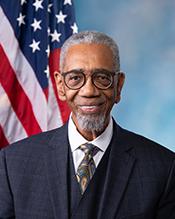
Mr. Speaker, I certainly want to thank the gentlewoman from California for her outstanding, steadfast leadership not only on this issue and in this regard but for all the work that she has done on…
Mr. Speaker, I certainly want to thank the gentlewoman from California for her outstanding, steadfast leadership not only on this issue and in this regard but for all the work that she has done on behalf of the people called Americans, people who are in this Nation.
Mr. Speaker, the Bible tells us that the glory of the Lord is our strength. We are strengthened in order to glorify him and glorify his creation.
I think of that particular scripture as I think of Rosa Parks. You see, because ordinarily back in 1955, a person who was an African American, called ``colored'' at the time, was supposed to respect a system that denied the dignity of African Americans, of blacks, during that time. So tradition had it that once you got on a bus, you could take a seat at the back of the bus as long as there was not a white person who needed a seat; and if there was a white person who needed a seat on the bus, then the black person was, out of honor and a sense of second-class citizenship, to rise up and give that white person their seat on the bus. That was wrong, and today we all realize how wrong that system was.
The Lord, in my estimation, had some serious problems with that kind of a system, and he wanted that system corrected. So in a singular moment, in the batting of an eye, he whispered to Rosa Parks, ``Don't move. Sit there. I will protect you. I will be with you. I have a hedge, a protection, that surrounds you. Sit there. And just in case you are not listening to me, I want you to think about Emmett Till. Remember Emmett Till. But just sit there. Whatever you have to do, just sit there, because I have got something that I want you to do. I have got something, a task, a goal, an objective for you to accomplish. I want you to teach the world, teach this Nation, about what I can do using an ordinary woman to accomplish some extraordinary things.''
So, Rosa Parks sat there. This humble seamstress from the South did not realize that just by her sitting there, that she was beginning to stitch together a torn fabric called America and that she was beginning to stand by sitting. The Lord in his glory uses ordinary people to accomplish extraordinary things.
Mr. Speaker, I am a product of the civil rights movement. I was raised in the civil rights movement. I started out in the Student Nonviolent Coordinating Committee, and then I became a member of the Black Panther Party. In all of my activities in the civil rights movement, I focused on the strength, the calmness, the deep commitment of Rosa Parks.
I know that without Rosa Parks, there would not be 40 members of the Congressional Black Caucus today. Without Rosa Parks, we would not have an African American in the U.S. Senate. Mr. Speaker, I know that without Rosa Parks, we would not have the successes that we have been able to enjoy over these last few years here in America.
Mr. Speaker, I want us to realize that there was more to Rosa Parks than just what happened in Montgomery, in the borders of this country. By her taking that simple act, which took enormous courage and commitment and resolve and persistence, by her taking that one act, she inspired an entire world.
Mr. Speaker, as I close my eyes, and if I look across the landscape of this world, and as I look in Europe, I see images, I see Lech Walesa in Poland being inspired by the actions, the sitting down of Rosa Parks in Montgomery, Alabama. As I look in China, I see the students in Tiananmen Square being inspired by Rosa Parks. And as I look to Africa, I see Nelson Mandela being inspired by Rosa Parks sitting down. And as I look in Latin America, I see youth groups and I see the students in Colombia and other places being inspired by the legacy of Rosa Parks sitting down. Of course, we all know here in this Nation, Dr. Martin Luther King was brought to the forefront of the world's consciousness by Rosa Parks sitting down.
So, Mr. Speaker, it is with deep honor, profound privilege, deep- seated admiration and undying love that I stand here as a Member of Congress, a product of the civil rights movement, a young boy who remembered the segregated buses as a lad in Albany, Georgia. I stand here today proud of being a Member of this Congress, proud of the Senate, proud of the House of Representatives, but I am just so, so, so, so proud that I lived in a generation that not only heard about Rosa Parks, but walked with Rosa Parks, that talked with Rosa Parks, that was able to touch just the hem of the seamstress' garment.
Mr. Speaker, I support this resolution.

Mr. Speaker, I thank the gentlewoman for allowing me this opportunity to speak. I thank both Houses of the United States Congress for permitting a lady of honor to be honored in a House of honor. I…
Mr. Speaker, I thank the gentlewoman for allowing me this opportunity to speak. I thank both Houses of the United States Congress for permitting a lady of honor to be honored in a House of honor. I thank both sides. There are times when events come upon our lives when politics fades, color fades, and America comes together as one Nation under God, exhibiting liberty and justice for all people.
Ms. Rosa Parks inspired me to run for Congress. When I first arrived in Congress, my first act in Congress was to create legislation that would award Rosa Parks the Congressional Gold Medal. It was overwhelmingly supported by both the House of Representatives and the United States Senate, for which she was so grateful.
Here was a woman who was not seeking out attention. She just got on the bus one day, and the rule was when the section in which you were sitting as an African American fills up, you got up and moved back to allow more sit-down room for a people of a different color. Rosa Parks got up twice and moved back. The third time when she was ordered to move, she refused to move, thus having those who would have to move to have to make the next move.
We will hear time and time again that as Rosa Parks sat down, the whole world stood up in gratitude and in praise of a woman who had the courage to do this. She often reminds me of a philosopher, I think it was Thoreau, who said, if I do not march by the drumbeat, it is because I hear a different drummer. So Rosa Parks marched by the drumbeat that she heard that was in pursuit of liberty, in pursuit of equality, in pursuit of justice for all people, for which I am so proud.
She may not have worn her religion on her sleeve, but she acted like Dorcas in biblical history, a seamstress, who made garments for the less privileged, who gave garments to people who could not afford garments so they had clothes to wear. So Rosa Parks is like a Dorcas who gave what she could whenever she could, and I am so proud of the fact that I knew her personally.
Almost 50 ago, Rosa Parks made history in this Nation. She became affectionately known as the mother of the civil rights movement. If we had not had that event, we probably would never have heard of Martin Luther King. That is why she is the mother of the civil rights movement.
I want to thank the House of Representatives and the United States Senate for bestowing this honor on such a unique individual, not because she is black, not because she is a woman, but because she is highly deserving of this unique opportunity to have her remains lay in state here to allow people of Washington, DC, and the surrounding area to come here and pay homage to one of the finest individuals who ever walked the halls of the United States Congress when she received a gold medal, one of the finest individuals that ever lived.
And I am grateful that she lived in my lifetime. So I thank them very much again for those who were inspired to do this. Congratulations on a job well up done, representing a woman who had a job that was well done.

Mr. Speaker, this week our Nation lost a pioneer of the modern civil rights movement, and I rise today to honor her and pay tribute to her memory. Rosa Parks inspired generations of activists by…
Mr. Speaker, this week our Nation lost a pioneer of the modern civil rights movement, and I rise today to honor her and pay tribute to her memory. Rosa Parks inspired generations of activists by refusing to give up her seat on a Montgomery bus.
Born Rosa McCauley on February 4, 1913, in Tuskegee, Alabama, she was the daughter of a carpenter and a teacher. She was small for her age and suffered from poor health, including chronic tonsillitis. She was very young when her parents separated, and she moved to Pine Level, Alabama, with her mother. Rosa was forced to leave school to care for her aging grandmother.
She married barber Raymond Parks in 1932, at her mother's house. It was not until the year following her wedding that Ms. Parks, with the encouragement of her husband, received her high school diploma. She and her husband shared a passion for civil rights. Her husband was an early defender of the Scottsboro Boys, the group of young African Americans who were falsely accused of raping two white women in Scottsboro, Alabama.
It took three attempts for Ms. Parks to register to vote in 1945. The administrator failed her the first two times she took the literacy test. The third time she took the test, she wrote all of her answers on a second piece of paper in the event she would later need to prove she should have passed. Ms. Parks was a volunteer secretary to the president of the Montgomery chapter of the NAACP.
In 1955, Rosa Parks was working as a seamstress for the Montgomery Fair department store. On the evening of December 1, 1955, as she waited for a bus to take her home, she had to let a full bus go by. She then boarded a second bus and sat in the middle section next to an African American man. At the next stop, several white people boarded and filled the seats reserved for them, but one white man was left standing. She refused to give up her seat to this man, and the bus driver called the police and had her arrested.
The outrage over her arrest inspired the Montgomery bus boycott and the beginning of the modern civil rights movement. The Montgomery bus boycott ended after the United States Supreme Court on November 13, 1956, declared segregation on buses unconstitutional.
Near the end of her life, Rosa Parks deservedly received many accolades. A museum and library facility located on the Montgomery corner where she boarded the bus is named for her. She has received the Medal of Honor, the highest award bestowed by the U.S. government, and the Presidential Medal of Freedom, the Nation's highest civilian award.
Mr. Speaker, I ask my colleagues to join me in remembering the mother of the modern civil rights movement. A brave American who changed our country for the better, a dedicated and long-time advocate for civil rights, she is a woman whose courage forever changed America for the better.
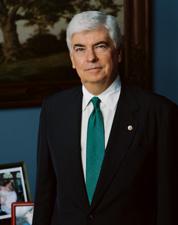
Mr. President, on Monday, this Nation lost a great American humanitarian, public servant, and true modern day civil rights hero, Mrs. Rosa Parks. The powerful and nonviolent act of defiance of this…
Mr. President, on Monday, this Nation lost a great American humanitarian, public servant, and true modern day civil rights hero, Mrs. Rosa Parks. The powerful and nonviolent act of defiance of this single, extraordinary lady changed the course of human history in this Nation, and around the world. By her respectful refusal to give up her seat to a white man and move to a seat in the back of a Montgomery, AL, city bus 50 years ago, Rosa Parks spoke to the fundamental truth of our democracy: that all men are created equal. None of us living today, nor the future generations of an eternity of tomorrows, will ever be the same because of the act of this brave woman. By her solitary action, Rosa Parks proved that one person can make a difference. And she did.
Rosa Parks is not just a national hero, she is the embodiment of our social and human conscience and the spark that lit the flame of liberty and equality for African Americans and minority groups in this country and around the globe. Nelson Mandela, the former President of South Africa, once called her ``the David who challenged Goliath'' and his inspiration during his long imprisonment prior to taking office.
It is altogether fitting and proper that this Nation honor the memory and gentle spirit of this great American and her legacy by providing an opportunity for the ordinary citizens of this Nation to pay their last respects to Mrs. Rosa Parks.
Therefore, I proposed to the Senate leadership that we adopt a resolution authorizing such, and I am grateful to them for sponsoring the resolution that I authored to authorize the use of the Capitol Rotunda for the remains of Mrs. Rosa Parks to lie in honor beginning on Sunday, October 30.
It has been the longstanding tradition of the Congress to authorize this honor for not just Members of Congress and Presidents, but ordinary citizens whose extraordinary efforts and service distinguished them in the history of this Nation. Other great Americans who have been similarly honored date back to 1909 when Pierre Charles L'Enfant, planner of the Capital City of Washington, lay in state in the Rotunda. Others include Admiral George Dewey in 1917; General John Joseph Pershing in 1948; General Douglas MacArthur in 1964; Director of the FBI, J. Edgar Hoover in 1972; and most recently, Capitol Police Officers Jacob Joseph Chestnut and John Michael Gibson in 1998.
Congress recognized the need for the Nation to pay its respects to these honorable men and Congress should permit the Nation to pay its last respects to this honorable woman, Mrs. Rosa Louise Parks, as well.
I thank my colleagues for their assistance and support and urge the House to adopt this measure expeditiously so that America may properly honor this courageous lady and great America.
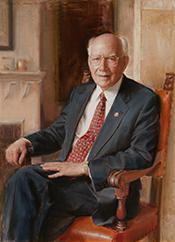
Mr. Speaker, I ask unanimous consent that the Committee on House Administration be discharged from further consideration of the Senate concurrent resolution (S. Con. Res. 61) authorizing the remains…
Mr. Speaker, I ask unanimous consent that the Committee on House Administration be discharged from further consideration of the Senate concurrent resolution (S. Con. Res. 61) authorizing the remains of Rosa Parks to lie in honor in the rotunda of the Capitol, and ask for its immediate consideration.
Mr. Speaker, I rise today in support of Senate Concurrent Resolution 61, a resolution authorizing the remains of Rosa Parks to lie in honor in the rotunda of the Capitol.
Mr. Speaker, the Nation suffered a great loss on Monday with the passing of the Mother of the Civil Rights Movement, Mrs. Rosa Parks. She had no idea that on December 1, 1955, when she was jailed for refusing to give up her seat on a bus in Montgomery, Alabama, that she would inspire Reverend Martin Luther King, Jr., to lead a 381-day boycott of that city's bus system, touching off the civil rights movement.
Due to the national publicity of the boycott and her active involvement in the NAACP, she had difficulty finding employment in Alabama. Therefore, she and her husband, Raymond Parks, moved north to Detroit in 1957. In 1965 my colleague, the gentleman from Michigan (Mr. Conyers), hired Mrs. Parks as a legislative aid. She worked for him until her retirement from congressional work in 1988 to focus all of her attention on the Rosa and Raymond Parks Institute For Self Development. This nonprofit organization is committed to working with Detroit's youth to build leadership skills and inspire them to continue her work on civil and human rights.
I am especially pleased as a Representative from the State of Michigan to claim the honor of having her as a resident in our State, and also I am very pleased that we have a park in downtown Grand Rapids, Michigan, which is named for Rosa Parks and to signify her importance in our Nation.
She was a remarkable person. Her courage and her tenacity sparked the civil rights movements which led to the reversal of some very repressive laws in this country and brought this Nation to its feet in favor of civil rights for all individuals no matter what race, gender, or color. I am very proud to be here to speak as a native of Michigan on her behalf.
In 1999, the United States Congress honored Mrs. Parks in the rotunda of the Capitol by awarding her with the Congressional Gold Medal, our Nation's highest expression of national appreciation for distinguished achievements and contributions.
Mr. Speaker, I think it is only fitting that we allow the Nation to pay its final respects to this great American by allowing her to lie in honor in the rotunda of the Capitol.
Mr. Speaker, I ask for support of this resolution.
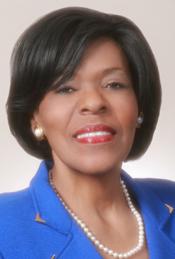
Mr. Speaker, I thank the gentlewoman for yielding and let me thank the Speaker for the time. I want to praise and give God honor for all that has happened over the last week and certainly for the…
Mr. Speaker, I thank the gentlewoman for yielding and let me thank the Speaker for the time.
I want to praise and give God honor for all that has happened over the last
week and certainly for the life of Mrs. Rosa Parks.
I want to thank the Senate that had the courage yesterday, its leadership along with the House leadership, for making it possible for Mrs. Parks to lie in honor in the Federal building of the United States, our own Capitol, which will be on Sunday and Monday.
As a young woman 19 years old, I met Mrs. Parks when she sat down on December 1, 1955, that all of us might stand up. I was 10 years old, but we were at the time writing papers about our history, and she was my project, and from then until this day, she has always been a part of my life.
When she moved to Detroit almost 50 years ago, she moved to the then- 15th congressional district, now 13th congressional district, which has gone through five different apportionments, but her homes, three of them, have always been in my congressional district.
She was my heroine. She was my mentor. She invited me to speak at her church on women's day on two different occasions. I am an African Methodist Episcopalian, an AME as we call ourselves.
So I am honored that America will have her in the Halls of this Congress, in the Halls of our government to pay homage so that other people can attest to her greatness as she has done not just for our country but for our entire world.
I was honored in 2000 as a member of the Committee on Appropriations that I was able to bring $1 million which was concurred in by the House and Senate to the Rosa and Raymond Parks Institute for Civil Development, which works with young people to build character, to build academic preparedness, so that they understand what the civil rights movement is and was today.
Rosa Parks helped more young people in America, even today as we go forward when our city of Detroit, and I am sure around this country, when a young person sees, hears, or mentions her name, they are filled with life, spirit. The self-respect that Mrs. Parks showed in her life, we as Americans must have. When you respect yourself, you walk a little different. You do not stand for injustice. You speak out and build a better family, a better community and, yes, a better country. That is what Mrs. Parks did.
We will celebrate her again on December 1, 2005, 50 years of an ordinary woman doing extraordinary things. We love you, Mother Parks. Thank you, highest government in the world, for paying homage to our mother, our leader. May she rest in peace and may we as an American people rise up and build.
Mr. Speaker, fifty years ago a small group of Americans, set out to ensure that America lived up to its promise of providing equal rights to all. They forced America to reach for her great potential…
Mr. Speaker, fifty years ago a small group of Americans, set out to ensure that America lived up to its promise of providing equal rights to all. They forced America to reach for her great potential and changed the destiny of not only a nation but the entire world. I rise today to honor the legacy and memory of the woman who gave life to this small group of Americans, the mother of the civil rights movement, Mrs. Rosa Parks.
Rosa Louise McCauley was born in Tuskegee, Alabama, on February 4, 1913. In 1932 she married a barber named Raymond Parks. Prior to her arrest they both were very active in the voter registration movement and with the National Association for the Advancement of Colored People, where she also worked as a secretary in 1943. Those who knew her best described her as being hardworking, polite and morally upright.
On December 1, 1955 Parks took a seat in the front of the black section of a city bus in Montgomery, Alabama. The bus filled up and the bus driver demanded that she move so a white male passenger could have her seat. When Parks refused to give up her seat she was arrested. Four days following her arrest, a group of dedicated young individuals founded the Montgomery Improvement Association and named Martin Luther King Jr., their leader. King led a successful boycott of the transportation system and went on to lead the modem civil rights movement ensuring that every American was guaranteed equal rights under the law.
Rosa Parks was truly a courageous person. Her refusal to give up her seat in the face of the powerful forces of injustice helped to galvanize the long-overdue struggle for civil rights. She sat down in order to show us that we have tremendous power when we stand up. All Americans, regardless of race or creed, owe Mrs. Parks a debt of gratitude for her contribution to the national movement for a better America.
Mr. Speaker, although she is gone, the power of her actions remain with us. As she said, ``Memories of our lives, of our worth and our deeds will continue in others.'' I hope that we heed those comments today as we continue the fight for equal rights and social justice. I thank her for her courage and I ask that my colleagues join me in honoring her memory.
Mr. Speaker, today we honor the life and legacy of Rosa Parks. On October 24, Rosa Parks died in Detroit at the age of 92. I join all of my colleagues and on behalf of my constituents express sorrow…
Mr. Speaker, today we honor the life and legacy of Rosa Parks. On October 24, Rosa Parks died in Detroit at the age of 92. I join all of my colleagues and on behalf of my constituents express sorrow on the death of Rosa Parks, the woman many consider the mother of the civil rights movement.
Rosa Parks' refusal to give up her seat on a bus to a white person on December 1, 1955, touched off the 381-day Montgomery bus boycott, and led to the repeal of so-called Jim Crow laws of segregation in the South. It is the courage, dignity, and determination that Ms. Parks exemplified on that day that allows most historians to credit her with beginning the modern day civil rights movement. The events that began on that bus captivated the Nation and transformed a 26-year-old preacher, Martin Luther King Jr., into a major civil rights leader. ``Mrs. Parks' arrest was the precipitating factor rather than the cause of the protest,'' King wrote in his 1958 book, ``Stride Toward Freedom.'' ``The cause lay deep in the record of similar injustices.''
Rosa Parks didn't set out to be a hero. But by taking a stand, she became the catalyst for a profound change in American society, and the walls of segregation came tumbling down. Rosa Parks is a national treasure and an inspiration for the ongoing fight for social equality. She reminds us that the pursuit for justice is an obligation for all instead of a choice for some. She was one small woman who had a big impact and empowered individuals. Her life's work is a shining light in our Nation's history.
Rosa Parks said, ``I'd like people to say I'm a person who always wanted to be free and wanted it not only for myself; freedom is for all human beings.''
This year marks the 50th Anniversary of Rosa Parks' courageous and defiant act of civil disobedience. As we honor her life and legacy, I ask the Congress and the great people of this Nation to work with the same courage, dignity, and determination exemplified by Rosa Parks to address and change modern day inequalities and injustices. I know that this Congress and the people of this Nation can work to further the ideals of Rosa Parks and the Civil Rights Movement.
Show 10 more
Mr. Speaker, today, I rise to pay tribute to the memory of a great American hero and pioneer in the struggle for equality and civil rights in America, Ms. Rosa Parks. An old Chinese proverb says that…
Mr. Speaker, today, I rise to pay tribute to the memory of a great American hero and pioneer in the struggle for equality and civil rights in America, Ms. Rosa Parks.
An old Chinese proverb says that the loftiest towers rise from the ground. So too it is with Rosa Parks. Her refusal to get up and move to the back of the bus so that a white man could take her seat was a catalyst for the national civil rights movement and a later Supreme Court decision overturning legalized segregation.
At the time, she said she was just trying to get home from work. Reflecting on the significance of her actions years later, Ms. Parks said, ``Whatever my individual desires were to be free, I was not alone. There were many others who felt the same way.''
Indeed, there were. And there are many more to this day. Thanks to the courage of a woman just trying to get home from work in 1955.
Rosa Parks founded the Rosa and Raymond Parks Institute for Self Development. Through the institute, she sponsored a program for teenagers to learn the history of our country and the civil rights movement by touring the country in buses. She received the Congressional Gold Medal of Honor in 1999 and continued her struggle against racial injustice till her passing.
And Congress is expected to approve soon an historic resolution making Rosa Parks the first woman in our country's history to lay in state in the Capitol Rotunda of the United States Congress.
Rosa Parks' courage and determination changed our country. There is, of course, too much intolerance and injustice still in our society today. No one person can change all that. But each and every one of us can and should take the lesson from the life of Ms. Parks, that we can improve our society and ourselves by standing up for what we believe is right--or, as in her case, by sitting down.
While I mourn her passing now, I join the millions of Americans throughout our great country who will celebrate the accomplishments of her rich life forever. Thank you, Rosa Parks, for your life.
Mr. Speaker, I join my colleagues today in honoring and celebrating the life of Rosa Parks, whose simple act of taking a seat on a bus woke our Nation's conscience and galvanized our civil rights…
Mr. Speaker, I join my colleagues today in honoring and celebrating the life of Rosa Parks, whose simple act of taking a seat on a bus woke our Nation's conscience and galvanized our civil rights movement.
On December 1, 1955, Rosa Parks, a seamstress and wife, boarded a Montgomery, Alabama bus to begin her usual journey home. Nothing was particularly different about this day, except that she wanted to sit after a long day's work. When ordered by the white bus driver to give up her seat to a white passenger, she simply refused, and her action set in motion a series of events that led to the desegregation of the South.
This was a stunning moment in time, not just a step along the way. This was the moment for our civil rights movement and ultimately resulted in two of our Nation's landmark pieces of legislation, the Civil Rights Act and the Voting Rights Act.
I am amazed too by this woman's fortitude, her inner strength and her calm demeanor in the face of these injustices. Her reaction stands in stark contrast to so many feelings we associate with that era--she was resolute, quiet and full of determination.
I've read that on the day of her court appearance, a girl there yelled, ``Oh, she's so sweet. They've messed with the wrong one now!'' I'm sure that this girl, looking back on that same moment, cannot now believe how right she was.
Today, we offer our condolences to Rosa Parks' family. It seems to me it is a fitting tribute to honor the mother of the civil rights movement by making her the first woman to lie in honor at the Capitol.
Mr. Speaker, I rise to pay tribute to the lives of two great Americans that changed the course of our Nation's history through their courage and commitment to the basic and fundamental right of…
Mr. Speaker, I rise to pay tribute to the lives of two great Americans that
changed the course of our Nation's history through their courage and commitment to the basic and fundamental right of equality for all.
Rosa Parks embodied perseverance and tenacity, and through her fearless actions 50 years ago this courageous woman sparked a massive boycott that launched America's civil rights movement. Her lonely act of bravery brought to light the prejudice that the African American community faced and inspired a movement of justice and equality for Americans regardless of race.
Another great American that personified this ideal was former Congressman Edward Ross Roybal. A true public servant to this Nation and advocate for equality, Congressman Roybal was a resounding voice for Latinos and led initiatives to advance the rights of our Nation's most vulnerable communities.
Representative Roybal's life was marked by a distinguished career in the struggle against discrimination and the fight for equal opportunities for all Americans in health and education.
Congressman Roybal brought Latino issues to the forefront of national debate, a legacy that continues today with the Congressional Hispanic Caucus which he worked so hard to found.
Rosa Parks and Edward Roybal, through their individual actions, promoted the advancement of all people in this great Nation. They are an inspiration to all Americans, and their legacy must not be forgotten. We must continue to follow their steps in the fight for freedom, justice and equality.
Mr. Speaker, I thank the gentlewoman from California (Ms. Millender-McDonald) for yielding me this time, and I also thank all who have supported this resolution on both sides of the aisle. It could…
Mr. Speaker, I thank the gentlewoman from California (Ms. Millender-McDonald) for yielding me this time, and I also thank all who have supported this resolution on both sides of the aisle. It could not happen without the benefit of both sides working together. This is a great moment in history.
Mr. Speaker, I also thank God for the honorable Rosa Parks. It is amazing how God can use what appears to be an ordinary person to do an extraordinary thing. She was not a great lawyer; however, she changed the laws of discrimination in this country. She was not a superstar; however, she cast the light of truth on the horrors of segregation. She was not a fiery orator; however, by taking her seat, she ignited that spark that started the civil rights movement.
Thank God she took that seat. Because she took that seat, no one has to sit in the back of the bus. Because she took that seat, we can all sit at the table of brotherhood as brothers and sisters, members of one race, the human race. Because she took that seat, I can stand in the well of the House of Representatives of the United States of America.
Thank God for the honorable Rosa Parks. She was an angel of hope for the hopeless, a saint of help for the helpless. She represents the quintessential manifestation of God's miraculous power.
Mr. Speaker, she has earned the right to lie in honor, and I thank God we have the good sense to make it happen.

Mr. Speaker, it is an honor to allow the American people to pay their last respects to Rosa Parks in the United States Capitol. This unique honor befits and does justice to the life led by Rosa…
Mr. Speaker, it is an honor to allow the American people to pay their last respects to Rosa Parks in the United States Capitol. This unique honor befits and does justice to the life led by Rosa Parks.
In honoring her legacy in this way, we are reminded that the power of one person, acting with a singularity of purpose, driven by the ideals of justice, is infinite. And as we grieve the loss of Rosa Parks, we recommit ourselves to her lifelong struggle to create an America that reflects the hopes and aspirations of all of its citizens.
The Capitol Rotunda has been used for this honor only 28 times since 1852, and Rosa Parks will be the first woman ever accorded this honor. She joins the esteemed company of Presidents Abraham Lincoln, John F. Kennedy, Dwight Eisenhower and Lyndon B. Johnson, General Douglas MacArthur and the remains of several unknown soldiers. It is, without question, a fitting mark of respect.
Rosa Parks changed history through the quiet rebellion of refusing to be refused. In honor of this remarkable woman and her indomitable spirit, we must recommit to rooting out injustice wherever it takes harbor, even if doing so comes at great personal cost.
As House Democratic Leader, it is a privilege to join all my colleagues in tribute to Rosa Parks, and to offer the American people an opportunity to pay their respects to her extraordinary life.
Mr. Speaker, many people too easily forget that the rights and privileges we enjoy today did not come easily. They did not come without struggle, without suffering, without sacrifice. The passing…
Mr. Speaker, many people too easily forget that the rights and privileges we enjoy today did not come easily. They did not come without struggle, without suffering, without sacrifice.
The passing this week of Rosa Parks should remind all of us that freedom does not come free. It comes, partly, because a middle aged African American woman in Montgomery, Alabama was tired from yet another long day's work as a seamstress. She was too tired to give up her seat at the front of the bus to a white man--as the racist Jim Crow Laws of the time required her to. Her simple act of defiance inspired a city, inspired a movement and inspired a nation. And her courage inspired me to get more deeply involved in the struggle for civil rights in our country.
Mr. Speaker, freedom is not free. It must be earned and nutured by the courage and commitment of patriots like Rosa Parks.
Mr. Speaker, Rosa Parks has helped make our nation a fairer, better country for all Americans, no matter their race, creed, sex, or national origin. It is right and fitting that this Congress of the United States recognize the contribution to our nation made by Rosa Parks.
I am honored to support this concurrent resolution authorizing her body to lie in honor in the Rotunda of the U.S. Capitol.

Mr. Speaker, with the death of Rosa Parks, America has lost one of the great icons of the modem civil rights movement. No one could have known on that December day in 1955 what a great impact her…
Mr. Speaker, with the death of Rosa Parks, America has lost one of the great icons of the modem civil rights movement. No one could have known on that December day in 1955 what a great impact her simple yet courageous gesture would have on changing a perverse injustice in American society.
Mrs. Parks took a seat on a bus in Montgomery, Alabama after a long day at work. A white man approached her and wanted to take her seat. As was the custom at the time, she was expected to give up that seat. This happened countless times before in countless cities and towns all across the South. But this time was different. This time Rosa Parks decided to say ``no'' to this injustice, ``no'' to this ridicule, ``no'' to this insult.
By simply saying ``no,'' Rosa Parks set off a chain of events that in the subsequent months led to the U.S. Supreme Court decision that segregation in public transportation was unconstitutional.
Having the courage to refuse to accept injustice freed people of the subjugation of an oppressive society.
While we have lost Rosa Parks in life, we have not lost the memory of her life's acts. She will endure as an inspiration to freedom loving people for generations to come.
Mr. Speaker, on December 1, 1955, on a bus in Montgomery, Alabama, the conscience of the Nation was rallied by a seamstress from Tuskegee. ``The only tired I was,'' Rosa Parks once remarked about…
Mr. Speaker, on December 1, 1955, on a bus in Montgomery, Alabama, the conscience of the Nation was rallied by a seamstress from Tuskegee. ``The only tired I was,'' Rosa Parks once remarked about that day, ``was tired of giving in.''
The injustice of racial segregation was overcome because so many ordinary people rallied to a great and noble cause, because so many ordinary people recognized an injustice and were tired of it. Rosa Parks' legacy is to have peacefully compelled our great nation to face up to its greatest shortcoming. As so many have said, Rosa Parks stood up by sitting down.
Mr. Speaker, I am proud this chamber has today adopted a resolution (S. Con. Res. 61) to allow Ms. Parks to lie in honor in the rotunda of the United States Capitol, so that all citizens of our great Nation may pay their last respects. There must be room in this building for not only members of Congress and Presidents, but also for a seamstress and her moral legacy.

Mr. President, I ask unanimous consent that the Senate proceed to the immediate consideration of S. Con. Res. 61, submitted early today. Mr. President, I ask unanimous consent that the concurrent…
Mr. President, I ask unanimous consent that the Senate proceed to the immediate consideration of S. Con. Res. 61, submitted early today.
Mr. President, I ask unanimous consent that the concurrent resolution be agreed to, the
motion to reconsider be laid upon the table, and that any statements relating thereto be printed in the Record, without intervening action or debate.
Mr. Speaker, I ask unanimous consent that all Members may have 5 legislative days within which to revise and extend their remarks and include extraneous material on S. Con. Res. 61.
Mr. Speaker, I ask unanimous consent that all Members may have 5 legislative days within which to revise and extend their remarks and include extraneous material on S. Con. Res. 61.
Bill Text
4 versions available
        [Congressional Bills 109th Congress]
[From the U.S. Government Publishing Office]
[S. Con. Res. 61 Enrolled Bill (ENR)]

S.Con.Res.61
Agreed to October 27, 2005

One Hundred Ninth Congress

of the

United States of America

AT THE FIRST SESSION

Begun and held at the City of Washington on Tuesday,
the fourth day of January, two thousand and five

Concurrent Resolution

Resolved by the Senate (the House of Representatives concurring),
That, in recognition of the historic contributions of Rosa Parks, her
remains be permitted to lie in honor in the rotunda of the Capitol from
October 30 to October 31, 2005, so that the citizens of the United
States may pay their last respects to this great American. The
Architect of the Capitol, under the direction and supervision of the
President pro tempore of the Senate and the Speaker of the House of
Representatives, shall take all necessary steps for the accomplishment
of that purpose.
Attest:

Secretary of the Senate.

Attest:

Clerk of the House of Representatives.