A resolution recognizing the contributions of the late Zhao Ziyang to the people of China.
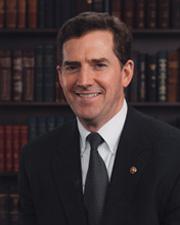
 Sen. Lindsey Graham (R-SC)
Legislative Activity
Stay on top of the latest movement without scrolling through every action
Resolution agreed to in Senate without amendment and with a preamble by Unanimous Consent. (text: CR S1956)
March 2, 2005
View full timeline
Introduced in Senate
February 16, 2005
Referred to the Committee on Foreign Relations. (text of measure as introduced: CR S1559-1560)
February 16, 2005
Senate Committee on Foreign Relations discharged by Unanimous Consent. (consideration: CR S1956)
March 2, 2005
Resolution agreed to in Senate without amendment and with a preamble by Unanimous Consent. (text: CR S1956)
March 2, 2005
Floor Debate
1 memberWhat members said about S.Res. 55 on the floor
Floor Debate
1 memberWhat members said about S.Res. 55 on the floor
I ask unanimous consent that the Foreign Relations Committee be discharged from further consideration and the Senate now proceed to S. Res. 55. I ask unanimous consent that the resolution be agreed…
Bill Text
2 versions available
        [Congressional Bills 109th Congress]
[From the U.S. Government Publishing Office]
[S. Res. 55 Agreed to Senate (ATS)]

109th CONGRESS
1st Session
S. RES. 55

Recognizing the contributions of the late Zhao Ziyang to the people of
China.

_______________________________________________________________________

IN THE SENATE OF THE UNITED STATES

February 16, 2005

Mr. Graham (for himself, Mr. Lugar, Mr. Biden, Mr. Brownback, Mr.
Dorgan, and Ms. Landrieu) submitted the following resolution; which was
referred to the Committee on Foreign Relations

March 2, 2005

Committee discharged; considered and agreed to

_______________________________________________________________________

RESOLUTION

Recognizing the contributions of the late Zhao Ziyang to the people of
China.

Whereas leading reformist and former Chinese Communist Party Secretary General,
Zhao Ziyang, died under house arrest in China on January 17, 2005, at
the age of 85;
Whereas Zhao implemented important agricultural, industrial, and economic
reforms in China and rose to the prominent positions of premier and
Secretary General within the Communist Party despite criticisms of his
capitalist ideals;
Whereas, in the early summer of 1989, students gathered in Tiananmen Square to
voice their support for democracy and to protest the Communist
government that continues to deny them that democracy;
Whereas Secretary General Zhao advised against the use of military force to end
the pro-democracy protests in Tiananmen Square;
Whereas, on May 19, 1989, in Tiananmen Square, Zhao warned the tens of thousands
of students clamoring for democracy that the authorities were
approaching and urged them to return to their homes; an action that
illustrated his sympathy for their cause;
Whereas Zhao was consequently relieved of all leadership responsibilities
following his actions in Tiananmen Square that summer and was placed
under house arrest for the remaining years of his life;
Whereas the Government of China remained indecisive regarding a ceremony for
Zhao for several days before allowing a relatively modest ceremony at
the Babaoshan Revolutionary Cemetery in Beijing, where Zhao was cremated
on January 29, 2005;
Whereas the Government of China's fear of civil unrest resulted in the
prohibition of political dissidents and others from the funeral, and the
thousands who were in attendance were surrounded in an intimidating
environment without adequate time to mourn and grieve;
Whereas news of Zhao's death was announced only in a brief notice by the
Communist government and was forbidden to be covered by the radio or
national television, while eulogies were erased by censors from memorial
websites;
Whereas, upon the announcement of Zhao's death, Chinese news agencies were
certain to reference the ``serious mistake'' committed by Zhao at what
they refer to as a political incident in 1989;
Whereas mourning the death of Zhao in the Hong Kong Legislative Council was
deemed unconstitutional and lawmakers in Hong Kong were refused the
opportunity to observe a moment of silence in honor of his life;
Whereas the death of Zhao has renewed the desire of certain Chinese people for a
reassessment of the crackdown in 1989 in order to acknowledge the merit
of pro-democracy student demonstrations and complaints of government
corruption; and
Whereas Zhao will continue to serve as a symbol of the dreams and purpose of the
1989 Tiananmen Square demonstration, which survived the Tiananmen
massacre but which have still not been realized for the people of China:
Now, therefore, be it
Resolved, That the Senate--
(1) recognizes that Zhao Ziyang made an important
contribution to the people of China by providing assistance to
the students in Tiananmen Square in 1989, and that through this
contribution and his decisions to actively seek reform, Zhao
remains a symbol of hope for reform and human rights for the
people of China;
(2) expresses sympathy for Zhao's family and to the people
of China who were unable to appropriately mourn his death or to
celebrate his life;
(3) calls on the Government of China--
(A) to release all prisoners of conscience,
including those persons still in prison as a result of
their participation in the peaceful pro-democracy
protests in Tiananmen Square in 1989; and
(B) to allow those people exiled on account of
their activities to return to live in freedom in China;
and
(4) stands with the people of China as they strive to
improve their way of life and create a government that is truly
democratic and respectful of international norms in the area of
human rights.
<all>