Recognizing and celebrating the centennial of Oklahoma statehood.
Legislative Activity
Stay on top of the latest movement without scrolling through every action
Referred to the Committee on the Judiciary.
December 19, 2007
View full timeline
Introduced in House
November 13, 2007
Referred to the House Committee on Oversight and Government Reform.
November 13, 2007
Committee Consideration and Mark-up Session Held.
December 12, 2007
Ordered to be Reported by Voice Vote.
December 12, 2007
Ms. Norton moved to suspend the rules and agree to the resolution.
December 17, 2007 • 12:55 PM
Considered under suspension of the rules. (consideration: CR H15479-15480)
December 17, 2007 • 12:56 PM
DEBATE - The House proceeded with forty minutes of debate on H. Con. Res. 254.
December 17, 2007 • 12:56 PM
At the conclusion of debate, the Yeas and Nays were demanded and ordered. Pursuant to the provisions of clause 8, rule XX, the Chair announced that further proceedings on the motion would be postponed.
December 17, 2007 • 1:00 PM
Considered as unfinished business. (consideration: CR H15726-15727)
December 17, 2007 • 10:29 PM
Passed/agreed to in House: On motion to suspend the rules and agree to the resolution Agreed to by the Yeas and Nays: (2/3 required): 403 - 1, 1 Present (Roll no. 1173).(text: CR H15479-15480)
December 17, 2007 • 10:38 PM
On motion to suspend the rules and agree to the resolution Agreed to by the Yeas and Nays: (2/3 required): 403 - 1, 1 Present (Roll no. 1173). (text: CR H15479-15480)
December 17, 2007 • 10:38 PM
Motion to reconsider laid on the table Agreed to without objection.
December 17, 2007 • 10:38 PM
Received in the Senate.
December 18, 2007
Voting History
1 vote recorded • Roll call available
Floor Debate
20 membersWhat members said about H.Con.Res. 254 on the floor
 JES
JES JLO
JLO DRO
DRO MU
MU RR+15
RR+15
Floor Debate
20 membersWhat members said about H.Con.Res. 254 on the floor
Mr. Speaker, I rise tonight to take a moment to highlight some of the provisions that were included in the Financial Services and General Government section of the omnibus appropriations legislation…
Mr. Speaker, I rise tonight to take a moment to highlight some of the provisions that were included in the Financial Services and General Government section of the omnibus appropriations legislation that we are considering this evening.
Despite a limited allocation, and multiple cuts subsequent to the House passed bill, the Financial Services and General Government portion reflects the commitment that I made when I became chairman to work on behalf of our consumers and to bring the priorities of the agencies that this bill funds closer to the needs of our citizens, especially the most disadvantaged.
The Consumer Product Safety Commission will receive a more than 27 percent increase over 2007 to help keep dangerous products out of the hands of our children. This is especially poignant this holiday season as we shop for safe gifts for our children. Funding for the Federal Trade Commission is increased by 15 percent over 2007 so that we can better address the problems of identity theft and deceptive lending practices, which impact more and more consumers.
We have an obligation to assist our States as they struggle to make sure that our 2008 elections are accurate and reliable. There was included $125 million for grants to help States comply with the Help America Vote Act, including upgrading voting machines and voter registration databases. All citizens want to be sure that their vote will count. This important funding moves us closer to that goal.
I am especially proud that we were able to fund the Community Development Financial Institutions Fund at $94 million, a 72-percent increase over 2007. This fund expands economic development and affordable financial services for underserved communities through housing loans, micro-business loans, and community development banks and credit unions.
It is my firm belief that the Federal Government should not dictate to the District of Columbia how it should manage its own affairs or spend its own money. In this section we took some important steps in this direction by allowing the District of Columbia to use its own local funds for needle exchange programs to help fight the spread of HIV/AIDS. This also removes longstanding restrictions on the use of local funds by District leaders in support of voting representation in the United States Congress. In addition, the District of Columbia, Puerto Rico, and the territories will, with the passage of this omnibus, have quarters with
designs they help select issued in 2009 to honor them and raise awareness of the diverse places that fly the American flag.
The consumers of today and tomorrow must have financial education programs that help them to better understand the complicated financial world in which we operate. The current subprime lending crisis is just one example of how important this funding is in our society today. The Office of Financial Education at the Department of the Treasury will receive $1.1 million, with $200,000 targeted at our future consumers currently in our elementary and high schools, and $200,000 aimed at efforts to protect all consumers against predatory lending. There is also an increase in the Securities and Exchange Commission's budget specifically for investor education and protection.
As our tax forms and obligations become more complicated, we as a government should provide additional taxpayer assistance. In order to address this need, $31.2 million is included above the President's request to increase IRS outreach and education services for taxpayers and small businesses, and tax return preparation services at Taxpayer Assistance Centers. There is an additional $6.7 million above the President's request to improve the services of the Taxpayer Advocate Service and its oversight of the IRS. Eight million is included for a new pilot grant program for Community Volunteer Income Assistance sites and $1 million over the President's request for Low-Income Taxpayer Clinics.
Recognizing the importance of our small businesses, there is an 11 percent increase over 2007 for Small Business Development Centers. The Microloan program is funded at $17 million, which includes the $15 million for technical assistance that had been eliminated in the President's request.
Our Federal workforce will be receiving a 3.5 percent cost-of-living adjustment. In addition, there are provisions to make sure that Federal workers whose jobs are threatened by privatization will have protections to ensure that the competitions against contractors are fair and unbiased. This bill also includes an important provision to improve congressional oversight of the practice of service contracting in Federal agencies. With contracting government-wide having grown to over $400 billion, Congress needs to ensure that it has necessary information on the size and scope of contracting in each agency. The bill will establish a pilot program that will require the Office of Management and Budget, OMB to track the cost and size of service contracts in three Cabinet-level departments. The program will give particular attention to contracts that have been performed poorly by a contractor because of excessive costs or inferior quality. It is also our intent that agencies other than the Department of Defense participate in this program, since the Department of Defense will already be subject to contract inventory requirements included in section 807 of the National Defense Authorization Act, NDAA, for fiscal year 2008.
I also want to clarify our intent with respect to section 739(b) of the Financial Services bill, regarding the use of public-private competition to evaluate the benefits of converting work from contract performance to performance by Federal employees. The NDAA includes section 324 relating to insourcing new and contracted out functions, and the Department of Defense should follow the provisions included in section 324 of its authorization.
There are also important provisions to address real national security needs. Treasury's Office of Terrorism and Financial Intelligence receives $56.8 million to help coordinate with the rest of the U.S. intelligence community and with other countries to combat terrorist financing. The Financial Crimes Enforcement Network receives $85.8 million to increase the number of financial transaction analysts coordinating with intelligence agencies and law enforcement, and the number of staff working to ensure Bank Secrecy Act compliance by financial institutions. Funding is included for additional Treasury staff to improve the review process of the Committee on Foreign Investment in the United States.
I am also proud that this section of the bill recognizes, through real dollars, how we value and want to protect our national heritage. Operating expenses for the National Archives are funded at $315 million in order to restore the research hours that had been reduced and to expand the workforce of professional archivists. The Archives' grant program will receive $9.5 million to assist in the preservation of the historic documents of States, local governments, universities, local historical societies, and others.
Our Financial Services portion will benefit Americans by bringing Government in the agencies funded in this section closer to the people and make it better able to fit its services to their needs. The American people expect and deserve the best services their Government can offer and this is reflected in this pro-consumer section.
Let me conclude by thanking my friend, ranking member, and partner, Congressman Regula, for his hard work and collaboration throughout this process. We might not agree on everything, but we worked together to try and fashion the best possible financial services section. I also want to express my appreciation and thanks for the hard work of our staff, both the majority and the minority. They are dedicated and devoted countless hours to the final product that we are considering today.
I will vote in favor of this omnibus legislation tonight as we move this process forward.
Financial Services and General Government Appropriations, 2008
Supporting consumers, voters, taxpayers, small businesses, and all
Americans
Consumer Issues:
The Consumer Product Safety Commission receives over a 27
percent increase over 2007 to help keep dangerous products
out of children's hands.
The Federal Trade Commission receives a 15 percent increase
over 2007 to help fight identity theft and fraudulent or
deceptive lending practices.
Election integrity:
$125 million is included to assist States in ensuring
accurate and reliable elections as we approach the 2008
presidential election. Within this amount, $10 million is
included for a new program to help states improve the
collection of information relating to the administration of
elections.
$200 thousand is included to help students learn about
elections through a mock election program.
Community economic development:
The Community Development Financial Institutions Fund
receives $94 million, a 72 percent increase over 2007, to
expand economic development and affordable financial services
for distressed communities.
Respect for the District of Columbia and for U.S.
territories:
For the first time in many years, the District of Columbia
may use its local funds to support needle exchange programs
that help fight the spread of HIV/AIDS.
The bill removes longstanding restrictions on the use of
local funds by District leaders in support of voting
representation in the U. S. Congress.
Quarters with designs from Puerto Rico, Guam, the U.S.
Virgin Islands, American Samoa, the Northern Mariana Islands,
and the District of Columbia will be issued in 2009 to honor
and raise awareness of the diverse places that fly the
American flag.
Puerto Rico, for the first time, is eligible to receive the
same proportionate share of election assistance grants that
states receive.
Financial education:
Treasury's Office of Financial Education receives $1.1
million, including $200,000 for efforts aimed at elementary
and high schools, and $200,000 aimed at efforts to protect
consumers against predatory lending.
The Securities and Exchange Commission's budget is
increased to support investor education and protection.
Taxpayer assistance:
$31.2 million above the President's request is to increase
IRS outreach and education services for taxpayers and small
businesses, and tax return preparation services at Taxpayer
Assistance Centers.
$6.7 million above the President's request is to improve
the services of the National Taxpayer Advocate and its
oversight of the IRS.
$8 million is for a new pilot grant program for Community
Volunteer Income Tax Assistance sites.
$1 million above the President's request is provided for
Low-Income Taxpayer Clinics.
Small business assistance:
Small Business Development Centers receive an 11 percent
increase over 2007.
The Microloan program is funded at $17 million. This
includes $15 million for technical assistance, which was
eliminated in the President's request.
Federal workforce:
A 3.5 percent Federal employee pay raise is included.
Federal workers whose jobs are threatened by privatization
will have protections to ensure that competitions against
contractors are fair and unbiased.
Concerns over costly or poorly performed government
contracts are addressed through report requirements that will
enable Congress to exercise greater oversight.
National security:
Treasury's Office of Terrorism and Financial Intelligence
receives $56.8 million to help coordinate with the rest of
the U.S. intelligence community and with other countries to
combat terrorist financing.
The Financial Crimes Enforcement Network receives $85.8
million to increase the number of financial transaction
analysts coordinating with intelligence agencies and law
enforcement, and the number of staff working to ensure Bank
Secrecy Act compliance by financial institutions.
Funding is included for additional Treasury staff to
improve the review process of the Committee on Foreign
Investment in the United States.
$250 million is included as part of a homeland security
border initiative to accelerate Land Port of Entry design and
construction and to assist the Federal Judiciary's
immigration casework.
Caring for our National heritage:
$315 million is included for National Archives operating
expenses to restore research hours and to expand the
workforce of professional archivists.
$9.5 million is included for the Archives' grant program to
help preserve the historic
documents of states, local governments, universities, local
historical societies, and others. The Administration proposed
to eliminate this program.
Mr. Speaker, I am very concerned about the myriad legislative provisions in this bill that modify projects and studies of the U.S. Army Corps of Engineers, ``Corps''. These provisions, contained in…
Mr. Speaker, I am very concerned about the myriad legislative provisions in this bill that modify projects and studies of the U.S. Army Corps of Engineers, ``Corps''. These provisions, contained in the Energy and Water Development and Related Agencies Appropriations Act, 2008 division of H.R. 2764, affect authorizations and policy issues that are solely within the jurisdiction of the Committee on Transportation and Infrastructure.
Mr. Speaker, after 7 long years, the Committee on Transportation and Infrastructure successfully enacted P.L. 110-114, the ``Water Resources Development Act of 2007,'' ``WRDA 2007'', last month. This landmark legislation authorizes roughly $23 billion in project studies, authorizations, and modifications across the spectrum of Corps missions.
Unfortunately, however, several of the provisions contained in the Energy and Water Development Appropriations Act undermine agreements reached in the House and Senate conference negotiations on the water resources act. In addition, these provisions undermine existing statutory obligations and Committee on Transportation and Infrastructure policy with respect to Corps project authorizations.
Mr. Speaker, one of the most egregious examples of legislative language contained in this bill is section 117, related to the project at Johnson Creek, Arlington, TX. This provision expands the flood damage reduction measures currently underway in Arlington, TX, to provide additional flood protection to new developments currently being constructed along Johnson Creek, including a major league baseball stadium, a new national football league stadium, and a 5-million- square-foot development plan for Glorypark that will be comprised of multiple hotels, residential units, and commercial space nestled between the creek and the two stadiums.
The original plan for Johnson Creek, authorized in the Water Resources Development Act of 1999, called for the restoration of approximately 155 acres of bottomland hardwoods, and recreation features, e.g., walking trails, along Johnson Creek, at an estimated total cost of $30,000,000. Construction on the authorized project is approximately 50 percent complete.
During consideration of WRDA 2007, the Committee received a request to modify the ongoing project for Johnson Creek--the very same provision that is contained in section 117 of the Energy and Water appropriations bill. Section 117 modifies the existing project to convert approximately 90 acres of the 155 acres designated as mitigation lands--and proposed for restoration in the original plan-- into a parking lot and other improvements related to the proposed stadium construction. Section 117 provides for the construction of additional flood control structures and the acquisition of an additional 90 acres of new environmental restoration/preservation lands to offset those lands constructed under the original authorization. The estimated cost of the revised proposal is $80,000,000.
I opposed the proposed modification for Johnson Creek when it was offered before the House Committee on Transportation and Infrastructure, and continue to oppose the very same language that now appears in section 117 of the Energy and Water Appropriations bill.
First, section 117 authorizes the Johnson Creek project without requiring that the project meet a traditional cost-benefit test.
Section 1 of the Flood Control Act of 1936 requires that, for flood control projects, the benefits of the project are in excess of the costs. Over many decades, this statutory requirement has been carried out through the calculation of a cost-benefit test for Corps projects. Typically, when Congress authorizes a project, it must be ``feasible''--meaning that the Corps determines that the project is technically sound, environmentally acceptable, and economically justified.
Section 117 waives the traditional cost-benefit test, and only requires that the project be technically sound and environmentally acceptable.
During the formulation of the Water Resources Development Act in the House, the Corps provided the Committee on Transportation and Infrastructure with information on the estimated cost-benefit ratio for the Johnson Creek plan, ``A Vision of Conservation,'' dated March 2006. According to the Corps, the total anticipated cost for the flood damage reduction element of the project is $27.9 million. The average annual costs are estimated to be $2.84 million. The total potential average annual benefits are $1.28 million. The estimated benefit to cost ratio is 0.45 to 1. In essence, the reason that the benefits for this project are very low is because the project does not protect traditional structures, e.g., housing, commercial properties, but mainly serves to minimize potential flooding of the parking lot for the sports stadium complex, built on the former ecosystem restoration lands of the prior project, and protect an amusement park further downstream.
The Corps estimated that the total anticipated costs for the recreation component of the plan are $10.6 million, estimated to be $1.14 million annually, and include the construction of trails and associated facilities within the project area. The total potential average annual benefits from the recreational element were estimated to be $1.6 million. The estimated benefit-to-cost ratio for the recreational element is estimated to be 1.44 to 1. The Corps also estimated that the ``Vision of Conservation'' plan would include an additional $21.5 million for bank stabilization, sedimentation basins, and the planting of trees, shrubs, and grasses. The Corps did not provide a detailed assessment of the benefits of these additional elements.
As Chairman of the Committee on Transportation and Infrastructure, I opposed the proposal to waive existing statutory and policy requirements that the project undergo a proper cost-benefit test. In a carefully and extensively negotiated bipartisan agreement, the Committee modified the project to allow the ``Vision of Conservation'' to proceed, but to retain the traditional benefit-cost analysis for the project. In addition, the Committee included statutory language to allow the non-Federal sponsor to
contribute additional local funds to ensure that the Federal and non- Federal shares of the cost of the project would reflect the estimated cost-benefit ratio. The Committee believed that this was a fair way to allow non-Federal sponsors, such as the City of Arlington, TX, to contribute more funding toward desired Corps projects, but not violate the requirement that the costs of a project at least equal the benefits.
This bipartisan agreement was included as section 5123 of the House- passed Water Resources Development Act of 2007:
``SEC. 5123. JOHNSON CREEK, ARLINGTON, TEXAS.
``(a) In General.--The project for flood damage reduction,
environmental restoration, and recreation, Johnson Creek,
Arlington, Texas, authorized by section 101(b)(14) of the
Water Resources Development Act of 1999 (113 Stat 280), is
modified to authorize the Secretary to construct the project
substantially in accordance with the report entitled `Johnson
Creek: A Vision of Conservation', dated March 30, 2006, at a
total cost of $80,000,000, with an estimated Federal cost of
$52,000,000 and an estimated non-Federal cost of $28,000,000,
if the Secretary determines that the project is feasible.
``(b) Non-Federal Share.--
``(1) In general.--The non-Federal share of the cost of the
project may be provided in cash or in the form of in-kind
services or materials.
``(2) Credit.--The Secretary shall credit toward the non-
Federal share of the cost of the project the cost of
planning, design, and construction work carried out by the
non-Federal interest for implementation of the project, if
the Secretary determines that the work is integral to the
project.
``(c) Special Rule.--In evaluating and implementing the
project, the Secretary shall allow the non-Federal interest
to participate in the financing of the project in accordance
with section 903(c) of the Water Resources Development Act of
1986 (100 Stat. 4184).
``(d) Conforming Amendment.--Section 134 of the Energy and
Water Development Appropriations Act, 2006 (119 Stat. 2263)
is repealed.''
During conference negotiations on H.R. 1495, the Conference Committee reached agreement on language related to the Johnson Creek project, which was modeled after the House-passed provision. Congress included its modifications to the Johnson Creek project in section 5143 of the Conference Report on H.R. 1495, the Water Resources Development Act of 2007.
Now, just over one month after Congress enacted the Water Resources Development Act, section 117 of the Energy and Water bill seeks to undo our bipartisan, bicameral agreement before this language has even had the opportunity to work. The principal difference between the language contained in the Water Resources Development Act of 2007 and the language contained in section 117 of this Act is the waiver of the benefit-cost test for the project.
I oppose the waiver of the benefit-cost test, and was able to work with my colleagues in the House and Senate to retain this important protection in WRDA 2007. Section 117 of this Act arbitrarily waives the benefit-cost test--a position that was uniformly rejected by both the House and Senate during consideration of the water resources development legislation.
I continue to oppose this proposal, and will revisit the changes made by section 117 during the development of our next Water Resources Development Act in 2008.
I also strongly oppose section 123, related to the project for St. John's Bayou and New Madrid Floodway, of the bill.
Again, this language fundamentally undermines normal Corps planning and design methodologies related to the development of sound Corps projects. With regard to the defined project, this provision represents a complete reversal of well considered and appropriate law and policy, by waiving cost-benefit analysis and justification, as well as the environmental review required by National Environmental Policy Act (``NEPA''). Section 123 carefully defines the project and states ``. . . the project is economically justified.'' This precludes appropriate and required economic analysis of the defined project.
The St. John's Bayou/New Madrid Floodway project was recently adjudicated with the judge issuing a summary judgment, in September 2007, in favor of the plaintiffs, enjoining the Corps from work on the project, and ordering the Corps to deconstruct the elements it had already built.
The judge's ruling stated: ``The Corps' manipulation of its habitat model in analyzing fish mitigation gives new meaning to the phrase `result-oriented decision-making.' (Emphasis added.) The Corps has obviously worked backwards from the mitigation dollars it could afford, tweaking several of its original, fundamental understandings of its mitigation obligations so as to make the project appear to return a positive benefit-cost ratio. Many mitigation decisions seem to have been based on cost alone, with a troubling disregard for the fundamental assumptions of the HEP [Habitat Evaluation Procedures] team model and HEP team member judgment. Several elements discussed above lack factual support or substantial evidence, but, more disturbingly, the Corps has demonstrated its willingness to do whatever it takes to proceed with this project--change definitions, abandon core assumptions--even if it means ignoring serious environmental impacts.''
Like Johnson Creek, the Committee on Transportation and Infrastructure considered and rejected a legislative proposal to waive the beneft-cost test and environmental reviews for this project during negotiations on the Water Resources Development Act. However, the Committee did approve language directing the Corps to utilize existing statutory authority to consider the non-Federal sponsor's ``ability to pay'' when determining an appropriate cost-share for the project. This language was included as part of section 2019 of the Water Resources Development Act of 2007.
Mr. Speaker, these are just two of the many concerns I have with the number of legislative provisions contained in the Energy and Water Appropriations Act.
I will continue to review the legislative proposals contained in this bill, and should changes be warranted to conform the projects to existing statutory authorities or Committee policy, I will revisit these projects during the development of a Water Resources Development Act in 2008.
Mr. Speaker, pursuant to House Resolution 878, I call up the bill (H.R. 2764) making appropriations for the Department of State, foreign operations, and related programs for the fiscal year ending…
Mr. Speaker, pursuant to House Resolution 878, I call up the bill (H.R. 2764) making appropriations for the Department of State, foreign operations, and related programs for the fiscal year ending September 30, 2008, and for other purposes, with the Senate amendment thereto, and ask for its immediate consideration in the House.
Mr. Speaker, pursuant to House Resolution 878, I have a motion at the desk.
Mr. Speaker, I ask unanimous consent that Members may have 5 legislative days in which to revise and extend their remarks on the pending legislation.
Mr. Speaker, I yield myself 2 minutes.
Mr. Speaker, I think people know what this bill is all about and, at this point, I don't have any intention of talking more about it, unless provoked.
But let me simply take this time to bring to the House's attention the fact that Frank Cushing, who is a 23-year Hill veteran, is leaving the Congress at the end of this term. Frank has served as the staff director for the Republican majority, and now also for the Republican minority. He's also, in the past, served the House as the chief clerk of the VA/HUD Appropriations Subcommittee.
And I know I should not say it in this body, but he also served numerous positions in the Senate, including staff director for both the majority and minority of the Committee on Energy and Natural Resources and clerk of the Interior Appropriations Subcommittee.
I think that the House owes Frank a debt of gratitude for the work that he's done through the years. I think the country owes Frank a debt of gratitude. He's a fine public servant. I hate to see him go, and I'm sure that that sentiment is shared in spades by the gentleman from California and the other side of the aisle. So I want to extend my best wishes to Frank.
Mr. Speaker, I reserve the balance of my time.
Mr. Speaker, I yield 1 minute to the distinguished majority leader, Mr. Hoyer.
Mr. Speaker, I have no speakers at this time.
Mr. Speaker, I yield myself 3 minutes.
The last people I will take any lectures from on earmarking are my colleagues on the other side of the aisle. The last time I chaired the Labor-Health-Education appropriation bill, there were no earmarks. In the last year of the Republican regime, there were over 3,000. Earmarks exploded under their rule.
Two years ago, there were $16 billion in earmarks. The bill that we bring tonight contains a 43 percent reduction in that amount. In July, I offered this House an opportunity to strip all earmarks from the bill. We got exactly one Republican vote out of five in support of that motion. We got 45 Republican votes for that motion, less than 22 percent.
Last week, I suggested again that all earmarks be removed. I was run over by a majority of both caucuses.
Let me also point out that if the gentleman is complaining about so- called air-drops in projects, of course there are projects that were air-dropped. There were two appropriation bills that left the House that had no earmarks because they were the first ones out of the box, and we were trying to stay on schedule. Every Member in the House except the most obtuse knew that those earmarks would have to be added in the Senate, and they were, in the Homeland Security bill and in the Military Construction bill.
As far as the Labor-Health Subcommittee is concerned, the earmarks that were added there are only the earmarks that were added from Members who were not in the House at the time that the House bill passed. Those districts are entitled to representation, too, and those Members are entitled to be treated with consideration, just as every other Member of the House is.
So with all due respect, one last point: the gentleman complains, again, about the fact that we are passing an omnibus appropriation bill containing hundreds of pages and billions of dollars. I will hold that in this hand. I'm holding in my right hand all of the pages from the domestic budget that the Republican Congress passed when they were in power. You know how many pages there were? None, because they never got the job done on a single appropriation bill.
So if I have to choose between getting our work done in an omnibus bill like this or doing nothing and turning your job over to the next Congress, pardon me, it may not be elegant, but I'll take the product that chose the work.
Mr. Speaker, I reserve the balance of my time.
Mr. Speaker, I yield myself 1 minute.
The gentleman complains that we're spending 60 minutes debating the contents of this bill tonight. Mr. Speaker, do you know how many minutes we spent debating the contents of the domestic appropriation bill conference reports in the last session of Congress when the Republicans controlled? Zero, because they produced zero legislation.
They left their dirty work to us, so we had to do twice the work this year because they didn't do any of it on the domestic side of the ledger last year. So 60 minutes may not be a lot to debate, but it's a whole lot more than zero.
Mr. Speaker, I reserve the balance of my time.
Mr. Speaker, I have no further requests for time, and I reserve the balance of my time.
Mr. Speaker, will the gentleman yield?
Mr. Speaker, the Energy and Water Subcommittee didn't add 36 earmarks. It added 38.
Mr. Speaker, I yield myself such time as I may consume.
Mr. Speaker, I want to express my appreciation for the tremendous work done by the entire staff. It's already been mentioned by the gentleman from California. I want to publicly express my gratitude to the entire staff on both sides of the aisle as well as the associate staff and especially Rob Nabors, our staff director on the committee.
I don't think Members sufficiently appreciate how many nights in a row these staff people go without sleep. These people have literally been here virtually around the clock for the last 3 days. It's a miracle that they don't make some major mistakes.
I also want to express our special concern tonight for Dixon Butler, a staffer who has served the committee very well who underwent some very serious surgery yesterday. I think it's safe to say that Members on both sides of the aisle are very concerned about him, and we hope he'll take all the time he needs to get well.
I also want to make a few remarks to put this bill in context, because it is the major domestic achievement of the Congress for this year.
Last year, Mr. Speaker, in November, the public sent two messages. One was that they wanted to end the war in Iraq. The second was that they wanted a change in national priorities. We have struggled mightily to bring about both, and we have failed for two reasons. Number one, because we have not had enough votes in the Senate. The public thinks that my party has control of the United States Senate. Unfortunately, we merely have custody of it. Under their peculiar rules, they require 60 percent of the votes to make a major decision. We only have 51 percent of those votes on our side of the aisle in the Senate.
The second reason that we have failed to accomplish a good many things that we wanted to accomplish is because the President, after the election, essentially told the American people, Forget what message you thought you were sending. I'm the great decider. We're going to continue to do things my way. And that is what he has tried to do.
The result is that we have passed bills to try to change direction in Iraq twice. The President vetoed one of them, and he has blocked action on the other one in the United States Senate. He has insisted that we spend nearly $200 billion more for Iraq, but he said at the same time that we could not afford one-tenth that amount for crucial investments here at home.
We sent appropriation bills containing 70 percent of domestic discretionary spending to the President. On a bipartisan basis we sent those bills down. We averaged almost 60 Republican votes. He chose the veto path instead, and so only the Defense appropriation bill has become law.
He has insisted that he write the top line in the budget. If we did that, we would have cut 800 grants from the National Institutes of Health. We would have cut access to health care by $600 million. We would have cut rural health by 54 percent, vocational education by 50 percent. We would have eliminated every student aid program except Pell Grant and Work-Study. We would have cut the State and local law enforcement grants by $1.2 billion. We would have cut deeply into renewable energy.
We sent to him legislation which had very different priorities. He vetoed it. Next we asked, Why don't we split the difference? Why don't we go halfway to the President and have him come halfway to us? His response was, No way.
So now, as the majority leader has said, we're at the end of the road. This is the last chance to produce a set of domestic priorities that are different from those the President proposes.
In my view, this bill is totally inadequate to meet the long-term investment needs of the country, but it is a whole lot better than would have been the case if we had not waged the fight. Because of that fight, this bill will contain $600 million more than the President wanted for the National Institutes of Health. It will contain $1 billion more than the President wanted for community health centers and other points of health care access. It will contain $150 million more to help rural communities deal with their health problems. It will contain $150 million more for the Social Security Administration to deal with its disability backlogs. It will contain $800 million more in elementary and secondary education than the President wanted. It will provide $575 million above the President for vocational education. It will provide $1.2 billion more in State and local law enforcement assistance than the President wanted. It will provide $1.8 billion more for homeland and border security. And it will provide $500 million more for renewable energy and energy efficiency.
And, most importantly, it will provide $3.7 billion more for veterans' health care. It seems to me if the President can ask us to spend $200 billion more on the war in Iraq, we can spend $3.7 billion more to help those who wage the war at great risk to their own health and their own lives.
This bill also contains $7 billion in emergency funding. Eighty-five percent of that money has been asked for by the administration. It didn't originate here.
All in all, we have been able to move about $21 billion into a better set of priorities than we were presented with when we were presented with the President's budget.
We have heard a lot about all of the shortcomings in process tonight, but let me make clear there is one vital difference between what we are doing this year and what we did a year ago. Last year under a Republican majority, our friends on the other side of the aisle were not able to complete action on a single domestic appropriation bill, so we were left to deal with that when we took control of this institution in January. The difference is that this year we are recognizing that in an adult world, win, lose, or draw, we have an obligation to reach some final decisions. We have an obligation to compromise and move on. And that's what we are trying to do with this legislation. It is a responsible thing to do.
I want to thank every Democrat who supported it. I want to thank every Republican who will support it. And I would hope that this can finally wrap up the session, reflecting somewhat better than the President's budget has what the priority wishes are of the American people. I ask for ``aye'' votes on the two amendments.
Mr. Speaker, I yield back the balance of my time.
Mr. Speaker, I am far from enthusiastic about voting for this bill, but I will do so despite its shortcomings. Ironically, one of the worst shortcomings is that it is too long. It rolls into one…
Mr. Speaker, I am far from enthusiastic about voting for this bill, but I will do so despite its shortcomings.
Ironically, one of the worst shortcomings is that it is too long. It rolls into one massive measure provisions from no fewer than 11 regular appropriations bills that the House passed earlier this year, creating a ``consolidated'' omnibus that was not finished until yesterday and that very few if any Members have had a chance to completely review.
I regret that once again the apparent inability of the Senate to pass all but a few appropriations bills has led to this result. This is not the way Congress should do its work. That is
why I have joined as a cosponsor of a resolution, H. Res. 283, that would change the House's rules to generally bar consideration of a conference report including accounts within the jurisdiction of more than one appropriations subcommittee--and, while technically the measure before us is not a conference report, I think that it would be better not to proceed in the way we are doing today.
An even greater shortcoming is that this bill fails to provide the level of funding I think is needed for some important purposes. This results directly from President Bush's insistence that he will veto any bill appropriating more money than he has requested for domestic purposes and from the blind loyalty of Republican members of Congress, both here and in the Senate, who have made clear they will support any such veto.
But, despite these shortcomings, I will vote for the bill because it still is better than would have resulted if we had simply rubber- stamped the President's budget requests and because it includes provisions that will directly benefit Colorado and the Nation.
On a matter of great importance for all Coloradans, and especially residents of our Western Slope, the bill retains my amendment barring BLM from proceeding with final regulations for a commercial oil shale leasing program during fiscal year 2008, plus additional language in the explanatory statement that makes clear that the Interior Department must provide adequate time for the Governor and the public to provide input before any such final regulations are adopted.
This demonstrates that Congress has listened and will insist that the administration move carefully with regard to commercial-scale development of oil shale, even though the revisions of the oil shale provisions of the 2005 energy policy act approved by the House earlier this year are not included in the Senate version of the energy legislation that the House will consider later this week. Those revisions would have required that BLM issue proposed regulations and allow ample time for public comments on them. The language in this appropriations measure, which affects only final regulations, is consistent with that approach.
And the bill also provides funding for many things of direct immediate benefit to Colorado, including much-needed improvements to our transportation infrastructure, the continued acquisition of lands in the Beaver Brook watershed for inclusion in the Arapaho-Roosevelt National Forest, and work by the Corps of Engineers and the Bureau of Reclamation with respect to our vital water supplies.
Other examples of specific items for use in Colorado include funds for child abuse prevention and treatment programs in Golden, for career training in the health professions at Aims Community College in Greeley, for health information systems at the Avista Adventist Hospital in Louisville, for facilities and equipment to be used by Children's Hospital in Denver.
The bill's provisions for the National Park System include funds for several Colorado units, including land acquisition at Mesa Verde and for construction work at Rocky Mountain National Park. It also makes a start toward the Centennial Challenge initiative which has such promise for parks in our State and nationally.
And Colorado and the entire country will benefit because the measure includes funds for the vital work of the National Renewable Energy Laboratory, NREL, including critical funding for the Energy Systems Integration Facility, ESIF.
ESIF will be a state-of-the-art facility to accelerate research into energy systems integration and the key issues of interconnectivity and control of resources. The $55 million included in the bill for ESIF will enable NREL to begin construction on this needed facility in fiscal year 2008, and the $7 million for South-Table Mountain, STM, Infrastructure will help with initial construction on this site while the $8 million for solar equipment will allow NREL to purchase state- of-the-art solar equipment for the Solar Energy Research Facility.
There is also funding for energy-related work at the Colorado School of Mines as well as for use in connection with a biodiesel project in Costilla County and the sustainable biofuels development center.
In fact, the bill provides a full $486 million more than President Bush requested for investments in solar energy, wind energy, biofuels, and energy efficiency--something that I am very glad to support.
In addition, I am glad that there is funding within NASA's earth science account to initiate important climate research missions as well as well as an endorsement of language in the House-passed Commerce, Justice, Science appropriations report that called for continued support for climate sensors already in development. This includes the Total Solar Irradiance Sensor, TSIS, which is being built by the University of Colorado's Laboratory for Atmospheric and Space Physics.
However, as chairman of the House Space and Aeronautics Subcommittee, I am disappointed that to construct a bill the President would sign, the higher funding levels for the National Aeronautics and Space Administration, NASA, provided in both the House and Senate bills had to be sacrificed. It is clear that Congress recognizes the value of NASA's activities in science, aeronautics, and exploration, and I hope the President will send Congress a budget request next February that would give NASA the resources it needs to carry out its important missions.
As a member of the Armed Services Committee, I want to highlight some of the items in the measure that are particularly important for Colorado's servicemembers and veterans.
These include $61.3 million for the parking structure and energy plant at Fitzsimmons Veterans Hospital and $7.3 million for a new F-16 facility at Buckley Air Force Base.
In addition, the bill will provide $35.1 million for the Pueblo Chemical Depot, to be used for construction of on-site chemical destruction facilities, with the goal of completing clean-up at the facility by 2012.
And it includes nearly $170 million to support Fort Carson in the context of the stationing of two new brigades and the new headquarters of the Fourth Infantry Division. This includes $53 million for new barracks; $18 million for an addition to Evans Army Hospital and a dental clinic; $8.3 million for a Defense Access Road to allow personnel and equipment to deploy easily from Peterson Air Force Base; $4.9 million for a new indoor range; $72 million for new unit operation facilities; and $13.5 million for construction of new facility support operations for the 13th Air Support Operations Squadron.
There is also $24.5 million for an Air and Space Integration Facility at Schriever Air Force Base and $15 million to upgrade academic facilities at the Air Force Academy.
Mr. Speaker, I could continue at length but will conclude by simply noting that the bill provides much-needed funding to study diseases like Alzheimer's, cancer, Parkinson's, and diabetes; to help small rural hospitals; and to provide 280,000 more underinsured Americans with access to health care. It includes more adequate funding that the president requested for education--including special education, after- school programs and Head Start, Pell grants and other student assistance--as well as for assistance to state and local law enforcement and homeland security.
So, while as I said the bill has serious shortcomings and while I would change many parts of it if I alone were ``the decider'' about the matter, I think it deserves approval tonight and I will vote for it.
Mr. Speaker, I thank the chairman for yielding. I simply want to compliment Chairman Serrano in providing great leadership in the financial services area. This is one of the few bills that was…
Mr. Speaker, I thank the chairman for yielding.
I simply want to compliment Chairman Serrano in providing great leadership in the financial services area. This is one of the few bills that was substantially under the President's request, and in fact, it's more than $1 billion under the President's request, which was kind of unusual.
But more importantly, I won't begin to get into all the features of the bill, but because of the news in a recent editorial in The Post, we note that Mayor Fenty and Chancellor Ray are trying to improve the school system of the City of Washington. That's a huge challenge; and in this bill, we've tried to give them as much support as possible in their effort to improve the opportunities for the young people in the Washington, D.C., community. This city should be a leader in education.
Secondly, and there's language in here and I don't know how many of you noted in The Post a couple of weeks ago a story indicating that D.C. has the highest HIV/AIDS rate of any major capital in the world. That's shameful and should not be, and we've provided language in this bill to not only provide help to other countries but to provide help to this city to address that problem and a lot of other features which, regarding the interests of time, I won't get into.
As ranking member of the Financial Services and General Government Subcommittee, I would like to thank Chairman Serrano for creating such a fair and open environment in composing the Financial Services and General Government portion of this bill. Chairman Serrano has provided great leadership, knowledge, and an inclusive spirit while shepherding this bill through. Additionally, my colleagues on the subcommittee have provided valuable insight to the final product before us today. Lastly, but equally as important, I would like to recognize the hard work, dedication and expertise of the subcommittee staff on both sides of the aisle without which none of this would be possible.
The Financial Services and General Government Appropriations Bill allocates $20.6 billion in discretionary budget authority. By taking into consideration the priorities of the President and the Members of the House and Senate, we have produced a bill that meets the needs of Americans, and the operations of our government while staying $1.1 billion below the President's budget request and approximately $800 million below the House request. I appreciate the efforts of our counterparts in the Senate in helping us put forth this compromise.
Although the subcommittee's allocation is below the President's request, it is still a significant increase from fiscal year 2007 and contains more than adequate funds for the 32 agencies in this bill to fulfill their missions. The bill provides funding for a diverse number of agencies that affect the lives of all Americans. The agencies funded in this bill regulate the financial and telecommunications industries, collect taxes and provide taxpayer assistance, protect consumers from harmful products, lend a helping hand to small businesses and disadvantaged communities by providing them with capital, support the operations of the White House and Federal Judiciary, provide Federal payments to the District of Columbia, operate and maintain Federal buildings, manage our Federal workforce, which is expected to experience tremendous attrition rates over the next 10 years, assists in the administration of Federal elections and protects consumers and investors from fraudulent practices.
At this time I would like to highlight several items of importance to me.
I am particularly pleased at the $97 million for Small Business Development Centers, an increase of nearly $10 million. The Small Business Development Centers account is the Small Business Administration's primary method of providing management assistance to small businesses. In my State of Ohio we have over 889,000 small businesses, and every dollar invested in the OHIO SBDC network leverages at least $2. This program is vital to the life of small business.
I am also encouraged to see $1.1 million for Treasury's Office of Financial Education, an increase of approximately $400,000 over the President's request. The increase is targeted toward improving the National Strategy for Financial Literacy and expanding efforts at financial literacy in elementary schools and high schools. Financial literacy is a very important life skill, and I look forward to working with the chairman to further develop this initiative to ensure maximum programmatic impact.
Additionally, the bill increases essential funding for the Internal Revenue Service to close the nearly $300 billion tax gap. Closing the tax gap is critical as most Americans do not mind paying their fair share of taxes as long as they know others are doing the same. Furthermore, $3.6 billion is set aside for taxpayer support services activities aimed at tax return preparation, the IRS National Taxpayer Advocate and IRS outreach and education efforts to serve taxpayers by helping them understand their tax obligations before they file. These activities have been steadily reduced in recent years and are in need of a boost.
Last, but not least, I am supportive of the funding appropriated in the bill to improve education in the District of Columbia. We are in a unique position to help the new Chancellor and Mayor provide a better future for the children of Washington. The children in Washington, DC, have been at a disadvantage for many years, and I look forward to working with the Mayor to enhance the school system to give the children of DC a chance to succeed.
Also, the bill contains language regarding HIV/AIDS in DC. One in every 20 city residents in Washington, DC, is thought to have HIV, and one in every 50 has AIDS; these rates are higher than those in many poorer countries. I find this astonishing and disheartening. I look forward to working with my colleagues, the Mayor, and the administration to address this serious problem.
Chairman Serrano has done a fair job in allocating funds to the various agencies within the bill. However, I do have a couple of spending concerns, which I would like to outline.
Primarily, I am concerned about $125 million added to this bill in unrequested funding for election assistance grants. This program has not been authorized to receive funding in 2008, and there still remains a large carryover balance, which leads me to believe this money cannot be used effectively before the 2008 elections.
I am also concerned about the elimination of funding for the Department of Homeland Security to begin planning their new headquarters building. This funding is critical to begin relocating DHS employees who are currently spread out all across Washington, DC, under one roof.
Lastly, I am pleased to note that all of the contentious policy riders have been eliminated from the bill. Therefore, I strongly support the Financial Services and General Government section of this bill.
Show 8 more
Mr. Speaker, let me begin by expressing my appreciation to Mr. Obey for recognizing the fabulous work of Frank Cushing. We expect we'll do more of this as we go forward in the several days ahead of…
Mr. Speaker, let me begin by expressing my appreciation to Mr. Obey for recognizing the fabulous work of Frank Cushing. We expect we'll do more of this as we go forward in the several days ahead of us, but in the meantime, his thoughtfulness is very much appreciated by all of us on this side who have worked so closely with Frank on the appropriations process.
It's not my intention to speak extensively on this matter. There are some things that do need to be said. But, nonetheless, all of us know in 7 days it will be Christmas Eve. Tonight I find myself more hopeful than just a few days ago that we will be home, if we choose, by Christmas.
Tonight the House is considering a massive year-end omnibus spending package. I must confess that while I
know the broad parameters of what's included in this package, the details are still not widely known. I'm told that it adheres to the President's top line on spending, which is encouraging and, obviously, a step in the right direction.
I am pleased that, though, through the weekend negotiations Chairman Obey and other leaders have agreed to drop provisions that would have triggered a Presidential veto. Still, I'm troubled by the fact that these two amendments before us fail to provide any funding to our men and women in uniform in Iraq; yet I remain hopeful that this oversight will soon be addressed by the other body.
It's unfortunate that we find ourselves considering an omnibus package at all for it represents to, I think, both the chairman and myself a breakdown of regular order. I do not blame Chairman Obey for this breakdown.
This year the House passed each of the spending bills in an orderly fashion. And while I believe that these bills spent too much money, the House Appropriations Committee kept its word by completing its work. The breakdown of regular order, particularly in the other body, is largely to blame, once again, on our failure to complete our work on time in the regular order of the year.
Our Congress, our country are best served when we move our individual bills through the legislative process. It is the only way that we can provide adequate oversight, both policy and spending, that is. That challenge was particularly acute this year with a Democratic majority writing and passing spending bills that initially exceeded the President's budget by some $23 billion. The President has been very clear all year long that he would veto any spending bill that exceeded his budget request. All told, the House spending bills, as passed last summer, dramatically exceeded the President's budget request, and yet, for months, the Democratic majority chose to dismiss or ignore the President's clear intent.
We are now 78 days into the new fiscal year, and it appears that after months of work by our exhausted committee staff, we are on the verge of having a spending package the President may be able to sign. I say may be able to sign because this package, lacking adequate funding for our troops, is still incomplete. For this reason, I'm not able to endorse legislation as presently written. I cannot and will not support a spending package that fails to provide for the needs of our troops in harm's way in Iraq and Afghanistan. Where the House has failed to act, I'm hopeful that the Senate will demonstrate its leadership. It is absolutely essential that the Senate support our troops with no strings attached.
Before closing, Mr. Speaker, let me take a moment to express my appreciation to all of our staff. As David has expressed, the fabulous work by Frank Cushing, he's been supported on our side, as David has on his side, by very hardworking, very fine people who have been working day in, day out, night and day over the weekends. They have prepared this legislation as best their side would allow them, and our side as well. Many of our staff have not yet put a Christmas tree up and even begun to prepare for the holidays because of the work of the committee. Let me say to each of you, I thank you, thank you for your fine work. All of our professional staff has worked together as a team on both sides.
Again, I remain hopeful that the Senate will amend this spending package and quickly return it for our consideration. Until then, I must reluctantly urge my colleagues, I'd include in that even committee members on both sides of the aisle, I encourage our colleagues to oppose this legislation.
Mr. Speaker, I reserve the balance of my time.
Mr. Speaker, I'm pleased to yield 2 minutes to the ranking member of the Financial Services Subcommittee of Appropriations, Mr. Regula of Ohio.
(Mr. REGULA asked and was given permission to revise and extend his remarks.)
Mr. Speaker, can you tell us how much time there is on each side.
Mr. Speaker, I'm pleased to yield 2 minutes to my colleague, the gentleman from Wisconsin (Mr. Ryan).
Mr. Speaker, I yield 2 minutes to the gentleman from Texas (Mr. Hensarling).
Mr. Speaker, I yield 2 minutes to the gentleman from Connecticut (Mr. Shays), the ranking member of the Budget Committee.
Mr. Speaker, I yield 2 minutes to the gentleman from Arizona (Mr. Flake).
Mr. Speaker, I have no further requests for time, and I yield back the balance of my time.
Mr. Speaker, I object to the vote on the ground that a quorum is not present and make the point of order that a quorum is not present.
Mr. Speaker, I demand a recorded vote.
Madam Speaker, unfortunately, I was unable to travel to Washington, DC, for votes during the week of December 17, 2007. However, I would have recorded the following votes on the rollcall votes which…
Madam Speaker, unfortunately, I was unable to travel to Washington, DC, for votes during the week of December 17, 2007.
However, I would have recorded the following votes on the rollcall votes which I missed. They included:
December 17, 2007
(1) H. Res. 856--Rollcall No. 1163--Expressing the heartfelt sympathy for the victims and families of the shootings in Omaha, Nebraska, on Wednesday, December 5, 2007--``yes.''
(2) H. Res. 851--Rollcall No. 1164--Honoring local and state first responders, and the citizens of the Pacific Northwest in facing the severe winter storm of December 2 and 3, 2007--``yes.''
(3) Previous Question--Rollcall No. 1165--On ordering the previous question to H. Res. 873--``yes.''
(4) H. Res. 873--Rollcall No. 1166--Waiving a requirement of clause 6(a) of rule XIII with respect to consideration of certain resolutions reported from the Committee on Rules--``yes.''
(5) H. Con. Res. 271--Rollcall No. 1167--Providing for the sine die adjournment of the first session of the One Hundred Tenth Congress-- ``no.''
(6) Previous Question--Rollcall No. 1168--On ordering the previous question to H. Res. 878--``yes.''
(7) H. Res. 878--Rollcall No. 1169--Providing for the consideration of the Senate amendment to the bill (H.R. 2764) making appropriations for the Department of State, foreign operations, and related programs for the fiscal year ending September 30, 2008, and for other purposes-- ``yes.''
(8) H.R. 4286--Rollcall No. 1170--To award a congressional gold medal to Daw Aung San Suu Kyi in recognition of her courageous and unwavering commitment to peace, nonviolence, human rights, and democracy in Burma--``yes.''
(9) 1st Senate Amendment to H.R. 2764--Rollcall No. 1171--On motion to agree to the Senate amendment with the 1st House amendment--``yes.''
(10) 2nd Senate Amendment to H.R. 2764--Rollcall No. 1172--On motion to agree to the Senate amendment with the 2nd House amendment--``yes.''
(11) H. Con. Res. 254--Rollcall No. 1173--Recognizing and celebrating the centennial of Oklahoma statehood--``yes.''
december 18, 2007
(1) Previous Question--Rollcall No. 1174--On ordering the previous question to H.R. 877--``yes.''
(2) H. Res. 877--Rollcall No. 1175--Providing for consideration of the Senate amendment to the House amendment to the Senate amendment to the bill (H.R. 6) to move the United States toward greater energy independence and security, to increase the production of clean renewable fuels, to protect consumers, to increase the efficiency of products, buildings, and vehicles, to promote research on and deploy greenhouse gas capture and storage options, and to improve the energy performance of the Federal Government, and for other purposes--``yes.''
(3) H.R. 3793--Rollcall No. 1176--To amend title 37, United States Code, to require the Secretary of Defense to continue to pay to a member of the Armed Forces who is retired or separated from the Armed Forces due to a combat-related injury certain bonuses that the member was entitled to before the retirement or separation and would continue to be entitled to if the member was not retired or separated--``yes.''
(4) H.R. 6--Rollcall No. 1177--To reduce our Nation's dependency on foreign oil by investing in clean, renewable, and alternative energy resources, promoting new emerging energy technologies, developing greater efficiency, and creating a Strategic Energy Efficiency and Renewables Reserve to invest in alternative energy, and for other purposes--``yes.''
(5) H.R. 2761--Rollcall No. 1178--To extend the Terrorism Insurance Program of the Department of the Treasury, and for other purposes-- ``yes.''
(6) S. 2271--Rollcall No. 1179--To authorize State and local governments to divest assets in companies that conduct business operations in Sudan, to prohibit United States Government contracts with such companies, and for other purposes--``yes.''
(7) H. Res. 542--Rollcall No. 1180--Expressing the unconditional support of the House of Representatives for the members of the National Guard--``yes.''
(8) H. Res. 884--Rollcall No. 1181--Providing for the concurrence by the House in the Senate amendments to H.R. 3997, with an amendment-- ``yes.''
(9) H.R. 3690--Rollcall No. 1182--To provide for the transfer of the Library of Congress police to the United States Capitol Police, and for other purposes--``yes.''
december 19, 2007
(1) H.R. 3996--Rollcall No. 1183--To amend the Internal Revenue Code of 1986 to extend certain expiring provisions, and for other purposes-- ``no.''
(2) S. 2499--Rollcall No. 1184--To amend titles XVIII, XIX, and XXI of the Social Security Act to extend provisions under the Medicare, Medicaid, and SCHIP programs, and for other purposes--``yes.''
(3) H.R. 4040--Rollcall No. 1185--To establish consumer product safety standards and other safety requirements for children's products and to reauthorize and modernize the Consumer Product Safety Commission--``yes.''
(4) H.R. 2764--Rollcall No. 1186--Making appropriations for the Department of State, foreign operations, and related programs for the fiscal year ending September 30, 2008, and for other purposes--``no.''

Mr. Speaker, this legislation that is before us will fund our government this calendar year. That was not done last year. Would that it had been done sooner. Would that it had addressed the…
Mr. Speaker, this legislation that is before us will fund our government this calendar year. That was not done last year. Would that it had been done sooner. Would that it had addressed the priorities that we believe the American public supported strongly in November of last year. Would that we were investing the appropriate amounts in education, in health care, in the environment and community health centers and NIH basic biomedical research. Would that we funded them at reasonable levels.
The President indicated that he was going to veto, as Mr. Lewis said, a bill that was not at his figures. I have observed that this President believes that his budget was sent down on tablets, not on paper. I think that's unfortunate.
The Constitution of the United States, of course, gives to the Congress of the United States sole authority to set policies for the United States. In fact, our Founding Fathers never contemplated the budget autonomy that this administration has sought for itself.
However, having said that, as Mr. Obey, our chairman has said, rightfully, the votes are what they are. The necessity to come to compromise in a democracy is inescapable if, in fact, both sides can create stalemate. In this instance both sides could create stalemate. That is not, however, the objective of our side. We believe that we ought to, and have a responsibility to, fund our government. This bill does that. This bill does that after having passed all 12 of our appropriation bills prior to the August recess. Unfortunately, we find ourselves at this late date, however, not having completed all of our conference reports and having to move forward.
This bill is a relatively long bill, not the longest bill we will have considered in this manner, but a relatively long bill. It looks even longer if you only print on one side of the page to make a more dramatic presentation.
Having said that, this bill incorporates all of the bills that passed this house. This is not as if these are items of first impression. They are bills that we considered in this House and passed with essentially overwhelming bipartisan votes.
I remember when Mr. Lewis' side was in charge of the House and they got five or six Democrats to vote for it, it was a bipartisan bill. We've averaged 60 votes, if you take out the Legislative bill, on which essentially games were being played, and perhaps the Foreign Ops bill. You have over 60 average votes on the Republican side.
This is bipartisan legislation. Ninety-five percent of the bill that is presented here has been considered before. I want to congratulate Mr. Obey for the work that he's done. I want to congratulate Mr. Lewis for the work he's done.
More specifically, I want to thank the staff. The staff rightfully ought to be exhausted. This staff has spent unbelievable amounts of time in putting this bill together.
It is like every bill we pass, not a perfect bill. It is a bill, as Mr. Lewis said, that the President has indicated that he might possibly sign. That is, after all, the reality in a democratic environment, where you have the people, having selected a Democratic House, and as one of my friends observed the other day, they elected a third in the Senate. Two-thirds of the United States Senate was elected in 2002 and 2004. Only a third of the Senate was elected in this last election. So it may not be as reflective of the will of the American people as this House is.
This House did its business on time. This House passed responsible bills. Yes, it was $22 billion over. Mr. Lewis may be surprised to know that from 2002 to 2006 he spent more on discretionary spending. I know you are going to want to hear this figure: you spent a higher percentage of GDP on discretionary spending than these bills do.
We have invested. We believe the investments included in this bill are the minimal that we ought to make, and we're hopeful that Members on both sides of the aisle can vote for this bill in a nonpartisan, bipartisan fashion. There will be some who vote against these bills because essentially they believe we ought not to be investing significant sums in education and in health care and public safety. The President's budget reflected that philosophy. That is not our philosophy. It's not the philosophy, we believe, of the American people.
So, my friends in this House, I would urge as we come to the end of this session that we pass this bill. It is not what each and every one of us wanted in this bill. There's more perhaps in
this bill than some want and less than some others want, but it is in the exercise of the democratic process the possible. It funds our government, it moves us forward, and it is worthy of our support.
I thank the chairman; and, yes, I thank the ranking member for their work, and I urge my colleagues to vote ``yes'' on this omnibus appropriation.
Mr. Speaker, I would like to express my support for the House Amendments to Senate Amendment to H.R. 2764-- State, Foreign Operations, and Related Programs Appropriations Act, 2008, Consolidated…
Mr. Speaker, I would like to express my support for the House Amendments to Senate Amendment to H.R. 2764-- State, Foreign Operations, and Related Programs Appropriations Act, 2008, Consolidated Appropriations Act, 2008. Specifically, I would like to take this opportunity to highlight and clarify language included in Division E, the Department of Homeland Security Appropriations Act of 2008 regarding the Secure Handling of Ammonium Nitrate.
Farmers who use ammonium nitrate in agriculture production normally obtain their ammonium nitrate from a retail fertilizer dealership. Any retail fertilizer dealership that stores and sells ammonium nitrate would have to register under this legislation. The intent of this legislation is ``track and trace''--to provide law enforcement officials with the ability to know where ammonium nitrate is being stored and the establishment of a pre-screening process before a person can take possession of ammonium nitrate.
Retail fertilizer dealerships provide many services for farmers and one of those services is custom application. Many farmers that buy fertilizer never physically take possession of ammonium nitrate. The farmer purchases the services of the dealer who spreads the ammonium nitrate on the farmer's field. These custom application services can be provided by other businesses that would be subject to the registration requirements of the legislation.
In Mississippi and southeastern United States, nearly 90 percent of the 41,800 tons of ammonium nitrate purchased is applied by a fertilizer dealer or applicator company to the field. Only 10 percent of the ammonium nitrate fertilizer purchased in the southeastern United States is ever under the direct control and possession of the farm customer.
It is not the intent of this legislation to require individuals that use custom application services and do not take possession of ammonium nitrate to be subject to be registered. I believe this bill will enhance the security surrounding ammonium nitrate in agriculture and ammonium nitrate will be kept out of the hands of would-be terrorists.
I also ask that a letter submitted by The Fertilizer Institute (TFI), in support of the Consolidated Appropriations Act, 2008, be inserted in the Congressional Record.
Again, I support this legislation that reduces the risk that large quantities of ammonium nitrate could fall into the wrong hands while ensuring access for agriculture professionals and farmers who use this fertilizer for legitimate purposes.
The Fertilizer Institute,
Washington, DC, December 17, 2007.
Hon. Bennie Thompson,
Chairman, House Homeland Security Committee, Washington, DC.
Dear Mr. Chairman: On behalf of The Fertilizer Institute
(TFI) and our ammonium nitrate producers and retailers, I am
writing to thank you for your tireless efforts to help secure
passage of the ``Secure Handling of Ammonium Nitrate Act of
2007.''
The goal of TFI and our affected membership has been to
pass legislation that would require traceability of ammonium
nitrate being sold in the United States. By requiring
facilities and individuals who possess ammonium nitrate to
register with the Department of Homeland Security (DHS) and
keep records of all sales, we believe the security
surrounding ammonium nitrate use in agriculture will be
greatly enhanced and our beneficial product will be kept out
of the hands of those with criminal intent.
Ammonium nitrate in many areas of the country is directly
applied by retail fertilizer dealers or other custom
application businesses. For instance, in many cases, farmers
do not physically possess or control the application of
ammonium nitrate; the dealer maintains custody and applies
the
purchased product directly to the field. TFI believes that
anyone not taking physical possession of ammonium nitrate
should not have to register with DHS as this would be
unnecessary and of no added security benefit when the
facility having possession of ammonium nitrate is required to
register and keep records.
Again, thank you, Mr. Chairman.
Sincerely yours,
Ford B. West,
President.
Madam Speaker, I was unable to make the following rollcall votes on December 17, 2007: H. Res. 856, Resolution expressing heartfelt sympathy for the victims and families of the shootings in Omaha,…
Madam Speaker, I was unable to make the following rollcall votes on December 17, 2007:
H. Res. 856, Resolution expressing heartfelt sympathy for the victims and families of the
shootings in Omaha, Nebraska, on Wednesday, December 5, 2007. On the Motion to Suspend the Rules and Agree (rollcall No. 1163), I would have voted ``aye.''
H. Res. 851, Resolution honoring local and State first responders, and the citizens of the Pacific Northwest in facing the severe winter storm of December 2 and 3, 2007. On Motion to Suspend the Rules and Agree (rollcall No. 1164), I would have voted ``aye.''
H. Res. 873, Resolution waiving a requirement of clause 6(a) of rule XIII with respect to consideration of certain resolutions reported from the Committee on Rules. On Ordering the Previous Question (rollcall No. 1165), I would have voted ``no.''
H. Res. 873, Resolution waiving a requirement of clause 6(a) of rule XIII with respect to consideration of certain resolutions reported from the Committee on Rules. On Agreeing to the Resolution (rollcall No. 1166), I would have voted ``no.''
H. Con. Res. 271, Sine Die Adjournment resolution of the 1st Session of the 110th Congress. On Agreeing to the Resolution (rollcall No. 1167), I would have voted ``no.''
H. Res. 878, Resolution providing for consideration of the Senate amendment to H.R. 2764, State, foreign operations appropriations, FY 2008. On Ordering the Previous Question (rollcall No. 1168), I would have voted ``no.''
H. Res. 878, Resolution providing for consideration of the Senate amendment to H.R. 2764, State, foreign operations appropriations, FY 2008. On Agreeing to the Resolution (rollcall No. 1169), I would have voted ``no.''
H.R. 4286, To award a congressional gold medal to Daw Aung San Suu Kyi in recognition of her courageous and unwavering commitment to peace, nonviolence, human rights, and democracy in Burma. On Motion to Suspend the Rules and Pass (rollcall No. 1170), I would have voted ``aye.''
H.R. 2764, Department of State, Foreign Operations, and Related Programs Appropriations for FY 2008. On agreeing to Senate amendment with 1st House amendment (rollcall No. 1171), I would have voted ``no.''
H.R. 2764, Department of State, Foreign Operations, and Related Programs Appropriations for FY 2008. On agreeing to Senate amendment with 2nd House amendment (rollcall No. 1172), I would have voted ``no.''
H. Con. Res. 254, Resolution recognizing and celebrating the centennial of Oklahoma statehood. On the Motion to Suspend the Rules and Agree (rollcall No. 1173), I would have voted ``aye.''
Mr. Speaker, tonight this body did something that it failed to do last year under the previous majority by passing legislation to direct the spending of our Federal Government. I am disappointed that…
Mr. Speaker, tonight this body did something that it failed to do last year under the previous majority by passing legislation to direct the spending of our Federal Government.
I am disappointed that the choice of the President and the minority to engage in confrontation and obstruction instead of cooperation and progress prevented us from more fully meeting America's needs in this bill. Despite their intransigence, we were able to pass a bill that began to reinvest in critical national priorities that had been neglected for too long. Priorities like life saving medical research, law enforcement, border and homeland security, K-12 education, college aid, needed infrastructure improvements, renewable energy, and energy efficiency. In addition to those steps, this bill lived up to the commitment of this Congress to keep our promises to America's veterans by providing $3.7 billion over the President's request for veterans' medical care, claims processing, and facility improvements.
As I indicated this is not a perfect bill. I am deeply troubled by the decision to include language that provides authority for the Department of Energy to issue over $8 billion in loan guarantees to coal-based energy projects, and over $20 billion for nuclear energy projects, while authorizing only $10 billion for renewables and energy efficiency. Nuclear power has shown itself to be an environmentally and economically unsustainable form of energy, and has repeatedly failed the test of whether it can survive without taxpayer support. Given the nuclear industry's record of risk and nonperformance, expanding taxpayer support for nuclear power would be throwing good money after bad. In order to truly make the most progress possible toward a clean, profitable, independent energy future for our Nation, it will be more effective to devote maximum federal support to renewable energy technologies like wind, solar, geothermal as well as new technologies and improvements in efficiency.
While I remain concerned about the loan guarantee language, I believe that in its totality the spending bill we approved tonight does a tremendous amount of good by funding key programs that will make America more secure and more prosperous. It makes necessary investments in America's future, and that is why I voted for it.
Mr. Speaker, I didn't plan to speak on the bill itself. I already spoke on the rule. But I have been hearing some of the conversation in my office and felt I had to come down. The honorable majority…
Mr. Speaker, I didn't plan to speak on the bill itself. I already spoke on the rule. But I have been hearing some of the conversation in my office and felt I had to come down.
The honorable majority leader mentioned that there are things in this bill we have seen before. That's not entirely true. There are literally hundreds and hundreds of earmarks that we have not seen before. Now, some of them are part of the bills that passed without earmarks, MilCon or homeland security. But in the case of homeland security, we were told we could do that because that's not a bill that is traditionally earmarked. It hasn't been.
Well, it is now. There are more than 100 earmarks there.
And the gentleman from Wisconsin mentioned that in Labor-HHS, there were only earmarks added for new Members who are coming because they are entitled to representation.
I would suggest that nobody is entitled to get earmarks. You're entitled
here, as a Member of Congress, to exercise oversight in how the Federal agencies spend money. It doesn't entitle you to get earmarks.
And, also, on that same point, we have the Energy and Water bill that we did consider, and there were hundreds, if not, I think, close to 1,000 earmarks there. Well, we added 34 more. I will just highlight one of them. There's one for the Northwest Regional Planning Commission manufacturing conversion for energy efficiency, a $5 million earmark.
I yield to the gentleman from Wisconsin.
I said 34, but I will take your correction. Thank you.
But, Mr. Speaker, these were earmarks that were added in addition to what was there before. They were air-dropped. They are earmarks that we haven't seen before that we do not have an opportunity here to strike or even debate. I mean, there are some of them that are simply for a city. We are told Findlay, Ohio, will get $100,000. For what? Ottawa, Ohio, $100,000. For what? We don't know. The City of Santa Clarita, California, will get $41,000. For what? We have no idea.
We simply don't know what's in this bill. How can we be voting on it?
I thank the gentleman for yielding. First, I'd like to associate myself with the chairman's comments in recognizing Frank Cushing and his accomplishments and wishing him well in his retirement. Mr.…
I thank the gentleman for yielding.
First, I'd like to associate myself with the chairman's comments in recognizing Frank Cushing and his accomplishments and wishing him well in his retirement.
Mr. Speaker, this is a bill that's 3,565 pages. Yes, I'm seeing that it was printed on one side, but this is the bill that was handed to us by the majority staff in the Rules Committee. It's their bill. They printed it for us, 34.4 pounds.
This bill has, we think, 9,200 earmarks in it. We believe hundreds of these earmarks were air-dropped, never seen before in the House, never seen before in the Senate, brand new, just delivered right here on this House floor. We received this bill today. We'll be voting on this bill in about 10 minutes.
This bill takes $10 million from border security to commit $10 million of taxpayer funds to hire defense attorneys for illegal immigrants. We don't know exactly how they do that, but that's in here.
The point is, Mr. Speaker, this is a bad day for this House. This is a bad day for the fiscal policy of this country. We are about to vote on a bill that commits about $515 billion in spending, 3,500 pages long, 9,200 earmarks, many we've never seen before; and we're
going to vote on this in about 10 minutes, and we'll have had less than 1-hour debate on the entire measure.
This is no way to run a railroad, Mr. Speaker, and sadly, it has been run like this in the past. The new day we were promised with the new majority, in fact, is not a new day. Unfortunately, it's like days of old.
I'm very pleased that the number did not go up to where the majority wanted it to go, an extra $23 billion, which would have brought another $196 billion of deficit spending into the budget. Thankfully we're at that lower number; but when you look at this process, when you look at what's in this bill, as we are just getting through this bill, this bill should be defeated; and I urge a ``no'' vote on this legislation.
Show 7 more
I thank the distinguished ranking member for yielding. There are so many different reasons, Mr. Speaker, that we should oppose this massive omnibus spending bill, not the least of which is the…
I thank the distinguished ranking member for yielding.
There are so many different reasons, Mr. Speaker, that we should oppose this massive omnibus spending bill, not the least of which is the process. The process can lead to bad results.
When the Speaker, Speaker Pelosi, was the minority leader, she said this was a terrible process. In fact, I quote: ``The Republican leadership forced through a so-called `martial law' rule that required a same-day vote, preventing Members of Congress from having enough time to read legislation that spent hundreds of billions of dollars and was thousands of pages long. This arrogance of power is part of a pattern of abuse.''
Now, that's what the Speaker thought when somebody else was in control; but now that her party is in control, I guess it's perfectly appropriate to present a 3,565-page bill on the very same day, of which I'm told 692 pages are devoted to earmarks, and for us to spend approximately 60 minutes debating $515 billion. If I did the back-of- the-envelope math properly, we're debating $9.1 billion of the people's money each minute.
Where's the transparency here, Mr. Speaker? Where's the accountability? And this is a bill that still grows government at twice the rate of inflation. There's not one Member of this body who knows what is in this bill, and I'd include the distinguished chairman of the Appropriations Committee. It defies logic that any one Member of this body knows what's in the bill. It should be rejected on that alone.
But, Mr. Speaker, ultimately this bill puts us on a path to double taxes on the next generation, and don't take my word for it. Listen to the director of the Congressional Budget Office appointed by the Democrat majority. Listen to the Comptroller General. They all say the same thing. Reject this monstrosity.
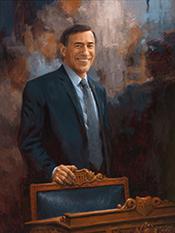
Mr. Speaker, I yield myself such time as I may consume. Mr. Speaker, I rise in support of H. Con. Res. 254, which recognizes and celebrates the 100th anniversary of Oklahoma statehood. Mr. Speaker,…
Mr. Speaker, I yield myself such time as I may consume.
Mr. Speaker, I rise in support of H. Con. Res. 254, which recognizes and celebrates the 100th anniversary of Oklahoma statehood.
Mr. Speaker, Oklahoma is a State that takes energy production so seriously that it has oil wells on the grounds of the Governor's mansion. It is a State people were so anxious to move into that they jumped the gun in claiming homesteads and entered sooner. That is where the nickname comes from, the Sooner State.
Mr. Speaker, at a time in which energy independence is talked about but not achieved, in which States like our own, California, are major energy producers but less than half of the oil that it consumes, Oklahoma continues to aggressively find the resources that lie beneath it and to make it available for us.
Additionally, throughout its heartache, Oklahoma has given us Gene Autry. I won't skip over Brad Pitt. It has given us music. It has given us both country and a number of other great venues. But, most of all, it gave us J.C. Watts, the longest winning streak in history in college football, and they are proud of it. And, last but not least, it gave us Will Rogers.
So as we look at Oklahoma, a State that takes oil seriously, that in fact was rushed into because it was such a great place, I also join with my colleagues in supporting this resolution recognizing that, after 100 years, Oklahoma is still a meaningful and important part of this great Nation.
Mr. Speaker, I urge support of this resolution, and I yield back the balance of my time.
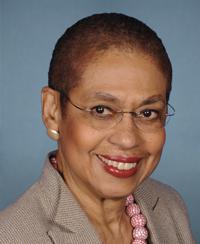
Mr. Speaker, I move to suspend the rules and agree to the concurrent resolution (H. Con. Res. 254) recognizing and celebrating the centennial of Oklahoma statehood. Mr. Speaker, I ask unanimous…
Mr. Speaker, I move to suspend the rules and agree to the concurrent resolution (H. Con. Res. 254) recognizing and celebrating the centennial of Oklahoma statehood.
Mr. Speaker, I ask unanimous consent that Members may have 5 legislative days in which to revise and extend their remarks.
Mr. Speaker, I am pleased to join my colleagues in consideration of H. Con. Res. 254, a resolution recognizing and celebrating the centennial anniversary of Oklahoma statehood.
H. Con. Res. 254 was introduced by Representative Mary Fallin of Oklahoma on November 13, 2007, and reported from the Oversight Committee on December 12, 2007, by voice vote. This measure, which has been cosponsored by 55 Members, has the support of the entire Oklahoma delegation.
Friday, November 16, 2007, marked Oklahoma's centennial celebration. The Sooner State has played a significant role in the development and history of our Nation and will continue to be a cornerstone of the independent spirit that makes our country great.
Mr. Speaker, please join me in honoring Oklahoma's past achievements, current accomplishments, and the State's goodwill as it continues into the future. I urge swift passage of this bill.
Mr. Speaker, I reserve the balance of my time.
Mr. Speaker, I yield back the balance of my time.
Mr. Speaker, on that I demand the yeas and nays.
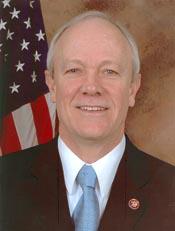
Mr. Speaker, in the next few days the House and Senate are expected to pass H.R. 6, a comprehensive energy bill to chart a new course for our Nation's energy policy. This legislation is a major step…
Mr. Speaker, in the next few days the House and Senate are expected to pass H.R. 6, a comprehensive energy bill to chart a new course for our Nation's energy policy. This legislation is a major step towards a sustainable energy future, and I am proud that language was included in the bill to advance geothermal research. Specifically, a subtitle of H.R. 6 authorizes investments in new methods of extracting geothermal energy from the earth. These technologies have the potential to generate tremendous amounts of environmentally friendly, domestically produced electricity.
Today we are considering the Fiscal Year 2008 omnibus appropriations bill to fund most of our Federal Government for the coming year. It is my hope that to the extent that funds are available beyond purposes specifically directed by this appropriations measure, the appropriation for the Department of Energy's geothermal research program should be used to begin implementation of provisions in Subtitle B of Section VI of HR 6, also known as the Advanced Geothermal Energy Research and Development Act of 2007. Geothermal energy has the potential to contribute significantly towards energy independence and efforts to address climate change, and we should pursue this research without delay.
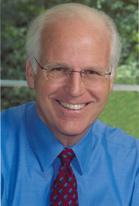
I thank the gentleman for yielding. Mr. Speaker, 10 bills into one omnibus bill divided into two parts: fund the government, nonmilitary; fund Afghanistan. What about Iraq? 2007 has been a remarkably…
I thank the gentleman for yielding.
Mr. Speaker, 10 bills into one omnibus bill divided into two parts: fund the government, nonmilitary; fund Afghanistan.
What about Iraq?
2007 has been a remarkably positive year for our troops in Iraq, for the Iraqi Government, for the Iraqi people. But too many in this Congress are reluctant to acknowledge the success. The training of Iraqi military, police, border patrol is finally beginning to pay off. The surge is working. The tribal leaders are siding with us, not al Qaeda. So what about Iraq? And what about our troops in Iraq? We can fund our troops in Afghanistan but we can't fund our troops in Iraq?
Our troops in Iraq deserve better. They have overcome one obstacle after another. Unlike last year, we are winning in Iraq. We need to draw down our troops month by month, but our troops in Iraq deserve to be fully funded until then.
I look forward to the Senate's acting more responsibly than this House and giving us a bill that will fund Iraq as well.
Madam Speaker, on rollcall vote No. 1173, during consideration of H. Con. Res. 254, recognizing and celebrating the centennial of Oklahoma statehood I incorrectly voted ``nay'', when I intended to…
Madam Speaker, on rollcall vote No. 1173, during consideration of H. Con. Res. 254, recognizing and celebrating the centennial of Oklahoma statehood I incorrectly voted ``nay'', when I intended to vote ``Yea''.
Mr. Speaker, on rollcall No. 1171, I was unavoidably detained. Had I been present, I would have voted ``nay.''
Mr. Speaker, on rollcall No. 1171, I was unavoidably detained. Had I been present, I would have voted ``nay.''
Bill Text
3 versions available
        [Congressional Bills 110th Congress]
[From the U.S. Government Publishing Office]
[H. Con. Res. 254 Referred in Senate (RFS)]

1st Session
H. CON. RES. 254

_______________________________________________________________________

IN THE SENATE OF THE UNITED STATES

December 18, 2007

Received

December 19, 2007

Referred to the Committee on the Judiciary

_______________________________________________________________________

CONCURRENT RESOLUTION

Recognizing and celebrating the centennial of Oklahoma statehood.

Whereas on November 16, 1907, Oklahoma officially became the 46th State of the
Union;
Whereas prior to becoming a State, Oklahoma was designated as Indian Territory,
providing a vibrant history and culture that continues to enrich the
lives of its citizens;
Whereas the State of Oklahoma was shaped by those adventurous and daring
individuals who embraced the spirit of this great Nation as they opened
the frontier of the American West;
Whereas generations of proud people from all backgrounds have called Oklahoma
their home and have contributed to its spirited history;
Whereas these hearty and resilient people have defined what has come to be known
as the spirit of Oklahoma through their strength, character, and
persistent strides toward a bright future;
Whereas the continued strength, initiative, and pursuit of excellence displayed
by the citizens of the State of Oklahoma have produced its vibrant
economy and secured it as a place of opportunity and progress now and
for future generations;
Whereas the solid foundation of family and community embraced by the citizens of
Oklahoma has been a constant guide and source of strength to those
citizens throughout its history and will remain so long into its future;
Whereas the natural beauty and abundant resources of the State of Oklahoma
support a quality of life for its citizens that is unsurpassed; and
Whereas on November 16, 2007, the State of Oklahoma will begin a new century of
statehood: Now, therefore, be it
Resolved by the House of Representatives (the Senate concurring),
That the Congress recognizes and celebrates the centennial of Oklahoma
statehood and wishes its people another hundred years of continued
growth, prosperity, and achievement.

Passed the House of Representatives December 17, 2007.

Attest:

LORRAINE C. MILLER,

Clerk.