Mr. Speaker, I rise today in strong support of H. Con. Res. 35 supporting the goals and ideals of National Black HIV/AIDS Awareness. Established in February 2000, National Black HIV/ AIDS Awareness…
Mr. Speaker, I rise today in strong support of H. Con. Res. 35 supporting the goals and ideals of National Black HIV/AIDS Awareness. Established in February 2000, National Black HIV/ AIDS Awareness and Information Day, NBHAAD, is an annual observance day that was created to raise awareness among African-Americans about HIV/ AIDS and its devastating impact on African-American communities.
There is no question that we must continue to mount a massive campaign to support the mission of National Black HIV/AIDS Awareness Day, NBHAAD to build the capacity and increase awareness, participation and support for HIV prevention, care and treatment among African- Americans. February 7, 2007 marks the seventh year of this annual event. The day is part of a national mobilization effort to get African-Americans to learn more about the threat posed by the disease, get tested, get treated and make a commitment to fight HIV/AIDS. For this day and everyday forward we must raise our voices to volumes that can be heard across the globe. Unfortunately, for too long we have settled for surviving our tragic losses in silence. But listen to these screaming statistics:
According to CDC estimates, at the end of 2005, African-Americans accounted for 44 percent of all individuals living with AIDS--188,000.
In 2005, African-Americans accounted for nearly 50 percent of all new HIV infections, despite representing only about 12.3 percent of the population, according to the 2000 Census.
In 2005, African-American women represented 66 percent of all new HIV/AIDS cases among women, and were 25 times more likely to be infected than White women.
CDC estimates that 73 percent of all children born to HIV infected mothers in 2004 were African-American.
With an estimated 38.6 million people worldwide living with HIV at the end of 2005, and more than 25 million people having died of AIDS since 1981, NBHAAD serves to remind everyone that action makes a difference in the fight against HIV/AIDS. Let there be no mistake; we are here to acknowledge that AIDS is a deadly enemy against which we must join all our forces to fight and eliminate.
Though I stand here today in recognition of National Black HIV/AIDS Awareness Day, Americans should be reminded that HIV/AIDS does not discriminate. With an estimated 1,039,000 to 1,185,000 HIV-positive individuals living in the U.S., and approximately 40,000 new infections occurring every year, the U.S., like other nations around the world is deeply affected by HIV/AIDS.
Mr. Speaker, there is no doubt that AIDS is devastating the African- American community. As of February 2006, African-Americans represented only 13 percent of the U.S. population, but accounted for 40 percent of the 944,306 AIDS cases diagnosed since the start of the epidemic and approximately half, 49 percent of the 42,514 cases diagnosed in 2004 alone. African-Americans also account for half of new HIV/AIDS diagnoses in the 35 States/areas with confidential name-based reporting.
The AIDS case rate per 100,000 population among African-American adults/adolescents was nearly 10.2 times that of Whites in 2004. African-Americans accounted for 55 percent of deaths due to HIV in 2002 and their survival time after an AIDS diagnosis is lower on average than it is for other racial/ethnic groups. HIV was the third leading cause of death for African-Americans, ages 25-34, in 2002 compared to the sixth leading cause of death for Whites and Latinos in this age group.
African-American women and children have been disproportionately victimized by this deadly disease. African-American women account for the majority of new AIDS cases among women--67 percent in 2004; White women account for 17 percent and Latinas 15 percent. Among African- Americans, African-American women represent more than a third, 36 percent of AIDS cases diagnosed in 2004. Although African-American teens, ages 13-19, represent only 15 percent of U.S. teenagers, they accounted for 66 percent of new AIDS cases reported among teens in 2003. We must continue to forge a tough fight to reverse all of these costly trends.
Mr. Speaker, combating this crisis will take a team effort. All of us--researchers, legislators, clergy, community organizers and activists and others--must work tirelessly to find solutions and to help so that our work will bring forth a wealth of wisdom that creates a climate of compassionate care and healing.
Let us go forth as warriors, renewed in our commitment to stand in solidarity with everyone who has been affected by HIV and AIDS, and let us be encouraged in our efforts to comfort the afflicted and confront the passiveness of so many who contribute to the spread of this deadly disease; and let us be
emboldened to speak out in our own communities so that silence may no more mask the ringing alarms of rapidly rising infection rates.
I hope that our inner human spirits will move us to a place and time where we no longer turn our heads and close our eyes to those communities who need our help the most. We must find the strength to look past our fears and find compassion to create a world where no man, woman or child is confronted with the perils of this current AIDS crisis.
Mr. Speaker, I strongly support the goal of NBHAAD to motivate African-Americans to get tested and know their HIV status; get educated about the transmission modes of HIV/AIDS; get involved in their local community; and get treated if they are currently living with HIV or are newly diagnosed.
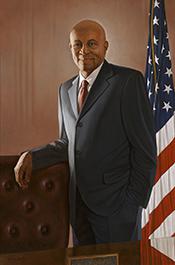
Let me take this moment to recognize a major inspiration for NBHAAD, Mr. Louis E. Harris, 1947-2003, who passed away in January 2003 due to complications with bladder cancer. Mr. Harris served as the executive director of Concerned Black Men, Inc. of Philadelphia during NBHAAD's conception. His work and dedication will be missed along with his kind and warm words of encouragement. It is hoped that NBHAAD will continue to build the capacity of community based organizations, CBOs, as well as community stake holders to increase awareness, prevent HIV and get those who need treatment into care. I applaud the efforts of NBHAAD advocates to:
1. Increase reporting of accurate up-to-date statistics on the HIV and AIDS epidemic among Blacks by electronic and print media, radio and television stations;
2. Increase collaboration and sharing of resources at the national and local levels;
3. Increase resources and support including capacity building assistance for health departments, community based organizations and stakeholders serving Black communities; and
4. Increase the number of Blacks at high risk for acquiring HIV that receive HIV counseling, testing and other HIV prevention, treatment and care services.
Observance of this day provides an opportunity for governments, national AIDS programs, churches, community organizations and individuals to demonstrate the importance of the fight against HIV/ AIDS. Though funding for research is an important key to tackling the tragic devastation of HIV/AIDS in our communities, I realize that providing funding for research alone is simply not sufficient to eradicate the high rates of HIV/AIDS cases within the African-American community. We must also provide funding for prevention and education.
Billions and billions of private and Federal dollars have been poured into drug research and development to treat and ``manage'' infections, but the complex life cycle and insane mutation rates of HIV strains have made these efforts futile in the fight to remove HIV/AIDS as a global public health threat. Though the drugs we currently have are effective in managing infections and reducing mortality by slowing the progression to AIDS in an individual, they do little to reduce disease prevalence and prevent new infections.
A thousand drugs that ``manage'' infection will not suffice. We can make and market drugs until we have 42 million individually tailored treatments, but so long as a quarter of those infected remain detached from the importance of testing, we have no chance of ending or even ``managing'' the pandemic. Currently, the only cure we have for HIV/ AIDS is prevention. While we must continue efforts to develop advanced treatment options, it is crucial that those efforts are accompanied by dramatic increases in public health education and prevention measures.
During my time in office, I have fully and eagerly supported all legislation that has given increased attention to HIV/AIDS, including the Ryan White CARE Act, which is currently slated to receive about $2.2 billion in funding for FY2007. I have supported legislation to reauthorize funding for community health centers--H.R. 5573, Health Centers Renewal Act of 2006--including the Montrose and Fourth Ward clinics right here in Houston, as well as supported legislation to provide more nurses for the poor urban communities in which many of these centers are located--H.R. 1285, Nursing Relief Act for Disadvantaged Areas. I have also supported and introduced legislation aimed to better educate our children--H.R. 2553, Responsible Education About Life Act in 2006) and eliminate health disparities--H.R. 3561, Healthcare Equality and Accountability Act and the Good Medicine Cultural Competency Act in 2003, H.R. 90. And I will continue to endorse and push for similar legislation.
Twenty-five years from now, I hope that we will not be discussing data on prevalence and mortality, but rather how our sustained efforts at elimination have come into fruition. But if we are ever to have that discussion, there are a number of actions that we must take right now. We must continue research on treatments and antiretroviral therapies, as well as pursue a cure. And we absolutely have to ensure that everyone who needs treatment receives it. In order to do this, we have to increase awareness of testing, access to testing, and the accuracy of testing. How can we stop this pandemic if we are unable to track it?
We must also increase funding for local health departments and community health clinics, as well as fully fund the Ryan White CARE Act. Lastly, but perhaps most importantly, it is imperative that we work to increase funding for HIV prevention and education, so that our children will be equipped with sufficient and appropriate knowledge of this growing threat within our communities, especially within our Black communities and among Black women. If Blacks are 11 times as likely to acquire infection, then we need to make 11 times the effort to educate. And we need to apply similar efforts in every community until HIV/AIDS becomes a memory. If not, our friends and family will be memories instead.
I would like to take a moment to applaud the enormous efforts of community volunteers from churches and other organizations which have done commendable work across our Nation. I think everyone can learn something from their selflessness and their will to serve their communities. We need more people to follow their lead. We do not have time for excuses or hesitation. We have the passion and dedication, and we are securing more and more resources. It is up to us to get the resources where they are needed. I know a lot of people don't want to take things seriously until it hits home; until a brother or a sister or a son or a daughter falls victim to our blithe and ignorance. We cannot afford nor do we want to bear that cost; however, if we continue to sit by and wait for the next person to act, we may all have brothers and sisters and sons and daughters with HIV/AIDS.
We need to be proactive and act with unprecedented urgency. Now is not the time to get comfortable. If you feel like you're getting comfortable, just remember that there is a face to every number, to every statistic. This is not a hypothetical or theoretical or metaphysical phenomenon. There are no imaginary numbers in this equation; only real people. And I am confident that we can protect and save real people with increased efforts.
I will continue work tirelessly to keep the spotlight on this dark disease that is devastating many people in the African-American community, United States and around the world. My hope is that all of our efforts will lead to the elimination of HIV and AIDS not just from the African-American community but from every community. I urge my colleagues to support H. Con. Res. 35 supporting the goals of National Black HIV/AIDS Awareness Day.