McGee Creek Project Pipeline and Associated Facilities Conveyance Act
Legislative Activity
Stay on top of the latest movement without scrolling through every action
Placed on Senate Legislative Calendar under General Orders. Calendar No. 817.
June 16, 2008
View full timeline
Introduced in House
May 1, 2007
Referred to the House Committee on Natural Resources.
May 1, 2007
Referred to the Subcommittee on Water and Power.
May 4, 2007
Subcommittee Hearings Held.
September 18, 2007
Subcommittee Consideration and Mark-up Session Held.
October 16, 2007
Forwarded by Subcommittee to Full Committee Without Recommendation by Unanimous Consent .
October 16, 2007
Committee Consideration and Mark-up Session Held.
November 15, 2007
Ordered to be Reported by Unanimous Consent.
November 15, 2007
Reported by the Committee on Natural Resources. H. Rept. 110-460.
December 4, 2007
Placed on the Union Calendar, Calendar No. 284.
December 4, 2007
Mrs. Napolitano moved to suspend the rules and pass the bill.
December 4, 2007 • 2:49 PM
Considered under suspension of the rules. (consideration: CR H14097-14098)
December 4, 2007 • 2:49 PM
DEBATE - The House proceeded with forty minutes of debate on H.R. 2085.
December 4, 2007 • 2:49 PM
At the conclusion of debate, the Yeas and Nays were demanded and ordered. Pursuant to the provisions of clause 8, rule XX, the Chair announced that further proceedings on the motion would be postponed.
December 4, 2007 • 2:54 PM
Considered as unfinished business. (consideration: CR H14444-14445)
December 6, 2007 • 3:31 PM
Passed/agreed to in House: On motion to suspend the rules and pass the bill Agreed to by the Yeas and Nays: (2/3 required): 373 - 0 (Roll no. 1141).(text: CR 12/04/2007 H14097-14098)
December 6, 2007 • 3:39 PM
On motion to suspend the rules and pass the bill Agreed to by the Yeas and Nays: (2/3 required): 373 - 0 (Roll no. 1141). (text: CR 12/04/2007 H14097-14098)
December 6, 2007 • 3:39 PM
Motion to reconsider laid on the table Agreed to without objection.
December 6, 2007 • 3:39 PM
Received in the Senate and Read twice and referred to the Committee on Energy and Natural Resources.
December 7, 2007
Committee on Energy and Natural Resources Senate Subcommittee on Water and Power. Hearings held.
February 28, 2008
Committee on Energy and Natural Resources. Ordered to be reported without amendment favorably.
May 7, 2008
Committee on Energy and Natural Resources. Reported by Senator Bingaman without amendment. With written report No. 110-385.
June 16, 2008
Placed on Senate Legislative Calendar under General Orders. Calendar No. 817.
June 16, 2008
Voting History
1 vote recorded • Roll call available
Floor Debate
24 membersWhat members said about H.R. 2085 on the floor
 AS
AS NP
NP BG
BG MU
MU RJD+19
Floor Debate
24 membersWhat members said about H.R. 2085 on the floor
Madam. Speaker, due to events in my district, I was unable to vote on rollcall No. 42: Passage of H. Res. 475. Had I been present, I would have voted ``yes.'' January 22, 2007 Madam Speaker, due to…
Madam. Speaker, due to events in my district, I was unable to vote on rollcall No. 42: Passage of H. Res. 475. Had I been present, I would have voted ``yes.''
January 22, 2007
Madam Speaker, due to events in my district, I was unable to vote on rollcall No. 43: Table the appeal of the ruling of the Chair for H. Res. 476. Had I been present, I would have voted ``yes.''
Madam Speaker, due to events in my district, I was unable to vote on rollcall No. 44: Motion to Suspend the Rules and Agree to H. Res. No. 52. Had I been present, I would have voted ``yes.''
Madam Speaker, due to events in my district, I was unable to vote on rollcall No. 45: Motion to suspend the rules and Agreed to H.R. 390. Had I been present, I would have voted ``yes.''
Madam Speaker, due to events in my district, I was unable to vote on rollcall No. 46: Motion to Suspend the Rules and Agree to H. Res. 29. Had I been present, I would have voted ``yes.''
February 8, 2007
Madam Speaker, due to events in my district, I was unable to vote on rollcall No. 87: Agreeing to the Amendment of H.R. 547, and amendment to include language which encourages the Assistant Administrator to utilize Land Grant Institutions, Historically Black Colleges and Universities, Hispanic Serving Institutions and other minority serving institutions among other resources to undertake research for programs covered by the bill. Had I been present, I would have voted ``yes.''
Madam Speaker, due to events in my district. I was unable to vote on rollcall No. 88: Agreeing to the Amendment of H.R. 547, an amendment to add a new paragraph to section 3, Biofuel Infrastructure and Additives Research and Development, to include issues with respect to where in the fuel supply chain additives optimally should be added to fuels. Had I been present, I would have voted ``yes.''
Madam Speaker, due to events in my district, I was unable to vote on rollcall No. 89: Agreeing to the Amendment of H.R. 547, an amendment to add a new paragraph to section 3 which includes issues with respect to certification by a nationally recognized testing laboratory of components for fuel dispensing devices that specifically reference compatibility with alcohol blended and biofuels that contain greater than 15 percent alcohol. Had I been present, I would have voted ``yes.''
Madam Speaker, due to events in my district, I was unable to vote on rollcall No. 90: Agreeing to the Amendment of H.R. 547, an amendment to add a new section 7 entitled Additional Funding. Had I been present, I would have voted ``yes.''
Madam Speaker, due to events in my district, I was unable to vote on rollcall No. 91:
the Motion to Recommit with Instructions of H.R. 547. Had I been present, I would have voted ``no.''
Madam Speaker, due to events in my district, I was unable to vote on rollcall No. 92: Passage of H.R. 547. Had I been present, I would have voted ``yes.''
February 28, 2007
Madam Speaker, due to events in my district, I was unable to vote on rollcall No. 111: Motion to Suspend the Rules and Agree on H. Con. Res. 52. Had I been present, I would have voted ``yes.''
March 12, 2007
Madam Speaker, due to events in my district, I was unable to vote on rollcall No. 136: Motion to Suspend the Rules and Pass, as Amended on H.R. 85. Had I been present, I would have voted ``yes.''
Madam Speaker, due to events in my district, I was unable to vote on rollcall No. 137: Motion to Suspend the Rules and Agree on H. Res. 136. Had I been present, I would have voted ``yes.''
Madam Speaker, due to events in my district, I was unable to vote on rollcall No. 138: Motion to Suspend the Rules and Agree on H. Res. 89. Had I been present, I would have voted ``yes.''
Madam Speaker, due to events in my district, I was unable to vote on rollcall No. 187: Motion to Suspend the Rules and Pass, as amended on H.R. 802. Had I been present, I would have voted ``yes.''
Madam speaker, due to events in my district, I was unable to vote on rollcall No. 188: Motion to Suspend the Rules and Pass, as Amended on H.R. 137. Had I been present, I would have voted ``yes.''
Madam Speaker, due to events in my district, I was unable to vote on rollcall No. 189: Motion to Suspend the Rules and Pass, as Amended on H.R. 580. Had I been present, I would have voted ``yes.''
May 14, 2007
Madam Speaker, due to events in my district, I was unable to vote on rollcall No. 342: Motion to Suspend the Rules and Pass on H.R. 1124. Had I been present, I would have voted ``yes.''
Madam Speaker, due to events in my district, I was unable to vote on rollcall No. 343: Motion to suspend the rules and agree to H. Res. 223. Had I been present, I would have voted ``yes.''
Madam Speaker, due to events in my district, I was unable to vote on rollcall No. 344: Motion to Suspend the Rules and Agree (H. Res. 385). Had I been present, I would have voted ``yes.''
May 16, 2007
Madam Speaker, due to events in my district, I was unable to vote on rollcall No. 358: Call in Committee Quorum. Had I been present, I would have voted ``present.''
Madam Speaker, due to events in my district, I was unable to vote on rollcall No. 359: Motion that the Committee Rise (H.R. 1585). Had I been present, I would have voted ``no.''
June 11, 2007
Madam Speaker, due to events in my district. I was unable to vote on rollcall No. 448: Motion to Suspend the Rules and Pass on H.R. 2356. Had I been present, I would have voted ``yes.''
Madam Speaker, due to events in my district, I was unable to vote on rollcall No. 449: Motion to Suspend the Rules and Agree on S. 676. Had I been present, I would have voted ``yes.''
Madam Speaker, due to events in my district. I was unable to vote on rollcall No. 450: Motion to Suspend the Rules and Agree on H. Res. 418. Had I been present I would have voted ``yes.''
July 23, 2007
Madam Speaker, due to events in my district, I was unable to vote on rollcall No. 687: Motion to Suspend the Rules and Pass H.R. 404, as amended. Had I been present, I would have voted ``yes.''
Madam Speaker, due to events in my district, I was unable to vote on rollcall No. 688: Motion to suspend the rules and agree to H. Res. 553. Had I been present, I would have voted ``yes.''
Madam Speaker, due to events in my district, I was unable to vote on rollcall No. 689: Motion to suspend the rules and agree to H. Res. 519. Had I been present I would have voted ``yes.''
Madam Speaker, due to events in my district, I was unable to vote on rollcall No. 690: On ordering the previous question on H. Res. 558. Had I been present, I would have voted ``yes.''
August 1, 2007
Madam Speaker, due to events in my district, I was unable to vote on rollcall No. 781: Motion to adjourn. Had I been present. I would have voted ``no.''
september 4, 2007
Madam Speaker, due to events in my district, I was unable to vote on rollcall No. 847: Motion to Suspend the Rules and Pass H.R. 694, as amended. Had I been present, I would have voted ``yes.''
Madam Speaker, due to events in my district, I was unable to vote on rollcall No. 848: Motion to Suspend the Rules and Pass H.R. 3020, as amended. Had I been present, I would have voted ``yes.''
Madam Speaker, due to events in my district, I was unable to vote on rollcall No. 849: Motion to Instruct Conferees on H.R. 2669. Had I been present, I would have voted ``no.''
september 17, 2007
Madam Speaker, due to events in my district, I was unable to vote on rollcall No. 867: Motion to Suspend the Rules and Pass H.R. 3246, as amended. Had I been present, I would have voted ``yes.''
Madam Speaker, due to events in my district, I was unable to vote on rollcall No. 868: Motion to Suspend the Rules and Pass H.R. 1657, as amended. Had I been present, I would have voted ``yes.''
Madam Speaker, due to events in my district, I was unable to vote on rollcall No. 869: Motion to Suspend the Rules and Pass H.R. 3527. Had I been present, I would have voted ``yes.''
october 1, 2007
Madam Speaker, due to events in my district, I was unable to vote on rollcall No. 924: Motion to Suspend the Rules and Agree on H. Res. 185. Had I been present, I would have voted ``yes.''
Madam Speaker, due to events in my district, I was unable to vote on rollcall No. 925: Motion to Suspend the Rules and Pass H.R. 2276. Had I been present, I would have voted ``yes.''
Madam Speaker, due to events in my district, I was unable to vote on rollcall No. 926: Motion to Suspend the Rules and Pass H.R. 3325. Had I been present, I would have voted ``yes.''
october 15, 2007
Madam Speaker, due to events in my district, I was unable to vote on rollcall No. 961: Motion to Suspend the Rules and Agree on H. Res. 738. Had I been present, I would have voted ``yes.''
Madam Speaker, due to events in my district, I was unable to vote on rollcall No. 962: Motion to Suspend the Rules and Pass H.R. 2089. Had I been present, I would have voted ``yes.''
Madam Speaker, due to events in my district, I was unable to vote on rollcall No. 963: Motion to Suspend the Rules and Pass H.R. 20, as amended. Had I been present, I would have voted ``yes.''
October 17, 2007
Madam Speaker, due to events in my district, I was unable to vote on rollcall No. 980: Passage of H.R. 2095. Had I been present, I would have voted ``yes.''
october 29, 2007
Madam Speaker, due to events in my district, I was unable to vote on rollcall No. 1010: Motion to Suspend the Rules and Pass H.R. 3224, as amended. Had I been present, I would have voted ``yes.''
Madam Speaker, due to events in my district, I was unable to vote on rollcall No. 1011: Motion to Suspend the Rules and Agree on H. Res. 573, as amended. Had I been present, I would have voted ``yes.''
Madam Speaker, due to events in my district, I was unable to vote on rollcall No. 1012: Motion to Suspend the Rules and Agree on H. Res. 747. Had I been present, I would have voted ``yes.''
November 5, 2007
Madam Speaker, due to events in my district, I was unable to vote on rollcall No. 1034: Closing Portions of the Conference on H.R. 3222. Had I been present, I would have voted ``yes.''
Madam Speaker, due to events in my district, I was unable to vote on rollcall No. 1035: Motion to Suspend the Rules and Pass H.R. 513, as amended. Had I been present, I would have voted ``yes.''
Madam Speaker, due to events in my district, I was unable to vote on rollcall No. 1036: Motion to Suspend the Rules and Agree on H. Res. 744. Had I been present, I would have voted ``yes.''
november 7, 2007
Madam Speaker, due to events in my district, I was unable to vote on rollcall No. 1058: Motion to Suspend the Rules and Agree on H. Con. Res. 236, as amended. Had I been present, I would have voted ``yes.''
november 13, 2007
Madam Speaker, due to events in my district, I was unable to vote on rollcall No. 1082: Motion to Suspend the Rules and Pass H.R. 3315. Had I been present, I would have voted ``yes.''
Madam Speaker, due to events in my district, I was unable to vote on rollcall No. 1083: Motion to Suspend the Rules and Pass H.R. 1593, as amended. Had I been present, I would have voted ``yes.''
Madam Speaker, due to events in my district, I was unable to vote on rollcall No. 1084: Motion to Suspend the Rules and Pass H.R. 3403, as amended. Had I been present, I would have voted ``yes.''
Madam Speaker, due to events in my district, I was unable to vote on rollcall No. 1085: Motion to Suspend the Rules and Pass H.R. 3461, as amended. Had I been present, I would have voted ``yes.''
november 14, 2007
Madam Speaker, due to events in my district, I was unable to vote on rollcall No. 1095: Motion to Adjourn. Had I been present, I would have voted ``no.''
december 6, 2007
Madam Speaker, due to events in my district, I was unable to vote on rollcall No. 1141: Motion to Suspend the Rules and Pass H.R. 2085. Had I been present, I would have voted ``yes.''
Mr. Speaker, this is a very important day for our country, a day in which this Congress can declare itself a Congress for the future, a Congress for America's children. Earlier today, some of you saw…
Mr. Speaker, this is a very important day for our country, a day in which this Congress can declare itself a Congress for the future, a Congress for America's children.
Earlier today, some of you saw me reference this baseball signed by Bobby Thomson: ``The shot heard round the world,'' October 3, 1951, a historic day in baseball. When he signed this baseball, he referenced a phrase used by Ralph Waldo Emerson referencing the shot fired at Concord, which began the Revolutionary War, the fight for American independence. If Bobby Thomson could reference a shot heard round the world, we should indeed be able to do it today. This vote on this legislation will be a shot heard round the world for energy independence for America.
I want to thank some of the people who made this possible. As many of you know, at the beginning of this Congress, our Chairs of the appropriate committees were tasked to prepare legislation to be ready to be introduced by the Fourth of July, our Independence Day. They did so, and on June 30, in preparation for the Fourth of July weekend, we introduced our legislation.
I want to begin by thanking Mr. Dingell for his exceptional leadership as Chair of the Energy and Commerce Committee. This bill is about America's national security. Mr. Dingell has always been about that. He has dedicated his life, starting in World War II, in his public service for our country. Thank you, Mr. Dingell.
Another great veteran in this arena, Mr. Rangel, a veteran of the Korean War, was an important part of this legislation with the pay-fors from the Ways and Means Committee. Thank you, Mr. Rangel.
Earlier you heard from Mr. Oberstar and the important work he is doing with the greening of America's Federal buildings and many other resources. Thank you, Mr. Oberstar. Mr. Waxman of Oversight and Government reform; Mr. Miller of Education and Labor, where we are having our green jobs initiative; Mr. Rahall from Natural Resources, making an important contribution to this legislation; Mr. Lantos from Foreign Affairs; Mr. Gordon from Science, the Science and
Technology Committee has been central to this legislation; Mr. Peterson from the Agriculture Committee. America's farmers will fuel America's independence. We will send our energy dollars to the Midwest, not the Middle East. Congresswoman Velazquez from Small Business, where small businesses will be the incubator of this new economy. Thank you, Chairwoman Velazquez. And Congressman Markey of the Select Committee, thank you also for your tremendous leadership for over 30 years on this issue.
I mention all of my colleagues, these chairmen, not only to salute them, but to say they started a process over a series of months where practically every member of these 11 committees of Congress had an opportunity, Democrats and Republicans alike, to weigh in on the initial legislation, which was introduced in time for the Fourth of July, as promised, and which was passed by this Congress in the first week of August; and it is the follow-up on that legislation that we are voting on today.
It is a part of our first 100 hours. As we near the end of this session of Congress, we can harken back to that first 100 hours, our Six for '06. Our first piece of legislation was about how we protect America, passing the 9/11 Commission recommendations. I am so pleased that that was passed with strong bipartisan support in this House and was signed by the President.
The minimum wage was passed with strong bipartisan support in this House of Representatives and was signed by the President.
Making college affordable, the biggest package for college affordability since the GI Bill of Rights in 1944, passed by the Congress, signed into law by the President.
The biggest legislation for ethics reform in the history of the Congress, bipartisan majority, strong overwhelming support, and signed into law.
In the course of time, passing Mr. Gordon's bill, our commitment to competitiveness to keep America number one, the Innovation Agenda, the COMPETES Act, overwhelming majority, bipartisan majority, signed into law by the President.
I mention all of these because they have bearing on what we are doing today. It is about our national security, it is about jobs and the economic security of our country. It is about the environment, and therefore it is a health issue. It is a moral issue. With all that I have said, that is why we have scientists and evangelicals, we have business and labor, we have the environmental community, all strongly supporting this legislation.
And here are some of the reasons why. I will give you their words. Over 20 generals have signed a letter saying that we have to move in this direction in terms of reversing global warming. But, very specifically, the other day we heard from Admiral Denny McGinn, and he said this: ``Our dependence on foreign oil is a clear and present danger to Americans. Your vote for tough fuel economy standards is a vote for increasing our safety and our well-being.'' This is a national security issue.
It is an issue that relates to our environment and therefore the health of our children. That is why the Pew Charitable Trusts for Fuel Efficiency wrote: ``If the House and Senate finally approve this and the President signs it, they will have done more for consumers at the pump than any Congress or administration since the 1970s.'' They were referencing also the fact that the consumers will save $700 to $1,000 as a result of this bill, per year. And over a period of time until 2020, they will save $22 billion. That is why the Consumer Federation of America is supporting this bill. It is about American jobs.
The president of the Alliance of American Automobile Manufacturers wrote: ``We believe this tough, national fuel economy bill will be good for both consumers and energy security. We support its passage.''
I could submit for the record a long list of representatives of the business and labor community who are supporting this legislation.
And labor, the legislative director of the UAW, Alan Reuther, says: ``We believe that this historic measure will provide substantial energy security and environmental benefits for our Nation while protecting and expanding jobs for our workers.''
The list goes on. National security, jobs, the environment, the health of our children, and the future of this planet, as well as the consumer benefits. It is, again, a historic day because it has been so long since we have come to the place where we are, as has been said, over 30 years since we have addressed this issue in this substantial way in the Congress of the United States.
The point of this is, are we about the past or are we about the future? I hope that we can have strong bipartisan support for this legislation. We were able to accomplish in this 12-month period, as Mr. Emanuel said, in this 12-month period, what was not done in 32 years in the Congress of the United States.
So, my friends, I ask you to think about this vote and take great pride when you cast a ``yes'' vote. Many of you are far away from your legacy, but when that day comes, I hope you will consider this day a part of that legacy when you made history in this Congress of the United States. And not only did you make history; you made progress for the American people. They are watching to see what we do. This legislation is as immediate to them as the price at the pump that they face when they fill up their tanks. It is as immediate to them as heating their homes. It is as global as preserving this planet.
If you believe, as do I, and I think all of us do, that this is God's creation and we have a moral responsibility to preserve it, that is why we have strong support from the religious community, including the evangelical community, then I hope you will take this act of faith today to make history and to make progress for the American people, especially to declare this the Children's Congress.
Thank you, my colleagues. I urge a ``yes'' vote.
Mr. Speaker, I rise today in opposition to this reckless energy policy, which will do absolutely nothing to make us energy independent, or lower energy costs. This bill sets us on a dangerous path…
Mr. Speaker, I rise today in opposition to this reckless energy policy, which will do absolutely nothing to make us energy independent, or lower energy costs. This bill sets us on a dangerous path and ties our hands in a regulatory mess to ensure that we cannot produce domestic energy.
Like my colleagues, I believe we should find solutions to address the growing demand for energy. The biggest concern facing the farmers and ranchers of this country are increased input costs from higher fuel prices and fertilizer. The U.S. fertilizer industry relies upon natural gas as the fundamental feedstock for the production of nitrogen fertilizer. The rest of the U.S. farm sector also depends on significant amounts of natural gas for food processing, irrigation, crop drying, heating farm buildings and homes, the production of crop protection chemicals, and, let's not forget, ethanol biofuel production. In addition to the farm sector, the forest products industry relies more on natural gas than any other fossil fuel and energy amounts to the third largest manufacturing cost for the industry.
Unbelievably, this legislation contains no new energy supplies in it and does nothing to relieve the burdens of increased costs on producers who provide the food and fiber for American consumers. It seems that the Majority's plan to move toward energy independence includes limiting domestic energy production and imposing new government mandates that will prove to be costly and burdensome to the American people.
This legislation would dramatically expand the Renewable Fuels Standard (RFS) by increasing it to 36 billion gallons by 2022. This initiative is extremely ambitious and could be achieved by tapping all sectors of agriculture including plant and wood waste, vegetable oil, and animal fat and waste which would result in the production of 21 billion gallons of cellulosic ethanol. Strangely, the bill discourages the production of cellulosic fuels from forests, even though forests are the largest potential source of cellulosic feedstock. While I am in favor of finding new markets for agriculture products, what good is finding new markets for agriculture commodities when the cost of production is too much for our farmers and ranchers?
We should develop a policy that is technology neutral and allows the market to develop new sources of renewable energy. The RFS provisions create an unrealistic mandate for advanced biofuels technology that doesn't yet exist and creates hurdles for the development of second generation biofuels by placing restrictions on alternative fuels, renewable fuel plant production, and, most important, limits the harvesting of our homegrown feedstocks. These restrictions will undoubtedly lead to a consumer tax to help bridge the gap in production that will occur if this policy is put into place. Even with the advancement of cellulosic ethanol, the expansion of the RFS would still require 15 billion gallons of renewable fuel to come from the only current commercially available option: grain ethanol
Last year, 20 percent of the U.S. corn crop was used for ethanol production and that amount is expected to rise significantly over the next few years. With feed stocks meeting most of our renewable fuel initiatives, the livestock sector is facing significantly higher feed costs. Corn and soybeans' most valuable market has always been, and will continue to be, the livestock producers. We must ensure that there are not unintended economic distortions to either grain or livestock producers as a result of these sectors prospering from other markets.
The benefits of reduced reliance on foreign energy sources, stable energy prices, and new markets for agricultural products should not be replaced with a risk of adding even more increased input costs for livestock producers and creating even higher food prices for consumers.
This energy policy, set in place by the Democrat Majority, exemplifies the Democrat motto through and through: tax and spend. This bill imposes $21 billion in tax increases. The other
side will tell you that these tax increases will not affect the average hardworking American, only the ``big, evil oil companies.'' Nothing could be farther from the truth. The taxes contained in this bill will impede new domestic oil and gas production, will discourage investment in new refinery capacity, and will make it more expensive for domestic energy companies to operate in the U.S. than their foreign competitors, making the price at the pump rise even higher.
Let's make no mistake: an increased tax doesn't just hurt energy companies, it hurts every American--individual, farm, or company--that consumes energy. Increased taxes on energy companies are passed to consumers. Every American will see these increased costs on their energy bill. This body shouldn't pass legislation that further raises energy prices for consumers.
What is even more disturbing is that these increased costs will be felt by some of our Nation's most poor. On average, the Nation's working poor spends approximately 13 to 30 percent of their yearly income on energy costs. This average is already too high, and sadly this legislation will only dramatically increase the amount of money these workers will have to spend on energy costs. I have heard those on the other side of the aisle say that we must all shoulder the cost to produce clean energy. Well, the costs of the clean energy in the Renewable Portfolio Standard (RPS) alone, as estimated by just one of Virginia's many electric utilities, will increase $200 million for its retail customers. By shifting to renewable energy sources, that are not as available or as cost effective as traditional sources, we will see a rise in energy prices across the board and this will be hardest felt by working people who cannot afford to shoulder any more costs.
While this bill is said to be focused on new energy technologies, it fails to address some of our most promising domestic alternative and renewable energy supplies that could be cost effective for American consumers. Coal is one of our Nation's most abundant resources, yet the development of Coal-to-Liquid technologies is ignored in this bill. Furthermore, this legislation does nothing to encourage the construction of new nuclear facilities.
Proponents of this legislation will tout how green this bill is; however, if my colleagues really want to promote green energy they should encourage the production of more nuclear sites which provide CO2 emission-free energy. The rest of the world is far outpacing the U.S. in its commitment to clean nuclear energy. We generate only 20 percent of our energy from this clean energy, when other countries can generate about 80 percent of their electricity needs through nuclear. It is a travesty that in over 1,000 pages this legislation does not once mention or encourage the construction of clean and reliable nuclear plants. Nuclear energy is the most reliable and advanced of any renewable energy technology, and if we are serious about encouraging CO2-free energy use, we must support nuclear energy.
This legislation does nothing to address the energy concerns of our country; and it does nothing to relieve agricultural producers of their increasing input costs. This legislation only makes the situation worse and it is the product of a flawed process that does not have bipartisan support!
This bill is a dangerous policy for our country. If we really want to make our country energy independent, this Congress must pass an energy bill that contains energy. This bill does not. I urge my colleagues to reject this awful bill, let's start over, and work to find real solutions to the energy needs of our Nation.
Mr. Speaker, I rise in strong support of this urgently needed legislation. Three months ago, the House passed an excellent energy bill that combined provisions developed by several different…
Mr. Speaker, I rise in strong support of this urgently needed legislation.
Three months ago, the House passed an excellent energy bill that combined provisions developed by several different Committees designed to start putting our country on a path toward energy independence, increased national security and economic growth, and addressing global warming.
The Senate has also passed its version of energy legislation, and the measure now before the House would make revisions to that version, returning the bill to the Senate for further action.
By passing it, we can move toward greater energy independence--which means greater national security--in ways that will lower energy costs, help our economy, and reduce the carbon emissions that contribute to climate change.
The measure includes a few things not part of the bill the House passed earlier, including the first revision in decades of the fuel- consumption standards for automobiles and trucks and provisions dealing with the Secure Rural Schools and Payments-in-Lieu-of-Taxes, PILT program.
I support those additions. Both are good for the nation, and the Secure Rural Schools and PILT provisions are of particular importance for Colorado because so many of our counties include large Federal land areas and therefore will benefit directly from that part of the bill. In 2006, Colorado counties received more than $6 million in Secure Rural Schools payments, while PILT payments to our counties totaled an additional $17.3 million.
However, the authorization for Secure Rural Schools has expired and Congress has rarely appropriated all funds authorized for PILT--which is why I have introduced legislation, H.R. 790 to make full funding for PILT automatic without a need for annual appropriations. So, this part of the legislation is good news for Colorado because it will mean our counties will know what they will receive to help pay for law enforcement and other vital services.
I am particularly pleased that the measure before us retains the provision of the House bill--added by adoption of an amendment I offered along with Representatives Tom Udall and Todd Platts--to establish a Renewable Electricity Standard, RES. This provision will require utilities acquire 15 percent of electricity production from renewable resources by 2020. The House's adoption of that amendment represented a great success by those of use working for positive change that will benefit rural communities, save consumers money, reduce air pollution, and increase reliability and energy security.
I am also pleased that the legislation includes a provision on carbon capture and storage based upon a bill that I authored. Coal and other fossil fuels have been and will continue to be an important energy source for our country, but coal-burning power plants are also a major source of greenhouse gas emissions and other pollutants. The carbon capture and storage research, development, and demonstration program authorized in this bill will help us tackle this challenge while keeping our economy healthy and strong. It will authorize the Department of Energy to conduct demonstration projects for both carbon dioxide capture and carbon dioxide injection and storage. Not only will this research program help us develop this technology and make it more economical, it will also help us understand the implications of storing large amounts of carbon dioxide underground.
But some of the provisions we passed earlier are not part of this measure. I regret their omission, and if it had been up to me, they would not have been dropped.
Those omissions include the majority of provisions in the earlier bill that originated in the Natural Resources Committee, including ones that I proposed regarding oil shale development, the protection of surface owners in ``split estate'' situations, and the safeguarding of our water supplies from potential adverse effects of energy development. And the measure now before us also omits the important provision to require that drilling on the top of the Roan Plateau be done in a way that will reduce adverse effects on other resources and values of that area, which is so important to Western Slope communities and Colorado's hunters and anglers.
I am also disappointed that the measure does not include my provision to reorient and expand the U.S. Global Change Research Program, USGCRP, so that it will provide more user-driven research and information. The USGCRP coordinates all Federal climate change research and has contributed much to our understanding of climate change since its creation in 1990--but we now need to expand our knowledge and tailor the information to the needs of national, regional and local decision makers confronted with management and mitigation challenges. This bipartisan provision would have done that.
I strongly supported all those provisions, and I intend to continue working to win their enactment either on their own or as part of some other measure.
But while dropping those provisions means the measure now is weaker in some respects that the one the House passed earlier, it has been strengthened in an important respect by the addition of the fuel- economy provisions, which will result in increasing the efficiency of all vehicles to 35 miles per gallon by 2020. And other parts of the legislation will provide long-term incentives to boost production of electricity from renewable sources, including wind, solar, biomass, geothermal, river currents, ocean tides, landfill gas, and trash combustion resources, as well as to expand production of homegrown fuels such as cellulosic ethanol and biodiesel.
The bill will encourage manufacturers to build more efficient appliances, help working families afford fuel-efficient plug-in hybrid vehicles, and help businesses create energy-efficient workplaces. It will encourage deployment of renewable energy by enabling electric cooperatives and public power providers to use new clean renewable energy bonds to help finance facilities to generate electricity from renewable resources. And it will help states leverage tax credit bonds to implement low-interest loan programs and grant programs to help working families purchase energy-efficient appliances, make energy- efficient home improvements, or install solar panels, small wind turbines, and geothermal heat pumps.
Further, the bill will create an Energy Efficiency and Renewable Energy Worker Training Program to train Americans for good ``green'' jobs--such as in solar panel manufacturing and green building construction--that will be created by new renewable-energy and energy- efficiency initiatives. This will provide training opportunities to our veterans, to those displaced by national energy and environmental policy and economic globalization, to individuals seeking pathways out of poverty, to young people at risk and to workers already in the energy field who need to update their skills.
Mr. Speaker, as I said, this legislation is much needed and long overdue. While I regret the omission of several very important parts of the version the House passed earlier this year, what remains and what has been added combine to make a measure that deserves to pass here and in the Senate and that President Bush should sign into law. I urge its approval.
Mr. President, I rise today to introduce legislation to help millions of Americans overcome a deadly addiction: the addiction to tobacco. The Medicare, Medicaid and MCH Smoking Cessation Promotion…
Mr. President, I rise today to introduce legislation to help millions of Americans overcome a deadly addiction: the addiction to tobacco. The Medicare, Medicaid and MCH Smoking Cessation Promotion Act of 2008 will help make smoking cessation therapy available to recipients of Medicare, Medicaid, and the Maternal and Child Health, MCH, Program.
More than 45 million adults in the United States smoke cigarettes. Approximately 90 percent started smoking before the age of 14. Despite the fact that we have known for decades that cigarette smoking are the leading preventable cause of death, 1,600 adults become regular smokers each day, including 4,000 kids. Depending on your race/ethnicity, socioeconomic status, even where you live, the likelihood that you are a smoker varies greatly. African-Americans are twice as likely as the general population to smoke. Communities in the South are more likely to be smoker-friendly than other communities in the U.S. While 22.5 percent of the general adult population in the U.S. are current smokers, the percentage is about 50 percent higher among Medicaid recipients. Thirty-six percent of adults covered by Medicaid smoke.
We have a moral argument and an economic argument to end the addiction to nicotine. Morally, how do we ignore the deaths of 438,000 smokers or 8.6 million Americans living with serious smoking-related illnesses? Smoking causes virtually all cases of lung cancer and contributes to primary heart disease, peripheral vascular disease, chronic obstructive pulmonary disease, COPD, and other deadly health ailments. It is too often a bleak future for smokers and their families. An American Legacy Foundation report reminds us that second- hand smoke in children of smokers leads to asthma and chronic ear infections in children but also that 43,000 children are orphaned every year because of tobacco-related deaths.
We are not only paying a heavy health toll, but an economic price as well. According to the Campaign for Tobacco Free Kids, health care expenditures caused by smoking is approaching $100 billion. Our federal government pays $17.6 billion in smoking-caused Medicaid payments and $27.4 billion in smoking-caused Medicare expenditures.
Ironically, we do not hear that much about how many smokers America-- 70 percent--want to quit. Unfortunately, they face long odds--in 2000, only about 5 percent of smokers were successful in quitting long-term. Overcoming an addiction to tobacco is arguably one of the single most important lifestyle changes that can improve and extend lives. However, most smokers who want to quit don't appreciate how hard it really is to break an addition to nicotine.
This is why it is essential that we make this decision and the courage that it takes as easy as possible. States are already stepping up to the plate when it comes to smoking cessation. Last year in my home State of Illinois, a record-breaking 36 cities and counties enacted smoke-free laws, more than any other State in the Nation. More and more Illinoisans and Americans nationwide are realizing that life without smoking is possible. And the support for cessation does not end there. In fact, in 2003, 37 States had some form of coverage under Medicaid for at least one evidence-based treatment for smoking addiction. States like New Jersey and Oregon now have some of the lowest smoking-related Medicaid costs.
Studies have shown that reducing adult smoking through tobacco use treatment pays immediate dividends, both in terms of health improvements and cost savings. Shortly after quitting smoking, blood circulation improves, carbon monoxide levels in the blood decrease, the risk of heart attack decreases, lung function and breathing are improved, and coughing decreases.
Pregnant women who quit smoking before their second trimester decrease the chances that they will give birth to a low-birth-weight baby. Over the long term, quitting will reduce a person's risk of heart disease and stroke, improve symptoms of COPD, reduce the risk of developing smoking-caused cancer, and extend life expectancy.
We are fortunate to have identified clinically proven, effective strategies to help smokers quit. Advancements in treating tobacco use and nicotine addiction using pharmacotherapy and counseling have helped millions kick the habit. An updated clinical practice guideline released in May of 2008 by the U.S. Public Health Service urges health care insurers and purchasers to include counseling and FDA-approved pharmacologic treatments as a covered benefit. The Guideline also emphasizes the role that counseling, especially in conjunction with medication, increases the odds of success in quitting. As we urge healthcare insurers and purchasers to offer this important benefit, so too should our government sponsored health programs keep pace.
I am proud to be joined by my colleagues Senators Kennedy and Lautenberg to introduce the Medicare, Medicaid and MCH Smoking Cessation Promotion Act of 2008 and require government-sponsored health programs to cover this important benefit. The Medicare, Medicaid, and MCH Smoking Cessation Promotion Act of 2008 makes it easier for people to have access to smoking cessation treatment therapies. It does three meaningful things.
First, this bill adds a smoking cessation counseling benefit and coverage of FDA-approved tobacco cessation drugs to Medicare. By 2020, 17 percent of the U.S. population will be 65 years of age or older. It is estimated that Medicare will pay $800 billion to treat tobacco related diseases over the next 20 years.
Second, this bill provides coverage for counseling, prescription and non-prescription smoking cessation drugs in the Medicaid program. The bill eliminates the provision in current federal law that allows States to exclude FDA-approved smoking cessation therapies from coverage under Medicaid. Despite the fact that the States have received payments from their successful Federal lawsuit against the tobacco industry, less than half the States provide coverage for smoking cessation in their Medicaid program. Even if Medicaid covered cessation products and services exclusively to pregnant women, we would see significant cost savings and health improvements. Children whose mothers smoke during pregnancy are almost twice as likely to develop asthma as those whose mothers did not. Over 7 years, reducing smoking prevalence by just one percentage point among pregnant women would prevent 57,200 low birth weight births and save $572 million in direct medical costs.
Third, this bill ensures that the Maternal and Child Health Program recognizes that medications used to promote smoking cessation and the inclusion of anti-tobacco messages in health promotion are considered part of quality maternal and child health services.
As Congress begins to examine more closely the impact of tobacco on our country--considering regulation by the FDA or raising taxes to pay for public health priorities--we must make sure we assist those fighting this deadly addiction. I hope my colleagues will join me in cosponsoring this legislation and taking a stand for the public health of our Nation.
Mr. President, I ask unanimous consent that the text of the bill be printed in the Record.
Show 8 more
Mr. President, I ask unanimous consent that the Committee on Armed Services be authorized to meet during the session of the Senate on Thursday, February 28, 2008, at 9:30 a.m., in open session, with…
Mr. President, I ask unanimous consent that the Committee on Armed Services be authorized to meet during the session of the Senate on Thursday, February 28, 2008, at 9:30 a.m., in open session, with a possibility of a closed session, to receive testimony on the Department of the Navy in review of the defense authorization request for fiscal year 2009 and the Future Years Defense Program.
Mr. President, I ask unanimous consent that the Committee on Banking, Housing, and Urban Affairs be authorized to meet during the session of the Senate on February 28, 2008, at 10 a.m., in order to conduct a hearing entitled ``Semiannual Monetary Policy Report To Congress.''
Mr. President, I ask unanimous consent that the Committee on Commerce, Science, and Transportation be authorized to meet during the session of the Senate on Thursday, February 28, 2008, at 10 a.m., in room 253 of the Russell Senate Office Building, in order to conduct a hearing. The purpose of this hearing is to review the President's proposed Department of Transportation budget for the 2009 fiscal year.
Mr. President, I ask unanimous consent that the Committee on Energy and Natural Resources be authorized to meet during the session of the Senate in order to conduct a hearing on Thursday, February 28, 2008, at 9:30 a.m., in room SD366 of the Dirksen Senate Office Building. At this hearing, the Committee will hear testimony regarding the impact of increased minimum wages on the economies of American Samoa and the Commonwealth of the Northern Mariana Islands.
Mr. President, I ask unanimous consent that the Committee on Finance be authorized to meet during the session of the Senate on Thursday, February 28, 2008, at 10 a.m., in room 215 of the Dirksen Senate Office Building, in order to conduct a hearing entitled ``The Real Estate Market: Building a Strong Economy.''
Mr. President, I ask unanimous consent that the Committee on Foreign Relations be authorized to meet during the session of the Senate on Thursday, February 28, 2008, at 9:30 a.m. in order to hold a hearing on U.S. policy options in post-election Pakistan.
Mr. President, I ask unanimous consent that the Senate Committee on the Judiciary be authorized to meet during the session of the Senate, in order to conduct an executive business meeting on Thursday, February 28, 2008 at 10 a.m. in room SD-226 of the Dirksen Senate Office Building.
Agenda
I. Bills: S. 2304, Mentally Ill Offender Treatment and Crime Reduction Reauthorization and Improvement Act of 2007, (Domenici, Kennedy, Specter, Leahy); S. 2449, Sunshine in Litigation Act of 2007, (Kohl, Leahy, Graham); S. 352, Sunshine in the Courtroom Act of 2007, (Grassley, Schumer, Leahy, Specter, Graham, Feingold, Cornyn, Durbin); S. 2136, Helping Families Save Their Homes in Bankruptcy Act of 2007, (Durbin, Schumer, Whitehouse, Biden, Feinstein); and S. 2133, Home Owners ``Mortgage and Equity Savings Act'', (Specter, Coleman).
II. Nominations: Kevin J. O'Connor to be Associate Attorney General, Department of Justice; Gregory G. Katsas to be Assistant Attorney General, Civil Division, Department of Justice.
Mr. President, I ask unanimous consent that the Joint Economic Committee be authorized to meet, during the session of the Senate, in order to conduct a hearing entitled ``War at any cost? The total economic costs of the war beyond the Federal budget'' on Thursday, February 28, 2008. The hearing will commence at 9:30 a.m. in room 106 of the Dirksen Senate Office Building.
Mr. President, I ask unanimous consent that the Select Committee on Intelligence be authorized to meet during the session of the Senate on February 28, 2008, at 2:30 p.m. in order to hold a closed hearing.
Mr. President, I ask unanimous consent that the Committee on Environment and Public Works, Subcommittee on Clean Air and Nuclear Safety, be authorized to meet during the session of the Senate on Thursday, February 28, 2008, at 10 a.m. in room 406 of the Dirksen Senate Office Building in order to conduct a hearing entitled, ``Nuclear Regulatory Commission Oversight: Security of Our Nation's Nuclear Plants.''
Mr. President, I ask unanimous consent that the Senate Committee on the Judiciary, Subcommittee on Terrorism, Technology and Homeland Security, be authorized to meet during the session of the Senate, in order to conduct a hearing entitled ``Weaknesses in the Visa Waiver Program: Are the Needed Safeguards in Place to Protect America?'' on Thursday, February 28, 2008, at 2:30 p.m. in room SD-226 of the Dirksen Senate Office Building.
Witness list
Paul Rosenzweig, Deputy Assistant Secretary, Office of Policy, U.S. Department of Homeland Security, Washington, DC; Tony Edson, Deputy Assistant Secretary for Visa Services, U.S. Department of State, Washington, DC; Jess Ford, Director, International Affairs and Trade, Government Accountability Office, Washington, DC; Susan Ginsburg, Director of Programs on Mobility and Security, Migration Policy Institute, Washington, DC; and Jessica Vaughan, Senior Policy Analyst, Center for Immigration Studies, Washington, DC.
Mr. President, I ask unanimous consent that the Subcommittee on Water and Power of the Committee on Energy and Natural Resources be authorized to meet during the session of the Senate in order to conduct a hearing on Thursday, February 28, 2008, at 2 p.m., in room SD-366 of the Dirksen Senate Office Building. At this hearing, the Committee will hear testimony regarding the following legislation:
S. 177/H.R. 2085, to authorize the Secretary of the Interior to convey to the McGee Creek Authority certain facilities of the McGee Creek Project, Oklahoma, and for other purposes;
S. 1473/H.R. 1855, to authorize the Secretary of the Interior, acting through the Bureau of Reclamation, to enter into a cooperative agreement with the Madera Irrigation District for purposes of supporting the Madera Water Supply Enhancement Project;
S. 1474/H.R. 1139, to authorize the Secretary of the Interior to plan, design and construct facilities to provide water for irrigation, municipal, domestic, and other uses from the Bunker Hill Groundwater Basin, Santa Ana River, California, and for other purposes;
S. 1929, to authorize the Secretary of the Interior, acting through the Commissioner of Reclamation, to conduct a feasibility study of water augmentation alternatives in the Sierra Vista Subwatershed;
S. 2370, to clear title to certain real property in New Mexico associated with the Middle Rio Grande Project, and for other purposes;
H.R. 2381, to promote Department of the Interior efforts to provide a scientific basis for the management of sediment and nutrient loss in the Upper Mississippi River Basin, and for other purposes.
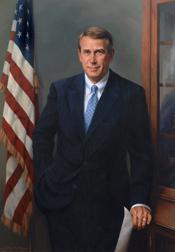
I appreciate my colleague for yielding, and Ohio State will be in the national championship on January 7. And we look forward to dealing with our colleagues from Louisiana. Mr. Speaker, my…
I appreciate my colleague for yielding, and Ohio State will be in the national championship on January 7. And we look forward to dealing with our colleagues from Louisiana.
Mr. Speaker, my colleagues, there has been a lot said on the floor today about the national energy crisis that we face. We know that it jeopardizes our national security, we know that it jeopardizes our own economy and American jobs here at home, and this is an issue that the American people are very concerned about. We have got rising gasoline prices. We have got home heating oil prices and gas prices for this winter that are really going to hurt the American families' budget. So we have a crisis that deserves our response and our collective efforts. But what we have here today is a bill that was written in secret, written by a handful of people on the majority side in each Chamber that we didn't see until last night. Nobody knows what is in this bill because nobody has had time to read it.
One thing that is in here that I think is something that certainly will be useful is the CAFE agreement that Mr. Dingell and others reached that will give us more efficient cars in the future and done in a practical way to help domestic manufacturers and the consumers in America who are going to have to pay for this.
But we know what is not in it. There is nothing in here that is going to lower gasoline prices in America. There is nothing in here that is going to help American families deal with the heating costs they are going to have this winter. There is nothing here in this bill that is going to increase domestic production of energy. And at the end of the day, if we are very serious about solving the energy crisis in America, we have got to deal with conservation. We have got to deal with alternative sources of fuel. We have to deal with increased production here in the United States, and my goodness, why won't we talk about nuclear energy on the floor of the House of Representatives of the United States when we know that it is the cleanest source of fuel for our future? But it is not in here.
Now, I did find some other things that were in this bill. Earmarks. Oh, yeah, we have to have earmarks. If we are going to move a piece of legislation, we have to take care of a few people. So I found $161 million in here for the Plum Creek Timber Company's Montana land holdings for native fish habitat conservation. I didn't know that fish lived in trees. We have $2 billion earmark in here from our good friend from New York City to help New York develop a rail line from the JFK Airport to Lower Manhattan. That's something I am sure my constituents want to pay for.
One of the better issues in here, though, is the $3 billion slush fund, $3 billion of our money that we are going to give to cities and counties around America for green projects, except the definition is so wide that they can do almost anything, like some city can decide they are going to finance Al Gore's speaking tour to promote his book, ``An Inconvenient Truth,'' or maybe Beverly Hills will replace their police cars with Lexus hybrids. Certainly it would count if you look at the bill. We could be buying some energy-efficient hybrid snowmobiles for Aspen or Snowmass or any of those places. All that would be allowed under this provision. Or we can even use some of this money to finish the rain forest that we are building in Iowa. This is not where the American people want their money to go to.
Although this is not an earmark, what I really liked in the bill was the $240 tax credit that we are going to provide every 15 months for people who regularly ride their bike to work for the purchase, repair or storage of their bicycle. Now, amongst us, I know there is one of my colleagues that would probably benefit from this. I hope he is going to recuse himself when we vote. This is not going to solve America's energy problem. I think that we ought to get serious as a country about energy independence and saving our future and the future for our kids.
But while we are here dealing with this bill that doesn't frankly do much and will not solve our problem, think about what we haven't done. You know Christmas is right around the corner for some of you that haven't realized it. The majority leader said yesterday that we would be out by next Friday. The gentleman from Maryland yesterday, the majority leader, said we would be out by December 14. Now, first, I wanted to say ``Ha-Ha-Ha,'' but then I began to realize we are close to Christmas so I thought, well, ``Ho-Ho-Ho'' might be more appropriate. Now there is not a chance that that is going to happen.
We haven't dealt with the AMT problem. We are about to put 23 million Americans under the alternative minimum tax that have never been there before. We have not done anything to fund our troops or our veterans that are about to run out of money. Men and women in the military, in Afghanistan and in Iraq, are out there fighting to protect the American people. We have not dealt with that funding. We have not dealt with 11 of the 12 appropriation bills that should have been done by October but, you know, we were going to get them done by Thanksgiving, and here it is, December 6, my wife's birthday, Ray LaHood's birthday, December 6, and we still haven't done 11 of the 12 appropriations bills. Yet none of this is finished at a time when we ought to be getting serious about getting our work done.
So I would ask my colleagues, let's get serious about energy independence. Let's get serious about what we need to do as a nation to solve the future for our kids and theirs. And until we get serious, I think we should vote ``no'' on this bill.
But I would implore my colleagues to also realize that our constituents are looking for us, our families are going to be looking for us soon, and it is time for us to wrap up our work but get our work finished, because the American people expect it.
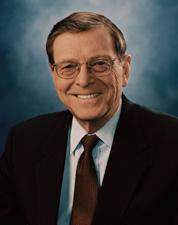
Mr. President, I rise today to introduce, on behalf of myself and Senators Sessions, Murkowski, and Landrieu, a bill that establishes the foundation for a sustainable nuclear fuel cycle for the U.S.…
Mr. President, I rise today to introduce, on behalf of myself and Senators Sessions, Murkowski, and Landrieu, a bill that establishes the foundation for a sustainable nuclear fuel cycle for the U.S. A sustainable nuclear fuel cycle is the key to nuclear energy reaching its full potential to provide the large scale base load electrical generating capacity our country needs, while reducing greenhouse gas emissions. Today, nuclear energy provides nearly 20 percent of our electricity generation capacity and does so more reliably, and with a lower cost per kilowatt hour than coal, with essentially no greenhouse gas emissions. In the decades to come, we will need nuclear energy to play an even greater role, not only in electrical generation, but also in the transportation and industrial sectors, if we are to achieve the reductions in greenhouse gas emissions needed to address the challenge of global climate change. The Strengthening Management of Advanced Recycling Technologies Act, or SMART Act, represents the first important step in building the bridge to that future.
The SMART Act promotes the establishment of privately owned and operated used nuclear fuel storage and recycling facilities. These facilities will help resolve the current deadlock in spent nuclear fuel management while providing a means to extract additional energy from used nuclear fuel. I believe that a commercially viable used fuel recycling strategy, combined with a responsible waste disposition strategy, will enable the expansion of nuclear energy necessary to meet all our goals for the future of nuclear energy. The SMART Act advances this vision through incentives--rather than mandates--for both industry and local communities.
The SMART Act establishes a competitive 50-50 cost share program between the Department of Energy and private industry to finance engineering and design work and the development of license applications for up to 2 spent fuel recycling facilities. The SMART Act restricts facility designs to commercial scale facilities that do not separate pure plutonium. The recycling technology must also reduce the burden on geologic repositories used for ultimate disposal of waste and promote extraction of additional energy from used fuel stocks. Beyond these restrictions, the choice of recycling technology is left up to industry.
The resulting reference licenses for recycling facilities may then be used by industry to construct domestic used nuclear fuel recycling capacity. To assist industry in securing the necessary financing for these facilities, the SMART Act authorizes DOE to offer long term contracts for spent fuel recycling services. All construction and financing costs, however, would be born by industry.
Although ultimate geologic disposition of waste will always be needed, interim storage of used nuclear fuel is a
necessary component of the nuclear fuel cycle infrastructure. To encourage development of interim storage facilities the SMART Act establishes an economic incentive program for communities and states that wish to host a facility within their jurisdiction. All interim storage facilities would be privately owned and operated and licensed by the Nuclear Regulatory Commission. The SMART Act incentives are designed to encourage the development of two large scale facilities with enough capacity to accommodate our annual domestic used nuclear fuel generation.
As with the used fuel recycling facilities, the SMART act authorizes the Department of Energy to enter into long term contracts with storage facility operators. In addition, the SMART Act allows the Department of Energy to enter into agreements with utilities for the settlement of all future claims against the department for failure to take title to spent nuclear fuel by 1998.
Currently, the Nuclear Waste Fund established by the Nuclear Waste Policy Act of 1982 has a balance of approximately $20 billion and is growing by nearly $1.8 billion annually from fees paid by the utilities and interest on the fund. Unfortunately, this fund is currently ``on budget'' and amounts to little more than an IOU to the U.S. ratepayers. The SMART Act will allow access to a small portion of this fund so that it can begin working to resolve the nuclear waste issue as it was intended.
The SMART Act establishes a revolving fund from $1 billion of the current waste fund as well as the annual interest on the fund. The remaining 95 percent of the current waste fund, as well as all future fees, would be placed in a legacy fund for the purposes of constructing a geologic repository. Expenditures from the revolving fund for the provisions of the act could be made without further appropriations but would be subject to limitations in appropriations acts. In this way the revolving fund could be put to use without being subject to the uncertainty of the annual appropriations process while still retaining the authority of Congress to oversee the fund.
The resolution of the used nuclear fuel issue has been deadlocked for decades. Fortunately time has been on our side since nuclear energy produces so little waste. For example the nuclear waste generated by a family of four during their entire lives is only a couple of pounds. Some have even said that we do not need to begin recycling used nuclear fuel for 30 or 40 years. I do not believe we can wait that long before we resolve the used nuclear fuel issue, however. We must begin taking steps today that will place us on the path to a secure and sustainable nuclear energy industry in the future. We must demonstrate to industry and financial institutions the Government's commitment to resolving the used nuclear fuel issue. The SMART bill will place us on that path to the future.
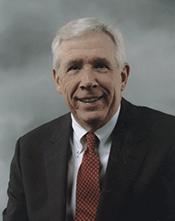
Mr. Speaker, America must develop a 21st century energy security policy that will reduce energy costs, increase energy independence, encourage energy conservation, strengthen the economy and protect…
Mr. Speaker, America must develop a 21st century energy security policy that will reduce energy costs, increase energy independence, encourage energy conservation, strengthen the economy and protect the environment, including steps to cut carbon emissions and address the impacts of climate change. I believe that policy must also include a commitment to invest in clean, renewable energy technology, the responsible exploration of domestic energy sources, an increase in fuel efficiency standards, and the research necessary to develop the fuels of the future.
Today the House considers a bill that is over 1,000 pages, with only 12 hours of notice and only 1 hour of debate. I found it interesting that while the bill was not introduced and made available to members until 8:30 last night, K Street lobbyists provided copies to congressional staff 3 hours earlier.
In the limited time we have had to read the bill, I have found some provisions that I could support. The bill has provisions to invest in research and development of a whole host of renewable resources, promote energy efficiency by the Federal Government, promote energy conservation programs and investment by the private sector in renewable energy generation. If we are ever to become energy independent, those are the kinds of investment we must make.
The bill also has provisions to establish grants to promote public transportation and expand use of alternative fuels, and extend tax credits for energy efficient projects in commercial buildings, production of renewable electricity and investments in solar energy and fuel cells. Earlier this year I voted for the Udall/Platts amendment to require electricity companies to ensure that 15 percent of their electricity is generated by renewable and alternative sources by the year 2020. Renewable energy development is vital to our national security, our economic prosperity and the health of our environment.
Another provision I support and have cosponsored separate legislation will increase automobile fuel economy standards, also called CAFE, Corporate Average Fuel Economy.
But with all these positive steps promoting energy investment, why add provisions that will penalize domestic oil and gas production? America is at the mercy of countries like Saudi Arabia and Venezuela and even China whose governments control oil resources around the world. If we are ever to wean our Nation from foreign sources of energy, we must tap our own energy sources. Congress had an opportunity through this bill to find ways to partner with America's oil and gas producers to provide incentives to encourage alternative energy use and development and to stop the rising costs of gas and oil. Instead, the legislation adds billions in increased taxes which will hurt energy consumers and threaten U.S. jobs. I don't believe any fair-minded person would say that the way to lower prices at the pump is by raising taxes on the companies that find, refine and transport gasoline.
That is no way to promote energy independence. The tax provisions not only increase taxes for domestic drilling, but also include a massive tax increase on U.S. companies producing energy abroad. This will have the effect of placing U.S.-based companies at a disadvantage by reducing their ability to compete for investments in foreign energy projects. This is unacceptable when China, India and Russia are working night and day to corner the market on many of the world's energy resources. In fact, Cuba has sold leases for offshore drilling in the Gulf of Mexico to China, India, Canada and Spain.
Additionally, I was shocked to see that provisions to promote telework in the Federal Government were removed from the final bill. According to Environmental Defense, 6 billion gallons of oil can be saved if commuters telework just 1 day each week. Most importantly, these telework provisions did not cost a penny.
Just a few weeks ago the Texas Transportation Institute at Texas A&M University released its annual traffic congestion study which found that congestion creates a $78 billion annual drain on the U.S. economy due to 4.2 million lost hours of productivity and 2.9 billion gallons of wasted gas. That's not even considering the air pollutants caused by idling vehicles around the nation. Why did we not consider savings from the telecommuting provisions included in the energy bill passed earlier this year as an offset instead of new taxes on the backs of the American people?
I also have learned that this massive bill includes a $2 billion earmark for the City of New York. I am sure there are other special interest projects that have been creatively air dropped into the 1,061 pages of this bill. With so little time to cull through those pages, though, no one but the sponsors will know before we vote. No wonder the American people have such low regard for Congress.
To truly create an effective energy policy, we must have an open and transparent process for all members and in fact all Americans working together. We cannot achieve energy security by increasing taxes on oil and gas producers, which will cripple our economy and impact the pocketbook of every single American. We cannot create energy policy through wheeling and dealing or thousand page bills released just hours before a vote.
Finding bipartisan consensus in developing energy policy is critical for our Nation's future economy, prosperity and security. Republicans and Democrats in the House and Senate must work together so that America can truly start on the path to energy independence that delivers energy security and lower costs for American consumers in a way that also promotes environmental stewardship.
We can do better. We must do better.
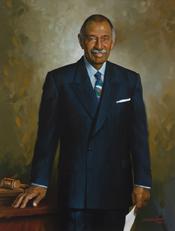
Mr. Speaker, I rise today in strong support of The Energy Independence and Security Act of 2007. This agreement with the Senate builds on the New Direction for Energy Independence, National Security,…
Mr. Speaker, I rise today in strong support of The Energy Independence and Security Act of 2007. This agreement with the Senate builds on the New Direction for Energy Independence, National Security, and Consumer Protection Act passed this summer. The ambitious legislation before us today, which includes wide-ranging solutions from 10 House committees, invests in the future of America and puts our nation on a path towards energy independence. It will strengthen national security, lower energy costs, grow our economy, create new jobs, and begin to reduce the threat of global warming.
With this legislation, Congress is taking groundbreaking steps to address the crisis of climate change. The bill will increase the efficiency of our vehicles. It makes an historic commitment to American-grown biofuels and requires that 15 percent of our electricity come from renewable sources. The legislation strengthens energy efficiency for a wide range of products, appliances, lighting and buildings. It also repeals tax breaks for big oil companies, and invests that money in clean renewable energy and new American technologies. Not only will these measures reduce our dependence on foreign oil and grow our economy, they will also save consumers billions of dollars.
The Energy Independence and Security Act includes several provisions that will strengthen our national security by decreasing our dependence on foreign oil. I am particularly pleased about the compromise that was reached on fuel economy standards, raising standards for new cars and trucks to 35 miles per gallon by 2020. The bill ensures that this fuel economy standard will be reached, while offering flexibility to automakers and ensuring that we keep American manufacturing jobs and continue domestic production of smaller vehicles. I want to applaud Speaker Pelosi and Chairman Dingell for reaching an agreement that is supported by both environmentalists and the automobile industry.
The legislation before us today also reduces our dependence on foreign oil. The initiative includes a historic commitment to American biofuels that will fuel our cars and trucks. It includes critical environmental safeguards to ensure that the growth of homegrown fuels helps to reduce carbon emissions and does not degrade water or air quality or harm our lands and public health. The plan establishes a plug-in hybrid/electric vehicle tax credit for individuals and encourages the domestic development and production of advanced technology vehicles and plug-in hybrid vehicles. It also includes tax provisions totaling approximately $21 billion--which includes the repeal of about $13 billion in tax subsidies for Big Oil.
The Energy Independence and Security Act will help lower energy costs by promoting cleaner energy, greater efficiency, and smarter technology. It requires utility companies to generate 15 percent of electricity from renewable sources--such as wind power, biomass, wave, tidal, geothermal and solar--by 2020. The bill includes landmark energy efficiency provisions that will save consumers and businesses hundreds of billions of dollars on energy costs by requiring more energy efficient appliances, such as dishwashers, clothes washers, refrigerators and freezers. It requires improved commercial and federal building energy efficiency and assists consumers in improving the efficiency of their homes. The bill also strengthens and extends existing renewable energy tax credits, including solar, wind, biomass, geothermal, hydro, landfill gas and trash combustion, while creating new incentives for the use and production of renewable energy, as well as supporting research on solar, geothermal, and marine renewable energy.
The energy bill will help create new American jobs and reduce the threat of global warming. The landmark fuel efficiency standard, renewable electricity standard and energy efficiency provisions will not only save consumers and businesses money, but will also significantly reduce carbon dioxide emissions. In addition, this package creates an Energy Efficiency and Renewable Energy Worker Training Program to train a quality workforce for ``green'' collar jobs. These investments in renewable energy could create 3 million green jobs over 10 years. The bill helps small businesses lead the way in renewable energy by increasing loan limits for purchasing energy efficient technologies. It rewards entrepreneurship in the energy sector by increasing investment in small firms developing renewable energy solutions. This initiative also takes aggressive steps on carbon capture and sequestration to come up with a cleaner way to use coal.
For too long, our country has lagged behind the rest of the industrialized world in recognizing and taking action to address the climate change crisis. Global warming endangers all of us, but threatens to have the most devastating impact on the poorest and the most vulnerable. Our nation is the richest in the world and one of the largest contributors to global warming, yet, until today, it has not made any substantial efforts towards addressing the problem. I am proud to join with my colleagues as we at long last put America on the path to becoming part of the solution.

Mr. President, I seek recognition today to introduce the Attorney-Client Privilege Protection Act of 2008, which is a modified version of my earlier legislation by the same name. This legislation,…
Mr. President, I seek recognition today to introduce the Attorney-Client Privilege Protection Act of 2008, which is a modified version of my earlier legislation by the same name. This legislation, which adds original cosponsors, continues to address the Department of Justice's corporate prosecution guidelines. Those guidelines, last revised by former Deputy Attorney General Paul McNulty in December 2006, erode the attorney-client relationship by allowing prosecutors to request privileged information backed by the hammer of prosecution if the request is denied.
Like my previous bill, S. 186, this bill will protect the sanctity of the attorney-client relationship by prohibiting federal prosecutors and investigators from requesting waiver of attorney-client privilege and attorney work product protections in corporate investigations. The bill would similarly prohibit the government from conditioning charging decisions or any adverse treatment on an organization's payment of employee legal fees, invocation
of the attorney-client privilege, or agreement to a joint defense agreement.
The new version of the bill makes many subtle improvements, including defining ``organization'' to make clear that continuing criminal enterprises and terrorist organizations will not benefit from the bill's protections. The bill also clarifies language that the Department of Justice had previously criticized as ambiguous. The bill also makes clear in its findings that its prohibition on informal privilege waiver demands is far from unprecedented. The bill states: ``Congress recognized that law enforcement can effectively investigate without attorney-client privileged information when it banned Attorney General demands for privileged materials in the Racketeer Influenced and Corrupt Organizations Act. See 18 U.S.C. Sec. 1968(c)(2).''
There is no need to wait to see how the McNulty memorandum will operate in practice. There is similarly no need to wait for another internal Department of Justice reform that will likely fall short and be the fifth policy in the last 10 years. Any such internal reform will not address the privilege waiver policies of other government agencies that refer matters to the Department of Justice and allow in through the window what isn't allowed through the door.
As I said when I introduced S. 186, the right to counsel is too important to be passed over for prosecutorial convenience. It has been engrained in American jurisprudence since the 18th century when the Bill of Rights was adopted. The 6th Amendment is a fundamental right afforded to individuals charged with a crime and guarantees proper representation by counsel throughout a prosecution. However, the right to counsel is largely ineffective unless the confidential communications made by a client to his or her lawyer are protected by law. As the Supreme Court observed in Upjohn Co. v. United States, ``the attorney-client privilege is the oldest of the privileges for confidential communications known to the common law.'' When the Upjohn Court affirmed that attorney-client privilege protections apply to corporate internal legal dialogue, the Court manifested in the law the importance of the attorney-client privilege in encouraging full and frank communication between attorneys and their clients, as well as the broader public interests the privilege serves in fostering the observance of law and the administration of justice. The Upjohn Court also made clear that the value of legal advice and advocacy depends on the lawyer having been fully informed by the client.
In addition to the importance of the right to counsel, it is also fundamental that the Government has the burden of investigating and proving its own case. Privilege waiver tends to transfer this burden to the organization under investigation. As a former prosecutor, I am well aware of the enormous power and tools a prosecutor has at his or her disposal. The prosecutor has enough power without the coercive tools of the privilege waiver, whether that waiver policy is embodied in the Holder, Thompson, McCallum, McNulty--or a future Filip--memorandum.
As in S. 186, this bill amends title 18 of the United States Code by adding a new section, Sec. 3014, that would prohibit any agent or attorney of the U.S. Government in any criminal or civil case to demand or request the disclosure of any communication protected by the attorney-client privilege or attorney work product. The bill would also prohibit government lawyers and agents from basing any charge or adverse treatment on whether an organization pays attorneys' fees for its employees or signs a joint defense agreement.
This legislation is needed to ensure that basic protections of the attorney-client relationship are preserved in Federal prosecutions and investigations.
Mr. Speaker, I also wish to also briefly discuss various provisions in order to more fully explain the statutory language and to provide context for what we are accomplishing with this historic…
Mr. Speaker, I also wish to also briefly discuss various provisions in order to more fully explain the statutory language and to provide context for what we are accomplishing with this historic energy bill.
Section 3 of the bill states: ``Except to the extent expressly provided in this Act, or in an amendment made by this Act, nothing in this Act or an amendment made by this act supersedes, limits the authority or responsibility conferred by, or authorizes any violation of any provision of law (including a regulation), including any energy or environmental law or regulation.''
The laws and regulations referred to in section 3 include, but are not limited to, the Clean Air Act and any regulations promulgated under Clean Air Act authority. It is the intent of Congress to fully preserve existing federal and state authority under the Clean Air Act.
In addition, Congress does not intend, by including provisions in Title I of the bill that reform and alter the authority of the Secretary of Transportation to increase fuel economy standards for passenger automobiles, non-passenger automobiles, work trucks, and medium and heavy duty trucks, to in any way supersede or limit the authority and/or responsibility conferred by sections 177, 202, and 209 of the Clean Air Act. (For section 202 of the Clean Air Act, this includes but is not limited to the authority and responsibility affirmed by the Supreme Court's April 2, 2007 decision in Massachusetts v. EPA (No. 05-1120), and, for sections 177 and 209 of the Clean Air Act, this includes but is not limited to the authority affirmed by the September 12, 2007 decision of the U.S. District Court for the District of Vermont in Green Mountain Chrysler Dodge Jeep et al. v. Crombie et al. (No. 2:05-cv-302).
Title 1 of the bill addresses CAFE Standards. Section 102(a) would require that the fleet of new passenger and non-passenger vehicles made for sale in model year 2020 reach a fleet-wide fuel economy average of at least 35 miles per gallon, regardless of shifts in the market or any other consideration. While fuel economy standards for each of model years 2011-2019 are expected to be the maximum feasible standard, this section does not allow the Department of Transportation (DOT) to set a fleet-wide average of lower than 35 miles per gallon for model year 2020 under any circumstances. In addition, if the maximum feasible level for model year 2020 is higher than 35 miles per gallon due to technological progress and/or other factors, Congress intends to require DOT to set standards at the maximum feasible level.
It is also the intent of this section to require DOT to set interim standards between 2011 and 2019 to make rapid and consistent annual progress towards achieving the 35 mpg minimum by 2020. In asking for ``ratable'' progress, the intent of Congress is to seek relatively consistent proportional increases in fuel economy standards each year, such that no single year through 2020 should experience a significantly higher increase than the previous year.
Section 104 addresses credit trading among and within automakers' vehicle fleets, and is intended to increase flexibility for automakers, but it is the intent of Congress that any trading not in any way reduce the oil savings achieved by the standards set for any year under this title.
Section 105 is intended to provide added information for consumers, but is not intended to in any way interfere with or diminish EPA labeling authority. Congress intends that DOT work closely with EPA in fulfilling the requirements of this section.
Section 106 is intended to clarify that Title I does not impact fuel economy standards or the standard-setting process for vehicles manufactured before model year 2011. This section is not intended to codify, or otherwise support or reject, any standards applying before model year 2011, and is not intended to reverse, supersede, overrule, or in any way limit the November 15, 2007 decision of the U.S. Court of Appeals for the Ninth Circuit in Center for Biological Diversity v. National Highway Traffic Safety Administration (No. 06-71891)
Section 109 makes modifications to the cap on the credits allowed to manufacturers making dual-fuel vehicles to ensure that the dual-fuel vehicle credit program is phased out and is fully and permanently eliminated by 2020 and thereafter.
I urge the Secretary to pay careful heed to the intent and spirit of these provisions in carrying out the provisions of this Title, so that we achieve the Bill's goals of increasing the fuel efficiency of our cars, SUVs, and other vehicles.

Mr. Speaker, the people of rural Missouri and those who live throughout the United States are eager for Congress to enact energy policies that help alleviate record high oil prices, reduce America's…
Mr. Speaker, the people of rural Missouri and those who live throughout the United States are eager for Congress to enact energy policies that help alleviate record high oil prices, reduce America's dependency on foreign oil, promote homegrown energy sources, and preserve the environment for future generations. The comprehensive energy bill we are considering today, the Energy Independence and Security Act, would address the peoples' concerns in these areas. After careful consideration, I have concluded the measure is good for rural Missouri and for the security of our Nation. I will lend my support to it.
Our Nation cannot afford to ignore the impact high energy prices are having on individuals, on families, and on the economy at large. Oil and fuel prices have been at record levels for weeks. Rural Missouri families and farmers, who rely heavily on transportation to go about their daily lives, are particularly hard hit by high fuel costs. They have been allocating larger portions of their income to fill their gas tanks and to heat their homes. Meanwhile, America's top five oil companies have been collecting record profits and refusing to invest those profits in new oil refining capabilities.
Enactment of the Energy Independence and Security Act would be welcome news to Missouri motorists. For the first time since 1975, this legislation would raise fuel efficiency standards for the cars and trucks sold in our country. Further, it would ensure that automakers continue producing trucks driven by many rural Americans by adjusting the fuel efficiency requirements for these particular vehicles.
Improved fuel efficiency is long overdue. Over time, this added efficiency would reduce by half the amount of oil America imports from foreign sources, reduce hazardous vehicle emissions, preserve our environment, and eventually yield fewer trips to the gas station for hard working Americans. I am pleased that the automobile industry and conservationists support this fuel efficiency standard.
Important to Missouri farmers is the robust renewable fuels standard included in the Energy Independence and Security Act. In the Show-Me State and throughout America's heartland, ethanol and biodiesel production facilities dot the countryside. They have fostered economic development in areas of the country that have struggled to produce jobs. Many of these facilities are owned by farmers who have committed their financial resources and ingenuity toward advancing America's energy independence, improving farm incomes, and boosting the economic well-being of small towns.
The 2005 Energy Bill included a strong renewable fuels standard for ethanol made from corn. Since passage of that legislation, ethanol production has dramatically increased, corn yields have set records, and ethanol's farmer-investors have reaped economic gains. Because of the overwhelming success of ethanol and the demand for corn, the price per bushel of corn has risen. Combined with widespread drought that has impacted much of the Midwest and Great Plains States over the past several years, killing or damaging grazing pastureland, high corn prices have raised concerns about ethanol with some livestock producers.
This year's energy bill would build upon the successful renewable fuels standard established in 2005 by allowing for a strong corn ethanol mandate, while also phasing in ethanol made from sources other than corn to help assuage the concerns of some U.S. livestock producers. The bill also would create a minimum use requirement for biodiesel made from soybeans and other sources.
While I will support the Energy Independence and Security Act, the bill is not perfect. I am concerned that investor-owned utility firms in Missouri and elsewhere may not be able to sufficiently produce electricity from renewable sources within the time mandated by the legislation. I am hopeful that the Energy and Commerce Committee will sit down with investor-owned utility firms to iron out any glitches that may arise in this particular area.
Taken as a whole, the Energy Independence and Security Act would be good for rural Missouri and for our country. I will vote for it and urge my colleagues to do the same.
Show 11 more
Mr. Speaker, I rise as a 10-term member of the United States House of Representatives, co-author of the DRIVE Act, Dependence Reduction through Innovation in Vehicles and Energy Act, H.R. 670, and…
Mr. Speaker, I rise as a 10-term member of the United States House of Representatives, co-author of the DRIVE Act, Dependence Reduction through Innovation in Vehicles and Energy Act, H.R. 670, and co-chair of the Oil and National Security Caucus.
For too long, the United States has been too dependent on foreign oil. We consume nearly 21 million barrels per day, and our appetite is growing. This reliance on a single resource is particularly troubling because much of that oil comes from nations that are unstable, unfriendly, or downright hostile.
Despite our economic dominance, we continue to give our money to foreign nations because we are addicted to foreign oil. Despite our military might, we remain vulnerable because we are addicted to foreign oil.
Mr. Speaker, it is time for that to change. It is time for bold leadership to move us toward energy independence.
Energy independence is a goal that other countries are already achieving. Brazil, a nation that once relied on foreign countries to import 80 percent of its crude oil, will be entirely self-sufficient in a few years thanks to its investment in biofuels.
I believe we can become self-sufficient by replacing our consumption of foreign oil with domestic production of biofuels; first from corn, then from cellulosic feedstock and other biomass--including agricultural and municipal waste.
I am proud of the legislation that this legislative body has produced today. This bill will strengthen national security, lower energy costs, grow our economy and create new jobs, and begin to reduce global warming.
This legislation takes groundbreaking steps to increase the efficiency of our vehicles, making an historic commitment to American grown biofuels, requiring that 15 percent of our electricity come from renewable sources, and strengthening energy efficiency for a wide range of products, appliances, lighting and buildings to reduce energy costs to consumers.
It mandates increased automotive fuel efficiency standards to 35 miles per gallon by the year 2020, the first such change since 1975.
It repeals tax breaks for profit-rich oil companies, and invests that money in clean renewable energy and new American technologies. Not only would this reduce our dependence on foreign oil, the measure would also save consumers billions of dollars.
Mr. Speaker, among the specific legislative initiatives in this bill near-and-dear to my heart, that I have long advocated with some of my friends and distinguished colleagues here in the House, are:
Plug-in Hybrid Electric Vehicle, PHEV, and other Advanced Drive Transportation Technologies, which will save fuels costs for consumers and businesses, reduce air pollution, and decrease dependence on imported oil;
National Tire Efficiency Consumer Information Program, which will create a national program to educate consumers about the crucial role played by passenger tires, and the proper maintenance of passenger tires, on vehicle fuel economy;
Renewable Fuels Standard, which will ensure that a percentage of our nation's fuel supply will be provided by the domestic production of biofuels. It will provide a pathway for reduced consumer fuel prices, increased energy security, and growth in our nation's factories and farms.
United States-Israel Energy Cooperation Provisions, which establish a grant program to fund joint ventures between American and Israeli businesses, academic institutions, and non-profit agencies, with the goal of promoting the development of clean alternative fuels and more energy efficient technologies.
Mr. Speaker, this legislation will help pave a path to a new era in American energy. I urge my colleagues to vote yes on this pragmatic and forward-looking bill.
Thank you.
Mr. Speaker, I support the rule and urge the House to adopt the Energy Independence and Security Act. The basic issue before us is whether we are going to take action to address energy security in…
Mr. Speaker, I support the rule and urge the House to adopt the Energy Independence and Security Act.
The basic issue before us is whether we are going to take action to address energy security in this country, or are we going to sit on the sidelines and let American consumers and businesses fend for themselves. All of us know that we can't continue business as usual. The price of oil stands near $90 a barrel. In my home State of Michigan, gas costs over $3 a gallon. Families are struggling with persistently high home heating costs. At the same time, the effects of climate change are becoming more and more pronounced, yet the United States remains the only industrialized nation in the world that has no plan to address global warming.
The package before the House strengthens our energy security, lowers energy costs, grows our economy, creates jobs, and begins to address global warming. It also bolsters our national security. Today we import more than 60 percent of the oil we use. It is simply not in our long- term security interests to continue to rely on oil imports from the Middle East and other volatile regions of the world. We can't drill our way out way out of this situation, so we need to try another approach.
Many of the provisions of this legislation are common sense and will achieve significant energy savings with little or no cost. For example, the bill sets new energy efficiency standards for appliances, lighting, and buildings. Doing so will save consumers and businesses hundreds of billions of dollars over time. This legislation also includes incentives for manufacturers to produce washing machines, refrigerators and dishwashers that push the boundaries of energy and water efficiency, and to build them in the United States. Reducing the energy or water usage of a washing machine may seem like a small thing, but over time and across millions of households, these incentives will produce remarkable reductions in energy and water usage, and consumers will save money on their utility bills.
Other sections of this bill will challenge key sectors of our economy. In particular, the legislation calls for a 40 percent increase in vehicle fuel economy by 2020. The compromise that has been reached is ambitious, but it has the support of auto manufacturers, the United Auto Workers, consumers groups, and the environmental community. We also reform the existing CAFE mechanism, which for years has discriminated against manufactures, including Ford, GM and Chrysler, that produce a full line of vehicle sizes. The agreement contains anti- backsliding language to help keep small car production here in the United States and protect the jobs of American workers. I am pleased that this bill also begins the work of helping industry reach the higher mileage standards through retooling assistance and incentives such as a new plug-in hybrid tax credit.
I also strongly support the renewable electricity portfolio provisions of this bill that require utilities to generate 15 percent of their electricity from renewable sources by 2020. Obviously, this provision will pay environmental dividends. Moving towards renewable energy will help keep mercury out of the Great Lakes and greenhouse gases out of the atmosphere, but it also will help create new industries and jobs here in the United States. There is no reason in the world why the U.S.
should not lead the world in the production of wind turbines and solar panels. This bill will help ensure that these jobs are created here in the United States.
Our work in this House is about priorities, and the difference in priorities on this bill could not be more clear. I urge all of my colleagues to support this responsible legislation.
Mr. Speaker, the signs of an energy crisis are clear--we are facing the consequences of significant climatic change, our national security continues to be at risk, and our energy economy must change…
Mr. Speaker, the signs of an energy crisis are clear--we are facing the consequences of significant climatic change, our national security continues to be at risk, and our energy economy must change in the face of $100 per barrel oil.
Investors are ready to invest billions of dollars into American made next generation clean technologies, but for too long the Federal Government has been subsidizing the old technologies. Inventors and entrepreneurs, the true engines of American economic growth, are already focused on energy, but they are still waiting for Congress to send them the right signals before bringing their full efforts to bear on the problem.
That is why I am pleased to rise in support of an energy bill that sends the right signal and will help to revolutionize our Nation's energy economy as we know it, help free us of our dependence on foreign oil, create millions of new jobs, and address global warming.
The Energy Independence and Security Act will increase corporate average fuel economy standards to 35 miles per gallon by 2020; greatly expand the national biofuels mandate; require utilities nationwide to provide 15 percent of their power from renewable sources by 2020; strengthen energy efficiency for a wide range of products, appliances, lighting, and buildings; create education and job training programs to train the next generation of Americans to ensure we remain competitive in the new energy economy; and repeal tax breaks for profit-rich oil companies and invest that money in clean renewable energy technologies and in much needed research and development.
The evidence that we need to change our reliance on fossil fuels has never been clearer. The United Nations Intergovernmental Panel on Climate Change has issued its latest, and most dire, report on what we can expect if we do not immediately reduce greenhouse-gas emissions. The IPCC has said that worldwide carbon emissions must fall by at least 50 percent by 2050 to limit a temperature rise of about three degrees Fahrenheit and prevent the worst climate impacts from occurring.
By passing the Energy Independence and Security Act, we are taking the first step in developing a policy for reducing carbon emissions. I pledge to work diligently with my colleagues to take additional steps in 2008, and urge adoption of this important legislation.
Mr. YOUNG of Alaska. Mr. Speaker, I'm amazed that the Democrats took so long to write such a bad bill. I would laugh if this was any laughing matter, but designing the Nation's energy policy is among the most serious responsibilities of the Congress. H.R. 6 has recklessly been designed by radical environmentalists to achieve many of their long-term goals, including significantly raising the price of energy used by Americans, vastly reducing American manufacturing and mining jobs, increasing federal control over rural Western communities, and reducing and further locking-up the use of our vast God-given coal, oil and gas, oil shale, and timber resources.
This bill reaches into every American's bank account and steals vast amounts of hard earned dollars. As a result of this bill, gasoline will be much more expensive, electricity in all areas of the country will go up with many areas with huge increases, home heating oil will continue to surge to record levels, and natural gas prices will literally go through the roof. This bill, a work of exceeding incompetence, is the greatest holiday gift to the OPEC oil cartel ever given by a sovereign nation.
Although there are a few provisions in this bill that are appropriate, the vast expanse of this bill is an abomination. If it becomes law, the Democrats who supported it will have to answer to the American people.
Mr. Speaker, today, we are doing something great for America. This bill makes major strides towards addressing our country's growing energy demands. And it makes great progress towards a brighter and…
Mr. Speaker, today, we are doing something great for America.
This bill makes major strides towards addressing our country's growing energy demands. And it makes great progress towards a brighter and more renewable future for America's children.
Energy is what drives the American economy. It is what keeps the lights on. But our use of fossil fuels is warming the planet, and may have catastrophic effects on our children and grandchildren.
First, we must conserve energy. For the first time since 1975, Congress is acting to require higher fuel economy for new vehicles. This will save American consumers money, and make American car manufacturers more competitive in the global marketplace.
The bill also requires that we begin to generate a significant amount of our electricity--15 percent by 2020--from renewable sources like the sun, wind, and water. The significance of this mandate is that it will encourage the development of a greener economy by creating incentives for the advancement of alternative energy sources.
Energy Efficiency and Conservation Block Grants
Energy conservation must be a natural partnership involving Federal, State and local government.
This bill contains a provision based on legislation that I introduced to this House back in May as H.R. 2447, the Energy and Environment Block Grant Act. This provision creates an Energy Efficiency and Conservation Block Grant program that will help take on the problem of global warming at the local and community level.
The bill authorizes $10 billion in local assistance to cities, counties, and States to continue working to reduce energy usage, increase our efficiencies, and conserve valuable energy resources.
EECB Grants will give local governments funding and assistance to: implement energy conservation programs for homeowners and businesses; reduce vehicle usage through smart planning, traffic flow improvements, and telecommuting; increase material conservation; and locally generate energy with renewable energy technology like solar, wind, and fuel cells.
The program will: help create and grow new energy-efficient communities; foster a nationwide market for renewable and efficient technologies; and achieve significant energy savings across this country.
Healthy High-Performance Schools
I am also proud to support the bill's provisions on Healthy High- Performance Schools. On any weekday, 20 percent of America is in a school building. Yet, schools are often sited next to abandoned landfills or industrial facilities.
According to a 2002 five-state survey, more than 1,100 public schools were built within a half-mile of a toxic waste site. Lead in paint and drinking water, toxic chemical and pesticide use, polluted indoor air, radon, asbestos, and mold are also factors that impact the health of our children, teachers and staff in schools environments.
According to the EPA, studies show that one-half of our nation's schools have problems linked to indoor air quality. Asthma is the leading cause of school absenteeism due to chronic illness and it is also the leading occupational disease of teachers.
The Energy Security and Savings Act's provisions on Healthy High- Performance Schools amend the Toxics Substances Control Act to promote the development of healthy school environments that are free of environmental hazards and establish a grant program for states to design healthier, more energy efficient and environmentally safe facilities.
I know this bill has opposition on many fronts. But I believe it is an important step for our country to take towards a better and more sustainable future.
I urge my colleagues to support this important bill.
Mr. Speaker, with ongoing high oil and gasoline prices and the conference on global climate change taking place in Bali, the time for making investments to secure our energy future is now. H.R. 6 is…
Mr. Speaker, with ongoing high oil and gasoline prices and the conference on global climate change taking place in Bali, the time for making investments to secure our energy future is now.
H.R. 6 is a strong first step toward reducing our dependence on fossil fuels, which is a real security concern, addressing climate change, and protecting public health, while saving consumers money on energy bills and providing business opportunities in the energy market, which will stimulate economic growth and create new jobs. But we must not stop short of addressing climate change. Scientists say that if we are to have a good chance of avoiding potentially catastrophic repercussions of climate change, we must reduce emissions 60% to 80% by 2050. Through cap-and-trade, based on a sound energy policy foundation, Congress can deliver the kind of reform business and industry need to grow the economy, stabilize the climate, and create more diverse and secure sources of energy. I sincerely hope the Speaker keeps her commitment to address this critical issue.
The Energy Independence and Security Act, includes many provisions that I have previously supported in earlier iterations of the legislation in January and August. It increases the fuel economy for automobiles to 35 miles per gallon by 2020, requires that 15% of our electricity come from renewable energy sources by 2020, includes important energy efficiency provisions for buildings and appliances, a renewable fuels standard with safeguards under the Clean Air Act with specific incentives for cellulosic biofuels, and continues and makes new investments in renewable energy production through the repeal of subsidies for the oil and gas industry.
For the first time in 30 years, the bill ensures that our automobiles go farther on a tank of gas by raising fuel efficiency, or CAFE, to 35 miles per gallon by 2020, which is both aggressive and something manufacturers feel they can achieve. This is an historic achievement. With close to $100/barrel oil, $3.00 a gallon gasoline, and a nearly one billion dollar deficit in our balance of trade from oil imports makes increasing our fuel economy so critical. I have long believed that reasonable CAFE standards are both achievable and practical and would have a positive impact on fuel consumption in this country. While the issue of raising CAFE standards is not new and the proposals for how it should be achieved have differed greatly, I am pleased to support the agreement Congress has reached.
Another key measure is the requirement of a 15 percent national renewable electricity standard, which will help lower energy costs, create new jobs and help diversifying our energy portfolio with clean, renewable sources,
like wind and solar energy. This standard will hopefully begin to ease pressure on natural gas prices and help reduce carbon emissions quickly. While I am a cosponsor of legislation to create a 20 percent national renewable electricity standard, complimenting Delaware's recently adopted standard and effort to harness offshore wind energy, this compromise will go a long way in helping to keep our air and water clean and in our effort to address climate change.
Finally, I strongly support the key tax provisions, such as the 4- year extension of production tax credit for qualified renewable energy, like wind, and credits for residential efficiency measures, that will help us make strong investments in clean, renewable energy sources, and help address affordability and availability.

Mr. Speaker, I am proud to support this historic and long-overdue legislation. Today's bill offers geopolitical and economic security, environmental sustainability, and significant cost savings for…
Mr. Speaker, I am proud to support this historic and long-overdue legislation. Today's bill offers geopolitical and economic security, environmental sustainability, and significant cost savings for American consumers.
It is a strategy to fight global warming. It is a compromise that raises fuel efficiency standards. It is an investment in a new generation of manufacturing jobs.
This bill creates a world where American resources and ingenuity are used to make American energy, not to import it from other countries.
The bill raises CAFE standards for the first time since 1975. As a result, each American family could save up to $1,000 a year at the pump. That alone should be reason enough for every Member of Congress to support this compromise.
But today's bill does even more. It frees us from a dangerous dependence on foreign oil. By 2030, it will save Americans more than double the level of oil we currently import from the Persian Gulf That amounts to more than 4 million barrels saved every single day.
This energy package also invests in the American people by creating three million green jobs over 10 years.
With this bill, Mr. Speaker, we are forging an entirely new kind of economy--a clean energy economy. My hometown of Sacramento is the perfect example of a community that will contribute to this new energy economy.
We have a growing clean-energy industry that is poised to take off. Our local utility already produces power from solar, wind, and methane gas. More and more of our region's homes, businesses, and vehicles are powered by renewable energy.
However, my constituents need help from the Federal Government to bring this new energy economy into the mainstream.
That is why I am proud to stand before the House today in support of this revolutionary energy package. It makes landmark investments in the energy economy that is developing in Sacramento and in likeminded cities across our great Nation.
The biofuels this bill develops will power my constituents' cars. New fuel efficiency standards will help them save money on gas. They will work some of the millions of green-collar jobs it creates. This energy bill helps Sacramento continue to lead our country's energy revolution.
One of the cornerstones of this revolution is a renewable portfolio standard. My home State of California already has such a standard. So do more than 20 other States. I have seen this progressive policy in action, Mr. Speaker, and it has contributed greatly to my home State's groundbreaking efforts to increase the use of clean power and forestall global warming.
I am pleased that a renewable portfolio standard has been included in this comprehensive energy package. What works for our states can--and will--work for the entire country.
Mr. Speaker, in Congress we often talk about creating a better future for our children and grandchildren. Today's energy bill will create this better future. It is a future of energy independence, clean power, fuel-efficient vehicles, and economic growth.
I urge my colleagues to support the legislation.

Mr. Speaker, last November, the American people voted for change. They were frustrated with the direction our nation was taking and felt that we needed to set a new course. I am so proud to stand…
Mr. Speaker, last November, the American people voted for change. They were frustrated with the direction our nation was taking and felt that we needed to set a new course. I am so proud to stand before you to say to my colleagues and most importantly the American people, that today we begin to chart that new course on energy policy.
For the first time in over 30 years, the House of Representatives will pass a significant energy bill--one that reduces our dependence on foreign oil. Our addiction to oil has compromised our national security and causes tremendous damage to our environment.
While there are many things to be proud about in this bill, there are two that I would like to highlight. The first is the new fuel economy standard. Today, the average price of gasoline
in the United States is well above three dollars. This puts a tremendous strain on the American people, who in many instances have no option aside from driving to get to work or bring their children to school. Today we pass a bill that raises fuel economy standards to 35 miles per gallon by 2020 for new cars. This provision alone will save American families between $700 and $1000 per year, by making their cars run more efficiently. It will also reduce oil consumption by 1.1 million gallons per day in 2020, approximately half of what we import from the Persian Gulf. This will reduce our dependence on oil which comes from the Middle East and politically unstable nations.
In addition to raising CAFE standards, the Energy Independence and Security Act also makes a commitment to integrate renewable energy sources into our supply. This commitment comes at precisely the right moment for America. We are at the precipice of developing new technology that will allow our nation to produce alternative energy more efficiently. In order for this development to be realized, however, we must guarantee a demand for the product. That is why the inclusion of a renewable portfolio standard is so important. It creates the demand necessary to spur development. The bill requires utility companies to generate 15 percent of electricity from renewable sources by 2020. This will mean major investment in products made throughout the country, like ethanol in my home state, wind farms in California, and solar harnessing technology in Florida that will create new jobs and facilitate economic growth.
As important as the Energy Independence and Security Act is, it is just the first step and the road in front of us is long. We need an energy program that matches the scale of the threat we face. We will continue to build on the momentum we are creating and I look forward to the day when I can stand before you and say that the United States is completely energy independent.
In conclusion I would like to thank the Speaker and Chairman Dingell for their leadership on this bill throughout the process. We would not be here today without them.
Mr. Speaker, I support the conference agreement on the Energy Independence and Security Act and I thank Speaker Pelosi for her personal involvement and leadership on this issue. This legislation: (1)…
Mr. Speaker, I support the conference agreement on the Energy Independence and Security Act and I thank Speaker Pelosi for her personal involvement and leadership on this issue.
This legislation: (1) reduces our dependency on unstable foreign sources of oil; and, (2) moves us away from our unsustainable reliance on fossil fuels.
To do so is absolutely necessary for our economy, our future prosperity and our environment.
Americans are reminded how important this is every time they fill up their gas tanks at the pump.
While we should not try to manipulate the price at the pump, we can take concrete steps to reduce the amount of oil we consume, by making our vehicles travel further on each gallon they burn, and in doing so, reducing our dependency on too many unstable and unfriendly foreign sources of oil.
It's been more than 30 years since Congress last raised automobile fuel efficiency standards, and during the interim, the average fuel efficiency of our vehicles has actually declined. We've regressed in meeting our goals.
This legislation corrects this inexcusable abdication of responsibility and mandates tough, but achievable, fuel efficiency standards that will reduce our daily consumption of oil by 4 million barrels per day by 2030--more than twice the amount we import from the Persian Gulf today.
Consumers can look forward to savings hundreds or even thousands of dollars every year on their gas bills.
This legislation also looks toward the future and crafts responsible policies that, if implemented today, will reduce the threat of global warming and the impact of future oil price shocks by moving us toward cleaner, more environmentally responsible alternative sources of energy.
The mandate on commercial power companies to produce 15 percent of their electricity from renewable sources will be the equivalent of retiring 300 coal-fired power plants, the single largest source of carbon dioxide emissions.
With this legislation, we have the beginnings of a substantial commitment toward lower greenhouse gas emissions and greater energy independence.
By 2030, the policies implemented under this legislation will have achieved about 40 percent of the greenhouse gas emissions reductions most scientists have concluded are needed to avoid catastrophic global climate change.
Despite the claims of rising prices, economic disruption and disaster, this legislation will achieve its objectives in a way that will spur innovation, create thousands of new manufacturing and service jobs, increase savings for consumers, put fewer of our earnings into the pockets of unfriendly foreign interests and set up a safer, more secure future for our children.
I urge my colleagues to support this conference agreement.
Mr. Speaker, I rise today in support of clean energy and a clean environment. The Renewable Fuels, Consumer Protection, and Energy Efficiency Act, H.R. 6, provides long overdue increases in our fuel…
Mr. Speaker, I rise today in support of clean energy and a clean environment.
The Renewable Fuels, Consumer Protection, and Energy Efficiency Act, H.R. 6, provides long overdue increases in our fuel efficiency standards for vehicles, CAFE, significant investments in energy efficiency, ending needless tax breaks for giant oil companies, and mandating production of electricity from clean and renewable sources. Although this bill represents real progress, much more must be done in order to avoid the catastrophic consequences of global warming. I urge all of my colleagues to take up this cause and support aggressive efforts to end our dangerous addiction to fossil fuels through a carbon tax.
We have not increased CAFE standards since 1975. During the intervening years the price of oil has reached nearly $100 a barrel, our reliance on foreign oil has led to deadly wars and propped up corrupt regimes, and the threat of global warming has become real. The bill before us would increase CAFE standards to 35 mpg by 2020. Although I believe we can and should get there faster, this provision alone will save 1.1 million barrels of oil per day by 2020. That is real progress.
With this legislation we also have the opportunity to greatly reduce our use of polluting fuels like coal by mandating that 15 percent of our Nation's electricity be generated from renewable and clean sources such as wind, biomass, and geothermal. Such a change will have the equivalent of removing 20 million cars from our roadways. In addition, this bill will reduce our energy use and save families money by setting strong, new efficiency standards for appliances and promoting carbon- neutral green buildings. These two steps will prevent as much as 10 billion tons of carbon dioxide from entering the atmosphere.
I am troubled that we are continuing to subsidize and ratchet up corn-based ethanol production. A simple shift from gasoline to ethanol will do nothing to reduce greenhouse gas emmissions, but it will eat up open space and continue to drive up food prices. Fortunately, this bill includes some environmental safeguards and directs future production toward advanced biofuels. I urge my colleagues to pay close attention to the effect of ethanol on food prices here and abroad and move quickly to protect families who are squeezed by rapidly rising prices.
This bill begins to address the energy and environmental crises caused by the unbridled use of fossil fuels. I urge all of my colleagues to support final passage. We must realize, however, that more fundamental changes, ideally a carbon tax, are needed if we are serious about stopping global warming and becoming truly energy independent.

Madam Speaker, on Wednesday December 5, 2007 and Thursday, December 6, 2007, I was unavoidably detained due to a prior obligation. That prior obligation was to join hundreds of Oklahomans for the…
Madam Speaker, on Wednesday December 5, 2007 and Thursday, December 6, 2007, I was unavoidably detained due to a prior obligation. That prior obligation was to join hundreds of Oklahomans for the dedication of the USS Oklahoma Memorial at Pearl Harbor, Hawaii. On December 7th, 1941, the Japanese attack led to the death of 429 sailors and Marines stationed on the USS Oklahoma on that Sunday morning. I was proud to gather with survivors and the loved ones of the deceased servicemen to dedicate a memorial in their honor. I am proud to have worked towards the authorization of the creation of this memorial in the 2006 National Defense Authorization Act. Because of my presence at the ceremony, I would like to make it clear how I would have voted if I had been present in the House.
Madam Speaker, had I been present and voting, I would have voted as follows:
(1) Rollcall vote No. 1131: ``yea'' (On Motion to Suspend the Rules and Pass, as Amended H.R. 3791, the Securing Adolescents From Exploitation-Online Act.)
(2) Rollcall vote No. 1132: ``yea'' (On Motion to Suspend the Rules and Pass, as Amended H.R. 2517, the Protecting Our Children Comes First Act.)
(3) Rollcall vote No. 1133: ``yea'' (On Motion to Suspend the Rules and Agree, as Amended H. Res. 822, Recognizing the 100th anniversary year of the founding of the Port of Los Angeles.)
(4) Rollcall vote No. 1134: ``nay'' (Consideration of H. Res. 846, Providing for the consideration of the Senate amendments to the bill (H.R. 6), Creating Long-Term Energy Alternatives for the Nation Act.)
(5) Rollcall vote No. 1135: ``yea'' (On Motion to Suspend the Rules and Pass H.R. 3505, the Securities Law Technical Corrections Act.)
(6) Rollcall vote No. 1136: ``nay'' (On Ordering the Previous Question H. Res. 846, Providing for the consideration of the Senate amendments to the bill (H.R. 6), Creating Long-Term Energy Alternatives for the Nation Act.)
(7) Rollcall vote No. 1137: ``nay'' (On Agreeing to the Resolution H. Res. 846, Providing for the consideration of the Senate amendments to the bill (H.R. 6), Creating Long-Term Energy Alternatives for the Nation Act.)
(8) Rollcall vote No. 1138: ``yea'' (On Motion to Suspend the Rules and Pass H.R. 4253, the Military Reservist and Veteran Small Business Reauthorization and Opportunity Act.)
(9) Rollcall vote No. 1140: ``nay'' (On Agreeing to the Senate Amendments with Amendments to H.R. 6, the Creating Long-Term Energy Alternatives for the Nation Act.)
(10) Rollcall vote No. 1141: ``yea'' (On Motion to Suspend the Rules and Pass H.R. 2085, the McGee Creek Project Pipeline and Associated Facilities Conveyance Act.)
Mr. President, I would like to discuss a bill that I am introducing along with Senator Hatch today, the Carbon Reduction Technology Bridge Act of 2008. This bill is designed to develop the…
Mr. President, I would like to discuss a bill that I am introducing along with Senator Hatch today, the Carbon Reduction Technology Bridge Act of 2008.
This bill is designed to develop the technologies that will enable us to use coal in a manner that helps address the threat of climate change.
Our country depends on coal to provide half of our electricity. In North Dakota, coal accounts for over 90 percent of our power. This is the power we need for lighting and heating our homes, powering our businesses, and, in the future, charging our cars.
The U.S. has vast resources of coal, enough to last over 250 years. We need to ensure that we can continue to enjoy the affordable electricity provided by coal, while developing technologies that will lower the greenhouse gas emissions that result from coal use.
We need to advance carbon capture and storage technologies to address the reality of climate change. The scientific evidence is clear that human activity is increasing the concentration of greenhouse gases in the atmosphere, which contributes to warming temperatures. The increased occurrence of severe weather and other effects that we have seen to date are small in comparison to what scientists say are the likely consequences of continued warming.
This bill will help jumpstart investment in technologies to capture and store carbon. It provides tax credits to the first generation of highly efficient advanced coal plants that capture carbon dioxide. It helps companies make the first investments in carbon capture and storage equipment on the first existing plants. It also provides credits for each ton of carbon dioxide captured and stored underground. It provides a number of other incentives to advance coal technology.
The science on climate change is clear, but what is not proven is the technology that can provide the solution. This bill sets ambitious but achievable goals for those companies willing to be the first to address this challenge head-on and build and install these technologies. Under this bill, a typical new coal plant would be required to capture 65 percent of its carbon dioxide emissions. After the first generation of projects supported by this bill, we will have tested and refined the technologies to enable an even higher rate of capture on future plants.
This bill will provide an important step toward affordable, low- carbon power. I welcome comments from my colleagues on this proposal and hope that they will join me in sponsoring this bill.
Bill Text
5 versions available
        [Congressional Bills 110th Congress]
[From the U.S. Government Printing Office]
[H.R. 2085 Reported in Senate (RS)]

Calendar No. 817
110th CONGRESS
2d Session
H. R. 2085

[Report No. 110-385]

_______________________________________________________________________

IN THE SENATE OF THE UNITED STATES

December 7, 2007

Received; read twice and referred to the Committee on Energy and
Natural Resources

June 16, 2008

Reported by Mr. Bingaman, without amendment

_______________________________________________________________________

AN ACT

To authorize the Secretary of the Interior to convey to the McGee Creek
Authority certain facilities of the McGee Creek Project, Oklahoma, and
for other purposes.

Be it enacted by the Senate and House of Representatives of the
United States of America in Congress assembled,

SECTION 1. SHORT TITLE.

This Act may be cited as the ``McGee Creek Project Pipeline and
Associated Facilities Conveyance Act''.

SEC. 2. DEFINITIONS.

In this Act:
(1) Agreement.--The term ``Agreement'' means the agreement
numbered 06-AG-60-2115 and entitled ``Agreement Between the
United States of America and McGee Creek Authority for the
Purpose of Defining Responsibilities Related to and
Implementing the Title Transfer of Certain Facilities at the
McGee Creek Project, Oklahoma''.
(2) Authority.--The term ``Authority'' means the McGee
Creek Authority located in Oklahoma City, Oklahoma.
(3) Secretary.--The term ``Secretary'' means the Secretary
of the Interior.

SEC. 3. CONVEYANCE OF MCGEE CREEK PROJECT PIPELINE AND ASSOCIATED
FACILITIES.

(a) Authority To Convey.--
(1) In general.--In accordance with all applicable laws and
consistent with any terms and conditions provided in the
Agreement, the Secretary may convey to the Authority all right,
title, and interest of the United States in and to the pipeline
and any associated facilities described in the Agreement,
including--
(A) the pumping plant;
(B) the raw water pipeline from the McGee Creek
pumping plant to the rate of flow control station at
Lake Atoka;
(C) the surge tank;
(D) the regulating tank;
(E) the McGee Creek operation and maintenance
complex, maintenance shop, and pole barn; and
(F) any other appurtenances, easements, and fee
title land associated with the facilities described in
subparagraphs (A) through (E), in accordance with the
Agreement.
(2) Exclusion of mineral estate from conveyance.--
(A) In general.--The mineral estate shall be
excluded from the conveyance of any land or facilities
under paragraph (1).
(B) Management.--Any mineral interests retained by
the United States under this Act shall be managed--
(i) consistent with Federal law; and
(ii) in a manner that would not interfere
with the purposes for which the McGee Creek
Project was authorized.
(3) Compliance with agreement; applicable law.--
(A) Agreement.--All parties to the conveyance under
paragraph (1) shall comply with the terms and
conditions of the Agreement, to the extent consistent
with this Act.
(B) Applicable law.--Before any conveyance under
paragraph (1), the Secretary shall complete any actions
required under--
(i) the National Environmental Policy Act
of 1969 (42 U.S.C. 4321 et seq.);
(ii) the Endangered Species Act of 1973 (16
U.S.C. 1531 et seq.);
(iii) the National Historic Preservation
Act (16 U.S.C. 470 et seq.); and
(iv) any other applicable laws.
(b) Operation of Transferred Facilities.--
(1) In general.--On the conveyance of the land and
facilities under subsection (a)(1), the Authority shall comply
with all applicable Federal, State, and local laws (including
regulations) in the operation of any transferred facilities.
(2) Operation and maintenance costs.--
(A) In general.--After the conveyance of the land
and facilities under subsection (a)(1) and consistent
with the Agreement, the Authority shall be responsible
for all duties and costs associated with the operation,
replacement, maintenance, enhancement, and betterment
of the transferred land and facilities.
(B) Limitation on funding.--The Authority shall not
be eligible to receive any Federal funding to assist in
the operation, replacement, maintenance, enhancement,
and betterment of the transferred land and facilities,
except for funding that would be available to any
comparable entity that is not subject to reclamation
laws.
(c) Release From Liability.--
(1) In general.--Effective beginning on the date of the
conveyance of the land and facilities under subsection (a)(1),
the United States shall not be liable for damages of any kind
arising out of any act, omission, or occurrence relating to any
land or facilities conveyed, except for damages caused by acts
of negligence committed by the United States (including any
employee or agent of the United States) before the date of the
conveyance.
(2) No additional liability.--Nothing in this subsection
adds to any liability that the United States may have under
chapter 171 of title 28, United States Code.
(d) Contractual Obligations.--
(1) In general.--Except as provided in paragraph (2), any
rights and obligations under the contract numbered 0-07-50-
X0822 and dated October 11, 1979, between the Authority and the
United States for the construction, operation, and maintenance
of the McGee Creek Project, shall remain in full force and
effect.
(2) Amendments.--With the consent of the Authority, the
Secretary may amend the contract described in paragraph (1) to
reflect the conveyance of the land and facilities under
subsection (a)(1).
(e) Applicability of the Reclamation Laws.--Notwithstanding the
conveyance of the land and facilities under subsection (a)(1), the
reclamation laws shall continue to apply to any project water provided
to the Authority.
Calendar No. 817

110th CONGRESS

2d Session

H. R. 2085

[Report No. 110-385]

_______________________________________________________________________

AN ACT

To authorize the Secretary of the Interior to convey to the McGee Creek
Authority certain facilities of the McGee Creek Project, Oklahoma, and
for other purposes.

_______________________________________________________________________

June 16, 2008

Reported without amendment