Safeguarding America's Families by Enhancing and Reorganizing New and Efficient Technologies Act of 2007
Legislative Activity
Stay on top of the latest movement without scrolling through every action
Received in the Senate and Read twice and referred to the Committee on Commerce, Science, and Transportation.
November 14, 2007
View full timeline
Introduced in House
August 4, 2007
Referred to the House Committee on Energy and Commerce.
August 4, 2007
Referred to the Subcommittee on Commerce, Trade and Consumer Protection.
August 4, 2007
Subcommittee Hearings Held.
October 23, 2007
Subcommittee Consideration and Mark-up Session Held.
October 23, 2007
Forwarded by Subcommittee to Full Committee (Amended) by Voice Vote .
October 23, 2007
Committee Consideration and Mark-up Session Held.
October 30, 2007
Ordered to be Reported (Amended) by Voice Vote.
October 30, 2007
Mr. Butterfield moved to suspend the rules and pass the bill, as amended.
November 13, 2007 • 3:02 PM
Considered under suspension of the rules. (consideration: CR H13561-13562)
November 13, 2007 • 3:03 PM
DEBATE - The House proceeded with forty minutes of debate on H.R. 3461.
November 13, 2007 • 3:03 PM
At the conclusion of debate, the Yeas and Nays were demanded and ordered. Pursuant to the provisions of clause 8, rule XX, the Chair announced that further proceedings on the motion would be postponed.
November 13, 2007 • 3:12 PM
Considered as unfinished business. (consideration: CR H13824-13825)
November 13, 2007 • 7:26 PM
Passed/agreed to in House: On motion to suspend the rules and pass the bill, as amended Agreed to by the Yeas and Nays: (2/3 required): 398 - 6 (Roll no. 1085).(text: CR H13561)
November 13, 2007 • 7:30 PM
On motion to suspend the rules and pass the bill, as amended Agreed to by the Yeas and Nays: (2/3 required): 398 - 6 (Roll no. 1085). (text: CR H13561)
November 13, 2007 • 7:30 PM
Motion to reconsider laid on the table Agreed to without objection.
November 13, 2007 • 7:30 PM
Received in the Senate and Read twice and referred to the Committee on Commerce, Science, and Transportation.
November 14, 2007
Voting History
1 vote recorded • Roll call available
Floor Debate
23 membersWhat members said about H.R. 3461 on the floor
 LG
LG AS
AS JCJ
JCJ SJL
SJL STJ+18
Floor Debate
23 membersWhat members said about H.R. 3461 on the floor
Mr. Speaker, I ask to manage the time on behalf of the opposition since I am opposed to the bill in its current form. Mr. Speaker, I yield myself such time as I may consume. Mr. Speaker, I am sure…
Mr. Speaker, I ask to manage the time on behalf of the opposition since I am opposed to the bill in its current form.
Mr. Speaker, I yield myself such time as I may consume.
Mr. Speaker, I am sure glad my friend, the chairman of Judiciary, sought time for people to revise and extend their remarks, because they are going to need it. This thing keeps changing. I mean, I reviewed this bill last week. I spent a long time going line by line, only to find yesterday there's still a new version, and today I was provided a 98-page bill. I can't tell you the pages of the issues that I am most concerned about because the version keeps changing.
Now, this bill includes $330 million in authorizations. Normally, suspensions
are noncontroversial, but the fact that this bill keeps changing is absolute evidence that this is not noncontroversial. It keeps changing because people can't figure out what is the best thing to do.
I would submit there is a good reason for that. The bill that this seeks to renew and programs that are sought to be renewed are ones we don't have information on how successful they were, and that was the original purpose of this bill. Back when it expired in 2005, we still did not have the information on what worked and what didn't.
I can tell you from my days as a judge, there was some anecdotal evidence that it looked like faith-based programs did a better job of dramatically reducing recidivism. In one case I was shown results from a prison in Texas where it dropped down to about 8 percent from over 80 percent because of faith-based programs and mentoring.
This new version, I haven't even been through it. I haven't had time to go through it. But the one that I saw and reviewed on Friday, it included reentry programs allowing payment for housing and health care. I know our military members who are leaving after less than 20 years in the service with honorable discharges would love to have that kind of help reentering.
There are some provisions that allow for too much administration, in my opinion; 11 percent at one point, 15 percent at another. That is not going to help people. That is going to build a bigger bureaucracy.
Dismissing all charges if someone completes drug rehab under another provision I think is outrageous. You are going to remove the hammer that would allow you to keep people in line? It is one thing to say we are going to remove you and not have you go to prison and instead send you to drug rehab, and then if you get through there, before you have a chance to go out and do cocaine again, we are going to drop all charges so we have no hammer over your head. I don't know if this is in the final bill. It was in there last I saw on Friday.
There is a provision that allows payments through the Department of Labor for support. There are military members, and I went to another funeral Saturday, a gentleman who was not killed in Iraq, he was killed during surgery, but I know his family would love to have the kind of support being provided in here for felons.
We also have a provision in here, we are going to pay people through these grants to teach inmates how they can go about getting the most welfare before they leave prison and go out on their own. There is also a provision that moves inmates to home detention without approval of the judge who sentenced the individual.
In this bill, the elderly, for purposes of moving to home detention, is defined as 65. I guess apparently under this bill, without any underlying evidence or research to support it, we have arbitrarily picked 65 as deciding that is when people are harmless. But I know from my own experience around this Chamber, there are people in Congress that are 65 or older that are certainly not harmless. In any event, I think that is a little bit too young to classify people as harmless.
There is a provision that assistance will be provided by the United States probation system and it ``shall'' be done. I don't know, I can't find from the bill what kind of assistance that will be. But I think we have all got the same goal. I think one of the worst atrocities in the justice system has been our lack of rehabilitating and educating and preparing people to go out into the world and become productive citizens and finally reach the God-given potential that every one of them has. I couldn't agree more with the proposition, and I know that is the heart of my colleagues across the aisle. But we don't have the information on which programs are successful and which aren't.
I want to work together on a program. I've kind of been cut out of this process. The National Summit on Prisoner Reentry is coming up in Los Angeles on November 27 and 28, but we are going to rush this through on a suspension bill for $330 million without even having a chance to really review the most recent document.
Yes, I will be glad to yield, and if you can show that we have gotten the recent version----
Claiming back my time, I am not yielding for you to criticize me.
I appreciate yielding to the gentlelady to come down and call me outrageous. But what is outrageous is this process, this process of taking something so important and rushing it in here without having the proper input and the proper information. The National Institute of Justice has got their biggest study program in its history ongoing, and we don't have the results, and yet my colleagues want to rush in and throw $330 million at a process that is unproven and untried.
I just don't think that is the way to go. We have got honest people involved in the process, but the process itself here has not been honest.
With that, I would reserve the balance of my time.
Mr. Speaker, would the gentleman yield for a question?
Was there no version of the bill filed today? Was there no version of the Second Chance Act filed today?
Thank you.
May I inquire how much time I've got.
Thank you, Mr. Speaker.
Nothing would please me more than to be involved in the process of constructively working on these issues. When I think about the gentlelady saying that my comments were outrageous, everything that I have said is documented. Everything I have said comes from reading through this bill, as well as my own experience from my days of being a judge.
I wholeheartedly agree, we should do a better job of rehabilitating and educating. In fact, I just get concerned when we get so anxious to try to do something good that we end up throwing money at a problem just so we can say we worked on it, something had to be done.
But it was the National Institute of Justice Award to RTI International, a nonprofit research organization, to evaluate the programs funded by the Serious and Violent Offender Reentry Initiative. This is one of the largest evaluation studies funded by the NIJ, and it is doing this research. The Urban Institute, a nonpartisan economic and social policy research organization in D.C., is the collaborator on the project. I am really looking forward to getting that information. I am wondering why we throw more money at a situation before we get the information that tells me how and tells us how to be most effective?
When my good friend the chairman, and I do think the world of him, talks about comity and goodwill, that is what I would love to have. But when we have such trouble getting copies of the latest versions, and then the chairman says, gee, I had the latest version on Friday, I was notified by the committee staff that there was a new version as of yesterday and then the new version was filed today. So, I didn't have everything Friday. That has been one of the problems here. This is too important of an issue to just be throwing good money after bad.
I would also point out that in the interests of comity and goodwill, the bills that follow this, H.R. 3845, PROTECT Our Children Act of 2007, I indicated before that sounded like something I would want to be part of and helping with, but we never did get a final version that we could say, yes, I want to cosponsor that.
Keeping the Internet Devoid of Sexual Predators Act of 2007 sounds like another good bill, but we haven't seen it. And talking to the Judiciary staff, that and the Effective Child Pornography Prosecution Act, H.R. 4120, that follows that, we are still trying to get updated versions of those things. So that doesn't sound to me like comity and goodwill, when we are struggling over here to even get copies.
We don't know what requests had been granted. There were things requested by the Department of Justice, in the interest of justice, please get these provisions put in this bill. We don't know what was put in and what wasn't. That, to me, does not indicate comity and goodwill. It creates all kinds of problems.
I yield to the gentleman from Michigan.
I am not sure which four things the chairman is referring to.
I thank the chairman.
Reclaiming my time, I have been over here in the 20 minutes or so before I came up to speak talking to Judiciary staff who, unless they are changing their story now, have not been able to get the latest information on this bill. Well, they have got it on this bill. We have the final copy. I haven't had a chance to review it since it has been filed today. Most of us were out doing what we should have been doing yesterday, paying tribute to veterans all over our districts. But these subsequent bills, these are still a problem that I have been having with the Second Chance Act, getting the latest information on this.
My dear friend, Mr. Coble, we serve together on the Judiciary, had asked for time, and at this time I yield 3 minutes to the gentleman from North Carolina.
Mr. Speaker, how much time remains?
Thank you, Mr. Speaker.
We heard moments ago that there are 212 organizations supporting the bill. I have talked to many of them over the course of our discussions on the Second Chance Act, great, noble, wonderful organizations. I couldn't find but one out of numerous ones that I talked to that actually read the bill. They all have the same goals. They all want to see adequate education and rehabilitation, cutting down on recidivism. We all want to see that. I want to see that. I think we have got to do that as a civilized society. There are many that support this goal. But, again, many haven't seen the bill.
And I have checked with the staff in the interim. For example, H.R. 719 is file-stamped November 13 at 1:11 today, and the Judiciary got it for the first time just before 3 p.m. so that you know.
But if we really want to help the situation, doesn't it make sense to get the information on one of the biggest-funded programs NIJ has ever had so we put the money where it works and take it away from where it doesn't work?
Mr. Speaker, in responding to the chairman's comment, I would have to say I noticed in reviewing the bill on Friday, it is a better bill than it was, in my opinion; but we still have a little ways to go. That is why I just think this is a bill in its present form, as it continues to morph, that should not be on the Suspension Calendar, but should come up under a regular rule where we have a chance to work on these other issues.
Mr. Speaker, I reserve the balance of my time so the gentleman from Michigan has the time to respond.
I appreciate the chairman yielding. I think we are getting closer, actually.
I would like to see the information that is being prepared to come forth on November 27 and 28, the newest information that is being brought to bear, all of these groups coming together. I would think then by December we ought to be able to have something.
Might I inquire, I don't have any other speakers, if I can find out where the chairman is with regard to additional speakers.
Mr. Speaker, I reserve the balance of my time.
Mr. Speaker, I do appreciate Mrs. Tubbs Jones' comments. And I guess calling me or my comments outrageous was somewhat offensive, but as an old judge I was used to that. In fact, I have been called all kinds of names.
And, yes, even 2 days ago when I was buying some potting soil back home, I had a guy come up to me with his father and said if it were not for me, he would never have straightened his life up.
Those are not uncommon comments. And what it came from was being fair, but also having tough love. Because, as those who have been involved in dealing with people who have been addicted to drugs or alcohol, it does take tough love. And you do want to help them get out of the cycle rather than becoming an enabler. And that is my number one concern, is that we do not want to be enablers.
And when we talk about Scripture, absolutely, there are all kinds of verses that apply to us for those that believe the teachings of Jesus as I do. They are entirely appropriate. Those are directed to individuals. If you get over to Romans 13, that is directed to the government. And where it says if you do evil, you need to be afraid, because God does not give the government the sword in vain, that is part of the role of government; if you do evil, then there are consequences.
But it is a worthy goal to want to try to stop the cycle of recidivism. We all, I think, want that. No, I don't think; I know, we all want that same goal. But I am very concerned that we may be enabling by throwing money at a problem.
One of the saddest words and lines I ever heard came at a hearing when the wealthiest people in my home county, they had the courtroom packed so that they were hoping that I would put her on probation yet again, and they knew she had had it too many times and it wasn't going to happen under me. And it didn't. And it turns out she had a huge trust fund every month. She never had to work, she never had to study, and she had spent all her money on drugs. And the last thing she said before I sentenced her was, ``I wish somebody had told me `no' before today and meant it.''
She has now gotten out. Her mother, when I was walking neighborhoods, I went up to her door and her mother said, ``Come in and sit down.'' She said, ``You know, my husband and I just hated you at one point, but you saved our daughter's life.''
Sometimes it is the tough love things that turn things around. We want the same goal. I don't want to throw good money after bad in renewed programs that shouldn't be. And I hope that if this fails on suspension, we can get the new data that is going to be forthcoming and work toward the same goal with additional, more helpful information.
Mr. Speaker, I yield back the balance of my time.
Mr. Speaker, on that I demand the yeas and nays.
Madam. Speaker, due to events in my district, I was unable to vote on rollcall No. 42: Passage of H. Res. 475. Had I been present, I would have voted ``yes.'' January 22, 2007 Madam Speaker, due to…
Madam. Speaker, due to events in my district, I was unable to vote on rollcall No. 42: Passage of H. Res. 475. Had I been present, I would have voted ``yes.''
January 22, 2007
Madam Speaker, due to events in my district, I was unable to vote on rollcall No. 43: Table the appeal of the ruling of the Chair for H. Res. 476. Had I been present, I would have voted ``yes.''
Madam Speaker, due to events in my district, I was unable to vote on rollcall No. 44: Motion to Suspend the Rules and Agree to H. Res. No. 52. Had I been present, I would have voted ``yes.''
Madam Speaker, due to events in my district, I was unable to vote on rollcall No. 45: Motion to suspend the rules and Agreed to H.R. 390. Had I been present, I would have voted ``yes.''
Madam Speaker, due to events in my district, I was unable to vote on rollcall No. 46: Motion to Suspend the Rules and Agree to H. Res. 29. Had I been present, I would have voted ``yes.''
February 8, 2007
Madam Speaker, due to events in my district, I was unable to vote on rollcall No. 87: Agreeing to the Amendment of H.R. 547, and amendment to include language which encourages the Assistant Administrator to utilize Land Grant Institutions, Historically Black Colleges and Universities, Hispanic Serving Institutions and other minority serving institutions among other resources to undertake research for programs covered by the bill. Had I been present, I would have voted ``yes.''
Madam Speaker, due to events in my district. I was unable to vote on rollcall No. 88: Agreeing to the Amendment of H.R. 547, an amendment to add a new paragraph to section 3, Biofuel Infrastructure and Additives Research and Development, to include issues with respect to where in the fuel supply chain additives optimally should be added to fuels. Had I been present, I would have voted ``yes.''
Madam Speaker, due to events in my district, I was unable to vote on rollcall No. 89: Agreeing to the Amendment of H.R. 547, an amendment to add a new paragraph to section 3 which includes issues with respect to certification by a nationally recognized testing laboratory of components for fuel dispensing devices that specifically reference compatibility with alcohol blended and biofuels that contain greater than 15 percent alcohol. Had I been present, I would have voted ``yes.''
Madam Speaker, due to events in my district, I was unable to vote on rollcall No. 90: Agreeing to the Amendment of H.R. 547, an amendment to add a new section 7 entitled Additional Funding. Had I been present, I would have voted ``yes.''
Madam Speaker, due to events in my district, I was unable to vote on rollcall No. 91:
the Motion to Recommit with Instructions of H.R. 547. Had I been present, I would have voted ``no.''
Madam Speaker, due to events in my district, I was unable to vote on rollcall No. 92: Passage of H.R. 547. Had I been present, I would have voted ``yes.''
February 28, 2007
Madam Speaker, due to events in my district, I was unable to vote on rollcall No. 111: Motion to Suspend the Rules and Agree on H. Con. Res. 52. Had I been present, I would have voted ``yes.''
March 12, 2007
Madam Speaker, due to events in my district, I was unable to vote on rollcall No. 136: Motion to Suspend the Rules and Pass, as Amended on H.R. 85. Had I been present, I would have voted ``yes.''
Madam Speaker, due to events in my district, I was unable to vote on rollcall No. 137: Motion to Suspend the Rules and Agree on H. Res. 136. Had I been present, I would have voted ``yes.''
Madam Speaker, due to events in my district, I was unable to vote on rollcall No. 138: Motion to Suspend the Rules and Agree on H. Res. 89. Had I been present, I would have voted ``yes.''
Madam Speaker, due to events in my district, I was unable to vote on rollcall No. 187: Motion to Suspend the Rules and Pass, as amended on H.R. 802. Had I been present, I would have voted ``yes.''
Madam speaker, due to events in my district, I was unable to vote on rollcall No. 188: Motion to Suspend the Rules and Pass, as Amended on H.R. 137. Had I been present, I would have voted ``yes.''
Madam Speaker, due to events in my district, I was unable to vote on rollcall No. 189: Motion to Suspend the Rules and Pass, as Amended on H.R. 580. Had I been present, I would have voted ``yes.''
May 14, 2007
Madam Speaker, due to events in my district, I was unable to vote on rollcall No. 342: Motion to Suspend the Rules and Pass on H.R. 1124. Had I been present, I would have voted ``yes.''
Madam Speaker, due to events in my district, I was unable to vote on rollcall No. 343: Motion to suspend the rules and agree to H. Res. 223. Had I been present, I would have voted ``yes.''
Madam Speaker, due to events in my district, I was unable to vote on rollcall No. 344: Motion to Suspend the Rules and Agree (H. Res. 385). Had I been present, I would have voted ``yes.''
May 16, 2007
Madam Speaker, due to events in my district, I was unable to vote on rollcall No. 358: Call in Committee Quorum. Had I been present, I would have voted ``present.''
Madam Speaker, due to events in my district, I was unable to vote on rollcall No. 359: Motion that the Committee Rise (H.R. 1585). Had I been present, I would have voted ``no.''
June 11, 2007
Madam Speaker, due to events in my district. I was unable to vote on rollcall No. 448: Motion to Suspend the Rules and Pass on H.R. 2356. Had I been present, I would have voted ``yes.''
Madam Speaker, due to events in my district, I was unable to vote on rollcall No. 449: Motion to Suspend the Rules and Agree on S. 676. Had I been present, I would have voted ``yes.''
Madam Speaker, due to events in my district. I was unable to vote on rollcall No. 450: Motion to Suspend the Rules and Agree on H. Res. 418. Had I been present I would have voted ``yes.''
July 23, 2007
Madam Speaker, due to events in my district, I was unable to vote on rollcall No. 687: Motion to Suspend the Rules and Pass H.R. 404, as amended. Had I been present, I would have voted ``yes.''
Madam Speaker, due to events in my district, I was unable to vote on rollcall No. 688: Motion to suspend the rules and agree to H. Res. 553. Had I been present, I would have voted ``yes.''
Madam Speaker, due to events in my district, I was unable to vote on rollcall No. 689: Motion to suspend the rules and agree to H. Res. 519. Had I been present I would have voted ``yes.''
Madam Speaker, due to events in my district, I was unable to vote on rollcall No. 690: On ordering the previous question on H. Res. 558. Had I been present, I would have voted ``yes.''
August 1, 2007
Madam Speaker, due to events in my district, I was unable to vote on rollcall No. 781: Motion to adjourn. Had I been present. I would have voted ``no.''
september 4, 2007
Madam Speaker, due to events in my district, I was unable to vote on rollcall No. 847: Motion to Suspend the Rules and Pass H.R. 694, as amended. Had I been present, I would have voted ``yes.''
Madam Speaker, due to events in my district, I was unable to vote on rollcall No. 848: Motion to Suspend the Rules and Pass H.R. 3020, as amended. Had I been present, I would have voted ``yes.''
Madam Speaker, due to events in my district, I was unable to vote on rollcall No. 849: Motion to Instruct Conferees on H.R. 2669. Had I been present, I would have voted ``no.''
september 17, 2007
Madam Speaker, due to events in my district, I was unable to vote on rollcall No. 867: Motion to Suspend the Rules and Pass H.R. 3246, as amended. Had I been present, I would have voted ``yes.''
Madam Speaker, due to events in my district, I was unable to vote on rollcall No. 868: Motion to Suspend the Rules and Pass H.R. 1657, as amended. Had I been present, I would have voted ``yes.''
Madam Speaker, due to events in my district, I was unable to vote on rollcall No. 869: Motion to Suspend the Rules and Pass H.R. 3527. Had I been present, I would have voted ``yes.''
october 1, 2007
Madam Speaker, due to events in my district, I was unable to vote on rollcall No. 924: Motion to Suspend the Rules and Agree on H. Res. 185. Had I been present, I would have voted ``yes.''
Madam Speaker, due to events in my district, I was unable to vote on rollcall No. 925: Motion to Suspend the Rules and Pass H.R. 2276. Had I been present, I would have voted ``yes.''
Madam Speaker, due to events in my district, I was unable to vote on rollcall No. 926: Motion to Suspend the Rules and Pass H.R. 3325. Had I been present, I would have voted ``yes.''
october 15, 2007
Madam Speaker, due to events in my district, I was unable to vote on rollcall No. 961: Motion to Suspend the Rules and Agree on H. Res. 738. Had I been present, I would have voted ``yes.''
Madam Speaker, due to events in my district, I was unable to vote on rollcall No. 962: Motion to Suspend the Rules and Pass H.R. 2089. Had I been present, I would have voted ``yes.''
Madam Speaker, due to events in my district, I was unable to vote on rollcall No. 963: Motion to Suspend the Rules and Pass H.R. 20, as amended. Had I been present, I would have voted ``yes.''
October 17, 2007
Madam Speaker, due to events in my district, I was unable to vote on rollcall No. 980: Passage of H.R. 2095. Had I been present, I would have voted ``yes.''
october 29, 2007
Madam Speaker, due to events in my district, I was unable to vote on rollcall No. 1010: Motion to Suspend the Rules and Pass H.R. 3224, as amended. Had I been present, I would have voted ``yes.''
Madam Speaker, due to events in my district, I was unable to vote on rollcall No. 1011: Motion to Suspend the Rules and Agree on H. Res. 573, as amended. Had I been present, I would have voted ``yes.''
Madam Speaker, due to events in my district, I was unable to vote on rollcall No. 1012: Motion to Suspend the Rules and Agree on H. Res. 747. Had I been present, I would have voted ``yes.''
November 5, 2007
Madam Speaker, due to events in my district, I was unable to vote on rollcall No. 1034: Closing Portions of the Conference on H.R. 3222. Had I been present, I would have voted ``yes.''
Madam Speaker, due to events in my district, I was unable to vote on rollcall No. 1035: Motion to Suspend the Rules and Pass H.R. 513, as amended. Had I been present, I would have voted ``yes.''
Madam Speaker, due to events in my district, I was unable to vote on rollcall No. 1036: Motion to Suspend the Rules and Agree on H. Res. 744. Had I been present, I would have voted ``yes.''
november 7, 2007
Madam Speaker, due to events in my district, I was unable to vote on rollcall No. 1058: Motion to Suspend the Rules and Agree on H. Con. Res. 236, as amended. Had I been present, I would have voted ``yes.''
november 13, 2007
Madam Speaker, due to events in my district, I was unable to vote on rollcall No. 1082: Motion to Suspend the Rules and Pass H.R. 3315. Had I been present, I would have voted ``yes.''
Madam Speaker, due to events in my district, I was unable to vote on rollcall No. 1083: Motion to Suspend the Rules and Pass H.R. 1593, as amended. Had I been present, I would have voted ``yes.''
Madam Speaker, due to events in my district, I was unable to vote on rollcall No. 1084: Motion to Suspend the Rules and Pass H.R. 3403, as amended. Had I been present, I would have voted ``yes.''
Madam Speaker, due to events in my district, I was unable to vote on rollcall No. 1085: Motion to Suspend the Rules and Pass H.R. 3461, as amended. Had I been present, I would have voted ``yes.''
november 14, 2007
Madam Speaker, due to events in my district, I was unable to vote on rollcall No. 1095: Motion to Adjourn. Had I been present, I would have voted ``no.''
december 6, 2007
Madam Speaker, due to events in my district, I was unable to vote on rollcall No. 1141: Motion to Suspend the Rules and Pass H.R. 2085. Had I been present, I would have voted ``yes.''
Mr. Speaker, I move to suspend the rules and pass the bill (H.R. 1593) to reauthorize the grant program for reentry of offenders into the community in the Omnibus Crime Control and Safe Streets Act…
Mr. Speaker, I move to suspend the rules and pass the bill (H.R. 1593) to reauthorize the grant program for reentry of offenders into the community in the Omnibus Crime Control and Safe Streets Act of 1968, to
improve reentry planning and implementation, and for other purposes, as amended.
Mr. Speaker, I ask unanimous consent that all Members have 5 legislative days to revise and extend their remarks and include extraneous material on the bill under consideration and on H.R. 3461.
Mr. Speaker, I yield myself such time as I may consume.
Mr. Speaker, Members of the House, as the prison population has grown over the past two decades, so has the number of prisoners completing their sentencing and returning to the general population. More than half a million, some 650,000 men and women, are leaving the Federal and State prisons each year. While the vast majority of the prisoners are committed to abiding by the law and becoming productive members of society, they often encounter the same pressures, the same environment, the same temptations that they faced before prison, and with insufficient resources to assist them in dealing with those pressures and temptations, sometimes, despite their best intentions at the time of release, too many of them commit new crimes and end up back in prison. More than two-thirds of them are arrested for new crimes within 3 years of their release. This exacts a terrible cost in financial terms as well as in human terms.
Congress has been very active over the years in strengthening our criminal laws and our investigative and prosecutorial tools against crime. The bipartisan legislation we are considering today, aptly named the Second Chance Act, complements those efforts by helping give ex- offenders the tools they need to stay out of trouble. It's a very commonsense piece of legislation and it recognizes that too many ex- offenders lack the education, job skills and stable living arrangements, the substance abuse treatment and health services that they need to successfully reintegrate into our society.
Many have trouble finding a job and some have trouble holding a job. Many move straight from their prison cell to a homeless shelter. Many entered prison with alcohol and drug habits, and the pull remains hard to resist once they reemerge in our society. Many are physically or mentally disabled. Some have chronic disease; others need psychological treatment. Many left spouses and young children behind when they entered prison. While these family relationships can be of tremendous value in helping an ex- offender build a stable life outside prison, it can be very difficult to rekindle these ties after a long and painful absence.
The Second Chance Act will help provide these men and women with the education, training, counseling and other support needed to help them obtain and hold steady jobs; to kick their drug and alcohol habits, if they have one; address medical and dental needs; rebuild their families; and deal with the many other challenges that they face in their efforts to successfully rejoin society. These kinds of programs have been tested on a smaller scale, to be sure, where they have already made a measurable difference in reducing recidivism. The Second Chance Act builds on these efforts in a measured but significant way to reduce recidivism, increase public safety, and help ex-offenders lead productive and law-abiding lives.
We have the support of current and former chairmen and ranking members of the Judiciary Committee and the crime subcommittee, chaired by Bobby Scott of Virginia, as well as a wide range of national, State and local law enforcement and rehabilitative organizations.
I submit for the Record a new section-by-section analysis reflecting some of the revisions to the bill reported in response to suggestions by members of the Committee on the Judiciary. I urge my colleagues to give careful consideration in their support of this measure.
Changes to Second Chance Act of 2007 (Reported Version to Suspension
Version)
Added Rule of Construction to confirm Act does not create a
right or entitlement to assistance or services, and to
promote transfer of programs to programs not funded under
this Act.
Reduced number of new Federal programs from 18 to 10 by
consolidating or eliminating programs.
Reduce authorized spending from $427 million to $330
million over two fiscal years.
Reduced permissible uses under reauthorized reentry
demonstration programs from 21 to 9.
Added measurable goals for programs--reducing recidivism
rate by 50 percent over 5 years, and 10 percent over 2 years.
Prohibited Bureau of Prisons from Preventing Access to
Chapel Library Materials.
Mr. Speaker, I reserve the balance of my time.
Mr. Speaker, I yield myself such time as I may consume.
Mr. Speaker, here we are the day after Veterans Day. We come back in comity and goodwill. We are trying to finish off the last week before the Thanksgiving recess. And I want Judge Louie Gohmert, my dear friend from Texas, to understand as much as I can explain to him about the reservations that he has raised thus far.
I want him to know this is not a partisan bill at all and that the changes that have been made to the bill were made before Friday when you examined it. So if you were examining this measure on Friday, that is the last, that is all she wrote, because we haven't been in since then.
So, please understand that, first of all, this is a bipartisan bill. We had the hearings. We had a markup in which you participated rather actively. We had a record vote. We went to the Rules Committee. Everything is working I think very smoothly, according to the chairman of the Subcommittee on Crime, Bobby Scott, and the author of this bill for three Congresses, Congressman Danny Davis of Illinois.
Please know that we have been working on this bill. You are right, it has been through a lot of changes. The changes started before you graced us with your presence in the Judiciary Committee as a very important member of it. We have been working on this all the time. We think it is in an improved state.
I would just like you to know that we have 212 organizations, and because we are on a rather fast schedule here this afternoon, I won't bother you with them, but none of them are political. They are all community organizations. They are all organizations concerned with the reentry of people who have served their time and are now coming out.
We are trying to deal, Judge Gohmert, with this huge problem of people returning from their terms in prison. They come out and sometimes in my State, I hate to say this, they don't even have a bus ticket or a suit of new clothing to get to where they are supposed to be going. Many of them don't know where they are going. It is that dislocation that creates the situation of so many of them returning back.
One of the most distressing things I ever heard when I was visiting one of these places is that the guard tells the exiting prisoner, former prisoner who serves his term, ``I'll see you when you get back.'' Nothing tells the story more than I know there is nothing for you out in society. You're not trained for anything, you're not fit for anything, there are no jobs for you, so you're going to go back into your old ways and we're going to get you back in our clutches again. What we are trying to do, Judge Gohmert, is to change that. I know in your court you have seen your share of this kind of process even in Texas.
So I urge you to join with us in trying to be as constructive as you normally are, to help make everybody understand that we are trying to make
rehabilitation mean something besides just the phrase used in the criminal justice system.
Of course.
Absolutely, yes, it was.
You're welcome.
I reserve the balance of my time.
Mr. Speaker, will the gentleman yield?
I thank the gentleman for yielding.
I am being told that we have been working with the minority in Judiciary on an ongoing basis, and I just wonder if you are aware that four of your changes in particular have been accepted and incorporated into the measure that is before us now?
I will bring them out for you and be happy to show them to you.
That is correct.
Mr. Speaker, I am pleased to recognize the Chair of the Subcommittee on Crime of the House Judiciary Committee, the gentleman from Virginia (Mr. Scott) for 2 minutes.
Mr. Speaker, I am glad that you find we are making progress; that is very encouraging. How much time do you think we would need to arrive at a point where your observations about the bill and the needed improvement and our position would intersect so we could get it before the body?
I yield to the gentleman.
How about tomorrow? If I gave you 24 hours, what would happen differently?
Mr. Speaker, I am going to recognize the distinguished whip of the majority, the gentleman from South Carolina (Mr. Clyburn), for 2 minutes, and maybe within his comments he can help us frame some kind of time line.
Mr. Speaker, I would like to recognize now the author of this bill, the gentleman from Illinois (Mr. Davis). We said it started three Congresses ago, but Danny Davis started it many years before three Congresses ago, and I am proud to yield 2 minutes to him.
(Mr. DAVIS of Illinois asked and was given permission to revise and extend his remarks.)
Mr. Speaker, I yield to the distinguished Member from Ohio, a former jurist and prosecutor herself, Stephanie Tubbs Jones, for 1 minute.
Mr. Speaker, I am proud now to yield to Gwen Moore, the gentlelady from Wisconsin, 1 minute.
Mr. Speaker, I yield to close the debate on our side to Eleanor Holmes Norton, who has been not just a trial lawyer but has been before the Supreme Court on numerous occasions.
Mr. Speaker, I rise in strong support of H.R. 1593, the Second Chance Act of 2007. I would like to thank my dear colleague Mr. Danny Davis of Illinois for sponsoring this very important legislation…
Mr. Speaker, I rise in strong support of H.R. 1593, the Second Chance Act of 2007. I would like to thank my dear colleague Mr. Danny Davis of Illinois for sponsoring this very important legislation that addresses the prison warehousing crisis in this country. H.R. 1593, a bill of which I am an original co-sponsor, addresses the very serious concerns about the compromised state of warehousing prisoners.
Earlier this year, the Judiciary Subcommittee on Crime, Terrorism and Homeland Security of which I am a member, held hearings to address the state of certain conditions within the United States prison system. In one of those hearings, my colleagues and I considered the merits of The Second Chance Act, and my amendment which I offered in the last Congress was included in the base bill this year.
The Second Chance Act is designed to reduce recidivism, increase public safety, and help State and local governments better address the growing population of ex-offenders returning to their communities. The bill focuses on four areas: development and support of programs that provide alternatives to incarceration, expansion of the availability of substance abuse treatment, strengthening families and the expansion of comprehensive re-entry services.
Nearly two-thirds of released state prisoners are expected to be re- arrested for a felony or serious misdemeanor within 3 years of their release. Such high recidivism rates translate into thousands of new crimes each year and wasted taxpayer dollars, which can be averted through improved prisoner reentry efforts.
The ``Second Chance Act of 2007'' allocates funding towards a variety of reentry programs. One of the main components of the bill is the funding of demonstration projects that would provide ex-offenders with a coordinated continuum of housing, education, health, employment, and mentoring services. This broad array of services would provide stability and make the transition for ex-offenders easier, in turn reducing recidivism.
Another reason why I strongly support this legislation is because it includes a provision contained in an amendment I offered during the Judiciary Committee markup of this bill in the 109th Congress. That amendment, incorporated in H.R. 1593 as Section 243 of the bill, requires that the:
Attorney General shall collect data and develop best practices of State corrections departments and child protection agencies relating to the communication and cordination between such State departments and agencies to ensure the safety and support of children of incarcerated parents, including those in foster care and kinship care, and the support of parent-child relationships between incarcerated, and formerly incarcerated, parents and their children, as appropriate to the health and well-being of the children.
My amendment provides for a systematic means of ensuring the safety and support of children of incarcerated parents and the support of children of release for non-violent offenders who have attained the age of at least 45 years of age, have never been convicted of a violent crime, have never escaped or attempted to escape from incarceration, and have not engaged in any violation, involving violent conduct, of institutional disciplinary regulations.
The Second Chance Act seeks to ensure that in affording offenders a second chance to turn around their lives and contribute to society, ex- offenders are not too old to take advantage of a second chance to redeem themselves. A second benefit of the legislation is that it would relieve some of the strain on Federal, State, and local government budgets by reducing considerably government expenditures on warehousing prisoners.
Mr. Speaker, some of those who are incarcerated face extremely long sentences, and this language would help to address this problem. Releasing rehabilitated, middle-aged, non-violent offenders from an already overcrowded prison population can be a win-win situation for society and the individual who, like the Jean Valjean made famous in Victor Hugo's Les Miserables, is redeemed by the grace of a second chance. The reentry of such individuals into the society will enable them to repay the community through community service and obtain or regain a sense of self-worth and accomplishment. It promises a reduction in burdens to the taxpayer, and an affirmation of the America value that no non-violent offender is beyond redemption.
Mr. Speaker, the number of Federal inmates has grown from just over 24,000 in 1980 to 173,739 in 2004. The cost to incarcerate these individuals has risen from $330 million to $4.6 billion since 2004. At a time when tight budgets have forced many States to consider the early release of hundreds of inmates to conserve tax revenue, early release is a common-sense option to raise capital.
The rate of incarceration and the length of sentence for first-time non-violent offenders have become extreme. Over the past two decades, no area of State government expenditures has increased as rapidly as prisons and jails. According to data collected by the Justice Department, the number of prisoners in America has more than tripled over the last two decades from 500,000 to 1.8 million, with States like California and Texas experiencing eightfold prison population increases during that time. Mr. Chairman, there are more people in the prisons of America than there are residents in States of Alaska, North Dakota, and Wyoming combined.
Over 1 million people have been warehoused for nonviolent, often petty crimes. The European Union, with a population of 370 million, has one-sixth the number of incarcerated persons as we do, and that includes violent and nonviolent offenders. This is one-third the number of prisoners which America, a country with 70 million fewer people, incarcerates for nonviolent offenses.
The 1.1 million nonviolent offenders we currently lock up represents 5 times the number of people held in India's entire prison system, even though its population is 4 times greater than the United States.
As the number of individuals incarcerated for nonviolent offenses has steadily risen, African-Americans and Latinos have comprised a growing percentage of the overall number incarcerated. In the 1930s, 75 percent of the people entering State and Federal prison were white (roughly reflecting the demographics of the Nation). Today, minority communities represent 70 percent of all new admissions and more than half of all Americans behind bars.
This is why for the last several years I have introduced the H.R. 261, the Federal Prison Bureau Nonviolent Offender Relief Act. H.R. 261 directs the Bureau of Prisons, pursuant to a good time policy, to release a prisoner who has served one-half or more of his or her term of imprisonment if that prisoner: (1) has attained age 45; (2) has never been convicted of a crime of violence; and (3) has not engaged in any violation, involving violent conduct, of institutional disciplinary regulations.
Over 2 million offenders are incarcerated in the nation's prisons and jails. At midyear 2002, 665,475 inmates were held in the Nation's local jails, up from 631,240 at midyear 2001. Projections indicate that the inmate population will unfortunately continue to rise over the years to come.
To illustrate the impact that The Second Chance Act will potentially have on Texas, the Federal prison population for the years 2000, 2001, and 2002 reached 39,679, 36,138 and 36,635 persons respectively; the State prison population for the same years reached 20,200, 20,898, and 23,561 persons. These numbers have grown since 2002, so the impact is indeed significant and the State of Texas is an important stakeholder.
I am also concerned about the rehabilitation and treatment of juvenile offenders in my home State of Texas as it appears that the administrators of TYC have neglected their duties. The April 10, 2007 ``Dallas Morning News'', reported that ``two former Texas Youth Commission administrators were indicted on charges that they sexually abused teenage inmates at the state juvenile prison in Pyote''. The same article also cited the 2005 investigative report by Texas Rangers' Sgt Burzynski which found that the two indicted TYC administrators, Brookins and Hernandez, had repeatedly molested inmates in the Pyote prison. The report is cited as saying that Mr. Brookins, who during some periods was the top official, had shown sex toys and pornography in his office, while Mr. Hernandez molested inmates in classrooms and closets.
I hope that all of my colleagues would join me in supporting the Second Chance Act. Passage of H.R. 1593 would be the start of a long overdue process to eliminate unnecessary costs that result from warehousing prisoners.
Mr. Speaker, will the gentleman yield? Let me say for the record my name is Stephanie Tubbs Jones. I am the Congresswoman from Cleveland, Ohio. I served for 10 years as a judge in Cuyahoga County,…
Mr. Speaker, will the gentleman yield?
Let me say for the record my name is Stephanie Tubbs Jones. I am the Congresswoman from Cleveland, Ohio. I served for 10 years as a judge in Cuyahoga County, Ohio, 8 years as the elected prosecutor in Cuyahoga County. And, Mr. Gohmert, your remarks are just outrageous.
Very well. I will talk to you when I get my own.
I won't do all the thank-you's that Mr. Davis has already done.
I want to say to you, Judge, if I offended you, I apologize. But you know as well as I do that it is so important for us to have programs for ex-offenders. In the time that I was a judge and prosecutor, it was those young people that we helped, that we gave a second chance to, that we said to them, all right, you made a mistake, let's make a difference in your life.
I can't tell you how many times I have walked down the street, Judge Gohmert, and young people have walked up to me and said, ``Judge, you gave me a break and I thank you.'' ``Judge, you gave me an opportunity.'' And more than those young people need an opportunity. They need a second chance. This is the program.
We can't study anymore. We have studied. There are all kinds of studies that have shown that community reentry works. There is all kind of programs that say diversion works. And there is a lot of young people out here who don't have a mother or father that is a judge or a prosecutor or a Congresswoman or a State Representative to call and say I am a good person. They need us to say in the world that young people, older people, whatever their age, who have been involved in the criminal justice system, paid their dues. They need a chance, and we ought to give them the second chance.
Last week we were talking about reading the Bible, the week of the Bible and how important it was to follow God's word. What more important? God said you visited me when I was sick, when I was in jail. Second Chance can do that.
And, Judge, all I am saying to you, and I didn't mean to offend you, but if I did I want you to know, your comments that fuel the fire make it hard for us to do a second chance.
Mr. Speaker, I have been waiting nearly 30 years for Congress to enact meaningful reentry legislation, as I have been deeply involved in prisoner reentry issues since my days as a judge and county prosecutor in Cleveland, Ohio, before serving in Congress. While Cuyahoga County prosecutor, I helped establish the Pretrial Diversion Program, as well as the Municipal Drug Court. Both programs, I am proud to say, still exist and continue to help ex-offenders move on with their lives and become productive citizens of society.
Prisoner reentry is not a Democratic or Republican issue. It is a common sense issue. The facts are clear--meaningful reentry programs significantly diminish the chances that ex-offenders will return to prison. That saves taxpayer dollars and increases public safety. So why not invest in enhancing reentry programs in order to end the cycle of recidivism? That is exactly what the Second Chance Act does.
In 2002, 2 million people were incarcerated in all Federal and State prisons. Each year, nearly 650,000 people are released from prison to communities nationwide. Nearly two-thirds of released prisoners are expected to be re-arrested for a felony or serious misdemeanor within three years of their release.
The State of Ohio has one of the largest populations of ex-offenders re-entering the community, with about 24,000 ex-offenders returning to their respective communities annually. Of those ex-offenders, about 6,000 will return to Cuyahoga County and almost 5,000 will re-enter in the city of Cleveland. Statewide, about 40 percent of ex-offenders will return to prison. In Cuyahoga County, about 41 percent will return to prison. Such high recidivism rates translate into thousands of new crimes each year and wasted taxpayer dollars, which can be averted through improved prisoner reentry efforts.
This legislation is critical to successful re-entry of offenders. The bill provides as a beginning the essential ingredients necessary to assure public safety and recovery. It will help begin the process of breaking down barriers to successful re-entry and allow offenders and their families the tools necessary to break the cycle of criminality.
I would like to thank my colleague Danny Davis for all of his hard work on this issue as well as former Congressman Rob Portman who was the first to introduce the legislation. I encourage my colleagues to support this very important legislation.
Show 8 more
I thank you, Mr. Chairman. Mr. Speaker, I rise today in strong support of the Second Chance Act. According to the 2001 census, Wisconsin had the highest incarceration rate for African American males…
I thank you, Mr. Chairman. Mr. Speaker, I rise today in strong support of the Second Chance Act.
According to the 2001 census, Wisconsin had the highest incarceration rate for African American males in the country, and I can tell you that this legislation represents a second chance for these convicted felons. You know, becoming a felon is akin to the civic death penalty. Ex- offenders are often lacking a high school diploma, lacking vocational skills. They are drug and alcohol dependent. They are estranged from families. They are homeless. But this legislation not only is a second chance for those felons, but it is a second chance for our communities. Those communities, our States that are tethered to these billion dollar budgets for incarcerating particularly African American men and can't use those billions of dollars for more constructive and productive purposes like job creation and job training, educational and vocational training, and strengthening our families and communities.
Please support this Second Chance Act.
Mr. Speaker, I rise today In strong support of the Second Chance Act. I would like to thank Congressman Danny Davis for his hard work on this vitally important legislation. In my community, according to 2001, census data, Wisconsin had the highest incarceration rate of African Americans in the nation.
In 2005, there were over 2 million people incarcerated in Federal or State prisons. Nearly 650,000 people are released from prison to our communities each year.
Nearly two-thirds of released prisoners are expected to be rearrested for a felony or serious misdemeanor within three years of release.
It is no secret that high recidivism rates translate into thousands of new crimes each year, many of which can be averted through improved prisoner reentry efforts.
In my district alone, there were approximately 10,308 Milwaukee County Residents incarcerated as of June 2006.
Since 1993 Milwaukee County has experienced nearly a four-fold increase in its recently released incarcerated population.
In 1993 2,191 prisoners were released, compared to 8,147 in 2005.
32 percent of offenders released to Milwaukee County are under the age of 25 at the time of release from prison.
31 percent of the offenders released to Milwaukee County have less than a High School education.
We are seeing an increased use of imprisonment to address the ``War on drugs'' :
We are now incarcerating people at an alarming rate who have never been convicted of violent crimes and who have had no prior convictions.
24 percent of the offenders released to Milwaukee County are in prison for Property crimes; 18 percent Drug crimes; 14 percent violent crimes; 4 percent Sex crimes and 3 percent Other Non-Violent crimes.
Ex-offenders face an automatic uphill battle when released from prison. As a result of being incarcerated, they are denied:
The right to vote:
The U.S has the most restrictive felony voting rights in the World.
In Wisconsin, those in prison, probation or parole are restricted from voting.
Access to public assistance:
Those with felony drug convictions are ineligible for food stamps and TANF services.
Some are not eligible at all for subsidized housing, while all face significant barriers when applying for public housing and subsidies.
Some can't apply for financial aid to get an education:
Felons with drug-related convictions are denied financial aid to attend vocational education classes, college, and other postsecondary education programs.
It is beneficial for an entire community when we provide proper resources and services to ex-offenders.
The Second Chance Act will do just that by:
Directing the Bureau of Prisons to create a Federal Re-Entry program to assist prisoners in successfully returning to their communities.
Authorizing new grant programs to assist states and local governments with drug abuse treatment for those convicted of or facing criminal charges.
Authorizing a new educational program that will improve vocational education programs in prisons, jails and juvenile detention facilities.
Mr. Speaker, it is high time that we change our focus from catching ex-offenders violating
parole or probation to providing the adequate resources and programs to help them successfully integrate back into society.
I urge my colleagues to vote for the Second Chance Act.
Mr. Speaker, I rise today in strong support of my bill, H.R. 3461, The Safeguarding America's Families by Enhancing and Reorganizing New and Efficient Technologies Act or SAFER NET. I want to thank…
Mr. Speaker, I rise today in strong support of my bill, H.R. 3461, The Safeguarding America's Families by Enhancing and Reorganizing New and Efficient Technologies Act or SAFER NET. I want to thank Chairman Dingell and Chairman Rush for their help in bringing this bill to the floor today. I also to thank Congressman Baron Hill, the lead cosponsor of this bill, and Congresswoman Mary Bono for her contributions to this legislation.
The Internet is a wonderful resource for our children. Over 90 percent of school age children use the Internet on a regular basis. They use it to expand their knowledge beyond what they can learn in the classroom and use it to stay connected with their friends when not at school.
The Internet has increased productivity and opened new opportunities to our children, but while doing so, it has created new threats. These threats whether it be unwanted online solicitations, Internet scams, or cyber-bullying are dangerous and real.
In order for our children to be protected from the dangers of the Internet, we must work together to raise awareness and educate them about Internet safety. As noted in a study conducted by the National Assessment Center:
41 percent of middle and high school students do not share with their parents what they do on the Internet.
61 percent of students admit to using the Internet unsafely or inappropriately.
And of most concern, 20 percent of middle school and high school students have met face-to-face with someone they first met online.
In recent studies conducted by the Department of Justice in conjunction with the National Center for Missing and Exploited Children, one in seven children between the ages of 10 and 17 received a sexual solicitation online.
And one in 25 or one per classroom receives an aggressive sexual solicitation when a predator calls them on the phone, sends them gifts, or requests a meeting.
Informing parents is just as important to keep our kids safe online. Unfortunately, approximately half of parents surveyed admit that they do not properly monitor their children's Internet activity and do not use filter, blocking, or monitoring software on their home computers.
Parents need to be engaged and ask their children what they are doing online. Unfortunately, nearly half of parents surveyed do not believe that they are able to properly monitor their children's actions online.
As a parent, you wouldn't let your son or daughter play with a friend without knowing who was in charge and where they would be playing. The same should be the case with the Internet. The Internet is a large virtual playground and just like on the playground at the park, kids need to be supervised.
Fortunately, our schools, non-profits, local, state, and federal governments, and concerned corporate citizens have been actively engaging children on Internet safety. Programs vary but all emphasize the importance of protecting personal information, keeping parents informed of Internet actions, and being careful who you talk to online.
Although these resources are great, not enough kids and parents are aware of them. Internet safety is an issue of national importance that deserves a national response.
That is why passing The SAFER NET Act today is so important.
The SAFER NET Act would authorize $5 million for the Federal Trade Commission to conduct a national public awareness campaign to promote Internet Safety.
In addition, the bill will direct the Federal Trade Commission to build on the efforts of its Onguard Online website so it can better serve as a virtual clearinghouse of Internet safety information.
Finally the SAFER NET Act would establish a working group through the National Telecommunications and Information Administration (NTIA) to review and evaluate industry efforts to promote online safety and protect children from inappropriate material online.
In closing, I want to thank the staff on the Energy & Commerce Committee, J.D. Grom on my staff, and Nathan Fenstermacher who previously served in my office and helped draft the original SAFER NET Act last Congress for their assistance.
I urge my colleagues to support H.R. 3461.

Mr. Speaker, I rise in strong support of H.R. 1593, The Second Chance Act. I thank Congressman Danny Davis for introducing this important legislation and thank him for his leadership in support of…
Mr. Speaker, I rise in strong support of H.R. 1593, The Second Chance Act. I thank Congressman Danny Davis for introducing this important legislation and thank him for his leadership in support of formerly incarcerated persons making a successful transition back into their communities.
We must all begin to recognize the unique needs of those on the path of re-entry. I believe that there needs to be a comprehensive system of support to reduce the rates of recidivism and wasted tax dollars.
Today, our prisons and jails are filled beyond capacity, mostly with non-violent drug offenders, at enormous cost to the taxpayer. The politics of locking people up are easy. Not enough lawmakers have given much thought to the hard part: the inconvenient fact that more than 95 percent of the people who got to prison or jail will return at some point to our communities, with little or no preparation to succeed when they do.
The reality is, recidivism rates continue to rise with nearly 70 percent of those released from incarceration returning to prison within 3 years. By releasing the formerly incarcerated back into our communities without arming them with the necessary tools for survival, we are condemning them to repeat their past mistakes. This does nothing to reduce the crime rate or provide for safer communities.
We need to put the rehabilitation back into our penal system, to prepare people for reentry with job training and to send people with drug problems to treatment, not jail.
Today, we can change the landscape of re-entry programs for the formerly incarcerated in this country. We need to make rehabilitation a reality not just an abstract proposal. By providing all formerly incarcerated individuals with greater access to education, health care, job placement, and drug treatment we will reduce recidivism rates across the board.
Mr. Speaker, this legislation is especially important to me because over 14,000 formerly incarcerated persons return to our community every year. The State of California had over 500,000 adults on parole or probation in 2005.
Comprehensive re-entry programs are critical to safely and productively returning the formerly incarcerated into the communities that they came from. Up to 60 percent are unemployed a year after release and up to 30 percent go directly to homeless shelters upon their release. The incidence of drug use among ex-offenders is over 80 percent, twice the rate of the United States population. It's more than clear that something needs to be done.
Following the lead of my colleague from Illinois, I host an annual Clean Slate Summit, which we held on November 3, to help those who qualify to legally clean up their records so that they can access the employment, education, housing and civic opportunities they need. We work to coordinate the efforts of community groups like the East Bay Community Law Center and All of Us or None, with local and county government leaders like Assemblymember Sandre Swanson and Alameda County Supervisor Keith Carson as well as local judges and the district attorney's office. It is only through this comprehensive and cooperative approach that we can successfully assist those who are so often completely cut off from their communities.
We have a vested interest in making sure that people reentering our community do so successfully. Help with cleaning their records provides and opportunity for a second chance to read an application, get a job or go back to school.
Booker T. Washington once said that ``Success is to be measured not so much by the position that one has reached in life as by the obstacles which he, or she, has overcome.''
Mr. Speaker, we must end the cycle of injustice that is perpetuated by a system that continues to punish people, long after they have paid their debt to society. H.R. 1593, the Second Chance Act, is a critical step forward. No one condones criminal activity but once one serves their time, they should be free to feed their family and move on with their lives.
Mr. Speaker, I move to suspend the rules and pass the bill (H.R. 3461) to establish a public awareness campaign regarding Internet safety, as amended. Mr. Speaker, I yield myself such time as I may…
Mr. Speaker, I move to suspend the rules and pass the bill (H.R. 3461) to establish a public awareness campaign regarding Internet safety, as amended.
Mr. Speaker, I yield myself such time as I may consume.
Mr. Speaker, H.R. 3461, the Safeguarding America's Families by Enhancing and Reorganizing New and Efficient Technologies Act of 2007, or the SAFER NET Act as we refer to it, was introduced by Congresswoman Melissa Bean from Illinois. The bill, Mr. Speaker, has 41 cosponsors, and it was reported out of the Energy and Commerce Committee with unanimous, bipartisan support just 2 weeks ago, I believe it was, on October 30. As a member of the Subcommittee on Commerce, Trade and Consumer Protection, I want to thank the gentlelady for her ongoing and tireless efforts to protect children from the lurking dangers on the Internet.
Earlier this year, the distinguished gentlewoman (Ms. Bean) introduced H. Res. 455, which was a resolution supporting the goals of National Internet Safety Month, which passed the House on June 12. As such, the bill on the floor today is a quality legislative extension of her previous work on Internet safety.
H.R. 3461, the SAFER NET Act, directs the Federal Trade Commission to carry out a nationwide public awareness campaign about Internet safety and directs the Commission to annually report to Congress on its activity to promote Internet safety. The bill, as amended, authorizes $5 million for 1 year to carry out this public awareness campaign.
Currently, Mr. Speaker, the Federal Trade Commission is engaged in numerous activities to promote awareness and on-line safety habits. The Commission has established a toll-free number which serves as a help line where consumers can file their complaints. Moreover, the FTC has set up a very special Web site, www.OnGuardOnline.gov, that is all one word, to provide tips to consumers in protecting themselves and their children from Internet fraud.
Lastly, the Federal Trade Commission is engaged in a public awareness campaign to promote Internet safety through a child friendly mascot named Dewie the Turtle, much the same way that Smokey the Bear successfully promoted the prevention of forest fires many years ago. The office responsible for managing these initiatives is the Division of Consumer and Business Education. And Congresswoman Bean's bill will aid the FTC in its laudable efforts to protect children from inappropriate content and from the predators that would do them harm.
Mr. Speaker, the Internet is one of the most significant technological developments in the history of humankind, and my friend, Mr. Markey, who spoke just moments before me, made that point in a profound way. The way people obtain information and communicate with each other has been completely revolutionized in a manner unthinkable just 20 years ago. However, with this great revolution comes a price. Our children are now more vulnerable to the despicable creatures that would prey on them by exploiting the powers of the Internet. It is, therefore, imperative that we in Congress do everything we can to fulfill our duties to promote healthy and safe environments for our children. The SAFER NET Act is a quality step in the right direction. I urge my colleagues to vote ``yes'' on this legislation and pass the bill.
Mr. Speaker, I retain the balance of my time.
Mr. Speaker, I don't have any further speakers on this side. I am ready to close this out and to yield back my time. Before doing so, I again want to thank Ms. Bean for this legislation and thank Mr. Upton for his advocacy and his passion for this issue. These legislators work very hard to bring this issue to the forefront, and they have done a magnificent job in doing this today.
Mr. Speaker, I yield back the balance of my time
Mr. Speaker, on that I demand the yeas and nays.
Mr. Speaker, I rise in support of the ``Second Chance Act of 2007.'' I commend Chairman Conyers, Crime Subcommittee Chairman Scott, along with Ranking Member Mr. Forbes, and Representatives Chris…
Mr. Speaker, I rise in support of the ``Second Chance Act of 2007.'' I commend Chairman Conyers, Crime Subcommittee Chairman Scott, along with Ranking Member Mr. Forbes, and Representatives Chris Cannon, Danny Davis, Howard Coble, and Stephanie Tubbs-Jones for their commitment to the issue of prisoner re-entry.
I also want to thank Minority Whip Roy Blunt for his tireless dedication to this legislation. Congressman Blunt and his staff devoted countless hours to bicameral and bipartisan negotiations to reach a consensus on this important legislation. The new bill, which is modeled on prior versions, is an excellent example of bipartisan cooperation on important criminal justice matters.
This bill represents a common sense approach to addressing the problems posed by prisoner reentry.
President Bush stated in his 2004 State of the Union address: ``We know from long experience that if [former prisoners] can't find work, or a home, or help, they are much more likely to commit more crimes and return to prison. . . . America is the land of the second chance, and when the gates of the prison open, the path ahead should lead to a better life.''
The Second Chance Act of 2007 implements the President's initiative.
I believe in tough enforcement of our criminal laws. Public safety is essential to a free society, and criminals must be aggressively prosecuted and incarcerated to protect our communities. However, once criminals are incarcerated, we have an obligation to make sure they are rehabilitated and treated humanely.
The Second Chance Act creates a framework of strategic policy innovations to provide effective re-entry services.
The demand for innovative solutions is obvious--it is conservatively estimated that approximately 650,000 inmates will be released from State prisons in the next year. In the absence of action, 67 percent of these individuals will be rearrested and over half will return to prison in the 3 years following their release from prison. States are being crushed by an overwhelming financial burden of correctional costs.
We need to help State and local governments implement innovative programs to ease the transition for offenders, to bring families together once again, and to make sure that offenders get the necessary support so that they can truly have a second chance to live a law- abiding life.
Successful reentry protects those who might otherwise be crime victims. It also improve the likelihood that individuals released from prison, jail or juvenile detention facilities can pay fines, fees, restitution, and provide family support.
The Second Chance Act expands existing demonstration programs to improve coordination among service providers, supervision services and re-entry task forces, and between State substance abuse agencies and criminal justice agencies. The Act also strengthens reentry services and authorizes grants to operate State and local reentry courts, and to establish local re-entry task forces to develop comprehensive reentry plans during each phase of transition--from incarceration, to transitional housing, to release in the community.
I urge my colleagues to support the bill.
Mr. Speaker, I yield myself such time as I may consume. I want to again thank Chairman Dingell and Mr. Barton, the ranking member of the committee. I remember 2 weeks ago when we moved this through…
Mr. Speaker, I yield myself such time as I may consume.
I want to again thank Chairman Dingell and Mr. Barton, the ranking member of the committee. I remember 2 weeks ago when we moved this through our committee, it was a very important piece of legislation. Ms. Bean is the author of this. I know Mary Bono on our side helped immensely in getting it through the subcommittee. We all rise in support of H.R. 3461, Safeguarding America's Families by Enhancing and Reorganizing New and Efficient Technologies Act of 2007.
This bill directs the FTC, the Federal Trade Commission, to carry out a nationwide public awareness campaign about Internet safety, provides a 1-year authorization of $5 million to carry out that campaign, and directs the FTC to report annually to the Congress on its activities to promote Internet safety. I look forward to those reports as the ranking member of the Telecommunications and Internet Subcommittee.
The FTC has been very active in the area, and its current computer security education campaign is built around an innovative multimedia Web site, www.OnguardOnline.gov, with special tips and features for children, teens and their parents. H.R. 3461 expands these underway. Moreover, the Internet defines Internet safety to include threats to juveniles, including cyber predators and material that is inappropriate for minors, criminal activity beyond the FTC's authority and scope. And to fulfill that directive, the FTC would then partner with the FBI and the U.S. Postal Service and with prominent nongovernmental organizations such as the National Center for Missing and Exploited Children.
Mr. Speaker, I visit a school almost every week, actually more than once a week, and often when I speak to an elementary school, I will ask those third or fourth graders, ``How many of you have seen something inappropriate on the Internet?'' It didn't used to be. It used to be that my question was, ``How many of you have a computer at home?'' Now practically everyone has a computer at home. But now when I ask that question, ``Have you seen something inappropriate?'' every hand goes up, including mine.
Mr. Speaker, I hosted an event in our district two Mondays ago on Internet safety in our intermediate school district in Berrien County, was attended by hundreds of people. We had votes that night so I couldn't be there. But it is a concern. Parents have to know what is going on. And that is why this new Web site, OnGuardOnline.gov is very important so that the word can get out, because the Internet is a double-edged sword. Yes, it helps our lives in so many different ways, but we have to look out for the nightmare that could come into that home from someone who we would not want in as a decent parent.
So this is good legislation. It is going to have a positive impact. There is a reason that it passed by unanimous vote among Republicans and Democrats. I hope that the Senate can move along quickly. We will be willing to give them a kick if they don't do that.
I don't have any other speakers requesting time, and I yield back my time.
Mr. Speaker, I rise in support of the Second Chance Act. This is an important bill not only to ex-offenders but to our communities and families. This bill is a modest, commonsense response to the…
Mr. Speaker, I rise in support of the Second Chance Act. This is an important bill not only to ex-offenders but to our communities and families.
This bill is a modest, commonsense response to the increasing number of offenders returning to our communities each year.
The Second Chance Act is a bipartisan approach to prisoner reentry that will better coordinate Federal agencies and policies on prisoner reentry with an eye towards less crime and taxpayer savings.
The Second Chance Act addresses important areas for offenders and communities, including: jobs, housing, substance abuse, mental health treatment, and support for families.
This legislation brings together State and local governments to work together on the problem of prisoner reentry.
A modest expenditure to help transition offenders back into their communities can save taxpayers millions of dollars in the long run because the cost of paying for inmates is a serious burden to our citizens.
The average cost to house a Federal inmate is over $25,000 a year. If we can reduce recidivism we can save taxpayers millions of dollars.
I supported the Second Chance Act when our former colleague Representative Rob Portman introduced the bill in 2004. He should be acknowledged for his diligent work on this important issue and paving the way for us to be here today.
After Mr. Portman left Congress, I took over as the primary sponsor and this Congress I cosponsored this legislation for the reasons I have stated.
I believe there are some fundamental ideas that we hold as Americans.
The first is that there is a God and that we will all at some point face divine judgment.
You don't have to believe in God to be an American, but most Americans, believers or not, when given a choice will support limiting government to promote the welfare of their fellow man.
For believers like me, this legislation does that.
It is part of our Judeo-Christian ethics that we have a responsibility to care for widows, orphans and those less fortunate, including, always and explicitly, prisoners.
The issues addressed in the Second Chance Act are not only safety and cost savings but reflect a moral imperative.
The President laid out in his State of the Union Address in 2004 the need for this bill, stating, ``America is the land of second chance and when the gates of prison open, the path should lead to a better life.''
This bill will give those released from prison a better chance to improve their circumstances by turning away from crime and turning into productive contributing citizens.
I want to thank Congressman Danny Davis, Chairman Conyers, Judiciary Ranking Member Lamar Smith and Congressman Sensenbrenner, Congressman Forbes, and Congressman Coble for their work and leadership on this legislation.
I urge my colleagues to support the Second Chance Act of 2007.
I thank the gentleman from Texas for yielding. Mr. Speaker, I rise in support of the bill before us. The cost of maintaining our Federal, State and local prisons is ballooning out of control. We must…
I thank the gentleman from Texas for yielding.
Mr. Speaker, I rise in support of the bill before us. The cost of maintaining our Federal, State and local prisons is ballooning out of control. We must continue to enforce our criminal laws, but we cannot ignore the fact that most of the people who are released from incarceration are likely to return. The Second Chance Act will support programs that help prisoners reenter society which is essential to reducing recidivism.
We can expect, Mr. Speaker, over half of the adult prisoners who are to be released around the country this year will be rearrested again and likely will return to prison. This cycle is overwhelming our criminal system, it is overwhelming our prisons, and it is costing more than $90 billion every year, $50 billion as far as Federal institutions are concerned.
I am in agreement that stiff sentences serve a good purpose. Criminals must know if they violate the law, they will be punished. But when we seeing growing numbers of ex-offenders returning to our prisons, something in the system is not working. Something, Mr. Speaker, is flawed.
The Second Chance Act is endorsed by the Council of State Governments, the National Sheriffs Association, the American Bar Association, and countless religious organizations from around the Nation. For some time many of you have heard me express alarm and concern about the dangers of prison overcrowding. It is a ticking bomb waiting to explode.
In my district, in fact, there is a county jail that is bursting at the seams. We can begin to defuse this bomb today by passing the Second Chance Act and supporting programs that reduce recidivism.
Now, much has been said about the cost. And I will stipulate, I will say to my friend from Texas, it is costly. But if the Second Chance Act proves to be effective, I believe it is realistic for us to conclude it will result in saving taxpayer money because to house prisoners is a costly operation.
Rarely do I disagree with my colleague from Texas, but on this occasion we are going to disagree agreeably. I think this is a good proposal. I heartily endorse it.
Chairman Scott, you remember I chaired, along with you, two hearings in the last Congress, and I believe this is the third time it has passed the House Judiciary Committee, if the gentleman from Michigan will corroborate that.
I thank Mr. Gohmert for yielding, and I urge passage of the Second Chance Act.
Show 10 more

Mr. Speaker, I rise in support of the Second Chance Act and would like to commend Mr. Davis from Illinois and the gentleman from Utah (Mr. Cannon) for their continued leadership on this bill and also…
Mr. Speaker, I rise in support of the Second Chance Act and would like to commend Mr. Davis from Illinois and the gentleman from Utah (Mr. Cannon) for their continued leadership on this bill and also acknowledge the dedication and tireless efforts of many members of the diverse coalition of national, State and local organizations referred to by Chairman Conyers.
While our national crime rates may have fallen significantly over the last decade, we have seen an unprecedented explosion in our prison and jail populations. Today, over 2.2 million people are incarcerated in Federal and State jails and prisons, a 10-fold increase since 1980 and at a present cost of $65 billion.
As a result of this focus on incarceration, the United States leads the world in per capita incarceration rates, over 700 per 100,000 population. While most of the world locks up about 50 to 200 per 100,000, the United States is first in the world at over 700 per 100,000. And as a result, more than 650,000 people will be released from Federal and State prisons to communities nationwide, along with 9 million people leaving local jails.
Unfortunately, the Department of Justice's Bureau of Justice Statistics estimates that two-thirds of the offenders leave State and Federal prisons are rearrested in 3 years. If we are to reduce the number of inmates returning to prison, we need to provide our ex- offenders with the education and training necessary for them to obtain and hold steady jobs. They also need drug treatment, and medical and mental health services to decrease the chances they will come back to prison.
The Second Chance Act will provide these investments, and every study shows it will not only reduce crime but also save money in the process. Mr. Speaker, it is very infrequent that we have the opportunity to reduce crime and save money. I hope we will take that opportunity today and pass this bill.

Mr. Speaker, first of all, let me thank Chairman John Conyers and Ranking Member James Sensenbrenner of the Judiciary Committee for their unrelenting commitment to passing this landmark legislation.…
Mr. Speaker, first of all, let me thank Chairman John Conyers and Ranking Member James Sensenbrenner of the Judiciary Committee for their unrelenting commitment to passing this landmark legislation. I also extend my appreciation to Senator Leahy and the Judiciary Committee in the Senate for their hard work, cooperation, and sensitivity.
I also want to commend Congressman Chris Cannon of Utah who was the chief Republican sponsor on this legislation. I want to thank Congressmen Bobby Scott and Howard Coble and all of the cosponsors who signed on. I want to express appreciation to former Congressman Rob Portman, who was very instrumental in moving this legislation to this point.
I want to thank Carolyn Cheeks Kilpatrick and all of the members of the Congressional Black Caucus, all of the organizations who have worked unceasingly to try and bring us to this point.
I want to thank what we call the working group under the leadership of Gene Guerro. I don't know about them not reading this stuff. They have read it time and time and time again. As a matter of fact, they know it backwards, forwards, crossways, and sideways.
I want to thank the staffs of all Members who have worked extremely hard, and thank especially the members of my advisory committee back in Chicago, Dennis Deer and George Williams and Tumia Romero, who helped orchestrate all of the activity. I thank Dr. Caleb Gilchrist, Bernard Moore, and Helen Mitchell in my office here.
I also want to thank, Mr. Chairman, Steny Hoyer, the majority leader, and
Mr. Blunt, the minority whip, who have been working on this now for months, bringing us to this point, and the President of the United States supported this when it was first introduced, and I want to thank him for his interest.
I thank the chairman for yielding me the time. I want to thank Chairman Scott and especially Congressman Danny Davis for not giving up on this legislation. We have been here for approximately 6 years…
I thank the chairman for yielding me the time.
I want to thank Chairman Scott and especially Congressman Danny Davis for not giving up on this legislation.
We have been here for approximately 6 years now, Mr. Speaker; and if we are ever going to make progress in the crime that is crippling our communities, we cannot give up on any human being, because it is not enough to say we are just going to lock up every offender and throw away the key. Such narrow-mindedness does nothing to prevent our vulnerable youth from being indefinitely trapped in our Nation's correctional system.
In order to stop crime, Mr. Speaker, we have to eliminate the criminal mindset. And we help to eliminate this mindset by offering alternatives for the offenders in their lives of crime. We do this by enrolling them in programs that provide them with an education, help them find employment, and remind them constantly of the consequences of antisocial behavior.
I am happy to say that the Second Chance Act does all of this. It reaches out to offenders by increasing their access to vocational education. It also goes a long ways in helping many of our juvenile offenders understand the dangers associated with crime and providing them with counseling services.
Many of the individuals currently incarcerated in this country are young, nonviolent, first-time offenders who made stupid mistakes. These kids should not be denied the opportunity to reposition their paths in a more stable and law-abiding direction.
This bill makes tremendous strides in protecting the public and rehabilitating offenders, and I urge my colleagues to vote for its passage.
I thank the gentleman for his important work. Two thousand five hundred ex-felons return to the District of Columbia every year. They are a microcosm of who is coming home to every community in this…
I thank the gentleman for his important work. Two thousand five hundred ex-felons return to the District of Columbia every year. They are a microcosm of who is coming home to every community in this country.
There is a special benefit and a special burden that has to be spoken of on this bill. Twelve percent of our population is African American; 40 percent of those in Federal prison are African Americans. Most of these are nonviolent drug offenders. It is the sentencing guidelines, the mandatory minimums that have done this. All of us here have played a major role in destroying the African American family and their children, because these have been drug peddlers, not kingpins.
The disparities have been recently relaxed. Justices, beginning with Justice Rehnquist, have spoken to the injustice. These inmates are now coming home. They have been in Federal prisons. Let's not make it any worse than it was in condemning them disproportionately under the crack cocaine guidelines. We owe it to their communities to help them return and become good citizens. That is all this bill aims to do.
I thank the gentleman for all of his work on this bill, and particularly the sponsor, Mr. Davis.
Mr. Speaker, as a cosponsor of H.R. 1593, I am pleased we are considering this legislation today. The fact is this bill will save taxpayers money by breaking the expensive cycle of sending people…
Mr. Speaker, as a cosponsor of H.R. 1593, I am pleased we are considering this legislation today.
The fact is this bill will save taxpayers money by breaking the expensive cycle of sending people back to prison. This bill authorizes $65 million in fiscal year 2008 for Department of Justice, DoJ, grants to boost programs that provide newly released prisoners with housing, drug treatment, counseling, job training and literacy and education services.
The bill would improve residential drug treatment programs and follow-up care, and would expand family-based treatment centers. It would also authorize the Bureau of justice Statistics to study substance abusers' re-entry into society.
Our goal needs to be helping offenders successfully re-enter society. According to DoJ statistics, nearly two-thirds of those released from prison are likely to be re-arrested within 3 years. This is troubling, but the good news is Congress has recognized the problem and is implementing an innovative strategy to address it.
Mr. Speaker, I urge support of this legislation.
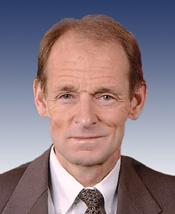
Madam Speaker, unfortunately yesterday, November 13, 2007, I was unable to cast my votes on H.R. 3315, H.R. 1593, H.R. 3403, and H.R. 3461 and wish the Record to reflect my intentions had I been able…
Madam Speaker, unfortunately yesterday, November 13, 2007, I was unable to cast my votes on H.R. 3315, H.R. 1593, H.R. 3403, and H.R. 3461 and wish the Record to reflect my intentions had I been able to vote.
Had I been present for rollcall No. 1082 on the motion to suspend the rules and pass H.R. 3315, to provide that the great hall of the Capitol Visitor Center shall be known as Emancipation Hall, I would have voted ``aye.''
Had I been present for rollcall No. 1083 on the motion to suspend the rules and pass H.R. 1593, the Second Chance Act of 2007, I would have voted ``aye.''
Had I been present for rollcall No. 1084 on the motion to suspend the rules and pass H.R. 3403, 911 Modernization and Public Safety Act of 2007, I would have voted ``aye.''
Had I been present for rollcall No. 1085 on the motion to suspend the rules and pass H.R. 3461, Safeguarding America's Families by Enhancing and Reorganizing New and Efficient Technologies Act of 2007, I would have voted ``aye.''
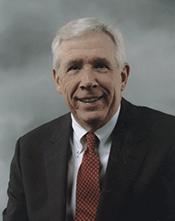
Madam Speaker, yesterday I was on an official leave of absence for a medical appointment. Had I been present and voting, I would have voted ``yea'' on rollcall No. 1082, H.R. 3315, which I…
Madam Speaker, yesterday I was on an official leave of absence for a medical appointment. Had I been present and voting, I would have voted ``yea'' on rollcall No. 1082, H.R. 3315, which I cosponsored, to provide that the great hall of the Capitol Visitor Center be known as Emancipation Hall; ``yea'' on rollcall No. 1083, H.R. 1593, which I cosponsored, the Second Chance Act; ``yea'' on rollcall No. 1084, H.R. 3403, the 911 Modernization and Public Safety Act, and ``yea'' on rollcall No. 1085, H.R. 3461, Safeguarding America's Families by Enhancing and Reorganizing New and Efficient Technologies Act.
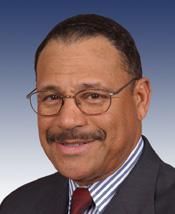
Madam Speaker, I regret that I was unavoidably absent Tuesday afternoon, November 13, on very urgent business. Had I been present for the four votes which occurred Tuesday evening: I would have voted…
Madam Speaker, I regret that I was unavoidably absent Tuesday afternoon, November 13, on very urgent business. Had I been present for the four votes which occurred Tuesday evening:
I would have voted ``aye'' on H.R. 3315, rollcall vote No. 1082.
I would have voted ``aye'' on H.R. 1593, rollcall vote No. 1083.
I would have voted ``aye'' on H.R. 3403, rollcall vote No. 1084.
I would have voted ``aye'' on H.R. 3461, rollcall vote No. 1085.
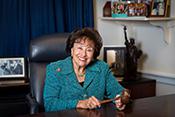
Madam Speaker, I regrettably missed Rollcall vote No. 1085 (H.R. 3461) and Rollcall vote No. 1084 (H.R. 3403). Had I been present, I would have voted in the following manner: Rollcall No. 1085:…
Madam Speaker, I regrettably missed Rollcall vote No. 1085 (H.R. 3461) and Rollcall vote No. 1084 (H.R. 3403). Had I been present, I would have voted in the following manner: Rollcall No. 1085: ``yes,'' Rollcall No. 1084: ``yes.''

Bill Text
3 versions available
        [Congressional Bills 110th Congress]
[From the U.S. Government Publishing Office]
[H.R. 3461 Referred in Senate (RFS)]

1st Session
H. R. 3461

_______________________________________________________________________

IN THE SENATE OF THE UNITED STATES

November 14, 2007

Received; read twice and referred to the Committee on Commerce,
Science, and Transportation

_______________________________________________________________________

AN ACT

To establish a public awareness campaign regarding Internet safety.

Be it enacted by the Senate and House of Representatives of the
United States of America in Congress assembled,

SECTION 1. SHORT TITLE.

This Act may be cited as the ``Safeguarding America's Families by
Enhancing and Reorganizing New and Efficient Technologies Act of
2007''.

SEC. 2. INTERNET SAFETY.

For purposes of this Act, the issue of Internet safety includes
issues regarding use of the Internet in a manner that promotes safe
online activity, including safe transactions involved in online
commerce, and protects against threats to financial information and
privacy, threats from cyber-crime, and threats to juveniles, including
cyber-predators and material that is inappropriate for minors.

SEC. 3. PUBLIC AWARENESS CAMPAIGN.

The Federal Trade Commission shall carry out a nationwide program
to increase public awareness and provide education regarding Internet
safety, for families, businesses, organizations, and other users, that
utilizes existing resources and efforts of the Federal Government,
State and local governments, nonprofit organizations, private
technology and financial companies, Internet service providers, World
Wide Web-based resources, and other appropriate entities, that
includes--
(1) identifying, promoting, and encouraging best practices
for Internet safety;
(2) establishing and carrying out a national outreach and
education campaign regarding Internet safety utilizing various
media and Internet-based resources;
(3) facilitating access to, and the exchange of,
information regarding Internet safety to promote up-to-date
knowledge regarding current issues; and
(4) facilitating access to Internet safety education and
public awareness efforts the Commission considers appropriate
to States, units of local government, schools, police
departments, nonprofit organizations, and such other entities.

SEC. 4. ANNUAL REPORTS.

The Commission shall submit a report to Congress not later than
March 31 of each year that describes the activities carried out under
section 3 by the Commission during the preceding calendar year.

SEC. 5. ONLINE SAFETY AND TECHNOLOGY WORKING GROUP.

(a) Establishment.--Not later than 90 days after the date of
enactment of this Act, the Assistant Secretary of Commerce for
Communications and Information shall establish an Online Safety and
Technology working group comprised of representatives of relevant
sectors of the business community, public interest groups, and other
appropriate groups and Federal agencies to review and evaluate--
(1) the status of industry efforts to promote online safety
through educational efforts, parental control technology,
blocking and filtering software, age-appropriate labels for
content or other technologies or initiatives designed to
promote a safe online environment for children;
(2) the status of industry efforts to promote online safety
among providers of electronic communications services and
remote computing services by reporting apparent child
pornography under section 13032 of title 42, United States
Code;
(3) the practices of electronic communications service
providers and remote computing service providers related to
record retention in connection with crimes against children;
and
(4) the development of technologies to help parents shield
their children from inappropriate material on the Internet.
(b) Report.--Not later than 1 year after the working group
established under subsection (a) is first convened, it shall submit a
report to the Assistant Secretary and the Committee on Energy and
Commerce of the House of Representatives that--
(1) describes in detail its findings, including any
information related to the effectiveness of such strategies and
technologies and any information about the prevalence within
industry of educational campaigns, parental control
technologies, blocking and filtering software, labeling, or
other technologies to assist parents; and
(2) includes recommendations as to what types of incentives
could be used or developed to increase the effectiveness and
implementation of such strategies and technologies.

SEC. 6. DEFINITIONS.

For purposes of this Act, the following definitions shall apply:
(1) Commission.--The term ``Commission'' means the Federal
Trade Commission.
(2) Internet.--The term ``Internet'' means collectively the
myriad of computer and telecommunications facilities, including
equipment and operating software, which comprise the
interconnected world-wide network of networks that employ the
Transmission Control Protocol/Internet Protocol, or any
predecessor or successor protocols to such protocol, to
communicate information of all kinds by wire or radio.

SEC. 7. AUTHORIZATION OF APPROPRIATIONS.

For carrying out the public awareness campaign under section 3,
there is authorized to be appropriated to the Commission $5,000,000 for
fiscal year 2008, which shall remain available until September 30,
2009.

Passed the House of Representatives November 13, 2007.

Attest:

LORRAINE C. MILLER,

Clerk.