To authorize the Edward Byrne Memorial Justice Assistance Grant Program at fiscal year 2006 levels through 2012.
Legislative Activity
Stay on top of the latest movement without scrolling through every action
Received in the Senate. Read twice. Placed on Senate Legislative Calendar under General Orders. Calendar No. 851.
June 26, 2008
View full timeline
Introduced in House
September 17, 2007
Referred to the House Committee on the Judiciary.
September 17, 2007
Referred to the Subcommittee on Crime, Terrorism, and Homeland Security.
October 12, 2007
Subcommittee Hearings Held.
May 20, 2008
Subcommittee Consideration and Mark-up Session Held.
June 10, 2008
Forwarded by Subcommittee to Full Committee by Voice Vote .
June 10, 2008
Reported by the Committee on Judiciary. H. Rept. 110-729.
June 23, 2008
Placed on the Union Calendar, Calendar No. 464.
June 23, 2008
Mr. Conyers moved to suspend the rules and pass the bill, as amended.
June 23, 2008 • 2:34 PM
Considered under suspension of the rules. (consideration: CR H5805-5807)
June 23, 2008 • 2:34 PM
DEBATE - The House proceeded with forty minutes of debate on H.R. 3546.
June 23, 2008 • 2:34 PM
At the conclusion of debate, the Yeas and Nays were demanded and ordered. Pursuant to the provisions of clause 8, rule XX, the Chair announced that further proceedings on the motion would be postponed.
June 23, 2008 • 2:49 PM
Considered as unfinished business. (consideration: CR H6044-6045)
June 25, 2008 • 2:09 PM
Passed/agreed to in House: On motion to suspend the rules and pass the bill, as amended Agreed to by the Yeas and Nays: (2/3 required): 406 - 11 (Roll no. 456).(text: CR 6/23/2008 H5805)
June 25, 2008 • 2:18 PM
On motion to suspend the rules and pass the bill, as amended Agreed to by the Yeas and Nays: (2/3 required): 406 - 11 (Roll no. 456). (text: CR 6/23/2008 H5805)
June 25, 2008 • 2:18 PM
Motion to reconsider laid on the table Agreed to without objection.
June 25, 2008 • 2:18 PM
Received in the Senate. Read twice. Placed on Senate Legislative Calendar under General Orders. Calendar No. 851.
June 26, 2008
Voting History
1 vote recorded • Roll call available
Floor Debate
22 membersWhat members said about H.R. 3546 on the floor
 JM
JM SJL
SJL DEL
DEL CBR
CBR SML+17
Floor Debate
22 membersWhat members said about H.R. 3546 on the floor
Mr. Speaker, I yield myself such time as I may consume. Today's bill, Mr. Speaker, represents a clear difference between the two parties in the House when it comes to tax policy. Republicans believe…
Mr. Speaker, I yield myself such time as I may consume.
Today's bill, Mr. Speaker, represents a clear difference between the two parties in the House when it comes to tax policy. Republicans believe that Congress should not raise taxes on one group of taxpayers in order to prevent a tax increase on another set of taxpayers. To say that another way, we don't believe we ought to have to raise taxes to preserve something that's already in the Tax Code.
Now, we are certainly for continuing to patch the alternative minimum tax. That's been the practice for the last several years. The President, in his budget for the last several years, has had an AMT patch in his budget without increasing taxes on somebody else. So we are certainly for that. But we are not for imposing a tax increase in a like amount on another set of taxpayers. That just doesn't make sense to us.
Without this patch, another 21 million families would come under the AMT, and their average tax increase would be about $2,400 per taxpayer. So we certainly want to prevent that. But in 2007, we had the patch in place; so we did not collect the AMT revenue from those 21 million taxpayers. And yet we collected, last year, in revenues to the Federal Government, about 18.7, 18.8 percent of gross domestic product. The historic average of revenues coming into the Federal Government for the last 40 years has been about 18.3 percent of GDP. So last year with the AMT patch in place, those 21 million taxpayers protected from the AMT, we brought in substantially more in revenues to the Federal Government than we have historically.
So why, then, should we be so intent on increasing taxes to prevent those 21 million taxpayers from paying $2,400 apiece more in taxes in 2008? The only explanation is somebody just wants to get more revenue into the Federal Government. Now, they may say, well, we want to do that because the deficit is really high and we want to get the deficit down. Well, I wonder, if we took a poll across America, how many Americans would say, ``Yes, I want to get the deficit down and I want to do it by raising taxes'' and how many Americans would say, ``Yes, I want to get the deficit down, but I want to do it by controlling spending''? My guess is more Americans would say, ``I want to get the deficit down by controlling spending.'' But the PAYGO rules that are in effect, while they give us the opportunity to reduce spending to ``pay for'' all of these things, not once have we seen a cut in spending being offered by the majority to pay for any of these items. It's always a tax increase.
So, yes, if you want to get the deficit down to zero, you can do it by increasing taxes, and under the PAYGO baseline, if we were to follow it, we would continue to increase the take of the Federal Government from American taxpayers until at the end of a 10-year window we'd be taking in 20.5 percent of GDP, an historic high, or pretty close to an historic high, and certainly only a couple times in our Nation's history have we even approached that level of revenues coming into the Federal Government.
Now, I think it's a legitimate question as to what is the appropriate level of GDP that we should bring in to the Federal Government, and Chairman Rangel alluded to that in his statement by saying that, I believe he said, the President hasn't offered a tax reform plan. That's true, I guess, he hasn't. But you know what? Under the Constitution, the President can't even introduce a bill, much less pass one. That's the job of the Congress.
So if we want to do tax reform, which I think is appropriate, we ought to have this discussion about what is the appropriate level of revenue that we should bring in? What is the appropriate take of the Federal Government of everything that Americans make? Is it 18.3 percent, the historic average? Is it 18.7 percent, what we took in last year? Or is it 20.5 percent? I don't know what the magic number is, but that's a legitimate debate, and we ought to have that debate in the context of writing a new tax system for the United States that is more modern, more efficient, and more competitive. So I hope that the chairman will, in his constitutional prerogative as the chairman of the Ways and Means Committee, undertake that task, have that debate, so that we can solve this problem once and for all of the AMT, the complexity of the code, and the continuing diminution of competitiveness that we enjoy with our tax system, vis-a-vis our competitors around the world.
This bill employs some pay-fors, some tax increases, that I believe would be onerous and would add to the lack of competitiveness in our Tax Code. For example, there is a provision that would, for the first time, ignore tax treaties that we have entered into in good faith with other countries around the world and would impose upon companies doing business, foreign companies doing business, through a United States subsidiary in this country, creating jobs in this country, a 30 percent tax, despite the fact that we have a tax treaty that says that company would get a deduction for that income and would not have to pay that 30 percent tax because they'd be paying taxes in the country where we have a tax treaty.
Now, yes, they say, well, but the ultimate parent is somewhere where there's not a tax treaty, but that still violates the spirit of the tax treaty that we have with the country where the immediate parent of the United States subsidiary resides. That change in our Tax Code would discourage at the margin that capital from coming to this country, being invested in this country, and creating jobs in this country.
Those companies that I'm talking about employ a substantial number of Americans; 5.3 million Americans are employed by those kinds of companies. Do we want to jeopardize those jobs? And 19 percent of all United States exports, helping us a little bit to get the balance of trade going our way, 19 percent of all exports come from companies like that. And just last year they reinvested nearly $71 billion back into their United States operations. That's capital, that's investment that we should want here and not discourage through tax changes like the one in this bill.
So, Mr. Speaker, I would say to the Members of this body that we ought to reject the majority's offering that they put forward today to save 21 million taxpayers from coming under the AMT because they would impose a like amount of tax increase on another set of taxpayers. Let's not increase taxes on any set of taxpayers, certainly not in this fragile economy.
We will later offer a motion to recommit that corrects the error, that strips the bill of the pay-fors, and it would allow this body to vote on a clean AMT patch to save those 21 million taxpayers from the increased tax burden but not increase taxes on somebody else.
With that, Mr. Speaker, I yield back the balance of my time.
Mr. Speaker, I have a motion to recommit at the desk.
I am opposed to the bill in its current form.
Thank you, Mr. Speaker.
The majority's use of PAYGO has really twisted the logic of this bumper-sticker-turned-budget-tool into a pretzel. In the last 2 weeks, when PAYGO stood in the way of more government spending, it was ignored or openly waived. But, today, the majority insists on new permanent tax increases in exchange for a 1-year extension of needed tax relief. That is not a good deal for anybody--a permanent tax increase to pay for a temporary tax relief.
The motion that we have before us would save us from that fate. It would remove the tax increases in the bill, including the particularly misguided higher taxes on energy production that would discourage production here at home, that would further increase our energy insecurity, that would reduce our energy supplies, and that would increase prices.
Is that what we want to do? Do we want to increase the price of gasoline? That is what the effect of this would be. This is a tax increase on oil and gas companies--the companies that produce the oil, the gasoline that we buy. Do we think that, if we increase taxes on them, they are just going to absorb that? Of course not. They will pass it through to the consumer, which will mean higher gasoline prices.
This is a terribly misguided part of this bill. The motion to recommit would get rid of that ill-advised tax increase. So we get rid of all the pay-fors in the bill. That's the first thing that the motion to recommit does.
The second thing we do is we do provide some relief in this bill from high gasoline prices to volunteers who use their vehicles to help charities carry out their work. A lot of charities are telling us that they are losing volunteers because of the high price of gasoline.
Now, the IRS has some authority to modify the tax deduction that people can get from using gasoline in certain situations. So the IRS did, this week in fact, implement a midyear increase in the standard mileage deduction rates, increasing to 58\1/2\ cents the allowable deduction for expenses incurred in operating a vehicle while carrying on a trade or business, and raising to 27 cents per mile the deduction for gasoline costs associated with transportation primarily for and essential to receiving medical care and for travel while moving.
But the IRS could not raise the deduction that can be claimed by individuals who use their car for charitable purposes, such as for delivering Meals on Wheels. That has to be done legislatively. So our motion to recommit would do just that. We would set the allowable deduction for gasoline expenses for charitable purposes at the same rate for medical care and for travel while moving, 27 cents per mile.
Meals on Wheels is one of those charities that has told us that they are losing volunteers because of gas prices. Nearly half indicated that increases in gas prices had forced them to eliminate meal delivery routes or to consolidate their meal services.
Mr. Speaker, these high gasoline prices are, in fact, having a very deleterious effect on charities and on Meals on Wheels in particular. I won't go into some of the details that we have been given by Meals on Wheels about the state of some of our seniors, but needless to say, it's not a pretty picture.
So this would give those charities some relief, Mr. Speaker, and it would allow them, we think, to get some of those volunteers back in active service to relieve some of these problems that we have.
So, Mr. Speaker, our motion to recommit does two things. It takes out the tax increases in this bill, leaving in place the AMT patch to give tax relief to those taxpayers who would otherwise be subjected to a $2,400-apiece increase in taxes, and number two, it increases the deduction, the mileage deduction, for vehicle use for charitable purposes.
Mr. Speaker, I urge its adoption.
Mr. Speaker, on that I demand the yeas and nays.
Madam Speaker, I rise today in support of H.R. 3546 to reauthorize the Edward Byrne Memorial Justice Assistance Grant (Byrne-JAG) Program at fiscal year 2006 levels through 2012. The Byrne-JAG monies…
Madam Speaker, I rise today in support of H.R. 3546 to reauthorize the Edward Byrne Memorial Justice Assistance Grant (Byrne-JAG) Program at fiscal year 2006 levels through 2012. The Byrne-JAG monies are supposed to be used to make America a safer place. I support the reauthorization and I would urge my colleagues to do likewise.
Why Byrne-JAG is Necessary
Byrne-JAG allows states and local governments to support a broad range of activities to prevent and control crime and to improve the criminal justice system, which States and local governments have come to rely on to ensure public safety. They support: law enforcement, prosecution and court programs, prevention and education, corrections and community programs, drug treatment, planning, evaluation, technology improvement programs, and crime victim and witness programs (other than compensation). In short, they are an indispensable resource that states use to combat crime.
Recent Cuts in Byrne JAG Funding
Unfortunately, in fiscal year 2008 the Byrne-JAG program was cut by two-thirds. Although Congress authorized over $1 billion, only $520 million were appropriated for fiscal year 2007. The appropriation was then drastically reduced to $170.4 million in fiscal year 2008, and the President has proposed further cuts for the fiscal year 2009 budget.
Past Problems with Byrne JAG
The trend to reduce the grant funding may result, in part, from instances where Byrne-JAG funding has been abused. For example, in 1999 Byrne-JAG funding was used in the infamous Tulia outrage in which a rogue police narcotics officer in Texas set up dozens of people, most of them African-American, in false cocaine trafficking charges. In other instances, jurisdictions used the funding to fund task forces focused solely on ineffective, low-level drug arrests, which has put the task force concept--and the diminished standards of drug enforcement that it has come to represent--in the national spotlight.
The most well-known Byrne-funded scandal occurred in Tulia, Texas where dozens of African-American residents (representing 16 percent of the town's black population) were arrested, prosecuted and sentenced to decades in prison, even though the only evidence against them was the uncorroborated testimony of one white undercover officer with a history of lying and racism. The undercover officer worked alone, and had no audiotapes, video surveillance, or eyewitnesses to corroborate his allegations. Suspicions eventually arose after two of the accused defendants were able to produce firm evidence showing they were out of state or at work at the time of the alleged drug buys. Texas Governor Rick Perry eventually pardoned the Tulia defendants (after four years of imprisonment), but these kinds of scandals continue to plague the Byrne grant program.
These scandals are not the result of a few ``bad apples'' in law enforcement; they are the result of a fundamentally flawed bureaucracy that is prone to corruption by its very structure. Byrne-funded regional anti-drug task forces are federally funded, State managed, and locally staffed, which means they do not really have to answer to anyone. In fact, their ability to perpetuate themselves through asset forfeiture and federal funding makes them unaccountable to local taxpayers and governing bodies.
The scandals are more widespread than just a few instances. A 2002 report by the ACLU of Texas identified seventeen scandals involving Byrne-funded anti-drug task forces in Texas, including cases of falsifying government records, witness tampering, fabricating evidence, stealing drugs from evidence lockers, selling drugs to children, large- scale racial profiling, sexual harassment, and other abuses of official capacity.
Texas is not the only State that has suffered from Byrne-funded law enforcement scandals. Scandals in other States have included the misuse of millions of dollars in federal grant
money in Kentucky and Massachusetts, false convictions based upon police perjury in Missouri, and making deals with drug offenders to drop or lower their charges in exchange for money or vehicles in Alabama, Arkansas, Massachusetts, New York, Ohio, and Wisconsin. A 2001 study by the Government Accountability Office found that the federal government fails to adequately monitor the grant program and hold grantees accountable.
Amendment Considered But Not Offered
Because of these abuses, I would have offered an amendment when this bill was considered at the Full Judiciary Committee markup. My amendment would have addressed the responsible use of Byrne-JAG monies. Specifically, my amendment would have required that a State that receives Byrne-JAG money should collect data for the most recent year for which such funds were allocated to such State, with respect to:
(1) The racial distribution of criminal charges made during that year;
(2) The nature of the criminal law specified in the charges made; and
(3) The city of law enforcement jurisdiction in which the charges were made.
My amendment would have required a condition of receiving funds that the State should submit to the Attorney General the data collected by not later than one year after the date the State received funds. Lastly, the report should be posted on the Bureau of Justice Statistics website and submitted to the Attorney General.
My amendment is good because arrests will be transparent and the light of day and public airing of any problems will be the greatest disinfectant. My amendment is an attempt to make law enforcement more responsible, more accountable, and more just in their dealings with persons of all races and backgrounds. My amendment is but a small price to pay to rid the nation of scandals and disasters that occurred in Tulia, Texas and elsewhere.
These scandals are not the result of a few ``bad apples'' in law enforcement; they are the result of a fundamentally flawed bureaucracy that is prone to corruption by its very structure. Byrne-funded regional anti-drug task forces are federally funded, state managed, and locally staffed, which means they do not really have to answer to anyone. In fact, their ability to perpetuate themselves through asset forfeiture and federal funding makes them unaccountable to local taxpayers and governing bodies.
The scandals are more widespread than just a few instances. A 2002 report by the ACLU of Texas identified seventeen scandals involving Byrne-funded anti-drug task forces in Texas, including cases of falsifying government records, witness tampering, fabricating evidence, stealing drugs from evidence lockers, selling drugs to children, large- scale racial profiling, sexual harassment, and other abuses of official capacity.
Texas is not the only state that has suffered from Byrne-funded law enforcement scandals. Scandals in other states have included the misuse of millions of dollars in federal grant money in Kentucky and Massachusetts, false convictions based upon police perjury in Missouri, and making deals with drug offenders to drop or lower their charges in exchange for money or vehicles in Alabama, Arkansas, Massachusetts, New York, Ohio, and Wisconsin. A 2001 study by the Government Accountability Office found that the federal government fails to adequately monitor the grant program and hold grantees accountable.
My amendment, which I would have offered, would provide oversight and accountability. It is not burdensome. It will not prevent the States from collecting and funding programs under the Byrne Grant program. My amendment does however shed light on any maladies that might exist in the system. Once we see the problems, we can fix them. My amendment is responsible and aims to make the Byrne-Grant program a better program by ensuring that the funding is used appropriately and is used with oversight.
No More Tulias
While I support the Byrne JAG reauthorization, I would also my urge my colleagues to also support my bill, H.R. 253, No More Tulias: Drug Law Enforcement Evidentiary Standards Improvement Act of 2007. This bill also enhances accountability with respect to the use of Byrne JAG monies.
First, it prohibits a state from receiving for a fiscal year any drug control and system improvement (Byrne) grant funds, or any other amount from any other law enforcement assistance program of the Department of Justice, unless the state does not fund any antidrug task forces for that fiscal year or the state has in effect laws that ensure that: (1) A person is not convicted of a drug offense unless the facts that a drug offense was committed and that the person committed that offense are supported by evidence other than the eyewitness testimony of a law enforcement officer or individuals acting on an officer's behalf; and (2) an officer does not participate, in an antidrug task force unless that officer's honesty and integrity is evaluated and found to be at an appropriately high level.
Second, H.R. 253, No More Tulias, requires that states receiving federal funds under the No More Tulias Act to collect data on the racial distribution of drug charges, the nature of the criminal law specified in the charges, and the jurisdictions in which such charges are made. I urge my colleagues to support my No More Tulias Act so that we can quickly bring the bill to markup.
I also urge my colleagues to support Byrne JAG.
Mr. Speaker, I rise today in support of S. 231 to reauthorize the Edward Byrne Memorial Justice Assistance Grant, Byrne-JAG, Program at fiscal year 2006 levels through 2012. The Byrne- JAG monies are…
Mr. Speaker, I rise today in support of S. 231 to reauthorize the Edward Byrne Memorial Justice Assistance Grant, Byrne-JAG, Program at fiscal year 2006 levels through 2012. The Byrne- JAG monies are supposed to be used to make America a safer place. I support the reauthorization, and I would urge my colleagues to do likewise.
Why Byrne-JAG is Necessary
Byrne-JAG allows States and local governments to support a broad range of activities to prevent and control crime and to improve the criminal justice system, which States and local governments have come to rely on to ensure public safety. They support: law enforcement, prosecution and court programs, prevention and education, corrections and community programs, drug treatment, planning, evaluation, technology improvement programs, and crime victim and witness programs, other than compensation. In short, they are an indispensable resource that States use to combat crime.
Recent Cuts in Byrne JAG Funding
Unfortunately, in fiscal year 2008 the Byrne-JAG program was cut by two-thirds. Although Congress authorized over $1 billion, only $520 million were appropriated for fiscal year 2007. The appropriation was then drastically reduced to $170.4 million in fiscal year 2008, and the President has proposed further cuts for the fiscal year 2009 budget.
Past Problems with Byrne JAG
The trend to reduce the grant funding may result, in part, from instances where Byrne-JAG funding has been abused. For example, in 1999 Byrne-JAG funding was used in the infamous Tulia outrage in which a rogue police narcotics officer in Texas set up dozens of people, most of them African-American, in false cocaine trafficking charges. In other instances, jurisdictions used the funding to fund task forces focused solely on ineffective, low-level drug arrests, which has put the task force concept-and the diminished standards of drug enforcement that it has come to represent--in the national spotlight.
The most well-known Byrne-funded scandal occurred in Tulia, Texas where dozens of African-American residents, representing 16 percent of the town's black population, were arrested, prosecuted and sentenced to decades in prison, even though the only evidence against them was the uncorroborated testimony of one white undercover officer with a history of lying and racism. The undercover officer worked alone, and had no audiotapes, video surveillance, or eyewitnesses to collaborate his allegations. Suspicions eventually arose after two of the accused defendants were able to produce firm evidence showing they were out-of- State or at work at the time of the alleged drug buys. Texas Governor Rick Perry eventually pardoned the Tulia defendants, after four years of imprisonment, but these kinds of scandals continue to plague the Byrne grant program.
These scandals are not the result of a few ``bad apples'' in law enforcement; they are the result of a fundamentally flawed bureaucracy that is prone to corruption by its very structure. Byrne-funded regional anti-drug task forces are Federally funded, State managed, and locally staffed, which means they do not really have to answer to anyone. In fact, their ability to perpetuate themselves through asset forfeiture and Federal funding makes them unaccountable to local taxpayers and governing bodies.
The scandals are more widespread than just a few instances. A 2002 report by the ACLU of Texas identified 17 scandals involving Byrne- funded anti-drug task forces in Texas, including cases of falsifying government records, witness tampering, fabricating evidence, stealing drugs from evidence lockers, selling drugs to children, large-scale racial profiling, sexual harassment, and other abuses of official capacity.
Texas is not the only State that has suffered from Byrne-funded law enforcement scandals. Scandals in other States have included the misuse of millions of dollars in Federal grant money in Kentucky and Massachusetts, false convictions based upon police perjury in Missouri, and making deals with drug offenders to drop or lower their charges in exchange for money or vehicles in Alabama, Arkansas, Massachusetts, New York, Ohio, and Wisconsin. A 2001 study by the Government Accountability Office found that the Federal Government fails to adequately monitor the grant program and hold grantees accountable.
Amendment Considered But Not Offered
Because of these abuses, I would have offered an amendment when this bill was considered at the Full Judiciary Committee markup. My amendment would have addressed the responsible use of Byrne-JAG monies. Specifically, my amendment would have required that a State that receives Byrne-JAG money should collect data for the most recent year for which such funds were allocated to such State, with respect to:
(1) The racial distribution of criminal charges made during that year;
(2) the nature of the criminal law specified in the charges made; and
(3) the city of law enforcement jurisdiction in which the charges were made.
My amendment would have required a condition of receiving funds that the State should submit to the Attorney General the data collected by not later than one year after the date the State received funds. Lastly, the report should be posted on the Bureau of Justice Statistics website and submitted to the Attorney General.
My amendment is good because arrests will be transparent and the light of day and public airing of any problems will be the greatest disinfectant. My amendment is an attempt to make law enforcement more responsible, more accountable, and more just in their dealings with persons of all races and backgrounds. My amendment is but a small price to pay to rid the Nation of scandals and disasters that occurred in Tulia, Texas and elsewhere.
My amendment, which I would have offered, would provide oversight and accountability. It is not burdensome. It will not prevent the States from collecting and funding programs under the Byrne Grant program. My amendment does, however, shed light on any maladies that might exist in the system. Once we see the problems, we can fix them. My amendment is responsible and aims to make the Byrne-Grant program a better program by ensuring that the funding is used appropriately and is used with oversight.
No More Tulias
While I support the Byrne-JAG reauthorization, I would also urge my colleagues to also support my bill, H.R. 253, No More Tulias: Drug Law Enforcement Evidentiary Standards Improvement Act of 2007. This bill also enhances accountability with respect to the use of Byrne-JAG monies.
First, it prohibits a State from receiving for a fiscal year any drug control and system improvement (Byrne) grant funds, or any other amount from any other law enforcement assistance program of the Department of Justice, unless the State does not fund any antidrug task forces for that fiscal year or the State has in effect laws that ensure that: (1) a person is not convicted of a drug offense unless the facts that a drug offense was committed and that the person committed that offense are supported by evidence other than the eyewitness testimony of a law enforcement officer or individuals acting on an officer's behalf; and (2) an officer does not participate in a antidrug task force unless that officer's honesty and integrity is evaluated and found to be at an appropriately high level.
Second, H.R. 253, No More Tulias, requires that states receiving Federal funds under the No More Tulias Act to collect data on the racial distribution of drug charges, the nature of the criminal law specified in the charges, and the jurisdictions in which such charges are made. I urge my colleagues to support my No More Tulias Act so that we can quickly bring the bill to markup.
I also urge my colleagues to support Byrne-JAG.
Madam Speaker, I yield myself such time as I may consume. Madam Speaker, I rise in support of H.R. 3546, a bill to authorize the Edward Byrne Memorial Justice Assistance Grant Program at fiscal year…
Madam Speaker, I yield myself such time as I may consume.
Madam Speaker, I rise in support of H.R. 3546, a bill to authorize the Edward Byrne Memorial Justice Assistance Grant Program at fiscal year 2006 levels through the year 2012. This bill continues to fund the Department of Justice Byrne-JAG Grant Program that, as the gentleman from Georgia said, provides assistance to State and local law officials.
These grants support a broad range of activities to prevent and control crimes and to improve the criminal justice system. The department allocates funds using a formula based on State population and the annual Unified Crime Report statistics. The program does have a minimum allocation to ensure that each State and territory receive an appropriate share of the Federal funds.
Byrne-JAG funds can be used to pay for personnel overtime and equipment, funds are used for Statewide initiatives, technical assistance and training, and support for local and rural jurisdictions.
I can say, Madam Speaker, that my experience in the past serving as the Attorney General of California allowed me to see the good work that the Byrne funds has done and continues to do, primarily in the area of multi-jurisdictional task forces as was mentioned by the gentleman from Georgia.
This is actually an area where we actually see a synergism that exists among different levels of government and their law enforcement personnel. It is always important that they have good leadership at each level, and the training that took place as a result of many of these multi-jurisdictional task forces actually created an improvement in the overall training for law enforcement across the country. It is a remarkable thing to see agents from different agencies, different departments, working together for a common purpose.
As the gentleman mentioned, you can, as a result of these task forces, count up the number of arrests made, the number of convictions obtained, the number of weapons taken off the street, the number of drugs taken off the street in each and every case making it safer for the people of the States of the United States.
On June 9, the Federal Bureau of Investigation released a 2007 Unified Crime Report detailing the statistics and tracking trends for violent crimes nationwide. The national rate for violent crimes, that is including robbery, sexual assault, and murder, decreased nationally. Unfortunately, the report also showed the rate of violent crime rate increased in some communities across the country. This is not by accident that we see an overall improvement across the country. It is the result of the work of many good men and women in uniform and the support to organizations that they have throughout this country.
We should understand that while sometimes the trend is to say that if something is a serious crime, it's a Federal crime; unless the FBI gets involved, it's not important, it's not going to be handled well. Well over 90 percent, well over 95 percent of all crime is investigated and prosecuted at the local and State level, not the Federal level. That's why these grants work very, very well when it encourages a multi- jurisdictional approach where you can find the abilities, the differing abilities of the agencies and departments, the coming together to work with one another.
Law enforcement officials remain committed to preventing crime and keeping our communities safe, and their efforts should be applauded. However, given the report, it is clear that additional steps need to be taken in order to continue to address the issue of crime.
During the past few months, representatives from various law enforcement associations visited me and my colleagues to discuss the Byrne-JAG funding. They have spoken with near unanimity about the important role Byrne-JAG funding plays in aiding their efforts to accomplish their law enforcement missions.
Congress plays an important role in supporting State and local law enforcement by continuing to enforce to reauthorize this program at appropriate levels. However, we should not in any way suggest that the Federal Government has the first responsibility for funding local and State law enforcement. That remains with local and State jurisdictions, and frankly, if they don't understand the priority, the first priority of government, to try and create a modicum of safety and security for the people of those jurisdictions so that they can live their lives in some sense of security not having to worry about violent criminals upsetting their lives, attacking them and their loved ones. If local and State jurisdictions don't understand that, frankly, they don't understand the first obligation of government.
So, while we wholeheartedly support this funding program, let us ensure that at the local and State levels those representatives are held responsible by the people that elect them to ensure that the first priority of government is achieved: a modicum of safety and security for the people of the jurisdictions that they find themselves in.
With that, I reserve the balance of my time.
Madam Speaker, once again, I rise in support of H.R. 3546, and I yield myself such time as I may consume, and suggest that of all the costs that are involved with law enforcement across the country, one of the greatest is the cost of gassing up their cars.
As the gentleman understands, law enforcement, yes, travels on its feet, but more than often travels on its wheels. The increased costs of energy affect us all across this Nation. Every home is affected by it, without regard to economic status. But think about this, our law enforcement agencies are very labor-intensive. They depend on people, yes, applying technology, but we depend on people.
When we have concern about crime in a particular area, it doesn't do to say, well, we've got new computers downtown; that's going to take care of it. What do people want to see? They want to see law enforcement in their areas. And for most areas of America, that means seeing patrol cars coming through their neighborhoods at an appropriate time, seeing them respond whenever there is a cry for help as a result of crime or an attempt at crime.
The costs that are implicit in this tremendous increase in energy costs in this country, the gasoline pump prices, affect each and every one of our law enforcement agencies. And so I would hope as we support unanimously this Edward Byrne Memorial Justice Assistant Grant Program for fiscal years 2006 through 2012, we also think at some point in time of bringing up a bill that might help us get some relief in that area. If you add it all up, it might add up to the total cost of the Byrne grant program.
I would be happy to yield to the gentleman from the place where I think they still build more automobiles than any other place in the country.
If I might respond, through the Speaker, I would say, Madam Speaker, the only person I know that has suggested that we nationalize oil companies, including refineries, is the gentleman from the other side of the aisle. It's worked so well around the world, I think you could go through all the countries with a nationalization. Maybe Venezuela is a trend setter here, but I don't think that's exactly where we want to go. So the answer to the gentleman, through the Speaker, is no.
I yield back the balance of my time.
Mr. Speaker, I call up the bill (H.R. 6275) to amend the Internal Revenue Code of 1986 to provide individuals temporary relief from the alternative minimum tax, and for other purposes, and ask for…
Mr. Speaker, I call up the bill (H.R. 6275) to amend the Internal Revenue Code of 1986 to provide individuals temporary relief from the alternative minimum tax, and for other purposes, and ask for its immediate consideration.
Mr. Speaker, I yield myself such time as I may consume.
Mr. Speaker, some time ago, in an effort to make certain that 159 taxpayers who are very wealthy had some tax liability, the Congress at that time passed the alternative minimum tax. What they neglected to do was to index the tax structure for inflation, and as a result we find people making 30, 40, $50,000 caught up as though they were wealthy taxpayers trying to avoid or evade their tax liability.
Now, the President should know, as other Presidents, that this is a very, very unfair tax. The truth of the matter is it should not even be in this structure. But in the close to 7 years that the President has been in office, he has not seen fit to give us a tax reform bill so that we can do what everyone in this House would want done, and that is to eliminate this fiscal threat from now some 25 million taxpayers.
So what do we have to do? Every year we have to come down and so- called ``patch it'' because, politically speaking, no one is going to go home and say that they did nothing about it.
So what is the difference between what we want to do in the majority and the other side? Well, if you listen carefully, you would see that the President has put this AMT in every budget except the one we have this year, which means that in the budget he never intends to remove it or have it removed. What does putting it in the budget mean? It means that you expect the money that would be coming from the alternative minimum tax to be there to spend. I can understand that, except that Congress says that we're not going to collect that money. So what we would believe is that if we're taking $61 billion out of the economy that we shouldn't go to China and Japan and ask them once again to bail us out but we should take a look at the Tax Code and to find out just what things in the Tax Code, what preferential treatment, what loopholes are there so that when we repair the AMT, at least for this year, we will be able to say we didn't borrow the money and we didn't put this burden on our children and our grandchildren.
So the four areas that we concentrated on to raise the money to get this bill passed is the carried interest. What is that? All it says is that if two groups of people, one a corporation and the other a partnership, are managing someone else's money and if, indeed, they don't put their own money in it, that the tax rate should be 35 percent. Somehow a group has manipulated the system, made themselves a partnership, said they didn't put in their own money, but they still consider it a capital investment, and they are now taxed at the rate of 15 percent. We think it's unequal, it's wrong, and we correct it.
The other area that we have a concern about is people who use tax havens for money earned in the United States to avoid taxes. They put it overseas. In the area of credit cards, we have the major credit card holders that reimburse vendors, and all we ask the vendors to do is to report the money they've had for reimbursement. And then, of course, we have our oil industry that received tax credits that they were not entitled to, and certainly at the obscene profits they're making, I hate to believe that someone believes that the government should further subsidize the moneys that they're making.
So, Mr. Speaker, it's going to be interesting to see how the other side explains as to why they don't have to pay for this. Certainly, if indeed we do nothing, $61 billion of tax burden is going to fall on 25 million good American taxpayers, and we want to fill that
gap of the $61 billion. The other side says it doesn't exist, and so I can't wait to sit down so I can listen to their very interesting argument.
Mr. Speaker, I reserve the balance of my time.
I have no further speakers, Mr. Speaker.
General Leave
I ask unanimous consent that all Members may have 5 legislative days to revise and extend their remarks and include extraneous material on H.R. 6275, as amended.
I yield back the balance of my time, and ask for a vote in favor of the amendment.
Mr. Speaker, I rise in opposition to the motion to recommit.
Certainly, the gentleman from Louisiana knows that we would be willing to work on the charitable deduction as it relates to the changes that were made by the administration, but basically, what he is saying is that, as to the $61 billion in tax
loopholes that we have raised, they would rather borrow the money than fill the gap that relieving the people of this tax burden would have.
So we both agree that 25 million people shouldn't suffer with this $61 billion tax increase, but he would have you believe that, if you take this out, you wouldn't have to put anything in. Well, what you're putting in is the future of our children and of our grandchildren.
I ask that this motion to recommit be rejected.
I yield back the balance of my time.
Show 8 more
Mr. Speaker, I rise in strong support of the AMT Relief Act. Once again, we are considering a one-year ``patch'' for the AMT. This bill will protect over 25 million families who would otherwise be…
Mr. Speaker, I rise in strong support of the AMT Relief Act. Once again, we are considering a one-year ``patch'' for the AMT. This bill will protect over 25 million families who would otherwise be forced to pay higher taxes under the AMT through no fault of their own.
We all know that the AMT was never meant to apply to middle-class families, and I think we all agree that we need to find a permanent fix to this problem.
But once again, the minority wants to insist that we provide this tax relief in a fiscally irresponsible manner. Patching the AMT for 2008 without offsets would increase the deficit by $61 billion. Our colleagues in the minority will argue that because Congress never meant for this to happen, or that because it maintains the status quo for taxpayers, we don't have to pay for it.
The reality is that we pay for it one way or another. The minority would have us borrow the money and make our children pay for it.
Let me say a word about the offsets we've used here, because this bill is paid for with provisions that end basic inequities in our tax code.
The Joint Committee on Taxation's revenue estimate for the carried interest provision indicates that over $150 billion in income will be taxed at capital gains rates rather than ordinary income rates if we do not make this change. This is a lot of income, and according to the Joint Committee, this is not going to ``mom and pop'' operations, a common reference by those arguing against this provision.
For anyone who thinks there are ``mom and pop'' private equity funds, or that this is essentially about ``mom and pop'' real estate developers, let me quote the Joint Committee on Taxation. In a memo to the Ways and Means Committee staff, the Joint Committee writes: ``We assumed that nearly all recipients [of carried interest] would be at the highest marginal tax rate.'' The top tax bracket for married couples starts at $357,000 in taxable income. Claims made that the carried interest issue is about ``mom and pop'' business owners just are not credible.
More generally though, treating carried interest as ordinary income is not about raising taxes, it's about fairness. Investment fund managers should not pay a lower tax rate on their compensation for services than other Americans. The only thing this does is say to the fund managers, if you're providing a service, in this case managing assets for your investors, you ought to be taxed on that compensation at the same rates as everyone else.
If they have their own money in the funds they manage, they will still get capital gains treatment on that portion of the profits. This is no different in concept than options for corporate executives. They are both incentive compensation to encourage performance, and carried interest should be taxed at ordinary rates like stock options.
The argument that this proposal will hurt economic growth or even pension plans is just disingenuous. If it will hurt growth, why have senior economic advisers to the last three Republican Presidents publicly supported this proposal? Real estate partnerships, including those that don't use carried interest at all, earn less than 10 percent of all income from real estate development and construction.
Regarding the oil and gas provisions, I think it's important to look at the history of how these companies got these subsidies in the first place. In 2004 we had to replace the FSC provisions of our tax code because of a WTO ruling. We replaced them with a deduction to encourage domestic manufacturing.
The minority, then in the majority, added the oil and gas industries to what was supposd to be a deduction for manufacturers, even though the FSC provisions we were replacing had nothing to do with oil and gas. This was an unjustified giveaway then, and it is only fair that we correct the situation, especially now that oil companies are earning record profits. ExxonMobil alone earned $40.6 billion in 2007, a U.S. corporate record.
So, Mr. Speaker, this bill protects middle-class families from the AMT, it's fiscally responsible and it makes our tax code fairer. I urge all my colleagues to support it.
Mr. Speaker, I rise today in support of H.R. 6275, the Alternative Minimum Tax Relief Act of 2008. As a member of the Ways and Means Committee, I am proud to have helped craft this very important tax…
Mr. Speaker, I rise today in support of H.R. 6275, the Alternative Minimum Tax Relief Act of 2008. As a member of the Ways and Means Committee, I am proud to have helped craft this very important tax bill that will give much needed relief to millions of American taxpayers.
Unfortunately, over the last several years we have seen tax bills pushed through Congress and signed by the President under the guise of ``relief'' for the middle class and the poorest in the country. I think many in this chamber have now come to recognize that many of these measures presented as tax relief for the middle class were in fact more tax breaks for the richest in society. Today we finally have before us a bill that will give real relief to millions of taxpayers, many of whom are hardworking middle class families.
Specifically, H.R. 6275 provides for a 1-year patch for the Alternative Minimum Tax (AMT). The AMT was developed in the 1970s to ensure that America's wealthiest could not take advantage of the tax code in a way that would allow them to avoid paying taxes altogether. The AMT was not indexed for inflation, however, and without this legislation it will reach into the pocketbooks of middle-class families it was never intended to hit. In my district alone, the AMT could affect 50,000 additional western Wisconsin families this year, many of whom have no idea they face a tax increase. Without this legislation, it is estimated that the AMT will hit an additional 538,970 taxpayers in Wisconsin and 25 million nationally. It is hard for me to think of something more important than protecting 25 million Americans from a tax that was never intended for them.
Most importantly, this bill is fully offset and complies with pay-go rules that the Democratic majority restored at the beginning of this Congress. The legislation provides 1-year relief from the AMT without adding to the deficit by closing loopholes in the tax code, encouraging tax compliance, and repealing excessive government subsidies given to oil companies. These changes establish fairness in the tax code and show that we can provide tax relief without sending the debt on to our children. After years of fiscal recklessness--deficit-financed tax cuts for the wealthy and out-of-control government spending--this bill sets a precedent of fiscally responsible tax reform.
Finally, I would like to thank Chairman Rangel for putting together this common sense bill that is not only fair but does the right thing by paying for the bill and fixing some inequities in the tax code. I look forward to working with him to reform the tax code and for once and for all put an end to the AMT and Congress having to do a yearly patch.
Again, Mr. Speaker, I am happy to support this sensible and fair tax bill before us today. Protecting millions of taxpayers from being caught by the AMT is of the utmost importance. I urge my colleagues to support H.R. 6275.
Mr. Speaker, I rise today in support of H.R. 6275, the Alternative Minimum Tax Relief Act of 2008. I am pleased to see that once again you have presented a responsible solution to the alternative…
Mr. Speaker, I rise today in support of H.R. 6275, the Alternative Minimum Tax Relief Act of 2008. I am pleased to see that once again you have presented a
responsible solution to the alternative minimum tax from a broad, policy-oriented perspective.
The alternative minimum tax is a critical issue for the American middle class taxpayer who does not get to take advantage of sophisticated tax planning and legal loopholes in the tax code. It is time that we addressed this issue once and for all to relieve the American taxpayer from the agony of dealing with the AMT. A permanent patch is what we really need, but today we have to plug the dike once again.
If you'll recall, in 1969 the public outcry was so loud about the original 155 families who owed no Federal income taxes that Congress received more letters from constituents about that than about the Vietnam war.
It is particularly ironic that a tax that was meant for 155 wealthy individuals has become the bane of existence for millions of American taxpayers. Indeed the AMT has become a menace. Over 31,000 hardworking, middle-class Ohioans in my district had the grim task of filing a return with AMT implications in the 2005 tax year.
Without this legislation that number would surely grow. Those are families with children, healthcare costs, unemployment issues, housing costs and the other money matters with which American taxpayers must cope, not to mention higher gas prices. Tax relief is due.
As I mentioned after the introduction of H.R. 2834, the carried interest legislation sponsored by my colleague, Sander Levin, we must continue to laud the efforts of American capitalists and the strides that they make in enhancing and creating liquidity in our capital markets, and helping our economy grow into the dynamic force that it is today. I am also aware of the critical role that private equity firms play in our economy. We must be aware that this change in taxation can have a deleterious effect on some small venture capital and minority- owned firms. The color of money is green, but if you are smaller than Blackstone or Carlyle, your firm might be seeing red. But we must also have responsible budget offsets.
The tenets of sound tax policy begin with the notions of equity, efficiency and simplicity. Relying on that traditional framework I am sure that we have come to a rational consensus that will ensure 25 million more Americans will not be hit with the AMT.
``Taxes are what we pay to live in civilized society,'' but dealing with the AMT has become a bit uncivil.
Mr. Speaker, temporary tax relief should not be offset with permanent tax increases that will stifle foreign direct investment into this country. The Alternative Minimum Tax is a mistaken tax policy.…
Mr. Speaker, temporary tax relief should not be offset with permanent tax increases that will stifle foreign direct investment into this country.
The Alternative Minimum Tax is a mistaken tax policy. Originally designed to tax the super-rich, it now covers many in the middle class, particularly those with large families, because of inflation. Without relief, 19 million Americans will see a tax increase of $2,000 next year.
However, to temporarily correct this error by permanently raising nearly $7 billion from foreigners who invest in the United States simply makes a bad situation worse. We are finally attracting more foreign investment into the United States. In 2007, foreign direct investment rose to its highest levels in seven years, reaching over $204 billion.
U.S. subsidiaries of companies headquartered abroad now employ 5.3 million Americans, of which 30 percent work in the manufacturing sector. Nineteen percent of all U.S. exports came from these firms and they reinvested nearly $71 billion back into their U.S. operations.
In Illinois, U.S. subsidiaries of companies headquartered abroad employed over 226,000 workers, of which over 61,000 were in the manufacturing sector. In fact, there are over 30 U.S. subsidiaries of companies headquartered abroad that employ over 6,000 workers in the northern Illinois district that I am proud to represent.
The offset used to ``pay for'' part of this AMT bill will strongly discourage future foreign investment in the United States and will halt any future progress on negotiating tax treaties with other countries.
For example, Nissan USA, which is owned by Nissan headquartered in Japan, borrows money from their finance unit based in the Netherlands. Under our current tax treaty with the Netherlands, no tax is applied. However, under this bill a new 10 percent tax would be applied to this transaction. The Netherlands will then most likely view this as an abrogation of our tax treaty and will either seek renegotiation or outright annulment, thus hurting our overall trade with the Netherlands.
This is all a silly exercise. We all know how this will turn out because the Senate will not agree to these offsets. However, this bill sends a chilling message to our friends overseas that they will be subject to a higher tax next year because this is the second time that the Democratic Party has proposed this offset. Vote no on H.R. 6275 to preserve jobs in your district and to send a signal that the U.S. remains open to foreign direct investment.
Thank you, Mr. Chairman. Madam Speaker, today I rise in support of my bill, H.R. 3546, which will reauthorize Byrne-JAG grants for local law enforcement. Officer Edward Byrne was a rookie New York…
Thank you, Mr. Chairman.
Madam Speaker, today I rise in support of my bill, H.R. 3546, which will reauthorize Byrne-JAG grants for local law enforcement.
Officer Edward Byrne was a rookie New York police officer in New York City when he was killed in the line of duty in February of 1988. Officer Byrne came from a family of police officers and was dedicated to cleaning up his beat in Queens.
Late on the night of February 26, 1988, Officer Byrne and his partner were staking out a house when he was murdered in his car, shot in the head five times with a pistol. He was only 22 years old.
Officer Byrne's sacrifice was not in vain. His murderers and the criminals who employed them were found, charged, and convicted. And today, in perpetuation of Officer Byrne's legacy, the Byrne-JAG grant program is now the only Federal program that funds crime fighting and prevention throughout the States across State lines and nationwide.
This program, Mr. Chairman and Madam Speaker, is more important now than ever. The slowing economy undermines the ability of local law enforcement to maintain and support crime prevention programs in our community as well as maintain order.
Already, cash-strapped local governments face lower tax revenues and higher crime rates and recidivism. Local officials depend on these Byrne-JAG grants to invest in law enforcement resources that keep crime and drugs out of our communities. In my home State of Georgia, these grants provide for a specialize core of drug enforcement agencies that work closely together cooperating with each other and the Federal Government. And nationwide, the results speak for themselves.
Byrne-JAG has led to the seizure of 54,000 weapons, the destruction of 5.5 million grams of methamphetamine, and the elimination of nearly 9,000 meth labs per year. Nevertheless, Congress has consistently underfunded this program, and President Bush threatens additional cuts in the 2009 fiscal budget fiscal year. But we can't afford to deny local governments the resources that they so desperately need to fight and prevent crime.
My bill will reauthorize Byrne-JAG funding at full 2006 levels, and I urge my colleagues in this body to support it.
In honor of Officer Edward Byrne, this program will help keep our streets, our kids, our fellow citizens, and our communities safe from criminal activity and drugs.
Madam Speaker, on that I demand the yeas and nays.
Madam Speaker, I rise today in strong support of H.R. 3546, a bill to authorize funding for the Edward Byrne Memorial Justice Assistance Grant Program at fiscal year 2006 levels--$1.095 billion--…
Madam Speaker, I rise today in strong support of H.R. 3546, a bill to authorize funding for the Edward Byrne Memorial Justice Assistance Grant Program at fiscal year 2006 levels--$1.095 billion-- through 2012. As a cosponsor of this legislation, I know the critical importance of Byrne-JAG funding to law enforcement, and especially drug task forces, throughout the United States. Many of us remain deeply disappointed that the program's FY 2008 appropriation was cut so drastically at the end of last year.
Byrne JAG provides needed funding to drug task forces throughout my district. For example, the Allen County Drug Task Force relies on this program's funding to continue its work with the FBI, DEA and ATF targeting drug traffickers. As does the Indiana Multi-Agency Group Enforcement (IMAGE), a drug-enforcement team combining select law enforcement from DeKalb, Noble, Steuben, and LaGrange counties. In 2006 alone, IMAGE worked on 101 drug and prostitution cases, and seized illegal drugs valued at nearly $3 million. These results speak for themselves, and they demonstrate how critical it is to the safety of Hoosiers in northeast Indiana, as well as Americans nationwide, that the Byrne JAG program is fully-funded.
I was very upset when Congress cut Byrne-JAG funding by 67 percent last December in the FY 2008 Omnibus Appropriations Bill. If the House doesn't act quickly to restore this key funding source, law enforcement programs throughout the Nation will certainly be reduced--or eliminated--likely reversing hard-won gains that have been made over the years at the local level.
We have an opportunity with the FY 2008 Supplemental Appropriations bill to correct that mistake, and I strongly urge the House to accept the Senate language restoring Byrne-JAG funding for the current fiscal year. This measure is necessary in order for local law enforcement agencies to continue their constant pursuit of criminals, especially drug dealers. We will be taking a major step backward if we don't accept the Senate's proposal. The long-term effects of such a move are dangerous.
As we enter the general appropriations season for next fiscal year, I also urge the Appropriations Committee, and the House in general, to fully fund this program in FY 2009. The Byrne JAG program is a proven success that strongly deserves reauthorization, and I urge passage today of H.R. 3546.
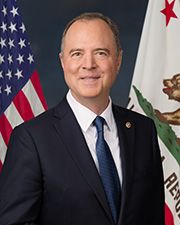
Mr. Speaker, I move to suspend the rules and pass the Senate bill (S. 231) to authorize the Edward Byrne Memorial Justice Assistance Grant Program at fiscal year 2006 levels through 2012. Mr.…
Mr. Speaker, I move to suspend the rules and pass the Senate bill (S. 231) to authorize the Edward Byrne Memorial Justice Assistance Grant Program at fiscal year 2006 levels through 2012.
Mr. Speaker, I ask unanimous consent that all Members have 5 legislative days to revise and extend their remarks and include extraneous material on the bill under consideration.
Mr. Speaker, I yield myself such time as I may consume.
The Byrne Memorial Justice Assistance Grant, or Byrne/JAG Program, is named after Edward Byrne, a New York City police officer killed by a violent drug gang 20 years ago.
The Byrne/JAG Program is the only source of Federal funding for multi-jurisdictional efforts to prevent and fight crime. The funding is used by States and local governments to support a broad range of activities to prevent and control crime and to improve the criminal justice system.
Specific uses include law enforcement, prosecution, and court programs; crime prevention and education programs; community-based programs; drug treatment, planning, and evaluation efforts; and crime victim and witness programs.
Simply put, this program enables States to employ all aspects of fighting crime, rather than simply using the so-called ``get tough'' approach limited to making more arrests and making sentences longer.
Nationwide, the program has resulted in major innovations in crime control, including drug courts, gang prevention strategies, and prisoner reentry programs, all of which provide proven and highly effective crime prevention.
In turn, these innovations demonstrate that the best crime policy incorporates programs that help at-risk youth avoid criminal behavior and that prepare prisoners for reentry into society so they have meaningful and productive alternatives to crime when they return home.
S. 231 would simply reauthorize the Byrne/JAG Program at its current funding level, which is $1.095 billion, through 2012. The House passed substantially identical legislation by voice vote last month. Passing the Senate version will enable us to send this important bill to the President.
I urge my colleagues to support this measure.
Mr. Speaker, I reserve the balance of my time.
Mr. Speaker, I join my colleague in urging passage of the legislation.
Mr. Speaker, I have no further requests for time, and I yield back the balance of my time.
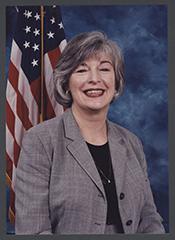
Madam Speaker, ensuring that local law enforcement officials are provided with the resources they need to effectively protect our communities requires nothing less than our sustained commitment and…
Madam Speaker, ensuring that local law enforcement officials are provided with the resources they need to effectively protect our communities requires nothing less than our sustained commitment and dedication. That's why I am proud to support of H.R. 3546, the Byrne-Justice Assistance Grant, JAG, Reauthorization Act.
The Byrne-JAG program provides State and local governments with the tools necessary to prevent and control crime while strengthening our criminal justice system. These grants help fund law enforcement programs targeting school violence, hate crimes, and victims of violent crimes. Additionally, Byrne-JAG grants enable state, regional, and local agencies to confront and overcome the threats posed by drug trafficking through providing essential funding to improve drug enforcement and treatment programs. By using these grants to develop multi-jurisdictional drug task forces, law enforcement officials from around the country have been able to foster institutional collaboration built on their shared expertise and training.
Last year, the City of Santa Rosa and Sonoma County in my Congressional District were fortunate enough to receive Byrne-JAG grants, which went to support programs designed to assist in the prevention of drug use, treat non-violent offenders, and improve the effectiveness of our criminal justice system. That's why I'm a cosponsor of H.R. 3546, which would reauthorize the Byrne-JAG program until 2012. Despite the Bush Administration's efforts to eliminate funding for this important program, I commend the Democratic Leadership for demonstrating their commitment to full funding for Byrne-JAG by bringing this legislation to the Floor.
Local law enforcement officials depend on Byrne-JAG grants to invest in strategies that combat crime and drugs. Without these resources, State and local law enforcement cannot take the steps they need to protect our families and our country's most precious resources, our children and young adults, from violence and drug abuse. Madam Speaker, it's our responsibility to make certain these brave men and women have the support necessary to perform their jobs. It's the least we can do.
Show 11 more

Mr. Speaker, I rise in support of H.R. 6275, the Alternative Minimum Tax Relief Act of 2008. Forty years ago the Alternative Minimum Tax (AMT) was originally enacted to ensure that wealthiest…
Mr. Speaker, I rise in support of H.R. 6275, the Alternative Minimum Tax Relief Act of 2008.
Forty years ago the Alternative Minimum Tax (AMT) was originally enacted to ensure that wealthiest Americans--like everyone else--paid their fair share of taxes. Prior to the enactment of the AMT, the wealthiest Americans were exploiting loopholes in the tax code to circumvent their societal obligations. However this tax, which was intended for a few hundred of the wealthiest Americans has never been adjusted to account for inflation. Through inflation and tax-rate creep the AMT has become a middle class tax hike.
We have been unable to pass a permanent fix to the AMT to prevent middle class Americans from fearing that they will get hit by the AMT every year. More families in Central New Jersey are affected by the AMT than anywhere else in the country. Over 33,000 of my constituents already pay the AMT, under the current law, and an additional 88,000 of my constituents would be subject to the AMT if we do not act to prevent the patch from expiring. American families are already suffering from skyrocketing gas and food prices that they did not build into their family budgets. Compounding this financial burden with an unexpected and undeserved tax hike would hit New Jersey families hard. Yet, that is what will happen if we do not take action today.
Mr. Speaker, I have long been concerned with the growing debt that we are passing on to the next generation and have often called for a revision of the AMT that will not increase our national debt. The Alternative Minimum Tax Relief Act of 2008 makes good on our promise to the American people that we will not spend money that Congress does not have. This legislation will offer more than 25 million families relief from the AMT without adding to the deficit. This will be achieved by promoting tax compliance, removing inequities in the tax code, and decreasing government subsidies to oil companies.
While I support this legislation, we need a permanent fix to ensure that this tax intended for the wealthiest Americans is not passed down to middle income Americans and do so in a fiscally responsible way.
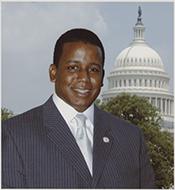
Mr. Speaker, I am pleased to be a cosponsor to this bill that will give Alternative Minimum Tax Relief to those families in my district and the entire State of Florida who will be unfairly hit with…
Mr. Speaker, I am pleased to be a cosponsor to this bill that will give Alternative Minimum Tax Relief to those families in my district and the entire State of Florida who will be unfairly hit with this tax in 2008.
While the AMT was not intended to burden our working families, now in 2008 it does. Initially, the AMT applied to fewer than 20,000 taxpayers. In 2007, it applied to 4.2 million taxpayers. By 2008, up to 26 million taxpayers are projected to be subject to the AMT. Moreover, it is the middle- to upper-middle-income taxpayers who are the targets of this tax. It is our married taxpayers and larger families that are especially going to fall under this tax.
An astounding increase in the number of working families in Florida will be hurt by the AMT in 2008 if something is not done. It is projected that over six times the number of working families will be hurt by the AMT in my State of Florida in 2008 than were hurt by this tax in 2005. In 2005, there were 161,000 AMT returns filed in the State of Florida. However,
in 2008, it is estimated that 956,000 AMT returns will be filed in Florida--a more than six times increase between 2005 and 2008.
In 2007, Florida ranked seventh in the number of returns that were caught. with the Alternative Minimum Tax burden. However, in 2008, Florida is projected to rank fifth in the number of returns caught with the AMT. So even in the one year, 2007 to 2008, the number of working families in Florida caught with the AMT has increased tremendously.
Originally, the AMT was intended to cover only America's high-income taxpayers to ensure that they pay at least a minimum amount of federal taxes. But now, it is not this group that will be the most adversely affected by the AMT. It is our hard-working families--over 950,000 hard-working families in Florida alone that will be hit unintentionally and unfairly with this tax. This is not what the AMT was intended to do, and it is time for those families in Florida and elsewhere to get badly needed relief from this tax.
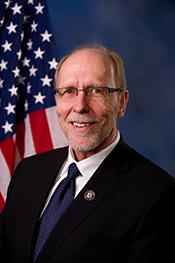
Mr. Speaker, I rise today in strong support of reauthorization of the Edward Byrne Memorial Justice Assistance Grant program. As a cosponsor of the House version of this bill, I am pleased that this…
Mr. Speaker, I rise today in strong support of reauthorization of the Edward Byrne Memorial Justice Assistance Grant program. As a cosponsor of the House version of this bill, I am pleased that this legislation will reauthorize a program that is vital not only to my District, but to Iowa, and States across the country.
Byrne JAG is one of our country's most effective law enforcement tools. It is the only source of federal funding for multi- jurisdictional efforts to prevent, fight, and prosecute drug-related and violent crime. The program funds drug treatment; keeps our communities safe by increasing the number of officers on the street; and gives local law enforcement officers the tools they need to shut down the production and distribution of illegal drugs.
With the help of Byrne JAG funding, State and local law enforcement officers across the country have made tremendous strides in combating illegal drugs. A recent study found that Byrne JAG funded programs have led to 220,000 arrests, the seizure of 54,000 weapons; the destruction of 5.5 million grams of methamphetamine, and the elimination of almost 9,000 methamphetamine labs.
In Iowa, reported methamphetamine labs have dropped 90 percent since their peak in 2004. Meanwhile, meth treatment admissions have increased and Iowa now has the third highest rate of meth treatment in the country. Child abuse due to meth labs is in decline, and three recent Iowa Youth Surveys have shown steady decline in substance use among 6th, 8th, and 11th grade students.
What these statistics make clear is that Byrne JAG is proven, effective, and critical to public safety. This reauthorization lays the groundwork for robust funding for Byrne JAG through 2012, and I urge my colleagues to not only support adoption of the bill but to also support full funding for the program in this and coming years.
Mr. Speaker, one of the hallmarks of the Ways and Means Committee is that fairness is always the order of the day. Fairness in priorities. Fairness in legislation. H.R. 6275 exemplifies this fact.…
Mr. Speaker, one of the hallmarks of the Ways and Means Committee is that fairness is always the order of the day. Fairness in priorities. Fairness in legislation. H.R. 6275 exemplifies this fact.
Our bill will provide $62 billion in AMT relief to more than 25 million families nationwide.
In my district alone, almost 80,000 people are on track to endure the significant tax increase of the AMT this year if we do not act now. That's up from 20,000 people in 2005.
Many of the people affected would be firefighters, cops and teachers--a far cry from the original intent of the AMT. Indeed, the middle class is being more and more affected--your constituents and mine. And it's only getting worse.
Unfortunately there are those on the other side of the aisle who will not vote today for the best interests of their constituents.
Instead, they will choose to cast their vote for the Kings of Wall Street who are already the richest people in the history of our Nation.
We pay for this bill, in part, by simply requiring that investment fund managers are taxed at the same income rates as every other American. After all, why should the very richest among us be taxed at 15 percent when a doctor or lawyer pays 35 percent? Or when a teacher or plumber, et cetera, is taxed at 25?
Yet because of this provision, many Republicans will be unable to vote for real tax relief for their constituents. I find this as inexplicable as I do sad.
This legislation is wise and it is fair. It will give tax relief to 25 million hard-working Americans while ensuring fairness in the tax code. So try to explain to the firefighters and cops in your district that you wanted to take care of investment fund managers instead.
Mr. Speaker, the middle class is hurting. They are facing tough decisions over rising gas, food, and health care prices. Adding to their economic dilemma, the Alternative Minimum Tax, AMT, may reach…
Mr. Speaker, the middle class is hurting. They are facing tough decisions over rising gas, food, and health care prices. Adding to their economic dilemma, the Alternative Minimum Tax, AMT, may reach many of them this coming year. Today, we will vote on H.R. 6275, the Alternative Minimum Tax Relief Act of 2008, which would provide relief to middle class taxpayers by avoiding the AMT.
The original intent behind the AMT was to guarantee that the wealthiest Americans paid their fair share of taxes. However, the AMT was not adjusted for inflation and hard-working Americans were lumped into this tax. Today, the Congress must act to prevent 25.6 million middle income Americans being liable for paying thousands of dollars in additional taxes.
Restructuring the tax code will more fairly distribute the tax burden. H.R. 6275 will tax private equity managers, who actually pay lower taxes on carried interest and repeal unnecessary Government subsidies for the big five oil companies reaping record profits and on multinational corporations who offshore their businesses for the express purpose of tax avoidance. It is unconscionable that our tax code allows these corporations to avoid taxes while hard-working Americans get hit with a stern tax and pay extremely high gas prices at the pump. This legislation closes these major tax loopholes.
H.R. 6275 restores America's tradition of giving a helping hand to those in need. We need to stop the giveaways to Big Oil and Wall Street brokers and begin to focus on the needs of average working Americans. This is a commonsense piece of legislation and I urge my colleagues to support the bill.
Madam Speaker, I move to suspend the rules and pass the bill (H.R. 3546) to authorize the Edward Byrne Memorial Justice Assistance Grant Program at fiscal year 2006 levels through 2012, as amended.…
Madam Speaker, I move to suspend the rules and pass the bill (H.R. 3546) to authorize the Edward Byrne Memorial Justice Assistance Grant Program at fiscal year 2006 levels through 2012, as amended.
Madam Speaker, I ask unanimous consent that all Members have 5 legislative days to revise and extend their remarks and include extraneous material on the bill under consideration.
I would like to begin by yielding as much time as he may consume to our distinguished colleague from Georgia (Mr. Johnson) who has worked more diligently than I believe any Member in the House on this measure. He shepherded it through hearings and markup in Judiciary, and now we're on the floor.
Madam Speaker, I couldn't concur more with the speakers, our friend from Georgia, Hank Johnson, and the distinguished member of the Judiciary Committee who has been the Attorney General in the largest State in the country.
And so I am enthusiastically supporting the continuation of these grants and would hope we would reauthorize this. We have got a reauthorization of over $1 billion this time through 2012, and I hope that we will enjoy the support of the Members of the House.
Madam Speaker, I yield back the balance of my time.
Would the gentleman yield?
Well, not Canada, though. I thank the gentleman for yielding, and I was concerned only for a moment that he wasn't going to bring up this subject. It was with very little ingenuity required on his part to tie it into this measure.
As a distinguished member of Judiciary, has the gentleman considered one of the proposals about bringing the price down by nationalizing the oil companies in this country?
Mr. Speaker, I yield myself such time as I may consume. I rise in support of S. 231, a bill to reauthorize the Edward Byrne Memorial Justice Assistance Grant Program through fiscal year 2012. This…
Mr. Speaker, I yield myself such time as I may consume.
I rise in support of S. 231, a bill to reauthorize the Edward Byrne Memorial Justice Assistance Grant Program through fiscal year 2012.
This bill continues to fund the Department of Justice Byrne/JAG Grant Program at the fiscal year 2006 level. The House passed companion legislation, H.R. 3546, just a few weeks ago.
The Byrne/JAG Program provides assistance to State and local law enforcement officials. These grants support a wide range of law enforcement activities to prevent and control crime and improve the criminal justice system. Byrne/JAG grants may be used to help pay for personnel, overtime, or equipment. Funds are also used for statewide initiatives, technical assistance, and training.
In June the FBI released its 2007 Unified Crime Report detailing the statistics for violent crime nationwide. The rate for violent crimes, including robbery, sexual assault, and murder, decreased nationally. However, the report also showed that the rate of violent crime increased in some communities across the country.
Our Nation's law enforcement officials are dedicated to preventing crime and keeping our communities safe, and their efforts should be applauded. Congress plays an important role in supporting State and local law enforcement officials by continuing to reauthorize programs like this at appropriate levels.
I urge my colleagues to support this bill.
Mr. Speaker, I have no further requests for time, and I yield back the balance of my time.

Mr. Speaker, I thank Chairman Rangel for his leadership and I am proud of our work to protect 25 million American taxpayers-- including half a million people in Southeastern Pennsylvania--from the…
Mr. Speaker, I thank Chairman Rangel for his leadership and I am proud of our work to protect 25 million American taxpayers-- including half a million people in Southeastern Pennsylvania--from the pain of the Alternative Minimum Tax. True to their record of increasing debt, the Republicans continue to say, ``there's no need to offset AMT relief because this tax was never intended to hit these people.''
But in 2001 they knew that the Bush tax cuts would increase--by 127%--the number of AMT taxpayers this year. And they consistently used these taxpayers to mask the true cost of their failed fiscal policies.
We cannot ignore the consequences of these bad decisions. We are committed to reversing the Bush Administration's policy and fiscal failures. We are committed to enacting permanent--fiscally responsible--AMT relief for middle income taxpayers. And we are committed to act today to protect millions of Americans from the AMT this year without adding to the Nation's exploding debt.
Mr. Speaker--given the economic downturn and financial challenges facing our families and our Nation, our constituents have the right to expect fair and responsible tax policy. Today's proposal to provide tax relief to 25 million American families by closing loopholes that benefit only the wealthiest individuals is fair, it is responsible, and it deserves passage.
Mr. Speaker, I rise in support of H.R. 6275, Alternative Minimum Tax Relief Act of 2008. H.R. 6275 is critical to easing the burden on middle-class taxpayers. The Alternative Minimum Tax, AMT, was…
Mr. Speaker, I rise in support of H.R. 6275, Alternative Minimum Tax Relief Act of 2008.
H.R. 6275 is critical to easing the burden on middle-class taxpayers. The Alternative Minimum Tax, AMT, was originally intended to make sure that the Nation's wealthiest citizens did not avoid paying taxes altogether. However, it was not indexed for inflation and the AMT now affects millions of middle income tax payers across the country. H.R. 6275 would extend for 1 year AMT relief for nonrefundable personal credits and increases the AMT exemption amount to $69,950 for joint filers and $46,200 for individuals. At a time of economic uncertainty and rising gas and food prices, H.R. 6275 would provide over 25 million families with tax relief. In my district alone, over 33,000 families would be affected by the AMT this year.
As a member of the Budget Committee, I am also pleased that this bill includes offsets and is budget-neutral. Instead of adding to our national debt, H.R. 6275 responsibly pays for itself by closing a loophole that allows hedge fund managers to pay less taxes, encouraging tax compliance, repealing subsidies for the five biggest oil companies, and tightening tax laws on foreign-owned companies. I support H.R. 6275, Alternative Minimum Tax Relief Act of 2008, and I urge my colleagues to join me in voting for its passage.
Mr. Speaker, we all know this bill is purely a political exercise. Congress will eventually pass an AMT patch that does not contain permanent tax increases. All we are doing today is postponing final…
Mr. Speaker, we all know this bill is purely a political exercise. Congress will eventually pass an AMT patch that does not contain permanent tax increases. All we are doing today is postponing final action and risking a repeat of last year's delay that created major headaches for taxpayers.
I believe we shouldn't be expanding the federal government's share of the economy by pairing temporary extensions of tax relief with permanent tax increases. I've heard a number of concerns from small businesses about one of these offsets, a new reporting requirement for credit card transactions. Last week, when the Ways and Means Committee considered this bill, we were told by the Treasury Department that they have not done a cost-benefit analysis on this proposal. I fear we are going
down the same road as we did two years ago with the 3 percent withholding requirement, which we've now learned will cost the government far more than it will raise in revenue.
On top of that, this bill raises taxes on American energy producers. This does nothing to reduce gas prices--in fact, it will only make them higher. And there's simply no justification for a provision that penalizes U.S. producers but doesn't affect subsidiaries of foreign- owned firms. This legislation just doesn't make sense. I urge my colleagues to vote ``no.''
Madam Speaker, I rise today to express my strong support for H.R. 3546, which authorizes the Edward Byrne Memorial Justice Assistance Grant Program at fiscal year 2006 levels through 2012. Earlier…
Madam Speaker, I rise today to express my strong support for H.R. 3546, which authorizes the Edward Byrne Memorial Justice Assistance Grant Program at fiscal year 2006 levels through 2012.
Earlier this year I was disappointed to learn of the administration's draconian reduction in funding which would have limited the ability of our law enforcement officers to obtain the necessary manpower, equipment, and other tools to reduce criminal activity, putting them in a reactive rather than proactive mode.
The Edward Byrne Memorial Justice Assistance Grant Program allows States and local governments to improve their criminal justice system by supporting activities that help prevent and control crime.
H.R. 3546 authorizes $1.095 billion annually through FY2012 for the grant program. It is critically important that States and local law enforcement agencies have access to these much-needed resources, which help fight crime and drug proliferation in our communities.
Madam Speaker, we must properly fund our local law enforcement officers, who put their lives on the line daily to keep the rest of us safe. Therefore, I encourage my colleagues to join me in voting for this very important legislation to keep our neighborhoods safe!
Bill Text
4 versions available
        [Congressional Bills 110th Congress]
[From the U.S. Government Printing Office]
[H.R. 3546 Placed on Calendar Senate (PCS)]

Calendar No. 851
110th CONGRESS
2d Session
H. R. 3546

_______________________________________________________________________

IN THE SENATE OF THE UNITED STATES

June 26, 2008

Received; read twice and placed on the calendar

_______________________________________________________________________

AN ACT

To authorize the Edward Byrne Memorial Justice Assistance Grant Program
at fiscal year 2006 levels through 2012.

Be it enacted by the Senate and House of Representatives of the
United States of America in Congress assembled,

SECTION 1. AUTHORIZATION OF GRANTS.

Section 508 of title I of the Omnibus Crime Control and Safe
Streets Act of 1968 (42 U.S.C. 3758) is amended by striking ``for
fiscal year 2006'' through the period and inserting ``for each of the
fiscal years 2006 through 2012.''.

Passed the House of Representatives June 25, 2008.

Attest:

LORRAINE C. MILLER,

Clerk.

By Deborah M. Spriggs,

Deputy Clerk.
Calendar No. 851

110th CONGRESS

2d Session

H. R. 3546

_______________________________________________________________________

AN ACT

To authorize the Edward Byrne Memorial Justice Assistance Grant Program
at fiscal year 2006 levels through 2012.

_______________________________________________________________________

June 26, 2008

Received; read twice and placed on the calendar