Enhancing the Effective Prosecution of Child Pornography Act of 2007
Legislative Activity
Stay on top of the latest movement without scrolling through every action
Received in the Senate and Read twice and referred to the Committee on the Judiciary.
December 3, 2007
View full timeline
Introduced in House
November 9, 2007
Referred to the House Committee on the Judiciary.
November 9, 2007
Mr. Conyers moved to suspend the rules and pass the bill, as amended.
November 13, 2007 • 5:13 PM
Considered under suspension of the rules. (consideration: CR H13594-13595)
November 13, 2007 • 5:14 PM
DEBATE - The House proceeded with forty minutes of debate on H.R. 4136.
November 13, 2007 • 5:14 PM
At the conclusion of debate, the Yeas and Nays were demanded and ordered. Pursuant to the provisions of clause 8, rule XX, the Chair announced that further proceedings on the motion would be postponed.
November 13, 2007 • 5:20 PM
Considered as unfinished business. (consideration: CR H14062-14063)
November 15, 2007 • 8:54 PM
Passed/agreed to in House: On motion to suspend the rules and pass the bill, as amended Agreed to by the Yeas and Nays: (2/3 required): 416 - 0 (Roll no. 1121).(text: CR 11/13/2007 H13594)
November 15, 2007 • 9:03 PM
On motion to suspend the rules and pass the bill, as amended Agreed to by the Yeas and Nays: (2/3 required): 416 - 0 (Roll no. 1121). (text: CR 11/13/2007 H13594)
November 15, 2007 • 9:03 PM
Motion to reconsider laid on the table Agreed to without objection.
November 15, 2007 • 9:03 PM
The Clerk was authorized to correct section numbers, punctuation, and cross references, and to make other necessary technical and conforming corrections in the engrossment of H.R. 3773.
November 15, 2007 • 9:03 PM
Received in the Senate and Read twice and referred to the Committee on the Judiciary.
December 3, 2007
Voting History
1 vote recorded • Roll call available
Floor Debate
24 membersWhat members said about H.R. 4136 on the floor
 JCJ
JCJ SJL
SJL LS
LS SHH
SHH MU+19
MU+19
Floor Debate
24 membersWhat members said about H.R. 4136 on the floor
Mr. Speaker, I ask unanimous consent that all Members may have 5 legislative days in which to revise and extend their remarks and include extraneous material on H.R. 3773. Mr. Speaker, I yield myself…
Mr. Speaker, I ask unanimous consent that all Members may have 5 legislative days in which to revise and extend their remarks and include extraneous material on H.R. 3773.
Mr. Speaker, I yield myself as much time as I may consume.
Members of the House, the RESTORE Act dealing with FISA addresses the needs of the intelligence community for flexibility in dealing with modern communications networks.
It received the most careful scrutiny and consideration by this Committee on the Judiciary, as well as by the Intelligence Committee, chaired by Chairman Reyes, to ensure that it meets every concern our intelligence agencies have raised, every single one of them, and does so consistent with the rules of law, our Constitution, and our values.
Let's begin this discussion this evening by clearing up a few things that the bill will not do. The RESTORE Act will never require our intelligence agencies to stop listening to the bad guys. Never. Special emergency provisions allow us to listen first and get the warrant after the fact, if it's needed. No one will ever have to stop listening to a terrorist plotting an attack. I hope I don't hear that raised on the floor this evening.
The RESTORE Act will not make our intelligence agencies have to get thousands of warrants for terrorists outside the country. It will not do that. Instead, a basket authorization will permit surveillance of an entire foreign terrorist organization. This is the most effective way to target Osama bin Laden, al Qaeda, and other threats to our country and our citizens.
The RESTORE Act does not give the government free rein to listen to Americans. As has always been the case under FISA, this bill requires that the government get a warrant to target an American; any American. We have also a manager's amendment, which continues to promote the goals of intelligence flexibility with appropriate oversight, while safeguarding our security and our liberty. It makes clear that the protections of the act will not inhibit gathering intelligence against present dangers, such as Osama bin Laden, or threats to our troops in the field.
It does provide guidelines to make it easier to determine when the significant purpose of the surveillance act is to acquire information on a United States person and a FISA warrant is needed. It provides important safeguards on dissemination of information about individual Americans when it's acquired under the RESTORE Act's more flexible structure. Specifically, an SES-level manager will review such dissemination on a particularized basis.
Importantly, the RESTORE Act has no retroactive immunity for telecommunications carriers who may have assisted the government in conducting unlawful surveillance on Americans. I am sorry to report to you that the other body has a measure that does give that retroactive immunity. The RESTORE Act now on the floor has no retroactive immunity for telecommunications carriers who may have assisted the government in unlawful surveillance on Americans.
Until we receive the information, the data, the letters that we have requested to know what they have done, information we have been waiting for more than 10 months for, we can't even begin to responsibly consider such a request. So as of now, it's out. No retroactive immunity.
The legislation that we have before us now is a much-needed start to restoring our system of checks and balances, preserving our liberty, and ensuring that our government has the tools they legitimately need to combat terrorism. We got pressed up against the wall in August. It's not going to happen again. There's a 6-month run on the present measure before us. Before we get pushed up against the holidays, we are saying, Let's do it now.
We have had a tremendous working relationship with the chairman of the Intelligence Committee, Silvestre Reyes, and his staff and my staff. Majority and minority have been working
closely together to bring to you a commonsense and balanced piece of legislation that does what we set out to do, and that is to preserve our liberties and make sure we have effective security. We want our intelligence agencies strong, but we want to bring the FISA Court back into the picture, and we do in the measure before us.
Six years ago, the administration unilaterally chose to engage in warrantless surveillance of American citizens without court review. That decision has--to be charitable--created a legal and political quagmire. Officials resigned, the program was riddled with errors, it was shut down for several weeks, officials rushed to the hospital to ask a sick man to reauthorize it over his deputy's objections, and vital prosecutorial resources were diverted. Most importantly, our own citizens questioned wheher their own government was operating within the confines of the law.
Two months ago, when that scheme appeared to be breaking down, the administration forced Congress to accept an equally flawed statute. This new law gutted the power of the FISA court. It granted the administration broad new powers to engage in warrantless searches within the U.S., including physical searches of our homes, computers, offices and medical records. The law contained no meaningful oversight whatsoever.
The legislation before us today seeks to once again strike the appropriate balance between needed government authority and our precious rights and liberties. It tells the government they need no warrant when foreign agents communicate with other foreigners. It reiterates that warrants are needed when Americans are being targeted. The bill also allows the interception of communications of foreign targets who may communicate with U.S. persons. However, it insists that procedures be in place--approved by the FISA court--to insure that no American is being targeted, and that his or her privacy is protected.
The bill also provides for several critical safeguards. We include periodic audits by the Inspector General, we narrow the scope of the authority to protect against threats to our national security, and we protect the privacy of Americans traveling abroad. We also sunset the legislation in December 2009.
The RESTORE Act, which has received careful consideration by the Judiciary Committee and by the Intelligence Committee, addresses the needs of the intelligence community for flexibility and the ability to deal with modern communications networks.
It meets every concern that our intelligence agencies have raised and does so consistent with the rule of law, our Constitution, and our values.
Let me be clear on a few things this bill will NOT do:
The RESTORE Act will never require our intelligence agencies to stop listening to the bad guys. Never. There are emergency provisions and the ability to get a warrant after the fact. No one will ever have to stop listening to a terrorist plotting an attack.
It will not make our intelligence agencies get thousands of warrants for terrorists outside of the country. Instead, they can get a basket authorization to surveil the entire foreign terrorist organization. This is the most effective way to target Osama bin Laden, al Qaeda, and other threats.
The RESTORE Act does not give the government free rein to listen in to Americans. As has always been the case under FISA, this bill requires the government to get a warrant if it wants to target an American.
The Managers' Amendment also reflects the RESTORE Act's goals of intelligence flexibility and oversight, while ensuring both safety and civil liberties. It makes it clear that the protections of the Act will not inhibit gathering intelligence against present dangers, such as Osama bin Laden or threats to our troops in the field. It provides guidelines to flesh out what should be considered when determining whether a significant purpose of collection is to acquire information about a U.S. person, such that a FISA warrant would be required.
The Manager's Amendment also provides important safeguards on dissemination of information about individual Americans when it is acquired under the RESTORE Act's more flexible structure. Dissemination of U.S. person communications acquired under the RESTORE Act's basket authorities can only happen when an SES-Ievel supervisor determines that the identity of that person is needed to understand or assess the importance of the foreign intelligence, and to protect the national security of the United States. This is not a blanket authorization to unmask everyone intercepted, but must be done on a person-by-person basis.
Importantly, the bill has no retroactive immunity for telecommunications carriers. Until we receive the underlying documents relating to their conduct from the administration--and we have been waiting for more than ten months--we cannot even begin to consider this request. Sending a small set of the documents to a subcommittee of the other body does not begin to meet this test.
There is one of the grave concerns about the Protect America Act that bears mention as we consider the RESTORE Act. The Protect America Act was overbroad in the types of entities from which the government could compel information, reaching into business or medical records or libraries. We have narrowed the scope of the acquisitions in the RESTORE Act to ensure that the government can only seek information under the ``basket authorizations'' from telecommunications service providers and related companies.
I share the concern of our library community that believes their mission and the chance to bring knowledge and freedom of expression abroad will be diminished if the U.S. government can indiscriminately monitor American libraries when they serve foreign users. This is not a hypothetical concern in an age of distance learning. While a library certainly is not the same kind of ``communications service provider'' as AOL or AT&T, it may allow patrons to access the internet, to send emails, and to conduct research on-line, so it literally ``provides'' these communications services to patrons. The Judiciary Committee report indicates that these now-standard library services do not make them ``telecommunications service providers'' for a 105B or 105C acquisition, but let me be clear--nothing in the bill is intended to leave libraries outside of the protections of the Foreign Intelligence Surveillance Act.
The legislation before us today is a much needed start to restoring our system of checks and balances, to preserving our precious liberties, and to insuring that our government has all the tools they legitimately need to combat terrorism. I urge my colleagues on both sides of the aisle to support this common sense and balanced legislation.
Mr. Speaker, I reserve the balance of my time.
Mr. Speaker, I am pleased now to recognize a very effective member of our committee, Mr. Schiff of California, as well as the gentleman Mr. Flake of Arizona, and I would yield them 2 minutes.
Mr. Speaker, I am stunned by my friend from California's comments, but I yield now 2 minutes to the gentleman from New York (Mr. Nadler), the chairman of the Constitution Subcommittee in Judiciary.
Mr. Speaker, it is my pleasure now to recognize the gentlewoman from Florida (Ms. Wasserman Schultz), a member of the Judiciary Committee, for 1\1/4\ minutes.
Would the former Attorney General of California yield?
That is why I seek to have you yield to me, sir.
Osama bin Laden is never going to have any rights superior to any citizen.
Mr. Chairman, it is very important that we understand that Mr. Lungren in his dramatic presentation about the cumbersomeness and the protections that we are affording bin Laden almost begs the question here.
We have been on this bill for several times. We have got a carve-out here. Nothing prevents conducting lawful surveillance that is necessary to, one, prevent Osama bin Laden and al Qaeda or any other terrorists, Mr. Lungren, or any ally of those persons from receiving any of these protections. We can operate against them without giving them any rights, and I think you must know that by now.
I can't give you time. I have got less than anybody here. No. I reserve the balance of my time.
Announcement By the Speaker Pro Tempore
Mr. Speaker, I yield for the purpose of making a unanimous consent request to the gentleman from Virginia (Mr. Scott).
(Mr. SCOTT of Virginia asked and was given permission to revise and extend his remarks.)
Mr. Speaker, I am now pleased to yield 1 minute to the Speaker of the House, the gentlewoman from California, Nancy Pelosi.
Mr. Speaker, I am privileged to yield the balance of our
time on our side to the distinguished gentlewoman from Texas, Sheila Jackson-Lee, an invaluable member of the Judiciary Committee.
Mr. Speaker, I reserve a point of order, and I object to waiving the reading of the motion to recommit.
Mr. Speaker, I do not insist upon my point of order.
Mr. Speaker, I rise to respond to the motion to recommit.
Mr. Speaker, I am.
Mr. Speaker, ladies and gentlemen of the House, here we are again at another one of these so-called motions to recommit. Approach them with great care. I strongly oppose this motion.
The minority has just made it clear that they are not seeking to change the bill; they are seeking to kill the bill. The tactic is getting pretty old in the House of Representatives. If they wanted to vote on their proposal today, they would have used the word, doesn't everybody know it now, ``forthwith,'' as I have suggested. But they have refused under well-established House rules and precedents.
Other words do not have that effect, even if they sound like they should. The minority used the word ``promptly.'' It's no accident that they chose that word. The authors of this motion know full well the effect of choosing this word, and so do we. That is why they chose it. They wanted to send the bill back to the graveyard, which is what will happen if this motion is adopted.
I would now yield to the gentlewoman from California (Ms. Zoe Lofgren).
Mr. Speaker, I am proud to yield to the distinguished chairman of the Intelligence Committee, the gentleman from Texas (Mr. Reyes).
I thank the chairman.
I am really moved by the sudden concern for immigration rights that the other side has begun to display, to my surprise.
I yield now to the gentlewoman from California (Ms. Harman).
Mr. Speaker, I demand a recorded vote.
I thank both chairmen, Chairman Conyers for his leadership and Chairman Reyes. In the month of August, I stood here and shredded paper to reflect that the vote we took on that bill was really a…
I thank both chairmen, Chairman Conyers for his leadership and Chairman Reyes. In the month of August, I stood here and shredded paper to reflect that the vote we took on that bill was really a destruction of the Constitution. I am very glad to be able to stand here today to hold the Constitution sacredly in my hand and to indicate that this bill does, in fact, offer a restoration of the civil liberties of Americans but yet does not protect one single terrorist.
It is a bill that avoids reverse targeting of Americans. But it is a bill that provides the opportunity that if there was a pending threat against the United States, the Attorney General, the National Security Director, and three others could, in fact, prevent a terrorist act from occurring in the United States. This restores justice and it protects the American people.
Mr. Speaker, I rise today in support of H.R. 3773, introduced by my colleague Mr. Conyers. Had the Bush administration and the Republican- dominated 109th Congress acted more responsibly in the 2 preceding years, we would not be in the position of debating legislation that has such a profound impact on national security and on American values and civil liberties in the crush of exigent circumstances. More often that not, it is true, as the saying goes, that haste makes waste.
Mr. Speaker, the legislation before us is intended to fill a gap in the Nation's intelligence gathering capabilities identified by Director of National Intelligence Mike McConnell, by amending the Foreign Intelligence Surveillance Act, FISA. It gives our intelligence professionals the tools they need to legally monitor suspect foreigners outside the United States, while protecting the fundamental rights of Americans at home.
Nearly two centuries ago, Alexis de Tocqueville observed that the reason democracies invariably prevail in any martial conflict is because democracy is the governmental form that best rewards and encourages those traits that are indispensable to martial success: initiative, innovation, resourcefulness, and courage.
The United States would do well to heed de Tocqueville and recognize that the best way to win the war on terror is to remain true to our democratic traditions. If it retains its democratic character, no nation and no loose confederation of international villains will defeat the United States in the pursuit of its vital interests. A major challenge facing the Congress today is to ensure that in waging its war on terror, the administration does not succeed in winning passage of legislation that will weaken the Nation's commitment to its democratic traditions.
This is why the upcoming debate over congressional approval authorizing the administration to conduct terrorist surveillance on U.S. soil is a matter of utmost importance. I offer some thoughts on the principles that should inform that debate.
In the waning hours before the August recess, the House acceded to the Bush administration's request and approved the woefully misnamed ``Protect America Act,'' which gives the Federal Government enlarged powers to conduct electronic surveillance of American citizens under the guise of conducting surveillance of foreign terrorists.
Mr. Speaker, FISA has served the Nation well for nearly 30 years, placing electronic surveillance inside the United States for foreign intelligence and counter-intelligence purposes on a sound legal footing. Given the exigent circumstances claimed by the administration, I am prepared to support a number of temporary changes to FISA legislation, provided that they follow certain principles.
First, I am prepared to accept temporarily eliminating the need to obtain a court order for foreign-to-foreign communications that pass through the United States. But I do insist upon individual warrants, based on probable cause, when surveillance is directed at people in the United States. The Attorney General must still be required to submit procedures for international surveillance to the Foreign Intelligence Surveillance Court for approval, but the FISA Court should not be allowed to issue a ``basket warrant'' without making individual determinations about foreign surveillance. There should be an initial emergency authority so that international surveillance can begin while the warrants are being considered by the Court. And there must also be congressional oversight, requiring the Department of Justice Inspector General to conduct an audit every 60 days of U.S. person communications intercepted under these warrants, to be submitted to the Intelligence and Judiciary Committees.
This legislation allows the interception of electronic communications between foreigners outside of the United States without a warrant and permits the director of national intelligence and the attorney general to seek ``blanket'' warrants to intercept communications of people reasonably believed to be outside the United States, even if such communication happens to involve ``U.S. persons.'' Wiretap surveillance could be conducted for 7 days before a warrant must be sought, and the secret Foreign Intelligence Surveillance court would have to act on the application for a blanket warrant within 15 days.
This legislation has many other important provisions. It affirms that FISA is the exclusive source of legal authority for conducting electronic surveillance for foreign intelligence. Crucially, it does not grant amnesty to telecommunications companies for any past violations of law. Finally, it gives the FISA Court more oversight authority and terminates the authorization to conduct foreign surveillance on U.S. soil after 2 years.
In all candor, Mr. Speaker, I must restate my firm conviction that when it comes to the track record of this President's warrantless surveillance programs, there is still nothing on the public record about the nature and effectiveness of those programs, or the trustworthiness of this administration, to indicate that they require any legislative response, other than to reaffirm the exclusivity of FISA and insist that it be followed. This could have been accomplished in the 109th Congress by passing H.R. 5371, the ``Lawful Intelligence and Surveillance of Terrorists in an Emergency by NSA'' Act, LISTEN Act, which I have cosponsored with the then ranking members of the Judiciary and Intelligence Committees, Mr. Conyers and Ms. Harman.
The Bush administration has not complied with its legal obligation under the National Security Act of 1947 to keep the Intelligence Committees ``fully and currently informed'' of U.S. intelligence activities. Congress cannot continue to rely on incomplete information from the Bush administration or revelations in the media. It must conduct a full and complete inquiry into electronic surveillance in the United States and related domestic activities of the NSA, both those that occur within FISA and those that occur outside FISA.
The inquiry must not be limited to the legal questions. It must include the operational details of each program of intelligence surveillance within the United States, including: (1) who the NSA is targeting; (2) how it identifies its targets; (3) the information the program collects and disseminates; and most important; (4) whether the program advances national security interests without unduly compromising the privacy rights of the American people.
Given the unprecedented amount of information Americans now transmit electronically and the post-9/11 loosening of regulations governing information sharing, the risk of intercepting and disseminating the communications of ordinary Americans is vastly increased, requiring more precise--not looser--standards, closer oversight, new mechanisms for minimization, and limits on retention of inadvertently intercepted communications.
Mr. Speaker, the legislation before us is necessary. It is incumbent on the Congress to act expeditiously to amend existing laws so that they achieve the only legitimate goals of a terrorist surveillance program, which is to ensure that Americans are secure in their persons, papers and effects, but terrorists throughout the world are made insecure. The best way to achieve these twin goals is to follow the rule of law. And the exclusive law to follow with respect to authorizing foreign surveillance gathering on U.S. soil is the Foreign Intelligence Surveillance Act. It is my sincere hope that my colleagues will join together today in enacting important and much needed reforms to FISA.
Finally, Mr. Speaker, I am proud to support the Manager's Amendment to this legislation. This amendment clarifies that nothing in this act can be construed to prohibit lawful surveillance necessary to prevent Osama Bin Laden, al Qaeda, or any other terrorist organization from attacking the U.S., any U.S. person, or any ally of the U.S.; to ensure the safety and security of our Armed Forces or other national security or intelligence personnel; or to protect the U.S., any U.S. person, or any U.S. ally from the threat of WMD or any other threats to national security.
Mr. Speaker, even as we work to protect our Nation, we must remember the fundamental need to protect Americans. At bottom, America is its people connected to each other, and to past and future generations, as in Abraham Lincoln's unforgettable phrase, by ``the mystic chords of memory stretching from every heart and hearthstone.'' America, in other words, is Americans coming together in a community of shared values, ideals and principles. It is those shared values that hold us together. It is our commitment to those values that the terrorists wish to break because that is the only way they can win.
Thus, the way forward to victory in the war on terror is for this country to redouble its commitment to the values that every American
will risk his or her life to defend. It is only by preserving our attachment to these cherished values that America will remain forever the home of the free, the land of the brave and the country we love.
H.R. 3773 does just that. It balances the interest in protecting the Nation from terrorists who would do us harm and, at the same time, ensures that the constitutional rights of American citizens and persons in America are not abridged. I strongly urge my colleagues to join me in supporting this legislation.
Mr. Speaker, I yield myself such time as I may consume. Mr. Speaker, there is a time and place for politics and partisanship. But there are in fact important issues that transcend politics. The…
Mr. Speaker, I yield myself such time as I may consume.
Mr. Speaker, there is a time and place for politics and partisanship. But there are in fact important issues that transcend politics. The security of our Nation outweighs politics, especially when our country is at war.
One of the finest moments of bipartisanship in Washington came after one of the darkest days in our history. On the evening of September 11, 2001, Members of Congress stood shoulder to shoulder on the steps of the Capitol as a symbol of strength and unity in response to the terrorist attacks. In that moment, we stood together, not as Republicans or Democrats, but as Americans resolved to protect our Nation. However, as we stand here today, that same spirit of bipartisanship we shared on 9/11 no longer exists.
We began in August to address a very specific and very urgent issue facing our intelligence community. We learned from the Director of National Intelligence, Admiral McConnell, that the Foreign Intelligence Surveillance Act, or FISA, was outdated for today's technology. But the bill we are considering today does not modernize FISA; it weakens it. Why, after 30 years of lawful foreign intelligence collection, does the Democratic majority suddenly object to a law that their party originally enacted in 1978? Why make it harder to gather intelligence on terrorists after 9/11 than before?
Now, after only a few hours' notice, we are considering the RESTORE Act, which actually restores little. Rather, it undermines our national security and increases the risk of a future terrorist attack on our country. It prevents our intelligence community from gathering critical intelligence information. It ignores the need for legal protection for communications companies that assist law enforcement and intelligence officials. We are at war with terrorists who spend every day plotting attacks against us. Our intelligence community needs to detect and disrupt these plots. To deny this ability could have catastrophic consequences.
Admiral McConnell testified in great detail before the Judiciary Committee about the specific needs of the intelligence community and the need to reform FISA. Admiral McConnell's recommendations are ignored, unfortunately, in the RESTORE Act. Instead, it requires the intelligence community to obtain FISA court orders for all communications of persons reasonably believed to be outside the United States. FISA has never applied to persons outside of the United States.
Under the RESTORE Act, FISA court orders will be required for the first time ever for thousands of overseas terrorist targets. Also, section 18 of the
manager's amendment is bluntly titled: ``No Rights Under the RESTORE Act for Undocumented Aliens.'' That is what it says. But the practical effect of the RESTORE Act will be to allow unregulated, warrantless wiretapping of illegal immigrants in the United States. Is this really what the Democratic majority intends?
Finally, the RESTORE Act omits any liability protection for telephone companies and other carriers that assisted the government after September 11, 2001. These companies deserve our thanks, not a flurry of harassing lawsuits. Communications technology has changed since 1978. We can no longer gather foreign intelligence without the assistance of private communications companies. Extending commonsense liability protection to communication providers who acted in good faith to protect the United States from another terrorist attack is completely appropriate. If we fail to provide this protection, we risk losing the future cooperation of communication providers in gathering foreign intelligence.
Democrats made a promise to the American people in 2006 that Members of Congress would put aside politics and work together to find bipartisan solutions to issues facing the American people. That promise has apparently been broken.
Mr. Speaker, I reserve the balance of my time.
Mr. Speaker, I yield 2 minutes to the gentleman from Virginia (Mr. Forbes), the ranking member of the Crime Subcommittee of the Judiciary Committee.
Mr. Speaker, I yield 2 minutes to the gentleman from Texas (Mr. Gohmert), the deputy ranking member of the Crime Subcommittee of the Judiciary Committee.
Mr. Speaker, I yield 3 minutes to the gentleman from California (Mr. Lungren) who is the senior member of both the Judiciary and Homeland Security Committees.
Mr. Speaker, I yield 2 minutes to the gentleman from Arizona (Mr. Shadegg), a senior member of the Commerce Committee.
Mr. Speaker, I am happy to yield 2 minutes to the gentleman from Missouri (Mr. Blunt), the distinguished minority whip of the House.
Mr. Speaker, I have a motion to recommit at the desk.
I am in its current form.
Mr. Speaker, the motion to recommit says ``promptly,'' because the bill needs to go back to committee immediately. Members were given almost no notice of what was going to be in this bill. There are many questions remaining about the text because it has not gone through the regular committee process.
This motion addresses a major problem created by the manager's amendment. Under existing law, court orders are required to conduct certain surveillance of illegal immigrants within the United States. Section 18 of the manager's amendment strips away any rights that illegal immigrants have under FISA, stating clearly that there will be ``no rights under the RESTORE Act for undocumented aliens.''
If that is really what the Democratic leadership wants to do, then we should ensure that the legislation does not treat terrorists more favorably than illegal immigrants. To fix this problem, the motion adds ``state sponsors of terrorism and their agents'' to section 18
to ensure that they are treated equally. There is no reason that the law should provide greater protection to terrorists than to illegal immigrants.
Also, the motion preserves the ability of our intelligence community to conduct surveillance of Osama bin Laden, al Qaeda, the Iranian Revolutionary Guard, and other terrorist organizations to protect America from an imminent terrorist attack. When faced with a life-or- death situation, a ticking bomb, an imminent threat of attack, do we really want to subject intelligence agents to unnecessary legal hurdles in order to protect our country?
The RESTORE Act hinders our intelligence community's ability to collect foreign intelligence needed to prevent al Qaeda and other terrorists from attacking our country. It requires the government to obtain court orders to conduct surveillance of overseas terrorists. The implication of this requirement, Mr. Speaker, could be catastrophic.
Mr. Speaker, I yield the balance of my time to the gentleman from Michigan (Mr. Hoekstra), who is the ranking member of the Intelligence Committee.
Mr. Speaker, on that I demand the yeas and nays.
I thank my friend for yielding. I thank him for his leadership as well. I thank Mr. Conyers for his leadership, and I thank Mr. Hoekstra and Mr. Smith for their participation. This is a serious issue…
I thank my friend for yielding. I thank him for his leadership as well. I thank Mr. Conyers for his leadership, and I thank Mr. Hoekstra and Mr. Smith for their participation.
This is a serious issue that confronts us. Mr. Speaker, this legislation, the RESTORE Act, is nothing less than the fundamental reiteration of the most basic concepts of our Constitution, our constitutional form of government that we, indeed, are a Nation of laws and that our Founders deliberately designed our three branches of government to serve as a check and balance on each other.
One of my colleagues, my friend, I believe, from Arizona, stood and said it was not the job of judges to conduct intelligence. He was correct. It is not the job of judges to conduct intelligence. But it is the constitutional duty given by our Founding Fathers, who understood that King George too often abused his sovereign power and who said to all that they would have adopt this Constitution that we will protect you from the abuse of power of government, and we will do it by having it reviewed by independent judges, not by the legislature.
We can be told by judges that we are not acting constitutionally, and that is a protection for our people against congressional abuse of power. And the executive department can be told by judges you are abusing your constitutional power. No power, no protection was felt to be more necessary and important by our Founding Fathers than their right to personal privacy and a lack of intrusion by King George just because he wanted to do it. And they said King George had to have probable cause, in this case, the Government of the United States. So that's why they established the courts. And we, in our wisdom, in my view, established the FISA Court to do just that.
Every single one of us here recognizes that our highest duty is to protect the American people. Indeed, we must detect, disrupt, and eliminate terrorists who have no compunction about planning and participating in the mass killing of innocent people. We saw that tragically on 9/11. We also, each one of us, come to this well or stand at our seats and raise our hand and swear an oath to defend the Constitution of the United States, to protect its laws and to honor the values and principles that are contained therein. That is our oath. That is what we do here this night, including the fourth amendment right that Americans are secure in their persons, houses, papers, and effects against unreasonable searches and seizures. That's not an assertion on any individual or any government or even the
legislature. It was an assertion by our Founding Fathers that they had seen too often abuses by the executive agencies of government.
Our basic duties as Members of this Congress, protecting the American people and protecting the values that define us as Americans, are not mutually exclusive. We can protect our country and protect our Constitution. That is our duty.
And that is precisely what this historic act, introduced by Chairman Reyes and Chairman Conyers, has done. This legislation gives our intelligence community the tools it needs to listen in on those who seek to harm us while addressing concerns that the bill passed in August could authorize warrantless surveillance of Americans. That is our concern. That is our focus.
Among other things, this legislation modernizes the technologically outdated Foreign Intelligence Surveillance Act of 1978 by restoring a checks and balances rule for the FISA Court and addressing the intelligence gap asserted by the Director of National Intelligence.
We heard Director McConnell. We want to help Director McConnell. Let us be clear. This legislation does not require a warrant for listening in on suspected and known terrorists, period. An assertion to the contrary is not accurate. In fact, it clarifies that no court order is required for surveillance of conversations where both parties are foreign citizens. It does not extend constitutional rights to suspected or known terrorists, assertions to the contrary notwithstanding. Nor does it delay the collection of intelligence information.
Furthermore, it grants the Attorney General and the Director of National Intelligence authority, authority to apply to the FISA Court for a block order, not an individual order, not a discrete order, but a block order saying that you can pursue this gathering of information to protect America, but you cannot do it simply because you want to do it. You've got to do it consistent with the Constitution of the United States and the laws thereof. You cannot conduct freelance surveillance without some authority of law.
The FISA Court can give a block order to conduct surveillance on large groups of foreign targets for up to a year, and that can be renewed, ensuring that only foreigners are targeted and Americans' rights are preserved. That was the whole reason in a bipartisan way we adopted FISA, to make sure that was the case.
Why do you fear a FISA Court reviewing that basic principle that was its intent at its adoption?
Finally, the legislation is silent on the issue of retroactive immunity for telecommunications companies that possibly violated privacy laws in turning over consumer information to the government. We don't make that judgment today. We need to review information to know what was done before we immunize conduct which we do not know. Simply stated, it would be grossly irresponsible for Congress to grant a blanket immunity for companies without even knowing whether their conduct was legal, appropriate, reasonable or not. Don't you think the American public, each one of our constituents, expects that of us?
In closing, Mr. Speaker, let me quote The Washington Post, which stated in October, the measure produced by the House Intelligence and Judiciary Committees would alleviate the burden of obtaining individualized warrants for foreign targets while still maintaining a critical oversight for the FISA Court. In other words, we are relieving the administration from the burden of discrete approval. But we are providing for the protections that Americans expect under our Constitution.
Mr. Speaker, we must give our Commander in Chief, the President of the United States and the intelligence community the resources, the authority, and flexibility that is necessary to protect our people and defend our Nation. I believe each of us in this Congress support that objective. But we must also honor the values and principles that make us Americans. This legislation allows us to do both.
I urge my colleagues on both sides of the aisle, facilitate the interception of information and terrorist communication dangerous to our people and our country. And at the same time, redeem that oath of protecting and defending our Constitution.
Mr. Speaker, I have reservations about this bill, but I will vote for it today. It is similar to one that I supported earlier this year but that failed to receive the two-thids vote necessary for…
Mr. Speaker, I have reservations about this bill, but I will vote for it today.
It is similar to one that I supported earlier this year but that failed to receive the two-thids vote necessary for passage under the procedure that applied to its consideration.
In my opinion, the RESTORE Act is far preferable to the legislation-- the so-called ``Protect America Act''--that I voted against but which the House, to my regret, approved and is now law.
Fortunately, that law will expire early next year, so we have the opportunity--and, I would say, the responsibility--to replace it with a better, more balanced measure.
By a more balanced measure, I mean one that fulfills two equally important requirements--first, that of enabling our intelligence community to do its job to protect us against terrorism and other threats, and second, respecting and safeguarding the rights and liberties of all Americans.
And while this bill is not perfect, I think it does meet those tests and deserves to be passed today.
It is based on the legislation I supported earlier this year but in several important ways it is even better than that bill.
For example, it is more carefully focused, applying not to all foreign intelligence but specifically to intelligence collection related to terrorism, espionage, sabotage and threats to national security. It also provides that the minimization rules--the steps agencies will take to limit their actions so as to avoid inadvertent or unnecessary surveillance--as well as the guidelines for intelligence collection regarding all targets must be approved by the FISA court, not merely by an administrative monitor.
It includes critical language that says that actions in compliance with the Foreign Intelligence Surveillance Act, and with that law's
procedural safeguards, will be the exclusive means to conduct surveillance for intelligence purposes. And the bill restates current law stipulating that surveillance targeting Americans requires an individualized FISA court order.
It takes a great step toward greater accountability by requiring an audit of past surveillance activities by the National Security Agency and by mandating record-keeping on any interception of communications by American citizens and legal residents.
The bill eliminates ambiguous language in the ``Protect America Act'' that appeared to authorize warrantless searches inside the United States, including physical searches of homes, offices, and medical records. And it makes clear that the Administration cannot conduct surveillance against Americans without probable cause--even if they are outside the United States.
Furthermore, this bill, like the one hastily passed earlier this year, is not permanent but will expire at the end of 2009, at which time Congress will be able to reconsider it with the benefit of greater knowledge of how it has worked in practice and whether further refinements should be made.
Also important is what the bill doesn't do. It does not provide constitutional protections to foreign terrorists. The bill does not require the government to obtain a FISA order in order to intercept ``foreign to foreign'' communications of suspected terrorists, even if these communications pass through the United States. Nor does this bill permit the National Security Agency to collect the communications of Americans through a ``basket'' court order. Instead, the bill requires the Administration to certify that the targets are not Americans, and if it wants to conduct surveillance on Americans, the Administration must get a formal FISA order.
And, as now amended, it includes additional language to make clear that there are other things it will not do. Specifically, it will not prevent the lawful surveillance necessary to: prevent Osama Bin Laden, al Qaeda, or any other terrorist organization from attacking our country, our people, any of our allies. It will not prevent surveillance needed to ensure the safety and security of our Armed Forces or other national security or intelligence personnel. It will not prevent surveillance needed to protect the United States, the American people, or any of our allies from the threat of weapons of mass destruction or any other threats to national security. And it will not prohibit surveillance of, or grant any rights to, undocumented aliens.
The bill does grant authority to the Director of National Intelligence and the Attorney General to apply to the FISA court for a single court order, or a ``basket'' order, authorizing surveillance of a suspected terrorist organization abroad for up to one year, as long as there are procedures in place to ensure that only foreigners are targeted and the rights of Americans are preserved.
In general, I am wary of the concept of broad scope ``basket warrants,'' which are not normal under our laws. But I am prepared to support this part of the bill on the understanding that it is limited in scope and not applicable within the United States and with the expectation that the question will be revisited if the audits indicate a need for reconsideration of this part of the legislation. In this context, I am glad to note that this legislation is not permanent and will expire at the end of 2009.
President Bush has criticized the bill, in part because it does not include a provision granting retroactive immunity for telecommunications companies that assisted in the Administration's secret surveillance program without a warrant. I think it might be appropriate to consider such a provision, but not until the Bush Administration responds to bipartisan requests for information about the past activities of these companies under the program. I am not ready to grant immunity for the companies' past activities while we don't know what activities would be covered.
Mr. Speaker, this bill is not perfect, but I am not prepared to insist on perfection at this point. I believe we must do all we can to correct the shortcomings of the ``Protect America Act,'' even if it takes Congress a number of attempts to get it right. The RESTORE Act will give the Administration the authority it says it needs to conduct surveillance on terrorist targets--while restoring many of the protections that the ``Protect America Act'' has taken away. For that reason, I will vote for this bill today.
Show 8 more
Mr. Speaker, I yield myself such time as I may consume. Mr. Speaker, I rise once again in support of H.R. 3773, the RESTORE Act. I would also like the Record to reflect that Congressman Baron Hill…
Mr. Speaker, I yield myself such time as I may consume.
Mr. Speaker, I rise once again in support of H.R. 3773, the RESTORE Act. I would also like the Record to reflect that Congressman Baron Hill intended to be listed as a cosponsor of H.R. 3773, and we are certainly grateful for his support.
In early September, at the direction of Speaker Pelosi, the Intelligence Committee and the House Judiciary Committee took up the call to improve the Protect America Act, or PAA. Passed in August, the PAA modified FISA and gave sweeping and unprecedented surveillance powers to the executive branch, while requiring minimal oversight and without providing a meaningful judicial check on the President's use of the new powers.
While we were charged with undoing the excesses of PAA, we also have the mandate to provide our intelligence professionals the legal authorities required to protect the country from our enemies. Six years after the tragic attacks of 9/11, Osama bin Laden remains at large and America continues to face threats from al Qaeda and other terrorist organizations. The war in Iraq continues to act as a recruitment tool for all our enemies.
Mindful of these threats, we drafted the RESTORE Act as a bill that we can all support and be proud of. The RESTORE Act arms our intelligence community with powerful new authorities to conduct electronic surveillance of targets outside the United States while maintaining our fundamental liberties. First, it exempts truly foreign- to-foreign communications from any judicial review, even when the communication passes through the United States or the surveillance device is still actually located in the United States. Second, it authorizes the acquisition of foreign intelligence information for all matters of national defense, including information relating to terrorism, espionage, sabotage, and other threats to the national security of our country.
Third, the act clarifies that nothing in the act or the amendments to the act shall be construed to prohibit lawful surveillance necessary to prevent Osama bin Laden, al Qaeda, or any other terrorist organization from attacking the United States or our allies. But these powerful authorities are subject to the checks and the balances required by our Constitution.
The RESTORE Act puts the FISA Court back in business where the rights of Americans are at stake. The RESTORE Act tightens overbroad language in the PAA that authorized physical searches of Americans' homes and offices without a warrant. The RESTORE Act restores meaningful, robust, and continuous oversight by the judicial and legislative branches to ensure that the powerful intelligence-gathering tools authorized by the RESTORE Act are being used effectively and within the boundaries set by our Constitution.
In sum, the RESTORE Act provides tools to keep the Nation safe and upholds our constitutional liberties. This debate has gone on long enough, I believe, Mr. Speaker. It has been unnecessarily prolonged bipartisan maneuvering from some in this House. I am sure that we will see more of that partisan gamesmanship tonight. But I urge my colleagues to reject partisan politics in favor of sound policy and support this critically important bill.
I urge all my colleagues to vote ``yes'' for the RESTORE Act.
With that, I reserve the balance of my time.
Mr. Speaker, I yield 10 seconds to the gentleman from Iowa (Mr. Boswell).
Mr. Speaker, I yield 3 minutes to the gentlewoman from California (Ms. Eshoo), who serves as the chairwoman of our Subcommittee on Intelligence Community Management.
Mr. Speaker, it is my pleasure to yield 2 minutes to the gentleman from New Jersey (Mr. Holt), our chairman of the Select Intelligence Oversight Panel.
Mr. Speaker, could I ask how much time remains on each side.
Mr. Speaker, I reserve the balance of my time so we can balance the time out with the gentleman from Michigan.
I continue to reserve the balance of my time.
Mr. Speaker, I reserve the balance of my time until we balance out the time.
Mr. Speaker, how much time is remaining?
Mr. Speaker, I will now yield 1\1/2\ minutes to the distinguished gentlewoman from Illinois (Ms. Schakowsky).
Mr. Speaker, I think we just saw some shrill out of options articulation there.
I now yield 1\1/2\ minutes to the gentleman from Rhode Island (Mr. Langevin).
(Mr. LANGEVIN asked and was given permission to revise and extend his remarks.)
Mr. Speaker, I'm concerned about the self-induced confusion on the other side.
I now yield 1\3/4\ minutes to the gentleman from Pennsylvania (Mr. Patrick J. Murphy) who served in Iraq and also serves with me on the Armed Services Committee, as well as our Intelligence Committee.
Mr. Speaker, I yield 1 minute to our distinguished majority leader, Mr. Hoyer of Maryland.
Mr. Speaker, this bill, the RESTORE Act, is about balance. It is about putting checks and balances back in the process. It puts the FISA Court back in the process of protecting Americans. It corrects unchecked authority that we gave through the Protect America Act. Some would want us to continue to rubber-stamp what the administration wants. The American people deserve better.
Mr. Speaker, Halloween is over. Why do our colleagues continue to pull ghouls out of the closet? It is now time to talk turkey.
I yield back the balance of my time.
I thank the gentleman for yielding.
Mr. Speaker, this is a sham solution in search of a problem. This language is unnecessary, and it would kill this bill. The bill already states that this act and the amendments made by this act shall not be construed to prohibit the intelligence community from conducting lawful surveillance that is necessary, one, to prevent Osama bin Laden, al Qaeda, or any other terrorist or terrorist organization from attacking the United States. It also provides the means to protect the United States, any United States person or any ally of the United States from threats posed by weapons of mass destruction or other threats of national security.
Mr. Speaker, the answer to the ranking member's question about undocumented aliens, all they have to do is check section 235 and 287 of the Immigration and Naturalization Act. This does not confer any additional rights not provided by the Constitution.
Mr. Speaker, I yield myself 1 minute. This morning as we did the rules debate, I asked some questions of my colleagues on the other side of the aisle, and they said we will cover that during general…
Mr. Speaker, I yield myself 1 minute.
This morning as we did the rules debate, I asked some questions of my colleagues on the other side of the aisle, and they said we will cover that during general debate tonight.
So the questions I have that I hope will be answered is in the manager's amendment that was presented this
morning and was voted on in the self-enacting rule talks about illegal aliens. The questions I have:
Would it allow surveillance against possible illegal aliens for law enforcement purposes?
Would it allow foreign intelligence surveillance to be conducted against transnational smuggling rings?
Would it allow surveillance to determine whether someone is an alien not permitted to be in or remain in the United States?
Would the amendment exempt undocumented aliens from the physical search requirements of FISA? Exactly how far does this amendment go? What is it intended to do?
These were the questions that I asked this morning that I hope will be answered tonight.
Mr. Speaker, I reserve the balance of my time.
Mr. Speaker, I yield 2 minutes to the gentleman from Texas (Mr. Thornberry), a member of the committee.
I yield 2 minutes to the gentleman on the committee, Mr. Tiahrt of Kansas.
Mr. Speaker, I think we have balanced the time. We chose on our side to go with the 15 minutes of Judiciary time and then 15 minutes of Intelligence time. I believe the people in opposition to this bill now have 10 minutes; the people who are supportive of this bill have 11. That sounds like balance to me.
I reserve the balance of my time.
Mr. Speaker, I yield 2 minutes to my colleague from California (Mr. Lungren).
Mr. Speaker, at this time I yield 2 minutes to my colleague from Arizona (Mr. Shadegg).
Mr. Speaker, I yield 3 minutes to my colleague from the State of New Mexico (Mrs. Wilson).
Mr. Speaker, I yield myself 30 seconds.
I just want to make a couple of points. Again, no one has answered the questions that I asked earlier today and that I asked in the debate tonight. The amendment talking about illegal aliens, would it allow for surveillance against possible illegal aliens? Would it allow for foreign intelligence surveillance to be conducted against transnational smuggling gangs? Would the amendment exempt undocumented aliens from the physical search requirements?
And then just to reiterate the point that my colleague made in the previous speech, this is all about lawyering up the process, and that's what extends the time.
At this point, I yield 1 minute to my colleague, Mr. Kirk of Illinois.
Mr. Speaker, I yield myself 1 minute.
A month after I originally came to the floor to oppose this bill, I now rise in opposition to this flawed legislation, which, disappointingly, has been made worse ever since we started the process.
In August Congress finally acted, after months of prodding from Republicans, to close significant intelligence gaps against potential foreign terrorists in foreign countries that jeopardize America's ability to protect and prevent potential terrorist attacks and to effectively collect intelligence on foreign adversaries.
Now we have a simple choice: Do we do what is necessary to provide long-term legal authority for our intelligence community to conduct necessary surveillance, or do we reopen that intelligence gap?
It now seems that the majority is determined to move a bill intended to make political statements rather than to give intelligence professionals the tools that they need to protect our country.
I urge my colleagues to vote against this bill.
Mr. Speaker, may I inquire as to the order of closing.
Mr. Speaker, I thank my colleagues and thank you for this debate.
At this point in time to close our debate I would like to recognize the distinguished minority leader, Mr. Boehner of Ohio.
Mr. Speaker, the new manager's amendment that self- executed with a rule this morning included broad new language that would treat illegal immigrants differently than other threats to the homeland. This was a poorly conceived and ill-advised provision that has created a lot of confusion.
Through the day, when we discussed the rule this morning, as we had the debate tonight, I had a series of questions: Would this amendment allow surveillance against possible illegal aliens for law enforcement purposes? Would it allow surveillance to determine whether someone is an alien not permitted to be in or remain in the United States?
During the rule, I was told I would get the answers during general debate. During general debate there was nothing but silence.
If we take a look at the bill, for a month we have been dealing with a bill that provided protections and legal protections to terrorists. Overseas terrorists having access to the courts, having warrants, and those types of things were moved. Then today, at the last minute, or yesterday at the last minute, we get an amendment, a manager's amendment, that provides or, it appears, rips away any type of protection for another threat.
Is the majority saying that the threat to the homeland is greater for aliens, illegal aliens living in the United States, than state sponsors of terrorism? It appears that it does because they have 40 or 50 pages of protections and a paragraph of exceptions that says: ``No rights under the RESTORE Act for undocumented aliens.'' Many on our side may think that that is a good idea.
What this manager's amendment says very simply is if there are no rights under the RESTORE Act for undocumented aliens, maybe we should put that same provision in here for state sponsors of terrorism and agents of sponsors of terrorism. It's very clear. We think that if a threat to the homeland, as identified by the other side, are illegal aliens, perhaps it's also time that we recognize that state sponsors of terrorism pose the same type of threat to the United States.
Is the majority saying that illegal aliens are a greater threat to the United States than Cuba, than Iran, North Korea, Sudan and Syria? It appears from the bill that we have before us tonight that is exactly what they are saying, because they have 50 pages of protections and one page of exceptions.
Let's make sure that we treat illegal aliens the same way we treat North Korea and Cuba.

I thank my friend and colleague from Texas. Mr. Speaker, I rise in support of this bill. As many of you know, when the committee reported this bill to the floor, I expressed concerns that it lacked…
I thank my friend and colleague from Texas.
Mr. Speaker, I rise in support of this bill. As many of you know, when the committee reported this bill to the floor, I expressed concerns that it
lacked provisions ensuring that the courts would decide whether the executive branch could seize and search communications of Americans.
The RESTORE Act now before us includes provisions via the manager's amendment that will ensure that it is the courts, not an executive branch political appointee, who decides whether or not the communications of an American can be seized and searched and that such seizures and searches must be done pursuant to an individualized court order.
This bill gives our citizens the best protection we can provide them, a sound intelligence collection that will foil our enemies and the review of the executive branch's surveillance actions by the court. In other words, each of us can say to each of our constituents: you have the protection of the court.
Now, it is important to note that this bill will provide better intelligence than existing law, the existing law which was passed in haste and fear. This bill, by applying checks and balances, improves intelligence collection and analysis. It has been demonstrated that when officials establish before a court that they have reason to intercept communications, we get better intelligence, better intelligence than we get through indiscriminate collection and fishing expeditions.
Mr. Speaker, this does it right. Mr. Speaker, I would like to close by thanking the staff of the committee, Jeremy Bash and Eric Greenwald; and from the Judiciary Committee, Lou DeBaca and Burt Wides; as well as the chairmen, Mr. Reyes and Mr. Conyers, who took my concerns to heart and made them their own concerns. It has produced a good bill. I urge my colleagues to vote ``yes'' for the RESTORE Act.
Mr. Speaker, the RESTORE Act will ensure that it is the courts--and not an executive branch political appointee--who decide whether or not the communications of an American citizen can be seized and searched, and that such seizures and searches must be done pursuant to a court order. This bill gives our citizens the best protection we can provide them: good intelligence collection against our adversaries, and review of the executive branch's surveillance actions by a court.
I was pleased to be able to work with my colleagues on the House Permanent Select Committee on Intelligence to add several key provisions to this bill. For example, the bill's most critical new provision ensures that the government must have an individualized, particularized court-approved warrant based on probable cause in order to read or listen to the communications of an American citizen. Inclusion of this provision was vital. We must be able to assure our citizens that their communications cannot be seized and searched by the government in the absence of a court order, and with this provision now in the bill, we can provide that assurance.
Another provision I worked to include requires the Court to review and approve not only the procedures and guidelines required under this Act, but also the application of those guidelines. This provision provides another important point of review by the courts that will help ensure that the Attorney General and the Director of National Intelligence are actually doing what they claim they are doing.
I also asked that a provision be inserted that makes it clear that the Foreign Intelligence Surveillance Act (FISA) is the sole statutory basis for domestic surveillance. This language was needed to remove any ambiguity. We cannot have any President inventing other claims for secret, warrantless surveillance.
The bill also provides additional resources to both the executive and judiciary branches for processing FISA applications and orders. The bill increases the number of Foreign Intelligence Surveillance Court (FISC) judges from 11 to 15, provides additional personnel to both the FISC and government agencies responsible for making and processing FISA applications, creates an electronic filing, sharing, and document management system for handling this highly classified data, and mandates training for all government personnel involved in the FISA process. All of this will help modernize and streamline the FISA application approval process.
Finally, the bill requires the Bush administration to ``fully inform'' Congress on all surveillance programs conducted since 9/11. It's outrageous that the Bush Administration has continued to stonewall this Congress over documents for the one program it has acknowledged. If we're to do our job of oversight, we need all the facts about past and current surveillance programs, and this provision will help us get those answers.
I hope our colleagues in the Senate will quickly pass the RESTORE Act, and I call upon the President to end his veto threats and work with Congress to bring America's surveillance activities into compliance with the Constitution.
President Bush has no inherent Constitutional authority to spy on our own citizens in the name of national security. If the President is serious about passing a law that allows us to protect our citizens from all enemies--foreign and domestic--he will sign this bill.
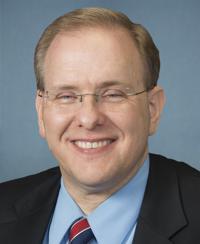
Mr. Speaker, I rise in support of H.R. 3773. This legislation does exactly what our Constitution requires us to do: protect security while preserving civil liberties. Maintaining that balance has…
Mr. Speaker, I rise in support of H.R. 3773. This legislation does exactly what our Constitution requires us to do: protect security while preserving civil liberties.
Maintaining that balance has sometimes been difficult, and the events of 9/11 have made it even more challenging. However, the RESTORE Act is a carefully crafted solution. We all recognize the gravity of the threats facing our country, and this bill gives the Director of National Intelligence all the authority he has asked for to fight terrorism while at the same time it protects civil liberties.
Further, the RESTORE Act provides for rigorous and independent oversight from the courts, the Congress, and the Department of Justice Inspector General. In our committee markup, I successfully offered an amendment to even strengthen this oversight by preserving the FISA Court's role to review compliance with their rules every 90 days for the life of a court order.
Rigorous oversight is why the Bush administration objects to this bill. They want unfettered authority. Unfortunately, we have seen what happens without checks and balances, and I will not allow that to happen again. As Members of Congress, we took an oath to defend the Constitution and the principles on which it was founded.
I urge my colleagues to support H.R. 3773, which provides security while preserving the fundamental values that make this country so great.
Mr. Speaker, I rise in support of H.R. 3773.
Today, as we have so many times in our history, we are wrestling with the question of how best to protect security while preserving liberty. That struggle has always been challenging, and the events of 9/11 made it even more so. But today, the RESTORE Act provides a carefully crafted solution to that problem.
We all recognize the gravity of the threats facing our country, and that is why this bill gives the Director of National Intelligence all the authority he has asked for to fight terrorism. The legislation updates FISA to address new developments in technology so that our intelligence activities are not constrained based on what method of communication suspects happen to be using or where the communication may be routed. The bill also clarifies that no warrant is needed for foreign-to-foreign communications. These are requests that the DNI has made and which are included in the bill.
However, unlike the so-called Protect America Act, which passed in August, the RESTORE Act provides for rigorous and independent oversight from the courts, the Congress, and the Department of Justice Inspector General.
Additionally, during the Intelligence Committee's consideration of the bill, I successfully offered an amendment to strengthen the oversight by preserving the FISA Court's role to review compliance with their rules every 90 days for the life of a court order. By having the FISA Court review the procedures and guidelines used by the DNI and Attorney General when determining that prospective targets are located outside the U.S., we provide another safeguard against the collection of communications of people inside the U.S. Finally, the bill requires greater congressional oversight of the program so that we can monitor how it is being implemented and make any changes that may become necessary.
Such rigorous oversight is why the Bush administration objects to this bill. To them, the Protect America Act that passed in August is just fine the way it is. They want unfettered authority, without checks and balances. But we have seen what happens when the administration is given free rein, and I will not let that happen again.
I want to be clear that this is not a perfect bill. While in theory it is a vast improvement over the Protect America Act, in reality, this legislation will only work if everyone involved follows the rules that Congress establishes and remains within the confines of the law. Like any program, and indeed more so than most, this one could be subject to abuse, and we must remain vigilant in our efforts to ensure that does not happen. We have included meaningful safeguards and significant checks and balances in this measure. However, these provisions are only as strong as the individuals and agencies implementing them. Congress must continue to conduct robust oversight and insist on the briefings and information to which we are entitled. If we fail in these efforts and abuses occur, we will have ourselves to blame.
Mr. Speaker, we have faced grave threats before. Our Constitution was drafted at a time when the very survival of our Nation was in doubt. Yet our Founding Fathers made the preservation of basic liberties part of the fabric of our national identity.
As Members of Congress, it is our sworn duty to defend the Constitution and the principles on which our Nation was founded. I urge my colleagues to support H.R. 3773, which protects security while preserving the liberties that make this country great.
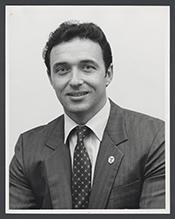
Mr. Speaker, I rise in opposition to this bill, and I am sorry that I have to do that. I respect the gentleman from Michigan (Mr. Conyers). We have worked on many things together. I believe he is a…
Mr. Speaker, I rise in opposition to this bill, and I am sorry that I have to do that. I respect the gentleman from Michigan (Mr. Conyers). We have worked on many things together. I believe he is a prime time player, but I disagree with his statement that this bill is ready for prime time.
To just give one example, if you look at section 6 of this bill, section 6 of the bill differs with the way we handle minimization under current law by saying that if there is evidence of a crime, it cannot be disseminated to a criminal justice entity. Now, maybe there is a reason for that, but that has never been discussed whatsoever.
Secondly, I would say that in the two 1-hour Special Orders I gave, I raised the problem that exists in the underlying bill as we now see it, which is in the very beginning of the bill, and it deals with a section entitled ``treatment of inadvertent interceptions.''
It deals with a situation where the intelligence community believes in good faith that they are dealing with foreign-to-foreign, but inadvertently they capture communication that deals with foreign-to- domestic. And what we say here is that you cannot use that information for any purpose, any purpose. It cannot be disclosed. It cannot be disseminated. It cannot be used for any purpose or retained for longer than 7 days, unless what? A court order is obtained or unless the Attorney General determines that the information indicates a threat of death or serious bodily harm to any person, that the information indicates that.
I have stood on this floor on several occasions and said what that means is if we have a conversation or a communication involving Osama bin Laden, and everybody recognizes that might be the case, because in the manager's amendment we talk about Osama bin Laden, if in fact that occurs and the communication deals with someone within the United States, and he doesn't in that communication have information indicating a threat of death or serious bodily harm to any person, but indicates where he happens to be, the exact cave where he is at, we cannot operate on that in a timely fashion.
I would challenge any Member on the other side of the aisle to read the language in the underlying merged text, page 3, entitled ``Treatment of Inadvertent Interceptions,'' and tell me that I am wrong. This is, whether it is by mistake or you intended it to happen, giving greater protection to a terrorist around the world than you give to an American citizen charged with a crime.
I have said it before and I will say it again: I don't believe you intended this, but it is in the bill. As a matter of fact, the gentleman from New York, the chairman of the Constitutional Rights Subcommittee, came to me after we had an exchange on the floor on the issue and said, ``You are right. We goofed up. We should get rid of it.'' Yet we are here with it on the floor. For that reason alone, we ought to defeat the bill.
I thank the gentleman for yielding.
Once again, I would ask my friends on the other side of the aisle: Can anyone explain why, on page 3, you give stronger rights to someone who is a suspected terrorist, even Osama bin Laden, if he has a communication we intercept believing it was going to be foreign-to- foreign, now foreign to someone in the United States, and in that he reveals where he is, why we cannot use that information as we are able to with a legal wiretap in the United States on an American citizen
charged with a crime who calls someone who is not a target of a crime? I do not understand it. Page 3. Is there anybody on your side who can explain why you would have that?
The silence has been deafening for a month now on this.
I would be happy to yield if the gentleman would tell me exactly what I just asked.
Reclaiming my time, because I asked you to specifically talk about the language in the bill. I have read it and read it and read it, and you have refused to respond to it, even though the chairman of the Subcommittee on Constitutional Rights told me that I was correct in my reading of the bill and that you folks were going to change it. You didn't change it. I expect that is because you forgot about it.
I would invite the gentleman from New York to respond to me, because he intellectually honestly told me just 2\1/2\ weeks ago that you folks were going to change it. Why haven't you done it?
Mr. Speaker, the silence I think speaks volumes. This is a bill that is not ready for prime time. It inadvertently protects Osama bin Laden with greater rights than an American citizen charged with a crime.
Mr. Speaker, will the gentleman yield?
Mr. Speaker, I ask the gentleman's words be taken down with respect to the use of the word ``deceit.''
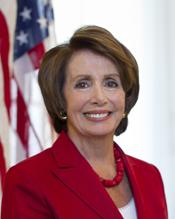
Mr. Speaker, as one who has long served on the Intelligence Committee, I understand full well the threats to our national security. I understand full well the need for us to have legislation that…
Mr. Speaker, as one who has long served on the Intelligence Committee, I understand full well the threats to our national security. I understand full well the need for us to have legislation that strikes the proper balance between liberty and security. I think this legislation does just that. And I commend Chairman Conyers, chairman of the Judiciary Committee; and the chairman of the Intelligence Committee, Chairman Reyes, for their important work and their leadership in presenting this legislation to the floor for consideration.
The bill is important and accomplishes the goal of striking the balance between security and liberty in the following ways: it defends Americans against terrorism and other threats; it protects Americans' civil liberties; and it restores checks and balances.
The bill protects Americans by providing the Director of National Intelligence with the flexibility he has requested of Congress to conduct electronic surveillance of persons outside the United States. No warrants are required whenever foreign-to-foreign communications are captured regardless of the point of collection or anywhere in the world.
It protects our civil liberties in a number of ways. The DNI has agreed that when Americans are targeted for surveillance, a warrant is required. We have now included certain criteria that the government must take into account in considering whether a warrant is required. This will help prevent inappropriate warrantless surveillance and ``reverse targeting'' of Americans under the guise of foreign intelligence.
The bill restores checks and balances. This is very, very important because it, again, is part of our oath of office to protect the Constitution of the United States. The bill rejects groundless claims of ``inherent executive authority.''
There are those who claim that the President has inherent authority from the Constitution to do whatever he wishes. Long ago our Founders rejected that concept in founding our country. We must do that as well and continue to make that clear.
The legislation also makes clear that FISA is the exclusive means for conducting electronic surveillance to gather foreign intelligence. The government must seek approval from a FISA Court. So we are talking about the Congress of the United States passing legislation, as it did in the late seventies, passing this legislation today which is in light of the new technologies and new reality in the world, and recognizing the authority of the third branch of government: the courts.
This legislation includes extensive reporting to Congress with respect to the interception and dissemination of communications among Americans and from Americans. This is very important because we want to minimize the use of that information and keep it for the purpose for which it is collected.
Most significantly, the bill does not provide immunity to telecommunications companies that participated in the President's warrantless surveillance program. We cannot even consider providing immunity unless we know exactly what we are providing immunity from. And even then, and even then, we have to proceed with great caution.
It is important to note that the bill sunsets on December 31, 2009, the date the PATRIOT Act sunsets, so the next administration and the next Congress can review and reassess the program.
This legislation is supported by organizations dedicated to protecting our national security and protecting our civil liberties, including the Center for National Security Studies, the Center for Democracy and Technology, and many other groups that work to protect privacy rights. The bill protects both national security and civil liberties, reaffirms our constitutional system of checks and balances, and deserves the support of this House.
Mr. Speaker, all of us want our President to have the best possible intelligence, our President and our policymakers, so they can do the best possible job to protect the American people. But no President, Democrat or Republican, should have the authority, to have inherent authority, to collect on Americans without doing so under the law. This legislation establishes that principle; and it establishes it in a very focused way in keeping with the need for flexibility for the Director of National Intelligence, in keeping with honoring our oath of office to the Constitution. I urge our colleagues to support this important legislation.
I, for one, am very, very proud of the work of Mr. Conyers and Mr. Reyes and thank them for their leadership.

Mr. Speaker, I would submit the following editorial from the Los Angeles Times for the Record. [From the Los Angeles Times, Nov. 15, 2007] When the CIA Comes Calling (By R. James Woolsey) When I was…
Mr. Speaker, I would submit the following editorial from the Los Angeles Times for the Record.
[From the Los Angeles Times, Nov. 15, 2007]
When the CIA Comes Calling
(By R. James Woolsey)
When I was director of Central Intelligence during
President Clinton's first term, I had occasion to go hat in
hand to the private sector several times. In one case, it was
a detail that, if made public, could have caused a valuable
source to be captured or killed; in another, there was a
technical feature of a system in production that, slightly
modified, was of great help to the nation. In these several
cases, executives of American companies heard me out and
willingly met my requests, to the substantial benefit of our
national security.
They had no legal requirement to do so, and they knew it.
They were helping solely out of a sense of patriotism and an
understanding that some steps that the nation needs to take
in a dangerous world cannot be taken in public, simply
because informing the public informs an opponent or an enemy.
Shortly after 9/11, something similar happened. Senior U.S.
officials asked telecommunications companies to assist the
government in intercepts involving terrorist groups such as
those that had just attacked us and killed thousands of
people. In these cases, President Bush authorized the
intercepts and the senior officials gave written assurances
to the companies that their cooperation was legal.
In my judgment, the president acted properly; he had the
authority under the Constitution to ask for such intercepts.
In addition, his request was reasonable because surveillance
of enemy-to-American communications is a time-honored means
of intelligence gathering in the U.S. George Washington did
it; those under his command intercepted and read
correspondence between Benedict Arnold and his spy handler,
foiling the plot to turn the fort at West Point over to the
British.
But even if one believes the request was illegal and
unreasonable--and there are distinguished constitutional
lawyers and patriotic citizens on both sides of this debate--
the issue currently before the Senate Judiciary Committee is
much narrower. It is whether the telecommunications companies
that complied with the president's request and trusted the
government's assurances of legality should be granted
immunity from about 40 lawsuits demanding billions of
dollars.
Sen. John D. ``Jay'' Rockefeller (D-W.Va.), chairman of the
Intelligence Committee, has stated that companies ``should
not be dragged through the courts for their help with
national security.'' And now Sen. Dianne Feinstein (D-
Calif.), a member of the Judiciary Committee, has endorsed
his statement, saying that the companies should not be ``held
hostage to costly litigation in what is essentially a
complaint about [Bush] administration activities.''
Feinstein is a member of the one-vote Democratic majority
on the Judiciary Committee, and it is possible that her
position will determine the outcome. I hope it does. Her
stance is farsighted. Having once, when I was practicing law,
taken depositions for months about a single one-hour meeting,
I know something about how burdensome litigation can be. If,
in the end, the surveillance request made by the government
is deemed improper, the government should be held
accountable, not those who complied with its request.
We live in a world of terrorism, the possible proliferation
of nuclear weapons and a host of other risks to our security.
Intelligence, and the cooperation of the private sector in
obtaining and protecting it, will be among our most important
tools to avoid catastrophes such as 9/11 or worse.
If some future senior government official needs to make a
call on a CEO of the sort I did, and that others did after 9/
11, we and our children will be better off if the official
can answer the question ``Can you guarantee that my company
won't be sued if we help the country?'' with ``If it happens,
we'll get protective legislation approved as in 2007.'' We
would be in much more danger if, because companies that
helped after 9/11 became ensnared in years of litigation and
financial losses, that official has to answer the question
with a shrug.
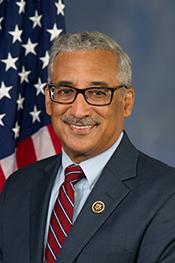
Mr. Speaker, I rise in favor of the legislation. Mr. Chairman, I appreciate your leadership on efforts to address warrantless surveillance under the Foreign Intelligence Surveillance Act, or ``FISA''…
Mr. Speaker, I rise in favor of the legislation.
Mr. Chairman, I appreciate your leadership on efforts to address warrantless surveillance under the Foreign Intelligence Surveillance Act, or ``FISA'' and for introducing a bill that corrects many of the shortcomings of the bill that passed the House last August.
The RESTORE Act establishes a strong framework, much stronger than the Administration's PROTECT Act, to fight terrorism effectively, while providing reasonable safeguards to protect personal privacy.
One important change in the Restore Act is that it draws the appropriate distinctions based on the physical location and types of targets. There has never been any controversy over the fact that surveillance directed at people all of whom are overseas does not need any warrant at all. This bill rightly makes it clear that no court orders are required for the government to conduct surveillance on foreign targets outside the United States, even if the technical surveillance is conducted on U.S. soil. But if any surveillance is intentionally conducted on a U.S. person, this bill makes it clear that the government needs to apply for an individual warrant to conduct that surveillance. And if information on U.S. persons is incidentally collected, the Manager's Amendment to the bill rightly limits dissemination of that information among government agencies.
Second, the bill removes vague and overbroad language from the bill passed in August that would allow the wiretapping of conversations without a warrant if the communication was ``concerning'' a foreign target. That, by its own wording, suggests that if two citizens are in the United States talking about somebody overseas, that you could wiretap their communications without a warrant. The bill before us makes it clear that the persons involved in the communications must be overseas, not just that the subject of their conversation must be overseas.
Third, the RESTORE Act goes a step further than the Administration's bill and allows for the expanded wiretapping authority only in cases involving ``national security,'' as opposed to the over-expansive ``foreign intelligence.'' ``Foreign intelligence'' could include trade, deals or anything involving general foreign affairs activities.
Finally, the RESTORE Act was made even stronger in Committee by requiring the Department of Justice, in its application to the Court, to identify the ``primary purpose'' of its wiretapping. Under the original FISA, when an agent wanted to obtain the authority to conduct electronic surveillance or secret searches, a certificate was necessary detailing what the purpose of the surveillance was in order to obtain the warrant. The standard was altered by the Patriot Act, which provided that obtaining foreign intelligence only has to be ``a significant purpose.''
We have to put this change in context because the Department of Justice has not credibly refuted the allegations that some U.S. Attorneys were fired, because they failed to indict Democrats in time to affect an upcoming election. So if the Department of Justice wiretapped someone when foreign intelligence was not the primary purpose, you have to wonder what the primary purpose was. This bill would allow the surveillance to be conducted but the administration would be required to reveal the true purpose of the wiretap to the secret FISA court.
Mr. Speaker, I want to emphasize that we do not have to balance security and privacy. It is therefore important to note that everything that the administration can do in its own bill, it can do under this bill. We just require them to get a warrant before they do it, or if they are in a hurry, get a warrant after they do it, but they can wiretap and get the information. We just provide a modicum of oversight to ensure that our laws are being obeyed. I urge my colleagues to support the bill.
Show 11 more
I thank the gentleman for yielding. I think this is a very, very important debate. I understand the frustration of the majority in trying to deal with this issue, but I believe they have created a…
I thank the gentleman for yielding.
I think this is a very, very important debate. I understand the frustration of the majority in trying to deal with this issue, but I believe they have created a structure that even they themselves don't understand, and a structure that fundamentally turns the Constitution and the role of at least two branches of the government upside down.
We have the executive branch which is charged with defending the Nation against foreign enemies and we have the judicial branch which is charged with applying and interpreting the laws. But it is charged with judging disputes between American citizens, not with making decisions how about to gather foreign intelligence.
Now, how does this bill work? Number one, it says if the executive branch in carrying out its duty to protect the country from foreign enemies knows in advance that both people, both ends of a telephone communication or some other electronic communication, are in fact foreigners, no warrant is needed.
Well, if we could be mind readers and if we could hire mind readers as intelligence officers, that might be useful. But everyone in the intelligence community tells you that have targeted one person, and without the ability to read the mind of that person, you don't know who the other person they are calling is.
So as a matter of fact, you can never know, never ever know, no CIA agent, no judge, nobody can ever know that both people are foreigners. And so if the law says if you don't know that both are foreigners, you must get a warrant from a judge.
Now they have said we are going to be reasonable about it; it is going to be a basket warrant. But that then gives the duty of protecting the Nation to a judge, an unelected judge.
Mr. Speaker, I want to point out that this bill raises a fundamental question: Do we trust judges, unelected judges, to control foreign intelligence? Are we going to move that responsibility from the executive branch to judges? Or is that not their job?
As I explained earlier, this measure requires that a warrant be obtained every single time you are seeking to gather foreign intelligence. That means that we are asking Federal judges, who are unelected, to decide in 100 percent of the cases whether we can or cannot gather intelligence.
Now, I respect judges. I admire judges. But judges have the duty of deciding disputes between Americans. They do not have the responsibility to protect our Nation. But this bill says you can never gather intelligence from a foreigner without first going and getting a warrant.
So a job that under our Constitution has been given to the executive branch, that is, to conduct foreign intelligence and protect the Nation, we are now taking from the executive branch and giving to judges. Because unelected Federal judges, who have no responsibility to protect our Nation, no responsibility to gather foreign intelligence, now get to decide, this has never been true in the history of our Nation, whether or not the Federal Government will gather any intelligence.
I respect judges. I am all for judges. If I am in a dispute over the civil rights of an American, I want a judge to decide. But when it comes to gathering intelligence about terrorists, we are going to take that authority away from the executive branch, which we have never done in the past, and give it to judges and judges only? Judges whom we cannot defeat in office, judges who are appointed, judges who do not stand for election, judges who cannot be voted out of office? We are going to take the authority away from the executive branch to protect our Nation and in 100 percent of cases give it to unelected judges. That is a mistake.
I thank the gentleman and I support the bill. I submit for the Record an op-ed by our friend and former colleague, the Honorable Lee Hamilton, cochair of the 9/11 Commission, regarding the issue of…
I thank the gentleman and I support the bill.
I submit for the Record an op-ed by our friend and former colleague, the Honorable Lee Hamilton, cochair of the 9/11 Commission, regarding the issue of retroactive immunity. The op-ed fully expresses my concerns regarding this issue, and I wish for all Members to have the benefit of reviewing it.
[From the Baltimore Sun, Nov. 4, 2007]
Immunity for Wiretap Assistance Is Right Call
(By Lee H. Hamilton)
If the local fire company asked for your help putting out
neighbor's blaze, you would not force the firefighters to
justify their request. You would just help, right? That's
what the phone companies did when the Bush administration
asked them in secret for help with wiretaps to target al-
Qaida communications into and out of the country.
However, the president's warrantless wiretap program caused
a furor when it became public. The administration had
circumvented the Foreign Intelligence Surveillance Act,
raising many doubts about the legality and even
constitutionality of its wiretap program. The controversy
prompted class-action lawsuits against phone companies that
cooperated with the government.
The Senate Intelligence Committee has reported out a
bipartisan bill that would bring this wiretap program back
under the FISA statute and court review. It would ensure the
legality and robust congressional oversight so lacking in the
original program. It also would give the phone companies
immunity for their previous actions.
The committee made the right call. To the extent that
companies helped the government, they were acting out of a
sense of patriotic duty and in the belief that their actions
were legal. Dragging them through litigation would set a bad
precedent. It would deter companies and private citizens from
helping in future emergencies when there is uncertainty or
legal risk.
The help and cooperation of all our citizens are vital in
combating the threats we face today. Companies in various
sectors of the economy are going to have information that
could save the lives of thousands of Americans. When they
respond in an emergency, at the call of our highest elected
officials and on assurances that what they are doing is
legal, they must be treated fairly. To do otherwise would put
our security at risk.
This is particularly true of communications companies. They
are critical to our intelligence and ``early warning''
against terrorist attacks. The increasing complexity of
communications technology has made the voluntary cooperation
of these companies vital.
Government actions require public review. Actions by
private companies in response to government requests also
should place the burden of accountability on the government.
We should not expect private companies to second-guess the
propriety and legality of government requests. That is the
job of our public servants in the executive branch, the
legislators who oversee them, and ultimately the courts.
Unless Congress provides immunity, the clear message will
be that private citizens should help only when they are
certain that all the government's actions are legal. Given
today's threats, that is too high a standard. We should hold
public officials accountable for their actions--and hold
harmless private citizens and companies when they respond to
government requests to help protect us.
I thank the gentleman. Mr. Speaker, this legislation restores the proper role of the Foreign Intelligence Surveillance Court in the maintenance of our national security infrastructure. Let's get the…
I thank the gentleman.
Mr. Speaker, this legislation restores the proper role of the Foreign Intelligence Surveillance Court in the maintenance of our national security infrastructure. Let's get the terms of this debate clear before we begin. Anyone who can read will see that this bill does not inhibit the government's ability to spy on terrorists or on suspected terrorists or to act swiftly and effectively on the information we gather.
The American people expect that their government will keep us all safe and free. This bill does that.
The bill does not require individual warrants of foreign terrorists located outside the United States. That has been the law for three decades; that is still the law.
The bill does provide reasonable FISA Court oversight to ensure that when our government starts spying on Americans, it does so lawfully by getting a warrant from the FISA Court. It will put an end to this administration's well-worn ``trust me'' routine.
I trust our intelligence community to gather solid intelligence on threats to our Nation. But protecting constitutional rights is not their prime job. That is why we have courts.
This bill provides for Congress to receive independent reports on how the act is working and what our government is doing. This administration's penchant for secrecy and aversion to accountability will come to an end, at least in this area.
Let me say a word for demands for retroactive immunity for the telecom companies. As many of our colleagues have pointed out, any such discussion is premature. We do not even know what we are being asked to immunize or whose rights would be compromised if we did so.
More importantly, Congress should not decide legal cases between private parties; that's for the courts. If the claims are not meritorious, the courts will throw them out. But if the claims do have merit, we have no right to wipe them without even reviewing the evidence. How dare we have the presumption to decide the rights of allegedly injured parties in the blind.
Mr. Speaker, this bill meets every single principle set forth by the Congressional Progressive Caucus. As one of the co-chairs of the caucus' FISA Task Force, I am pleased to support this important bill. It is true to our Constitution. It is true to our values. It is true to our safety. It will keep us safe and free.
This bill gives our intelligence agencies the tools they have told us they need to make us safe, and gives the FISA Court the tools it needs to ensure that the extraordinary powers we are giving to the intelligence community are used correctly and consistently with our laws and our Constitution.
It's called the separation of powers, with each branch of the government doing what it is supposed to do and acting as a check on the others. FISA exists to ensure that the balance between the needs of intelligence gathering and the protection of the rights of all Americans are balanced.
Most importantly, it restores the role of FISA as the exclusive legal basis for foreign intelligence surveillance. No more making it up as you go along.
Did the telecoms break the law? Were they acting appropriately? Were the rights of innocent Americans violated? We don't know.
How dare we have the presumption to decide the rights of allegedly injured parties in the blind?
Mr. Speaker, I yield myself such time as I may consume. I would just like to thank the gentlewoman from California for taking the lead here today on this issue. It is an important issue, and she has…
Mr. Speaker, I yield myself such time as I may consume.
I would just like to thank the gentlewoman from California for taking the lead here today on this issue. It is an important issue, and she has laid out the facts behind the need for this today.
We live in a world of very quickly transforming technology. The courts sometimes have difficulty keeping up with that, and we have to act to create the legal environment for the courts to appropriately act. This bill does that. I encourage my colleagues to support it when it comes to a vote.
Mr. Speaker, I rise in support of H.R. 4120, the Effective Child Pornography Prosecution Act of 2007. The House passed this legislation in November of last year to combat the pervasiveness of child pornography on the Internet.
Child abuse and exploitation are among the most heinous crimes committed in this country. And in recent years, the Internet, with its virtually unregulated access to information and to people all over the world, has become a foul source for this type of criminal activity. However, in many instances, Federal prosecutors are prevented from seeking justice.
In a decision by the 10th Circuit United States Court of Appeals in United States v. Schafer, the Court ruled the transmission of
child pornography on the Internet did not satisfy the interstate requirement in child pornography laws.
H.R. 4120, the ``Effective Child Pornography Prosecution Act of 2007,'' responds to that decision by expanding jurisdiction for prosecuting Internet child pornography crimes.
This bill allows the government to prosecute cases when child pornography or is transmitted ``using any means or facility of interstate or foreign commerce.'' This is the broadest assertion of interstate commerce power that Congress can make consistent with the Constitution.
H.R. 4120, as passed by the Senate, includes provisions similar to H.R. 4136, the ``Enhancing the Effective Prosecution of Child Pornography Act of 2007'' which also passed the House last November.
This language closes a loophole used by child pornographers to circumvent the law by expanding current child pornography statutes.
Current law prohibits the ``possession'' of child pornography. This law pre-dates the prevalence of the Internet in transmitting child pornography images. Today, a pedophile can access child pornography and view it but, under the current statute, may not be criminally liable for possessing it. This provision will prohibit accessing such content with the intent to view it and will no longer require an offender to actually download the material.
It is no longer sufficient to warn our children to not talk to strangers. With the expansion of the Internet and other technologies, we must now find new ways to protect our children from the dangers of the world.
H.R. 4120, the ``Effective Child Pornography Prosecution Act of 2007,'' provides law enforcement important tools for combating these heinous crimes.
I urge my colleagues to support this bill.
Mr. Speaker, I yield back the balance of my time.
Mr. Speaker, I object to the vote on the ground that a quorum is not present and make the point of order that a quorum is not present.
Mr. Speaker, I rise today to voice my support for H.R. 3773--the Responsible Electronic Surveillance That is Overseen, Reviewed, and Effective (RESTORE) Act of 2007. In August, Congress unfortunately…
Mr. Speaker, I rise today to voice my support for H.R. 3773--the Responsible Electronic Surveillance That is Overseen, Reviewed, and Effective (RESTORE) Act of 2007.
In August, Congress unfortunately passed the Protect America Act, a piece of legislation that allowed the surveillance activities of this Administration to go unchecked. Though I opposed that bill, the House was left little choice but to pass that flawed bill. While it is true that modernization of our foreign intelligence laws was necessary to meet the security and intelligence needs of this nation, the Protect America Act went beyond what was essential and instead allowed the continued infringement of American's civil liberties.
Thankfully, today we have before us a piece of legislation that gives the intelligence community the authority it needs to protect Americans while also protecting civil liberties that are the bedrock of our nation. This bill modernizes our foreign surveillance system and authorizes necessary funding for training, personnel and technology resources at DOJ, NSA and the FISA Court to expedite the FISA process. Additionally, it ensures that nothing inhibits lawful surveillance for the purpose of protecting the nation and the troops from threats posed by terrorists.
Also of great importance, unlike previous bills considered by the House, this bill includes vital checks and balances on the Administration. It prohibits warrantless surveillance of Americans and requires a court order before targeting Americans' phone calls or emails. It also requires a finding of probable cause before conducting surveillance on Americans abroad, which was not required under previous legislation. To ensure greater accountability, the legislation mandates audits on the
Administration's warrantless surveillance program and the communications collected under the program.
Most importantly, this legislation ensures that it is the courts and not the Administration that decides whether or not an American's communications are targeted. The bill requires the FISA Court to review targeting procedures to ensure that they are reasonably designed to protect Americans and target people outside the United States. It also requires the Court to review the Administration's compliance to ensure that when the government conducts electronic surveillance on Americans, it obtains traditional, individualized warrants from the FISA Court.
Mr. Speaker, for far too long this Administration has been able to extend its power and authority, often to the detriment and subversion of our nation's basic principles. Today, we are passing a bill that will finally curb the Administration's actions and restore a measure of accountability that has been sorely lacking for too long. For these reasons, I support the vitally necessary RESTORE Act.
Let me thank my colleague for yielding. Mr. Speaker, in August the Congress passed the Protect America Act. Before that bill passed, our intelligence officials did not have the tools they needed to…
Let me thank my colleague for yielding.
Mr. Speaker, in August the Congress passed the Protect America Act. Before that bill passed, our intelligence officials did not have the tools they needed to protect our troops and to detect and prevent terrorist plots. This was made clear in a story we read about just last month about our, how our FISA laws failed our soldiers who were kidnapped in Iraq, and I think these outdated laws actually hampered their rescue. That is because our FISA laws in place before the Protect America Act entrusted government lawyers, not our intelligence professionals, to protect our troops and our security.
Yet the bill we are considering today only makes this problem worse. It reopens the terrorist loophole and doesn't ensure that we can act quickly on vital intelligence to protect our troops and the American people. I think it would be a boon to trial lawyers who could take actions against third parties who assisted our government at our request after 9/11. It is yet another example of a troubling pattern of behavior on the part the majority, a pattern of behavior that is undermining our national security. Let me just give you a few examples.
The majority want to extend habeas corpus rights to terrorists. The majority has had over 40 votes in the Congress trying to force retreat in Iraq. The majority wants to close down our Guantanamo detention facility and move those terrorists into American communities. The majority, in their intelligence authorization bill and appropriation bill, are diverting key intelligence resources away from terrorist surveillance to study global warming.
In August, all the Members of this House succeeded in modernizing FISA and closing the terrorist loophole. We did so because terrorists were plotting to kill Americans and our allies, and there is no nice way of saying that. So why on Earth would we tie the hands of our intelligence officials again and open up this loophole that allows terrorists to jeopardize the safety of our troops and jeopardize the safety and security of the American people?
Our country is safer today because of our efforts, and Republicans want to work with Democrats to make the Protect America Act permanent. We were very close to a bipartisan agreement on this bill just about 5 weeks ago, very close. As a matter of fact, there was an agreement in principle until the ACLU got ahold of it and blew the entire bipartisan process up. I think the American people want us to do everything we can to make sure that they are safe and secure. The bill that we have before us will once again tie the hands of our intelligence officials and make America less safe. This is not the bill that I want to vote for.

Mr. Speaker, I move to suspend the rules and concur in the Senate amendment to the bill (H.R. 4120) to amend title 18, United States Code, to provide for more effective prosecution of cases involving…
Mr. Speaker, I move to suspend the rules and concur in the Senate amendment to the bill (H.R. 4120) to amend title 18, United States Code, to provide for more effective prosecution of cases involving child pornography, and for other purposes.
Mr. Speaker, I ask unanimous consent that all Members have 5 legislative days to revise and extend their remarks and include extraneous material on the bill under consideration.
I yield myself such time as I may consume.
Mr. Speaker, the bill we are considering today combines two bills the House passed last November to strengthen the Justice Department's ability to prosecute child pornography. The first fixes a glaring loophole in the Federal statute prohibiting possession of child pornography, which a Federal appeals court last year said requires as an essential element of the offense proof that the images, here kept on a computer desk, had actually crossed State lines.
Our colleague, Nancy Boyda of Kansas, introduced H.R. 4120 to clarify that this statute covers conduct ``in or affecting interstate commerce,'' not just ``in commerce.'' This small change will have great legal significance, allowing that statute to reach the full extent of Congress' commerce clause powers.
Trafficking in child pornography is national and international in scope, and even conduct that may appear wholly intrastate necessarily affects interstate commerce. This will ensure that our laws reach to their maximum extent, and it is important, because child pornography is one of the worst things that exists in our culture.
The Senate also inserted another House-passed bill, H.R. 4136, introduced by Chris Carney of Pennsylvania. It adds child pornography proceeds to the money laundering statutes and fixes another loophole that allowed Internet users to get around the laws against possessing child pornography simply by not downloading or saving the images.
Mr. Speaker, these two combined measures will be a tremendous help in the effort to put a stop to this disgusting, abominable exploitation of children and to bring to justice those who traffic in it.
I want to commend Congresswoman Nancy Boyda and Congressman Christopher Carney for their sustained commitment to pursuing this effort so that we can see it enacted into law now.
Mr. Speaker, I reserve the balance of my time.
Mr. Speaker, I appreciate the comments made by the gentleman from Utah. I enjoy working with him, as he knows. I urge Members to support this bill.
Mr. Speaker, I yield back the balance of my time.

I thank the distinguished chairman of the House Intelligence Committee. Mr. Speaker, this legislation very importantly covers espionage, terrorism, sabotage and all threats to our national security.…
I thank the distinguished chairman of the House Intelligence Committee.
Mr. Speaker, this legislation very importantly covers espionage, terrorism, sabotage and all threats to our national security. That sentence alone frames what this issue is about and the seriousness of it.
The other part of it that fills out the frame is that it restores the FISA Court. It restores the FISA Court to its prominence, and, by doing so, it restores a legal framework for surveillance that must be conducted to protect our national security.
This legislation provides every meaningful tool of the legislation that was passed last August. But, unlike that bill, it protects the rights of the American people.
The legislation is true to its name. It restores the role for all three branches of our government by reestablishing the checks and the balances that have protected our security, as well as our rights as Americans. This is what the American people not only expect, it is what they have become accustomed to, and they like it.
This legal framework for the NSA surveillance is absolutely essential. When no Americans are involved, no judicial oversight is required. When an American communication may be intercepted, the court must approve the procedures for handling it. Finally, when an American is targeted, the court must be asked for an order.
The American people know all too well that this administration is now considered the most secretive in the history of our country. It has operated with unchecked power and without judicial or congressional oversight. We now know that the President went around the courts to conduct a program of warrantless surveillance of calls to Americans. We now know that the FBI abused the authorities granted under the PATRIOT Act improperly using National Security Letters to American businesses, including medical, financial and library records, instead of seeking a warrant from the court. In hundreds of signing statements, the President has quietly claimed he had the authority to set aside statutes passed by Congress.
Mr. Speaker, I think enough is enough. This bill says that the executive is not the imperial branch of government. It restores the fundamental balance struck by our Framers, to secure our Nation and to protect the rights of all Americans. Preserving that balance makes our Nation stronger, and this is at the core of the legislation before us. I urge my colleagues to support it.

Mr. Speaker, my colleague from Rhode Island talked about the importance of upholding the Constitution, and there is something in the manager's amendment to this bill that was inserted without any…
Mr. Speaker, my colleague from Rhode Island talked about the importance of upholding the Constitution, and there is something in the manager's amendment to this bill that was inserted without any hearing in the committee that I don't understand, that makes no sense to me. It is a provision that says, very plainly: This act and the amendments made by this act shall not be construed to prohibit surveillance of, or grant any rights to, an alien not permitted to be in or remain in the United States.
Now, I think there are probably a lot of people on this side of the aisle who don't have a problem with that provision. What I don't understand is why you all are proposing it.
Here is the irony here. This bill will extend rights under our Constitution to foreigners in foreign countries, while denying the protections of the Constitution to some 12 million people who are not legally in the United States, when the case law is clear that they do have rights. Whether we think they should have rights or not, the case law is absolutely clear. So we will deny those rights to people in the United States while extending them to people in foreign countries?
I think we should be clear with the American people why we insisted on fixing the Foreign Intelligence Surveillance Act, and did so successfully in August. We had soldiers who were kidnapped in Iraq by insurgents.
And because of changes in technology and the demands of the court, the American military had to go to lawyers in the United States to get a warrant to try to intercept the communications of the terrorists trying to kill them. That took time, too much time. And the law had to be fixed.
Soldiers should not need an army of lawyers in Washington to listen to the communications of the enemy that's trying to kill them. This needed to be fixed, and we fixed it the first week of August.
We all remember where we were on the morning of 9/11. We remember who we were with, what we were wearing, what we ate for breakfast.
But people don't remember where they were the day that the British Government arrested 16 people who were within 48 hours of walking on to airliners and blowing them up simultaneously over the Atlantic. We don't remember it because it didn't happen. And the reason it didn't happen is because of exceptional intelligence and the cooperation of the British, Pakistani and American Governments.

I thank the gentleman from Michigan for yielding to me. I rise in opposition to this bill. I am really surprised by the procedure we have gone through to get to this point in this legislation. You…
I thank the gentleman from Michigan for yielding to me. I rise in opposition to this bill.
I am really surprised by the procedure we have gone through to get to this point in this legislation. You know, under the underlying bill we had open hearings, we had closed hearings, we looked at a lot of the details and openly debated them and I thought we were making pretty good progress. But then, in the self-enacting rule, we have a whole bunch of new language that is dumped into this bill that has had no hearings.
In fact, section 18 says in this bill now, no rights under the RESTORE Act for undocumented aliens. It says: This Act shall not be construed to prohibit surveillance of an alien not permitted to be in the United States.
Undocumented aliens, no rights.
Then we get to what, the rights that the terrorists have in the underlying bill. Section 3 has procedures for authorizing acquisitions of communications, and there are 8 pages telling how we are going to protect the terrorists. They have got some rights protected under this bill.
Then we get to section 4, the emergency authorization. We have 8 more pages explaining how terrorists have more rights than undocumented aliens right here in the United States.
So then we listened to the gentleman from California (Mr. Lungren), who is the former Attorney General of the State of California, and he explains that, through the minimization procedures, that we are actually giving terrorists more rights than we do our own U.S. common criminals.
So what is the deal with this? It is really a mess. You have got terrorists at a higher status than undocumented aliens that are here in America and a lot of them just trying to make a living, and then you have got a higher standard for terrorists than you do for our own criminals. Now, why don't we balance things out here? Why don't we balance things out? You have tried to push this thing through without hearings, you have hodgepodged it together, and it truly is a mess. We ought to send this back to committee and do the right thing on this.
We want to protect the rights of American citizens, and we think that humans have a certain set of rights, too. But this bill does not provide it. It has mixed standards. It is a mess, and I think we should vote it down.

Mr. Spreaker, the Department of Justice estimates that, in the last year, one in five children between the ages of 10 and 17 received a sexual solicitation or approach while they were using the…
Mr. Spreaker, the Department of Justice estimates that, in the last year, one in five children between the ages of 10 and 17 received a sexual solicitation or approach while they were using the Internet, With so many threats out there, Congress must provide a unified message that we, as a society, will not stand for anything less than a safe Internet. We will do that today when we pass five good pieces of legislation that will help keep our children safe. I am proud that my legislation, H.R. 4120, Effective Child Pornography Prosecution Act will be a part of that message.
A man from Kansas, William Schaefer, was found guilty of both ``knowingly receiving'' and ``knowingly possessing'' child pornography that had been ``transported in interstate commerce, by any means including by computer.''
Sadly, the 10th Circuit Court of Appeals overturned this decision and the offender was not prosecuted to the fullest extent of the law. The Court ruled that just because images are obtained on the Internet, does not mean they were transmitted across state lines and issued the following statements:
We decline to assume that Internet use automatically
equates with a movement across state lines.
Congress' use of the ``in commerce'' language, as opposed
to phrasing such as ``affecting commerce'' or ``facility of
interstate commerce,'' signals its decision to limit federal
jurisdiction and require actual movement between states to
satisfy interstate nexus.
The Court essentially asked Congress to clarify its intent that the Internet is in fact Interstate Commerce and we did that with passage of the Effective Child Pornography Prosecution Act of 2007. This legislation closes the jurisdictional loophole that allowed a guilty man to escape punishment.
As concerned citizens, parents, and Members of Congress, we must do all we can to keep our children safe. That means we must make a commitment to being tough on crime--to make sure that those who violate the law are fully prosecuted--to ensure that the law is so clear that it deters such heinous crimes from happening.
Bill Text
3 versions available
        [Congressional Bills 110th Congress]
[From the U.S. Government Publishing Office]
[H.R. 4136 Referred in Senate (RFS)]

1st Session
H. R. 4136

_______________________________________________________________________

IN THE SENATE OF THE UNITED STATES

December 3, 2007

Received; read twice and referred to the Committee on the Judiciary

_______________________________________________________________________

AN ACT

To amend title 18 of the United States Code to clarify the scope of the
child pornography laws and for other purposes.

Be it enacted by the Senate and House of Representatives of the
United States of America in Congress assembled,

SECTION 1. SHORT TITLE.

This Act may be cited as the ``Enhancing the Effective Prosecution
of Child Pornography Act of 2007''.

SEC. 2. MONEY LAUNDERING PREDICATE.

Section 1956(c)(7)(D) of title 18, United States Code, is amended
by inserting ``2252A (relating to child pornography) where the child
pornography at issue involves minors, 2260 (production of certain child
pornography for importation into the United States),'' before ``section
2280''.

SEC. 3. POSSESSION OFFENSES INCLUDE INTENTIONAL VIEWING ON THE
INTERNET.

(a) Section 2252.--Section 2252 of title 18, United States Code, is
amended by adding at the end the following:
``(d) Definition.--As used in this section with respect to a visual
depiction, the term `possess' includes accessing by computer with the
intent to view.''.
(b) Section 2252A.--Section 2252A of title 18, United States Code,
is amended by adding at the end the following:
``(g) Definition.--As used in this section with respect to child
pornography, the term `possess' includes accessing by computer with
intent to view.''.

Passed the House of Representatives November 15, 2007.

Attest:

LORRAINE C. MILLER,

Clerk.