Douglas County, Washington, PUD Conveyance Act

Legislative Activity
Stay on top of the latest movement without scrolling through every action
Placed on Senate Legislative Calendar under General Orders. Calendar No. 810.
June 16, 2008
View full timeline
Introduced in House
January 17, 2007
Referred to the House Committee on Natural Resources.
January 17, 2007
Referred to the Subcommittee on National Parks, Forests and Public Lands.
February 7, 2007
Committee Consideration and Mark-up Session Held.
October 10, 2007
Subcommittee on National Parks, Forests, and Public Lands Discharged.
October 10, 2007
Ordered to be Reported (Amended) by Unanimous Consent.
October 10, 2007
Reported (Amended) by the Committee on Natural Resources. H. Rept. 110-398.
October 22, 2007
Placed on the Union Calendar, Calendar No. 252.
October 22, 2007
Mr. Grijalva moved to suspend the rules and pass the bill, as amended.
October 22, 2007 • 2:53 PM
Considered under suspension of the rules. (consideration: CR H11789-11790)
October 22, 2007 • 2:53 PM
DEBATE - The House proceeded with forty minutes of debate on H.R. 523.
October 22, 2007 • 2:53 PM
At the conclusion of debate, the Yeas and Nays were demanded and ordered. Pursuant to the provisions of clause 8, rule XX, the Chair announced that further proceedings on the motion would be postponed.
October 22, 2007 • 2:57 PM
Considered as unfinished business. (consideration: CR H11818-11819)
October 22, 2007 • 6:57 PM
Passed/agreed to in House: On motion to suspend the rules and pass the bill, as amended Agreed to by the Yeas and Nays: (2/3 required): 377 - 0 (Roll no. 984).(text: CR H11789)
October 22, 2007 • 7:05 PM
On motion to suspend the rules and pass the bill, as amended Agreed to by the Yeas and Nays: (2/3 required): 377 - 0 (Roll no. 984). (text: CR H11789)
October 22, 2007 • 7:05 PM
Motion to reconsider laid on the table Agreed to without objection.
October 22, 2007 • 7:05 PM
Received in the Senate and Read twice and referred to the Committee on Energy and Natural Resources.
October 23, 2007
Committee on Energy and Natural Resources Subcommittee on Public Lands and Forests. Hearings held.
February 27, 2008
Committee on Energy and Natural Resources. Ordered to be reported without amendment favorably.
May 7, 2008
Committee on Energy and Natural Resources. Reported by Senator Bingaman without amendment. With written report No. 110-378.
June 16, 2008
Placed on Senate Legislative Calendar under General Orders. Calendar No. 810.
June 16, 2008
Voting History
1 vote recorded • Roll call available
Floor Debate
23 membersWhat members said about H.R. 523 on the floor
 NJR
NJR RJD
RJD RB
RB DM
DM MB+18
MB+18
Floor Debate
23 membersWhat members said about H.R. 523 on the floor
Mr. Speaker, I move to suspend the rules and pass the Senate bill (S. 2739) to authorize certain programs and activities in the Department of the Interior, the Forest Service, and the Department of…
Mr. Speaker, I move to suspend the rules and pass the Senate bill (S. 2739) to authorize certain programs and activities in the Department of the Interior, the Forest Service, and the Department of Energy, to implement further the Act approving the Covenant to Establish a Commonwealth of the Northern Mariana Islands in Political Union with the United States of America, to amend the Compact of Free Association Amendments Act of 2003, and for other purposes.
Mr. Speaker, I ask unanimous consent that all Members may have 5 legislative days in which to revise and extend their remarks and include extraneous material on the resolution under consideration.
Mr. Speaker, I am pleased to call up this legislation which is comprised of 61 separate measures that were already considered by this body, packaged by the Senate, and sent back to us for further and final consideration. This is a bipartisan package, almost evenly split between bills sponsored by Democrats and Republicans.
Further, I would note that 57 of the measures included in this package originated in the Committee on Natural Resources. In this regard, I salute the committee's Chairs who worked so hard on this legislation:
Raul Grijalva, chairman of the Subcommittee on National Parks, Forests and Public Lands; Grace Napolitano, chairwoman of the Subcommittee on Water and Power, and Donna Christensen, chairwoman of the Subcommittee on Insular Affairs.
In this body, these three Members did all of the heavy lifting, the hearings, the managing of the individual bills on the floor, the listening from other Members of this body that helped to make the package we are considering today possible.
The pending measures include new protections for wilderness, national parks, historic sites and trails, and precious water resources from sea to shining sea.
I will not speak to each and every provision of this legislation today but would like to highlight two in particular.
This bill will finally designate the long-awaited Wild Sky Wilderness in Washington State, championed by our colleague, Rick Larsen. As I noted last week when the House considered wilderness legislation for my home State of West Virginia, to be in a wilderness area is truly a humbling experience. To be part of designating the wilderness is even more humbling because wilderness is an effort to retain the landscape as God created it. And as with God's good graces, we are working toward designating new wilderness areas in West Virginia today.
Let this be the next-to-last action, other than the President's signature, on establishing the Wild Sky Wilderness in the State of Washington.
The other measure I would like to highlight would finally bring badly needed immigration, national security and labor protections for the Commonwealth of the Northern Mariana Islands. Further, this legislation would also grant a nonvoting delegate to the U.S. House of Representatives to the Northern Mariana Islands.
For too long, abuses took place in the CNMI, and for too long remedial legislation was held hostage in this body. Let this legislation bring forth a new dawn, the start of a new era with a delegate to this body, that the people of the CNMI's voices be heard.
Again, I want to thank the gentlelady from the Virgin Islands, the chairman of the Subcommittee on Insular Affairs, Dr. Donna Christensen, for her great work on this matter.
There are other issues of note in this bill. It would expand parks in Maine, Massachusetts, North Carolina, Washington and Idaho. It would improve visitor transportation options at Denali National Park and Acadia National Park. And it would expand and increase the authorization for the National Underground Railroad Network to Freedom. Three new national heritage areas and nine existing areas will receive Federal assistance under this measure. Seven other areas will be examined as possible new park units.
This bill would also authorize Federal participation in new and expanded water recycling projects around the west, projects which will provide an estimated 52,600 acre-feet of water annually in an area experiencing severe drought.
It's a good bill, Mr. Speaker. I urge all Members to vote for this package.
Mr. Speaker, I reserve the balance of my time.
Mr. Speaker, I yield 3 minutes to a senior member of our Committee on Natural Resources, Mr. DeFazio from Oregon.
Mr. Speaker, I have already commended her profusely, but I want to once again thank the chairwoman of our Subcommittee on Insular Affairs, Donna Christensen, from the Virgin Islands for the hard work and long hours that she has put in on this legislation. I now yield her 3 minutes.
Mr. Speaker, I want to yield 2 minutes to another of our subcommittee chairwomen who has put in long hours and very hard work on this legislation, the chairwoman of the Subcommittee on Fisheries, Wildlife and Oceans (Ms. Bordallo).
Mr. Speaker, I yield 2 minutes to a member of our Committee on Natural Resources, the gentleman from Washington (Mr. Inslee).
(Mr. INSLEE asked and was given permission to revise and extend his remarks.)
Mr. Speaker, I have commended this gentleman in my opening remarks because he truly has worked hard over a number of years for a major part of this package. It is a highlight of the package, and I yield 2 minutes to the gentleman from Washington (Mr. Larsen) to explain it.
Mr. Speaker, a simple response to the gentleman who just spoke. There's no eminent domain authority whatsoever granted in this legislation.
Mr. Speaker, I yield 2 minutes to the gentleman from Connecticut, a very valued Member that has worked hard on this bill and has done a superb job, and I want to commend Mr. Courtney for his leadership and work on this legislation.
I am prepared to close on this side, Mr. Speaker.
Mr. Speaker, I yield myself such time as I may consume.
Mr. Speaker, as I mentioned in my opening remarks, this is 60-some pieces of legislation in this bill, and it may not be perfect, but it's the nature of the beast, as the process is. Of the 60-some measures in this legislation, 57 that went through our committee on
Natural Resources were pretty well examined. They weren't just thrown into this bill without any consideration whatsoever. Either in this Congress or the previous Congress, these bills have had hearings on them. I mentioned the subcommittee process that worked its will in our Committee on Natural Resources. So this bill has had pretty careful scrutiny.
I'd like to conclude by commending the majority leader of the other body, Mr. Reid. He has called me on this legislation. It passed through the other body after a tortuous process. The final vote over there was 91-4. I also want to commend the Chairman of the Energy and Natural Resources Committee on the other side, Mr. Bingaman, for his work and his tenacity.
Again, I commend my ranking member, the gentleman from Alaska (Mr. Young) and the subcommittee ranking member, Mr. Bishop, and the staffs on both sides of our committee on Natural Resources for the long hours that they have put in on this legislation. It is indeed, as the process goes, an excellent piece of legislation, and I am very proud and highly commend it to my colleagues for passage and on to the President for his signature.
Mr. UDALL of Colorado, Mr. Speaker, I rise in support of this Senate- passed bill, and urge that it be passed and sent to the President for signing into law.
It gathers into one omnibus measure some 60 bills--dealing with various public land, national park, water, and territorial issues--that have already been passed by the House but on which the Senate has not taken separate action. To expedite their consideration, Senator Bingaman, the Chairman of the other body's Committee on Energy and Natural Resources, gathered them into one package after most if not all of them had been favorably reported by that committee and been pending on the Senate calendar for some time. Each part of the package is important, but I want to highlight three.
produced water legislation
Section 514, entitled ``More Water, More Energy, Less Waste,'' is based on my bill, H.R. 902, the ``More Water and More Energy Act,'' which passed the House last year.
Its purpose is to facilitate the use of water produced in connection with development of energy resources for irrigation and other uses in ways that will not adversely affect water quality or the environment.
I think there is a possibility that it can help change an energy- industry problem into an opportunity, not just for oil and gas producers but for everyone else who would benefit from increased supplies of useable water. And especially in the arid west, that covers everyone--not least our hard-pressed ranchers and farmers.
The focus of the section is the underground water extracted in connection with development of energy sources like oil, natural gas or coalbed methane. It would do two things:
First, it would direct the Bureau of Reclamation and the USGS to identify the obstacles to greater use of produced water and how those obstacles could be reduced or eliminated without adversely affecting water quality or the environment.
Second, it would provide for Federal help in building pilot plants to demonstrate ways to treat produced water to make it suitable for irrigation or other uses, again without adversely affecting water quality or the environment. At least one of these pilot plants would be in each of the States in the Upper Basin of the Colorado River--that is, Colorado, New Mexico, Utah, and Wyoming--and at least one would be in one of the States in the Colorado River's lower basin--Arizona, California, and Nevada. This is to assure that, together, the plants would demonstrate techniques applicable to a variety of geologic and other conditions. The Federal Government could pay up to half the cost of building each plant, but no more than $1 million for any one plant. No Federal funds could be used for operating the plants.
The extent of the potential benefits was shown by the testimony of Mr. David Templet at a hearing on the similar bill of mine the House considered in the 109th Congress.
Testifying on behalf of the Domestic Petroleum Council and several other groups, including the Colorado Oil & Gas Association, he noted that produced water is the most abundant byproduct associated with the production of oil and gas, with about 18 billion barrels being generated by onshore wells in 1995. And he pointed out that if only an additional 1 percent of that total could be put to beneficial use, the result would be to make over 75 billion gallons annually available for use for irrigation or other agriculture, municipal purposes, or to benefit fish and wildlife.
Now, remember that in the west we usually measure water by the acre- foot--the amount that would cover an acre to the depth of one foot--and an acre-foot is about 328,560 gallons, so an additional 75 billion gallons is more than 230,000 acre feet--more water, indeed.
And at the same time making produced water available for surface uses, instead of just reinjecting it into the subsurface, can help increase the production of oil and gas.
At the hearing, this was illustrated by the testimony of Dr. David Stewart, a registered professional engineer from Colorado. He cited the example of an oil field in California from which an estimated additional 150 million barrels of oil could be recovered if water were removed from the subsurface reservoir. And he pointed out that where oil recovery is thermally enhanced, a reduced amount of underground water means less steam--and so less cost--is needed to recover the oil.
The potential for having both more water and more energy is also illustrated by the example of a project near Wellington, Colorado, that treats produced water as a new water resource. I had the opportunity to visit it last year, and found it very interesting. An oil company is embarking on the project to increase oil production while a separate company will purchase the produced water to supplement existing supplies, eventually allowing the town of Wellington and other water users in the area to have increased water for drinking and other purposes.
In view of its potential for leading to both ``more water'' and ``more energy'' as well as ``less waste,'' I was pleased but not surprised that the Administration, through the Interior Department, has testified that it ``agrees that the goals of the bill are commendable and the needs that could be addressed are real.'' So, I welcome the fact that the Senate has followed the lead of the House in approving this legislation, and I look forward to its enactment.
platte river recovery implementation legislation
Section 515 of this Senate-passed bill is also based on a bill (H.R. 1462) I introduced last year. It will authorize the Interior Department to participate in the implementation of the Platte River Recovery Implementation Program for Endangered Species in the Central and Lower Platte River Basin.
As I said when the House debated that bill, I consider myself fortunate to have the honor of introducing it, and am gratified that it was cosponsored by my Colorado colleagues, Representatives DeGette, Salazar, and Perlmutter, as well as the entire House delegations of our neighboring States of Wyoming and Nebraska.
Its purpose is to continue a cooperative effort involving the Federal Government and the States of Colorado, Nebraska, and Wyoming (and other entities and groups) aimed at recovery of endangered species in ways that will not involve the creation of Federal water rights or requiring the grant of water rights to Federal entities. It is the result of 14 years of negotiations that culminated in 2006 when the Governors of Colorado, Wyoming, and Nebraska joined Secretary Kempthorne in signing the agreement.
The program is modeled after a somewhat similar program for the recovery of several endangered species of fish in the upper basin of the Colorado River. I have strongly supported that program because it has enabled us in Colorado and other participating States to meet the requirements of the Endangered Species Act while allowing continued development and use of water for other purposes as well. While such arrangements are not easy to work out, I think doing so is far better than alternative approaches that are more likely to be marked by conflicts or litigation. So, I think all concerned in the negotiation of this important agreement are to be congratulated.
The Program has three main elements--(1) increasing stream flows in the central Platte River during relevant periods through retiming and water conservation/supply projects; (2) enhancing, restoring and protecting habitat lands for the target bird species; and (3) accommodating certain new water related activities. Its purpose is to benefit three endangered species (interior least tern, whooping crane, and pallid sturgeon) and one threatened species (piping plover) referred to as the ``target species.'' The Federal Government is to pay half the cost, for which the total authorization would be $157.14 million plus any needed inflation adjustments. Implementation of the Program will mitigate the adverse impacts of certain new water related activities through the implementation of state and federal depletions plans. This will allow continued growth and water development to occur in the Platte River basin along with improving conditions for the target species.
The legislation is important for Colorado and our neighbors in Wyoming and Nebraska. I am glad that the Senate has approved it and look forward to its becoming law.
Northern Marianas Legislation
Finally, Mr. Speaker, I want to note that Title VII of the bill before us includes important provisions related to the Commonwealth of the Northern Mariana Islands, or CNMI.
Subtitle A of that Title responds to longstanding Federal concerns regarding immigration, labor, and law enforcement in the CNMI.
Its enactment will bring completion, at long last, to more than a decade of congressional and executive branch efforts to extend the U.S. immigration laws to the CNMI including the establishment of Federal border control as anticipated by the 1976 covenant agreement between the CNMI and the United States.
And Subtitle B will enable the citizens of the CNMI--who have been U.S. citizens and members of the U.S. family for over 20 years--to elect a Delegate to the House of Representatives, a necessary step if we are to keep faith with our Nation's founding principle of representative government.
The CNMI, a U.S. Territory located in the western Pacific Ocean, is an archipelago comprised of fourteen islands. The majority of CNMI's population lives on three of the most southern islands: its capital Saipan, Rota, and Tinian. At the end of World War II, along with most of the other islands in the Micronesian region, they were included in a United Nations Strategic Trust Territory administered by the United States. In the early 1970's, the Northern Marianas sought greater self- government, and in 1975 submitted a ``Covenant'' proposal to the U.S. for final approval. After favorable consideration by Congress, that Covenant, which established the Commonwealth of the Northern Mariana Islands in political union with the United States, was signed into law in 1976 by President Gerald Ford.
During the negotiations over the Covenant, island officials expressed concern about possible adverse effects on their culture and economic development that could come from application of certain U.S. laws. In response, the Marianas government was given temporary responsibility for determining minimum wage laws, immigration standards, and an income tax system.
Beginning in the late 1980s, the CNMI focused on developing a garment industry and used its local control of immigration policy to allow for the recruitment and importation of foreign guest workers. But there were increasing reports of abuses.
For example, after visiting the islands in July, 1997, the U.S. Commission on Immigration Reform reported it had found problems ``ranging from bureaucratic inefficiencies to labor abuses to an unsustainable economic, social and political system that is antithetical to most American values,'' including exploitation of foreign workers with retaliation against protesters, suppression of basic freedoms, and flagrant abuses of household workers, agricultural workers, and bar girls. The Commission said the CNMI's guest-worker policy had created major policy problems and resulted in a two-class system where the majority of workers were denied political and social rights.
That and similar reports prompted efforts to achieve reforms through Federal legislation, and both the George H. W. Bush Administration and the Clinton Administration were concerned about repeated allegations that foreign guest workers were being mistreated and exploited. Both Administrations supported addressing the problem through legal reforms.
I have long supported those reforms. In 1999--my first year as a Representative from Colorado--I joined as a cosponsor of a bill a bill entitled the ``United States-Commonwealth of the Northern Marianas Human Dignity Act'' to bar use of the ``Made in the USA'' label on textiles produced in the CNMI unless they were produced in plants that conformed with American labor laws, including those aimed at protecting health and safety and guarding against exploitation.
And ever since, I have supported similar legislation, including the bill (H.R. 3079, the ``Northern Mariana Islands Immigration, Security, and Labor Act'') which passed the House last year and which is the basis for Subtitle A of Title VII of the bill before us today.
I did so, in part, because in September, 1999, the Committee on Resources (as it was then named) held an oversight hearing regarding the enforcement of federal laws and the use of federal funds in the CNMI at which officials of the Interior Department and the Departments of Justice and Labor, testified that reform legislation was needed.
As the witness from the Justice Department put it, ``in order to control crime in the CNMI, the U.S. government must be able to prevent criminals from gaining unlimited access to the islands. We cannot expect to stop the flow of drugs, or guns, or trafficking in women and forced prostitution, unless we keep out the people who we know are already committing these crimes'' and ``the only way to fight effectively the larger crime problem on the CNMI is to apply the Act as it is applied in other U.S. jurisdictions with appropriate transitional phase-in provisions to prevent avoidable adverse impacts on the economy.'' And the witness from the Labor Department told our committee that ``there are extremely serious, pervasive, and stubbornly persist[ing] immigration, labor, and human rights problems in the Commonwealth of the Northern Marianas'' which ``derive from systematic, structural weaknesses in the legal framework in the Commonwealth and any solution to these problems demands a comprehensive, structural solution.''
In short, in the words of the witness from the Interior Department, ``current Federal law is insufficient to correct the continuing inadequacies caused by CNMI immigration and labor policy'' and ``the need to apply . . . Federal immigration, wage, and trade standards is inescapable.''
Unfortunately Mr. Speaker, while responsible Federal officials saw the need as inescapable, for too long Congress did not act to meet that need. In part, that was because those responsible for some of the worse abuses had friends in powerful positions here in the House of Representatives.
That evidently was why the then-leadership of the House refused to even allow the House to debate a reform bill (S. 1052 of the 106th Congress) sponsored by the Republican Senator who chaired the Committee on Energy and Natural Resources that passed the Senate without dissent in 2000.
Instead of being brought to the House floor, like this bill, that measure was bottled up in the Resources Committee and Jack Abramoff, the lobbyist who represented some of its most important opponents, reportedly informed his clients that ``We erected a roadblock in the House to stop the bill from moving.''
But now that roadblock is gone, and today we can write an end to that sad chapter by approving reforms that have been delayed far too long.
Mr. Speaker, this is a good bill that deserves enactment, and I urge the House to approve it.
I yield back the balance of my time.
Mr. President, I rise today to introduce legislation to help millions of Americans overcome a deadly addiction: the addiction to tobacco. The Medicare, Medicaid and MCH Smoking Cessation Promotion…
Mr. President, I rise today to introduce legislation to help millions of Americans overcome a deadly addiction: the addiction to tobacco. The Medicare, Medicaid and MCH Smoking Cessation Promotion Act of 2008 will help make smoking cessation therapy available to recipients of Medicare, Medicaid, and the Maternal and Child Health, MCH, Program.
More than 45 million adults in the United States smoke cigarettes. Approximately 90 percent started smoking before the age of 14. Despite the fact that we have known for decades that cigarette smoking are the leading preventable cause of death, 1,600 adults become regular smokers each day, including 4,000 kids. Depending on your race/ethnicity, socioeconomic status, even where you live, the likelihood that you are a smoker varies greatly. African-Americans are twice as likely as the general population to smoke. Communities in the South are more likely to be smoker-friendly than other communities in the U.S. While 22.5 percent of the general adult population in the U.S. are current smokers, the percentage is about 50 percent higher among Medicaid recipients. Thirty-six percent of adults covered by Medicaid smoke.
We have a moral argument and an economic argument to end the addiction to nicotine. Morally, how do we ignore the deaths of 438,000 smokers or 8.6 million Americans living with serious smoking-related illnesses? Smoking causes virtually all cases of lung cancer and contributes to primary heart disease, peripheral vascular disease, chronic obstructive pulmonary disease, COPD, and other deadly health ailments. It is too often a bleak future for smokers and their families. An American Legacy Foundation report reminds us that second- hand smoke in children of smokers leads to asthma and chronic ear infections in children but also that 43,000 children are orphaned every year because of tobacco-related deaths.
We are not only paying a heavy health toll, but an economic price as well. According to the Campaign for Tobacco Free Kids, health care expenditures caused by smoking is approaching $100 billion. Our federal government pays $17.6 billion in smoking-caused Medicaid payments and $27.4 billion in smoking-caused Medicare expenditures.
Ironically, we do not hear that much about how many smokers America-- 70 percent--want to quit. Unfortunately, they face long odds--in 2000, only about 5 percent of smokers were successful in quitting long-term. Overcoming an addiction to tobacco is arguably one of the single most important lifestyle changes that can improve and extend lives. However, most smokers who want to quit don't appreciate how hard it really is to break an addition to nicotine.
This is why it is essential that we make this decision and the courage that it takes as easy as possible. States are already stepping up to the plate when it comes to smoking cessation. Last year in my home State of Illinois, a record-breaking 36 cities and counties enacted smoke-free laws, more than any other State in the Nation. More and more Illinoisans and Americans nationwide are realizing that life without smoking is possible. And the support for cessation does not end there. In fact, in 2003, 37 States had some form of coverage under Medicaid for at least one evidence-based treatment for smoking addiction. States like New Jersey and Oregon now have some of the lowest smoking-related Medicaid costs.
Studies have shown that reducing adult smoking through tobacco use treatment pays immediate dividends, both in terms of health improvements and cost savings. Shortly after quitting smoking, blood circulation improves, carbon monoxide levels in the blood decrease, the risk of heart attack decreases, lung function and breathing are improved, and coughing decreases.
Pregnant women who quit smoking before their second trimester decrease the chances that they will give birth to a low-birth-weight baby. Over the long term, quitting will reduce a person's risk of heart disease and stroke, improve symptoms of COPD, reduce the risk of developing smoking-caused cancer, and extend life expectancy.
We are fortunate to have identified clinically proven, effective strategies to help smokers quit. Advancements in treating tobacco use and nicotine addiction using pharmacotherapy and counseling have helped millions kick the habit. An updated clinical practice guideline released in May of 2008 by the U.S. Public Health Service urges health care insurers and purchasers to include counseling and FDA-approved pharmacologic treatments as a covered benefit. The Guideline also emphasizes the role that counseling, especially in conjunction with medication, increases the odds of success in quitting. As we urge healthcare insurers and purchasers to offer this important benefit, so too should our government sponsored health programs keep pace.
I am proud to be joined by my colleagues Senators Kennedy and Lautenberg to introduce the Medicare, Medicaid and MCH Smoking Cessation Promotion Act of 2008 and require government-sponsored health programs to cover this important benefit. The Medicare, Medicaid, and MCH Smoking Cessation Promotion Act of 2008 makes it easier for people to have access to smoking cessation treatment therapies. It does three meaningful things.
First, this bill adds a smoking cessation counseling benefit and coverage of FDA-approved tobacco cessation drugs to Medicare. By 2020, 17 percent of the U.S. population will be 65 years of age or older. It is estimated that Medicare will pay $800 billion to treat tobacco related diseases over the next 20 years.
Second, this bill provides coverage for counseling, prescription and non-prescription smoking cessation drugs in the Medicaid program. The bill eliminates the provision in current federal law that allows States to exclude FDA-approved smoking cessation therapies from coverage under Medicaid. Despite the fact that the States have received payments from their successful Federal lawsuit against the tobacco industry, less than half the States provide coverage for smoking cessation in their Medicaid program. Even if Medicaid covered cessation products and services exclusively to pregnant women, we would see significant cost savings and health improvements. Children whose mothers smoke during pregnancy are almost twice as likely to develop asthma as those whose mothers did not. Over 7 years, reducing smoking prevalence by just one percentage point among pregnant women would prevent 57,200 low birth weight births and save $572 million in direct medical costs.
Third, this bill ensures that the Maternal and Child Health Program recognizes that medications used to promote smoking cessation and the inclusion of anti-tobacco messages in health promotion are considered part of quality maternal and child health services.
As Congress begins to examine more closely the impact of tobacco on our country--considering regulation by the FDA or raising taxes to pay for public health priorities--we must make sure we assist those fighting this deadly addiction. I hope my colleagues will join me in cosponsoring this legislation and taking a stand for the public health of our Nation.
Mr. President, I ask unanimous consent that the text of the bill be printed in the Record.
Mr. Speaker, I yield myself such time as I may consume. Mr. Speaker, Senate bill 2739 contains around 62 provisions, and I am pleased to see that they're finally on their way to the President's desk.…
Mr. Speaker, I yield myself such time as I may consume.
Mr. Speaker, Senate bill 2739 contains around 62 provisions, and I am pleased to see that they're finally on their way to the President's desk. However, this bill is also a testament to the dysfunction of a certain body on the other side of this Rotunda.
Many of the sections of this bill are unable to stand on their own and have subsequently been bundled into a $300 million brew to avoid individual scrutiny. To solve the problem and avoid the discomfort of saying ``no,'' this omnibus was created with enough prizes that inevitably the bad will be overlooked and everything, the good, the bad and the ugly, will be able to cross the finish line.
Many of these provisions were passed by this House last year, so it's nice to say that finally something is coming out of the Senate, even if it's coming in this very poor form. But in other ways this bill is also symbolic of this session. We have wasted time and then glob everything together and throw it together with one fell swoop without the ability of scrutinizing it as individual issues, and at the same time miss essential bills that address critical needs.
This legislation deals with land where energy opportunities do exist, and yet once again we are moving forward with gas approaching $4 a gallon. Today, the average price of gasoline in the United States was $3.61. That's $1.28 for gasoline, $1.57 for diesel, 55 and 59 percent above what it was at the beginning of the 110th Congress. And still, with no plan to solve this issue, we pass bills that exacerbate this conundrum.
This particular bill is full of new designations intended to draw tourists, but the only sightseeing that's going to be done in this country will be from the couch watching the Travel Channel if we don't address our fuel crisis. Every time we pass feel-good natural resource legislation with warm and fuzzy titles, we must consider the damage being done to our ability to provide for ourselves. We have locked up so much of our public land from energy development that we are now seeing the results at the pump, and these are our priorities.
What else do we do? Our solution is to offer biofuels; in other words, we want to burn food to power cars. Not only is this immoral, it is devastating Third World countries now unable to afford food to feed their starving children. These are our priorities.
We could have used forest mass that's dead every year, it would have been perfect cellulose for production of energy and at the same time save our forests from catastrophic fires, but such was specifically prohibited in the ``no energy'' bill that passed this Congress recently. So, these are our consequences.
We discussed many of the sections in this bill individually when they first came to the House floor in 2007. We did it the right way, even if I disagreed with some of the outcomes we decided. Unfortunately, they are back without improvements that would have made them palatable.
I don't believe private property rights are adequately protected in any of the heritage areas in this bill. And I question why the amendment to protect second amendment rights, which was overwhelmingly passed on the House floor, was stripped from this package. It is flat out wrong to have done that. It is almost unfathomable that the Senate would do such a thing and that we would consider passing this bill with that significant provision not there. Yet again, the second amendment and property rights take a back seat to misguided priorities of the other body.
As I stated earlier, there are a few positives I am pleased to support. Congressmen Wilson and Brown of South Carolina have worked to get the ``Swamp Fox'' General Francis Marion Memorial to the President. I congratulate them. Minority Whip Blunt has labored to authorize the Newtonia Civil War Battlefields study that we will move today. I thank him for his fine work. My Resource Committee colleague, Congressman Louis Gohmert from Texas, has an important study to honor the Space Shuttle, Columbia, and I'm pleased that this is included in Senate 2739. Resource Committee Ranking Member Don Young has several provisions that will benefit the country and his constituents in Alaska, and I thank him for his tireless efforts and advocacy on their behalf.
Finally, of all the provisions, probably the best one is a dam bill provision for my congressional district. This
provision would authorize the Bureau of Reclamation to do a feasibility study on raising the height of the Arthur V. Watkins Dam in Box Elder County. And given the shortage of water in the West, by increasing storage capacity of this vital reservoir, the residents of my congressional district will have a more secure water supply and water future.
Having already spent too many hours debating these bills when they came before us that now make up this legislative Frankenstein, I see no need to prolong this much longer.
I will reserve the balance of my time.
Mr. Speaker, I am pleased to yield 5 minutes to the gentlelady from Illinois (Mrs. Biggert).
Mr. Speaker, I am pleased to yield 1\1/2\ minutes to the gentleman from Virginia (Mr. Wolf).
(Mr. WOLF asked and was given permission to revise and extend his remarks.)
Mr. Speaker, I continue to reserve the balance of my time.
Mr. Speaker, I reserve the balance of my time.
Mr. Speaker, I am pleased to yield 5 minutes to the gentleman from Georgia (Mr. Broun).
(Mr. BROUN of Georgia asked and was given permission to revise and extend his remarks.)
I continue to reserve.
Mr. Speaker, this Frankenstein bill that we have before us has a whole lot of good stuff in it. It also has a whole lot of bad stuff in there, things that could be cataclysmic consequences to this particular country.
One of the things that is so sad is the process in which we are involved. I realize it's regular order, but it's still a sad process. We have germaneness rules that are very loose. The Senate has germaneness rules that are even looser. Former Senator Gene McCarthy said, The Senate has rules, but no one knows what they are so it doesn't really matter.
Bringing a bill in this pattern with these many provisions over here is something that would never be allowed in most legislative bodies within our States. One of the things we should learn as a body is sometimes it is best if we actually deal with bills on an individual basis in a timely manner. I realize part of this problem cannot be laid at the hands of the chairman of our committee because it's actually dealing with the other body on the other side, which decided to lump everything together as a big glob and just throw it at us.
At the same time, it should be a lesson for us to learn that if we really want to reform the system so that we have actual input on bills in a timely fashion and timely manner, we should have one issue, one bill, one vote, and plumping everything together is simply poor parts of legislation. For all the good that is in this bill, and there is much good, as well as the bad, and there is some bad, it still is the wrong process that we should be engaged.
With that, Mr. Speaker, I yield back the balance of my time.
Mr. Speaker, I rise today in support of S. 2739, the Consolidated Natural Resources Act of 2008. This measure, recently approved by the Senate, includes a number of measures that earlier had been…
Mr. Speaker, I rise today in support of S. 2739, the Consolidated Natural Resources Act of 2008. This measure, recently approved by the Senate, includes a number of measures that earlier had been approved by the House of Representatives, including H.R. 2094, a bill that I sponsored with Representatives Jerry Moran, Todd Tiahrt, Nancy Boyda, Leonard Boswell, and Mac Thornberry. As an Executive Committee member of the Dwight D. Eisenhower Memorial Commission, I know that this legislation is important to our continuing efforts to establish a National, permanent memorial to President Eisenhower. H.R. 2094 would make important amendments to the statute establishing the Eisenhower Memorial Commission, so that it can more effectively discharge its duties.
Congress created the Eisenhower Memorial Commission in 1999 and charged the Commission with establishing a National memorial to Dwight David Eisenhower to honor his memory and commemorate his contributions to the nation. The Commission is completely bipartisan, consisting of four Senators, four Representatives, and four private citizens. The Commission keeps an office in Washington, DC, with four full-time staff, including an Executive Director and Executive Architect.
Since determining a preferred site in June 2005, the Commission has worked tirelessly to speed the progress of the memorialization. In September 2006, only fifteen months later, the Commission received final site approval from the National Capital Planning Commission and the Commission of Fine Arts. The National Eisenhower Memorial will be located across the street from the National Air and Space Museum at the intersection of Maryland and Independence Avenues, SW. The site is surrounded by institutions Ike either created or profoundly influenced, including the Department of Education.
The Commission is now engaged in Pre-Design Programming, a concerted effort to determine what the memorial should be. Eisenhower family members, Eisenhower contemporaries, historians, Kansans, and many others have been interviewed on their vision for the memorial. A voluntary online questionnaire is available to the public. Although there are many diverse opinions on Ike's greatest achievement and the appropriate focus for his memorial, all agree that Eisenhower is, as Michael Korda presents in his new biography, ``an American hero.''
I am particularly proud to claim one of the greatest 20th-century Americans as a fellow Kansan. He ranks as one of the preeminent figures in the global history of the 20th century. Dwight Eisenhower spent his entire life in public service. His most well-known contributions include serving as Supreme Commander of the Allied Expeditionary Forces in World War II and as 34th President of the United States, but Eisenhower also served as the first commander of NATO and as President of Columbia University. Dramatic changes occurred in America during his lifetime, many of which he participated in and influenced through his extraordinary leadership as President. Although Ike grew up before automobiles existed, he created the Interstate Highway System and took America into space. He created NASA, the Department of Health, Education, and Welfare, and the Federal Aviation Administration. He added Hawaii and Alaska to the United States and ended the Korean War. President Eisenhower desegregated the District of Columbia and sent federal troops into Little Rock, Arkansas, to enforce school integration. He defused international crises and inaugurated the national security policies that guided the nation for the next three decades, leading to the peaceful end of the Cold War. A career soldier, Eisenhower championed peace, freedom, justice and security, and as President he stressed the interdependence of those goals. He spent a lifetime fulfilling his duty to his country, always remembering to ask what's best for America.
The development of the Pre-Design Program will produce three books to serve as an information packet for potential designers and the eventual design team for the memorial. The reasons for building a memorial to Eisenhower are only one part of the challenge set out in the Pre-Design Program. Technical considerations and guidance from the National Park Service are also included. Issues from preserving the historic view to the U.S. Capitol to providing a National Park Service Ranger station at the site are presented. This stage is the last major step prior to procuring a design team.
While the Eisenhower Memorial Commission has so far been able to efficiently manage the memorialization process, the tasks involved in design and construction require revised administrative and operational authority. H.R. 2094 provides the needed revisions and will enable the Commission to work more efficiently and effectively during design and construction when quick turnaround times are vital and daily decisions must be made. The authority provided in this legislation is based on the authority given to temporary commissions in existence for up to three years. The Eisenhower Memorial Commission has similar needs, but exists for no set time period. The Commission will exist until the completion of the memorial.
For example, H.R. 2094 will enable the Commission to hire temporary federal employees instead of contract consultants, simplifying administration of staffing and covering the liability of its employees. H.R. 2094 will also provide for the Executive Architect to represent the Commission on the panels that will select the design team for the memorial. As currently written, the Commission's legislation prohibits its staff or members from participating in the determination of the design team.
H.R. 2094 will enable the Commission to continue working not only to ensure that the National Eisenhower Memorial is an inspiration to future generations, but also to ensure that the memorialization process is an example of responsible public work. I urge my colleagues to support passage of S. 2739 today, and with it, the language included in
Mr. President, I ask unanimous consent that the Committee on Armed Services be authorized to meet during the session of the Senate on Wednesday, February 27, 2008, at 9:30 a.m., in open session, and…
Mr. President, I ask unanimous consent that the Committee on Armed Services be authorized to meet during the session of the Senate on Wednesday, February 27, 2008, at 9:30 a.m., in open session, and possibly closed session, to receive testimony on the current and future worldwide threats to the national security of the United States.
Mr. President, I ask unanimous consent that the Committee on Commerce, Science, and Transportation be authorized to meet during the session of the Senate on Wednesday, February 27, 2008, at 2:30 p.m., in room 253 of the Russell
Senate Office Building, in order to conduct a hearing.
The hearing will focus on the National Aeronautics and Space Administration's fiscal year 2009 budget proposal.
Mr. President, I ask unanimous consent that the Committee on Energy and Natural Resources be authorized to meet during the session of the Senate in order to conduct a hearing on Wednesday, February 27, 2008, at 9:45 a.m., in room SD366 of the Dirksen Senate Office Building. At this hearing, the Committee will hear testimony to consider two nominations: Stanley C. Suboleski, of Virginia, to be an Assistant Secretary of Energy (Fossil Energy), vice Jeffrey D. Jarrett, resigned; and, J. Gregory Copeland, of Texas, to be General Counsel of the Department of Energy, vice David R. Hill.
Mr. President, I ask unanimous consent that the Committee on Environment and Public Works be authorized to meet during the session of the Senate on Wednesday, February 27, 2008 at 10:00 a.m. in room 406 of the Dirksen Senate Office Building in order to conduct a hearing entitled, ``Hearing on the President's Proposed EPA Budget for
Mr. President, I ask unanimous consent that the Committee on Health, Education, Labor, and Pensions be authorized to meet in executive session during the session of the Senate on Wednesday, February 27, 2008 at 10 a.m. in SD-430.
Agenda
S. 579, Breast Cancer and Environmental Research Act of 2007; S. 1810, Prenatally and Postnatally Diagnosed Conditions Awareness Act; S. 999, Stroke Treatment and Ongoing Prevention Act of 2007; S. 1760, Healthy Start Reauthorization Act of 2007; H.R. 20, Melanie Blocker- Stokes Postpartum Depression Research and Care Act; and S. 1042, Consistency, Accuracy, Responsibility, and Excellence in Medical Imaging and Radiation Therapy Act of 2007.
National Board for Education Sciences: Jonathan Baron, Frank Handy, Sally Shaywitz.
National Foundation on the Arts and Humanities: Jamsheed Choksy, Gary Glenn, David Hertz, Marvin Scott, Carol Swain.
National Museum and Library Science Board: Julia Bland, Jan Cellucci, William Hagenah, Mark Herring,
Truman Scholarship Foundation: Javaid Anwar, and Assistant Secretary of Labor ODEP: Neil Romano.
Mr. President, I ask unanimous consent that the Committee on Homeland Security and Governmental Affairs be authorized to meet during the session of the Senate on Wednesday, February 27, 2008, at 10 a.m. in order to conduct a hearing entitled ``An Uneasy Relationship: U.S. Reliance on Private Security Firms in Overseas Operations.''
Mr. President, I ask unanimous consent that the Committee on Indian Affairs be authorized to meet during the session of the Senate on Wednesday, February 27, at 9:30 a.m. in room 485 of the Russell Senate Office Building in order to conduct a hearing on S. 2232, the Foreign Aid Lessons for Domestic Economic Assistance Act of 2007.
Mr. President, I ask unanimous consent that the Senate Committee on the Judiciary be authorized to meet during the session of the Senate, in order to conduct a hearing entitled ``The False Claims Act Correction Act (S. 2041): Strengthening the Government's Most Effective Tool Against Fraud for the 21st Century'' on Wednesday, February 27, 2008 at 10 a.m. in room SD-226 of the Dirksen Senate Office Building.
Witness List
Michael F. Hertz, Deputy Assistant Attorney General, Civil Division, U.S. Department of Justice, Washington, DC.
Panel II: Tina M. Gonter, Jacksonville, FL; The Honorable John E. Clark, Of Counsel, Goode, Casseb, Jones, Riklin, Choate & Watson, P.C., San Antonio, TX; John T. Boese, Partner, Fried, Frank, Harris, Shriver & Jacobson LLP, Washington, DC; and Pamela H. Bucy, Bainbridge Professor of Law, University of Alabama School of Law, Tuscaloosa, AL.
Mr. President, I ask unanimous consent that the Committee on Rules and Administration be authorized to meet during the session of the Senate on Wednesday, February 27, 2008, at 10:00 a.m., in order to hear testimony on Protecting Voters at Home and at the Polls: Limiting Abusive Robocalls and Vote Caging Practices.
Mr. President, I ask unanimous consent that the Committee on Small Business and Entrepreneurship be authorized to meet during the session of the Senate in order to conduct a hearing entitled ``The President's FY2009 Budget Request for the Small Business Administration on Wednesday, February 27, 2008, beginning at 10:00 a.m., in room 428A of the Russell Senate Office Building.
Mr. President, I ask unanimous consent for the Committee on Veterans' Affairs to be authorized to meet during the session of the Senate on Wednesday, February 27, 2008, in order to conduct an oversight hearing entitled ``Review of Veterans' Disability Compensation: Expert Reports on PTSD and other issues.'' The Committee will meet in room 216 of the Hart Senate Office Building, at 9:30 a.m.
Mr. President, I ask unanimous consent that the Personnel Subcommittee of the Committee on Armed Services be authorized to meet during the session of the Senate on Wednesday, February 27, 2008, at 3:00 p.m., in open session to receive testimony on active component, reserve component, and civilian personnel programs in review of the defense authorization request for Fiscal Year 2009 and the Future Years Defense Program.
Show 8 more
Mr. President, I rise today to introduce, on behalf of myself and Senators Sessions, Murkowski, and Landrieu, a bill that establishes the foundation for a sustainable nuclear fuel cycle for the U.S.…
Mr. President, I rise today to introduce, on behalf of myself and Senators Sessions, Murkowski, and Landrieu, a bill that establishes the foundation for a sustainable nuclear fuel cycle for the U.S. A sustainable nuclear fuel cycle is the key to nuclear energy reaching its full potential to provide the large scale base load electrical generating capacity our country needs, while reducing greenhouse gas emissions. Today, nuclear energy provides nearly 20 percent of our electricity generation capacity and does so more reliably, and with a lower cost per kilowatt hour than coal, with essentially no greenhouse gas emissions. In the decades to come, we will need nuclear energy to play an even greater role, not only in electrical generation, but also in the transportation and industrial sectors, if we are to achieve the reductions in greenhouse gas emissions needed to address the challenge of global climate change. The Strengthening Management of Advanced Recycling Technologies Act, or SMART Act, represents the first important step in building the bridge to that future.
The SMART Act promotes the establishment of privately owned and operated used nuclear fuel storage and recycling facilities. These facilities will help resolve the current deadlock in spent nuclear fuel management while providing a means to extract additional energy from used nuclear fuel. I believe that a commercially viable used fuel recycling strategy, combined with a responsible waste disposition strategy, will enable the expansion of nuclear energy necessary to meet all our goals for the future of nuclear energy. The SMART Act advances this vision through incentives--rather than mandates--for both industry and local communities.
The SMART Act establishes a competitive 50-50 cost share program between the Department of Energy and private industry to finance engineering and design work and the development of license applications for up to 2 spent fuel recycling facilities. The SMART Act restricts facility designs to commercial scale facilities that do not separate pure plutonium. The recycling technology must also reduce the burden on geologic repositories used for ultimate disposal of waste and promote extraction of additional energy from used fuel stocks. Beyond these restrictions, the choice of recycling technology is left up to industry.
The resulting reference licenses for recycling facilities may then be used by industry to construct domestic used nuclear fuel recycling capacity. To assist industry in securing the necessary financing for these facilities, the SMART Act authorizes DOE to offer long term contracts for spent fuel recycling services. All construction and financing costs, however, would be born by industry.
Although ultimate geologic disposition of waste will always be needed, interim storage of used nuclear fuel is a
necessary component of the nuclear fuel cycle infrastructure. To encourage development of interim storage facilities the SMART Act establishes an economic incentive program for communities and states that wish to host a facility within their jurisdiction. All interim storage facilities would be privately owned and operated and licensed by the Nuclear Regulatory Commission. The SMART Act incentives are designed to encourage the development of two large scale facilities with enough capacity to accommodate our annual domestic used nuclear fuel generation.
As with the used fuel recycling facilities, the SMART act authorizes the Department of Energy to enter into long term contracts with storage facility operators. In addition, the SMART Act allows the Department of Energy to enter into agreements with utilities for the settlement of all future claims against the department for failure to take title to spent nuclear fuel by 1998.
Currently, the Nuclear Waste Fund established by the Nuclear Waste Policy Act of 1982 has a balance of approximately $20 billion and is growing by nearly $1.8 billion annually from fees paid by the utilities and interest on the fund. Unfortunately, this fund is currently ``on budget'' and amounts to little more than an IOU to the U.S. ratepayers. The SMART Act will allow access to a small portion of this fund so that it can begin working to resolve the nuclear waste issue as it was intended.
The SMART Act establishes a revolving fund from $1 billion of the current waste fund as well as the annual interest on the fund. The remaining 95 percent of the current waste fund, as well as all future fees, would be placed in a legacy fund for the purposes of constructing a geologic repository. Expenditures from the revolving fund for the provisions of the act could be made without further appropriations but would be subject to limitations in appropriations acts. In this way the revolving fund could be put to use without being subject to the uncertainty of the annual appropriations process while still retaining the authority of Congress to oversee the fund.
The resolution of the used nuclear fuel issue has been deadlocked for decades. Fortunately time has been on our side since nuclear energy produces so little waste. For example the nuclear waste generated by a family of four during their entire lives is only a couple of pounds. Some have even said that we do not need to begin recycling used nuclear fuel for 30 or 40 years. I do not believe we can wait that long before we resolve the used nuclear fuel issue, however. We must begin taking steps today that will place us on the path to a secure and sustainable nuclear energy industry in the future. We must demonstrate to industry and financial institutions the Government's commitment to resolving the used nuclear fuel issue. The SMART bill will place us on that path to the future.
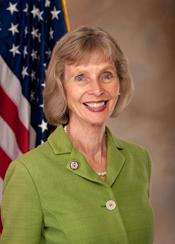
Mr. Speaker, I rise in strong support of S. 2739, the Consolidated Natural Resources Act of 2008. This bipartisan legislation consists of 61 measures that previously passed the House earlier in the…
Mr. Speaker, I rise in strong support of S. 2739, the Consolidated Natural Resources Act of 2008. This bipartisan legislation consists of 61 measures that previously passed the House earlier in the 110th Congress. Among the bill's provisions is Section 201, which incorporates H.R. 276, the Piedras Blancas Historic Light Station Outstanding Natural Area Act of 2007, a bill I sponsored and was approved by the House on March 5, 2007, by voice vote.
First, I want to thank the chairman of the Natural Resources Committee, Mr. Rahall, and chairman of the Subcommittee on National Parks, Forests and Public Lands, Mr. Grijalva, as well as the ranking members of the full Committee and Subcommittee for expediting the consideration of this legislation and for bringing S. 2739 before us today. I also want to thank Senator Bingaman, the chairman of the Energy and Natural Resources Committee, as well as Senator Feinstein and Senator Boxer for their support of the Consolidated Natural Resources Act.
Section 201 of S. 2739 would designate the Piedras Blancas Historic Light Station--located in my congressional district--as an Outstanding Natural Area within the BLM's National Landscape Conservation System.
The Piedras Blancas Light Station is located on an 18-acre parcel of BLM-administered land along the Pacific Coast in San Luis Obispo County. The property is adjacent to Pacific Coast Highway and the Hearst Castle State Historic Monument, and it looks over a pristine coastal area that includes the southern portion of the Monterey Bay National Marine Sanctuary and California Coastal National Monument. It is also nationally recognized as an important monitoring point for migrating whales, and is used by the U.S. Geological Survey, the National Marine Fisheries Service and a number of universities and colleges for marine wildlife and plant research.
The Light Station and the surrounding area are also important for tourism. For example, the national historic Light House--built in 1879--is a main destination focal point on the Central Coast, and the peninsula is very popular for viewing sea otters, elephant seals, and sea lions from shore. The elephant seal colony at Piedras Blancas attracts an estimated 400,000 visitors annually.
In 2001, BLM assumed ownership and management of the Light Station from the U.S. Coast Guard. Since then, BLM, State and local agencies, community stakeholders and conservation groups have developed a very successful partnership to preserve the Light Station.
Some of these partners include: the Piedras Blancas Light Station Association; California State Parks; San Luis Obispo County; the cities of Cambria and San Simeon; the California Coastal Conservancy and Coastal Commission; NOAA; and the Hearst Corporation.
As a result of their hard work, the site was re-opened to public tours in 2003--for the first time in 128 years! These partners continue to work together on a series of environmental education, historical restoration and resource protection programs. And I'm confidant they will each support and showcase this national designation if enacted.
Mr. Speaker, I also want to acknowledge the second and third-graders at Grover Heights Elementary school in my congressional district for their support of this Light Station. In 2006, these students began the ``Pennies for Piedras'' campaign to raise money toward restoration of the lighthouse. By the end
of the school year, the students had raised $1337.30 in pennies to repair Piedras Blancas. I'm happy to report the students at Grover Heights continue this wonderful effort to protect and enhance one of the Central Coast's crown jewels.
As you know, my legislation tracks the successful model of designating the Oregon Coast's Yaquina Head as an Outstanding Natural Area, which was signed into law in 1980. Yaquina Head was later included in the National Landscape Conservation System.
Like Yaquina Head, the addition of the Piedras Blancas Light Station to the NLCS would be an important step in protecting and preserving this valuable natural and historic resource. It will also focus attention on the restoration of the Light Station and surrounding area, specifically the three on-site National Register properties. And, it will serve as a means to increase public awareness of the Light Station's scientific, cultural and educational values.
Specifically, Section 201 stresses long-term conservation of the Light Station by requiring timely completion of a management plan. The management plan would be developed through a public process and include guidelines for restoration of the National Register of Historic Places buildings, including the Light House; public access; ecological and cultural resource management; and, fostering scientific study and research opportunities.
Mr. Speaker, the Piedras Blancas Light Station is a wonderful resource. It has the potential to serve as a model for future resource management, and therefore would be an appropriate addition to the BLM's National Landscape Conservation System.
Again, I would like to thank the Committee on Natural Resources for supporting this bill, which among other things, will designate the Piedras Blancas Historic Light Station as an Outstanding Natural Area, and urge its immediate passage.
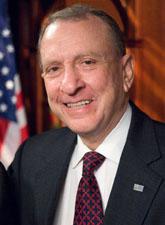
Mr. President, I seek recognition today to introduce the Attorney-Client Privilege Protection Act of 2008, which is a modified version of my earlier legislation by the same name. This legislation,…
Mr. President, I seek recognition today to introduce the Attorney-Client Privilege Protection Act of 2008, which is a modified version of my earlier legislation by the same name. This legislation, which adds original cosponsors, continues to address the Department of Justice's corporate prosecution guidelines. Those guidelines, last revised by former Deputy Attorney General Paul McNulty in December 2006, erode the attorney-client relationship by allowing prosecutors to request privileged information backed by the hammer of prosecution if the request is denied.
Like my previous bill, S. 186, this bill will protect the sanctity of the attorney-client relationship by prohibiting federal prosecutors and investigators from requesting waiver of attorney-client privilege and attorney work product protections in corporate investigations. The bill would similarly prohibit the government from conditioning charging decisions or any adverse treatment on an organization's payment of employee legal fees, invocation
of the attorney-client privilege, or agreement to a joint defense agreement.
The new version of the bill makes many subtle improvements, including defining ``organization'' to make clear that continuing criminal enterprises and terrorist organizations will not benefit from the bill's protections. The bill also clarifies language that the Department of Justice had previously criticized as ambiguous. The bill also makes clear in its findings that its prohibition on informal privilege waiver demands is far from unprecedented. The bill states: ``Congress recognized that law enforcement can effectively investigate without attorney-client privileged information when it banned Attorney General demands for privileged materials in the Racketeer Influenced and Corrupt Organizations Act. See 18 U.S.C. Sec. 1968(c)(2).''
There is no need to wait to see how the McNulty memorandum will operate in practice. There is similarly no need to wait for another internal Department of Justice reform that will likely fall short and be the fifth policy in the last 10 years. Any such internal reform will not address the privilege waiver policies of other government agencies that refer matters to the Department of Justice and allow in through the window what isn't allowed through the door.
As I said when I introduced S. 186, the right to counsel is too important to be passed over for prosecutorial convenience. It has been engrained in American jurisprudence since the 18th century when the Bill of Rights was adopted. The 6th Amendment is a fundamental right afforded to individuals charged with a crime and guarantees proper representation by counsel throughout a prosecution. However, the right to counsel is largely ineffective unless the confidential communications made by a client to his or her lawyer are protected by law. As the Supreme Court observed in Upjohn Co. v. United States, ``the attorney-client privilege is the oldest of the privileges for confidential communications known to the common law.'' When the Upjohn Court affirmed that attorney-client privilege protections apply to corporate internal legal dialogue, the Court manifested in the law the importance of the attorney-client privilege in encouraging full and frank communication between attorneys and their clients, as well as the broader public interests the privilege serves in fostering the observance of law and the administration of justice. The Upjohn Court also made clear that the value of legal advice and advocacy depends on the lawyer having been fully informed by the client.
In addition to the importance of the right to counsel, it is also fundamental that the Government has the burden of investigating and proving its own case. Privilege waiver tends to transfer this burden to the organization under investigation. As a former prosecutor, I am well aware of the enormous power and tools a prosecutor has at his or her disposal. The prosecutor has enough power without the coercive tools of the privilege waiver, whether that waiver policy is embodied in the Holder, Thompson, McCallum, McNulty--or a future Filip--memorandum.
As in S. 186, this bill amends title 18 of the United States Code by adding a new section, Sec. 3014, that would prohibit any agent or attorney of the U.S. Government in any criminal or civil case to demand or request the disclosure of any communication protected by the attorney-client privilege or attorney work product. The bill would also prohibit government lawyers and agents from basing any charge or adverse treatment on whether an organization pays attorneys' fees for its employees or signs a joint defense agreement.
This legislation is needed to ensure that basic protections of the attorney-client relationship are preserved in Federal prosecutions and investigations.
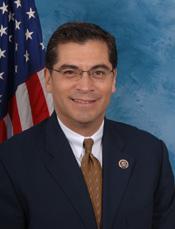
Mr. Speaker, I rise in support of S. 2739, the Consolidated Natural Resources Act of 2008, which includes a provision to establish a commission that will report to Congress on the feasibility of…
Mr. Speaker, I rise in support of S. 2739, the Consolidated Natural Resources Act of 2008, which includes a provision to establish a commission that will report to Congress on the feasibility of creating a National Museum of the American Latino.
Recently, the Senate passed this legislation. The House of Representatives already voted unanimously for the National Museum of the American Latino provision in the form of H.R. 512 on February 4, 2007. And today, we get the chance to do it once again.
The passage of S. 2739 will ensure that a full, rich, and inclusive story of American Latinos will be told in our nation's capital soon. Tomorrow, as many families and educators celebrate El Dia de los Ninos, a day on which families and educators celebrate our children, it is important to consider a valuable learning tool that until now has been somewhat neglected. Our national museums influence what Americans and foreign visitors know and believe about this nation's collective history and cultural life. My largest disappointment is that the official narrative portrayed in our museums still fails to recognize and exhibit the significant contributions made by Latinos to the culture and history of the United States.
This National Museum of the American Latino Commission Act included in S. 2739 creates a bipartisan Commission tasked with looking at whether our national museums are doing all they can to provide future generations a more complete portrayal of American Latino contributions to American life. The 23-member Commission of experts would examine whether and how to establish a new museum dedicated to the art, history, and culture of the American Latino population of the United States. Within two years of the bill being signed into law, the Commission will report their findings and recommendations to Congress, detailing a recommended plan of action on how to move forward with taking the museum from concept to reality.
In passing this legislation, we are laying the first cobblestones in what many hope will ultimately create a National Museum of the American Latino. Though American Latinos' contributions span centuries and economic sectors, many people are unaware of the role Americans of Latino descent played, and continue to play, in America. This legislation offers an extraordinary opportunity to better understand the historical and significant contributions that make this country great.
It is my hope that children who visit Washington, DC's museums go home with a more complete understanding of what it means to be an American. We hope one day our children can learn from our national museums that:
Latinos' contributions to the United States of America date back to 1565, when the Spanish established the first permanent settlement in the territorial United States in St. Augustine, Florida--four decades before the establishment of Jamestown and Plymouth Rock.
From General Bernard de Galvez who supported General George Washington's rebellion against England to the 500,000 Hispanics who served in the Armed Forces during World War II to the soldiers like Jose Antonio Gutierrez who was among the first casualties of American troops in Iraq, Latinos have played a pivotal role in every major U.S. military war.
The sacrifices and honor of our Latino service members represent a proportionately larger number of our Nation's Congressional Medal of Honor awardees than any other ethnic group.
Latino astronauts, such as astronauts Dr. Franklin Chang-Diaz, Sydney Gutierrez, and Dr. Ellen Ochoa, have soared into space.
During Hispanic Heritage Month in October, 2003, I first sponsored this important legislation with my good friend, Representative Ileana Ros-Lehtinen. I thank her and my Senate colleagues, Senators Ken Salazar, Bob Menendez, and Mel Martinez for their work as lead champions of the National American Latino Heritage Museum Commission Act in the Senate. To Senator Jeff Bingaman and Majority Leader Harry Reid, I send my appreciation for their help both in including H.R. 512 as part of the Consolidated Natural Resources Act of 2008 and in ensuring the bill's safe Senate passage.
Mr. Speaker, we are moving closer to the day when we can confidently say that the mosaic portrayed in Washington, DC's museums truly reflects America. I thank you for allowing the consideration of S. 2739, which includes the National Museum of the American Latino Commission Act to have its time on the House floor. I strongly encourage my colleagues to vote in support of S. 2739, so that we can clear this final congressional hurdle and move forward a broadly supported effort to ensure that American Latinos are included in our national narrative.
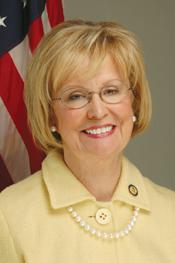
I thank the gentleman for yielding. Mr. Speaker, I rise today in support of S. 2739, which includes the provisions of H.R. 85, a bill called the Energy Technology Transfer Act that I introduced with…
I thank the gentleman for yielding.
Mr. Speaker, I rise today in support of S. 2739, which includes the provisions of H.R. 85, a bill called the Energy Technology Transfer Act that I introduced with my Science and Technology Committee colleague from North Carolina (Mr. Miller). The House approved our bill by a vote of 395-1 back in March of last year. And this is so important, Mr. Speaker, that it is now before this House again, and I appreciate it.
Mr. Speaker, the Federal Government spends billions every year on energy-related research and development for our universities and national laboratories. The result is often new technologies that exponentially reduce our consumption of energy or encourage the use of alternative fuels and thus reduce our dependence on foreign sources of energy. But the biggest challenge to realizing these energy savings is getting these technologies out of the laboratory and into the marketplace where they can benefit all energy end users. Whether we're talking about a business owner, a homeowner, a county or local government officials, these energy end users may be hesitant to embrace advanced or alternative technologies with which they are not familiar, have little experience, or which may require new infrastructure.
To help energy end users embrace these new technologies, section 917 of the Energy Policy Act (EPACT) of 2005 directed the Department of Energy to create a geographically dispersed network of energy efficiency technology transfer centers to help in this process. This bill will simply improve that section 917 of EPACT, and instead of creating from scratch these network centers, H.R. 85 authorizes the DOE to provide grants to and partner with existing community outreach networks. These existing networks could include Cooperative Extension Systems--just like what we have seen with the farms--offices, State energy offices, local governments, institutions of higher education, and nonprofit organizations with expertise in energy technologies or outreach. And so instead of limiting these centers to the transfer of energy efficiency technologies, it also expands their mission to include all advanced energy technologies and requires grantees to provide feedback to DOE on the energy research needs identified by these energy end users.
I just want to give you one example of what I'm talking about in Chicago and how this program might work. Before expanding their frozen pizza production plant in Illinois, Home Run Inn Pizza consulted with the University of Illinois--Chicago's Energy Resource Center. After conducting an assessment of the plant and its operations, the UIC Energy Resource Center identified nine ways that the Home Run Inn Pizza could reduce their energy consumption and energy costs. Using advanced energy technologies developed as a result of the DOE-funded research, Home Run Inn Pizza could reduce natural gas consumption by 15 percent and electricity consumption by 5 to 6 percent, saving a total of about $15,000 annually.
So with the enactment of H.R. 85, the UIC Energy Resource Center and other cooperative extension and community outreach organizations could add capacity and expertise to help many, many companies, building managers, homebuilders and homeowners use the technology to save energy and money.
So the bill represents just a small investment in the tech transfer capabilities that we need to help our universities and labs move advanced energy technologies from labs into the market so Americans can enjoy the tangible benefits of our Federal investment in R&D.
I want to thank my colleague, Mr. Miller from North Carolina, for his strong interest in tech transfer and for being the lead Democrat on this bill. I want to thank Chairman Gordon and Ranking Member Hall for recognizing the value of this bill and moving it through the committee, Senators Bingaman and Domenici and the Senate Energy and Natural Resources Committee for approving this bill and including it in S. 2739. Finally, I want to thank the chairman and ranking member of the Natural Resources Committee and the House Republican and Democrat leadership for bringing this package of bills to the floor today and I urge my colleagues to support it.
Mr. Speaker, the House of Representatives is being asked to swallow this colossal Senate lands bill without any Member having the opportunity to offer amendments or provide input. This is an…
Mr. Speaker, the House of Representatives is being asked to swallow this colossal Senate lands bill without any Member having the opportunity to offer amendments or provide input. This is an abdication of our duties as elected Representatives and it means good legislation will continue to sit lingering and waiting for action in the Senate because it's not been included in this packaged bill.
There are parts of this massive bill that I do support. In fact, I am the sponsor and author of the bill, H.R. 386, that will convey certain buildings and land from the Bureau of Reclamation to the Yakima-Tieton Irrigation District. This measure will allow for greater local control of property that is already being used for irrigation purposes. It will also allow the irrigation district to make needed improvements. H.R. 386 passed the House by a vote of 417-0 in February, 2007 and I am pleased that the Senate finally acted on this bipartisan piece of legislation.
However, this package excludes many other House passed bills that have been awaiting Senate action, including two of which are of particular interest to me and communities in Central Washington state.
The first bill, H.R. 523, passed the House last October by a vote of 377 to zero. This bill would allow for the sale of several parcels of property from the Bureau of Land Management to the Douglas County PUD for both ease and efficiency of management, while ensuring environmental protections. Additionally, the funds generated from this sale would be put towards improving public access to existing BLM lands in Washington state. This creates an opportunity to address some long- standing needs to improve public access to public lands in my state, including for recreation at the Juniper Dunes area. Having passed the House over six months ago without dissent, and also being subject of a positive Senate hearing in February, there is no reason that this bill shouldn't be part of this package.
Second, I am frustrated that the Senate did not include H.R. 1285, the Snoqualmie Pass Land Conveyance Act. This legislation would help facilitate the construction of a modem fire station to serve both local communities and interstate freeway travelers crossing Snoqualmie Pass. The Snoqualmie Pass Fire and Rescue is often the first to respond to emergencies through the pass. This heavily traveled area often sees major snowstorms as well as avalanches. This bill passed the House last July by voice vote and it merits passage by the Senate and to be signed into law.
Instead of action on these two bills, there is indefinite delay and no apparent plan for action. I will not be allowed to offer an amendment to add these two non-controversial bills to this Senate package. The House is only given the choice of passing this bill.
I have heard some of my colleagues in both the House and the Senate claim that this conglomerate Senate bill mainly includes bills that passed out of the House of Representatives and enjoy strong bipartisan support. Both H.R. 523 as well as H.R. 1285 fit both of those criteria. Why then were they not included in S. 2739 when other bills were included that have never passed the House or had prior Senate Committee approval?
I am frustrated and disappointed at the closed manner in which the House is being
forced to vote on this bill. Furthermore, I am concerned at the enormous expansion of federal land ownership and management responsibilities created by this bill when we are not currently able to meet our public lands existing maintenance needs. It is ironic that both of the bills that have been left out of this legislation would, in a responsible way, actually decrease and relieve these demands and stress on current capabilities.
For these reasons, I must vote against this bill.
Madam Speaker, I strongly support H.R. 523, legislation I introduced to convey certain Bureau of Land Management land to the Douglas County Public Utility District in Washington state. The Douglas…
Madam Speaker, I strongly support H.R. 523, legislation I introduced to convey certain Bureau of Land Management land to the Douglas County Public Utility District in Washington state. The Douglas County PUD operates the Wells Hydropower Project on the Columbia River, in North Central Washington. The PUD manages the Wells Hydroelectric Dam and the associated reservoir for multiple purposes, including power generation, fish and wildlife protection, and recreation. Almost all of the land encompassing the project area is owned by the PUD, with the exception of several small BLM holdings.
Passing this legislation enables the PUD to manage the project in a far more efficient manner. It also allows the BLM to concentrate its limited resources elsewhere, in areas where there are large contiguous blocks of BLM land. It is clear that we can achieve a better and more efficient management of our resources with this land conveyance.
In addition, since the Douglas PUD is a public agency under Washington state law, this conveyance simply moves land from the control of one public agency to the control of another agency. It is also important to note that the Douglas PUD has a stellar reputation as a steward of the environment. They worked diligently with federal and state agencies, tribal governments, and environmental groups to develop a model Habitat Conservation Plan for salmon and steelhead. The PUD also protects other forms of wildlife and provides public access wherever possible.
As my colleagues may recall, similar legislation passed the House last year under suspension. There is one important addition to the legislation this year. H.R. 523 calls for the proceeds of this land sale to be used to improve public access to existing BLM lands in Washington state. I am pleased that I was able to reach a consensus with members of the Natural Resources Committee to ensure that the proceeds from this sale will stay in the state where the land conveyance occurred--my home state of Washington. I am also pleased to note that these funds will go towards increasing the ability of our constituents to access their public lands.
It is my intention to see that these funds go towards projects like the Juniper Dunes Wilderness Area in Washington state. Due to its close proximity to the Tri-Cities, Juniper Dunes is a highly popular recreation area for serious hikers as well as families who are looking for an interesting place to explore with their children. Despite its popularity, it is extremely difficult for the public to visit Juniper Dunes. The Dunes are currently surrounded by private lands. Therefore, in order to visit the public area, one has to cross private property. H.R. 523 gives the BLM the financial resources and the flexibility they need to improve access to Juniper Dunes.
Finally, I am pleased that I was able to work with the Resources Committee to include language clarifying that the BLM will retain authority under the Federal Power Act for the current FERC relicensing of the Wells project. This authority will remain with the BLM until a new license is in place, which is expected in 2012.
I want to thank my colleagues on the Natural Resources Committee, specifically Chairman Rahall, Ranking Member Young and Subcommittee Chairman Grijalva and Subcommittee Ranking Member Bishop and their staffs for all their hard work on this legislation. H.R. 523 will benefit the Douglas County PUD, the BLM as well as improve vitally needed public access throughout Washington state. I urge my colleagues to support this legislation.
Mr. President, I would like to discuss a bill that I am introducing along with Senator Hatch today, the Carbon Reduction Technology Bridge Act of 2008. This bill is designed to develop the…
Mr. President, I would like to discuss a bill that I am introducing along with Senator Hatch today, the Carbon Reduction Technology Bridge Act of 2008.
This bill is designed to develop the technologies that will enable us to use coal in a manner that helps address the threat of climate change.
Our country depends on coal to provide half of our electricity. In North Dakota, coal accounts for over 90 percent of our power. This is the power we need for lighting and heating our homes, powering our businesses, and, in the future, charging our cars.
The U.S. has vast resources of coal, enough to last over 250 years. We need to ensure that we can continue to enjoy the affordable electricity provided by coal, while developing technologies that will lower the greenhouse gas emissions that result from coal use.
We need to advance carbon capture and storage technologies to address the reality of climate change. The scientific evidence is clear that human activity is increasing the concentration of greenhouse gases in the atmosphere, which contributes to warming temperatures. The increased occurrence of severe weather and other effects that we have seen to date are small in comparison to what scientists say are the likely consequences of continued warming.
This bill will help jumpstart investment in technologies to capture and store carbon. It provides tax credits to the first generation of highly efficient advanced coal plants that capture carbon dioxide. It helps companies make the first investments in carbon capture and storage equipment on the first existing plants. It also provides credits for each ton of carbon dioxide captured and stored underground. It provides a number of other incentives to advance coal technology.
The science on climate change is clear, but what is not proven is the technology that can provide the solution. This bill sets ambitious but achievable goals for those companies willing to be the first to address this challenge head-on and build and install these technologies. Under this bill, a typical new coal plant would be required to capture 65 percent of its carbon dioxide emissions. After the first generation of projects supported by this bill, we will have tested and refined the technologies to enable an even higher rate of capture on future plants.
This bill will provide an important step toward affordable, low- carbon power. I welcome comments from my colleagues on this proposal and hope that they will join me in sponsoring this bill.
Show 11 more
Mr. Speaker. I want to thank Chairman Rahall and my colleagues in the Senate for all of their hard work on this bill. It is my pleasure today to speak on behalf of S. 2739. I rise to highlight Title…
Mr. Speaker. I want to thank Chairman Rahall and my colleagues in the Senate for all of their hard work on this bill. It is my pleasure today to speak on behalf of S. 2739.
I rise to highlight Title IV of this comprehensive natural resources bill, which reauthorizes the National Heritage Area program. Heritage Areas allow communities to preserve and maintain places of cultural and historical importance so that future generations can enjoy them. These areas also provide important recreational opportunities for local families and visitors who come from all over the country. They relieve the Federal Government of the burden of permanently maintaining these spaces as national parks at a time when the National Park System is overburdened.
Mr. Speaker, this bill is a tremendous benefit to the American people. National Heritage Areas provide opportunities for the health, education, and recreation of the American people in their communities. In my State of Ohio, the Ohio and Erie Canalway is one of the many great examples of the success of this program. The Ohio and Erie Canal was originally created nearly two centuries ago in an attempt to bring Ohio out of economic stagnation by making the State a vital link in the waterways that connect the Eastern States with the Gulf of Mexico. As a result, Ohio excelled to become one of the most prosperous States within 20 years of the canal's creation. Today, that heritage is shared with the people as they enjoy the many of the benefits Ohio and Erie Canal Towpath. With over 3 million users a year, this one of several National Heritage Areas clearly highlights the success of this program.
I also want to emphasize the fiscal responsibility of the heritage area provisions. This bill will not provide money to managing entities unless they provide matching funds from other sources. For example, within the Ohio and Erie Canalway, for the $8 million in Federal funding that has been secured for this area, over $270 million in State, local, and private contributions have been leveraged.
Mr. Speaker, the National Heritage Area program has been a successful program for nearly 10 years. I believe it will continue to be a successful program as it has been an efficient use of the taxpayers' money while preserving historic and cultural landmarks for communities across this country. I ask my colleagues to support S. 2739.

Mr. President, I would like to announce for the information of the Senate and the public that a hearing has been scheduled before Committee on Energy and Natural Resources Subcommittee on Public…
Mr. President, I would like to announce for the information of the Senate and the public that a hearing has been scheduled before Committee on Energy and Natural Resources Subcommittee on Public Lands and Forests.
The hearing will be held on February 27, 2008, at 2:30 p.m. in room SD-366 of the Dirksen Senate Office Building.
The purpose of the hearing is to receive testimony on the following bills: S. 832, to provide for the sale of approximately 25 acres of public land to the Turnabout Ranch, Escalante, Utah, at fair market value; S. 2229, to withdraw certain Federal land in the Wyoming Range from leasing and provide an opportunity to retire certain leases in the Wyoming Range; S. 2379, to authorize the Secretary of the Interior to cancel certain grazing leases on land in Cascade-Siskiyou National Monument that are voluntarily waived by the lessees, to provide for the exchange of certain Monument land in exchange for private land, to designate certain Monument land as wilderness, and for other purposes; S. 2508 and H.R. 903, to provide for a study of options for protecting the open space characteristics of certain lands in and adjacent to the Arapaho and Roosevelt National Forests in Colorado, and for other purposes; S. 2601 and H.R. 1285, to provide for the conveyance of a parcel of National Forest System land in Kittitas County, Washington, to facilitate the construction of a new fire and rescue station, and for other purposes; H.R. 523, to require the Secretary of the Interior to convey certain public land located wholly or partially within the boundaries of the Wells Hydroelectric Project of Public Utility District No. 1 of Douglas County, Washington, to the utility district; H.R. 838, to provide for the conveyance of the Bureau of Land Management parcels known as the White Acre and Gambel Oak properties and related real property to Park City, Utah, and for other purposes.
Because of the limited time available for the hearing, witnesses may testify by invitation only. However, those wishing to submit written testimony for the hearing record should send it to the Committee on Energy and Natural Resources, United States Senate, Washington, DC 20510-6150, or by e-mail to [email protected]. gov.
For further information, please contact Kira Finkler at (202) 224- 5523 or Rachel Pasternack at (202) 224-0883.
``Whereas, whenever kings, instead of protecting the lives and property of their subjects, as is their bounden duty, do endeavor to perpetrate the destruction of either, they thereby cease to be…
``Whereas, whenever kings, instead of protecting the lives and property of their subjects, as is their bounden duty, do endeavor to perpetrate the destruction of either, they thereby cease to be kings, become tyrants, and dissolve all ties of allegiance between themselves and their people . . . '' This was stated by Benjamin Franklin in his preamble to a congressional resolution.
Mr. Speaker, legislation should never attempt to seize land from the public and restrict its use. Property rights are a central institution of western civilization, and they're an essential ingredient in freedom. The Consolidated Natural Resources Act of 2008 is a violation of the basic principles that our Founding Fathers set out to prevent. Congress continues to ignore, neglect, disparage, and not understand its importance.
The Federal Government already owns nearly 650 million acres of land, half of which experience severe maintenance problems and backlogs. This legislation threatens recreation, user access, grazing, mining, oil and gas exploration, and many other public uses. By restricting access to land for exploration, this legislation is limiting the potential of the economy and directly interfering with America's entrepreneurial drive.
Do we know for certain that fossil fuels are not contained in these lands? At a time when gas is nearly $4 a gallon, the very last thing we should be doing is permanently restricting access to this land.
Government abuse is increasing on all levels, and a vote for S. 2739 is a vote for an increase in the size and scope of government. We must protect America's right to utilize and to prosper from the land.
John Dickinson, a signer of the Constitution, declared: ``Let these truths be indelibly impressed on our minds: that we cannot be happy without being free; that we cannot be free without being secure in our property; that we cannot be secure in our property if, without our consent, others may as by right take it away.''
God's Word, the Holy Bible, says: ``In the multitude of words, sin is not lacking.'' Mr. Speaker, there's a lot of sin in this bill.
Stop increasing government control and regulation of American property owners and vote ``no'' on S. 2739.
Mr. Speaker, on that I demand the yeas and nays.
Mr. Speaker, I rise today in support of the bipartisan Consolidated Natural Resources Act of 2008, which includes legislation I introduced to create the first new wilderness area in Washington State…
Mr. Speaker, I rise today in support of the bipartisan Consolidated Natural Resources Act of 2008, which includes legislation I introduced to create the first new wilderness area in Washington State in over 20 years. The Wild Sky Wilderness will be unique, protecting 106,000 acres of pristine forests and streams in my district, while providing a clean and accessible place to hunt, to fish, and to hike.
My staff first met on this issue on February 20, 2001, 48 days into my first term. And now 2,625 or so days later, we are ready to pass the Wild Sky Wilderness bill as part of the broader bill and send it to the President's desk.
The Wild Sky Wilderness Act is a carefully crafted piece of legislation that reflects years of community input. It will protect the peaks, the forests, and the lakes of the Mount Baker-Snoqualmie National Forest, as well as thousands of acres of lower-elevation forests and salmon-bearing streams.
The bill has been vetted through a 7-year process of hearings, debate, local town hall meetings. It started out as a much larger bill, but through a series of compromises and through a process of inclusiveness, we came up with the bill that now stands before you today as part of the larger bill. And it would not have been possible without the help of many people here in Congress and in the Second District. Large businesses like REI, smaller businesses like a small bed and breakfast located in Index support this bill. It garners the support of Democrats and Republicans alike in Washington State. But deserving special recognition here in Congress are people like Chairman Nick Rahall and his staff, led by Jim Zoia and Rick Healy. This proposal went through a 7-year process and is soon to become law as it goes to the President's desk.
I also want to thank my partner on the Senate side, Senator Patty Murray. Creating the Wild Sky Wilderness bill would not have been possible without her hard work and strong leadership in the Senate.
So I ask my colleagues today to support the Consolidated Natural Resources Act of 2008 and know that when you do that, you will be helping to create the first wilderness bill for Washington State in over 20 years. I urge passage of this legislation.
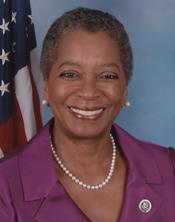
Thank you, Mr. Chairman, for those kind remarks. And I am pleased to rise in support of S. 2739, which includes two bills that I sponsored, H.R. 3079, the CNMI Immigration, Security, and Labor Act…
Thank you, Mr. Chairman, for those kind remarks. And I am pleased to rise in support of S. 2739, which includes two bills that I sponsored, H.R. 3079, the CNMI Immigration, Security, and Labor Act (ISLA), which also includes the NMI Delegate Act, and H.R. 2705, the Compacts of Free Association Amendments Act of 2007. Both were unanimously passed by this Chamber this year.
ISLA resolves two issues which have been before this Congress for decades. First, it would extend U.S. immigration laws to the CNMI. And second, it would authorize a CNMI nonvoting delegate to serve in this body beginning in the 111th Congress.
For two decades, the CNMI has had local control over immigration policy, and it has never been represented in this Chamber. For those unheard voices, for the prosperity of those islands, and for the security of our Nation, the path should now lead in a different direction.
ISLA provides the needed policy flexibility to transition immigration from local to Federal control. It ensures that employers can fill jobs, residents receive vocational training, nonresident guest workers be protected,
the region's economy be diversified, and the Marianas archipelago be strategically secure.
H.R. 2705 makes technical corrections to the Compact Agreements of 2003 and ushers in a new disaster assistance regime between FEMA and USAID for the FAS.
I'm grateful to Chairman Rahall for his commitment to prioritize issues affecting U.S. territories in the Freely Associated States. I thank the committee ranking member, Mr. Young, and the subcommittee ranking member, Mr. Fortuno. I also want to thank the staff of the subcommittee.
I want to especially acknowledge Mr. Faleomavaega and Ms. Bordallo, both members of the subcommittee, for traveling with me to the CNMI to conduct our hearing. They are tireless in their support of the subcommittee's agenda, and Ms. Bordallo worked closely with me to ensure that the interests of all the people in the Marianas, as well as the priorities for our Nation's security, were included in ISLA.
I urge my colleagues to pass S. 2739.
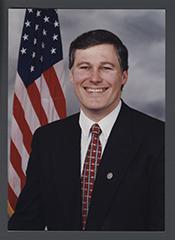
Mr. Speaker, I would like to commend this bill for two reasons. First, the passage of the Bainbridge Island Japanese American Monument Act. It is long overdue. We will finally present a monument to a…
Mr. Speaker, I would like to commend this bill for two reasons.
First, the passage of the Bainbridge Island Japanese American Monument Act. It is long overdue. We will finally present a monument to a chapter in American history that should never be a occasioned again. On March 30, 1942, on Bainbridge Island, Washington, the island where I live, the United States Army rounded up 227 people living on Bainbridge Island, put them on a ferry boat, shipped them by trains to a camp in Manzanar for the duration of the war, totally without legality. And 62 of those people subsequently served in World War II.
Two years ago a 95-year-old woman, Fumiko Hayashida, came to Congress and testified about the pain that episode caused her and all of America. And this dedication of a monument on Bainbridge Island will serve as a monument to all Americans of all future generations that we should never ever allow the power of fear to overcome the promise of liberty. This monument will serve to do that.
I want to thank the great work of people on Bainbridge Island: Fumiko Hayashida, Frank Kitamoto, Clarence Moriwaki; Senator Cantwell and others who worked on this bill. And I invite all Americans to come see this monument when it's completed.
I would also like to congratulate my colleague Rick Larsen and Senator Murray for their incredible work, who really set the model of how to do wilderness legislation in finally today passing the Wild Sky Wilderness. I sat on top of Berry Mountain a couple years ago and looked down, and I want to thank them for their great leadership so that my grandchild will be able to look down from the top of Berry Mountain and see the same wilderness; and to their allies, Tom Uniack, Mike Towns, and Jon Owen, all of who really created a model of how to do future wildernesses. Thank you very much, Rick and others, and I congratulate all of us for final passage of these great pieces of work.
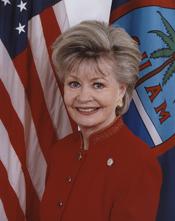
I thank Chairman Rahall for yielding to me. Mr. Speaker, I rise in support of S. 2739, and I urge my colleagues to vote to pass it and send it to the President's desk. I underscore my support for…
I thank Chairman Rahall for yielding to me.
Mr. Speaker, I rise in support of S. 2739, and I urge my colleagues to vote to pass it and send it to the President's desk. I underscore my support for subtitle B of title VII of this comprehensive, important legislation, which provides for the election and the seating of a delegate representing the Commonwealth of the Northern Mariana Islands.
Mr. Speaker, the people of Guam and the people of the Northern Marianas are neighbors, and we share a common heritage. This bill is the product of careful deliberation and bipartisan cooperation. Many Members have worked diligently to shape it into the form in which it has arrived on the floor today. And for this reason and for the leadership brought to bear in drafting the CNMI title and responding to the concerns and interests of stakeholders on Guam, I want to thank very much Chairman Nick Rahall and Insular Affairs Subcommittee Chairwoman Donna Christensen.
The CNMI delegate provision represents the beginning of a stronger partnership for this body with the people of the Northern Marianas. I look forward to welcoming a new delegate in this hall and to that day next January when Members will take the oath with a new colleague representing the CNMI.
This House has a strong record of affording U.S. territories representation in Congress. To date, Mr. Speaker, 188 delegates and 32 resident commissioners have served ably in this House over the course of its history. It is a tradition that dates back to 1790, with the Northwest Ordinance areas, and today we continue this tradition by extending a long overdue voice for the people of the Northern Marianas. The CNMI should be afforded the honor and given the responsibility of electing a delegate to represent their interests.
This is about democracy and representation. The compelling case for representation for the CNMI has finally been made. So vote for S. 2739.
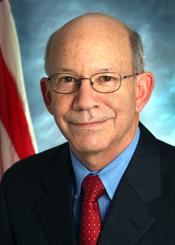
I thank the chairman. This legislation includes legislation earlier passed by this House, H.R. 247, endorsed by all the members of the Oregon delegation, to recognize the Jim Weaver Trail. In 1964,…
I thank the chairman.
This legislation includes legislation earlier passed by this House, H.R. 247, endorsed by all the members of the Oregon delegation, to recognize the Jim Weaver Trail.
In 1964, the original Wilderness Act put a lot of high elevation Oregon into wilderness, but it left out our precious forests and our old growth. Ten years later, Oregon's most persistent champion of wilderness, Jim Weaver, was elected to the United States Congress. Despite the fact that he represented the largest public timber- producing district in the country, Jim engaged in a battle over the next 10 years to set aside some of Oregon's most beautiful forests for future generations. He engaged in the first fights to preserve old growth, fights which are continuing to this day.
The Forest Service originally recommended 370,000 acres for wilderness designation in Oregon. Jim upped the ante a little bit to 1.2 million. He had very, very tough and difficult negotiations with the Senate, and in the end he and Senator Hatfield were able to settle on 861,500 acres, not everything Jim wanted, but a tremendous legacy for our future.
At the very last minute, Jim got Grassy Knob added and Monument Rock protected. And then one of the toughest things that he had to do, he was asked by Senator Hatfield did he want Hardesty Mountain or did he want Waldo. Jim chose Waldo. And so it's extremely appropriate that this House acts today to name the trail which encompasses pristine Waldo Lake as the Jim Weaver Trail. And future generations of Oregonians utilizing that trail will begin to understand the history and the fight that went into preserving some of their most precious wildlands, a fight which I'm attempting to continue with wilderness legislation this year, and a fight with the BLM over their attempts to harvest the last of our precious old growth.
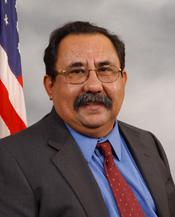
Mr. Speaker, I move to suspend the rules and pass the bill (H.R. 523) to require the Secretary of the Interior to convey certain public land located wholly or partially within the boundaries of the…
Mr. Speaker, I move to suspend the rules and pass the bill (H.R. 523) to require the Secretary of the Interior to convey certain public land located wholly or partially within the boundaries of the Wells Hydroelectric Project of Public Utility District No. 1 of Douglas County, Washington, to the utility district, as amended.
Mr. Speaker, I ask unanimous consent that all Members have 5 legislative days to revise and extend their remarks and include extraneous material on the bill under consideration.
Mr. Speaker, the Wells Hydroelectric Project, operated by the Public Utility District in Douglas County, provides electricity to approximately 17,000 customers in Washington State. The central feature of the project is a dam on the Columbia River.
The utility district is in the early stages of the Federal Energy Regulatory Commission's relicensing process. The project's current license was granted in 1962 and will expire in May 2012. An application for relicensing must be submitted by 2010.
H.R. 523 directs the Secretary of the Interior to sell 662 acres of BLM land within the project boundary to the utility district and requires the district to pay the appraised fair market value of the land.
Importantly, the legislation requires that, even after the conveyance takes place, the Secretary of the Interior will retain authority under the Federal Power Act to place conditions on the utility district's new license, if necessary, to protect the natural resources of the area.
Mr. Speaker, we have worked closely with the sponsor and our minority colleagues on the Natural Resources Committee to improve this legislation. We thank them for that and appreciate it very much.
Mr. Speaker, I reserve the balance of my time.
Mr. Speaker, I yield back the balance of my time.
Mr. Speaker, on that I demand the yeas and nays.
Mr. Speaker, I want to salute Chairman Rahall and Subcommittee Chairman Grijalva for the hard work that both of these individuals did to bring this legislation to the floor today. It took persistent…
Mr. Speaker, I want to salute Chairman Rahall and Subcommittee Chairman Grijalva for the hard work that both of these individuals did to bring this legislation to the floor today. It took persistent leadership to, again, get 61 measures all here, ready for vote and final passage and transmittal to the White House.
Included in this bill, section 344, is the language which was included in H.R. 986 legislation, which we debated and passed last July, the designation of the Eightmile River in Connecticut, Wild and Scenic designation. This is an effort that has taken 10 years in the State of Connecticut. It's a river that is 8 miles long, extends from East Haddam through Salem, into Lyme, and then to Hamburg Cove on Long Island Sound.
It is one of the most pristine treasures in a highly densely populated part of the country, one of the original colonies, where we respect property rights dearly in the State of Connecticut. Over that 10-year period, a balanced process was followed, which brought consensus among all the communities, bipartisan support, the Republican Governor of Connecticut, the entire delegation from Connecticut, and particularly Senator Dodd, who led the fight in the Senate for passage. And the communities who have worked so hard to preserve this extraordinary body of water are, again, anxious and excited to see final passage, which will take the Eightmile River and make it part of the family of rivers that have received the Wild and Scenic designation over the 40 years of that act's existence in this country, 160 rivers.
Again, I want to salute the Resources Committee for the hard work that they did to make sure that the Eightmile River plan will now become a reality.
Mr. Speaker, first I want to thank the ranking member, Mr. Bishop, for his fairness as we went through this process. And I want to thank the chairman, Mr. Rahall, for his leadership in moving this. I…
Mr. Speaker, first I want to thank the ranking member, Mr. Bishop, for his fairness as we went through this process. And I want to thank the chairman, Mr. Rahall, for his leadership in moving this. I am very, very grateful.
I want to rise in support of this bill, which includes a provision to establish the Journey Through Hallowed Ground National Heritage Area. Establishing this heritage area spans 175 miles through four States.
The Journey Through Hallowed Ground winds its way along U.S. Route 15 from Gettysburg, Pennsylvania, to Jefferson's home of Monticello in Charlottesville, Virginia. Starting as a trail used by the Susquehannock and Iroquois, America's early history can literally be traced along this corridor. Jefferson's Monticello, Madison's Montpellier, Monroe's Oak Hill and Ashlawn Highland, Zachary Taylor's homes, Eisenhower's cottage, Teddy Roosevelt's cabin, John Marshall's home, General George Marshall's home, and Camp David are situated along this route, which is also dotted with numerous Civil War battlefields.
I close with Abraham Lincoln's Gettysburg Address, spoken at the northern terminus of the Journey Through Hallowed Ground corridor and signifies the history, and he said:
``We cannot dedicate, we cannot consecrate, we cannot hallow this ground. The brave men and women, living and dead, who struggled here, have hallowed it far above our poor power to add or detract.''
I urge my colleagues to support this legislation.
Bill Text
5 versions available
        [Congressional Bills 110th Congress]
[From the U.S. Government Printing Office]
[H.R. 523 Reported in Senate (RS)]

Calendar No. 810
110th CONGRESS
2d Session
H. R. 523

[Report No. 110-378]

_______________________________________________________________________

IN THE SENATE OF THE UNITED STATES

October 23, 2007

Received; read twice and referred to the Committee on Energy and
Natural Resources

June 16, 2008

Reported by Mr. Bingaman, without amendment

_______________________________________________________________________

AN ACT

To require the Secretary of the Interior to convey certain public land
located wholly or partially within the boundaries of the Wells
Hydroelectric Project of Public Utility District No. 1 of Douglas
County, Washington, to the utility district.

Be it enacted by the Senate and House of Representatives of the
United States of America in Congress assembled,

SECTION 1. SHORT TITLE.

This Act may be cited as the ``Douglas County, Washington, PUD
Conveyance Act''.

SEC. 2. DEFINITIONS.

In this Act:
(1) Public land.--The term ``public land'' means the
approximately 622 acres of Federal land managed by the Bureau
of Land Management and identified for conveyance on the map
prepared by the Bureau of Land Management entitled ``Douglas
County Public Utility District Proposal'' and dated March 2,
2006.
(2) Secretary.--The term ``Secretary'' means the Secretary
of the Interior.
(3) PUD.--The term ``PUD'' means the Public Utility
District No. 1 of Douglas County, Washington.
(4) Wells hydroelectric project.--The term ``Wells
Hydroelectric Project'' means Federal Energy Regulatory
Commission Project No. 2149.

SEC. 3. CONVEYANCE OF PUBLIC LAND, WELLS HYDROELECTRIC PROJECT, PUBLIC
UTILITY DISTRICT NO. 1 OF DOUGLAS COUNTY, WASHINGTON.

(a) Conveyance Required.--Notwithstanding the land use planning
requirements of sections 202 and 203 of the Federal Land Policy and
Management Act of 1976 (43 U.S.C. 1712, 1713), and notwithstanding
section 24 of the Federal Power Act (16 U.S.C. 818) and Federal Power
Order for Project 2149, and subject to valid existing rights, if not
later than 45 days after the date of completion of the appraisal
required under subsection (b), the Public Utility District No. 1 of
Douglas County, Washington, submits to the Secretary of the Interior an
offer to acquire the public land for the appraised value, the Secretary
shall convey, not later than 30 days after the date of the offer, to
the PUD all right, title, and interest of the United States in and to
the public land.
(b) Appraisal.--Not later than 60 days after the date of enactment
of this Act, the Secretary shall complete an appraisal of the public
land. The appraisal shall be conducted in accordance with the ``Uniform
Appraisal Standards for Federal Land Acquisitions'' and the ``Uniform
Standards of Professional Appraisal Practice''.
(c) Payment.--Not later than 30 days after the date on which the
public land is conveyed under this section, the PUD shall pay to the
Secretary an amount equal to the appraised value of the public land as
determined under subsection (b).
(d) Map and Legal Descriptions.--As soon as practicable after the
date of enactment of this Act, the Secretary shall finalize legal
descriptions of the public land to be conveyed under this section. The
Secretary may correct any minor errors in the map referred to in
section 2 or in the legal descriptions. The map and legal descriptions
shall be on file and available for public inspection in appropriate
offices of the Bureau of Land Management.
(e) Costs of Conveyance.--As a condition of conveyance, any costs
related to the conveyance under this section shall be paid by the PUD.
(f) Disposition of Proceeds.--The Secretary shall deposit the
proceeds from the sale in the Federal Land Disposal Account established
by section 206 of the Federal Land Transaction Facilitation Act (43
U.S.C. 2305) to be expended to improve access to public lands
administered by the Bureau of Land Management in the State of
Washington.

SEC. 4. SEGREGATION OF LANDS.

(a) Withdrawal.--Except as provided in section 3(a), effective
immediately upon enactment of this Act, and subject to valid existing
rights, the public land is withdrawn from--
(1) all forms of entry, appropriation, or disposal under
the public land laws, and all amendments thereto;
(2) location, entry, and patenting under the mining laws,
and all amendments thereto; and
(3) operation of the mineral leasing, mineral materials,
and geothermal leasing laws, and all amendments thereto.
(b) Duration.--This section expires two years after the date of
enactment of this Act or on the date of the completion of the
conveyance under section 3, whichever is earlier.

SEC. 5. RETAINED AUTHORITY.

The Secretary shall retain the authority to place conditions on the
license to insure adequate protection and utilization of the public
land granted to the Secretary in section 4(e) of the Federal Power Act
(16 U.S.C. 797(e)) until the Federal Energy Regulatory Commission has
issued a new license for the Wells Hydroelectric Project, to replace
the original license expiring May 31, 2012, consistent with section 15
of the Federal Power Act (16 U.S.C. 808).
Calendar No. 810

110th CONGRESS

2d Session

H. R. 523

[Report No. 110-378]

_______________________________________________________________________

AN ACT

To require the Secretary of the Interior to convey certain public land
located wholly or partially within the boundaries of the Wells
Hydroelectric Project of Public Utility District No. 1 of Douglas
County, Washington, to the utility district.

_______________________________________________________________________

June 16, 2008

Reported without amendment