Veterans' Compensation Cost-of-Living Adjustment Act of 2008
Legislative Activity
Stay on top of the latest movement without scrolling through every action
Received in the Senate and Read twice and referred to the Committee on Veterans' Affairs.
May 22, 2008
View full timeline
Introduced in House
April 16, 2008
Referred to the House Committee on Veterans' Affairs.
April 16, 2008
Referred to the Subcommittee on Disability Assistance and Memorial Affairs.
April 18, 2008
Subcommittee on Disability Assistance and Memorial Affairs Discharged.
April 28, 2008
Committee Consideration and Mark-up Session Held.
April 30, 2008
Reported by the Committee on Veterans' Affairs. H. Rept. 110-643.
May 15, 2008
Placed on the Union Calendar, Calendar No. 404.
May 15, 2008
Mr. Filner moved to suspend the rules and pass the bill.
May 20, 2008 • 2:27 PM
Considered under suspension of the rules. (consideration: CR H4198-4199)
May 20, 2008 • 2:27 PM
DEBATE - The House proceeded with forty minutes of debate on H.R. 5826.
May 20, 2008 • 2:27 PM
At the conclusion of debate, the Yeas and Nays were demanded and ordered. Pursuant to the provisions of clause 8, rule XX, the Chair announced that further proceedings on the motion would be postponed.
May 20, 2008 • 2:35 PM
Considered as unfinished business. (consideration: CR H4412-4413)
May 21, 2008 • 6:16 PM
Passed/agreed to in House: On motion to suspend the rules and pass the bill Agreed to by the Yeas and Nays: (2/3 required): 417 - 0 (Roll no. 348).(text: CR 5/20/2008 H4198)
May 21, 2008 • 6:23 PM
On motion to suspend the rules and pass the bill Agreed to by the Yeas and Nays: (2/3 required): 417 - 0 (Roll no. 348). (text: CR 5/20/2008 H4198)
May 21, 2008 • 6:23 PM
Motion to reconsider laid on the table Agreed to without objection.
May 21, 2008 • 6:23 PM
Received in the Senate and Read twice and referred to the Committee on Veterans' Affairs.
May 22, 2008
Voting History
1 vote recorded • Roll call available
Floor Debate
22 membersWhat members said about H.R. 5826 on the floor
 BG
BG CCP
CCP SJL
SJL RK
RK KC+17
KC+17
Floor Debate
22 membersWhat members said about H.R. 5826 on the floor
Mr. Speaker, of the 30 minutes yielded to me by the gentleman from Minnesota, I would ask unanimous consent to yield 10 minutes to the gentleman from Arizona so that he may manage that time as a part…
Mr. Speaker, of the 30 minutes yielded to me by the gentleman from Minnesota, I would ask unanimous consent to yield 10 minutes to the gentleman from Arizona so that he may manage that time as a part of the debate.
Mr. Speaker, I yield myself 3 minutes.
Mr. Speaker, I rise in support of the farm bill, and the words before me say ``the very same farm bill passed by this body last week with an overwhelming bipartisan majority.'' Now we find that it is not quite the same farm bill because of an enrolling error or something in the transmission of the document. I certainly hope that we can find an amicable way to make sure that the trade title of this bill, which is an important title, is included in the final product, whether as a part of a joint resolution or by some other means of adopting that.
This bill was a collaborative effort, crafted by Members on both sides of the aisle and both sides of the Capitol, and is historic in the amount and degree of reform. It costs less than either the House or the Senate bills and ensures Americans will continue to enjoy access to a safe, affordable, and reliable food supply.
Last week, the 318 bipartisan votes in favor of the farm bill sent a clear message: This is a good bill and there is significant support for it. Despite what has been opined by editorial boards throughout the country, this bill contains significant reforms and is the most reform- minded farm bill this body has ever considered. Granted, everyone didn't get exactly what they wanted. We all gave a little and we all got a little. But such is the nature of compromise. Given the diverse nature of a farm bill, it is extremely difficult to manage the scope of needs within the farm bill, and even more difficult when you're not given the resources needed to do so.
This bill contains many of the ideas suggested in the administration's farm bill proposal. Like the administration, we utilized the adjusted gross income to reduce payments to the wealthiest farmers and ranchers. We eliminated the three-entity rule, created a revenue-base countercyclical program, modified and modernized the dairy program, modified planting flexibility rules, increased the efficiency of the crop insurance program, directed funding to the development of cellulosic ethanol, included programs for beginning and socially disadvantaged farmers, and created beneficial interest for the loan programs.
Variations of these measures were included in the administration's proposal. We may not have gone as far as the administration wanted, but these reforms help make this a better bill than the House or Senate farm bills.
It is important to point out that despite comments to the contrary, this bill is completely paid for, without any tax increases. While many throughout the world are feeling the effects of increased food prices, U.S. consumers have been largely insulated from spikes in food prices because many years ago we established a food production system that maintains an adequate supply in good times and in bad. Because it is produced domestically, we know it to be safe and affordable.
This bill ensures that Americans will continue to enjoy the access to a safe, affordable, and reliable food supply, and I urge my colleagues to join me in supporting this farm bill, which moved substantially in the direction that the President asked for, but which did not meet all of his goals. I think we have increased the support for this bill substantially by almost 90 Members in the process, and I urge my colleagues to support this override vote.
Mr. Speaker, it is my pleasure to yield 2 minutes to the gentleman from Texas (Mr. Neugebauer), a subcommittee ranking member.
Mr. Speaker, I yield myself 30 seconds to respond to the gentleman from Arizona about the ACRE program. This is a program that was requested by the administration. It was modified by the House and modified by the Senate. Now we hear the administration doesn't like the way it is projected to work, but, quite frankly, it scores by the Congressional Budget Office as saving the taxpayers of our country $400 million.
Why? Because the fact of the matter is it is not expected to have a very high enrollment, and in order to have what the gentleman describe take place, we would have to have a dramatic drop in corn prices. But the administration just signed into law in December a bill that mandates ever-increasing costs of amounts of production for ethanol, and the fact of the matter is we are not going to see those conditions. It is a theoretical possibility, a practical unlikely condition.
Mr. Speaker, I yield 1 minute to the gentleman from Louisiana (Mr. Boustany).
Mr. Speaker, I am pleased to yield 2 minutes to the gentlewoman from Colorado (Mrs. Musgrave).
Mr. Speaker, at this time it is my pleasure to yield 1 minute to the gentleman from New York (Mr. Kuhl).
Mr. Speaker, I am pleased to yield 1 minute to the gentleman from Texas (Mr. Conaway).
Mr. Speaker, at this time it is my pleasure to yield 1\1/2\ minutes to the gentleman from Oklahoma, a ranking member on the Agriculture Subcommittee, Mr. Lucas.
Mr. Speaker, at this time I am pleased to yield 2 minutes to the gentleman from Nebraska (Mr. Fortenberry), a member of the Agriculture Committee.
Mr. Speaker, may I ask how much time remains.
Mr. Speaker, at this time it is my pleasure to yield 2 minutes to the distinguished Member from Missouri, a real advocate for agriculture, Mr. Hulshof.
(Mr. HULSHOF asked and was given permission to revise and extend his remarks.)
Mr. Speaker, I yield myself 2 minutes.
Mr. Speaker, a lot has been said here today about the bipartisan nature of this legislation, but when it passed the House last week, a majority on both sides of the aisle voted for this farm bill, and three-quarters of all of the Members here did so. But we did so because there are provisions in this bill that are of interest to each side of the aisle, and sometimes there are very clear partisan differences.
But nonetheless, the Republican side of the aisle received a number of concessions in the final negotiations of this bill: a provision that would have prohibited all 50 State food stamp programs to be able to reach out to technology companies and others to modernize and improve their food stamp program, something they have done many times in the recent past. A prohibition on that was removed from the bill. A provision in the bill that would have rolled back the Welfare Reform Act of 1996 and provided increased food stamps for able-bodied adults without dependent children was removed from the bill. Provisions related to the Davis-Bacon legislation that many Members on my side of the aisle, including myself, were concerned about were removed from the bill.
So this is a bipartisan bill because it was compromise and give-and- take on both sides of the aisle.
I have also heard Members complain that this bill is not fiscally responsible. It's less than the last farm bill. It is less than either the House-passed
version of the bill or the Senate-passed version of the bill: $4 billion less than the House, $5 billion less than the Senate version. I ask any Member here in the House, when was the last time they recall that a bill came back from a conference between the House and the Senate and spent less money than either the House or Senate spent?
And I would give you this overall picture. Americans spend about $1.2 trillion a year on food. The provisions in this bill related to the commodity title, the safety net for America's farmers and ranchers, is about $7 billion or slightly less than one-half of 1 percent of what Americans spend on food.
I yield myself an additional 30 seconds.
Now for that one-half cent on every dollar, Americans get the stability and safety of their food supply and the assurance that they will not see in the United States what they're seeing in other countries around the world which do not have a good farm program for their farmers that assure their consumers that they will get an adequate, safe, and affordable supply of food. They do not see food riots in the United States.
They see, instead, those in the greatest need receiving appropriate food programs and the average American being able to spend less than 9 percent of their income on food. That is lower than any other country in the world today or any other country in the history of the world.
This farm bill helps to promote those good policies. I urge my colleagues to support the override.
Mr. Speaker, I yield myself the balance of my time.
I urge my colleagues to vote to override this veto, but I would like to close my remarks by commending the President of the United States and his administration for their involvement in this process. They have improved this farm bill considerably from the versions that were passed in the House and the Senate. In fact, I'm going to yield a portion of my time to the leader.
But I want to say that this includes more than 90 provisions that the President of the United States, the leaders in the Department of Agriculture and others, suggested to us to reform. And there are numerous reforms in this legislation that are very, very substantial, very, very significant. They would not have occurred without the President's active involvement and support for efforts to improve this farm bill.
This farm bill is dramatically reformed from previous farm bills, and as a result of his involvement, of involvement on both sides of the aisle, this farm bill is dramatically improved. As a result, the Republican Members on this side of the aisle went from 17 Members supporting the bill when it came out of the Agriculture Committee to 100 Members supporting it when we voted for it last week.
There is much to commend in this bill. The President has asked for additional reforms. I supported him in the efforts to obtain some of those reforms, but we could not achieve every single objective that he sought because this is a bipartisan bill that includes the considerations of a wide array of viewpoints.
But I will say that this side of the aisle was well represented in this process and thanks in part to the efforts of the administration.
Notwithstanding that, the bill is a good bill, and we would urge our colleagues to support it.
At this time, I yield the balance of my time to the Republican leader, the gentleman from Ohio.
Mr. Speaker, for purposes of debate only, I yield 30 minutes to the gentleman from Virginia (Mr. Goodlatte) and further would yield 10 minutes of my time to the gentleman from Wisconsin (Mr. Kind)…
Mr. Speaker, for purposes of debate only, I yield 30 minutes to the gentleman from Virginia (Mr. Goodlatte) and further would yield 10 minutes of my time to the gentleman from Wisconsin (Mr. Kind) and ask unanimous consent that he may control that time.
I yield myself such time as I may consume.
I ask my colleagues to listen up here because this has been a very difficult bill and there has been numerous problems that have developed every day for the last year-and-a-half. I guess it's appropriate that there would be a problem that would be developing today as well.
When the enrolling clerk enrolled the bill to send to the White House, somehow or another they inadvertently, or however it happened, did not include the trade title, title III of the bill, in the official documents that went to the White House. So the President vetoed the bill minus the trade title, title III.
The trade title includes the food aid programs, including McGovern- Dole; it includes the market promotion; the export credit program; the market access program, and it also includes the soft wood lumber certification program.
So we are moving ahead to override the veto that the President has done. But we have this issue that one of the titles is missing from the bill. We have a process after we get through the override to try to deal with that issue.
Mr. Speaker, the President's veto message said that when the commodity prices are high, it's irresponsible to increase government subsidy rates for 15 crops and subsidize additional crops and so forth. We made some adjustments in some of the price supports to try to rebalance the system from what it has been in the past. These were modest, and I think it's questionable that you would use this as one of the items in the veto override.
As I have worked through this process, I spent more time than anybody else talking to the White House, trying to avoid the situation we are in today, where the President has vetoed this bill. I don't know that anybody else has spent more time trying to work with the White House. The problem has been that they keep changing the objections to the bill, and 2 or 3 weeks ago, when we tried to engage the White House to be able to work with them in a negotiating fashion to take into consideration some of their concerns, their position was that, well, they had these demands but they really weren't in a position or willing to negotiate with us.
So we have come to this day where the White House has vetoed this bill,
which I regret. But we have a good bill that I think all of us should be proud of. It maintains a safety net for farmers, by and large, in the way it was done in the 2002 bill. We did make some changes; reductions in crop insurance and some other areas. We included a new disaster program that is paid for, that would be an unusual situation because generally the disaster ad hocs that we have done have not been paid for. So we think we have made some improvements in area.
We responded to the concern of people around the country of food costs and the way food prices have gone up by taking all of the new money, the whole $10 billion of new money that was put into the bill over and above the baseline and we have put that into nutrition programs. $10.364 billion in this bill was put into nutrition programs. That includes modernizing and indexing food stamps; $1.25 billion for food shelves and food banks that are basically bare right now; and also a new fruit and vegetable snack program for folks in low-income schools so that our kids can have healthy snacks and have an alternative to some of the things that they are now snacking on. We also made some changes, as I said, in the commodity area so that we could improve substantially conservation. We have added a specialty crop title to this bill, and we have also added an energy title to this bill.
So we have responded to what we heard when we traveled the country under the leadership of then-Chairman Goodlatte. We have responded to all of the areas. We think we have a bill that is responsible, that is paid for without tax increases, that puts the priorities where they need to be in this country.
I would ask my colleagues to follow up on the good vote that we had last Wednesday on the bill when it was on the floor and give us the majority today to override the President's veto.
With that, I would reserve the balance of my time.
Mr. Speaker, I yield 1 minute to the distinguished vice chairman of our committee and also the chairman of the Subcommittee on Conservation, Credit, Energy, and Research, Mr. Holden from Pennsylvania.
Mr. Speaker, I am pleased to yield 1 minute to the distinguished chairman of the Department Operations, Oversight, Nutrition, and Forestry Subcommittee, who did such an outstanding job in putting the much needed nutrition title together, Mr. Baca from California.
Mr. Speaker, I am pleased now to yield 2 minutes to the gentleman from California, the chairman of the Horticulture and Organic Agriculture Subcommittee who brought us the first specialty crop title to the farm bill, Mr. Cardoza of California.
Mr. Speaker, I am now pleased to recognize an outstanding member of our conference committee, also a member of the Ag Committee, the gentleman from Georgia (Mr. Scott).
Mr. Speaker, I would like to yield 1 minute to the distinguished gentleman from North Dakota (Mr. Pomeroy) who is a member of both the Ways and Means Committee and Agriculture Committee, and did an outstanding job in helping us put this bill together.
Mr. Speaker, I am now pleased to yield 1 minute to one of our new outstanding freshmen on the Agriculture Committee, the gentleman from Florida (Mr. Mahoney) who represents a very big agriculture district and has done outstanding work for us.
Mr. Speaker, I am pleased to yield 1 minute to a good friend of the Agricultual Committee, Ms. Jackson-Lee of Texas.
Mr. Speaker, I would yield the gentlewoman 1 additional minute.
Mr. Speaker, I yield myself the balance of my time.
Mr. Speaker, a lot of people make a lot of claims about this bill. Editorial writers, most of them get the information wrong. But as has been mentioned here before, 15 percent of the bill goes to farmers; 9 percent of that goes to traditional commodity type programs; the balance of it to crop insurance and the new disaster program; 73\1/2\ percent of this bill goes to nutrition programs, while 7 percent goes to conservation.
So you can talk all you want about the bull's-eye on the back of the farmers, but people need to understand that the European Union now is having discussion to get rid of their direct payments and increase their commodity price supports similar to what we have here in the United States. And there are people in this country that would like to do this as well. This ideology that's been pushed by the World Bank, the IMF, all of these other world organizations, is part of the reason we're in trouble in this country and in the world.
We have, not just us but countries all over the world, have sold food below the cost of our production. Some of our opponents want us to keep doing this. I understand if you're a livestock farmer you want to keep buying cheap corn. But we've addicted these folks in these developing countries to cheap food prices. Now that we're getting prices that are more realistic, all of a sudden it's a problem because they didn't develop their own agriculture. They got hooked on exports from the United States and from other countries.
What we're doing in this bill is recognizing all of the different aspects of this country, not just farm country, not just farmers, but people in the city, people in the suburbs, people that like to hunt and fish, people that are concerned about the environment, people that are concerned about getting nutritious food into our schools and having more fresh fruit and vegetables available for people around the country, and people that want to get independent from foreign oil. All of these things are covered in this bill.
Are they done to the magnitude that I would like in some areas? No. I would say everybody here would probably agree that they would like to have something a little bit stronger in one area or the other or maybe a little weaker in one area or the other.
But this is a compromise, a bipartisan compromise that I am proud of the way that we've been able to put together. Mr. Goodlatte and I sat in that room for many days with our colleagues on the other side of the aisle. We operated on an equal basis, as Mr. Goodlatte pointed out. There was give and take. This was a true bipartisan effort. We came up with a true bipartisan bill that we should be proud of that is good for America, that spends less than the last farm bill, that, as Mr. Goodlatte says, spends less than both bills that passed the House and the Senate. I can't remember a time around here when we've done something like that.
So I encourage my colleagues to take a good look at this bill to understand that this is something that's good for the country. I urge my colleagues to override the veto of the President.
I thank the gentleman.
As I understand it, it was just a glitch in the printing of the document that went to the White House. They vetoed the bill missing title III and didn't recognize it.
As I understand, the Constitution says that when we have a veto, we are bound to deal with it. So we don't see any other way to deal with this thing at this point other than to deal with the President's veto, have the override and then deal with title III later.
Madam Speaker, I rise today to talk about some important legislation that honors the sacrifice and courage of our women who have served and are currently serving in our armed forces. The Veteran's…
Madam Speaker, I rise today to talk about some important legislation that honors the sacrifice and courage of our women who have served and are currently serving in our armed forces.
The Veteran's legislation we considered today provides an opportunity for each of us, regardless of political views, religion, ethnicity, gender, or background to come together, and to recognize and honor our Nation's heroes.
We gather here today, in the midst of ongoing conflict and warfare, to celebrate the dedication of our men and women in uniform. Though we may be divided by our positions on the war in Iraq, we stand together to support our veterans. Our Nation has a proud legacy of appreciation and commitment to the men and women who have worn the uniform in defense of this country. We must be united in seeing that every soldier, sailor, airman, and marine is welcomed back with all the care and compassion this grateful Nation can bestow.
All too many of our veterans are left without the help and support they need to transition from the horrors they bravely face on the front lines of battle to successful civilian life. According to the Veterans Affairs Department, as of 2006, on any given night, 196,000 veterans of all ages were homeless.
The V.A. also reports 400 veterans of the wars in Iraq and Afghanistan alone have already become homeless, and this figure only takes into account those who have sought services from V.A.-sponsored programs. Experts have predicted that the trauma resulting from the extreme horrors of these modern wars could lead to a surge in homeless veterans in the coming years.
I chose to celebrate one of our heroic daughters of Texas, Specialist Monica L. Brown of the United States Army with House Concurrent Resolution 320 for her efforts earlier this year.
Spec. Brown was the first woman in Afghanistan and only the second female soldier since World War II to receive the Silver Star, the Nation's third-highest medal for valor. This solider from Lake Jackson, Texas is only 19 years old.
On April 25, 2007, Specialist Brown was part of a four-vehicle convoy patrolling near
Jani Kheil in the eastern province of Paktia on April 25, 2007, when a bomb struck one of the Humvees.
When Spec. Brown saw her fellow soldiers were injured, she grabbed her aid bag and started running toward the burning vehicle as insurgents opened fire. All five wounded soldiers from her platoon scrambled out. Under this commotion, she assessed her patients and moved them to a safer location because they were still receiving incoming fire.
The Pentagon's official policy is to prohibit women from serving in front-line combat roles in the infantry, armor or artillery, but the nature of the wars in Afghanistan and Iraq, with no real front lines, has seen women soldiers take part in close-quarters combat more than previous conflicts.
According to the army four Army nurses in World War II were the first women to receive the Silver Star, though three nurses serving in World War I were awarded the medal posthumously in 2007. Sgt. Leigh Ann Hester, of Nashville, Tenn., was the first to receive the Silver Star in 2005 along with two fellow male soldiers for her gallantry during an insurgent ambush on a convoy in Iraq.
The Army has stated that Spec. Brown's ``bravery, unselfish actions and medical aid rendered under fire saved the lives of her comrades and represents the finest traditions of heroism in combat.''
Though I have opposed the war in Iraq from its inception, I remain absolutely committed to ensuring that we recognize, celebrate, and honor the service of our sons and daughters returning from Iraq and Afghanistan. Our troops in Iraq did everything we asked them to do, and I firmly believe that we must commend the men and women of our military for their exemplary performance and success in Iraq.
I am proud to be a cosponsor on H. Res. 1054--Honoring the service and achievements of women in the Armed Forces and female veterans (Representative Davis (CA)--Armed Services) and H.R. 3819--Veterans Emergency Care Fairness Act of 2007 (Representative Space--Veterans' Affairs).
We are providing for our Veterans with legislation such as:
H.R. 6081--The Heroes Earnings Assistance and Relief Tax Act of 2008 (Representative Rangel--Ways and Means).
H. Res. 986--Recognizing the courage and sacrifice of those members of the United States Armed Forces who were held as prisoners of war during the Vietnam conflict and calling for a full accounting of the 1,729 members of the Armed Forces who remain unaccounted for from the Vietnam conflict (Representative Boehner--Armed Services)--Recorded Vote
H.R. 2790--To establish the position of Director of Physician Assistant Services within the office of the Under Secretary of Veterans Affairs for Health as amended (Representative Hare--Veterans' Affairs).
H.R. 3681--Veterans Benefits Awareness Act of 2007 (Representative Boozman--Veterans' Affairs).
H.R. 3889--To require the Secretary of Veterans Affairs to conduct a longitudinal study of the vocational rehabilitation programs administered by the Secretary (Representative Boozman--Veterans' Affairs)--Passed
H.R. 5554--Veterans Substance Use Disorders Prevention and Treatment Act of 2008 (Representative Michaud--Veterans' Affairs)--Passed
H.R. 5664--To direct the Secretary of Veterans Affairs to update at least once every six years the plans and specifications for specially adapted housing furnished to veterans by the Secretary (Representative Rodriguez--Veterans' Affairs).
H.R. 5826--Veterans' Compensation Cost-of-Living Adjustment Act of 2008 (Representative Rodriguez--Veterans' Affairs)--Recorded Vote
H.R. 5856--Department of Veterans Affairs Medical Facility Authorization and Lease Act of 2008 (Representative Michaud--Veterans' Affairs).
H.R. 6048--To amend the Service members Civil Relief Act to provide for the protection of child custody arrangements for parents who are members of the Armed Forces deployed in support of a contingency operation (Representative Turner--Veterans' Affairs).
I firmly believe that we should celebrate our veterans after every conflict, and I remain committed, as a Member of Congress, to both meeting the needs of veterans of previous wars, and to provide a fitting welcome home to those who are now serving. Veterans have kept their promise to serve our Nation; they have willingly risked their lives to protect the country we all love. We must now ensure that we keep our promises to our veterans.
Currently, there are over 25 million veterans in the United States. There are more than 1,633,000 veterans living in Texas and more than 32,000 veterans living in my congressional district alone. I hope we will all take the time to show appreciation to those who have answered the call to duty. As Winston Churchill famously stated, ``Never in the field of human conflict was so much owed by so many to so few.''
Madam Speaker, I encourage my colleagues to join me in supporting our troops of yesteryear and our troops of today.
Mr. Speaker, I yield myself 3 minutes. Mr. Speaker, we do need a farm bill. It's planting season throughout the country. The farm economy is crucial in regards to the health and well-being of our…
Mr. Speaker, I yield myself 3 minutes.
Mr. Speaker, we do need a farm bill. It's planting season throughout the country. The farm economy is crucial in regards to the health and well-being of our Nation. It's an integral part of the economic well- being of my home State in Wisconsin. But I always believed that we should have the right type of farm bill, not the wrong type of farm bill before us today.
Merely because the President is not the most popular person in the country today doesn't mean that he is always wrong. I think he is right when he is sending back a veto message telling the Congress today: We can do better. We should do better. We ought not be giving large taxpayer subsidies to wealthy individuals at a time of record commodity prices.
The modicum of reform that is being hailed under the commodity title is barely the illusion of reform. In fact, if you look at the three main subsidy programs that still exist and still continue on this farm bill, the loan deficiency program, the countercyclical, and the direct payment all of them are going up, in practice. They are increasing the loan rates under the LDP program, increasing the target price under the countercyclical, they are expanding the maximum amount allotted under the direct payments from $40,000 to $45,000.
While the gentleman from Virginia is correct that there is a little tightening of the adjusted gross payment limit to farm entities, it doesn't come anywhere close to the type of reform that is eminently justifiable in light of farm income and debt to asset ratio.
By the time you allow two entities on the same farm to qualify for these same direct payments, you can have a farm entity with an adjusted gross income of up to $2.5 million still receiving taxpayer subsidies. What does this mean in regards to production agriculture? It means that based on last year's schedule F tax returns that farmers file to report their income, these so-called reforms under the commodity title might affect two-tenths of 1 percent of producers around the country today. Hardly the type of reform that we should be talking about. Hardly the justification that we can take home and tell the taxpayers that we are doing right by them.
I believed from the beginning that we can still have a farm bill that maintains an important safety net for family farmers throughout the country in case the bottom drops out, in case they run into hard times. And we know how cyclical farm economy is. We can find savings under those subsidy programs through the reforms that are justifiable to have a strong conservation title coming out of this, strong nutrition title, research and marketing for specialty crops, and having a strong rural economic development program, not to mention the energy title that was alluded to.
In talking to one of my colleagues earlier this afternoon, he says he is reminded by an old Clint Eastwood film: The Good, the Bad, and the Ugly. There's plenty of good that you can point to in this farm bill. Certainly the increase in nutrition is justifiable in light of rising costs and eligibility and to combat hunger that is rising throughout the country.
I yield myself 1 additional minute.
The bad is the fact that last year when we passed the farm bill out, they were talking about an increase of $5.7 billion of funding under the conservation title. Today, coming back, it's less than a $4 billion increase.
Why is this important? It's important because the increase of commodity prices, there's great pressure on sensitive lands to bring them back into production, and that means it's going to affect wildlife habitat, highly erodible land with sediment and nutrient flows flowing off and contaminating our water and drinking supply. We are seeing already that CRP enrollment is dropping because farmers are choosing to take that out of CRP and putting it back into production. Instead of recognizing market forces and having the strongest possible conservation title, that was one area where they went for further savings in order to protect these large subsidies.
Finally, the Washington Post reported in an article today, Farm Bill Subsidy Costs May Rise. Billions More Could Be Paid Through Little- Notice Provisions. This is that new revenue-based countercyclical program the gentleman from Virginia just alluded to.
I yield myself an additional 30 seconds.
This is based on a 2-year rolling average of commodity prices rather than 5 years that the administration was proposing. But even 2 years ago, commodity prices were at or near record lows. What this means is that it will take very little for the prices to drop today for this program to get triggered and for tens of billions of dollars to be flowing out in further subsidy programs because of the way this is structured, and that is wrong. And we should be more honest, not only with the Members of this Congress of how it's going to work, but with the American taxpayer.
One farm economist called this new ACRE program, and I quote, ``lucrative beyond expectations.'' That is what has been created. So instead of reform, we are heading in the opposite direction.
I reserve the balance of my time.
Mr. Speaker, I yield 3 minutes to a strong advocate of reform and conservation in this farm bill, the gentleman from Oregon (Mr. Blumenauer).
I yield the gentleman an additional 1 minute.
Mr. Speaker, I reserve the balance of my time.
Mr. Speaker, I yield myself the remainder of my time.
Mr. Speaker, under of the commodity title of the current bill, we still have loan deficiency programs in place, countercyclical programs, another $25 billion of direct payments that will go out over the next 5 years regardless of price or production. A new revenue-based countercyclical program has been added to it. And then the granddaddy of all earmarks, a disaster relief fund has been created, all of which have been reformed upwards rather than down, rather than restricting it.
I think the gentleman I talked to earlier is right. This can be described as the good, the bad, and the ugly farm bill. Unfortunately, the ugly outweighs the good here today. But, of course, whenever you go $10.5 billion above current baseline and put enough money around and enough groups with enough individuals, you're going to get a strong vote. We understand that.
But someone needs to stand up here today on behalf of the American taxpayer. Someone needs to stand here in the Chamber and say the emperor has no clothes. This farm bill will continue to distort the marketplace. It will continue to paint a bull's-eye on the back of our farmers through trade-distorting policies. And I would encourage my colleagues, if they took another look, a closer look at what's being proposed here today, they would understand that we can and should do a better job.
I would encourage my colleagues to sustain the President's veto and do the farm bill the right way, not the wrong way.
Madam Speaker, for the information of our colleagues and my constituents, I want the Record to reflect how I would have voted on the following votes I missed this session. On rollcall 338, on…
Madam Speaker, for the information of our colleagues and my constituents, I want the Record to reflect how I would have voted on the following votes I missed this session.
On rollcall 338, on ordering the previous question on H. Res. 1212 providing for consideration of H.R. 6049, Energy Production and Conservation and Individual Income Tax Relief I would have voted ``yes.''
On rollcall 339, on agreeing to the resolution providing consideration of H.R. 6049, Energy Production and Conservation and Individual Income Tax Relief, I would have voted ``yes.''
On rollcall 340, on ordering the previous question providing for consideration of H.R. 5658, the National Defense Authorization of 2009, I would have voted ``yes.''
On rollcall 341, on ordering the previous question providing for consideration of the conference report to accompany S. Con. Res. 70, the Congressional Budget Act, I would have voted ``yes.''
On rollcall 342, on agreeing to the resolution providing for consideration of the conference report to accompany S. Con. Res 70, the Congressional Budget Act, I would have voted ``yes.''
On rollcall 343, on the motion to recommit with instructions H.R. 6049, the Renewable Energy and Job Creation Act, I would have voted ``no.''
On rollcall 344, passage of H.R. 6049, The Renewable Energy and Job Creation Act, I would have voted ``yes.''
On rollcall 345, to suspend the rules and pass as amended H.R. 1771, The Crane Conservation Act of 2008, I would have voted ``yes.''
On rollcall 346, passage of H.R. 2419, the Farm, Nutrition, and Bioenergy Act objections of the President notwithstanding, I would have voted ``yes.''
On rollcall 347, to suspend the rules and pass, as amended H.R. 3819, Veterans Emergency Care Fairness Act of 2008, I would have voted ``yes.''
On rollcall 348, to suspend the rules and pass H.R. 5826, Veterans Compensation Cost-of-Living adjustment, I would have voted ``yes.''
On rollcall 349, to suspend the rules and pass H.R. 5856, Department of Veterans Affairs Medical Facility Authorization and Lease Act, I would have voted ``yes.''
On rollcall 350, on ordering the previous question on H. Res. 1218, providing for consideration of H.R. 5658, Department of Defense Authorization, I would have voted ``yes.''
On rollcall 351, on agreeing to the resolution providing for consideration of H.R. 5658, Department of Defense Authorization, I would have voted ``yes.''
On rollcall 352, on motion to table H. Res. 1221, I would have voted ``yes.''
On rollcall 353, to suspend rules and pass H.R. 6124 to provide for the continuation of agricultural and other programs of the Department of Agriculture through 2012, I would have voted ``yes.''
On rollcall 354, to suspend rules and pass H. Res. 1194, reaffirming the support of the House of Representatives for the legitimate, democratically-elected Government of Lebanon, under Prime Minister Fouad Sinoria, I would have voted ``yes.''
On rollcall 355, on the Akin amendment to H.R. 5658, to cut military pay, benefits, and healthcare by $163 million. I would have voted ``no.''
On rollcall 356, on the Franks amendment to H.R. 5658, that would take $719 million from high priority R&D programs outside of the Missile Defense Agency, in order to eliminate the committee's targeted reductions to the missile defense budget, I would have voted ``no.''
On rollcall 357, on the Tierny amendment to H.R. 5658, to reduce funding for the Missile Defense Agency by an additional $996.2 million beyond the $719 million already reduced, I would have voted ``no.''
On rollcall 358, on the Pearce amendment to H.R. 5658, to cut $10 million from the Department of Defense Energy Conservation Improvement Program in order to restore RRW funding, I would have voted ``no.''
On rollcall 359, on the Lee amendment to H.R. 5658, requiring that any security guarantee, arrangement, or assurance between the US and Iraq would have to be ratified by the Senate or approved by the full Congress, I would have voted ``yes.''
On rollcall 360, on the Braley amendment to H.R. 5658, requiring an extensive report on current and future war costs, including direct war costs and veterans payments, to try to capture the full cost of the wars in Iraq and Afghanistan, I would have voted ``yes.''
On rollcall 361, on the Price amendment to H.R. 5658. prohibiting agencies under the Department of Defense from using contractors to perform interrogations, I would have voted ``yes.''
On rollcall 362, on the Holt amendment to H.R. 5658, requiring that strategic intelligence interrogations of Department of Defense detainees being conducted in theater interment facilities, and not on the battlefield, are video-taped or otherwise electronically recorded and stored according to guidelines that the Secretary of Defense will promulgate, I would have voted ``yes.''
On rollcall 363, on the McGovern amendment to H.R. 5658. requiring the secretary of defense to remove recently imposed secrecy and return to the previous practice of releasing the names, upon request, of the students and instructors at the Western Hemisphere Institute for Security Cooperation, I would have voted ``yes.''
On rollcall 364, on the motion to recommit with instructions H.R. 5658, the Duncan Hunter National Defense Authorization Act for Fiscal Year 2009, I would have voted ``no.''
On rollcall 365, on passage of H.R. 5658 Duncan Hunter National Defense Authorization Act for Fiscal Year 2009, I would have voted ``yes.''
On rollcall 366, to suspend the rules and agree, as amended H. Res. 986, recognizing the courage and sacrifice of those members of the United States Armed Forces who were held as prisoners of war during the Vietnam conflict and calling for a full accounting of the 1,729 members of the Armed Forces who remain unaccounted for from the Vietnam conflict, I would have voted ``yes.''
On rollcall 367, to suspend rules and agree to H. Con. Res. 138 supporting National Men's Health Week, I would have voted ``yes.''
On rollcall 368, to suspend rules and agree on H. Res. 923 recognizing the State of Minnesota's 150th Anniversary, I would have voted ``yes.''
On rollcall 369, to suspend rules and agree to H. Res. 1114 supporting the goals and ideals of the Arbor Day Foundation and National Arbor Day, I would have voted ``yes.''
Show 8 more
Mr. Speaker, I yield 2 minutes to the gentleman from Texas (Mr. Hensarling). I yield an additional minute to the gentleman. Mr. Speaker, I yield myself 1 minute. Mr. Speaker, if this represents…
Mr. Speaker, I yield 2 minutes to the gentleman from Texas (Mr. Hensarling).
I yield an additional minute to the gentleman.
Mr. Speaker, I yield myself 1 minute.
Mr. Speaker, if this represents reform, I would hate to see what the Ag Committee calls a boondoggle. We have here not just a continuation of all the programs we had before, some even at higher levels; we have a new program.
As the gentleman from Wisconsin mentioned, there was an article in the Washington Post today detailing the ACRE program. The ACRE program is a new program where subsidies will kick in at far higher levels than they ever have before. In fact, just take corn, for example. If corn hits $3.50 a bushel, where it was just a year or two ago, at historic highs for the time, if we hit that again, that will trigger subsidies totaling about $10 billion a year, in addition to everything we are doing today.
That is not reform. That is far away from reform, and how somebody can stand up today and with a straight face say this is reform, I just don't know.
Mr. Speaker, I yield myself 1 minute.
Mr. Speaker, I want to respond to the gentleman from Virginia responding to my statement about the ACRE program and the potential for taxpayer liability here.
The reason that the CBO scored it as a net savings is because of what is called baseline shopping. It was done with this bill, where we actually reached back and chose to base the bill on a baseline, a prior year baseline, when corn prices, when wheat prices, when soybean prices weren't as high. Had we used this year's baseline or this year's projections, then we would see that next year, for example, when this kicks in, that you could have corn at $4.25 a bushel still receiving subsidies.
Now, keep in mind $4.25 is higher than corn has ever been, until this year.
And so dropping back to just what it was before this year will trigger subsidies that would not have been triggered before. That is not reform. That is not reform at all. That is soaking the taxpayers. That is farming the taxpayers rather than the land.
Mr. Speaker, I yield 1 minute to the gentleman from Colorado (Mr. Tancredo).
I yield 90 seconds to the gentleman from Wisconsin (Mr. Ryan).
I just want to address some of the comments that have been made. It's been said several times that this bill is good because it's a bipartisan bill. If this is the standard by which we judge legislation, then we're doing pretty poorly in this House.
If anybody remembers, just a couple of years ago, the infamous bill that brought us the Bridge to Nowhere. Do you want to know how bipartisan that bill was? I believe it was 412 votes for, 8 votes against. If that isn't bipartisan, what is?
Yet who would want that vote back if they could? 6,300 earmarks, with a lot of bad ones, including the infamous Bridge to Nowhere. And yet we laud legislation simply because it's bipartisan.
I would love to see a lot more partisanship in this House when it comes to fiscal discipline. I wish that my
party, the Republican Party, would stand up and say, anybody who believes in limited government cannot support a bill like this, a $300 billion bill that is bipartisan because so many groups are now involved.
You do a specialty crop title; you add another subsidy program called ACRE, you get biomass in it, you get cellulosic ethanol, you add another nutrition program, and pretty soon you have so many people in it that they don't dare vote against it, and it just gets bigger and bigger and bigger, and pretty soon you have a $300 billion bill that you can only pay for by shopping for a baseline other than this year's baseline, and waive PAYGO requirements. That's why this is a bipartisan bill.
I would hope, in a week where a major news organization published, and I hope it set off some alarm bells here, that not only do we have about 9 or $10 trillion in debt, but when you add in the unfunded liabilities, it adds up to about a half a million dollars per person in this country, the amount of debt and unfunded obligation that we're on the hook for.
If we cannot, in this legislation, tell a farm entity, a farm couple that earns as much as $2.5 million that they can no longer collect farm subsidies, how in the world are you going to tell a grandmother, you're going to have to postpone your retirement for a couple of years because we can't afford your Social Security payment?
How in the world are you going to tell somebody, you know, you're going to have to have a higher copay on Medicare for prescription drugs because we have a big farm bill like this?
We need to be more responsible, and I would urge us to sustain the President's veto.
I yield back the balance of my time.

Madam Speaker, I move to suspend the rules and pass the bill (H.R. 5826) to increase, effective as of December 1, 2008, the rates of disability compensation for veterans with service-connected…
Madam Speaker, I move to suspend the rules and pass the bill (H.R. 5826) to increase, effective as of December 1, 2008, the rates of disability compensation for veterans with service-connected disabilities and the rates of dependency and indemnity compensation for survivors of certain service-connected disabled veterans, and for other purposes.
Madam Speaker, I yield myself such time as I may consume.
This bill is called the Veterans' Compensation Cost-of-Living Adjustment Act, which was introduced by myself and Mr. Rodriguez of Texas. And I want to thank our ranking member, Mr. Buyer, who, of course, supported this legislation and helped us to get here with unanimous support from our committee.
The fact that we were able to get this bill to the floor only a month after its introduction shows the House leadership's commitment to our Nation's veterans and their survivors.
Since 1976 Congress has passed a measure to direct the Secretary of Veterans Affairs to increase the rates of basic compensation for disabled veterans and the rates of dependency and indemnity compensation, so-called DIC, to their survivors and dependents, along with other benefits, in order to keep pace with the rising cost of living. The disability COLA here would be effective on December 1 of this year and will be equal to that provided on an annual basis to Social Security recipients.
Madam Speaker, this bill will provide over 3 million disabled veterans from the World War I era through the current conflicts in Iraq and Afghanistan that VA estimates will be receiving disability compensation for the coming fiscal year. It will help over 300,000 of their survivors during the same period.
Many of the nearly 3.5 million recipients of these benefits depend on these tax-free payments not only to provide for their own basic needs but those of their spouses, children, and parents as well. Without an annual COLA increase, these veterans and their families would see the value of their hard-earned benefits slowly erode.
We would be derelict in our duty if we failed to guarantee that those who sacrifice so much for this country receive benefits and services that don't keep pace with their necessities. I know we have had some disagreement over the past weeks over what, and how, our priorities for veterans should be funded. But on this bill, there is no disagreement. The veterans compensation COLA is included in the CBO baseline. In layman's terms, that means we have already paid for this.
Regardless of whether or not you agree or disagree with the funding of the war in Iraq, our young men and women who have served in our Armed
Forces deserve to be adequately compensated for injuries due to their military service. We fund the war, we must fund the warrior, and their families and their survivors, by ensuring their benefits will keep pace with their living expenses. Let's ensure that these benefits make ends meet at the end of the month.
Madam Speaker, as we approach our country's 140th Memorial Day commemoration, I ask all my colleagues to support this bill and send a clear message of support to our troops: You will be taken care of when you return, and we will not forget your sacrifice.
No action by a Member of Congress is more irritating to many Americans than those who say they support the troops but then turn a cold shoulder when those same troops come home, become veterans, and need our help to become whole again. That costs money; money we should not hesitate to spend, just like our military men and women did not hesitate to offer to lay down their lives to defend our freedom and the way of life that we cherish.
I ask my colleagues to consider these facts when voting on the full portfolio of veterans' legislation that is under consideration on the floor today, and of course to support passage of this bill, the Veterans' Compensation Cost-of-Living Adjustment Act of 2008.
I would reserve the balance of my time.
Madam Speaker, I would yield such time as he may consume to the gentleman from Texas (Mr. Rodriguez) who authored this bill.
Madam Speaker, I ask unanimous consent that all Members may have 5 legislative days in which to revise and extend their remarks and include extraneous material on H.R. 5826.
Madam Speaker, I urge all my colleagues to support H.R. 5826 and would yield back our time.
Madam Speaker, on that I demand the yeas and nays.
I appreciate the gentleman's courtesy as I appreciate his leadership. It is a pleasure to be here with my friend from Arizona (Mr. Flake) as we are going back to review some of what we said was going…
I appreciate the gentleman's courtesy as I appreciate his leadership. It is a pleasure to be here with my friend from Arizona (Mr. Flake) as we are going back to review some of what we said was going to happen when we were here a week ago. Remember, we talked about what would happen: As the light of day shone on this bill, there would be more things that would come up that would give pause.
Now I have had my differences with President Bush from time to time, but he did the right thing by putting the spotlight on this bill by vetoing it. As has been pointed out by my colleagues, we found out just in the course of the last couple of days something that wasn't clearly explained on the floor, how as the high commodity prices declined to more typical levels, we could end up paying an additional $16 billion of subsidy.
This bill simply is a missed opportunity for real reform. It is not turning your back on America's farmers and ranchers to suggest, as some of us have and the President argues, that you are limited to $200,000 a year of income before subsidies kick in. At a time of record commodity food prices, farm couples earning up to $1.5 million a year with an additional up to $1 million outside income simply don't need to receive government subsidy. Meanwhile, the majority of farmers who don't grow the commodity crops are going to continue to get little or no money.
It hurts a State like mine, the State of Oregon, where we are proud of what our ranchers and farmers do. But the majority of them get nothing under the existing farm bill and they will continue to get nothing under this proposal.
It troubles me that we are creating a new permanent disaster program, an additional layer of subsidy, which doesn't make sense. If a region is representing repeat disaster year after year after year, it is not really a disaster. It is growing the wrong things using the wrong techniques in the wrong places. We shouldn't turn it into an entitlement.
This bill is a missed opportunity for conservation. The National Wildlife Federation has called the farm bill a disaster for wildlife that ``fans the flames of global warming.'' The funding for conservation is not nearly enough to meet the needs. They are not met today. The majority will not be met under this bill. And, sadly, it makes cuts to important programs like the conservation reserve program, the wetland reserve program. I am disappointed that it also guts the sod saver program that protects important prairie and grassland habitat.
I mentioned last time that I was on the floor that this bill nullifies a Federal appeals court decision under the Freedom of Information Act that ordered USDA to make public data that is critical to monitoring the economic and environmental impacts of these subsidies.
Nobody talked about this on the floor, drawing the veil over this information. It was inserted without public hearings, without debate, and will have serious oversight ramifications on how we manage these programs. Nineteen congressional districts in the country will get about half the money. They make out grandly. But States with strong agricultural communities will continue to be shortchanged.
Congress could have done a better job for the environment, could have concentrated the help on the majority of farmers who are shortchanged to help them and their communities. Small- and medium-sized farmers will continue to be squeezed away. If we pass this bill, do not sustain the veto, we will continue to have large operations squeezing out small and medium-sized operations. If we can't muster reform with these record high prices, we probably never will. The President was right to veto it. I strongly urge my colleagues on both sides of the aisle to support him and go back and do it right.
Mr. Speaker, I rise in opposition to this conference report, but I certainly want to thank our ranking member for taking a product and making it better. Mr. Speaker, 2 days ago the front page of USA…
Mr. Speaker, I rise in opposition to this conference report, but I certainly want to thank our ranking member for taking a product and making it better.
Mr. Speaker, 2 days ago the front page of USA Today talks about taxpayers' bill leaps by billions, long-term financial obligations of the Federal Government grew by $2.5 trillion last year, unfunded obligations that will be placed on our children and grandchildren.
Today we have a conference report for a farm bill that is going to cost somewhere in the neighborhood of $700 billion. Now, I have heard it said, well, this bill is paid for. Yes, it is paid for. It is paid for by the auto mechanics in Garland, Texas. It is paid for by the guy that sweeps out the grocery store in Mineola. It is paid for by the guy who works at the counter at the hardware store in Canton, Texas, that I have the privilege of representing.
We have a farm program that in many ways is at odds with the poster child that is represented. Two-thirds of this bill isn't about agriculture. It is about nutritional programs, welfare programs, food stamps. And of the money that is going to agricultural production, two- thirds of agricultural production is not getting anything. And yet some of this money is going, as we know, to millionaires, at a time when middle-income family paychecks are shrinking.
Now, I must admit, Mr. Speaker, this is a debate that is somewhat personal to me. I grew up working on a family farm. I come from three generations of farmers. No one sought a subsidy from their neighbor. No one gave a subsidy. You can make a living in agriculture without asking your neighbor to give you a check.
We do need a farm bill, but what needs to be in a farm bill is tax relief, to prevent taxes from being increased. We need an end to the death tax. We need to increase trade opportunities. We could be exporting good Texas beef right now to Colombia.
We do need a farm bill, but not a farm bill that forces our neighbors to subsidize this program. Ninety-six percent of the world lives outside of America, and already we had the Democrat majority deny a trade agreement that could have opened up great trading opportunities for agriculture in America.
We need a respect for private property rights. We need regulatory relief. When we have an EPA out of control trying to somehow deign animal manure as part of the Superfund hazardous waste site, you know that something is out of control.
So our agricultural producers need help. But this is the wrong way to do it. Again, at a time of shrinking paychecks, at a time when $2.5 trillion of burden have been added to our children and grandchildren, why are we keeping alive a relic of the New Deal, not to mention at a time of the highest food inflation in almost two decades. And why we would take money away from some people to hand to millionaires is beyond me.
We ought to defeat this conference report.
Mr. Speaker, I move to suspend the rules and pass the Senate bill (S. 2617) to increase, effective as of December 1, 2008, the rates of compensation for veterans with service-connected disabilities…
Mr. Speaker, I move to suspend the rules and pass the Senate bill (S. 2617) to increase, effective as of December 1, 2008, the rates of compensation for veterans with service-connected disabilities and the rates of dependency and indemnity compensation for the survivors of certain disabled veterans.
Mr. Speaker, I yield myself such time as I may consume.
Mr. Speaker, I rise in support of this Veterans Compensation Cost-of- Living Adjustment Act of 2008, and I want to especially thank Congressman Ciro Rodriguez of Texas for his sponsorship of the House bill, which was H.R. 5826.
I am pleased that we are here today working with the Senate to get the bill passed. After passage here today, the bill goes directly to the White House for the President's signature, and this will ensure that our veterans will not be delayed in getting their cost-of-living adjustment.
Since 1976, Congress has passed a measure to direct the Secretary of Veterans Affairs to increase the rates of basic compensation for disabled veterans and the rates of dependency and indemnity compensation, referred to as DIC, to their survivors and dependents, along with other benefits, in order to keep pace with the rising cost of living.
This disability COLA would become effective on December 1 of this year and will be equal to that provided on an annual basis to Social Security recipients. It will benefit over 3 million disabled veterans from the World War I era through the current conflicts in Iraq and Afghanistan that VA estimates will be receiving this compensation in FY 09. It will also help over 300,000 of their survivors during the same period.
Many of the 3.5 million recipients of these benefits depend upon these tax-free payments not only to provide for their own basic needs, but those of their spouses and their children and often parents as well. Without an annual COLA, these veterans and their families would see the value of their hard-earned benefits slowly erode. We would be derelict in our duty as a Congress if we failed to guarantee that those who sacrificed so much for this country received benefits and services that keep pace with their necessities. The veterans compensation COLA is included in the CBO baseline, which means in English that we have already paid for this COLA.
Mr. Speaker, I reserve the balance of my time.
Mr. Speaker, I yield 2 minutes to the sponsor of the House version of the bill, the gentleman from Texas (Mr. Rodriguez).
Mr. Speaker, I would ask unanimous consent that all Members may have 5 legislative days in which to revise and extend their remarks and include extraneous material on S. 2617.
Mr. Speaker, I urge my colleagues to unanimously support it and yield back the balance of my time.
Mr. Speaker, on that I demand the yeas and nays.
Mr. Speaker, let me thank the distinguished chairman. Let me rise to indicate the broad opposition to the veto of the President on this agricultural bill, and I'm going to try to rush through some…
Mr. Speaker, let me thank the distinguished chairman. Let me rise to indicate the broad opposition to the veto of the President on this agricultural bill, and I'm going to try to rush through some very vital issues that are of concern to many of us.
I just came back from Haiti and recognized the crisis that our very good friend and neighbor, the poorest country in the western hemisphere. The good news is that President Preval, who asked us to create an opportunity for jobs in a country that is hungry and lacks jobs, the Haiti trade provisions were in the bill, but unfortunately vetoed which causes us an urgent necessity to override this veto. The Caribbean Basin Initiative extension is a vital part.
But yet I look forward to us fixing the parts that included the trade title that left out the food aid, very important; McGovern-Dole, which is food for education; giving girls the incentives to come to school. And then the market access problems that are crucial.
We know there are 850 million hungry people in the world; 300 million of them are children; 40 percent of those in Haiti eat one meal a day. We are in a crisis.
This is a crucial legislative initiative.
So what we are talking about here, I think there is something important to bipartisanship. Mr. Chairman and Ranking Member, thank you for this. I've lived around the edges of the agriculture bill ever since I came here from Texas. We know about specialty crops. We know about ranches and farms. I think you did a great job for these fruits and vegetable farmers because you give them an incentive to get to market.
And thank you for what you've done for the black farmers, especially on Pigford, where you allowed those late filers--I've always heard from them throughout the work on the Judiciary Committee to get back in the court by being able to file again. We are delighted that you also give them a greater access; you allow them to have transparency and accountability in the USDA, and I'm glad that what we do is try to preserve the black farmers.
This is an important bill. Let's fix the trade part of it, but let's join together and override a bill that promotes energy and food and understands you can't have a food fight when people are starving.
I urge our colleagues to vote to override the veto.
I thank the distinguished gentleman from Virginia for not only the time, but for his leadership, as well as the chairman, Mr. Peterson, on this important farm bill. I heard some of my colleagues say…
I thank the distinguished gentleman from Virginia for not only the time, but for his leadership, as well as the chairman, Mr. Peterson, on this important farm bill.
I heard some of my colleagues say this is not a good farm bill. But, do you know what? Seventy-five percent of our colleagues here in the House thought this was a good farm bill. Eighty-five percent of the Members in the Senate thought this was a good farm bill. And do you know why they thought it was a good farm bill? It is because they understand how important American agriculture is to our country.
One of the things that we were listening to today, oil prices again set another record price today. Why? Because there is not enough oil to meet the demand for our country. There is a mentality going around here that maybe if we just don't produce things, things will just show up. But if we are going to eat feed and clothe America, we have to produce something. If you are going to get something, you have to produce something.
So what this farm bill does is it allows American agriculture to continue to do what it has been doing for hundreds of years, and that is produce the highest quality, the most affordable food and fiber in the world. It is the reason today demand for a lot of American agricultural products are at an all-time high. With the cheap dollar, you can buy the best for a lot less.
What is important here is that we have a future for American agriculture, because we don't want to be in the same shape we are today. We had to wake up today and figure out who is going to supply energy for America. The American people don't want us to have to wake up tomorrow and say who will feed us, who will clothe us, because we have let American agriculture die in America.
So this bill, the reason I support it and why I encourage my colleagues to override this presidential veto, is because it is a good bill. Yes, it is not a perfect bill, but it is a good bill. A lot of bipartisan work and bicameral work was done to bring this product to the floor, and that is the reason it is important now that we do what American agriculture has been waiting several months for us to do, is finally put in place permanent policy for American agriculture. I encourage my colleagues to support this bill.
Madam Speaker, next Monday our Nation celebrates Memorial Day. This holiday commemorates those members of the Armed Services that have died while serving our country. There is no better way to honor…
Madam Speaker, next Monday our Nation celebrates Memorial Day. This holiday commemorates those members of the Armed Services that have died while serving our country. There is no better way to honor those fallen soldiers
than to take care of the veterans of today. The 110th Congress has made the needs of veterans a priority and I rise in support of several pieces of veterans legislation that passed the House of Representatives on May 20, 2008.
Too many veterans and their families suffer economically as a result of injury or disability that occurred during service. The Veterans Cost of Living Adjustment Act (H.R. 5826) ensures that veterans disability payments and dependency and indemnity compensation for veterans' families keep up with inflation.
Those soldiers that are injured during war deserve affordable and quality medical treatment when they return home. The Veterans Emergency Care Fairness Act (H.R. 3819) allows veterans to be reimbursed for receiving emergency treatment in non-Department of Veterans Affairs facilities. Also, the Department of Veterans Affairs Medical Facility Authorization and Lease Act (H.R. 5856) authorizes vital improvement and expansions to VA hospitals and clinics around the country.
According to the 2007 National Survey on Drug Use and Health, approximately 1.9 million veterans suffer from diagnosable substance abuse. The Veterans Substance Use Disorders Prevention and Treatment Act (H.R. 5554) funds drug screening, detoxification, relapse prevention and counseling for veterans. It also creates an online pilot program that provides treatment to Iraq and Afghanistan war veterans for substance abuse.
Finally, the Veterans Benefits Awareness Act (H.R. 3681) helps veterans and their families learn about available government services. The VA will now be able to advertise in the national media in order to reach out to more veterans about homeless assistance, healthcare benefits, mental health services, educational and vocational opportunities, and other benefits.
I want to thank Speaker Pelosi, Chairman Filner, and my colleagues for passing these important and vital bills to help veterans and their families.
Show 11 more
I appreciate my colleague for yielding, and I'm not going to talk about the farm bill. I'm a little concerned and have serious doubts about the process that we're using to bring this bill considering…
I appreciate my colleague for yielding, and I'm not going to talk about the farm bill.
I'm a little concerned and have serious doubts about the process that we're
using to bring this bill considering that the bill that the President vetoed is not the bill that the Members are being asked to override.
Remember, there were 12 titles in the farm bill that we sent to the President. The bill that we have, that we're overriding, contains 11 titles. Title III of the bill is missing.
Now, the reason I rise is because I have got doubts about the process that we're engaged in, and I have doubts about the constitutionality of what it is that we're doing. And people were in such a hurry to bring this bill up here to the floor that no one would take the time to consider what is it that we're doing; is it constitutional, and should we proceed under the conditions we find ourselves.
We don't know why title III of the bill that we sent to the President is missing in the document that we're considering right now.
So it is not just me as a Member. I think there are other Members on both sides of the aisle that are wondering should we proceed with this and is what we're doing constitutional, is it breaking precedent with what we've done in the past. I would just ask my colleagues, and especially ask the majority, why we couldn't take some time to understand what happened in this process, why title III isn't included in the bill that we're moving to override.
And so until there are answers to this, I would suggest to the majority that we ought to consider suspending activity on this until such time as we know we have answers to the questions that Members on both sides are going to have.
I would be happy to yield to my friend.
Reclaiming my time, I don't know whether the President signed the bill that included title III or not. I don't know where title III fell from the bill. That's the point I'm making.
Until there are answers as to what did happen, how we proceed is critically important to the constitutionality of the process that we're engaged in here.
I thank the gentleman for yielding. Mr. Speaker, I rise in support of the farm bill and I rise to congratulate and commend the chairman and ranking member of the committee, and really all the members…
I thank the gentleman for yielding.
Mr. Speaker, I rise in support of the farm bill and I rise to congratulate and commend the chairman and ranking member of the committee, and really all the members of the committee and the staff.
I think this is a shining example of how this House should work its will. This bill is bipartisan. This bill has been worked together by both sides of the aisle as we traveled around the country and listened to what producers had to say and people concerned about conservation and every title of this bill as we put this together.
This bill reflects the diversity that we have in agriculture all across this country. No one can say they got 100 percent of everything they wanted in this bill, but every region of the country has benefited from this legislation.
As was spoken about previously in the commodity title, there has been significant reform in the commodity title. Could we have gone further? Maybe we could have, but we would have lost votes in other regions of the country. In the conservation title, there is an additional $4 billion in investment in conservation that will be beneficial all across the country.
In my short time here, Mr. Speaker, the one point I would like to make is that throughout this whole day we have been hearing an awful lot of people talking about the need for the Congress to do more for energy independence. This bill reflects that with the energy title.
Mr. Speaker, I ask unanimous consent to control the time on behalf of Mr. Peterson.
Mr. Speaker, I yield 1 minute to the gentleman from Iowa (Mr. Boswell), the chairman of the Livestock, Dairy, and Poultry Subcommittee.
(Mr. BOSWELL asked and was given permission to revise and extend his remarks.)
Mr. Speaker, at this time I would like to recognize the gentleman from North Carolina (Mr. Etheridge), the chairman of the Subcommittee on General Farm Commodities and Risk Management, for 1 minute.
(Mr. ETHERIDGE asked and was given permission to revise and extend his remarks.)
Let me also once again thank Chairman Bob Filner and Ranking Member Buyer. Thank you very much for the opportunity to speak regarding H.R. 5826, and thank you for allowing me the opportunity, Mr.…
Let me also once again thank Chairman Bob Filner and Ranking Member Buyer. Thank you very much for the opportunity to speak regarding H.R. 5826, and thank you for allowing me the opportunity, Mr. Chairman, to sponsor this piece of legislation.
I want to also just take this opportunity on this bill to thank the chairman because I have had the opportunity to serve on the VA Committee for, prior to being gone for 2 years, 8 years, and I know we had a series of things that occurred and we were not able to make things happen during that period of time, and there was a great deal of frustration. But I do want to thank the chairman because this past year and a half has been one of the highlights, at least in my career serving on the VA committee, having the opportunity to not only hear and be able to make something happen for our veterans and be able to do the right thing. We have been able to make some significant pieces of legislation. So I wanted to take this opportunity to thank the chairman for his leadership in allowing us to make that happen.
We are all keenly aware of the burden our current economy places upon our American families. The same difficulties are magnified with the veterans and the families who rely on disability compensation provided through the VA. H.R. 5826, the Veterans Compensation Cost-of-Living Adjustment Act of 2008, seeks to address these challenges by increasing the compensation rates in line with the Consumer Price Index Social Security COLA.
We all know the difficulty that we are hearing back home with the cost of gasoline, the cost of food, and people losing their homes. This is essential, this cost of living. It's minimal, but yet it's extremely critical and important. I want to thank you for allowing me this opportunity once again to speak today, and for the considering of H.R. 5826, and I ask your support and I ask the possibility of a vote on this particular legislation, Mr. Chairman.
General Leave
Mr. Speaker, I thank the chairman, I thank him for his leadership and for allowing us to write this bill the way we did, including specialty crops. And I rise in strong support of overriding the…
Mr. Speaker, I thank the chairman, I thank him for his leadership and for allowing us to write this bill the way we did, including specialty crops. And I rise in strong support of overriding the misguided Presidential veto on the Farm, Conservation and Energy Act.
It is extremely unfortunate that we must go through this exercise on legislation that is so critically important to both rural and urban America alike. The bipartisan conference report on the 2008 farm bill represents the blood, sweat, and tears of many members on this floor and of the other body of the agriculture committees and including myself. We have made significant reforms, preserved the safety net for American farmers, and dramatically increased domestic nutrition assistance. And for the first time in history we have given specialty crops a seat at the table. We did all of this, and we complied with the PAYGO rules of this House.
It is not a perfect bill. There are some who would have preferred more conservation spending or more reforms. However, the 2008 farm bill is the product of hard work and compromise, and should not be discounted simply because we could not meet the unrealistic, impractical, and unworkable benchmarks set by the administration.
I take particularly strong exception to the President's repeated insistence in the farm bill that it must be vetoed in the name of international trade agreements. Meeting our global trade obligations should never trump critical domestic priorities. Our farmers have the capacity for immeasurable innovation and success, and they deserve our commitment and our support, and it is done in this farm bill.
The President has let down American agriculture today, and that is just a shame. But I am confident that, together with the Senate, we can override this veto today and make good on our promise to protect American farmers and ranchers. I strongly urge my colleagues to override this veto.
Mr. Speaker, it is important to note that the average U.S. farmer provides enough food and fiber for 143 persons, both here in the United States and internationally. This new farm bill continues…
Mr. Speaker, it is important to note that the average U.S. farmer provides enough food and fiber for 143 persons, both here in the United States and internationally. This new farm bill continues agricultural policies which have allowed America's farmers to help feed the world.
I believe that the farm bill promotes agricultural stability and diversification, agriculture-based renewable energy production, and good conservation and land stewardship practices. As with any complicated piece of legislation, there are trade-offs and concerns. For instance, payment limitation reform progressed, but did not go far enough in my view. Even though I'm going to vote to override the President's veto, I do commend the administration for its considerable efforts to highlight the need for reform, particularly in the area of payment limitations.
I'm also pleased that the farm bill conference report includes three of my initiatives. First, a new rural energy self-sufficiency initiative that would provide grants to rural communities seeking to become energy self-sufficient through the use of renewable sources such as wind and solar and biofuels and biomass.
Additionally, there is a new provision allowing school systems and other governmental institutions to purchase local foods from local farmers, promoting agricultural sustainability and diversification.
And there is a change to the value-added producer grants program that would help target assistance to farmers with small or mid-sized farms who develop new uses and creative marketing strategies for their product.
Mr. Speaker, the development of this important legislation has taken several years. This ground has been plowed long enough. I believe this bill deserves merit. I wish to thank our ranking member, Chairman Goodlatte, for his support of this bill and Chairman Peterson as well for his considerable efforts.
Mr. Speaker, the President has, for the second time, vetoed a bill that would help Midwestern farmers. Once again, I rise to vote for Missouri's family farmers and to override President's veto. I…
Mr. Speaker, the President has, for the second time, vetoed a bill that would help Midwestern farmers. Once again, I rise to vote for Missouri's family farmers and to override President's veto.
I think it's interesting that for over a year, opponents have said prices are high, farmers don't need a safety net, as if we can predict with certainty the market price of commodities 5 years down the road.
Today those opponents claim prices may drop, causing the safety net to be too expensive. Well, with all respect, which is it?
Sixteen percent of this bill provides a responsible safety net for farmers when the market turns south. And let's make no mistake. Farmers don't want to farm for a government check. Farmers want to farm for the market.
And what is the cost to the American taxpayer? Six cents a day. In my mind, six cents a day is not too much to pay to ensure that we continue to have the safest, most abundant food supply at the lowest cost.
Now, we have seen what happens when we offshore or energy production. What will happen when we offshore our food production? Thank the Lord above, literally, thank the Lord above that we can put three square meals a day on our tables from the bounty of our country's own farmers.
This bill is not perfect. It doesn't contain all the reforms that the other side would want. But under their plan, which failed 117-309, most of the farms and ranches would not be able to survive the erosion in farm income. That's according to the Agriculture and Food Policy Center at Texas A&M.
Some people just can't take yes for an answer. 1,054 organizations, from MoveOn.Org to the USA Rice Federation, support this bill.
I know it's tough to do, but I urge my colleagues to vote to override the President's veto and provide this safety net. And I appreciate the gentleman for the time.
I thank the gentleman. I applaud your hard work on this farm bill and Chairman Peterson's. Every day we are reminded of our problems that we are facing because we rely on foreign nations for our…
I thank the gentleman. I applaud your hard work on this farm bill and Chairman Peterson's.
Every day we are reminded of our problems that we are facing because we rely on foreign nations for our energy supply. I believe that Americans ought to think about what happened with the pet food issue and realize that we need a safe and reliable food supply.
As we worked on this farm bill, we had demands from the Speaker of the House, we had demands from the White House. Serving in the minority there was the tension between my party and the other party in the Senate and the House. We had a great deal of difficulties to overcome. But I am proud today to say that I stand in support of this farm bill and urge my colleagues to join me in overriding this veto.
This farm bill increases funding to food banks that are seeing more and more people come in, needy people. It increases that funding by $1.2 billion. The farm bill increases dollars for conservation programs that are so important in this Nation. The farm bill increases investment in alternative energy research. Americans want to lessen our dependence on foreign oil.
When we are concerned at this time in our Nation about childhood obesity and diabetes, this farm bill increases dollars for nutrition programs for school children around the Nation. And, most importantly, it provides a safety net for rural America.
As we look at what Americans spend on their food supply, 10 percent of their disposable income, we are truly blessed in this world to have this safe, abundant food supply, and we want this to continue. Despite what has been said on this House floor today, this farm bill contains real reform, and we are moving in the right direction with that.
So, again, I urge my colleagues to join me as we override this President's veto.
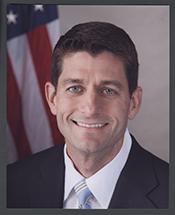
Mr. Speaker, I hate to have to come to the floor today to talk about how bad this bill is, but it's impossible not to do that. This bill gives millions of dollars, billions of dollars in farm…
Mr. Speaker, I hate to have to come to the floor today to talk about how bad this bill is, but it's impossible not to do that.
This bill gives millions of dollars, billions of dollars in farm subsidies to millionaires. This bill takes all budget discipline in this Chamber and throws it out the window. It sweeps PAYGO under the rug.
Ninety-seven percent of the world's consumers don't live in this country. They're overseas. And the way we help farmers is to open up markets to their products overseas. This bill shuts that down. This bill makes it next to impossible for us to be able to open up markets for our farmers.
A farm bill ought to help the family farmer in tough times. This doesn't do that. This is corporate welfare. This is subsidies for multi-millionaires. In fact, you can still live on Wall Street, make half a million dollars and get farm subsidies under this bill.
This bill is not going to help agriculture. This bill is going to help corporate agriculture, not family farmers.
I believe that we should sustain the President's veto. And this is not always good to say it's bipartisan. And I hope, on a bipartisan basis, we support this veto and pass a farm bill that actually helps the family farmer and takes away these exorbitant subsidies to multi- millionaire corporate farming operations.
We ought to protect conservation. We ought to help the Third World raise themselves out of poverty, and we ought to open up markets for our farmers so they have more people to sell their products to. That's what a farm bill ought to look like. That's not what this farm bill does.
I urge a sustain of the veto.
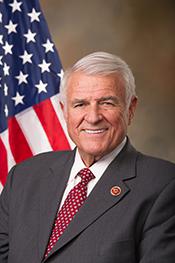
Madam Speaker, on rollcall No. 343, the Motion to Recommit H.R. 6049 with Instructions, I was unavoidably absent due to a family medical emergency. Had I been present, I would have voted ``yea''. On…
Madam Speaker, on rollcall No. 343, the Motion to Recommit H.R. 6049 with Instructions, I was unavoidably absent due to a family medical emergency. Had I been present, I would have voted ``yea''.
On rollcall No. 344, on Passage of H.R. 6049, the Renewable Energy and Job Creation Act, I was unavoidably absent due to a family medical emergency. Had I been present, I would have voted ``no''.
On rollcall No. 345, on Motion to Suspend the Rules and Pass H.R. 1771, the Crane Conservation Act of 2008, as Amended, I was unavoidably absent due to a family medical emergency. Had I been present, I would have voted ``no''.
On rollcall No. 346, on Passage of H.R. 2419, the Farm, Nutrition, and Bioenergy Act, Objections of the President Not Withstanding, I was unavoidably absent due to a family medical emergency. Had I been present, I would have voted ``yea''.
On rollcall No. 347, on Motion to Suspend the Rules and Pass H.R. 3819, the Veterans Emergency Care Fairness Act of 2008 as Amended, I was unavoidably absent due to a family medical emergency. Had I been present, I would have voted ``yea.''
On rollcall No. 348, on Motion to Suspend the Rules and Pass H.R. 5826, the Veterans' Compensation Cost-of-Living Adjustment Act of 2008, I was unavoidably absent due to a family medical emergency. Had I been present, I would have voted ``yea.''
On rollcall No. 349, on Motion to Suspend the Rules and Pass H.R. 5856, the Department of Veterans Affairs Medical Facility Authorization and Lease Act, I was unavoidably absent due to a family medical emergency. Had I been present, I would have voted ``yea''.
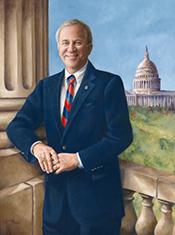
Mr. Speaker, I rise today in support of S. 2617, the Veterans' Compensation Cost-of-Living Adjustment Act of 2008. Each year, the House and Senate Committees on Veterans' Affairs bring before…
Mr. Speaker, I rise today in support of S. 2617, the Veterans' Compensation Cost-of-Living Adjustment Act of 2008.
Each year, the House and Senate Committees on Veterans' Affairs bring before Congress legislation to adjust the compensation our veterans receive through the cost-of-living adjustment. Our Nation's veterans have sacrificed so much for this country, and we fulfill our obligation to them by providing this annual adjustment to their benefits to help them keep up with the cost-of-living. The House already passed H.R. 5826 on May 21, 2008. The bill before us is the Senate version of that same bill.
Mr. Speaker, this legislation will provide our veterans an increase in their wartime disability compensation, additional compensation for benefits, clothing allowance, dependency and indemnity compensation to surviving spouses, and dependency and indemnity compensation to children. This is an important ``must-pass'' bill, which will ensure our veterans receive the increase to their benefits on time.
I would like to thank Chairman Filner, as well as Disability and Memorial Affairs Subcommittee Chairman John Hall, and Ranking Member Doug Lamborn for their efforts to bring this bill to the House floor in an expeditious manner. Our action on this bill today will be the final action before the bill is presented to the President for signature, and I encourage all my colleagues to support passage of S. 2617, the Veterans' Compensation Cost-of-Living Adjustment Act of 2008.
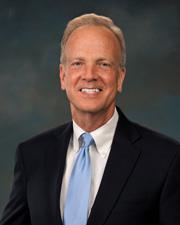
Mr. Speaker, I am a supporter of S. 2617, the Veterans Compensation Cost-of-Living Adjustment Act of 2008. On May 21 of this year, the House of Representatives passed H.R. 5826, the Veterans…
Mr. Speaker, I am a supporter of S. 2617, the Veterans Compensation Cost-of-Living Adjustment Act of 2008. On May 21 of this year, the House of Representatives passed H.R. 5826, the Veterans Compensation Cost-of-Living Act of 2008, introduced by our colleague, the gentleman from Texas, Mr. Rodriguez.
The legislation before us today is the Senate companion to that bill. It would increase, effective December 1, 2008, the rates of compensation for veterans with service-connected disabilities and the rates of dependency and indemnity compensation for the survivors of certain disabled veterans.
I would like to thank the gentleman from California, the chairman, Mr. Filner, and the ranking member, the gentleman from Indiana, Mr. Buyer, for bringing this bill to the floor in a timely manner, and acknowledge the efforts by our colleagues, the Chairman of the Subcommittee, Mr. Hall, and the ranking member, Mr. Lamborn, for their work and leadership on improving benefits for our veterans.
The legislation before us is an important annual authorization which provides our Nation's veterans with a timely increase in their compensation later this year. It was requested by the Bush administration, and the House passage today will send this bill to the President to be signed into law.
Mr. Speaker, I encourage my colleagues to support this bill.
I reserve the balance of my time.
Mr. Speaker, I yield back the balance of my time.
General Leave
Bill Text
4 versions available
        [Congressional Bills 110th Congress]
[From the U.S. Government Printing Office]
[H.R. 5826 Referred in Senate (RFS)]

2d Session
H. R. 5826

_______________________________________________________________________

IN THE SENATE OF THE UNITED STATES

May 22, 2008

Received; read twice and referred to the Committee on Veterans' Affairs

_______________________________________________________________________

AN ACT

To increase, effective as of December 1, 2008, the rates of disability
compensation for veterans with service-connected disabilities and the
rates of dependency and indemnity compensation for survivors of certain
service-connected disabled veterans, and for other purposes.

Be it enacted by the Senate and House of Representatives of the
United States of America in Congress assembled,

SECTION 1. SHORT TITLE.

This Act may be cited as ``Veterans' Compensation Cost-of-Living
Adjustment Act of 2008''.

SEC. 2. INCREASE IN RATES OF DISABILITY COMPENSATION AND DEPENDENCY AND
INDEMNITY COMPENSATION.

(a) Rate Adjustment.--Effective on December 1, 2008, the Secretary
of Veterans Affairs shall increase, in accordance with subsection (c),
the dollar amounts in effect on November 30, 2008, for the payment of
disability compensation and dependency and indemnity compensation under
the provisions specified in subsection (b).
(b) Amounts To Be Increased.--The dollar amounts to be increased
pursuant to subsection (a) are the following:
(1) Wartime disability compensation.--Each of the dollar
amounts under section 1114 of title 38, United States Code.
(2) Additional compensation for dependents.--Each of the
dollar amounts under sections 1115(1) of such title.
(3) Clothing allowance.--The dollar amount under section
1162 of such title.
(4) Dependency and indemnity compensation to surviving
spouse.--Each of the dollar amounts under subsections (a)
through (d) of section 1311 of such title.
(5) Dependency and indemnity compensation to children.--
Each of the dollar amounts under sections 1313(a) and 1314 of
such title.
(c) Determination of Increase.--
(1) Percentage.--Except as provided in paragraph (2), each
dollar amount described in subsection (b) shall be increased by
the same percentage as the percentage by which benefit amounts
payable under title II of the Social Security Act (42 U.S.C.
401 et seq.) are increased effective December 1, 2008, as a
result of a determination under section 215(i) of such Act (42
U.S.C. 415(i)).
(2) Rounding.--Each dollar amount increased under paragraph
(1), if not a whole dollar amount, shall be rounded to the next
lower whole dollar amount.
(d) Special Rule.--The Secretary of Veterans Affairs may adjust
administratively, consistent with the increases made under subsection
(a), the rates of disability compensation payable to persons under
section 10 of Public Law 85-857 (72 Stat. 1263) who have not received
compensation under chapter 11 of title 38, United States Code.

SEC. 3. PUBLICATION OF ADJUSTED RATES.

The Secretary of Veterans Affairs shall publish in the Federal
Register the amounts specified in section 2(b), as increased under that
section, not later than the date on which the matters specified in
section 215(i)(2)(D) of the Social Security Act (42 U.S.C.
415(i)(2)(D)) are required to be published by reason of a determination
made under section 215(i) of such Act during fiscal year 2009.

Passed the House of Representatives May 21, 2008.

Attest:

LORRAINE C. MILLER,

Clerk.