Great Lakes-St. Lawrence River Basin Water Resources Compact
 Rep. James L. Oberstar (D-MN)
Legislative Activity
Stay on top of the latest movement without scrolling through every action
Placed on the Union Calendar, Calendar No. 560.
September 22, 2008
View full timeline
Introduced in House
July 23, 2008
Referred to the House Committee on the Judiciary.
July 23, 2008
Reported by the Committee on Judiciary. H. Rept. 110-863.
September 22, 2008
Placed on the Union Calendar, Calendar No. 560.
September 22, 2008
Floor Debate
8 membersWhat members said about H.R. 6577 on the floor



 +3
+3
Floor Debate
8 membersWhat members said about H.R. 6577 on the floor
Mr. Speaker, I move to suspend the rules and pass the Senate joint resolution (S.J. Res. 45) expressing the consent and approval of Congress to an interstate compact regarding water resources in the…
Mr. Speaker, I rise in strong support of S.J. Res. 45, the Great Lakes-St. Lawrence River Basin Water Resources Compact. In July, I, together with the gentleman from Michigan (Mr. Conyers, Jr.),…
I thank the gentlewoman for yielding time. Mr. Speaker, I rise in opposition to the Great Lakes-St. Lawrence River Basin Water Resource Compact. I am deeply concerned that this compact would allow…
Mr. Speaker, I rise today in strong support of S.J. Res. 45, the Great Lakes--St. Lawrence River Basin Water Resources Compact. This resolution represents the culmination of efforts, which started…
Mr. Speaker, as a co-chairman of the Congressional Great Lakes Task Force I am pleased to rise in support of S.J. Res. 45, the Great Lakes--St. Lawrence River Basin Water Resources Compact. This…
Show 3 more

Mr. Speaker, I rise today in support of S.J. Res. 45, the Great Lakes--St. Lawrence River Basin Water Resources Compact. I am proud to be an original co-sponsor of the House companion, H.R. 6577.…

Mr. Speaker, I rise in strong support of the legislation before the House to grant congressional approval of the Great Lakes Compact. Passage of this legislation today is essential to the health of…
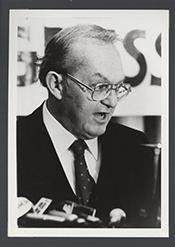
Mr. Speaker, I yield myself such time as I may consume. Mr. Speaker, the gentlewoman from Ohio pretty thoroughly covered this already. The compact we are called upon to approve today caps off years…
Bill Text
2 versions available
        [Congressional Bills 110th Congress]
[From the U.S. Government Printing Office]
[H.R. 6577 Reported in House (RH)]

Union Calendar No. 560
110th CONGRESS
2d Session
H. R. 6577

[Report No. 110-863]

To express the consent and approval of Congress to an interstate
compact regarding water resources in the Great Lakes-St. Lawrence River
Basin.

_______________________________________________________________________

IN THE HOUSE OF REPRESENTATIVES

July 23, 2008

Mr. Oberstar (for himself, Mr. LaTourette, Mr. Conyers, Mr. Ehlers, Mr.
Higgins, Mr. English of Pennsylvania, Ms. Sutton, Mr. Sensenbrenner,
Mr. Ryan of Ohio, Mrs. Miller of Michigan, Ms. Baldwin, Mr. Camp of
Michigan, Ms. Kaptur, Mr. Petri, Mrs. Jones of Ohio, Mr. Emanuel, Mr.
Kagen, Mr. Lipinski, Mr. Nadler, Mr. Visclosky, Ms. Moore of Wisconsin,
Mr. Obey, Mr. Levin, Mr. Rogers of Michigan, Mr. Kirk, Mr. Dingell, and
Mr. Kildee) introduced the following bill; which was referred to the
Committee on the Judiciary

September 22, 2008

Additional sponsors: Ms. Slaughter, Mr. McCotter, Mr. Upton, Mr.
Knollenberg, Ms. Kilpatrick, Mr. Ackerman, Mrs. Maloney of New York,
Mr. Wilson of Ohio, Mr. Costello, Mr. Hoekstra, Mr. Reynolds, Mr. Kind,
Mr. McHugh, Mr. Donnelly, Mr. Ryan of Wisconsin, Mr. Walsh of New York,
Mr. Hinchey, Mr. Arcuri, Mr. Walberg, Mr. Kuhl of New York, and Mr.
Tiberi

September 22, 2008

Committed to the Committee of the Whole House on the State of the Union
and ordered to be printed

_______________________________________________________________________

A BILL

To express the consent and approval of Congress to an interstate
compact regarding water resources in the Great Lakes-St. Lawrence River
Basin.

Be it enacted by the Senate and House of Representatives of the
United States of America in Congress assembled,

SECTION 1. CONSENT OF CONGRESS.

(a) In General.--The consent and approval of Congress is given to
the Great Lakes-St. Lawrence River Basin Water Resources Compact
entered into between the States of Illinois, Indiana, Michigan,
Minnesota, New York, Ohio, and Wisconsin, and the Commonwealth of
Pennsylvania, as set out in subsection (b).
(b) Compact.--The compact reads substantially as follows:

``AGREEMENT

``Section 1. The states of Illinois, Indiana, Michigan, Minnesota,
New York, Ohio and Wisconsin and the Commonwealth of Pennsylvania
hereby solemnly covenant and agree with each other, upon enactment of
concurrent legislation by the respective state legislatures and consent
by the Congress of the United States as follows:

``GREAT LAKES-ST. LAWRENCE RIVER BASIN WATER RESOURCES COMPACT

``ARTICLE 1

``SHORT TITLE, DEFINITIONS, PURPOSES AND DURATION

``Section 1.1. Short Title. This act shall be known and may be cited as
the ``Great Lakes-St. Lawrence River Basin Water Resources Compact''.
``Section 1.2. Definitions. For the purposes of this Compact, and of
any supplemental or concurring legislation enacted pursuant thereto,
except as may be otherwise required by the context:
```Adaptive Management' means a Water resources management system
that provides a systematic process for evaluation, monitoring and
learning from the outcomes of operational programs and adjustment of
policies, plans and programs based on experience and the evolution of
scientific knowledge concerning Water resources and Water Dependent
Natural Resources.
```Agreement' means the Great Lakes-St. Lawrence River Basin
Sustainable Water Resources Agreement.
```Applicant' means a Person who is required to submit a Proposal
that is subject to management and regulation under this Compact.
`Application' has a corresponding meaning.
```Basin' or `Great Lakes-St. Lawrence River Basin' means the
watershed of the Great Lakes and the St. Lawrence River upstream from
Trois-Rivieres, Quebec within the jurisdiction of the Parties.
```Basin Ecosystem' or `Great Lakes-St. Lawrence River Basin
Ecosystem' means the interacting components of air, land, Water and
living organisms, including humankind, within the Basin.
```Community within a Straddling County' means any incorporated
city, town or the equivalent thereof, that is located outside the Basin
but wholly within a County that lies partly within the Basin and that
is not a Straddling Community.
```Compact' means this Compact.
```Consumptive Use' means that portion of the Water Withdrawn or
withheld from the Basin that is lost or otherwise not returned to the
Basin due to evaporation, incorporation into Products, or other
processes.
```Council' means the Great Lakes-St. Lawrence River Basin Water
Resources Council, created by this Compact.
```Council Review' means the collective review by the Council
members as described in Article 4 of this Compact.
```County' means the largest territorial division for local
government in a State. The County boundaries shall be defined as those
boundaries that exist as of December 13, 2005.
```Cumulative Impacts' means the impact on the Basin Ecosystem that
results from incremental effects of all aspects of a Withdrawal,
Diversion or Consumptive Use in addition to other past, present, and
reasonably foreseeable future Withdrawals, Diversions and Consumptive
Uses regardless of who undertakes the other Withdrawals, Diversions and
Consumptive Uses. Cumulative Impacts can result from individually minor
but collectively significant Withdrawals, Diversions and Consumptive
Uses taking place over a period of time.
```Decision-Making Standard' means the decision-making standard
established by Section 4.11 for Proposals subject to management and
regulation in Section 4.10.
```Diversion' means a transfer of Water from the Basin into another
watershed, or from the watershed of one of the Great Lakes into that of
another by any means of transfer, including but not limited to a
pipeline, canal, tunnel, aqueduct, channel, modification of the
direction of a water course, a tanker ship, tanker truck or rail tanker
but does not apply to Water that is used in the Basin or a Great Lake
watershed to manufacture or produce a Product that is then transferred
out of the Basin or watershed. `Divert' has a corresponding meaning.
```Environmentally Sound and Economically Feasible Water
Conservation Measures' means those measures, methods, technologies or
practices for efficient water use and for reduction of water loss and
waste or for reducing a Withdrawal, Consumptive Use or Diversion that
i) are environmentally sound, ii) reflect best practices applicable to
the water use sector, iii) are technically feasible and available, iv)
are economically feasible and cost effective based on an analysis that
considers direct and avoided economic and environmental costs and v)
consider the particular facilities and processes involved, taking into
account the environmental impact, age of equipment and facilities
involved, the processes employed, energy impacts and other appropriate
factors.
```Exception' means a transfer of Water that is excepted under
Section 4.9 from the prohibition against Diversions in Section 4.8.
```Exception Standard' means the standard for Exceptions
established in Section 4.9.4.
```Intra-Basin Transfer' means the transfer of Water from the
watershed of one of the Great Lakes into the watershed of another Great
Lake.
```Measures' means any legislation, law, regulation, directive,
requirement, guideline, program, policy, administrative practice or
other procedure.
```New or Increased Diversion' means a new Diversion, an increase
in an existing Diversion, or the alteration of an existing Withdrawal
so that it becomes a Diversion.
```New or Increased Withdrawal or Consumptive Use' means a new
Withdrawal or Consumptive Use or an increase in an existing Withdrawal
or Consumptive Use.
```Originating Party' means the Party within whose jurisdiction an
Application or registration is made or required.
```Party' means a State party to this Compact.
```Person' means a human being or a legal person, including a
government or a nongovernmental organization, including any scientific,
professional, business, non-profit, or public interest organization or
association that is neither affiliated with, nor under the direction of
a government.
```Product' means something produced in the Basin by human or
mechanical effort or through agricultural processes and used in
manufacturing, commercial or other processes or intended for
intermediate or end use consumers. (i) Water used as part of the
packaging of a Product shall be considered to be part of the Product.
(ii) Other than Water used as part of the packaging of a Product, Water
that is used primarily to transport materials in or out of the Basin is
not a Product or part of a Product. (iii) Except as provided in (i)
above, Water which is transferred as part of a public or private supply
is not a Product or part of a Product. (iv) Water in its natural state
such as in lakes, rivers, reservoirs, aquifers, or water basins is not
a Product.
```Proposal' means a Withdrawal, Diversion or Consumptive Use of
Water that is subject to this Compact.
```Province' means Ontario or Quebec.
```Public Water Supply Purposes' means water distributed to the
public through a physically connected system of treatment, storage and
distribution facilities serving a group of largely residential
customers that may also serve industrial, commercial, and other
institutional operators. Water Withdrawn directly from the Basin and
not through such a system shall not be considered to be used for Public
Water Supply Purposes.
```Regional Body' means the members of the Council and the Premiers
of Ontario and Quebec or their designee as established by the
Agreement.
```Regional Review' means the collective review by the Regional
Body as described in Article 4 of this Compact.
```Source Watershed' means the watershed from which a Withdrawal
originates. If Water is Withdrawn directly from a Great Lake or from
the St. Lawrence River, then the Source Watershed shall be considered
to be the watershed of that Great Lake or the watershed of the St.
Lawrence River, respectively. If Water is Withdrawn from the watershed
of a stream that is a direct tributary to a Great Lake or a direct
tributary to the St. Lawrence River, then the Source Watershed shall be
considered to be the watershed of that Great Lake or the watershed of
the St. Lawrence River, respectively, with a preference to the direct
tributary stream watershed from which it was Withdrawn.
```Standard of Review and Decision' means the Exception Standard,
Decision-Making Standard and reviews as outlined in Article 4 of this
Compact.
```State' means one of the states of Illinois, Indiana, Michigan,
Minnesota, New York, Ohio or Wisconsin or the Commonwealth of
Pennsylvania.
```Straddling Community' means any incorporated city, town or the
equivalent thereof, wholly within any County that lies partly or
completely within the Basin, whose corporate boundary existing as of
the effective date of this Compact, is partly within the Basin or
partly within two Great Lakes watersheds.
```Technical Review' means a detailed review conducted to determine
whether or not a Proposal that requires Regional Review under this
Compact meets the Standard of Review and Decision following procedures
and guidelines as set out in this Compact.
```Water' means ground or surface water contained within the Basin.
```Water Dependent Natural Resources' means the interacting
components of land, Water and living organisms affected by the Waters
of the Basin.
```Waters of the Basin or Basin Water' means the Great Lakes and
all streams, rivers, lakes, connecting channels and other bodies of
water, including tributary groundwater, within the Basin.
```Withdrawal' means the taking of water from surface water or
groundwater. `Withdraw' has a corresponding meaning.
``Section 1.3. Findings and Purposes.
``The legislative bodies of the respective Parties hereby find and
declare:
``1. Findings:
``a. The Waters of the Basin are precious public
natural resources shared and held in trust by the
States;
``b. The Waters of the Basin are interconnected and
part of a single hydrologic system;
``c. The Waters of the Basin can concurrently serve
multiple uses. Such multiple uses include municipal,
public, industrial, commercial, agriculture, mining,
navigation, energy development and production,
recreation, the subsistence, economic and cultural
activities of native peoples, Water quality
maintenance, and the maintenance of fish and wildlife
habitat and a balanced ecosystem. And, other purposes
are encouraged, recognizing that such uses are
interdependent and must be balanced;
``d. Future Diversions and Consumptive Uses of
Basin Water resources have the potential to
significantly impact the environment, economy and
welfare of the Great Lakes-St. Lawrence River region;
``e. Continued sustainable, accessible and adequate
Water supplies for the people and economy of the Basin
are of vital importance; and,
``f. The Parties have a shared duty to protect,
conserve, restore, improve and manage the renewable but
finite Waters of the Basin for the use, benefit and
enjoyment of all their citizens, including generations
yet to come. The most effective means of protecting,
conserving, restoring, improving and managing the Basin
Waters is through the joint pursuit of unified and
cooperative principles, policies and programs mutually-
agreed upon, enacted and adhered to by all Parties.
``2. Purposes:
``a. To act together to protect, conserve, restore, improve
and effectively manage the Waters and Water Dependent Natural
Resources of the Basin under appropriate arrangements for
intergovernmental cooperation and consultation because current
lack of full scientific certainty should not be used as a
reason for postponing measures to protect the Basin Ecosystem;
``b. To remove causes of present and future controversies;
``c. To provide for cooperative planning and action by the
Parties with respect to such Water resources;
``d. To facilitate consistent approaches to Water
management across the Basin while retaining State management
authority over Water management decisions within the Basin;
``e. To facilitate the exchange of data, strengthen the
scientific information base upon which decisions are made and
engage in consultation on the potential effects of proposed
Withdrawals and losses on the Waters and Water Dependent
Natural Resources of the Basin;
``f. To prevent significant adverse impacts of Withdrawals
and losses on the Basin's ecosystems and watersheds;
``g. To promote interstate and State-Provincial comity;
and,
``h. To promote an Adaptive Management approach to the
conservation and management of Basin Water resources, which
recognizes, considers and provides adjustments for the
uncertainties in, and evolution of, scientific knowledge
concerning the Basin's Waters and Water Dependent Natural
Resources.
``Section 1.4. Science.
``1. The Parties commit to provide leadership for the development
of a collaborative strategy with other regional partners to strengthen
the scientific basis for sound Water management decision making under
this Compact.
``2. The strategy shall guide the collection and application of
scientific information to support:
``a. An improved understanding of the individual and
Cumulative Impacts of Withdrawals from various locations and
Water sources on the Basin Ecosystem and to develop a mechanism
by which impacts of Withdrawals may be assessed;
``b. The periodic assessment of Cumulative Impacts of
Withdrawals, Diversions and Consumptive Uses on a Great Lake
and St. Lawrence River watershed basis;
``c. Improved scientific understanding of the Waters of the
Basin;
``d. Improved understanding of the role of groundwater in
Basin Water resources management; and,
``e. The development, transfer and application of science
and research related to Water conservation and Water use
efficiency.

``ARTICLE 2

``ORGANIZATION

``Section 2.1. Council Created.
``The Great Lakes-St. Lawrence River Basin Water Resources Council
is hereby created as a body politic and corporate, with succession for
the duration of this Compact, as an agency and instrumentality of the
governments of the respective Parties.
``Section 2.2. Council Membership.
``The Council shall consist of the Governors of the Parties, ex
officio.
``Section 2.3. Alternates.
``Each member of the Council shall appoint at least one alternate
who may act in his or her place and stead, with authority to attend all
meetings of the Council and with power to vote in the absence of the
member. Unless otherwise provided by law of the Party for which he or
she is appointed, each alternate shall serve during the term of the
member appointing him or her, subject to removal at the pleasure of the
member. In the event of a vacancy in the office of alternate, it shall
be filled in the same manner as an original appointment for the
unexpired term only.
``Section 2.4. Voting.
``1. Each member is entitled to one vote on all matters that may
come before the Council.
``2. Unless otherwise stated, the rule of decision shall be by a
simple majority.
``3. The Council shall annually adopt a budget for each fiscal year
and the amount required to balance the budget shall be apportioned
equitably among the Parties by unanimous vote of the Council. The
appropriation of such amounts shall be subject to such review and
approval as may be required by the budgetary processes of the
respective Parties.
``4. The participation of Council members from a majority of the
Parties shall constitute a quorum for the transaction of business at
any meeting of the Council.
``Section 2.5. Organization and Procedure.
``The Council shall provide for its own organization and procedure,
and may adopt rules and regulations governing its meetings and
transactions, as well as the procedures and timeline for submission,
review and consideration of Proposals that come before the Council for
its review and action. The Council shall organize, annually, by the
election of a Chair and Vice Chair from among its members. Each member
may appoint an advisor, who may attend all meetings of the Council and
its committees, but shall not have voting power. The Council may employ
or appoint professional and administrative personnel, including an
Executive Director, as it may deem advisable, to carry out the purposes
of this Compact.
``Section 2.6. Use of Existing Offices and Agencies.
``It is the policy of the Parties to preserve and utilize the
functions, powers and duties of existing offices and agencies of
government to the extent consistent with this Compact. Further, the
Council shall promote and aid the coordination of the activities and
programs of the Parties concerned with Water resources management in
the Basin. To this end, but without limitation, the Council may:
``1. Advise, consult, contract, assist or otherwise
cooperate with any and all such agencies;
``2. Employ any other agency or instrumentality of any of
the Parties for any purpose; and,
``3. Develop and adopt plans consistent with the Water
resources plans of the Parties.
``Section 2.7. Jurisdiction.
``The Council shall have, exercise and discharge its functions,
powers and duties within the limits of the Basin. Outside the Basin, it
may act in its discretion, but only to the extent such action may be
necessary or convenient to effectuate or implement its powers or
responsibilities within the Basin and subject to the consent of the
jurisdiction wherein it proposes to act.
``Section 2.8. Status, Immunities and Privileges.
``1. The Council, its members and personnel in their official
capacity and when engaged directly in the affairs of the Council, its
property and its assets, wherever located and by whomsoever held, shall
enjoy the same immunity from suit and every form of judicial process as
is enjoyed by the Parties, except to the extent that the Council may
expressly waive its immunity for the purposes of any proceedings or by
the terms of any contract.
``2. The property and assets of the Council, wherever located and
by whomsoever held, shall be considered public property and shall be
immune from search, requisition, confiscation, expropriation or any
other form of taking or foreclosure by executive or legislative action.
``3. The Council, its property and its assets, income and the
operations it carries out pursuant to this Compact shall be immune from
all taxation by or under the authority of any of the Parties or any
political subdivision thereof; provided, however, that in lieu of
property taxes the Council may make reasonable payments to local taxing
districts in annual amounts which shall approximate the taxes lawfully
assessed upon similar property.
``Section 2.9. Advisory Committees.
``The Council may constitute and empower advisory committees, which
may be comprised of representatives of the public and of federal,
State, tribal, county and local governments, water resources agencies,
water-using industries and sectors, water-interest groups and academic
experts in related fields.

``ARTICLE 3

``GENERAL POWERS AND DUTIES

``Section 3.1. General.
``The Waters and Water Dependent Natural Resources of the Basin are
subject to the sovereign right and responsibilities of the Parties, and
it is the purpose of this Compact to provide for joint exercise of such
powers of sovereignty by the Council in the common interests of the
people of the region, in the manner and to the extent provided in this
Compact. The Council and the Parties shall use the Standard of Review
and Decision and procedures contained in or adopted pursuant to this
Compact as the means to exercise their authority under this Compact.
The Council may revise the Standard of Review and Decision, after
consultation with the Provinces and upon unanimous vote of all Council
members, by regulation duly adopted in accordance with Section 3.3 of
this Compact and in accordance with each Party's respective statutory
authorities and applicable procedures. The Council shall identify
priorities and develop plans and policies relating to Basin Water
resources. It shall adopt and promote uniform and coordinated policies
for Water resources conservation and management in the Basin.
``Section 3.2. Council Powers.
``The Council may: plan; conduct research and collect, compile,
analyze, interpret, report and disseminate data on Water resources and
uses; forecast Water levels; conduct investigations; institute court
actions; design, acquire, construct, reconstruct, own, operate,
maintain, control, sell and convey real and personal property and any
interest therein as it may deem necessary, useful or convenient to
carry out the purposes of this Compact; make contracts; receive and
accept such payments, appropriations, grants, gifts, loans, advances
and other funds, properties and services as may be transferred or made
available to it by any Party or by any other public or private agency,
corporation or individual; and, exercise such other and different
powers as may be delegated to it by this Compact or otherwise pursuant
to law, and have and exercise all powers necessary or convenient to
carry out its express powers or which may be reasonably implied
therefrom.
``Section 3.3. Rules and Regulations.
``1. The Council may promulgate and enforce such rules and
regulations as may be necessary for the implementation and enforcement
of this Compact. The Council may adopt by regulation, after public
notice and public hearing, reasonable Application fees with respect to
those Proposals for Exceptions that are subject to Council review under
Section 4.9. Any rule or regulation of the Council, other than one
which deals solely with the internal management of the Council or its
property, shall be adopted only after public notice and hearing.
``2. Each Party, in accordance with its respective statutory
authorities and applicable procedures, may adopt and enforce rules and
regulations to implement and enforce this Compact and the programs
adopted by such Party to carry out the management programs contemplated
by this Compact.
``Section 3.4. Program Review and Findings.
``1. Each Party shall submit a report to the Council and the
Regional Body detailing its Water management and conservation and
efficiency programs that implement this Compact. The report shall set
out the manner in which Water Withdrawals are managed by sector, Water
source, quantity or any other means, and how the provisions of the
Standard of Review and Decision and conservation and efficiency
programs are implemented. The first report shall be provided by each
Party one year from the effective date of this Compact and thereafter
every 5 years.
``2. The Council, in cooperation with the Provinces, shall review
its Water management and conservation and efficiency programs and those
of the Parties that are established in this Compact and make findings
on whether the Water management program provisions in this Compact are
being met, and if not, recommend options to assist the Parties in
meeting the provisions of this Compact. Such review shall take place:
``a. 30 days after the first report is submitted by all
Parties; and,
``b. Every five years after the effective date of this
Compact; and,
``c. At any other time at the request of one of the
Parties.
``3. As one of its duties and responsibilities, the Council may
recommend a range of approaches to the Parties with respect to the
development, enhancement and application of Water management and
conservation and efficiency programs to implement the Standard of
Review and Decision reflecting improved scientific understanding of the
Waters of the Basin, including groundwater, and the impacts of
Withdrawals on the Basin Ecosystem.

``ARTICLE 4

``WATER MANAGEMENT AND REGULATION

``Section 4.1. Water Resources Inventory, Registration and Reporting.
``1. Within five years of the effective date of this Compact, each
Party shall develop and maintain a Water resources inventory for the
collection, interpretation, storage, retrieval exchange, and
dissemination of information concerning the Water resources of the
Party, including, but not limited to, information on the location,
type, quantity, and use of those resources and the location, type, and
quantity of Withdrawals, Diversions and Consumptive Uses. To the extent
feasible, the Water resources inventory shall be developed in
cooperation with local, State, federal, tribal and other private
agencies and entities, as well as the Council. Each Party's agencies
shall cooperate with that Party in the development and maintenance of
the inventory.
``2. The Council shall assist each Party to develop a common base
of data regarding the management of the Water Resources of the Basin
and to establish systematic arrangements for the exchange of those data
with other States and Provinces.
``3. To develop and maintain a compatible base of Water use
information, within five years of the effective date of this Compact
any Person who Withdraws Water in an amount of 100,000 gallons per day
or greater average in any 30-day period (including Consumptive Uses)
from all sources, or Diverts Water of any amount, shall register the
Withdrawal or Diversion by a date set by the Council unless the Person
has previously registered in accordance with an existing State program.
The Person shall register the Withdrawal or Diversion with the
Originating Party using a form prescribed by the Originating Party that
shall include, at a minimum and without limitation: the name and
address of the registrant and date of registration; the locations and
sources of the Withdrawal or Diversion; the capacity of the Withdrawal
or Diversion per day and the amount Withdrawn or Diverted from each
source; the uses made of the Water; places of use and places of
discharge; and, such other information as the Originating Party may
require. All registrations shall include an estimate of the volume of
the Withdrawal or Diversion in terms of gallons per day average in any
30-day period.
``4. All registrants shall annually report the monthly volumes of
the Withdrawal, Consumptive Use and Diversion in gallons to the
Originating Party and any other information requested by the
Originating Party.
``5. Each Party shall annually report the information gathered
pursuant to this Section to a Great Lakes-St. Lawrence River Water use
data base repository and aggregated information shall be made publicly
available, consistent with the confidentiality requirements in Section
8.3.
``6. Information gathered by the Parties pursuant to this Section
shall be used to improve the sources and applications of scientific
information regarding the Waters of the Basin and the impacts of the
Withdrawals and Diversions from various locations and Water sources on
the Basin Ecosystem, and to better understand the role of groundwater
in the Basin. The Council and the Parties shall coordinate the
collection and application of scientific information to further develop
a mechanism by which individual and Cumulative Impacts of Withdrawals,
Consumptive Uses and Diversions shall be assessed.
``Section 4.2. Water Conservation and Efficiency Programs.
``1. The Council commits to identify, in cooperation with the
Provinces, Basin-wide Water conservation and efficiency objectives to
assist the Parties in developing their Water conservation and
efficiency program. These objectives are based on the goals of:
``a. Ensuring improvement of the Waters and Water Dependent
Natural Resources;
``b. Protecting and restoring the hydrologic and ecosystem
integrity of the Basin;
``c. Retaining the quantity of surface water and
groundwater in the Basin;
``d. Ensuring sustainable use of Waters of the Basin; and,
``e. Promoting the efficiency of use and reducing losses
and waste of Water.
``2. Within two years of the effective date of this Compact, each
Party shall develop its own Water conservation and efficiency goals and
objectives consistent with the Basin-wide goals and objectives, and
shall develop and implement a Water conservation and efficiency
program, either voluntary or mandatory, within its jurisdiction based
on the Party's goals and objectives. Each Party shall annually assess
its programs in meeting the Party's goals and objectives, report to the
Council and the Regional Body and make this annual assessment available
to the public.
``3. Beginning five years after the effective date of this Compact,
and every five years thereafter, the Council, in cooperation with the
Provinces, shall review and modify as appropriate the Basin-wide
objectives, and the Parties shall have regard for any such
modifications in implementing their programs. This assessment will be
based on examining new technologies, new patterns of Water use, new
resource demands and threats, and the Cumulative Impact assessment
under Section 4.15.
``4. Within two years of the effective date of this Compact, the
Parties commit to promote Environmentally Sound and Economically
Feasible Water Conservation Measures such as:
``a. Measures that promote efficient use of Water;
``b. Identification and sharing of best management
practices and state of the art conservation and efficiency
technologies;
``c. Application of sound planning principles;
``d. Demand-side and supply-side Measures or incentives;
and,
``e. Development, transfer and application of science and
research.
``5. Each Party shall implement in accordance with paragraph 2
above a voluntary or mandatory Water conservation program for all,
including existing, Basin Water users. Conservation programs need to
adjust to new demands and the potential impacts of cumulative effects
and climate.
``Section 4.3. Party Powers and Duties.
``1. Each Party, within its jurisdiction, shall manage and regulate
New or Increased Withdrawals, Consumptive Uses and Diversions,
including Exceptions, in accordance with this Compact.
``2. Each Party shall require an Applicant to submit an Application
in such manner and with such accompanying information as the Party
shall prescribe.
``3. No Party may approve a Proposal if the Party determines that
the Proposal is inconsistent with this Compact or the Standard of
Review and Decision or any implementing rules or regulations
promulgated thereunder. The Party may approve, approve with
modifications or disapprove any Proposal depending on the Proposal's
consistency with this Compact and the Standard of Review and Decision.
``4. Each Party shall monitor the implementation of any approved
Proposal to ensure consistency with the approval and may take all
necessary enforcement actions.
``5. No Party shall approve a Proposal subject to Council or
Regional Review, or both, pursuant to this Compact unless it shall have
been first submitted to and reviewed by either the Council or Regional
Body, or both, and approved by the Council, as applicable. Sufficient
opportunity shall be provided for comment on the Proposal's consistency
with this Compact and the Standard of Review and Decision. All such
comments shall become part of the Party's formal record of decision,
and the Party shall take into consideration any such comments received.
``Section 4.4. Requirement for Originating Party Approval.
``No Proposal subject to management and regulation under this
Compact shall hereafter be undertaken by any Person unless it shall
have been approved by the Originating Party.
``Section 4.5. Regional Review.
``1. General.
``a. It is the intention of the Parties to participate in
Regional Review of Proposals with the Provinces, as described
in this Compact and the Agreement.
``b. Unless the Applicant or the Originating Party
otherwise requests, it shall be the goal of the Regional Body
to conclude its review no later than 90 days after notice under
Section 4.5.2 of such Proposal is received from the Originating
Party.
``c. Proposals for Exceptions subject to Regional Review
shall be submitted by the Originating Party to the Regional
Body for Regional Review, and where applicable, to the Council
for concurrent review.
``d. The Parties agree that the protection of the integrity
of the Great Lakes-St. Lawrence River Basin Ecosystem shall be
the overarching principle for reviewing Proposals subject to
Regional Review, recognizing uncertainties with respect to
demands that may be placed on Basin Water, including
groundwater, levels and flows of the Great Lakes and the St.
Lawrence River, future changes in environmental conditions, the
reliability of existing data and the extent to which Diversions
may harm the integrity of the Basin Ecosystem.
``e. The Originating Party shall have lead responsibility
for coordinating information for resolution of issues related
to evaluation of a Proposal, and shall consult with the
Applicant throughout the Regional Review Process.
``f. A majority of the members of the Regional Body may
request Regional Review of a regionally significant or
potentially precedent setting Proposal. Such Regional Review
must be conducted, to the extent possible, within the time
frames set forth in this Section. Any such Regional Review
shall be undertaken only after consulting the Applicant.
``2. Notice from Originating Party to the Regional Body.
``a. The Originating Party shall determine if a Proposal is
subject to Regional Review. If so, the Originating Party shall
provide timely notice to the Regional Body and the public.
``b. Such notice shall not be given unless and until all
information, documents and the Originating Party's Technical
Review needed to evaluate whether the Proposal meets the
Standard of Review and Decision have been provided.
``c. An Originating Party may:
``i. Provide notice to the Regional Body of an
Application, even if notification is not required; or,
``ii. Request Regional Review of an application,
even if Regional Review is not required. Any such
Regional Review shall be undertaken only after
consulting the Applicant.
``d. An Originating Party may provide preliminary notice of
a potential Proposal.
``3. Public Participation.
``a. To ensure adequate public participation, the Regional
Body shall adopt procedures for the review of Proposals that
are subject to Regional Review in accordance with this Article.
``b. The Regional Body shall provide notice to the public
of a Proposal undergoing Regional Review. Such notice shall
indicate that the public has an opportunity to comment in
writing to the Regional Body on whether the Proposal meets the
Standard of Review and Decision.
``c. The Regional Body shall hold a public meeting in the
State or Province of the Originating Party in order to receive
public comment on the issue of whether the Proposal under
consideration meets the Standard of Review and Decision.
``d. The Regional Body shall consider the comments received
before issuing a Declaration of Finding.
``e. The Regional Body shall forward the comments it
receives to the Originating Party.
``4. Technical Review.
``a. The Originating Party shall provide the Regional Body
with its Technical Review of the Proposal under consideration.
``b. The Originating Party's Technical Review shall
thoroughly analyze the Proposal and provide an evaluation of
the Proposal sufficient for a determination of whether the
Proposal meets the Standard of Review and Decision.
``c. Any member of the Regional Body may conduct their own
Technical Review of any Proposal subject to Regional Review.
``d. At the request of the majority of its members, the
Regional Body shall make such arrangements as it considers
appropriate for an independent Technical Review of a Proposal.
``e. All Parties shall exercise their best efforts to
ensure that a Technical Review undertaken under Sections
4.5.4.c and 4.5.4.d does not unnecessarily delay the decision
by the Originating Party on the Application. Unless the
Applicant or the Originating Party otherwise requests, all
Technical Reviews shall be completed no later than 60 days
after the date the notice of the Proposal was given to the
Regional Body.
``5. Declaration of Finding.
``a. The Regional Body shall meet to consider a Proposal.
The Applicant shall be provided with an opportunity to present
the Proposal to the Regional Body at such time.
``b. The Regional Body, having considered the notice, the
Originating Party's Technical Review, any other independent
Technical Review that is made, any comments or objections
including the analysis of comments made by the public, First
Nations and federally recognized Tribes, and any other
information that is provided under this Compact shall issue a
Declaration of Finding that the Proposal under consideration:
``i. Meets the Standard of Review and Decision;
``ii. Does not meet the Standard of Review and
Decision; or,
``iii. Would meet the Standard of Review and
Decision if certain conditions were met.
``c. An Originating Party may decline to participate in a
Declaration of Finding made by the Regional Body.
``d. The Parties recognize and affirm that it is preferable
for all members of the Regional Body to agree whether the
Proposal meets the Standard of Review and Decision.
``e. If the members of the Regional Body who participate in
the Declaration of Finding all agree, they shall issue a
written Declaration of Finding with consensus.
``f. In the event that the members cannot agree, the
Regional Body shall make every reasonable effort to achieve
consensus within 25 days.
``g. Should consensus not be achieved, the Regional Body
may issue a Declaration of Finding that presents different
points of view and indicates each Party's conclusions.
``h. The Regional Body shall release the Declarations of
Finding to the public.
``i. The Originating Party and the Council shall consider
the Declaration of Finding before making a decision on the
Proposal.
``Section 4.6. Proposals Subject to Prior Notice.
``1. Beginning no later than five years of the effective date of
this Compact, the Originating Party shall provide all Parties and the
Provinces with detailed and timely notice and an opportunity to comment
within 90 days on any Proposal for a New or Increased Consumptive Use
of 5 million gallons per day or greater average in any 90-day period.
Comments shall address whether or not the Proposal is consistent with
the Standard of Review and Decision. The Originating Party shall
provide a response to any such comment received from another Party.
``2. A Party may provide notice, an opportunity to comment and a
response to comments even if this is not required under paragraph 1 of
this Section. Any provision of such notice and opportunity to comment
shall be undertaken only after consulting the Applicant.
``Section 4.7. Council Actions.
``1. Proposals for Exceptions subject to Council Review shall be
submitted by the Originating Party to the Council for Council Review,
and where applicable, to the Regional Body for concurrent review.
``2. The Council shall review and take action on Proposals in
accordance with this Compact and the Standard of Review and Decision.
The Council shall not take action on a Proposal subject to Regional
Review pursuant to this Compact unless the Proposal shall have been
first submitted to and reviewed by the Regional Body. The Council shall
consider any findings resulting from such review.
``Section 4.8. Prohibition of New or Increased Diversions.
``All New or Increased Diversions are prohibited, except as
provided for in this Article.
``Section 4.9. Exceptions to the Prohibition of Diversions.
``1. Straddling Communities. A Proposal to transfer Water to an
area within a Straddling Community but outside the Basin or outside the
source Great Lake Watershed shall be excepted from the prohibition
against Diversions and be managed and regulated by the Originating
Party provided that, regardless of the volume of Water transferred, all
the Water so transferred shall be used solely for Public Water Supply
Purposes within the Straddling Community, and:
``a. All Water Withdrawn from the Basin shall be returned,
either naturally or after use, to the Source Watershed less an
allowance for Consumptive Use. No surface water or groundwater
from outside the Basin may be used to satisfy any portion of
this criterion except if it:
``i. Is part of a water supply or wastewater
treatment system that combines water from inside and
outside of the Basin;
``ii. Is treated to meet applicable water quality
discharge standards and to prevent the introduction of
invasive species into the Basin;
``iii. Maximizes the portion of water returned to
the Source Watershed as Basin Water and minimizes the
surface water or groundwater from outside the Basin;
``b. If the Proposal results from a New or Increased
Withdrawal of 100,000 gallons per day or greater average over
any 90-day period, the Proposal shall also meet the Exception
Standard; and,
``c. If the Proposal results in a New or Increased
Consumptive Use of 5 million gallons per day or greater average
over any 90-day period, the Proposal shall also undergo
Regional Review.
``2. Intra-Basin Transfer. A Proposal for an Intra-Basin Transfer
that would be considered a Diversion under this Compact, and not
already excepted pursuant to paragraph 1 of this Section, shall be
excepted from the prohibition against Diversions, provided that:
``a. If the Proposal results from a New or Increased
Withdrawal less than 100,000 gallons per day average over any
90-day period, the Proposal shall be subject to management and
regulation at the discretion of the Originating Party.
``b. If the Proposal results from a New or Increased
Withdrawal 100,000 gallons per day or greater average over any
90-day period and if the Consumptive Use resulting from the
Withdrawal is less than 5 million gallons per day average over
any 90-day period:
``i. The Proposal shall meet the Exception Standard
and be subject to management and regulation by the
Originating Party, except that the Water may be
returned to another Great Lake watershed rather than
the Source Watershed;
``ii. The Applicant shall demonstrate that there is
no feasible, cost effective, and environmentally sound
water supply alternative within the Great Lake
watershed to which the Water will be transferred,
including conservation of existing water supplies; and,
``iii. The Originating Party shall provide notice
to the other Parties prior to making any decision with
respect to the Proposal.
``c. If the Proposal results in a New or Increased
Consumptive Use of 5 million gallons per day or greater average
over any 90-day period:
``i. The Proposal shall be subject to management
and regulation by the Originating Party and shall meet
the Exception Standard, ensuring that Water Withdrawn
shall be returned to the Source Watershed;
``ii. The Applicant shall demonstrate that there is
no feasible, cost effective, and environmentally sound
water supply alternative within the Great Lake
watershed to which the Water will be transferred,
including conservation of existing water supplies;
``iii. The Proposal undergoes Regional Review; and,
``iv. The Proposal is approved by the Council.
Council approval shall be given unless one or more
Council Members vote to disapprove.
``3. Straddling Counties. A Proposal to transfer Water to a
Community within a Straddling County that would be considered a
Diversion under this Compact shall be excepted from the prohibition
against Diversions, provided that it satisfies all of the following
conditions:
``a. The Water shall be used solely for the Public Water
Supply Purposes of the Community within a Straddling County
that is without adequate supplies of potable water;
``b. The Proposal meets the Exception Standard, maximizing
the portion of water returned to the Source Watershed as Basin
Water and minimizing the surface water or groundwater from
outside the Basin;
``c. The Proposal shall be subject to management and
regulation by the Originating Party, regardless of its size;
``d. There is no reasonable water supply alternative within
the basin in which the community is located, including
conservation of existing water supplies;
``e. Caution shall be used in determining whether or not
the Proposal meets the conditions for this Exception. This
Exception should not be authorized unless it can be shown that
it will not endanger the integrity of the Basin Ecosystem;
``f. The Proposal undergoes Regional Review; and,
``g. The Proposal is approved by the Council. Council
approval shall be given unless one or more Council Members vote
to disapprove.
A Proposal must satisfy all of the conditions listed above. Further,
substantive consideration will also be given to whether or not the
Proposal can provide sufficient scientifically based evidence that the
existing water supply is derived from groundwater that is
hydrologically interconnected to Waters of the Basin.
``4. Exception Standard. Proposals subject to management and
regulation in this Section shall be declared to meet this Exception
Standard and may be approved as appropriate only when the following
criteria are met:
``a. The need for all or part of the proposed Exception
cannot be reasonably avoided through the efficient use and
conservation of existing water supplies;
``b. The Exception will be limited to quantities that are
considered reasonable for the purposes for which it is
proposed;
``c. All Water Withdrawn shall be returned, either
naturally or after use, to the Source Watershed less an
allowance for Consumptive Use. No surface water or groundwater
from the outside the Basin may be used to satisfy any portion
of this criterion except if it:
``i. Is part of a water supply or wastewater
treatment system that combines water from inside and
outside of the Basin;
``ii. Is treated to meet applicable water quality
discharge standards and to prevent the introduction of
invasive species into the Basin;
``d. The Exception will be implemented so as to ensure that
it will result in no significant individual or cumulative
adverse impacts to the quantity or quality of the Waters and
Water Dependent Natural Resources of the Basin with
consideration given to the potential Cumulative Impacts of any
precedent-setting consequences associated with the Proposal;
``e. The Exception will be implemented so as to incorporate
Environmentally Sound and Economically Feasible Water
Conservation Measures to minimize Water Withdrawals or
Consumptive Use;
``f. The Exception will be implemented so as to ensure that
it is in compliance with all applicable municipal, State and
federal laws as well as regional interstate and international
agreements, including the Boundary Waters Treaty of 1909; and,
``g. All other applicable criteria in Section 4.9 have also
been met.
``Section 4.10. Management and Regulation of New or Increased
Withdrawals and Consumptive Uses.
``1. Within five years of the effective date of this Compact, each
Party shall create a program for the management and regulation of New
or Increased Withdrawals and Consumptive Uses by adopting and
implementing Measures consistent with the Decision-Making Standard.
Each Party, through a considered process, shall set and may modify
threshold levels for the regulation of New or Increased Withdrawals in
order to assure an effective and efficient Water management program
that will ensure that uses overall are reasonable, that Withdrawals
overall will not result in significant impacts to the Waters and Water
Dependent Natural Resources of the Basin, determined on the basis of
significant impacts to the physical, chemical, and biological integrity
of Source Watersheds, and that all other objectives of the Compact are
achieved. Each Party may determine the scope and thresholds of its
program, including which New or Increased Withdrawals and Consumptive
Uses will be subject to the program.
``2. Any Party that fails to set threshold levels that comply with
Section 4.10.1 any time before 10 years after the effective date of
this Compact shall apply a threshold level for management and
regulation of all New or Increased Withdrawals of 100,000 gallons per
day or greater average in any 90 day period.
``3. The Parties intend programs for New or Increased Withdrawals
and Consumptive Uses to evolve as may be necessary to protect Basin
Waters. Pursuant to Section 3.4, the Council, in cooperation with the
Provinces, shall periodically assess the Water management programs of
the Parties. Such assessments may produce recommendations for the
strengthening of the programs, including without limitation,
establishing lower thresholds for management and regulation in
accordance with the Decision-Making Standard.
``Section 4.11. Decision-Making Standard.
``Proposals subject to management and regulation in Section 4.10
shall be declared to meet this Decision-Making Standard and may be
approved as appropriate only when the following criteria are met:
``1. All Water Withdrawn shall be returned, either
naturally or after use, to the Source Watershed less an
allowance for Consumptive Use;
``2. The Withdrawal or Consumptive Use will be implemented
so as to ensure that the Proposal will result in no significant
individual or cumulative adverse impacts to the quantity or
quality of the Waters and Water Dependent Natural Resources and
the applicable Source Watershed;
``3. The Withdrawal or Consumptive Use will be implemented
so as to incorporate Environmentally Sound and Economically
Feasible Water Conservation Measures;
``4. The Withdrawal or Consumptive Use will be implemented
so as to ensure that it is in compliance with all applicable
municipal, State and federal laws as well as regional
interstate and international agreements, including the Boundary
Waters Treaty of 1909;
``5. The proposed use is reasonable, based upon a
consideration of the following factors:
``a. Whether the proposed Withdrawal or Consumptive
Use is planned in a fashion that provides for efficient
use of the water, and will avoid or minimize the waste
of Water;
``b. If the Proposal is for an increased Withdrawal
or Consumptive use, whether efficient use is made of
existing water supplies;
``c. The balance between economic development,
social development and environmental protection of the
proposed Withdrawal and use and other existing or
planned withdrawals and water uses sharing the water
source;
``d. The supply potential of the water source,
considering quantity, quality, and reliability and safe
yield of hydrologically interconnected water sources;
``e. The probable degree and duration of any
adverse impacts caused or expected to be caused by the
proposed Withdrawal and use under foreseeable
conditions, to other lawful consumptive or non-
consumptive uses of water or to the quantity or quality
of the Waters and Water Dependent Natural Resources of
the Basin, and the proposed plans and arrangements for
avoidance or mitigation of such impacts; and,
``f. If a Proposal includes restoration of
hydrologic conditions and functions of the Source
Watershed, the Party may consider that.
``Section 4.12. Applicability.
``1. Minimum Standard. This Standard of Review and Decision shall
be used as a minimum standard. Parties may impose a more restrictive
decision-making standard for Withdrawals under their authority. It is
also acknowledged that although a Proposal meets the Standard of Review
and Decision it may not be approved under the laws of the Originating
Party that has implemented more restrictive Measures.
``2. Baseline.
``a. To establish a baseline for determining a New or
Increased Diversion, Consumptive Use or Withdrawal, each Party
shall develop either or both of the following lists for their
jurisdiction:
``i. A list of existing Withdrawal approvals as of
the effective date of the Compact;
``ii. A list of the capacity of existing systems as
of the effective date of this Compact. The capacity of
the existing systems should be presented in terms of
Withdrawal capacity, treatment capacity, distribution
capacity, or other capacity limiting factors. The
capacity of the existing systems must represent the
state of the systems. Existing capacity determinations
shall be based upon approval limits or the most
restrictive capacity information.
``b. For all purposes of this Compact, volumes of
Diversions, Consumptive Uses, or Withdrawals of Water set forth
in the list(s) prepared by each Party in accordance with this
Section, shall constitute the baseline volume.
``c. The list(s) shall be furnished to the Regional Body
and the Council within one year of the effective date of this
Compact.
``3. Timing of Additional Applications. Applications for New or
Increased Withdrawals, Consumptive Uses or Exceptions shall be
considered cumulatively within ten years of any application.
``4. Change of Ownership. Unless a new owner proposes a project
that shall result in a Proposal for a New or Increased Diversion or
Consumptive Use subject to Regional Review or Council approval, the
change of ownership in and of itself shall not require Regional Review
or Council approval.
``5. Groundwater. The Basin surface water divide shall be used for
the purpose of managing and regulating New or Increased Diversions,
Consumptive Uses or Withdrawals of surface water and groundwater.
``6. Withdrawal Systems. The total volume of surface water and
groundwater resources that supply a common distribution system shall
determine the volume of a Withdrawal, Consumptive Use or Diversion.
``7. Connecting Channels. The watershed of each Great Lake shall
include its upstream and downstream connecting channels.
``8. Transmission in Water Lines. Transmission of Water within a
line that extends outside the Basin as it conveys Water from one point
to another within the Basin shall not be considered a Diversion if none
of the Water is used outside the Basin.
``9. Hydrologic Units. The Lake Michigan and Lake Huron watersheds
shall be considered to be a single hydrologic unit and watershed.
``10. Bulk Water Transfer. A Proposal to Withdraw Water and to
remove it from the Basin in any container greater than 5.7 gallons
shall be treated under this Compact in the same manner as a Proposal
for a Diversion. Each Party shall have the discretion, within its
jurisdiction, to determine the treatment of Proposals to Withdraw Water
and to remove it from the Basin in any container of 5.7 gallons or
less.
``Section 4.13. Exemptions.
``Withdrawals from the Basin for the following purposes are exempt
from the requirements of Article 4.
``1. To supply vehicles, including vessels and aircraft,
whether for the needs of the persons or animals being
transported or for ballast or other needs related to the
operation of the vehicles.
``2. To use in a non-commercial project on a short-term
basis for firefighting, humanitarian, or emergency response
purposes.
``Section 4.14. U.S. Supreme Court Decree: Wisconsin et al. v. Illinois
et al.
``1. Notwithstanding any terms of this Compact to the contrary,
with the exception of Paragraph 5 of this Section, current, New or
Increased Withdrawals, Consumptive Uses and Diversions of Basin Water
by the State of Illinois shall be governed by the terms of the United
States Supreme Court decree in Wisconsin et al. v. Illinois et al. and
shall not be subject to the terms of this Compact nor any rules or
regulations promulgated pursuant to this Compact. This means that, with
the exception of Paragraph 5 of this Section, for purposes of this
Compact, current, New or Increased Withdrawals, Consumptive Uses and
Diversions of Basin Water within the State of Illinois shall be allowed
unless prohibited by the terms of the United States Supreme Court
decree in Wisconsin et al. v. Illinois et al.
``2. The Parties acknowledge that the United States Supreme Court
decree in Wisconsin et al. v. Illinois et al. shall continue in full
force and effect, that this Compact shall not modify any terms thereof,
and that this Compact shall grant the parties no additional rights,
obligations, remedies or defenses thereto. The Parties specifically
acknowledge that this Compact shall not prohibit or limit the State of
Illinois in any manner from seeking additional Basin Water as allowed
under the terms of the United States Supreme Court decree in Wisconsin
et al. v. Illinois et al., any other party from objecting to any
request by the State of Illinois for additional Basin Water under the
terms of said decree, or any party from seeking any other type of
modification to said decree. If an application is made by any party to
the Supreme Court of the United States to modify said decree, the
Parties to this Compact who are also parties to the decree shall seek
formal input from the Canadian Provinces of Ontario and Quebec, with
respect to the proposed modification, use best efforts to facilitate
the appropriate participation of said Provinces in the proceedings to
modify the decree, and shall not unreasonably impede or restrict such
participation.
``3. With the exception of Paragraph 5 of this Section, because
current, New or Increased Withdrawals, Consumptive Uses and Diversions
of Basin Water by the State of Illinois are not subject to the terms of
this Compact, the State of Illinois is prohibited from using any term
of this Compact, including Section 4.9, to seek New or Increased
Withdrawals, Consumptive Uses or Diversions of Basin Water.
``4. With the exception of Paragraph 5 of this Section, because
Sections 4.3, 4.4, 4.5, 4.6, 4.7, 4.8, 4.9, 4.10, 4.11, 4.12
(Paragraphs 1, 2, 3, 4, 6 and 10 only), and 4.13 of this Compact all
relate to current, New or Increased Withdrawals, Consumptive Uses and
Diversions of Basin Waters, said provisions do not apply to the State
of Illinois. All other provisions of this Compact not listed in the
preceding sentence shall apply to the State of Illinois, including the
Water Conservation Programs provision of Section 4.2.
``5. In the event of a Proposal for a Diversion of Basin Water for
use outside the territorial boundaries of the Parties to this Compact,
decisions by the State of Illinois regarding such a Proposal would be
subject to all terms of this Compact, except Paragraphs 1, 3 and 4 of
this Section.
``6. For purposes of the State of Illinois' participation in this
Compact, the entirety of this Section 4.14 is necessary for the
continued implementation of this Compact and, if severed, this Compact
shall no longer be binding on or enforceable by or against the State of
Illinois.
``Section 4.15. Assessment of Cumulative Impacts.
``1. The Parties in cooperation with the Provinces shall
collectively conduct within the Basin, on a Lake watershed and St.
Lawrence River Basin basis, a periodic assessment of the Cumulative
Impacts of Withdrawals, Diversions and Consumptive Uses from the Waters
of the Basin, every 5 years or each time the incremental Basin Water
losses reach 50 million gallons per day average in any 90-day period in
excess of the quantity at the time of the most recent assessment,
whichever comes first, or at the request of one or more of the Parties.
The assessment shall form the basis for a review of the Standard of
Review and Decision, Council and Party regulations and their
application. This assessment shall:
``a. Utilize the most current and appropriate guidelines
for such a review, which may include but not be limited to
Council on Environmental Quality and Environment Canada
guidelines;
``b. Give substantive consideration to climate change or
other significant threats to Basin Waters and take into account
the current state of scientific knowledge, or uncertainty, and
appropriate Measures to exercise caution in cases of
uncertainty if serious damage may result;
``c. Consider adaptive management principles and
approaches, recognizing, considering and providing adjustments
for the uncertainties in, and evolution of science concerning
the Basin's water resources, watersheds and ecosystems,
including potential changes to Basin-wide processes, such as
lake level cycles and climate.
``2. The Parties have the responsibility of conducting this
Cumulative Impact assessment. Applicants are not required to
participate in this assessment.
``3. Unless required by other statutes, Applicants are not required
to conduct a separate cumulative impact assessment in connection with
an Application but shall submit information about the potential impacts
of a Proposal to the quantity or quality of the Waters and Water
Dependent Natural Resources of the applicable Source Watershed. An
Applicant may, however, provide an analysis of how their Proposal meets
the no significant adverse Cumulative Impact provision of the Standard
of Review and Decision.

``ARTICLE 5

``TRIBAL CONSULTATION

``Section 5.1. Consultation with Tribes.
``1. In addition to all other opportunities to comment pursuant to
Section 6.2, appropriate consultations shall occur with federally
recognized Tribes in the Originating Party for all Proposals subject to
Council or Regional Review pursuant to this Compact. Such consultations
shall be organized in the manner suitable to the individual Proposal
and the laws and policies of the Originating Party.
``2. All federally recognized Tribes within the Basin shall receive
reasonable notice indicating that they have an opportunity to comment
in writing to the Council or the Regional Body, or both, and other
relevant organizations on whether the Proposal meets the requirements
of the Standard of Review and Decision when a Proposal is subject to
Regional Review or Council approval. Any notice from the Council shall
inform the Tribes of any meeting or hearing that is to be held under
Section 6.2 and invite them to attend. The Parties and the Council
shall consider the comments received under this Section before
approving, approving with modifications or disapproving any Proposal
subject to Council or Regional Review.
``3. In addition to the specific consultation mechanisms described
above, the Council shall seek to establish mutually-agreed upon
mechanisms or processes to facilitate dialogue with, and input from
federally recognized Tribes on matters to be dealt with by the Council;
and, the Council shall seek to establish mechanisms and processes with
federally recognized Tribes designed to facilitate on-going scientific
and technical interaction and data exchange regarding matters falling
within the scope of this Compact. This may include participation of
tribal representatives on advisory committees established under this
Compact or such other processes that are mutually-agreed upon with
federally recognized Tribes individually or through duly-authorized
intertribal agencies or bodies.

``ARTICLE 6

``PUBLIC PARTICIPATION

``Section 6.1. Meetings, Public Hearings and Records.
``1. The Parties recognize the importance and necessity of public
participation in promoting management of the Water Resources of the
Basin. Consequently, all meetings of the Council shall be open to the
public, except with respect to issues of personnel.
``2. The minutes of the Council shall be a public record open to
inspection at its offices during regular business hours.
``Section 6.2. Public Participation.
``It is the intent of the Council to conduct public participation
processes concurrently and jointly with processes undertaken by the
Parties and through Regional Review. To ensure adequate public
participation, each Party or the Council shall ensure procedures for
the review of Proposals subject to the Standard of Review and Decision
consistent with the following requirements:
``1. Provide public notification of receipt of all
Applications and a reasonable opportunity for the public to
submit comments before Applications are acted upon.
``2. Assure public accessibility to all documents relevant
to an Application, including public comment received.
``3. Provide guidance on standards for determining whether
to conduct a public meeting or hearing for an Application, time
and place of such a meeting(s) or hearing(s), and procedures
for conducting of the same.
``4. Provide the record of decision for public inspection
including comments, objections, responses and approvals,
approvals with conditions and disapprovals.

``ARTICLE 7

``DISPUTE RESOLUTION AND ENFORCEMENT

``Section 7.1. Good Faith Implementation.
``Each of the Parties pledges to support implementation of all
provisions of this Compact, and covenants that its officers and
agencies shall not hinder, impair, or prevent any other Party carrying
out any provision of this Compact.
``Section 7.2. Alternative Dispute Resolution.
``1. Desiring that this Compact be carried out in full, the Parties
agree that disputes between the Parties regarding interpretation,
application and implementation of this Compact shall be settled by
alternative dispute resolution.
``2. The Council, in consultation with the Provinces, shall provide
by rule procedures for the resolution of disputes pursuant to this
section.
``Section 7.3. Enforcement.
``1. Any Person aggrieved by any action taken by the Council
pursuant to the authorities contained in this Compact shall be entitled
to a hearing before the Council. Any Person aggrieved by a Party action
shall be entitled to a hearing pursuant to the relevant Party's
administrative procedures and laws. After exhaustion of such
administrative remedies, (i) any aggrieved Person shall have the right
to judicial review of a Council action in the United States District
Courts for the District of Columbia or the District Court in which the
Council maintains offices, provided such action is commenced within 90
days; and, (ii) any aggrieved Person shall have the right to judicial
review of a Party's action in the relevant Party's court of competent
jurisdiction, provided that an action or proceeding for such review is
commenced within the time frames provided for by the Party's law. For
the purposes of this paragraph, a State or Province is deemed to be an
aggrieved Person with respect to any Party action pursuant to this
Compact.
``2. a. Any Party or the Council may initiate actions to compel
compliance with the provisions of this Compact, and the rules and
regulations promulgated hereunder by the Council. Jurisdiction over
such actions is granted to the court of the relevant Party, as well as
the United States District Courts for the District of Columbia and the
District Court in which the Council maintains offices. The remedies
available to any such court shall include, but not be limited to,
equitable relief and civil penalties.
``b. Each Party may issue orders within its respective jurisdiction
and may initiate actions to compel compliance with the provisions of
its respective statutes and regulations adopted to implement the
authorities contemplated by this Compact in accordance with the
provisions of the laws adopted in each Party's jurisdiction.
``3. Any aggrieved Person, Party or the Council may commence a
civil action in the relevant Party's courts and administrative systems
to compel any Person to comply with this Compact should any such
Person, without approval having been given, undertake a New or
Increased Withdrawal, Consumptive Use or Diversion that is prohibited
or subject to approval pursuant to this Compact.
``a. No action under this subsection may be commenced if:
``i. The Originating Party or Council approval for
the New or Increased Withdrawal, Consumptive Use or
Diversion has been granted; or,
``ii. The Originating Party or Council has found
that the New or Increased Withdrawal, Consumptive Use
or Diversion is not subject to approval pursuant to
this Compact.
``b. No action under this subsection may be commenced
unless:
``i. A Person commencing such action has first
given 60 days prior notice to the Originating Party,
the Council and Person alleged to be in noncompliance;
and,
``ii. Neither the Originating Party nor the Council
has commenced and is diligently prosecuting appropriate
enforcement actions to compel compliance with this
Compact.
The available remedies shall include equitable relief, and the
prevailing or substantially prevailing party may recover the
costs of litigation, including reasonable attorney and expert
witness fees, whenever the court determines that such an award
is appropriate.
``4. Each of the Parties may adopt provisions providing additional
enforcement mechanisms and remedies including equitable relief and
civil penalties applicable within its jurisdiction to assist in the
implementation of this Compact.

``ARTICLE 8

``ADDITIONAL PROVISIONS

``Section 8.1. Effect on Existing Rights.
``1. Nothing in this Compact shall be construed to affect, limit,
diminish or impair any rights validly established and existing as of
the effective date of this Compact under State or federal law governing
the Withdrawal of Waters of the Basin.
``2. Nothing contained in this Compact shall be construed as
affecting or intending to affect or in any way to interfere with the
law of the respective Parties relating to common law Water rights.
``3. Nothing in this Compact is intended to abrogate or derogate
from treaty rights or rights held by any Tribe recognized by the
federal government of the United States based upon its status as a
Tribe recognized by the federal government of the United States.
``4. An approval by a Party or the Council under this Compact does
not give any property rights, nor any exclusive privileges, nor shall
it be construed to grant or confer any right, title, easement, or
interest in, to or over any land belonging to or held in trust by a
Party; neither does it authorize any injury to private property or
invasion of private rights, nor infringement of federal, State or local
laws or regulations; nor does it obviate the necessity of obtaining
federal assent when necessary.
``Section 8.2. Relationship to Agreements Concluded by the United
States of America.
``1. Nothing in this Compact is intended to provide nor shall be
construed to provide, directly or indirectly, to any Person any right,
claim or remedy under any treaty or international agreement nor is it
intended to derogate any right, claim, or remedy that already exists
under any treaty or international agreement.
``2. Nothing in this Compact is intended to infringe nor shall be
construed to infringe upon the treaty power of the United States of
America, nor shall any term hereof be construed to alter or amend any
treaty or term thereof that has been or may hereafter be executed by
the United States of America.
``3. Nothing in this Compact is intended to affect nor shall be
construed to affect the application of the Boundary Waters Treaty of
1909 whose requirements continue to apply in addition to the
requirements of this Compact.
``Section 8.3. Confidentiality.
``1. Nothing in this Compact requires a Party to breach
confidentiality obligations or requirements prohibiting disclosure, or
to compromise security of commercially sensitive or proprietary
information.
``2. A Party may take measures, including but not limited to
deletion and redaction, deemed necessary to protect any confidential,
proprietary or commercially sensitive information when distributing
information to other Parties. The Party shall summarize or paraphrase
any such information in a manner sufficient for the Council to exercise
its authorities contained in this Compact.
``Section 8.4. Additional Laws.
``Nothing in this Compact shall be construed to repeal, modify or
qualify the authority of any Party to enact any legislation or enforce
any additional conditions and restrictions regarding the management and
regulation of Waters within its jurisdiction.
``Section 8.5. Amendments and Supplements.
``The provisions of this Compact shall remain in full force and
effect until amended by action of the governing bodies of the Parties
and consented to and approved by any other necessary authority in the
same manner as this Compact is required to be ratified to become
effective.
``Section 8.6. Severability.
``Should a court of competent jurisdiction hold any part of this
Compact to be void or unenforceable, it shall be considered severable
from those portions of the Compact capable of continued implementation
in the absence of the voided provisions. All other provisions capable
of continued implementation shall continue in full force and effect.
``Section 8.7. Duration of Compact and Termination.
``Once effective, the Compact shall continue in force and remain
binding upon each and every Party unless terminated.
``This Compact may be terminated at any time by a majority vote of
the Parties. In the event of such termination, all rights established
under it shall continue unimpaired.

``ARTICLE 9

``EFFECTUATION

``Section 9.1. Repealer.
``All acts and parts of acts inconsistent with this act are to the
extent of such inconsistency hereby repealed.
``Section 9.2. Effectuation by Chief Executive.
``The Governor is authorized to take such action as may be
necessary and proper in his or her discretion to effectuate the Compact
and the initial organization and operation thereunder.
``Section 9.3. Entire Agreement.
``The Parties consider this Compact to be complete and an integral
whole. Each provision of this Compact is considered material to the
entire Compact, and failure to implement or adhere to any provision may
be considered a material breach. Unless otherwise noted in this
Compact, any change or amendment made to the Compact by any Party in
its implementing legislation or by the U.S. Congress when giving its
consent to this Compact is not considered effective unless concurred in
by all Parties.
``Section 9.4. Effective Date and Execution.
``This Compact shall become binding and effective when ratified
through concurring legislation by the states of Illinois, Indiana,
Michigan, Minnesota, New York, Ohio and Wisconsin and the Commonwealth
of Pennsylvania and consented to by the Congress of the United States.
This Compact shall be signed and sealed in nine identical original
copies by the respective chief executives of the signatory Parties. One
such copy shall be filed with the Secretary of State of each of the
signatory Parties or in accordance with the laws of the state in which
the filing is made, and one copy shall be filed and retained in the
archives of the Council upon its organization. The signatures shall be
affixed and attested under the following form:
``In Witness Whereof, and in evidence of the adoption and enactment
into law of this Compact by the legislatures of the signatory parties
and consent by the Congress of the United States, the respective
Governors do hereby, in accordance with the authority conferred by law,
sign this Compact in nine duplicate original copies, attested by the
respective Secretaries of State, and have caused the seals of the
respective states to be hereunto affixed this ____ day of (month),
(year).''.

SEC. 2. RIGHT TO ALTER, AMEND, OR APPEAL.

Congress expressly reserves the right to alter, amend, or repeal
this Act.
Union Calendar No. 560

110th CONGRESS

2d Session

H. R. 6577

[Report No. 110-863]

_______________________________________________________________________

A BILL

To express the consent and approval of Congress to an interstate
compact regarding water resources in the Great Lakes-St. Lawrence River
Basin.

_______________________________________________________________________

September 22, 2008

Committed to the Committee of the Whole House on the State of the Union
and ordered to be printed