Mr. Speaker, I yield myself such time as I may consume. I rise to express my appreciation to my very good friend from Massachusetts for yielding me the time and for his effort in getting us to the…
Mr. Speaker, I yield myself such time as I may consume.
I rise to express my appreciation to my very good friend from Massachusetts for yielding me the time and for his effort in getting us to the point where we are.
But, Mr. Speaker, I do rise in very, very strong opposition to not only this rule, but the underlying legislation, H. Res. 78, as well, which, as the gentleman has said very clearly, will authorize the Delegates and the Resident Commissioner to vote on legislation that is on the House floor.
I must confess that I am broadly disappointed in how we have arrived here. I am disappointed that we are here again debating a proposal which is, I truly believe, at its heart, unconstitutional.
While I have the utmost respect for my colleagues from the territories, and from the District of Columbia, if they want to vote in this body, Mr. Speaker, they should begin the statehood process, plain and simple. They should pursue that with great vigor and enthusiasm. And those who are the strongest supporters of it now have a majority in this House, which, I believe, should allow them to proceed with that effort if they so choose.
Now, Mr. Speaker, reasonable people can disagree as to the merits of this proposal. We are going to hear an awful lot this morning. However, I am also disappointed that we find ourselves in a situation where my colleagues at the Rules Committee have, once again, rolled back the transparency that I was very proud to work so diligently on behalf of when I had the privilege to serve as chairman of the committee. First, it was the ability to enforce the rules regarding putting record votes in committee reports. Thrown out the window. Next, rather than following the example that I was privileged to set in the 109th Congress of conducting
actual hearings and markups of rule changes, we find ourselves, Mr. Speaker, without the benefit of hearings with outside witnesses, without a committee report explaining the committee's thinking, without any opportunity for the minority to have its views published as part of the legislative history.
And I understand full well, Mr. Speaker, this, for the average American, is seen as inside baseball stuff. But deliberative democracy is something that is very near and dear to the founding of this country, the very basis on which our Nation was founded. And last night we had a great speech from the President of the United States that was delivered here in which he talked about our goal of working together.
But more than that, Mr. Speaker, I am disappointed about how my colleagues are approaching the most basic tasks of the Rules Committee. The Rules Committee is the all-important committee of the House, the traffic cop through which every major piece of legislation must go before it is considered here on the House floor. With the exception of privileged resolutions and items that we consider under suspension of the rules, what we really do here, and the appropriations process, we have tremendous responsibility. I argue that the Rules Committee is the single most important committee that exists in this institution because of the very, very unique role that we play.
I am so disappointed in how I have seen the basic handling of this committee. Any of you who have had the honor to serve as Chairs of committees know the challenges of crafting an agenda, of building support and moving that support forward. But as chairmen, we have a basic responsibility to maintain those very basic workings of the committee to ensure that Members have the documents that they need to discuss and debate matters that are before them.
Now, I don't want to belabor this, Mr. Speaker, by going through the particulars of yesterday's meeting, but I have to say it is very, very disappointing. Let me just say that my colleagues failed, the majority failed, at the most basic responsibilities, which disappoints me even more.
The last time this body considered, Mr. Speaker, the issue of Delegate voting, it was as part of an opening day rules package. The rule was changed, despite bipartisan opposition. That rule change led the then minority leader, our friend Mr. Michel, to file a lawsuit against the House to stop Delegates from voting on the House floor.
Well, the courts upheld the rule. They did so only because of the parliamentary sleight of hand which makes the right conferred on our colleagues illusory, illusory at the very best.
Mr. Speaker, 14 years later, this body is made up of 299 Members, 299 Members who were not here, never had a chance to vote on this issue before. And as I said, even back then there has never been a hearing, never been a process for us to hear from the scholars who clearly, clearly would spend a great deal of time and energy considering whether or not we should proceed with allowing the people who are not Representatives from States to have a chance to vote on the House floor.
So, Mr. Speaker, this is a very, very bad rule. It is a bad, bad, bad process. And what we witnessed last night in the Rules Committee was one of, if not the greatest, disservice to this institution that I have ever seen, it clearly is up there as one of the most pathetic and sad and disappointing things that I have ever seen.
As I said before, if my colleagues want the Delegates and the Resident Commissioner to enjoy the benefits conferred upon Representatives of the several States, they should encourage efforts to achieve statehood. There is nothing, nothing, Mr. Speaker, to be served by moving this unconstitutional rule any further in the process.
And to the point that was offered by my friend from Massachusetts on this notion of a substitute provided, I was taught very early on when I came to this institution more than a quarter of a century ago that you do not amend a bad bill. There is nothing that can be done in the amendment process that could make this constitutional.
And this notion that we have gone the entire route, the United States Supreme Court has not considered this, Mr. Speaker. I believe that what we are going to do here today, if it in fact succeeds, what we are going to do is we are going to embark on another legal struggle just as we did 14 years ago.
So I urge my colleagues to vote against this rule. And if the rule does prevail, I urge them to vote against the underlying resolution, Mr. Speaker.
Mr. Speaker, I reserve the balance of my time.
Mr. Speaker, will the gentleman yield?
I completely understand.
Mr. Speaker, as the gentleman goes through this litany of arguments, I would ask my friend if we ever, ever denied the wishes of a Member who asked that an amendment be withdrawn and gone ahead and made that amendment in order.
Mr. Speaker, my distinguished colleague from Miami, Mr. Diaz-Balart, has just read the appellate court decision on this issue and has spent a great deal of time and effort, and I yield him 3 minutes.
Mr. Speaker, I would simply say that the gentleman's party is in charge now, and the process of beginning that move is really in your court. It is one that we will be very, very interested to engage in and look at and consider. I think that it would be an absolutely fascinating debate.
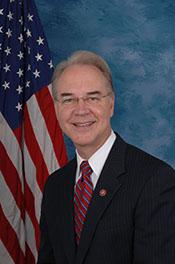
Mr. Speaker, at this time I am very happy to yield 2 minutes to a very hardworking Member of Congress, our friend from Georgia, Dr. Price.
(Mr. PRICE of Georgia asked and was given permission to revise and extend his remarks.)
Mr. Speaker, at this time I am very happy to yield 1 minute to a very hardworking Member from Pittsburgh (Mr. Tim Murphy).
Mr. Speaker, the very thoughtful remarks of our friend from the District of Columbia underscore the great challenge that we have here on both sides.
Mr. Speaker, I yield 1 minute to my very good friend from Hollidaysburg, Pennsylvania (Mr. Shuster).
Mr. Speaker, at this time I am very happy to yield 1 minute to our good friend from Pennsylvania (Mr. English).
Mr. Speaker, I thank my friend for yielding, my friend and classmate. We came together in 1981. I came a little before he did because he came in a special election, Mr. Speaker. He knows that I have the highest regard for him. We have worked very closely in a bipartisan way on a number of issues, and one of the things I was most proud of over the past several years was that my friend carried in his breast pocket quotes of mine on things that I said what we were in the minority about, the need for greater deliberation.
We considered, as my friend knows, a very noncontroversial issue, that being the extension of suspension days from Monday and Tuesday to Wednesday. We did that 3 years ago, a little over 3 years ago, and it had very little controversy to it. We began a very deliberative process. We had a hearing on that. Again, there wasn't much controversy.
And now I am going to take this opportunity to extend the quote of my friend, if he will indulge me, when he, on June 23 of 2003, at our Rules hearing on this said: ``The lack of free and fair debate on such important matters is an embarrassment to the Members who are privileged to serve. It demeans the House, it cheats the American people, and it offends our democratic traditions. Unfortunately, tactics designed to shut down debate are not an aberration; they are becoming the norm.''
And, Mr. Speaker, all I would say to my friend is that the sort of unpleasant debate that we are witnessing right now underscores the fact that moving through the procedure that we have to the House floor without a single committee hearing, without the input of scholars who might talk about the impact on this institution, on the American people, on the rights of American citizens, is something that we should consider. And that is the concern that we have. And I believe what we should do is withdraw this measure from the floor and go through regular order.
I simply offered, as the ranking minority member now of the committee, an amendment in the rule that would simply say that if I could offer, as the ranking member, the committee of jurisdiction, a germane amendment, I would like to have a chance to do that. And I was voted down in that quest.
Let us do proceed with what the gentleman has argued passionately for. He and I are both institutionalists, Mr. Speaker. Let us do allow the kind of deliberation that is essential to consideration of such an important issue.
Will the gentleman yield?
Mr. Speaker, I yield myself such time as I may consume to simply say to my friend that we are clearly in a position where upstairs we had said that we did not believe we should amend a bad bill. But at the same time, I simply made the request for, as the ranking minority member, the right to have a germane amendment if we so chose. And that was, in fact, denied us on a party-line vote that we had in the House.
Mr. Speaker, at this time I am very happy to yield a minute to my good friend from Allentown, Pennsylvania (Mr. Dent).
Mr. Speaker, I am very pleased to yield 2 minutes to a former member of the Rules Committee, we miss him greatly upstairs, our good friend from Marietta, Georgia, Dr. Gingrey.
Mr. Speaker, may I inquire of the Chair how much time is remaining on both sides.
Mr. Speaker, at this point, I am very, very pleased to yield 3 minutes to the distinguished Resident Commissioner from Puerto Rico, our good friend Mr. Fortuno.
(Mr. FORTUNO asked and was given permission to revise and extend his remarks.)
Mr. Speaker, I would inquire of the gentleman from Massachusetts how many speakers he has remaining.
Mr. Speaker, then I will yield myself the balance of the time.
Mr. Speaker, this has been a very, very sad debate. It has been a sad debate because of the lack of deliberation and the lack of the consideration.
The issue is, at best, controversial. I listened to the remarks of my very good friend, who, as I just told her, spends more time representing me now that we have this 5-day workweek than I do myself as a Californian because we spend so much time in the District of Columbia. Her remarks go right to the point of concern that we have raised about this process and why we are where we are at this juncture.
As I look at the other Delegates, and we have just heard from the Resident Commissioner, we obviously have the utmost respect for them, their service, and the great representation that they provide. And, over and above that, the issue that everyone has mentioned since the focal point of the State of the Union address delivered here by the President last night is that, as we prosecute this global war on terror, it is essential that we respect and revere every single life that has been lost in that struggle. And we know that there are many people who have come from the District of Columbia and from the other territories who have paid the ultimate price, and we are in debt to them for that.
But, Mr. Speaker, the thing that is very troubling to me is that we are at this point, without having ever given any kind of committee hearing, without any discussion or debate, and with a process upstairs that I think my colleagues on the other side of the aisle will acknowledge was really a great travesty and an injustice.
I want to express my appreciation to Mr. McGovern. Mr. Speaker, Mr. McGovern, when we were considering this rule upstairs, did make a good- faith effort in trying to offer a proposed compromise to this rule, and unfortunately he was denied the chance to do that.
As we look at the issue before us, many of us are troubled about the constitutionality of this, and our friends have basically just on the other side of the aisle discussed the court decision on this issue, Mr. Speaker, by saying what was stated by the circuit court. They used the word ``meaningless'' to describe this vote, and it was true, as I said, legerdemain, legislative sleight of hand, that they were able to at this juncture move through those two courts as they did with this measure.
But, Mr. Speaker, my plea to my very good friends and colleagues in the majority is simply let us go through the process of deliberation. Let us go through committee hearings. Let us hear from those very thoughtful scholars who so often testified before the Rules Committee in the past on a wide range of issues that we considered, and then after we go through that deliberative process, this process of democracy which we all hold near and dear, then I believe we could have a proposal that we could bring to the floor, if possible, to consider this measure.
Mr. Speaker, as I said, I am very, very, very disappointed at the way this whole issue has been handled, and frankly, as my friend from Marietta said earlier, all of the closed rules that we have had on these measures that were brought before us, we were told that when we got beyond the Six for 2006, that things were going to be much different.
A professor at my alma mater, Claremont McKenna College, wrote in the Orange County Register yesterday that that is like saying, I will respect you in the morning.
Mr. Speaker, we have seen a continuation of a clamp-down of deliberative democracy, and what we are faced with here at this moment, offer of a substitute aside, has denied the deliberation that this very important issue deserves.
So, Mr. Speaker, I urge my colleagues to oppose this rule, and if by chance the rule does pass, I urge strong opposition to the underlying resolution.
Mr. Speaker, I yield back the balance of my time.
Mr. Speaker, I object to the vote on the ground that a quorum is not present and make the point of order that a quorum is not present.
Mr. Speaker, I move to reconsider the vote on the previous question.
Motion to Table Offered by Mr. Mc Govern
Mr. Speaker, I demand a recorded vote.