Mr. Speaker, by direction of the Committee on Rules, I call up House Resolution 1189 and ask for its immediate consideration. Mr. Speaker, I yield myself such time as I may consume. This point of…
Mr. Speaker, by direction of the Committee on Rules, I call up House Resolution 1189 and ask for its immediate consideration.
Mr. Speaker, I yield myself such time as I may consume.
This point of order is about whether or not to consider the rule and ultimately the underlying conference report. In my opinion, it is simply an effort to try to kill this bill without any debate, without an up-or-down vote on the conference report itself. It is nothing more than procedural roadblocks, something the other side has been using a fair amount recently. I don't believe it will work.
The gentleman has talked about the fact that he is not able to speak in opposition. The gentleman had an hour's worth of debate the other day on a motion to recommit. It is also my understanding that the chairman is working with the opposition to allow them time to discuss the bill within the rules that were set up.
This conference report is far too important, Mr. Speaker, to be blocked by a parliamentary tactic. We have worked on this bill for nearly 2 years and have accomplished what many of us thought was an impossible feat by bringing it to the floor.
Make no mistake about it. The Republican obstruction will ensure that a farm bill will not pass during this Congress. So despite whatever roadblocks the other side tries to use to stop this bill, we will stand up for America's hardworking farmers, for the hungry and for the millions of other Americans who will benefit from this farm bill.
We must consider this rule, and we must pass this important conference report without further delay.
Mr. Speaker, it is my understanding I have the right to close. But in the end, I will urge my colleagues to vote ``yes'' to consider this rule.
Mr. Speaker, I reserve the balance of my time.
Mr. Speaker, I am happy to respond to my friend from Arizona with regard to the PAYGO issue, even though that is going to be addressed in the rule and not in this motion that he has brought forward now.
I didn't raise a point of order in your motion so you can have plenty of time to speak.
Let me tell you also that the chairman and the ranking member have, in my understanding, provided 10 minutes to both the Republic and Democratic opposition to this bill out of their time today. So we will be complying with the rules of the House. It is my understanding there will be 20 minutes in opposition.
With regard to PAYGO, the Senate and the House have adopted different rules. In the 1990s when the House and Senate had statutory PAYGO, both Chambers had the same rules with regard to PAYGO. The House rules talk about one issue with PAYGO. The Senate rules with another.
In this rule, we have tried to reconcile, we started this bill and actually passed it in a conference report, or we passed it out in chief from the Agriculture Committee to this floor and to a conference committee in 2007. That work was not completed in 2007, and thus we have this bill on the floor today.
There are many reasons why this bill didn't get finished in 2007. But because we have different rules in the House and Senate, we have decided that in order to make this bill work and achieve a conference report that we can bring to this floor that we will be discussing this further as we discussed the rule. But we have dealt with that in the rule.
I reserve the balance of my time.
We have accommodated the Senate PAYGO rules as we have moved forward. And it is my opinion that this is a technical situation because we started this bill and passed this bill off the floor in 2007.
Mr. Speaker, I raise a point of order.
I believe we are supposed to be talking about the unfunded mandates in this bill. If the gentleman would like to talk about the PAYGO rules, we should talk about this when we bring up the rule which that is germane to.
Mr. Speaker, I would like to say that we will deal in the debate on the bill chiefly with regard to what the level of reforms is.
I would just like to tell my colleagues and my friends from both Arizona and Wisconsin that there are, in fact, significant reforms. In fact, if you take the ratio when this bill was first brought up in 2002, you have a situation where the nutrition part of this bill, versus commodities, was by a ratio of 2-1, $2 for nutrition for every dollar of commodity payments.
In this particular act that we are going to be bringing to the floor later today, it is my understanding, and my work with regard to the reforms, that there have been so many reforms put into this bill that the nutrition title versus the commodity payments is actually a 5-1 ratio at this point. I would say that indicates, as just one of many indicators, that you will see as we conduct this debate the significant reform that has happened in this bill.
I believe this is good work. I am very proud to be a part of bringing this bill to the floor. I believe it complies with the House Rules, and, I, again, want to urge my colleagues to vote ``yes'' on this motion to consider, so that we can pass this important piece of legislation today.
Mr. Speaker, I yield back the balance of my time and ask for an ``aye'' vote.
Mr. Speaker, I yield myself such time as I may consume.
As my colleague knows, this point of order is about whether or not to consider this rule and the underlying conference report for the farm bill. This point of order today is just another effort, in my opinion, by the other side of the aisle to block this critical legislation that we have worked on for nearly 2 years.
They don't want to debate, and they don't want to vote on this conference report. They simply want to obstruct through a parliamentary tactic.
I want to make it very clear that the farm bill fully complies with the earmark disclosure rules contained in clause 9 of rule XXI. I would suggest to those raising the point of order that they look in the statement of managers, and they will see a list of the earmarks. If they can't find that list, we will be happy to provide it for them.
Mr. Speaker, I urge my colleagues to vote ``yes'' and to consider this important rule.
Mr. Speaker, I reserve the balance of my time.
Mr. Speaker, I yield such time as he may consume to the chairman of the committee, who I believe has done a fabulous job in bringing this bill to the floor, Collin Peterson of Minnesota.
Mr. Speaker, the gentleman raised a point of order with regard to earmarks, not with regard to the issue of PAYGO. That will be discussed in the rule itself. It will be germane to that later discussion.
Mr. Speaker, how much time is remaining on both sides?
Mr. Speaker, when the gentleman says we talked about other issues in the last point of order, I was trying to be gracious with regard to the time and the discussion and allow the gentleman to speak. I raised an issue on the point of order on PAYGO because we are going to discuss that in the rules discussion, in the discussion of the rule.
I would just remind the gentleman that in the time he has taken on these
two points of order, he will probably have discussed this bill more than any other Member on the floor, even after we agreed to give him 20 minutes of debate on this topic. So I think that the gentleman thus protests too greatly, and I reserve the balance of my time.
Mr. Speaker, I want to emphasize that this conference report fully complies with the earmark rule. In my opinion, it fully complies with the spirit of PAYGO.
Mr. Speaker, I would now like to yield to the chairman who would like to respond on that question as well.
Mr. Speaker, I control the time under the remainder of my motion, and I believe the gentleman is discussing the rule.
I don't yield, and if the gentleman from Washington would just suspend for a moment, I just would like to say that I do not yield because we are talking about a whole different topic here. I would like to make sure that we consider the point of order that has been raised directly by the gentleman from Arizona and not make this a wide-ranging debate with regard to the rule.
I object.
Mr. Speaker, I urge my colleagues to vote ``yes'' on consideration on this point of order, and I yield back the balance of my time.
For the purpose of debate only, I yield the customary 30 minutes to the gentleman from Washington (Mr. Hastings). All time yielded during consideration of the rule is for debate only.
General Leave
I ask unanimous consent that all Members have 5 legislative days within which to revise and extend their remarks on House Resolution 1189.
Mr. Speaker, I yield myself such time as I may consume.
Mr. Speaker, House Resolution 1189 provides for consideration of H.R. 2419, the Food, Conservation, and Energy Act of 2008, the continuation of the Farm, Nutrition and Bioenergy Act of 2007 which we passed off this floor in September of 2007.
Mr. Speaker, the conference report rule waives all points of order against the conference report and against its consideration and provides that the conference report shall be considered as read.
The rule provides for 1 hour of general debate equally divided and controlled by the chairman and ranking minority member of the Committee on Agriculture, and it also provides one motion to recommit.
It should also be noted that despite the blanket waiver, the conference report does not violate clause 9 of rule XXI.
Furthermore, I want to point out that the conference report uses the CBO 2007 baseline, the year in which the bill passed both the House and the Senate, and under that baseline, CBO has determined that this conference report will not increase the deficit in either of the years 2008 through 2012 or in the years 2008 through 2017 scoring window.
Therefore, while there is a technical violation of clause 10 of rule XXI, this
conference report complies with the rule by remaining budget neutral with no net increase in direct spending. In other words, Mr. Speaker, this bill does not increase the deficit and it is PAYGO compliant.
Mr. Speaker, as chairman of a subcommittee on the House Agriculture Committee, and as a member of the Rules Committee, I'm pleased to offer the Farm, Conservation, and Energy Act conference report for consideration today. This bipartisan conference report represents the blood, sweat and tears of many Members of the House and Senate Agriculture Committees, including myself. I would be remiss if I did not single out a few individuals at this time.
First, I must recognize Chairman Collin Peterson, without whom this farm bill would have never been completed. His unwavering dedication to seeing this bill through to completion should be an example to us all, and I am indeed grateful for his commitment, especially in the face of tremendous adversity.
I also want to thank Ranking Member Goodlatte, Leader Hoyer, and certainly, not least, our Speaker of the House, Ms. Pelosi, for their steadfast commitment to creating a farm bill that we can all be proud of and to stand behind, and because of her leadership, there is, in fact, significant reform in this bill.
It is hard to believe, but we actually started this process nearly 2 years ago, starting with traveling to nearly every corner of this country to hear directly from farmers and ranchers from all walks of life about what they needed in a modern farm bill. We took these wide- ranging comments to heart and crafted a fiscally responsible, equitable and unparalleled farm bill.
I wish I could say that it was all a walk in the park. The House and the Senate passed their respective bills in 2007, and since January of this year, Members of the House and the Senate have been hammering out a compromise. There have been many battles, but in the end, this conference report is something I believe this House should be very proud of.
While people didn't get everything they wanted, the country got what it needed. That speaks volumes about the quality of this bill and tells me we ended up in exactly the right place.
The Farm, Conservation, and Energy Act builds upon the past successes of Federal farm policy by maintaining the farm bill's safety net, while at the same time providing for substantial increases in conservation, nutrition and energy.
However, I'm most proud of the $2.3 billion in new Federal investments for specialty crops, an industry that has been uniformly neglected in previous farm bills despite comprising nearly 50 percent of total farm gate value.
Furthermore, this farm bill contains unprecedented reforms to commodity programs by revising program eligibility and strengthening payment limitations.
Through major changes to the crop insurance program, we have also increased government efficiency and reduced the waste, fraud and abuse identified in the current farm programs.
More importantly, this bill is completely paid for. Through PAYGO, Democrats are fulfilling our promise to live within our means like every household in America is forced to do, and I believe the PAYGO rules, Mr. Speaker, made this a leaner, meaner and better bill, despite the complexities that the new rules presented at times.
We pledged to stop writing blank checks with reckless abandon and shouldering our country's needs on the backs of our children and grandchildren. Make no mistake about it, Mr. Speaker, this legislation adheres to the spirit of PAYGO, proving that it can be done.
Mr. Speaker, our farmers have the capacity for immeasurable innovation and success, and they deserve the Federal Government's commitment that's included in this bill by supporting this farm bill.
Mr. Speaker, I look forward to telling my constituents of the 18th District of California that the United States Congress has accomplished what many thought was an impossible feat in coming to an agreement on a farm bill.
Mr. Speaker, I strongly and wholeheartedly urge my colleagues to support this rule and the underlying legislation.
Mr. Speaker, I reserve the balance of my time.
Mr. Speaker, the gentleman from Washington complains that nearly 75 percent of this bill goes to a nutrition program. I would submit to the House that if Republican policies with regard to the economy weren't what they were we wouldn't have to be increasing the nutritional support for our citizens.
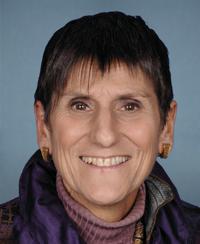
At this time, Mr. Speaker, I yield 3 minutes to the gentlewoman from California (Ms. Matsui).
Mr. Speaker, I appreciate the comments of my colleague from California. I would just like to reiterate that this bill and this rule fully complies with the Senate PAYGO rules and it is totally in keeping with the spirit of PAYGO by complying with the 2007 PAYGO baselines as my Republican colleague, Mr. Neugebauer, said last night when he presented the rule to the committee as the Republican ranking member at that time, and his words were that this bill is fully PAYGO compliant.
Mr. Speaker, at this time, I would like to yield 4 minutes to the gentleman from Massachusetts (Mr. McGovern).
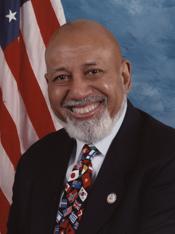
Mr. Speaker, I yield 2 minutes to the gentleman from Florida (Mr. Hastings).
Mr. Speaker, I yield 1\1/2\ minutes to the gentleman from North Dakota (Mr. Pomeroy), a member of the Ways and Means Committee, without which we could not have done this bill.
Mr. Speaker, I yield 2\1/2\ minutes to the gentlewoman from Connecticut (Ms. DeLauro), who absolutely has been an undying advocate on behalf of those who need it the most, those who are going hungry in our country.
Mr. Speaker, I was remiss when I introduced my colleague, Alcee Hastings from Florida, for his undying support and work with regard to specialty crops. He was joined in this effort by the gentleman from Florida (Mr. Mahoney) who has been just a stalwart in helping me get the specialty crop title into this bill. And I would like to yield 1\1/2\ minutes to the gentleman from Florida (Mr. Mahoney).
Mr. Speaker, I yield 1\1/2\ minutes to the gentleman from New Hampshire (Mr. Hodes).
Mr. Speaker, I would now like to yield 1\1/2\ minutes to the gentleman from Ohio (Mr. Space).
Mr. Speaker, I yield 1 minute to the gentleman from Oregon (Mr. Blumenauer).
Mr. Speaker, I ask how much time is remaining on either side.
At this time I would like to yield 1 minute to the gentlewoman from Ohio (Ms. Kaptur).
Mr. Speaker, at this time I would like to yield 2\1/2\ minutes to the gentleman without whose leadership on the bill we simply would not be bringing the bill to the floor today, the chairman of the Committee on Agriculture, the gentleman from Minnesota (Mr. Peterson).
Mr. Speaker, I yield 30 seconds to the gentleman from Wisconsin (Mr. Kind).
Mr. Speaker, this is a once-in-a-lifetime bill that will meet our country's needs. Every major group, commodities, specialty crops, nutrition groups, conservationists and others support this bill. A ``yes'' vote on this rule and the underlying bill is a vote for America's hungry, a vote for our environment, a vote for United States' energy independence, and a vote to deliver on our long-standing commitment to rural America.
Mr. Speaker, I ask all of our colleagues to support this rule and to support the underlying bill. I urge a ``yes'' vote on the rule and on the previous question.
The material previously referred to by Mr. Hastings of Washington is as follows:
Amendment to H. Res. 1189 Offered by Mr. Hastings of Washington
At the end of the resolution, add the following:
Sec. 2. That upon adoption of this resolution the Speaker
shall, pursuant to clause 2(b) of rule XVIII, declare the
House resolved into the Committee of the Whole House on the
state of the Union for consideration of the bill (H.R. 5984)
to amend the Internal Revenue Code of 1986 to provide for the
limited continuation of clean energy production incentives
and incentives to improve energy efficiency in order to
prevent a downturn in these sectors that would result from a
lapse in the tax law. The first reading of the bill shall be
dispensed with. All points of order against consideration of
the bill are waived. General debate shall not exceed one hour
equally divided and contolled by the chairman and ranking
minority member of the Committee on Ways and Means. After
general debate the bill shall be considered for amendment
under the five-minute rule. All points of order against
provisions in the bill are waived. No amendment to the bill
shall be in order except any amendment which the proponent
asserts, if enacted, would have the effect of lowering the
national average price per gallon of regular unleaded
gasoline and diesel fuel by increasing the domestic supply of
oil by permitting the extraction of oil in the Arctic
National Wildlife Refuge. Such amendments shall be considered
as read, shall be debatable for thirty minutes equally
divided and controlled by the proponent and an opponent,
shall not be subject to amendment, and shall not be subject
to a demand for division of the question in the House or in
the Committee of the Whole. All points of order against such
amendments are waived. At the conclusion of consideration of
the bill for amendment the Committee shall rise and report
the bill to the House with such amendments as may have been
adopted. The previous question shall be considered as ordered
on the bill and amendments thereto to final passage without
intervening motion except one motion to recommit with or
without instructions.
Mr. Speaker, I yield back the balance of my time, and I move the previous question on the resolution.