Mr. Speaker, pursuant to House Resolution 1197, I call from the Speaker's table the bill (H.R. 2642) making appropriations for military construction, the Department of Veterans Affairs, and related…
Mr. Speaker, pursuant to House Resolution 1197, I call from the Speaker's table the bill (H.R. 2642) making appropriations for military construction, the Department of Veterans Affairs, and related agencies for the fiscal year ending September 30, 2008, and for other purposes, and ask for its immediate consideration in the House.
Mr. Speaker, I offer the motion at the desk.
Mr. Speaker, the gentleman may be reciting the PAYGO rule as he wishes it were, but that's not the way it is.
The legislation before the House fully complies with the PAYGO rule. That rule deals with direct spending and revenues.
As to revenues, the revenue effects of this package reduce the deficit, rather than increasing it. As to spending, none of the spending in this package falls into the direct spending category, which is basically defined as spending outside the appropriations process.
Even though not technically required to do so, the Medicaid provisions and the expansion of veterans' education benefits fully meet the PAYGO standard. Both sets of provisions contain offsets to ensure that they do not increase the deficit over the 5- and 10-year periods used by the PAYGO rule.
The rest of the bill consists mostly of emergency appropriations for defense and other security-related needs, largely for things requested by the President. And the other major spending item, relating to extended unemployment compensation benefits, is temporary in nature and responds to current hardships created by the economic downturn.
So I believe that we ought to abide by the House rules as they are, not as some Members wish they were.
Mr. Speaker, I ask unanimous consent all Members may have 5 legislative days to revise and extend their remarks and include extraneous material on the pending legislation.
Mr. Speaker, I yield myself such time as I may consume.
Mr. Speaker, we have a tough problem before the House today. We have a war which the majority of this House despises. We have a war that we do not have the power to end so long as the President is as obstreperous as he has been on the subject. That means that we have to find a way to try to manage this problem in a way that sends a clear message to the public that they are the only ones who can, in fact, muster the power to change direction on this war by electing a President who will get us out of this war. It also means we have to manage it in such a way that we set the table for the new President to give him at least a few months to think through how he is going to proceed to extricate us from this war and to get his ducks in a row on Iraqi policy. Therefore, we are taking the Senate bill and we are asking the House to consider three amendments and work their will on it.
The first amendment is very simple. It's an up-or-down vote on providing the funding to pay for the equipment and to pay for the salaries for the troops as long as they are going to be in the war situation. That money will be estimated to run out by June of 2009.
The second amendment would simply be an up-or-down vote on the conditions that the House believes should appropriately be attached to the spending of that money, many of which the House has seen before. Those conditions will, among other things, require that virtually every unit sent to the war be fully combat ready. They will provide that no one who works for the United States may engage in interrogation techniques that are at variance with the Army Field Manual. In plain language, no torture. The conditions will also say that there shall be no long-term security agreements entered into with Iraq without submission of those agreements to the United States Senate for their consideration. It will establish a timetable for extricating ourselves from combat by setting a goal, not a firm date but a goal, of 18 months from the date of enactment.
Also, we have added two conditions which would have the effect of requiring Iraq to provide a dollar-for-dollar match for any of the redevelopment and reconstruction activities that are being carried out by the United States Government. The effect of that would be the functional equivalent of turning 50 percent of what we provide to Iraq into loans. We've done it this way because we have faith that the loans would ever be repaid, and this way we guarantee that the Iraqis, who are now about to develop very large surpluses in their own budget--they will have to meet these costs up front on an equal basis before the United States proceeds to expend its own money. And it would also require that the American military be provided gasoline in Iraq at the same subsidized price as the Iraqis are being subsidized. We don't see why the United States troops who are defending that country ought to have to pay a premium.
Then we will have a third amendment, again up or down, on the other administration requests. Those include food aid. We've increased the international food aid recommended by the President by $745 million. Anybody who has read the newspapers or watched television for the last 2 weeks understands why that is a moral necessity. We have also included the administration request for the Louisiana levies exactly as they have requested it as fiscal 2009 money. We have responded to a request from the Bureau of Prisons to provide $178 million so that they do not have to lay off prison guards and other personnel in the U.S. prison system. The Secretary of Commerce has requested that we provide additional funding because they run into technology problems at the U.S. Census Bureau; so we have responded to that with a $210 million appropriation. We have also added $2.2 billion in military construction funds above the President's request to fully fund the administration's 2008 BRAC requests. We have also included $210 million for military child care centers, which the President from that rostrum told the country he was for but neglected to ask the money for in his budget this year.
There are no Members' projects whatsoever in this bill. In the military construction portion of the bill, for instance, there are 121 facilities that are provided for; 111 of those were specifically asked for by the White House, and the others were identified by the committee as top service priorities after testimony from the military services.
There's only one proposal that could be really considered a specific project earmark, and that is one hospital which the Assistant Secretary of Defense asked to be included in the recommendations, and we're providing planning funds for that facility.
In addition, the other items in that third amendment to be considered would deal with the following:
If we're going to fight the war, we happen to believe that we ought to provide a ``thank you'' to the people who have fought it, especially because there has been no sense of shared sacrifice in this country. The only people who have been asked to sacrifice are military families again and again and again. So what we are doing is including the Webb bill, which would provide for the equivalent of a full-boat 4-year education at a public university for persons who have spent 36 months on active duty, and the benefits are scaled down in accordance with time served. It's long past time that we do that.
We have also included emergency funding for unemployment compensation so that for persons who have exhausted their unemployment benefits, they will have an additional 13 weeks available to them.
We have also in this amendment recommended delaying the administration's rules changes in Medicaid that have been so controversial, and we include two contractor reforms which the House had already passed.
The main difference, Mr. Speaker, between this bill and the administration's bill is that we pay for everything in the bill except the unemployment compensation provision and the President pays for virtually none of his requests.
Now I prefer to pay for the entire war if we are going to have it. I don't think we ought to have it. But if we were going to have it, I thought we ought to pay for the whole thing. So did Mr. Murtha and Mr. McGovern. So we introduced legislation to pay for the whole war with the war surtax. We lost that argument. That is not in this bill.
I felt that if we weren't going to pay for the war up front, then there should be no requirement to provide an offset to provide the additional GI Bill expanded benefits, which are the equivalent of only about 6 percent of the cost of this war so far. But I lost that argument, too.
And so this bill does pay for the expansion of GI benefits. And it pays for that in probably the best way possible, by asking the most fortunate citizens in our society, those who individually make $500,000 or more a year, or as a couple who make $1 million or more a year, we are asking them to help out in the form of a patriot premium by, in essence, asking them to pay a one-half of 1 percent surtax in order to finance the GI Bill expansion.
As I look at this bill, what we are doing is we are asking people who, on average, have gotten a $126,000 annual tax cut to take a tiny portion of that
tax cut to help us make life better for the persons who have been doing the most in order to preserve the way of life which has enabled those people to do so well in life. And I make no apology for it.
Ninety-nine percent of the appropriated dollars in the bill--99 percent of the appropriated dollars in this bill--are being requested by the administration.
This war, Mr. Speaker, has screwed up our economy. This war has injected chaos in the lives of military families all across the country. We make no apology in trying to use this vehicle to respond to the needs of the two groups in society who have been hit the hardest by this war; one being those who have lost their jobs because of the turmoil we have had in the economy because of the war and other factors, and second, the military families whom we believe ought to be treated about as well as the GIs were when they came back from World War II. This war has now lasted longer than World War II. And we think we have an obligation to respond to what is actually out there on the ground in communities all across the country.
We can debate our political philosophies. We can debate our economic theories. We can behave like little budgeteers, arguing about this comma and that comma, this offset and that offset. But in the end, we are dealing with the lives of human beings. We are dealing with the lives of families. We are dealing with people who have sacrificed incredibly much with their family members being sent to Iraq and Afghanistan once, twice, three times. Kids are not seeing their parents.
I represent a city of 37,000 people. We have had almost 35,000 casualties in this country. It is as if 4,000 people in my hometown were killed, and virtually every other person in that hometown wound up in a VA hospital. That is the human toll that has been paid so far just by Americans on this war.
So this is a process which will give Members the opportunity to vote up or down on the major pieces that comprise this legislation.
And I urge the House to move forward.
I, myself, will be intending to vote against the first amendment. I will be voting for the second and the third amendment. I hope that every Member here today exercises his conscience. That is what they are supposed to do.
With that, I reserve the balance of my time.
Mr. Speaker, I yield myself 2 minutes.
Mr. Speaker, I want to thank the gentleman from California. Those are some of the nicest words he has ever said about me, and I appreciate them deeply.
Let me also say that I think his speech simply bears out that because they can find no real substantive fault with the legislation, they have to fall back on whining about process.
I would suggest that the gentleman from California is the last person I will take lectures from when it comes to talking about an open appropriations process. I was not chairman when the Appropriations Committee when, after the conference was closed and the work was done and the names are on the conference report, I was not the chairman of the committee who allowed 30 pages of unrelated new language not seen by anybody to be inserted in that conference report which insulated the pharmaceutical industry from suit if their products damaged their customers.
I was not the chairman of the committee when the committee, after the conference was closed, and after it was finished, inserted anonymously, anonymously, in the dead of night, language which changed the definition of organic foods on the agriculture bill and led to nicely enriched profits for certain people in this society.
All I can say is that the gentleman may not like the fact that we couldn't finish discussions as fast as we wanted to on this bill. He says he has only been able to see the text for the last day or so. Let me simply suggest that at least the text he reads is the text that will be in the bill after we vote on the bill, which is more than you can say for what happened under his stewardship on several locations.
Mr. Speaker, I yield myself 1 additional minute.
Let me simply make the point, there is virtually nothing in this bill that hasn't been around here for months. This is not new material. The President's war request has been around here for months, as the gentleman himself has indicated.
The unemployment compensation provision that we are providing in this bill already passed the House on one occasion. The Webb bill has been around for months, and it has the support, and, in fact, the sponsorship of the majority of the House and wide bipartisan support in the Senate as well.
I would suggest, I think the question is, the Pentagon is saying you've got to get the money to the troops, because they're about to run out of money and won't get paid. Yet our friends on the other side are asking us to follow a process which would have taken a much longer period of time.
You can't have it both ways. This is a fair process.
Mr. Speaker, I yield myself another minute.
I am personally opposed to the first amendment which we are presenting to the House. But out of courtesy to the minority, who support it, and out of courtesy to the White House, who supports it, we are allowing that to come to a vote. Our party has not even whipped on that question. We told Members, vote your conscience. I don't see how you could be more fair than that.
Mr. Speaker, I reserve the balance of my time.
Mr. Speaker, I yield 5 minutes to the distinguished gentleman from Pennsylvania (Mr. Murtha), the chairman of the Defense Appropriations Subcommittee.
Mr. Speaker, I yield 3 minutes to the distinguished chairman of the Military Construction Subcommittee, the gentleman from Texas (Mr. Edwards).
Mr. Speaker, I yield 1 minute to the distinguished gentleman from Virginia (Mr. Scott).
I yield 1 minute to the distinguished gentlewoman from South Dakota.
I yield myself 2 minutes.
Mr. Speaker, I just cannot allow the impression to continue that somehow we have violated House rules or committee rules by this procedure. The fact is that despite some Members having not been around here long enough to remember, the House used to often proceed in this way, moving amendments back and forth between the Senate and the House as a device by which to reach agreement on legislation. That happened routinely during the old abortion debates back in the seventies when amendments offered by Mr. Magnuson and Mr. Flood were bounced back and forth between the Houses.
The fact is also that I offered, and my staff director specifically offered, to have the minority staff participate in every discussion related to appropriation items. We pointed out, we were not drafting, in our committee, the unemployment insurance issues. That was drafted by the authorizing committee. And we were not drafting the language with respect to Medicaid rules. That was done by the Energy and Commerce Committee.
But we offered to have the minority staff participate in all of the staff meetings that were going on with respect to anything over which the Appropriations Committee had direct jurisdiction. If they chose not to exercise that right, that's their responsibility, not ours.
I would also point out that my understanding is that in the 109th and 110th Congress, fully 12 percent of legislation that was passed was passed using this process of moving amendments back and forth between the Senate and the House. So this may be an unusual procedure, but it is far from unprecedented.
I yield 1 minute to the distinguished gentleman from Illinois (Mr. Jackson).
I yield 1 minute to the distinguished gentlewoman from California (Ms. Woolsey).
I yield 1 minute to the gentlewoman from California (Ms. Lee).
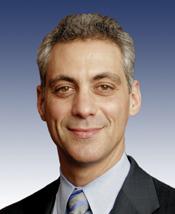
I yield 2 minutes to the distinguished majority caucus chairman, the gentleman from Illinois (Mr. Emanuel).
Mr. Speaker, the gentleman is yielded 1 additional minute.
Mr. Speaker, I yield myself 1 minute.
I cannot believe what I just heard.
The gentleman just indicated that somehow we're adding $72 billion to a bill ``that has nothing whatsoever to do with the welfare of soldiers.'' I would point out by far the largest item that we are adding to this bill, $51 billion over 10 years, is devoted to help those very same soldiers so that the people who fought, when they come home, get treated the same way that the GIs did at the end of World War II. That isn't on the backs of the soldiers. That's trying to enhance their lives. It's trying to enable Reservists and Guard members and regular forces who have had their lives disrupted, who have gone to Iraq two and three times. We're trying to say, Okay, you can stay home for a while. Get yourself a college education.
The GI Bill paid back this country $7 for every dollar it cost.
I yield myself 1 additional minute.
The GI Bill paid back to this society $7 for every dollar that it cost. There are unfortunately some people in this House who know the cost of everything and the value of nothing. Fortunately, the people who support this third amendment today will not be among them.
Mr. Speaker, I yield 1 minute to the distinguished gentleman from Tennessee (Mr. Tanner).
I yield the gentleman 1 additional minute.
Mr. Speaker, I yield 2 minutes to the distinguished chairman of the Veterans' Affairs Committee, the gentleman from California (Mr. Filner).
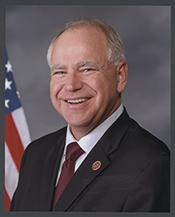
Mr. Speaker, I yield 2 minutes to the gentleman from Minnesota (Mr. Walz).
Mr. Speaker, I yield myself 1 minute.
Mr. Speaker, Just Imagine! The mortal sin that we're accused of committing on this side of the aisle is believing that we ought to provide some additional economic assistance to people
who have been hit the hardest by economic dislocation and have been unemployed until their benefits have expired and haven't been able to find a job.
It's suggested that we're doing this ``on the backs'' of our fighting men and women who return home. I'd suggest it's just the opposite. When a man or a woman returns home from Iraq, when we find out that in addition to their having their reentry problem, they also, some of them, may have post-trauma stress reaction, they find out in addition to what they have to worry about for themselves, they also have to worry about the fact that their sister or their brother-in-law is now unemployed, adding to the burden on that family.
I yield myself 30 seconds.
I think those GIs recognize this is supposed to be a seamless society. We're supposed to help take care of the people who are in the most trouble, and I don't apologize for using some of the money that we use for veterans benefits. I don't apologize for getting that money from some of the people in this society who have had the least stress in their lives.
It seems to me that that's what the Judeo-Christian ethic is all about, and we plead fully guilty on this side of the aisle.
Mr. Speaker, I yield 1\1/2\ minutes to the distinguished gentlewoman from Connecticut (Ms. DeLauro).
I yield myself 30 seconds, and I yield to the gentleman from Texas.
I would like the gentleman from Texas to point out a single piece of Member pork in this bill.
Yes.
Name one.
Can you name one or can't you? The fact is there's not a single piece of Member pork in this bill. You ought to know.
I yield myself 1 additional minute.
And through the Chair, I would invite the Member to name a specific piece of congressional pork in this bill. He cannot because there is none. He's at least had enough time to read the bill to know that.
The only possible piece of pork in this bill is one which we inserted at the request of the Deputy Secretary of Defense for a military hospital in Guam that came here at the request of the Secretary of Defense's office.
You can find no Member's pork in this package, and you know it as well as I do.
Mr. Speaker, I yield 1 minute to the distinguished gentleman from Washington (Mr. McDermott).
(Mr. McDERMOTT asked and was given permission to revise and extend his remarks.)
Mr. Speaker, I yield myself 1 minute to answer the gentleman's question.
The gentleman wants to know why do we have money in this bill for the census? Simple. It's because the Secretary of Commerce asked us to put it in because they've had a huge technical screw-up in the Department of the Census. The last time I looked, the Secretary of Commerce was appointed by the President of the United States, Mr. George W. Bush.
He wants to know why we have money in this bill for prisons. Simple. We've been told by the Bureau of Prisons--last time I looked, it's run by the Bush Administration--that if we didn't provide this money, because of cost overruns they're going to have to fire guards and lay off people in Federal prisons. Anybody interested in law and order I don't think is going to be happy about that.
So it seems to me it is responsible to respond to emergencies on both the domestic side and on the international side.
I'm sorry that the gentleman doesn't seem to be aware of the fact that we have, in writing, requests from both of those agencies, but that happens to be the fact. And that's the answer.
We got requests in writing from the agencies.
They testified before the committees. I don't know if you were there or not, but they testified.
Announcement By the Speaker Pro Tempore
I yield myself 10 seconds.
Once again, when they can't argue about the substance, they whine about process. That's not going to impress very many people. It certainly didn't in Mississippi yesterday.
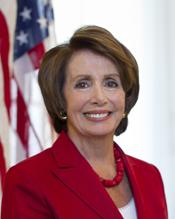
With that, I would like to yield 1 minute to the distinguished Speaker of
the House, the gentlewoman from California.
Mr. Speaker, I yield 1 minute to the distinguished gentleman from Georgia (Mr. Johnson).