Madam Speaker, today on the House floor, we passed a very important bill to reauthorize the Department of Homeland Security. Tonight, we must take time to remember the horrific event that made our…
Madam Speaker, today on the House floor, we passed a very important bill to reauthorize the Department of Homeland Security. Tonight, we must take time to remember the horrific event that made our Nation realize that we needed a Department of Homeland Security to begin with, the attacks of September 11, 2001.
We will never forget that fateful day and the thousands of people who lost their lives, and now we know that thousands more lost their health.
We must not forget the firefighters, police officers, EMTs and other first responders who bravely rushed to save the lives of others, even as everyone else was running in the opposite direction.
Within hours of the collapse of the World Trade Center, those first responders labored alongside hard hats and average New Yorkers without regard for their own health or safety. They spent countless hours working the pit, sifting through the rubble, hoping against hope that they would be able to rescue someone trapped deep below.
Unfortunately, as the days went on and the mission turned from a rescue-and-recovery mission to a cleanup site, these brave men and women stayed. While they labored, most were not given the proper respiratory equipment, and all were given inaccurate information about the quality of the air they were breathing. They were told that the ``air was safe to breathe.'' They were told that it was not a health hazard to be there.
Let us take a closer look: This air, the air enveloped by this massive toxic dust cloud, they said was safe to breathe. Unfortunately, we now know better. We know more about what was in that cloud, a poisonous cocktail of thousands of tons of coarse and fine particulate matter, pulverized cement and glass and other toxic pollutants.
To the mix were added 24,000 gallons of burning jet fuel and plastics, which created a dense plume of black smoke containing cancer- causing volatile organic compounds, dioxins and hydrocarbons, a specific combination of toxins probably never seen before and hopefully that we will never see again.
And all of this went into the mouths, throats and lungs of tens of thousands of workers while they tirelessly worked long shifts, not thinking first of their health but of serving this great Nation.
Later in this hour, I am going to share with you the stories of the individual brave men and women who worked at ground zero, but now let me just share one about the dust.
This is a story from Denise Bellingham of Long Island, New York. In her own words, as reported in the New York Daily News, she said, ``The air was indescribable,'' as you can see. ``You couldn't eat anything that wasn't covered with dust. We had paper masks, but they were no good. Condensation from breathing turned the mask into mud. It was worse to breathe with it on. We got respirators about a week into it, but they were not fit-tested. They just came in boxes, and we grabbed one that might fit.
``I worked more than 300 hours at ground zero. I considered it a thank you to America, a chance to do something for my country and for my fellow New Yorkers and for my co-workers who were buried in the rubble.
``We never expected anything to go wrong. Every day we were told the air was safe to breathe. Working down there as a team gave us healing. We could feel all the angels, all the people who had died there.''
Again, that was one of the personal accounts of work at ground zero, as reported in the Pulitzer Prize-winning Daily News series on the Forgotten Heroes of 9/11.
Now, well over 5 years after 9/11, we are seeing the potentially deadly effects on the thousands who worked around ground zero. This is in addition to the untold numbers of residents, area office workers and school children also exposed to the toxins of ground zero but have never received any medical monitoring or assistance from the Federal Government.
We have numerous peer-reviewed, scientific studies linking people's sicknesses to the toxins of ground zero.
Last year we learned from Mount Sinai, an important hospital in my district, and the World Trade Center Medical Monitoring Program that 70 percent of 9/11 responders suffered respiratory problems and 60 percent are still sick as a direct result of their work at ground zero. Making matters worse, nearly 40 percent of those screened have no health insurance, and for those who do have insurance, work-related illnesses are most often not covered.
We also learned from the fire department that the average New York City firefighter has lost 12 years of lung capacity following their service at ground zero, and many have been forced to retire or be reassigned due to their 9/11 illnesses.
And just 2 days ago, a new report from the fire department and Einstein College of Medicine in New York clearly linked World Trade Center dust to a rare type of lung-scarring disease, sarcoidosis, which involves an inflammation that produces tiny lumps of cells in the lungs. In some cases, the illness gets progressively worse and can be fatal.
Let there be no doubt. We now have scientific proof that the 9/11 health crisis is real, and that it is truly a matter of life and death.
Tonight I want everyone listening to understand this. The 9/11 health crisis is not only a New York City problem. The attacks on 9/11 were attacks against our Nation, not just New York. The whole country was touched; and, in the aftermath, people from every State in the Nation were exposed to these toxins while they assisted in the massive rescue recovery and cleanup efforts. Whether you came from California, Florida, Michigan, Pennsylvania, Hawaii, Alaska, you breathed in the same toxic air.
Last month, Congressman Vito Fossella and I released a report showing that Americans from all 50 States were exposed to the aftermath of 9/11 and have serious concerns about their health.
This map shows how many people from each State enrolled in the World Trade Center Health Registry, which is a comprehensive health survey of those most heavily exposed to the toxins of Ground Zero. Those who enrolled answered a 30-minute telephone survey about where they were and what they did on 9/11, and they were asked to report the status of their health. This will allow health professionals to compare the health of those most exposed
to the events of 9/11 with the health of the general population.
Over 71,000 people who met the eligibility requirements of direct exposure decided to enroll in the registry. We know that there are an estimated 410,000 people who would have been eligible, meaning that 410,000 people were likely directly exposed to the deadly toxins of 9/ 11.
Of the 71,000 people who were concerned enough about their health to enroll, over 8,000 live in New Jersey, over 1,200 live in California, another 1,200 live in Florida, 156 live in Arizona, 350 live in Georgia, 238 in Maryland, and 341 live in Texas. At least 28 people came from as far away as Hawaii.
The list goes on and on, but the message of this map is clear: This is a national emergency, and it deserves a strong Federal response.
Over 1,000 people are from Pennsylvania, including Ryan McCormick, who came to Ground Zero from Representative Dent's district in Pennsylvania. His father, David McCormick, sent me an e-mail explaining that Ryan was a paramedic for University Hospital in Newark, New Jersey, who came to the aid of New York in our country in our time of need.
In his 5 days at Ground Zero, he served in many capacities. A year and a half later, he came down with Hodgkin's Disease, a cancer of the lymphatic system. He has undergone a great deal of chemotherapy and radiation, but nothing has worked. We sincerely thank Ryan for his service to our country, and we pledge that we will not forget his service or his health needs.
I also thank him for his hard work in getting the message out to country and Congress that we cannot forget the heroes of 9/11, and I am told that he is with us tonight in the gallery. We want to personally thank you for your service and your courage.
With a problem of this scope, what we need right now is a plan from the current administration on how they intend to medically monitor everyone who was exposed to the deadly toxins at Ground Zero, and we need a plan to treat everyone who is sick. That is the least that we can do for these heroes and heroines.
Along with my colleagues in New York and our entire delegation, I have been calling for a plan for years now. We don't have a plan yet, but we have made some important progress.
After a long fight with the administration, in May, 2003, we were successful in securing $90 million for medical monitoring for responders.
Then, with the leadership of Representative Shays, the Government Reform Committee started a series of important congressional hearings bringing this topic to light.
Then, after the President actually rescinded, they took out of the budget $125 million meant for New York recovery efforts, the New York delegation fought to have the $125 million restored in October of 2005. Of that, $50 million was set aside for workers' compensation, and $75 million was for medical monitoring and treatment. This was the first- ever Federal funding for treatment of sick 9/11 responders.
Unfortunately, then we had to fight just as hard to get that $75 million out of the hands of the Department of Health and Human Services and to the doctors and patients that need to be monitored and treated.
Finally, in late fall of this year, the $75 million was finally released to help the men and women who helped so many on 9/11.
While we were fighting to get that funding released, we took a step closer to having a coordinated Federal response when the Director of the National Institute of Occupational Safety and Health, Dr. John Howard, was appointed at the request of the New York congressional delegation as the Federal coordinator for 9/11 health issues in February of 2006.
Since his appointment, we have seen the release of the first clinical guidelines on the physical health effects many have suffered from the World Trade Center attacks and a draft of autopsy guidelines.
We have also seen Assistant Secretary John Agwunobi appointed as leader of a task force on 9/11 health within the Department of Health and Human Services. While we were promised a plan from this new task force between February of this year, Congress has yet to see one. We still do not have a plan from the administration to medically monitor everyone exposed to those deadly toxins and treat those who are sick as a result of exposure in their hard work at Ground Zero.
That is why, along with Congressman Fossella, I have introduced a resolution which calls on the administration to create a comprehensive long-term plan to medically monitor everyone exposed and treat those who have become sick.
Along with many Members of Congress, I have also introduced the first comprehensive authorizing legislation to care for both the health and economic well-being of all those affected. Named after New York City Police Detective James Zadroga, one of the first 9/11 responders to have his death directly attributed to his exposure to the toxins of Ground Zero, this legislation combines and builds upon two pieces of legislation that we have previously introduced in the 108th and 109th Congress, the Remember 9/11 Health Act and the James Zadroga Act to reopen the Victims' Compensation Fund.
H.R. 1638, the James Zadroga Act, the 9/11 Health and Compensation Act, has four main components. It provides, first, for medical monitoring and treatment; secondly, compensation; thirdly, research; and, fourthly, coordination.
To provide medical monitoring and treatment, the James Zadroga Health and Compensation Act continues and expands the current programs at three Centers for Excellence dedicated to 9/11 health issues to all people exposed to the toxins of 9/11, including first responders, rescue, recovery and cleanup workers, area residents, office workers and students. It would ensure that everyone exposed is monitored, and everyone who is sick is treated.
With regard to compensation, the legislation reopens the September 11 Victims' Compensation Fund to provide individuals who have become sick with 9/11 compensation for their loss. We can't make a person whole by helping them with their health but not addressing their economic needs.
For research, H.R. 1638 directs the Department of Health and Human Services to conduct or support diagnostic and treatment research for health conditions that are associated with the exposure to the terrorist attacks of September 11, 2001.
To ensure coordination, the bill establishes the 9/11 Health Emergency Coordinating Council for the purpose of discussing, examining and formulating recommendations to improve coordination between the Federal, State and local problems and getting those governments on all three levels to work together.
Passing long-term comprehensive legislation like this, and securing funding in the meantime, has proven to be a long, hard fight. Those who are sick from 9/11 are fighting for their lives, and we cannot forget them.
I stand here tonight to promise that I will not rest until we have a system in place that medically monitors everyone exposed to the deadly toxins and treats who is sick. On 9/11, we had many, many people rush to save the lives of others, and many worked for days to help others.
One of my colleagues has a constituent who is suffering from his exposure. He has been treated with chemotherapy. He, I understand, is here in the gallery tonight, up here. We applaud him and thank him for his service. Our prayers, our thoughts, our hope, our work to pass this legislation is for you and for other workers like you who went to help others after the deadly attacks.
I now yield to my good friend and colleague from the great State of Pennsylvania that had over 1,000 of their residents now registered in the official registry of those who worked at Ground Zero and whom we need to monitor for the next 20 or 30 years.
Mr. Speaker, I thank the gentleman for his statement. I thank him for working so hard not only for Ryan McCormick, his constituent, but all the men and women who came from every State in this Nation, including Alaska and Hawaii, to work at Ground Zero and to try to help save lives and to try to clean up the debris that was there.
As I mentioned earlier, the New York Daily News Editorial Board won the Pulitzer Prize for its groundbreaking series of editorials entitled, ``9/11, The Forgotten Victims.''
Now, I would like to share with you an excerpt from this award- winning series. It is called, ``Abandoned Heroes.''
``They cough. They wheeze. Their heads and faces pound with the pressure of swollen sinuses. They lose their breath with minor exertion. They suffer the suffocation of asthma and diseases that attack the very tissues of their lungs. They endure acid reflux, a painful indigestion that never goes away. They are haunted by the mental and emotional traumas of having witnessed horror. Many are too disabled to work, and some have died.''
Like Ryan McCormick, who is with us tonight in the Gallery, there were many other heroes. Another hero was Christopher Hynes, and I would like to discuss him, from this award-winning series:
``For Christopher Hynes, life as a forgotten victim of 9/11 is a battle of breath. Five years ago, Hynes was a 30-year-old, healthy, nonsmoking New York City police officer. Then, in September and October 2001, he was assigned to Ground Zero duty, spending more than 100 hours patrolling the area of the smoldering rubble of the Twin Towers. The air was thick with dust and smoky particles.
``Today, Hynes, married and the father of a 4-year-old son, has sarcoidosis, a disease that scars lung tissues, and asthma, a disease that inflames and obstructs the airways of the lungs. He coughs constantly and cannot exert himself without losing breath. He survives with the help of steroids and performs restricted duties for the police department.
`` `I will probably have this for the rest of my life,' he says.''
We must not forget him. We must provide him with health care and monitoring and treatment for the rest of his life.
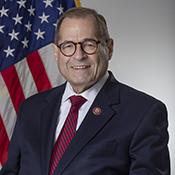
Mr. Speaker, I now would like to recognize my good friend and colleague, Gerald Nadler, who represents the Ground Zero area and has worked tirelessly on this issue. I grant the gentleman 7 minutes.
I thank the gentleman for his hard work and for his statement and for being here tonight. I know that he has many constituents such as Congressman Dent, and we thank Ryan McCormick for being with us in the Chamber tonight.
I want to talk about another victim of 9/11, Winston Lodge. He was written about in ``The Making of a Health Disaster'' which was originally published July 25, 2006; and I quote from the Daily News.
``For Winston Lodge, life as a forgotten victim of 9/11 is the torment of chronically inflamed and bleeding sinuses.
``5 years ago, Lodge was a 44-year old iron worker who helped build things. Then, called on to help dismantle the pile, he pitched in at Ground Zero for 12 hours a day, 7 days a week for a month.
``Today, Lodge's nose runs constantly and often bleeds. He suffers headaches from sinus pressure, has shortness of breath from chronic bronchitis, and has acid reflux, a painful heartburn. He has undergone surgery to relieve sinus difficulties and is waiting for a second operation.
``Since 2004, Lodge, a divorced father of four, has not been able to work; and he says, and I quote, ``I am sick to my bones, and I need help.''
A number of people have worked very hard on this and held hearings to focus on this issue, including Mrs. Clinton and, very recently, Ed Towns had one in Brooklyn, New York, about the health impacts on his constituents in Brooklyn. He held another one here in Washington.
But the first person to call a series of hearings on the health impacts of 9/11 was my colleague from Connecticut, Christopher Shays. Under the Government Reform and Oversight Committee, he held hearings in New York, many here in Washington, that helped focus the light on the need for everyone to be monitored who was exposed to those deadly toxins and everyone who is sick to be treated. We thank you for holding those hearings and for joining us tonight in this special order. Thank you, Mr. Shays.
Well, I thank my colleague and good friend from Connecticut; and I thank him particularly for the public hearings that really focused the need and, I think, helped us achieve partial funding, the $25 million that we got in the President's budget. As we know, Jerry and the New York delegation, along with Senators Clinton and Schumer, we have worked very hard to have $50 million added to the supplemental budget for the health needs of the 9/11 workers. This has been a delegation-wide priority on both sides of the aisle led by our two Senators and by the entire delegation.
I remember your hearings very vividly, the men and woman who came and testified who were sick. They came with their pills. They came with their coughs. Some could hardly breathe. They could hardly talk.
I want to share another story with my colleagues of Jeffrey Endean, who was highlighted in the Daily News articles as life as a forgotten victim of 9/11. And he says, 5 years ago, he was a 51-year old Division Commander for Morris County New Jersey's Sheriff Office. He was healthy, able to run several miles.
Then he was pressed into Ground Zero service because he had experience helping first responders cope at horrific scenes. He worked 12 hours a day, from September 11 to November 22, 2001.
Today, he has reactive airways dysfunction syndrome, RADS, a rare irritant-induced form of asthma. His sinuses often bleed. He is prone to headaches and upper respiratory infections.
Married, the father of three and grandfather of three, he retired in 2003; and he says, ``I start the day with four to five inhalers and a pill. Will I have cancer at 66? Will I live my life as long as I should?''
That is the question, and that is why Jerry and Chris and I have worked so hard to have monitoring. And we need to continue this monitoring treatment not just for the next 5 years but doctors say for the next 20 or 30 years. New diseases are coming up. Pulmonary fibrosis, where the fibers in the lungs, they can hardly breathe. It's like an iron lung.
And, Jerry, you were at those hearings. Can you comment and add to what Chris said about the hearings? And Jerry and I and Chris really represent many people who work there, the residents. We need to get the residents into the registry, too.
Jerry, I have his picture in my office. He found the flag, the flag that was flown around the world from Ground Zero, and they will not acknowledge that he worked there. He got awards. And what struck me about him and many others, Jerry and Chris, if you will remember, at that hearing they testified they would do it again even though they know they had lost their health.
It is a scandal. An absolute scandal. And at the hearing remember the Health Commissioner testified that Zadroga did not die from 9/11? I couldn't believe it.
Our legislation calls for that all the residents should be covered. But remember, at the last hearing that Congressman Towns had, Agwunobi testified that we no longer needed a plan, that he wasn't going to give us a plan.
They said they would give us a plan in February. Where is it? That is why we have a resolution calling for a plan on how we are going to monitor and treat these heroes and heroines.
That is very true. But I also want to build on what he said, that people are going to be watching how we treat these first responders. God forbid that we have another 9/11 attack or another terrorist attack, they are going to know that we weren't there to provide, at the very least, the health care and the monitoring that the heroes and heroines need, and that is a very important precedent. It is not only, do we need to take care of these men and women, Mr. McCormick, who is with us tonight in the Gallery, but we have to send a message that we are going to be there for our first responders.
I know. There were lots of terrible mistakes that are causing people their health now.
And in closing in this final minute, I just want to underscore that we as a Nation must not forget the firefighters, police officers, emergency medical technicians and all the other responders, volunteers and residents who bravely rushed down to save lives even as everyone else was running in the opposite direction. We must not forget the rescue, recovery and cleanup workers who stayed on for months at Ground Zero in service to our country. And we must not forget the residents, area workers and school children who lived, worked and studied through the toxins and have now become sick.
Once again, I stand on this floor of Congress and note that this was an attack against our Nation, and we know that the Nation responded. Every State has workers that were affected by the deadly toxins at Ground Zero. Every State had residents who rushed to our State and rushed down to Ground Zero to help. We will never forget them, and we will not stop. Both sides of the aisle, we are committed to making sure that everyone who was exposed to the deadly toxins is treated and everyone who is sick is going to get medical care. That is the least that we can do for these brave men and women.
I thank my colleagues and especially Ryan McCormick, who is here with us tonight, for coming. And I thank you for your work not only tonight on this Special Order tonight but throughout your year in Congress. Since 9/11, it has been a priority of yours. And my constituents, the thousands that were affected thank you for your efforts, and I thank you for having this opportunity of joining me in this Special Order.