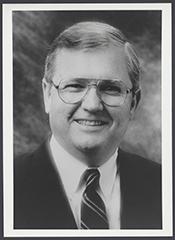
Thank you, Mr. Conyers, Mr. Lewis and all Members of Congress. Madam Speaker, as we honor Dr. King's legacy, let's remember it is a living legacy. We are not talking about cold prose and someone who…
Thank you, Mr. Conyers, Mr. Lewis and all Members of Congress.
Madam Speaker, as we honor Dr. King's legacy, let's remember it is a living legacy. We are not talking about cold prose and someone who is so distant from this moment. His ideas are so alive today and so needed today; that is why a month from now, I will be introducing legislation to create a Cabinet level Department of Peace, which takes Dr. King's vision of an America which organizes around principles of nonviolence and brings it to life in addressing the issues of domestic violence, spousal abuse, child abuse, violence in the schools, racial violence, violence against gays, police, community relations conflicts, and provides the resources so that we can deal with these as a living testimony to the love that we are showing today for Dr. King.
But he also was a visionary on the matter of war. He spoke many times warning this country about the danger of what happened in Vietnam. He spoke about the price that was being paid for the people of two nations in a speech at Riverside Church nearly 40 years ago. At Ebenezer Baptist Church he spoke about the interrelationship of all people, but how all people are one. It was that understanding of oneness that drove him to take a stand for peace.
Let us celebrate not only his life, but let the principles of his life continue to guide us as Americans. This is the moment to take a stand as we grapple with the question of Iraq.
I met with representatives of over 1,000 soldiers today who say it is time to get out of Iraq. Let us protect Dr. King's memory by standing for peace.
Madam Speaker, I would like to put into the Record Dr. King's speech from Ebenezer Baptist Church and part of his speech from Riverside Church, which need to be read today. I would also like to put in the Record a speech that I gave recently called ``Out of Iraq and Back to the American City,'' which shows that only when we take a stand for peace are we able to get the resources that we need to provide jobs and health care and education and retirement security and housing for the American people.
Make Dr. King's legacy a living legacy.
A Christmas Sermon on Peace
Dr. King first delivered this sermon at Ebenezer Baptist
Church, where he served as co-pastor. On Christmas Eve, 1967,
the Canadian Broadcasting Corporation aired this sermon as
part of the seventh annual Massey Lectures.
Peace on Earth. . . .
This Christmas season finds us a rather bewildered human
race. We have neither peace within nor peace without.
Everywhere paralyzing fears harrow people by day and haunt
them by night. Our world is sick with war; everywhere we turn
we see its ominous possibilities. And yet, my friends, the
Christmas hope for peace and good will toward all men can no
longer be dismissed as a kind of pious dream of some utopian.
If we don't have good will toward men in this world, we will
destroy ourselves by the misuse of our own instruments and
our own power. Wisdom born of experience should tell us that
war is obsolete. There may have been a time when war served
as a negative good by preventing the spread and growth of an
evil force, but the very destructive power of modern weapons
of warfare eliminates even the possibility that war may any
longer serve as a negative good. And so, if we assume that
life is worth living, if we assume that mankind has a right
to survive, then we must find an alternative to war--and so
let us this morning explore the conditions for peace. Let us
this morning think anew on the meaning of that Christmas
hope: ``Peace on Earth, Good Will toward Men.'' And as we
explore these conditions, I would like to suggest that modern
man really go all out to study the meaning of nonviolence,
its philosophy and its strategy.
We have experimented with the meaning of nonviolence in our
struggle for racial justice in the United States, but now the
time has come for man to experiment with nonviolence in all
areas of human conflict, and that means nonviolence on an
international scale.
Now let me suggest first that if we are to have peace on
earth, our loyalties must become ecumenical rather than
sectional. Our loyalties must transcend our race, our tribe,
our class, and our nation; and this means we must develop a
world perspective. No individual can live alone; no nation
can live alone, and as long as we try, the more we are going
to have war in this world. Now the judgment of God is upon
us, and we must either learn to live together as brothers or
we are all going to perish together as fools.
Yes, as nations and individuals, we are interdependent. I
have spoken to you before of our visit to India some years
ago. It was a marvelous experience; but I say to you this
morning that there were those depressing moments. How can one
avoid being depressed
when one sees with one's own eyes evidences of millions of
people going to bed hungry at night? How can one avoid being
depressed when one sees with one's own eyes thousands of
people sleeping on the sidewalks at night? More than a
million people sleep on the sidewalks of Bombay every night;
more than half a million sleep on the sidewalks of Calcutta
every night. They have no houses to go into. They have no
beds to sleep in. As I beheld these conditions, something
within me cried out: ``Can we in America stand idly by and
not be concerned?'' And an answer came: ``Oh, no!'' And I
started thinking about the fact that right here in our
country we spend millions of dollars every day to store
surplus food; and I said to myself: ``I know where we can
store that food free of charge--in the wrinkled stomachs of
the millions of God's children in Asia, Africa, Latin
America, and even in our own nation, who go to bed hungry at
night.''
It really boils down to this: that all life is
interrelated. We are all caught in an inescapable network of
mutuality, tied into a single garment of destiny. Whatever
affects one directly, affects all indirectly. We are made to
live together because of the interrelated structure of
reality. Did you ever stop to think that you can't leave for
your job in the morning without being dependent on most of
the world? You get up in the morning and go to the bathroom
and reach over for the sponge, and that's handed to you by a
Pacific islander. You reach for a bar of soap, and that's
given to you at the hands of a Frenchman. And then you go
into the kitchen to drink your coffee for the morning, and
that's poured into your cup by a South American. And maybe
you want tea: That's poured into your cup by a Chinese. Or
maybe you're desirous of having cocoa for breakfast, and
that's poured into your cup by a West African. And then you
reach over for your toast, and that's given to you at the
hands of an English-speaking farmer, not to mention the
baker. And before you finish eating breakfast in the morning,
you've depended on more than half of the world. This is the
way our universe is structured, this is its interrelated
quality. We aren't going to have peace on earth until we
recognize this basic fact of the interrelated structure of
all reality.
Now let me say, secondly, that if we are to have peace in
the world, men and nations must embrace the nonviolent
affirmation that ends and means must cohere. One of the great
philosophical debates of history has been over the whole
question of means and ends. And there have always been those
who argued that the end justifies the means, that the means
really aren't important. The important thing is to get to the
end, you see.
So, if you're seeking to develop a just society, they say,
the important thing is to get there, and the means are really
unimportant; any means will do so long as they get you
there--they may be violent, they may be untruthful means;
they may even be unjust means to a just end. There have been
those who have argued this throughout history. But we will
never have peace in the world until men everywhere recognize
that ends are not cut off from means, because the means
represent the ideal in the making, and the end in process,
and ultimately you can't reach good ends through evil means,
because the means represent the seed and the end represents
the tree.
It's one of the strangest things that all the great
military geniuses of the world have talked about peace. The
conquerors of old who came killing in pursuit of peace,
Alexander, Julius Caesar, Charlemagne, and Napoleon, were
akin in seeking a peaceful world order. If you will read Mein
Kampf closely enough, you will discover that Hitler contended
that everything he did in Germany was for peace. And the
leaders of the world today talk eloquently about peace. Every
time we drop our bombs in North Vietnam, President Johnson
talks eloquently about peace. What is the problem? They are
talking about peace as a distant goal, as an end we seek, but
one day we must come to see that peace is not merely a
distant goal we seek, but that it is a means by which we
arrive at that goal. We must pursue peaceful ends through
peaceful means. All of this is saying that, in the final
analysis, means and ends must cohere because the end is
preexistent in the means, and ultimately destructive means
cannot bring about constructive ends.
Now let me say that the next thing we must be concerned
about if we are to have peace on earth and good will toward
men is the nonviolent affirmation of the sacredness of all
human life. Every man is somebody because he is a child of
God. And so when we say ``Thou shalt not kill,'' we're really
saying that human life is too sacred to be taken on the
battlefields of the world. Man is more than a tiny vagary of
whirling electrons or a wisp of smoke from a limitless
smoldering. Man is a child of God, made in His image, and
therefore must be respected as such. Until men see this
everywhere, until nations see this everywhere, we will be
fighting wars. One day somebody should remind us that, even
though there may be political and ideological differences
between us, the Vietnamese are our brothers, the Russians are
our brothers, the Chinese are our brothers; and one day we've
got to sit down together at the table of brotherhood. But in
Christ there is neither Jew nor Gentile. In Christ there is
neither male nor female. In Christ there is neither Communist
nor capitalist. In Christ, somehow, there is neither bound
nor free. We are all one in Christ Jesus. And when we truly
believe in the sacredness of human personality, we won't
exploit people, we won't trample over people with the iron
feet of oppression, we won't kill anybody.
There are three words for ``love'' in the Greek New
Testament; one is the word ``eros.'' Eros is a sort of
esthetic, romantic love. Plato used to talk about it a
great deal in his dialogues, the yearning of the soul for
the realm of the divine. And there is and can always be
something beautiful about eros, even in its expressions of
romance. Some of the most beautiful love in all of the
world has been expressed this way.
Then the Greek language talks about ``philia,'' which is
another word for love, and philia is a kind of intimate love
between personal friends. This is the kind of love you have
for those people that you get along with well, and those whom
you like on this level you love because you are loved.
Then the Greek language has another word for love, and that
is the word ``agape.'' Agape is more than romantic love, it
is more than friendship. Agape is understanding, creative,
redemptive good will toward all men. Agape is an overflowing
love which seeks nothing in return. Theologians would say
that it is the love of God operating in the human heart. When
you rise to love on this level, you love all men not because
you like them, not because their ways appeal to you, but you
love them because God loves them. This is what Jesus meant
when he said, ``Love your enemies.'' And I'm happy that he
didn't say, ``Like your enemies,'' because there are some
people that I find it pretty difficult to like. Liking is an
affectionate emotion, and. I can't like anybody who would
bomb my home. I can't like anybody who would exploit me. I
can't like anybody who would trample over me with injustices.
I can't like them. I can't like anybody who threatens to kill
me day in and day out. But Jesus reminds us that love is
greater than liking. Love is understanding, creative,
redemptive good will toward all men. And I think this is
where we are, as a people, in our struggle for racial
justice. We can't ever give up. We must work passionately and
unrelentingly for first-class citizenship. We must never let
up in our determination to remove every vestige of
segregation and discrimination from our nation, but we shall
not in the process relinquish our privilege to love.
I've seen too much hate to want to hate, myself, and I've
seen hate on the faces of too many sheriffs, too many white
citizens' councilors, and too many Klansmen of the South to
want to hate, myself; and every time I see it, I say to
myself, hate is too great a burden to bear. Somehow we must
be able to stand up before our most bitter opponents and say:
``We shall match your capacity to inflict suffering by our
capacity to endure suffering. We will meet your physical
force with soul force. Do to us what you will and we will
still love you. We cannot in all good conscience obey your
unjust laws and abide by the unjust system, because
noncooperation with evil is as much a moral obligation as is
cooperation with good, and so throw us in jail and we will
still love you. Bomb our homes and threaten our children,
and, as difficult as it is, we will still love you. Send your
hooded perpetrators of violence into our communities at the
midnight hour and drag us out on some wayside road and leave
us half-dead as you beat us, and we will still love you. Send
your propaganda agents around the country, and make it
appear that we are not fit, culturally and otherwise, for
integration, and we'll still love you. But be assured that
we'll wear you down by our capacity to suffer, and one day
we will win our freedom. We will not only win freedom for
ourselves; we will so appeal to your heart and conscience
that we will win you in the process, and our victory will
be a double victory.''
If there is to be peace on earth and good will toward men,
we must finally believe in the ultimate morality of the
universe, and believe that all reality hinges on moral
foundations. Something must remind us of this as we once
again stand in the Christmas season and think of the Easter
season simultaneously, for the two somehow go together.
Christ came to show us the way. Men love darkness rather than
the light, and they crucified him, and there on Good Friday
on the cross it was still dark, but then Easter came, and
Easter is an eternal reminder of the fact that the truth-
crushed earth will rise again. Easter justifies Carlyle in
saying, ``No lie can live forever.'' And so this is our
faith, as we continue to hope for peace on earth and good
will toward men: let us know that in the process we have
cosmic companionship.
In 1963, on a sweltering August afternoon, we stood in
Washington, D.C., and talked to the nation about many things.
Toward the end of that afternoon, I tried to talk to the
nation about a dream that I had had, and I must confess to
you today that not long after talking about that dream I
started seeing it turn into a nightmare. I remember the first
time I saw that dream turn into a nightmare, just a few weeks
after I had talked about it. It was when four beautiful,
unoffending, innocent Negro girls were murdered in a church
in Birmingham, Alabama. I watched that dream turn into a
nightmare as I moved through the ghettos of the nation and
saw my black brothers and sisters perishing on a lonely
island of poverty in the midst of a vast ocean of material
prosperity, and saw the nation doing nothing to grapple with
the Negroes' problem of poverty. I saw that dream turn into a
nightmare as I watched my black brothers and sisters in the
midst of anger and understandable outrage,
in the midst of their hurt, in the midst of their
disappointment, turn to misguided riots to try to solve that
problem. I saw that dream turn into a nightmare as I watched
the war in Vietnam escalating, and as I saw so-called
military advisors, sixteen thousand strong, turn into
fighting soldiers until today over five hundred thousand
American boys are fighting on Asian soil. Yes, I am
personally the victim of deferred dreams, of blasted hopes,
but in spite of that I close today by saying I still have a
dream, because, you know, you can't give up in life. If you
lose hope, somehow you lose that vitality that keeps life
moving, you lose that courage to be, that quality that helps
you go on in spite of all. And so today I still have a dream.
I have a dream that one day men will rise up and come to
see that they are made to live together as brothers. I still
have a dream this morning that one day every Negro in this
country, every colored person in the world, will be judged
on the basis of the content of his character rather than
the color of his skin, and every man will respect the
dignity and worth of human personality. I still have a
dream that one day the idle industries of Appalachia will
be revitalized, and the empty stomachs of Mississippi will
be filled, and brotherhood will be more than a few words
at the end of a prayer, but rather the first order of
business on every legislative agenda. I still have a dream
today that one day justice will roll down like water, and
righteousness like a mighty stream. I still have a dream
today that in all of our state houses and city halls men
will be elected to go there who will do justly and love
mercy and walk humbly with their God. I still have a dream
today that one day war will come to an end, that men will
beat their swords into plowshares and their spears into
pruning hooks, that nations will no longer rise up against
nations, neither will they study war any more. I still
have a dream today that one day the lamb and the lion will
lie down together and every man will sit under his own
vine and fig tree and none shall be afraid. I still have a
dream today that one day every valley shall be exalted and
every mountain and hill will be made low, the rough places
will be made smooth and the crooked places straight, and
the glory of the Lord shall be revealed, and all flesh
shall see it together. I still have a dream that with this
faith we will be able to adjourn the councils of despair
and bring new light into the dark chambers of pessimism.
With this faith we will be able to speed up the day when
there will be peace on earth and good will toward men. It
will be a glorious day, the morning stars will sing
together, and the sons of God will shout for joy.