Amending the Rules of the House of Representatives to ensure that Members have a reasonable amount of time to read legislation that will be voted upon.

Legislative Activity
Stay on top of the latest movement without scrolling through every action
Referred to the House Committee on Rules.
January 12, 2007
View full timeline
Introduced in House
January 12, 2007
Sponsor introductory remarks on measure. (CR E88)
January 12, 2007
Floor Debate
24 membersWhat members said about H.Res. 63 on the floor
 EFH
EFH PTK
PTK IR
IR CS
CS CCK+19
Floor Debate
24 membersWhat members said about H.Res. 63 on the floor
Madam Speaker, I gladly yield 5 minutes to my distinguished colleague from Louisiana (Mr. Jefferson). Madam Speaker, it is my pleasure to yield 5 minutes to the distinguished gentlelady from the U.S.…
Madam Speaker, I gladly yield 5 minutes to my distinguished colleague from Louisiana (Mr. Jefferson).
Madam Speaker, it is my pleasure to yield 5 minutes to the distinguished gentlelady from the U.S. Virgin Islands (Mrs. Christensen), who currently is the chairlady of our Subcommittee on Insular Affairs of the House Resources Committee. She also serves as a member of the Homeland Security Committee.
Madam Speaker, I am pleased to yield 5 minutes to my distinguished friend and colleague, the gentleman from Maryland (Mr. Wynn), currently serving as chairman of the Subcommittee on Environmental and Hazardous Materials of the Energy and Commerce Committee.
Madam Speaker, I am pleased to yield 5 minutes to the distinguished gentlewoman from the great State of Ohio (Mrs.
Jones), currently serving as the chairwoman of the Committee on Ethics and a distinguished member of the Committee on Ways and Means.
Madam Speaker, at this time I would like to yield 5\1/2\ minutes to my distinguished colleague and friend from North Carolina, who currently is chairman of the Oversight Investigation Subcommittee of the House Financial Services Committee, Mr. Watt.
(Mr. WATT asked and was given permission to revise and extend his remarks.)
Madam Speaker, I believe that the statements made earlier by our good friend from North Carolina was right to the point. Unilateralism was our policy. We told the world, We don't need you. And what are we doing now? We are practically begging the world to come and help us with this mess that we created.
Diplomacy? Look at the success of the multilateralism that we have now advocated in our dealings with North Korea. But that was not the case with Iraq, and this is why we are having this problem.
Madam Speaker, I gladly yield 5 minutes to my good friend, the gentleman from Missouri, who currently chairs the Subcommittee on Information and Policy, and I am very, very happy to introduce the gentleman for 5 minutes (Mr. Clay).
Madam Speaker, I could not agree more with my good friend in just quoting Daniel Webster. ``God grants liberty to those who love it.'' The problem that I have right now is that I don't know if the people among the Shiites and the Sunnis love liberty that much to want to make sacrifices. The point of the matter is Saddam Hussein tortured and murdered over 300,000 Shiites. One mass grave contained 30,000 dead bodies. So we have got a real serious problem here.
I gladly yield 5 minutes to the distinguished lady from the State of Texas, the chairlady of the Transportation and Infrastructure subcommittee on environment.
Madam Speaker, I yield myself such time as I may consume.
Madam Speaker, I would say in response to the gentleman's comments, we gladly accept the responsibility. That responsibility was truly exhibited in the election in November. This is the reason why we are taking action. I think this resolution, every bit, is part of that accepting the responsibility and the will of the American people who have spoken in the November election. I just want to note that.
Madam Speaker, I yield 5 minutes to the gentlewoman from the District of Columbia (Ms. Norton), who is currently chairwoman of the Subcommittee on Economic Development in the Transportation Committee.
Madam Speaker, I submit it is not General Petraeus that we are questioning here. It is the decision of our Commander in Chief, our President, his decision to deploy some 20,000 troops, additional troops to this mess that we created in Iraq. We planned and carried out this war on the cheap, saying we only needed 140,000 when in fact the experts said we needed at least 250,000 or 300,000 to complete and do the job. That didn't happen. So why do you think that adding another 20,000 troops is going to make that much difference? That is what is at issue and I think this is what we need to debate on.
Madam Speaker, I gladly yield 5 minutes to my good friend from North Carolina, Mr. Butterfield, a member of the Armed Services Committee.
Madam Speaker, I yield myself such time as I may consume.
I just want to note with interest also in my good friend from New York's observations, on this side of the aisle we are in no way trying to criticize or humiliate the integrity of the great general that is now leading our forces in Iraq. In fact, I have the utmost respect for General Petraeus. He received his doctoral dissertation from Princeton University on counterinsurgency; and that is why, as the former commander of the 101st Airborne Division, he was so successful as a general up in Mosul. So I think we need to have that framework understood with my good friend from New York. We are not questioning the integrity of the good general, General Petraeus. It is the decision made by our President, who is the Commander in Chief, that we are debating about in this great debate that we are having this evening.
Madam Speaker, I want to yield 5\1/2\ minutes to my good friend, the gentlewoman from Wisconsin (Ms. Moore), a distinguished member of the Financial Services Committee.
Mr. Speaker, I yield such time as I may consume at this time.
Mr. Speaker, I support House Concurrent Resolution 63, and I want to thank our chairman of the House Armed Services Committee, the gentleman from Missouri (Mr. Skelton); also, our chairman of the House Foreign Affairs Committee, the gentleman from California (Mr. Lantos); and especially the gentleman from North Carolina (Mr. Jones), my good friend and colleague, as original cosponsors of this legislation.
Mr. Speaker, I also want to thank the gentleman from Virginia (Mr. Wolf) and Mr. Richard Solomon of the United States Institute of Peace for their initiative and leadership to establish what is commonly known today as the Iraq Study Group, composed of nationally recognized leaders from both political parties, and co-chaired by former Secretary of State James Baker and former Congressman and director of the Woodrow Wilson International Center for Scholars Mr. Lee Hamilton.
The Iraq Study Group conducted for well over eight months a most comprehensive review, in my humble opinion, of the crisis that we are now faced
with in Iraq, and I sincerely hope that in the weeks and months to come that we here in this body will review seriously its recommendations for a resolution to the conflict in Iraq.
Mr. Speaker, almost 5 years ago, as a member of the House International Relations Committee, I voted in support of the resolution which authorized our President to use military force against Saddam Hussein and his military regime, for the most critical reason presented by our President, our Vice President, our Secretary of Defense, and our National Security Adviser, that Saddam Hussein had in his possession supposedly nuclear weapons. Our Nation's own national security was severely at risk, imminent danger. These were the phrases that were used. And besides for other reasons, the nuclear issue was the linchpin, in my humble opinion, that convinced many of us on both sides of the aisle to approve the resolution to allow our President to wage war against Iraq.
Mr. Speaker, our Nation, and especially the American people, have now come to realize that Saddam Hussein never had in his possession nuclear weapons, due to faulty intelligence and misleading statements made by top officials of this administration in order to totally change the atmosphere to have the public believe that our number one public enemy was Saddam Hussein and not Osama bin Laden.
Mr. Speaker, I ask my colleagues, how in the world did we end up in Iraq and we have now caused more tension in the Middle East than ever before?
As I recalled, Mr. Speaker, our Nation was attacked by some 18 terrorists, 14 Saudi Arabians, one Egyptian, two from the United Arab Emirates, and one Lebanese, on September 11, 2001. None of these terrorists came from Iran or Iraq. Most of them were from Saudi Arabia, and they were members of a terrorist organization that we now know as al Qaeda, and the leader of this terrorist group is Osama bin Laden.
Our Nation was attacked on September 11, 2001. Most of the nations around the world not only sympathized with us but supported us, but the Congress gave authority to our President to go after Osama bin Laden and his al Qaeda organization that was under the protective custody of the Taliban, which at the time controlled Afghanistan and certain parts of Pakistan.
It is critically important, I submit, Mr. Speaker, that our colleagues and the American people need to be reminded on what prompted our President, as Commander in Chief, and this Congress, what actions our Nation took after our country was attacked on September 11, 2001.
Our government leaders properly identified al Qaeda and Osama bin Laden as the perpetrators of the attacks on September 11, 2001, and our President and the Congress acted accordingly to summon our military forces to wage war against Osama bin Laden and his al Qaeda organization that was under the protection of the Taliban in Afghanistan.
Well, we got rid of the Taliban, and we were successful in establishing a democratic government for the people and the leaders of Afghanistan, but we did not, and I repeat we did not, complete our mission of either killing or capturing the leader who was responsible for the attack against our country on September 11, 2001.
The terrorist leader's name is Osama bin Laden, and after almost 6 years now, the most powerful country in the world militarily, Osama bin Laden still has not been killed or captured, let alone the fact that we did not complete our commitment in resources and force structure to sustain Afghanistan's newly established democratic government.
Now, there is a new escalation of Taliban presence in Afghanistan and its ability to wage military operations against us and our NATO allies, and the situation in Afghanistan is now becoming more like Iraq, needing more troops and resources to fight the Taliban again.
The critical question of why our country decided to wage war against Saddam Hussein is one that will be a matter of public debate for years to come, but suffice it to say, one, Saddam Hussein did not attack us on September 11, 2001. It was Osama bin Laden and his al Qaeda organization that was based in Afghanistan and parts of Pakistan.
Two, our President and his top officials had misled the American people and the Congress to state that Saddam Hussein possessed weapons of mass destruction, especially nuclear weapons. I honestly believe that this issue alone was the catalyst and what prompted Congress to give the President military authority to force Saddam Hussein to comply with U.N. resolutions and to also locate and destroy his alleged supply of nuclear weapons.
Three, we may have won the war in Iraq by eventually capturing Saddam Hussein, but we have caused more tension and conflict among the rival factions between the Shiites, comprised of 60 percent of this country's population of 26 million, and the Sunnis, which make up some 20 percent of the population, and the remainder the Kurds which, for the most part, is not involved in this conflict at this point in time.
I must include, Mr. Speaker, the name of former Army Chief of Staff General Eric Shinseki as part of the debate and discussion, if you will. General Shinseki, in my mind, was among the first of our military leaders who, for making an honest statement as a professional soldier concerning the situation in Iraq, was publicly criticized and humiliated by civilian superiors within the Department of Defense.
In response to questions by members of the Senate Armed Services Committee, General Shinseki was asked how many troops it would require to take control of Iraq, and his response was something in the order of several hundred thousand soldiers. Here was a soldier who fought and was wounded while engaged in combat in Vietnam, a most respected officer who served with honor and distinction for some 35 years in defense of our Nation. Needless to say, Mr. Speaker, I must say, General Shinseki's professional assessment of the mismanagement and ill-planning of this war in Iraq could not have been more accurate, given the sad state of affairs we find our country is in now when dealing with Iraq.
Mr. Speaker, the resolution before us is plain and simple. It is a clear statement to the American people and to the world that Congress absolutely supports the efforts of all the men and women who proudly serve in the Armed Forces of the United States. It also sends a very simple message to President Bush that his recent decision to send an additional number of some 20,000 troops to the war effort in Iraq is not going to change the serious security problems and the civil war that is now in place between the Sunni and the Shiite factions.
Mr. Speaker, we have fulfilled our mission, our military mission, by capturing Saddam Hussein who, of course, now recently was hung by the authorities with the new Iraq Government. It is up to the Iraq people and their leaders now to determine for themselves a political solution to the rights and privileges of the three major factions: the Sunnis, the Shiites and the Kurds.
It is a fact that 60 percent of the population in Iraq is Shiite. Prime Minister Maliki is a Shiite, and interestingly enough, the President is a Kurd.
Now the question is how and in what way the Sunnis are going to be part of this newly established government. And there is no denial, Mr. Speaker, that for the future the new government will be dominated by Shiites, an unintended consequence of our decision to wage war against Saddam Hussein, who was a member of the Sunni faction, which made up only 20 percent of the population of Iraq. But Saudi Arabia, Jordan, Syria, Egypt and the rest of the Muslim world is Sunni. Eighty-five percent of the Muslim world is Sunni, we have to understand that, and Iran and the Shiite factions in Iraq make up only 15 percent.
I said earlier, Mr. Speaker, and I want to quote again my good friend's quotation from Daniel Webster: God grants liberty to those who love it, but I say they must also be willing to die for it.
The civil war now taking place between the Sunnis and the Shiites is a war not for seeking liberty and freedom, but it is a religious war that has been going on for the past 1,400 years. There are never winners in religious wars, Mr. Speaker. And no force, not even the most powerful nation of this
world is going to change the hearts and minds of the Sunnis and the Shiites unless they themselves do so willingly and do it in a political way.
Mr. Speaker, I honestly believe that our troops now there and an additional number of 20,000 more soldiers that President Bush has ordered for deployment in Iraq are going to get caught in the crossfire of the civil war that is now going on between the Sunnis and the Shiites, a war that can only be resolved only among the Iraqi factions themselves and not with our military presence there.
I urge my colleagues to support this resolution.
Mr. Speaker, I ask unanimous consent to yield the balance of my time to the gentleman from New Jersey, my good friend chairman of our Subcommittee in Africa and Global Health, Mr. Payne, so that he may be able to control the time on this side of the aisle.
I thank the Speaker for his recognition and for his usual courtesy. Mr. Speaker, I yield myself such time as I may consume. I rise today in opposition to the resolution. I have listened as carefully…
I thank the Speaker for his recognition and for his usual courtesy.
Mr. Speaker, I yield myself such time as I may consume.
I rise today in opposition to the resolution. I have listened as carefully as I can for the past day and a half of debate, and it becomes clearer and clearer to me that those who were supporting this resolution, for whatever reason, are unwilling to accept the consequences of the words of this resolution, unwilling to accept the consequences of what could happen by the adoption of this resolution.
Yes, the resolution is meaningless. Yes, the resolution has no legal impact, but it does send a terrible message. It sends a terrible message to the world that the United States is losing a sense of resolution, if you will. It also sends a very cruel message, I believe, to the troops in the field, because while the resolution goes out of the way to say it supports the troops, at the very same time it is necessarily undermining the newly appointed commander of those troops. We hear from speaker after speaker who was speaking in support of the resolution that this is more of the same staying the course, this is a policy that cannot work.
But yet the newly designated commander, General Petraeus, who was unanimously confirmed by the United States Senate, is one of the architects of this policy. General Petraeus has stated that this policy can work, that he believes it will work.
Those of us who have been to Iraq and seen the outstanding work that General Petraeus has done, the 101st Airborne, we realize how committed he is. To me it sends such a mixed message to, on the one hand, have him unanimously confirmed as the new commander in the field, and yet at the same time to be attacking his credibility or his competency.
You can't have it both ways. You can't say he is the best man for the job, we have faith in him, and yet say the policy is wrong and it cannot work, and he says it will work and he is the architect of that policy. Think of the message we are sending to the troops. Think of the message we are sending to our allies in our region. Probably most importantly, think of the message we are sending to the enemy of the region.
I just heard the previous gentleman say that those of us who oppose the resolution want to stay the course. I would say that those who are supporting the resolution are the ones who want to stay the course. This is a significant new policy. General Petraeus has said it is a new policy, and it is a new policy.
The gentleman also said that we don't really have to worry about Iraq becoming a haven for terrorists because terrorists can attack us anywhere. He basically said you can do it from an apartment in Hamburg.
I would suggest that if the proponents of the resolution cannot appreciate the distinction between a hotel room in Hamburg and a sovereign state such as Iraq being occupied by terrorists, then they don't realize the impact that Afghanistan had, the fact that the Taliban allowed al Qaeda to have a sanctuary in Afghanistan, how it gave them a strong base of operations to carry out and plot the attacks of September 11.
Now, truly there are terrorists everywhere, Islamist terrorists throughout the world. They are certainly throughout the Middle East, the Philippines, Indonesia, Singapore, they are here in the United States, we know that, in Canada. But the fact is you try to take as many sanctuaries away from them if possible.
Iraq, if we did leave Iraq, and that, I believe, has to be the necessary outcome, the only logical conclusion of where this resolution will ultimately lead us, then we have a situation where we are talking about confronting Iran. Well, the Shiites in Iran will certainly have enormous influence in Iraq. Al Qaeda will have a sanctuary among the Sunnis in Iraq, and then we will have the situation in the north between the Kurds and the Turks. So the fact is no one more than those of us who oppose the resolution realize this is not the only battlefield, but it is a main battlefield.
Certainly al Qaeda believes it is important. That is why we have al Qaeda in Iraq. That is why al Qaeda has been carrying out attacks, that is why al Qaeda was there. That is why we are engaging in Anbar province. By the way, of the 21,000 additional troops, at least 4,000 will be directly confronting al Qaeda in Anbar province.
These are all the issues I feel have not been in any way adequately or sufficiently addressed by the supporters of the resolution. Again, at a time when we have General Petraeus embarking on what I believe is a key turning point in the war, it is really irresponsible to even be considering voting for this resolution.
Now, another point, I know many speakers on my side want to be heard during the time that I will be controlling, but we, I think, have to address the issue of should Congress be getting involved in making strategic battlefield decisions.
I have researched this. I have not found one instance during the history of our country where the United States Congress has injected itself into battlefield decisions.
I was just thinking suppose we did this during World War II, and we had this situation with a small island in the Pacific, Iwo Jima, where almost 7,000 people were killed in less than 6 weeks, almost 26,000 casualties. If we had 24-hour cable news, if we had a sense of disunity in the country, we would be bringing a resolution in the second or third week of the battle saying we already lost 2, 3, 4,000 troops, this one island, how can we have 10 to 15,000 casualties just in the first 2, 3 weeks.
But the fact is we have allowed the President, as Commander in Chief, and that is his constitutional responsibility. We voted for the war in the House. We voted for the war in the Senate. Once we do that, the Commander in Chief, I believe, strongly believe, has the constitutional authority and the right to be deciding exactly the tactical and strategic decisions.
If the Members of Congress want to cut off funding for the war, the fact is some of them may, then the fact is they should say that, not be coming in through the backdoor.
So I would urge my colleagues to realize the consequences of their action. You know, I spoke on the House floor yesterday, and after I was finished the speaker who followed me said I wish that the opponents of the resolution would just stick to the resolution itself.
I am more than willing to debate the resolution. I believe I have. The fact is I can see why they don't want to look at the consequences beyond the narrow language of that resolution, because it will have horrific consequences for the United States. Actions have consequences, words have consequences, and the words of this resolution will have terrible consequences for the United States, terrible consequences for all of us who oppose Islamic terrorism, and terrible consequences for our allies in the region and with whom we need support in the future.
Mr. Speaker, I reserve the balance of my time.
Madam Speaker, I yield 5 minutes to the gentleman from Nebraska (Mr. Terry).
Madam Speaker, I am pleased to yield 5 minutes to the gentleman from Alabama (Mr. Rogers), who is a member of the Armed Services Committee and the Homeland Security Committee.
Madam Speaker, I would remind the supporters of the resolution that more than 70 percent of the American people, in opinion polls, opposed President Truman's policy in Korea, and that was one of the turning points in the Cold War.
Madam Speaker, I yield 6\1/6\ minutes to the gentleman from Mississippi (Mr. Wicker), who is a retired Air Force lieutenant colonel and a member of the Defense Appropriations Subcommittee.
Madam Speaker, I remind supporters of the resolution that the newly confirmed commander in Iraq says this is new strategy and it will work, and he is the expert on counterinsurgency.
Madam Speaker, I yield 5 minutes to the gentleman from Wisconsin (Mr. Ryan), the ranking member of the Budget Committee.
Madam Speaker, I certainly acknowledge the passion of the former speaker on the floor.
I would just say, though, that all of us have suffered casualties and deaths in our districts. Certainly a gentleman from my former district was killed last week. He was a graduate of Duke University. He was offered scholarships to law school. He was an All American lacrosse player, volunteered to serve in the Army, was in his third tour. His family more than ever supports the effort in Iraq, and you can find families on all sides.
I think it is wrong to somehow suggest that those who died, somehow the families want us to vote for this resolution or against it. We can find sufficient numbers on both sides. Certainly in my experience, most of those would oppose the resolution. I certainly would not impose that on anyone else.
Madam Speaker, I yield 5 minutes to the gentleman from Ohio (Mr. Turner), a distinguished member from the Armed Services Committee.
Madam Speaker, I would suggest to the gentleman, while he believes this plan has no chance of working and it is the same as previous plans, the fact is the newly confirmed general in Iraq, General Petraeus, who is by all accounts the most significant general we have had in Iraq, who is the author of the counterinsurgency policy, said it is a significant change and it will work. That is why I would say that while the resolution says it supports the troops, you are in effect undermining the new commander by challenging either his credibility or his competency. And that is a terrible message to the troops.
I yield to the gentleman from North Carolina.
Reclaiming my time, I never suggested unpatriotic. I said you are questioning the competency or credibility of the commander in Iraq, who was just confirmed unanimously by the United States Senate.
Madam Speaker, I yield 10 minutes to the gentleman from California (Mr. Daniel E. Lungren).
Madam Speaker, I would just advise the supporters of the resolution that while Mr. Clay and others did oppose the war, and I certainly commend them for their consistency, the fact is the Democratic leader at the time and many of the Democratic leaders in the House and the Senate strongly supported the war resolution in October of 2002, both in the House and the Senate.
I yield to the gentleman from Missouri.
Reclaiming my time, both former President Clinton and others have said that he saw the same intelligence as President Bush did.
With that, I yield 5 minutes to the gentleman from Tennessee (Mr. David Davis), a newly elected Member.
Madam Speaker, various supporters of the resolution can point to this general or that general. I would point to the general who was most recently confirmed and unanimously confirmed by the United States Senate, who is the author of this plan. I will stand by him.
Madam Speaker, I yield 5 minutes to the gentleman from Iowa (Mr. Latham).
Madam Speaker, I would suggest that the lives of our troops are in the hands of General Petraeus, and his credibility is undermined by this resolution.
Madam Speaker, I yield 5 minutes to the distinguished gentleman from Illinois (Mr. LaHood).
(Mr. LaHOOD asked and was given permission to revise and extend his remarks.)
Madam Speaker, I would say to my good friend from American Samoa that one of the reasons why I do refer to General Petraeus is he is one of those who put this plan together and he says it will work, and for people to belittle his plan or to ridicule it or to adopt for the first time in history a resolution attacking his strategic plan is an attack on either his credibility or his competency. You can't have it both ways.
Madam Speaker, I yield 7 minutes to the gentleman from Connecticut (Mr. Shays), who has been to Iraq 15 times.
Madam Speaker, again I would suggest to these supporters of the resolution that the President's key advisers, including the chairman of the Joint Chiefs of Staff, General Pace, and the new commander in Iraq, General Petraeus, strongly support this increase in troops.
Madam Speaker, I yield such time as he may consume to the gentleman from Washington State (Mr. Reichert).
Mr. Speaker, I yield myself 10 seconds to note that the Iraq Study Group specifically said the United States should significantly increase the number of U.S. military personnel, including combat troops embedded in and supporting Iraqi units.
Mr. Speaker, I yield 5 minutes to the gentleman from Pennsylvania (Mr. Pitts).
Mr. Speaker, I would say to my good friend from New York, the message this resolution sends to the troops in the field is that the resolution challenges and opposes the mission that their group commander is asking them to carry out, and to me that has to undermine their morale.
I will yield to the gentleman.
Reclaiming my time, the reason I am saying that is, you are opposing the 21,000 troop increase, and that is the policy of General Petraeus, who is the new commander in the field. That is the policy he is asking his troops to carry out, and you are opposing the very policy the new commander says can work and will work.
With that, I yield 5 minutes to the gentleman from South Carolina (Mr. Brown).
Mr. Speaker, I would say to supporters of the resolution that General Petraeus himself, in answer to a question from Senator Lieberman, he said that resolutions such as this will affect the morale of the troops that he has been asked to lead in battle.
Mr. Speaker, I yield 7 minutes to the gentleman from Florida (Mr. Stearns).
(Mr. STEARNS asked and was given permission to revise and extend his remarks.)
Mr. Speaker, I would just comment on the remarks of my good friend, the gentleman from Kansas, as to troops that he has heard from. I know I have visited Iraq a number of times. I visit Reserves, National Guard, regular troops, active duty, and I have never seen morale higher in any Armed Forces.
I speak with troops when they come home to my district. I go to the wakes and funerals of those who die from my district. And I think we can pick and choose as to what we say. I would say the overwhelming majority I have spoken to do support and know exactly why they are there.
But again, I just lost a constituent the other day. His family certainly is honored by his service. It was his third tour. He went back for a third tour. So he certainly understood what was going on.
Mr. Speaker, I yield 5 minutes to the gentlelady from Tennessee, a member of the Homeland Security Committee (Mrs. Blackburn).
Mr. Speaker, I was remiss before in not commending the gentleman from New Jersey on his knowledge of logic and philosophy. I should have known he would get us on that one.
With that, I also note that the Iraq Study Group said that the United States should significantly increase the number of U.S. military personnel, including combat troops.
Mr. Speaker, I yield such time as he may consume to the gentleman from Indiana, a member of the Homeland Security Committee (Mr. Souder).
Mr. Speaker, I yield myself such time as I may consume. Mr. Speaker, during the debate on Iraq yesterday, we heard many times from some of our Democratic colleagues that they had no intention of…
Mr. Speaker, I yield myself such time as I may consume.
Mr. Speaker, during the debate on Iraq yesterday, we heard many times from some of our Democratic colleagues that they had no intention of defunding our troops in Iraq. Some even expressed outrage and indignation when some of our Republican Members made mention of their plans for defunding the troops. However, defunding plans clearly demonstrate their policy is to withdraw from the global war against Islamic militant extremists by surrendering to the enemy in Iraq.
We are faced with two options in Iraq, Mr. Speaker, to move forward or to retreat. Some of my Democrat colleagues appear to be united in opposing any effort to adopt a more vigorous strategy in Iraq and, instead, are ready to retreat. This resolution is but the first step in that direction.
Despite denials, the evidence is that the effort to cut the funding of our troops in Iraq and, in turn, for all of our efforts there are well underway.
Several bills have already been introduced by Democrat Members to compel a withdrawal. Let me read the titles and the provisions.
H.R. 508, to require the United States military disengagement from Iraq, which mandates a withdrawal of U.S. forces within 6 months of the enactment of this act and which cuts off funding for any deployment or continued deployment of forces in Iraq. Let me emphasize that again. It cuts off funding for any deployment, not just an increase, not just sending reinforcements, but for any deployment of U.S. forces in Iraq, including those already there, and it even limits the number of embassy personnel.
Also, H.R. 438, to prohibit an escalation in the number of members of the United States Armed Forces in Iraq, which states that funds appropriated or otherwise made available to the Department of Defense under any provision of law may not be obligated or expended to increase the number of members of the United States Armed Forces serving in Iraq.
H.R. 746, to provide for the safe and orderly withdrawal of United States military forces and Department of Defense contractors from Iraq, which mandates the beginning of the withdrawal of U.S. forces from Iraq within 30 days of the enactment of this act and complete the withdrawal no later than 180 days later. It also prohibits
funds to increase the number of Armed Forces serving in Iraq or to extend the deployment of those already there.
Or H.J. Res. 18, to redeploy U.S. forces from Iraq, which states that the deployment of United States forces in Iraq by the direction of Congress is hereby terminated, and the forces involved are to be redeployed at the earliest practical date.
When we offered a proposal to prohibit the cutting off of funds for our troops, that is what we wanted to do on our side of the aisle, a proposal to prohibit cutting off of funding of our troops in harm's way, the Democratic leadership blocked it from coming to the floor. Why? Well, based on the bills that I just mentioned, the only explanation I would think is that they fear that their caucus would indeed vote to cut off funding for our troops and leave them to face the enemy without the necessary resources.
So, within this context, they offer this nonbinding resolution which the Democrat leadership claims to support the troops. But how can such a claim be credible? Because in the second paragraph of the resolution, it opposes sending the reinforcements that our troops in Iraq need to confront the enemy.
Our commanders in the field say they need the reinforcements in order to address the security situation in Iraq. My stepson Douglas Lehtinen and my daughter-in-law, Lindsay, served in Iraq as Marine officers. Lindsay will soon serve in just a few weeks in Afghanistan. They understand the difference between saying we support our troops but we don't support your mission. It is the mission that matters.
Some of our colleagues seek to deny our troops that level of support, that level of backup which could be the difference for Dougie, for Lindsay, for so many others between death and survival.
This resolution seeks to substitute the assessment of the military commanders with the views of lawmakers. We claim to know more than the commanders.
Rather than focusing on the strategic policy issue, the Democratic leadership has drafted a resolution that undermines tactical military matters and seeks to override the decisions of our military commanders and the position articulated by General Petraeus. They do not want to discuss the grave consequences of withdrawal and surrender. They do not want to discuss the nature of the enemy, the Islamist militant extremists who seek to destroy us, who like vultures descend on us to prey on our weakness.
Some of our colleagues on the other side of the aisle seek to focus on the abstract rather than on the reality. They believe that security will come from withdrawal and surrender. On the contrary, retreat guarantees that the Islamic militants will intensify their efforts against us. All we need to do is focus on bin Laden's own words.
In his 1996 Declaration of Jihad and other statements that he made, he repeatedly pointed to America's weakness being its low threshold for pain. As evidence, bin Laden pointed to the U.S. withdrawal from Somalia in 1993 because of casualties from the attacks of al Qaeda and its allies. Bin Laden said of our retreat from Mogadishu, ``The extent of your impotence and weakness became very clear.''
Bin Laden and the global Islamic militant network continued to test our resolve throughout the 1990s and today. They launched multiple attacks against U.S. targets with little response on our part. Then came the deplorable attacks on 9/11.
But they won't stop there, Mr. Speaker. They won't stop in Iraq, they won't stop in Afghanistan. They have made it abundantly clear that they will not stop until they dominate the world. Just listen to the words of bin Laden.
He said, ``The jihad in Palestine,'' referring to the attacks against Israel, ``and in Iraq is a personal duty incumbent upon the residents of the two countries alone. But if they are unable to carry it out, this duty is incumbent upon the residents of the adjacent countries, and so on and so forth, until the circle includes all the Muslim countries.''
And to focus on what al Qaeda leader al-Zawahiri said in December of last year just a few months ago, ``Iraq, Allah permitting, is the gateway to the liberation of Palestine and the restoration of the Islamic caliphate.''
Or those of Iran's Ahmadinejad when he said in January of this year, ``We must prepare ourselves to rule the world.''
This follows statements made in October of 2005 when Ahmadinejad said, ``Undoubtedly, I say that we will soon experience a world without the United States and will breathe in the brilliant time of Islamic sovereignty over today's world.''
It is echoed by other Iranian leaders who have threatened the U.S. and moderate Arab governments who say that, ``Anyone who recognizes Israel will burn in the fire of the Islamic nations. They will burn in their fury,'' and who have expressed their commitment to bringing America to its knees.
The Islamist militant extremist network have proven time and time again that this is not mere rhetoric. U.S. allies in the Middle East understand this reality. They understand the critical role that Iraq plays in the global war against Islamic militant extremists.
For example, Jordan's King Abdullah, a courageous leader who continues to demonstrate his country's and his people's commitment to peace, to security, and to democratic reform, summarized the situation we are facing in the following way. He said, ``My concern is political, revolving around Iran, around Iran's political involvement inside Iraq, its relation with Syria and Hezbollah, and the strengthening of this political strategic alliance. This would create a scenario where you have these four: Iran, Iraq, influenced by Iraq, Syria, and Hezbollah, who have a strategic objective that would create a major conflict. Our argument to the United States,'' he continues, ``is that a capable, independent, secure Iraq is the best way of containing Iran. The Iranians realize that the way to have success against the West is by them succeeding in Iraq. So Iraq is the battleground of the West against Iran.''
These are the words of our ally King Abdullah of Jordan. Yet some of our colleagues choose to believe that one can reason with our enemies.
Since this resolution provides no concrete alternative, some have expressed support for new diplomatic initiatives. However, I must ask my colleagues: With whom? Do they propose engaging with rogue regimes such as Iran and Syria? These rogue regimes are part of the problem, not part of the solution.
Some of our colleagues may say that diplomatic engagement is the key to our success. But I ask them, how are we to engage our allies in the region to help foster security and reconciliation in Iraq if by our withdrawal and surrender we leave them to fend for themselves against enemies in the region who have been strengthened by our retreat? How is diplomacy to be effective in such an abstract context?
We cannot expect to achieve success if we are operating from a position of weakness.
The so-called diplomatic alternative offered by some is no alternative at all. The resolution before us and the bills that have been introduced is a compelling argument, they believe, for a withdrawal from Iraq, but it adds to a policy of surrender.
Some may try to hide that fact by constantly repeating the empty words that they support the troops. But supporting our troops cannot be reconciled by refusing them the reinforcements that they need or with the retreat in the face of the enemy.
The hopelessness with which these measures spring is alien to our American spirit. That spirit has sustained us through many dark times, Mr. Speaker, throughout our history. This hopeful spirit springs directly from the hearts of the American people who have never given up faith in their belief, in their country, in their sons and daughters in uniform facing our enemies overseas.
Mr. Speaker, at the beginning of our revolution over two centuries ago when our country faced almost impossible odds and many counseled for retreat, Thomas Payne summoned forth the words that apply directly to the debate in this Chamber when he said, ``These are the times that try men's souls. The summer soldier and the sunshine patriot will in this crisis shrink from the service of their country, but he that stands by it now deserves the love and
the thanks of every man and woman. Tyranny, like hell, is not easily conquered, yet we have this consolation with us: That the harder the conflict, the more glorious the triumph.''
Mr. Speaker, I urge my colleagues therefore to reject this resolution.
Mr. Speaker, I am pleased to yield to the gentleman from Texas (Mr. Poe), a member of our Foreign Affairs Committee, for 10 minutes.
Mr. Speaker, at this time, I am pleased to yield 4 minutes to the gentleman from Illinois (Mr. Shimkus), a graduate of West Point.
(Mr. SHIMKUS asked and was given permission to revise and extend his remarks.)
Mr. Speaker, if I could ask how the allocation of time is being handled, because our next speaker I would like to recognize for 11 minutes. But we have been told that we need to wait to even out the distribution of time.
Mr. Speaker, I yield 4 minutes to the gentleman from Colorado (Mr. Tancredo).
Mr. Speaker, I am going to reserve the balance of our time to have it for the further allocation of the remainder of the evening.
Mr. Speaker, my next speaker will be allocated 11 minutes of time, so if this is the proper time to have him be recognized for 11 minutes without interruption, I would like to recognize Mr. Franks, a member of the Armed Services Committee for 11 minutes.
If the gentleman would yield. We have been waiting on our side as well for such a long time, and if my good friend from Massachusetts would allow Mr. Franks to give his statement, and then we can continue.
I would like to recognize Mr. Franks, a member of the Armed Services Committee for 11 minutes, and I thank the gentleman from Massachusetts.
Mr. Speaker, I would like to yield 7 minutes to Dr. Gingrey of Georgia.
(Mr. GINGREY asked and was given permission to revise and extend his remarks.)
Mr. Speaker, I am pleased to yield 10 minutes to the gentleman from Georgia (Mr. Price).
Mr. Speaker, I would like to consume the remaining 2 minutes. And I would like to say to all Members that although the debate tonight may have seemed uncivil at times, this is the wonderful process that we have here in democracy in this wonderful country, my adopted homeland. And my colleague from Massachusetts (Mr. Delahunt) and I disagree on so many issues, and yet we understand that this is indeed the greatest country in the world. We want peace and stability to all oppressed people throughout the world.
I happen to believe that the mission of the United States of America and the mission of the men and women who wear our Nation's uniform is a noble one. It is noble to stand up for freedom and for democracy; it is noble to fight against the radical Islamic Jihadists, who I believe do want to destroy our country, who want to destroy our allies like Israel, and want to destroy our way of life. I believe that the mission is just and I think that those who say we cannot stay the course, then how could they be against the decision of the President to send reinforcements? Because the decision of the President says that staying the course is not the right motion for the United States to make. We want to change the course. We want a new way forward. And the way forward is to send reinforcements to those brave men and women who are wearing proudly our Nation's uniform, who are standing in harm's way, and we want to give them everything that they need to succeed in their mission.
I have been to Iraq as have many Members and I have come to understand what their mission has been and they say, ``Don't just say we support our troops. Say you support our mission. Don't leave us out there in the field.''
And as I said in my previous remarks, Mr. Speaker, this is going to be an escalation and we will soon be cutting off funding for our troops and leave them in harm's way. That is a dangerous path.
Mr. Speaker, I rise in opposition to this resolution. What this debate is really all about is whether you wish to make a statement in support of our new strategy in Iraq or whether you oppose this…
Mr. Speaker, I rise in opposition to this resolution. What this debate is really all about is whether you wish to make a statement in support of our new strategy in Iraq or whether you oppose this new plan.
By simply supporting this resolution, you are saying you want to leave Iraq as soon as possible. I am not willing to do this. I am willing to support the administration and to give our military and our troops the benefit of the doubt, and I will vote against this resolution because I want to give this new strategy a chance, a simple chance to succeed.
My colleagues, let me repeat. If you vote for this resolution, then you are saying you do not wish to give the military and General Petraeus a chance to succeed. In fact, this resolution declares the new strategy in Iraq is a failure before it has even had a chance to be implemented.
This is inconsistent with the unanimous vote the Senate gave to the man selected to carry out this strategy, General Petraeus. Everyone agrees he is the best man. This resolution is undercutting the general and our troops at the very time they need our support.
Now, many will argue that there has been ample opportunity to succeed and that we have failed at this point. Certainly mistakes have been made and a change of strategy is long overdue. However, what should this strategy be? Should the U.S. immediately pull out of Iraq, leaving the terrorists emboldened and potentially put more Americans at risk?
The advocates for this resolution have no answer. In fact, they beg the very question, What happens when we leave? What happens in Iraq if we leave precipitously? And what do we do if it turns into a Middle East conflagration?
If Shiite Iran succeeds in exerting its influence through Shiite Iraq, it will threaten to spill over the sectarian violence across the Middle East and elsewhere. Now here is how the head of the Arab League views this potential conflict. This is what he said. ``If this happens we will enter hell itself.''
The supporters of the resolution keep talking about the past, but they do not talk about the future and how we are going to solve this problem without creating a more serious problem.
Edmund Burke, the great conservative leader from Britain, this is how he put it: It is not a question of how we got into this situation, but how do we get out. They have no answers, and by not answering this latter question they are begging the question.
Now, this is circular reasoning. It is one in which a premise presupposes the conclusion in some way. In a course of logic, this is called the core relative. So this resolution is faulty reasoning.
Any professor of logic would simply recognize the false choice. We need this new strategy that General Petraeus is implementing so that we can hand over this country to the constitutionally elected government. My colleagues, this can be done and will be done soon one way or the other.
Any new strategy must be accompanied by a set of strategic benchmarks designed to measure progress in Iraq and to hold the administration and the Iraqi Government accountable for their role in achieving this success.
Mr. Speaker, I ask to include in the Record a list of these benchmarks that I recommend be part of this new strategy to allow our troops to come home.
Why not consider a resolution that incorporates these benchmarks?
But I do offer a warning to the administration. We must have benchmarks that demonstrate our progress in Iraq. I, for one, and many others, cannot support continued funding without measurable benchmarks. And we need to know if we are making progress; and if we are not, then we can employ other tactics and different measures, all of which will lead to the Iraqi Government taking on the responsibility for their own country.
My colleagues, the political easy thing to do is to vote for this faulty resolution because you are not willing to give a final chance for success and you have no ideas on achieving success. The harder, political vote is ``no,'' and that is what I intend to do.
If I have a few more moments, I just want to bring to my colleagues' attention a quote that has been declassified from bin Laden's deputy. And if you will bear with me and follow this quote. ``It is my humble opinion that the jihad in Iraq requires several incremental goals: The first stage, expel the Americans from Iraq; the second stage, establish Islamic authority, and then develop it and support it until it achieves the level of a caliphate; the third stage, extend the jihad wave to the secular countries neighboring Iraq, Syria, Jordan, Iran; the fourth stage, it may coincide with what came before, the clash with Israel because Israel was established only to challenge a new Islamic entity.''
My colleagues, that is what is at stake. The war in Iraq is a central front in the global war on terrorism and a central battleground for Islamic militant extremists in this worldwide mission to simply destroy all Western democracy. And you don't have to take my word for it. You can see this declassified deputy to bin Laden, his opinion.
Mr. Speaker, I will vote against this resolution. While no proposal guarantees success, a precipitous withdrawal of U.S. support would guarantee failure. The stakes are too high to fail in Iraq. It remains in America's strategic interests to ensure regional stability in the Middle East and to deny terrorists a safe haven in Iraq.
Certainly mistakes have been made and a change of strategy is long overdue. However, what should this change of strategy be? Should the U.S. immediately pull out of Iraq, leave the terrorists emboldened and potentially put more Americans at risk? Or do we need a new strategy to win the war and finish the job? I think the latter.
Instead of a politically motivated resolution, my colleagues and I have developed a strategy for victory in Iraq. We need to establish measurable benchmarks for success in Iraq while expressing unwavering support for our troops.
Any new strategy must be accompanied by a set of strategic benchmarks designed to measure progress in Iraq and to hold the Bush administration and the Iraqi Government accountable for their role in achieving success. Threatening to reduce the future commitment of American troops and economic aid if they are not implemented, we must enforce these benchmarks. It is important to stress that an open-ended American military commitment is both unwise and dangerous. In the business world, no successful enterprise gives enormous sums of money without accountability, and nor should we.
The military benchmarks I would like to see utilized include:
Measuring the level of Iraqi government cooperation with the U.S. Military;
Iraqi progress in removing terrorists and others from its own security forces;
Identifying the level of combat experience for all Iraqi Army battalions; and
Tracking the expenditure of funds supporting Iraqi defense forces.
The political benchmarks include:
Advancing a strategy to promote tolerance and co-existence among Iraqis;
Providing fair access to all Iraqi resources;
Promoting the rule of law;
Reforming the judicial system to ensure equal application of the law; and
Measuring cooperation and coordination of neighboring countries in stabilizing Iraq.
Why not consider a resolution that incorporates these benchmarks?
This resolution sends an inappropriate message to our troops. This resolution declares the new strategy in Iraq a failure before it even has the chance to be implemented. This is inconsistent with the unanimous vote the other body gave to the man designated to carry the strategy out, General Petraeus. Congress is undercutting General Petraeus and our troops at the very time they need our support.
As cochair of the Congressional Air Force Caucus, I joined in leading a delegation of members to Iraq. This trip provided valuable insight into our operations and conditions on the ground. The situation in Iraq poses multiple problems--Sunni al Qaeda terrorists, committed Baathists who are largely Sunni, Shiite militias, and Shiite interference from Iran. This is truly an unholy brew.
The war in Iraq is a central front in the global war on terrorism and a central battleground for Islamist militant extremists in their worldwide mission to destroy democracy. But don't take my word for it. Take the words from a declassified letter from bin Laden's deputy Ayman al-Zawahiri.
It is my humble opinion that the Jihad in Iraq requires
several incremental goals: The first stage: Expel the
Americans from Iraq. The second stage: Establish an Islamic
authority . . . then develop it and support it until it
achieves the level of a caliphate . . . The third stage:
Extend the jihad wave to the secular countries neighboring
Iraq. The fourth stage: It may coincide with what came
before: the clash with Israel, because Israel was established
only to challenge any new Islamic entity.
These Islamic extremists view victory in Iraq as paramount to their establishment of a worldwide Islamic kingdom. Here is what Osama bin Laden has to say about Iraq from a 2006 audiotape--``The epicenter of these wars is Baghdad, the seat of the caliphate rule. Their defeat in Iraq will mean defeat in all their wars and a beginning to the receding of their Zionist-Crusader tide against us.''
Sectarian violence rages in Iraq, fanned by Iran and Syria, and this could well spill over throughout the region. Look at these charts. They show the sectarian divide in Iraq among Shiites, Sunnis, and Kurds; and the other shows the regional divide between Sunnis and Shiites.
If Shiite Iran succeeds in exerting its influence through Shiite Iraq, it will threaten the spillover of sectarian violence throughout the Middle East and elsewhere. Here is how Amr Mousa, head of the Arab League, views this potential Iranian-backed Shiite conflict with the Sunni nations--``We will enter hell itself.''
The Islamist terrorist threat is real and directly connected to defeating the insurgents in Iraq. Democrat plans to abandon Iraq will not make this threat disappear.
America cannot afford to repeat the mistakes of the past by withdrawing from a direct confrontation with radical Islamist terrorists. They will continue to intensify their attacks against America, just as they did following other attacks such as in:
1979: 66 American diplomats taken hostage and held in Iran for 444 days.
1983: A truck bomb kills 241 marines at their barracks in Beirut.
1988: Pan Am 103 bombing kills 270, including 189 Americans, over Lockerbie, Scotland.
1993: Six killed in first World Trade Center bombing by militant Islamic terrorists.
1996: 19 U.S. service members are killed in Khobar Towers bombing.
1998: 225 people killed in bombings at the U.S. embassies in Tanzania and Kenya.
2000: Al Qaeda's attack on the destroyer USS. Cole kills 17 American sailors.
2001: Al Qaeda hijackers fly planes into the World Trade Center and the Pentagon, while passengers force a fourth to crash in Pennsylvania. Total number killed: 2,973.
It is vital that we succeed in Iraq for these reasons: A stable Iraq dedicated to the rule of law will weaken extremism in the Middle East; we cannot allow terrorists to gain a safe haven in that nation; and curbing Iran's regional ambitions.
But I do offer a warning. We must have benchmarks that demonstrate our progress in Iraq. I for one cannot support continued funding without measurable benchmarks and we need to know if we are making progress. If we are not, then we can take other tactics and different measures. All of which will lead to the Iraqi Government taking on the responsibility for their own country.
In conclusion Mr. Speaker, one thing is for certain: The men and women fighting in Iraq must never be used as a political tool. They deserve our unmitigated support. They do not deserve political posturing. We must continue to provide the troops with the support they need to be safe and successful. I urge all my colleagues to oppose this resolution and seek a real resolution that includes military, political, and social benchmarks for success.
Madam Speaker, I thank the gentleman for yielding me time. I stand here today in support of House Resolution 63, a long time coming, but as it is always said, it is right on time. I stand here to…
Madam Speaker, I thank the gentleman for yielding me time.
I stand here today in support of House Resolution 63, a long time coming, but as it is always said, it is right on time. I stand here to speak for the millions of Americans today who have had enough, who have had enough of this war, its unjust nature, its over $500 billion that has been spent there in Iraq and Afghanistan and not spent in our own country.
I stand here today in support of H. Con. Res. 63 because this war has lasted longer than World War II. My 87-year-old father fought in the Navy at Pearl Harbor during World War II. One of my political mentors, a great man, Mayor Coleman Alexander Young, a former Tuskeegee Airman, fought during World War II. It is time to bring our troops home. It is time for us to change the course.
As we celebrate this Black History Month, the theme of the Congressional Black Caucus during these times are change course, do something different, act, speak, donate, join, confront the crisis, the crisis of the war which is why we are here today, and then continue the legacy that has brought this country to greatness.
Many of my Congressional Black Caucus members have served in the military. John Conyers, Charlie Rangel, Ed Towns, Bobby Scott, William Jefferson, Sanford Bishop, all able men who have fought and served in our military over the years.
We come to you, tonight, this evening, as members of the Congressional Black Caucus, proud Americans. We love our country. We serve our people. And we want to remain the strongest Nation in the world.
Who speaks for the American people in this time of crisis? They spoke to us last November when they said enough is enough. The first military man who died in wars for our country's independence was Crispus Attucks, who fought in the Revolutionary War, an African American man who gave his life because he loved this country, could not vote at the time, could not own property, but again he fought in a war because, again, this was the greatest country in the world.
So what do we do today as we discuss H. Con. Res. 63? It is time to engage in a diplomatic solution. We cannot win this war militarily. The generals, the Joint Chiefs of Staff, have spoken out against the escalation. What is the plan, Mr. President? How do we bring our soldiers home, redeploy them on the periphery, and make our country safe, and, at the same time, invest those dollars in Americans' lives, in their children's lives?
Dr. King wrote a book, ``I Have the Strength.'' I have the strength to stand before you today for the American people. I have the strength to let you know that we as a Nation can be all that God wants us to be. That in fighting wars, and wars will come from time to time, this is the time to bring this one to the end.
I will protect and speak out for the over 3,100 families who have lost young men and women, over the tens of thousands who are blinded and amputees, and over the many hundred thousands we do not yet know who will be in need of mental health services as our mental health capacity in this country has been shredded.
Those dollars have to be invested so that we take care of our veterans. I have the strength to stand here before you this evening because it is time, as we debate H. Con. Res. 63, that we rise up as a Nation and speak out and continue our legislative responsibilities, as I stood before you, took my oath of office that I would protect this country, our Constitution, against both domestic and foreign intimidation.
I stand before you tonight as one of 43 members of the Congressional Black Caucus during this African American History Month, who love our country, who want us to invest in America's families. H. Con. Res. 63 will begin that discussion. It will make it available that we might change course, do something different, listen to the American people.
We love our troops. We served in those troops. Our families served. We want the strongest military that we have available. We are now having in Iraq equipment shortages. If we spent over $503 billion, why is it that equipment is not adequate for our soldiers to engage in battle?
Accountability. The Inspector General recently reported $9 billion is unaccounted for. That is $9 billion as part of the $500 billion that could be invested in American families. So I say as I stand here, H. Con. Res. 63, vote ``yes.'' Let's change course.
I am honored and blessed with the understanding of a power greater than that of any singular or even collective Membership of this Congress. That power has allowed Congress to finally debate the most pressing question of our time--the War in Iraq. As I prepared myself to speak in support of H. Con. Res. 63, a very simple and very clear declaration that Congress supports our troops, but we oppose the escalation of this war, I reflected upon the words of one of the greatest warriors for peace this world has ever known, Dr. Martin Luther King, Jr. A prolific author, Dr. King wrote a book entitled, ``Where Do We Go From Here: Chaos or Community?'' In it, Dr. King writes that ``we are faced with the fact that tomorrow is today. We are confronted with the fierce urgency of now. Life often leaves us standing bare, naked and dejected with a lost opportunity.'' Congress lost our opportunity for real debate on this war a little more than four years ago. Congress has that opportunity now.
As this is the height of Black History Month, I also speak to America today because of the investment that my ancestor put through 4 centuries of slave labor, 4 centuries of lynchings, 4 centuries of Jim Crow laws, 4 centuries of sitting on the back of the bus, 4 centuries of combined discrimination. And despite 4 centuries of second class citizenship, African Americans have always heeded the call to arms in defense of a country that did not always defend them.
Indeed, when it comes to war, the very first person, black, white, Asian, Pacific Islander, or Native American to die for this country was an African American, Crispus Attucks, who did not even have the right to vote, the right to buy property, the right to be recognized as a human being. He wanted the right to love our country. Like the hundreds of thousands of African Americans who have followed his footsteps in the military, I honor and I appreciate the service of all our women and men in the military of all ethnicities. I support all of the women and men who serve, without glory but with honor, efficiently and effectively protecting all of us, never hesitating to pay the highest price any human being could pay for our freedom.
I speak to America today because Americans have had enough, as best selling author Frank Rich illustrates, of the ``decline and fall of the truth.'' Of what decline and fall do I speak? Of ``Mission accomplished.'' Of ``bring 'em on.'' Of ``shock and awe.'' Of ``dead or alive.'' Of ``uranium coming from Africa.'' Of ``smoking guns becoming mushroom clouds.'' Those Americans who have had enough are not just the Democratic majority. They are not just the senior citizens, the working class women and men who punch a time clock every day, or the liberals of America. They conservatives, my Republican colleagues in Congress and elsewhere, people in the red States and blue States, business owners, military women and men and their families.
My father served this country honorably as a member of our military, as have many of my relatives. Many members of the Congressional Black Caucus have also served this country in our military. Just off of the top of my head, my colleagues Chairman John Conyers, Chairman Charles Rangel, Congressman Ed Towns, and Congressman Bobby Scott, among others, have worn the uniform. My political mentor and hero, the late, great mayor of Detroit, Michigan, Coleman Young, was one of General Benjamin O. Davis, Jr.'s understudies as a Tuskeegee Airman as a bombardier and navigator. During the Vietnam war, African Americans served despite the opposition of Dr. King and other groups opposed to the Vietnam war. They did it for the same reason why I serve this country as a Member of Congress--because I love our country.
The investment that began when African Americans set foot in Jamestown, Virginia in 1619 and continues to this very day is the reason why I stand in support of this resolution that is but the first step, to resolve the challenge that is Iraq. I am not a military expert, and I don't pretend to be a military expert. But, as noted genius Albert Einstein once said, ``insanity is doing the same over and over again and expecting different results.'' Over and over, Congress has spent over $503 billion in Iraq. Over and over, America's finest have died, with more than 3,000 women and men, in Iraq. Over and over, women and men are wounded or maimed, some for life, with more than 25,000 today. Today, we still cannot safely fly planes on a reliable basis in and out of Baghdad. This is progress?
Progress is what Americans want. I know that war can be messy, amorphous at times, and brutal. After a war that has lasted more than the United States involvement in World War II, our military women and men deserve progress. Our taxpayers deserve progress. Our current course, and this surge, is not what Americans want, this is not what Congress wants, this is not what I want.
Historians have generally acknowledged that the debate on the war in 1991 was one of the high marks of this institution. Congress did not cede its role then to a popular President. Instead, Congress and the White House worked together to achieve a worthwhile goal. It was difficult. Both sides had to compromise. But guess what? That is how a democracy works.
Unfortunately, Congress did not have this debate over 4 years ago in a war that has now lasted longer than the United States was involved in World War II. Thank God, we have that debate now. Thank God, we have heard the voice of the American people. Thank God and the American people, it is time for a change.
After this debate, after this resolution, I hope that this is the beginning of our country, and our world, to begin to choose between chaos and community. As Dr. King once wrote, ``we have a choice today-- nonviolent coexistence or violent co annihilation.''
Dr. King wrote another book entitled ``Strength to Love.'' It is because I have the strength to love my country, the strength to love our troops, the strength to love the oath I took for this office--that I will protect and defend the Constitution of the United States, against all enemies, foreign and domestic--that I have the strength to support this resolution. We need to be smarter about our policy in Iraq to include diplomatic and political solutions rather than repeating the same military policies that have not worked, but continue to put the finest of our women and men in harm's way. Republicans and Democrats, conservatives and liberals, working together, can arrive at a solution that establishes a stable democracy in Iraq, protects American interests, and increases the role and responsibility of the Iraqi people to fend for themselves.
Instead of ``bring them on,'' I hope that my colleagues agree that Congress can start to ``bring them home.'' I will vote in strong support of H. Con. Res. 63, and hope that Congress can quickly work to bring stronger, binding legislation to the floor soon.
Show 8 more

Mr. Speaker, I thank our leader from the Homeland Security Committee for yielding. No congressional decision is more difficult than a vote related to war, and this vote is no different. It is…
Mr. Speaker, I thank our leader from the Homeland Security Committee for yielding.
No congressional decision is more difficult than a vote related to war, and this vote is no different. It is especially difficult when you disagree with the President of your own political party.
I voted to support this war because I believe Iraq presented a direct threat to the United States. Iraq had, was developing, and was attempting to develop weapons of mass destruction.
Iraq was, at a minimum, cooperating with the funding and harboring of terrorists committed to our destruction. Saddam Hussein was repeatedly defying U.N. resolutions, contesting no-fly zones and blocking WMD inspectors. Our intelligence estimates, never 100 percent accurate, in any case, apparently overstated the immediate risk.
But the basic facts remain the same. Knowing what we know now, perhaps we could have waited another 6 to 12 months, which would have given us valuable time to solidify position in Afghanistan. But the decision to go to war was still the right decision, just possibly premature.
I would not have supported this war had the initial selling point been a goal of establishing democracy in Iraq. Advancing freedom has always been an ideological goal of our Nation ever since our founding. We have long supported, from the days of Jefferson and Monroe, the causes of dissident freedom fighters. We did this in occupied Eastern Europe, in Saddam's Iraq and Soviet-occupied Afghanistan.
But there is a difference between aiding people fighting for freedom and doing most of the fighting for them. I stated from the beginning that after removing the direct threat of the Saddam government, it would be in our national security interests if a republican form of government, a unity government respecting the rights of others, could be established in Iraq. If this government of diverse Iraqis could prevail,
it would be a model for the entire region. We needed to give them a chance for self-governance. But, and this is a big qualifier, it would ultimately be their decision, not ours.
On the news we often see Iraqis saying that Americans need to do this or that to provide security. Men and women from Fort Wayne and the rest of Indiana and America can do most of the fighting for the freedom of Iraq only for so long. It is the Iraqis' country.
We should have known this would not be easy. It is self-evident that democracy in the Muslim world is not common now nor in the past. A little bit hubris and more humility when we sent our soldiers into this conflict would have been helpful. This is not just hindsight. For example, the distinguished senior Senator from Indiana, Senator Richard Lugar, raised concerns over and over again that pre-planning was insufficient.
Certain basic arguments being made by the administration are simply not accurate. To insist that the war in Iraq is not a civil war when the entire world and the Americans all understand that it is, continues to undermine the credibility of those who make it.
From the beginning, it had elements of a civil war. The Sunnis had persecuted the majority Shia as well as the Kurds. Vengeance was inevitable. The United States correctly demanded that the sectarian militias be eliminated from the Iraqi national police and the military. I, like many other Members, was asked by the administration to deliver such messages to Iraqi government officials during my visits to Iraq.
Our government knew full well that a civil war was going on, even among people we selected to run the government. We had hoped that the early smaller scale civil war could be countered by a strong central government. It is now a large scale civil war, eroding the already limited power of the Iraqi Government. It is now absurd to deny it is a civil war.
Making exaggerated statements of progress in Iraq also does not pass the basic credibility test. While we have made sporadic progress, a school or a project here and there, it is apparent to any Member of Congress who visited Iraq a number of years ago and again recently visited that security has deteriorated.
Baby boomer Americans especially tend to see everything as Vietnam. A government that denies basic realities has little hope of persuading even its friends. We want our government to tell the truth, pleasant or not. These facts are foundational to the fundamental question currently before us.
It is not whether a surge can root out terrorists. Our brave men and women can do this in door-to-door bloody combat, if necessary, and we may be able with extra troops to stabilize some areas temporarily. But then what? The President has also said that unlike past efforts, this time we will hold our gains. With whom? With what?
This is the basic underlying issue. Assuming some militias are defeated and others just melt away, how do we plan to keep them from coming back? Is the surge permanent? Even if it were so, far fewer troops are required to root out terrorists than to hold gains. Will we need tens of thousands of additional soldiers to hold any gains?
The obvious premise offered by the President is that the Iraqis themselves can hold the gains. Based upon everything we have seen to date, other than in isolated cases, there is no evidence that the Iraqis will fight and die to defend their central government. I have repeatedly heard from returning soldiers that when the gunfire starts the Iraqis by and large disappear. They only seem dedicated when Shia get to kill Sunnis and vice versa.
By being bogged down as the main security force in Iraq and increasingly hostile cities, we are undermining our long-term potential to fight the war on terror.
For years, we have now been utilizing our National Guard and our Reserves as if they were regular military. Many are about to enter their second 12-month-plus tour of duty in combat, something historically many regular military veterans did not do. Because of the heavy usage, we are starting to short training funds and repair funds for those units. We are finding that employers are getting increasingly nervous about disruptions to their firms. Family objections are becoming more intense. Recruiters are running into increasing resistance.
As for our overused regular military, they are facing near exhaustion. What will be the long-term impact on these forces? What impact will this continued burning up of huge sums of military dollars do to our long-term ability to fight?
It has been said many times by defenders of this surge that Iraq is the place the enemy has chosen to fight, and this is the place that we must fight. That is partly true. Hezbollah has chosen to fight us on many fronts. Iran is a threat itself, not just in funding Iraq. Terrorists attacked in Madrid, London, Afghanistan, Pakistan and many other places throughout the world, and they continue to try to attack us in the United States. Iraq is not the only place terrorists have chosen to fight.
Furthermore, we face threats from North Korea, as the new Castro, Hugo Chavez, presents other challenges. We are sobered by the recent destruction of a satellite by China, potentially the most significant threat we face.
If we burn up the support of the American people, our military's ability to recruit, the usage of our Guard and Reserves in Iraq, how do we defend ourselves elsewhere?
It is not that this effort in Iraq is a failure, as some liberals claim. We have seen the governments in Libya and Pakistan significantly alter their ways when it comes to supporting terrorists. Hostile governments that harbor terrorists have to ask themselves whether it is worth the risk of military action by the United States, something Iran appears to be debating. And, most importantly, this fact is indisputable: Since 9/11, terrorists have not succeeded in any attacks on American soil.
Because of the bravery and valor of our soldiers in Afghanistan and Iraq, we have disrupted the terrorists' ability to gather and plan new methods of attacking us. If they surface, we get them.
During this period, we have had time to make significant progress in homeland security. While you may have heard that our Southwest border is not exactly airtight, progress certainly has been made. Every month we make additional progress. Our airports are more secure. Our ports are more secure. The PATRIOT Act has given us the ability to track and hunt down terrorists. We have improved both inside the U.S. and around the world our ability to track finances, communications and movement of terrorists.
The sacrifice of our brave men and women in the military and their families bought the United States Government valuable time to further prepare our domestic and worldwide ability to cope with terrorism. We will never achieve 100 percent success. But the wars in Afghanistan and Iraq took the battle to them, rather than requiring us to fight at home.
But we cannot sustain this intense effort indefinitely. Complete victory over terrorism is unlikely ever to occur. Sometimes you have to reposition and prepare for the broader battle, not exhaust yourself on just one front and then risk defeat in the overall conflict.
I beseech our President, Secretary Gates, Secretary Rice and others, never to give up the war on terrorism, but to understand that without significant tactical drawdowns in Iraq our entire counterterrorism and military efforts are threatened. Our Nation can ill afford another decade of defeatism and retreat that seized the United States after Vietnam.
All this said, I am going to vote ``no'' on the resolution. The resolution is no surge protection. The battle has already begun. Most of us have individually clearly stated our views and continue to do so.
For the United States Congress as a corporate body to deliver a public rebuke to the Commander in Chief during a battle that is already commenced would potentially put our soldiers at additional risk and confuse the world.
It is one thing for us to argue about strategy and tactics. It is another to have Congress openly defy the President. The world already knows we have deep divisions in America. The terrorists already know we disagree. But they also need to know that when the
fight starts, as Americans we stand united.
The fact is while I do not believe that the surge will succeed, none of us actually knows that it will not work. At this point it seems to me that our position as a Congress should be to encourage success in this mission. We need to support the Iraqis as they take increasing responsibility. What the world should see from us at least is shared hope for victory, not defeatism.
But the President does need to understand that opposition to the surge is not just among Democrats. It is even among his strongest supporters. Some of us who deeply share his passion to fight terrorism fear that he is potentially endangering his past successes, as well as our Nation's ability to continue the war on terror beyond this administration.
I hope and pray that the surge succeeds. But if it does not, we need to try a dramatically different approach that does not totally abandon Iraq, the region or the war on terror.

Mr. Speaker, I yield myself 10 minutes. Yesterday, a number of Members on the Republican side of the aisle sought to belittle the legislation before us because, in addition to funding the needs of…
Mr. Speaker, I yield myself 10 minutes.
Yesterday, a number of Members on the Republican side of the aisle sought to belittle the legislation before us because, in addition to funding the needs of the troops in Iraq, it contains money to address a number of domestic priorities. To ridicule that legislation, they tried to belittle items such as funding for levees in New Orleans, and agriculture disaster payments. In that they have been joined by editorial writers at papers such as the Washington Post.
Like the Post, the Republican speakers of yesterday indicated that their main objection to this legislation is the way it tries to create pressure to end our military involvement in an Iraq civil war. Those speakers and the Washington Post editorial writers make no effort to understand why these additional items are there. They simply ridicule them for their own purposes. This bill has my name on it, and I take full responsibility for each and every item in the bill.
Despite the comments of my good friend from California suggesting that if I could have written this bill, it would have been quite different, this is not a bill that was imposed from Nancy Pelosi's Speaker's Office. Oh, yes, she was consulted. But every last provision in this bill was not included until I personally approved of it, and I take full responsibility for it.
I want to be very clear about some of the items that the editorial writers and certain Members of this House have been criticizing.
Let's start with agriculture. I haven't voted for a farm bill in the last 10 years because I believe that existing farm programs provide way too much funding for large farmers and way too little funding for family farmers. But the fact is that over the past 2 years, over 70 percent of the counties in this country were declared disaster areas, not by me, but by the President of the United States. That entitles farmers who have suffered that weather-related disaster to certain forms of compensation.
The previous Congress tried to work its way through that problem for well over a year and failed. We at one time this year were looking at a bill in the Senate costing $6 billion. Thanks to the efforts of Chairman Peterson on this side of the Capitol, the cost of those agriculture disaster programs have been cut by one-third, by tightening up eligibility requirements.
I applaud him for making those changes.
There is a second criticism being made about the fact that there is some money in here for dairy. You bet there is. Because under the Republican stewardship, during the last Congress, or two Congresses ago, actually, in order to use an accounting gimmick, the then majority on the Agriculture Committee arranged to have the dairy program expire one month before every other farm program. That was done only for budget fiction purposes, to hide the true cost of the farm bill 5 years ago. You bet, in this legislation there is a 1-month fix so that when we go into writing the next farm bill, dairy will have a chance to compete with other farm programs.
I find the Washington Post criticism of this especially interesting, since they often squawk about the fact that farm programs give too much to large farmers. The MILC Program happens to focus on small farmers, which is why so many big farmers don't like the program. I make no apology for recognizing that is an inequity that needs to be fixed.
Then we have a squawk about spinach. Let me tell you why spinach is in here. You can laugh about it now, but people were dying last year because of an E. coli outbreak.
Now, the FDA did not have the authority to require mandatory recalls of spinach. What some of these companies did, despite the fact that their product was clean, they voluntarily withdrew their product from the market. That cost them a bundle and brought a lot of people to near bankruptcy.
I have heard a lot of conservatives on this floor talk about how outrageous it is when the government engages in an unconstitutional taking. They usually are talking in terms of land or environment. Doesn't the government that required or that asked these people to participate in the withdrawal in order to protect public health, doesn't that government have an obligation to people who exercise their patriotic duty and did what they were asked? I think they do. That is why this is in here.
Then they are squawking about aquaculture. Well, let me explain why that item is in the bill. In eight States in the union, fish farmers woke up one morning and discovered that the Federal Government had issued an edict which prevented them from transferring their product across State lines because lake trout, in the Great Lakes region, had been discovered to have viral hemorrhagic septicemia, a highly virulent fish disease. If it was allowed to get into lakes, in the Great Lakes, it could have ruined the entire fish supply. So, the government said you can't sell your fish across State lines.
Again, the problem was that the fish that they were prohibited from shipping across State lines was all healthy. In a catch-22 situation, if their fish had been diseased, they could have collected under disaster programs. But because they were healthy, they couldn't collect. So the government put those people out of business.
Does the government have an obligation to correct that problem? You better bet you they do. That is why it is in this bill.
There are some other items in the bill as well that people don't like. But the main frustration on the part of the opponents of this bill is because people don't like the way that we are going about trying to end our military participation in an Iraqi civil war.
Let me submit to you the problem we have today is not that we didn't listen enough to people like the Washington Post, it is that we listened too much. They endorsed going to war in the first place. They helped drive the drumbeat that drove almost two-thirds of the people in this Chamber to vote for that misbegotten, stupid, ill-advised war that has destroyed our influence over a third of the world. So I make no apology if the moral sensibilities of some people on this floor, or the editorial writers of the Washington Post, are offended because they don't like the specific language contained in our benchmarks or in our timelines.
What matters in the end is not what the specific language is. What matters is whether or not we produce a product today that puts pressure on this administration and sends a message to Iraq, to the Iraqi politicians, that we are going to end the permanent, long-term babysitting service. That is what we are trying to do.
If the Washington Post is offended about the way we do it, that is just too bad. But we are in the arena, they are not. This is the best we can do, given the tools we have, and I make absolutely no apology for it.
I would say one thing, those of us who voted against the war in the first place wouldn't have nearly as hard a time getting us out of the war if people like the Washington Post and those who criticized us on the floor yesterday hadn't supported going into that stupid war in the first place
Mr. Speaker, I reserve the balance of my time.
Mr. Speaker, I yield 2 minutes to the distinguished gentleman from Maryland (Mr. Van Hollen).
Mr. Speaker, I yield for a unanimous consent request to the gentleman from Texas.
(Mr. GENE GREEN of Texas asked and was given permission to revise and extend his remarks.)
Mr. Speaker, I yield myself 1 minute.
Mr. Speaker, let me simply say that we could do as the distinguished speaker has indicated and simply rubber-stamp what the administration asks for and do nothing else. But the fact is, what we are doing is exercising our responsibilities to provide checks and balances; Congress has every right to limit the terms and conditions under which appropriations are made, especially in wartime.
I would also point out that lest there be any doubt for the support of the troops, in addition to all of the funding that Mr. Murtha has put in his section of the bill to meet the everyday combat and readiness needs of the troops, we have $1.7 billion above the President's request for veterans health care; we have another $1.7 billion above the President's request for defense health care. I think that makes quite clear that if you are concerned about the troops and concerned about the veterans, you will vote for this bill.
I will now yield 2 minutes to the distinguished gentleman from Texas (Mr. Edwards).
I yield 1 minute to the gentleman from Pennsylvania (Mr. Murtha).
Mr. Speaker, I yield myself 30 seconds.
The fact is that an earmark is something that is requested by an individual Member. This item was not requested by any individual Member; it was put in the bill by me. And it is there because we are simply doing the same thing with this facility that we are doing throughout the gulf coast, which is to make investments that mitigate against risk because of hurricanes.
This is a valuable Federal facility, and it certainly does not pass any definition of earmark that I know. I know the gentleman wants to see earmarks in every closet that he can find, but the fact is it is not an earmark. It was not asked for by any Members of Congress.
Mr. Speaker, I yield myself 30 seconds. Mr. Speaker, the characterization just placed on the previous speaker is flat out wrong.
Last night we had plenty of time for a lot of Members who didn't show up before the session expired. We called the gentleman from Ohio's office twice to inform him he had time available last night even though he was opposed to our position. He wasn't in a position to take it last night. So I would suggest that we have a different set of speakers today. We called on four Members of the caucus last night who were opposed to our position. And if the gentleman is suggesting that we have not called on Members who are opposed to our position, he is just flat out wrong.
I yield to the gentleman from Ohio.
With all due respect, we called your office twice last night, and we were informed that you had already gone home.
I yield 2 minutes to the gentleman from California (Mr. George Miller).
Mr. Speaker, I yield 2\1/2\ minutes to the distinguished gentleman from Illinois (Mr. Emanuel).
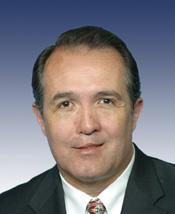
Mr. Speaker, today, as we embrace the grave responsibility of debating an issue that will have profound impact on future American generations, it seems very appropriate to remind ourselves of the…
Mr. Speaker, today, as we embrace the grave responsibility of debating an issue that will have profound impact on future American generations, it seems very appropriate to remind ourselves of the ideal that gave birth to this Nation in the first place. We hold these truths to be self-evident that all men are created equal and endowed by their Creator
with certain unalienable rights, that among these are life, liberty and the pursuit of happiness.
Whether we realize it or not, most of the important discussions in this Chamber, including the one in this moment, center around whether we still believe those words.
In these hours, America finds herself at war with an expressively dangerous ideology that is the antithesis of those words and everything that is the American ideal. What concerns me most is that this war between an ideology committed to the absolute death to destroy freedom and subjugate the entire world, and the world's free people who still remain primarily asleep.
Mr. Speaker, this ideological war did not begin on 9/11. It began many years ago when certain Muslim extremists embraced a divergent Islamist dogma that dictates that all infidels must die. It was called then as it should be called now, jihad.
Thomas Jefferson was the first American President to send U.S. military force to war against Islamist jihad. The Marine hymn begins, ``From the halls of Montezuma to the shores of Tripoli,'' the latter being a reference to Jefferson's war against the Islamist Barbary pirates based in Tripoli, in present day Libya.
This is the same jihadist ideology that murdered Israeli athletes in 1972, that took American hostages in Iran, that murdered Marines in their barracks in 1983, that bombed the World Trade Center in 1993, Riyadh in 1995, the Khobar Towers in 1996, the embassy in 1998, the USS Cole in 2000, and that brutally murdered scores of little schoolchildren on opening day in Beslan, Russia.
And then, Mr. Speaker, this same dark ideology massacred nearly 3,000 Americans on September 11.
The ideology and practice of Islamist jihad is decapitating humanitarians with hacksaws on television while the victims scream for mercy, cowardly hiding behind women and children while launching rockets deliberately targeting innocent civilians, continually breaking treaties of peace, and forcing children to blow themselves to pieces to affect the murder of other innocents, and this, as their own mothers leap for joy as they do.
As we anticipate future actions of jihadists, we should all consider very carefully. Al Qaeda's al-Zawahiri said: ``The jihad movement is growing and rising. It reached its peak with the two blessed raids on New York and Washington. And now it is waging a great heroic battle in Iraq, Afghanistan, Palestine, and even the crusaders' own homes.''
Al-Manar said on BBC: ``Let the entire world hear me. Our hostility to the Great Satan, America, is absolute. Regardless of how the world has changed after September 11, death to America will remain our reverberating and powerful slogan: Death to America.''
Al-Zarqawi said of America's leaders: ``They are aware that if the Islamic giant wakes up, it will not be satisfied with less than the gates of Rome, Washington, Paris, and London.''
Al-Muhajir, Osama bin Laden's latest lieutenant in Iraq, said: ``The fire has not and will not be put out and our swords, which have been colored with your blood, are thirsty for more of your rotting heads.''
Sheik Hassan Nasrallah, the leader of Hezbollah, said, ``We have discovered how to hit the Jews where they are most vulnerable. The Jews love life; so that is what we shall take away from them. We are going to win because they love life and we love death.''
And then, Mr. Speaker, we hear a Democrat Member of this body say, ``The savagery of terrorists is not relevant.'' Even the most senior Democrat in this House is quoted as saying ``I don't take sides for or against Hezbollah or for or against Israel.''
Mr. Speaker, a blind relativism that deliberately ignores all truth and equates merciless terrorism with free nations defending themselves and their innocent citizens is more dangerous to humanity than terrorism itself, and it is proof that liberals completely misunderstand the enemy that we face.
Osama bin Laden's deputy, al-Zawahiri, made clear shortly after 9/11 in his book ``Knights Under the Prophet's Banner,'' al Qaeda's most important short-term strategic goal is to seize control of a state, or part of a state, somewhere in the Muslim world. He wrote, quote, ``Confronting the enemies of Islam and launching jihad against them require a Muslim authority established on Muslim land. Without achieving this, our actions will mean nothing.''
Mr. Speaker, such a jihadist state would be the ideal launching pad for future attacks on the West.
Bin Laden himself once again has stated: ``The whole world is watching this war and the two adversaries. It is either victory and glory or misery and humiliation.''
Mr. Speaker, the terrorists regard Iraq as the central front in their war against humanity. And if we are to understand our enemy and this war, we must understand that Iraq is the central front in our war against jihad. Our courageous and noble soldiers understand that very well and our enemy definitely understands that.
Osama bin Laden himself has said, ``The most important and serious issue today for the world is this Third World War . . . It is raging in the land of the two rivers, Iraq. The world's millstone and pillar is in Baghdad, the capital of the caliphate.''
Mr. Speaker, if Democrats are correct that the struggle in Iraq is not crucial to the winning of the war against Islamist jihad, then for God's sake I wish they would explain that to the terrorists.
Brink Lindsey has put it all so succinctly. He said, ``Here is the grim truth: We are only one act of madness away from a social cataclysm unlike anything our country has ever known. After a handful of such acts, who knows what kind of civilization breakdown might be in store?''
Mr. Speaker, we simply can no longer deny that we are fighting a war against an insidiously dangerous and evil ideology that is bent on the destruction of the Western world, and they would like nothing better than to decapitate this country by detonating a nuclear blast 100 yards from here. And to allow jihadists to declare victory in Iraq will only serve to hasten such a day.
Mr. Speaker, the free nations of the world once had opportunity to address the insidious rise of the Nazi ideology in its formative years when it could have been dispatched without great cost. But they delayed, and the result was atomic bombs falling on cities, 50 million people dead worldwide, and the swastika's shadow nearly plunging this planet into Cimmerian night.
Winston Churchill's words of warning far preceded such tragic events. He said, ``If you will not fight when you can easily win without bloodshed, if you will not fight when your victory will be sure and not too costly, you may come to the moment when you will have to fight with all the odds against you and only a precarious chance of survival. There may be a worse moment. You may have to fight when there is no hope of victory because it is still better to perish than to live as slaves.''
If so-called enlightened Germans fell prey to the Nazi ideology, why do we not believe Third World Muslims can also fall prey in large numbers to this jihadist ideology? History does indeed repeat itself, Mr. Speaker, and each time the price goes up.
Jihadists believe they have a critical advantage over free people in the world. They believe their will is far stronger than ours and that they need only to persevere to break our resolve. Mr. Speaker, the message of this resolution has only encouraged them in that belief.
So today in this Chamber, we each have some grave questions to ask ourselves, and the answers will profoundly affect future American generations. We need to ask ourselves first, not whether the Nation should have gone to war but whether the Nation should lose this war.
Will jihadists break the will of the world's free people or not? Will they be able to hide long enough to gain access to nuclear or other weapons of mass destruction? If we do allow nations like Iran to gain nuclear weapons, what will we tell our children when they face nuclear jihad, perhaps even in this generation? If liberals in this body are willing to see freedom defeated in Iraq, are they willing to take responsibility for what will almost certainly follow? If this entire Nation was riveted and heartbroken when two airplanes hit two buildings in New York, how will we
feel when an entire American city is in nuclear flames?
If Speaker Pelosi and other Democrats are willing to vote against monitoring terrorist conversations on the telephone, or tracking their financial transactions, or protecting our border from terrorist insurgency, or effectively interrogating terrorists in custody, or sending reinforcements to our troops on the battlefield, then the question that cries for an answer is what are they willing to do to defeat Islamic terrorism? What is their plan?
Mr. Speaker, there is no substitute for victory. If we surrender Iraq to Islamist jihadists, we will supercharge their recruitment efforts in the Middle East and all over the planet, and our children will pay an unspeakable price, and history will condemn this generation for unspeakable irresponsibility in the face of such an obvious threat to human peace.
So, Mr. Speaker, before we vote on this resolution, may we consider carefully the words of Abraham Lincoln as he sought to steel the resolve of Americans in another great and historic struggle. He said, ``Fellow citizens, we cannot escape history. We of this Congress and this administration will be remembered in spite of ourselves. No personal significance or insignificance can spare one or another of us. The fiery trial through which we pass will light us down, in honor or dishonor, to the last generation.
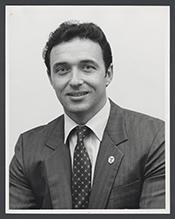
I would just like to say, it was interesting to hear the previous speaker talk about the principles articulated some years ago. They are reminiscent of the arguments I heard on this floor some 20…
I would just like to say, it was interesting to hear the previous speaker talk about the principles articulated some years ago. They are reminiscent of the arguments I heard on this floor some 20 years ago when Ronald Reagan made the courageous decision to put medium range nuclear weapons into Europe, despite the protest of Europe, despite the protest of many on the other side, despite the fact we were told we were taking a unilateral step.
Sometimes it is difficult to make these decisions, and you can't always guarantee success. And if we always went by that argument, frankly, America would not be where it is today.
Let me begin with a note of bipartisanship, however. It goes without saying that we can all agree that things have not progressed as we wished they would in Iraq. Perhaps we could all agree with the characterization of the Iraq Study Group that the situation in Iraq is grave and deteriorating. I think we can all agree that there was therefore a need for a change in the direction of U.S. policy in Iraq.
Not only has this happened, but we have a new Secretary of Defense and, as was stated on the floor just a moment ago, we have a new commander on the ground in Iraq.
It is at this point, however, that I am somewhat mystified by my friends on the other side of the aisle. Since the resolution of disapproval concerning this change in the direction of U.S. policy contains absolutely no alternative, it follows that its adoption represents a tacit endorsement for the policies which we all agree are not working. It is a simple, logical entailment that criticism of a change in policy without any concrete alternative is tantamount to the endorsement of the status quo. Thus, we find ourselves in the ironic situation that to support this resolution is to condone a policy that virtually everyone agrees has not been working.
We are telling our troops that we are sending a new commander. We are telling them by this resolution that we don't support what the new commander is doing. We are saying by this resolution we don't believe that the new plan will work. We are saying, Godspeed, we support you. But we are sending you on a fool's errand.
If you truly believe that, stand up here and have the guts to stop the program by cutting off the money. Take responsibility for your actions, which the Constitution allows you to do.
Let me suggest to my colleagues on the other side of the aisle that the absence of any comprehensible policy objective leaves only one element of the resolution intact: Disapproval of the President. And this, in my estimation, is most unfortunate, for there was one thing on which I wish we could all agree. This should not be about George Bush. It is far more important than that.
Our response to the current state of affairs in Iraq will have dramatic consequences not only for the people in Iraq but for the security of the American people as well.
I believe we must resist the temptation to fight over matters which have long ceased to be of any relevance.
The question of whether we should have initially gone into Iraq is simply not the issue. The fact is that we are there, and that is the unpleasant but essential reality to which we must respond. It is not possible to pretend otherwise or to keep looking backward or to keep quoting things that were said in the past or to suggest that we shouldn't be where we are. We are there. It is of little solace to our troops to say, gee, we made a mistake in putting you there, and therefore we are going to pass a resolution of disapproval of what we are asking you to do now. What sense does that make? What sense at all does that make?
It should be acknowledged that findings concerning the absence of a collaborative relationship between Saddam Hussein and al Qaeda are not dispositive of the role of al Qaeda in Iraq. As Peter Berger, the only Westerner to conduct an interview on television with Osama bin Laden puts it, there is one thing that bin Laden and Bush agree on, says Peter Berger: that Iraq has become a central front in the war on terror. Berger, who did not support the decision to invade Iraq, warns of a potential repercussion at war's end that could make the blowback from the Afghan war against the Soviets look like high tea at the Four Seasons. This, in my estimation, is why it is so important that the impression not be given that our hand has been forced by Iraqi insurgents, notably al Qaeda of Mesopotamia.
If we have learned anything from the tragic events of the Khobar Towers, the Embassy bombings in East Africa, and the attack on the USS Cole, it is that the fanatics' perception of success only serves to embolden those who seek to kill us.
The extreme nature of this murderous mens rea is illustrated in an article in the London Telegraph which reports, ``A husband and wife arrested in the British terror raids allegedly planned to take their 6- month-old baby on a mid-air suicide mission, using the baby's milk bottle to hide a liquid bomb.'' The story is shocking on many levels, but perhaps so disturbing is that it shatters the belief that mothers and fathers share a common commitment to the future of their children.
We face an enemy which subscribes to an ideology rooted in a nihilistic culture of death. This contemporary version of the ``will to power'' seeks justification for a totalist world view through the abuse of a religion to camouflage its deeper roots.
As Paul Berman has chronicled in ``Terrorism and Liberalism,'' this fascist-like ideology arising out of the revisionism of Sayyid al Qutb taught that there was no middle ground and no possibility of compromise. Bin Laden became interested in a radical distortion of Islam from the fiery taped sermons of Abdullah Azzam, a disciple of al Qutb, and came to share Qutb's grim view of the world and used it to justify mass murder.
By the late 1980s, following the crackdown by the Egyptian Government on the extreme Islamist groups in response to the assassination of Sadat in 1981, many of the Islamic militants went into exile. It was through the presence of Egyptian Islamist teachers in Saudi Arabia that bin Laden and other al Qaeda members were influenced; most notably, Ayman al-Zawahiri, a leader in the Egypt Islamic jihad.
Another avenue by which this totalist ideology was introduced to the Middle East via the Vichy Government of France during World War II, which despite its short shelf-life, infected the French mandated territory of Syria-Lebanon. It was during this time that the ideological foundations of the
Baathist Party were laid and a Nazi regime headed by Rahid Ali was set up in Iraq. During this same period, the mufti of Jerusalem was wined and dined by none other than Hitler himself.
The point is that there were some very dark influences on this region of the world which are still playing themselves out today. We cannot believe that our absence from this area will solve problems and allow us to retreat.
We must make no mistake about their intentions: They seek to kill us. Ayman al-Zawahiri, al Qaeda's second in command, has left us with no ambiguity on the matter when he states that they have the right to kill 4 million Americans, 2 million of them children, and to exile twice as many and wound and cripple hundreds of thousands. No, we must not give such people a misapprehension about any misguided notions they may have about their providential place in history.
Although our ultimate objective in Iraq is to hand over power in an orderly fashion to a duly constituted government, the manner in which we do so is of the highest order of importance. That is what I don't hear from the other side. It is not just the question of peace being the absence of war, it is what we will have in the aftermath. What kind of a world will we have in the Middle East? Will it be safer for our children and our grandchildren? Will the implications of our decisions be heard in history as something of which we will be proud, or will it be just that we got tired of the effort?
And if we believe that by absenting ourselves from the area, that solves problems, it has never been the case. It wasn't the case when we got out of Lebanon following the attack on our marines; it was not the case when we basically got out of the area after the USS Cole.
Again, independent of the origins of al Qaeda's presence in Iraq, the relevant point is how al Qaeda itself perceives the war there. It is their potential reaction to our Iraqi policy which has most relevance. In this regard, the intercepted letter sent by al-Zawahiri to al- Zarqawi is most important and has been mentioned on this floor many times. He said, We must think for a long time about our next steps and how we want to attain it, and it is my humble opinion that the jihad in Iraq requires several incremental goals.
The first stage: Expel Americans from Iraq.
The second stage: Establish an Islamic authority or emirate, and then develop it and support it until it achieves the level of caliphate over as much territory as you can spread its power in Iraq and Sunni areas in order to fill the void stemming from the departure of the Americans.
The third stage: Extend the jihad wave to the secular countries of neighboring Iraq.
The fourth stage: Go after Israel.
It is, therefore, clear that regardless of how we might wish the situation to be, wishful thinking, as described in this resolution, is not a basis for policy.
Al Qaeda is present in Iraq, and they perceive it to be a central front in the war. It is simply not possible for us to pretend otherwise, as much as we would like it. This resolution does nothing to help us in this war against Islamic fascism. In fact, it goes in the opposite direction.
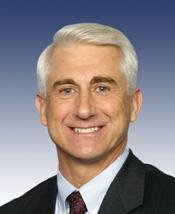
Mr. Speaker, I thank the gentleman from New York for yielding. Mr. Speaker, I support our troops wholeheartedly and without reservation, but I cannot support a resolution that simply opposes a new…
Mr. Speaker, I thank the gentleman from New York for yielding.
Mr. Speaker, I support our troops wholeheartedly and without reservation, but I cannot support a resolution that simply opposes a new strategy without offering any alternative plan to win. There is too much at stake.
Let us just think about where we are today as a country, about the global war we are in with people with intent to kill Americans and how that affects our strategy in Iraq. When considering this, we must consider our Nation's history and other difficult times of war.
There have been many bleak moments in America's history, battles we have been engaged in where American victory was far from certain.
In 1942, hell bent on dominating the world with his ideology, Adolph Hitler and the Third Reich systematically marched through Europe, taking the most basic freedoms from the Jewish people and killing millions. The United States entered World War II reluctantly and we were not ready for the hurdles we faced.
Don't forget, there were times when victory was far from certain. The outlook was grim. Many Americans and Europeans alive today can remember how bleak those times were as the war drug on and on and on. But we didn't give up. We persevered, because we knew there was too much at stake.
Eighty years before World War II, in 1862, President Lincoln faced a war that most believed could not be won. He faced vocal and unrelenting criticism for his resolve to win the Civil War. When the war began, Lincoln called for 74,000 troops for 90 days; 74,000 troops for 90 days. And history has showed us that Lincoln greatly underestimated the resources needed, because, as we know, over 620,000 soldiers were killed during that war.
At a time in our history when it might have been politically expedient to win the Civil War without first achieving victory, President Lincoln pressed on, constantly seeking a new strategy, until he found one that worked because so much was at stake.
Perhaps some of the resolve Lincoln displayed came from lessons he learned 15 years earlier when he entered a smaller battle. In 1848, Abraham Lincoln was an often criticized young
freshman Member of this body, the House of Representatives, and was facing a difficult point in his career. Lincoln criticized the reasons President Polk gave for getting us into the Mexican-American War, a war that began before Lincoln came to office, a position that I can identify with today as I stand here.
Then-Congressman Lincoln voted for a resolution that stated the Mexican-American War was ``unnecessarily and unconstitutionally'' initiated by President Polk. Lincoln thought the war was nothing more than a political move to grab land from the Mexican people.
My friends, it is legitimate and in fact our duty to question the reasons why our country goes to war, and Abraham Lincoln showed us that. However, he also showed us something else. Abraham Lincoln made an incredibly important distinction that we can learn from today.
A Lincoln biographer, Doris Kearns Goodwin, writes that after being criticized for that vote ``Lincoln sought to clarify his position, arguing that although he had challenged the instigation of the war he had never voted against supplies for the soldiers.''
This is an important point to make again. Lincoln sought to clarify his position, arguing that although he had challenged the instigation of the war he had never voted against supplies for the soldiers. Lincoln knew the damage of condemning a war while claiming to support the troops. Yet that is what this resolution before us does today.
During the American Revolution, the men and women who had become this country's first citizens were declared by the King of England to be in rebellion. The King sent soldiers across the Atlantic to quell the uprising.
In every war, it is the average citizen who stands up and fights for his neighbor's freedom. It is the same today. In response to the King of England's attack, again it was the average citizen who raised his hand, volunteered, stood up and fought for our freedom. A bookstore owner, the manager of an iron foundry and a land surveyor all stood and fought for our freedom. Those men were Henry Knox, Nathaniel Green and George Washington.
During America's War for Independence, it was not clear if we would prevail then. We lost battle after battle. Troops deserted the battlefields. General Washington and his deputies persevered, continuing to engage the enemy until the tide turned, because so much was at stake.
We are the United States of America today and we are free because General Washington refused to quit. We are the United States of America today and we are free because Abraham Lincoln refused to quit. And we are the United States of America today and we are free because Roosevelt and Truman refused to quit. And we are the United States of America today and we are free because of the sacrifice of the men and women in uniform who put their lives on the line in Iraq, Afghanistan and all around the world, preserving our freedom.
Today, the United States is engaged in another war, and just as before we face an enemy that wants to destroy our way of life. Just as before we face an enemy that thinks it is winning. Just as before our country is divided. Just as before we are making mistakes. Just as before we face a moment of truth about what to do next. And just as before the consequences of losing are devastating.
The enemy is clear about what their intentions are by what they say and what they do. Al Qaeda and the global movement that it has spawned have made it clear they want nuclear and biological weapons. It is clear they want to kill us, Americans. Osama bin Laden has called acquiring nuclear weapons a ``religious duty.'' The fact is we are engaged in a global war with people intent on killing Americans, and regardless of how we got into Iraq, Iraq is now the central front of that war.
And yet while we debate this nonbinding resolution, what is really at stake is winning or losing. Like Lincoln, I was not in this office as the war began. I understand the arguments. I understand the questions. I have been asking questions, too, as an elected official in this body for the past 2 years, as a concerned citizen, and before that, as a veteran. I understand that there are many who think we should never have entered Iraq. We now know there was faulty intelligence that led to that decision.
But the war is upon us nonetheless. I am elected to deal with what is happening now. Will we succeed? Will we win? Just as at other moments in our history, those questions stand unanswered. The consequences of declaring an end to the war in Iraq without victory would be felt for decades. Our enemies around the world would be emboldened. Iran and al Qaeda would declare victory. Our allies in Iraq would certainly face bloodshed, and our allies around the world would question our resolve to help protect them.
Sergeant Eddie Jeffers is a U.S. Army infantryman serving in Ramadi, Iraq. Sergeant Jeffers has a firsthand appreciation for what is at stake in Iraq and our presence there and what it means to the Iraqi people.
He writes, ``We are the hope of the Iraqi people. They want what everyone else wants in life: Safety, security, somewhere to call home. They want a country that is safe to raise their children in. They want to live on, rebuild and prosper. And America has given them that opportunity, but only if we stay true to the cause and see it to its end. But the country must unite in this endeavor. We cannot place the burden on our military alone. We must all stand and fight, whether in uniform or not. Right now the burden is all on the American soldier. Right now hope rides alone. But it can change. It must change, because there is only failure and darkness ahead for us as a country, as a people, if it doesn't.''
Sergeant Jeffers' words hit at the heart of our present challenge in Iraq. Our current strategy in Iraq is failing, and yet failure is not an option. In November, the American people told us they wanted a new strategy, not because they wanted to lose, but because they wanted to win. Now we have a new strategy before us.
Is this new plan going to work? I don't know. No one in this body who is voting on this resolution knows.
What I do know is that we must find a way to achieve victory, and simply saying ``no'' to a new plan without offering up an alternative will not work and sends a terrible message to our enemies and our soldiers.
This is an historic war. America is engaged in a war for our freedoms on a scale that we have never experienced before. I understand the dissension, the questions and the uncertainty.
I understand the cost is high and the way is often unclear. I have served in law enforcement for 33 years. I understand the loss. I have lost partners and friends in the line of duty. I understand the cost of freedom and the sacrifices that must be made. The sacrifices are hard, they are tragic and they are never forgotten, but we must remain focused and not let those sacrifices be in vain.
Mr. Speaker, I urge my colleagues to vote ``no'' on this resolution. Lincoln warned us against tying a criticism of the war to support for our troops. Let us send a message to our enemies and our troops alike that we will always support our young men and women who put their lives on the line for our freedom.

Madam Speaker, in October of 2002 I worked meticulously with Members of the Congressional Black Caucus to craft a statement of principles that has proven to be so absolutely prophetic. Listen to what…
Madam Speaker, in October of 2002 I worked meticulously with Members of the Congressional Black Caucus to craft a statement of principles that has proven to be so absolutely prophetic. Listen to what our 2002 principle said, and it will put in context why I feel so strongly that this war has taken us in the wrong direction and why this resolution is so necessary and worthy of our support.
First principle: ``We oppose a unilateral first strike action by the United States without a clearly demonstrated and imminent threat of attack on the United States.''
My colleagues, history will record that the President took first strike action, and that there was neither a clearly demonstrated nor an imminent threat of attack on the United States.
Second principle: ``Only Congress has the authority to declare war.''
History will record that Congress delegated that authority to the President, but I say unapologetically that history will also record that I voted against that delegation of authority. I never believed that Iraq had weapons of mass destruction; and, even if it did, I never believed that they posed any imminent threat to the United States.
Third principle: ``Every conceivable diplomatic option must be exhausted.''
History will record that our President instead thumbed his nose at the United Nations and at almost all diplomatic options in his rush to lead us into this foolhardy war.
Fourth principle: ``A unilateral first strike would undermine the moral authority of the United States, destabilize the Middle East region, and undermine the ability of our Nation to address unmet domestic priorities.''
The passage of time has demonstrated and history will record that every single one of these concerns was legitimate and warranted.
Fifth principle: ``Any post-strike plan for maintaining stability in the region would be costly and require a long-term commitment.''
We haven't yet gotten to a level of stability that we are trying to maintain, but the cost of this war today exceeds $500 billion. That is costly and with no end in sight. If we continue to follow the President, the duration of our commitment has no end in sight and no plan to bring home or redeploy our troops.
Increasing the number of troops in Iraq does not make ending the war more foreseeable. Past troop increases in Iraq have paraded under different names than surge, but make no mistake about it, this is not the first time the United States will have increased troop levels, and each time they have been met with greater levels of violence.
From December of 2003 to April 2004, the troop increase paraded under the name ``troop rotation'' and resulted in an increase from 122,000 to 137,000 troops; yet April of 2004 was the second deadliest month for U.S. forces.
From November 2004 to March 2005, the increase paraded under the name ``improving counterinsurgency operations after the Fallujah offensive,'' or ``increasing security after January 2005.'' We increased our troop level to 150,000 troops; the result, no impact on violence increase. And again, September to December of 2005, we went to 160,000 troops, still no decrease in violence.
In most respects, what the President has proposed is business as usual, simply under a different name. It did not work before, and there is no prospect that it will work this time. Madam Speaker, this resolution is one that we should support and bring our troops home.
Madam Speaker, I rise in strong support of the Resolution. Simply stated, as the Resolution says, I support the troops and I oppose the increase in the number of troops. Simply stated, I support a redeployment of the rest of our troops from Iraq as soon as possible.
But I can't go forward before I review how we got here in the first place. Looking back helps me to put a time perspective on this because this War is now approaching 5 years in duration, a period longer than the Second World War. And looking back also helps me to put a substantive perspective on this that I think is absolutely critical to an understanding of my vote.
It's gut wrenching for me to recall that as early as October 2002-- several months before the President proceeded to war in Iraq and long before I was later elected to serve the 2-year term that I have now completed as Chairman of the Congressional Black Caucus--I worked meticulously with every single member of the Congressional Black Caucus to craft a Statement of Principles that have proven to be so absolutely prophetic. Listen to what our 2002 Principles said and it will put in context why I feel so strongly that this War has taken us in the wrong direction and why this Resolution is so necessary and worthy of support:
First 2002 Congressional Black Caucus Principle: ``We oppose a unilateral, first-strike action by the United States without a clearly demonstrated and imminent threat of attack on the United States.'' My colleagues, history will record that the President took first strike action and that there was neither a clearly demonstrated nor an imminent threat of attack on the United States.
Second Principle: ``Only Congress has the authority to declare war.'' History will record that Congress delegated that authority to the President, but I say unapologetically that history will also record that I voted against that delegation of authority. I never believed that Iraq had weapons of mass destruction and--perhaps more importantly--even if they did, I never believed that they posed any imminent threat to the United States. Saddam Hussein was a dastardly tyrant and bully toward his own people, but was a coward and no threat to the United States.
Third Principle: ``Every conceivable diplomatic option must be exhausted.'' History will record that our President, instead, thumbed his nose at the United Nations and at almost all diplomatic options in his rush to lead us into this foolhardy war.
Fourth Principle: ``A unilateral first strike would undermine the moral authority of the United States, destabilize the Middle East region and undermine the ability of our Nation to address unmet domestic priorities.'' The passage of time has demonstrated and history will record that every single one of those concerns was legitimate and warranted.
Fifth Principle: ``Any post-strike plan for maintaining stability in the region would be costly and require a long-term commitment.'' We haven't yet gotten to a level of stability that we're trying to maintain, but the cost of this War to date exceeds $500 billion. That's ``costly'' and with no end in sight. If we continue to follow the President, the duration of our commitment has no end in sight and no plan to bring home or redeploy our troops.
Increasing the number of troops in Iraq does not make ending the War more foreseeable. It will only escalate the number of troops and the prospects of casualties and will likely only increase the resolve of the enemy, the same thing that increases in troop levels have done in the past. Past troop increases in Iraq have paraded under different names than ``surge''. But, make no mistake about it, this is not the first time the United States will have increased troop levels. And each time they have been met with greater violence.
From December of 2003 to April of 2004, the troop increase paraded under the name ``troop rotation'' and resulted in an increase from 122,000 to 137,000 troops. Yet April of 2004 was the second deadliest month for U.S. forces.
From November 2004 to March 2005, the increase paraded under the name ``improving counterinsurgency operations after the Fallujah offensive'' or ``increasing security before the January 2005 constitutional elections'' and increased troops to 150,000. Result: short term positive impact, but longer term increase in violence and resistance.
Between September and December 2005, troop levels were increased again, taking the
number up to 160,000, around the constitutional referendum and parliamentary elections. The referendum and elections proceeded without major violence, but the increase had little long term impact on sectarian violence.
In most respects, what the President has proposed is business as usual, simply under a different name. It did not work before and there is little prospect that it will work this time.
Madam Speaker, this Resolution is our attempt to make it clear that we do not support a troop increase or an escalation of this War. I intend to vote for the Resolution. I just hope the President is listening.
Madam Speaker, will the gentleman yield?
I am just sick and tired of people telling us that we are unpatriotic and not supporting of the troops.

Mr. Speaker, my uncle said a generation ago: If we examine the history of the conflict, we find the dismal story repeated time after time. Every time, at every crisis, we have denied that anything…
Mr. Speaker, my uncle said a generation ago: If we examine the history of the conflict, we find the dismal story repeated time after time. Every time, at every crisis, we have denied that anything was wrong; sent more troops; and issued more confident communiques. Every time, we have been assured that this one last step would bring victory. And every time, the predictions and promises have failed and been forgotten, and the demand has been made once again for just one more step up the ladder. And once again the President tells us that we are going to win; victory is coming.''
My Uncle Robert Kennedy made this statement in March of 1968. It took another 5 years and 37,455 American lives before a United States President was withdrawing Americans out of Vietnam and stopping that war.
I am here tonight to say that the American people and this Congress are going to say ``no'' to this President when it comes to repeating that mistake.
There are those who will disparage this amendment and who say that this is a nonbinding resolution. But this resolution says that we are going to reject this President's doubling down on the gambling of American lives, and this foolish policy which has sent over 3,125 soldiers to their deaths, over 23,417 wounded soldiers back home, and hundreds of thousands of innocent Iraqis to their graves and countless more also injured.
We are saying in this resolution that we either have to start digging ourselves out of this hole, or we are going to start rueing the day when we have failed to act tonight to start changing course.
This administration's bullheaded insistence, bullheaded insistence on ideology over strategy is what has gotten us into this mess, and now that same stubbornness is counseling us to send still more soldiers and more Marines into an Iraqi civil war.
Our service men and women have been heroic. They have been confronted with repeated civilian failures of leadership, ill equipped and under equipped, and yet in increasingly untenable positions they have been unflinching and have been uncomplaining in their shouldering of every burden we have asked of them, and they have done it with dignity and professionalism. But it is not right. It is not right to ask them, to ask the military to bear the burden of the responsibility of solving someone else's civil war. It is not right, and it won't work.
Instead of closing our eyes and crossing our fingers and giving this President a rubber stamp for an endless civil war in Iraq, we should be beginning to move our country back to a common-sense policy of strength through leadership.
Our choice tonight is clear: Keep digging, or climb our way out of this hole. I think this Congress will decide to start climbing our way out.
And there will be many who will say, what will we do then? I will say, well, maybe we will propose to fence off the funds as many have suggested. That will be a debate for another day. That will be a debate for another day whether we will fence off the funds. But tonight will be the debate, and tomorrow will be the decision as to whether we will vote to go in that direction.
So you can say it is a meaningless, nonbinding resolution all you want, but it is the first conversation as to which direction we are going to go, and that is the direction we have to decide, and I vote that we go in the direction of starting to move our way and our troops out of Iraq.
Mr. Speaker, ``if we examine the history of the conflict, we find the dismal story repeated time after time. Every time--at every crisis--we have denied that anything was wrong; sent more troops; and issued more confident communiques. Every time, we have been assured that this one last step would bring victory. And every time, the predictions and promises have failed and been forgotten, and the demand has been made again for just one more step up the ladder. . . . And once again the President tells us that `we are going to win'; `victory' is coming.''
My uncle, Robert Kennedy, spoke these words in March 1968, It took another 5 years and another 37,455 American lives before a U.S. President finally withdrew American troops from Vietnam.
I will not stand by, the American people will not stand by, and allow the President to repeat that mistake.
Some disparage this resolution because it's nonbinding. But with due respect, I couldn't disagree more. This resolution represents a fundamental policy choice by this Congress.
It's about whether you agree with doubling down the President's high stakes gamble with American lives.
This resolution poses a simple choice. After 4 years, after 3,125 deaths, after more than 23,417 wounded, are we digging our hole in Iraq even deeper, or are we strong enough to start climbing out?
We need a stronger America, a more secure America and that begins with a rejection of the failed strategy in Iraq.
It has now been nearly 4 years since the President declared that in Iraq, our mission was accomplished.
Four years of disintegration. Four years of unfounded insistence that the turning point is right around the corner.
Are we digging deeper, or climbing out?
We have watched a child hug their parents tight on the tarmac--only to have to let go as Morn or Dad is deployed for the second, third, or even fourth time.
We have stood at the graveside with a grieving family as a Gold Star mother accepts a folded American flag.
We have visited our Nation's newest veterans in the hospital, their bodies and minds scarred by the horrors of war.
Are we digging deeper, or climbing out?
Each day we all see, with our own eyes, the carnage and the chaos that has become the norm in Iraq.
The administration's bull-headed insistence on ideology over strategy has led us to where we are today. And now, that same stubbornness is counseling some to send still more of our soldiers and marines into an Iraqi civil war.
Our current course is failing in Iraq. It's failing the bigger struggle against our terrorist enemies. It's failing our troops and their families. And it's failing our core values as Americans.
I won't settle for that failure. We must change course. We must begin to climb out of the hole in Iraq.
Democrats, Republicans, generals, and most importantly, the American people now see that it is time for a new plan; it is time to embrace a new approach.
Our service men and women have been heroic. Confronted with repeated civilian failures of leadership, underequipped, and in an increasingly untenable position, our troops have not flinched, they have not complained, they have shouldered every burden we ask of them with dignity and professionalism.
But it is not right to place upon our military the responsibility of solving someone else's civil war. It's not right, and it won't work.
Instead of closing our eyes, crossing our fingers, and giving the President a rubber stamp for endless war in Iraq, we should begin moving our country back to a commonsense policy of strength through leadership.
Our strong leaders of the last century, like Presidents Roosevelt, Truman, Kennedy, and Reagan, recognized that while American military might was important, American values were our greatest strength.
We rallied the world in the Second World War and defeated the Soviets in the cold war on the strength of our Nation's democratic ideals. For the entire 20th century, we led by our example, and by the force of our principles.
While military action will continue to be a necessary component of our current struggle, ultimate victory against this generation of enemies will similarly be won not on the battlefield, but in the minds of millions around the world. That victory is impossible while we are in the middle of Iraq's civil war.
Our choice today is clear. Keep digging or climb out? If we decide to begin climbing out, as I think we will, there are debates yet to come about the best way to do that--whether we should fence off funds to prevent an escalation, for example. I look forward to those conversations. But today is a more fundamental question about the direction of our country.
We can withdraw from Iraq without withdrawing from the fight. We can be strong enough to climb out of that hole. For our troops, for their families, and for our Nation's strength and security, I urge a ``yes'' vote.
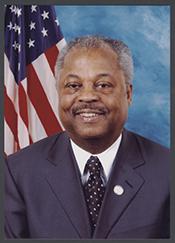
Mr. Speaker, I yield 5\1/2\ minutes to the gentleman from New York, Representative Ed Towns. Mr. Speaker, I yield 5 minutes to the gentlewoman from Florida, Representative Corrine Brown. (Ms. CORRINE…
Mr. Speaker, I yield 5\1/2\ minutes to the gentleman from New York, Representative Ed Towns.
Mr. Speaker, I yield 5 minutes to the gentlewoman from Florida, Representative Corrine Brown.
(Ms. CORRINE BROWN of Florida asked and was given permission to revise and extend her remarks.)
Mr. Speaker, I yield 5 minutes to the gentleman from Wisconsin (Mr. Kind).
Mr. Speaker, I yield 5 minutes to the gentleman from Kentucky, a member of the Appropriations Committee (Mr. Chandler).
Mr. Speaker, I would just like to mention, logic was mentioned, and I recall in studying logic, with the square of opposition, that you
do not do something over and over again and come out with a different conclusion.
Mr. Speaker, at this time I would like to yield 5 minutes to the gentleman from Kansas (Mr. Moore), a member of the Budget and Financial Services Committee.
Mr. Speaker, I am very pleased that the Iraqis are deciding now to start to defend themselves. I think it is wonderful. I wish it had happened a number of years ago.
Mr. Speaker, I yield 5\1/4\ minutes to the gentlewoman from South Dakota, a member of the Veterans Affairs Committee, Representative Stephanie Herseth.
Mr. Speaker, it gives me pleasure to yield 5\1/2\ minutes to the gentleman from Arkansas (Mr. Ross), a member of the Energy and Commerce Committee.
Mr. Speaker, I recognize the gentleman, a member of the Rules and Agriculture Committees, from California, Representative Dennis Cardoza, for 5 minutes.
I appreciated having the opportunity to control the time in the past several hours, and perhaps might request from the chairman perhaps an additional 2 minutes as I respond and wrap up.
Mr. Speaker, let me say that I listened with great interest to the George Washington story, and there is no question that there were tough times. But George Washington had some pretty intelligent advisers. You know, the people who signed the Declaration of Independence, he had people like Adams and Washington. You had people like Crispus Attucks, the first person to die in the Revolutionary War and in the Boston Massacre on May 4, 1770.
You had people who participated in the Boston Tea Party because they said taxation without representation is tyranny. It was Christmas Eve in Pennsylvania when George Washington came across the Delaware and attacked the Hessian soldiers on Christmas Eve because they were unaware that this attack was coming. George Washington came from New Jersey, Morristown, Newark, and went on through and did have a victory.
But let me say the difference, when George Washington was fighting, there was a clear and present issue. We were fighting for independence. We knew exactly what it was. We were being held bondage by the British, that Union Jack.
But what do we have here? We have, following 9/11, support from practically every country in the world. But then we went on and Osama bin Laden said he did the bombing, he took credit for it, the World Trade Center, the Pentagon and the final plane that was brought down on the way to the Capitol and the White House.
Then we said that we were going into Iraq. First of all, it was because there were weapons of mass destruction. Then it was the fact that we had to have a regime change. At one point we talked about we had to remove Saddam Hussein.
We kept looking for reasons, and that is a big difference. We had the preemptive strike, and then we tried to come up with the reason that we were doing it, and it continued to change, one reason after another.
There is a great sense of sadness among those of us who foresaw over 4 years ago the tragedy that is now unfolding in Iraq. On October 8 and 9, 2002, I stood right here in this very well at the House of Representatives, and I managed the time those 2 days in opposition to the preemptive first strike for Iraq. It was in the 107th Congress, and now we are in the 110th Congress, and the war that we assumed would be swift and certain now continues to rage.
I am looking over the remarks I made at that time. It saddens me that the argument of those of us who oppose the war fell on deaf ears. At that time, I stated that a unilateral first strike would undermine the moral authority of the United States of America. I stated that results of substantial losses of life will occur, that there will be a destabilization of the Middle East region and undermine the ability of our Nation to address unmet domestic priorities.
It saddens me beyond words that 3,122 Americans had to sacrifice their lives and over 23,000 have been wounded for a war that did not have to be fought. Included in this number are 50 fatalities from my home State of New Jersey and 366 wounded. Estimates are up towards 100,000 Iraqi men, women and children have been killed.
After the administration has been proven wrong on every prediction from the length of the war to weapons of mass destruction to the strength of the insurgency, we are now being asked to trust their judgment on a new strategy, which would put 20,000 more American lives on the line. This plan will not provide lasting security for Iraqis. It is not what the American people have asked for in November.
Haven't we learned anything from our mistakes yet?
Recent so-called short-term troop surges in Iraq have not stopped the violence from getting worse. There is nothing to suggest that this time will be any different.
For example, we had Operation Together Forward from June to October 2006. In June, the Bush administration announced a new plan for securing Baghdad by increasing the presence of Iraqi security forces. That plan failed, so in July, the White House announced that additional American troops would be sent into Baghdad.
By October, a U.S. military spokesman, General William Caldwell, acknowledged that the operation and troop Increases was a failure and had not met our overall expectations of sustaining a reduction in the level of violence. Regardless of how the administration intends to increase the troops in Iraq, the result will be the same.
There is additional strain on our military personnel and their families, and personal lives will be upset by unexpectedly early deployments of family members or unexpected delays in their homecoming. This is an additional burden to our military families that they should not have to bear.
By extending operations, we undertake a strategic risk. Our ability to meet potential future challenges is strained under the current operational demands. Increasing these demands only increase the risk to our future capacity.
I had the privilege of serving in the past as a congressional delegate to the United Nations. I strongly believe in the power of democracy. If we had allowed the United Nations inspectors to complete their work before the war instead of suddenly ordering them out of Iraq, I believe things would have turned out much differently. Instead, the administration proceeded full speed ahead towards war, as they disseminated faulty intelligence and relied on scare tactics to garner support.
I believe the time has come to begin an orderly withdrawal of American forces from Iraq. This approach would send a message to the Iraqis that they must take more responsibility for their own security and would reduce the strain on the American military.
The administration should listen to the Baker-Hamilton commission, which has offered a stinging assessment of virtually every aspect of the U.S. venture in Iraq and called for a reshaping of the American presence and a new Middle East diplomacy initiative to prevent the country from sliding into anarchy.
I conclude by saying I have heard my colleagues on the other side warn about Iraq falling into chaos and dangers of the United States losing our standing in the world. Sadly, Iraq already is in total chaos, and, unfortunately, the United States, a country we all love, has suffered much loss and prestige around the world.
In the debate before the war those of us who predicted the outcome did not prevail. I pledge with my colleagues to listen this time to vote against escalation of the war and support this resolution.
Show 11 more
Mr. Speaker, I rise today in strong support of our troops who are faithfully serving our Nation in harm's way. Therefore, I must oppose this resolution brought to the floor by the Democrats because…
Mr. Speaker, I rise today in strong support of our troops who are faithfully serving our Nation in harm's way. Therefore, I must oppose this resolution brought to the floor by the Democrats because it offers no plan, no strategy, and no hope for victory. In fact, it does nothing but risk demoralizing our troops.
Mr. Speaker, let me start by saying that Republicans and Democrats alike recognize mistakes have been made in Iraq and neither side of the aisle is happy with where we are today. But rather than offering solutions to move us forward or engage in a productive debate on alternative strategies, the Democrats have decided to propose what certainly seems to be a politically motivated resolution.
I ask, Mr. Speaker, what are we really accomplishing with this resolution? The answer is nothing. With this shameless stunt, the Democrats are locking down this body for 36 hours maybe in hopes of scoring political points by criticizing the President. But by using our troops as pawns in an attempt to gain political leverage, this resolution serves only to weaken troop morale while giving hope and comfort to the enemy.
In doing so, Mr. Speaker, the Democrats have done nothing to end the war or help our troops achieve victory.
Mr. Speaker, seeing as the Democrats have hijacked the Floor all week to debate this resolution, surely they must have an alternative to the President's plan. I will bet the American people are as eager as I am to hear about this new plan for success, their plan. Certainly my constituents in the Eleventh District of Georgia are waiting.
So what is their magic alternative? Mr. Speaker, here it is. It is the same on both sides. They don't have one. We have heard from members of the Democratic team threaten to cut funding, to cap troop levels or to compel a forced withdrawal. But where are those ideas in this resolution? I have read through its two brief paragraphs and I can assure you they aren't to be found.
Sadly, the Democrats lack the political will to fully engage in a meaningful debate on Iraq policy. They have refused to allow a vote on funding for the war which would give Members an opportunity to show support for our troops with actions and not empty words.
Simply put, Mr. Speaker, the Democratic leadership is afraid to ask their Members to put their money where their mouths are and either vote yes or no to fund our troops and the mission. Isn't this why they have denied Republicans an opportunity to offer an alternative bill, or even a motion to recommit? They were for that last Thursday,
before being against it tonight. Sound familiar?
Apparently, Mr. Speaker, calls for funding cuts and troop withdrawals are good enough for newspaper headlines, but they are not good enough for votes on this House floor. Let me remind my colleagues that sound bites for the nightly news will do nothing to win this war against terror.
Mr. Speaker, America has a long tradition of standing on the right side of this fight for freedom, even when it is a difficult stand to make, and the right course of action today is to stand by the Iraqi people until their government, their police and military can ensure the security of their own nation.
As in any war, there have been setbacks in Iraq. But as in past wars, we will move forward with victory as our goal. This Democratic resolution is a thinly veiled attempt to sound the retreat. That amounts to an unacceptable act of playing politics with our national security.
Mr. Speaker, as you have heard over the past 2 days, this is a serious debate, with very serious ramifications. It is not simply a simple resolution as the Democrats would like to characterize it. But on one hand, we have a shot at victory. We have an opportunity to push back the cause of radical terrorism. On the other hand, we have a two paragraph, nonbinding resolution that is essentially a vote of no confidence in the commander in chief.
This is not the time for our majority party to cave in to their anti- war supporters of the liberal left and play politics with the security of the United States. This is a time for bold leadership and bold plans. Sadly, Mr. Speaker, neither is on display here today.
I hope for the sake of the American people, our troops and freedom- loving nations around this world, that this resolution's flimsy words are not taken as a substitute for America's long tradition and commitment to achieving victory.
Mr. Speaker, in closing, I want to point out to my colleagues this poster on my left. These brave soldiers, Paul Saylor from Breman, Georgia; Justin Johnson from Rome, Georgia; Lieutenant Tyler Brown, a Georgia Tech graduate, the president of the student body; and Hayes Clayton, III, from Marietta, Georgia, all died for their country.
Mr. Speaker, we cannot turn our backs on them. We cannot say to their moms and dads, their brothers and sisters, their wives and their children, that we supported sending them into harm's way and they gave their lives for their country, and now we are saying it was for naught, it was for nothing, it was not worth it. We can't let that happen.
Mr. Speaker, I want my colleagues on both sides of the aisle to join with me in voting down this meaningless resolution.
Mr. Speaker, I rise today in strong support of our troops, who are faithfully serving our Nation in harm's way. Therefore, I must oppose this resolution brought to the floor by the Democrats because it offers no plan, no strategy, and no hope for victory. In fact, it does nothing but risk demoralizing our troops.
Mr. Speaker, let me start by saying that Republicans and Democrats alike recognize mistakes have been made in Iraq, and neither side of the aisle is happy with where we are today. But rather than offering solutions to move us forward, or engaging in a productive debate on alternative strategies, the Democrats have decided to propose what certainly seems to be a politically motivated non-binding resolution.
I ask, Mr. Speaker, what are we really accomplishing with this resolution? The answer is nothing. The Democrats are locking down this body for 36 hours--maybe in hopes of scoring political points by criticizing the President. But by using, our troops as pawns in an attempt to gain political leverage, this resolution serves only to weaken troop morale, while giving hope and comfort to the enemy.
And in doing so, Mr. Speaker, the Democrats have done nothing to end the war or to help our troops achieve victory.
Mr. Speaker, since the Democrats have hijacked the floor all week to debate this resolution, surely they must have an alternative to the President's plan. I'll bet the American people are as eager as I am to hear about this new plan for success. Certainly my constituents in the 11th District of Georgia are.
So what is their magic alternative? As far as I can tell, Mr. Speaker, they don't have one.
We've heard members of the Democrat team threaten to cut funding, cap troop levels, or compel a forced withdrawal. But where are those ideas in this resolution? I've read through its two brief paragraphs, and I can assure you--they aren't to be found.
Sadly, the Democrats lack the political will to fully engage in a meaningful debate on Iraq policy. They've refused to allow a vote on funding for the war, which would give Members an opportunity to show support for our troops with actions, not empty words.
Simply put, Mr. Speaker, the Democrat leadership is afraid to ask their members to put their money where their mouths are and vote ``yes'' or ``no'' to fund our troops and their mission.
Isn't this why they've denied Republicans an opportunity to offer an alternate bill, or even a motion to recommit with instructions?
They were for that last Thursday before now being against it. Sound familiar?
Apparently, Mr. Speaker, calls for funding cuts and troop withdrawal are good enough for newspaper headlines, but not for votes on the House floor. Let me remind my colleagues that sound bytes for the nightly news will do nothing to win this war on terror.
Mr. Speaker, I thank the gentlewoman very much for the time and for her charity and her leadership on this issue. Mr. Speaker, I come to the floor this evening with a whirlwind of senses and…
Mr. Speaker, I thank the gentlewoman very much for the time and for her charity and her leadership on this issue.
Mr. Speaker, I come to the floor this evening with a whirlwind of senses and emotions. I am disappointed. I am disappointed by the emptiness and the hypocrisy of this resolution.
Our men and women in the field, valiantly serving to protect our freedom, they deserve more than this. They deserve a real debate that honors the job that they are doing.
Instead, what we have this week is a resolution that is eight short lines, eight lines, that in their entirety stab at the motives and undermine the difficult work that our patriot military is doing. I am so disappointed in a majority party that has no more respect for our military than that.
This debate has been called historic, and historic it is. It is historic in its hypocrisy. If you truly believe that this is not winnable with what has been proposed, then it is incumbent upon you to do everything that you can do to stop it and stop it now. Doing anything less belies your duty and your responsibility.
This resolution says we support you but we are going to hang you out to dry, and this from the folks who say they want a new direction. What a disgrace to the integrity of this body. How disappointing.
I am saddened. I am saddened by the apparent fact that everything done by the majority is absolutely political, all form, no substance. Is there nothing above politics? Surely the defense of our Nation and the preservation of freedom should be above politics.
How did a once proud party, the party of FDR, who said, ``We have nothing to fear but fear itself,'' and the party of JFK, who said, ``Let every Nation know, whether it wishes us well or ill, that we shall pay any price, bear any burden, meet any hardship, support any friend, oppose any foe, to assure the survival and the success of liberty,'' how did a once proud party drop to such a depth? How very sad.
I am astounded by the seeming lack of desire to study and to call upon historical events for a basis upon which to develop policy. America is a great and a good Nation, and we are great and good because we have been blessed to have been led by men and women who until now did their level best to utilize all the information available.
I urge my colleagues to be true to the oath that we took just a few weeks ago. Don't you remember, we stood right here and said, ``I do solemnly swear that I will support and defend the Constitution of the United States against all enemies, foreign and domestic?'' All enemies, foreign and domestic.
What is a glimpse of the recent history of our current enemy? 1983, a truck bomb kills 241 Marines in their barracks in Beirut; 1993, six killed in the first World Trade Center bombing; 2000, al Qaeda's attack on the destroyer USS Cole, killing 17 American sailors; and then September 11, 2001, al Qaeda's hijackers fly planes into the World Trade Center and the Pentagon, while passengers on a fourth plane bring it to a crash landing in Pennsylvania, total number killed, 2,973.
Since then, there have been attacks in England and Spain and elsewhere, and just last summer, Scotland Yard in Britain arrested a couple who planned to destroy 10 civilian planes over the Atlantic. They were going to use their 8-month-old baby to disguise the bomb material as baby food. We as a Nation are ill-prepared for the ferocity and the hatred of people who will kill their own baby in order to get a chance to kill us.
American public policy failed to grasp the scope of the threat posed by radical Islam until September 11, 2001. On September 11, we reaped the consequences of decades of inaction against the very real threat posed by militant Islam.
These are extremely challenging times. Some would credibly suggest that these are more difficult times than we have faced since World War II, with the demographics of our society, the changing nature of the world and globalization and the nature of our competitors, all overshadowed by the nature of our avowed enemy, those who have publicly stated their goal to see the end of the Western world and America and who are working to secure the means to accomplish that goal.
I am perplexed. I am perplexed by the apparent inability of many in Congress to grasp this fundamental fact. We are currently facing an enemy who is calculating, patient, indiscriminate and murderous, an enemy actively waging war against us.
That is not just an opinion. That is not just my opinion. That is their stated purpose and fact.
In their own words, Osama bin Laden said, ``Hostility toward America is a religious duty, and we hope to be rewarded for it by God . . . I am confident that Muslims will be able to end the legend of the so- called superpower that is America.''
Sheikh Omar Abdel-Rahman said, ``Oh, you Muslims everywhere, sever the ties of their Nation, tear them apart, ruin their economy, instigate against their corporations, destroy their embassies, attack their interests, sink their ships, and shoot down their airplanes. Kill them in land, at sea, and in the air, kill them wherever you find them.''
So the impact of this resolution, Mr. Speaker, is to give aid and comfort to the enemy and to dishearten our own military.
In a Senate Armed Services Committee hearing on January 23, General David Petraeus, now commanding officer in Iraq, agreed that a resolution of disapproval for this new strategy would ``give the enemy encouragement.''
What are the consequences of failure? The consequences of failure would be catastrophic to the region, to the United States, and yes, to the world. The consequence of the next step of this majority party plan is defeat. They may say it is inevitable or unavoidable, but it is, nonetheless, a strategy for defeat.
What message does that send to our allies around the world? What will the Chinese think of our commitment to Taiwan? Will the North Korean, the Iranians, the Syrians, the Venezuelans, will they be more cautious or will they be bolder after an American defeat?
It is inconceivable to me how a remarkably weakened United States in the eyes of the world is a good thing for us or will result in a less emboldened Iran or North Korea or al Qaeda. The consequences of failure are clearly unacceptable.
So I am disappointed, I am saddened, I am astounded and I am perplexed, but I am also enthusiastic and I am optimistic, Mr. Speaker. I am enthusiastic in my support of our valiant men and women who defend our freedom day in and day out, and I am optimistic because I believe so strongly in the United States and in her people, and I am optimistic because I am certain that they will appreciate and recognize the consequences of this debate and the remarkable differences in our approach and our desire to defend America.
Thomas Paine said, ``He that would make his own liberty secure, must guard even his enemy from oppression; for if he violates this duty, he establishes a precedent that will reach to himself.''
So, Mr. Speaker, let us honor our troops. Let us honor all who work for freedom on our behalf. Let us work together for liberty. Let us recall and recommit ourselves to our oath and our duty to defend our blessed Nation. It is that action, and that action alone, with the grace of God, that will ensure the wonder and the survival of our great Nation.
Thank you, Ms. Ros-Lehtinen. I appreciate your leadership and the time you have given me to talk about this really important resolution, the resolution of retreat from combat. You know, we in this…
Thank you, Ms. Ros-Lehtinen. I appreciate your leadership and the time you have given me to talk about this really important resolution, the resolution of retreat from combat.
You know, we in this House, in this warm House tonight at 5 minutes after the hour of 10 o'clock, we view this resolution from our own personal opinions. But maybe we should view something, and this resolution in particular, from a historical standpoint, for history has no opinion but is a teacher of hard facts of retrospect.
You know, this debate is not new to Congress. Years ago, after 5 long years of war, this Nation found itself at war with the greatest empire on Earth, Great Britain. The war of independence was not going well in 1781 and 1782. It looked bleak. The Commander in Chief, George Washington, had lost most of the battles he was engaged in. Public opinion was at an all-time low during the war. There were even mutinies in the Army from the Pennsylvania volunteers and the New Jersey volunteers. There was talk in the press of even reuniting with Great Britain, of all things, forming a truce and going back to be with the British. There were preachers of gloom, doom, despair and defeatism. There were generals on the battlefield that didn't like the way George Washington was handling himself as Commander in Chief and preaching to the public and their troops, We can't beat the British.
The debate was not new to this House, Mr. Speaker. Congress wanted to cut funding. The Continental Congress wanted to cut funding for the American Army and they not only wanted to do so, they did slash funds. Congress even in this time of bleak war reduced the size of the Continental Army. For the first and only time during the long war, George Washington left the field of battle and came to Congress and made the case for winning the war and not giving up, not surrendering, not reuniting with Great Britain.
And he made the comments. He said, ``We should never despair. Our situation before has been very unpromising. But it has changed for the better. So it will be again.''
It's a good thing the Commander in Chief did not listen to the gloom, doom and despair of the Continental Congress in 1781. Then, as now, victory was the only option. Victory is simple. You defeat the enemy wherever they are.
So George Washington and a handful of barefoot soldiers at Yorktown defeated who the skeptics and cynics said could never be defeated--the British. The consequences of loss in 1782 would have been somewhat staggering.
Mr. Speaker, the flag that flies behind you now would have been the Union Jack instead of the Stars and Stripes, and this country, this people, this free people, would have been much different had we not won the war and stayed the course.
The consequences of abandoning our troops in the field by not giving them more troops would be joy to the terrorists that hate us and want to kill us. I
am sure the terrorists throughout the world would vote ``yes'' for this resolution of retreat and surrender, and those of us who want to defeat the terrorists should vote ``no.'' Our troops on the battlefield need to know help is coming. Like most Members of Congress in this House, they know people and they know people in their congressional districts that have died for this country in Iraq and Afghanistan.
Mr. Speaker, I carry with me the names of the fallen in my congressional district. The first one that fell was Sergeant Russell Slay, 1 day after I was elected in 2004. There are 17 names on these sheets of paper, all of them volunteers from southeast Texas, who went to Iraq and Afghanistan to fight terrorists, as they say in southeast Texas. Their names, Mr. Speaker, are more than names. They are real people.
Sergeant Slay died November 9, 2004, from Humble, Texas.
Lance Corporal Wesley Canning, November 10, 2004. He was from Friendswood, Texas.
Lance Corporal Fred Maciel, January 26, 2005, from Spring, Texas.
Private First Class Wesley Riggs, May of 2005 from Beach City, Texas.
Lance Corporal Robert Martinez, Splendora, Texas. He died December 1, 2005, at the age of 21.
Staff Sergeant Michael Durbin, January 25, 2006, from Spring, Texas.
Walter Moss, Jr. He was a tech sergeant from Houston, Texas. March 30, 2006.
Private First Class Kristian Menchaca, June 16, 2006, at the age of 23, from Houston, Texas.
Staff Sergeant Benjamin Williams, June 20, 2006, from Orange, Texas. He was 30.
Staff Sergeant Alberto Sanchez, Jr., at the age of 33, he was killed in Iraq on June 24, 2006, and from Houston.
Lance Corporal Ryan Miller, September 14, 2006, from Pearland, Texas. He was 20.
Staff Sergeant Edward Reynolds at the age of 28 was killed September 26, 2006, from Houston, Texas.
Captain David Fraser, killed in Iraq on November 26, 2006, at the age of 25, and he was from Houston.
Lance Corporal Luke Yepsen, December 14, 2006, at the age of 20, from Kingwood, Texas.
Specialist Dustin Donica, December 28, 2006, from Spring, Texas, at the age of 22.
Specialist Ryan Berg, January 9, 2007, at the age of 18 from Sabine Pass, Texas. Ryan Berg enlisted on his 18th birthday to join the United States Marine Corps.
And Staff Sergeant Terrence Dunn just a few days ago, February 7, 2007, from Houston, Texas.
Seventeen names from one congressional district, Mr. Speaker. There are names of over 3,000. And it seems to me that we owe it to these individuals, these American patriots, to send them the help that they need so that their lives meant more than just dying while the rest of the country decided to run away. We should finish what we have started. We should win this battle. We should fight the terrorists. We should look them in the eye and tell them, We're not going away until our job is done.
This resolution does not promote American unity to finish the job. This resolution does not hold in honor the names on this list, these real people, killed for this country and all volunteers. And they, like the ones that died in the Continental Army 200 years ago, died for a reason. The families that I have talked to believe in what their sons and daughters died for, and that was for fighting these evil people. We call them terrorists, these extremists, that hate us and will kill us if they have the chance.
So, I think history has taught us a lesson, that this Congress 200 years ago was faced with a choice and decided to take the funds away from George Washington. Fortunately, he was able to reunite the country and win that independence. And I hope that we reunite this country and finish the job and win this battle that we are fighting in a land far, far away for the same reason, and that are fighting people that are terrorists and hate us and people that are extreme in their beliefs in their hatred for America.
Because like I mentioned, Mr. Speaker, the flag that flies behind you is important. It is important that it is not the Union Jack or some other flag, and we owe it all to the military, the volunteers, the young men and women that have served recently and have served in our past for this country.

Madam Speaker, it is good we are having this debate. As a 20-year veteran of this place, I am, frankly, impressed with the heartfelt and articulate statements from both sides of the aisle. On matters…
Madam Speaker, it is good we are having this debate. As a 20-year veteran of this place, I am, frankly, impressed with the heartfelt and articulate statements from both sides of the aisle. On matters of war and peace, it is imperative we do what is right for our country, as we see it, and then live personally with the consequences.
Critics of the war in Iraq wanted new leadership at the Department of Defense, new military leadership on the ground, and a new plan to stabilize Iraq and bring our troops home.
We have a new Defense Secretary, Robert Gates, new Commanding General of Multinational Forces, David Petraeus, who everyone acknowledged is as perfect a person for this job as we could find, and a new strategy to clean up, hold and rebuild the neighborhoods with a short-term buildup of our forces.
The Democratic majority in the House has introduced a resolution condemning this strategy, expressing disapproval, without offering any alternatives. Ironically, they offer a stay the course resolution.
The majority is clear on what it is against, but does not say what it is for, leaving us with what exists right now, the status quo.
The resolution sends the wrong message to the President, to our troops, and to our enemies. It will not get my vote.
We need a resolution to help resolve this conflict, not a symbolic resolution that gives no guidance on how we can help stabilize Iraq and bring our troops home.
Working with Congressman Frank Wolf and others, we helped create the Iraq Study Group, bipartisan experts led by Jim Baker and Lee Hamilton who offered fresh eyes on Iraq and offered specific recommendations.
The Iraq Study Group made three recommendations, transfer responsibility for police patrolling the streets from American troops to Iraqi security forces; two, encourage Sunnis and Shias to resolve their differences or face the consequences, American troops leaving; and, three, conduct a robust diplomatic effort with all of Iraq's neighbors to engage them in the country's future.
The White House has implemented the first and second of those recommendations but, regretfully, not the third.
The Study Group provided a road map resoundingly endorsed by members from both political parties. It is a missed opportunity that the resolution we are debating this week does not incorporate these three recommendations.
I know there are many Americans who are concerned about a short-term increase in troops to secure and regain control of Baghdad. I understand their concern. Two years ago I believed this strategy had a better than even chance to work. Today it is less likely to succeed, but it is still the best opportunity we have.
But this strategy will only work if Iraqi troops do their part; Sunni and Shia politicians resolve their differences, meeting benchmarks against firm timelines like they did in 2005; and the U.S. and Iraq engage in a diplomatic surge with all of Iraq's neighbors, including Syria and Iran.
We also need to be prepared with plan B if this plan fails. It seems to me plan B involves taking our troops out of harm's way, removing them from the urban areas, and placing them along the borders so Iraq's neighbors, Syria, Iran, Saudi Arabia, Kuwait, Jordan, and Turkey, are not tempted to enter Iraq.
And if plan B fails, we will have no choice but to leave, having been defeated, having lost to the Islamist terrorists who have made it very clear this is just the beginning.
In essence, our troops deserve to know we have a plan to win. If we do not have a plan to win, we need a plan to leave. The resolution before the House neither helps us succeed nor gives us guidance on when and how to leave. It is counterproductive.
It is so counterproductive, for 535 Members of the House of Representatives and Senate to micromanage the war. It is the responsibility of the administration to conduct the war effort. It is Congress's responsibility to conduct tough oversight, hold the administration accountable for the implementation of the war.
Having chaired 14 hearings on the operations in Iraq and been to Iraq 15 times to conduct on-the-ground oversight, I will continue to ask the administration the tough questions and to provide, to the best of my ability, my observations and recommendations.
Regretfully, too few Members of Congress have fully considered the consequence of leaving Iraq prematurely. The Iraq Study Group warned, ``If the situation in Iraq continues to deteriorate, the consequence could be severe for Iraq, the United States, the region, and the world.'' This is what members of the Iraq Study Group said on a bipartisan basis, Republicans and Democrats united.
The ultimate goal for me is to bring our troops home without leaving Iraq in chaos. This is still achievable if Republicans and Democrats, the White House and Congress, agree on a bipartisan solution and then carry it out with steely resolve. Officially endorsing the recommendations of that Iraq Study Group and acting on them is the best way to make this happen.
The only way we should leave Iraq is the same way we went in: together.
Mr. Speaker, I would like to emphasize the fact that, until now, this debate has been, I think, very up-front and I hope we can keep it at that level. I would also say, I wonder if it is the position of the Democratic Party that Iran is not funding and supplying the insurgents in Iraq, because I think that was determined far before President Bush's administration made any comments about it.
With that, I would yield 7 minutes to my distinguished colleague and friend on the Homeland Security Committee, the gentleman from Pennsylvania (Mr. Dent).
Mr. Speaker, I yield myself such time as I may consume.
Before yielding to the gentleman from Georgia, Mr. Deal, I would just like to comment on my colleague from Wisconsin and say to have lost 18 of his constituents is heart wrenching, and I know that his statement is heartfelt.
But, in fact, we are involved in the Arab League. We have involved five of the states surrounding, and every one of the ambassadors from this Arab League said, we didn't want you to go in, but you cannot leave.
I would just say to the gentleman as well that we asked, critics asked you and others for a new team and a new plan. You have a new team, and you do have a new plan. The new plan is not the surge in troops. The new plan is coming into the neighborhoods in Baghdad with Iraqis, embedded American troops, cleaning them up, and holding them.
A brief comment.
Reclaiming my time, what we do have is a new plan, and it is not the surge, it is cleaning up the neighborhoods and holding them with Iraqi troops embedded with American troops.
Mr. Speaker, I yield 5 minutes to the gentleman from Georgia (Mr. Deal).
I thank my friend for yielding me this time. Mr. Speaker, I do rise in support of the resolution before us. It is a very simple and straightforward resolution. It expresses our support and gratitude…
I thank my friend for yielding me this time.
Mr. Speaker, I do rise in support of the resolution before us. It is a very simple and straightforward resolution. It expresses our support and gratitude to our troops and our disapproval with the President's escalation plan in Iraq. I have believed for some time now that we are in desperate need of a new direction and not an escalation in Iraq.
It is not like we are confronted with a new plan by the President here today. We have tried three troop surges in the last 2 years alone, without the desired result. I don't know what the President sees or hears today that leads him to believe that the fourth time is a charm.
No, from the beginning, this has been the wrong war at the wrong time for the wrong reasons. We now know that Saddam Hussein did not, in fact, possess weapons of mass destruction. He had no involvement in the attacks on September 11. He had no links with al Qaeda. I believe then, as I do today, that while he may have been potentially dangerous, he was eminently containable.
But I too must share some responsibility for having supported the Iraq resolution in the fall of 2002. I did so while believing the President when he stated that the goal was disarmament and not regime change, that war would be a last resort and not a convenient option, that he would work through the U.N. Security Council and with the international community rather than taking unilateral action.
But I also believed that it was important at that time to get weapons inspection teams back in Iraq to search for weapons and to keep an eye on Saddam so he didn't develop capability to do harm. I also believe that we could not accomplish that goal without a threat of credible force hanging over Saddam's head.
When, in fact, we did accomplish it and got inspection teams back in with unfettered access, I was sitting through administration briefings asking them if we were cooperating with them and directing them to suspected sites. Of course we were, they said, but they are not finding anything.
That is when that pit in my stomach first formed, that perhaps Saddam did what he said he did all along, and that is disarm. That is when I, along with my friend and colleague, Sherrod Brown, drafted a letter signed by 150 of our colleagues in January of 2003 asking the President to give the inspection teams time to do their job and not rush in because they were not finding anything.
But instead of heeding our advice, he ordered the inspection teams out, sent our troops in with insufficient forces to secure the peace, with no plan for the day after, with no clear objectives and with no exit strategy, all contrary to the Powell Doctrine. Now we are where we are today with over $500 billion already spent, over 3,000 lives lost, over 23,000 injured who have returned home. And we are faced with no good options.
Yes, we do need a new direction and not an escalation. It is time for us to turn over responsibility for security to the Iraqi people so we can begin a redeployment of our forces, first within the country, let us get them off the front lines and off the main streets of Baghdad, where they can still play a support role, but which could also lead to a redeployment eventually out of country. We can then refocus our energies on the real national security threat, and that is dismantling the al Qaeda global network that we face, making sure we don't lose Afghanistan, making sure the Taliban doesn't reconstitute themselves and making sure that we bring those who are directly responsible for September 11 to justice, like Osama bin Laden, who is still at large and roaming free today. Ultimately, this conflict cannot be solved militarily, but only by tough political compromises between the Sunnis, Shia and Kurds. We cannot do this for them.
We also need to get the Arab League involved, because they can help with reconstruction, they can help with security, and they can help add legitimacy to the Iraqi government. It is not in their interest to see the Sunni-Shia conflict spread outside of the Iraq borders and sweep the region, which is a very real threat today. Nor is it in Iran and Syria's interests to be on the opposite sides of a civil war that may break out in Iraq. That is what a plan, a new direction should look like, one that we should be pursuing, rather than just more of the same, stay the course.
Mr. Speaker, I have had the opportunity on three occasions to visit our military command and our troops in the field in Iraq. I also visited our troops during the height of our military engagement in the Balkans. Nothing has made me prouder to be an American than seeing our troops in action, because they are so very good. They are well motivated, they are well trained. They are the best our Nation has to offer.
I have had 18 military funerals in my Congressional district alone, most of which I personally attended. If I don't have to attend another military funeral, if I don't have to pick up the phone to call another grieving family, I will be one of the happiest people in the world. They are a constant reminder of the human toll this is having, not only with our troops but with their families and our communities. There is not a day that goes by when I am not concerned about the safety and welfare of our troops.
That is exactly why we should be debating this resolution, because it is imperative that war is a last resort, that we as policymakers do everything we can to get the policy right because of the impact it has on our troops, their family, and our communities. It is important that we give them a mission with which they can succeed.
It is time to stop asking our troops to babysit a civil war. It is time to ask the Iraqis to stand up. It is time to support this resolution and give the President a clear indication of where this Congress stands.
Will the gentleman yield for a brief comment?
I was at the same meeting and I heard the same message from the ambassadors in the region. No one here is advocating an immediate withdrawal, just a different direction and a different strategy rather than what has failed in the past.

Mr. Speaker, I rise today to join so many other proud and patriotic Members of this body, including a number of our military veterans, in support of this bipartisan resolution. Just over a year ago…
Mr. Speaker, I rise today to join so many other proud and patriotic Members of this body, including a number of our military veterans, in support of this bipartisan resolution.
Just over a year ago when I was in Iraq on my second trip to the region, I shared the optimism and the assessment of many that, following three consecutive elections in 2005 with increasing turnout among Iraqi voters in each, 2006 would be a key transitional year militarily, politically, and economically.
However, a year ago this month, the sectarian strife in Iraq began to worsen, and our inadequate planning for possible and likely scenarios that could unfold in this war continued to catch up with us and continued to narrow our strategic options. As initial and important political developments did eventually unfold throughout last summer, sectarian violence did not abate but intensified, particularly in Baghdad. In response, U.S. forces were part of as many as four different efforts to enhance security in the capital in order to ease the path toward further essential political compromise. None of these efforts proved successful because of the limitations of the Iraqi security forces and police and the restrictions imposed by Iraqi Government leaders.
I had serious concerns when the President proposed last month to increase the number of troops in Iraq, and I hold them still today. I have serious concerns regarding the ability of Iraqi security forces not only to act as a reliable partner in the efforts to secure Baghdad, but to take on and maintain the lead in such efforts, concerns echoed in the most recent National Intelligence Estimate on Iraq.
I have serious concerns regarding whether this plan is sufficiently different from previous efforts to secure the Iraqi capital, particularly when Prime Minister al-Maliki's initial proposal presented to the President in December did not envision additional U.S. troops as part of the effort. I have serious concerns about the further erosion of the commitment of our coalition partners and other allies, if indeed Iraq is the central front of our battle against terrorism.
Now, there is no doubt that al Qaeda in Iraq and elsewhere poses a real and serious threat to our security in the Middle East and to our national security here at home. But the security situation in Iraq has evolved to include a complex civil war, described as ``a self- sustaining intersectarian struggle'' by the NIE, for which additional U.S. troops should not be on the front line to resolve.
The Iraqi Government needs to understand they are on borrowed time and they must take greater control of the future of their own country through political reconciliation to quell the sectarian violence. Iraq's neighbors and the international community must be more engaged diplomatically to end the sectarian strife so as to prevent the spread of it and the instability in the region that would result.
Moreover, as recent oversight hearings have revealed, such a large escalation of both combat and support troops undoubtedly will have an impact on our overall military readiness. And despite their unwavering commitment to serve when called, there may be serious consequences for National Guard and Reservists, as redeployments of full units will be required to implement the troop surge, according to Secretary of Defense Robert Gates.
So after carefully reviewing the President's proposal to increase the number of U.S. troops in Iraq, hearing testimony from senior members of the military, and analyzing the public statements of combatant commanders, and speaking with many of those from my home State of South Dakota who have served or who have loved ones who are serving in the war on terror, I conclude we should not stay this course. I remain unconvinced that sending additional troops to Iraq is the best way forward. Some who support the escalation have described it as ``our last best chance to win.'' To me, that is a clear acknowledgment that the President's plan further narrows rather than expands our strategic options.
And let me add this: This is an issue that demands a bipartisan approach, and it is most unfortunate that the administration has made a decision that dismisses the recommendations of the bipartisan Iraq Study Group. I believe this bipartisan, narrowly crafted resolution reflects the public's and Congress' assessment that increasing our military's combat role, especially in the midst of an intensifying sectarian struggle, is not the answer.
For those who would attack this limited resolution and the debate surrounding it or to suggest and ask, Whose side are you on, I would refer them to the comments of Secretary Gates from his testimony in the House Armed Services Committee last week in which he said that the troops are ``sophisticated enough to understand that . . . the debate's really about . . . the path forward in Iraq. They understand that the debate is being carried on by patriotic people who care about them and who care about their mission.''
Lastly, I want to reemphasize the first part of today's important resolution. Congress and the American people will continue to support and protect members of the U.S. Armed Forces who are serving or who have served bravely and honorably in Iraq. We have a new generation of veterans returning from Iraq. As a subcommittee Chair on the House Veterans' Affairs Committee, I will work with all of my colleagues to ensure that the tens of thousands of young people coming home, some after their second, third, and fourth tours, many with severe and debilitating physical and mental wounds, return to the democracy which they fought to protect, with a government that recognizes their service and sacrifice with more than just words of gratitude, but with action that fulfills our Nation's collective duty and obligation to them as veterans who take their place alongside the other fighting men and women who have kept America free and safe.

Mr. Speaker and Members of the House, I rise in very strong support of this bill, and I want to thank Chairman Obey and Chairman Murtha for all of their hard work to put this legislation together. I…
Mr. Speaker and Members of the House, I rise in very strong support of this bill, and I want to thank Chairman Obey and Chairman Murtha for all of their hard work to put this legislation together.
I believe it is time to bring our troops home, to come home from Iraq, and I believe it is time for this Congress to support this legislation.
As the American soldiers begin their fifth year in this war of choice in Iraq, we confront the tragic fact that the Bush administration's preparation, planning and execution of this war has not kept faith with the enormous sacrifices our men and women in uniform and their families have made.
More than 3,200 American soldiers have died in Iraq, and close to 25,000 more have been seriously wounded. And Iraq is mired in a civil war, with tens of thousands of civilians killed, or even more internally displaced. Hundreds of billions of taxpayers dollars have been squandered in this war that has left our military readiness in jeopardy, the All-Volunteer Army is at a breaking point, and the world's faith in America's leadership is gravely shaken.
The American people recognize President Bush's approach in Iraq for what it is, a failure. That is why we sent a message to Washington this past November to change the course, to end this war, to get out of Iraq. That is what the American people said in November.
Instead, this President, in all of his arrogance and all of his lying, chose to choose a surge.
Well, the time is now for the Congress to do something about that because the American people do not support a war in Iraq, and has no end in sight, and continues the tragic, unnecessary loss of life. And given the President's unwillingness to change course, it is incumbent upon the Congress to act. With this bill the Democrats in Congress are taking a stand against the President on behalf of the soldiers in this country and the American people.
The bill before the House would protect our troops on the battlefield and at home, and require accountability from the Bush administration and the Iraqi Government, and set a responsible timeline for the phased redeployment of U.S. troops with a date certain by September 2008 at the latest. We must support this legislation. And again, I thank the authors of this legislation.
I rise in strong support of this bill and I encourage all of my colleagues who believe it is time for our troops to come home from Iraq to support it.
As American soldiers begin their fifth year of this war of choice in Iraq, we confront the tragic fact that the Bush Administration's preparation, planning, and execution of this war has not kept faith with the enormous sacrifices our men and women in uniform and their families have made.
More than 3,200 American soldiers have died in Iraq and close to 25,000 more have been seriously injured. Iraq is mired in a civil war, with tens of thousands of civilians killed and even more internally displaced. Hundreds of billions of taxpayer dollars have been squandered in this war that has left our military readiness in jeopardy, the all-volunteer Army at the breaking point, and the world's faith in America's world leadership gravely shaken.
The American people recognize President Bush's approach in Iraq for what it is--a failure. That's why they sent a message to Washington this past November to change course.
Americans do not support a war in Iraq that has no end in sight and continues the tragic and unnecessary loss of life. Given the President's unwillingness to change course, it is incumbent on Congress to act. With this bill, Democrats in Congress are taking a stand against the President but on behalf of our soldiers and the American people.
The bill before the House would protect our troops on the battlefield and at home, require accountability from the Bush Administration and the Iraqi government, and set a responsible timeline for a phased redeployment of U.S. troops--with a date certain, by September 2008 at the latest, for U.S. combat troops to be redeployed from Iraq.
Adoption of our plan is the answer to America's plea to bring this war to an end and turn away from the President's bottomless commitment to U.S. participation in the Iraqi civil war. Our plan provides a responsible, phased plan for requiring the Iraqis to take responsibility for their own future. And voting yes on this bill will clearly show to the American people that a majority in Congress clearly stand with them in their desire to bring an end to the tragic U.S. occupation of Iraq.
My colleagues must understand that if they oppose the war, if they oppose spending more money on the war, if they oppose continuing the tragic loss of life in Iraq, then they must support this bill.
The only alternative to this bill that could garner enough votes to pass would be a supplemental appropriations bill to fund the war with no accountability, no timetables, and no end. That is the reality.
I know that the majority of the House opposes the continuation of the war. There are differences over strategy, on how best to achieve our goal on behalf of the country, on behalf of the soldiers, and on behalf of their families.
Defeating this bill would prolong the war. Defeating this bill would enable the President to continue to his irresponsible and deadly failures. Defeating this bill would send a message to the American people that Congress is not listening to them.
The President has run out of excuses for his failures in Iraq.
The American people have correctly run out of patience waiting for him to change course.
And America's soldiers have done everything asked of them and everything that could be expected of them.
It is time for a new direction.
The bill before the House provides a new direction for America. And it is the only bill that can take us in that direction.
Announcement by the Speaker Pro Tempore

Mr. Speaker, this has been a long debate. But two points must be absolutely clear at the outset. First, it is imperative that we continue to support our troops on the ground. Our servicemembers…
Mr. Speaker, this has been a long debate. But two points must be absolutely clear at the outset. First, it is imperative that we continue to support our troops on the ground. Our servicemembers deployed to Iraq have done a magnificent job. They have performed their missions admirably, effectively, and with valor. They have done everything we have asked them to do. They have made sacrifices as have their families. They deserve our unqualified support. And as a Member of Congress, I strongly disagree with some of my colleagues who have suggested cutting off funds for our troops serving in Iraq.
A second point to be made here is that immediate withdrawal from Iraq, which has likewise been advocated by some members on the other side of the aisle, is also a bad idea. The Iraq Study Group has said that ``it would be wrong for the United States to abandon the country through a precipitate withdrawal of troops and support.'' The National Intelligence Estimate of January 2007 says that ``if Coalition forces were withdrawn rapidly during the term of this estimate, we judge that this almost certainly would lead to a significant increase in the scale and scope of sectarian conflict in Iraq.''
Religious conflict aside, there is another reason for avoiding immediate withdrawal, and that is simply that al Qaeda and its affiliated groups still operate in Iraq. Ayman al-Zawahiri, Osama bin Laden's chief deputy, considers their efforts in Iraq to be ``crucial'' towards furthering al Qaeda objectives in the region. Thus, these groups are aggressively pursuing terrorism within the borders of that country, commiting acts of violence against Shias, Kurds and anyone else who dares to disagree with them.
By instigating this mayhem and bloodshed in Iraq, al Qaeda hopes to realize its supreme goal, to destabilize the government, assume control over the country and its oil wealth and eventually install a Taliban- style government in Baghdad. This is not good for the United States. It is not good for Iraq. And it is not good for the region. That is why I oppose immediate withdrawal.
That being said, and understanding the need for Congress to debate the issue of the war, I am disappointed in the way this debate has taken shape. The majority has given much time for us to express our views, but it has limited the options that might be employed to make this legislation more effective. They allowed no amendments either from Republicans or from their own Democratic colleagues. They refused to permit any substitutes. They even denied us a motion to recommit.
By putting before us this highly restrictive rule, the other side has effectively foreclosed dialogue on other measures that might have added substance to the debate. While both Democrats and Republicans utilize the Iraq Study Group findings to justify their positions, the majority leadership has refused to consider my colleague from Virginia's legislation, Mr. Frank Wolf, his legislation, H. Con. Res. 45, which would implement some of the most significant recommendations of the Iraq Study Group's report. This legislation would emphasize the need for U.S. forces to accelerate the training of their Iraqi counterparts, would establish milestones for success in Iraq, and would promote diplomatic initiatives in order to advance stability in the country and in the region.
Yet no debate on such a bill and no opportunity to offer an amendment consistent with those objectives was tolerated by the majority. What does this say about their commitment to fulfilling the objectives recommended by the Iraq Study Group's report? You know, we are all speaking about this report, but we are simply not voting on it. That is wrong.
I stand before you today in my second term in Congress as someone who has tried to understand the Iraq war from many different viewpoints. I have talked with my constituents both pro and con about the war. I have listened to military and intelligence briefings. I have visited Iraq. I have studied the Iraq Study Group report. I have read journal articles, academic studies and news clips on the subject, all to increase my professional awareness of what is going on over there.
But I do not just see this from a professional perspective. The Iraq war has had personal consequences for me as well. One of my staffers, Jason Lane, is a Reservist who has been called to active duty and is deployed there right now.
I have talked with the troops who have served there. I have visited the wounded in hospitals and most painfully attended the funerals of those who gave to this country what Abraham Lincoln called the last full measure of devotion. I attended one of those funerals just last Friday.
From all of this, I must admit, I have my concerns about the efficacy of the President's troop surge. I believe that it is far more important that the Iraqis
show the political will to achieve reconciliation and end the sectarian violence that is slowly but surely strangling their capital and their country.
As their Prime Minister, Maliki said on November 27, 2006, ``The crisis is political, and ones who can stop the cycle of aggravation and the bloodletting of innocents are the politicians.''
Success in Iraq is essential to achieving America's foreign policy objectives, and it is in America's best interest to ensure that Iraq can sustain, govern and defend itself. But I believe in holding Prime Minister Maliki to his word. We cannot and will not abandon our troops who are currently on the ground in Iraq.
We must make sure that our forces effectively engage al Qaeda, as opposed to mediating a Sunni-Shia conflict that is the responsibility of the Iraqi government to resolve. We all know these are the challenges facing this Congress, and these are challenges that must be met in a bipartisan manner.
Mr. Speaker, I rise today in strong support of our military men and women. I will strongly support our soldiers serving in harm's way in Iraq and Afghanistan. I support all off our veterans, men and…
Mr. Speaker, I rise today in strong support of our military men and women. I will strongly support our soldiers serving in harm's way in Iraq and Afghanistan. I support all off our veterans, men and women who have served our country with great honor and distinction, and because of my support for our military men and women, I also rise in support of this resolution.
I support this resolution because I see no evidence that an increase in troops will lead to anything other than more lost American lives. I do not think a troop surge will bring stability to Baghdad. I do not think the surge will enable the Iraqis to stand up and defend themselves, and I do not think the surge will end the religious and ethnic strife that has existed in the Middle East for centuries.
So here we are this week debating the President's proposal to send more troops into Baghdad. And as expected, the rhetoric from our friends on the right has at times been shameful. To suggest that Democrats and Republicans who support this embolden the enemy, that they are defeatist, and that we do not support the troops, and that we want to micromanage the war, and that we do not want to preserve freedom and liberty in our great country puzzles me.
It seems to me our friends on the right do not like discourse, they don't like questions, and they do not like meaningful discussions. They do not want us to question the President's strategy, instead they want us to follow him like sheep down a tragic street that dead-ends in failure.
Attempts to use fear and insults to quiet the administration's critics are distasteful and quite frankly hurt America. Why do those who oppose this resolution want to discourage the type of action that led to the founding of our Nation? The very actions that allowed the United States to continue evolving towards that never ending goal of a more perfect union.
Our country derives its strengths from the diversity of views and ideas that comes from its people. If we disagree with the President's proposal, it is our duty, particularly as Members of Congress, to say so. I maintain that is the highest of patriotism, and I am not the only one who thinks so.
The President Theodore Roosevelt said, referring to the Presidency, and I quote him, ``That there should be full liberty to tell the truth about his acts, and that this means that it is exactly necessary to blame him when he does wrong as to praise him when he does right. Any other attitude in any American citizen is both base and servile. To announce that there must be no criticism of the President or that to stand with the President right or wrong is not only unpatriotic and servile, but it is morally treasonable to the American public.''
I do not know about the majority of Republicans in Congress, but I agree with Teddy. Our actions this week do not dishearten the troops, nor reflect a lack of support for our troops. Defense Secretary Gates and General Pace both testified before the Senate Armed Services Committee that a resolution disagreeing with the President's proposal would not dishearten the troops.
In my opinion, the Chairman of the Joint Chiefs of Staff may have a little better idea of troop morale than Members of Congress. I strongly disagree with the notion that our actions this week embolden the enemy. If our lack of support for the President's plan emboldens the enemy, then public opinion polls also embolden the enemy, since polls show the majority of Americans disagree with the administration's policy in Iraq. And if this is the case, why do not we see condemnation of the American people for their views? It is because politically those who oppose this resolution know they cannot criticize the American public, but can criticize those of us who serve here in Congress.
If the actions of the House and American people embolden the enemy, then we need to consider everyone's comments. Iraq's prime minister al- Maliki recently said that the Bush administration's description of the Iraqi government's being on borrowed time, listen, gives a morale boost to the terrorists. The prime minister of Iraq is accusing the administration of doing the same thing that many of us are being accused of doing in this House chamber. How shameful. Let's get real.
I contend that the American people, the Democrats, the Republicans, and that President Bush loves America. The discussion we are having in Congress this week is an extension of the cure for America, because we all want what we think is best for our country. And what do we want? Success. We want security.
In order for us to have success and security we must force the Iraqi people to fight for their own country. In my opinion, the way we do this is not by adding more troops to the kill zone in Baghdad, but rather take our troops out of the kill zone and force the Iraqis to step up their efforts.
We should put our troops in a position to support the Iraqis when they need us. This way the pressure is on the Iraqis, not on our fighting men and women. The idea that we are going to cut and run from the Middle East and allow terrorists to control Iraq is false and has no basis in reality or in history.
We did not leave Germany after World War II, we did not leave Korea after that war, and we will not leave the Middle East after our soldiers' responsibilities in Iraq have ended. We did not leave the Middle East after the Persian Gulf War and we will not leave the Middle East now.
Mr. Speaker, the French did not win the Revolutionary War for us and we cannot win this peace for the Iraqis; they have to win it for themselves.
Madam Speaker, I would like to thank the gentleman for yielding. Madam Speaker, I rise in support of House Concurrent Resolution 63, a bipartisan resolution supporting our troops in Iraq, while…
Madam Speaker, I would like to thank the gentleman for yielding.
Madam Speaker, I rise in support of House Concurrent Resolution 63, a bipartisan resolution supporting our troops in Iraq, while opposing the President's troop escalation strategy.
This marks the fourth year of this war. It is time to bring our troops home now. We have not quelled the violence. We have not thwarted al Qaeda. We have not stabilized the region. We have not deterred terrorist radicals. In fact, because of our presence, there are more jihadists in Iraq than there were before.
Thus, I find it inconceivable that the President's response to this situation, 3 years of military failure in Iraq, is to suggest that we add more troops, 20,000 additional troops.
Since the start of the war in 2003, over 3,000 U.S. troops have died, more than 50 from my State of Maryland alone. In addition, 23,000 American soldiers have suffered serious injury and will have post- traumatic consequences.
The President's approach will only result in the loss of more U.S. lives.
Iraq is in the midst of what has become a civil war between Shia and Sunni. There also is internal tribal and gang violence. Our troops can play no constructive role in this environment, except as targets for all sides.
This is not a partisan Democratic issue. Let me be clear. The President's proposed troop escalation runs contrary to the recommendations of the bipartisan Iraq Study Group and military experts such as the Joint Chiefs of Staff. According to a December Washington Post article, the Joint Chiefs have long opposed the increase in troops.
Generals Colin Powell, George Casey, John Abizaid and Barry McCaffrey have all expressed skepticism about the President's surge strategy. Even some of my Republican colleagues will oppose this surge strategy, and for good reason.
Troop buildups in Iraq haven't worked. U.S. troop levels increased by 18,000 from November 2004 to January 2005 in advance of the Iraqi elections, yet insurgent attacks increased. In 2005, the administration increased troop levels by over 20,000 to secure Iraq ahead of its constitutional referendum. The strategy not only failed to quell the violence, but insurgent attacks increased by 29 percent.
Some of my Republican colleagues make an argument that if you support the troops, you must support the mission. They say if we don't defeat radical Islam in Iraq, then where will we do it? Unfortunately, both of these theories are flawed.
Our troops have performed admirably, sacrificing life and limb, often without sound strategy or adequate equipment. And, yes, the goal of peace and stability in the Middle East is admirable, but this mission is misguided. The fact is that despite previous congressional support, this mission was inadequately planned and our troops inadequate equipped. In addition, the administration has cast a blind eye at massive fraud, waste and abuse that has undermined the reconstruction efforts and cheated the American taxpayer.
We are now in the midst of a civil war that we neither understand nor can we resolve. I support the troops, but I cannot support this ill- conceived mission.
As hard as it is for some, we must understand that this is not a World War II type conflict. This is not our great army defeating their great army.
We cannot defeat a radical Islamic insurgency militarily. This does not mean we cannot defeat a radical Islamic insurgency. It does not mean that if we oppose a troop escalation or begin withdrawing our troops that we have failed. Rather, it is a recognition of what the American people already know: We need a new strategy.
This administration operates under the arrogant assumption that only America wants peace in Iraq. In fact, other Arab nations in the region have an even greater desire for peace and stability. They don't want to see their brethren killed. They don't want to see waves of refugees flood their region. Our new strategy should be a diplomatic initiative to bring countries such as Egypt, Saudi Arabia, Jordan, Iran and Syria to the table to engage in finding solutions.
Now, I know the war hawks will say diplomatic approaches cannot work. But think about it. It wasn't too long ago that this administration and these war hawks were saying that North Korea was an intractable enemy. Yet today, through diplomatic efforts, we are making appreciable progress. I believe this diplomatic approach can work in Iraq.
We need a dramatic change in strategy. We should begin with the withdrawal of U.S. troops and place more responsibility on the Iraqis to foster their own democracy. Most people, including General John Abizaid, understand that we cannot impose democracy on the Iraqis if they don't want it for themselves. That is why I support the End the War in Iraq Act, which would use the congressional power of the purse to bring this war to an end if the administration cannot or will not do so.
But in addition to beginning a phased withdrawal of U.S. troops, we must pursue an aggressive diplomatic initiative to involve willing Muslim countries in creating a ceasefire first, a peace process second, and the rebuilding of Iraq in the third instance. These countries have a vested interest in promoting peace and stability in the region.
It was said many years ago war is not the answer, and today more war in the form of troop escalation is the absolutely wrong answer. I urge adoption of the resolution.
Mr. Speaker, I yield 7 minutes to the distinguished chairman of the Subcommittee on Africa and Global Health, the gentleman from New Jersey (Mr. Payne). Mr. Speaker, I yield 5 minutes to the…
Mr. Speaker, I yield 7 minutes to the distinguished chairman of the Subcommittee on Africa and Global Health, the gentleman from New Jersey (Mr. Payne).
Mr. Speaker, I yield 5 minutes to the gentleman from Georgia, a member of the House Committee on Energy and Commerce, Mr. Barrow.
Mr. Speaker, I yield 5\1/2\ minutes to the gentleman from Tennessee (Mr. Lincoln Davis).
(Mr. LINCOLN DAVIS of Tennessee asked and was given permission to revise and extend his remarks.)
Mr. Speaker, I yield 5 minutes to the gentleman from California (Mr. Costa).
Mr. Speaker, I applaud the gentleman from California for his insightful and thoughtful remarks and particularly his observation that this is not about micromanaging the war. This is about accountability.
And I daresay that if over the course of the past two previous Congresses that there was oversight and that there was more monitoring, we would not find ourselves in this unhappy moment.
Mr. Speaker, I yield 5 minutes to the gentleman from Indiana, a new Member of the House, a valued member of the Committee on Veterans Affairs and Financial Services, Mr. Donnelly.
Mr. Speaker, I would ask where we stand in terms of the time allocation.
Mr. Speaker, if I can inquire of my friend and colleague on the other side, I have a speaker that has been waiting here. Understanding that I have 3\1/2\ minutes left before the reallocation, I would like to give her an opportunity to address the House.
Mr. Speaker, I would now yield 5 minutes to the gentlewoman from Illinois (Ms. Bean), a member of the Financial Services Committee.
Mr. Speaker, I yield myself such time as I may consume.
Mr. Speaker, I would commend to my friends and colleagues who spoke previously that they take the time and review the National Intelligence Estimate that was released by the Bush administration in September of 2006, because the American intelligence agencies found that the American invasion and occupation of Iraq has helped spawn a new generation of Islamic radicalism and that the overall terrorist threat has grown. What we want to accomplish is to defeat terrorism, but we are not doing it with this strategy.
Mr. Speaker, I yield 5 minutes to the gentleman from Indiana (Mr. Ellsworth), a new Member of the House and a member of the Committee on Armed Services.
(Mr. ELLSWORTH asked and was given permission to revise and extend his remarks.)
Mr. Speaker, I yield 5 minutes to the gentleman from Ohio (Mr. Wilson), another new Member and a valued member of the House Committee on Financial Services.
Mr. Speaker, I thank the gentleman for his concern and respect for the families and the soldiers that serve. He should know that there are many that are serving today in Iraq that agree with you.
Let me quote from a private in Baghdad who was shot at and who is enduring the vagaries and the vicissitudes of living every day in hell. This is what he had to say in a paper just recently.
``We can go get into a firefight and empty our ammo, but it doesn't accomplish much. This isn't our war. We're just in the middle.'' And that is Private First Class Zach Clausen.
Mr. Speaker, I yield 5 minutes to the gentleman from North Carolina (Mr. Shuler).
Mr. Speaker, I yield 5 minutes to the gentleman from Georgia, a member of the House Appropriations Committee, Mr. Bishop.
Mr. Speaker, I yield the balance of the time to the gentleman from Rhode Island, a member of the House Appropriations Committee and a valued member of the caucus, Mr. Patrick Kennedy.
Thank you, Mr. Speaker.
I agree with my friend and colleague from Florida. This is a special country
and a special Nation and our men and women who are serving us in Iraq are special to us, to all of us.
The article that I alluded to earlier and mentioned the name of Private Clausen, I would like to quote from other soldiers who are in Baghdad currently who are fighting, are in the combat, and their observations, and I would encourage my colleagues on both sides to listen to their words. They get it. They understand. They know what is happening on the ground. They know the reality of Iraq.
Lieutenant Antonio Hardy. These are his words:
``To be honest, it's going to be like this for a long time to come, no matter what we do. I think some people in America don't want to know about all this violence, about all the killings. The people back home are shielded from it. They get it sugar-coated.''
Sergeant Herbert Gill:
``What is victory supposed to look like? Every time we turn around and go into a new area, there's somebody waiting to kill us. Once more raids start happening, they'll melt away. And then 2 or 3 months later, when we leave and we say it's a success, they'll come back.''
Our troops get it.
I referred earlier to Private Zack Clausen. Let me repeat his words: ``We can get into a firefight and empty our ammo, but it doesn't accomplish much. This is not our war--we're in the middle.''
Listen to these voices. These are not the voices that come and appear before us in congressional hearings. These are our brothers, our children, our sons, our daughters that are serving every day in Baghdad. Let's listen to the troops.
Bill Text
Latest available legislative text
        [Congressional Bills 110th Congress]
[From the U.S. Government Printing Office]
[H. Res. 63 Introduced in House (IH)]

110th CONGRESS
1st Session
H. RES. 63

Amending the Rules of the House of Representatives to ensure that
Members have a reasonable amount of time to read legislation that will
be voted upon.

_______________________________________________________________________

IN THE HOUSE OF REPRESENTATIVES

January 12, 2007

Mr. Paul (for himself and Mr. Bartlett of Maryland) submitted the
following resolution; which was referred to the Committee on Rules

_______________________________________________________________________

RESOLUTION

Amending the Rules of the House of Representatives to ensure that
Members have a reasonable amount of time to read legislation that will
be voted upon.

Resolved, That (a) the Rules of the House of Representatives are
amended by adding at the end the following new rule:

``rule xxix

``time to read legislation before voting

``1. Notwithstanding any provision of these rules, no bill, joint
resolution, conference report, or amendment between the Houses shall be
voted on by the House unless the text of that measure has been
available to all Members and their staffs in both printed and
electronic format for at least 10 days and any manager's amendment or
other amendment which makes substantive changes to the legislation has
been made available in both printed and electronic versions for at
least 72 hours before the scheduled vote on such legislation.
``2. Clause 1 shall not apply to--
``(1) the intelligence authorization bill, appropriations,
or other legislation containing classified information, or
conference report thereon, if Members have at least 7 days to
study the contents of such measure; and
``(2) congressional declarations of war or authorization of
military force to respond to attacks on the United States.
``3. (a) Any Member who votes for any measure that has been placed
before the House in violation of this rule shall be deemed to have
violated House ethics rules and be subject to censure.
``(b) Notwithstanding any provision of these rules, any citizen who
is eligible to vote and who is not an employee of the executive or
judicial branch of the Government may petition the Committee on
Standards and Official Conduct to investigate allegations that a Member
voted for any measure that violated this rule.''.
(b) Clause 6(c) of rule XIII of the Rules of the House of
Representatives is amended by striking the period at the end of
subparagraph (2) and inserting ``; or'' and by adding at the end the
following new subparagraph:
``(3) a rule or order that would waive the provisions of
rule XXIX.''.