Mr. Speaker, I move to suspend the rules and agree to the resolution (H. Res. 826) expressing the sense of the House of Representatives that the hanging of nooses is a horrible act when used for the…
Mr. Speaker, I move to suspend the rules and agree to the resolution (H. Res. 826) expressing the sense of the House of Representatives that the hanging of nooses is a horrible act when used for the purpose of intimidation and which under certain circumstances can be a criminal act that should be thoroughly investigated by Federal law enforcement authorities and that any criminal violations should be vigorously prosecuted.
Mr. Speaker, I ask unanimous consent that all Members have 5 legislative days in which to revise and extend their remarks and include extraneous material.
Mr. Speaker, I yield myself such time as I may consume.
Mr. Speaker and members of the committee, I am pleased to join my colleagues in support of House Resolution 826, a resolution condemning the hanging of nooses for the purpose of intimidation, violence, and other criminal purposes.
Unfortunately, consideration of this resolution comes at a critical time for our Nation. Many of us had thought the hanging of a noose, a symbol of racial violence, hate, and intimidation down through history was a practice relegated to our past. Since September, however, there have been reports of approximately 50 noose-hanging incidents across this country. It's no coincidence that these disturbing incidents follow in the shadow of the Jena Six case, which documents continuing racial inequity in our Nation even into this century.
As we all know, a hanging noose symbolizes lynching, one of the most shameful, terror-ridden, racial crimes in our history and which, sadly, can be traced back to the very founding time of the United States.
First used to punish African slaves as early as the 17th century, the practice of lynching was commonplace until, I'm sorry to report, as late as 1968. Between 1882 and 1962, nearly 5,000 people, most of them African Americans, were lynched in our country.
There appears to be a resurgence in the hanging of nooses for intimidation or other racist purposes. The Equal Employment Opportunity Commission, for example, has filed more than 30 lawsuits for hanging nooses in the workplace since the year 2001. The commission observed ``a disturbing national trend of increased racial harassment cases involving hangman's nooses in the workplace.''
In October, a noose was found hanging, of all places, in the Nassau County New York police headquarters locker room. Last month, hanging ropes were found in the United States Coast Guard Academy in the bag of an African American cadet and in the office of a diversity trainer.
Noose incidents are also occurring with disturbing frequency in schools throughout our country. At Louisiana's Jena High School, nooses were hung from a tree that white students had regarded as their exclusive domain for socializing after African Americans sat under the tree. This sparked similar incidents in schools across our Nation. In New York City, an African American professor at Columbia University found a noose hanging on her office door. In North Carolina, four nooses were found hanging at various locations at High Point Andrews High School. Universities in Maryland, Delaware and Indiana have reported noose incidents in recent months. In my own State of Michigan, nooses were hung on the Central Michigan University campus weeks after anti-Muslim pamphlets had been distributed.
As this resolution calls upon Federal authorities to investigate noose incidents, I am heartened to note the Justice Department's efforts to address this problem. At an oversight hearing on the Jena 6 incident held earlier by the Judiciary Committee, the Department stated it viewed such noose hangings as possible violations of Federal civil rights law.
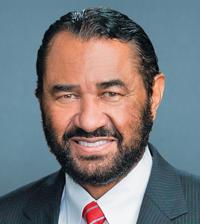
I commend my colleague from the State of Texas, our new Member, Al Green, who for his leadership on this issue should be really commended as an important contribution that he has made. And I would like to acknowledge the Judiciary Committee's members on both sides of the aisle who helped advance this resolution with their active support. The Committee on the Constitution chairman, Jerrold Nadler; the Crime Committee chairman, Bobby Scott; also our stellar members from North Carolina, Mel Watt; and from Texas, Sheila Jackson-Lee; from California, Maxine Waters; Wisconsin, Tammy Baldwin; Georgia, Hank Johnson; Tennessee, Steve Cohen; Wisconsin, James Sensenbrenner; and Texas, Louie Gohmert. These and many others have been very helpful in laying the groundwork for us to come together to hearten not just the people in this country but our law enforcement agencies, particularly the Department of Justice, in trying to reduce and indeed eliminate this unfortunate system of hate that is spreading, unfortunately, in our country.
I think we can head it off, and I hope with the passage of House Resolution 826 that will be, in fact, accomplished.
Mr. Speaker, I reserve the balance of my time.
Could I ask my colleague, the floor manager (Mr. Forbes), I would like to ask unanimous consent for 5 minutes more on each side if that would be agreeable with the gentleman.
Mr. Speaker, I ask that we have 5 additional minutes added to each side.
I thank my colleague the floor manager and my friends on the other side.
I am privileged now to recognize the gentleman from Texas, who came to
me with this idea, Mr. Al Green, and I will yield him 3\1/2\ minutes.
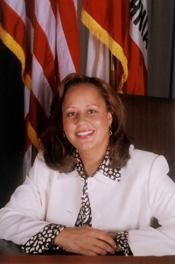
Mr. Speaker, it is now my pleasure to call my dear friend and newest member to the Congressional Black Caucus, Laura Richardson, to speak, and I recognize her for 2\1/2\ minutes.
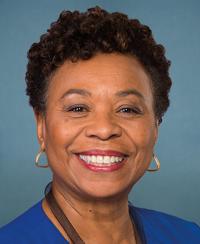
The Chair is pleased to recognize the gentlelady from California, Barbara Lee, who has graced us with her presence in my district recently, and we yield her 2 minutes.
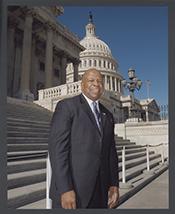
Mr. Speaker, it is my pleasure to recognize the former Chair of the Congressional Black Caucus, Elijah Cummings of Maryland, and we would grant him 2 minutes.
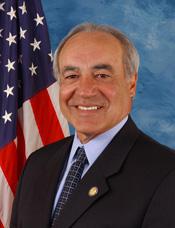
Mr. Speaker, I am pleased now to call upon the Chair of the Congressional Hispanic Caucus, the Honorable Joe Baca of California, and I yield him 2 minutes.
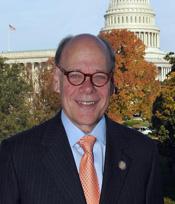
Mr. Speaker, I am pleased now to recognize the gentleman from Tennessee, a distinguished member of the House Judiciary Committee, Mr. Steve Cohen, 2 minutes.
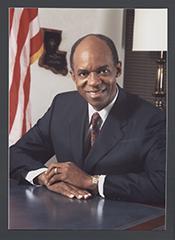
Mr. Speaker, I am pleased now to recognize the distinguished gentleman from Louisiana, Mr. William Jefferson, who has worked very hard on matters of racial justice across his career in the Congress, and I yield him 2 minutes.
Mr. Speaker, I would like to advise my colleague, the floor manager, that I have only one final speaker. We will be concluded. So if you would like to yield back, we would finish up.
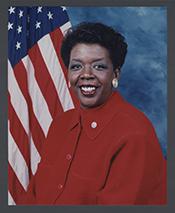
Mr. Speaker, I thank the gentleman from Virginia, and I yield finally to the Honorable Stephanie Tubbs Jones of Ohio, a distinguished lawyer, prosecutor, judge, and now a chairman in the House of Representatives, to close for us.