Cruise Vessel Security and Safety Act of 2010
 Rep. Doris O. Matsui (D-CA)
Legislative Activity
Stay on top of the latest movement without scrolling through every action
Became Public Law No: 111-207.
July 27, 2010
View full timeline
Introduced in House
July 28, 2009
Referred to the House Committee on Transportation and Infrastructure.
July 28, 2009
Referred to the Subcommittee on Coast Guard and Maritime Transportation.
July 29, 2009
Subcommittee on Coast Guard and Maritime Transportation Discharged.
July 30, 2009
Committee Consideration and Mark-up Session Held.
July 30, 2009
Ordered to be Reported by Voice Vote.
July 30, 2009
Reported by the Committee on Transportation. H. Rept. 111-332.
November 7, 2009
Placed on the Union Calendar, Calendar No. 190.
November 7, 2009
Mr. Cummings moved to suspend the rules and pass the bill, as amended.
November 17, 2009 • 1:09 PM
Considered under suspension of the rules. (consideration: CR H13020-13026)
November 17, 2009 • 1:09 PM
DEBATE - The House proceeded with forty minutes of debate on H.R. 3360.
November 17, 2009 • 1:09 PM
At the conclusion of debate, the Yeas and Nays were demanded and ordered. Pursuant to the provisions of clause 8, rule XX, the Chair announced that further proceedings on the motion would be postponed.
November 17, 2009 • 1:41 PM
Considered as unfinished business. (consideration: CR H13033)
November 17, 2009 • 2:31 PM
Passed/agreed to in House: On motion to suspend the rules and pass the bill, as amended Agreed to by the Yeas and Nays: (2/3 required): 416 - 4 (Roll no. 892).(text: CR H13020-13023)
November 17, 2009 • 2:58 PM
On motion to suspend the rules and pass the bill, as amended Agreed to by the Yeas and Nays: (2/3 required): 416 - 4 (Roll no. 892). (text: CR H13020-13023)
November 17, 2009 • 2:58 PM
Motion to reconsider laid on the table Agreed to without objection.
November 17, 2009 • 2:58 PM
Received in the Senate. Read twice. Placed on Senate Legislative Calendar under General Orders. Calendar No. 211.
November 18, 2009
Measure laid before Senate by unanimous consent. (consideration: CR S4865-4866)
June 10, 2010
Passed Senate with an amendment by Unanimous Consent.
June 10, 2010
Message on Senate action sent to the House.
June 11, 2010
Mr. Cummings moved that the House suspend the rules and agree to the Senate amendment. (consideration: CR H5262-5267)
June 30, 2010 • 7:06 PM
DEBATE - The House proceeded with forty minutes of debate on H.R. 3360.
June 30, 2010 • 7:06 PM
Resolving differences -- House actions: On motion that the House suspend the rules and agree to the Senate amendment Agreed to by voice vote.(text as House agreed to Senate amendment: CR H5262-5265)
June 30, 2010
On motion that the House suspend the rules and agree to the Senate amendment Agreed to by voice vote. (text as House agreed to Senate amendment: CR H5262-5265)
June 30, 2010 • 7:23 PM
Motion to reconsider laid on the table Agreed to without objection.
June 30, 2010 • 7:23 PM
Cleared for White House.
June 30, 2010
Presented to President.
July 19, 2010
Signed by President.
July 27, 2010
Became Public Law No: 111-207.
July 27, 2010
Voting History
1 vote recorded • Roll call available
Floor Debate
18 membersWhat members said about H.R. 3360 on the floor


 +13
+13
Floor Debate
18 membersWhat members said about H.R. 3360 on the floor
Mr. Speaker, I would like to thank my friend the gentlewoman from California (Ms. Matsui) for the time, and I yield myself such time as I may consume. Always Ready. That's the motto of the United…
Mr. Speaker, by direction of the Committee on Rules, I call up House Resolution 853 and ask for its immediate consideration. Mr. Speaker, for the purpose of debate only, I yield the customary 30…
Mr. Speaker, I move to suspend the rules and pass the bill (H.R. 3360) to amend title 46, United States Code, to establish requirements to ensure the security and safety of passengers and crew on…
Mr. Speaker, I move to suspend the rules and concur in the Senate amendment to the bill (H.R. 3360) to amend title 46, United States Code, to establish requirements to ensure the security and safety…
Mr. Speaker, I rise today in strong support of the Senate amendment to H.R. 3360, the ``Cruise Vessel Security and Safety Act of 2010.'' Serious crimes are committed at sea aboard cruise vessels just…
Show 8 more
Mr. Speaker, I thank the chairman, Mr. Cummings, for the prodigious work done, the hearing preparation, not just the hearing, but preparation for the hearing, gathering the information and steeping…
I thank my friend from Florida (Mr. Lincoln Diaz- Balart). I would like to start off by thanking Mr. Oberstar, Mr. Mica and Mr. Cummings for their bipartisan effort to look at all the serious issues…

Mr. Speaker, I rise in support of the rule in support of H.R. 3619, the Coast Guard Reauthorization Act. I'd like to thank my colleague from Minnesota, Chairman Oberstar, and his staff for their hard…
I thank the gentleman for yielding. Mr. Speaker, I rise in very strong support of this critically needed legislation, the Cruise Vessel Security and Safety Act; and I want to compliment the author of…
I appreciate the gentleman for yielding. I rise totally in support of H.R. 3360, the Cruise Vessel Security and Safety Act of 2010. This legislation passed the House with strong support in November…
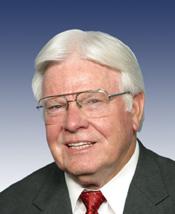
Madam Speaker, due to an illness, I was absent for votes on November 16, 17, 18 and 19. Please see a list of votes I missed. Rollcall vote No. 889: S. 1314: To Designate the Facility of the United…
Mr. Speaker, I appreciate the gentleman from New Jersey yielding time and his work on this legislation and, of course, the chairman from Maryland and his work as well, but also the gentlewoman from…

Mr. Speaker, I thank my good friend, Mr. Lincoln Diaz-Balart, for his leadership on the Rules Committee. Mr. Speaker, I'm pleased that today and tomorrow the House is debating the Coast Guard…
Show 11 more
I thank the gentleman from Maryland, who has been such a leader in all of this. Mr. Speaker, I rise today in support of H.R. 3360, the Cruise Vessel Safety and Security Act, legislation that I…
I thank Ms. Matsui for yielding to me. I rise in strong support of House Resolution 853, which would provide a structured rule to allow for consideration of the Coast Guard Authorization Act of 2010,…
I thank the gentleman from Maryland for yielding me time. Mr. Speaker, I rise in support of the Senate amendments to H.R. 3360, the Cruise Vessel Security and Safety Act, legislation that I…

I thank the gentleman. I rise in opposition to the rule. We have at the moment about 10 percent unemployment in the United States of America. Some of the oldest laws of our Republic are the cabotage…

I thank the distinguished subcommittee Chair. I rise today in support of this bill and not just because of the tragic cases that we have been discussing, but specifically, in support of a more…
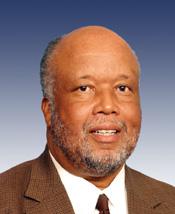
Mr. Speaker, I rise in strong support of this rule and the underlying bill--H.R. 3619, the Fiscal Year 2010 Coast Guard Authorization Act. I would like to commend the Rules Committee for approving a…

Mr. Speaker, I thank the gentlelady for the time, and want to commend the chairman for his work on this bill, as well as the ranking member. I rise in strong support of the Coast Guard Authorization…

Mr. President, I am pleased to support the Cruise Vessel Security and Safety Act of 2010 and glad to join the full Senate today in passing this important bill. This legislation will improve the…

Mr. Speaker, I want to start off by thanking Chairmen Oberstar and Cummings and Ranking Member Mica for all of their hard work on this bill. We've given the Coast Guard so much responsibility, and…

I thank my friend and colleague for yielding and rise in support of the rule and the underlying bill. Mr. Speaker, a few years ago, Senator Susan Collins and I toured the Ports of Los Angeles and…
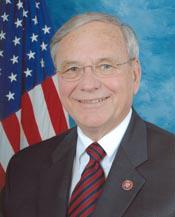
Mr. Speaker, as a member of the House Committee on Transportation and Infrastructure, I rise today on behalf of H.R. 3360, the Cruise Vessel Security and Safety Act of 2009. This is important…
Bill Text
7 versions available
        [Congressional Bills 111th Congress]
[From the U.S. Government Publishing Office]
[H.R. 3360 Enrolled Bill (ENR)]

H.R.3360

One Hundred Eleventh Congress

of the

United States of America

AT THE SECOND SESSION

Begun and held at the City of Washington on Tuesday,
the fifth day of January, two thousand and ten

An Act

To amend title 46, United States Code, to establish requirements to
ensure the security and safety of passengers and crew on cruise vessels,
and for other purposes.

Be it enacted by the Senate and House of Representatives of the
United States of America in Congress assembled,

SECTION 1. SHORT TITLE; TABLE OF CONTENTS.

(a) Short Title.--This Act may be cited as the ``Cruise Vessel
Security and Safety Act of 2010''.
(b) Table of Contents.--The table of contents for this Act is as
follows:

Sec. 1. Short title; table of contents.
Sec. 2. Findings.
Sec. 3. Cruise vessel security and safety requirements.
Sec. 4. Offset of administrative costs.
Sec. 5. Budgetary effects.

SEC. 2. FINDINGS.

The Congress makes the following findings:
(1) There are approximately 200 overnight ocean-going cruise
vessels worldwide. The average ocean-going cruise vessel carries
2,000 passengers with a crew of 950 people.
(2) In 2007 alone, approximately 12,000,000 passengers were
projected to take a cruise worldwide.
(3) Passengers on cruise vessels have an inadequate
appreciation of their potential vulnerability to crime while on
ocean voyages, and those who may be victimized lack the information
they need to understand their legal rights or to know whom to
contact for help in the immediate aftermath of the crime.
(4) Sexual violence, the disappearance of passengers from
vessels on the high seas, and other serious crimes have occurred
during luxury cruises.
(5) Over the last 5 years, sexual assault and physical assaults
on cruise vessels were the leading crimes investigated by the
Federal Bureau of Investigation with regard to cruise vessel
incidents.
(6) These crimes at sea can involve attacks both by passengers
and crewmembers on other passengers and crewmembers.
(7) Except for United States flagged vessels, or foreign
flagged vessels operating in an area subject to the direct
jurisdiction of the United States, there are no Federal statutes or
regulations that explicitly require cruise lines to report alleged
crimes to United States Government officials.
(8) It is not known precisely how often crimes occur on cruise
vessels or exactly how many people have disappeared during ocean
voyages because cruise line companies do not make comprehensive,
crime-related data readily available to the public.
(9) Obtaining reliable crime-related cruise data from
governmental sources can be difficult, because multiple countries
may be involved when a crime occurs on the high seas, including the
flag country for the vessel, the country of citizenship of
particular passengers, and any countries having special or maritime
jurisdiction.
(10) It can be difficult for professional crime investigators
to immediately secure an alleged crime scene on a cruise vessel,
recover evidence of an onboard offense, and identify or interview
potential witnesses to the alleged crime.
(11) Most cruise vessels that operate into and out of United
States ports are registered under the laws of another country, and
investigations and prosecutions of crimes against passengers and
crewmembers may involve the laws and authorities of multiple
nations.
(12) The Department of Homeland Security has found it necessary
to establish 500-yard security zones around cruise vessels to limit
the risk of terrorist attack. Recently piracy has dramatically
increased throughout the world.
(13) To enhance the safety of cruise passengers, the owners of
cruise vessels could upgrade, modernize, and retrofit the safety
and security infrastructure on such vessels by installing peep
holes in passenger room doors, installing security video cameras in
targeted areas, limiting access to passenger rooms to select staff
during specific times, and installing acoustic hailing and warning
devices capable of communicating over distances.

SEC. 3. CRUISE VESSEL SECURITY AND SAFETY REQUIREMENTS.

(a) In General.--Chapter 35 of title 46, United States Code, is
amended by adding at the end the following:

``Sec. 3507. Passenger vessel security and safety requirements

``(a) Vessel Design, Equipment, Construction, and Retrofitting
Requirements.--
``(1) In general.--Each vessel to which this subsection applies
shall comply with the following design and construction standards:
``(A) The vessel shall be equipped with ship rails that are
located not less than 42 inches above the cabin deck.
``(B) Each passenger stateroom and crew cabin shall be
equipped with entry doors that include peep holes or other
means of visual identification.
``(C) For any vessel the keel of which is laid after the
date of enactment of the Cruise Vessel Security and Safety Act
of 2010, each passenger stateroom and crew cabin shall be
equipped with--
``(i) security latches; and
``(ii) time-sensitive key technology.
``(D) The vessel shall integrate technology that can be
used for capturing images of passengers or detecting passengers
who have fallen overboard, to the extent that such technology
is available.
``(E) The vessel shall be equipped with a sufficient number
of operable acoustic hailing or other such warning devices to
provide communication capability around the entire vessel when
operating in high risk areas (as defined by the United States
Coast Guard).
``(2) Fire safety codes.--In administering the requirements of
paragraph (1)(C), the Secretary shall take into consideration fire
safety and other applicable emergency requirements established by
the U. S. Coast Guard and under international law, as appropriate.
``(3) Effective date.--
``(A) In general.--Except as provided in subparagraph (B),
the requirements of paragraph (1) shall take effect 18 months
after the date of enactment of the Cruise Vessel Security and
Safety Act of 2010.
``(B) Latch and key requirements.--The requirements of
paragraph (1)(C) take effect on the date of enactment of the
Cruise Vessel Security and Safety Act of 2010.
``(b) Video Recording.--
``(1) Requirement to maintain surveillance.--The owner of a
vessel to which this section applies shall maintain a video
surveillance system to assist in documenting crimes on the vessel
and in providing evidence for the prosecution of such crimes, as
determined by the Secretary.
``(2) Access to video records.--The owner of a vessel to which
this section applies shall provide to any law enforcement official
performing official duties in the course and scope of an
investigation, upon request, a copy of all records of video
surveillance that the official believes may provide evidence of a
crime reported to law enforcement officials.
``(c) Safety Information.--
``(1) Criminal Activity Prevention and Response Guide.--The
owner of a vessel to which this section applies (or the owner's
designee) shall--
``(A) have available for each passenger a guide (referred
to in this subsection as the `security guide'), written in
commonly understood English, which--
``(i) provides a description of medical and security
personnel designated on board to prevent and respond to
criminal and medical situations with 24 hour contact
instructions;
(ii) describes the jurisdictional authority applicable,
and the law enforcement processes available, with respect
to the reporting of homicide, suspicious death, a missing
United States national, kidnapping, assault with serious
bodily injury, any offense to which section 2241, 2242,
2243, or 2244(a) or (c) of title 18 applies, firing or
tampering with the vessel, or theft of money or property in
excess of $10,000, together with contact information for
the appropriate law enforcement authorities for missing
persons or reportable crimes which arise--

``(I) in the territorial waters of the United
States;
``(II) on the high seas; or
``(III) in any country to be visited on the voyage;

``(B) provide a copy of the security guide to the Federal
Bureau of Investigation for comment; and
``(C) publicize the security guide on the website of the
vessel owner.
``(2) Embassy and consulate locations.--The owner of a vessel
to which this section applies shall provide in each passenger
stateroom, and post in a location readily accessible to all crew
and in other places specified by the Secretary, information
regarding the locations of the United States embassy and each
consulate of the United States for each country the vessel will
visit during the course of the voyage.
``(d) Sexual Assault.--The owner of a vessel to which this section
applies shall--
``(1) maintain on the vessel adequate, in-date supplies of
anti-retroviral medications and other medications designed to
prevent sexually transmitted diseases after a sexual assault;
``(2) maintain on the vessel equipment and materials for
performing a medical examination in sexual assault cases to
evaluate the patient for trauma, provide medical care, and preserve
relevant medical evidence;
``(3) make available on the vessel at all times medical staff
who have undergone a credentialing process to verify that he or
she--
``(A) possesses a current physician's or registered nurse's
license and--
``(i) has at least 3 years of post-graduate or post-
registration clinical practice in general and emergency
medicine; or
``(ii) holds board certification in emergency medicine,
family practice medicine, or internal medicine;
``(B) is able to provide assistance in the event of an
alleged sexual assault, has received training in conducting
forensic sexual assault examination, and is able to promptly
perform such an examination upon request and provide proper
medical treatment of a victim, including administration of
anti-retroviral medications and other medications that may
prevent the transmission of human immunodeficiency virus and
other sexually transmitted diseases; and
``(C) meets guidelines established by the American College
of Emergency Physicians relating to the treatment and care of
victims of sexual assault;
``(4) prepare, provide to the patient, and maintain written
documentation of the findings of such examination that is signed by
the patient; and
``(5) provide the patient free and immediate access to--
``(A) contact information for local law enforcement, the
Federal Bureau of Investigation, the United States Coast Guard,
the nearest United States consulate or embassy, and the
National Sexual Assault Hotline program or other third party
victim advocacy hotline service; and
``(B) a private telephone line and Internet-accessible
computer terminal by which the individual may confidentially
access law enforcement officials, an attorney, and the
information and support services available through the National
Sexual Assault Hotline program or other third party victim
advocacy hotline service.
``(e) Confidentiality of Sexual Assault Examination and Support
Information.--The master or other individual in charge of a vessel to
which this section applies shall--
``(1) treat all information concerning an examination under
subsection (d) confidential, so that no medical information may be
released to the cruise line or other owner of the vessel or any
legal representative thereof without the prior knowledge and
approval in writing of the patient, or, if the patient is unable to
provide written authorization, the patient's next-of-kin, except
that nothing in this paragraph prohibits the release of--
``(A) information, other than medical findings, necessary
for the owner or master of the vessel to comply with the
provisions of subsection (g) or other applicable incident
reporting laws;
``(B) information to secure the safety of passengers or
crew on board the vessel; or
``(C) any information to law enforcement officials
performing official duties in the course and scope of an
investigation; and
``(2) treat any information derived from, or obtained in
connection with, post-assault counseling or other supportive
services confidential, so no such information may be released to
the cruise line or any legal representative thereof without the
prior knowledge and approval in writing of the patient, or, if the
patient is unable to provide written authorization, the patient's
next-of-kin.
``(f) Crew Access to Passenger Staterooms.--The owner of a vessel
to which this section applies shall--
``(1) establish and implement procedures and restrictions
concerning--
``(A) which crewmembers have access to passenger
staterooms; and
``(B) the periods during which they have that access; and
``(2) ensure that the procedures and restrictions are fully and
properly implemented and periodically reviewed.
``(g) Log Book and Reporting Requirements.--
``(1) In general.--The owner of a vessel to which this section
applies shall--
``(A) record in a log book, either electronically or
otherwise, in a centralized location readily accessible to law
enforcement personnel, a report on--
``(i) all complaints of crimes described in paragraph
(3)(A)(i),
``(ii) all complaints of theft of property valued in
excess of $1,000, and
``(iii) all complaints of other crimes,
committed on any voyage that embarks or disembarks passengers
in the United States; and
``(B) make such log book available upon request to any
agent of the Federal Bureau of Investigation, any member of the
United States Coast Guard, and any law enforcement officer
performing official duties in the course and scope of an
investigation.
``(2) Details required.--The information recorded under
paragraph (1) shall include, at a minimum--
``(A) the vessel operator;
``(B) the name of the cruise line;
``(C) the flag under which the vessel was operating at the
time the reported incident occurred;
``(D) the age and gender of the victim and the accused
assailant;
``(E) the nature of the alleged crime or complaint, as
applicable, including whether the alleged perpetrator was a
passenger or a crewmember;
``(F) the vessel's position at the time of the incident, if
known, or the position of the vessel at the time of the initial
report;
``(G) the time, date, and method of the initial report and
the law enforcement authority to which the initial report was
made;
``(H) the time and date the incident occurred, if known;
``(I) the total number of passengers and the total number
of crew members on the voyage; and
``(J) the case number or other identifier provided by the
law enforcement authority to which the initial report was made.
``(3) Requirement to report crimes and other information.--
``(A) In general.--The owner of a vessel to which this
section applies (or the owner's designee)--
``(i) shall contact the nearest Federal Bureau of
Investigation Field Office or Legal Attache by telephone as
soon as possible after the occurrence on board the vessel
of an incident involving homicide, suspicious death, a
missing United States national, kidnapping, assault with
serious bodily injury, any offense to which section 2241,
2242, 2243, or 2244(a) or (c) of title 18 applies, firing
or tampering with the vessel, or theft of money or property
in excess of $10,000 to report the incident;
``(ii) shall furnish a written report of the incident
to an Internet based portal maintained by the Secretary;
``(iii) may report any serious incident that does not
meet the reporting requirements of clause (i) and that does
not require immediate attention by the Federal Bureau of
Investigation via the Internet based portal maintained by
the Secretary; and
``(iv) may report any other criminal incident involving
passengers or crewmembers, or both, to the proper State or
local government law enforcement authority.
``(B) Incidents to which subparagraph (A) applies.--
Subparagraph (A) applies to an incident involving criminal
activity if--
``(i) the vessel, regardless of registry, is owned, in
whole or in part, by a United States person, regardless of
the nationality of the victim or perpetrator, and the
incident occurs when the vessel is within the admiralty and
maritime jurisdiction of the United States and outside the
jurisdiction of any State;
``(ii) the incident concerns an offense by or against a
United States national committed outside the jurisdiction
of any nation;
``(iii) the incident occurs in the Territorial Sea of
the United States, regardless of the nationality of the
vessel, the victim, or the perpetrator; or
``(iv) the incident concerns a victim or perpetrator
who is a United States national on a vessel during a voyage
that departed from or will arrive at a United States port.
``(4) Availability of incident data via internet.--
``(A) Website.--The Secretary shall maintain a statistical
compilation of all incidents described in paragraph (3)(A)(i)
on an Internet site that provides a numerical accounting of the
missing persons and alleged crimes recorded in each report
filed under paragraph (3)(A)(i) that are no longer under
investigation by the Federal Bureau of Investigation. The data
shall be updated no less frequently than quarterly, aggregated
by cruise line, each cruise line shall be identified by name,
and each crime shall be identified as to whether it was
committed by a passenger or a crew member.
``(B) Access to website.--Each cruise line taking on or
discharging passengers in the United States shall include a
link on its Internet website to the website maintained by the
Secretary under subparagraph (A).
``(h) Enforcement.--
``(1) Penalties.--
``(A) Civil penalty.--Any person that violates this section
or a regulation under this section shall be liable for a civil
penalty of not more than $25,000 for each day during which the
violation continues, except that the maximum penalty for a
continuing violation is $50,000.
``(B) Criminal penalty.--Any person that willfully violates
this section or a regulation under this section shall be fined
not more than $250,000 or imprisoned not more than 1 year, or
both.
``(2) Denial of entry.--The Secretary may deny entry into the
United States to a vessel to which this section applies if the
owner of the vessel--
``(A) commits an act or omission for which a penalty may be
imposed under this subsection; or
``(B) fails to pay a penalty imposed on the owner under
this subsection.
``(i) Procedures.--Within 6 months after the date of enactment of
the Cruise Vessel Security and Safety Act of 2010, the Secretary shall
issue guidelines, training curricula, and inspection and certification
procedures necessary to carry out the requirements of this section.
``(j) Regulations.--The Secretary and the Commandant shall each
issue such regulations as are necessary to implement this section.
``(k) Application.--
``(1) In general.--This section and section 3508 apply to a
passenger vessel (as defined in section 2101(22)) that--
``(A) is authorized to carry at least 250 passengers;
``(B) has onboard sleeping facilities for each passenger;
``(C) is on a voyage that embarks or disembarks passengers
in the United States; and
``(D) is not engaged on a coastwise voyage.
``(2) Federal and state vessels.--This section and section 3508
do not apply to a vessel of the United States operated by the
Federal Government or a vessel owned and operated by a State.
``(l) Definitions.--In this section and section 3508:
``(1) Commandant.--The term `Commandant' means the Commandant
of the Coast Guard.
``(2) Owner.--The term `owner' means the owner, charterer,
managing operator, master, or other individual in charge of a
vessel.

``3508. Crime scene preservation training for passenger vessel
crewmembers

``(a) In General.--Within 1 year after the date of enactment of the
Cruise Vessel Security and Safety Act of 2010, the Secretary, in
consultation with the Director of the Federal Bureau of Investigation
and the Maritime Administration, shall develop training standards and
curricula to allow for the certification of passenger vessel security
personnel, crewmembers, and law enforcement officials on the
appropriate methods for prevention, detection, evidence preservation,
and reporting of criminal activities in the international maritime
environment. The Administrator of the Maritime Administration may
certify organizations in the United States and abroad that offer the
curriculum for training and certification under subsection (c).
``(b) Minimum Standards.--The standards established by the
Secretary under subsection (a) shall include--
``(1) the training and certification of vessel security
personnel, crewmembers, and law enforcement officials in accordance
with accepted law enforcement and security guidelines, policies,
and procedures, including recommendations for incorporating a
background check process for personnel trained and certified in
foreign ports;
``(2) the training of students and instructors in all aspects
of prevention, detection, evidence preservation, and reporting of
criminal activities in the international maritime environment; and
``(3) the provision or recognition of off-site training and
certification courses in the United States and foreign countries to
develop and provide the required training and certification
described in subsection (a) and to enhance security awareness and
security practices related to the preservation of evidence in
response to crimes on board passenger vessels.
``(c) Certification Requirement.--Beginning 2 years after the
standards are established under subsection (b), no vessel to which this
section applies may enter a United States port on a voyage (or voyage
segment) on which a United States citizen is a passenger unless there
is at least 1 crewmember onboard who is certified as having
successfully completed training in the prevention, detection, evidence
preservation, and reporting of criminal activities in the international
maritime environment on passenger vessels under subsection (a).
``(d) Interim Training Requirement.--No vessel to which this
section applies may enter a United States port on a voyage (or voyage
segment) on which a United States citizen is a passenger unless there
is at least 1 crewmember onboard who has been properly trained in the
prevention detection, evidence preservation and the reporting
requirements of criminal activities in the international maritime
environment. The owner of a such a vessel shall maintain certification
or other documentation, as prescribed by the Secretary, verifying the
training of such individual and provide such documentation upon request
for inspection in connection with enforcement of the provisions of this
section. This subsection shall take effect 1 year after the date of
enactment of the Cruise Vessel Safety and Security Act of 2010 and
shall remain in effect until superseded by the requirements of
subsection (c).
``(e) Civil Penalty.--Any person that violates this section or a
regulation under this section shall be liable for a civil penalty of
not more than $50,000.
``(f) Denial of Entry.--The Secretary may deny entry into the
United States to a vessel to which this section applies if the owner of
the vessel--
``(1) commits an act or omission for which a penalty may be
imposed under subsection (e); or
``(2) fails to pay a penalty imposed on the owner under
subsection (e).''.
(b) Clerical Amendment.--The table of contents for such chapter is
amended by adding at the end the following:

``3507. Passenger vessel security and safety requirements
``3508. Crime scene preservation training for passenger vessel
crewmembers''.

SEC. 4. OFFSET OF ADMINISTRATIVE COSTS.

(a) Repeal of Certain Report Requirements.--
(1) Section 1130 of the Coast Guard Authorization Act of 1996
(33 U.S.C. 2720 note) is amended by striking subsection (b).
(2) Section 112 of the Maritime Transportation Security Act of
2002 (46 U.S.C. 70101 note) is repealed.
(3) Section 676 of title 14, United States Code, is amended by
striking subsection (d).
(4) Section 355 of title 37, United States Code, is amended by
striking subsection (h) and redesignating subsection (i) as
subsection (h).
(5) Section 205 of the Coast Guard and Maritime Transportation
Act of 2006 (14 U.S.C. 637 note) is amended by striking subsection
(d).
(b) Combination of Fisheries Enforcement Plans and Foreign Fishing
Incursion Reports.--The Secretary of the department in which the Coast
Guard is operating shall combine the reports required under section 224
of the Coast Guard and Maritime Transportation Act of 2004 (16 U.S.C.
1861b) and section 804 of the Coast Guard and Maritime Transportation
Act of 2006 (16 U.S.C. 1828) into a single annual report for fiscal
years beginning after fiscal year 2010.

SEC. 5. BUDGETARY EFFECTS.

The budgetary effects of this Act, for the purpose of complying
with the Statutory Pay-As-You-Go-Act of 2010, shall be determined by
reference to the latest statement titled ``Budgetary Effects of PAYGO
Legislation'' for this Act, submitted for printing in the Congressional
Record by the Chairman of the Senate Budget Committee, provided that
such statement has been submitted prior to the vote on passage.

Speaker of the House of Representatives.

Vice President of the United States and
President of the Senate.