











I
111th CONGRESS
1st Session
H. R. 40
IN THE HOUSE OF REPRESENTATIVES
January 6, 2009
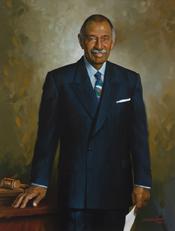
Mr. Conyers (for himself and Mr. Scott of Virginia) introduced the following bill; which was referred to the Committee on the Judiciary
A BILL
To acknowledge the fundamental injustice, cruelty, brutality, and inhumanity of slavery in the United States and the 13 American colonies between 1619 and 1865 and to establish a commission to examine the institution of slavery, subsequently de jure and de facto racial and economic discrimination against African-Americans, and the impact of these forces on living African-Americans, to make recommendations to the Congress on appropriate remedies, and for other purposes.
Short title
This Act may be cited as the Commission to Study Reparation Proposals for African-Americans Act
.
Findings and purpose
Findings
The Congress finds that—
approximately 4,000,000 Africans and their descendants were enslaved in the United States and colonies that became the United States from 1619 to 1865;
the institution of slavery was constitutionally and statutorily sanctioned by the Government of the United States from 1789 through 1865;
the slavery that flourished in the United States constituted an immoral and inhumane deprivation of Africans’ life, liberty, African citizenship rights, and cultural heritage, and denied them the fruits of their own labor; and
sufficient inquiry has not been made into the effects of the institution of slavery on living African-Americans and society in the United States.
Purpose
The purpose of this Act is to establish a commission to—
examine the institution of slavery which existed from 1619 through 1865 within the United States and the colonies that became the United States, including the extent to which the Federal and State Governments constitutionally and statutorily supported the institution of slavery;
examine de jure and de facto discrimination against freed slaves and their descendants from the end of the Civil War to the present, including economic, political, and social discrimination;
examine the lingering negative effects of the institution of slavery and the discrimination described in paragraph (2) on living African-Americans and on society in the United States;
recommend appropriate ways to educate the American public of the Commission’s findings;
recommend appropriate remedies in consideration of the Commission’s findings on the matters described in paragraphs (1) and (2); and
submit to the Congress the results of such examination, together with such recommendations.
Establishment and duties
Establishment
There is established the Commission to Study Reparation Proposals for African-Americans (hereinafter in this Act referred to as the Commission
).
Duties
The Commission shall perform the following duties:
Examine the institution of slavery which existed within the United States and the colonies that became the United States from 1619 through 1865. The Commission’s examination shall include an examination of—
the capture and procurement of Africans;
the transport of Africans to the United States and the colonies that became the United States for the purpose of enslavement, including their treatment during transport;
the sale and acquisition of Africans as chattel property in interstate and instrastate commerce; and
the treatment of African slaves in the colonies and the United States, including the deprivation of their freedom, exploitation of their labor, and destruction of their culture, language, religion, and families.
Examine the extent to which the Federal and State governments of the United States supported the institution of slavery in constitutional and statutory provisions, including the extent to which such governments prevented, opposed, or restricted efforts of freed African slaves to repatriate to their homeland.
Examine Federal and State laws that discriminated against freed African slaves and their descendants during the period between the end of the Civil War and the present.
Examine other forms of discrimination in the public and private sectors against freed African slaves and their descendants during the period between the end of the Civil War and the present.
Examine the lingering negative effects of the institution of slavery and the matters described in paragraphs (1), (2), (3), and (4) on living African-Americans and on society in the United States.
Recommend appropriate ways to educate the American public of the Commission’s findings.
Recommend appropriate remedies in consideration of the Commission’s findings on the matters described in paragraphs (1), (2), (3), and (4). In making such recommendations, the Commission shall address among other issues, the following questions:
Whether the Government of the United States should offer a formal apology on behalf of the people of the United States for the perpetration of gross human rights violations on African slaves and their descendants.
Whether African-Americans still suffer from the lingering effects of the matters described in paragraphs (1), (2), (3), and (4).
Whether, in consideration of the Commission’s findings, any form of compensation to the descendants of African slaves is warranted.
If the Commission finds that such compensation is warranted, what should be the amount of compensation, what form of compensation should be awarded, and who should be eligible for such compensation.
Report to Congress
The Commission shall submit a written report of its findings and recommendations to the Congress not later than the date which is one year after the date of the first meeting of the Commission held pursuant to section 4(c).
Membership
Number and appointment
The Commission shall be composed of 7 members, who shall be appointed, within 90 days after the date of enactment of this Act, as follows:
Three members shall be appointed by the President.
Three members shall be appointed by the Speaker of the House of Representatives.
One member shall be appointed by the President pro tempore of the Senate.
All members of the Commission shall be persons who are especially qualified to serve on the Commission by virtue of their education, training, or experience, particularly in the field of African-American studies.
Terms
The term of office for members shall be for the life of the Commission. A vacancy in the Commission shall not affect the powers of the Commission, and shall be filled in the same manner in which the original appointment was made.
First meeting
The President shall call the first meeting of the Commission within 120 days after the date of the enactment of this Act, or within 30 days after the date on which legislation is enacted making appropriations to carry out this Act, whichever date is later.
Quorum
Four members of the Commission shall constitute a quorum, but a lesser number may hold hearings.
Chair and Vice Chair
The Commission shall elect a Chair and Vice Chair from among its members. The term of office of each shall be for the life of the Commission.
Compensation
Except as provided in paragraph (2), each member of the Commission shall receive compensation at the daily equivalent of the annual rate of basic pay payable for GS–18 of the General Schedule under section 5332 of title 5, United States Code, for each day, including travel time, during which he or she is engaged in the actual performance of duties vested in the Commission.
A member of the Commission who is a full-time officer or employee of the United States or a Member of Congress shall receive no additional pay, allowances, or benefits by reason of his or her service to the Commission.
All members of the Commission shall be reimbursed for travel, subsistence, and other necessary expenses incurred by them in the performance of their duties to the extent authorized by chapter 57 of title 5, United States Code.
Powers of the Commission
Hearings and sessions
The Commission may, for the purpose of carrying out the provisions of this Act, hold such hearings and sit and act at such times and at such places in the United States, and request the attendance and testimony of such witnesses and the production of such books, records, correspondence, memoranda, papers, and documents, as the Commission considers appropriate. The Commission may request the Attorney General to invoke the aid of an appropriate United States district court to require, by subpoena or otherwise, such attendance, testimony, or production.
Powers of subcommittees and members
Any subcommittee or member of the Commission may, if authorized by the Commission, take any action which the Commission is authorized to take by this section.
Obtaining official data
The Commission may acquire directly from the head of any department, agency, or instrumentality of the executive branch of the Government, available information which the Commission considers useful in the discharge of its duties. All departments, agencies, and instrumentalities of the executive branch of the Government shall cooperate with the Commission with respect to such information and shall furnish all information requested by the Commission to the extent permitted by law.
Administrative provisions
Staff
The Commission may, without regard to section 5311(b) of title 5, United States Code, appoint and fix the compensation of such personnel as the Commission considers appropriate.
Applicability of certain civil service laws
The staff of the Commission may be appointed without regard to the provisions of title 5, United States Code, governing appointments in the competitive service, and without regard to the provisions of chapter 51 and subchapter III of chapter 53 of such title relating to classification and General Schedule pay rates, except that the compensation of any employee of the Commission may not exceed a rate equal to the annual rate of basic pay payable for GS–18 of the General Schedule under section 5332 of title 5, United States Code.
Experts and consultants
The Commission may procure the services of experts and consultants in accordance with the provisions of section 3109(b) of title 5, United States Code, but at rates for individuals not to exceed the daily equivalent of the highest rate payable under section 5332 of such title.
Administrative support services
The Commission may enter into agreements with the Administrator of General Services for procurement of financial and administrative services necessary for the discharge of the duties of the Commission. Payment for such services shall be made by reimbursement from funds of the Commission in such amounts as may be agreed upon by the Chairman of the Commission and the Administrator.
Contracts
The Commission may—
procure supplies, services, and property by contract in accordance with applicable laws and regulations and to the extent or in such amounts as are provided in appropriations Acts; and
enter into contracts with departments, agencies, and instrumentalities of the Federal Government, State agencies, and private firms, institutions, and agencies, for the conduct of research or surveys, the preparation of reports, and other activities necessary for the discharge of the duties of the Commission, to the extent or in such amounts as are provided in appropriations Acts.
Termination
The Commission shall terminate 90 days after the date on which the Commission submits its report to the Congress under section 3(c).
Authorization of appropriations
To carry out the provisions of this Act, there are authorized to be appropriated $8,000,000.