






I
111th CONGRESS
1st Session
H. R. 416
IN THE HOUSE OF REPRESENTATIVES
January 9, 2009
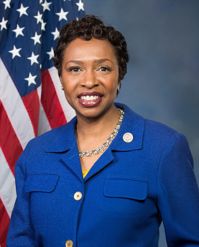
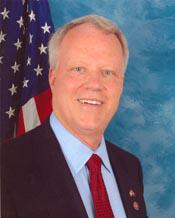
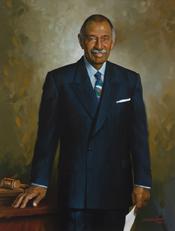
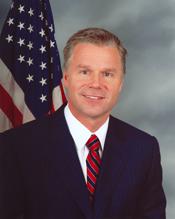
Ms. Lee of California (for herself, Mr. Towns, Mr. Honda, Mr. Rangel, Mr. Engel, Mr. Lewis of Georgia, Ms. Bordallo, Mrs. Christensen, Ms. Eddie Bernice Johnson of Texas, Mr. Payne, Mr. Fattah, Mr. Johnson of Georgia, Ms. Corrine Brown of Florida, and Ms. Jackson-Lee of Texas) introduced the following bill; which was referred to the Committee on Foreign Affairs
A BILL
To authorize the establishment of educational exchange and development programs for member countries of the Caribbean Community (CARICOM).
Short title and table of contents
Short title
This Act may be cited
as the Shirley A. Chisholm United
States-Caribbean Educational Exchange Act of 2009
.
Table of contents
The table of contents for this Act is as follows:
Sec. 1. Short title and table of contents.
Sec. 2. Definitions.
Sec. 3. Statement of purpose.
Sec. 4. Shirley A. Chisholm United States-Caribbean Educational Exchange Program.
Sec. 5. Program to provide educational development assistance for CARICOM countries.
Sec. 6. Administrative provisions.
Sec. 7. Reporting requirements.
Sec. 8. Authorization of appropriations.
Definitions
In this Act:
Administrator
Except as otherwise provided, the term Administrator means the Administrator of the United States Agency for International Development.
Appropriate congressional committees
The term appropriate congressional committees means—
the Committee on Foreign Affairs and the Committee on Appropriations of the House of Representatives; and
the Committee on Foreign Relations and the Committee on Appropriations of the Senate.
CARICOM country
The term CARICOM country—
means a member country of the Caribbean Community (CARICOM); but
does not include—
a country having observer status in CARICOM; or
a country the government of which the Secretary of State has determined, for purposes of section 6(j) of the Export Administration Act of 1979 (as continued in effect pursuant to the International Emergency Economic Powers Act), section 40 of the Arms Export Control Act, section 620A of the Foreign Assistance Act of 1961, or any other provision of law, is a government that has repeatedly provided support for acts of international terrorism.
Secretary
Except as otherwise provided, the term Secretary means the Secretary of State.
United States cooperating agency
The term United States cooperating agency means—
an institution of higher education (as such term is defined in section 101(a) of the Higher Education Act of 1965 (20 U.S.C. 1001(a))), including, to the maximum extent practicable, an historically Black college or university that is a part B institution (as such term is defined in section 322(2) of such Act (20 U.S.C. 1061(2))) or an Hispanic-serving institution (as such term is defined in section 502(5) of such Act (20 U.S.C. 1101a(5)));
a higher education association;
a nongovernmental organization incorporated in the United States; or
a consortium consisting of two or more such institutions, associations, or nongovernmental organizations.
Statement of purpose
The purpose of this Act is to establish—
an educational exchange program between the
United States and CARICOM countries, to be known as the Shirley A.
Chisholm United States-Caribbean Educational Exchange Program
, pursuant
to section 4 to assist in educating promising students and scholars from
communities demonstrating the greatest need within CARICOM countries who will
invest the knowledge and experiences they gain in the United States back into
the community of CARICOM countries; and
a program to provide educational development assistance for communities demonstrating the greatest need within CARICOM countries pursuant to section 5.
Shirley A. Chisholm United States-Caribbean Educational Exchange Program
Program authorized
The Secretary of State is authorized to establish an
educational exchange program between the United States and CARICOM countries,
to be known as the Shirley A. Chisholm United States-Caribbean
Educational Exchange Program,
under which—
secondary school students from CARICOM countries will—
attend a public or private secondary school in the United States; and
participate in activities designed to promote a greater understanding of the values and culture of the United States; and
undergraduate students, graduate students, post-graduate students, and scholars from CARICOM countries will—
attend a public or private college or university, including a community college, in the United States; and
participate in activities designed to promote a greater understanding of the values and culture of the United States.
Elements of program
The program authorized under subsection (a) shall meet the following requirements:
The program will offer scholarships to students and scholars based on merit and need. It is the sense of Congress that scholarships should be offered to students and scholars who evidence merit, achievement, and strong potential for the studies such students and scholars wish to undertake under the program and 60 percent of scholarships offered under the program should be based on financial need.
The program will seek to achieve gender equality in granting scholarships under the program.
Fields of study under the program will support the labor market and development needs of CARICOM countries, assuring a pool of technical experts to address such needs.
The program will limit participation to—
one year of study for secondary school students;
two years of study for undergraduate students; and
12 months of study for graduate students, post-graduate students, and scholars.
For a period of time equal to the period of time of participation in the program, but not to exceed 2 years, the program will require participants who are students and scholars described in subsection (a)(2) to—
agree to return to live in a CARICOM country and maintain residence in such country, within 6 months of completion of academic studies; or
agree to obtain employment that directly benefits the growth, progress, and development of one or more CARICOM countries and the people of such countries.
The Secretary may waive, shorten the duration, or otherwise alter the requirements of paragraph (4) in limited circumstances of hardship, humanitarian needs, for specific educational purposes, or in furtherance of the national interests of the United States.
Role of United States cooperating agencies
The Secretary shall consult with United States cooperating agencies in developing the program authorized under subsection (a). The Secretary is authorized to provide grants to United States cooperating agencies in carrying out the program authorized under subsection (a).
Monitoring and evaluation of program
In general
The Secretary shall monitor and evaluate the effectiveness and efficiency of the program authorized under subsection (a). In so doing, the Secretary shall, among other things, evaluate the program’s positive or negative effects on brain drain from the participating CARICOM countries and suggest ways in which the program may be improved to promote the basic goal of alleviating brain drain from the participating CARICOM countries.
Requirements
In carrying out paragraph (1), the Secretary shall review on a regular basis—
financial information relating to the program;
budget plans for the program;
adjustments to plans established for the program;
graduation rates of participants in the program;
the percentage of participants who are students described in subsection (a)(1) who pursue higher education;
the percentage of participants who return to their home country or another CARICOM country;
the types of careers pursued by participants in the program and the extent to which such careers are linked to the political, economic, and social development needs of CARICOM countries; and
the impact of gender, country of origin, financial need of students, and other relevant factors on the data collected under subparagraphs (D) through (G).
Program to provide educational development assistance for CARICOM countries
Program authorized
The Secretary of State, acting through the Administrator of the United States Agency for International Development, is authorized to establish a program to provide educational development assistance for CARICOM countries.
Purpose of program
The purpose of the program authorized under subsection (a) is to improve primary and secondary education in CARICOM countries by enhancing teacher training, strengthening curriculum and instructional materials, and assisting improvements in school management and public administration of education.
Elements of program
The program authorized under subsection (a) shall extend and expand upon existing primary and secondary school programs in CARICOM countries to provide—
teacher-training methods and training in subject area studies;
classroom and school management;
development and modernization of curriculum and instructional materials;
increased community involvement in school activities; and
local, regional, and national government policy planning on the elements described in paragraphs (1) through (4).
Role of United States cooperating agencies
The Secretary shall consult with the Secretary of Education, officials of United States cooperating agencies, and officials of CARICOM countries in developing the program authorized under subsection (a). The Secretary is authorized to make grants to United States cooperating agencies in carrying out the program authorized under subsection (a).
Monitoring and evaluation of program
The Secretary shall monitor and evaluate the effectiveness and efficiency of the program authorized under subsection (a).
Administrative provisions
Funding from private sources and partnerships with other appropriate entities
To the maximum extent practicable, the Secretary of State and the Administrator of the United States Agency for International Development should implement the programs authorized under sections 4 and 5 through utilization of funding from private sources to maximize the impact of United States funds under this Act, and through partnerships with appropriate United States organizations, institutions, and corporations.
Avoidance of duplication
The Secretary and the Administrator shall consult with the Secretary of Education to ensure that—
activities under the programs authorized under sections 4 and 5 are not duplicative of other United States educational programs for CARICOM countries; and
United States cooperating agencies and partner institutions in CARICOM countries are accredited by national or regional accrediting bodies.
Reporting under SEVIS
To the extent necessary, the Secretary shall provide support to United States cooperating agencies that are participating in the program authorized under section 4 in order to fulfill the requirements for student data reporting under the Student and Exchange Visitor Information System (SEVIS).
Reporting requirements
Report required
Not later than 120 days after the date of the enactment of this Act, the Secretary of State shall submit to the appropriate congressional committees a report on plans to implement the programs authorized under sections 4 and 5.
Matters To be included
The report required by subsection (a) shall include—
with respect to implementation of the program authorized under section 4—
a plan for selecting participants in the program, including an estimate of the number of secondary school students, undergraduate students, graduate students, post-graduate students, and scholars from each country, by educational level, who will be selected as participants in the program for each fiscal year;
a timeline for selecting United States cooperating agencies that will assist in implementing the program;
a financial plan that—
identifies budget plans for each educational level under the program; and
identifies plans or systems to ensure that the costs to public school, college, and university education under the program and the costs to private school, college, and university education under the program are reasonably allocated; and
a plan to provide outreach to and linkages with schools, colleges and universities, and nongovernmental organizations in both the United States and CARICOM countries for implementation of the program; and
a plan outlining implementation of the program authorized under section 5, identifying the initial countries in which the program will be implemented and a timeline for implementation.
Updates of report
In general
The Secretary shall submit to the appropriate congressional committees updates of the report required by subsection (a) for each fiscal year for which amounts are appropriated pursuant to the authorization of appropriations under section 8.
Matters to be included
Such updates shall include the following:
Information on United States cooperating agencies that are selected to assist in implementing the programs authorized under sections 4 and 5.
An analysis of the positive and negative impacts the program authorized under section 4 will have or is having on brain drain from the participating CARICOM countries.
A description of efforts made by the Secretary and the Administrator to implement the program authorized under section 5.
A description of the programs established in each CARICOM country receiving assistance under the program authorized under section 5. Such description shall include a detailed explanation of the extent to which the program and the assistance provided are contributing to the purpose of the program described in section 5(b) in the CARICOM country.
An evaluation of additional educational development goals in CARICOM countries, identifying those goals that could be maximized or achieved with United States assistance through the program authorized under section 5. In addition to standard or necessary areas of education review, the evaluation should give attention to factors affecting academic achievement, attrition, and graduation rates in CARICOM countries. The evaluation should suggest ways in which United States assistance can maximize success factors and address factors contributing to poor achievement.
Authorization of appropriations
To carry out this Act, there are authorized to be appropriated such sums as may be necessary for each of the fiscal years 2009 through 2012. Amounts appropriated pursuant to the authorization of appropriations under this section are in addition to amounts otherwise available for such purposes.