Mr. Speaker, I move to suspend the rules and pass the bill (H.R. 5874) making supplemental appropriations for the United States Patent and Trademark Office for the fiscal year ending September 30,…
Mr. Speaker, I move to suspend the rules and pass the bill (H.R. 5874) making supplemental appropriations for the United States Patent and Trademark Office for the fiscal year ending September 30, 2010, and for other purposes.
Mr. Speaker, I ask unanimous consent that all Members have 5 legislative days to revise and extend their remarks on H.R. 5874.
Mr. Speaker, I yield myself such time as I may consume.
Mr. Speaker, the United States Patent and Trademark Office, on an annual basis practically, has budgetary problems. It arises from the system under which they are funded and estimate their own finances, and the Appropriations Committee responds to that. It's imperfect because their predictions are obviously imperfect. They are talking about revenues that they may or may not receive into the future.
This legislation addresses their concerns for this year. The activities of the U.S. Patent and Trademark Office are fully financed by user fees. And every year Congress appropriates an amount for the agency's activities that is equal to what the agency estimates it will collect in fees.
Based on higher-than-estimated fee collections to date in fiscal year 2010, it appears that the agency could potentially collect more in fees this year than was earlier estimated, and these additional fees would be unavailable to the agency this year under its current 2010 appropriation level.
What this bill, Mr. Speaker, will do, is allow USPTO to spend up to an additional $129 million in patent and trademark fees if the agency actually collects fees over and above the current appropriation level of $1.887 billion. This additional appropriation was requested by President Obama's administration and is based on a revised CBO estimate of the agency's fee collections for fiscal year 2010. This bill reflects the administration's and Congress's commitment to make fee revenue available to USPTO for patent and trademark activities.
The timely and efficient processing of patent and trademark applications is critical to the competitiveness of American businesses and the contributions of individual inventors to economic growth. The USPTO currently takes an average of over 34 months to complete the examination of patent application and has maintained a backlog of unexamined applications for several years. There are approximately 1.2 million patent applications now in the system, with over 750,000 awaiting an initial review by a USPTO patent examiner.
We should be clear, however, about what this bill will do and what this bill will not do. If the additional fees are actually collected in the remaining weeks of the fiscal year, the additional $129 million in budget authority provided by this bill will begin to help the agency address the ongoing patent pendency and backlogs.
Mr. Speaker, what this bill will not do is fix the underlying structural flaws in USPTO's revenue mechanisms that are the major cause for the patent pendency and backlog problems that have plagued USPTO for years. The only path to a meaningful and permanent reduction in patent pendency and the backlog is for stakeholders to support, and Congress to approve, new fee authorities for USPTO that will lead to patent fees that reflect the actual cost to the agency and to our government. But that is beyond the scope of this appropriations bill.
Before concluding, Mr. Speaker, I want to reiterate that the Appropriations Committee consistently appropriates budget authority for USPTO based on the agency's own estimates of fee collections, and the current year appropriation was no exception to this rule. The administration's request for
this supplemental appropriation is based on higher-than-expected fee collections.
In cases where fees collected by USPTO but not appropriated in an annual appropriations bill are credited to a specific account within the general Treasury, those additional resources can be made available for appropriation to USPTO in subsequent appropriations acts, such as the one we are considering today.
While the bill before us today will not address the underlying problems at USPTO, it will provide additional relief to the agency as it seeks to address the patent backlog issue, and I urge my colleagues to support it.
Mr. Speaker, I reserve the balance of my time.
Mr. Speaker, I note the distinguished ranking member's comments about ``the suspension Congress'' and lack of notice with regard to pieces of legislation.
I would just point out that, first of all, he is very familiar with this bill and very familiar with the USPTO. He has handled this legislation very competently as chairman and as ranking member and as a member of the committee. So he is very familiar, I know, with the subject matter of which we speak and the difficulty that USPTO faces because of the structural nature of the way it achieves funding every year.
He also knows that their estimating at the beginning of the year is an imperfect process because it's a prediction and it's based upon that prediction coming true in the future and it rarely does. They are either underestimating, or they overestimate. In this case they have financial needs that can be better met with this additional $129 million. And the good news for USPTO is that they underestimated last year. Consequently, if they continue to collect fees at the current rate, they will collect $129 million more than they projected.
Given that, it is only right that we try to address those needs in the context of their newly projected fee collections so that they will be able to reduce this unacceptable backlog. As the gentleman points out, in a negative way, that's not known really until it happens or if the trend line begins to become apparent; and it is becoming apparent.
We're going on recess here in a couple of days. It would be great to have notice on everything; a week in advance, or 3 days in advance or whenever in advance it would be satisfactory. This is a pretty simple proposal actually and I don't think it's difficult to understand.
I must say we on the majority side weren't noticed many minutes before the minority was about the approach to this. I know the gentleman is--or I believe from his remarks and his attitude in the past with regard to recognizing USPTO's needs, not a current but its structural needs of how you fund it, is certainly not opposing this.
I just wanted to assure him that there is no intent on our part in any way to mislead the gentleman.
I would be very chagrined if we ever did anything but treat the gentleman fair. He is an outstanding Member of the Congress.
Mr. Speaker, a lot of Members are very interested in USPTO and interested in fixing it on the authorizing side and, of course, on the appropriations side.
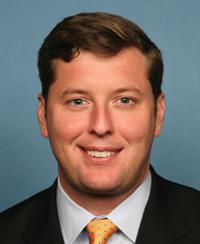
Three of those many Members who are particularly interested in USPTO have cosponsored this legislation. One of them is Patrick Murphy of Pennsylvania. Mr. Murphy is here to speak on the legislation. The other two are Chairman Conyers and Chairman Moran: Chairman Conyers in the authorizing committee, and Chairman Moran is a distinguished member of the Appropriations Committee. I just want to note that they've been at the forefront of fighting for PTO and adequate funding so that they can reduce the backlog of which we speak today.
Mr. Murphy is a young Member, a distinguished member of the Commerce, Justice, Science Subcommittee which funds USPTO. He's taken a particular interest in this issue, becoming very knowledgeable about it, and has been in the forefront of moving this legislation that would help them.
It is my pleasure to yield 2 minutes to the gentleman from Pennsylvania (Mr. Murphy).
Mr. Speaker, I have no further requests for time, and I yield back the balance of my time.