Madam Speaker, by direction of the Committee on Rules, I call up House Resolution 1192 and ask for its immediate consideration. Madam Speaker, for the purpose of debate only, I yield the customary 30…
Madam Speaker, by direction of the Committee on Rules, I call up House Resolution 1192 and ask for its immediate consideration.
Madam Speaker, for the purpose of debate only, I yield the customary 30 minutes to the gentleman from Florida (Mr. Lincoln Diaz- Balart ). All time yielded during consideration of the rule is for debate only.
General Leave
I ask unanimous consent that all Members be given 5 legislative days in which to revise and extend their remarks on House Resolution 1192.
I yield myself such time as I may consume.
House Resolution 1192 provides a structured rule for consideration of H.R. 3644, the Ocean, Coastal and Watershed Education Act, with 1 hour of debate in the House equally divided and controlled by the chair and ranking minority member of the Committee on Natural Resources.
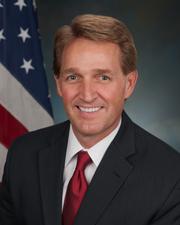
The rule makes in order the amendment in the nature of a substitute that is printed in part A of the report of the Committee on Rules, if offered by Representative Capps of California or her designee, which shall be separately debatable for 20 minutes. The rule also makes in order the amendment to the amendment in the nature of a substitute printed in part B of the report of the Committee on Rules, if offered by Representative Flake or his designee, which shall be separately debatable for 10 minutes.
The rule also provides for consideration of another bill, H.R. 1612, the Public Lands Service Corps Act of 2009, under a structured rule. The rule provides 1 hour of general debate equally divided and controlled by the chair and ranking minority member of the Committee on Natural Resources.
The rule makes in order the further amendments printed in part C of the report of the Committee on Rules, each of which may be offered only by a Member designated in the report and shall be separately debatable for 10 minutes.
Finally, the rule provides one motion to recommit for both H.R. 3644 and H.R. 1612.
I think this is a very fair rule. The rule provides for consideration of two bills under a structured rule. For H.R. 3644, two of the three amendments that were submitted to the House Rules Committee are made in order, including one Republican amendment and one Democratic amendment. For H.R. 1612, two of the six amendments submitted were made in order, both of which are Republican amendments. So for both of the bills combined, three out of the four amendments that are made in order under this rule are sponsored by Republicans.
Madam Speaker, I rise today in support of the rule and the underlying bills, the Ocean, Coastal and Watershed Education Act and the Public Land Service Corps Act. The programs within both of these bills benefit districts all across our Nation, from Florida to Alaska, Texas to Minnesota and Colorado. So it is no surprise that my colleagues on both sides of the aisle across the country support these programs.
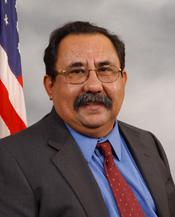
I would like to thank Chairman Rahall for his leadership on this important issue and my colleagues, Representatives Capps and Grijalva, for their hard work on these bills.
Madam Speaker, we have before us two excellent pieces of legislation, one which would expand and reinvigorate an existing program, the Public Land Corps, by streamlining its management, modernizing its scope and providing new tools to help the program accomplish its mission, and another bill which would expand two National Oceanic and Atmospheric Administration grant programs that are aimed at enhancing environmental education related to water resources upon which economic development and human health depend.
H.R. 1612 will help repair and restore our Nation's public lands while employing and training thousands of young Americans and promoting a culture of public service.
This legislation will help provide real employment and training to young people who need it, particularly in a recession, while improving the condition of our priceless natural and cultural resources. We live in a time when environmental science education is just as critical for a healthy environment as land conservation or wildlife protection. Our citizens are empowered by being informed and educated enough to make important decisions in their own daily lives about environmental issues based on sometimes complicated scientific evidence. We need to supply our children and the next generation across our country with enough scientific knowledge to tackle the environmental challenges that they will face in the coming years and to make educated choices as consumers.
This bill also takes a decisive step forward in finishing desperately needed work on our national park lands, forests, wildlife refuges and historic sites. As I have said previously, protecting and maintaining our public lands is one of the most important duties that we have as citizens. I was lucky enough to grow up in Boulder, Colorado, hiking in Mount Sanitas, as I did just last weekend when I was back, the Flat Irons and Flagstaff Mountain. If we don't defend America's truly great public lands, we run the risk of being the last generation to enjoy them.
America and Colorado are really defined by our natural character. America is beautiful and needs our help to remain so. We must not let our ``spacious skies,'' our ``amber waves of grain'' and our ``purple mountains majesty'' become nothing more than forgotten lines in a song.
The bill recognizes the importance, as well, of our coastal and marine systems and our national marine sanctuaries. Those previously have not been eligible for Public Land Corps projects but are just as worthy and just as important a part of our national heritage for those who reside on the coast.
While Members of this body as well as the American public review the historic health care reform bill we will be taking up in the next few days, we have the opportunity to consider this vital program that has bipartisan support providing our youth the education and experience they will need to find meaningful employment while gaining civic pride, scientific education and personal responsibility while maintaining and improving our public lands and National Park System.
This program will invest in our young people, reduce youth unemployment, and prepare young people for a lifetime of work experiences. At the same time youth will be repairing and restoring our National Park System and preserving it for the next generation, we also are able to whittle away at the massive backlog of work that has doubled over the last decade to levels around the $10 billion mark of backlog work that needs to be done. The National Park System has been called America's best idea, and it is past time we give our best attention and respect to the National Park System that it deserves.
Preparing our park system for future generations and preparing young people to face the scientific and environmental challenges that are only beginning to come to fruition is an undertaking of great national importance.
H.R. 3644, the Ocean, Coastal and Watershed Education Act, formally codifies and authorizes two existing programs that have already made great strides in expanding ocean, atmospheric, and environmental literacy in the United States. These programs, the Bay-Watershed Education and Training, which we call B-WET, and the Environmental Literacy Grant, ELG, program deserve Federal recognition and funding for their good work providing educational opportunities from kindergarten all the way through 12th grade.
This legislation gives us an opportunity to consider these vital programs, programs which provide our youth the education and experience that they will need to find meaningful employment in advancing our Nation's progress in science, technology, engineering and math to help keep America globally competitive.
H.R. 3644 codifies two existing environmental education grant programs that were established through the annual appropriations process and are administered by the National Oceanic and Atmospheric Administration. Over the past 7 years, these two NOAA education programs have been essential towards advancing ocean and environmental education in the United States. Both programs are very popular in the education community, and in fact, requests for environmental literacy grants are 10 times greater than the appropriated funding levels can support.
Since 2002 and 2005, respectively, the B-WET and ELG programs have connected school children from kindergarten all the way through high school with their ocean and coastal environments. These programs help school children learn about the effects that everyday actions they take have on the environment.
Let's make no mistake about it. Our society is faced with a fundamental lack of scientific understanding, where special interests on all sides frequently undermine the vast scientific consensus on key issues simply by flashy public relations campaigns. We need to make sure that our country is the world leader in innovation and science in order to ensure that our country can overcome new challenges and protect its public health and natural wonders.
In addition to my time growing up in Colorado, I also spent a lot of time in San Diego growing up where the community is as physically, emotionally and economically tied to the ocean and coast as Colorado is to its mountains. Regardless of where someone lives in our great and vast country, whether it's the plains, the mountains, the forests, the coasts or the tundra, our Nation's public spaces, wildlife and environmental health are truly our greatest national treasures, an important part of our national character and who we are. And these pieces of legislation go a long way in our effort to protect them.
I reserve the balance of my time.
There will be, and I certainly look forward to joining my colleague from Florida, a debate this weekend on the health care bill.
I am glad to see, on issues of our national parks and oceans, we are able to come together. And there are certainly other issues where Members of the body don't agree, but there will be a debate and there will be a rule proposed for that debate. I personally believe there should be several hours of debate, and I am hopeful that there will be 2 or 3 or more hours, which would then give Members on both sides who desire to present their positions the ability to do that.
I do take some issue with the characterization that there has not been a vetting of these issues involved. There have been, over the past year, dozens of hearings, even, very recently, a bipartisan summit that the President convened on health care. There have been many ideas and amendments from both sides of the aisle that have been incorporated into the bill that our committee will be doing a hearing on tomorrow and referring, for consideration of the House as a whole, a rule to consider that important piece of legislation.
Both of these bills that we have before us today under this rule are supported by national, regional, State, and local advocates. They are supported by leaders in education, environment, conservationists, service communities, and business communities.
Through passage of these bills, we are able to bring together the desire of this Congress of a meaningful impact on creating jobs for young people, training for young people to occupy the jobs of the future, and doing some lasting good in preserving the historic character of our open spaces.
The B-WET and ELG programs are exactly the kind of innovative learning that we need to cultivate an environmentally minded workforce that can compete in the increasingly green economy of the future. By teaching our children not only to enjoy but also appreciate the value and effect of our endangered national treasures, we can truly create a workforce, a community, and a society that values our environment and our national heritage and in which the environment and economy are increasingly intertwined.
I reserve the balance of my time.
I have no additional speakers.
Madam Speaker, I have here a letter which I will quote, in part, and then submit from a number of environmental groups under the auspices of the Campaign for Environmental Literacy, a group that I have also had the opportunity to work with on education legislation. What I would like to read is a paragraph that describes ELG and B-WET's contributions to our country.
``The ELG program enables NOAA, as the Nation's leading expert on weather, climate, and ocean information, to partner with the Nation's top nonprofit organizations and educators to put this information to good use.'' ELG funds will allow ``the American Association for the Advancement of Science to update climate education standards that are used to guide science education in classrooms and across the country to reflect state-of-the-art science.''
``The B-WET grants programs support environmental education which promotes locally relevant, experiential learning in the K-12 environment.''
I submit the entirety of the letter for inclusion in the Record.
Campaign for Environmental
Literacy,
Mar. 18, 2010.
Hon. Lois Capps,
House of Representatives,
Washington, DC.
Dear Representative Capps: We write to you to indicate our
strong support for passage of the Ocean, Coastal, and
Watershed Education Act (H.R. 3644). This bill authorizes and
strengthens the National Oceanic and Atmospheric
Administration's existing Bay-Watershed Education and
Training (B-WET) and Environmental Literacy Grants (ELG)
programs.
Over the past seven years, these two NOAA education
programs have been essential to advancing ocean, atmospheric,
and environmental literacy in the United States, a major goal
of the U.S. Commission on Ocean Policy Report and the U.S.
Ocean Action Plan. They have been well received by the ocean
and environmental literacy communities, and in fact, ELG
requests for proposals have been oversubscribed by a factor
of 10.
The ELG program enables NOAA, as the nation's leading
expert on weather, climate and ocean information, to partner
with the nation's top non-profit organizations and educators
to put this information to good use. For example, these
grants have enabled more than 20 million people to gain
access to compelling up-to-date weather, climate and ocean
information through the Science on a Sphere and Ocean Today
Kiosk from Alaska to Hawaii to California to Massachusetts.
ELG funds have also allowed the American Association for the
Advancement of Science (AAAS) to update climate education
standards that are used to guide science education in
classrooms around the country to reflect state-of-the-art
climate science. In addition, ELG grants to the National
Science Teachers Association have given thousands of teachers
access to the most accurate scientific information on
climate, corals and hurricanes.
The B-WET grants programs support environmental education
which promotes locally relevant, experiential learning in the
K-12 environment. A fundamental goal of the programs are to
demonstrate how the quality of the watershed affects the
lives of the people who live in it. B-WET programs have now
expanded to include the Chesapeake Bay, California, Hawaii,
Pacific Northwest, Gulf of Mexico and New England, and this
bill will add five new regions as well. B-WET awards to state
and local education organizations have provided opportunities
to over 125,000 students and 6,200 teachers in 2008 alone.
It is important to now establish these programs in law,
consistent with the education mandates provided to NOAA in
both the America COMPETES Act (PL 110-69, Sec. 4002) and the
Omnibus Public Land Management Act (PL 111-11, Sec. 12304).
They are vital to NOAA's ability to execute the educational
function of its mission. They have demonstrated their
effectiveness, as well as their value to stakeholder
communities. And as our nation begins to grapple with the
complexities and challenges of a changing climate (and ocean
and landscape), they are timely and highly relevant.
Thank you for your consideration of this request. For
questions about this letter, please contact James Elder,
Campaign for Environmental Literacy (978-526-7768,
elder@FundEE.org).
Sincerely,
National Organizations
American Fisheries Society (Gus Rassam, Executive
Director);
American Fly Fishing Trade Association (Gary Berlin,
President);
American Forest Foundation (Tom Martin, President);
American Hiking Society (Gregory A. Miller, President);
American Sportfishing Association (Mike Nussman, President
& CEO);
Association for the Advancement of Sustainability in Higher
Education (Paul Rowland, Executive Director);
Association of Zoos and Aquariums (Steve Olson, Vice
President);
Biodiversity Project (Jennifer Browning, Executive
Director);
Camp Fire USA (Pamela Wilcox, National Interim CEO);
Challenger Center for Space Science Education (Daniel
Barstow, President);
Climate Literacy Network (Tamara Shapiro Ledley,
Coordinator);
Coastal States Organization (Kristen M. Fletcher, Executive
Director);
Consortium for Ocean Leadership (Bob Gagosian, President
and CEO);
Council of Environmental Deans and Directors (Stephanie
Pfirman, President);
Council on Environmental Education (Josetta Hawthorne,
Executive Director);
Earth Day Network (Kathleen Rogers, President);
EarthEcho International (Philippe Cousteau, CEO);
Earth Force (Lisa Bardwell, President);
Ecological Society of America (Katherine S. McCarter,
Executive Director);
Federation of Fly Fishers (Leah Elwell, Conservation
Coordinator);
National Association for Interpretation (Tim Merriman,
Executive Director);
National Audubon Society (Judy Braus, Vice President for
Education);
National Council for Science and the Environment (Peter
Saundry, Executive Director);
National Estuarine Research Reserve Association (Matt
Menashes, Executive Director);
National Marine Educators Association (J. Adam Frederick,
President);
National Marine Sanctuary Foundation (Jason Patlis,
President and CEO);
National Project for Excellence in Environmental Education
(Bora Simmons, Director);
National Science Teachers Association (Jodi Peterson,
Assistant Executive Director);
National Service-Learning Partnership (Nelda Brown,
Executive Director);
National Wildlife Federation (Kevin Coyle, Vice President
for Education);
North American Association for Environmental Education
(Brian Day, Executive Director);
Ocean Alliance (Roger Payne, President);
Ocean Conservancy (Vikki Spruill, President and CEO);
Ocean Conservation Research (Michael Stocker, Director);
Ocean River Institute (Rob Moir, President);
Project WET Foundation (Dennis Nelson, President and CEO);
SandyHook SeaLife Foundation (Mary M. Hamilton, Executive
Director);
Second Nature (Anthony Cortese, President);
ServeNext (Zach Maurin, Co-Director and Co-Founder);
Sierra Club (Jacqueline Ostfeld, National Youth
Representative);
Student Conservation Association (Dale Penny, President &
I'll yield for a question.
I will yield some of my time to Mr. Lungren in just a moment.
Again, I would like to emphasize that the gentleman from California's criticisms are not about this rule or any rule that we have before us. Tomorrow the Rules Committee will be meeting to decide under what rule we will consider health care.
The gentleman has made some remarks with regard to a common practice that is within House resolutions referred by the Rules Committee that involves self-executing language. In 1996, the Republican-controlled House adopted a resolution to consider as adopted the conference report on line-item veto. I would also like read a quote from Thomas Mann who is quoted by USA Today. He is a scholar at the Brookings Institute, who said that the ``deem and pass'' move is not very unusual, has been used 36 times in 2005 and 2006 by the Republican Congress, 49 times in 2007 and 2008 by the Democratic Congress.
I think what's important for people to know is that the Rules Committee doesn't have any special ability to do these rules unilaterally. They only exist by the good graces of a majority of the House. If a majority of the House wants to pass the Senate health care bill as part of a rule, they can. There will be a debate and a discussion over that Senate health care bill, and the Senate bill will be presented to the President and signed, if it passes, before the reconciliation bill reaches the Senate floor.
The House, under the Constitution, is given a great ability to do what it wants to do and to conduct its own affairs as it wants to conduct its affairs. Just as today we have a House resolution, 1192, and that House resolution provides for the consideration of two bills, those bills will only be considered by the House if this rule, this House resolution, passes the full House with a majority of the votes. It will be the same with any rule that is referred out of the Rules Committee tomorrow with regard to the consideration of health care. That rule will only have any force, any effect, if a majority of the House passed that rule and whatever is in that rule, just as they would consider any bill under the House of Representatives.
This rule is a very fair rule. These two bills, I believe, have bipartisan support, a strong consensus to help create jobs, prepare kids for our future, educate kids about the environment, and preserve our great natural resources.
I urge a ``yes'' vote on the previous question and on the rule.
I yield back the balance of my time and move the previous question on the resolution.
The previous question was ordered.
Madam Speaker, on that I demand the yeas and nays.