Madam Speaker, I ask unanimous consent that all Members may have 5 legislative days in which to revise and extend their remarks and include extraneous material on the subject of this Congressional…
Madam Speaker, I ask unanimous consent that all Members may have 5 legislative days in which to revise and extend their remarks and include extraneous material on the subject of this Congressional Black Caucus' Special Order this evening.
Madam Speaker, I am honored to rise today, along with my other colleagues, in honor of Caribbean American Heritage Month. This month marks the fourth anniversary of officially recognizing Caribbean American Heritage Month. And I want to applaud you, Madam Speaker, the Chair of the Congressional Black Caucus, for introducing the legislation and getting it passed in February of 2006. President Bush officially proclaimed it for the very first time in June of that year.
The efforts to get us to that point began long before, though, with the Institute for Caribbean Studies, which started observing June as Caribbean American Heritage Month in 1999. So I want to also take this opportunity to applaud the work and leadership of its president, Dr. Claire Nelson, of Jamaican heritage.
I also want to recognize the Carib News Foundation for its work over the years to bring Caribbean and United States leaders together to discuss issues of common interest over the past 14 years. They filled an important gap.
Recent attempts to officially bridge this gap began in 1997, when President Clinton traveled to Barbados where the Bridgetown Declaration was crafted. This important declaration affirmed our common resolve to fight crime, violence, corruption, drug and illegal drug trafficking while, as President Clinton said, ``promoting open and fair trade, protecting the environment, strengthening education, spreading telecommunications, and helping Caribbean countries diversify their economies and become more competitive as well.''
Upon his return, he submitted the Caribbean Basin Trade Enhancement Act, which Congress passed. The cooperation was further affirmed with the historic meetings held in June of 2007 between the heads of Caribbean governments and the Bush-Cheney administration and this Congress. This commitment was renewed and reinvigorated at the Summit of the Americas held in the Caribbean nations of Trinidad and Tobago in April of this year with the active participation and leadership of our President, Barack Obama, who set a new tone for our relationship with the region.
But the relationship has even predated the birth of this Nation. In 1751, our very first President, George Washington, reported to have had family connections in Barbados, traveled there with his brother for a health-related matter in November of 1751. They stayed 2 months, and he is said to have been enchanted by the island and the Caribbean.
Over the years, many Congressional Black Caucus members have worked tirelessly to raise awareness and keep us focused and invested in ongoing affairs in the Caribbean. We have done this through Chairman Rangel's efforts with the Caribbean Basin legislation and other initiatives, Congresswoman Waters, who worked so hard to save the banana industry and who was then Chair of the Congressional Black Caucus. She and I traveled to Barbados in 1997 for that historic meeting.
I also want to recognize the special work done by Congressman Donald Payne, who is the founding Chair of the Friends of the Caribbean Caucus, and Congressman Kendrick Meek, Congressman Gregory Meeks, and of course Congresswoman Yvette Clarke. But, truly, all of the Congressional Black Caucus members are champions of the causes of the Caribbean.
Last year, one of our great achievements, led by Congressman Donald Payne and you, Madam Speaker, Congresswoman Lee, in one of those great efforts, PEPFAR was extended to all of the Caribbean for the very first time. Two months ago, health ministers and CARICOM leaders met to draft the 5-year plan which would build on the PANCAP, the Pan Caribbean Partnership, to address HIV and AIDS in this region. The Shirley Chisholm United States Caribbean Educational Exchange Act of 2009, introduced, again, by Congressional Black Caucus chairwoman and Madam Speaker Lee, is now working its way through Congress. It will help to build a stronger Caribbean workforce and promote greater collaboration between the United States and the Caribbean, as well as a sharing of values and culture.
Madam Speaker, I do have a few colleagues here with me this evening, and I would like to yield some time to them so that they may bring some remarks about the special month that we're celebrating in which we are recognizing the contributions of people from the Caribbean to the United States.
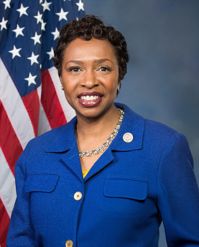
So at this time, I will yield such time as she might consume to Congresswoman Yvette Clarke.
Thank you, Congresswoman Clarke, for your remarks this evening. And thank you, most of all, though, for your leadership on behalf of the Caribbean countries. We appreciate the work that you do both on your committee, the subcommittee that you Chair on Homeland Security, and in all of the work that addresses issues in the Caribbean. Thank you for joining us this evening.
I would like now to yield to the gentlewoman from Texas, Congresswoman Sheila Jackson-Lee.
Thank you, Congresswoman Jackson-Lee, and thank you for your hard work, your service, and your support for all issues relating to the Caribbean. I know you are very proud of your Jamaican heritage because you speak of it very often. Thank you.
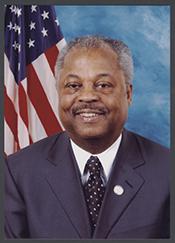
At this time I would like to yield such time as he might consume to the founding Chair of the Friends of the Caribbean Caucus, the gentleman from New Jersey, Congressman Donald Payne.
Thank you, Congressman Payne, and thank you for your leadership both as our leader on Africa and global health as well as for all of the work that you've done with us in the Caribbean Caucus. Thank you for joining us this evening.
There are so many men and women of Caribbean American heritage who have contributed greatly, and so many events that have created ties that forever bind us together. President Obama in his proclamation this year, recognizing Caribbean American Heritage Month wrote, ``Generations of immigrants have preserved the traditions of their homeland, and these traditions have defined our Nation's identity. This multi-lingual and multi-ethnic tradition has strengthened our social fabric and enriched the diversity of our Nation.'' He continues, ``We are neighbors, partners and friends. We share the same aspirations for our children, and we strive for the very same freedoms. Together we can meet the common challenges we face.''
I want to highlight several of those ties that bind. The birth of our Nation was supported by many Caribbean islands. Many do not know that the guns that were manned by the colonies during the American Revolution were gunpowdered by shipments from the Caribbean. While I believe most of it originated from St. Kitts, it was in the St. Croix Harbor in the then Danish West Indies where that gunpowder was loaded for shipment to the early colonies. In fact, it was also in that St. Croix Harbor, according to Robert Amandus Johnson in his book Saint Croix 1770 to 1776, that the first salute to the Stars and Stripes occurred in June of 1776.
And, of course, there is the direct relationship between Haiti and New Orleans, the latter of which in the beginning of the 19th century was considered a minor adjunct to the island which was then considered France's most valuable possession. It was only after Napoleon failed to reconquer the colony after the Africans had won their freedom and begun to establish their republic, only then did he decide to sell the Louisiana Territory. Many from the island of Saint Domingue who had fled that island became early inhabitants of New Orleans, contributing to the culture which is so recognized and renowned today.
There are also many U.S. Virgin Islanders today and in the past and from the then Danish West Indies who have and who continue to contribute much to our Nation. I have spoken of many of them on several occasions, people like Casper Holstein. Congressman Payne mentioned Raymond Jones. Jon Lucien in music, Emile Griffith in boxing, Valmy Thomas, Horace Clarke and Tim Duncan in sports. There are many, many others.
One, Denmark Vesey, was born in St. Thomas and settled in Charleston, South Carolina, one of my favorite cities. He settled there in 1783. Seventeen years later he bought his freedom, and inspired, I am sure, by the 1733 African rebellion of St. John and the 1791 successful African rebellion in the Isle of Saint Domingue, now Haiti, he also planned a well-known slave uprising that was to have taken place in 1822, but was thwarted.
I would be truly remiss if I didn't speak briefly about Alexander Hamilton, who has been named several times this evening, who was born in Nevis, which is now a part of the independent nation of St. Kitts and Nevis, and who spent his formative years in St. Croix before coming to New York and eventually becoming, as Ron Chernow puts it, ``Arguably the most important figure in American history who never attained the Presidency, but had a far more lasting impact than many who did.''
Alexander Hamilton was credited with having been Washington's aide- de-camp, a Revolutionary War hero, a member of the Constitutional Convention, the leading author of the Federalist Papers and head of the Federalist Party, as well as the first Secretary of the Treasury, who forged our tax and budget systems. I bet he would have let us budget for prevention, as we are trying to do in health care reform. He started the Customs Service, the Coast Guard, and the Central Bank.
We are proud that he was a Virgin Islander, a Crucian, and we are seeking to make his family home, the site where his mother was buried, a part of the National Park Service. It carries the same name as his home in New York City, Grange.
There have been many Caribbean men and women who have served in Congress and in our Nation's administration.
As a woman of Caribbean decent and a founding member of the Congressional Black Caucus, Shirley Chisholm led the way for Congresswoman Yvette Clarke and I. As a pioneering minority woman, her legacy holds the door open for many more African Americans and women.
Then there was Mervyn Dymally, Ron de Lugo, Melvin Evans, Victor Frazier, and all who have served as Resident Commissioners from Puerto Rico, as well as Members of Puerto Rican and Cuban heritage who are also Caribbean Americans and who serve today and have served in the past in this body.
Many more of our Nation's leaders trace their roots to the Caribbean, such
as our former Secretary of State Colin Powell, Attorney General Eric Holder, Assistant Secretary of the Interior-designee Wilma Lewis, and Supreme Court nominee Sonia Sotomayor. But there are many others.
We may look back as far as the period to 1900 to 1920, which marked the initiation of mass labor migration from the Caribbean to the United States and the formation of the first large Caribbean communities here in this country.
We should not forget World War I, when the recruitment of labor from the Caribbean became imperative. More than 100,000 Caribbean laborers were recruited for agricultural and tedious jobs as part of war labor. We should acknowledge the Caribbean men and women who served our country and those who continue to serve this country overseas in its conflicts today.
So I feel it has been an honor and privilege as a Caribbean American, whose roots lie in Cuba, Antigua, St. Kitts and the Danish Indies, now the Virgin Islands, to host this hour, where the Congressional Black Caucus has recognized and paid tribute to Caribbean American heritage.