Madam Speaker, by direction of the Committee on Rules, I call up House Resolution 669 and ask for its immediate consideration. Madam Speaker, I rise in opposition. I yield myself such time as I may…
Madam Speaker, by direction of the Committee on Rules, I call up House Resolution 669 and ask for its immediate consideration.
Madam Speaker, I rise in opposition.
I yield myself such time as I may consume.
Madam Speaker, this point of order is not about anything other than delaying the passage of this very important bill. And I would say to my friend from Arizona, that he, himself, has probably received more amendments from the Rules Committee than the rest of Congress put together. So he certainly has had an opportunity to offer many amendments with respect to different earmarks that he feels should be removed from the bill.
So I would submit that this point of order is really about delaying the passage of what is a critically important bill, and that is the transportation appropriation bill, a bill that talks about things like funding roads so that we have safe highways for our families to travel on, things like high-speed rail so we can bring people and goods from point A to point B as quickly as possible. That's what we're here to discuss today. That's why the passage, the consideration of this rule and the passage of this rule, is so important, so we may consider this critically important bill.
I hope my colleagues will vote ``yes'' so we can consider this legislation on its merits and not stop it by virtue of a procedural motion. Those who oppose the bill can vote against the final passage. We must consider this rule, and we must pass this legislation today.
I reserve the balance of my time.
I yield back the balance of my time, and urge a ``yes'' vote on the rule.
Madam Speaker, for purposes of debate only, I yield the customary 30 minutes to the gentleman from Florida (Mr. Lincoln Diaz- Balart). All time yielded during consideration of the rule is for the purpose of debate only.
General Leave
I ask unanimous consent that all Members be given 5 legislative days within which to revise and extend their remarks.
I yield myself such time as I may consume.
I rise today as a member of the Rules Committee and also as a member of the Transportation and Infrastructure Committee in strong support of H.R. 3288, the Fiscal Year 2010 Transportation HUD Appropriations Act. H. Res. 669 provides for consideration of H.R. 3288 under a structured rule. The rule provides 1 hour of general debate controlled by the Committee on Appropriations.
The rule makes in order a total of 23 amendments, each of which is debatable for 10 minutes. The rule also provides one motion to recommit with or without instructions.
Madam Speaker, housing and transportation are two areas that must be priorities for Congress, especially when the economy slows, because we get a double return on our investment. As we have seen with the recovery bill, investment in infrastructure not only generates economic recovery by putting people back to work, but those construction jobs strengthen our transportation system and improve our housing stock. We not only put people to work, but we also get something in the long run. We get better roads. We get safer transportation. We get better housing. That is critically important.
Some of the members of the Transportation and Infrastructure Committee would have liked to have seen a greater percentage of the funding in the Recovery Act go towards infrastructure spending and, indeed, we have seen that of all the funding included in that bill the transportation funding has resulted in saving and creating jobs faster than even we expected.
The Transportation-HUD Appropriations bill continues this investment and our commitment to utilize all of the tools available to continue this economic recovery that has already begun to take hold. Included in H.R. 3288 is $41.1 billion to improve and repair our Nation's aging highway infrastructure. The bill includes more than $10 billion for Federal Transit Administration, which will help transit agencies meet increased public demand for mass transit. This not only provides more transportation options to Americans during tough economic times, it also decreases traffic congestion, reduces our dependence on foreign oil, and reduces greenhouse gas emissions.
This bill adds another $4 billion to develop and construct a national system of high-speed rail, building on the commitment we began with the recovery bill. This is the first major investment in transportation since the 1960s. High-speed rail moves more people at a lower cost, at a faster speed and with less impact on the environment than does road transportation. We have developed the most advanced highway and aviation systems in the world over the last 60 years, but in comparison to the train system in other nations such as Germany, France and even China, they have clearly exceeded what we have done here in America.
Speaking from the experience of my own delegation, the Members that represent upstate New York, we are committed to work in a bipartisan effort to make high-speed rail a reality across upstate New York. We have done so because we realize the numerous benefits that this improvement in our transportation system will have as a result of high- speed rail, not only for upstate New York, but for the Nation as a whole.
Just as we saw over a century ago with the construction of the Erie Canal, streamlining the movement of people and goods along the corridor between the eastern seaboard and Chicago, the freight gateway to the west coast, will benefit the cities at both ends and also the cities across the country through which the line will run.
Madam Speaker, this is just a sampling of the important programs and initiatives that the Transportation-HUD Appropriations Act will fund in fiscal year 2010. I urge all my colleagues to support this rule and the underlying bill.
I reserve the balance of my time.
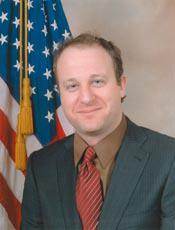
Madam Speaker, I yield 3 minutes to the gentleman from Colorado, one of the new distinguished members of the Rules Committee, Mr. Polis.
Madam Speaker, before I recognize my colleague from New York, I would just like to make a point, and that is, throughout history, we have seen vision on the part of people, and it's that vision that brought Columbus to the New World. It's that vision that built the Panama Canal. It's the vision that built the Erie Canal. It's the vision in the Eisenhower Highway System. It's the vision that brings us and moves us forward.
This bill contains that vision. It has money in it for high-speed rail. That, I would submit, is our vision for the future. That's the kind of vision that people sent us here to Congress to continue, and it's that kind of vision that this bill contains.
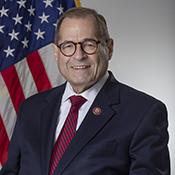
With that, Madam Speaker, I would yield 3 minutes to one of the leaders in transportation in this country, the gentleman from New York (Mr. Nadler).
Madam Speaker, I yield 2 minutes to another gentleman from New York, one of the freshmen here, Mr. Massa.
Madam Speaker, I yield 3 minutes to the gentleman from Texas (Mr. Rodriguez).
We have no additional speakers.
Madam Speaker, I will continue to reserve the balance of my time.
We are at the present time reviewing that option, and we are looking at it, but I would like, if I may, in the meantime, to make one more point about this bill.
I thank my friend for his comments.
Madam Speaker, this is somewhat of a technical change that we are contemplating, but I would say this: I think what one side or what one person views as rushing a piece of legislation the other side can very well argue is necessary and that we need to do it.
One of the things that I hear from constituents at home is, you know, Congress needs to put aside the partisan bickering and move forward with the people's business. I would submit that that is exactly what we are trying to do. There is nothing more important, obviously, for Congress to do than to ensure that the funding to run the government is available. Now, obviously, both sides of the aisle have dramatic differences on how that funding should occur.
I would submit to my friend from Florida--and I mean that, my good friend and colleague from the Rules Committee--that we have a distinct difference in terms of what a ``timetable'' is. We believe that we are here to ensure that we do the people's business and that it is done and that we do the funding in appropriations bills in a timely fashion. So we are working on that, and we are considering the amendment, and we will have an answer on that very shortly.
I will gladly yield to my friend from Texas.
Madam Speaker, I reserve the balance of my time.
With respect to the question, I do take exception to your characterization of it.
We are not ready.
Madam Speaker, first off, may I inquire as to the amount of time left on both sides?
Thank you.
Madam Speaker, I would like to speak just for a couple of more minutes again about the underlying importance of passing this rule and the underlying bill.
I think there is nothing more important than transportation and infrastructure for government to ensure exists. When you look back at the history of this great institution, the first standing committee was, in fact, the Transportation and Infrastructure Committee, although then not called by that very name, but it was critically important. The framers saw the importance of having an infrastructure, of having the ability to render our ports navigable and of having functional roads. At that time, of course, rail and airlines were not even imagined, but as we transformed our Nation, it became a critical part of our infrastructure. So it is my belief that this rule and the underlying bill are critically important.
Madam Speaker, at this time, I would like to lay out on the record the amendment that we may be offering.
The amendment to the rule is, actually, rather minor. The amendment will strike from the rule a provision that is no longer necessary. There was some concern that the final version of the GPO print might not have the same page and line numbers as the ordered reported version. That did not occur, so the language in the rule to preserve the Members' rights to fix their amendments is no longer needed.
As I indicated earlier, it is clear that this proposed amendment-- again, we have not offered it yet--is really of a technical nature to allow for a correction in the rule that was passed yesterday out of the Rules Committee.
With that, Madam Speaker, I would reserve the balance of my time.
May I reclaim my time?
Thank you, Madam Speaker, and I thank my friend for his cooperation in this.
As I indicated earlier, we are considering offering this amendment. With that, I would again just like to talk a little bit more about the underlying bill.
The bill that we are considering today, the THUD bill, is, again, important at this time. With our economy in the state that it is in, clearly, many people believe that the best thing that we can do for the economy is to spend on and to develop our infrastructure. It is that which we are supposed to do and that which we are asked to do.
One of the things in the Transportation and Infrastructure Committee on which we debate on a very regular basis is the surface transportation reauthorization bill, which will come up this year. We clearly believe that it is critically important, that it is important not only for our infrastructure but as a way of creating jobs. It is what we were sent to Congress to do, which is to ensure that our roads are safe, to ensure that our airports run and function the way they are supposed to and to ensure that our rail transportation infrastructure is what it should be.
Madam Speaker, I would say, at this time, we have decided that we will not be offering the amendment. Therefore, I would reserve the balance of my time, and I am prepared to close.
I have no additional speakers.
Madam Speaker, I'd like to thank my good friend from Miami for his cooperation in management of this rule and for his courtesy in that regard. I appreciate it very much.
Madam Speaker, the Transportation-HUD Appropriations Act funds some of the most important initiatives that pay for everything from roads, bridges and railroads to housing for veterans and low-income families. In my opening remarks, I discussed the critical investments that this bill would make in our transportation system. This bill also invests in housing programs for vulnerable populations, including retirees, people with disabilities, veterans, and even children. The funding is even more essential during these tough economic times.
This bill includes funding to address the problem of homelessness among our veterans. All too often the men and women who sacrifice the most for our freedom are hit the hardest during times of economic crisis. We owe our veterans the utmost respect and gratitude for their service, and we must honor the commitment made to them. They should not have to return home to be confronted by the possibility of poverty or homelessness. To address this, H.R. 3288 includes $75 million for veterans affairs housing vouchers to provide 10,000 of these vouchers for our homeless veterans.
It provides $8.7 billion to provide affordable housing to 1.3 million low-income families and individuals, two-thirds of whom are elderly or disabled. It includes another $1 billion to rehabilitate and build new housing for low-income seniors. Currently there are 10 eligible seniors on the waiting list for each unit of available housing. In America, it is unacceptable that our Greatest Generation is faced with this shortage.
H.R. 3288 also contains important investments to revitalize our local communities, including $4.6 billion for community development block grants, $25 million for brownfields redevelopment, and $250 million to fund the Hope VI competitive grants program to transform neighborhoods of extreme poverty into sustainable mixed-income neighborhoods through the demolition of severely distressed public housing.
Madam Speaker, housing and transportation are two areas that must be priorities, especially when the economy slows. The funding that H.R. 3288 provides for these programs will ensure that jobs continue to be created and that our Nation's economy continues to recover. I urge my colleagues to vote ``yes'' on the previous question and on the rule.
The text of the material previously referred to by Mr. Lincoln Diaz- Balart of Florida is as follows:
Amendment to H. Res. 669 Offered by Mr. Lincoln Diaz-Balart of Florida
Strike the resolved clause and all that follows and insert
the following:
Resolved, That immediately upon the adoption of this
resolution the Speaker shall, pursuant to clause 2(b) of rule
XVIII, declare the House resolved into the Committee of the
Whole House on the state of the Union for consideration of
the bill (H.R. 3288) making appropriations for the
Departments of Transportation, and Housing and Urban
Development, and related agencies for the fiscal year ending
September 30, 2010, and for other purposes. The first reading
of the bill shall be dispensed with. All points of order
against consideration of the bill are waived except those
arising under clause 9 or 10 of rule XXI. General debate
shall be confined to the bill and shall not exceed one hour
equally divided and controlled by the chairman and ranking
minority member of the Committee on Appropriations. After
general debate the bill shall be considered for amendment
under the five-minute rule. Points of order against
provisions in the bill for failure to comply with clause 2 of
rule XXI are waived. During consideration of the bill for
amendment, the Chairman of the Committee of the Whole may
accord priority in recognition on the basis of whether the
Member offering an amendment has caused it to be printed in
the portion of the Congressional Record designated for that
purpose in clause 8 of rule XVIII. Amendments so printed
shall be considered as read. When the committee rises and
reports the bill back to the House with a recommendation that
the bill do pass, the previous question shall be considered
as ordered on the bill and amendments thereto to final
passage without intervening motion except one motion to
recommit with or without instructions.
I yield back the balance of my time, and I move the previous question on the resolution.
The previous question was ordered.