Thank you, Mr. Speaker. I very much appreciate the privilege to address you here on the floor of the House in this leadership hour designated by the majority leader. There are a number of subjects I…
Thank you, Mr. Speaker. I very much appreciate the privilege to address you here on the floor of the House in this leadership hour designated by the majority leader.
There are a number of subjects I wanted to take up this afternoon, but I am first inspired by the statement made by the gentleman from Texas, Judge, Congressman, Mr. Poe, about Marine Mike Merola.
This is one of these recurring stories that we hear across the country. Somebody that is an ACLU individual, somebody that thinks somehow they get indignant because there is something somewhere that would allow them to vent some of their prepackaged hyperventilation against patriotism or the truth or life or the Constitution or the Declaration of Independence or American values or the values of Western Civilization or Judeo-Christianity, all those people out there are full of indignities.
So an American flag and a marine flag offends somebody? I say tough. I am glad you are there. Fly that flag. Fly it proud and fly it long.
I especially appreciate the statement made by Mr. Poe about the sound of that flag. My flag is on a flagpole about that same height, 20 foot. I step out my door in the morning, I check the wind and the weather and I look at that flag, and I listen to that sound. And there is times I am sitting there in the dark at night on my deck and I am hearing that flag from the light that shines on it around the corner just a little bit, and I hear that ripple of Old Glory. It gives me comfort and it gives me pride, and it reminds me of the privilege of serving here, anywhere you can serve Americans anywhere on this globe.
I think of a time also on March 18, 2003, where I went out here to Pershing Park, this side of the White House, when there was an antiwar demonstration that took place. I actually walked around through the Mall, around the Washington Monument as they prepared their demonstration. I remember former chairman of the Judiciary Committee, John Conyers, standing on a little stage there with great big speakers calling for the impeachment of President Bush because it looked like there was an impending liberation of Iraq. And I saw a man there.
Every kind of discontented, counter-cultural, anti-American group was represented in those thousands of people that came here that day. I saw the Japanese communist flag. I saw Vegetarians for Peace. I saw every counter-culturalist group you can imagine. And I saw a man there, an aging hippie. He had on a jacket. He was a photographer, you could tell, and he was taking pictures with great pride of this anti- Americanism.
He reached in his pocket of his jacket, a worn leather jacket, and pulled out of his pocket a flag, an American flag, a silk American flag, a small flag, and he used it to wipe the lens of his camera. That is an image I will never forget.
But no one stepped up to say he couldn't do that. Where were they then? Where were the critics of Mr. Merola then? When flags are used as grease rags to scrub the lens of a camera that is taking pictures of anti-Americans joined together to protest the saving of our freedom that Marine Merola has stepped up to defend.
Those actions against him are offensive to me, and I say guard the flag, defend the flag, and I will stand with you, and I know Judge Poe will too. Thanks
for bringing this up. I appreciate it, Judge.
I came here to talk about a number of things tonight. One of them is the repeal of ObamaCare. Freedom-loving Americans fought this for a long time. It began to roll out at us in the summer of--I've got to roll my years back now--in the summer of 2008, when President Obama was elected. I should actually take you back through a little bit of this history, Mr. Speaker, because there's some of these components that the American people forget about.
There was a relatively unknown State senator from Illinois named Barack Obama, and he gave a speech before a national convention of the Democratic Party. That elevated him into some level of national prominence. There were those that decided they wanted to move him forward to become President of the United States. Hillary Clinton also decided she wanted to be President of the United States. And these two found themselves--actually, after John Edwards, anyway--locking horns, the two of them, for the nomination of the Presidency of the United States under the Democrat Party. I know a little bit about this. Barack Obama's movement began in Iowa. He brought his people over from Chicago and they started a movement and they did battle with Hillary Clinton in Iowa. John Edwards was there, of course. That went on for 4 years.
But we have to remember that here, in 1993 and 1994, when Bill Clinton was elected President, remember, he said you get at twofer--you get Hillary and you get Bill. Well, I wasn't all that happy getting Bill, let alone Hillary. But he assigned Hillary the job of writing a national health care act. And this was a complete takeover of our health care in the United States. Socialized medicine in an even purer form than ObamaCare is today.
We watched as this unfolded and she set up closed-door meetings and they cooked up this bill. And I recall the flow chart of the HillaryCare bill. I had a laminated copy of it in my office, my construction office in Odebolt, Iowa. And it gives me chills to think yet about the expansion of government that emerged from the HillaryCare proposal.
But we need to remember, Mr. Speaker, the relevant component of that is yes, a government takeover of health care that had been advanced and advocated in this country for quite a few years. But America's rejection of HillaryCare was resounding. And if Bill Clinton were going to maintain his capital as a President, they had to pull that bill down. The American people were against HillaryCare. I was against it. It actually animated me into getting engaged in politics. I do not think I would be here today if it weren't for Bill Clinton and Hillary Clinton deciding they were going to step in and take our liberty.
But, in any case, Hillary Clinton's credentials, now Secretary of State--and with all due respect, and I mean that honestly--her credentials on health care were greater than those of Barack Obama. He had to build himself foreign policy credentials and he had to build himself health care credentials. And so they turned the Presidential nomination debate into a health care debate, a health insurance debate. And as they battled their ideas out, they had to find ways that they could separate themselves from each other and still remain Democrats.
And so we heard all kind of statements out of Barack Obama as he competed for credibility on the policy of health care. And in the process of doing that, they convinced the American people that they were in a health care crisis in America. They intentionally and willfully, and I'm talking about Democrats in general, conflated two terms. They ended up duping the American people. They conflated the term health care and the term health insurance, to the point now where, when we hear someone say health care, we don't know whether they're saying health insurance or whether it's actually taking care of someone's health.
I recall then the newly elected Governor of Iowa, Chet Culver, now just voted out of office, came out here to the Capitol to sit down with the congressional delegation meeting, the Iowa congressional delegation. We sat in a conference room over in the Senate. And he said, There are 40,000 kids in Iowa that don't have health care. We've got to get them health care. And I looked at him and I said, Governor, I don't think that's true. I don't think there are any kids in Iowa that don't have health care. Could you give me an example of a child in Iowa that doesn't have health care. Well, no, he couldn't do that. Neither could he actually even tell me that he really meant health insurance. I had to feed that line to him so he could understand the difference. It was so embedded in his head that health care and health insurance, the conflated terms, could be used interchangeably.
Mr. Speaker, if people are having trouble understanding this, I'd use another example of conflated terms--the difference between immigrant and illegal immigrant. I was asked earlier today what do I have to say about people that accuse me of being anti-immigrant. I said, That's offensive. There isn't anybody in this entire Congress that's anti- immigrant. And the reporter stopped. Well, what kind of a statement is that? Surely there are. I said, No, there isn't anybody in this entire United States Congress that's anti-legal immigrant. Everybody I know in here--and there's a new class I don't know that, but I suspect they'd fit the same mold--everybody I know in here is supportive of legal immigrants. We cheer them. We're proud of them. When they take the oath of naturalization, I often go and give a little speech and welcome them to being citizens of the United States of America. It is a proud time. I present them Constitution, and I sign. I want them to revere it the way I do, the way many of us do.
But they have conflated the term ``immigrant'' with ``illegal immigrant'' and then they have the audacity to accuse people of being anti-immigrant, when everybody I know is pro-immigrant--pro-legal immigrant. And everybody in here ought to be anti-illegal immigrant. But that's how they use the language to distort the argument and get people confused on where they stand on the issue.
So they did that with health care and health insurance. And when Barack Obama was establishing his credentials on health care, they began to convince the American people that we had 47 million people in this country that are uninsured. Well, that actually may be true. It may have been true. And you can start down through the list of 47 million and start to subtract from that the numbers that are here that are here illegally. That's at least 12 million, 12.1 million. I believe it's more than 20 million, but I'll take the 12 million. And I have to guess at the totals here because it's been a little while since I've run through these.
But, generally speaking, you take 47 million that are listed as uninsured by the Democrats and you subtract from that those that are here illegally, those that qualify for Medicaid but don't bother to sign up, those that make over $75,000 a year and presumably could provide their own health insurance, those that qualify under their employer but have turned down that opportunity for that health insurance. And when you get done subtracting those that do have options, including affordable options, and you narrow the 47 million down to those who do not have their own health insurance policy and do not have affordable options, that's 12 million. That's actually the 12.1 million number I reached to remember.
That's less than 4 percent of the United States population without their own health insurance policy and without an affordable option. Less than 4 percent. What percent of the health care industry did they want to take over in order to address that less than 4 percent, those 12.1 million? A hundred percent. Barack Obama proposed to take over 100 percent of our health care industry in America in order to get at those less than 4 percent that are uninsured, without an affordable option.
He told us--remember these things--We're in an economic crisis. We're in an economic crisis, and we can't fix this economic crisis--Barack Obama--unless we first fix health care. And how do we do that? Well, the argument against it by him, and Hillary Clinton as well: We spend too much money on health care. What's their solution? Spend a lot more. Throw a trillion dollars at health care. He also argued that if you like your policy, you can keep it.
If you like your doctor, can you keep him. And when he said it, he knew that that commitment could not be kept. You can't keep your health insurance policy if the policy doesn't exist any longer. You can't keep your health insurance policy if the company doesn't exist any longer.
The President said we needed to have more competition in the health insurance industry. The demagoguery's been going on here for the last couple of days about not turning over this country to the health insurance companies, again who get accused of being vipers. Well, they're in a free market system. They need to be able to compete against each other. The President wants to have--and was not successful in this component--wants to have a Federal health insurance policy, a program, to compete against the health insurance companies. He argued that there needed to be more competition in the health insurance industry.
And so, what does he do? He wants to have the Federal Government do that. Does the President even know how many health insurance companies we have or had at the passage of ObamaCare? Probably not. He's probably not watching C-SPAN right now, Mr. Speaker, but if any of his staff are out there, I can tell you what that number was: 1,300 health insurance companies in America. 1,300 companies competing against each other. Not all of them against each other, not one competing against all the other 1,299, because there's a McCarran-Ferguson Act that allows the States to protect the insurance companies within their States and set up monopolies or quasi-monopolies within the States.
I think we should repeal that.
If we repeal that, we will allow then people to buy insurance across State lines, and we would instantly put those 1,300 health insurance companies in competition with each other. That would achieve the goal to lower the costs and increase the options and provide for people to have more choices themselves, and it would help sustain the doctor- patient relationship at the same time.
Mr. Speaker, of the 1,300 health insurance companies, how many policy varieties existed a year ago? 100,000 health insurance policy varieties existed a year ago. That's not enough competition--1,300 companies and 100,000 policies? The President wanted a new Federal company to compete against them. Now, that's because he understands this pattern.
We've seen this pattern happen several times in the past. It happened most recently with the Student Loan Program. The Federal Government took it all over. They started out with the argument that they needed to have another option--a public option--for school loans, student loans, so that they could provide a little more honest competition with the free market.
What do we get out of George Miller, Nancy Pelosi, Barack Obama, and Harry Reid?
We get the complete takeover of the Student Loan Program over a little period of time. A great, giant leap came down this hallway in a reconciliation package from the Senate, actually threaded right into this ObamaCare bill.
What's another pattern?
There was a time--let's just say, oh, at about the time of the Bay of Pigs--when the Federal Government wasn't engaged in flood insurance. All of the property and casualty flood insurance in America was privately provided in the marketplace. We know what free enterprise does. If there is a demand, somebody will come up with a business idea to supply that demand. That was going on in the early part of the 1960s until the Federal Government decided that, really, they needed to get in and compete with that a little bit, so they set up the Federal Flood Insurance Program.
So what did they do? They drove out all of the private sector competition.
Today, if you're worried about your house being flooded or your factory being flooded, you have to buy flood insurance from the Federal Government. In order for them to compete with the private market, they passed legislation that, if there were a real estate loan from a Federal bank, they were compelled to buy flood insurance. So they wired in a customer base; they set the premium rates, and they drove everybody out of the flood insurance industry.
While all that's going on, what do we get out of that? We get a Federal Flood Insurance Program that's $19.2 billion in the red and no private sector competition whatsoever and no way to judge, actually, the risk because the industry hasn't developed.
You know what government does: it atrophies. Anybody who doesn't have competition atrophies. They don't develop the technology. They don't develop the new approaches and the innovative ways to market, and they don't streamline. They don't have to find savings. They just raise fees or borrow money from a general fund. That's where the $19.2 billion came from. Then, of course, that's the American people going into debt for $19.2 billion.
Why? Because the Federal Government decided they wanted to go in and provide a little competition so that they could keep the private sector flood insurance industry honest because the people who passed that are not free market personnel. They are anti-capitalists. They are not capitalists. They are not free enterprise people.
So we have some of the pattern that's there. We've got the flood insurance pattern. We've got the pattern of the student loan program. Then we have the pattern of the President wanting to step in and drive out the competition in the health insurance industry.
The American people have watched that component. They've watched the statements about: you can keep your health insurance policy. If you like your policy, you can keep it. Yet the Federal Government under ObamaCare regulates every single health insurance policy, and they will decide which policies you can keep and which policies are banned by regulations to be written later by a gentleman by the name of Berwick, who believes that we should ration health care and not spend money on the lives of people who may be at the end of their lives.
Now, Sarah Palin called that ``death panels.'' If you have to put something down in a Twitter that explains it all, I think she did that.
We've seen the manifestation of that out of the Obama administration--with his appointments, with the actions, with their taking the initiative to want to pay doctors to counsel people to accept death when there is medicine there that may save them or extend their lives. I don't think that's the business of the Federal Government to pay people to counsel others to die quicker. That's what turns out of that policy, and I'm glad that they rescinded it. I am hopeful that it isn't something that creeps back again, but if you've got a Dr. Donald Berwick there, it is going to creep back on us. That's his philosophy. He is there for a reason.
ObamaCare cannot be allowed to stay in this code. It must go. It has got to be repealed, and we are about to do that.
The first legislative steps on this took place yesterday with the rules debate upstairs--hours of debate on the rule, on how this debate would go on. We debated the rule here on the floor today, and it passed. The chairman of the Rules Committee, Mr. Dreier, did an outstanding job of ushering this all through; and he has been useful, I think, in also negotiating the types of language that allow for a legitimate debate on the floor of the House--far more legitimate than the debate that actually crammed ObamaCare down the throats of the American people.
So, Mr. Speaker, I come here to celebrate the opportunity to begin taking back a significant measure of American liberty, that is, the repeal of ObamaCare--pulling it out by the roots lock, stock and barrel. We must pull it all out, and we can't leave one visage of it in.
This ObamaCare the American people understand. They diagnosed it. They looked at it. They felt it and they ran the tests on it. They began to find out what was in it. Remember Speaker Pelosi saying we have to pass this bill in order to find out what's in it? Well, there is actually some truth in that because no matter how brilliant people are, no matter what their experience, there is not one person alive who could have shut themselves up in a room for I don't care how long they would want--a week, a month, a day, or a
year--and read through those 2,500 pages of ObamaCare and actually understand each component of it and do an analysis and be able to comprehend the implications of that monstrosity that has now become the albatross around the neck of the President and the Democrat Party in the United States of America.
No, no one could understand it. It is that complicated; but over time, we began to see the implications. Republicans predicted many of the implications that were in the bill. We pointed to a lot of the parts of it that were bad; but there wasn't time, and there weren't enough people and enough voices to raise all of the issues that are bad about something of this nature.
When you take away people's liberty, that is a big deal, Mr. Speaker--when you take away the right of people to buy a health insurance policy of their choice. No matter what money they have, no matter what their health, you have to buy a health insurance policy that is approved by Uncle Sam.
Now, I kind of like Uncle Sam. I like his image. I like his colors-- red, white and blue--but I don't like the tarnished image that he was given by ObamaCare. I don't like the idea of besmirching the memory of Madison and Washington and Franklin and Jefferson. I don't like the idea that these God-given rights that we have, that clearly our Founding Fathers defined with precision that do come from God, can be besmirched and can take away the freedom of a freedom-loving people.
But the American people don't like it either. The American people rose up, Mr. Speaker.
Those who argued that they wanted to offer a whole series of amendments on the repeal of ObamaCare said it's not an open rule; it's not an open process, that they want to come down here and be able to offer amendment after amendment under an open rule. Then they think that somehow, by doing so, they can perfect a bad piece of legislation. Well, in their piece of legislation, even they can only name four things that they are willing to defend in 2,500 pages. Of course, they'll demagogue us on every single one of those.
The four things that they defend are:
Preexisting conditions language. Republicans will address preexisting conditions, not with socialized medicine, but with a practical, constitutional, free market approach. That's fine. We need to have that debate and advance that kind of policy, and that has been part of our agenda all along, for several years now. That's the first one.
The second one is they claim they closed the doughnut hole. Well, I thought the doughnut hole was a bad idea in 2003. It was there because of the constraint in the funding that was available; but they closed the doughnut hole by increasing fees and taxing others, and low-income people are already exempt from it.
So it isn't of significance from a policy standpoint. It is philosophically and politically, and so they make their second argument, doughnut hole.
Third one is they think that something that we just couldn't do without, that should take us all down because we're willing to repeal the idea that insurance policies must all have a Federal mandate in them that your children shall stay on there until they're 26 years old. Now, I'm astonished by this. I'm astonished that Republicans would think that's a good idea. I can actually name you two Republicans that were elected to Congress at age 25. Now, I don't know what kind of pride they would have in their newfound adulthood to walk down the aisle, like they did here a couple of days ago to swear into the new 112th Congress, and up until the moment they take the oath of office, they're still on Mommy and Daddy's health insurance.
Now, that's how bad this idea is that we would raise kids up and give them the keys to the car at age 16, and give them the right to vote and choose the next leader in the free world at age 18, and give them the right to drink at age 21, and keep them on Mom and Daddy's insurance until they're 26. Why?
I wanted my kids to grow up. I announced to them when they were 18 that I'm now legally off the hook, guys. We nurtured you as long as we can. We're still doing that. We don't have to anymore. I'm so proud of what they've accomplished and what they've promised to accomplish, but I wanted my kids to grow up, and that should be our goal when we're raising them, not to keep them children forever, keep them on our insurance until age 26. To what purpose? Can't they defend themselves and find a way?
And by the way, insurance companies, if there's a market for this, isn't there going to be a policy out there that you can buy, at your own choice, that will allow you to keep insurance on until your kids are 26? If there's a market for it, keep them on there until they're eligible for Medicare. It's all right if it's driven by the free market. It's actually constitutional if the States want to impose such a ridiculous mandate, but it's not constitutional and it's not all right if the Federal Government imposes such a thing because it raises the cost of everybody's premium, and it limits our choices and it taxes people that don't have any kids, people that are on individual policies.
So there's three things in ObamaCare that they are proud of, and I'm not particularly proud of any of those three. Actually, the fourth one may come to me and I'll bring it up in a moment, Mr. Speaker, but here's another rub.
ObamaCare wipes out more than half of the health savings accounts opportunity that's there. We established health savings accounts in part D in 2003. A young couple could start in today with $5,150 in their health savings account, and let's just say they got married--fell in love, got married, age 20. I can do the math, which is why I use the age 20, Mr. Speaker. And they maxed out on their health savings account at $5,150 that first year. It's adjusted for COLA, and so we go up, that amount would go up each year as they went through their happy married bliss for the next 45 years until they qualified for Medicare.
Now, I'd like to see that expanded, but here's how this works. If you look historically back over the last 30 or 40 years, you will see that that type of an investment like an HSA would accrue at a 4 percent compounded interest rate, not over the last 2 or 3 but over the last 30 or 40. That's a reasonable number to predict. And so your couple that started with an HSA with $5,150 and deposited the max in it every year and spent $2,000 a year out for normal medical expenses would arrive at Medicare eligibility age with about $950,000 in their health savings account. Boy, what a glorious opportunity that is.
The Federal Government's interested in that $950,000 because they want to tax it. They want to tax it as ordinary income when it's taken out of the health savings account if it's not used for health along the way.
I suggest this. Why wouldn't we say to that couple, take the money that's in your health savings account, buy a Medicare replacement policy, a paid-up-for-life Medicare replacement policy--be worth about $72,000 per person at this point, so $144,000 out of this $950,000, and so you get what, $806,000 left over. That's the change.
I would say to Americans who had that kind of responsibility and prudence, Keep the change. Take yourself off the Medicare entitlement rolls when you're eligible by buying a paid-up replacement policy, annuitized policy. Keep the change tax free. Travel the world. Will it to your kids. Do what you want to do.
And if we do that, we turn health savings accounts into life management accounts, Mr. Speaker, these kind of accounts that young people would savor the day that they could start their account in their health savings account, and they would nurture it and protect it and want it built up to the point where it's 20, 30, 40, $50,000, $100,000. They would be there in this private market of insurance that we must preserve and protect--actually got to go back and restore it by repealing ObamaCare.
They would be in that marketplace saying, I want a $10,000 deductible policy. I want a major medical deductible policy. I can have a higher copayment policy. I need lower premiums. I have the prospect of good health. I exercise. I watch my diet. I watch my weight. I get regular checkups, and so I'm willing to--and, in fact, it'd be prudent to have catastrophic policies with high deductibles and potentially a higher copayment for people who have the funds in their health savings accounts so that they are protected by insurance for its proper form.
Insurance should not be for hangnails. It should not be for the little
things. Insurance should be for the things that we can't fund ourselves. That's why it's there. It's protection so that you don't go broke when something catastrophic happens.
We would have people not only managing their health; they'd be managing their health insurance premiums. They'd be advocating for lower premiums. They'd be saving more money in their health savings account, managing their health for a lifetime while their health savings account transitions into a pension plan.
This is a full lifetime management account, and why can't we do that in the United States of America? These free people that we are, why can't we do that in the United States of America?
Well, ObamaCare goes in and cuts out more than half of the amount that they can contribute into their health savings account because ObamaCare is about, yes, a Federal takeover of our health care, and a health insurance industry eventually, but it's about also expanding the dependency class in America. It's about causing people to give up on trying and taking care of themselves and just finally sighing and get in the herd with the rest of the sheep and go submit to the government- run health care plan. And when they tell you you can't have a test, then you don't go for a second opinion; you've already been trained to accept the rule of the State. So they either test you or they don't; they give you treatment or they don't.
You can look up to Canada to see the waiting list times for hip replacements, knee replacements. One of those, I believe it's the knee replacement, is 194 days that you wait. The hip replacement then is three-hundred-and-some days. It's possible it's the other way around, but we're dealing with half a year or more, almost a year in waiting time.
I remember a presentation that was given downstairs in HC-9 a year or so ago. A doctor from northern Michigan, Dr. Jansma as I recall, has written a book on this, but he went up across the border to work within the emergency room in a hospital in Canada, and he had done a lot of orthopaedic surgery. And there was an individual that tore up a leg playing ball, came in. He looked at it, diagnosed it. He needed to have surgery. He said, I can schedule you for surgery in the morning. We should move on this quickly.
Well, the surgery couldn't be scheduled. He didn't know it at the time, but he didn't meet the government regulations. They had to go through and get another bureaucrat to approve it, and they had to wait to get it approved, and then they had to wait to schedule the surgery. This young man, in the prime of health, had a job, couldn't do it with his leg torn up. It took 6 months to schedule this young man to go before the specialist to do the secondary diagnosis to approve the need for the surgery so that they could rationalize spending taxpayer dollars to fix his leg. So it's going to be free health care up there, but you don't get it unless the right doctor, the one who's appointed by the State, approves the surgery.
So from the day of the time his knee was torn up and they took him into the emergency room, they had to patch him up, put him on crutches, and he had to gimp around for 6 months with a torn-up knee to go in and have the government doctor look at his knee and approve that he needed surgery.
Well, then you would think that that surgery might happen, oh, the next day like it would in America. But it didn't happen until another 6 months. Mr. Speaker, 6 months to wait for government approval for surgery that would have happened the next day in the United States of America with this doctor, another 6 months just to approve, then another 6 months to get the schedule to work through to get the knee surgery. And how much rehab does it take to put somebody back in shape after their leg is atrophied for a year and they have drug it around on crutches?
So he's out of work for a year and a half. His productivity has been stopped. And additionally, his development professionally has been diminished substantially. This is the kind of thing that happens when government gets involved setting up formulas. It's what the people on that side of the aisle want to do. And that's why the roof caved in, and there was a cataclysmic electoral change that took place on November 2, the election when the American people said, Enough, enough to the ruling troika, the Obama, Pelosi, and Reid ruling troika. Enough to the liberty-stealing legislation that was coming out of this Congress one after another after another, with cap-and-trade and government takeover of businesses, and the government takeover of the health care industry, including their massive regulation of the health insurance industry.
The American people rejected ObamaCare. The American people came to this city by the tens of thousands to protest against ObamaCare. The American people, for the first time, I believe, in the history of this country, came to this Capitol in such massive numbers that they not only crowded out here on the west lawn by the tens of thousands, there were so many people, they surrounded the Capitol. They formed a human chain to surround the Capitol and say, Keep your hands off of our health care. And it wasn't just a stretched human chain where people were barely hanging onto each other by their fingertips. They were six- and eight-deep all the way around the Capitol building saying, Keep your hands off our health care. They were shoulder-to-shoulder, and they were six and eight deep, a full doughnut.
Talk about the doughnut hole. The Capitol of the United States of America was in the doughnut hole of the freedom-loving, constitutional, and conservative people who came here to reject ObamaCare, to petition the government peacefully for redress of grievances. That's what happened. And still, their hearts were hardened. Still, the regal Speaker Pelosi marched through the throngs with her magnum gavel in her ``let them eat cake'' moment, and still they don't get the message.
We swore in 87 new freshmen Republicans here, nine freshman Democrats. The majority changes, every gavel changes hands in the entire Capitol. It's amazing. It's amazing that it's so hard for them to hear the message from the American people. Do they still have the level of arrogance? Is it still an intellectual elitism of liberalism, the leftists that think that they have apparently some kind of gift of intelligence that supersedes the common sense and the wisdom of the American people? I reject that. The American people rejected that. And we have 87 new faces over here that I believe are God's gift to America, Mr. Speaker.
And I so look forward to the impact. We have already seen the impact. We have seen the impact in the rules package vote. We have seen the impact in the rules vote here today. And we'll see the impact on the repeal of ObamaCare on Wednesday after this rule that provides for--I guess I didn't keep it with me--but this rule that provides for I believe 7 hours of debate, 7 hours. Nancy Pelosi would give us an hour split, 30 minutes on each side, no amendments. Seven hours of debate, a debate on the rule, full debate up in the Rules Committee. And we are going to start this process of repealing ObamaCare. It began with the rules votes here yesterday in the Rules Committee and here on the floor today. We have begun the long, hard slog of the repeal of ObamaCare, Mr. Speaker.
It is, I believe, a new precedent to see the American people rise up this instantaneously to reject a piece of legislation that was passed. I recall when it was passed here November 7 out of the House, it went back to be worked through the--let me say worked through the procedures. I withdrew that ``shenanigan'' word and replaced it with the ``procedures'' in the United States Senate.
But in an unprecedented fashion, they put that legislation together in the Senate. And on Christmas Eve morning, they circumvented the filibuster, and they pushed through on a reconciliation package, they called it, a piece of legislation that had to come through to marry up with the House legislation in order to, some say in the press, ``buy the votes'' to get barely enough to pass ObamaCare here in the House. Well, that legislation, their version of ObamaCare, passed in the Senate on Christmas Eve morning. Around 9 o'clock was when they opened the vote. They had a chance procedurally--the Republicans did--to delay
that vote until 9 o'clock Christmas Eve. I argued vociferously that they should use every procedural tool at their disposal to delay that vote to the maximum amount, and perhaps something would happen. Like what if a blizzard would have come along and shut this Capitol down, and they wouldn't have been able to put the votes together? Look how close that came, if you look back upon it.
But in any case, when ObamaCare passed the Senate, I asked a question to one of the senior Senators over there who opposed ObamaCare, and did so well: What do we do now? What's our next step? We had 9 more hours we could have fought, or 12 more hours we could have fought. We didn't fight all 12 of those hours. What do we do next? His answer was, Well, we pray, and we pray for a victory in the special election in the Senate race in Massachusetts.
Well, at that time, a lot of people in America didn't know the name Scott Brown, and I thought that that was a pretty big reach, to think we were going to put our stakes in saving America's liberty in a special election U.S. Senate race in Massachusetts. Massachusetts had a full, at the time, 100 percent congressional delegation of all Democrats, the strongest Democrat State in the Nation that I know of. So I thought it was a bit of a presumptuous thing to talk about asking the Lord to intervene in Massachusetts, which was the message that I got. But I took a look and I decided, that's our best chance. I ended up going to Massachusetts, and I spent 3 days there.
On January 19, Scott Brown was elected to fill what's commonly known as ``the Kennedy seat'' in the United States Senate, from Massachusetts. He had pledged to vote ``no'' and kill ObamaCare. That made it the veto-proof Republican minority in the Senate. Most people thought on that night that ObamaCare was dead, and that was January 19 last year.
Well, subsequent to that, the President held a health care summit at the Blair House February 25. That's where he identified his health care plan as ``ObamaCare.'' And in that health care summit, there were certain selected Republicans who were invited to sit with the Democrats around this big table. And there were rules. Of course the rules applied to people differently. The President interrupted Republicans 72 times. Somehow he got his mojo back. Somehow they put together this legal maneuvering to be able to bring legislation here and say they got it--and actually, they got it passed. I'm not taking that issue.
The then-chair of the Rules Committee wanted to just deem ObamaCare passed because they didn't want to take a vote on it. They couldn't get the votes out of their own conference because there were 12 anonymous individuals in a list called the Stupak Dozen that would not vote for a bill that would use Federal funding for abortion. So they sat with their coalition. The President of the United States promised to sign an Executive order that they seemed to think would amend legislation after it passed the House. And even that wasn't enough. They had to have their reconciliation package out of the Senate that would be married up with and effectively amend some of the ObamaCare legislation itself.
So, Mr. Speaker, the convolution of all of this, it was a legislative circus of every legislative shenanigan that I can think of to put this together in such a way that they finally got stuff to the President's desk signed in the proper sequence and order so that the attorneys and the constitutional scholars could look at that and say, Well, actually there is a piece of legislation that somebody's going to have to follow the direction of.
So we had a Presidential Executive order that was designed to amend legislation passed by the people's House and the United States Senate that was promised before the legislation was presented to the floor as a condition of its passage here so they could get the votes from the Stupak Dozen and others. And there was a reconciliation package from the Senate that amended the legislation. They passed it out of the Senate before the legislation was brought before the House. When do you ever bring legislation that is designed to amend legislation that's not yet passed? You only do that if you don't have the support of the majority of the people in either body.
And I will tell you this, Mr. Speaker: On the day ObamaCare passed, as stand-alone legislation, that big 2,500-page package, if there are no extraneous issues, like promises of Executive orders from the President or a reconciliation package in the Senate that amends it, if it was ObamaCare stand-alone, 2,500 pages dropped here in the House of Representatives for an up-or-down vote, anybody that was here, any student of what was here knows, Mr. Speaker, they did not have the majority votes to pass ObamaCare.
It was done on the condition that the President would sign an executive order and the Senate reconciliation package would be brought in the form that they demanded it.
So, we watch all this process and we think it's making sausage. You don't want to eat the sausage when you watch them make it. I'm happy to eat the sausage when they make it. I really don't want to eat this one. The American people didn't want to eat this one either. The American people rejected it. The American people brought their voice and their effort.
And I went home that night, the last one to leave this Capitol. And I told myself I will lay down, and I'm going to sleep until I'm completely rested up, and I'll wake up fresh in the morning, and I'll retool, and I'll start a new plan and see what I can do to save America, see what I can do to save what's left of America, because our liberty had been ripped out. Our Constitution had been violated. And I knew the bill was going to be signed eagerly by President Obama, which he did on March 30.
So I laid down and slept for about 2\1/2\ hours, and it was the sleep of the exhausted. And I woke up. I sat down at my computer and I wrote up a request for a bill to repeal ObamaCare. That bill draft request went in at the opening of business that following morning. It was waiting for them to unlock the doors, my staff was. And that request turned into a draft within a couple of hours, and got back into my hand, 40 words, 40 words. And those 40 words are included in this repeal that is coming, that is now before this House that will be debated on Wednesday of next week.
I introduced those 40 words into the legislation and ironically, coincidentally and perhaps providentially, Michelle Bachmann of Minnesota was doing the same thing at perhaps the same time and put in a bill draft request almost simultaneously, and our bills came down within 3 minutes of each other, exactly the same 40 words that said the same thing: pull ObamaCare out by its roots. That's not the quote; that's the summary, Mr. Speaker. And, actually, I'm not going to summarize the bill this time. We don't have 2,500 pages in this repeal, but I would just say a few more words about that.
We started then the repeal process within hours of the passage of ObamaCare and it being messaged to the President within hours. And people said, well, that's just throwing a tantrum. You're just frustrated. You've lost. Why can't you just pack up your things and move on? We've got to move on. Put that behind us. That debate's over with.
Well, the debate's not over with when a Congress defies the will of the American people. And this Congress, the 111th Congress, the one just passed, defied the will of the American people. And the result was 87 new freshmen Republicans courageous, bold, principled, constitutional conservatives, young, vigorous, with ideology, driven people, statesmen and women in the group that will emerge as national leaders.
I believe there's a Speaker in that class. I know there are committee chairs in that class. I believe there's a reasonable chance that there's a President of the United States in this class that was elected in 2010. There may be more than one. We have leaders there. They came to this Congress to repeal ObamaCare. And the filing of the repeal of ObamaCare on that late March day, that early morning of the late March day, started the process. The start of that process began within hours of the passage of ObamaCare and well before its actual signing into law, it was introduced before the President actually signed it into law to repeal it.
And Michelle Bachmann and I and Connie Mack and, let me see, Parker
Griffith, they come to mind as people that have introduced legislation to repeal, and we worked that together with many others. There wasn't hesitation. Republicans wanted to sign on to the repeal, and they did so quickly. And over a period of time, the numbers of signatures accumulated to about 86, and 86 were ready to sign for repeal.
Then we decided, let's turn this into a discharge petition. Nancy Pelosi won't let this come forward until it does. So we did that. And I filed a discharge petition here on the floor, Mr. Speaker, and Members began to go down and sign the discharge petition. And the numbers of signatures went up on the discharge petition, when they said it was impossible to repeal ObamaCare, all the way up to 173; and it became bipartisan with the signature of Gene Taylor, whom, I believe, would have been re-elected to this Congress had he not voted for Nancy Pelosi. He did lose his election. And he served well here in this Congress.
But the result of this is that the existence of the bill to repeal ObamaCare in the last Congress was inspiring to new candidates that ran for office. It was inspiring to their supporters. It was inspiring to their constituents and their voters. And the discharge petition, with 173 signatures said, Republicans have the resolve to repeal ObamaCare. Republicans have the resolve.
And so the inspiration and the resolve, along with a fairly long list of anti-free market, anti-freedom things that took place out of the Pelosi Congress and the Obama administration, all contributed to give us the inertia to get to this point to where we are today.
But the legislation that I introduced then, actually amended at the end of the last Congress because it needed to consider the reconciliation package that came from the Senate after the bill was passed. It wasn't possible for me to introduce legislation to repeal that because it hadn't passed. So packaged it up together and put that in as a squared away, on point, full 100 percent repeal of ObamaCare legislation that I introduced, again with Michelle Bachmann on the last day of the last Congress, and on the first day of this Congress. And that's the legislation, that's the language that is considered before this Congress and will be voted on Wednesday of next week and will result in the House repealing ObamaCare, Mr. Speaker.
And so it's a 2,500-page bill. I wouldn't presume to come to the floor and read a 2,500-page bill, Mr. Speaker. But I would do this: I think it's a delightful experience to read a bill that's short and to the point. And this is H.R. 2; H.R. 2, the repeal of ObamaCare. And I'm going to just read this into the Record, Mr. Speaker, aside from the titles, just down to the meat of the bill. And it won't take very long. It's actually, altogether now, 131 words.
But it reads this way: ``Effective as of the enactment of Public Law 111-148, such act is repealed, and the provisions of law amended or repealed by such act are restored or revived as if such act had not been enacted.''
Boy, that sounds pretty good, doesn't it? Now, that's just the first part.
And it repealed, effective as of the enactment of the law, ObamaCare, such act is repealed, and the provisions of law amended are repealed by such act are restored or revived as if such act had not been enacted. It doesn't take a lot of complicated language to say pull it all out by the roots as if it had never been there. That's what we get with the repeal that's before us now that will be debated on and voted on Wednesday of next week.
This is the language that I introduced long back when people said it's just a frustrating, political exercise. You will never repeal ObamaCare. You can't get a vote on ObamaCare, so why are you going through the motions? It's just a legislative tantrum. No, it's not. It's tangible. It's not a tantrum. It's tangible. It's here. It's here before us now.
Here's the second component of it. This is the reconciliation package that couldn't be addressed on the day it passed but can now. It says this: ``Effective as of the enactment of the Health Care and Education Reconciliation Act of 2010,'' the Senate Reconciliation Act, ``Public Law 111-152, title I and subtitle B of title II of such act are repealed, and the provisions of law amended or repealed by such title or subtitle, respectively, are restored or revived as if such title and subtitle had not been enacted.''
Once again, the repetition of that language, for the two major components of ObamaCare now, they are repealed, and the provisions of law amended or restored by such title or subtitle, respectively, are restored or revived as if such title or subtitle had not been enacted.
Well, isn't that refreshing, Mr. Speaker, that we have a piece of legislation here that's not 2,500 pages. It's not so long and complicated that we can't read it here on the floor. It's not so complicated that anybody that might be sitting in the gallery or watching on C-SPAN or might be reading through the Congressional Record can understand what is going on here. This is in the full light of day with the support of the American people.
Sixty percent of the American people, according to a Rasmussen poll here sometime back, support the repeal of ObamaCare, as do I. And, Mr. Speaker, I look forward to the debate on Wednesday. I look forward to the vote going up on the board on Wednesday. I look forward to the beginning of the repeal of ObamaCare.
The press asked me a question on that earlier today: If you pass the repeal of ObamaCare--we will pass the repeal of ObamaCare--is that the end? No. To reflect back on Winston Churchill, it's not the end. It's not even the beginning of the end of ObamaCare, but it is perhaps the end of the beginning of the end of ObamaCare. That's what I believe is coming.
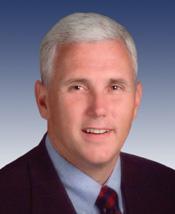
I heard the gentleman from Texas bring up Churchill when he said, ``sweat, blood, and tears.'' There are some people out there that bring some quotes to mind that stand out for me, and one of them is the Congressman from Indiana, Mike Pence. His statement on our persistence and due diligence in bringing about ObamaCare is this--and I wrote it down because it impressed me, not the words but the manner in which he says it. It is always superior to my delivery. But it is this, Mr. Speaker. Congressman Pence of Indiana said, if House Republicans got the message from the American people last November, ``we won't just vote once to repeal ObamaCare; we will vote to repeal ObamaCare again and again until we consign their government takeover of health care to the ash heap of history--where it belongs.''
Nice quote, Mike Pence. It sounds like Ronald Reagan to me. ``We will vote . . . again and again until we consign their government takeover of health care to the ash heap of history--where it belongs.''
I intend to stay with this with an even heightened level of persistence, Mr. Speaker, to bring about the final and complete repeal of ObamaCare, Mr. Speaker, to be able to one day watch as the President of the United States, the next President probably, puts an end to ObamaCare. It will take persistence on our part. It will take determination. We will pass this out of the House. We can pass it again and again, send it over to the Senate where Harry Reid gets a hot potato on his lap that gets hotter and bigger each time.
We have appropriations bills coming through here. We have a CR that ends March 4th, and everything that funds our government, we should put into that language that prohibits any of the dollars from being used to implement or enforce ObamaCare. We can shut off all of the implementation of ObamaCare. If this House stands resolute and determined, there is not a dime that can be spent by the Federal Government without our approval. So we can shut off the funding that implements or enforces ObamaCare, and we must. And we must stick with it.
We must stick with it with the determination that comes from people like Mike Pence, with the tone that comes from Ronald Reagan that comes from his mouth, and I think the determination that comes from Winston Churchill. We will fight on this. We will fight until the end. We have the majority to start with now in the House. We shall not flag or fail. We shall go on to the end. We shall fight with growing confidence and growing strength, whatever the cost may be. We shall never surrender. We will carry on this struggle until, in God's good time, with all His
power and might, He steps forth to the rescue and liberation of our God-given American liberty. That's what will happen in this Congress.
The day will come, Mr. Speaker, that the next President of the United States, I pray, stands on the west portico of the Capitol here in this building down that hallway and off to the left to take the oath of office. And when the Chief Justice steps forward and he takes his oath on the Bible, I want to see that next President of the United States take that oath with pen in hand, Mr. Speaker, and I want him to take the oath, ``preserve, protect, and defend the Constitution of the United States, so help me God.'' And before he even shakes the hand of the Chief Justice to be congratulated as the next President of the United States, I want that pen in that hand to come down on the podium and sign into law the final repeal of ObamaCare as the first act of office of the next President of the United States, and I will support the man or woman that's willing to do that.
Mr. Speaker, I appreciate your attention and the honor to address you.
I yield back the balance of my time.