Mr. Speaker, I ask unanimous consent that all Members may have 5 legislative days in which to revise and extend their remarks and include extraneous material on H. Con. Res. 112. Mr. Chairman, I…
Mr. Speaker, I ask unanimous consent that all Members may have 5 legislative days in which to revise and extend their remarks and include extraneous material on H. Con. Res. 112.
Mr. Chairman, I claim time in opposition.
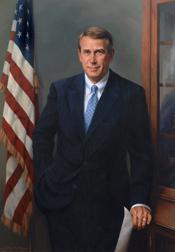
Mr. Chairman, at this time, I yield 1 minute to the distinguished Speaker of the House, the gentleman from Ohio (Mr. Boehner).
Mr. Chairman, I would like to yield 2 minutes to the gentleman from Georgia (Mr. Graves).
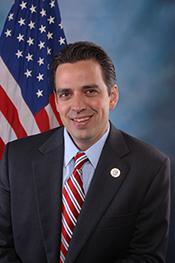
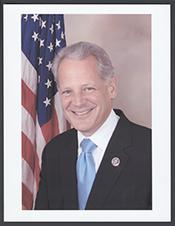
Mr. Chairman, I would like to yield 2 minutes to the gentleman from New Hampshire, a member of the Budget Committee, Mr. Guinta.
Mr. Chairman, at this time I will yield 2 minutes to the gentlelady from Tennessee (Mrs. Black), a member of the Budget Committee.
I yield the gentlelady an additional 30 seconds.
Mr. Chairman, I'd like to yield 1\1/2\ minutes to the gentleman from South Carolina (Mr. Mulvaney), a member of the Budget Committee.
At this time, Mr. Chairman, I yield 1 minute to the gentleman from Florida (Mr. Southerland).
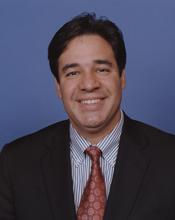
I yield 1\1/2\ minutes to the gentleman from Idaho (Mr. Labrador).
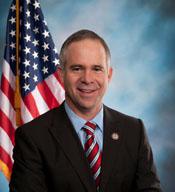
At this time I yield 1\1/2\ minutes to the gentleman from Kansas (Mr. Huelskamp), a member of the Budget Committee.
I reserve the balance of my time.
Mr. Chairman, I yield myself the balance of my time.
Let me just try to give, in a nutshell, the economic vision the minority leader just gave us. It kind of works like this:
Take more money from communities, from families, from small businesses and send it to Washington; swish it around the bureaucracy; make the decisions here; then, through trickle-down government, try to create jobs from government; borrow more money if that's not enough; then print more money if that's not enough over at the Federal Reserve; and we can make jobs in government.
It doesn't work. We've been trying this. Look at where we are today. Our debt is bigger than our economy. Look at the common theme we've seen before us. This budget, the House Democratic budget, has a $1.7 trillion tax increase; the President's budget, a $2 trillion tax increase; the CBC budget, a $6 trillion tax increase; and least, but not last, the Progressive budget has a $6.7 trillion tax increase. Is that for deficit reduction? No. It's for more spending.
The House Democratic budget has a $4.6 trillion spending increase; the CBC budget, a $5.2 trillion spending increase; the President's budget, a $5.2 trillion spending increase; and the Progressive Caucus Budget, a $6.6 trillion spending increase.
It is clear, they want you taxed more so they can spend more, and they never, ever balance the budget and they send us off a debt cliff.
This debt crisis is the most predictable crisis we've ever had in the history of this country, and we've got to stop this notion that we can just keep taking more and more and more from families and businesses to spend us deeper into debt. It doesn't work.
With that, I urge a ``no'' vote on the House Democratic substitute.
I yield back the balance of my time.
Mr. Chairman, let me just start off by thanking all of the staff and the minority and their staff for the hard work.
I want to congratulate Mr. Van Hollen for bringing his substitute to the floor. The minority does not need to do that, and I think that it is good for the process and the system that they do that.
In particular, I want to thank our Budget Committee staff: Alex Stoddard, Andy Morton, Austin Smythe, Charlotte Ivancic, Conor Sweeney, Courtney Reinhard, David Logan, Dennis Teti, Dick Magee, Eric Davis, Gerrit Lansing, Jane Lee, Jenna Spealman, Jim Herz, Jon Burks, Jon Romito, Jose Guillen, Justin Bogie, Marsha Douglas, Matt Hoffmann, Nicole Foltz, Paul Restuccia, Stephanie Parks, Steve Spruiell, Ted McCann, Tim Flynn, and Vanessa Day.
I also want to thank our personal office staff and the people who are over there at the Ford Building that not everybody sees but who work for the Congressional Budget Office. I had the privilege to meet with them last December while they were busy putting the payroll tax numbers together.
This year, the President's budget came late. Easter came early. Everyone was crunched. We worked them overtime, very hard. Now, we don't always like the estimates they necessarily give us, but I want to thank them for their dedication and their professionalism in making this process work.
With that, I will reserve the balance of my time.
Paul Ryan Personal Office Staff
Allison Steil, Andy Speth, Chad Herbert, Danyell Tremmel,
Joyce Meyer, Kevin Seifert, Megan Wagner, Nathan Schacht,
Sarah Peer, Smythe Anderson, Susie Liston, Teresa Mora,
Tricia Stoneking, Lauren Schroeder, Casey Higgins, Aubrey
Yanzito, Rick Jacobson.
CBO Staff
Adam Talaber, Adam Wilson, Adebayo Adedeji, Alan van der
Hilst, Alexandra L. Minicozzi, Allison Percy, Amber G.
Marcellino, Amy E. Petz, Andrea K. Noda, Andrew Stocking, Ann
Futrell, Anna E. Cook, Annette W. Kalicki, Athiphat
Muthitacharoen, Aurora K. Swanson, Avi Lerner, Barbara
Edwards, Barry Blom, Benjamin R. Page, Bernard C. Kempinski.
Brianne B. Hutchinson, Bruce G. Arnold, Carla Tighe Murray,
Caryn Rotheim, Chad M. Chirico, Chad Shirley, Charles
Pineles-Mark, Charles Whalen, Chayim Rosito, Christi Hawley
Anthony, Christian K. Howlett, Christina Vu, Christine M.
Bogusz, Christopher Murphy, Christopher Williams, Christopher
Zogby, Courtney Griffith, Cynthia R. Cleveland, Damien Moore,
DaMischa Phillip.
Daniel Frisk, Daniel S. Hoople, Darren Young, Dave Hull,
David A. Brauer, David Arthur, David Austin, David B. Newman,
David C. Gaffney, David D. Jackson, David E. Mosher, David
Rafferty, David Torregrosa, David Weiner, Dawn Sauter Regan,
Deborah A. Kalcevic, Deborah Kilroe, Deborah Lucas, Denise
Jordan-Williams, Doug Elmendorf, Dwayne Wright.
Ed Harris, Edward (Sandy) Davis, Edward C. Blau, Elias
Leight, Elizabeth Bass, Elizabeth Cove Delisle, Ellen C.
Werble, Emily Holcombe, Eric J. Labs, Ernestine McNeil,
Ernestine McNeil, Esther Steinbock, Felix Reichling, Frances
M. Lussier, Francesca Castelli, Frank J. Sammartino, Frank S.
Russek, Gregory Acs, Gregory H. Hitz, Heidi Golding, Holly
Harvey, Jamease Miles.
James A. Langley, James Baumgardner, James Johnson, Janet
F. Airis, Janet Holtzblatt, Janice M. Johnson, Jared
Brewster, Jason Wheelock, Jean P. Hearne, Jeanine Rees, Jeff
LaFave, Jeffrey Kling, Jeffrey M. Holland, Jennifer C.
Gravelle, Jennifer Smith, Jessica Deegan, Jessica S. Banthin,
Jimmy Jin, J'nell L. Blanco, Joanna (Jodi) Capps.
Joe Miller, John H. Skeen III, Jonathan A. Huntley,
Jonathan A. Schwabish, Jonathan P. Morancy, Joseph Evans Jr.,
Joseph Kile, Joshua Shakin, Joyce M. Manchester, Juan M.
Contreras, Juann H. Hung, Judith Cromwell, Julia M.
Christensen, Julia Mitchell, Julie H. Topoleski, Julie
Somers, Justin Humphrey, Justin R. Falk.
Kalyani Parthasarathy, Kate Kelly, Kathleen FitzGerald,
Kathleen Gramp, Kent R. Christensen, Kevin Perese, Kim J.
Kowalewski, Kim P. Cawley, Kirstin B. Nelson, Kurt
Seibert, Lara E. Robillard, Larry Ozanne, Leah C. Mazade,
Leigh S. Angres, Leo K. Lex, Linda Bilheimer, Linda
Schimmel, Lisa Ramirez-Branum, Loretta Lettner, Lori B.
Housman, Lyle Nelson.
Majid Moghaddam, Marika Santoro, Marin A. Randall, Marion
C. Curry, Mark Booth, Mark E. Sanford, Mark J. Lasky, Mark P.
Hadley, Mark T. Grabowicz, Martin von Gnechten, Mary M.
Froehlich, Matthew Goldberg, Matthew Pickford, Matthew
Schmit, Maureen Costantino, Megan E. Carroll, Melinda B.
Buntin, Melissa Merrell, Michael Bennett, Michael Levine,
Michael S. Simpson, Mitchell A. Remy, Molly W. Dahl, Monte
Ruffin.
Nabeel A. Alsalam, Nancy A. Fahey, Natalie J. Tawil, Nathan
T. Musick, Noah P. Meyerson, Noelia J. Duchovny, Paige Piper/
Bach, Pamela Greene, Patrice L. Gordon, Patrice L. Watson,
Paul Burnham, Paul Jacobs, Paul Masi, Paula D. Brown, Perry
C. Beider, Peter H. Fontaine, Philip C. Webre, Priscila
Hammett.
R. Derek Trunkey, Rae Wiseman, Raymond J. Hall, Rebecca
Rockey, Rebecca V. Yip, Robert A. Sunshine, Robert G.
Shackleton Jr., Robert McClelland, Robert W. Arnold, Robert
W. Stewart, Rod Goodwin, Romain Parsad, Ron Gecan, Ronald L.
Moore, Ryan G. Miller.
Sam Papenfuss, Santiago Vallinas, Sarah Ammar, Sarah
Anders, Sarah Jennings, Sarah Puro, Shane Beaulieu, Shannon
Mok, Sharon Broderick, Sharon Corbin-Jallow, Sheila Campbell,
Sheila M. Dacey, Sherry Snyder, Simone Thomas, Stephanie
Burns, Stephanie Cameron, Stephanie M. Ruiz, Stephen P.
Rentner, Steven A. Weinberg, Stuart A. Hagen, Sunita C.
D'Monte, Susan Willie, Susanne S. Mehlman.
T.J. McGrath, Tamara Hayford, Terry M. Dinan, Theresa A.
Gullo, Thomas B. Bradley, Tiara P. MizeIle, Valentina
Michelangeli, Vi Nguyen, Virginia Myers, Wendy Edelberg,
Wendy Kiska, William J. Carrington, William Ma, William
Randolph.
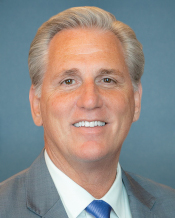
Mr. Chairman, at this time, I yield 2 minutes to our distinguished majority whip, Mr. McCarthy.
Mr. Chairman, at this time, I would like to yield 1 minute to the distinguished majority leader of the House, the gentleman from Virginia (Mr. Cantor).
Mr. Chairman, I yield myself the remainder of the time.
Mr. Chairman, we are bearing witness to history this week. Across the street, we are witnessing what could be the end of bureaucratic- controlled health care. What we are on the verge of witnessing is a powerful reaffirmation of the American idea, and we are finally having the debate we need to have.
Our rights come to us naturally, they come from God and nature, and not from government. This health care law is the latest and perfect example of the notion that government is now needed to grant us new rights. And if that is the case, then government has authority to ration, to regulate and to redistribute exactly how we exercise these new rights, such as health care. And if these new government-granted rights conflict with our constitutional rights and liberties, well, then, such is the sacrifice needed in the name of progress, or so the thinking goes.
Across the street, we are witnessing what could be a rejection of this line of thinking. The new health care law, which asserts unlimited power to the Federal Government to decide for Americans how they should go about getting their health care, simply is not compatible with the Constitution.
But the Justices who are considering this case, they've raised a very good point: If this is, at the end, a bureaucrat control of health care, what comes next? And if you listen to them, you may hear a pretty dim view of Congress' ability to solve this problem.
With respect, I would suggest that they take a look at what we are accomplishing here in this body today. Here, in this Chamber, we are witnessing the growing momentum of a new approach, one that maintains a critical role for government, but ultimately puts the American people in charge where they belong.
For the second year in a row, we are passing a budget that outlines a new approach to Medicare. We keep the protections that made Medicare a guaranteed promise for seniors throughout the years, but this is what we say to the bureaucrats who have mismanaged this program into bankruptcy: Enough. Your approach doesn't work. Government has never come up with the magic formula to micromanage America, let alone lower costs and improve quality. It's time to put 50 million seniors, not 15 bureaucrats, in charge of their own health care decisions.
Forcing insurance companies to compete, that's the only way to guarantee quality affordable health care for seniors that lasts for generations. That's the answer to what comes next. Let's keep building on the growing bipartisan consensus on how to improve patient-centered health care reform.
But putting our trust in Americans, it goes beyond health care. It is what this entire budget is all about. We get government bureaucrats out of the business of picking winners and losers in the economy because Americans should make their own decisions about what kind of car they drive or what kind of light bulb they use. We give power over the safety net programs to the States because we believe that governments that are closest to the people are in the best position to design programs for their unique communities, to get people on to lives of self-sufficiency and upward mobility.
When we lower tax rates by closing special interest loopholes, we're saying we in Washington don't need to micromanage people's decisions through the Tax Code. Let people keep more of their own hard-earned dollars; let them decide how to spend it. Economic growth, jobs, upward mobility, opportunity, these are what we're striving for, just like our parents did the same for us.
Mr. Chairman, it is so rare in American politics to arrive at a moment in which the debate revolves around the fundamental nature of American democracy and the social contract, but that is exactly where we are today. One approach gives more power to unelected bureaucrats, takes more from hardworking taxpayers to fuel the expansion of government, and commits our Nation to a future of debt and decline. This approach is proving unworkable in Congress, in our courts, and in our communities.
This contrast with our budget could not become clearer: We put our trust in citizens, not in the government. Our budget returns power to individuals, to families, to communities.
As these choices become clear, today's budget is a vote of confidence for the American experiment. We think that putting our trust in the American people will renew their trust in us. We think Americans should control their destinies, and we trust them to make the right choices about the future of our country.
Mr. Chairman, we think America is on the wrong track. We believe the President is bringing us toward a debt crisis and a welfare state in decline. We are offering the Nation a choice. We are offering the Nation a better way forward. And we are offering the Nation a plan to renew America and the American idea.
Mr. Chairman, let's have that vote.
I yield back the balance of my time.