Right Start Child Care and Education Act of 2011

Legislative Activity
Stay on top of the latest movement without scrolling through every action
Read twice and referred to the Committee on Finance.
January 25, 2011
View full timeline
Introduced in Senate
January 25, 2011
Read twice and referred to the Committee on Finance.
January 25, 2011
Floor Debate
24 membersWhat members said about S. 160 on the floor
 AS
AS MT
MT HP"
HP" BL
BL DR+19
DR+19
Floor Debate
24 membersWhat members said about S. 160 on the floor
Mr. Chairman, although I am not opposed, I ask unanimous consent to claim the time in opposition. Mr. Chairman, I yield 2\1/2\ minutes to the gentleman from California (Mr. Berman), the ranking…
Mr. Chairman, although I am not opposed, I ask unanimous consent to claim the time in opposition.
Mr. Chairman, I yield 2\1/2\ minutes to the gentleman from California (Mr. Berman), the ranking member on the Foreign Affairs Committee.
Mr. Chairman, I yield myself the balance of my time.
I support the manager's amendment. I'm going to speak the balance of my time on the Smith-Amash amendment coming up later. There has been a great deal of distorted information going out. I want to take this opportunity to correct some of it.
First of all, the Gohmert amendment that's being offered does not solve the problem; you will still be subject to military custody and indefinite detention. It is not clear on that point; it leaves open the possibility the President will maintain that authority, and that is what this debate should be all about.
The President, right now, has the authority to go outside of the normal due process, constitutionally protected rights that are part of a court trial, and lock somebody up indefinitely or place them in military custody here in the U.S. That is an extraordinary amount of power to give the executive branch over individual freedom and liberty. I don't think it is necessary to keep us safe. Ten years of successfully prosecuting, convicting, and locking up terrorists under Article III courts has proven that point.
But hands down, the dumbest set of arguments I've ever heard in debating has been circulating that somehow taking away this extraordinary power from the President rewards terrorists. I would like to remind everybody--and particularly Tea Party conservatives--that just because the government arrests you doesn't mean you're guilty. Under their thinking, basically, once the government says you're a terrorist, you're a terrorist, and we shouldn't have a trial about it. So any effort to make sure that there's a process, to make sure that you actually are a terrorist becomes rewarding them. No; it's the process to make sure they are actually guilty. I cannot believe that Tea Party conservatives want to create a situation where when the government says you're guilty of a crime, that's it--no trial, no process, let's just lock you up and forget about it. That's why we have a court system.
Let's have the real debate here. Does the President need this authority to keep us safe? I don't believe he does. Let's stop these ridiculous arguments about rewarding terrorists and have some respect for the Constitution and due process.
With that, I yield back the balance of my time.
Mr. Chairman, I yield myself 1 minute.
Just to respond to the arguments of the gentleman from Texas, if an al Qaeda terrorist comes to the U.S., whether they're an illegal alien or not, frankly, we want them arrested, tried, and convicted. All we want to do is make sure that they actually are a terrorist before we do that, to have a process in place so that the President doesn't have that power to simply lock somebody up without due process and a trial.
And then the argument about how we are bestowing upon illegal aliens constitutional rights. I've got bad news for the gentleman from Texas. We aren't bestowing anything. The United States Constitution bestows upon them those rights.
The United States Constitution says any person in the U.S., not citizen, not legal, illegal, it doesn't matter. So if he has a beef, he has a beef with James Madison and everybody else who supported the Constitution.
And we hear constantly from that side, strict interpretation, the Constitution must be adhered to. The Constitution says any person, not any lawful resident or any citizen. The United States Constitution clearly triggers that. We're not creating anything. In fact, the Gohmert amendment goes outside the Constitution by creating rights that aren't contemplated in here, separating people in this country in terms of who should get what rights. It's in the Constitution: any person.
I reserve the balance of my time.
I would just point out that Mirandized or not, nobody has to speak, and a ton of information has come out of people after they were Mirandized.
With that, I yield 1 minute to the gentleman from Georgia (Mr. Lewis).
I yield 1 minute to the gentleman from Oregon (Mr. Blumenauer).
At this time, I yield 1 minute to the gentleman from Indiana (Mr. Visclosky).
I yield 1 minute to the gentlelady from Maine (Ms. Pingree).
Mr. Chairman, I yield 1 minute to the gentleman from Connecticut (Mr. Murphy).
I yield 1 minute to the gentlelady from California (Ms. Chu).
Mr. Chair, I rise to speak on the amendment by Mr. Turner that addresses safety at defense nuclear facilities, that is considered in this en-block package.
Much reckless damage has been done in this bill that weakens safety for workers at defense nuclear facilities and for the public.
Among other changes, this hill blocks independent oversight by the Department of Energy and weakens the capacity of the Defense Nuclear Facilities Safety Board. This oversight is critical to keeping people safe, and we should not be cutting corners on safety.
These changes have profound implications and risk imperiling the safety and lives of worker and the public.
It also transfers responsibility for safety to the National Nuclear Security Administrator and to contractors, at a time when NNSA's undivided attention should be focused on maintaining a safe, secure and reliable nuclear deterrent and on the pressing need to make much-needed progress on nuclear nonproliferation to reduce the risk of nuclear terrorism.
For these reasons, Mr. Miller, Mr. Visclosky, Ms. Sanchez, Mr. Waxman and I submitted two amendments to undo some of the damage that is done in this bill, and that would have preserved strong safety standards and independent oversight.
My amendment would have restored the authority of the Secretary of Energy over the nuclear weapons complex and nonproliferation programs, whose control has been improperly severed without justification in this bill.
However, the Rules Committee did not make these amendments in order, and so regrettably we are prevented from having this important debate on an issue that affects thousands of Americans who work or live near defense nuclear sites.
Going forward, I will work with the Senate in conference to reverse many of these changes, to improve the outcome in our final bill.
Specifically with regard to the amendment by Mr. Turner in this package, it makes several important improvements but does not go far enough and fail to fix significant problems in the bill.
(1) This amendment does not specifically prohibit a reduction in the safety standards, both nuclear and non-nuclear, compared to the standards we have today for defense nuclear facilities. Nonnuclear safety standards, such as fire protection, quality assurance, chemical, are also important to the safety of defense nuclear facilities.
(2) This amendment reaffirms that the decision on safety standards should be made by the Administrator for Nuclear Security, rather than by the Secretary of Energy and the Dept of Energy's Office of Health, Safety and Security, which would provide independent oversight of NNSA and the nuclear weapons complex health and safety and security operations.
(3) The core concept of risk and cost-benefit should not be an element of adequate protection. Inserting cost requirements muddles the requirements for safety. At this time, cost is not an element of adequate protection for commercial nuclear power or for DOE's defense nuclear facilities. It also forces the Defense Nuclear Facilities Safety Board to pre-
judge NNSA's action and decisions in responding to safety concerns, rather than allowing the Board to focus on identifying and raising safety concerns.
(4) This requirement places obstacles in the Board's path and will make it more difficult to ensure adequate protection of public and worker safety.
(5) These provisions would allow inconsistent safety standards.
I am deeply concerned about these changes and hope to work with my colleagues to remedy the measures that unnecessarily put workers and the public at risk.
I thank the gentleman.
I rise in opposition to the amendment.
I think the gentleman raises a very legitimate point that the exercise of strikes against terrorist targets does need a proper oversight. There are a number of ways in which I think we can have greater transparency in those decisions, frankly, whether they're signature strikes or against individuals.
The bottom line is al Qaeda declared war against us in 1996. They are actively prosecuting that war against us from a number of different locations, many of which we don't have as much information as we would like, but clearly in federally administered tribal areas of Pakistan and Yemen and Somalia, they are organizing training camps and they are actively pursuing us. Our Joint Special Operations Command is trying to keep track of those networks and keep them from attacking us.
The ability to hit those training camps is an important part of protecting us from terrorist attacks. As General McChrystal said: It takes a network to beat a network. We need our network to have the ability to stop Al Qaeda's network. They declared war against us. They haven't changed their mind. It is still something that we need to be able to adequately protect this country against. This amendment unduly restricts our military's ability to protect this country.
I rise in opposition to this amendment.
I yield 2 minutes to the gentleman from Texas (Mr. Conaway).
I yield 1 minute to the gentlelady from Texas (Ms. Jackson Lee).
I yield the gentlewoman an additional 20 seconds.
I yield 1 minute to the gentleman from Texas (Mr. Thornberry).
I yield myself the balance of my time.
We are not ignoring any of that. All of those issues are things we discussed in the Armed Services Committee, are very much aware of and very concerned about. But the bottom line is, as my colleagues have pointed out, regrettably, Pakistan is in a part of the world where we have national security interests.
Pakistan has, at various times, provided critical support to allow us to get the supplies we need to our troops in Afghanistan. They have also assisted us in going after various terrorist groups inside of Pakistan. That help has been maybe 2 percent of what we would like it to be, but that 2 percent, regrettably, is help we cannot turn away.
It is a very problematic relationship. I think the gentleman who offered this amendment described that quite well. But we cannot afford to simply cut it off because of how important that region is to our national security interests. His amendment would do that. And it is bad policy for this country, bad policy for our troops, and bad policy for our national security interests. Therefore, I would urge us to oppose it.
I yield back the balance of my time.
Mr. Chairman, I rise in support of this amendment as well.
As was discussed earlier, we certainly have problems with our relationship with Pakistan. We want to make sure that we continue to put the pressure on them to improve that relationship. Opening up these supply lines are critical to our troops. I think it is a minimum requirement that we should ask, and the gentleman's amendment is very well thought out. It is the appropriate response for dealing with our difficult ally.
As Mr. Rohrabacher mentioned earlier, certainly there is much that Pakistan does that causes us trouble. But they are a country that we need to work with if we're going to properly contain the al Qaeda and terrorist threat that comes from that region of the world. I think the gentleman from Virginia's amendment strikes that balance just right, and I urge this body to support it.
I yield myself such time as I may consume.
I do not oppose military commissions. I think military commissions are an important tool, particularly when you are talking about people who are captured overseas, potentially in Afghanistan, Yemen, Somalia. I agree with the gentleman in that there are instances when the evidence necessary requires a military commission.
Yet the problem with this amendment is it says it has to be a military commission, that Article III courts are never an option. We have an extensive history of capturing terrorists overseas, of bringing them back to the United States, of trying them in Article III courts, and of convicting them and putting them in prison. We've done that a number of different times, and it is an option that should be on the table. I cannot support taking that option completely away under any circumstances, because there are a couple of problems with military commissions.
They are necessary for many of the reasons that Mr. Rooney stated. However, they are also relatively new. We had some military commissions during World War II--I believe just one for a particular group of German spies who were here in the U.S. We've done a couple since then, but they are untested, and there will undoubtedly be appeals.
The beauty of the Article III courts is you have 230 years of history. My math may be off a little bit there, but you have over 200 years of history. Let's put it that way. It's well developed, and you know what's coming, and you can prepare the evidence accordingly. We don't know what's going to come from a military commission.
The second problem with the military commissions is that our overseas allies are not as fond of them as we are, and it may inhibit our ability to get them to turn terrorists over to us for prosecution if they know they have to go to military commissions.
This amendment doesn't make any sense. To take Article III courts completely off the table is taking an option away from the President and from this country to properly protect us. There are going to be instances when we are going to want to use that tool and other instances when we will want to use the military commissions, and this amendment takes away that option in a way that, I believe, will hamper national security. It will limit our options for how to prosecute terrorists.
I will say this again, and I will emphasize this: we seem to have totally lost track of the fact that the Department of Justice, the FBI, our Article III courts have been one of the most important tools in successfully stopping the terrorists--over 400 tried, convicted, and locked up for life. That is a very effective tool. The FBI knows how to investigate crimes. It knows how to interrogate suspects. It can do the job.
Why would we take that tool in our toolbox and throw it away? It doesn't make sense. For that reason, I have to oppose this amendment.
I reserve the balance of my time.
May I inquire as to how much time is remaining?
I yield 2 minutes to the gentleman from New Jersey (Mr. Andrews).
(Mr. ANDREWS asked and was given permission to revise and extend his remarks.)
Mr. Chairman, Mr. Rooney has the right to close; is that correct?
Then I will reserve the balance of my time.
Mr. Chairman, I yield myself the balance of my time.
Three quick points. I think the difference here and the reason that I drafted my amendment to say ``just in the U.S.,'' I think is a legitimate point. Overseas we do not have the same control over the investigatory process that we have here domestically. There's a clear difference between dealing with someone here domestically. That's why in the last 10 years we haven't done anything other than try people here in the U.S. under Article III courts. We haven't needed military commissions. That's why I think we should take that power away from the President because it's an extraordinary amount of power to give him that isn't necessary.
Overseas they are, in fact, taking away the options in this amendment and saying it has to be military tribunals. They are also saying that Article III courts are inadequate to do that when, in fact, they've done it repeatedly. The people who committed the bombing against the World Trade Towers in 1993 were captured overseas, brought back, and tried here in domestic courts. Article III courts work sometimes in these incidents. Their amendment takes those options away completely. I also point out that Guantanamo Bay is not an enormous facility. They already have 40 people waiting in line for military tribunals. Many more will backlog that.
But I want to come back to my amendment that will come up later. Domestically, we have proven that Article III courts are more than adequate. Overseas, we've proven that we need multiple options. So this amendment sort of is in reverse of what the facts bear out that we should be doing, and I urge opposition to it.
I yield back the balance of my time.
Mr. Chairman, I demand a recorded vote.
Without question, the F 35 has been a troubled program. It's been more expensive than we would like it to be and has underperformed. It is getting better, as the chairman mentioned.
There are a number of problems with this amendment, however. First of all, in replacing the F 35B--that's the Marine Corps variant; it's a vertical takeoff plane. I know Mr. Kline will do a much better job of explaining this in a moment than I will. The Marine Corps is an expeditionary force. They need to insert themselves. That's why they need a vertical takeoff plane. The F 18 that is proposed to replace it is not a vertical takeoff. It is not a replacement for the F 35B.
Second, the F 35 is a vastly more capable plane than the F 18. It is all about stealth and being able to get in on targets. The F 18 cannot get to the areas that the F 35 could get to to deal with adversaries like Iran or North Korea and those surface-to-air missiles. It is a much more capable plane.
If we cut this variant, we will also jeopardize the entire program, not just this variant. Our foreign partners are likely to withdraw. It will undermine our per-unit cost to the point where sustaining the program will be very difficult.
It is unfortunate at this point the degree to which we have to rely on this program. But it's going to be 95 percent of our fighter attack aircraft fleet in 10 years. We have to make it work. Therefore, I oppose this amendment.
I thank the chairman for yielding. Mr. Chairman, we're going to have ample opportunity to debate a number of the issues that the distinguished ranking member raised, but I don't think that we can be…
I thank the chairman for yielding.
Mr. Chairman, we're going to have ample opportunity to debate a number of the issues that the distinguished ranking member raised, but I don't think that we can be here on the floor and allow some of the arguments that have been made to go without some challenge.
For example, to say that a letter signed by two former Attorneys General, a former Secretary of Homeland Security, and a variety of other officials who have had positions of responsibility in previous administrations who believe that the Smith-Amash amendment would be detrimental to our effort against terrorists, to say that those arguments are somehow silly or foolish I think really demeans past administrations.
It is not actually fitting for this sort of debate. I understand that emotions can run high when we talk about these issues, and there are serious issues to be discussed, some difficult problems and some clear differences. But I hope that in the future the nature of the debate is elevated somewhat beyond calling former distinguished officials names.
And let me make one other point. One of the key problems that many of us have with the Smith-Amash amendment is that it would bestow upon illegal aliens who come to this country to carry out terrorist attacks, it would bestow upon them full constitutional rights. That means basically, as soon as a member of al Qaeda sets foot on American soil, the first thing he hears after ``you are under arrest'' is you have the right to remain silent. You have the right to be provided an attorney. And if you can't afford one, an attorney will be provided to you.
Now, there may be differences about how we should treat illegal aliens who come here as members of al Qaeda to conduct terrorist attacks. But I think the vast majority of people in this body and around the country do not think telling them they have the right to remain silent, as the first thing they hear, is a wise thing.
So as you go through the arguments, and I would encourage Members of the House to read the letter themselves. I would encourage Members of the House to look at today's Wall Street Journal editorial. I would encourage Members of the House to look at the Heritage Foundation entry today on their Web site, to look how significant these issues are, how the Smith-Amash amendment would undermine our ability to defend our people, and how it is unfair to characterize concerns expressed by a dozen or eight to 10 former national security officials as somehow foolish or silly.
I think, Mr. Chairman, that we can do better with that.
I yield back the balance of my time.
Mr. Chairman, I appreciate, again, the strong views of the distinguished ranking member. I would just say there is a real difference of opinion about to what extent U.S. constitutional rights, which each of us, as citizens, are privileged to have, are bestowed upon any illegal alien, as soon as they set foot in this country.
Now, there are places in the Constitution it says ``persons.'' There are other places it talks about ``accused.'' But I would point back to some of the very case law from the Supreme Court such as the Hamdan decision, which references the differences in procedure that due process requires for a citizen versus a noncitizen. It is not a clear- cut thing to say that as soon as you set foot on this soil, then you have the right to remain silent.
And the part that the gentleman--the other concern that many of us have is when you say you've got the right to remain silent, that prevents us from getting the intelligence, the information that prevents the attack of your buddy, the guy next to you. That's got to be factored in here too.
Mr. Chairman, I rise to claim the time in opposition.
Mr. Chairman, at this time I yield 1\1/2\ minutes to the distinguished ranking member, and I am glad to do so on an issue on which we agree.
Mr. Chairman, I yield 1\1/2\ minutes to the distinguished gentleman from New Jersey (Mr. Andrews).
(Mr. ANDREWS asked and was given permission to revise and extend his remarks.)
Mr. Chairman, I reserve the balance of my time.
As a point of parliamentary inquiry, Mr. Chairman, who has the right to close on this amendment?
Further parliamentary inquiry, Mr. Chairman. How much time remains on our side?
Mr. Chairman, I yield 1 minute to the distinguished gentleman from Rhode Island, the ranking member of the Emerging Threats and Capabilities Subcommittee.
(Mr. LANGEVIN asked and was given permission to revise and extend his remarks.)
I yield the gentleman another 15 seconds.
Mr. Chairman, this amendment raises a number of concerns. It is a very strange thing, for example, to say in a war that you have to know the name, rank, and serial number of the person that you are about to shoot before you can even shoot him. And to put it a little more in this context, the gentleman from Ohio's amendment would say that if we see people making bombs down there that are going to be used against our servicepeople, that we can't do anything about it, that we've just got to watch them. And then even after the bomb explodes, unless we know the identity--which is the language in the amendment--unless we know the name of the person down there, we can't do anything about it, with all of the technology that's available to the United States.
And actually, it gets even worse. If we see al Qaeda members shooting at our troops down there, if we don't know the identity or the name of the people doing the shooting, then we can't do anything about it. Surely that carries things far too far.
We can't debate in the open House all of the allegations that are made in newspaper articles. What we can do is say what the National Security Adviser or the President has said, that these sorts of capabilities are only used pursuant to law, and they are only used where there is a significant threat to the U.S., where action could mitigate or prevent the threat, and that collateral damage or harm to civilians is absolutely minimal. That helps protect our soldiers and our country.
I yield back the balance of my time.
I think all of us share many of the frustrations voiced by the gentleman from California, but his amendment goes too far.
I agree we should look for additional allies in the region. The problem is there's not another ally in the region through which our military can be supplied. So for the sake of our troops in Afghanistan, as well as a lot of the broader interests in the region, it is important for us to try to improve our relationship with Pakistan.
And as my colleague from Texas says, in the bill now we cut the funds from DOD in half and we require a certification that Pakistan is supporting our counterterrorism efforts, that they are supporting efforts to dismantle the IED networks, that they are preventing the proliferation of nuclear-related material, that they are issuing visas in a timely manner for U.S. Government personnel involved in counterterrorism efforts. We put severe restrictions on any assistance that they get. But that is a carrot to encourage them to work with us, rather than saying, No, you get nothing.
Mr. Chairman, essentially this amendment says get out now; leave Afghanistan regardless of the consequences.
I appreciate the honesty and the forthright nature of this amendment offered by the gentlelady from California. It is better to say up front what you're trying to do rather than put various conditions on it, or to tie our troops' hands in some way, or to not put enough troops in the field in order to accomplish the mission we're asking them to do. This is very clear. It says
leave now. And it is tempting for all of us because we have been there for awhile.
I want our troops to leave as soon as possible consistent with national security. As a matter of fact, the underlying bill says that the United States military should not maintain an indefinite combat presence in Afghanistan and should transition to a counterterrorism and advise-and-assist mission at the earliest possible date consistent with the conditions on the ground. And that's really the difference-- consistent with the conditions on the ground.
We believe, I believe, you have to take account of what the situation is there, and you cannot just abandon Afghanistan and ignore, stick your head in the sand and pretend it's not going to have consequences. I think it's important to remember why we're there to begin with. We're not there because of them. We're there because of us. We're there to make sure that Afghanistan is no longer used as a safe haven, as a base which will be used to launch attacks against us. That's the crux of the matter.
As soon as they are able to provide for their own security and prevent a return of the Taliban, a return of al Qaeda, then we can go and we'll have accomplished our mission, and they'll have to sort through their domestic issues on their own.
But if we leave too early and al Qaeda and the Taliban return and use it as a base to launch attacks against us, then I'm afraid more Americans will suffer and we could see repeats of past terrorist attacks.
So as tempting as it is, Mr. Chairman, we cannot ignore the consequences of our actions. Leaving too fast would be bad for our security.
Mr. Speaker, I ask unanimous consent that all Members may have 5 legislative days in which to revise and extend their remarks and include extraneous material on H.R. 4310. Mr. Chairman, I have an…
Mr. Speaker, I ask unanimous consent that all Members may have 5 legislative days in which to revise and extend their remarks and include extraneous material on H.R. 4310.
Mr. Chairman, I have an amendment at the desk.
Mr. Chairman, I ask unanimous consent that my amendment No. 1 be modified in the manner that I have placed at the desk.
Mr. Chairman, I yield myself such time as I may consume.
We have worked long and hard, the staff has worked long and hard to get us to this point. This manager's amendment that we've worked on has been worked through both sides. We have unanimous agreement on it. It's a good bill, a good addition to the bill, and I ask that it be approved.
I reserve the balance of my time.
Mr. Chairman, I just want to rise to commend the gentleman, Mr. Berman, for his strong work on this amendment, for the work that he's done to further this cause of helping businesses in being able to do business abroad while still protecting the security of America.
I reserve the balance of my time.
At this point, Mr. Chairman, I yield the balance of our time to the vice chairman of the committee, the gentleman from Texas (Mr. Thornberry).
Mr. Chairman, pursuant to H. Res. 661, I offer amendments en bloc.
Mr. Chairman, I urge the Committee to adopt the amendments en bloc, all of which have been examined by both the majority and the minority.
Mr. Chair, I yield, at this time, 1 minute to the gentleman from California (Mr. Gallegly).
I yield the gentleman an additional 30 seconds.
Mr. Chair, I yield 1 minute to the gentleman from Texas (Mr. Thornberry).
Mr. Chairman, at this time, I yield 2 minutes to the gentlewoman from California (Mrs. Bono Mack) for the purpose of a colloquy.
I do agree that protecting our men and women in the military from the detrimental effects of prescription drug misuse, especially protecting our combat-wounded servicemembers, is of vital importance.
As the gentlelady knows, the committee report of H.R. 4310 includes an item of special interest that expresses the support for substance abuse treatment programs within the military services and that encourages the Department of Defense to pursue research aimed at developing new treatments to help our troops who are struggling with the devastating problem.
I will be happy to work with the gentlewoman from California to consider the appropriate measures to address this critical issue.
I continue to reserve the balance of my time.
May I inquire as to how much time we have remaining?
We have no further requests for time, so I continue to reserve the balance of my time.
I encourage all Members to support the en bloc amendments, and I yield back the balance of my time.
Mr. Chairman, I claim the time in opposition.
At this time, I yield 2 minutes to the gentleman from Texas (Mr. Thornberry), the vice chairman of the committee.
At this time, Mr. Chairman, I yield 3 minutes to the gentleman from Texas (Mr. Conaway), a member of the committee.
Mr. Chairman, I yield 2 minutes at this time to the gentleman from Florida (Mr. West), a member of the committee, a gentleman who has led troops in battle.
Mr. Chairman, at this time I yield 1 minute to my friend and colleague, the gentleman from Illinois (Mr. Kinzinger), a member of the committee and an Air Force pilot.
Mr. Chairman, at this time I yield 1 minute to my friend and colleague, the gentleman from New Mexico (Mr. Pearce).
Could I ask the time remaining?
And I have the right to close?
Mr. Chairman, I yield myself the balance of the time.
Mr. Chairman, when I was in Afghanistan a few years ago, I visited Camp Leatherneck. General Nicholson, who was just setting up base, and they were just there in the desert--the men were out setting up forward operating bases, trying to take back territory that the Taliban commanded. The general told me that his troops were being asked every day by the local people, when are you leaving? How long are you going to be here? Can we trust you to be here to protect us?
Last year, when I returned, I went to the same area. We were able to go to Marjah this time, which we couldn't go to before because that was a Taliban stronghold. Last year, we were able to walk down the street in Marjah. I saw marines and Afghan soldiers embracing; they were happy to see each other. Maybe they'd been apart for a while.
The marines had put up light standards down the street, and the merchants were able to keep their stores open a little bit longer.
We opened a school while we were there, not a school like we enjoy, but it was a school built out of adobe and tents. They had 500 kids. About a third of them were girls. They were able to go to school that they hadn't been able to go to before. They were excited about that opportunity.
I visited with the local governor there. We had lunch. I asked him what motivated him, because he knew, as the Taliban came back for the spring effect, that his life was on the line. He said, God willing, we'll prevail.
Mr. Chairman, I think when we talk about pulling these people out before they have a chance to complete their mission--I was at a street fair in Simi Valley last week and I talked to a lady working in a booth for the troops. She said, my grandson just came home from Afghanistan. And I told him we ought to just get out of there. And he said, Granny, that's wrong. We're accomplishing great things. We're helping those people. Let us finish our mission.
That's what the generals say they should do. That's what the troops say they should do.
Defeat this amendment that pulls the troops out immediately.
I yield back the balance of my time.
Mr. Chairman, I claim time in opposition to the amendment although I don't oppose the amendment.
I yield myself such time as I may consume.
Mr. Chairman, we had an amendment earlier to cut off all funds to Pakistan. This is a more moderate approach.
Pakistan is part of the problem, we understand that. They live in a tough neighborhood. We know that in some ways they help us, in some ways they don't help us.
This amendment is kind of a carrot-and-stick approach. We say, when you do the things that you say you'll do, when you open these Ground Lines of Communication, we'll be giving you some of the funds. I think that's the proper approach that we should take, and I think that will help us in moving forward our effort in that area.
I thank the gentleman for his amendment. I think it makes the bill stronger. I thank him for his work in this regard.
I ask support of the amendment and yield back the balance of my time.
I rise, Mr. Chairman, to claim the time in opposition to the amendment.
Mr. Chairman, I yield myself 1 minute.
Mr. Chairman, I oppose the Conyers amendment. The F 35B is a short takeoff and vertical landing variant of the F 35 stealth fighter, and it's in the final stages of development and has entered low-rate initial production. The F 35B will operate from large deck amphibious ships as well as have the capability to operate from forward operating bases and damaged air strips to support Marine Corps ground maneuver forces ashore.
The Commandant of the Marine Corps, General Amos, wrote to the committee yesterday and said:
The importance of the F 35B short takeoff vertical landing
variant to the Marine Corps and the Nation cannot be
overstated.
The F 35B has made significant progress in the last year, under General Amos' guidance, by completing all of the plan test points in 2011 and accomplishing 260 vertical landings. If passed, this amendment could have major negative impacts to our Nation's future combat power, increase the cost of the overall F 35 program, and negatively affect the eight international program partners in foreign military sales.
I urge my colleagues to vote ``no'' on the Conyers amendment.
Mr. Chairman, I yield 1 minute to my friend and colleague, a member of the committee and the chairman of the Veterans' Affairs Committee, the gentleman from Florida (Mr. Miller).
I yield 1 minute to my friend and colleague, the ranking member on the committee, the gentleman from Washington (Mr. Smith).
I yield 1 minute to my friend and colleague, a member of the committee, chairman of the Education Committee, and a marine pilot, the gentleman from Minnesota (Mr. Kline).
Mr. Chairman, I yield 1 minute to my friend and colleague, a member of the committee, the gentleman from Connecticut (Mr. Courtney).
Mr. Chairman, I rise to claim the time in opposition.
I yield 1 minute to my friend and colleague, a member of the committee, the gentleman from Maryland (Mr. Bartlett).
Mr. Chairman, I yield at this time 1 minute to the ranking member of the committee, the gentleman from Washington (Mr. Smith).
Mr. Chairman, I have an amendment at the desk. First, let me just say this. It is just downright outrageous that the McGovern-Jones amendment was ruled out of order by the Rules Committee, denying…
Mr. Chairman, I have an amendment at the desk.
First, let me just say this. It is just downright outrageous that the McGovern-Jones amendment was ruled out of order by the Rules Committee, denying this House the opportunity to debate and vote on their amendment.
Secondly, we really do need a clear and 2 days of debate, at least-- not 20 minutes--on this critical issue of Afghanistan. So for the life of me, 20 minutes is not long enough. And I don't quite understand why, in fact, the McGovern-Jones amendment was not given the full amount of time, because the American people deserve to hear both sides of this issue from a variety of policy perspectives.
My amendment today would put a responsible end to combat operation in Afghanistan by limiting the funding to the safe and orderly withdrawal of U.S. troops and military contractors.
And I have to thank the cosponsors of this bipartisan amendment-- Representatives Jones, Conyers, Paul, Woolsey, Welch, Nadler, Hastings--and all of our colleagues who have worked on this issue throughout the years to responsibly end the war in Afghanistan. I have offered this amendment in the past, and it has been a bipartisan amendment.
It is clear that the American people have been far ahead of Congress in supporting an end to the war in Afghanistan. My amendment allows Congress the opportunity to stand squarely with the war-weary American people who want to bring our troops home. The call has been growing across this land to bring this war to an end. It's time now for the Congress to answer the call here today.
The reality is there is no military solution to the war in Afghanistan. Our brave troops have done everything that was asked of them and more.
As a daughter of a military veteran, I also know firsthand the sacrifices and the commitment involved with defending our Nation. But the truth is that they have been put in an impossible situation. There is no military solution, and it's past time to end the war and bring the troops home.
Over a decade now, over $500 billion spent in direct costs and, mind you, not a penny of it has been paid for. Instead, we should have been investing in jobs and in our economy here at home and a smarter national security strategy.
It is time to say enough is enough. With almost 2,000 United States troops killed in Afghanistan and many tens of thousands more maimed with injuries both hidden and visible, we must recognize that the boots on the ground strategy in Afghanistan must end. It's critical to our economy and the future of this country that we stop pouring billions on a counterproductive military presence in Afghanistan.
The American people have made it clear that the war is no longer worth fighting--not for another year, not for another 2 years, and surely not for another 12 years. Today, Congress should stand with seven out of 10 Americans who oppose the war in Afghanistan. After 11 long years, it is time to bring our troops home. We can do that responsibly by voting ``yes'' on the Lee amendment today.
I reserve the balance of my time.
I yield 2 minutes to the gentlewoman from California (Ms. Woolsey).
Mr. Chairman, I would like to yield 1 minute to the gentleman from Michigan (Mr. Conyers).
Mr. Chairman, how much time do I have remaining?
I yield myself 30 seconds and respond to the gentleman from Florida and just say this amendment--I think he's probably not reading the amendment that I have offered.
What this amendment does is restrict our funding for the purpose of the safe and the orderly withdrawal from Afghanistan of all members of the Armed Forces and the Department of Defense. It is not a cut-and-run amendment. This is a force protection amendment. It would bring our young men and women out of harm's way and it would provide the resources to move forward to help stabilize the region.
I'd like now to yield 1 minute to the gentlelady from Hawaii (Ms. Hanabusa).
I'd like to yield now 1 minute to the gentlelady from Texas (Ms. Jackson Lee).
Mr. Chairman, I reserve the balance of my time.
Let me just first say that I appreciate this 20-minute debate, but we should have a couple of days to be able to have a full debate on why we need to, one, protect our troops and provide for their safe and orderly withdrawal.
The American people are war weary. We need to reunite our brave men and
women in uniform with their families at home. We should transfer the billions of dollars that we're spending on war to creating jobs here at home. We should ensure that our troops are provided with the resources that they deserve and they need during this withdrawal.
We're asking for a safe and orderly withdrawal. We're saying our young men and women have fought; they've done everything we've asked them to do. We think that now, as the American people are saying, the combat mission, the fighting should end, and we should begin by protecting our troops and contractors; and we should begin to end the longest war in American history. It's time to end the war in Afghanistan.
I yield back the balance of my time.
Mr. Chairman, I demand a recorded vote.
I have an amendment at the desk. Mr. Chairman, since 9/11, the United States has given Pakistan about $22 billion. That money has served only to embolden Pakistan's government to maintain the brutal…
I have an amendment at the desk.
Mr. Chairman, since 9/11, the United States has given Pakistan about $22 billion. That money has served only to embolden Pakistan's government to maintain the brutal repression of its own people and to continue its blatant support for terrorist attacks on its neighboring countries, as well as attacks on American troops in nearby Afghanistan.
My amendment would cut off all aid in this bill designated for Pakistan. It would end the charade that we are buying cooperation in the ongoing struggle against terrorist forces in South Asia. Pakistan isn't with us in a war against terrorism; they are at war with us.
Pakistan, at best, is a war profiteer, collecting a ransom by taxing our military supply lines that pass through
their country, which, for the past 6 months, by the way, they have closed to resupplying our forces in Afghanistan. They are laughing all the way to the bank. Of course, the Pakistani people will never see any of that money.
The corruption in Pakistan itself is reason not to give aid to them, which they will then pilfer. Furthermore, they use their military power to butcher the Balochs and others who don't want to be under their corrupt thumb.
How can we forget this same Pakistani Government gave safe haven to Osama bin Laden after he led the conspiracy that slaughtered 3,000 Americans on 9/11? After our SEALs went in to get him, the Pakistani Government took the wreckage of our downed stealth helicopter and gave it for study to Communist China, whom they refer to as their ``all- weather friend.''
The Pakistani Government has gone so far as to arrest and imprison, without trial, Dr. Afridi, the doctor who helped us gather the intelligence that located Osama bin Laden in the nest that the Pakistani Government had provided him right there in Pakistan. The Pakistani Government threw him in jail and is talking about trying him for treason for the good deed that he helped us in bringing to justice the man who slaughtered 3,000 of our citizens. And we can continue to give money to these people, even as we ignore the suffering of Dr. Afridi, who is in prison now, languishing in prison? And all of us are forgetting this hero?
We have lost almost 2,000 Americans defending our country as part of Operation Enduring Freedom. Most of those deaths were due to Pakistani- inspired and -supported insurgents.
How much more does the Pakistan Government have to do before we quit giving them our money? They are playing us like fools while murdering our soldiers. And, yes, we are acting like fools for giving them this money despite that. We should have quit bankrolling this rotten regime a long time ago. My amendment would do just that.
The Pakistan Government is a terrorist government that murders and even attacks its own people, such as in Balochistan. It is a pro- terrorist, radical Islamic clique that rules Pakistan. They don't deserve one penny from us to help them in their dirty deeds.
I would ask for support from my colleagues. Let's finally stand up. If we need an ally in that area, let's go to some people in that area that want to be our friends, perhaps the Indians.
I reserve the balance of my time.
I continue to reserve the balance of my time.
How much time is remaining?
I have here 13 pages of restrictions that we have had on Pakistan aid over the last few years, 13 pages of restrictions that have meant nothing.
During the time that we have been giving them billions of dollars with all
of these restrictions, they have been giving safe haven to Osama bin Laden, who massacred and slaughtered 3,000 Americans. How can we forget about that? How can we just go on and give these people money?
The people of Pakistan can be our friends. They are our friends. But we have to recognize that their government is a terrorist-supporting government and a radical Islamic-supporting government.
And we continue to give them money as they support insurgents that kill our people overseas. Is there any doubt about that? Admiral Mullen confirmed it for us.
Why are we ignoring that? We are acting like fools and we are acting like cowards. It is time for us to stand up for the American defenders who are over there putting their lives on the line and say, No. If we're going to give money to the people killing you, we're not going to do that, period. That's going over the line.
I would suggest to my colleagues to join me in defunding the enemy of the United States.
I yield back the balance of my time.
Mr. Chairman, I demand a recorded vote.
Show 8 more
I appreciate the gentleman from Washington yielding me 2 minutes. I strongly urge opposition to this amendment with some heavy heart because some of the things that my good colleague has said may be…
I appreciate the gentleman from Washington yielding me 2 minutes.
I strongly urge opposition to this amendment with some heavy heart because some of the things that my good colleague has said may be accurate; much of it is inflammatory and not accurate. But nevertheless, I don't want to be seen as an apologist for Pakistan.
But by the same token, we have trimmed the amount of money subject to this authorization and to this amendment by half. We have strengthened the controls around that money to require Pakistan to certify to us, to Secretary Panetta, that, in fact, this money is being spent in the fight against counterterrorism.
We will have additional amendments on floor this afternoon that don't have any opposition, which will further strengthen that certification process. And by restricting all funds, under the DOD position, simply plays into the bad guys' hands in Pakistan. It will give them no incentives in which to work with us and it will further their strength and resolve to close the cross-border, overland passage of U.S. military goods to assist us with the fight in Afghanistan.
While my good colleague has much greater experience with some of those folks in that part of the world than I do, nevertheless, I stand in opposition to his amendment. It is a meat cleaver when we ought to be going at it the way we've done it--by trimming the money back, putting restrictions on that money that will force the Pakistanis in order to get it. And, by the way, they have not gotten money from DOD since June of 2010.
So while the comments that he's made might apply to all funding for the State Department and everything else, it only applies to Department of Defense money. We've not given them money since June of 2010. We have adequate protections in the bill this time and will strengthen those protections later on in the debate in the votes this afternoon.
I stand in opposition to the amendment.
Mr. Chairman, I appreciate the chairman yielding me the time.
I stand in opposition to this amendment. My colleague stated it very well earlier. This says just get out now.
My colleagues across the aisle in support of this amendment have continued to use the word ``responsible'' over and over, and there is nothing responsible about abandoning the efforts in Afghanistan today without proper conditions on the ground.
The President has a plan in place. Some of us may have had differing ideas with him, but he put a plan in place that says our combat troops will be out of there by 2014 contingent with conditions on the ground.
The Afghan people are responsible for their own security, and we're trying to help them get to that place with the Afghan National Army, the Afghan National Police, and the Afghan local army. Those efforts are going on across the provinces of Afghanistan as we speak, and they're getting into the lead to take care of their security.
But abandoning of Afghanistan today would put at risk 27 million Afghanis who are counting on us to get this right, counting on us to put them in a position to be able to defend themselves when we do leave in 2014. So getting out now, Mr. Chairman, is irresponsible rather than responsible.
Now, I understand all of us are tired. All of us are weary. None of us like to go to those funerals. I go to the funerals of the young men and women who have been killed in Afghanistan and Iraq, and I stand with those moms and dads and husbands and wives on the worst days of their life. I understand, it's grinding grief that's associated with it. But there's a pride also attached to it that their loved one gave their life for something positive, for something good, so that 27 million Afghanis could create a government that would allow them to rule themselves and not have the thugs and the Taliban do what they did in the mid-1990s: come in and slaughter all of the thoughtful people, all the teachers, all the folks who would lead, in order to subjugate their people in ways that are just horrendous.
They will do that again to anyone who has helped us over this last 10-year period. So we do have a responsibility there. The responsibility is to get out when the conditions on the ground say it's time to get out.
NATO is meeting this weekend in Chicago to determine ongoing conditions, what's going to be done with respect to their commitments, and this amendment would undermine all of those efforts going on there.
So I stand in opposition to this amendment and encourage my colleagues to vote ``no'' on this amendment.

I thank the gentleman. And certainly I've worked with the gentleman from California on a number of issues, and I rise in vigorous opposition to this amendment as the cochairman and founder of the…
I thank the gentleman. And certainly I've worked with the gentleman from California on a number of issues, and I rise in vigorous opposition to this amendment as the cochairman and founder of the Pakistan Caucus. And let me frame the reason.
First of all, we have a very responsible and sizable Pakistani American community that champions the idea of a democratic and economically stable Pakistan. It was only a few years ago that Benazir Bhutto was assassinated. However, the government that has carried on, although living in a difficult neighborhood and having difficult challenges, is a result of her efforts to try to bring democracy to Pakistan.
The people of Pakistan live in a very difficult neighborhood, and if we abandon this assistance--obviously, defense assistance--we abandon the people of Pakistan. We abandon those who want an education and economic stability. We abandon those soldiers in the Pakistani military who have fallen in battle fighting against terrorists. We will abandon those who have been in the Swat Valley. We will abandon those who have been in the mountains of Pakistan.
It will abandon those who are fighting for democracy, with the Pakistani President heading to participate in NATO with Ambassador Sherry Rehman here, who interacts with Members of Congress.
Let me tell the American people, Pakistan is an effective ally with challenges, and we should not deny them the opportunity to correct and turn the corner. I ask my colleagues to recognize the value of Pakistan's alliance. It is better to be engaged than to not be engaged.
Let us oppose this amendment. It is the wrong direction to go.
I'd like to thank the gentlelady for a very thoughtful amendment. And I again acknowledge the amendment that both Mr. Smith and Mr. McGovern had. Clearly, what this is is an opportunity for the American people to speak through their representatives here on the floor of the House.
None of us want to promote the killing of women, the cutting off of ears, the mutilation of anyone. I have founded and chaired the Afghan Caucus. I have gone to Afghanistan many times. I've delivered books to their schools. What we are suggesting is that the precious blood of our soldiers, first going there after the horrific incident of 9/11, they, after 10 years, have given the fullest measure. What we're suggesting is that we bring them home safely and orderly, and that we begin to use the diplomatic resources, we enhance NATO, we make sure that we work with our allies, and we have the Afghan national security forces stand up. That's what we're saying.
We've given enough ribbons and hero awards because we know that our soldiers would not step away--they want to be there with their comrades. But it is important for us, as Members of Congress, who make decisions to send young men and women into war, to make a decision that their job is well done, and that Afghanistan begin to, in essence, develop the democratic processes and begin to have their national security forces and their police officers stand up. Enough killing of our soldiers by internal acts by Afghan police and soldiers. Let us bring them home now in an orderly way.
God bless our troops, and God bless the United States of America.
Let me thank the gentleman for his hard work, and let me have an open letter to our friends in Pakistan, Pakistani Americans, that your friendship is appreciated. The hard work that we have done together is appreciated.
But we are looking to begin the reopening of those borders that are crucial to the survival and the efforts of our men and women who are presently in Afghanistan and on that border. And I would also say that with the leadership of the new ambassador, with the efforts that have been made by the Foreign Minister of Pakistan, they understand, and have made announcements that they would begin the opening of those lines, not only of communication but travel, and we would hope that that would happen soon.
Again, I emphasize working with the Pakistani people is crucial. Developing allies is crucial in that very difficult neighborhood where Pakistanis themselves are subject to terrorist acts.
I thank the author of the amendment, and I join with him in it because, ladies and gentlemen, the administration policy up till now has been quite clear: drones pursue specific individuals who appear…
I thank the author of the amendment, and I join with him in it because, ladies and gentlemen, the administration policy up till now has been quite clear: drones pursue specific individuals who appear on a target list maintained by the CIA and initiate attacks only when drone operators are confident that the individual being targeted is a terrorist on that list.
What this amendment attempts to ensure is that the missile strikes being used by the CIA or the Joint Special Operations Command are targeting actual terrorists that pose a threat to our national security and not against civilians who may look suspicious to a drone operator operating thousands of miles away. What I am saying is merely that a new and expanded drone policy that allows for indiscriminate missile strikes against supposedly suspicious individuals obviously increases the risk of civilian death and risks inflaming an already powerful anti-American sentiment abroad. Ladies and gentlemen, this policy will not make us any safer. It will do just the opposite.
I encourage my colleagues to support our amendment so that the Congress ensures that accountability and a
measure of precision and due process are retained as critical components of our country's drone policy.
I thank the gentlelady from California, and I appreciate that ending America's longest war--over 10 years--is not an unreasonable notion, because there is a serious misunderstanding going on about this amendment on the other side.
Withdrawing United States troops does not mean we're abandoning Afghanistan. Please, there's a difference. There are other ways that we can continue to develop the diplomatic and political solutions that can't be won at gunpoint.
Don't you get it? If we're leaving in 2014, we're just saying let's speed it up; let's begin a rational withdrawal. And we have a responsibility to keep a commitment to Afghanistan. It doesn't mean troops. It doesn't mean our military has to die.
Mr. Chairman, I have an amendment at the desk.
Mr. Chairman, I am joined on this amendment by my colleague from Minnesota, Mr. Keith Ellison.
This amendment is simple in that it merely terminates the most expensive weapons system of the Department of Defense in its history, that is, terminating the F 35B Joint Strike Fighter.
Well, why? Well, because there are many other planes that have capabilities that rival the F 35B and yet cost far less to buy and operate. Our amendment would save $50 billion over the life of this program.
The termination of this program has been recommended by so many groups. I will mention a few: The Project on Government Oversight, Taxpayers for Common Sense, the Cato Institute, the Center for American Progress, the Public Interest Research Group, the National Taxpayers Union, our colleague Senator Tom Coburn of Oklahoma, and the Bowles- Simpson Commission. Please join us in a very simple idea.
I reserve the balance of my time.
Mr. Chairman, I yield 2 minutes to my cosponsor of the amendment, the gentleman from Minnesota (Mr. Ellison).
I yield myself 1\1/2\ minutes.
An incredible number of organizations and people, both Democratic and Republican Members of the House and Senate, have called the F 35B program a scandal and a tragedy--and that is quoting the senior Senator from Arizona, Senator McCain--and Under Secretary Frank Kendall has referred to the process of developing and producing the F 35 as ``acquisition malpractice.''
And then, even worse, the serious performance issues that caused in 2010 Secretary Gates to stop production and place the program on 2 years probation. And according to the Department's figures, the F 35B has driven cost overruns and is directly responsible for scheduled delays in the overall development program. And it isn't even qualified to participate in close air support mission for the Marine Corps' need. It's far too vulnerable for this role, which requires low, slow flying. The Marines would be much better served to utilize the Army's excess A 10s, which have a far superior range and payload capability.
Mr. Chairman, I rise in opposition to this amendment. Mr. Chairman, I rise in strong opposition to my friend Mr. Bartlett's amendment, which, in fact, does the opposite of what it was purported to…
Mr. Chairman, I rise in opposition to this amendment.
Mr. Chairman, I rise in strong opposition to my friend Mr. Bartlett's amendment, which, in fact, does the opposite of what it was purported to do.
Presently the status quo allows the Department of Defense to have two choices: yes, they can use a project-labor commitment or a prehiring- labor agreement that establishes terms and conditions of employment, or now they can elect not to enter into a PLA. The effect of this amendment would, in fact, remove the Department's ability
to have a PLA requirement in terms of hiring terms and conditions.
The reason why those models work right now and have worked for decades is it gives the Department of Defense the opportunity to set conditions regarding security screening, apprenticeship programs, veteran hiring programs. The Helmets to Hardhats program--which is one of the most successful programs of integrating veterans returning from Iraq and Afghanistan into the building trades--is done under a PLA arrangement. It also allows local job markets to be incorporated into military construction projects. Again, the Department now presently has the option not to use PLAs. This amendment would, in fact, rob the Department of that opportunity.
With that, I reserve the balance of my time.
Mr. Chairman, I yield 1 minute to the gentleman from Massachusetts (Mr. Lynch).
Mr. Chairman, I yield 1 minute to the gentlelady from Hawaii (Ms. Hanabusa), who is a member of the Armed Services Committee.
Mr. Chairman, I yield 1 minute to the gentleman from Ohio (Mr. LaTourette).
Mr. Chairman, to conclude, again, there is a myth that somehow President Obama's executive order has swept through all the Federal agencies, and PLAs are now a mandated requirement. The fact of the matter is that is not the way the executive order reads. The Department of Defense has, in fact, granted only one PLA since President Obama's executive order was issued in January of 2009. As Mr. Lynch said, that executive order exempts projects $25 million or less.
I would be happy to invite Members to my district to a military base where there has not been one PLA contract; although, we've done a number of projects on our Navy base.
So the fact is that the option exists today. This amendment would remove that option to the Department of Defense, which, again, has obviously exercised it very judiciously because they've only done one PLA since January of 2009.
Again, I urge Members to reject this amendment which handcuffs the Department of Defense to set up prehiring agreements that can help veterans, the local workforce, and apprenticeship programs for young Americans who want to get an opportunity to learn a building trade.
I yield back the balance of my time.
Mr. Chairman, I thank the chairman for yielding me this 1 minute.
Again, all of the points about why this program, which was struggling a couple of years ago, has now really shown great promise in terms of the tests that show that a lot of the criticisms that we've heard on the floor are, to some degree, out of date, with all due respect to the proponents.
I think it is important for people to recognize that we made a decision as a
country a number of years ago to cancel the F 22 program, that the fifth generation program of the future is going to be the F 35. And there are many other nations around the world, frankly, that are watching this debate--Australia, our European allies--who are all going to participate in the Joint Strike Fighter program. I think it is critically important that we make a statement that we are going to move forward with this program. Their navies and their aircraft carriers are also going to be investing in these platforms. And, again, with the progress that is being made, I think it is important for us to send a strong signal internationally that this is a program that America is going to continue to invest in.
Again, I respectfully rise to oppose this amendment and urge a ``no'' vote.

Mr. Chairman, I have an amendment at the desk. I first want to congratulate the chairman and the ranking member and their respective staffs for once again offering us a model for bipartisan…
Mr. Chairman, I have an amendment at the desk.
I first want to congratulate the chairman and the ranking member and their respective staffs for once again offering us a model for bipartisan collaboration on major legislation.
This particular amendment addresses the future drawdown in Afghanistan which will require NATO to remove $30 billion of equipment from Afghanistan by the end of 2014. This includes everything from vehicles to armor to equipment. Logistically speaking, this is quite a challenge.
The United States and its allies have relied on two major routes to transport equipment to Afghanistan: the Ground Lines of Communication, which is the NATO supply route, and the Northern Distribution Network through Central Asia.
For nearly 6 months, Pakistan has closed the NATO troop supply route in response to the accidental shooting of Pakistani troops on the border. While recent talks between us on the subject have been positive, the final outcome is far from certain.
This simple amendment addresses the issue head-on by withholding funds to the Coalition Support Fund until the Secretary of Defense certifies that Pakistan has opened the Ground Lines of Communication, is allowing the transit of NATO supplies through Pakistan into Afghanistan, and, three, is supporting retrograde of U.S. equipment out of Afghanistan.
Drawing down from Afghanistan will be no easy feat, and it will require the cooperation of our allies, no matter how strained the ties.
Several recent developments have caused some of my colleagues to question why we continue to engage with Pakistan at all. Well, Secretary of State Clinton said it best: Pakistan is a nuclear-armed state sitting at the crossroads of a strategic region. And we have seen the cost of disengaging from that region before.
Simply put, we have a national security interest in maintaining the bilateral relationship. The presence of several competing actors in South and Central Asia necessitates ongoing U.S. engagement in the region. A key requirement for a successful transition to a post-Taliban Afghanistan is a deep and nuanced understanding of all the players in the region. This includes each actor's desired endgame and its willingness to work toward a peaceful Afghanistan ruled by the Afghans. Equivocal statements and doublespeak by any party, frankly, impedes that progress.
As the United States prepares to complete the transition, we should clearly outline our mission, identify our allies, and specify our expectations. This amendment does just that.
Mr. Chairman, I also want to take a moment to express my appreciation again to the chairman and ranking member of the committee for working with me on this and other provisions in the bill. Specifically, I am grateful for the committee's collaboration on two initiatives to promote competition among advanced small businesses to ensure the Federal agencies are issuing accurate size standards, and to strengthen America's small businesses and save taxpayer money.
I also appreciate the committee's support of a bipartisan amendment, amendment No. 96, I submitted, along with Mr. Lankford of Oklahoma, to combat human trafficking by Federal subcontractors. I think it will go a long way to addressing that problem.
With that, Mr. Chairman, I reserve the balance of my time.
May I inquire how much time is left on this side.
I yield 1 minute to the gentleman from Washington (Mr. Smith), the distinguished ranking member of the committee.
I now yield 30 seconds to the gentlewoman from Texas (Ms. Jackson Lee).
I thank my colleague.
Again, I want to thank the chairman and the ranking member and their wonderful staffs for their hard work on this bill, and I yield back the balance of my time.
Mr. Chairman, I demand a recorded vote.

I have an amendment at the desk. Mr. Chair, I yield myself 1 minute. The administration's use of signature strikes raises the risk to innocent civilians or individuals who have had no relationship to…
I have an amendment at the desk.
Mr. Chair, I yield myself 1 minute.
The administration's use of signature strikes raises the risk to innocent civilians or individuals who have had no relationship to attacks on the United States.
We know that the U.S. has made mistakes in who has been at the receiving end of its drone-strike program, and this was when we knew the identity of the person being targeted. A recent report by the Bureau of Investigative Journalism estimates that at least 2,292 people have been killed by U.S. drone strikes in Pakistan since 2004. The bureau estimates that, of that number, over 350 are civilians. A July 2009 Brookings Institution report stated 10 civilians die for every one suspected militant from U.S. drone strikes.
Yet another study by the New America Foundation concluded that out of the 114 drone attacks in Pakistan, at least 32 percent of those killed by the strikes were civilians. Again, that was before we allowed drone strikes based only on signature behaviors.
We cannot deny that our drone strikes have resulted in the death of innocent people.
I reserve the balance of my time.
Mr. Chair, I yield myself 30 seconds.
We're talking about the deaths of innocent people here. A recent article published in The Washington Post revealed that the Central Intelligence Agency and the Joint Special Operations Command have been given new authority that allows them to fire upon targets based solely on their so-called ``intelligence signatures,'' patterns of behavior that are detected through signal intercepts, human sources, aerial surveillance, and that indicated a presence of an important operative plot against U.S. interests. But allowing CIA and JSOC to conduct drone strikes without having to know the identity of the person they're targeting is in stark contrast to targeted strikes against suspected terrorists on lists maintained by the CIA and JSOC.
I yield 2 minutes to the cosponsor of the amendment, the ranking Democrat on the Judiciary Committee, Mr. Conyers of Michigan.
Mr. Chair, I am prepared to close. I reserve the balance of my time.
Parliamentary inquiry.
As a matter of procedure, who has the right to close, the sponsor of an amendment or the opponent of an amendment?
I thank the Chair.
I am prepared to close. How much time do I have remaining, please?
In the absence of transparency and accountability for the drones program abroad, overreach is unchecked. The administration refuses to release the legal justification for permitting so-called ``signature drone strikes.'' The administration refuses to disclose whether and how there's any follow-up with the families of innocent civilians who died from a drone strike. The administration refuses to disclose whether civilian casualties are collected, tracked, and analyzed.
Our amendment, the Conyers-Kucinich amendment, recognizes that innocent civilians should not be collateral damage. It recognizes that sending an unmanned plane to drop bombs without knowing the identity of a target does not reflect American values. It recognizes that drones bombing people of unknown identity will generate powerful and enduring anti-American sentiment that prolongs and expands wars. It recognizes that Congress did not give the President an unlimited and unchecked power to expand our wars abroad, especially when it does not even bother to give Congress the legal justification to do so.
It became clear that the authorization for the use of military force is being interpreted, given carte blanche to circumvent Congress, and we ought to put an end to it right now.
I yield back the balance of my time.
Mr. Chairman, I have an amendment at the desk. Mr. Chairman, I rise to offer an amendment with my friend from Illinois (Mr. Gutierrez) to cut funding for the V 22 Osprey and put the savings toward…
Mr. Chairman, I have an amendment at the desk.
Mr. Chairman, I rise to offer an amendment with my friend from Illinois (Mr. Gutierrez) to cut funding for the V 22 Osprey and put the savings toward deficit reduction.
As many know, the Osprey has a long and troubled past. According to a 2009 GAO report, the Osprey was not suited to fly safely in extreme heat, excessive sand, or under enemy fire. The GAO also found that the Osprey was 186 percent over budget, costing over $100 million per unit to produce, or five times more than the Sea Knight helicopter it was designed to replace.
More recently, the Pentagon testing found that the readiness rate of the V 22 was well below that of traditional aircraft, noting:
Its average mission capable rate was 53 percent from June
2007 to May 2010, well below the required rate of 82 percent.
Sadly, due to these severe shortcomings, the V 22 has taken the lives of 36 individuals, including 31 servicemembers. Just last month, two marines lost their lives when an Osprey crashed in Morocco.
Now, I understand that since the 2009 report, a number of improvements have been made. Costs are being reduced and safety is being improved. I also understand the unique benefits the V 22 can provide to our servicemembers, especially for rescue operations. But these operations can be completed with less expensive helicopters. And here's the bottom line: we're emerging from a recession. We have a deficit topping $1 trillion for 4 straight years, and we have limited resources, which means we have to make choices.
As we look to reduce our deficit, we have to put everything on the table, including defense. Defense spending comprises close to 20 percent of our budget and yet this Defense authorization completely exempts any cuts from defense. In fact, it actually increases spending by over $4 billion over the President's request.
We have to take a hard look at what we are spending and ask ourselves: Is this essential? Given its continued cost overruns, poor safety record, and the fact that it can be replaced with less expensive helicopters, I think it is clear that the V 22 is not essential. At best it's suboptimal. It is certainly not essential. And I'm not alone. President George H.W. Bush tried to zero out funding for the V 22, but Congress wouldn't let him. Former Defense Secretary Dick Cheney tried to zero out funding for the V 22, but Congress wouldn't let him. And now the President's Bipartisan Fiscal Commission, the Bipartisan Policy Commission, and the Sustainable Defense Task Force have all recommended cutting the V 22 and replacing it with less expensive MH 60 helicopters.
But the reality is one of the reasons we block cuts to the V 22 is because 2,000 companies make supply parts for the Osprey from 40 States. I get it. The Department of Defense has become a jobs program. If all we're worried about is job creation, we'd be better off building bridges and transit programs because in the end we have to remember the big picture. Choosing to fund this over-budget, dangerous, nonessential plane means cuts in other vital areas such as education, infrastructure, and health care.
I encourage my colleagues to join me in scrutinizing this budget, setting priorities, and cutting programs that aren't essential in order to protect ones that are. This Defense authorization bill includes a long list of nonessential programs, all of which should be cut. But a vote for my amendment to cut the over-budget, under-performing V 22 Osprey is a step in the right direction.
I reserve the balance of my time.
I continue to reserve.

I appreciate the gentleman for yielding. I rise to express my concern that an amendment offered by Mr. Turner that is contained in the en bloc amendments does not cure provisions in the underlying…
I appreciate the gentleman for yielding.
I rise to express my concern that an amendment offered by Mr. Turner that is contained in the en bloc amendments does not cure provisions in the underlying bill that weaken the enforcement of worker health and safety and that create a self-regulation regime for contractors at the National Nuclear Security Administration, which, I believe, will place profit above safety. Section 3115 would move the enforcement of worker health and safety from DOE's Office of Health, Safety and Security to the National Nuclear Security Administration.
Additionally, the legislation restricts the oversight authority of the Defense Nuclear Facilities Safety Board, which is a board that has played a vital role in independently addressing worker safety and whistleblower issues at large DOE projects.
To support my position, I would quote from this year's House Committee on Appropriations report accompanying the fiscal year 2013 energy and water bill:
The committee believes that having an independent
assessment capability at the Department is important and
supports the role of HSS.
Mr. Chair, I rise to express my concerns with an amendment offered by Mr. Turner contained in the en bloc amendment. I do not believe the Turner Amendment cures provisions of the underlying bill that weaken enforcement of worker health and safety, and create a self regulation regime for contractors at the National Nuclear Security Administration (NNSA). I believe these provisions place profit above safety.
Specifically, Section 3115 of H.R. 4310 would move enforcement of worker health and safety from Department of Energy's Office of Health, Safety and Security (HSS) to NNSA. Taking away the independent oversight that HSS provides at NNSA facilities is a mistake.
The House Committee on Appropriations in its report for the Fiscal Year 2013 Energy and Water bill was very clear on the value of HHS. It states, ``The Committee believes that having an independent assessment capability at the Department is important and supports the role of HSS in the areas of nuclear safety, worker safety and health, safeguards and security, cyber security and emergency management. The Committee agrees that the responsibility for protecting workers, the public, the environment, and national security assets rests with the Department's line management organizations. However, it is critical that the Department preserve the HSS authority to independently assess Departmental compliance and performance and to have access to and cooperation from all Departmental programs.''
Additionally, the legislation restricts the oversight authority of the Defense Nuclear Facilities Safety Board (DNFSB), a board that has played a vital role in independently addressing worker safety and whistle blower issues at large DOE projects. Again, the Fiscal Year 2013 Energy and Water report was unambiguous in expressing its support for DNFSB. It states, ``The Committee expects the DNFSB to continue to play a significant role in scrutinizing the Department's safety and security activities, including the reform initiatives underway in the Department that may impact projects under its jurisdiction.''
Further, the requirement that NNSA move towards ``performance-based oversight'' is misguided and will create a dangerous contractor self- regulation regime. While I do not believe that contractors will not take worker safety seriously, I do stand by the old adage that independent oversight is always more honest and rigid than self- evaluation.
Show 11 more

Mr. Chair, this amendment has been a long time in coming. Congress overreacted back in 1998 to move export licensing decisions for commercial communication satellites (COMSATs) to the highly…
Mr. Chair, this amendment has been a long time in coming. Congress overreacted back in 1998 to move export licensing decisions for commercial communication satellites (COMSATs) to the highly restrictive munitions list. As a result, worldwide market share for U.S.-made commercial communications satellites dropped from 75 percent to an average of just 44 percent over the past 13 years. As a result, the Aerospace Industries Association (AIA) estimated last January that U.S. manufacturers lost $21 billion in satellite revenue from 1999 to 2009, costing about 9,000 direct jobs annually because of treating exports of COMSATs, along with satellite parts and components, like military weaponry.
In addition, this Congressional overreaction harmed our national security because it hurt our U.S. space industrial base, particularly component manufacturers. These firms became less globally competitive because stringent export controls provide a perverse incentive to foreign satellite makers to design out U.S. parts. Thus, as these U.S. component makers struggle to sell their product in the commercial marketplace, they become less able to meet the national security needs of the U.S. government. A 2011 analysis of the U.S. space industrial base by the respected Tauri Group documented that out of 135 U.S. space hardware manufacturers, 28 technology areas are at some risk of disappearing from our shores because of limited suppliers.
The so-called ``Section 1248'' report recently released to Congress by the Departments of Defense and State on the risk assessment of U.S. space export control policy also documented that 95.7 percent of all export licenses for satellite parts and components in 2011 going to partners and allies were approved with no additional provisos or restrictions. Four percent were approved with conditions. Only 0.3 percent--or a total of six licenses--was denied. These 4.3 percent of applications will still be captured under the new satellite export licensing system proposed by the Administration. In other words, we waste valuable time and resources by processing licenses for satellite parts and components that involve little or no national security risk. The current licensing system detracts from efforts to stop true threats to our national security.
As a long time leader and proponent of sensible export control reform within the confines of protecting national security, I commend this bipartisan amendment. This proposal would have never come together without the support of the ranking Democratic Member of the House Foreign Affairs Committee, Howard Berman, along with my Chairman, Ileana Ros-Lehtinen. I want to particularly thank Representative Berman for asking me to be the principle Republican co-sponsor of the Safeguarding United States Satellite Leadership and Security Act of 2011 (H.R. 3288) that forms the underlying basis for this amendment.
However, this amendment isn't perfect. Some stakeholders have raised concerns
about the wording of certain phrases in this amendment and the plethora of reports it requires. Some of the concerns may be overblown but I am optimistic that these issues can be worked out with further tweaks to the language. I pledge my support and effort to help further ameliorate these concerns as the NDAA moves through the legislation process.
Again, Mr. Chair, I urge my colleagues to support this bipartisan compromise and vote for the first en bloc manager's amendment.
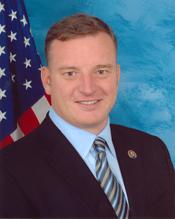
Mr. Chairman, I have an amendment at the desk. Mr. Chairman, I yield myself such time as I may consume. My amendment simply codifies in the NDAA that any foreign terrorist detained be tried in a…
Mr. Chairman, I have an amendment at the desk.
Mr. Chairman, I yield myself such time as I may consume.
My amendment simply codifies in the NDAA that any foreign terrorist detained be tried in a military tribunal set up by this Congress rather than in an Article III court. The reason for that is quite simple.
Article III courts, which are reserved for our citizens, afford constitutional rights: the right of an attorney, the right to remain silent, a right to face your accuser and to contradict the evidence that's brought against you, evidence which sometimes is being offered by the government and by people in the intelligence community-- information and sources that need to be protected.
Military tribunals, I think, are the more adequate venue for foreign terrorist enemy combatants to be tried and to be given due process fairly, which would also protect our sources and would also protect the way that we gather evidence by men and women in uniform and by panels of men and women in uniform. I had the pleasure of serving in the United States Army JAG Corps. They are people of the utmost integrity and the utmost fairness.
Specifically, despite the fact of our moving further away from 9/11, the war on terror continues, as we have seen with Abdulmutallab, the underwear bomber, as we have seen with Major Nidal Hasan in the Fort Hood shootings, as we have seen with the Times Square bombing, and as we have seen as recently as last week in a second attempt at an underwear-type bombing on an airplane.
So, for these reasons and for the reasons stated previously with regard to detainees at Guantanamo Bay, for those who are not U.S. citizens but who are foreign terrorist detainees--and they should get due process--I believe in the due process venue of the military tribunals and military court down in Guantanamo Bay so that they may get their day in court in a fair way, one that is humane and just.
With that, Mr. Chairman, I reserve the balance of my time.
Mr. Chairman, I yield 90 seconds to my friend from Arkansas (Mr. Griffin).
Mr. Chairman, may I inquire as to the time remaining.
Mr. Chairman, I would just say to some of the things that have been said that I don't think that what this amendment is saying is in any way disparaging what Article III courts can do or would be successful doing. Certainly I would agree that they could be adequate in prosecuting criminals and people that do crimes in this country. What we are talking about are foreign enemy terrorist combatants, people that commit acts of war against this country in furtherance of the authorization that this Congress passed.
What we have done as a Congress is set up military commissions in ways that can protect evidence, ways that can protect witnesses and sources, and, in my opinion, in a way that the Article III courts might not be able to. I'm not saying that they couldn't. I'm saying that it is a better venue. Just like when we talked about earlier the Ranking Member Smith and Amash amendment, which would preclude the use of military tribunals. As much as the ranking member is saying that options should be on the table, we're saying the same thing.
With that, I hope my colleagues will vote for this amendment, and I yield back the balance of my time.
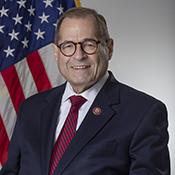
Mr. Chair, I rise to support the Lee Amendment to end the war in Afghanistan and bring our troops home as quickly as possible. The whole premise of the war in Afghanistan is wrong. The rationale for…
Mr. Chair, I rise to support the Lee Amendment to end the war in Afghanistan and bring our troops home as quickly as possible.
The whole premise of the war in Afghanistan is wrong. The rationale for the war is to fight Al Qaeda, but most of the day-to-day fighting is against an entrenched Taliban insurgency that will outlast any foreign fighters. Fighting in Afghanistan does not enhance the security of the United States in any way.
In 2001, we were attacked on 9/11 by Al Qaeda. Al Qaeda had bases in Afghanistan, and at that time it made sense to go in and destroy those bases, and we did. But that took about three weeks. We should have withdrawn after three weeks. The CIA told us more than a year ago that there are fewer than one hundred Al Qaeda personnel in all of Afghanistan. So why do we still have 88,000 troops there? Troops who will continue to risk their lives every day in a war that has already claimed far too many lives. And why should we continue pouring billions of dollars into an intractable mess when we should be devoting those funds to our own economy, our own jobs, our own schools, our own bridges and roads and highways, our own housing, social programs, and education?
Afghanistan is in the middle of what is, so far, a 35 year civil war. We do not have either the need or the ability to determine the winner in that war, which is what we're trying to do. If we continue on this course, in two years, there will be hundreds more dead American soldiers, several hundred billion more dollars wasted, and two or three more provinces labeled ``pacified''. But as soon as we leave, now or in 2014 or 2016 or 2024 or whenever, those provinces will promptly become ``unpacified,'' the Taliban and the warlords will step up the fighting, and the Afghan civil war will resume its normal, natural course.
Our troops are fighting valiantly, but we are there on the wrong mission. We should recognize that rebuilding Afghanistan in our own image, that setting up a stable government that will last is both beyond our ability and beyond our mandate to prevent terrorists from attacking the United States. We fulfilled the mission in protecting America from terrorists based in Afghanistan over 10 years ago. We should have withdrawn our troops 10 years ago, we should withdraw them now. We shouldn't wait till 2014, we shouldn't have several thousand advisors or troops or whatever advising or helping the Afghanis for another 10 years. They have their own civil war they have been fighting for 35 years. I wish we could wave a magic wand and end it but we can't, we should not participate in what is an Afghan civil war, we do not need to pick the winner, we do not have the ability to pick the winner, all we are doing is wasting lives, wasting limbs, wasting people and wasting dollars. It ought to end as rapidly as we can physically get them out of there.
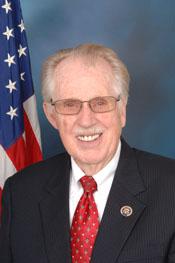
Mr. Chairman, I have an amendment at the desk. Mr. Chairman, I yield myself such time as I may consume. This is a very simple amendment. I would first like to make two statements that I think are…
Mr. Chairman, I have an amendment at the desk.
Mr. Chairman, I yield myself such time as I may consume.
This is a very simple amendment. I would first like to make two statements that I think are generally recognized facts. One of those is that only 11.8 percent of our workforce belongs to a PLA; secondly, that PLA contracts in the government on the average cost the taxpayer 12 to 18 percent more than a non-PLA contract.
Our amendment is very simple. It is not prescriptive. It is simply permissive. It says that the government will not discriminate in awarding contracts whether you're a PLA, not PLA, whether it's a mixture of PLA and non-PLA companies, that they will be considered equal and fairly. If, in fact, a PLA contractor is more efficient and does better quality work as they contend, then that will be taken into account in the award of the contract. You do not have to award to the lowest bidder. You can award on the basis of best value.
I think that this amendment is a commonsense amendment that anybody who believes in the free enterprise system ought to support, and I reserve the balance of my time.
Mr. Chairman, I yield 2 minutes to my friend from Arizona (Mr. Flake).
Mr. Chairman, I yield 1 minute to the gentleman from Michigan (Mr. Walberg).
Mr. Chairman, may I inquire how much time remains?
I yield 1 minute to my good friend from Georgia (Mr. Gingrey).
Mr. Chairman, maybe it's because I am a scientist, but I'm having some trouble understanding how an amendment that specifically says that it is nondiscriminatory, that it's going to be totally agnostic to whether an organization is PLA or not PLA, somehow excludes PLAs in contention. That is certainly not what the amendment does.
I think this is a very commonsense amendment. I think that very few Americans would like to exclude nearly 90 percent of American workers in contention for Federal contracts. This is a fair, commonsense amendment, and I urge it's acceptance by both sides.
I yield back the balance of my time.
Mr. Chairman, if we don't buy these aircraft, it doesn't mean that we won't be buying other rotorcraft because there are missions that must be accomplished. This airplane will replace the CH 46E, and compared to the CH 46E, it has four times the range and carries twice as many combat-loaded personnel.
So the gentleman's goal of reducing spending, his amendment might result in exactly the opposite because obviously for many missions this will be far and away the most efficient aircraft.
Mr. Chairman, we need to reject this amendment because if we pass the amendment, it could very well result in increased costs to our military, not decreased costs, and less efficiency on many missions.
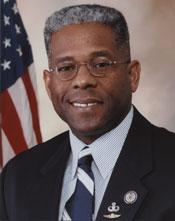
Mr. Chairman, thank you for allowing me to speak. I will say this one thing. I've been in Afghanistan for 2\1/2\ years. And having been a ground combat commander, I say one thing: if this amendment…
Mr. Chairman, thank you for allowing me to speak.
I will say this one thing. I've been in Afghanistan for 2\1/2\ years. And having been a ground combat commander, I say one thing: if this amendment were to pass, where it says this amendment would restrict the authorization and use of funds for continuation of combat operations in Afghanistan, just today, in the Farah province, which I've been to, the Taliban attacked an Afghan Government compound, killing 7 people.
What you are telling our men and women in combat, what you are saying to the enemy is that we are going to leave those men and women hanging, that we are not going to provide them the resources.
Now, I see where this amendment says it does not prohibit or restrict the use of funds available for the U.S. to carry out diplomatic, humanitarian, development, or general reconstruction efforts. One of the problems that we have had in Afghanistan is that we got involved in nation-building, we got involved in occupational-style warfare, and truly not being involved in a counterterrorism style of warfare and going after the enemy. This is where our primary focus should be.
We have generals that are on the ground that know what they're doing. They've been to Staff College, they've been to War College. Why is it that we don't want to listen to the people that we have placed trust and confidence in to lead our men and women in combat? They have been told that in 2014 we will be drawing down and leaving Afghanistan. Why in God's name would we want to repeat some of the horrible things that I saw my older brother go through in Vietnam, where we restricted funding, and the next thing you know you had the killing fields of Pol Pot? I'm telling you, I've been in Afghanistan; I know this enemy. And I don't see anyone over there, my dear colleagues on the other side, that I would trust more than General Allen,
who is on the ground, who knows what he has to do.
The message that you send to our troops is that you're abandoning them. The message that you send to the Taliban, to al Qaeda, to the Haqqani Network, to LeT, to every single radical Islamic group, is that we have turned our backs on our military, and you can continue to kill them.
I just want to say one simple thing. Two weeks ago, I went to the memorial service for PFC Michael J. Metcalf of Boynton Beach, Florida, who was laid to rest today in Arlington. I will not turn my back on those men and women who are still my friends, some of them even my relatives. I ask that my colleagues do not vote for this amendment.

I thank my friend. I rise to respectfully disagree with the amendment offered by a person for whom I have great respect. I know that he offers this amendment because he certainly wants to avoid a…
I thank my friend.
I rise to respectfully disagree with the amendment offered by a person for whom I have great respect. I know that he offers this amendment because he certainly wants to avoid a situation where our country arbitrarily takes innocent human life. I think he's right to have that concern, and I think it's one that is widely held. I think that the issue raised by this amendment is whether others can be entrusted with striking that same balance or whether the Congress should enact a unilateral prohibition against certain kinds of activities.
When the decision-makers who operate these drone strikes make a decision, they have to strike this balance between our moral obligation to avoid arbitrary attacks on innocent people and our moral obligation to defend our country. And I think that they are capable of striking that balance, and I frankly think that a blanket prohibition against the use of these strikes--except in circumstances where we know the identity of the target--unduly restricts them in making that judgment.
I certainly understand and sympathize with the goal of this amendment. But because I think it unduly restricts our options, I would urge its defeat.
I rise in opposition to the amendment.
If a suspected terrorist can only be tried successfully in a military commission because there are concerns about jeopardizing the confidentiality of classified information or other concerns, then I emphatically agree that that person should be tried in a military commission. But to presuppose that all such detainees properly belong in a military commission, I think, is a mistake, for two reasons.
First, it really prejudges the record of evidence and the standing of law in that case when we're not necessarily competent to do that. That is a decision the prosecutors ought to make. Secondly, I think, although it's not the intention of the authors, I'm sure, it belies a certain lack of confidence in our constitutional system of criminal justice.
We should be proud of our system. It's one that operates on principles of fairness, and it fairly and expeditiously determines guilt or innocence. I think to abandon that system in all cases and under all circumstances not only unwisely prejudges the facts of these cases but also unwittingly undercuts confidence in our Constitution and in our Article III courts. For that reason, I would urge a ``no'' vote on this amendment.

Mr. Chairman, I rise to speak in support of the Lee amendment. When I was in the Hawaii State legislature, we were the only State that did a Hawaii Medal of Honor. The unfortunate part about it is we…
Mr. Chairman, I rise to speak in support of the Lee amendment.
When I was in the Hawaii State legislature, we were the only State that did a Hawaii Medal of Honor. The unfortunate part about it is we gave those medals to the spouses and the families and the friends of those who had fallen in Iraq and Afghanistan, as long as they had some connection to Hawaii, either serving at one of our bases or being from there. When I went through that proceeding, I said, you know, as soon as we can--and I believe the time has come for us--we must safely remove our troops and the civilian personnel because we owe it to them.
It is not a matter of whether or not we are abdicating or we are turning our backs on them. They have done what they were sent there to do. Eleven years of fighting; Osama bin Laden is dead. The people of the United States know that, and they are asking us to remove the men and women. Don't continue them in harm's way because we have done what we told them they were sent there to do. That is why I stand in support of the Lee amendment.
I thank the gentleman from Connecticut.
I rise in opposition to the Bartlett amendment because I think the Bartlett amendment doesn't quite understand the difference between a project labor agreement and a collective bargaining agreement.
This amendment targets Executive Order 13502, which encourages the use of PLAs in construction contracts of $25 million or more. And the reason is that it's historically something that we have supported.
Ironically, in 1992, there was a Supreme Court decision that defined PLAs, called the Boston Harbor Agreement, which was under President Bush, who had a similar executive order that prohibited the use of PLAs. It was Bush's solicitor Kenneth Starr that argued for the PLAs. And he said the reason why you would use them is because of timely completion, labor peace and stability, labor supply, and for public purpose. This is the reason why you would use PLAs.
We know that historically, this has been one of the best ways to do these major construction projects. What the Bartlett amendment does is it will tie the hands of the Department of Defense.

Mr. Chair, I continue to be disappointed at how Republicans are approaching deficit reduction. Every day, we hear Republicans talking about the need for painful cuts to get our deficits in order.…
Mr. Chair, I continue to be disappointed at how Republicans are approaching deficit reduction. Every day, we hear Republicans talking about the need for painful cuts to get our deficits in order. However, time and again, Republicans appear unwilling to exercise fiscal discipline when it affects something they like.
First, the sequester is set to impose difficult and arbitrary spending cuts across both defense and domestic programs unless we replace its deficit savings before the end of the year. Yet, Republicans seek to find these savings only by cutting domestic programs like Social Service Block Grants, food stamps, and preventive health care services. And second, we reached an agreement last August on spending levels, which Republicans have now broken.
This Republican defense bill authorizes $8 billion more than the agreed-upon level. At the same time, Republicans are drastically cutting domestic programs.
This amendment returns defense spending to the level agreed upon in the Budget Control Act. It does so without weakening our military or denying our troops the tools they need to succeed in their mission. This should be something Republicans and Democrats ought to see eye to eye on, because we previously agreed to it in August.
Democrats want to provide our troops with every tool they need to carry out their mission and keep Americans safe. The arbitrary cuts of the sequester will make doing so much more difficult.
That's why we need a solution that balances defense and non-defense spending cuts and includes revenues--a big, bold, and balanced approach.
This, Mr. Chair, is the opposite of a balanced approach, and I urge my colleagues to adopt this amendment and send a strong message that we must approach deficit reduction with the seriousness it deserves.
I commend Representative Barbara Lee, Financial Services Ranking Member Barney Frank, Representative Lynn Woolsey, and Representative Earl Blumenauer for their work on this amendment and for standing up for the agreement the parties reached last August.
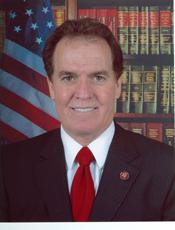
Mr. Chairman, I rise today in support of amendment No. 8, the Bartlett-Flake amendment, to H.R. 4310. The amendment will prevent the DOD from requiring contractors to sign expensive union-favoring…
Mr. Chairman, I rise today in support of amendment No. 8, the Bartlett-Flake amendment, to H.R. 4310.
The amendment will prevent the DOD from requiring contractors to sign expensive union-favoring project labor agreements as a condition of winning Federal construction contracts for projects authorized by the bill.
Under a PLA, the construction firm must agree to sign a union collective bargaining agreement, whether it's unionized or not, before it can bid on a government project. PLAs can result in increased costs for contractors and taxpayers by as much as 18 percent and cause unnecessary procurement delays and political favoritism in the Federal procurement process.
At a time when the Department of Defense is facing devastating across-the-board cuts, it simply does not make sense to encourage PLAs. I urge my colleagues to support the amendment.
Mr. Chair, I rise in strong opposition to the Ellison/Conyers amendment.
Simply put, if the goal is to deprive the Marine Corps of the Short Take-Off Vertical Landing variant of the F 35, designed to replace its aging Harriers and F 18's--while simultaneously increasing the per unit cost of Joint Strike Fighters--then this amendment achieves it.
The STOVL variant is desperately needed for the execution of short takeoffs and vertical landings in combat deployments aboard amphibious assault ships and in austere conditions ashore.
It will provide the Marines with a much more capable tactical fighter force that meets the future threats facing our nation.
This misguided amendment is opposed by the Department of Defense and the Marine Corps, not only because it would invest in yesterday's technology at the expense of tomorrow's, but because the F 35B has performed exceedingly well over the past 18 months, testing ahead of schedule in both 2011 and 2012.
Because the F 35B is urgently needed by the Marine Corps and our international partners, I urge my colleagues to defeat this amendment.

Mr. Chair, I urge my colleagues to join me and Representative Kind in correcting a government error and ending bureaucratic impediments that are keeping soldiers from receiving their earned benefits.…
Mr. Chair, I urge my colleagues to join me and Representative Kind in correcting a government error and ending bureaucratic impediments that are keeping soldiers from receiving their earned benefits.
Quite simply, the Petri-Kind amendment, which is included in this en bloc amendment, would pay approximately 575 National Guardsmen for the vacation days they earned through the Post Deployment Mobilization Respite Absence program that they were unable to take after their last deployment due to government error. Some have not been reimbursed for as long as five years.
The problem occurred when the Defense Department did not issue the guidelines for calculating this benefit until several months after it went into effect. Some soldiers demobilizing during this time did not have these additional days added to their leave. Many of them have since retired or are not deploying again and are unable to use their earned vacation days.
This effort is a national problem, affecting Army National Guardsmen in 34 states. Unfortunately, soldiers in Wisconsin are affected more than those in any other state with 80 Wisconsin Army National Guardsmen impacted, most of whom are members of the 1157th Transportation Company based in Oshkosh. As I speak, this unit is once again serving overseas after deploying to Afghanistan just last month. I thank the entire Wisconsin delegation for their support of this amendment, as well as the National Guard Association of the United States.
This amendment is similar to Representative Kline's bill, H.R. 4045, which passed by voice vote in the House Tuesday night to pay a much larger group of soldiers who also did not receive the pay they were promised.
Mr. Chair, we have a moral obligation to ensure that our men and women serving in the military receive the benefits they are due. I appreciate the support give to this amendment by the House Armed Services Committee and urge it's passing by the entire House.
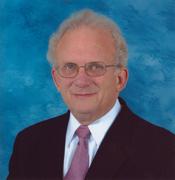
Thank you, Mr. Smith, for yielding me this time. I rise in support of the manager's amendment, but to speak in support of the Smith amendment, which is part of the en bloc amendment which will be…
Thank you, Mr. Smith, for yielding me this time.
I rise in support of the manager's amendment, but to speak in support of the Smith amendment, which is part of the en bloc amendment which will be taken up next. I am pleased to join Ranking Member Smith, Chairman McKeon, and Foreign Affairs Chair Ros-Lehtinen as sponsor of the Smith amendment.
I am particularly pleased that this amendment incorporates most of H.R. 3288, the Safeguarding United States Satellite Leadership and Security Act, legislation I introduced last November, along with Don Manzullo, Adam Smith, Dutch Ruppersberger, Rob Bishop, Martin Heinrich, Mike Coffman, and Gerry Connolly. We have since been joined by 12 other cosponsors from both sides of the aisle, many of whom are also cosponsors of this amendment.
Mr. Chairman, this bipartisan amendment, which will be part of the en bloc, would help restore America's global competitiveness in high-tech satellite technology and protect vital U.S. national security interests.
Treating commercial satellites and components as if they were lethal weapons, regardless of whether they're going to friend or foe, has gravely
harmed American space manufacturers--a view borne out by numerous studies, industry assessments, and the administration's own recent ``1248'' report to Congress. We depend on these manufacturers for our own critical defense needs. If onerous restrictions prevent them from competing in the international marketplace, then they can't innovate and ultimately cannot survive.
This amendment also supports U.S. national security. It includes a strict prohibition on any satellite exports to China--the original concern that caused Congress to transfer all satellites to the Munitions List--as well as to Iran, North Korea, Syria, Sudan, and Cuba.
I urge my colleagues to support the amendment, and I thank the chair and the ranking member of the committee for their support of this amendment.
Bill Text
Latest available legislative text
        [Congressional Bills 112th Congress]
[From the U.S. Government Publishing Office]
[S. 160 Introduced in Senate (IS)]

112th CONGRESS
1st Session
S. 160

To amend the Internal Revenue Code of 1986 to increase the credit for
employers establishing workplace child care facilities, to increase the
child care credit to encourage greater use of quality child care
services, to provide incentives for students to earn child care-related
degrees and to work in child care facilities, and to increase the
exclusion for employer-provided dependent care assistance.

_______________________________________________________________________

IN THE SENATE OF THE UNITED STATES

January 25 (legislative day, January 5), 2011

Mrs. Boxer (for herself and Mrs. Gillibrand) introduced the following
bill; which was read twice and referred to the Committee on Finance

_______________________________________________________________________

A BILL

To amend the Internal Revenue Code of 1986 to increase the credit for
employers establishing workplace child care facilities, to increase the
child care credit to encourage greater use of quality child care
services, to provide incentives for students to earn child care-related
degrees and to work in child care facilities, and to increase the
exclusion for employer-provided dependent care assistance.

Be it enacted by the Senate and House of Representatives of the
United States of America in Congress assembled,

SECTION 1. SHORT TITLE.

This Act may be cited as the ``Right Start Child Care and Education
Act of 2011''.

SEC. 2. INCREASE IN EMPLOYER-PROVIDED CHILD CARE CREDIT.

(a) Increase in Creditable Percentage of Child Care Expenditures.--
Paragraph (1) of section 45F(a) of the Internal Revenue Code of 1986 is
amended by striking ``25 percent'' and inserting ``35 percent''.
(b) Increase in Creditable Percentage of Resource and Referral
Expenditures.--Paragraph (2) of section 45F(a) of the Internal Revenue
Code of 1986 is amended by striking ``10 percent'' and inserting ``20
percent''.
(c) Increase in Maximum Credit.--Subsection (b) of section 45F of
the Internal Revenue Code of 1986 is amended by striking ``$150,000''
and inserting ``$225,000''.
(d) Effective Date.--The amendments made by this section shall
apply to taxable years beginning after December 31, 2010.

SEC. 3. INCREASE IN DEPENDENT CARE CREDIT.

(a) Increase in Incomes Eligible for Full Credit.--Paragraph (2) of
section 21(a) of the Internal Revenue Code of 1986 is amended by
striking ``$15,000'' and inserting ``$30,000''.
(b) Increase in Percentage of Expenses Allowable.--Paragraph (2) of
section 21(a) of the Internal Revenue Code of 1986 is amended--
(1) by striking ``35 percent'' and inserting ``50
percent'', and
(2) by striking ``20 percent'' and inserting ``35
percent''.
(c) Increase in Dollar Limit on Amount Creditable.--Subsection (c)
of section 21 of the Internal Revenue Code of 1986 is amended--
(1) by striking ``$3,000'' in paragraph (1) and inserting
``$6,000'', and
(2) by striking ``$6,000'' in paragraph (2) and inserting
``$12,000''.
(d) Credit To Be Refundable.--
(1) In general.--Section 21 of the Internal Revenue Code of
1986 is hereby moved to subpart C of part IV of subchapter A of
chapter 1 of such Code and inserted after section 36C.
(2) Technical amendments.--
(A) Section 21 of such Code, as so moved, is
redesignated as section 36D.
(B) Paragraph (1) of section 36D(a) of such Code
(as redesignated by paragraph (2)) is amended by
striking ``this chapter'' and inserting ``this
subtitle''.
(C) Paragraph (6) of section 35(g) of such Code is
amended by striking ``21(e)'' and inserting ``36D(e)''.
(D) Paragraph (1) of section 36C(f) of such Code is
amended by striking ``21(e)'' and inserting ``36D(e)''.
(E) Subparagraph (C) of section 129(a)(2) of such
Code is amended by striking ``section 21(e)'' and
inserting ``section 36D(e)''.
(F) Paragraph (2) of section 129(b) of such Code is
amended by striking ``section 21(d)(2)'' and inserting
``section 36D(d)(2)''.
(G) Paragraph (1) of section 129(e) of such Code is
amended by striking ``section 21(b)(2)'' and inserting
``section 36D(b)(2)''.
(H) Subsection (e) of section 213 of such Code is
amended by striking ``section 21'' and inserting
``section 36D''.
(I) Subparagraph (H) of section 6213(g)(2) of such
Code is amended by striking ``section 21'' and
inserting ``section 36D''.
(J) Subparagraph (L) of section 6213(g)(2) of such
Code is amended by striking ``section 21, 24, 32,'' and
inserting ``section 24, 32, 36D,''.
(K) Paragraph (2) of section 1324(b) of title 31,
United States Code, is amended by inserting ``36D,''
after ``36C,''.
(L) The table of sections for subpart C of part IV
of subchapter A of chapter 1 of the Internal Revenue
Code of 1986 is amended by inserting after the item
relating to section 36C and inserting the following:

``Sec. 36D. Expenses for household and dependent care services
necessary for gainful employment.''.
(M) The table of sections for subpart A of such
part IV is amended by striking the item relating to
section 21.
(e) Certain Prior Amendments to Credit Made Permanent.--Section 901
of the Economic Growth and Tax Relief Reconciliation Act of 2001 shall
not apply to the amendments made by section 204 of such Act.
(f) Effective Date.--The amendments made by this section shall
apply to taxable years beginning after December 31, 2010.

SEC. 4. 3-YEAR CREDIT FOR INDIVIDUALS HOLDING CHILD CARE-RELATED
DEGREES WHO WORK IN LICENSED CHILD CARE FACILITIES.

(a) In General.--Subpart A of part IV of subchapter A of chapter 1
of the Internal Revenue Code of 1986 is amended by inserting after
section 25D the following new section:

``SEC. 25E. RIGHT START CHILD CARE AND EDUCATION CREDIT.

``(a) Allowance of Credit.--In the case of an individual who is an
eligible child care provider for the taxable year, there shall be
allowed as a credit against the tax imposed by this chapter for the
taxable year the amount of $2,000.
``(b) 3-Year Credit.--
``(1) In general.--The credit allowable by subsection (a)
for any taxable year to an individual shall be allowed for such
year only if the individual elects the application of this
section for such year.
``(2) Election.--An election to have this section apply may
not be made by an individual for any taxable year if such an
election by such individual is in effect for any 3 prior
taxable years.
``(c) Eligible Child Care Provider.--For purposes of this section--
``(1) In general.--The term `eligible child care provider'
means, for any taxable year, any individual if--
``(A) as of the close of such taxable year, such
individual holds a bachelor's degree in early childhood
education, child care, or a related degree and such
degree was awarded by an eligible educational
institution (as defined in section 25A(f)(2)), and
``(B) during such taxable year, such individual
performs at least 1,200 hours of child care services at
a facility if--
``(i) the principal use of the facility is
to provide child care services,
``(ii) no more than 25 percent of the
children receiving child care services at the
facility are children (as defined in section
152(f)) of the individual or such individual's
spouse, and
``(iii) the facility meets the requirements
of all applicable laws and regulations of the
State or local government in which it is
located, including the licensing of the
facility as a child care facility.
Subparagraph (B)(i) shall not apply to a facility which
is the principal residence (within the meaning of
section 121) of the operator of the facility.
``(2) Child care services.--The term `child care services'
means child care and early childhood education.''.
(b) Clerical Amendment.--The table of sections for such subpart A
is amended by inserting after the item relating to section 25D the
following new item:

``Sec. 25E. Right Start Child Care and Education Credit.''.
(c) Effective Date.--The amendments made by this section shall
apply to taxable years beginning after December 31, 2010.

SEC. 5. INCREASE IN EXCLUSION FOR EMPLOYER-PROVIDED DEPENDENT CARE
ASSISTANCE.

(a) In General.--Subparagraph (A) of section 129(a)(2) of the
Internal Revenue Code of 1986 is amended by striking ``$5,000 ($2,500''
and inserting ``$7,500 ($3,750''.
(b) Effective Date.--The amendment made by this section shall apply
to taxable years beginning after December 31, 2010.
<all>