Mr. Speaker, I ask unanimous consent that all Members may have 5 legislative days in which to revise and extend their remarks and include extraneous material on H.R. 2728. Mr. Chairman, I yield…
Mr. Speaker, I ask unanimous consent that all Members may have 5 legislative days in which to revise and extend their remarks and include extraneous material on H.R. 2728.
Mr. Chairman, I yield myself such time as I may consume.
Mr. Chairman, the Obama administration is once again attempting to block new energy production, keeping energy prices high and hurting middle class families. The Department of the Interior is proposing new regulations on the practice of hydraulic fracturing on Federal and tribal lands. These regulations, once implemented next year, will in all likelihood add new layers of red tape and lower energy production even further on Federal land.
For over 2 years, the Natural Resources Committee has conducted extensive oversight of the Obama administration's proposed regulations. We have held multiple hearings across the country and have heard from energy experts, tribal leaders, and State officials who have all had the same message: these are bad regulations that potentially destroy jobs and stifle American energy production.
According to one study, these new Federal regulations would cost nearly $350 million annually. As a consequence, the 1.7 million jobs that are currently supported by shale oil and natural gas production--a number, I might add, Mr. Chairman, that is expected to increase to 2.5 million by 2015--these jobs would be put in jeopardy. Even worse, these proposed regulations duplicate efforts already being carried out by States across the country.
Hydraulic fracturing has been safely and effectively regulated by States for decades. So the Obama administration's proposed regulations are unnecessary, they are redundant, and they simply waste precious time and money duplicating what is already being done successfully.
That is why two of our colleagues from Texas, Mr. Flores and Mr. Cuellar, introduced the bipartisan H.R. 2728, the Protecting States' Rights to Promote American Energy Security Act, before us today. This bill prohibits the Interior Department from enforcing duplicative hydraulic fracturing regulations in any State that already has regulations or will adopt regulations in the future and recognizes
States' authority to regulate this type of activity.
The bill acknowledges that States are doing a good job and an effective job regulating this activity. And ironically, Mr. Chairman, officials from the Obama administration, itself, have admitted that there has not been one known case of groundwater contamination from hydraulic fracturing. The reason I mention this, Mr. Chairman, is because groundwater contamination is the argument most frequently used against this process.
The bill also recognizes that States are able to carefully craft regulations to meet the unique geological and hydrologic needs of their States. A one-size-fits-all regulatory structure, like this administration is trying to impose, will not work and is certainly not the answer.
I want to be very clear: this bill does not prevent the Federal Government from implementing baseline standards in States where none exist. This bill simply prevents the Federal Government from wasting time, money, and resources by imposing duplicative red tape on a process that is widely regarded as being properly regulated by the States.
I urge my colleagues to support this legislation, and I reserve the balance of my time.
Mr. Chairman, I am very pleased to yield 2 minutes to the gentleman from Texas (Mr. Flores), the author of this legislation, who is a member of the Natural Resources Committee.
I yield an additional 30 seconds to the gentleman from Texas.
Mr. Chairman, I yield myself 30 seconds to ask the distinguished ranking member of the Natural Resources Committee if he could tell me who did that study.
I yield 15 seconds to the gentleman from Oregon (Mr. DeFazio) for him to tell me who did that study.
I thank the gentleman for responding.
At this time I yield 2 minutes to the gentleman from Colorado (Mr. Lamborn), chairman of the subcommittee that dealt with this legislation.
Mr. Chairman, I yield 30 seconds to the gentleman from Texas (Mr. Flores), the sponsor of the legislation.
I yield the gentleman 30 additional seconds.
Mr. Chairman, I am very pleased to yield 1 minute to the gentleman from Texas (Mr. Gohmert), another member of the Resources Committee.
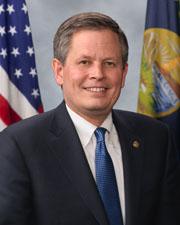
Mr. Chairman, I am very pleased to yield 2 minutes to the gentleman from Montana (Mr. Daines), another member of the Resources Committee.
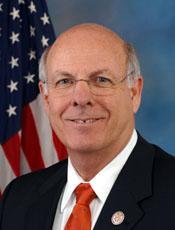
Mr. Chairman, I am very pleased to yield 1 minute to the gentleman from New Mexico (Mr. Pearce), a former member of the Natural Resources Committee.
I yield the gentleman an additional 30 seconds.
Mr. Chairman, I am very pleased to yield 1 minute to the gentleman from Pennsylvania (Mr. Perry), a State that is booming because of this activity.
I yield the gentleman an additional 15 seconds as I see he is on a roll.
Mr. Chairman, I am very pleased to yield 1 minute to the gentleman from Texas (Mr. Farenthold), another member from an energy-producing State.
Mr. Chairman, let me inquire of my friend from New Jersey if he is prepared to close. We had some further requests for time, but I don't see them, and sometimes they don't get their time when they don't come down here.
Mr. Chairman, I reserve the balance of my time.
Will the gentleman yield?
Mr. Chairman, may I inquire as to how much time the gentleman from New Jersey has left if he is going to yield back.
I would advise the gentleman to reserve his time because one of our speakers came, which we didn't think was going to happen. So I would advise the gentleman to reserve his time so that he has time to respond.
Mr. Chairman, I am very pleased to yield 1 minute to the gentleman from Virginia (Mr. Cantor), the distinguished majority leader, who is from a State that would like to do more offshore even though we are talking about onshore.
This is Groundhog Day, Mr. Chairman. I would say to my friend, now I have no more speakers whom I can foresee at all, so I am prepared to close if the gentleman doesn't repeat his last statement.
Mr. Chairman, how much time do I have remaining?
Mr. Chairman, I yield myself the balance of the time.
The underlying bill, as has been mentioned several times, is about American jobs and American energy security.
Just last week, the International Energy Agency released its World Energy Outlook. In that report, they predicted that the U.S. would surpass Saudi Arabia and become the top oil producer in the world in only 2 more years. Now, this is great news for our economy, it is great news for American workers, it is great news for potential energy prices, and, Mr. Chairman, it is great news for our national security.
This recent boom in energy production would not be possible without the new technological advances of horizontal drilling and hydraulic fracturing. Let me give you an example. In
the year 2000, shale gas, which is the prime area that you go after with hydraulic fracturing, provided just 1 percent of our Nation's natural gas supplies. Today, it is 25 percent. That number will only continue to grow.
While the White House is quick to take credit for this uptick in energy production, the truth is this increase is happening in spite of this administration's policies and not because of them. Because what has been well documented, all of the increase in energy production is happening on State and private lands, not on Federal lands. Currently, 93 percent of shale oil wells are located on private and State lands and only 7 percent on Federal lands. That simply means that there is a great potential on Federal lands that are currently being ignored because of the regulatory hoops.
I suggest that if the Department of the Interior goes through with their regulations on fracking that would be duplicative of those States, it would only keep that 7 percent where it is rather than increasing. It seems to me, from a standpoint of policy for our country, it is best to be as energy secure as we can possibly be because that means that we are secure from a national security standpoint.
Finally, and certainly not least, that means that American jobs, good-paying American jobs, are creating the energy for the American consumer. That is what this bill is all about.
I urge my colleagues to support the legislation, and I yield back the balance of my time.
Mr. Chairman, I claim the time in opposition to the amendment.
Mr. Chairman, the legislation before the House today is designed to eliminate duplicative regulations and allow for increased energy production. That is the intent of the legislation. Yet here we are with an amendment that creates a loophole in the bill to allow the government to impose back-door regulations to restrict and block American energy production, which, of course, we know would result in lost job opportunities.
H.R. 2728 aims to give the States primacy in regulating hydraulic fracturing operations within their borders. I want to mention that again. This bill aims to give the States primacy in regulating hydraulic fracturing within their borders. So if a State regulatory body wants to implement emissions regulations, which this amendment addresses, in conjunction with their other rules and regulations, they are free to implement their own regulations beyond what is already required. Nothing in this bill prevents any State from putting emissions at the end of the regulations in place.
Further, the Secretary has the authority to manage methane emissions for production on Federal lands and, working collaboratively, we have seen significant reductions in the last 2 years because of that effort. However, attempting to cloak these regulations as fracturing regulations through a loophole that will cost American jobs and inhibit energy production in my mind is simply not the way to go.
So this amendment aims to impose controversial and political regulations into a bill that is simply about American energy production, and I urge a ``no'' vote.
Let me make just one other point. I will probably repeat this again. There is nothing in this bill that prevents a State from regulating emissions within their State, which, of course, would take effect and what the gentleman is trying to do.
I reserve the balance of my time.
Mr. Chairman, I yield myself the balance of my time.
My good friend, the author of this amendment, opened his second remarks by saying, This legislation makes it impossible to regulate-- fill in the blanks. No, Mr. Chairman, that is not the case.
This bill says that primacy of regulation of hydraulic fracturing, which has been going on for some 60 years, if a State has it in place, that State's laws shall be the ones that we should follow. Those States that don't have it, then, of course, this legislation would allow the Department of the Interior's regulations to be there until they changed their regulations.
I want to make a point. This amendment is about the emissions from the process of hydraulic fracturing. Nothing in this bill, as I said before, prevents a State from doing what they can do. After all, keep in mind, Mr. Chairman, those States that have hydraulic fracturing rules maybe in all likelihood have some regulations dealing with the emissions that come from that. Nothing in this bill prevents that from happening.
What the amendment does do, as I mentioned in my opening remarks, is a back-door way to regulate hydraulic fracturing when, as I said just a moment ago, it has been done successfully for over 60 years in the States.
I urge my colleagues to oppose this amendment, and I yield back the balance of my time.
I thank the gentleman for yielding.
Mr. Chairman, I think the gentleman's amendment goes right to the heart of what those who are opposed to this process are concerned with by disclosing the chemicals which is embodied in this amendment. This amendment does exactly what seems to be the opposition on the other side. I think it is a good amendment, and we are prepared to accept it.
I thank the gentleman for yielding.
I think this amendment will probably no doubt prove what we have been saying, that producing American energy will produce American jobs.
I think the gentleman's amendment adds to this legislation, and I am willing to accept that.
Mr. Chairman, I rise in opposition to the amendment.
I yield myself 2\1/2\ minutes.
Mr. Chairman, a similar amendment like this has been offered multiple times in our committee markups and they have always failed on a bipartisan vote, and similar amendments like this have also failed on the floor. This is nothing more than an effort to make production on Federal lands more challenging and less valuable.
The vast majority of the natural gas that is produced in the United States stays in North America, but that that is exported, 98 percent goes to Canada and Mexico. We ought to keep those customers.
Additionally, since 2009, the U.S. has been the largest producer of natural gas in the world, which, I guess, goes to my friend from Oregon's argument. But energy is going to be globally decided in the marketplace. Many companies operating in United States are international companies with businesses all over the world. Undercutting the basic premise of the free market and restricting the use of the resource always has real economic consequences in the future.
Now, there is one other point about this amendment, too. The amendment makes it unclear what is considered natural gas. The question arises, are products derived from natural gas also only to be sold in the United States because they are made from natural gas? It is unclear the way the amendment is drafted. But if that were to be the case, Mr. Chairman, there would be vast spin-off industries that would be affected, namely, the plastic industries.
So I tend to be one that believes that the American consumer, in fact, consumers everywhere, are benefited if we have free trade in the world. That should apply to everything, including a big resource that we are becoming a leader in, and this amendment, I think, is contrary to that approach.
Mr. Chairman, with that, I reserve the balance of my time.
Mr. Chairman, I am very pleased to yield 2 minutes to the gentleman from Ohio (Mr. Turner).
Mr. Chairman, I yield myself the balance of the time.
I would just simply say and correct my good friend from Oregon, I did not say that because natural gas would enter the international market it would become less available. I simply said that it would become part of the global market.
I dare say that, when oil was discovered in Titusville, Pennsylvania, nobody thought that that oil would become part of the world market, but it has. But unfortunately, because we in the United States have not utilized our resources like we should with crude oil and not competed as we should with past decisions, there was a cartel that was formed internationally called OPEC. They control the oil market.
The best way to beat cartels is to outsupply them. If we are going to be a leader in natural gas in the world, we ought to take advantage of that and lead when we can, but recognize that a free market gives the best services to people and recipients of that, not only in the United States, but in the world.
With that, I urge rejection of the DeFazio amendment, and I yield back the balance of my time.
I thank the gentlelady for her amendment and for yielding to me for the purpose of entering into a colloquy.
Mr. Chairman, I would ask my friend from Texas, the text of the gentlelady's amendment requires the Secretary of the Interior to conduct an annual review of all State hydraulic fracturing activity. My concern is that this provision appears to be very broad.
I would be delighted to work with the gentlelady, as this bill works its way through the legislative process, to consider some additional conditions to ensure that the broad review is targeted at those areas subject to the jurisdiction of the committee and results in a report to Congress that is meaningful and productive.
To that end, would the gentlelady be willing to work with me to clarify that her amendment is intended to apply to State permitting of hydraulic fracturing on Federal lands?
With the clarification that the gentlelady will work with me, that this is subject to Federal lands, with the clarification that the review and report required of the Secretary should be limited to State permitting of hydraulic fracturing on Federal lands, I am willing to accept the gentlelady's amendment. I thank her for her work on that.
I yield back to the gentlelady.