Mr. Speaker, I ask unanimous consent that all Members may have 5 legislative days within which to revise and extend their remarks and to insert extraneous material in the Record on H.R. 1259. Mr.…
Mr. Speaker, I ask unanimous consent that all Members may have 5 legislative days within which to revise and extend their remarks and to insert extraneous material in the Record on H.R. 1259.
Mr. Chair, I yield myself such time as I may consume.
Mr. Chair, I rise today in support of my bill, H.R. 1259, the VA Accountability First Act of 2017.
Mr. Chair, you and many other Members of this body are well aware that providing true accountability at the Department of Veterans Affairs has been a goal of mine and many of my colleagues for years. The House has remained committed to this goal and has already passed several iterations of the legislation before us today, yet the challenges remain, which is why we are here once again trying in this Congress to effect real change and reform.
To bring real reform, we need to provide Secretary Shulkin with the tools he needs to swiftly and effectively discipline employees who don't meet the standards our veterans deserve or who fail in their sacred mission to provide world-class health care and benefits to the men and women who have served.
My bill would provide a singular expedited procedure for all VA employees to respond and appeal to proposed removals, demotions, and suspensions for performance or misconduct or, in the case of title 38 employees, who are healthcare providers, for a question involving direct patient care or clinical competence.
The prenotification and response process would be required to be completed within 15 business days, and the employee would be entitled to an expedited appeal to the Merit Systems Protection Board, where the first step at the administrative judge would be limited to 45 days. Additionally, either party would be able to appeal the administrative judge's decision to the full MSPB and would be provided the opportunity for limited judicial review.
H.R. 1259 would also ensure that the disciplinary procedures and avenues to appeal set up by this bill are the only avenues in place for title 5 and hybrid title 38 employees to dispute proposed removals, demotions, and suspensions for longer than 14 days. Pure title 38 employees, mainly VA's physicians and registered nurses, would retain their current internal process, but the timelines for disciplinary action and the appeals process would also be aligned to the timelines for all other VA employees as set up by this bill.
This bill would also provide improved protections for whistleblowers; would allow the Secretary to reduce an employee's Federal pension if they are convicted of a felony that influenced their job at VA; would provide the Secretary with the authority to recoup a bonus provided to an employee who engaged in misconduct or poor performance prior to receiving the bonus; and would allow the Secretary to recoup any relocation expenses that were authorized for a VA employee only through the employee's ill-gotten means, such as waste, fraud, and malfeasance.
Lastly, it would also provide the Secretary with the direct hiring authority that he desperately needs and has been asking for so that we can hire medical center directors and VISN directors in a more expedited manner and fill leadership vacancies across VA.
Mr. Chair, as I have said, I agree with all of my colleagues that the vast majority of VA employees are hardworking public servants who are dedicated to providing quality health care and benefits for veterans. But it is beyond comprehension that, with as much outright malfeasance that Congress, the American public, the media, and our courageous whistleblowers have uncovered at the VA, which has led to the increased scrutiny of the Department over the past few years, that we still see far too many instances of VA employees not living up to the standards America expects and not living up to the standards that our men and women who have served this country deserve.
Knowing many of the instances that have happened at the VA are a slap in the face to our veterans, it is unbelievable to me that anyone would oppose the bill before us here today.
The committee has discovered an instance of an employee showing up drunk to work to scrub in for a surgery on a veteran; a VA employee taking a recovering addict to a crack house and buying him drugs and a prostitute; a VA employee participating in an armed robbery; and senior managers retaliating against whistleblowers, at which point VA then has to pay hundreds of thousands of dollars to the whistleblower in restitution.
Not only are all of these acts egregious and not only are all of these instances factual, they are just the tip of the iceberg; but what causes me to stand before you today is that, in none of these instances, did the VA hold these employees accountable in any reasonable timeframe, if at all.
I blame many factors for this, but mainly I blame an antiquated civil service system and a grievance process set up by the union-negotiated collective bargaining agreements that have left VA unwilling to jump through the many hoops to do what is right.
Mr. Chair, it is well past time that we not allow the current system to continue, and it is certainly our duty to finally take action and enact meaningful changes at VA that put veterans and their families first and foremost. Everything else should come second. That includes the power of the public sector unions.
Everyone in government knows that the civil service laws that were once meant to promote the efficiency of government are now obsolete and make it almost impossible to remove a poor-performing employee. Last year, VA's then-Deputy Secretary Sloan Gibson, under President Obama, sat before the Veterans Affairs' Committee and admitted it was too difficult to fire a substandard VA employee.
The Government Accountability Office studies the government's ability to hold low-performing employees accountable and found that it took 6 months to a year, on average, and sometimes significantly longer, to fire poor-performing government employees.
I have heard the concerns that this bill will hurt the Department's ability to recruit and retain good employees. I don't buy this argument, as every VA employee I speak to tells me exactly the opposite. Good employees want to work in an environment where they know everyone can be held accountable for their actions.
I believe the current status quo of allowing bad employees to continue at
their jobs while receiving a paycheck actually hurts the moral of other employees who are doing the right thing 24 hours a day.
This is the same for employees of the Department who are veterans. I know that some have said that this would hurt veterans who are employed at a VA, since they make up a large percentage of VA employees, as it should be. As a veteran myself, and as my fellow veterans here today would agree--we don't sign up to serve, whether in uniform or civilian clothes, because we put our individual employee protections ahead of the mission--the mission always comes first, Mr. Chair; and at the VA, the mission is our veterans. Veterans want to work alongside colleagues they know are working hard for their fellow men and women they served alongside.
I also want to note that, from day one, I have worked with Secretary Shulkin and his team in the drafting of this bill that is before us today. He has endorsed this legislation not because he wants to punish employees or make it harder to recruit quality employees, but because he sees this type of change as desperately needed if he is going to truly reform the Department, as both sides of the aisle want.
Secretary Shulkin is someone who garnered the trust and respect of two Presidents of two different parties to serve our veterans, and he was confirmed by a vote in the Senate of 100-0. Mr. Chair, I hope that my colleagues would understand that his support and assistance in crafting this bill before us today is because real accountability at the Department of Veterans Affairs is a veteran issue, not a political issue.
It is time that we align ourselves with our Nation's veterans and the organizations that represent them. Fifteen veterans service organizations support the bill before us today: the American Legion, Veterans of Foreign Wars of the United States, Paralyzed Veterans of America, Iraq and Afghanistan Veterans of America, the Military Order of the Purple Heart, Concerned Veterans for America, Student Veterans for America, Reserve Officers Association, Fleet Reserve Association, Association of the United States Navy, the Enlisted Association of the National Guard of the United States, VetsFirst, AMVETS, the Military Officers Association of America, and the United States Army Warrant Officers Association. These are 15 groups that represent millions of veterans and their families.
While I am in no way trying to make this a political argument or say that my colleagues on the other side of the aisle do not care about veterans--they do--but when it comes to this particular issue, accountability at the VA, I do not believe we can avoid the facts:
The facts are, when we talk about accountability at VA during our VSO hearings with the Senate, Members get an ovation.
The facts are that veterans, not just from the headquarters in D.C., but across this country, come up and thank Members for putting veterans' rights before all else.
The facts are the only groups that have staunchly come out and opposed the reform we are trying to make in this bill are the public sector unions.
As I said, this should not be a political discussion and this should not be one side of the aisle trying to out-veteran the other side of the aisle. We don't want to do that. But when you look at the facts, it is clear what our veterans and what the American public want us to do here in this Congress.
We have a package that makes meaningful changes to VA's civil service system while maintaining due process rights, as we should. Today we have the opportunity to make real and lasting changes to a broken system. Today we can decide to stand with our veterans or we can stand with the status quo and the unions that perpetuate the status quo, which I believe has failed them and the American public for far too long.
I hope you all will join me and the 15 veteran organizations that support this legislation and do what is right for veterans and pass H.R. 1259. Let's put accountability first so that transformative reforms can succeed.
Mr. Chair, I reserve the balance of my time.
House of Representatives, Committee on Oversight and
Government Reform,
Washington, DC, March 10, 2017.
Hon. David P. Roe,
Chairman, Committee on Veterans' Affairs, Washington, DC.
Dear Mr. Chairman: I write concerning H.R. 1259, ``VA
Accountability First Act of 2017.'' As you know, the
Committee on Veterans' Affairs received an original referral
and the Committee on Oversight and Government Reform a
secondary referral when the bill was introduced on February
28, 2017. I recognize and appreciate your desire to bring
this legislation before the House of Representatives in an
expeditious manner, and accordingly, the Committee on
Oversight and Government Reform will forego action on the
bill.
The Committee takes this action with our mutual
understanding that by foregoing consideration of H.R. 1259 at
this time we do not waive any jurisdiction over the subject
matter contained in this or similar legislation. Further, I
request your support for the appointment of conferees from
the Committee on Oversight and Government Reform during any
House-Senate conference convened on this or related
legislation.
Finally, I would ask that a copy of our exchange of letters
on this matter be included in the bill report filed by the
Committee on Veterans' Affairs, as well as in the
Congressional Record during floor consideration, to
memorialize our understanding.
Sincerely,
Jason Chaffetz,
Chairman.
Mr. Chair, I yield myself such time as I may consume.
With that impassioned plea, I was asked yesterday on a Facebook page who I might, from the other side of the aisle, like to ride across the country with, and it was my friend Tim Walz who I would like to ride with. He very passionately represents veterans very well, and it has been an absolute pleasure to work on the committee with him for the last 8 years.
Mr. Chair, just a couple things. The bill subjects all career employees to this new formal removal authority, and this would include frontline employees, middle management, even Senior Executive Service employees. Just a couple more things. It provides a unified process, not a bunch of different ones, for employees to appeal major adverse actions and other actions for title 38 when it pertains to a question involving direct patient care or clinical competence.
The current grievance procedures can allow an appeal to drag on for almost 350 days, and the House is the only legislative body that has passed a true accountability bill. I know, having spoken with Secretary Shulkin yesterday, he very much wants this piece of legislation in his toolbox to help reform the VA, which is desperately needed.
Mr. Chair, I yield 3 minutes to the gentlewoman from Washington (Mrs. McMorris Rodgers), our Conference chair.
Mr. Chairman, also during that live Facebook page, I mentioned another person I wouldn't mind riding across the country with, and it was Mr. Hoyer, just to clarify the Record.
Mr. Chairman, just a couple of clarification things.
All we have done with this bill is--we haven't removed due process rights--we have just shortened the time. And to show the concern that I had, I was afraid that if we used 14 or 15 calendar days--let's say, President's Day would be on a Monday, which would be a holiday--that would take a day away. So I said let's make this first part of this 15 business days. So that is 3 weeks. And then the accelerated review can go on 45 business days, which is 9 weeks. So this is 3 months of time, not a full year. But it simply compresses that time into a 3-month timeframe that this could last. So I think that people have their due process rights protected.
Mr. Chairman, I yield 2 minutes to the gentleman from Florida (Mr. Bilirakis), my good friend, vice chair of our committee.
Mr. Chairman, I thank my friend, Mr. Takano.
``If you engage in an unethical practice, if you cover up a serious problem, you should be fired. Period. It shouldn't be that difficult.'' President Barack Obama, at the Choice Act's signing in 2014.
Dr. Shulkin is not a hard-line person. He received 100 votes, Mr. Chairman, in the Senate. I don't know that anybody else in this confirmation process has come close to that, but he has had unanimous support. He has asked for this. We worked with his office. He has personally asked that this be passed. That is why we are bringing this bill down here in this form.
Mr. Chairman, I yield 2 minutes to the gentleman from Colorado (Mr. Coffman), one of my great friends here in Congress, a fellow classmate. We came in together. We, too, have traveled to Afghanistan together to visit our Active Duty military in combat. He, too, is a combat veteran.
Mr. Chair, I yield myself such time as I may consume.
Mr. Chair, I think my good friend, Mr. Walz, helps make the point that this person who was aggrieved, it doesn't have to last so long. You can actually compress this time. As I mentioned, it is not short; 3 months to get this resolved. But this process we are putting together actually helps that person that has been aggrieved by the supervisor, I would argue.
Mr. Chair, I yield 1\1/2\ minutes to the gentleman from Florida (Mr. Dunn), a new member of our committee, a veteran and physician from Florida.
Mr. Chair, I will just point out that I don't think the VA has a reputation of firing too many people.
Mr. Chair, I yield 1 minute to the gentleman from Florida (Mr. Rutherford), a new Member, and a very active member of our committee.
Mr. Chair, I would like to inquire as to the balance of my time.
Mr. Chair, I yield 3 minutes to the gentleman from Utah (Mr. Chaffetz), the chairman of the Oversight and Government Reform Committee, a fellow classmate.
Mr. Chairman, I yield 1 minute to the gentleman from Indiana (Mr. Banks), a new member of our committee who is also in the Reserves serving our Nation in the military.
Mr. Chair, I yield an additional 30 seconds to the gentleman.
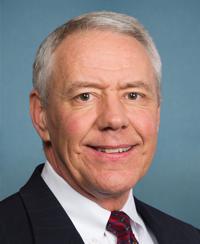
Mr. Chairman, I yield 2 minutes to the gentleman from Colorado (Mr. Lamborn), a good friend and long-term member of the Veterans' Affairs Committee.
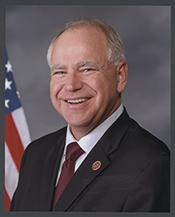
Mr. Chairman, to go along with what Sergeant Major Walz said, it is truly a privilege to work with him on these issues. His heart is in the right place. He truly cares about veterans.
I believe this bill, though, does do what needs to be done. Secretary Shulkin--approved 100-0 in the Senate--believes that he needs this tool to be able to reform the VA. I think it is imperative that we, as legislators, provide him the tools when we say we demand accountability at the VA.
Once again, I encourage all Members to support H.R. 1259.
Mr. Chair, I yield back the balance of my time.
Mr. Chairman, I have an amendment at the desk.
Mr. Chairman, this manager's amendment would provide technical changes to the bill, while not changing the overall substance of the bill. The amendment is noncontroversial and no cost. It does not change any underlying policy in the bill.
I urge adoption of the amendment.
I reserve the balance of my time.
Mr. Chairman, I urge approval of the amendment, and I yield back the balance of my time.
Mr. Chairman, I claim the time in opposition to the amendment.
Mr. Chairman, I yield myself such time as I may consume.
I appreciate the spirit in which this amendment is proposed by the gentleman from Minnesota (Mr. Walz), but I must oppose it at this time.
The amendment would dramatically weaken the current accountability language for non-SES employees to the point that it would not be a meaningful improvement to or departure from current law. Just as a point of clarification, the Senate never did move the Veterans First Act.
The amendment includes many of the archaic and unnecessary civil service rules that currently hamper true reform and accountability at the Department. And unlike H.R. 1259, which would require the entire internal and first level of external appeals process to be completed within 67 days, the Walz amendment would allow for the process to take at least 120 days, and this period could expand indefinitely.
Additionally, the standard used in this agreement for removing or demoting employees for performance is not a meaningful departure from current law, and I fear it won't make any true changes that are desperately needed at VA.
On the collective bargaining piece, I understand the ranking member's concern, but the last thing I want to do is create a giant loophole that makes it harder to discipline bad employees. Just looking at one of VA's master contracts with employee unions, AFGE, which is the largest union at VA, one can see that the grievance procedures that he wishes to keep in place to dispute discipline can extend to almost 350 days, and this timeline can be easily extended.
With the Walz amendment, we would be creating a giant loophole where the Secretary would have one expedited process in place, while the long and administratively burdensome grievance process remains in place for nearly 285,000 employees at the Department, or 76 percent of the VA's workforce.
Clearly, covering only 24 percent of the VA workforce under an expedited authority is not what I want to do, nor do I expect veterans and taxpayers or the Secretary want to do.
Additionally, when the committee first began working on accountability issues at VA, they were told by the largest Federal Government union, AFGE general counsel, that the union would never support any legislation that changes the status quo.
Based on AFGE's strong support for language identical to the Walz amendment last Congress, I think the message is clear. If Congress adopts this language, we would not be protecting taxpayers or veterans, and we would be supporting the corrupt status quo that fails VA employees and veterans daily.
In the end, the question is very clear: Do we want to stand with veterans and taxpayers to provide the Secretary with the appropriate tools he has asked for to hold these employees accountable? Or do we want to give in to special interests groups to support the status quo?
Once again, I urge all Members to oppose the Walz amendment and support the underlying bill.
Mr. Chairman, I reserve the balance of my time.
Mr. Chairman, I am just looking at the AFGE website, and it does have support for the Veterans First Act here on the website; so that is true.
I yield to the gentleman from Minnesota.
Mr. Chairman, reclaiming my time.
Basically, the accountability provisions are the same. I, once again, urge all Members to oppose the Walz amendment and support the underlying bill.
Mr. Chairman, I yield back the balance of my time.
Mr. Chairman, I ask unanimous consent to rise in opposition, although I am not opposed.
Mr. Chairman, I yield myself such time as I may consume.
Mr. Chairman, the amendment would allow a whistleblower who is alleging prohibited personnel practices, as defined in title 38, from being disciplined under the bill until the whistleblower complaint is resolved.
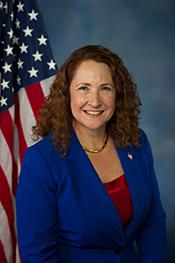
The committee has always favored strengthening protections for whistleblowers. My bill already protects whistleblowers, but I am not opposed to Ms. Kuster's amendment and suggested changes, and I appreciate her offering it. The bill has my full support.
Mr. Chairman, I reserve the balance of my time.
Mr. Chairman, I yield back the balance of my time.
Mr. Chairman, I want to thank Mr. Taylor for his service to our country and to our Nation. I am appreciative of him and his staff for working with us on the amendment. The amendment has, as chair, my full support.
Mr. Chairman, this would require the Secretary to report to Congress each year any performance awards or bonuses provided to Senior Executive Service employees at the VA. This is an excellent amendment from the gentlewoman from New York and will provide additional needed transparency at the Department where taxpayer money is being spent, especially when being spent on bonuses for the most senior individuals at VA. This amendment has my full support.
Mr. Chairman, I ask unanimous consent to claim the time in opposition, although I am not opposed.
Mr. Chairman, I yield myself such time as I may consume.
Mr. Chairman, Ms. Kuster's amendment would require VA supervisors to develop performance plans for employees which would, as a part of the plan, measure steps taken to address poor performance but also improve training for VA supervisors--an excellent suggestion.
I agree that all VA employees, especially our managers, should be held to high standards and should have as much training provided them as is available. Ms. Kuster's amendment has my full support.
Mr. Chairman, I reserve the balance of my time.
Mr. Chairman, this is an excellent amendment, and I urge support.
Mr. Chairman, I yield back the balance of my time.
Mr. Chairman, I yield myself such time as I may consume.
Mr. Chairman, I rise in opposition to the amendment.
I appreciate Mr. Takano's--who is a very hardworking member of the committee--attempt to insert what he thinks is an appropriate balance of due process and accountability, but the substitute language misses the bar of what we are trying to accomplish.
It would strike the entire bill and insert new language only allowing the Secretary to remove someone if they present a threat to health or safety. This is a nearly unobtainable, if not an immeasurable, bar to reach. This undefined standard makes it almost impossible for the Secretary to remove any employee. It would create a confusing process that only allows someone to be removed after they are suspended first and the Secretary conducts an investigation into the individual.
It would allow for employees to be on indefinite suspension for months, if not years, awaiting the Secretary's final decision, which is not fair to veterans and the employee or good-performing employees and taxpayers. The employee deserves a quick opportunity to present their case, and, if exonerated, get back to doing their job.
Unlike my bill, this would only provide backpay to someone if their removal is overturned on appeal if they are a whistleblower. My bill would require any individual whose disciplinary action is overturned on appeal to receive any backpay for that period.
This amendment does nothing to provide the Secretary with the authority to recoup bonuses or relocation expenses from individuals who receive taxpayer-funded money through ill-gotten means such as fraud, waste, or abuse, nor does it allow the Secretary to recoup a portion of a Federal pension of someone convicted of a felony that influenced their VA job.
It would ensure that the current ineffective civil service rules would continue to hamper any change to the corrosive and unaccountable culture at the VA, and would also, more than likely, not apply to some of the employees associated with the VA's egregious scandals, including the bloated Denver, Colorado, construction project; data management at the Philadelphia regional office; FY 2015 $2.5 billion shortfall cost overruns at the Orlando VA Medical Center; allegations of inappropriate use of government purchase cards to the tune of $6 billion; and many others.
These are the types of employees that our constituents and veterans expect to be held accountable, but this amendment would not cover.
In the end, the facts are clear: our veterans and the American taxpayer support the reform in H.R. 1259, and not the status quo, which is supported by public sector unions.
I encourage all Members to oppose the Takano amendment and support the underlying bill.
Mr. Chair, I reserve the balance of my time.
Mr. Chair, I agree with my friend on the other side of the aisle that you cannot fire your way to excellence, nor can you grieve your way to excellence. You have to perform your way to excellence.
I certainly appreciate his passion for the committee and the hard work that he has done on numerous bills, but, in this particular case, I will urge all Members to oppose the Takano amendment and support the underlying bill in which the Secretary has asked for the authority.
Mr. Chairman, I yield back the balance of my time.
Mr. Speaker, I rise in opposition to the motion to recommit.
Mr. Speaker: ``If you engage in an unethical practice, if you cover up a serious problem, you should be fired. Period. It shouldn't be that difficult''--Barack Obama at the Veterans Choice Act signing in August of 2014. That is who said that.
Yesterday, I had breakfast with the Secretary of the VA. We know that accountability and the VA needs reform. The first thing he said to me when he was there was he needs this accountability act to better manage the VA.
What does this bill do, in a nutshell, very quickly? It simply shortens the process instead of taking as much as a year or longer to terminate someone. And we have had people in egregious things they have done. The Phoenix VA issue was mentioned. It took 2 years to get rid of anybody out there.
The Secretary says he needs these authorities. It maintains the due process rights of the employees, which is important. It simply shortens the length of time for as much as a year for some people. The VA said it would take 6 months to a year to fire a government employee--or longer.
It also has accentuated whistleblower protections, allows the Secretary to recoup bonuses from people who have gotten them illegally.
It allows the Secretary to hire people. We have many VA facilities out there that do not have CEOs at this time.
Mr. Speaker, I would recommend that we oppose the MTR, and I would strongly encourage my colleagues from both sides of the aisle, in a bipartisan way, to support the underlying bill.
Mr. Speaker, I yield back the balance of my time.