Mr. Speaker, I ask unanimous consent that all Members have 5 legislative days to revise and extend their remarks and include extraneous material on S. 1094. Mr. Speaker, pursuant to House Resolution…
Mr. Speaker, I ask unanimous consent that all Members have 5 legislative days to revise and extend their remarks and include extraneous material on S. 1094.
Mr. Speaker, pursuant to House Resolution 378, I call up the bill (S. 1094) to amend title 38, United States Code, to improve the accountability of employees of the Department of Veterans Affairs, and for other purposes, and ask for its immediate consideration.
Mr. Speaker, I yield myself such time as I may consume.
Mr. Speaker, this is a historic day. You and many Members of this body
are well aware that bringing real accountability to the Department of Veterans Affairs has been a goal of mine and many of my colleagues for many years. That is why I am proud to rise today to support S. 1094, which passed the United States Senate last week via voice vote.
This bill is heavily modeled off of my bill, H.R. 1259, which passed out of the House with bipartisan support earlier this Congress, and I am proud to have worked with Senators Isakson, Tester, and Rubio to craft this vital piece of legislation.
The Department of Veterans Affairs Accountability and Whistleblower Protection Act of 2017 would provide the Secretary of the Department of Veterans Affairs with yet another tool to instill accountability at VA by giving him the authority to expeditiously remove, demote, or suspend any VA employee for poor performance or misconduct while still preserving an employee's rights to due process.
This bill would create an expedited procedure for all VA employees to respond and appeal to proposed removals, demotions, and suspensions for performance or misconduct, or in the case of title 38 employees, which are our healthcare providers, for a question involving direct patient care or clinical competence.
The prenotification and response process would have to be completed within 15 business days, and the employee would be entitled to an expedited appeal to the Merit Systems Protection Board where the first step at the administrative judge level would be limited to 180 days.
Additionally, either party would be able to appeal the administrative judge's decision to the full MSPB and would be provided the opportunity for limited judicial review.
This bill would also provide improved protections for whistleblowers by creating a new office and an Assistant Secretary position specifically for accountability and whistleblowers. It would allow the Secretary to reduce an employee's Federal pension if they are convicted of a felony that influenced their job at VA. It would provide the Secretary with the authority to recoup a bonus provided to an employee who engaged in misconduct or malfeasance prior to receiving the bonus, and would allow the Secretary to recoup any relocation expenses that were authorized for a VA employee only through the employee's ill- gotten means, such as fraud, waste, or malfeasance.
Lastly, it would also provide the Secretary with the direct hiring authority he has been asking for so that he can hire medical center directors and VISN directors in a more expedited manner and fill the leadership vacancies across VA.
Mr. Speaker, as I have always said, I agree with all of my colleagues that the vast majority of VA employees--many of whom I know personally and call friends--are hardworking public servants who are dedicated to providing quality healthcare and benefits for veterans.
But for far too long, the failures of bad actors have tarnished the good name of all VA employees. Unfortunately, despite the tireless efforts of our courageous whistleblowers, the extensive reporting on a lack of accountability by the media and the outrage of the American public, we still see far too many instances of VA employees not living up to the standards America expects. Most importantly, they are not living up to the standards that the men and women who have served this great Nation deserve.
This isn't a political issue. This is a veterans' issue. I can't imagine how any Member of this body can defend not standing for veterans to vote for this bipartisan legislation. The lack of accountability isn't specific to any one area of the Department. It is systemic. In the last few years, the committee discovered an instance of a VA nurse scrubbing in drunk for a veteran's surgery--I found that unbelievable--and a care support specialist in the agency's drug and addiction program taking a recovering addict to a crack house to buy him drugs and a prostitute, a VA medical center clerk participating in an armed robbery, and a practitioner watching pornography at work while they were supposedly treating a patient.
What is more, it has been proven that some senior managers have retaliated against whistleblowers, costing VA and, in turn, taxpayers hundreds of thousands of dollars in restitution.
All of these acts in and of themselves are egregious, but they are just the tip of the iceberg. They have one thing in common: none of these employees were held accountable in a reasonable timeframe, if at all.
There are many factors that contribute to this failure, but an antiquated civil service system and a complicated grievance process have left VA unwilling--and sometimes just unable--to jump through the many hoops to do what is right. This is not an issue unique to VA. Too often it is nearly impossible to remove a poorly performing government employee.
Officials on both sides of the aisle have expressed their concern about the current process to remove or discipline subpar employees. Just last year, Mr. Speaker, VA's then-Deputy Secretary Sloan Gibson sat before our committee and admitted that it was too difficult to fire a substandard VA employee.
Further, the Government Accountability Office studied the government's ability to hold low-performing employees accountable and found that it took 6 months to a year on average, and sometimes significantly longer, to fire a poorly performing government employee-- 6 months to a year.
I have heard concerns that the bill will hurt the Department's ability to recruit and retain good employees. I don't buy this argument as every employee I speak to tells me the exact opposite.
Good employees want to work in an environment where they know everyone can be held accountable for their actions. I believe the current status quo hurts the morale of the employees who are doing the right thing each and every day.
This is the same for employees of the Department who are veterans. I know that some have said that this would hurt veterans who are employed at the VA since they make up a large percentage of our VA employees. But as a veteran myself and as my fellow veterans here today would agree, we don't serve, whether in uniform or civilian clothes, because we prioritize our individual protection. The mission always comes first, and at VA, the mission is our veterans.
Veterans want to work alongside colleagues they know are working hard for the men and women who they served alongside.
Mr. Speaker, before I close, I want to acknowledge some individuals who have made this bill become a reality.
First and foremost, I want to thank the 18 veterans groups representing millions of veterans and their families who are supporting this bill and real accountability at the VA. Many of them are in the gallery today, and I can't thank them enough for all they have done and all they continue to do for our Nation's heroes.
Many of these groups took a courageous stand in support of VA accountability, even when it wasn't a politically popular idea. And I especially want to thank Concerned Veterans for America, The American Legion, and Paralyzed Veterans of America for being some of our earliest and staunchest supporters.
I also want to thank someone who, this Congress, has been with us from day one, and that is the Secretary of the Department of Veterans Affairs, Dr. David Shulkin. We have worked with Secretary Shulkin and his team to draft the bill that is before us today, and I am thankful for his and President Trump's support.
President Trump and Secretary Shulkin have endorsed this legislation, not because they want to punish or make it harder to recruit employees, but because they see this change is needed if the Secretary is going to meet the President's goal of truly reforming the VA.
I also want to thank the bipartisan group of Senators who we worked with in crafting this bill, including Senator Isakson; Senator Tester; and the primary sponsor, Senator Rubio. Senator Rubio and his staff have been with me every step of the way, and I am thankful for his and his staff's efforts over the years.
I also want to thank a good friend of mine, Ranking Member Walz, and his staff for their support and leadership.
They have been fantastic. I also want to thank Speaker Ryan and Majority Leader McCarthy and their staffs for helping us bring this bill to the floor.
Lastly, I would like to single out former Veterans' Affairs Committee Chairman Jeff Miller, a good friend, great leader of this committee, and my chairman for 6 years. His leadership got the ball rolling on this issue, which led to House-passed legislation twice last Congress and kept the spotlight on accountability issues at VA through his dogged oversight.
Finally, I would like to thank my staff, and especially the professional and communications staff of the House Committee on Veterans' Affairs, for their years of hard work on this issue.
Mr. Speaker, today, we have a bipartisan, bicameral bill that makes meaningful change to VA's civil service system, while maintaining due process rights.
Today, we have the opportunity to make real and lasting changes to a broken system.
Today, we can stand together with veterans against the status quo that has failed them for far too long. They deserve better.
I hope all of you will join me, and the 18 veterans organizations that support this legislation, to do what is right and send this bill to the President's desk.
Mr. Speaker, I reserve the balance of my time.
Mr. Speaker, I yield 1 minute to the gentleman from California (Mr. McCarthy), the majority leader.
Mr. Speaker, I thank my friend from California (Mr. Takano) for his support.
I yield 2 minutes to the gentleman from Florida (Mr. Bilirakis), my good friend and vice chair of the Veterans' Affairs Committee.
Mr. Speaker, I yield 1\1/2\ minutes to the gentleman from Colorado (Mr. Coffman), an Army and Marine veteran deployed to Iraq.
Mr. Speaker, I yield 2 minutes to the gentleman from Maine (Mr. Poliquin), my good friend and a member of the Veterans' Affairs Committee.
Mr. Speaker, I yield 1 minute to the gentleman from Florida (Mr. Dunn), a veteran and a member of the committee, to speak on this issue.
Mr. Speaker, I yield 2 minutes to the gentleman from Texas (Mr. Arrington), chairman of the Economic Opportunity Subcommittee.
Mr. Speaker, I yield 1\1/2\ minutes to the gentleman from Florida (Mr. Rutherford), a member of our committee and, for many years, who was in the process of protecting us in law enforcement.
Mr. Speaker, I yield 2 minutes to the gentleman from Michigan (Mr. Bergman), the Oversight and Investigations Subcommittee chair and a lieutenant general in the Marine Corps.
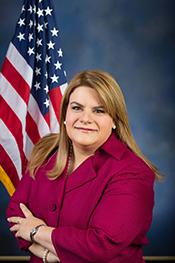
Mr. Speaker, I yield 1\1/2\ minutes to the gentlewoman
from Puerto Rico (Miss Gonzalez-Colon), a new member of our committee, who is doing a great job.
Mr. Speaker, how much time do I have remaining?
Mr. Speaker, I yield 1 minute to the gentleman from Indiana (Mr. Messer), my good friend who I have served with for 6 years on the Education and the Workforce Comittee.
Mr. Speaker, I yield 2 minutes to the gentleman from Florida (Mr. Mast), a combat-wounded veteran, Bronze Star winner, Purple Heart winner, Defense Meritorious Service and Army Commendation Medal winner.
Mr. Speaker, I thank Congressman Mast for those kind words and words spoken for every American veteran.
Mr. Speaker, I yield 1 minute to the gentleman from Pennsylvania (Mr. Fitzpatrick).
Mr. Speaker, I yield myself such time as I may consume.
Today is a proud day, I think, for this Nation. The United States of America does more for its veterans than all other nations in the world combined; and I don't think that, on some days, that is even enough for these heroes that have served us and many of whom have spoken this afternoon.
I want to express my appreciation to the minority and the majority staff, and to Sergeant Major Walz for walking hand in hand. As he said, this was not an easy process. There were a lot of difficult issues that we both dealt with.
I also want to thank our friends on the Senate side who also went through the same process and brought a bill to the floor that we can all, I think, enthusiastically support.
The Secretary said when he was first chosen--and I might add, 100-0, Secretary Shulkin was a bipartisan agreement in the Senate. I think he is a leader to transform the VA. He asked for accountability. He said: I cannot do my job as Secretary if I don't have this piece of legislation.
So he was very supportive, along with President Trump, so we gave him that.
We also protected due process rights for the employees who work for the VA--a very important issue.
Whistleblower protections. We could not do our job, Mr. Speaker, if we did not have these whistleblowers. There are 350,000 employees, 154 medical centers, and over 800 outpatient clinics. There is no way that we could monitor that without their help. So their protections are there.
Mr. Speaker, I want to encourage both sides of the aisle to support S. 1094, and I yield back the balance of my time.
Mr. Speaker, on that I demand the yeas and nays.