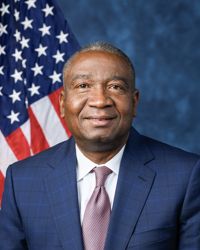
Honoring Foster L. Campbell Jr.'S Distinguished Public Service Career
Mr. Speaker, I rise today to honor the Honorable Foster L. Campbell, Jr. on the occasion of 50 years of continuous elective service to the people of Louisiana, first as a state senator and currently as Public Service Commissioner. Born on…
Mr. Speaker, I rise today to honor the Honorable Foster L. Campbell, Jr. on the occasion of 50 years of continuous elective service to the people of Louisiana, first as a state senator and currently as Public Service Commissioner. Born on January 6, 1947, in Shreveport and raised in Bossier Parish, Foster developed a deep connection to rural communities that would shape his public career. He graduated from Bossier High School, attended Louisiana State University, and earned a bachelor's degree in business and economics from Northwestern State University. Before entering public office, he taught at Plain Dealing High School and Haughton High School in Bossier Parish while also selling agricultural products to support his young family.
In 1975, at the age of 28, Foster qualified for the open seat in Senate District 36. He led a crowded field in the primary and then defeated former Speaker of the House John Sidney Garrett in the runoff, becoming one of the youngest state senators in Louisiana history. His 1975 campaign slogan, ``Works hard, talks straight, makes sense,'' has epitomized his life of public service ever since. Sworn into office on May 10, 1976, he began a distinguished 27-year tenure representing Senate District 36. He served multiple terms as chairman of the Senate Committee on Agriculture, Forestry, Aquaculture, and Rural Development, served multiple terms on the Senate Committee on Finance, and chaired select committees on rural electric cooperatives and consumer affairs.
During his Senate service, Foster championed legislation regulating rural electric cooperatives, resulting in lower utility rates for approximately one million Louisiana residents. He authored the legislation creating the Bossier Education Excellence Fund, a permanent trust fund supported by gaming revenue that has provided millions of dollars for public education in Bossier Parish. He authored Louisiana's ``Do Not Call'' law, one of the state's most significant consumer- protection measures, which shields residents from unwanted telemarketing. He also authored the ``Save the Louisiana Black Bear'' license plate legislation, which raised funds and provided state support for programs that helped the Louisiana Black Bear recover and be removed from the federal Endangered Species List.
Though not a prolific bill filer, he authored impactful legislation on railroad-crossing safety, the regulation of payday lenders, the Catahoula Cur as the state dog, billboards along rural portions of Interstate 49, Youth Hunting Days, and the Educational Excellence Fund created from tobacco settlement proceeds. He is also best known for his proposed oil and gas processing tax, which he argued could provide enough revenue to eliminate the state income tax while increasing funding for education and infrastructure. Colleagues will long remember his unmatched oratory and his call, ``Come on home, y'all, it's suppertime.''
In 2002, after a hard-fought campaign against a popular 18-year incumbent, Foster was elected to the Louisiana Public Service Commission, where he has served for more than two decades, representing almost one million Louisianians across 24 parishes in North Louisiana. Upon taking office on January 1, 2003, he urged his fellow commissioners to adopt long-overdue reforms, including holding meetings around the state, prohibiting commissioners' relatives from representing regulated utilities, and ending the practice of utility lobbyists providing free meals and gifts to commissioners and staff. After several years of debate, he convinced the commission to abolish the anti-competitive 19th-century rule known as ``public convenience and necessity,'' which had allowed existing trucking companies to dictate the terms under which potential competitors could haul regulated waste.
On the Commission, Foster fought on behalf of the relatives of Louisiana inmates to reduce the cost of prison telephone calls, which were among the highest in the Nation. He led the effort to bring telephone service to the remote community of Mink, Louisiana, ending its residents' decades of isolation. Following Hurricane Katrina, he reached out personally to the chairman of the Federal Communications Commission and secured 39 million dollars in federal funding to provide free cell phones to evacuees, so displaced residents could communicate with family, employers, and relief agencies. He has also advocated for policies protecting vulnerable residents, including measures to prevent utility disconnections during extreme weather and to waive utility deposits for survivors of domestic violence.
Foster is an inductee of the Louisiana Political Hall of Fame and a recipient of the Louisiana Democratic Party's Lifetime Achievement Award. Having been sworn in as a state senator in the Nation's Bicentennial year of 1976, and due only to term limits leaving the Public Service Commission at the end of this Semiquincentennial year, he will have served in elected public office for a full 20 percent of America's history. Throughout those 50 years, he has been recognized for his steadfast advocacy for rural communities, his commitment to consumer fairness, and his dedication to improving the quality of life for Louisiana citizens.
Mr. Speaker, I ask my colleagues to join me in honoring the Honorable Foster L. Campbell, Jr. for 50 years of exceptional longevity, public commitment, and unwavering service to the people of Louisiana. May he be remembered for his plainspoken advocacy, and may his example continue to inspire those who serve the people of our state.