To provide funds for the security and stabilization of Iraq by suspending a portion of the reduction in the highest income tax rate for individual taxpayers.
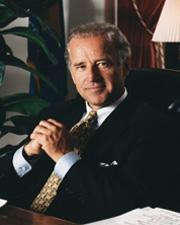 Sen. Joseph R. Biden Jr. (D-DE)
Legislative Activity
Stay on top of the latest movement without scrolling through every action
Senate amendment proposed (on the floor): Amendment SA 3379 proposed by Senator Biden.(consideration: CR S6954-6965, S6966; text: CR S6954-6955)
June 17, 2004
View full timeline
Senate amendment proposed (on the floor): Amendment SA 3379 proposed by Senator Biden.(consideration: CR S6954-6965, S6966; text: CR S6954-6955)
June 17, 2004
Roll call votes on amendments in Senate: Amendment SA 3379 not agreed to in Senate by Yea-Nay Vote. 44 - 53. Record Vote Number: 130.
June 17, 2004
Senate amendment not agreed to: Amendment SA 3379 not agreed to in Senate by Yea-Nay Vote. 44 - 53. Record Vote Number: 130.
June 17, 2004
Amendment SA 3379 proposed by Senator Biden. (consideration: CR S6954-6965, S6966; text: CR S6954-6955) To provide funds for the security and stabilization of Iraq by suspending a portion of the reduction in the highest income tax rate for individual taxpayers.
June 17, 2004
Amendment SA 3379 not agreed to in Senate by Yea-Nay Vote. 44 - 53. Record Vote Number: 130.
June 17, 2004
Senate amendment submitted
June 7, 2004
Votes
1 roll call on this amendment
Text
Proposed
NATIONAL DEFENSE AUTHORIZATION ACT FOR FISCAL YEAR 2005--Continued

The PRESIDING OFFICER. The Senator from Nevada.
Mr. REID. Mr. President, it is my understanding that Senator Warner
and Senator Reed have worked out an arrangement whereby the missile
defense amendment will not be offered, but the end strength amendment
will be offered at this time.
The chairman has arrived. What I have said is that the chairman and
Senator Reed have agreed that his missile defense amendment will be
offered at a subsequent time and that now the end strength amendment
that has been around for several days would be debated at this time and
voted upon.
Mr. WARNER. Mr. President, that was a suggestion I made to the
Senator from Rhode Island. I think he will perhaps reflect on the need
to go forward with his second missile defense amendment, and he had
asked for that need to be reconsidered. Therefore, in its place we can
put the end strength amendment, which would be a matter of convenience
and great interest to our membership on this side, given it is a
bipartisan amendment.
Mr. REID. Following that, the amendment of Senator Sessions will be
offered, and following that the amendment of Senator Biden will be
offered.
Mr. WARNER. Could we put time agreements on this now?
Mr. REID. We certainly should be able to.
I suggest the absence of a quorum.
The PRESIDING OFFICER. The clerk will call the roll.
The legislative clerk proceeded to call the roll.

[[Page S6946]]

Mr. WARNER. Mr. President, I ask unanimous consent that the order for
the quorum call be rescinded.
The PRESIDING OFFICER. Without objection, it is so ordered.
Mr. WARNER. Mr. President, the distinguished leadership on the other
side and myself and the leadership on this side have worked out the
following time agreements: On the amendment from the Senator from Rhode
Island, which has a second degree from the Senator from Virginia, Mr.
Warner--
Mr. REID. No. 3352.
Mr. WARNER. Correct--we would need 40 minutes equally divided on
those amendments.
Mr. REID. A total of 40 minutes?
Mr. WARNER. A total of 40 minutes equally divided. We would then
proceed to lay that aside and proceed to an amendment by the Senator
from Alabama.
Mr. REID. No. 3371.
Mr. WARNER. Correct. That will take 20 minutes.
Mr. REID. Twenty minutes equally divided?
Mr. WARNER. Fifteen on this side, and I think the other side only
needed 5 on that amendment.
Mr. REID. We will take the 15 and probably would not use it.
Mr. WARNER. Then 30 minutes equally divided. That amendment will not
require other than a voice vote which we will do. We will then
immediately proceed to the Biden amendment.
Mr. REID. No. 3379.
Mr. WARNER. Correct. At the moment, that would require 2 hours
equally divided, with the expectation that can be reduced in time.
The PRESIDING OFFICER. The Senator from Nevada.
Mr. REID. I ask unanimous consent, as the chairman has indicated,
that on amendment No. 3352 there be 40 minutes equally divided, with no
second-degree amendments in order except for the one that Senator
Warner has indicated that he will offer, and Senator Reed knows about
that; No. 3371, there be no second-degree amendments in order; and No.
3379, there be no second-degree amendments in order, with the time as
stated previously. There would be no second-degree amendments then
prior to the vote.
Mr. WARNER. That is correct.
Mr. REID. As indicated, 40 minutes, 30 minutes, and 2 hours.
The PRESIDING OFFICER. Is there objection?
Mr. WARNER. I concur in the request.
The PRESIDING OFFICER. Without objection, it is so ordered.
The Senator from Rhode Island.

Amendment No. 3450 To Amendment No. 3352

Mr. REED. Mr. President, I ask for regular order for No. 3352.
The PRESIDING OFFICER. That amendment is now pending.
Mr. REED. Mr. President, I understand that Senator Warner has a
second-degree amendment which I will accept.
Mr. WARNER. That is correct, and I seek now to modify it, and I will
send a modification to the desk and add to the modified amendment.
It is a very minor modification. I simply strike one word, and it is
the word ``the.'' I send the modification to the desk and ask for its
immediate consideration.
The PRESIDING OFFICER. Without objection, it is so ordered. The
amendment is so modified.
The amendment (No. 3450), as modified, is as follows:

(Purpose: To provide for funding the increased number of Army active-
duty personnel out of fiscal year 2005 supplemental funding)

Strike line 2 and insert the following:
``502,400, subject to the condition that costs of active duty
personnel of the Army in excess of 482,400 shall be paid out
of funds authorized to be appropriated for fiscal year 2005
for a contingent emergency reserve fund or as an emergency
supplemental appropriation''.

Mr. WARNER. I am ready to indicate to my colleague we have worked on
this amendment in the second degree. It is my understanding that the
Senator from Rhode Island is prepared to take the Warner amendment as
modified.
Mr. REED. That is correct.
Mr. WARNER. Fine.
Mr. REED. I want to thank the chairman for his instructive work on
this amendment. He recognizes, as I recognize, along with my colleagues
and principal cosponsors Senators Hagel, McCain, Corzine, Akaka, and
Biden, that our Army is stretched very thin across the globe with
numerous missions, and in order to fulfill these missions we have to
raise the end strength of the Army.
The amendment before us today would put within the authorized end
strength a 20,000 increase in the number of soldiers in the U.S. Army.
These are the number of troops the Army has indicated that they can
absorb this year, and that they can train and utilize this year. It
represents the recognition that we cannot simply depend upon emergency
powers through supplementals to increase the end strength of the Army.
We have to, as we do in this amendment, put in the actual end strength
number to reflect a larger Army and also to reflect the fact that this
is not a temporary occurrence.
Our commitments in Iraq, Afghanistan, and around the globe are going
to require a substantially larger Army for an indefinite period of
time.
As a result, working together with the chairman, we have placed in
the Defense authorization bill the precise number of soldiers, this
precise increase of 20,000 troops.
What the chairman has added, though, is the fact that these troops
have to be paid for. There is a strong argument that we should pay for
them in terms of regular budget authority, but he has suggested that we
again go the emergency supplemental route to pay for these troops,
which are now fully authorized in law. What I wanted to accomplish in
the amendment first is to make sure we do incorporate a suitable end
strength number. That has been accomplished.
Second, I wanted to avoid a situation where the Army had to go within
its existing programs to search high and low for dollars to pay for
these extra troops. That has been accomplished by the chairman's
suggestion that we move some funds already identified in the emergency
supplemental and designate those to pay for these additional troops.
So we have avoided a situation where the Army this year is going to
be forced to come up with funds by going through and ransacking their
existing programs, and we have set it in the authorization bill, the
appropriate forum for such a decision. We have set in the precise
number of end strength that is appropriate this year for the U.S. Army.
The question still arises, What happens in succeeding years? The
argument myself, Senator McCain, Senator Hagel, and others have made is
we cannot continue to depend upon supplemental and emergency funding.
This is not an emergency. This is a fact of life in the world today. We
need a larger Army.
We are accomplishing our objectives today for this fiscal year in
this authorization, but I think the chairman and we all recognize we
will eventually confront a situation where we have to raise the bottom
line of the Army in terms of the funds they have. We do not want to see
a situation a year from now or 2 years from now when the supplementals
are inadequate but the needs of these troops are still persistent.
Senator Levin has language in this authorization bill that indicates
in succeeding years, after this fiscal year and after this
authorization bill, any increase in end strength will have to be put in
the Army budget. I think that is an appropriate response. I think the
Reed amendment as modified by Senator Warner will, in effect,
accomplish that.
This is the thrust of the amendment. I have had an opportunity to
explain it. At this point I reserve the remainder of my time to allow
the Senator from Virginia to comment.
Mr. WARNER. I thank my colleague. This is one of those situations.
Senator Reed is a very valued member of the committee and the amendment
has strong cosponsorship; namely, Senators McCain and Hagel and others
on our side. I think all along the committee has recognized the need to
work with the Department of Defense, most specifically the Department
of Army, to resolve this situation. I thought it necessary to second
degree the amendment which would authorize the Department of Defense to
pay the cost of the additional Active-Duty soldiers for fiscal year
2005 from supplemental or

[[Page S6947]]

contingent emergency reserve funds because the sponsors of the
amendment had not identified the considerable sum, some $2 billion
plus, that their amendment would generate in the need for the Army
budget.
The Army needs this Active-Duty strength. I think we are in agreement
on this point.
Senator, I indicate now I am going to urge my colleagues to accept
the amendment.
I note that in the bill we are considering there is a specific
authorization which the committee worked out in section 402 for
temporary increases of up to 30,000 active duty soldiers above the
currently authorized level. This goes 10,000 active-duty soldiers
beyond the end strength level proposed in Senators Reed and Hagel's
amendment.
My second degree amendment, however, addresses the real issue
stemming from these increases--how to pay for them. The Reed/Hagel
amendment provides no offsets for the $2.4 billion cost of these extra
troops. I submit that this is not a cost for the Department to take
``out of hide,'' or that the Department of the Army should absorb out
of the FY 2005 budget.
The approach in my second degree amendment reflects the
recommendation of the Army Chief of Staff, General Schoomaker, who
testified that using supplemental appropriations gives necessary
flexibility and is, in fact, essential to preserve the Army's ability
to plan for operational readiness in the present and modernization for
the future.
The Reed/Hagel amendment would have the effect of directing the Army
to increase its end strength by 20,000 in FY 2005 at a cost of $2.4
billion. The amendment identifies no offset, it identifies no means to
pay for these additional troops. Consider the potential effect of that
proposal on the Army. The $2.4 billion represents a 15 percent
reduction of funding for direct costs of operating forces for home
station training, exercises and operations; in other words--fuel, spare
parts, maintenance, food, and other consumables. Alternatively, this
reduction would eliminate almost all funding for Army individual and
unit training--such as basic training, flight training, and combat
training center rotations. The $2.4 billion represents a 42 percent
reduction of funding for Army command and control, logistics, weapons
and ammunition transportation and storage. It could reduce resources to
key readiness and modernization accounts, as indicated above, and
divert money needed to train and retain more experienced personnel
because of the imperative to satisfy an end strength number.
My amendment would afford the Army the opportunity to flexibly
execute its budget while increasing its manpower. I would ask you to
keep this in mind and also keep in mind that the conferees will have
the task of finding $2.4 billion in offsets if this amendment becomes a
law.
Mr. HAGEL. Mr. President, I rise today to join my colleague Senator
Jack Reed in introducing an amendment to the fiscal year 2005 Defense
authorization bill to increase the size of the United States Army by
20,000 additional troops.
Over the last year the Congress has expressed grave concern that our
Armed Forces are too small to meet the extraordinary demands being
placed on them today. These demands will be with us well into the
future.
Senator Reed and I are proposing this amendment to formally increase
the size of the United States Army by 20,000 troops in the coming year.
The additional troops are urgently required to give the Chief of
Staff of the U.S. Army the tools he needs to fight the war on
terrorism, stabilize Iraq and Afghanistan, and meet the global demands
being placed on the total force today.
Under emergency authority, the U.S. Army has already exceeded its
authorized end strength by around 15,000 soldiers. This amendment
provides straightforward congressional approval for these additional
troops. It also puts the future funding of these troops on the record,
not masked in the emergency supplemental appropriations process.
The size and cost of the Army must be transparent to the American
people, our allies, and to those that would oppose us in the war on
terrorism.
This amendment gives General Schoomaker, the Chief of Staff of the
United States Army, the additional manpower he has told us he needs to
transform the total force . . . the active duty Army, the Army Reserve,
and the Army National Guard.
The amendment recognizes the fact that the Army needs 20,000 more
troops now. In the future the Army must also be authorized to add
10,000 more soldiers.
The amendment increases the approved Army end strength personnel
floor from 482,400 to 502,400 troops. It tells the soldiers in the Army
that we strongly support increasing the size of the Army to meet the
increased demands being placed on the service.
I commend Chairman Warner and ranking member Levin for their
outstanding work on this Defense authorization bill. Members of our
Armed Forces are currently engaged in combat operations in Iraq and
Afghanistan.
Hundreds of thousands of American men and women in uniform are
serving around the world defending the freedoms we hold dear.
Chairman Warner and ranking member Levin are tireless supporters of
our men and women in these dangerous times. Our Nation owes them both,
and their staffs, a debt of gratitude for their service.
I also appreciate the Chairman's contribution to this effort with his
second degree amendment.
And finally, I wish the U.S. Army a happy 229th birthday.
Mr. BIDEN. Mr. President, I am very pleased to be a cosponsor of this
amendment with Senators Reed, McCain, Hagel, Corzine, and Akaka.
I understand that we have accepted the Senator from Virginia's
amendment paying for these additional 20,000 soldiers in the
supplemental.
While I think the Army would be better served by an end strength
increase that is not subject to repeated supplementals, I am pleased
that we are all in agreement that we need more troops today.
I think it is very simple. Soldiers provide stability. Without
adequate numbers of boots on the ground, you can't get security and
stability.
That is true in Iraq, Afghanistan, Korea, and the Balkans.
As Senator McCain and I have both said repeatedly, we need more
troops in Iraq to achieve stability. If we had put more troops into
Iraq after major combat operations, the situation might be very
different. I don't believe it is too late. I still think that
additional troops are needed.
I also believe that it is my obligation to back that up with some
relief for those soldiers serving today. We shouldn't have to keep
issuing ``stop-loss'' orders, forcing soldiers to stay in the Army.
Let's give the Army what it needs.
What my colleagues and I hoped to accomplish was to reassure today's
soldiers and their families that they will not have to keep looking at
extended deployments and stop-loss orders. Instead, we want them to
know that we are committed to making the Army large enough to do the
missions America is asking it to do.
Some of our colleagues believe that the need for additional soldiers
is temporary. I disagree.
It is true that the Army is planning a major restructuring. This may
mean future efficiencies, but we don't know that yet. Like any other
major change, more resources are needed during the change. In this
case, more soldiers are needed as the Army moves to a more capable
brigade structure.
I would rather plan for the clear needs of the next decade in the
regular budget. I don't think we should be relying on supplementals to
provide the right sized Army.
If I and my colleagues are wrong, then we can revisit these numbers
and cut end strength like we did in the beginning of the last decade. I
would rather take the cautious approach and err on the side of our
soldiers and their families.
I urge my colleagues to adopt this amendment which takes us closer to
that goal.
The PRESIDING OFFICER. The Senator from Nevada.
Mr. REID. Mr. President, with the series of votes that we have, first
on Reed and then on Biden--we have received word there may be a couple
of other Senators who may want to speak on this amendment. I ask
unanimous

[[Page S6948]]

consent of the Chair, in the form of a unanimous consent request, that
prior to the Reed amendment being voted on, as amended by Warner, there
be 10 minutes set aside to talk about that prior to this vote.
Mr. WARNER. I think that is an accommodating gesture. In fact, the
amount of time I reserved on this side, portions of it perhaps could be
yielded back, and then absorbed by the proposal of the distinguished
leader.
Mr. REID. The time may not be necessary.
Mr. WARNER. It may not be necessary. But so many of our colleagues
are doing a lot of work all over the system right now. They didn't
recognize that this would be brought up at this time. We want to
accommodate them.
Mr. REID. Mr. President, I ask unanimous consent that prior to the
vote on the Reed amendment, Senator Reed control 10 minutes, Senator
Reed of Rhode Island.
The PRESIDING OFFICER. Without objection, it is so ordered. The
Senator from Rhode Island.
Mr. REED. Mr. President, I yield such time as remained.
Mr. WARNER. Mr. President, would the distinguished Democratic leader
allow the time to be managed on this side by either Senators Hagel or
McCain, the time we have on this side? That would sort of divide it
between yourself and the two colleagues on this side?
Mr. REID. That would be appropriate because those were the two
Senators we were worried about.
Mr. WARNER. I thank the Senator.
The PRESIDING OFFICER. The Senator from Rhode Island.
Mr. REED. I thank the chairman for his constructive participation in
this process and also to emphasize what he has emphasized and that is
the extraordinary stress our Army is withstanding at this point. They
are doing it magnificently, performing with great skill and
professionalism.
We have 126,000 soldiers in Iraq; we have 13,000 soldiers in
Afghanistan; we have soldiers still in the Balkans, 2,500; we have
forces in Kuwait, about 17,000; we still have our mission in the Sinai;
we have 1,700 soldiers in Guantanamo maintaining the detention
facilities there; we have 16,000 soldiers, Noble Eagle, which is the
heart of our defense of our homeland; we have soldiers in the
Philippines; 31,600 soldiers in South Korea. We have them all over the
world doing an extraordinary task and job for our company. Frankly,
they need more help and that is the heart of the Reed amendment.
In addition to that, we have seen troubling signs that this
operational tempo is putting great stress and duress on our soldiers.
Recently, there was a stop-loss order announced by the G-1 of the U.S.
Army that said essentially any soldier who is scheduled to depart
within 90 days for deployment cannot leave the service, even if that
soldier's time in service has expired. Essentially what they have said
is: You can't get out of the service. The Volunteer Army is no longer
completely volunteer. That is just one example.
We are withdrawing troops from Korea at a time when there is a huge
crisis on the peninsula. The North Koreans indicated they have
plutonium; they are intending to process it. They may have already
constructed eight nuclear devices. We don't know for sure. Yet at this
time when we need maximum military force to complement our diplomacy,
we are withdrawing troops, which is perhaps sending a signal to the
North Koreans that they can wait us out or that we are not able or
ready to match our diplomacy appropriately with military force.
That is another prime example, I believe. In fact, frankly, I think
that if North Korea 2 or 3 years ago brazenly declared they had nuclear
weapons, our response would not have been to withdraw troops. The calls
in this Chamber would have been for more troops in Korea. But now
because of Iraq that is difficult; we are pulling them out to send them
to Iraq.
Then we have a situation in our training centers, the infrastructure
of the Army. This is one of the major reasons why we have such
extraordinarily skilled soldiers.
First, they are men and women of courage and character, but second
they received the greatest, most realistic training in the world. They
are individuals who can and will do any job, but they do that so well
because they are the best trained.
We are taking soldiers from our training centers--those trainers who
are preparing the troops to go overseas--and we are deploying them.
As a result, these are indications that we have a military force
which is significantly stretched. That is why it is so important to
raise the number of troops that we have entering the Army.
Today, the Army has 495,374 soldiers serving on active duty. The end
strength has to increase. The Reed amendment increases it by 20,000
troops.
There are those who have predicted we would get in this predicament.
General Shalikashvili's predictions and other predictions are coming
true. Our responsibility is now to give the military, particularly the
Army, sufficient resources and sufficient personnel to do the job which
we are asking them to do.
Last December, in 2003, the Army's Strategic Studies Institute
published a report which stated that the ground force requirements in
Iraq have forced the U.S. Army to the breaking point.
We have to prevent that breaking point from being reached, and that
means putting more troops into the force structure.
Last year, during the appropriations debate, Senator Hagel and I
sponsored an amendment that would have raised the end strength by
10,000 in the supplemental appropriations. It passed the Senate. I
thank my colleagues on both sides who were very supportive of that.
But, unfortunately, at that point the administration thought it was
unnecessary and they were able to successfully defeat that proposal in
conference. At least now they recognize the need for additional troops.
But what they are still adhering to is this notion that the emergency
is temporary.
I hope by putting the actual number of the end strength increase in
this bill we are sending a signal to everyone that we will, in fact,
stay the course--not just rhetorically but with actual resources and
actual troops.
Senator Warner explained the funding mechanism was one where some of
us would have preferred, frankly, if we could have, to increase just
the bottom line of the Army. But given these other demands on resources
and this authorization bill, it was his suggestion that we, once again,
use emergency funding to fund this now authorized end strength. That
gets us through this year. But the concern I have and the concern
others have is that we will reach a point within a year or two where
the Army is going to have these troops in uniform but their baseline is
not going to be sufficient if a supplemental or emergency funding is
not made readily available. That is a real crisis and we have to start
thinking about that now.
Senator Levin has been very thoughtful on this topic. He has language
in the bill that says any increases in the next fiscal year of the end
strength have to be budgeted through regular budget processes. Again, I
hope that takes place. But that means giving more resources to our
Army, and we will work--I think I can speak for Senator Warner--to make
sure the Army has those resources.
I am very pleased we are able to make this adjustment--overdue
adjustment--in the end strength of the U.S. Army.
I retain the remainder of my time, and I yield the floor.
The PRESIDING OFFICER. Who yields time?
If no one yields time, time will be charged equally to both sides.
The Senator from Alabama.
Mr. SESSIONS. Mr. President, in regard to the Reed amendment--and
that discussion has been had so far--I am pleased that the chairman and
Senator Reed have worked out an agreement. I hope that will be
satisfactory.
I haven't had time to fully study the details of it, but I expect to
be supportive of the agreement which they have reached. We know the
Army is stretched today. We definitely need to consider what we can do
to alleviate that.
I would like to add a few thoughts in general on the subject of the
Army, its restructuring which is ongoing, and how we best can deal with
it and what our policy about it should be.

[[Page S6949]]

We are in the process of a major restructuring within all of the
Department of Defense, but particularly the Army. In dealing with that,
they are in the middle of it right now.
General Schoomaker, who spent his career as a combat officer and a
special forces officer, is a man of decisive leadership skills. He is
working very hard to determine how to get the Army in the posture we
want it to be.
With Guard and Reserve, we have over 2 million personnel in uniform,
but we are finding it extremely difficult to maintain 150,000 or less
soldiers in Iraq.
General Schoomaker has a story which he tells. It is about a rain
barrel. He says the way he sees the military, the Army's rain barrel
has a spigot and the spigot is about two-thirds of the way up. Whenever
we have a demand, we draw down the water, but we are only drawing the
top third of the barrel. In large part, the barrel is not accessible
and readily deployable for purposes that we are likely to face in the
future. He believes we can work on that.
He knows something we all know--that we have a finite defense budget.
I am as strong a person as there is in this Senate on expanding
spending for defense and making our defense capabilities second to
none. We are that today. We have the greatest army the world has ever
known. The professional soldiers who serve us so well are doing
incredible things. We are proud of them. People just say that. I say to
you that every military in the world knows the American military is
unsurpassed. They respect us. That is why they want to train with us.
They want to learn our tactics. They want to see what equipment we are
using. It is something in which we should take pride. He is working
with that and how to better utilize our resources.
There was an article recently which a radio reporter in Alabama asked
me about. People are transferring from the Air Force to the Army. I
said I didn't know that. I did some checking on it.
The Air Force has concluded they are 17,000 above their needs, that
these 17,000 soldiers are excess for the mission they have. So they are
giving an opportunity to change their MOS, or transfer to the Army,
which needs more.
The Navy has discovered it has 7,000 excess.
I chaired an Armed Services Committee, the Sea Powers Subcommittee,
and all the new ships that we are building today are using half--maybe
less than half--the number of sailors to operate them as we used to use
because of technology, better equipment, and science. We can operate a
combat warship with half the people he used to have.
So the Navy is downsizing. They do not want to spend any more money
than they have to for personnel who aren't critical for their mission
because they have technological advances they would like, and new ships
they need to bring on. The Air Force is thinking the same way.

The Army, of course, is more personnel driven. Although it is quite
technologically advanced today, all of our soldiers have to be highly
trained to be able to utilize the technology they have.
We are already at an increased end strength posture for the Army. The
numbers I have are around 19,000 above the authorized end strength, but
that is flexible.
General Schoomaker says he is not asking for legislation that
mandates a permanent increase in his end strength. He stated in
committee, in answers to questions as part of his formal testimony, he
would prefer not to be mandated to have this end strength increase, but
because we are in combat today he has done it and can maintain it. He
would like to be able to utilize funding from the supplemental to
maintain that strength. He has said he would prefer we allow him to
continue to work on his restructuring and see if we cannot create more
combat brigades that are ready to be deployed, fully equipped, and
highly trained.
Frankly, in years past, we have had more soldiers than we have had
equipment and training. The Europeans are being criticized by the
United States, and in their own self-evaluations, for bringing on large
numbers of draftees and others who stay just for a short period of
time. They are not highly trained and not highly equipped and are
spending a lot of money, but the soldiers are not deployable to serious
combat situations. Their ability to deploy and actively participate in
combat is far less than it should be.
If we think about the rain barrel analogy of General Schoomaker, we
think about the ability to move personnel numbers from the other
services, which can be an important part of our restructuring and
improvement in our defense forces, we may find that we can make more
progress than we think. That is certainly my goal.
Our Guard and Reserve are performing exceedingly well. I visited them
in Iraq. I know some military police and the Guard unit have been
criticized for unacceptable behavior in the Abu Ghraib prison. I
visited an Alabama National Guard MP unit in Baghdad. Every day our
soldiers were going to a local MP unit. They were working with the
local Iraqis. They told me they bonded with them. They walked out on
patrol with them. They taught them how to investigate crimes. They
taught them all they knew about law enforcement. Forty percent of those
guardsmen--many of them 40 years of age--were State troopers and police
officers in Alabama. They are well trained in how to handle people, how
to deal with crowds, how to maintain order, how to handle traffic
tickets, and investigate crimes.
Our Guard and Reserve are important. They can absolutely supplement
our Active-Duty forces, and should. We should not create a system or
expect we have to do all our work with only Active-Duty soldiers. They
certainly can do that. I don't think anyone is suggesting to the
contrary.
So we have one national defense system. We have one Army, Guard, and
Reserve today. We need to continue to transform and restructure that
entity so we have a structure that is sufficient to meet the demands.
But we also are lean and well paid and well trained. It does no good to
add a bunch of soldiers to the military if we are not going to add
training capability, if we are not going to add equipment, if they are
not trained on the best helicopters, if they are not trained with the
best missiles, or trained with the best computer systems and do not
know how to access our global hawk and other satellite systems that
provide intelligence. If we do not do that, we are not as successful as
we should be.

At a NATO conference not long ago, a year or so ago after the Iraq
war, a French rapporteur reported on it. He said the conclusion that
one would draw from the war in Iraq is that a smaller, technologically
advanced, well-trained military can defeat a much larger military not
well-trained and not technologically advanced.
As we work to make sure we do everything possible for our Army,
everything possible for our Guard and Reserve, we must make sure they
have the best pay possible, make sure they have the best benefits
possible. I will offer an amendment in a few minutes on that. We must
make sure they are trained with the best equipment possible, so when
they are on the battlefield, they have the ability to inflict the
greatest military force on the enemy and be as protected as is
possible.
That is where we are. Hopefully, on this amendment, we have reached
an accord we can all live with. Many people want to do something for
our Army because they are so proud of them and they know how tough the
duty is in Iraq. They have seen their neighbors go off in the Guard and
Reserve to serve in Iraq or Afghanistan. They want to do something for
them. It does sound like maybe one of the best things we could do is
increase the numbers. I am not sure we ought to rush too fast. We need
to be thoughtful and cautious as we go that way. We need to listen to
General Schoomaker. He has not asked for permanent increases in end
strength, although he is up now pushing 20,000, as I understand it,
above the authorized end strength.
If we do all that is necessary to bring efficiency to bear and we
reward our soldiers for their terrific performance, we will have met
our challenge.
I see Senator Reed, a West Point graduate. He understands the
military. It is a pleasure to serve with him on the Armed Services
Committee.
I yield the floor.
The PRESIDING OFFICER. The Senator from Rhode Island.

[[Page S6950]]

Mr. REED. I thank the Senator from Alabama for his kind words also.
We are all in agreement that there is tremendous stress on our Army.
Let me suggest this chart shows the deployments in Operations Iraqi
Freedom and Enduring Freedom projected not just over the next several
months but actually into 2007. The dark green demonstrates the actual
planned deployment today, the projection of February 2004. On July 19,
2003, last year, these are the force projected, brigades equivalents.
It was projected for July of 2004 we would be roughly at about 8
brigade equivalents. Today in Iraq and Afghanistan there are 18
brigades, more than twice as many soldiers, or about 130,000-plus
soldiers in these two operations.
This is not just a spike. This is, as you can see on the chart, a
plateau. We are expected, under the projections today, to have 17
brigades all the way out to the end of 2005, the beginning of January
of 2006. They come down a little bit if things stabilize a bit in March
of 2006, to around 13 or 14 brigades.
This is a long way out to project. So far, if we look at the
projections, we have ended up with more troops needed than what we
thought we could entertain.
My point is that this is not a temporary spike in requirements for
soldiers in the U.S. Army. This stretches out to 2007, 3 years from
now. It is entirely appropriate we put this number into the Defense
bill, that we do not simply give some emergency powers to the Secretary
of Defense.
The challenge we have going forward--we have met the challenge this
year by tapping into that emergency fund, but the challenge going
forward is giving the Army the resources in succeeding budgets in their
own bottom line so they can continue to field these forces. That is
what we are projecting today. It is not as if in 6 months we will be
fine, Iraq will be resolved, Afghanistan will be resolved, we will be
back to a low level of participation.
Our planners' best thoughts today are for 17 brigades for a long
time. So that is what is at the heart of the amendment I have proposed,
along with Senator McCain, Senator Hagel, Senator Corzine, Senator
Akaka, and Senator Biden. I believe we are taking a very important step
by putting the end strength number in our authorization bill, not as an
emergency but as a reality, as a near- and medium-term reality. That is
what this chart says. Three years from now we are going to have to
still find troops to put in about 14 or 15 brigades in these 2
operations.
But the issue that is still outstanding--not this year because we
have bridged it with the emergency funding--is, how do we build up the
resources within the Army budget to carry these soldiers forward 2 and
3 years hence? We will be working on that, obviously, over the next few
weeks into conference and beyond.
I know there are other colleagues--Senator McCain, Senator Hagel, and
others--who might want to talk. We have made arrangements prior to the
vote for 10 minutes, which I would gladly offer to them for their
comments.
Mr. President, may I inquire how much time I have?
The PRESIDING OFFICER. The Senator has 4 minutes 38 seconds.
Mr. REED. Thank you, Mr. President. I reserve the remainder of my
time and yield the floor.
The PRESIDING OFFICER. Who yields time?
Mr. SESSIONS. Mr. President, how much time remains on this side?
The PRESIDING OFFICER. The Senator has 3 minutes 40 seconds.
Mr. SESSIONS. Three minutes.
Mr. President, I would just share for our colleagues some other
things that are happening. There is a serious effort to restructure our
forces that also includes looking at our troop strength deployed abroad
in a number of different areas. I think we have 37,000 soldiers in
South Korea. I believe that number is larger than it needs to be. The
military is looking at what they can do to reorganize those forces
there and bring some of them home.
I believe, having visited 12 military installations in Europe just
within the last 2 months, we can bring home substantial numbers of our
troops from there. In fact, I think it would be a mistake if we do not
bring home two divisions. Probably 40,000 Army soldiers and their
dependents could be brought home from Europe. It is not necessary to
maintain that kind of strength abroad.
So there are a lot of things we can do to make life easier for our
soldiers. General Schoomaker would like to see a soldier be able to go
to a military base with his family and stay there 7 years, and be
promoted and stay with a unit and improve his technical skills and his
unit cohesion before being moved again. Those are goals we need to seek
so we will be even better in capability, and it will also be good for
the soldiers and their families.
I reserve the remainder of the time and yield the floor.
The PRESIDING OFFICER. The Senator from Arizona is recognized.
Mr. McCAIN. Mr. President, I rise in strong support of the Reed
amendment. Yesterday, in USA Today: ``Army division sees its war tour
extended and its casualties rise,'' a very interesting front-page story
in USA Today, entitled: ``13 months on the ground in Iraq.'' It says:
``After more than a year of combat, soldiers of the 1st Armored
Division wonder when they'll go home.''
There are some interesting comments in this article from individuals:

``The option left to the nation, the Army, was to keep 1st
Armored here or pretty much concede defeat,'' says Lt. Col.
T.C. Williams, the battalion commander. Soldiers were
disappointed, he says, but they also knew that after a year
in Iraq, they were prepared for anything. ``Nobody does this
better than we do,'' he says.

I am sure he is correct.
There are other quotes:

``We still have a mission we have to accomplish, for the
good of the Iraqi people and the future,'' says Staff Sgt.
Brad Watson. . . .
But these soldiers don't hide their concern that their
extension has been violent, hard on their families, and left
them wondering how things could have been.
``Gosh, we could have got out of here in 12 months with
little or no casualties, and all of a sudden 17 people in
your platoon become a casualty?'' Watson says, ``It's
something I never dreamed could happen.''

The point of the story is there are some very brave young Americans
who have had to remain in Iraq. There are also stories about the so-
called stop-loss rule, which has been imposed, which prohibits people
from leaving the military at the time when they are supposed to, which
I think some could argue is some form of conscription, of a draft.
What we are doing is we are stopping men and women in the Army and in
the Marine Corps from leaving the service at the time of the expiration
of their contract. So we are involuntarily keeping people in the
military. And instead of the draft applying to all Americans--
conscription--we are basically penalizing those people who volunteered
to serve, which, in my view, is the worst of all worlds.
The reason why we are in trouble in Iraq and in as much trouble as we
are in today and having the difficulties we are having today is because
after the conclusion of the combat phase of the war we had too few
boots on the ground in Iraq. Anyone outside of the Pentagon, with rare
exception--any retired general will tell you that we did not have
enough people on the ground to pacify the situation, stop the looting,
stop the resurrection of the Baathists, stop the beginning of an
insurgency. We had a window of opportunity to do so. We did not have
enough people on the ground. And now we are paying a very heavy price
for that incredible mistake on the part of the civilian leadership in
the Pentagon.
And why were they so reluctant to send additional troops? The dirty
little secret is, they did not have them. Do you think we are taking
troops out of Korea to deploy to Iraq because the situation has gotten
better in Korea? The last time I checked, the North Koreans posed an
even greater threat and are acting in a more intransigent fashion than
ever before. But we are having to take thousands of people out of
deployment in Korea and move them to Iraq.

Meanwhile, we see people who are guardsmen and reservists who are
going back and back and back. Now, I have had the opportunity of
meeting and talking to many. In fact, 40 percent or 55,000 of the
soldiers currently serving in Iraq and Afghanistan are guardsmen and
reservists. They are wonderful. They are magnificent people. But they
did not join the Guard

[[Page S6951]]

and Reserves to be deployed every other year to Afghanistan or Iraq.
When we look at the training of the soldiers who were assigned to the
prison in Abu Ghraib, they were people who were involuntarily extended
and had no real training in carrying out the functions they were
supposed to at that prison--again, a very heavy price, a very heavy
price.
Mistakes happen in conflicts. That is why we try to avoid them. But a
fundamental error that is still not corrected--still not corrected--is
the shortage of the military on the ground with the kinds of
specialties and skills that are so badly needed: special forces,
military police, linguists, civil affairs, and others who simply are
not there today. And we see in some cases a chaotic situation in some
parts around Baghdad and in the Sunni Triangle.
So I regret that we are here on the floor of the Senate having to
force an increase in the size of the Army on the Department of Defense.
As I say, literally every retired military officer I have talked to has
said--and every military expert says--you do not have a large enough
Army. I recently talked to one retired general who said: I have a fear
of not enough people in Iraq and that we are not able to do the job.
But my far greater fear and nightmare is that we have something in
Korea, something between China and Taiwan, something in our own
hemisphere like significant unrest in Venezuela or a significant
commitment we might have to make on the continent of Africa. We don't
have the people to do it.
I hope we will support the Reed amendment. I hope the Pentagon and
the civilian leadership there will come to their senses and recognize
that there are not enough men and women in the military today. They are
magnificent, but there are not enough of them. They are stretched too
thin. They are badly overworked, and we have paid a very heavy price
for these failings from the beginning of the Iraqi conflict.
I still believe we can win and must win, but long ago we should have
repaired this deficiency in the size of the Army and the Marine Corps.
I yield the floor.
The PRESIDING OFFICER (Mr. Cornyn). All time has expired.
Mr. WARNER. Have we pretty well resolved this? The Senator from
Arizona and the Senator from Alabama, have we taken adequate time over
here for our colleagues who have been in strong support? I think we
have reached a conclusion on this matter. We will not need that extra
tranche of time.
Mr. REED. If the Senator will yield, I believe we were waiting for
Senator Hagel, another cosponsor.
Mr. WARNER. I think we should allow some time for Senator Hagel. We
will make that time available.
Mr. REED. I thank the Senator.
The PRESIDING OFFICER. There are 10 minutes available prior to the
vote.
Mr. WARNER. Then let's hope Mr. Hagel can make it.
Mr. REID. Under the order, the Sessions amendment is now in order.
The PRESIDING OFFICER. That is correct.
Mr. BIDEN. May I have 10 seconds on the Reed amendment?
The PRESIDING OFFICER. The Senator from Delaware.
Mr. BIDEN. Mr. President, I can't think of a more important amendment
we are going to vote on than the Reed amendment. I am a principal
cosponsor. I believe it is overdue. I hope to the Lord we go ahead and
do the right thing here and support this amendment.
The PRESIDING OFFICER. Under the previous order the Senator from
Alabama is recognized.
Mr. REID. Mr. President, after the amendment is reported, I wonder if
I could speak first. I am going to use 15 minutes on another subject.
It will take a few minutes. I would like to go do something else.
Mr. WARNER. Absolutely, Mr. President.
Mr. REID. Is that OK with Senator Sessions?
Mr. SESSIONS. It is all right with me. I know Senator Chambliss
wanted to speak also.
Mr. WARNER. Mr. President, I think this might be an appropriate time
that I would like to urge adoption of my amendment in the second degree
to the Reed amendment.
Mr. REID. I think that is totally appropriate.
Mr. WARNER. Let's have that.
The PRESIDING OFFICER. The question is on agreeing to the second-
degree amendment No. 3450, as modified.
The amendment (No. 3450) was agreed to.
Mr. WARNER. I move to reconsider the vote and to lay that motion on
the table.
The motion to lay on the table was agreed to.
Mr. WARNER. This amendment has the strong support of the Senator from
Virginia.
I thank the Chair.

Amendment No. 3371

The PRESIDING OFFICER. The Senator from Alabama.
Mr. SESSIONS. Mr. President, does the Senator from Nevada want 15
minutes right now?
Mr. REID. I am going to use 15 minutes. It has nothing to do with
your amendment. We have 15 minutes, but we weren't going to oppose your
amendment anyway. I would like to take my few minutes now.
Mr. SESSIONS. All right. So you want the full 15 minutes?
Mr. REID. I don't know how much time I will use. I don't think I will
use near that amount.
Mr. WARNER. If the Senator will yield, I am advised by the
parliamentarians that we may need to put in on the Reed amendment now
that there are no further amendments, second degree or otherwise, in
order on that amendment. The desk asked me to check that.
Mr. REID. That was part of the original order. Would the Chair ask
that the Sessions amendment be called up now.
The PRESIDING OFFICER. The clerk will report the amendment.
The assistant legislative clerk read as follows:

The Senator from Alabama [Mr. Sessions] proposes an
amendment numbered 3371.

Mr. REID. Mr. President, I ask unanimous consent that reading of
amendment be dispensed with.
The PRESIDING OFFICER. Without objection, it is so ordered.
The amendment is as follows:

(Purpose: To provide for increased support of survivors of deceased
members of the uniformed services)

On page 130, between lines 9 and 10, insert the following:

SEC. 642. DEATH BENEFITS ENHANCEMENT.

(a) Final Actions on Fiscal Year 2004 Death Benefits
Study.--(1) Congress finds that the study of the Federal
death benefits for survivors of deceased members of the Armed
Forces under section 647 of the National Defense
Authorization Act for Fiscal Year 2004 has given Congress
sufficient insight to initiate action to provide for the
enhancement of the current set of death benefits that are
provided under law for the survivors.
(2) The Secretary of Defense shall expedite the completion
and submission of the final report, which was due on March 1,
2004, under section 647 of the National Defense Authorization
Act for Fiscal Year 2004.
(3) It is the sense of Congress that the President should
promptly submit to Congress any recommendation for
legislation, together with a request for appropriations, that
the President determines necessary to implement the death
benefits enhancements that are recommended in the final
report under section 647 of the National Defense
Authorization Act for Fiscal Year 2004.
(b) Fiscal Year 2005 Actions.--At the same time that the
President submits to Congress the budget for fiscal year 2006
under section 1105(a) of title 31, United States Code, the
President, in consultation with the Secretary of Defense,
shall submit to Congress a draft of legislation to provide
enhanced death benefits for survivors of deceased members of
the uniformed services. The draft legislation shall include
provisions for the following:
(1) Revision of the Servicemembers' Group Life Insurance
program to provide for--
(A) an increase of the maximum benefit provided under
Servicemembers' Group Life Insurance to $350,000, together
with an increase, each fiscal year, by the same overall
average percentage increase that takes effect during such
fiscal year in the rates of basic pay under section 204 of
title 37, United States Code; and
(B) a minimum benefit of $100,000 at no cost to the insured
members of the uniformed services who elect the maximum
coverage, together with an increase in such minimum benefit
each fiscal year by the same percentage increase as is
described in subparagraph (A).
(2) An increase, each fiscal year, of the amount of the
death gratuity provided under section 1478 of title 10,
United States Code, by the same overall average percentage
increase that takes effect during such fiscal year in the
rates of basic pay under section 204 of title 37, United
States Code.

[[Page S6952]]

(3) An additional set of death benefits for each member of
the uniformed services who dies in the line of duty while on
active duty that includes, at a minimum, an additional death
gratuity in the amount that--
(A) in the case of a member not described in subparagraph
(B), is equal to the sum of--
(i) the total amount of the basic pay to which the deceased
member would have been entitled under section 204 of title
37, United States Code, if the member had not died and had
continued to serve on active duty for an additional year; and
(ii) the total amount of all allowances and special pays
that the member would have been entitled to receive under
title 37, United States Code, over the one-year period
beginning on the member's date of death if the member had not
died and had continued to serve on active duty for an
additional year with the unit to which the member was
assigned or detailed on such date; and
(B) in the case of a member who dies as a result of an
injury caused by or incurred while exposed to hostile action
(including any hostile fire or explosion and any hostile
action from a terrorist source), is equal to twice the amount
calculated under subparagraph (A).
(4) Any other new death benefits or enhancement of existing
death benefits that the President recommends.
(5) Retroactive applicability of the benefits referred to
in paragraphs (1) through (4) so as to provide the benefits--
(A) for members of the uniformed services who die in line
of duty on or after October 7, 2001, of a cause incurred or
aggravated while deployed in support of Operation Enduring
Freedom; and
(B) for members of the uniformed services who die in line
of duty on or after March 19, 2003, of a cause incurred or
aggravated while deployed in support of Operation Iraqi
Freedom.
(c) Fiscal Year 2006 Budget Submission.--The budget for
fiscal year 2006 that is submitted to Congress under section
1105(a) of title 31, United States Code, shall include the
following:
(1) The amounts that would be necessary for funding the
benefits covered by the draft legislation required to be
submitted under subsection (b).
(2) The amounts that would be necessary for funding the
organizational and administrative enhancements, including
increased personnel, that are necessary to ensure efficient
and effective administration and timely payment of the
benefits provided for in the draft legislation.
(d) Early Submission of Proposal for Additional Death
Benefits.--Congress urges the President to submit the draft
of legislation for the additional set of death benefits under
paragraph (3) of subsection (b) before the time for
submission required under that subsection and as soon as is
practicable after the date of the enactment of this Act.

Enron Deja Vu

Mr. REID. Mr. President, I appreciate the courtesy of my two friends.
I have been here all day, and I have to leave the floor for a few
minutes.
``You have seen that before.'' That is what deja vu means, so I am
told. We have seen it before. We in Nevada have the second highest gas
prices in the whole country. They have soared to record levels. The oil
companies say these price increases are a matter of supply and demand.
I have heard that before. I remember now that is the same excuse we
heard 4 years ago during the western electricity crisis when Nevada
consumers were being ripped off by one of the most ravenous corporate
swindlers in history--Enron.
While Enron reaped windfall profits, it told consumers the record
high prices were the result of supply and demand. But it turned out
Enron was rigging the market to rob consumers. Over the last few weeks,
bit by bit, audiotape recordings of Enron traders have come to light in
various ways, chiefly through CBS News.
I am reminded of Senator Jesse Helms. I was a new Senator, and Jesse
Helms sat back here. He stood and said: I don't want to be here. It was
the pornography issue. He said: I hate to talk about this kind of
stuff, but I have to. And the stuff he proceeded to talk about was
pretty gross, to be honest with you.
Well, I hate to point to this chart, this audiotape today that CBS
played last night on the news, but I am going to because it fully
outlines what Enron did to the people of the State of Nevada and people
in other parts of the Western United States.
Here is a direct quote from one of the Enron traders, one of the
people who caused these prices to go up. He worked for Enron:

I want to see what pain and heartache this is going to
cause Nevada Power Company.

This Enron trader goes on to say:

I want to . . .

Everyone can see as well as I can the next word. I am not going to
repeat it. It starts with ``f'' and ends with a ``k.''

I want to . . . with Nevada for a while.

Second trader says:

What do you mean?

And the first trader says:

I just, I'm still in the mood to screw with people, OK?

Enron traders had all kinds of ways to cheat customers. They shipped
power from California to Oregon, masked the original source of the
power, and then sold it back to California at inflated rates. This
little scheme, this one right here, made Enron a profit of $222,678 in
3 hours. Enron traders also boast on the tapes that Enron CEO Ken Lay
will wield a lot of influence in the Bush administration. They were
right about that.
A few weeks ago the Washington Post reported on the influence of the
people who raised large amounts of money for the President's campaign.
One of those big fundraisers was Ken Lay--the President gave him a
nickname of Kenny Boy--who served on the administration's Energy
Department transition team, if you can believe that, and recommended
two of the members of the Federal Energy Regulatory Commission, known
as FERC.
After Enron gouged western consumers, utilities in Nevada and other
States turned to FERC for help. Remember, two of them came from Kenny
Boy. But FERC ruled in favor of Enron and against providing relief to
Nevada utilities and taxpayers.
Adding injury to insult, last fall the bankruptcy court ruled that
Nevada taxpayers owe Enron an additional $330 million for power Enron
never even delivered. Our utilities have asked FERC to hear the case.
Senator Ensign and I have submitted a brief in support of their
complaint. Now I am also joining with western Senators and requesting
that FERC vacate the exorbitant contracts that were signed during the
manipulated energy crisis.
The parallel between the western electricity crisis and today's
gasoline market is troubling, to say the least. The big oil companies
are making record profits of up to 75 cents a gallon for a fill-up of a
car in Nevada. For 10 gallons, that is a profit of $7.50. The big oil
companies are making these record profits, which come out of the
pockets of working families in Nevada.
I am afraid I am not the only one feeling, as we stated earlier, that
I have seen this before, deja vu. Nevada consumers know they are
getting gouged again and it is not a good feeling.
I appreciate the courtesy of the Senator from Georgia and the Senator
from Alabama.
The PRESIDING OFFICER. Who yields time?
The Senator from Alabama is recognized.
Mr. SESSIONS. Mr. President, I yield time to the Senator from
Georgia, who chairs the Subcommittee on Personnel of the Armed Services
Committee, on which the Presiding Officer also serves. I value his
judgment on this issue and appreciate his support for this amendment.
The PRESIDING OFFICER. The Senator from Georgia is recognized.
Mr. CHAMBLISS. Mr. President, I thank my colleague from our
neighboring State of Alabama for his terrific interest in our brave men
and women who serve in every branch of our military. At this time, when
we have so many men and women in harm's way, it is very appropriate
that leadership come from this body. Senator Sessions has provided the
kind of leadership that our men and women have come to expect.
Today, I rise in support of the amendment Senator Sessions has
proposed. This amendment will provide a much needed revision of the
Department of Defense's current policies related to providing benefits
to the families of service members who make the ultimate sacrifice for
their country.
The DOD's current death benefit policies have been in place, without
any substantial revision, for some time now. These benefits have not
kept pace with the times and, in particular, the needs of military
families in the event the primary provider dies in the line of duty.
Obviously, these events are extremely difficult for any family. They
are painful times for military families. I agree that we need to expand
the benefits these families receive under those circumstances.
Specifically, this amendment directs the administration to expedite
the

[[Page S6953]]

final death benefits study that is currently working its way through
the DOD. This study was due to Congress on March 1 of this year but has
still not been delivered.
The amendment also indexes increases in the current death gratuity
benefit of $12,000 to the same rate as the basic pay increase, which is
3.5 percent, beginning in fiscal year 2005. Beginning in fiscal year
2006, the amendment increases the maximum coverage under the
Serviceman's Group Life Insurance program by $100,000, from $250,000 to
$350,000, and indexing future indexes in the SGLI at the same rate as
the basic pay increase; and it provides that the Government shall pay
the premium on the first $100,000 of this life insurance.
The amendment creates two new benefits, which I believe are much
deserved. First, it allows for the payment of one year's salary and
benefits to soldiers who die while on active duty, 2 year's pay in
salary and benefits to soldiers killed in action or in a hostile or
terrorist event.
The amendment, as drafted, does not violate any budget points of
order and allows the Department of Defense necessary time to
incorporate the costs and implementation of this program in the fiscal
year 2006 budget.
We have just had a thorough discussion by Senator Reed and Senator
Sessions regarding the increase of troop strength. I am so respectful
to folks such as Senator Reed, Senator McCain, as well as Senator
Sessions on that particular issue. I agree with them on that issue. We
do need to increase the size of the force structure. We need to be able
to continue to do that under the current all-volunteer system that we
have. If we are going to have that all-volunteer system compete with
forces in the outside world, we are going to have to continue to look
at the benefits we provide to our brave men and women. This amendment
does that.
It adds an additional benefit to our men and women that they don't
have today, and it certainly will be of help to our recruiters from the
standpoint of continuing to allow them to recruit our finest men and
women in America into the military.
Secondly, we will be able to retain the men and women that we invest
so much money in, from the standpoint of making sure they have the
equipment and training necessary to continue to defend freedom and
democracy around the world.
So I commend very highly my friend from Alabama, and I thank him for
his great leadership. I am pleased to join in this amendment. I ask my
colleagues to support it.
I yield the floor.
The PRESIDING OFFICER. The Senator from Alabama is recognized.
Mr. SESSIONS. Mr. President, I thank the Senator from Georgia and
also my cosponsors, Senators Joe Lieberman and Jim Inhofe.
When we ask American soldiers to leave our shores to go abroad in a
combat environment to execute the policies of the people of the United
States of America, we need them to know, and Americans want them to
know, that if their life is lost in that effort, their families are
going to be well taken care of. We have a lot of private groups that
work at this, but it is most important that the Federal Government have
in place policies that would allow their loved ones to be fully and
adequately compensated.
Last year we increased the basic death gratuity from $6,000 to
$12,000. That was an improvement. It doubled. It is important that we
have indexed that to inflation, and it is still not nearly enough for a
family today. So we looked at the Serviceman's Group Life Insurance
policy, which is somewhat subsidized by the Government, but it is paid
for by the soldiers. They take out up to $250,000 in life insurance.
Many young soldiers don't like that $16 a month or so that comes out of
their paycheck. They sometimes don't choose to take it out. We want to
encourage more people to take on that benefit--take out the maximum
life insurance so the military will now, under this amendment, if
approved, have an additional $100,000 in life insurance fully paid for
by the Government, if the soldier takes out his life insurance part. I
think that will encourage more people to sign up and provide a much
larger benefit package for them. Those are some of the issues that we
were concerned about.
Years ago, soldiers got a year's salary if they lost their life. That
was changed as part of the life insurance package a number of years
ago. I think the Senate believed that we needed to guarantee a person's
salary for the year they worked if they are hurt during an Active-Duty
accident--not in combat. For 1 year, they will get their salary and
benefits paid. Those killed in combat, because they were serving their
country in a hostile environment, would have 2 years of salary paid for
them.
Those are the kinds of things that can make a real difference in the
life of a family. Families will not need to worry about where their
next meal is going to come from if they have enough money to take on
new housing and move, and maybe for expenses in putting children in
school, and all those things that go with the tragic loss of a loved
one. We need to make sure they are fully taken care of in that regard,
and this amendment would do that.
I cannot say again how strongly I believe we should do the right
thing by those soldiers who give their lives for their country. In my
State of Alabama, I have talked to over 20 families who have lost a
loved one since the war on terrorism began. I have talked to husbands,
wives, fathers, and mothers. We have talked to them about the loved
ones they have lost--their children. I have been to funerals. Those are
things that are very meaningful to anybody who has had that experience.
I feel a special responsibility, as I think every Senator does, to
those soldiers who went because we voted to send them there; we asked
them to go for us.
I think this is a good first step toward achieving the compensation
that families need. There are other compensation benefits they receive,
such as benefits for children, income for spouses that are in law, but
this is a lump sum that can help a family adjust and establish a life
under new and different circumstances and help them get through the
tragic period of pain and loss they inevitably will have to go through.
We asked that the Defense Department do a study for us on their ideas
and evaluate the current system for fairness and workability. They did
not complete that report. We have seen a draft of that report. It was
supposed to have come in March. It has not officially been completed.
I will say this: I think it is quite likely that after we evaluate
that report, we may want to come back again next year to do some other
things to bring more fairness and more support to the families who lost
a loved one in the service of their country. There is no higher service
that one can render than to give their life for their country.
We have lost a good number of soldiers. We have lost them in the
past, and we are losing them in this war on terrorism. I feel strongly
that our obligation includes making sure those families left behind are
well taken care of.
I yield the floor and reserve the remainder of the time.
The PRESIDING OFFICER. Who yields time? If no one yields time, time
will be charged equally to both sides.
The Senator from Alabama.
Mr. SESSIONS. Mr. President, there is one point I want to make clear.
The act provides for retroactivity of the salary benefits. With regard
to soldiers who lost their life in combat since the beginning of the
Afghan war or in terrorist acts, their families will receive 2-year's
salary and benefits retroactive to the loss, as well as being a part of
future benefits for those soldiers who lose their lives in the future.
To reiterate, I ask my colleagues in the Senate to consider that we
have before us an opportunity to correct what has been for many a
longstanding inequity for our military, the paucity of our death
benefits programs for our soldiers killed in combat.
We began to make a difference when in the fiscal year 2004 Defense
Authorization Act, this Senate offered and the Congress passed the
provision to improve the death gratuity from $6,000 to $12,000. This
was an important improvement, but more can be and needs to be done. To
that end, I offer this amendment that begins the process of enhancing
our death benefits program

[[Page S6954]]

to bring it more in line with the significance I believe we all attach
to the sacrifices made by our military and their families.
This amendment asks the President and the Secretary of Defense,
working with the Secretary of Veterans Affairs, to submit enhanced
death benefits for our military and their families as part of the
fiscal year 2006 budget request. We expect the next budget in just 8
months. This will give the Department time to deliver the final report
on the death benefits from the study we directed in the fiscal year
2004 Authorization Act.
There are specific areas where the death benefits provisions are in
need of improvement. The Veterans Administration reached similar
conclusions in a 2001 study, and I am confident that the compensation
teams working on these issues in the Defense Department are equally
convinced that we need changes.
Among the changes is an increase to the Servicemen's Group Life
Insurance maximum benefit to $350,000. The Department of Defense would
also provide a minimum floor of Servicemen's Group Life Insurance of
$100,000 for every servicemember at no cost provided that members
selected the maximum amount of $350,000.
I felt great anguish that some of our troops were not selecting the
insurance due to the cost or perhaps a lack of understanding about the
risks of serving in our military and or the benefits of this program.
It may seem hard to believe, but saving $16.25 per month, the current
fee to receive the current maximum $250,000 benefit, may appear to be
an important financial decision for some, especially our more junior
troops. This change makes the insurance a more attractive option.
The amendment will direct in fiscal year 2005 indexing the current
death gratuity to the same rate as the basic pay increase. It further
asks the Defense Department, beginning in fiscal year 2006, to index
Servicemen's Group Life Insurance to the same percentages to which
basic pay increases. This is important to ensuring that the benefit
does not erode over time like the death gratuity benefit clearly did.
Further, this amendment makes possible for the first time a benefit
to ease the transition as well as to clearly recognize the sacrifice of
military members killed due to hostile or terrorist actions. For the
family left behind, there is no greater tragedy than loved ones lost in
combat.
It is clear that service aboard our ships, in our aircraft and around
our mechanized equipment is a hazardous vocation. Our troops work with
live ammunition and in environments so very different and inherently
dangerous when compared to many other occupations. When troops are lost
in training accidents or in service-connected events, we should
recognize that risk and provide benefits accordingly. The amendment
would authorize one full year of salary and benefits to those lost in
the service of their country to recognize the hazardous nature of the
work performed by the military.
Similar in intent to procedures in other militaries, such as Canada
and the UK, and in many U.S. States and cities, this amendment provides
an increased benefit for members killed in hostile acts. I have
recommended 2 years salary and allowances for those lost in hostile
situations. The Defense Department, by a DoD instruction, already makes
a determination if a casualty resulted from hostile actions for every
member of the military who is lost on active duty.
By comparison, the surviving dependents of a police officer or
firefighter killed in the line of duty receive $267,494 under the
Public Safety Officers Benefits Act. This benefit has been indexed to
correct for inflation and sends a clear signal to our Nation about the
value of these leaders of our citizenry. The military is no less valued
and this benefit, along with the other provisions in existence and the
enhancements in this amendment reflect our Nation's appreciation.
These provisions are similar in intent to the Public Safety Officers
Benefits Act of 1976 which acknowledges the risks faced by our police
officers and firemen. This amendment acknowledges the risks of military
service and helps those left behind with transition assistance.
Anyone who witnessed the bravery of our police and fire personnel on
9/11 and who saw the memorable pictures from that day was profoundly
struck by how wonderful these heroes were and how willing they were to
go into harm's way. Our soldiers are no less brave. I have visited our
wounded heroes at Walter Reed Hospital recently and, like our police
and fire personnel, our military is extraordinary for their bravery.
This is especially the case for those who pay the ultimate price and
die in the service of their country.
I would add that in 1908, the 60th Congress saw fit to authorize 6
months of pay as a death gratuity, and in 1917, the 65th Congress
repealed this law in favor of a Government life insurance program. In
retrospect, I think the 60th Congress had it correct.
A key feature of this amendment is that the recognition benefits--the
one year or two year salary compensation--are to be retroactive for
those who were lost in Operation Iraqi Freedom, and Operation Enduring
Freedom. We owe this recognition to those troops who went abroad to
defend our freedoms.
This amendment also provides an opportunity for the President to
recommend any other benefits he deems appropriate. The amendment does
not impact the plan for fiscal year 2005, except for beginning to index
the $12,000 death gratuity. This will, I believe, give the Defense
Department some time to finalize its approach to these changes. The
intent of this legislation is to ensure that as part of the fiscal year
2006 budget request, which is due to us in 8 months, that the budget
request we receive will incorporate these measures. This gives the
administration time to expedite the final report, gather the
appropriate accounts together, and to provide to the Congress the
legislative initiatives and supporting regulations to substantially
improve our death benefits programs. We owe our brave men and women no
less.
I yield the floor. Mr. President, I believe no one else is seeking to
speak on this subject, so I yield back all the time.
The PRESIDING OFFICER. All time has expired.
The question is on agreeing to amendment No. 3371.
The amendment (No. 3371) was agreed to.
Mr. SESSIONS. Mr. President, I suggest the absence of a quorum.
The PRESIDING OFFICER. The clerk will call the roll.
The legislative clerk proceeded to call the roll.
Mr. BIDEN. Mr. President, I ask unanimous consent that the order for
the quorum call be rescinded.
The PRESIDING OFFICER. Without objection, it is so ordered.
Mr. BIDEN. Parliamentary inquiry, Mr. President. Is the Biden
amendment in order at this moment?
The PRESIDING OFFICER. It is.
Mr. BIDEN. Further parliamentary inquiry: Is there a copy of the
amendment at the desk?
The PRESIDING OFFICER. There is.

Amendment No. 3379

Mr. BIDEN. Mr. President, I ask that we proceed to amendment No.
3379.
The PRESIDING OFFICER. The clerk will report the amendment.
The legislative clerk read as follows:

The Senator from Delaware [Mr. Biden] for himself, Mrs.
Clinton, Mr. Carper, Mr. Corzine, and Mrs. Feinstein,
proposes an amendment numbered 3379.

Mr. BIDEN. Mr. President, I ask unanimous consent that the reading of
the amendment be dispensed with.
The PRESIDING OFFICER. Without objection, it is so ordered.
The amendment is as follows:

(Purpose: To provide funds for the security and stabilization of Iraq
by suspending a portion of the reduction in the highest income tax rate
for individual taxpayers)

At the end of subtitle A of title X, add the following:
Sec. __. (a) Provision of Funds for Security and
Stabilization of Iraq Through Partial Suspension of Reduction
in Highest Income Tax Rate for Individual Taxpayers.--The
table contained in paragraph (2) of section 1(i) of the
Internal Revenue Code of 1986 (relating to (relating to
reductions in rates after June 30, 2001) is amended to read
as follows:

[[Page S6955]]

------------------------------------------------------------------------
The corresponding percentages shall
``In the case of      be substituted for the following
taxable years                  percentages:
beginning during   -------------------------------------
calendar year:       28%      31%      36%      39.6%
------------------------------------------------------------------------
2001.................   27.5%    30.5%    35.5%     39.1%
2002.................   27.0%    30.0%    35.0%     38.6%
2003 and 2004........   25.0%    28.0%    33.0%     35.0%
2005 and thereafter..   25.0%    28.0%    33.0%    36.0%''.
------------------------------------------------------------------------

(b) Effective Date.--The amendment made by this section
shall apply to taxable years beginning after December 31,
2004.
(c) Application of EGTRRA Sunset to This Section.--The
amendment made by this section shall be subject to title IX
of the Economic Growth and Tax Relief Reconciliation Act of
2001 to the same extent and in the same manner as the
provision of such Act to which such amendment relates.

Mr. BIDEN. Mr. President, with regard to amendment No. 3379, I ask
unanimous consent that Senators Carper, Clinton, Corzine, and Feinstein
be listed as cosponsors.
The PRESIDING OFFICER. Without objection, it is so ordered.
Mr. BIDEN. Mr. President, my amendment is quite simple and
straightforward. It is no different in its intent than the amendment I
offered when the President some months ago requested $87 billion for
the reconstruction of Iraq, as well as the support of American forces.
The bottom line is it says we should stop borrowing to cover the cost
of our mission in Iraq and Afghanistan. If this mission is as important
as the President says it is--and I believe it is--then we should pay
for it. We should not make my kids pay for it. We should not make my
grandchildren pay for it. We should pay for it.
Before I get into the details of the amendment, because it relates to
my finding the money to pay for the $25 billion asked for in this
authorization by the President, let me remind people what the state of
the Tax Code is now relative to the highest bracket.
In the year 2001, the highest bracket of individual taxpayers was
39.6 percent.
With President Bush's tax cut that was passed, that bracket, along
with others, was reduced from 39.6 percent to what it will be and what
it is in 2004, 35 percent. So it has come down from 39.6 percent to 35
percent.
The way the Bush tax cut proposal works, when it became law--and I
see the chairman of the Finance Committee here who, as the old joke
goes, has forgotten more about the Tax Code than I am going to know--is
that top bracket will stay at 35 percent in 2005, 2006, 2007, 2008,
2009, and 2010. In the taxable year of 2011, under the present status
of the Tax Code, it will go back to 39.6 percent.
I realize there is a move in the House and among many here to ``make
the tax cut permanent'' so the 35-percent tax bracket would remain in
2011, 2012, 2015, 2018, and so on, but right now, unless it is made
permanent in the taxable year 2011, it will go back to what it was in
2001, 39.6 percent.
One other statistic, to be in this top tax bracket, the people in the
35-percent tax bracket, which used to be 39.6, have on average a
taxable income of a million dollars a year. Now, obviously, there are
people in there making a billion dollars a year, but no one is in that
bracket unless their taxable income is $319,000.
That means after all of the deductions are taken, after all of the
things one is able under the law to deduct, so one is likely to have an
income of closer to $450,000 or $500,000, they end up with a taxable
income of $319,000. OK? So it is taxable income.
That is after one deducts for medical costs they are able to deduct,
deduct for their children, for all the things one is entitled to
deduct, and people in that category can deduct for a lot of things that
average folks do not get to deduct.
So what does my amendment do? How do we have $25 billion so that
these bright young pages--and I am not being solicitous; I am not
joking--sitting down at the base of the podium there, whose average age
is probably 16 or 17 years old, how do we act responsibly enough to say
that they should not be paying for this war, that those of us who voted
for it, my generation, those who are paying taxes now, should pay for
it?
What happens with this $25 billion? It is essentially paid for by the
deficit. This all goes to the deficit. This is going to be paid for. It
is going to be added. I predict before the year is over--and I do not
claim to be an expert on our budget, but I have been around long enough
that I think I am pretty knowledgeable--this year's deficit will end up
being closer to $600 billion than $500 billion. Everybody knows it is
going to be over $500 billion. So why are we going to ask them, why are
we going to ask my granddaughters, who range from age 3 to 10, to pay
for this war, when we are fully capable of doing it?
One might say: OK, Biden, how are you going to pay for this war? Are
you going to take money away from education? Are you going to take
money away from things that affect these kids? No.
I am going to ask my colleagues shortly to do what I think every
patriotic American is fully prepared to do. At the United Way they talk
about, this guy gave at the office, but what do we give at the office
in this war? What are any of you people, and what am I, giving at the
office?
None of us are in Iraq. We are not in the military. We are not
getting shot at. We are not away from our families. We are not that
National Guardsman or Guardswoman who is taking a pay cut of 30, 40,
sometimes 50 percent to serve their country right now.

I mean, this is never a healthy thing for a nation. We are in the
midst of a war when the bulk of America is not asked to do anything
about it. There are very few people sacrificing for this war. Like our
grandparents or our parents, no one has asked us to put tape over our
headlights when we drive at night or use ration cards or have to pay
higher taxes to support the war. There is no draft.
So what happens? Well, there are a lot of patriotic, young women and
men--and some not so young, meaning in their thirties and forties--who
are over in Iraq right now. What are we doing?
The idea that if we ask the wealthiest Americans among us to
contribute to the war effort, that they are unwilling to do that is
preposterous.
I sometimes get mad at some in my party--not those on the Senate
floor but some in my party--and some liberal commentators. What
frustrates me sometimes is they assume that only poor, middle-class
people are patriotic; that they are the only ones willing to make
sacrifices for their country. I am here to say that wealthy Americans,
the wealthiest among us, the wealthiest 1 percent, are as patriotic as
the lowest 1 percent.
In the last time out, when I tried to do this--and I will get to the
detail in a minute--to pay for the $87 million, I happened to be with a
group at an exclusive country club in Wilmington, DE. We are a wealthy
little State. We have some very wealthy people in our State. All States
do, but as a percentage we have some very wealthy people. I happened to
be with a group of them for an outing. We got to the time that we had
the buffet, and it was outside. A couple started asking me about the
war. The next thing I know, as every Senator knows and as every staffer
has observed their Senators being engaged, all of a sudden it was like
a roving press conference. It went from 1 press person to 2, to 5 to 10
to 15, and all of a sudden there was a group of people standing around.
Before I knew it, literally, standing outside on this beautiful
evening, on this patio of this magnificent club, there were no fewer
than 40, mostly men, who are among the wealthiest--not literally the
wealthiest, but some were probably in the top 20 or so in my State--
some of the wealthiest people in my State, and they are asking about
the war.

[[Page S6956]]

I said: Let me ask you all a question--and in fairness I want to
acknowledge, maybe they were intimidated because no one wanted to be
the one to say, no, do not count me in, but I said I am going to go
down to the Senate, and I am going to offer an amendment that would
require you people right here on this outside patio to give up 1 year
of the 10 years of your tax cut to pay for this war. Does anybody here
think that is unfair?
I give my word, my honor as Biden, not one person raised their hand.
Then people started to chime in. They said, no, it is fair. They
started talking about what other people are doing.
When have we ever gone to war when we simultaneously have suggested,
as we have gone, to say this is going to be a long, tortuous
undertaking to fight terror, and at the same time any President in the
past, some 200-plus years, has said: And by the way, as we go, I am
going to give you the biggest tax cut in the history of the United
States of America?
Now, again, try to be objective about this. Let's assume--I do not,
but let us assume for the sake of argument that we badly needed this
tax cut in order to spur on the economy. Let me accept that as a given
for the sake of this debate.
I asked these people: Does anyone here think if the top 1 percent of
the people paying taxes in America were to forego 1 year of the tax cut
that, in fact, that would slow the economy? The economy would stall?
Sputter? Assuming they were the reason it was growing. I didn't hear
anybody tell me that. I have not heard any reputable economists tell me
that.

So here I am, back on the floor again, finding it fascinating,
absolutely fascinating--and I expect this will be voted on party lines
again--why the overwhelming number of my colleagues, for whom most of
these wealthy people likely vote, are unwilling to do what the
wealthiest among us are fully willing to do.
This time around what I am suggesting is even less ``painful.'' In
order to come up with $25 billion to pay for this piece of the war in
Iraq and in Afghanistan, you know the only thing you have to do? You
have to say: In the year 2005, the tax cut for the wealthiest 1 percent
of Americans, who in fact cannot have a taxable income less than
$319,000, will go back up from 35 percent to 36 percent. The 1-percent
solution.
I can't fathom any wealthy person in America, even at the low end--
and, by the way, the average income of this top 1 percent is over $1
million. I can't fathom a single one of these people not having enough
patriotic instinct to say: No, no, no, no, I am unwilling. I am
unwilling to pay, in the year 2005, 2006, 2007, 2008, 2009, and 2010, 1
percent more than I would otherwise have to pay.
What does that mean? Does it mean 1 percent less investment in their
portfolio? Does it mean they buy a Lexus instead of a Mercedes? What
does it mean? What does it mean?
While we are now saying, as I think the President probably has no
choice, to the people who signed up volunteering in the military: No,
no, you are staying another year because your patriotic responsibility
is we need you. The President is probably right about that.
Or he is saying to what will be approaching 40 percent of the forces
on the ground being shot at or subjected to car bombs in Iraq and
Afghanistan who are reservists and National Guard: You have to go
twice.
He is saying to the physician who is in the Guard, whose income may
have been $150,000 or $200,000 whose pay as a colonel may be $80,000
but he still has the same mortgage payment, the same tuition payment,
the same ``nut'' to pay, as they say: It's your patriotic
responsibility.
How can we in this country at this moment say we can ask that of
those people and we can't say to people whose average income is $1
million: Do us a favor, pay 1 percent more to pay for this installment
on the war?
What have we become? Can you imagine that being said in 1943? No, no,
no, no, don't ask it of them.
Can you imagine that being said if the income tax had been in place
in 1915 or 1916?
Can you imagine that being the case in the Korean war? Can you
imagine that?
What is the second logical argument as to why this is a bad idea? If
you all agree with me that these Americans are as patriotic as anyone
else and that it could not possibly hurt them in any material way, then
you have to say: Here is the deal. This will slow economic recovery.
This is bad for the economy.
I got a letter from the Chamber of Commerce saying this is going to
hurt small business.
My friend from Iowa is here, the chairman of the committee. As the
old thing goes--in this case, it is true--he is my friend.

The Chamber of Commerce says it is going to hurt small business. What
they mean by that is there are some small businesses that pay their
taxes as if they were individual taxpayers. Do you know how many of
them pay at the top 1 percent? Of all the small businesses in America?
For every 100 small businesspersons in America who claim and pay as
individuals, 2 percent--t-w-o percent--of them are in this category
where they would be affected.
I am sure the Senator will be able to tell me--I suspect he is here
to engage in debate--how taking 1 percent of the American individual
taxpayers and asking them to pay 1 percent more in the next 5 years,
and taking 2 percent of the small businesspersons in America and asking
them to pay 1 percent more for the next 5 years, when each of them fall
in a category where they have a taxable income of at least $319,000 a
year--how this is going to slow the economy.
I have said this to the President and I have said it publicly--
Senator McCain was on the floor earlier--what I am about to say.
Senator McCain was on the floor earlier talking about the end strength
amendment of Senator Reed. He said we need this. He said mistakes
happen in war. That is why--and he went on from there.
I believe, and I am confident, this President has made some very
serious mistakes in the conduct of this war. I am also confident were I
President I would have made mistakes. I am confident, had it been
President Gore, he would have made mistakes. I am confident that
Senator Kerry will make some mistakes if he is President. I don't think
this President will be judged harshly for the mistakes he has made.
But I do think history will judge him fairly harshly for the
opportunities he has squandered. One of the opportunities squandered
here is the ability to have united this Nation in common purpose after
9/11.
Let me ask a rhetorical question. Can you imagine if immediately
after 9/11, when the President had that big economic summit down in
Crawford, TX, or near Crawford, with some of the most prominent,
significant, and patriotic businessmen in America, and some of the most
wealthy men and women in America--what do you think would have
happened, as that broke up, if he said: By the way, I want to ask the
following of all of you. I would ask each one of you in the spirit of
unity and harmony in this country, when you leave this room after
hearing me speak, I strongly urge you--I ask you to take out your cell
phone and call your accountant at home and ask him to go out and find
four of the most worthy young women and men, eligible for college, who
are unable to pay for college for 4 years, and commit to pay their
tuitions.
Would any of my colleagues on the Senate floor think there would have
been a single solitary man or woman in that room who would not have
walked out, dialed up their cell phone, and said to their accountants,
find those people? I mean it sincerely. I am not joking about this. I
can't fathom that group of women and men not responding to the call for
unity--not just to deal with the war on terror but to deal with healing
and uniting this country. Nothing has been asked of these people, not
because they have refused, not because they are unwilling, but because
of an ideological disposition that somehow in any way to alter the tax
structure beyond what we have just done is ipso facto wrong, bad,
counterproductive. We are a slave to ideology on this floor.
There is not a single person in here who can say this $25 billion
because it is all fungible is not going to be added to the deficit. Why
don't we pay for it

[[Page S6957]]

fairly, honestly, and straightforwardly? When have we ever succeeded in
the great noble causes of this country without engaging all segments of
society?
I would make the rhetorical point--I suspect you will not do this,
but I will make you a bet. If you were to call your State's 10 wealthy
people who fall into this category and ask them whether they would
support having to pay at a 36-percent rate rather than a 35-percent
rate to pay for the war, I am willing to bet you that 8 out of 10 or
more of them will say, I am willing. I am betting--and I trust all of
my colleagues would--if you do that, you will come and tell me you
found in your State more than 2 out of 10 said they wouldn't do that, I
will buy you dinner anywhere you want to go to dinner. It is on me. My
financial disclosure statement shows, unfortunately, that I am one of
the least well positioned in this body to pay for dinner.
There is something wrong, there is something not sensible about
failing to be more responsible. How can it be called responsible to say
we are going to make these pages, these kids, pay the $25 billion? I
don't get this. Every one of us, Democrats and Republicans, comes to
the floor of the Senate and talks about the need for a culture of
responsibility. I truly don't get it, other than ideology.
I respectfully suggest that if, in fact, we do this to set a
precedent that engages more people in the outcome of this war on
terror--I am not making a populist argument--the group that is in the
top 1 percent will get, out of the total tax cut of $1.8 trillion,
$88.9 billion.
Again, I am not making a populist argument. That may be arguably
justified on the merits. But it is the idea that 1 percent can't give
up 1 percent of $688.19 billion. It is not even 1 percent; it is
actually $688.19 billion over 10 years--that they will not give up 1
percent for 5 of those years. It is the equivalent of asking them to
give up one-half of 1 percent of that number when 99 percent of the
American people pay--not all 99 percent; some don't pay taxes--but 99
percent of the American people get a tax cut of about $1.1 billion
dollars.
A couple of my Republican colleagues have said it is unfair to pick
on the wealthy. It is not picking on anybody. I am trying to find the
most equitable way to do this. What I am trying to do is make sure we
are in a position to act responsibly, and it is not responsible to pile
the debt upon our children for an endeavor we chose to undertake when
it is fully within our power to pay for it without in any way being
unfair to any single group of taxpayers and without having any rational
argument that it will, in fact, negatively impact on the economy.

Were I in my 27-year-old populist mode, I would say it is greed. But
I have learned a lot in my 32 years here. It is that we have not asked.
For every wealthy group of businessmen and businesswomen in my State
that I have approached, I have yet to have one tell me there is
something unfair or unequitable about this.
I urge my colleagues. I will conclude this portion by saying I urge
my colleagues to let us be responsible, what I define as responsible.
It doesn't mean if you disagree you are irresponsible, but let us be
responsible here. Let us pay for something we can easily pay for and
not pile more debt for an elective judgment we made in this body--and I
made it as well--to take on the dictatorship and the maniacal
leadership of Saddam Hussein, to take down the Taliban, and to seek al-
Qaida in its hovel.
I reserve the remainder of my time.
The PRESIDING OFFICER. Who yields time?
The Senator from Missouri.
Mr. BOND. Mr. President, I ask unanimous consent to set this
amendment aside temporarily. I further ask unanimous consent that the
time not be charged against either side on this amendment for the
purpose of resolving an amendment discussed earlier today.
The PRESIDING OFFICER. Is there objection?
Mr. BIDEN. Reserving the right to object, Mr. President, I am told by
leadership staff that we have not been able to clear that at this
moment on the Senate floor. So I would suggest the Senator withhold
briefly until I find out why there is some doubt. I object, and I say
to my friend from Missouri that I will find out why in a moment.
The PRESIDING OFFICER. Objection is heard.
Mr. BOND. Mr. President, I guess that is objection to the unanimous
consent request.
The PRESIDING OFFICER. The Senator from Iowa.
Mr. GRASSLEY. Mr. President, do I have 20 minutes?
The PRESIDING OFFICER. There is 60 minutes allotted to the
Senator. Out of fairness, I yield myself 20 minutes because there are
other Members who want to speak.

The PRESIDING OFFICER. The Senator has 20 minutes.
Mr. GRASSLEY. There is a big problem with Senator Biden's amendment.
Before I go into the problem with Senator Biden's amendment, let me say
I agree with his concerns about the size of future Iraq funding
packages. I am concerned about the Federal deficit we are facing on the
horizon.
But we also have to realize we are in war. You do not go to war
unless you go to war to win. If you go to war, you go to war to win.
You put all the resources behind the men and women that it takes to win
that war. You do not put their life in danger on the battlefield. It
may sound like we do not care about future generations, but you don't
worry about deficits.
If we worried about deficits in World War II, Hitler would have been
in New York City. The Japanese would have been in California. They
would not have stopped at Pearl Harbor. We decided we were going to win
that war, and we put all the resources behind it.
For only the first time since Pearl Harbor, we have been attacked. On
September 11, 3,000 Americans died. We decided we were going to defend
America. We decided we were going to fight not on American soil, we
were going to fight on the soil of the people who harbor the terrorists
who attacked America on September 11. We are going to go to war to win.
We are going to put the resources behind our men and women. We are not
going to take any chances.
I don't find any fault with anyone who talks about deficits. Only if
they are so concerned about deficits that they do not care if we win
the war and protect Americans, and the Constitution gives our
Government that responsibility.
We also found, as a result of the war, being attacked in America,
that the economy went into the tank. Out of 2.5 million jobs supposedly
lost in this recession, 1 million of those jobs were lost 3 months
after September 11, 2001; not because of the economy but because of war
and the public not being certain what would happen in the future.
So we had tax cuts to revive the economy. We have a strong economy. A
strong economy produces more resources so we can fight the war and win
the war. The economy is growing. Federal revenues, as a result of these
tax cuts, returned to their average levels, where they have been for 50
years, 18 to 19 percent of gross domestic product. We fought the
Vietnam war and the Persian Gulf war during that period of time. So 18
to 19 percent of GDP for Federal taxes seems to be a level that does
not hurt the economy.
In fact, the economy grows, and it is a level of taxation that people
have accepted. It is producing the results we need to bring in more
revenue to close the gap so that we do not have big budget deficits in
the future.
On the point of taxes and the point of the budget gap, I note that
Senator Biden's amendment contains no dedication of the revenue from
raising taxes to any kind of fund that is oriented toward the war. In
other words, the amendment simply raises taxes for more spending. The
implication is on a Defense bill it will go to defense efforts.
When we hear about sacrifice, I am not sure I hear sacrifice. Let's
spend less for domestic programs so we can give more to support our men
and women in uniform. In World War II there were efforts to curtail
domestic expenditures. We put all of our efforts behind our men and
women but not, raise taxes, more spending, bread and butter at the same
time.

I also point out there are two sides to the Federal ledger. One is
the revenue side. That is what we take in from the people who work in
our factories, our

[[Page S6958]]

offices, and our farms across America. The other side of the ledger is
the spending side.
My friends on the other side focus exclusively, as my good friend
from Delaware has, on the tax side. They look only to taxpayers to put
our fiscal house in order.
I agree with the goals of reducing the deficit, but I don't intend to
hurt the economy through higher taxes and put a damper on the economy.
I want the economy to grow. The economy is growing. What sort of a
signal would raising taxes send? Lower taxes one year, raise them the
next year. How do you get investment that way?
I disagree that it is all right to look only at the tax side of the
ledger. Indeed, the Senate approved a bill a little over a month ago
that included $170 billion in revenue offsets. Republicans, working
with like-minded Democrats, have been willing to exercise fiscal
discipline, especially when it comes to closing corporate loopholes and
curtailing tax shelters.
I digress for a moment on the subject of offsets. I notice with some
amusement a story in Congress Daily A.M. dated last month, May 18. The
story noted the special alchemy in the Finance Committee work in
formulating offsets. The article went on to quote anonymous lobbyists
who were frustrated with the Finance Committee production of offsets.
As a matter of fact, the tax staff at the Finance Committee happens
to be the only committee personnel putting in work to generate offsets
to raise revenues, and doing it in a fair way for corporations taking
the advice of big tax firms, big investment bankers, big accounting
firms, working together, to think of some miraculous tax loophole that
is not legal to avoid taxation. That is cheating.
We are going after the cheaters and bringing in that revenue.
The record is clear. We found plenty of revenue raisers. I ask the
full Senate, who was the last Democrat to propose any savings on this
spending side? All we have to do is look at Senator Santorum's
``spendometer,'' that thermometer he has of red ink that adds up every
Democrat amendment being offered on budgets and otherwise. We know
where the pressure to spend is.
How can we in good conscience propose those billions and billions of
dollars of expenditures--mostly for domestic programs, not to win the
war in Iraq--and then complain about budget deficits?
Not a single spending cut is being proposed by those on the other
side. Maybe back in the mid-1990s, but we have to go back many years.
All I see is spending increases.
So if those on the other side want to claim to be fiscal
disciplinarians, let's see entries on the spending side of the ledger.
To have credibility, you cannot just go to the American people and ask
for more money. You know, if I could ever get a reasonable tax
increase, and have people on the other side of the aisle tell me how
high taxes had to go to satisfy their appetite to spend money, I might
just scratch my head and say: Well, maybe we ought to do it if we could
get a consensus that is as high as taxes are going to go, and we don't
have to worry about them going any higher. But I have never seen that
you could raise taxes high enough to satisfy some people in this body
who want to spend money.
I am also concerned about the degree to which taxpayers finance
reconstruction in Iraq on a blank-check basis. I first raised this
concern almost a year ago. We ought to be very careful about the
structure of future aid packages.
Now I will speak specifically about Senator Biden's amendment. He
says he is seeking to offset the President's war-funding request with a
tax increase. As I noted above, the text of the amendment simply raises
taxes for more spending. There is no connection between taxes raised
and Iraq funding.
Let's take a look at the tax increase. For 2001, the top rate was
reduced to 38.6 percent. In the 2003 tax bill, we reduced the top rate
to 35 percent. Senator Biden's amendment would raise that top rate back
to 36 percent. The premise of the Biden amendment seems to be that
taxpayers in the top bracket are solely Park Avenue millionaires. They
clip coupons, bring in the money, get out their cigars, lean back in
their chairs, and enjoy life. Well, the facts are somewhat different.
According to the Treasury Department, about 80 percent of the
benefits of the top rate go to taxpayers with small business ownership.
Now, we have had some debates about the definition of ``small
business.'' Some on the other side define ``small business'' as only
those businesses with taxable income below, say, $320,000.
To those folks, a local chain of shoestores, if it makes over
$320,000--no matter how many folks it employs--is the same, in their
category, as the Nordstroms or the J.C. Penneys.
Those of us from the heartland know that the definition of ``small
business'' does not cut off at, say, $320,000. It depends upon whether
the business is locally owned. It depends on whether the business
finances its growth from its own earnings.
Conversely, to folks from small towns, like me, big businesses are
generally the companies that finance themselves through big, massive
bond borrowing or through the stock market.
The reason the distinction is important for public policy issues,
such as the level of taxation, is that we value local or regionally
based businesses. The folks who own those businesses are from that
community. They go to the local church. They support the local Little
League. Small business, as I see it, is a stabilizing yet very dynamic
social force in these communities and makes America what it is today.
So when I talk about small business, I am not going to use any
artificially low level of taxable income. I am going to use a
commonsense definition of what small business is. There is too much at
stake to demagog the definition.

When we are considering tax policy, and specifically the tax rate
applicable to business, we have really two categories. The first
category is the regular big corporation. Virtually all big businesses,
that is, publicly traded companies, are taxed under the regular
corporate rate schedule.
Small business income is generally taxed at the individual or
personal level. In most cases, the owner of the small business puts the
income of the small business on his or her personal tax return.
As a practical matter, then, the individual tax rate is the rate paid
by that small business. The corporate tax rate, with some exceptions in
the case of some older, smaller corporations, generally applies to big
business. The relationship between the top individual rate and the top
corporate rate has a bearing on our policy toward small business. If
the top individual marginal rate is higher than the top corporate
marginal rate, then we as a society are sending a very bad and negative
signal about small business, and even to small businesses that exist.
Before 2001, the top marginal rate for small business was 39.6
percent. Guess what. If you were a big corporation, the top rate was 35
percent. We had a penalty against small business. When you look at the
difference, it was a 15-percent penalty against small business--before
we changed the tax law last year. So it was a 15-percent small business
penalty. That was the law. That was our Federal tax policy bias against
small business.
In 2001, a bipartisan majority of this Senate, including almost one-
fourth of the Democrats voting with us, voted to gradually equalize the
top marginal rate between small business and big business, recognizing
that penalty as being unfair, being anti-entrepreneurial.
Starting last year, for the first time in many years, the top rate,
35 percent, is the same for Fortune 500s as it is for successful small
businesses. Senator Biden's amendment would take the first step to
restore and perhaps even enhance the 15-percent penalty on small
business. With all the appetite for taxing and spending around here,
rest assured, small business would be facing even higher taxes in the
future because, as I said, you cannot raise taxes high enough on the
other side of the aisle to satisfy the appetite to spend money.
I do not quarrel with the notion that taxpayers in the top bracket
make incomes starting in the range that has been stated of $320,000. A
lot of these successful small business owners make figures like that.
But keep in mind, that figure represents the total net income of those
small businesses. Successful small businesses are those that

[[Page S6959]]

purchase the equipment and hire the new workers.
I would ask my friends on the other side, those friends who are so
eager to raise taxes--and not all are--why they are all so reluctant to
cut spending and eager to increase spending, to focus on the effects of
their policy on small business, the effects of their policy on
entrepreneurship in America, because small business creates 80 percent
of the jobs in this country. Why, at this time, with a recovering job
market--1.2 million jobs created this year--would we want to put a
damper on the economic recovery by raising taxes on the very people,
the very businesses, the very small businesses, that create 80 percent
of the new jobs?
Last month, the Senate, by a vote of 92 to 5, approved a bill
designed to cut the top marginal tax rate for small business
manufacturers yet again to 32 percent. Senator Biden's amendment would
go the other way and hammer our small business manufacturers.
Anyone voting for Senator Biden's amendment is, in effect, saying
they support raising taxes on small business manufacturers. A vote for
the Biden amendment is a vote to raise the top marginal tax rate on
small business manufacturing from the 32 percent in the JOBS bill that
we just passed to 36 percent. That is a tax increase on small business
of 13 percent--13 percent. Is that the direction we want to go in a
recovering economy, in a job-creating economy? Is there something wrong
with the economy that is growing now, with 1.2 million jobs in the last
6 months? Why would you want to dampen that?
Finally, I do not want you to take my word for this. I am just a
public official. I would like to have you listen to what small business
folks are saying.
I would like to have you take a look at this chart. The chart is a
copy of a letter from the three principal small business grassroots
organizations. The first organization is the National Federation of
Independent Business or NFIB. The second one is the Small Business
Legislative Council, and the third organization is the Small Business
Survival Committee.
The PRESIDING OFFICER (Mr. Smith). The Senator has used 20 minutes.
Mr. GRASSLEY. I ask unanimous consent for 3 more minutes.
The PRESIDING OFFICER. Without objection, it is so ordered.
Mr. GRASSLEY. I am going to read the second paragraph of this letter.

Accelerating income tax relief: Approximately 85 percent of
small businesses file their tax returns as individuals. An
increase in tax refunds means small firms will have more
resources and more capital to put back into growing their
businesses. A series of studies by four top tax economists
examined the effect of tax rate cuts on sole proprietors.
Their results indicate that a 5 percent point cut in rates
would increase capital investment by about 10 percent. And,
they found that dropping the top tax rate from 39.6 percent--
--

Where it was up until the year 2001----

to 33.2 percent would increase hiring by 12.1 percent.

What these small business groups said was their tax policy priorities
included a reduction in the top marginal rate. It is right there in
their letter.
Now let's think about this. As the small business folks say in their
letter, there is a link between tax relief, economic growth, and jobs.
We have seen the evidence of that linkage over the last year or so.
Check out the economic statistics. The tax relief kicked in, the
economy started growing, and jobs started coming back--1.2 million jobs
in the last 5 or 6 months.
Why would we want to reverse the course? Some would speculate that
for the minority party, it is good politics for the economy to go into
the tank. Raise taxes as the economy is coming back, and you stifle
economic growth. If economic growth is stifled, then jobs disappear. If
jobs disappear, then voters will throw out the President and his party.
I am not that cynical. I don't believe some of the opposition would
want to put short-term political advantages over the economic well-
being of their constituents. But it does make you wonder.
To sum up, a vote for the Biden amendment is, clearly and simply, a
tax increase. How high do taxes have to go to satisfy the appetite on
the other side of the aisle to spend money? I don't know. But this is a
start. It is a tax increase during an economic recovery. It is a tax
increase on the folks who create the jobs in America, our hard-working
small business owners.
For those reasons, I obviously ask Members to reject the Biden
amendment.
I yield the floor.
The PRESIDING OFFICER. The Senator from Oklahoma.
Mr. NICKLES. Mr. President, I compliment my friend and colleague,
Senator Grassley, for his remarks. I join in those remarks. I
compliment him for his leadership as chairman of the Finance Committee.
Under his leadership of the Finance Committee, we have passed two very
significant tax cuts: The tax cut in 2001, and we accelerated or
completed that tax cut in 2003. As a result of those tax cuts, the
economy is growing. As a result of the tax cuts, the maximum tax rate
is 35 percent. Again, this has made a difference. The economy is
growing.
Senator Grassley mentioned there have been over 1 million jobs
created in the last few months. He is correct. The stock market has
rebounded substantially--the stock market is up 25 percent, if you are
looking at the Dow Jones; 40 percent, if you are looking at the
NASDAQ--from the time we took up that bill last year.
Some people want to undo that. They say: We want to pay for the war;
we don't want to add more debt to our children and grandchildren. I
appreciate that, but what about other spending? This is $25 billion.
They say: We will increase the rate 1 percent on the upper income
people to pay for that.
Let me just look at a couple of other facts. As recently as May 12, 3
or 4 weeks ago, we had an amendment on the floor of the Senate that was
voted on that would have increased spending $86 billion. It wasn't paid
for. We made a budget point of order against it. We defeated it, I
think, by one vote. But no one was saying: We want to increase taxes to
pay for that. I guess on this one, you would have to increase the
maximum rate by 3 or 4 points to pay for it. On the same day there was
a motion to increase spending by $9 billion. We defeated that with a
budget point of order; again, I believe, by one vote. That was $9
billion.
On May 4, there was another spending increase. This was trade
adjustment assistance, $5 billion. We defeated that by a vote or two.
Many of the people who are saying they want to pay for this $25
billion, they want to pay for the war, they didn't want to pay for this
additional spending or they didn't offer that. So I find it
interesting, for the ones who are acting as if, in many cases, they
want to balance the budget, I have a total of about 68 votes where
budget points of order were made, and in most cases, mostly Democrats--
with the exception of my very good friend, Zell Miller from Georgia--
voted to waive the budget every time. In other words, they voted for
more spending.
The three amendments I just alluded to in May of last year were over
$100 billion of new spending. So there are lots of attempts to increase
spending over and above what we are doing anyway, mostly by our
colleagues on the other side of the aisle. That is one of the points I
wanted to make.
Let me echo a couple of other things my friend from Iowa said. Why
would you want to have an individual rate higher than corporations? I
used to be in manufacturing. I used to have my own business. Why should
an individual be taxed more than Exxon? The corporate rate is 35
percent. There is an effort to make manufacturers at 32 percent. Yet we
are going to tell self-employed people, S corp people, that they should
pay 36 percent. That doesn't make a lot of sense.
There is one other comment. This happens to be about the
Constitution. Are people trying to kill this bill? You put this on this
bill and the House is going to, what we call, blue-slip it. It is going
to stop the bill. Why? Because there is something called the
Constitution. The Constitution says in article I of the Constitution,
section 7:

All Bills for raising Revenue shall originate in the House
of Representatives; but the Senate may propose or concur with
Amendments as on other Bills.

It says all revenue measures, all tax measures have to originate in
the House of Representatives. This is the U.S. Senate. So if we do
that, the tradition is, the House will say: Thank you

[[Page S6960]]

very much, but we are not going to let you preempt our constitutional
prerogative. So they blue-slip it. In other words, they kill the bill.
This is a Department of Defense authorization bill. I have great
respect for Senator Warner and Senator Levin, but they are not supposed
to rewrite the tax bill. That is for the Finance Committee. That is
under the jurisdiction and leadership of Senators Grassley and Baucus.
Tax amendments don't belong on this bill. Maybe it sounds good
rhetorically: We will just ask the upper 1 percent.
I think that is bad policy: We want the upper 1 percent to pay for
the war. Nobody else has to pay for it, just the upper 1 percent.
That doesn't make sense. We don't do that for education. We don't do
that for other spending. I don't think it makes sense. I happen to
think the income-tax code is already so progressive, the upper 5
percent pay over half; the upper 1 percent pay over 20 percent. Yet
some people want to make it more and more progressive.
It wasn't too long ago we were celebrating Ronald Reagan's legacy and
his great contributions to this country and the free world during his
term of office. At the conclusion of his term of office, the maximum
tax rate was 28 percent. I know under President Clinton it went all the
way up to 39.6. That is a pretty significant increase. Now we have it
at 35 percent. Yet some people say: Let's make it more progressive.
I guess you could take this same amendment and put it on every one of
these spending amendments. And I haven't totaled it. It is about $1.4
trillion worth of additional spending that most of our colleagues on
the Democratic side of the aisle have proposed, and we have stopped
using budget points of order. For those who ask, Do we need budget
points of order? Yes, we do.
They have been effective in curtailing the growth of spending. I said
$1.4 billion, but it is actually $1.2 trillion, not since the budget
was adopted last year. Real money, a lot of money. I think the figure
is well over $140 billion just in 2004 or 2005 alone.
Constitutionally, those of us who have the pleasure of serving this
great body, the Senate, stand before the President of the Senate and
put our hand--most of us--on the Bible and swear allegiance to the
Constitution of the United States. The Constitution of the United
States says all revenue measures shall originate in the House. If you
don't like that, try to amend the Constitution. That is in the
Constitution. We have over 200 years of history and tradition of the
Senate of following the Constitution. All revenue measures shall
originate in the House. So to try to circumvent that and say we are
going to stick a little tax bill into a Defense authorization bill is
not the way the Senate is supposed to work. It hasn't worked that way.
I have only been here 24 years, which is not quite as long as my
colleague from Delaware. But the Senate doesn't originate tax bills. It
hasn't for hundreds of years, and it should not today. I ask my
colleagues to, at the appropriate time, vote against the amendment by
our friend and colleague from Delaware.
I yield the floor.
The PRESIDING OFFICER. The Senator from Delaware is recognized.
Mr. BIDEN. Mr. President, I say to my friend from Oklahoma, he doth
protest too loudly. I am not taking it out of the tax bill. This is
good stuff on the Constitution, but I think my friend voted for the
JOBS bill and just violated the Constitution, by his definition,
because we had a revenue measure in there. It didn't get blue-slipped,
and he apparently violated his oath, by his definition. I don't think
he violated his oath at all.
But the truth is this: In the JOBS bill, what did we do? We changed
the Tax Code. So this is great rhetoric, and my friend from Iowa went
through this whole thing about--
Mr. NICKLES. Will the Senator yield for a clarification?
Mr. BIDEN. Yes.
Mr. NICKLES. For my colleague's information, we have not yet passed
the JOBS bill. What we are going to do is take a House bill, strike
that House bill, and insert that bill into an H.R. So it will be a
House revenue measure before it goes to conference. We have not gone to
conference. The bill before us is a Senate bill. There is a difference.
Mr. BIDEN. The Senator did vote for the Senate bill, correct?
Mr. NICKLES. Yes.
Mr. BIDEN. He would be able to do the same thing with this bill if he
used his ingenuity, would he not?
Mr. NICKLES. To clarify, this is a Senate bill, and it will stay that
when it goes to conference.
Mr. BIDEN. But it doesn't have to any more than the last Senate bill
had to stay a Senate bill. I have been here 32 years. I may not be in
the No. 2 position in my party, as my friend was, but I don't need an
education on how we do this. This is malarkey, as they say--this
argument being made about the Constitution. Let me move on, if I may.
My friend references President Reagan, and I might note that I voted
for the Roth-Kemp tax cut. Then I watched President Reagan and voted
with him when he raised taxes three times after that because he was a
responsible fellow. He raised taxes three times after that out of
necessity. I also was here--and we talked about World War II. The
President says this is the equivalent of World War II. My friends talk
about World War II. We raised taxes through the ceiling in World War
II. I don't know whether they didn't teach the same history in Oklahoma
and Iowa as they did in Delaware, but we raised taxes in World War II.
Also, this notion about all these other programs--the Senator,
because he is so busy and has extensive responsibilities on his side of
the aisle, did not have an opportunity--he didn't miss much--to hear my
speech on the front end.
There are two purposes in my doing this: One is to unite this Nation,
for everybody to get in on the deal. Many other people are being asked
to sacrifice. You know, this is a war. People are dying. Some people
are sacrificing. People are having their incomes radically changed--
those in the National Guard and Reserves. They are contributing at the
office.
The other part is--I will say this again, and I said it last time--
would any wealthy American--and I hope every one of my kids becomes a
wealthy American. By most people's standards, based on my salary, most
people think I am wealthy. I don't have stocks, bonds, debentures, and
savings accounts. I am not bragging about that, but that is a fact.
Most Americans think I am wealthy based on the salary I get paid. But I
say to the top 1 percent out there, call me, give me your name, and
tell me you are not willing to pay 1 percent higher for the next 5
years in order to make sure these kids sitting here don't pay.
War is different than education. Part of the purpose of a leader,
when you go to war, is to unite the Nation, share the responsibility,
engage in the sacrifice.
The other point I will make is that my friend from Iowa talks about
the fact that this tax cut generated economic growth. I don't disagree
with that. But the real question is, is taking one-tenth of 1 percent
of the total tax cut going to stop economic growth? Is the Senator
making that argument? Well, if he is right, this is a bad idea. One-
tenth of 1 percent is the total cost of the total tax cut of this
amendment--$25 billion, one-tenth of 1 percent. That is going to bring
this economic growth to a screeching halt? Give me a break.
Let's talk about the small business people. I didn't make the
assertion that all small business people are sitting back clipping
coupons. I am not saying that. I just tell you what the facts are. The
facts are, as the Senator knows, that small business owners have to be
in the top 1 percent of wage earners to fall into this bracket. Only 2
percent of all the small business owners in America fall into this
bracket. That does include some people with passive incomes
participating in investment and small businesses. This is not the
hands-on, mom-and-pop business owners by any stretch of the
imagination. If you look at only sole proprietor returns, those with
hands-on owners, they are less than 2 percent. So I can understand my
friend disagreeing with me. That is a logical position he takes. He may
believe that it is unfair to have them pay 1 percent more and not ask
people making $100,000 to pay 1 percent more. I can understand that.
That is just an honest disagreement.

[[Page S6961]]

I can understand my friend from Oklahoma in his argument on why are
we taxing corporations more. That makes sense, too. We can do that. If
he wants to go that route, I will help him.
There are other ways to do this. I tried to pick the most painless,
unifying mechanism I could find to do a responsible thing: make sure
these kids in the blue suits don't pay for this war. They are still
going to pay for the war, by the way. We have already spent over $200
billion on this war. I am not complaining about that. I am arguing that
we need more troops.
My Lord, all these specious arguments: My God, the mom-and-pop
grocery store owners are going to be put in jeopardy by this amendment;
this is going to slow down economic growth; this is unfair.
Then the irony is that my friend from Iowa, who always says he is not
a lawyer--as I pointed out to him, he is smarter than any lawyer on
that committee. Be careful of this good old boy from Iowa, who says:
Golly, gee whiz, I am not a lawyer. He knows more hard case law than
anybody I know on the Senate floor. Yet he stands up there straight
faced and says: You know what, this $25 billion tax increase--and it
is--paid for by the top 1 percent is bad for the economy, but I, Chuck
Grassley, am out there making sure corporations pay more. I am finding
loopholes and closing them.

I congratulate him. Guess what it means. It means you are going to
have more people pay more taxes. Is that going to slow down the
economy? When my friend takes out of the tax stream or adds to the tax
stream by shutting loopholes that do not belong in the law, guess what.
More money is coming to the Government. More money than $25 billion I
am talking about.
He is a very bright guy. So let's be logical. Let's set up a little
syllogism here. If his thesis is my $25 billion is going to slow down
the economy, $25 billion now is in the hands of people out there, or
will be over the next 5 years out in the hands to be spent by
Americans, what about the $25 billion, $35 billion, $100 billion he is
looking to take out of the economy over the next 5 years that will be
spent by corporations, being spent by, maybe unfairly, but being
spent--that is not going to slow down the economy, but my $25 billion
is?
Again, to use the expression of my granddaughter, give me a break. I
may not be the brightest candle on the table, but I am a relatively
logical guy. There is no logic in the argument.
So, look, there are three good reasons to be against Biden: One, you
ideologically think this is a bad idea because somehow you think--and I
am being a little facetious--that the top 1 percent of the American
public pays too much of a burden and is put upon, and to add anything
else on them is just unfair to the rest of the American public. OK. Got
it. It is a straightforward argument, logical.
The second logical argument is, if there is any merit to it: You
ought to spread this out, Biden. If, in fact, you are going to add to
the deficit by paying for Medicare or the prescription drug bill--which
I voted against and which a lot of you voted for; it cost a lot more
than you promised it was going to cost, raising the deficit, spending
that I did not vote for--it is better to say unless you are going to
pay for this spending, you should not pay for it with revenues. OK. I
got it. It is a straightforward argument.
Or lastly, one might argue: Psychologically this is dangerous because
after cutting taxes, to now raise them for 5 years by 1 percent for 1
percent of the population, it is going to inject some uncertainty. I
don't know what that means. That could be an argument one could make.
With all due respect, you cannot make the argument mom and pop are
going under; mom and pop are slowing down; that the loss of revenue is
going to stifle economic growth; that this portion of the population is
put upon; that this is no different than education or health care or
highways, because it is. It is war.
By the way, when I introduced this proposal on a larger measure--$87
billion--a while ago, according to the national polls, 56 percent of
the Americans polled on the last version of this amendment said pay for
the war from the tax cut.
This is all about values. This is about value differences. And the
value that I am espousing--and I am not being so moralistic to suggest
that I know it is superior to the value my friends are proposing, but
it is a different value. I value the necessity of a greater sense of
national unity and a greater contribution from all sectors of the
economy in winning this war. I value the notion that when we are
clearly able, without doing any harm to the economy or being unfair to
any one segment, that we should pay, when we can, rather than make our
children and grandchildren pay.

The difference between war and education is on education we made a
judgment that we should have an educational system, and we do not
control the population. So as children are born, the responsibility to
keep a commitment we made exists. It is not elective. War, in this
case, was elective. I elected to go to war. That is not a societal
responsibility that rests with a generation that has not even come of
age yet; it is a responsibility of ours, just as World War II was the
responsibility of the greatest generation in the history of mankind,
the World War II generation. They did not say: Make my son, Joe, make
my daughter, Valerie, make my son, Jim or Frank, pay for this war. They
valued responsibility. They stepped up to the ball. As to the idea that
this even calls for any serious sacrifice, if that is the case, my
Lord, we have lost our bearings.
I have seen not one scintilla of evidence that this will slow
economic recovery; that this is a burden upon a group of people who
strongly resist taking on the burden; that this is, per se, unfair.
This is something I believe--and I cannot prove it because I have not
conducted any national poll--that if the people who will be affected by
this, again, whose average income is $1 million a year, who have to
have a taxable income of $320,000 a year even to get in the game, and
if they are small business, 98 percent of them will be not affected one
single little way by this, my guess is, if they know it is really going
to pay for the $25 billion needed next year for the war, they would pay
it, proudly pay it, and rightfully should pay.
My dad, who passed away long ago, used to have an expression. My dad
was, I guess, probably like the mom or dad of Senator Grassley and
Senator Nickles and others, a generation that had a different view. My
dad's table was a place where you had dinner, you sat down, and two
things were demanded. One, you had to have good table manners, and the
other was you had to engage in conversation. Our table was a table
where you sat down and had conversation and incidentally ate, rather
than sat down, ate, and had incidental conversation. It was the one
place the family got together with certainty every night, and friends
were always included.
I will never forget my father in a discussion with my uncle, Bill
Scheen, talking about a particular tax. My dad looked at him and said:
Bill, there is no price too high to pay to live in this great country.
I am not asking for a big price. I am just asking for people to do
what in their heart they know is right.
I understand my friends, what they have not said--and I may be wrong,
but I suspect part of their concern about this amendment, because at
least four Members on that side have come up to me and said: I would
like to vote for this, Joe, but here is my fear--I give my word this is
true--this is my fear: My fear is this would be a foot in the door. If
you make this argument and it has catches, I am paying for the war,
then your guys are going to come back and say: Look, we ought to raise
taxes on the wealthiest corporations to pay for health care, or to pay
for whatever. I think that is a legitimate concern on the part of my
Republican friends. I understand that. Maybe that is the reason why,
not the people who have spoken but some of the people who have spoken
to me, who share my concern about not passing this on to these kids are
not going to vote with me. I think it is a shame. I just cannot think
of how we are able to communicate to the American people that we are in
mortal combat for what will be an extended period of time with an enemy
that does not wear a uniform but has the capacity to do overwhelming
harm to us but that there is no need to rally the entire Nation to
contribute a little bit at the office in order to win that war.

[[Page S6962]]

Again, the example I gave of what if the President had said go out
and pay the tuition of two or four people in your neighborhood, for
those of you who can afford it, that is not going to help the war. If
anyone thinks that is what I meant, they missed the whole point.
The point is, we should use this time of crisis to unite the country,
to talk about the things where we can help one another, where it is not
paid for, where it is not unfair. That is the point I am trying to
make, and I guess I am not being articulate enough because I do not
think a lot of my friends get it.
It is probably my fault because maybe I am not explaining it well
enough, but just to make sure everybody understands, how does one
convince people that this is as tough a deal as it is if, in fact, we
have this incredibly large tax cut? How does that square? It is like my
saying to my kids, when they ask me can they go to a summer camp, and
my saying I cannot afford to do that, and I drive up the driveway the
next day in a brand new Lexus; it is tough times, kids, I cannot afford
to send you to that college, you are going to go to the State
university, and we buy a summer house. I mean, how does one do that?
By the way, this war is going to cost us a couple hundred billion
dollars more before this is over.
Well, I have said all I want to say. I wish I could have said it
better but I think this is fair. I think it is equitable. I think it is
necessary, and I hope my colleagues will see it that way. I understand
if they do not.
I reserve the remainder of my time, and I yield the floor.
Mrs. FEINSTEIN. Mr. President, I join Senator Biden in support of
this amendment to pay for the President's request for an additional $25
billion to fund the war in Iraq.
This amendment will temporarily roll back the acceleration of the
President's May 2003 tax cuts for those making more than $319,000 per
year by raising the income tax rate from 35 percent to 36 percent for 5
years, 2005-2009.
Assuming passage of this supplemental funding request, the Iraq war
will have cost the American people more than $175 billion. And without
this amendment, every penny of this $25 billion supplemental request
will be borrowed, becoming another debt we will leave to our children
and grandchildren.
This amendment, however, offers a very reasonable way to pay for this
stage of the war on terror.
By rolling back the acceleration of the May 2003 tax cut just enough
to fund the $25 billion request before us, we will reduce the already
serious debt burden on our Nation.
We are offering this amendment because it is essential that we begin
paying for the programs that we propose.
It is important for the public to know that they--along with our
soldiers--must also sacrifice during this war on terror.
Except to tell us that we should visit our shopping malls more
frequently, the President has shown little leadership in asking
citizens to give to this war effort.
This amendment sends a different message--one that says that it is
important that those who have the capacity to pay for this war effort
must step forward.
It is time for sacrifice. Deficits, interest costs and the debt are
growing again.
Net interest payments on Federal debt are set to increase sharply
from approximately $170 billion in 2003 to more than $300 billion by
2012.
And we are facing these daunting fiscal realities as we try to meet a
host of new challenges: the war on terror, the war in Iraq, the threat
of North Korea, and, of course, securing our homeland.
The Congressional Budget Office predicts that the Federal deficit for
fiscal year 2004 will top $470 billion--the largest deficit in our
history.
A portion of every dollar we spend from this day until the end of
September 2004, will be borrowed money--money our children and
grandchildren will have to repay.
After this year's deficit, it is estimated that we will accumulate
almost $1.5 trillion in debt during the next 5 years and a total of $2
trillion during the next decade
To help us understand the fiscal track we are on, one must understand
that this year's deficit is larger than the amount the President
requested for defense in his Fiscal Year 2005 budget request, 447
billion, and larger than the combined non-defense discretionary budget
for this year, 459 billion.
Further, the budget projections we are now using do not include the
cost of military operations in Iraq and Afghanistan. So add another $25
billion to $80 billion to the deficit.
Nor do they include long-term costs associated with correcting a
growing problem with the Alternative Minimum Tax, AMT. This will cost
$660 billion over the next 10 years.
The current budget picture also hides the full impact of extending
the President's tax cuts to just the next 5 years. Beyond this 5-year
window, the costs escalate dramatically. The total 10-year cost of
those cost: $1.6 trillion.
And the budget uses $1.1 trillion of revenue from the Social Security
and Medicare trust funds over the next 5 years.
Overall, our Federal debt is expected to rise from $6.8 trillion
today to $15.1 trillion in 2014.
Why do Deficits Matter? They matter, as the Brookings Institution
points out, because they slow economic growth. By 2014, the average
family's income will be an estimated $1,800 lower because of the slower
income growth that results when government competes with the private
sector for a limited pool of savings or borrows more from abroad.
They increase household borrowing costs by driving up interest rates:
A family with a $250,000, 30-year-mortgage, for example, will pay an
additional $2,500 in interest for a one-percent hike in interest rates.
They increase indebtedness to foreign creditors. Japan holds $526
billion of our debt. China holds $144 billion. The United Kingdom holds
$112 billion. Caribbean Banking Centers hold $62 billion.
They require that a growing proportion of revenues be devoted to
paying interest on the national debt: By 2014, this increased borrowing
will cost the average household $3,000 in added interest on debt alone.
They impose enormous burdens on future generations. Today's young
people will have to pay more because our generation has increased the
debt so tremendously. And there will be added pressure to cut spending
on health care, education, and other critical services.
Additionally, deficits will prevent us from addressing looming crises
in both Social Security and Medicare when the baby boomers retire.
In 2003, we spent $1.2 trillion on these programs and other
entitlements--54 percent of the Federal budget. This includes Social
Security, Medicare, Medicaid, food stamps, unemployment compensation.
By 2009, we will be spending $1.6 trillion for these entitlements--57
percent of the Federal budget.
By 2014, we will be spending $2.1 trillion--59 percent of the budget.
These programs are in serious danger if we continue down this path of
deficit spending.
In January of last year during his State of the Union Address, the
President said the following:

This country has many challenges. We will not deny, we will
not ignore, we will not pass along our problems to other
Congresses, to other Presidents, and to other generations. We
will confront them with focus and clarity and courage.
Well, this is one challenge we are passing on to other Congresses and
to other generations.
Today we have a chance to meet this challenge and demonstrate fiscal
responsibility by temporarily rolling back a small portion of the
accelerated tax cut for the wealthiest Americans.
Everyone who is affected by this amendment makes more than $319,000 a
year in taxable income, which typically means that they are making more
than $430,000 a year in gross income.
This amendment does not revoke the 2001 or 2003 reductions in the top
income tax rate, nor would it affect any other element of the 2001 or
2003 tax packages. It would merely temporarily raise the marginal
income tax rate on the richest in our society.
By scaling back a small portion of the accelerated cut in the May
2003 tax package, we will be taking a first step toward putting our
fiscal house in order and asking citizens to sacrifice for the war on
terror.

[[Page S6963]]

Passing this amendment is the responsible thing to do. I urge your
support.
The PRESIDING OFFICER. The Senator from Arizona.
Mr. KYL. Mr. President, I assure my colleague from the State of
Delaware, for whom I have a tremendous amount of respect, that his
inability to persuade us has nothing to do with his lack of passion or
eloquence. He has an abundance of both, and a lot of good faith and
friendliness thrown in to boot. The problem is, he is wrong. That is
the only problem.
I would like to try to explain why I think that is so, with all good
faith, to my friend. He started out by saying that the purpose of his
amendment is to unite the Nation and then proceeded to offer an
amendment which chose a very small minority of taxpayers on whom to
raise taxes, and that is supposed to unite the Nation.
With all due respect to my friend, I do not think that unites the
Nation. That hearkens back to the old class warfare concept that there
are some people who are so rich that we have to soak them a little bit
more in order to be fair.
In fact, that is implicit in the argument. We have a lot of people
overseas sacrificing. These rich people must not be sacrificing enough
so let us extract more money from them in the form of income taxes.
That is the implicit argument. That is not a uniting argument.
The interesting thing is that when it comes to the Tax Code of the
United States, Americans are very egalitarian. Middle-income taxpayers
support repeal of the death tax, for example, even though they know it
would never help them. They support the retention of the tax cuts on
the highest tax brackets, on the middle tax brackets. We all support it
for the lower tax brackets. In fact, a lot of people would like to be
in the next higher bracket. That may be one reason they do not want to
soak the rich, because they would like to be in that next bracket maybe
in a few years.
The reality is, most people are perfectly happy, even where they are,
supporting fair taxes. Polls have been taken, and the question asked
is, What do you think is the fair percentage of taxes to extract from
Americans? The answer, uniformly, year after year, is about one-third,
and that applies to all tax brackets. So most Americans believe that
the fair tax would be about a third of what one makes, regardless of
how rich they are.
What are the real facts about the sacrifice that Americans make
financially, the sacrifice, that is to say in the amount of taxes that
they pay to fund things such as the war effort? Let me give the exact
statistics, because I think this makes the point that there is already
a lot of sacrifice--and, by the way, it is a willing sacrifice.
When it comes to war, I think we are all willing to do more because
we are asking some young men and women to sacrifice an awful lot, but
let's get the exact facts.
How much do the top 1 percent--and that is the people we are talking
about--pay in taxes in this country? The top 1 percent obviously pay
more than 1 percent, maybe 5 percent or 10 percent, maybe 20 percent,
30 percent? Do my colleagues know how much the top 1 percent pay? They
pay almost a third of the taxes of this country. So the folks we are
talking about, the 1 percent pay, to be exact, 32.3 percent of the
taxes. Almost exactly a third of the taxes are paid by the top 1
percent.
That is more than fair. That is a pretty progressive tax system.
How about the top 5 percent? They pay over half of all taxes. Just
the top 5 percent pay 52.8 percent of the taxes.
How about the top 10 percent? We always like to talk about the top 10
percent of the class, and that is a pretty elite group. The top 10
percent pay almost two-thirds of all of the taxes--64.8 percent, to be
exact. What do the bottom half percent of our taxpayers pay? There is
the top half and the bottom half. How much do my colleagues think the
bottom half pay? Less than 4 percent of the taxes are paid by the
bottom half--36 percent, to be exact.
One could say the wealthier people in this country are paying their
fair share. One could say they are making a sacrifice. I would not put
it that way because, frankly, I think most of them can afford to do it.
I do not think it is something they resent doing. So I think it is a
sacrifice they are very willing to take on, but I do not think we
should contend that we are uniting America by picking a very small
minority of taxpayers, who are already paying a third of all of the
taxes in the country, and saying now they are going to have to pay some
more or else they are not sacrificing enough.
The interesting thing is that the tax cuts President Bush proposed
and we passed into law actually increased the percentage of taxes paid
by those in the higher brackets. It did not decrease it. So it added to
the sacrifice, if one wants to put it that way.
In every one of these brackets, if we want to take the top 1 percent,
the top 5 percent, the top 10 percent, the percentage of taxes paid by
that group of people is higher today than it was before the tax
cuts. And the percentage paid by the lower 50 percent is actually less.
It used to be 4.1 percent. Now it is down to 3.6 percent.

So it is a specious argument to suggest that somehow these people are
not paying their fair share, that the only way to be fair is to make
them sacrifice some more. I don't think we should look at the war
effort this way, let alone fund our Government this way. I don't think
it is the way to unite the country. If anything, it further tends to
divide the country.
I would like to move to the second point. I think most people now
recognize that the tax reductions had a great deal to do with the
stimulation of the economy. Why was that so? Primarily because there
was more capital available. People were able to keep more of their own
money, and they did one of three things with it: They either spent it,
which helped some businesses because they now had more revenue; or they
invested it, then there was more capital to be invested in businesses
to create more jobs, for example; or they saved it, and savings amounts
to investment because whatever institution you put it in then invests
the money.
So in all three situations there was more money infused into the
economy; more capital, which created more jobs; and those jobs, the
jobs that have been created and the capital infused in the economy,
have created an extraordinarily strong economy.
One of the results of that has been to begin to reduce the budget
deficit by providing more income to the Federal Government because more
money is being paid by people and by businesses. That wealth is what is
going to be able to help us win the war as well as fund the other
things we have to fund.
The argument of my colleague from Delaware is: But this is a very
small amount of money. One-tenth of 1 percent, I believe, is the
number. That may be. One-tenth of 1 percent of what we are talking
about is a heck of a lot of money--$25 billion to be exact, as I
understand it. So we are not talking peanuts. That is $25 billion that
would not be helping to create new jobs, to stimulate the economy, to
create additional wealth, which could be used to pay for the war as
well as the other things on which we need to spend it.
It is an especially important part of the economy. Phil Gramm, our
former colleague from Texas, used to talk about one of his constituents
who said he had a lot of jobs in his life. He worked for a lot of
employers, and he said, the funny thing was they all had more money
than he did.
There are employers and there are employees. Thank God for both. But
you have to have enough capital, enough wealth, to create jobs to pay
people to do work for you in order for the rest of us to have a job. It
is those people in these tax brackets who have that capital that they
are able to invest in a business, so-called disposable income, money
that they can invest in a stock or some other equity to help create a
job in this country. That money has more effect in the economic
recovery than a lot of the other money that is paid in taxes.
Therefore, this is not an insignificant proposition that we are talking
about, only talking about one-tenth of 1 percent, and therefore what
difference and does it matter? It could make a great deal of difference
in the economic health of our country.
It is wrong to raise taxes at this point when we know the reduction
in taxes, especially the marginal rates, have produced such a strong
effect on the economy.

[[Page S6964]]

We could get into an argument about small businesses. There is an
entire report that I could get into that talks about the effect on
small businesses. We know many of the people in this tax bracket are
small business owners. These are where most of the jobs are created, 7
out of 10 jobs, if you want to get into the statistics, are created by
small businesses. There are 8 million small businesses in America that
employ over half the workers, and this tax rate is the rate many pay
because they are a passthrough entity, like the subchapter S
corporations and partnerships and so on. We don't need to get into all
that.
The point is, this hurts small businesses just as much as it hurts
big businesses. In any event, it hurts those who create jobs, and it
doesn't unite America. It doesn't unite us as a nation, as my colleague
would suggest. It tends to divide us and hurt us. That is one of the
reasons we oppose it.
There are very few people on the other side of the aisle for whom I
have greater respect than the Senator from Delaware. I understand the
motivation behind his proposal. I simply think it is the wrong
approach. It is in that spirit that I oppose his amendment and urge my
colleagues to keep the tax cuts that we put in place. They have done a
lot of good. Let's keep them. We do not need to hurt somebody in order
to unite the country. We have enough revenue to pay for the increased
needs of our country. Of course, the amendment doesn't even apply that
money to the war in Iraq. There is an assumption that it would be used
for that purpose, and I will grant that assumption. But the bottom line
is we don't have to do this in order to win the war in Iraq, in order
to supply our troops, and it would have very negative effects on the
economy of the country, as well as being very unfair.
So I urge my colleagues to vote against the amendment of the Senator
from Delaware.
The PRESIDING OFFICER. Who yields time? The Senator from Iowa.
Mr. GRASSLEY. Mr. President, I yield myself such time as I might
consume.
When the author of this amendment finished, he spoke about my being
inconsistent; that I want to close tax loopholes. He says that takes
money out of the economy, so it is inconsistent when I say that it is
wrong for him to take money out of the economy.
I think the thing for him to remember about closing these tax
loopholes, we are taking in money from dishonest taxpayers, whereas he
is taking money away from honest taxpayers by raising the marginal tax
rate. He would say I am inconsistent in complaining about his taking
money out of the economy and running it through Government, whereas I
am taking money out of the economy by closing the tax loopholes of
dishonest taxpayers.
When I close those loopholes, have dishonest taxpayers pay taxes they
ought to be paying anyway--except for the fact that they buy tax
shelters put together by big corporate lawyers, big accounting firms,
and big investment bankers--I am getting money from dishonest
taxpayers. But in the bill that I referred to, the JOBS bill, we reduce
taxes in America so that companies that do manufacture in the United
States will pay less corporate tax as an incentive to create jobs in
America.
We are taking money from dishonest taxpayers, but we are putting it
right back into the economy in the private sector by reduced taxes for
people who do manufacturing in America to create jobs. So I think I am
totally consistent. I think having dishonest taxpayers pay what they
would otherwise pay if they hadn't been buying these tax shelters is
the right policy.
I think the Biden amendment reducing marginal tax rates and hurting
small business is the wrong policy. It is the right policy to have
dishonest taxpayers who use tax shelters pay their taxes, and I think
it is all right to give tax relief to companies that manufacture in
America--not those that manufacture overseas but create jobs in
America. That bill passed 92 to 5, and I presume with the support of
the Senator from Delaware.
I believe we are doing the right thing. I believe he is doing the
wrong thing. I believe we encourage job creation and entrepreneurship,
particularly among small business. I believe his amendment will
actually discourage it.
I believe his amendment is the first step towards what Senator Kerry
is campaigning for in his campaign for the Presidency--that, if he is
elected, he made it very clear he is going to raise the top marginal
tax rate not just to 36 percent as the Senator from Delaware would, but
raise it to 39.6 percent.
Do you think that is the end? There is not enough money there to do
all the things Senator Kerry is campaigning on. Pretty soon it is not
just 39.6. Pretty soon it is taking away deductions so that the top
marginal tax rate might say 39.6, but it is effectively 42, or, in the
case of subchapter S, 45 as it used to be. Pretty soon there is not
enough money there. Pretty soon you are taxing middle-income people to
a greater extent. Who knows where that all ends?
I think sometime there has to be a decision made that the Government
will only take so much out of the economy; that 535 Members of Congress
will only spend so much money. That amount of money is not satisfactory
to people on the other side of the aisle, but I decided that where it
has been for 50 years--17 to 19 percent of GNP--is where it ought to
be, and the tax reductions we passed in 2001 and in 2003 to stimulate
the economy, to get us out of the recession, out of the joblessness
that came as a result of the September 11 attack on America by
terrorism, and to revive the economy, is about right. These tax bills
were at their highest level since World War II. We ought to bring it
back to where it was for 50 years--17 to 19 percent--for two reasons.
No. 1: The economy has grown at that level of taxation very well over
that 50 years. It hasn't done any harm to the economy.
No. 2: It is a level of taxation that is accepted by the people of
this country.
There is a basic philosophical difference between that side of the
aisle and this side of the aisle. They believe we should bring the
money into Washington and let 535 Members of Congress decide how to
divide up the goods and services of this country. There is a philosophy
we have on this side of the aisle that it is better to leave the money
in the pockets of the taxpayers because having 130 million people
decide how the goods and services of this country ought to be expended
or invested results in a more dynamic economy than if 535 Members
elected to the Congress of the United States make that decision for 270
million Americans.
When we enacted the individual tax cuts in 2001, the Treasury
Department estimated that roughly three out of four taxpayers affected
by the 35 percent bracket filed returns with small business activity
involving a sole proprietorship, S-corporation, partnership, or a farm.
Advocates of tax increases now claim that only 2 percent of small
businesses are impacted by the top rates.
I would like to address their criticism that a very small percentage
of all small businesses are affected by the top brackets.
This statistic merely states the obvious. Only about 2 percent of all
taxpayers have incomes above $200,000 per year, so it is not surprising
that the distribution of small business owners follows roughly the same
pattern.
Let's consider the impact of this tax increase on small business.
A soon-to-be-released study by the Tax Foundation concludes that most
high-income taxpayers are active business owners rather than
``passive'' investors.
The Tax Foundation study combines IRS data with demographic Census
data, and finds that high-income taxpayers are mostly in ``active''
business occupations--such as construction, manufacturing, and retail
trade--rather than in passive occupations such as banking, finance, and
securities.
What is significant about the Tax Foundation report is that, overall,
about 74 percent of those hit by the highest marginal rate have active
business activity.
This business activity comes in three basic forms: Schedule C, for
sole proprietorships; Schedule E, for S-corporations, royalties, and
partnerships; and Schedule F, farm income. The most common of these are
Schedule E.
Of those taxpayers hit by the 35 percent rate, nearly two-thirds--
62.7 percent--have Schedule E income from an S-corporation, royalty, or
partnership.

[[Page S6965]]

It is likely that most of these taxpayers are shareholders in S-
corporations.
The Tax Foundation data shows that these high-income taxpayers
receive about 37 percent of their overall income from salaries and
wages which, when combined with their Schedule C, E, and F income,
would bring their total amount of business income to 65 percent of
their total adjusted gross income.
This figure does not include other ways in which a business owner may
take profits out of the firm.
For example, an entrepreneur who capitalized his business with a
loan, may receive regular interest in return.
Taxable interest and dividends account for roughly 9 percent of the
overall income for high-income taxpayers.
While most of this interest and dividend income is likely from
traditional investments, a portion could be ``business income'' taken
as interest or dividends from their small business.
The Tax Foundation was able to isolate the occupations and industries
that these high-income individuals are engaged in. They did this by
combining IRS data with demographic Census data.
They found that high-income taxpayers are engaged in a wide variety
of active business industries and occupations throughout the economy.
The largest single category of 31.5 percent is ``executive,
administration & managerial''--the most likely category that the
president or CEO of a firm would choose.
By contrast, physicians, lawyers, and judges comprise just 11.4
percent of these individuals.
Another analysis shows that high-income taxpayers are engaged across
all industries.
The one category in which passive investors would most likely be
found is within the ``securities, brokerage, and investment
companies.'' But only about 4 percent of high-income taxpayers are
found in this industry.
By contrast, 4.9 percent of these taxpayers are found in the
construction industry, 8.1 percent are in manufacture durable goods, 5
percent are in retail trades, and 6 percent are in business services
such as computers and data processing.
High-income taxpayers engaged in legal services comprise just 3.2
percent of these high-income taxpayers.
The data clearly shows that a very large proportion of high-income
taxpayers are engaged in some form of active business operation--not
clipping coupons and resting back in their rocking chairs smoking their
cigars, the image of a lot of rich people.
The only conclusion from these findings is that raising taxes on
these high-income taxpayers would ripple through every industry, not
just passive investors.
And as the U.S. Chamber of Commerce says in their letter, it will
kill job growth in small businesses.
The 1997 economic census--the most recent available--shows that S-
corps, proprietorships, and partnerships employed over 30 million
people that year.
It seems unlikely that 30 million jobs cold be created by ``shell''
companies owned by passive investors.
The stakes of this debate are high because there has been an
explosion of individual-owned businesses over the past two decades.
Between 1980 and 2000, for example, the total number of sole
proprietorships, partnerships, and S-corporations more than doubled,
from 10.8 million in 1980 to 22.8 million in 2000.
S-corps alone grew 424 percent, from 545,389 in 1980, to 2.86 million
in 2000, and now far exceed the number of conventional C-corporations.
This year, the IRS estimates that nearly 58 percent of all corporate
tax returns will be S corporation returns. If you are prepared to vote
for a tax increase on small business job growth, then Members should
vote for the amendment before the Senate by the Senator from Delaware.
If Members care about sustaining the job growth that we have
experienced over the past several months, I urge Members not to vote
against that growth by increasing taxes on the important small business
sector.
There is also another problem with the bill. Senator Biden would have
Members believe the world is filled with wealthy, passive investors.
The truth is, however, that people continually move in and out of high
tax rate categories, most likely because they have sold a business or a
major asset.
The IRS recently released a study of 400 of the highest individual
income tax returns for the years 1990 through 2000. That study shows
less than 25 percent of those returns appeared in the top 400 more than
once and less than 13 percent appeared more than twice, which shows
high-income people are not high income through their livee.
I could add that low-income people are not always low income
throughout their lives because we have a dynamic society, a dynamic
economy. Some people improve their lot and some people do not improve
their lot. Some people end up in a lower level.
What does this mean? The top taxpayers are not a fixed group of
people. People move in and out of this group according to economic
fluctuations or maybe because of major events. So we are probably
looking at a large number of business owners who are selling their
businesses or selling their farm. If members think they are voting for
a tax increase on a class of idle rich, think again. These are not
coupon-clipping people who get their money, smoke their cigars, and
lean back in their rocking chairs. These are people that create jobs,
probably never retire, keeping that small business going by reinvesting
their earnings.
If Members vote for this amendment, I am not sure they will know
whose taxes they are increasing.
How much time remains on this side?
The PRESIDING OFFICER. The time in opposition is expired.
Mr. GRASSLEY. I yield the floor.
The PRESIDING OFFICER. There are 6 minutes 18 seconds remaining.
Mr. REID. This is for Senator Biden's amendment.
Mr. BIDEN. If my colleagues are finished responding, I am prepared to
yield back the remainder of my time and at whatever time appropriate,
vote on the amendment.
Mr. GRASSLEY. My time has expired.
Mr. BIDEN. I yield back the time.

Amendment No. 3352, As Amended

Mr. REID. Under the order, there will now be 10 minutes for Senator
Reed. We are going to yield back that time.
The PRESIDING OFFICER. Time is yielded back.
Mr. REID. I suggest the absence of a quorum.
The PRESIDING OFFICER. The clerk will call the roll.
The legislative clerk called the roll.
Mr. REID. Mr. President, I ask unanimous consent that the order for
the quorum call be rescinded.
The PRESIDING OFFICER. Without objection, it is so ordered.
Mr. WARNER. The regular order is the vote on the Reed amendment?
The PRESIDING OFFICER. As amended.
Mr. REID. I ask for the yeas and nays.
The PRESIDING OFFICER. Is there a sufficient second?
There is a sufficient second.
The question is on agreeing to the amendment.
The clerk will call the roll.
The legislative clerk called the roll.
Mr. McCONNELL. I anounce that the Senator from Utah (Mr. Bennett) and
the Senator from Oklahoma (Mr. Inhofe) are necessarily absent.
Mr. REED. I announce that the Senator from Massachusetts (Mr. Kerry)
is necessarily absent.
The PRESIDING OFFICER. Are there any other Senators in the Chamber
desiring to vote?
The result was announced--yeas 93, nays 4, as follows:

[Rollcall Vote No. 129 Leg.]

YEAS--93

Akaka
Alexander
Allard
Allen
Baucus
Bayh
Biden
Bingaman
Bond
Boxer
Breaux
Brownback
Bunning
Burns
Byrd
Campbell
Cantwell
Carper
Chafee
Chambliss
Clinton
Cochran
Coleman
Collins
Conrad
Cornyn
Corzine
Crapo
Daschle
Dayton
DeWine
Dodd
Dole
Domenici
Dorgan
Durbin
Edwards
Ensign
Enzi
Feingold
Feinstein
Fitzgerald
Frist
Graham (FL)
Graham (SC)
Grassley
Gregg
Hagel
Harkin
Hatch
Hollings
Hutchison
Inouye
Jeffords
Johnson
Kennedy
Kohl
Kyl
Landrieu
Lautenberg
Leahy
Levin
Lieberman
Lincoln
Lott
Lugar

[[Page S6966]]

McCain
McConnell
Mikulski
Miller
Murkowski
Murray
Nelson (FL)
Nelson (NE)
Nickles
Pryor
Reed
Reid
Roberts
Rockefeller
Sarbanes
Schumer
Sessions
Shelby
Snowe
Specter
Stabenow
Stevens
Sununu
Talent
Voinovich
Warner
Wyden

NAYS--4

Craig
Santorum
Smith
Thomas

NOT VOTING--3

Bennett
Inhofe
Kerry
The amendment (No. 3352), as modified, was agreed to.
Mr. FRIST. Mr. President, I move to reconsider the vote.
Mr. ENSIGN. I move to lay that motion on the table.
The motion to lay on the table was agreed to.
The PRESIDING OFFICER. The majority leader is recognized.
Mr. FRIST. Mr. President, we have made good progress on the bill. I
congratulate the managers for their tremendous progress. We have been
in discussions with the Democratic leadership and the chairman and the
ranking member as to how we can complete action on the bill. I think we
are underway, although we have a number of amendments pending, a lot of
amendments planned for tomorrow and Monday. After discussion with the
Democratic leadership, we are prepared to vitiate cloture in large part
because of the progress we made yesterday and today, and we will
continue to make tomorrow and Monday.
Members have talked to the managers of the bill about amendments
tomorrow as well as Monday. They have a good outline. We would,
therefore, not vote tomorrow. We have one more vote tonight. So we
would not vote tomorrow.
Monday has to be a very productive day and, in all likelihood, we
would have a series of votes beginning late Monday afternoon, sometime
after 5 o'clock. We can talk about the specific time. But there are
likely to be four or five or even six rollcall votes on Monday,
starting after 5 o'clock, probably 5:30 or so. The exact time will be
announced tomorrow.
We will have a busy day Tuesday as well, as we consider the remaining
amendments. It is my personal hope--as long as we continue working
together very aggressively--to complete the bill on Tuesday,
understanding we have a lot of work to do. Thus, the proposal would be
to have one more rollcall vote, which will be shortly, no more rollcall
votes tonight, no votes tomorrow, and starting at about 5 or 5:30 on
Monday, a series of rollcall votes.
The PRESIDING OFFICER. The question is on agreeing to amendment No.
3379, offered by the Senator from Delaware, Mr. Biden.
Mr. REID. Have the yeas and nays been ordered?
The PRESIDING OFFICER. They have not.
Is there a sufficient second?
There appears to be a sufficient second.
The clerk will call the roll.
The assistant legislative clerk called the roll.
Mr. McCONNELL. I announce that the Senator from Utah (Mr. Bennett)
and the Senator from Oklahoma (Mr. Inhofe) are necessarily absent.
Mr. REID. I announce that the Senator from Massachusetts (Mr. Kerry)
is necessarily absent.
The PRESIDING OFFICER. Are there any other Senators in the Chamber
desiring to vote?
The result was announced--yeas 44, nays 53, as follows:

[Rollcall Vote No. 130 Leg.]

YEAS--44

Akaka
Biden
Bingaman
Boxer
Breaux
Byrd
Cantwell
Carper
Chafee
Clinton
Conrad
Corzine
Daschle
Dayton
Dodd
Dorgan
Durbin
Edwards
Feingold
Feinstein
Graham (FL)
Harkin
Hollings
Inouye
Jeffords
Johnson
Kennedy
Kohl
Landrieu
Lautenberg
Leahy
Levin
Lieberman
Lincoln
Mikulski
Murray
Nelson (FL)
Reed
Reid
Rockefeller
Sarbanes
Schumer
Stabenow
Wyden

NAYS--53

Alexander
Allard
Allen
Baucus
Bayh
Bond
Brownback
Bunning
Burns
Campbell
Chambliss
Cochran
Coleman
Collins
Cornyn
Craig
Crapo
DeWine
Dole
Domenici
Ensign
Enzi
Fitzgerald
Frist
Graham (SC)
Grassley
Gregg
Hagel
Hatch
Hutchison
Kyl
Lott
Lugar
McCain
McConnell
Miller
Murkowski
Nelson (NE)
Nickles
Pryor
Roberts
Santorum
Sessions
Shelby
Smith
Snowe
Specter
Stevens
Sununu
Talent
Thomas
Voinovich
Warner

NOT VOTING--3

Bennett
Inhofe
Kerry
The amendment (No. 3379) was rejected.
Mr. WARNER. Mr. President, I move to reconsider the vote.
Mr. LEVIN. I move to lay that motion on the table.
The motion to lay on the table was agreed to.
The PRESIDING OFFICER. The Senator from Virginia.
Mr. WARNER. The managers, together with our distinguished colleague
from Nevada, would like to do the following to accommodate Senators on
both sides: The Senator from Missouri would introduce an amendment, lay
it down, and speak maybe 1 minute to it. We then would turn to the
other side. The Senator from New York wishes to address the Senate for
several minutes and then we will come back over to Senator Talent, who
wishes to speak with Senator Clinton. They will each have a couple of
minutes. Then Senator Brownback will lay an amendment down and Senator
Dorgan may or may not speak to it, but there will be no more votes, of
course, tonight.
Mr. LEVIN. Then we will clear those amendments after all of that?
Mr. WARNER. No, we might stop midway and clear the amendments. As
soon as the package is ready, the Senator from Michigan and I may clear
an en bloc package of amendments.
The PRESIDING OFFICER. The Senator from Montana.
Mr. BURNS. Mr. President, I have a question for the manager of the
bill. I will have a second-degree amendment to the Brownback amendment
which I will also lay down after his.
Mr. WARNER. That is fine. I am not seeking unanimous consent. I am
just trying, in a gentlemanly way, to organize this.
I see the distinguished Senator from Nevada wishes to speak?
The PRESIDING OFFICER. The Senator from Michigan.
Mr. LEVIN. Mr. President, can we just do this one step at a time,
before we agree to any amendment? If there is going to be a second-
degree amendment as part of a unanimous consent, I think we better
withhold that piece. We didn't realize there was going to be a second-
degree amendment. Is it to the Brownback amendment? If this is in the
form of a unanimous consent request, we can't at this moment agree to
it.
Mr. WARNER. It is not in the form of a unanimous consent.
Mr. REID. Mr. President, if I could address remarks to the Chair? We
have a number of Senators who have been waiting. The two managers have
cleared 18 amendments, or something like that. It would take just a
matter of a minute or two to do that, but they are not yet ready.
Mr. WARNER. I thank the leader. The package is being put together. At
this point in time I yield the floor and I see the Senator from
Missouri seeks recognition.
The PRESIDING OFFICER. The Senator from Missouri.

Amendment No. 3384

Mr. BOND. Mr. President, I thank my good friend, the chairman, and
certainly I thank the ranking member, for their accommodation. I call
up amendment No. 3384 which is at the desk.
The PRESIDING OFFICER. The clerk will report.
The assistant legislative clerk read as follows:

The Senator from Missouri (Mr. Bond), for himself, Mr.
Talent, and Mr. Harkin, proposes an amendment numbered 3384.

Mr. BOND. I ask unanimous consent the reading of the amendment be
dispensed with.
The PRESIDING OFFICER. Without objection, it is so ordered.
The amendment is as follows:

(Purpose: To include certain former nuclear weapons program workers in
the Special Exposure Cohort under the Energy Employees Occupational
Illness Compensation Program and to provide for the disposal of certain
excess Department of Defense stocks for funds for that purpose)

At the end of subtitle D of title XXXI, insert the
following:

[[Page S6967]]

SEC. 3146. INCLUSION OF CERTAIN FORMER NUCLEAR WEAPONS
PROGRAM WORKERS IN SPECIAL EXPOSURE COHORT
UNDER THE ENERGY EMPLOYEES OCCUPATIONAL ILLNESS
COMPENSATION PROGRAM.

(a) Findings.--Congress makes the following findings:
(1) Energy workers at the former Mallinkrodt facilities
(including the St. Louis downtown facility and the Weldon
Springs facility) were exposed to levels of radionuclides and
radioactive materials that were much greater than the current
maximum allowable Federal standards.
(2) The Mallinkrodt workers at the St. Louis site were
exposed to excessive levels of airborne uranium dust relative
to the standards in effect during the time, and many workers
were exposed to 200 times the preferred levels of exposure.
(3)(A) The chief safety officer for the Atomic Energy
Commission during the Mallinkrodt-St. Louis operations
described the facility as 1 of the 2 worst plants with
respect to worker exposures.
(B) Workers were excreting in excess of a milligram of
uranium per day causing kidney damage.
(C) A recent epidemiological study found excess levels of
nephritis and kidney cancer from inhalation of uranium dusts.
(4) The Department of Energy has admitted that those
Mallinkrodt workers were subjected to risks and had their
health endangered as a result of working with these highly
radioactive materials.
(5) The Department of Energy reported that workers at the
Weldon Springs feed materials plant handled plutonium and
recycled uranium, which are highly radioactive.
(6) The National Institute of Occupational Safety and
Health admits that--
(A) the operations at the St. Louis downtown site consisted
of intense periods of processing extremely high levels of
radionuclides; and
(B) the Institute has virtually no personal monitoring data
for Mallinkrodt workers prior to 1948.
(7) The National Institute of Occupational Safety and
Health has informed claimants and their survivors at those 3
Mallinkrodt sites that if they are not interviewed as a part
of the dose reconstruction process, it--
(A) would hinder the ability of the Institute to conduct
dose reconstruction for the claimant; and
(B) may result in a dose reconstruction that incompletely
or inaccurately estimates the radiation dose to which the
energy employee named in the claim had been exposed.
(8) Energy workers at the Iowa Army Ammunition Plant (also
known as the Burlington Atomic Energy Commission Plant and
the Iowa Ordnance Plant) between 1947 and 1975 were exposed
to levels of radionuclides and radioactive material,
including enriched uranium, plutonium, tritium, and depleted
uranium, in addition to beryllium and photon radiation, that
are greater than the current maximum Federal standards for
exposure.
(9) According to the National Institute of Occupational
Safety and Health--
(A) between 1947 and 1975, no records, including bioassays
or air samples, have been located that indicate any
monitoring occurred of internal doses of radiation to which
workers described in paragraph (8) were exposed;
(B) between 1947 and 1955, no records, including dosimetry
badges, have been located to indicate that any monitoring
occurred of the external doses of radiation to which such
workers were exposed;
(C) between 1955 and 1962, records indicate that only 8 to
23 workers in a workforce of over 1,000 were monitored for
external radiation doses; and
(D) between 1970 and 1975, the high point of screening at
the Iowa Army Ammunition Plant, only 25 percent of the
workforce was screened for exposure to external radiation.
(10) The Department of Health and Human Services published
the first notice of proposed rulemaking concerning the
Special Exposure Cohort on June 25, 2002, and as of May 13,
2004, the rule has yet to be finalized.
(11) Many of those former workers have died while waiting
for the proposed rule to be finalized, including some
claimants who were waiting for dose reconstruction to be
completed.
(12) Because of the aforementioned reasons, including the
serious lack of records and the death of many potential
claimants, it is not feasible to conduct valid dose
reconstructions for the Iowa Army Ammunition Plant facility
or the Mallinkrodt facilities.
(b) Inclusion of Certain Former Workers in Cohort.--Section
3621(14) of the Energy Employees Occupational Illness
Compensation Program Act of 2000 (title XXXVI of the Floyd D.
Spence National Defense Authorization Act for Fiscal Year
2001 (as enacted into law by Public Law 106-398); 42 U.S.C.
7384l(14)) is amended--
(1) by redesignating subparagraph (C) as subparagraph (D);
and
(2) by inserting after subparagraph (B) the following new
subparagraph (C):
``(C) Subject to the provisions of section 3612A, the
employee was so employed for a number of work days
aggregating at least 45 workdays at a facility operated under
contract to the Department of Energy by Mallinkrodt
Incorporated or its successors (including the St. Louis
downtown or `Destrahan' facility during any of calendar years
1942 through 1958 and the Weldon Springs feed materials plant
facility during any of calendar years 1958 through 1966), or
at a facility operated by the Department of Energy or under
contract by Mason & Hangar-Silas Mason Company at the Iowa
Army Ammunition Plant (also known as the Burlington Atomic
Energy Commission Plant and the Iowa Ordnance Plant) during
any of the calendar years 1947 through 1975, and during the
employment--
``(i)(I) was monitored through the use of dosimetry badges
for exposure at the plant of the external parts of an
employee's body to radiation; or
``(II) was monitored through the use of bioassays, in vivo
monitoring, or breath samples for exposure at the plant to
internal radiation; or
``(ii) worked in a job that had exposures comparable to a
job that is monitored, or should have been monitored, under
standards of the Department of Energy in effect on the date
of enactment of this subparagraph through the use of
dosimetry badges for monitoring external radiation exposures,
or bioassays, in vivo monitoring, or breath samples for
internal radiation exposures, at a facility.''.
(c) Funding of Compensation and Benefits.--(1) Such Act is
further amended by inserting after section 3612 the following
new section:

``SEC. 3612A. FUNDING FOR COMPENSATION AND BENEFITS FOR
CERTAIN MEMBERS OF THE SPECIAL EXPOSURE COHORT.

``(a) Authorization of Appropriations.--There is hereby
authorized to be appropriated to the Department of Labor for
each fiscal year after fiscal year 2004 such sums as may be
necessary for the provision of compensation and benefits
under the compensation program for members of the Special
Exposure Cohort described in section 3621(14)(C) in such
fiscal year.
``(b) Prohibition on Use for Administrative Costs.--(1) No
amount authorized to be appropriated by subsection (a) may be
utilized for purposes of carrying out the compensation
program for the members of the Special Exposure Cohort
referred to in that subsection or administering the amount
authorized to be appropriated by subsection (a).
``(2) Amounts for purposes described in paragraph (1) shall
be derived from amounts authorized to be appropriated by
section 3614(a).
``(c) Provision of Compensation and Benefits Subject to
Appropriations Acts.--The provision of compensation and
benefits under the compensation program for members of the
Special Exposure Cohort referred to in subsection (a) in any
fiscal year shall be subject to the availability of
appropriations for that purpose for such fiscal year and to
applicable provisions of appropriations Acts.''.
(2) Section 3612(d) of such Act (42 U.S.C. 7384e(d)) is
amended--
(A) by inserting ``(1)'' before ``Subject''; and
(B) by adding at the end the following new paragraph:
``(2) Amounts for the provision of compensation and
benefits under the compensation program for members of the
Special Exposure Cohort described in section 3621(14)(C)
shall be derived from amounts authorized to be appropriated
by section 3612A(a).''.
On page 373, line 18, strike ``$6,674,898,000 and insert
``$6,494,898,000''.

Amendment No. 3384, As Modified

Mr. BOND. I send to the desk a modification on behalf of myself,
Senator Harkin, Senator Talent, and Senator Grassley, and ask it be
immediately considered as a modification.
The PRESIDING OFFICER. Is there objection to the modification?
Hearing none, it is so ordered.
The amendment (No. 3384), as modified, is as follows:

(Purpose: To include certain former nuclear weapons program workers in
the Special Exposure Cohort under the Energy Employees Occupational
Illness Compensation Program and to provide for the disposal of certain
excess Department of Defense stocks for funds for that purpose)

At the end of subtitle D of title XXXI, insert the
following:

SEC. 3146. INCLUSION OF CERTAIN FORMER NUCLEAR WEAPONS
PROGRAM WORKERS IN SPECIAL EXPOSURE COHORT
UNDER THE ENERGY EMPLOYEES OCCUPATIONAL ILLNESS
COMPENSATION PROGRAM.

(a) Findings.--Congress makes the following findings:
(1) Energy workers at the former Mallinkrodt facilities
(including the St. Louis downtown facility and the Weldon
Springs facility) were exposed to levels of radionuclides and
radioactive materials that were much greater than the current
maximum allowable Federal standards.
(2) The Mallinkrodt workers at the St. Louis site were
exposed to excessive levels of airborne uranium dust relative
to the standards in effect during the time, and many workers
were exposed to 200 times the preferred levels of exposure.
(3)(A) The chief safety officer for the Atomic Energy
Commission during the Mallinkrodt-St. Louis operations
described the facility as 1 of the 2 worst plants with
respect to worker exposures.
(B) Workers were excreting in excess of a milligram of
uranium per day causing kidney damage.
(C) A recent epidemiological study found excess levels of
nephritis and kidney cancer from inhalation of uranium dusts.

[[Page S6968]]

(4) The Department of Energy has admitted that those
Mallinkrodt workers were subjected to risks and had their
health endangered as a result of working with these highly
radioactive materials.
(5) The Department of Energy reported that workers at the
Weldon Springs feed materials plant handled plutonium and
recycled uranium, which are highly radioactive.
(6) The National Institute of Occupational Safety and
Health admits that--
(A) the operations at the St. Louis downtown site consisted
of intense periods of processing extremely high levels of
radionuclides; and
(B) the Institute has virtually no personal monitoring data
for Mallinkrodt workers prior to 1948.
(7) The National Institute of Occupational Safety and
Health has informed claimants and their survivors at those 3
Mallinkrodt sites that if they are not interviewed as a part
of the dose reconstruction process, it--
(A) would hinder the ability of the Institute to conduct
dose reconstruction for the claimant; and
(B) may result in a dose reconstruction that incompletely
or inaccurately estimates the radiation dose to which the
energy employee named in the claim had been exposed.
(8) Energy workers at the Iowa Army Ammunition Plant (also
known as the Burlington Atomic Energy Commission Plant and
the Iowa Ordnance Plant) between 1947 and 1975 were exposed
to levels of radionuclides and radioactive material,
including enriched uranium, plutonium, tritium, and depleted
uranium, in addition to beryllium and photon radiation, that
are greater than the current maximum Federal standards for
exposure.
(9) According to the National Institute of Occupational
Safety and Health--
(A) between 1947 and 1975, no records, including bioassays
or air samples, have been located that indicate any
monitoring occurred of internal doses of radiation to which
workers described in paragraph (8) were exposed;
(B) between 1947 and 1955, no records, including dosimetry
badges, have been located to indicate that any monitoring
occurred of the external doses of radiation to which such
workers were exposed;
(C) between 1955 and 1962, records indicate that only 8 to
23 workers in a workforce of over 1,000 were monitored for
external radiation doses; and
(D) between 1970 and 1975, the high point of screening at
the Iowa Army Ammunition Plant, only 25 percent of the
workforce was screened for exposure to external radiation.
(10) The Department of Health and Human Services published
the first notice of proposed rulemaking concerning the
Special Exposure Cohort on June 25, 2002, and the final rule
published on May 26, 2004.
(11) Many of those former workers have died while waiting
for the proposed rule to be finalized, including some
claimants who were waiting for dose reconstruction to be
completed.
(12) Because of the aforementioned reasons, including the
serious lack of records and the death of many potential
claimants, it is not feasible to conduct valid dose
reconstructions for the Iowa Army Ammunition Plant facility
or the Mallinkrodt facilities.
(b) Inclusion of Certain Former Workers in Cohort.--Section
3621(14) of the Energy Employees Occupational Illness
Compensation Program Act of 2000 (title XXXVI of the Floyd D.
Spence National Defense Authorization Act for Fiscal Year
2001 (as enacted into law by Public Law 106-398); 42 U.S.C.
7384l(14)) is amended--
(1) by redesignating subparagraph (C) as subparagraph (D);
and
(2) by inserting after subparagraph (B) the following new
subparagraph (C):
``(C) Subject to the provisions of section 3612A and
section 3146(e) of the National Defense Authorization Act for
Fiscal Year 2005, the employee was so employed for a number
of work days aggregating at least 45 workdays at a facility
operated under contract to the Department of Energy by
Mallinkrodt Incorporated or its successors (including the St.
Louis downtown or `Destrehan' facility during any of calendar
years 1942 through 1958 and the Weldon Springs feed materials
plant facility during any of calendar years 1958 through
1966), or at a facility operated by the Department of Energy
or under contract by Mason & Hangar-Silas Mason Company at
the Iowa Army Ammunition Plant (also known as the Burlington
Atomic Energy Commission Plant and the Iowa Ordnance Plant)
during any of the calendar years 1947 through 1975, and
during the employment--
``(i)(I) was monitored through the use of dosimetry badges
for exposure at the plant of the external parts of an
employee's body to radiation; or
``(II) was monitored through the use of bioassays, in vivo
monitoring, or breath samples for exposure at the plant to
internal radiation; or
``(ii) worked in a job that had exposures comparable to a
job that is monitored, or should have been monitored, under
standards of the Department of Energy in effect on the date
of enactment of this subparagraph through the use of
dosimetry badges for monitoring external radiation exposures,
or bioassays, in vivo monitoring, or breath samples for
internal radiation exposures, at a facility.''.
(c) Funding of Compensation and Benefits.--(1) Such Act is
further amended by inserting after section 3612 the following
new section:

``SEC. 3612A. FUNDING FOR COMPENSATION AND BENEFITS FOR
CERTAIN MEMBERS OF THE SPECIAL EXPOSURE COHORT.

``(a) Authorization of Appropriations.--There is hereby
authorized to be appropriated to the Department of Labor for
each fiscal year after fiscal year 2004 such sums as may be
necessary for the provision of compensation and benefits
under the compensation program for members of the Special
Exposure Cohort described in section 3621(14)(C) in such
fiscal year.
``(b) Prohibition on Use for Administrative Costs.--(1) No
amount authorized to be appropriated by subsection (a) may be
utilized for purposes of carrying out the compensation
program for the members of the Special Exposure Cohort
referred to in that subsection or administering the amount
authorized to be appropriated by subsection (a).
``(2) Amounts for purposes described in paragraph (1) shall
be derived from amounts authorized to be appropriated by
section 3614(a).

____________________