To name the Act after John Warner, a Senator from Virginia.
What it does: Rewrites page 2, lines 1–3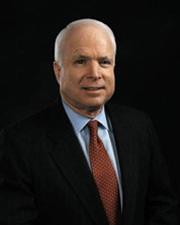 Sen. John McCain (R-AZ)
Rewrites page 2, lines 1–3
ReplacesPrinted pageRemoves page 2, lines 1–3 of the printed bill. See that page
Inserted: SECTION 1. SHORT TITLE; FINDINGS.
Inserted: (a) Short Title.--This Act may be cited as the "John Warner National Defense Authorization Act for Fiscal Year 2007".
Inserted: (b) Findings.--Congress makes the following findings:
Inserted: (1) Senator John Warner of Virginia was elected a member of the United States Senate on November 7, 1978, for a full term beginning on January 3, 1979. He was subsequently appointed by the Governor of Virginia to fill a vacancy on January 2, 1979, and has served continuously since that date. He was appointed a member of the Committee on Armed Services in January 1979, and has served continuously on the Committee since that date, a period of nearly 28 years. Senator Warner's service on the Committee represents nearly half of its existence since it was established after World War II.
Inserted: (2) Senator Warner came to the Senate and the Committee on Armed Services after a distinguished record of service to the Nation, including combat service in the Armed Forces and high civilian office.
Inserted: (3) Senator Warner enlisted in the United States Navy upon graduation from high school in 1945, and served until the summer of 1946, when he was discharged as a Petty Officer 3rd Class. He then attended Washington and Lee University on the G.I. Bill. He graduated in 1949 and entered the University of Virginia Law School.
Inserted: (4) Upon the outbreak of the Korean War in 1950, Senator Warner volunteered for active duty, interrupting his education to accept a commission in the United States Marine Corps. He served in combat in Korea as a ground officer in the First Marine Air Wing. Following his active service, he remained in the Marine Corps Reserve for several years, attaining the rank of captain.
Inserted: (5) Senator Warner resumed his legal education upon returning from the Korean War and graduated from the University of Virginia Law School in 1953. He was selected by the late Chief Judge E. Barrett Prettyman of the United States Court of Appeals for the District of Columbia Circuit as his law clerk. After his service to Judge Prettyman, Senator Warner became an Assistant United States Attorney in the District of Columbia, and later entered private law practice.
Inserted: (6) In 1969, the Senate gave its advice and consent to the appointment of Senator Warner as Under Secretary of the Navy. He served in this position until 1972, when he was confirmed and appointed as the 61st Secretary of the Navy since the office was established in 1798. As Secretary, Senator Warner was the principal United States negotiator and signatory of the Incidents at Sea Executive Agreement with the Soviet Union, which was signed in 1972 and remains in effect today. It has served as the model for similar agreements between states covering the operation of naval ships and aircraft in international sea lanes throughout the world.
Inserted: (7) Senator Warner left the Department of the Navy in 1974. His next public service was as Director of the American Revolution Bicentennial Commission. In this capacity, he coordinated the celebration of the Nation's founding, directing the Federal role in all 50 States and in over 20 foreign nations.
Inserted: (8) Senator Warner has served as chairman of the Committee on Armed Services of the United States Senate from 1999 to 2001, and again since January 2003. He served as ranking minority member of the committee from 1987 to 1993, and again from 2001 to 2003. Senator Warner concludes his service as chairman at the end of the 109th Congress, but will remain a member of the committee.
Inserted: (9) This Act is the twenty-eighth annual authorization act for the Department of Defense for which Senator Warner has taken a major responsibility as a member of the Committee on Armed Services of the United States Senate, and the fourteenth for which he has exercised a leadership role as chairman or ranking minority member of the committee.
Show 2 more inserted paragraphsShow less
Inserted: (10) Senator Warner, as seaman, Marine officer, Under Secretary and Secretary of the Navy, and member, ranking minority member, and chairman of the Committee on Armed Services, has made unique and lasting contributions to the national security of the United States.
Inserted: (11) It is altogether fitting and proper that his Act, the last annual authorization Act for the national defense that Senator Warner manages in and for the United States Senate as chairman of the Committee on Armed Services, be named in his honor, as provided in subsection (a).
Original wording
On page 2, strike lines 1 through 3, and insert the following:
Read automatically from the Congressional Record. Check the original before relying on it.
As printed
SA 4241. Mr. McCAIN (for himself, Mr. Frist, Mr. Inhofe, Mr. Kennedy, Mr. Roberts, Mr. Byrd, Mr. Sessions, Mr. Lieberman, Ms. Collins, Mr. Reed, Mr. Ensign, Mr. Akaka, Mr. Talent, Mr. Nelson of Florida, Mr. Chambliss, Mr. Nelson of Nebraska, Mr. Graham, Mr. Dayton, Mrs. Dole, Mr. Bayh, Mr. Cornyn, Mrs. Clinton, Mr. Thune, Mr. Allard, and Mr. Allen) proposed an amendment to the bill S. 2766, to authorize appropriations for fiscal year 2007 for military activities of the Department of Defense, for military construction, and for defense activities of the Department of Energy, to prescribe personnel strengths for such fiscal year for the Armed Forces, and for other purposes; as follows:
On page 2, strike lines 1 through 3, and insert the following:
SECTION 1. SHORT TITLE; FINDINGS.
(a) Short Title.--This Act may be cited as the “John Warner National Defense Authorization Act for Fiscal Year 2007”.
(b) Findings.--Congress makes the following findings:
(1) Senator John Warner of Virginia was elected a member of the United States Senate on November 7, 1978, for a full term beginning on January 3, 1979. He was subsequently appointed by the Governor of Virginia to fill a vacancy on January 2, 1979, and has served continuously since that date. He was appointed a member of the Committee on Armed Services in January 1979, and has served continuously on the Committee since that date, a period of nearly 28 years. Senator Warner's service on the Committee represents nearly half of its existence since it was established after World War II.
(2) Senator Warner came to the Senate and the Committee on Armed Services after a distinguished record of service to the Nation, including combat service in the Armed Forces and high civilian office.
(3) Senator Warner enlisted in the United States Navy upon graduation from high school in 1945, and served until the summer of 1946, when he was discharged as a Petty Officer 3rd Class. He then attended Washington and Lee University on the G.I. Bill. He graduated in 1949 and entered the University of Virginia Law School.
(4) Upon the outbreak of the Korean War in 1950, Senator Warner volunteered for active duty, interrupting his education to accept a commission in the United States Marine Corps. He served in combat in Korea as a ground officer in the First Marine Air Wing. Following his active service, he remained in the Marine Corps Reserve for several years, attaining the rank of captain.
(5) Senator Warner resumed his legal education upon returning from the Korean War and graduated from the University of Virginia Law School in 1953. He was selected by the late Chief Judge E. Barrett Prettyman of the United States Court of Appeals for the District of Columbia Circuit as his law clerk. After his service to Judge Prettyman, Senator Warner became an Assistant United States Attorney in the District of Columbia, and later entered private law practice.
(6) In 1969, the Senate gave its advice and consent to the appointment of Senator Warner as Under Secretary of the Navy. He served in this position until 1972, when he was confirmed and appointed as the 61st Secretary of the Navy since the office was established in 1798. As Secretary, Senator Warner was the principal United States negotiator and signatory of the Incidents at Sea Executive Agreement with the Soviet Union, which was signed in 1972 and remains in effect today. It has served as the model for similar agreements between states covering the operation of naval ships and aircraft in international sea lanes throughout the world.
(7) Senator Warner left the Department of the Navy in 1974. His next public service was as Director of the American Revolution Bicentennial Commission. In this capacity, he coordinated the celebration of the Nation's founding, directing the Federal role in all 50 States and in over 20 foreign nations.
(8) Senator Warner has served as chairman of the Committee on Armed Services of the United States Senate from 1999 to 2001, and again since January 2003. He served as ranking minority member of the committee from 1987 to 1993, and again from 2001 to 2003. Senator Warner concludes his service as chairman at the end of the 109th Congress, but will remain a member of the committee.
(9) This Act is the twenty-eighth annual authorization act for the Department of Defense for which Senator Warner has taken a major responsibility as a member of the Committee on Armed Services of the United States Senate, and the fourteenth for which he has exercised a leadership role as chairman or ranking minority member of the committee.
(10) Senator Warner, as seaman, Marine officer, Under Secretary and Secretary of the Navy, and member, ranking minority member, and chairman of the Committee on Armed Services, has made unique and lasting contributions to the national security of the United States.
(11) It is altogether fitting and proper that his Act, the last annual authorization Act for the national defense that Senator Warner manages in and for the United States Senate as chairman of the Committee on Armed Services, be named in his honor, as provided in subsection (a).
Legislative Activity
Stay on top of the latest movement without scrolling through every action
Senate amendment agreed to: Amendment SA 4241 agreed to in Senate by Unanimous Consent.
June 22, 2006
View full timeline
Senate amendment agreed to: Amendment SA 4241 agreed to in Senate by Unanimous Consent.
June 22, 2006
Considered by Senate. (consideration: CR S6324, S6345-6346, S6346-6366; text: CR S6356)
June 22, 2006
Amendment SA 4241 agreed to in Senate by Unanimous Consent.
June 22, 2006
Considered by Senate. (consideration: CR S6191)
June 21, 2006
Considered by Senate. (consideration: CR S6105)
June 20, 2006
Considered by Senate. (consideration: CR S6051)
June 19, 2006
Considered by Senate. (consideration: CR S5990)
June 16, 2006
Considered by Senate. (consideration: CR S5909)
June 15, 2006
Senate amendment submitted
June 14, 2006
Senate amendment proposed (on the floor): Amendment SA 4241 proposed by Senator McCain.(consideration: CR S5857-5859; text: CR S5858)
June 14, 2006
Amendment SA 4241 proposed by Senator McCain. (consideration: CR S5857-5859; text: CR S5858) To name the Act after John Warner, a Senator from Virginia.
June 14, 2006