To express the sense of the Senate regarding management of the Strategic Petroleum Reserve to lower the burden of gasoline prices on the economy of the United States and circumvent the efforts of OPEC to reap windfall profits.
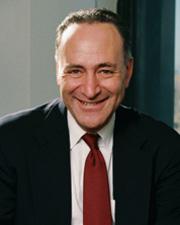 Sen. Charles E. Schumer (D-NY)
Legislative Activity
Stay on top of the latest movement without scrolling through every action
Roll call votes on amendments in Senate: Motion to table amendment SA 805 agreed to in Senate by Yea-Nay Vote. 57 - 39. Record Vote Number: 147.
June 22, 2005
View full timeline
Roll call votes on amendments in Senate: Motion to table amendment SA 805 agreed to in Senate by Yea-Nay Vote. 57 - 39. Record Vote Number: 147.
June 22, 2005
Considered by Senate. (consideration: CR S6980, S6994, S6995-6997; text as modified: CR S6996)
June 22, 2005
Motion to table amendment SA 805 agreed to in Senate by Yea-Nay Vote. 57 - 39. Record Vote Number: 147.
June 22, 2005
Considered by Senate. (consideration: CR S6871)
June 21, 2005
Senate amendment submitted
June 20, 2005
Senate amendment proposed (on the floor): Amendment SA 805 proposed by Senator Schumer.(consideration: CR S6808-6810; text: CR S6809)
June 20, 2005
Amendment SA 805 proposed by Senator Schumer. (consideration: CR S6808-6810; text: CR S6809) To express the sense of the Senate regarding management of the Strategic Petroleum Reserve to lower the burden of gasoline prices on the economy of the United States and circumvent the efforts of OPEC to reap windfall profits.
June 20, 2005
Votes
1 roll call on this amendment
Text
Proposed
ENERGY POLICY ACT OF 2005--Continued

The PRESIDING OFFICER. The Senator from Florida.
Mr. NELSON of Florida. Mr. President, what is the parliamentary
situation?

Amendment No. 799

The PRESIDING OFFICER. The pending amendment is No. 799, the
Voinovich amendment.
Mr. NELSON of Florida. Mr. President, is it in order to ask unanimous
consent to lay aside the pending amendment for the purpose of speaking
on an amendment that will be offered by Senator Martinez?
The PRESIDING OFFICER. The Senator may ask that consent.
Mr. NELSON of Florida. Mr. President, I will certainly be willing to
have my colleague from Florida speak. I ask unanimous consent that I
speak after the Senator from Florida, Mr. Martinez, who will offer the
amendment.
The PRESIDING OFFICER. Without objection, it is so ordered.
The Senator from Florida.

Amendment No. 783

Mr. MARTINEZ. Mr. President, I call up amendment No. 783.
The PRESIDING OFFICER. Without objection, the amendment is set aside.
The clerk will report.
The assistant legislative clerk read as follows:

The Senator from Florida [Mr. Martinez], for Mr. Nelson of
Florida, for himself, Mr. Martinez, Mr. Corzine, Mrs. Boxer,
Mr. Lautenberg, Mrs. Feinstein, Mr. Kerry, Mrs. Dole, and Mr.
Burr, proposes an amendment numbered 783.

(Purpose: To strike the section providing for a comprehensive inventory
of outer Continental Shelf oil and natural gas resources)

Beginning on page 264, strike line 1 and all that follows
through page 265, line 12.

Mr. MARTINEZ, Mr. President, I appreciate the opportunity that the
chairman, Senator Domenici, the ranking member, Senator Bingaman, and
other members have given me to work on this important piece of
legislation.
I came late to the work of this committee on this bill, having joined
the Senate just this year. Much of the work had previously been done.
As the chairman himself has said, this bill will make a real
difference in America's energy landscape.
I must tell my colleagues that I want to vote for this bill. I think
it contains a lot of what this Nation needs.
I have grave reservations about one particular provision that calls
for an inventory of the resources off this Nation's outer continental
shelf.
It is for this reason that I rise today to oppose the inventory,
offer an amendment to strike the inventory language, and ask for the
support of my colleagues. The inventory language is opposed by both
Senators from Florida and a number of coastal State Senators because it
opens the door to the development of offshore drilling.
In my State of Florida, such an inventory off our coastlines would
take place entirely within a Federal moratorium that bans offshore
drilling.
I oppose the inventory because it encroaches on an area off of
Florida's coast that we expect will remain under that drilling ban in
perpetuity.
My colleagues should be aware that this proposed inventory will cost
in excess of a billion dollars and the result will tell us much of what
we already know.
I am asking my colleagues to strike the proposed inventory language
contained in this bill and protect the rights of States that have no
interest in drilling off their shores.
This provision offered by my colleague, Mr. Senator Landrieu of
Louisiana, proposes to require a ``seismic survey inventory'' of all
outer continental shelf areas, including within sensitive coastal
waters long-protected from all such invasive activities by the 24-year
bipartisan congressional moratorium.
I opposed this amendment in committee because it contains something
we in Florida don't want and it opens the door to a number of problems,
environmental problems, economic problems, and unnecessary challenges
for our military.
Why would we inventory an area where we are never going to drill?
The inventory is a huge problem for Florida. It tantalizes pro-
drilling interests. It basically puts the State at risk.
I have received assurances from my friends on the other side of this
issue that States such as Florida, States that do not want drilling on
their coast, will not have to do it. Fine. That is Florida's position.
I can clearly state that we do not want drilling now, and I do not
see a scenario anywhere on the horizon where we would change that
position. So why, given our objection to drilling, would we spend the
resources, more than a billion dollars, and damage the environment in
the eastern planning zone to do this inventory? I would also say to my
colleagues that an inventory is not a benign thing.
Seismic surveys involve extensive acoustic disruption to marine
ecosystems and fisheries. Recent scientific studies have documented
previously-unknown impacts from the millions of high-intensity airgun
impulses used in such inventories. These sudden, repetitive explosions
bring about a potential for harm that is simply too great.
Seismic surveys are an invasive procedure, inappropriate for
sensitive marine areas and economically important fishing grounds.
And if one looks at the cost of this inventory, the Minerals
Management Service reports that using the most up-to-date technology to
perform an inventory of this magnitude will cost between $75 million
and $125 million for each frontier planning area. Nowhere in this
legislation can I find a section that suggests how we recoup the cost
of such an inventory.
So I ask my colleagues to strike the inventory. Going forward will
encroach upon our coastal waters, waters covered by a drilling ban, and
would do little more than act as enticement to oil companies that want
our drilling moratorium lifted.
Last year, more than 74 million people visited Florida to enjoy its
coastline, its wonderful climate, its excellent fishing. Families
return year after

[[Page S6803]]

year to their favorite vacation spots to relax under our brilliant blue
skies, our powdery white beaches, and our crystal-clear emerald waters.
The people of Florida share a love and appreciation of the Atlantic
Ocean and the Gulf of Mexico, its coastal habitat and our wetlands,
which make a very complex ecosystem, and also a very special place to
live.
I share these facts for one reason: The people of Florida are
concerned their coastal waters are coming under increased pressure to
exploit possible oil and gas resources. The people of Florida do not
want that to happen. Floridians are adamantly opposed to oil and gas
exploration off our coastal waters. We have very serious concerns that
offshore exploration will weaken the protections we have built over
these many years. The inventory is but a foot in the door; it seriously
threatens marine wildlife and the coastal habitat off the coast of
Florida.
One other area of concern that perhaps has not been highlighted
enough and I know my colleague from Florida shares my view, is that it
has a tremendous impact on military uses of waters off Florida to
conduct extensive training and testing. For whatever time it would take
to conduct an inventory off our coastline, it would be the exact amount
of time our military will be put at a disadvantage.
We must afford our military the most and best training possible for
battle preparedness. Vieques used to give our men and women that
capability. Now that Vieques is closed, Florida's Panhandle plays an
increasingly significant role. Oil and gas exploration would have the
potential to halt that important work for an indefinite period of time.
Here are just some of the current missions using our section of the
Gulf: F-15 combat crew training; F-22 combat crew training; Navy cruise
missile exercises; special forces training; carrier battle group
training; composite and joint force training exercises; air-to-surface
weapons testing; surface-to-air weapons testing; and mine warfare
testing.
Any military mind knows that it takes months to schedule training
opportunities when joint operations are involved. If we were to
continue on this path of mandating an inventory in Florida's waters, we
could bring a halt to a number of important exercises.
In fact, one of the main reasons the military uses this area so
extensively is due to the protections currently in place. Here is what
MG Michael Kostelnik, the base commander of Eglin Air Force Base, said
in May of 2000:

We continue to place the most severe restrictions in the
eastern portion of the proposed sale area where oil and gas
operations would be incompatible with military training and
testing operations.

If we allow exploration there now, the military will suffer a setback
in their training and preparedness.
As many of my colleagues know, Senator Nelson and I are working
together to engage a coalition of Senators to help beat back any
efforts to encroach upon our coastal waters. I am proud to say in doing
so I follow in the footsteps of our predecessors, former Senators
Connie Mack and Bob Graham, and a bipartisan Florida delegation, in our
firm opposition to drilling off our coasts.
Let me again take a moment to praise Chairman Domenici and Ranking
Member Bingaman for putting together a comprehensive, bipartisan, and
significant energy policy that is forward looking, forward thinking,
and a road map of where we as a Nation need to go in order to address
the challenges that confront us today.
The problem is that this inventory language is a bad provision in a
good bill. I cannot emphasize enough how damaging this will be to
Florida, other coastal States, and our military training and testing
operations in the Gulf. The inventory will have a chilling affect on
all of these interests.
The amendment I offer here tonight is simple in that it strikes the
language requiring a ``seismic survey inventory'' of all outer
continental shelf areas. I believe striking this language makes the
overall bill stronger and I ask for my colleagues to support such an
amendment.
I yield the floor.
The PRESIDING OFFICER. The Senator from Florida.
Mr. NELSON of Florida. Mr. President, I rise to join my colleague
from Florida, as we have introduced this amendment to strike the
portion of the Energy bill that would set up an inventory on the Outer
Continental Shelf.
I want to show how extensive this inventory is going to be. The Outer
Continental Shelf is all of the west coast of the United States, the
Pacific coast, the area in yellow off the coast of Washington, Oregon,
and California. All of that area would be subject to the inventory. All
of this area in the Gulf of Mexico is presently covered by the
moratorium about which Senator Martinez and I fought very hard last
week to get an agreement from the two leaders and managers of the bill
that they would not come in and support any amendments that would offer
drilling in the Gulf of Mexico off Florida.
But look at the Outer Continental Shelf. It extends from Maine all
the way down to Florida. We are talking about a huge area that would be
inventoried. That sounds innocent enough, but let me tell you why I
oppose it. I oppose it because it is unnecessary unless you are
preparing to drill in areas off our coast that are currently subject to
this moratorium; otherwise, why would we want to take an inventory if
all of this Outer Continental Shelf is now under a moratorium so you
cannot drill for oil and gas?
I oppose it also because it is harmful to marine life and commercial
fish, and the Minerals Management Service already conducts inventories
of the economically recoverable oil and gas reserves on the Outer
Continental Shelf, including moratoria areas, every 5 years. In fact,
the MMS will complete its next inventory this summer. Its last
inventory came out in the year 2000. If that is the case, why do we
need another inventory? How is the inventory in this bill different
from the one that is already in effect? Two words: seismic exploration.
What is seismic exploration--in other words, what they call survey?
It is an expensive, invasive, and harmful practice used by oil and gas
companies to determine where to drill. Why doesn't MMS use seismic
exploration currently to complete their inventory? Because it is too
costly and it is considered a precursor to drilling.
If you are not going to drill, you should not be spending hundreds of
millions of dollars to tell you where to put the drill. MMS estimates
that these surveys would cost between $75 million and $125 million for
each of the planning areas. Remember, in the Outer Continental Shelf,
there are nine planning areas. At $75 million to $125 million apiece
for seismic exploration, that means we would be having MMS spend $675
million to $1 billion to survey our moratorium areas, areas on our
coastline that are under a moratorium until the year 2012, pursuant to
a Presidential directive.
Let me tell you a little bit about what seismic exploration and
surveying is. Oil and gas companies use seismic air guns. They are
long, submersible cannons that are towed behind boats in arrays, firing
shots of compressed air into the water every 10 seconds. Interestingly,
these air guns have replaced dynamite as the industry's primary method
of exploration. But they create sound rivaling that of dynamite. A
large seismic array can produce peak pressures of sound that are higher
than virtually any other manmade source, save for explosives like
dynamite--over 250 decibels.
The oil and gas industry typically conducts several seismic surveys
over the life of their offshore leases. They use these seismic surveys
to determine the best placement of oil rigs and pipelines and to track
fluid flows within the reservoirs. Seismic surveys are massive,
covering vast areas of the ocean, with thousands of blasts going off
every few seconds, in some cases over the course of days, weeks,
months. The arrays towed by boats consist of 12 to 48 individual air
guns, synchronized to create a simultaneous pulse of sound outputting a
total of 3,000 to 8,000 cubic inches of air per shot. The sounds are so
powerful because the array is attempting to generate echoes from each
of several geologic boundary layers at the bottom of the ocean. Echoes
produced by these seismic impulses are recorded, and they are analyzed
by oil and gas companies to provide information on the subsurface
geological features.

[[Page S6804]]

The noise pollution from these tests can literally be heard across
oceans. If the sea floor is hard and rocky, the noise might be heard
for thousands of miles. And the sound can mask the calls of whales and
other animals that rely on the acoustic environment to breed and
survive. Scientists are documenting more and more problems associated
with the seismic surveys. Whales, dolphins, fish, sea turtles, and
squid have all been impacted adversely by the seismic activity. I sure
would not want to be a scuba diver in the water with one of these
seismic blasts going off.
The 2004 International Whaling Commission's Scientific Committee, one
of the most well-respected bodies of whale biologists in the world,
concluded that increased sound from seismic surveys was a ``cause for
concern'' because there is a growing body of evidence that seismic
pulses kill, injure, and disturb marine life.
The impacts range from strandings to temporary or permanent hearing
loss, to abandonment of habitat and disruption of vital behaviors such
as mating and feeding.
Studies have also shown substantial impacts on commercial species of
fish. Fishermen, beware. One series of studies demonstrated that air
guns caused extensive and apparently irreversible damage to the inner
ears of snapper, and the snapper were several kilometers from the
seismic surveys.
The scientific community is not the one that is raising the alarm
bells. Courts and governments are starting to realize the dangers posed
by seismic exploration. In 2002, a California Federal court stopped a
geologic research project in the Sea of Cortez, when two beaked whales
were found dead with an undeniable link to the seismic activity.
The Canadian Government slowed a geologic project off its west coast
and is looking closely at an oil and gas seismic survey off Cape Breton
as a result of dangers posed by the surveys.
The Australian Government refused to issue permits for a survey near
a marine park because the proponents of the survey could not prove it
would not harm the marine park.
And the Bermuda Government refused to issue a permit for seismic
geologic surveys off its coast, citing concerns for impacts on marine
mammals.
Air gun activity associated with seismic surveys must be considered
an invasive procedure, inappropriate for sensitive marine areas and
economically important commercial fishing grounds.
We have to continue to remember that the United States has 3 percent
of the world's oil reserves.
Yet the United States uses four times more oil than any other nation,
according to the report from the National Commission on Energy Policy.
According to Alan Greenspan in a speech he gave in April of this year,
the 200 million personal vehicles currently on the U.S. highways
consume 11 percent of the total world oil production. We cannot drill
our way to energy independence.
Spending hundreds of millions of dollars on harmful exploration in
areas whose economic livelihood depends on their fishing industry and
their marine ecosystem could have devastating effects.
For these reasons, I must oppose this invasive, duplicative, and
harmful exploration on the moratoria areas on the Outer Continental
Shelf.
The bottom line is, if you have the Outer Continental Shelf under
moratoria, why do we need to try to inventory all of that if you are
not supposed to have any drilling under Presidential directive at least
until the year 2012? Why go in with the risk to Mother Nature with this
kind of seismic exploration?
I yield to my colleague from Florida.
The PRESIDING OFFICER (Mr. DeMint). The Senator from Florida.
Mr. MARTINEZ. If the Senator will yield, I wonder if in any part of
this bill the Senator noticed any area that would denote how the $1
billion, the cost of exploration, would be paid for?
Mr. NELSON of Florida. That is an excellent question. If you are
going to do the seismic exploration which this bill would allow in the
nine areas under the moratoria, it is going to cost between $650
million and $1 billion. In a Congress that is so concerned about budget
deficits to the tune of almost half a trillion a year, where are we
going to get that kind of money?
The Senator's point is well taken. I thank my colleague from Florida
for making that point.
Mr. MARTINEZ. A further question: It seems to me, when we have a
moratoria, drilling is prohibited right now. To do this inventory in
that particular area, it certainly seems to me to be a waste of
taxpayer dollars since there is no prospect of drilling with the
congressional and Presidential moratoriums in place.
Mr. NELSON of Florida. The Senator is correct. Since a President of
the United States established this moratorium on the Outer Continental
Shelf and it is to run to 2012, why do we need to be spending money on
seismic surveying on an area that is off limits to drilling, which the
moratorium has in place until the year 2012?
I thank the Senator for joining to offer this amendment. I ask the
Senate to consider helping continue to preserve the moratorium.
I yield the floor.
The PRESIDING OFFICER. The Senator from Iowa.
Mr. HARKIN. Mr. President, we are on the eve of a turning point in
the energy future of our country. As we move closer to voting on a
comprehensive energy bill, we have a truly historic opportunity to
transform the way we think about energy. We have an opportunity to make
a decisive step away from dependence on foreign imports and fossil
fuels and toward an independent future based on the abundant natural
human and technological resources found right here within our borders.
As we wean ourselves from the oil fields of the unstable Middle East
and other parts of the world and rely increasingly on field crops and
fuel cells produced in America's heartland, we will build an energy
future that will make us more secure and a future of which we can be
proud.
This is the bottom line. When we talk about moving toward energy
independence in this country, we are talking primarily about reducing
America's dependence on imported oil. Petroleum accounts for more than
85 percent of our energy imports. As everyone is acutely aware, much of
the 85 percent comes from some of the world's most unstable and, in
some cases, openly hostile countries.
Today, rising global demand for petroleum is driving prices for
gasoline and home heating oil to record levels. This year, China passed
Japan as the world's second largest consumer of energy. China's use of
oil is expected to grow exponentially over the next few years. So the
focus of any national energy strategy must be to reduce our dependence
on foreign oil in a sustainable way and as rapidly as possible.
By far, the largest use of petroleum in this country is in the
transportation sector, and 97 percent of today's transportation fuel
comes from petroleum. Thankfully, we know the solution. It is
technologically feasible. We need to build vehicles that use less
gasoline or no gasoline, and we need to make an aggressive transition
to clean, renewable domestic fuels such as ethanol, biodiesel, and fuel
cells.

The goal is a future of vehicles powered by fuel cells. The hydrogen
is used to create the electricity to turn the motors that turn the
wheels. The power from the fuel cell comes from hydrogen that will be
made by renewable resources such as wind, photovoltaic, and other forms
of renewable energy.
The biggest single step right now that we can take is to improve
vehicle fuel economy. This bill takes a modest step in this direction,
for example, by offering tax incentives for hybrid gas-electric
vehicles, but we need improvements across the board, including raising
the corporate average economy standard for vehicles.
Another commonsense way to reduce reliance on fossil fuels is to make
greater use of clean and homegrown fuels. This bill has several
provisions that take us in the right direction on this front, starting
with the robust 8-billion-plus renewable fuel standard first proposed
by Senator Lugar and I and overwhelmingly approved by this Senate last
week.
It is very disturbing that even with the price of ethanol well below
that of gasoline, fuel blenders are still turning their backs on this
cleaner, cheaper, homegrown alternative and turning instead to imports
of refined gasoline.

[[Page S6805]]

This chart illustrates that. Right now, going back to 5 years ago,
there has been a steady increase in the imports of gasoline. This is
weekly total gasoline imports--thousands of barrels per day. From April
28 of 2000 until March of this year, gasoline imports increased 66
percent. This is not oil, this is gasoline. This is oil that has been
refined in some foreign country, put on a tanker, and shipped to this
country. So right now, we are up to just about a million barrels a day.
Think about that, that is just gasoline. Not too many people know that.
Most people think we are just importing oil. We are importing about a
million barrels a day of refined gasoline into this country. That is at
the expense of American dollars and jobs. This is taking us in the
wrong direction.
A recent report by the Consumer Federation of America found consumers
would be saving up to 8 cents a gallon at the pump if refiners were
instead adding it to the gasoline at just 10-percent blends.
My consumers in Iowa, right now, are saving as much as 10 cents per
gallon on ethanol-blended fuels, for an average savings of at least
$100 a year for a typical family.
I believe Americans all across the country deserve the cost and clean
air benefits that ethanol-blended fuels provide. It is imperative we
insist on our strong 8-billion-gallon renewable fuels standard when
this Energy bill goes to conference with the House.
In addition to the renewable fuels standard, this bill in front of us
includes tax incentives for alternative motor vehicles and fuels. This
is very important. But we need to act more aggressively. For example, I
believe we need to mandate that gasoline vehicles sold in this country
be flexible-fuel vehicles that can run on E-85; that is, 85 percent
ethanol or some other biofuel.
Now, flexible-fuel vehicles only cost maybe, right now, between $100
and $200 per vehicle. That is with just a small amount that are being
made. If every vehicle was a flexible-fuel vehicle, the cost per
vehicle would drop way below $100 per vehicle. The savings a consumer
would get on that few dollars extra added to the sticker price of a car
would be more than made up for, probably within the first year or so of
buying flexible fuels.
So I am saying, right now we do not have that many flexible-fuel
vehicles. We need to mandate that cars sold in America--not made here,
sold in America--be a flexible-fuel vehicle. You might say: Is that
possible? Well, Brazil is planning on having all of its new cars
flexible-fuel ready by 2008. I want to ask the question: If the
Brazilians can do it, why can't we? If the Brazilians can do it, of
course we can do it.
Now, of course, consumers need access to the renewable fuels. So I am
glad the bill in front of us includes incentives for the installation
of flexible-fuel pumps at fueling stations. So now the bill has in it,
as I said, incentives for installing flexible-fuel pumps at fuel
stations. But we do not have a mandate to build flexible-fuel cars.
Right now, there is a fuel savings credit that auto manufacturers get
for making E-85 vehicles. It is called the CAFE credits. But it is on
the assumption that these vehicles will run on E-85 at least half the
time. In other words, an auto manufacturer gets the credits for
building a flexible-fuel vehicle on the assumption the vehicle will use
E-85 half the time.
But the truth is, most people who own flexible-fuel vehicles do not
even know it. So E-85 does not get used at all for that reason, and for
the reason there are not many pumps out there. So we call this the
dual-fuel loophole because carmakers get the credit for alternative
fuels even if no alternative fuel is used. We should close that
loophole now by tying CAFE credits to the amount of flexible fuel that
is actually used, or by simply letting the credit expire.
So what I am saying is we need a three-pronged approach. We have the
incentives in the bill to add flexible-fuel pumps at fueling stations.
Secondly, we need to provide these credits will go only--only--on the
amount of flexible fuel that is actually used. Third, what I am saying
is we actually need a mandate that cars sold in America be flexible
fueled.
Now, another important provision of the Energy bill extends the
income tax credit for the production of biodiesel, another excellent
renewable fuel. Biodiesel offers tremendous energy savings by providing
3.5 times more energy than is used to produce it, and by offering
improved air quality over traditional diesel.
In addition to investment in today's biofuels, we also need a strong
investment in the future of bio-based fuels and products of all kinds.
New technology is making it possible to produce biofuels and a host of
industrial and commercial products out of biomass; that is,
agricultural material such as corn stalks and wheat straw and
switchgrass and wood pulp and things like that--dedicated energy crops
that together are expected to produce 10 times the current volume
of ethanol at prices equal to or less than that of gasoline, and,
again, with tremendous benefits to our environment and our rural
economy.

A recent study found that farmers can expect to earn an additional
$35 per acre just by selling the excess biomass--the stalks and the
straw--from traditional corn and wheat operations.
Now, ethanol made from this residual biomass is expected to have near
zero or even negative net carbon dioxide emissions. How can that be? If
you are using it, you are burning it, burning the fuel in a car, you
put carbon dioxide into the atmosphere. That is true. But as these
plants grow, they take carbon dioxide out of the atmosphere more than
what is burned in the automobile. So biomass is a vital part of
combating climate change.
Now, the biorefineries that produce this ethanol will also give us
bio-based products to supplement or replace everyday products now made
from petroleum. I have a couple of posters that indicate that. Shipping
materials, building construction materials, roofing materials,
elastomeric-type roofing materials, paints, hand sanitizers, and even
carpets are made from renewable resources, biodegradable resources. For
home and automotive use, just think of all the plastic cups, all these
containers made out of petroleum now. And there are lubricants, soy
oil. Even rubber tires are made out of renewable resources which are
biodegradable. All of these things can be made from the biorefineries
that will be producing the ethanol and the biodiesel that we will use
in transportation. Many of these products are on the market, not in the
future but today.
Tripling the use of bio-based products could add $20 billion in
economic benefits just by the year 2010--5 years from now. Replacing
the Nation's petrochemicals with bio-based equivalents would save some
700 million barrels of petroleum a year. Just replacing plastics with
bio-based counterparts would save another 100 million barrels or more.
So there is great potential here. We need to get serious about
supporting these bio-based products, and the Federal Government needs
to take the lead.
Now, I know we are talking about the Energy bill, and that is what I
have been talking about. But I am just going to digress for a minute
and talk about a provision that was in the farm bill that was passed in
2002 because it has a lot to do with this Energy bill. Keep in mind
what I have been saying is, by getting the biorefineries going and
making more ethanol and biodiesel, we have byproducts that can also be
made. As I mentioned, they are the plastic containers and the building
materials and things like that. There is an important provision in the
farm bill, section 9002, that we worked very hard to get in the farm
bill, passed and signed by the President 3 years ago this month.
Section 9002 requires all Government Departments and Agencies to give a
purchasing preference to bio-based products. Now, here is the exact
wording. This is section 9002. This is law. It has been the law for 3
years:

Each Federal agency . . . shall--

It does not say ``may''--

shall, in making procurement decisions, give preference to
such items composed of the highest percentage of bio-based
products practicable . . . unless such items (A) are not
reasonably available; (B) fail to meet performance standards;
or (C) are available only at an unreasonable price.

So price, performance, and availability--as long as it meets those
three criteria, each Federal agency shall buy them. That is what it
says, period.
Think of all the plastic cups and forks used every day in the Senate
cafeteria alone.

[[Page S6806]]

Think of the Department of Defense, think about all of the plastic
materials they use in serving the troops every day. Think of the
millions of gallons of metal-working fluids, lubricants, and paint used
by the Department of Defense. Yet 3 years after the passage of the farm
bill, we still do not have a bio-based procurement program in place in
the Federal Government. That has been there. It has been the law. And
we are still not doing it. McDonald's can go buy plastic cups made out
of renewable resources. Good for them. Why can't the Department of
Defense? Why can't the Department of Interior that operates in our
national parks? Why aren't they using more biodegradable materials? The
law says they are supposed to, but they are not doing it because USDA
has yet to issue the rules.
Again, I bring that up because this is part and parcel of the Energy
bill. This saves us energy because right now all this material is made
from imported oil, or most of it. It could be made by homegrown
products here in America. We need to have the Federal Government
setting an example and leading the way in reducing dependence on
products made from foreign oil. I am sorry to say that 3 years later we
still are not doing it.
We also need to invest in research and commercialization of bio-based
fuels and products. That is why a few weeks ago, I, along with Senators
Lugar, Obama, and Coleman, introduced the National Security and
Bioenergy Investment Act of 2005. Our bill promotes targeted biomass
research and development in order to expand the cost-effective use of
bio-based fuels, products, and power. It provides incentives for the
production of the first 1 billion gallons of biofuels from cellulosic
biomass; that is, crop residues like corn stocks and wheat straw, or
wood chips from lumber mills. It provides bioeconomy development grants
to small bio-based businesses. It creates a new Assistant Secretary
position at the Department of Agriculture to carry out energy and bio-
based initiatives.
It requires the Capitol complex to lead by example by procuring bio-
based products. This bill has the support of a broad coalition of
agricultural producers, clean energy and environment groups, and
national security experts. I have a number of letters from these
organizations supporting the bill.
I ask unanimous consent that the letters be printed in the Record at
the conclusion of my remarks.
The PRESIDING OFFICER. Without objection, it is so ordered.
(See Exhibit 1.)
Mr. HARKIN. Mr. President, I am excited about this new bill. I hope
my colleagues will get behind it. In fact, we may be offering an
amendment to the Energy bill that would take a small part of that and
add it to the Energy bill. I hope we can get that done this week.
America's dangerous dependence on fossil fuels extends beyond oil.
Natural gas prices have skyrocketed, hurting everyone who uses gas to
heat their home or fuel their appliances or to make fertilizer for our
farmers. Americans now pay two to three times what Europeans pay for
natural gas due to our ever-growing demand and limited availability.
Farmers are hit hard. Our farmers rely on natural gas not only to heat
homes and run much of their equipment but also for fertilizer in the
fields. These impacts on farmers are severe and getting worse. We need
an energy bill that looks for sensible ways to lower natural gas costs
for all Americans. We need to look for environmentally sensitive ways
to increase our supply.
That is why I keep saying, the House put in a bill to drill for oil
in the Arctic National Wildlife Refuge, but we all know that oil
doesn't amount to anything. Most of that oil--I could be corrected--I
believe all of that oil is going to go to Japan. It is a drop in the
bucket compared to what we use. But what else they have in Alaska is a
lot of natural gas, and we need to pipe that natural gas from Alaska
down to the lower 48. That has been on the drawing boards in the past
to get that natural gas down here. And for various and sundry reasons
that I don't need to go into here, it has been held up.
I call upon the Governor of Alaska to move expeditiously to reach the
agreements that are necessary to get the natural gas pipeline
constructed and built to deliver the natural gas down to the lower 48.
They have been talking a lot about how they would pipe it down--they
would liquefy it and then send it down to the west coast, or maybe to
the Gulf States. That costs a lot of money when you liquefy natural
gas, when we could build a pipeline that could be environmentally safe
and bring that gas right down to the Midwest where it is needed, not
only for the Midwest but for the upper part, the northern part of the
United States. So we need to move ahead aggressively on that, and we
are not doing it.
We need to look for all environmentally sensitive ways to increase
supply, and we need to look for solar and biomass and wind. I am glad
so many colleagues from both sides of the aisle joined together in
approving the amendment offered by Senator Bingaman requiring 10
percent of this country's electricity to come from renewable resources
by 2020. Wind power in particular has tremendous potential to provide
clean, abundant energy in many parts of the country. Wind power
generation can provide thousands of dollars in additional revenue to
our farmers and ranchers and people in rural areas, while continuing to
allow for crop production and grazing. Valuable incentives for wind
power production exist in the section 45 wind production tax credit.
However, development of this vital industry has been tied up by
Congress's refusal to provide a long-term extension of this incentive.
In 2004, when extension of the production tax credit was delayed,
more than $2 billion in wind power investment was put on hold. I am
pleased a 3-year extension of the production tax credit for wind
has been included in this bill. We could do more, much more. It should
be extended longer than that, but at least this minimal amount should
provide developers the certainty they need to move ahead with wind
power projects.

We also need to make sure farmers and farmer co-ops can be full
participants in wind power projects. The farm bill's energy title,
section 906, is providing grants and loans to farmers and rural small
businesses to install wind and other renewable energy systems on their
property. It also supports energy-efficient improvements to farm and
small business operations. This program has been a real success over
the past several years. We expect it to grow substantially in the years
ahead.
I have also introduced a bill, S. 715, to help more farmers and other
rural citizens become active investors in wind energy by removing
restrictions that are in the production tax credit. This bill I am
sponsoring includes a pass through of the wind production tax credit to
cooperative members, just like the small ethanol producer credit pass
through right now. This will provide another needed boost to rural
America's wind power development. Right now, if a co-op builds an
ethanol plant, they can get the production tax credits passed through
to their members. If a co-op wants to build windmills, however, they
can't pass it through to their members. Hopefully, we can lift this
restriction, and we can do it on this Energy bill before us.
Finally, we need to look to the longer term future, and we need to do
it now by laying the groundwork. To deliver truly sustainable energy
that will not add to climate change and global warming, that will not
pollute the environment, we must invest in clean technologies. What I
am talking about is hydrogen. It offers real potential for a clean,
domestic, sustainable energy future. But only if it is produced from
renewable resources. That is why we need to support research and
demonstration of technologies to produce hydrogen from ethanol and
other renewable resources. My bill, S. 373, the Renewable Hydrogen
Transportation Act, would do just that, by funding the installation of
an ethanol-to-hydrogen reformer, as well as the operation of hybrid
electric vehicles converted to run on renewable hydrogen instead of
gasoline.
Making hydrogen from ethanol and other renewable fuels makes a lot of
sense for transportation--one, because we can use the existing ethanol
production and distribution network; two, because it could well be the
least expensive renewable hydrogen option available. I appreciate the
willingness of the chairman and the ranking member to work with me to
put this modest, but meaningful, initiative in the bill.

[[Page S6807]]

Again, to get to that sustainable future, we have to think about
making hydrogen from renewable resources. You use the wind power. When
the wind blows at night and you don't need all that electricity and you
cannot store it, what do you do with it? You waste it. It is gone. But
if you can use that wind at night to turn a turbine that makes
electricity, and you can use that electricity to hydrolyze water--
remember the old chemistry experiment where you put positive and
negative in water, and off of one comes oxygen and off of the other
comes hydrogen. There are two atoms for oxygen for every atom of
hydrogen. As long as those turbines are turning, we can make hydrogen.
You can store hydrogen. You can save it. You can compress it. You can
pipe it. So, therefore, at times when you don't need a lot of
electrical power and the wind is blowing, you can make hydrogen. You
can store it and take the hydrogen and put it through a fuel cell to
make the electricity when you need it. The beauty of doing that is you
only get one product--H<inf>2</inf>O, water. Nothing else. It doesn't
pollute, doesn't add to global warming or anything. So that is the
cycle that we need. Use the Sun, use the wind, hydropower, whatever is
renewable, take that and make hydrogen, store it, compress it, put it
through a fuel cell, and make the electricity, and the cycle starts all
over again. I know a lot of this is some years down the pike. We cannot
do it tomorrow. But we can start now by building assistance that will
enable us to move to a renewable hydrogen-based economy in this
country.
Mr. President, let me close by thanking Senator Domenici and Senator
Bingaman for the extraordinary job they have done during the past
months and during floor consideration of the bill. The bipartisan
cooperation we are seeing is due largely to their example and
impressive leadership, and the entire Senate owes them a debt of
gratitude for a job well done.
Of course, we are not done yet. Hurdles remain. We are headed,
though, toward concluding a strong, bipartisan bill that leads America
decisively into the new world of clean, renewable, home-grown energy.
When the time comes, we need to stand firm for the Senate provisions
when we go to conference.
Mr. President, I yield the floor.

Exhibit 1

June 9, 2005.
Re The National Security and Bioenergy Investment Act of
2005.
Hon. Tom Harkin,
U.S. Senate,
Washington, DC.
Hon. Richard Lugar,
U.S. Senate,
Washington, DC.
Dear Senators Harkin and Lugar: The National Corn Growers
Association (NCGA), the American Soybean Association (ASA),
and the Renewable Fuels Association are writing to express
our support for the National Security and Bioenergy
Investment Act of 2005. In particular, we strongly support
the increased procurement of biobased products by Federal
agencies and all Federal government contractors. Biobased
products represent a large potential growth market for corn
and soybean growers in areas such as plastics, solvents,
packaging and other consumer goods to provide markets for
U.S.-grown crops. The biobased product industry has already
started to grow, bringing new products to consumers, new
markets to growers and new investments to our communities.
The procurement of biobased products promotes energy and
environmental security. Products made from corn and soybeans
could replace a variety of items currently produced from
petroleum, and aid in reducing dependence on imported oil.
Already the production of ethanol and biodiesel reduces
imports by more than 140 million barrels of oil. The
production of biobased products generates less greenhouse gas
than traditional petroleum-based items. There are also
tremendous opportunities for grower-owned processing
facilities and rural America and agriculture as a whole. New
jobs and investments will be brought into rural communities,
as new processing and manufacturing facilities move into
those communities to be near renewable feedstocks.
NCGA, ASA and RFA applaud your continued efforts to promote
the use of biobased I products that will encourage the
development of new markets for corn and soybeans and
ultimately help to revitalize rural economies and the
agriculture industry as a whole. We have been avid supporters
of the biobased products industry, and we look forward to
working with you as you continue to provide vision and
direction for this emerging industry.
Sincerely,
Leon Corzine,
President, National Corn Growers Association.
Neal Bredehoeft,
President, American Soybean Association.
Bob Dinneen,
President, Renewable Fuels Association.
____

Governors' Ethanol Coalition,

June 9, 2005.
Hon. Tom Harkin,
Hart Senate Office Building,
Washington DC.
Hon. Barack Obama,
Hart Senate Office Building,
Washington DC.
Hon. Richard Lugar,
Hart Senate Office Building,
Washington DC.
Hon. Norm Coleman,
Hart Senate Office Building,
Washington DC.
Dear Senators: On behalf of the thirty members of the
Governors' Ethanol Coalition, we strongly support and endorse
the National Security and Bioenergy Investment Act of 2005,
as well as your efforts to expand development of other
biofuels and co-products. The Governors' Ethanol Coalition is
pleased that this bill embodies the recommendations developed
by the Coalition in Ethanol From Biomass: America's 21st pi
Century Transportation Fuel. When signed into law, this act
will catalyze needed research, production, and use of
biofuels and bio-based products, thereby enhancing our
economic, environmental, and national security.
The Coalition believes that the nation's dependency on
imported oil presents a huge risk to this country's future.
The combination of political tensions in major oil-producing
nations with growing oil demand from China and India is
seriously threatening our national security. Moreover, as we
import greater amounts of oil each year, we are draining more
and more of the wealth from our states.
The key provisions contained in your bill bring focus and
resources to biomass-derived ethanol research and
commercialization efforts. The result, over time, will be the
replacement of significant amounts. of imported oil with
domestically produced fuels--improving our rural economies,
cleaning our air, and contributing to our national security.
Of particular importance is the bill's aim to broaden ethanol
production to include all regions of the nation so that many
more states will reap the benefits of biofuels.
Again, thank you for inclusion of the Coalition's
recommendations in this landmark legislation. Please let us
know how the Coalition can help with the passage of this very
important legislation. The continued expansion of ethanol
production and use, particularly biomass-derived fuels, and
the accompanying economic growth and environmental benefits
for our states is essential to the nation's long-term
economic vitality and national security.
Sincerely,
Tim Pawlenty,
Chair, Governor of Minnesota.
Kathleen Sebelius,
Vice Chair, Governor of Kansas.
____

Natural Resources Defense Council,

Washington, DC, June 7, 2005.
Dear Senators Harkin and Lugar: The Natural Resources
Defense Council strongly supports the National Security and
Bioenergy Investment Act of2005, which you introduced today.
This important bill would expand and refine research,
development, demonstration and deployment efforts for the
production of energy from crops grown by farmers here in
America. The bill would also expand and improve the
Department of Agriculture's efforts to promote a biobased
economy, federal bio-energy and bioproduct purchasing
requirements, and federal educational efforts.
The Research and Development (R&D) title of this bill
continues your tradition of leadership in this area by
updating the Biomass Research and Development Act of2000,
which you also crafted. This title will not only extend the
provisions of the original bill and greatly increase the
funding for these provisions, it will also refine the
direction of this funding. Taken together, these changes
maximize the impacts of R&D on the greatest challenges facing
cellulosic biofuels today.
Your bill also creates extremely important production
incentives for the first one billion gallons of cellulosic
biofuels. The production incentives approach taken by the
bill a combination of fixed incentives per gallon at first,
switching over to a reverse auction will maximize the
development of cellulosic biofuels production while
minimizing the cost to taxpayers.
In addition, the bill creates an Assistant Secretary of
Agriculture for Energy and Biobased Products. Coupled with
the bill's development grants, tax incentives, biobased
product procurement provisions, and educational program, the
bill would make a huge contribution to developing a
sustainable biobased economy, reducing our oil dependence and
improving our national security.
The technologies advanced by this bill will undoubtedly
make important contributions to reducing our global warming
pollution and the air and water pollution that comes

[[Page S6808]]

from our dependence on fossil fuels. We are concerned,
however, that the eligibility provisions for forest biomass
do not exclude sensitive areas that need protecting,
including roadless areas, old growth forests, and other
endangered forests, and do not restrict eligibility to
renewable sources or prohibit possible conversion of native
forests to plantations. We know that you do not want to see
this admirable legislation applied in ways that exploit these
features, and will be happy to work with you in the future to
take any steps needed if abuses arise.
Sincerely,
Karen Wayland,
Legislative Director.
____

Energy Future Coalition,

Washington, DC, June 8, 2005.
Hon. Tom Harkin,
Hon. Richard G. Lugar,
U.S. Senate,
Washington, DC.
Dear Senators Harkin and Lugar: On behalf of the Energy
Future Coalition, I am writing to commend your leadership and
vision in drafting the National Security and Bioenergy
Investment Act of 2005.
In our judgment, America's growing dependence on foreign
oil endangers our national and economic security. We believe
the Federal government should undertake a major new
initiative to curtail U.S. oil consumption through improved
efficiency and the rapid development and deployment of
advanced biomass, alcohol and other available petroleum fuel
alternatives.
With such a push, we believe domestic biofuels can cut the
nation's oil use by 25 percent by 2025, and substantial
further reductions are possible through efficiency gains from
advanced technologies. That is an ambitious goal, but it is
also an extraordinary opportunity for American leadership,
innovation, job creation, and economic growth.
You took an important step forward by introducing S. 650,
the Fuels Security Act, incorporated into the Senate energy
bill during Committee markup. This legislation is another
important step, authorizing the additional research and
development and federal incentives needed to accelerate the
adoption of biobased fuels and coproducts. We are pleased to
support it.
Sincerely,
Reid Detchon,
Executive Director.
____

National Farmers Union,

Washington, DC, June 9, 2005.
Hon. Richard Lugar,
Hart Senate Office Building,
U.S. Senate, Washington, DC.
Hon. Tom Harkin,
Hart Senate Office Building,
U.S. Senate, Washington, DC.
Dear Senators Lugar and Harkin: On behalf of the family
farming and ranching members of the National Farmers Union,
we are writing to express our strong support for your
bipartisan, National Security and Bioenergy Investment Act of
2005 legislation. The provisions within this act contain
crucial measures that will benefit not only rural, but all of
America.
Importantly, your legislation would create an Assistant
Secretary for Energy and Biobased Products position at USDA,
which we feel would complement and reinforce initiatives
created by the energy section of the 2002 Farm Bill.
We also applaud your proposals for promoting the usage of
biobased products within the U.S. government, which will
expand future development of these technologies. These
products, and their use, are an asset to the rural producers
of the commodities used in the production of these commonly
used items. Also, the more we increase the use of these
items, the better it will be environmentally for future
generations.
We wholeheartedly support your legislation and look forward
to working with you to promote the expansion of biobased
products.
Sincerely,
David J. Frederickson,
President.
____

Biotechnology

Industry Organization,

Washington, DC, June 8, 2005.
Senator Tom Harkin,
Ranking Democratic Member,
Senator Richard Lugar,
Member, Committee on Agriculture, Nutrition and Forestry,
U.S. Senate, Washington, DC.
Dear Senators Harkin and Lugar: The Biotechnology Industry
Organization (BIO) Industrial and Environmental Section fully
supports the National Security and Bioenergy Investment Act
of 2005. We greatly appreciate your vision and initiative to
expand the Biomass Research and Development Act and to create
new incentives to produce biofuels and biobased products.
America's growing dependence on foreign energy is eroding
our national security. We must take steps to drastically
increase production of domestic energy. As an active
participant in the Energy Future Coalition, BIO believes this
country needs a major new initiative to more aggressively
research, develop and deploy advanced biofuels technologies.
With sufficient government support, we can meet up to 25% of
our transportation fuel needs by converting farm crops and
crop residues to transportation fuel.
The National Security and Bioenergy Investment Act of 2005
will boost the use of industrial biotechnology to produce
fuels and biobased products from renewable agricultural
feedstocks. With the use of new biotech tools, we can now
utilize millions of tons of crop residues, such as corn
stover and wheat straw, to produce sugars that can then be
converted to ethanol, chemicals and bio-based plastics. These
biotech tools can only be rapidly deployed if federal policy
makers take steps to help our innovative companies get over
the initial hurdles they face during the commercialization
phase of bioenergy production, and your bill will help get
that job done.
We are pleased to endorse this visionary legislation.
Sincerely,
Brent Erickson,
Executive Vice President.
____

Environmental Law & Policy Center,

Chicago, IL, June 8, 2005.
Hon. Tom Harkin,
Hon. Richard G. Lugar,
U.S. Senate,
Washington, DC.
Dear Senators Harkin and Lugar: The Environmental Law and
Policy Center (``ELPC'') is pleased to support the National
Security and Bioenergy Investment Act of 2005, and we commend
you for your leadership and vision in introducing this
legislation. This bill would accelerate research,
development, demonstration and production efforts for energy
from farm crops in the United States, especially cellulosic
ethanol. It also will expand and prioritize the United States
Department of Agriculture's leadership responsibilities to
promote clean and sustainable energy development, and it will
increase procurement of biobased products.
By significantly expanding the development and production
of clean energy ``cash crops,'' this legislation will improve
our environmental quality, stimulate significant rural
economic development, and strengthen our national energy
security. ELPC also appreciates that this legislation
reflects your longstanding support for farm-based sustainable
energy programs. ELPC strongly supported your successful
efforts to create the new Energy Title in the 2002 Farm Bill,
which established groundbreaking new federal incentives for
renewable energy and energy efficiency, while renewing
existing programs such as the Biomass Research and
Development Act of 2000.
The National Security and Bioenergy Investment Act of 2005
is a natural complement to the 2002 Farm Bill Energy Title
programs, and it will help to strengthen support for the
right bioenergy production programs in the 2007 Farm Bill.
Accordingly, ELPC is pleased to support this legislation.
Very truly yours,
Howard A. Learner,
Executive Director.
____

Institute for Local Self-Reliance,

June 6, 2005.
Senator Tom Harkin,
U.S. Senate,
Washington, DC.
Dear Senator Tom Harkin: Congratulations on your bill,
National Security and Bioenergy Investment Act of 2005. It is
a breakthrough piece of legislation. Your well-conceived
bill, combining needed executive branch changes, welcome
increases in research and development funding and innovative
commercialization techniques, can move the use of plants as a
fuel and industrial material from the margins of the economy
to the mainstream. I urge everyone with an interest in our
environmental, agricultural and economic future to support
this bill.
Sincerely,
David Morris,
Vice President.

The PRESIDING OFFICER. The Senator from New York is recognized.

Amendment No. 805

Mr. SCHUMER. Mr. President, first, I thank my colleague from Iowa for
his being always thoughtful. We even want to produce ethanol plants and
wind in New York. We just don't want to transport it over to Iowa. I am
not from Iowa. In any case, I am not here to talk about that.
Mr. President, I ask unanimous consent that the pending amendment be
laid aside, and I send an amendment to the desk.
Mr. DOMENICI. Reserving the right to object.
Mr. SCHUMER. This is the sense of the Senate amendment on the
Strategic Petroleum Reserve.
Mr. DOMENICI. We will temporarily set it aside, and then we will
return to where we were. I have no objection.
The PRESIDING OFFICER. Without objection, it is so ordered.
Mr. SCHUMER. Mr. President, I believe the amendment is at the desk.
The PRESIDING OFFICER. The clerk will report.
The assistant legislative clerk read as follows:

The Senator from New York [Mr. Schumer] proposes an
amendment numbered 805.

Mr. SCHUMER. Mr. President, I ask unanimous consent that further
reading of the amendment be dispensed with.
The PRESIDING OFFICER. Without objection, it is so ordered.

[[Page S6809]]

The amendment is as follows:

(Purpose: To express the sense of the Senate regarding management of
the Strategic Petroleum Reserve to lower the burden of gasoline prices
on the economy of the United States and circumvent the efforts of OPEC
to reap windfall profits)

On page 208, after line 24, add the following:

SEC. 303. SENSE OF THE SENATE REGARDING MANAGEMENT OF SPR.

(a) Findings.--Congress finds that--
(1) the prices of gasoline and crude oil have a direct and
substantial impact on the financial well-being of families of
the United States, the potential for national economic
recovery, and the economic security of the United States;
(2) on June 13, 2005, crude oil prices closed at the
exceedingly high level of $55.62 per barrel, the price of
crude oil has remained above $50 per barrel since May 25,
2005, and the price of crude oil has exceeded $50 per barrel
for approximately \1/3\ of calendar year 2005;
(3) on June 6, 2005, the Energy Information Administration
announced that the national price of gasoline, at $2.12 per
gallon, could reach even higher levels in the near future;
(4) despite the severely high, sustained price of crude
oil--
(A) the Organization of Petroleum Exporting Countries
(referred to in this section as ``OPEC'') has refused to
adequately increase production to calm global oil markets and
officially abandoned its $22-$28 price target; and
(B) officials of OPEC member nations have publicly
indicated support for maintaining oil prices of $40-$50 per
barrel;
(5) the Strategic Petroleum Reserve (referred to in this
section as ``SPR'') was created to enhance the physical and
economic security of the United States;
(6) the law allows the SPR to be used to provide relief
when oil and gasoline supply shortages cause economic
hardship;
(7) the proper management of the resources of the SPR could
provide gasoline price relief to families of the United
States and provide the United States with a tool to
counterbalance OPEC supply management policies;
(8) the Administration's policy of filling the SPR despite
the fact that the SPR is nearly full has exacerbated the
rising price of crude oil and record high retail price of
gasoline;
(9) in order to combat high gasoline prices during the
summer and fall of 2000, President Clinton released
30,000,000 barrels of oil from the SPR, stabilizing the
retail price of gasoline;
(10) increasing vertical integration has allowed--
(A) the 5 largest oil companies in the United States to
control almost as much crude oil production as the Middle
Eastern members of OPEC, over \1/2\ of domestic refiner
capacity, and over 60 percent of the retail gasoline market;
and
(B) Exxon/Mobil, BP, Royal Dutch Shell Group, Conoco/
Philips, and Chevron/Texaco to increase first quarter profits
of 2005 over first quarter profits of 2004 by 36 percent, for
total first quarter profits of over $25,000,000,000;
(11) the Administration has failed to manage the SPR in a
manner that would provide gasoline price relief to working
families; and
(12) the Administration has failed to adequately demand
that OPEC immediately increase oil production in order to
lower crude oil prices and safeguard the world economy.
(b) Sense of Congress.--It is the sense of Congress that
the President should--
(1) directly confront OPEC and challenge OPEC to
immediately increase oil production; and
(2) direct the Federal Trade Commission and Attorney
General to exercise vigorous oversight over the oil markets
to protect the people of the United States from price gouging
and unfair practices at the gasoline pump.
(c) Release of Oil From SPR.--
(1) In general.--For the period beginning on the date of
enactment of this Act and ending on the date that is 30 days
after the date of enactment of this Act, 1,000,000 barrels of
oil per day shall be released from the SPR.
(2) Additional release.--If necessary to lower the burden
of gasoline prices on the economy of the United States and to
circumvent the efforts of OPEC to reap windfall crude oil
profits, 1,000,000 barrels of oil per day shall be released
from the Strategic Petroleum Reserve for an additional 30
days.

Mr. SCHUMER. Mr. President, I thank my friend from New Mexico for his
grace, as usual. I will be brief as I make a statement on the
amendment.
I rise to offer this amendment, which will express the sense of the
Senate that the Federal Government should take long, overdue action to
curb the record-high gasoline prices that are plaguing American
consumers at the pump. As my colleagues are well aware, for weeks, oil
and gasoline prices have been placing an immense burden on working
families and threatening our fragile economic recovery, and it is time
that this body took action to protect our Nation's economic security
from the sky-high oil prices and the whims of the OPEC cartel.
This amendment would urge the administration to provide the American
consumer with relief by releasing oil from the Strategic Petroleum
Reserve through a swap program in order to increase the supply, quell
the markets, and bring down prices at the pump. Of course, the other
side of the swap is that we would buy back the oil when the price was
lower and put it back in the Strategic Petroleum Reserve, which is now
just about full.
Mr. President, what we are faced with here is simple market economics
of supply and demand. If demand goes up, price goes up. If supply goes
up, price goes down. At a time facing record-breaking gasoline prices,
it is hard to believe that the Federal Government would be taking oil
off the market and exacerbate the high energy costs to working
families.
The price of crude oil has remained at near record highs for over
one-third of 2005, with oil having traded at over $50 a barrel since
May 25. Just today, we saw the biggest jump yet, with oil closing at
almost $60 a barrel. OPEC used to claim it was interested in helping to
keep prices under $30 a barrel. That is when it went from a $22 to $28
rate. It may be fun to double down in Las Vegas but not in the oil
market, and certainly not at the gas pump.
These prices have already burdened Americans in New York and in the
rest of the Northeast. We get a double whammy because we have high home
heating oil prices, as well as high gasoline prices because we depend
on heating oil more than most parts of the country. Other parts are
warmer or use more natural gas. I know these families were hoping for a
quick spring so they could enjoy a brief respite from the high energy
prices.
Unfortunately, that hasn't been the case, as the increased burden of
oil costs has just moved from the home to the highway. As Americans are
beginning to plan for their road trips and summer vacations, the
national price of gasoline has seemingly reached a new record high
every week. Last week, the Energy Information Administration reported
that prices had increased for the second straight week, to $2.13 for
regular self-service. That is an increase of almost 49 cents from last
year. Unfortunately, it could give way to even higher prices in the
future.
We know who is being hurt by these oil prices, and we know who is
benefiting--OPEC. Last year, OPEC made $300 billion in oil revenue.
They stand to gain much, much more if the price of oil stays as high as
it is--stratospheric levels. In order to institutionalize the profits
from these spikes, OPEC agreed to abandon their longstanding price
target of $22 to $28 a barrel, as I mentioned before, and some of its
members say they could be comfortable with oil remaining at $40 to $50
permanently. I know who will not be comfortable--American families who
depend on affordable oil to commute to work, heat their homes, and
provide for their energy needs.
Some of my colleagues may be asking: Didn't OPEC agree to increase
production in March by 500,000 barrels a day?
The reality is that OPEC's pledge to increase production on paper has
not reduced prices at the pump. OPEC, after having cut production by 1
million barrels in the face of rising oil prices--it is not that
amazing--claimed that they would increase production by half the
previous cut. While this would seem like a step in the right direction,
the reality is they were already producing 700,000 barrels over their
quota, so as a result this paper increase added no oil to U.S. markets.
These are exactly the type of shell games that the OPEC cartel uses
to take money out of Americans' pockets to put toward OPEC profits.
We have to act to stop it. Once again, OPEC is talking about another
500,000-barrel increase. We will see if they actually follow through.
Instead of standing up to OPEC, what has this administration done? It
has continued, incredibly enough, taking oil off the market and placing
it in the SPR. This policy, which further tightens oil markets by
taking much needed supplies out of commerce, is slated to take an
average of almost 85,000 barrels per day off the market during the
height of the driving season, between April and the end of August,
despite the fact that the SPR is almost completely full.
I understand that some of my colleagues think the SPR should never be

[[Page S6810]]

touched, even to safeguard our economic security. I would argue that
concerns to this degree do not properly balance America's physical
security needs against its economic security needs. With the SPR almost
full, we can easily reduce 30 million barrels through a swap and still
have an effective safeguard against a physical supply disruption.
Initiating a swap of oil from the SPR to increase the supply of oil
is a proven way to reduce the price of gasoline and heating oil. In the
fall of 2000, the Clinton administration announced a swap of 30 million
barrels over 30 days, causing crude oil prices to quickly fall by over
$6 a barrel and wholesale prices to fall 14 cents a gallon. Under a
swap, the Federal Government could decide on a set quantity of oil to
release from the SPR and accept bids from private companies for the
rights to that oil. The companies would then bid on how much oil they
would be willing to return, in addition to the oil they would receive
under the swap, to the SPR at a later date.
The administration has had these tools in its hands and could have
acted more quickly, earlier, to stand up for the American consumer, but
it has not. Instead, despite repeated urgings from Members of this
body, among others, it has steadfastly refused to intervene and to
allow oil prices to soar. It has been good for oil companies, it has
been good for OPEC and bad for the American consumer.
This amendment says enough is enough and gives this body an
opportunity to do what others have refused by hitting the breaks to
stop runaway gasoline prices.
An oil swap would result in a win-win situation where gasoline prices
are lowered and long-term contributions to the SPR are augmented at no
additional cost to the taxpayers. The SPR is intended to provide relief
at times when American families are struggling to make ends meet. The
time is now. The summer driving months are just beginning.
I urge my colleagues to join me in protecting the pocketbooks of
working families from OPEC profiteering by supporting this amendment.
Mr. President, I yield the floor.
The PRESIDING OFFICER. The Senator from New Mexico is recognized.
Mr. DOMENICI. Mr. President, we will not argue our case against the
case of the Senator from New York yet. We will do that tomorrow.
Suffice it to say we are talking about a reserve. It is there as a
safety valve in the event something were to happen, and we will talk
about the perils of that and why the amendment should not be adopted.
For now, it looks as if we are lining up a number of amendments for
tomorrow, including some amendments that should be in place with
reference to global warming and some agreements and understanding
regarding them. Later on, an amendment about the inventory of offshore
assets, resources, will be discussed and when that amendment to strike
will be taken up. So we might have some understanding by morning on a
series of votes.
For now, I do not think we are going to do anything else other than
wrap up business, and we will take care of that in due course.
I suggest the absence of a quorum.
The PRESIDING OFFICER. The clerk will call the roll.
The assistant legislative clerk proceeded to call the roll.
Mr. DOMENICI. Mr. President, I ask unanimous consent that the order
for the quorum call be rescinded.
The PRESIDING OFFICER. Without objection, it is so ordered.

____________________