Expressing the sense of Congress concerning United States and allied Armed Forces personnel killed or wounded or taken captive while engaged in the war on terrorism and the war with Iraq and offering deepest sympathy to the families of those killed in action.
Legislative Activity
Stay on top of the latest movement without scrolling through every action
Referred to the Subcommittee on Total Force.
April 7, 2003
View full timeline
Introduced in House
March 26, 2003
Sponsor introductory remarks on measure. (CR E617)
March 26, 2003
Referred to the Committee on Armed Services, and in addition to the Committee on International Relations, for a period to be subsequently determined by the Speaker, in each case for consideration of such provisions as fall within the jurisdiction of the committee concerned.
March 26, 2003
Referred to the Subcommittee on Total Force.
April 7, 2003
Floor Debate
14 membersWhat members said about H.Con.Res. 121 on the floor
 MF
MF DD
DD DRO
DRO SWM
SWM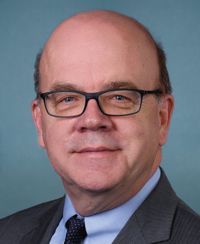 JPM+9
JPM+9
Floor Debate
14 membersWhat members said about H.Con.Res. 121 on the floor
Mr. Speaker, I yield myself such time as I may consume. Mr. Speaker, I just listened to my friend, the gentlewoman from North Carolina (Mrs. Myrick), and she said oh, well, this is a great open rule.…
Mr. Speaker, I yield myself such time as I may consume.
Mr. Speaker, I just listened to my friend, the gentlewoman from North Carolina (Mrs. Myrick), and she said oh, well, this is a great open rule.
Let us be very clear about what is happening here. This is not an open rule in the true sense. The Republicans waived all the Rules of the House that they could possibly waive: the Budget Act, every rule that they could waive for their own bill, for the committee bill, and then they refused to waive those same rules for the ranking member, the gentleman from Wisconsin (Mr. Obey), to bring up an amendment to the committee bill. So this is not an open process, and let us be serious about what is going on here today.
Right now, Mr. Speaker, the brave men and women of the U.S. military are, once again, proving themselves to be the finest fighting force in history. On the ground, in the seas, and in the skies over Iraq, our soldiers, sailors, airmen, and marines are risking their lives to protect America and the world from the threat posed by Saddam Hussein's murderous regime.
Mr. Speaker, our troops have the strong bipartisan support of this Congress and of the American people. We are all deeply proud of the courage, skill, and professionalism they are displaying under very difficult conditions, and we are committed, Republicans as well as Democrats, to ensuring that our troops have all the resources they need to complete their mission as quickly and as safely as possible.
So I am pleased that this emergency spending bill is on the House floor today. The Committee on Appropriations chairman, the gentleman from Florida (Mr. Young) and the ranking member, the gentleman from Wisconsin (Mr. Obey) each deserve credit for a bill that is generally quite strong.
This bill supports our troops in the field, it protects the foreign policy prerogatives of the President, and it respects the Congress's constitutional duty to maintain responsibility for the tax dollars of the American people. Additionally, this emergency supplemental includes desperately needed assistance for the struggling airline industry.
Mr. Speaker, U.S. airlines are critical to the American economy, but they were hurt severely by the September 11 attacks and by subsequent security expenses. I know this firsthand because American Airlines, which employs thousands of hardworking people in my north Texas district, has been struggling mightily, and I want to congratulate the employee unions at American for voluntarily agreeing to benefit reductions to help keep the company out of bankruptcy. But they, like the rest of the airline industry, need additional relief from the government. So I am glad that this bill provides it, and I urge the President to support it.
Mr. Speaker, for all of these reasons, I expect to support this bill.
But make no mistake: This bill as it is currently written still leaves America unnecessarily vulnerable to another terrorist attack. That is because Republicans continue to block critical homeland security resources for key targets like ports and nuclear facilities. Mr. Speaker, I simply cannot understand why Republicans refuse to address so many vital homeland defense needs. After all, there is no disputing the importance of these unmet homeland security requirements.
The Coast Guard reports that it needs $1 billion this year alone to secure America's ports. The U.S. Fire Service found that between one- third and one-half of firefighters lack critical pieces of basic emergency equipment. And each of the armed services has submitted detailed lists of military construction projects required to ensure the security of American troops at bases here in the United States.
But while Republicans ignore these vital homeland security needs, they have proven time and again that they are willing to spend money on their priorities. Unfortunately, those priorities too often turn out to be tax breaks for those who need them the least.
Just last month, House Republicans voted to spend nearly $800 billion on tax breaks, but they refused to spend less than one-half of 1 percent of that amount, $250 million, for a critical program to protect our ports against terrorists.
Mr. Speaker, Democrats have repeatedly tried to force Republicans to address America's homeland defense. In the Committee on Rules last night, the gentleman from Wisconsin (Mr. Obey) offered an amendment to provide $2.5 billion for homeland security requirements that Republicans have refused to address.
But Republicans on the Committee on Rules blocked the amendment of the gentleman from Wisconsin (Mr. Obey).
The Republican leadership is tempted, as we have already heard, to tell us that they did not block the amendment of the gentleman from Wisconsin (Mr. Obey). They may be tempted to say again that this is an open rule, and the problem is that the amendment of the gentleman from Wisconsin violates the House rules.
Mr. Speaker, I hope the Republican leadership does not make that argument again, because that argument is dangerously disingenuous. After all, Republican leaders routinely waive the House rules for their priorities. Just last month, they were willing to waive the Budget Act to provide hundreds of millions of dollars in tax breaks to special interests. In this very rule, the same one that refuses to provide the amendment of the gentleman from Wisconsin (Mr. Obey) with waivers, Republicans have waived the rules for the underlying bill.
All in all, Mr. Speaker, the Republican leaders have waived the House rules on 14 of 15 rules this year. In other words, Republicans are happy to waive the House rules for special interest tax breaks and other Republican priorities, but Republican priorities do not seem to include additional money for homeland defense.
Mr. Speaker, this is not just unfair and undemocratic, it is an arrogant abuse of power. Most importantly, it is an abuse of power that leaves Americans more vulnerable to terrorist attacks here at home.
For that reason, Members of the House have only one way to pass the amendment of the gentleman from Wisconsin (Mr. Obey) today: by defeating the previous question on this rule. Let me be clear: by voting ``no'' on the previous question, Members will simply be voting to allow the House to
provide critical homeland security resources. They will not delay or defeat the underlying bill.
We will support the troops, and I am sure that this wartime spending bill will pass with an overwhelming bipartisan majority. But by voting ``yes'' on the previous question, Members will be voting to block critical homeland security resources. There is no way around that fact, so I urge Members not to do it.
Mr. Speaker, protecting America's homeland should not be a bipartisan issue. I hope my Republican friends will join Democrats in opposing the previous question so we can strengthen our defenses here at home while we provide for our troops in the field.
Mr. Speaker, I yield 7 minutes to the gentleman from Wisconsin (Mr. Obey), the ranking member on the Committee on Appropriations.
Mr. Speaker, I yield 2 minutes to the gentleman from Maryland (Mr. Hoyer).
Mr. Speaker, I yield 1 minute to the gentleman from Wisconsin (Mr. Obey).
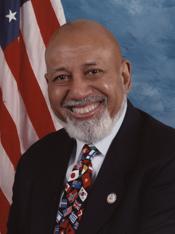
Mr. Speaker, I yield 3 minutes to the gentleman from Florida (Mr. Hastings).
Mr. Speaker, I would inquire about the time remaining on each side.
Mr. Speaker, does the gentlewoman have any speakers at this time?
Mr. Speaker, I yield 3 minutes to the gentleman from Massachusetts (Mr. McGovern).
Mr. Speaker, I yield 3 minutes to the gentlewoman from New York (Ms. Slaughter).
Mr. Speaker, I yield myself 30 seconds.
Every once in a while you have to connect the dots around here or it gets a little confusing. Let us connect the dots right now.
The gentleman from Wisconsin (Mr. Obey) wants an amendment to add $2.5 billion for homeland security. The other side does not want to let the gentleman from Wisconsin (Mr. Obey) add $2.5 billion for homeland security.
Why is that? That is because the deficit goes up by another $2.5 billion, and it becomes harder and harder to justify their tax cut for the rich. This is not very complicated. The dots are connected.
Mr. Speaker, I yield 1 minute to the gentleman from New York (Mr. Crowley).
Mr. Speaker, how much time is remaining?
Mr. Speaker, I yield 1 minute to the gentleman from California (Mr. George Miller).
(Mr. GEORGE MILLER of California asked and was given permission to revise and extend his remarks.)
Mr. Speaker, I yield myself the balance of my time.
Mr. Speaker, I urge the Members to oppose the previous question. If the previous question is defeated, I will offer an amendment to the rule. The amendment will allow Members an opportunity to vote on the Obey homeland security amendment. Yesterday, Republicans on the Committee on Rules blocked this amendment.
Mr. Speaker, this amendment provides desperately needed funding for the many overlooked and severely underfunded areas that threaten our national security. The amendment would add $2.5 billion, an increase of about 3 percent to the bill. The money would be used for port security, for Coast Guard activities, for infrastructure security, for water and chemical plant security, and for rail tunnel security. It provides funding for State and local response activities, including civil defense, first responders, firefighters and military Guard and Reserves. It also addresses one of our gravest security risks, nuclear security.
My colleagues may remember that the President not only requested no funds for nuclear security but rejected legislation in August of 2002 that would have provided $260 million for that purpose. It is very disturbing that the Republican leadership of this House would deny Members an opportunity to vote on an amendment to protect this Nation from the risk of terrorism. This should not be a partisan issue, but they have made it that way.
Vote ``no'' on the previous question so we can have an opportunity to vote on the Obey amendment. A ``no'' vote will not prevent us from voting on the wartime supplemental, but it will allow us to vote to protect our Nation and our citizens here and abroad. A ``yes'' vote on the previous question will block critical homeland security resources.
Mr. Speaker, I ask unanimous consent to insert the text of the amendment and a description of the amendment immediately prior to the vote.
Mr. Speaker, I object to the vote on the ground that a quorum is not present and make the point of order that a quorum is not present.
Mr. Speaker, I rise in strong support of this rule. My friend from California, the distinguished chairman of the Subcommittee on Defense of the Committee on Appropriations, who has overseen most of…
Mr. Speaker, I rise in strong support of this rule. My friend from California, the distinguished chairman of the Subcommittee on Defense of the Committee on Appropriations, who has overseen most of the very important work that is in this package, has really, I think, put it very well.
I listen to the speeches from the other side of the aisle. This is a bipartisan measure that we are moving forward. We know that it passed by a vote of 59 to zero from the Committee on Appropriations. There is going to be strong support from both Democrats and Republicans in this House for this measure.
I do not know how anyone can describe our stating that this is an open rule as chicanery, but we have to live with the rules of this House. Yes, the Committee on Rules does, in fact, have a job of providing waivers, and we have protected the bipartisan, and I keep hearing it described as the majority bill, the bipartisan 59 to zero package. We have, in fact, provided protection for that measure that has been reported from the Committee on Appropriations.
Democrats and Republicans alike realize that it is very important for us to provide the $74.7 billion to pay for this war and all of the issues that are surrounding that, and I believe that the Committee on Appropriations has done a terrific job on this.
I praise the gentleman from Wisconsin (Mr. Obey); I, of course, praise the gentleman from Florida (Mr. Young). I followed the markup as it proceeded in the Committee on Appropriations, and when the gentleman from Florida (Mr. Young) began talking about article 1, section 7 of the U.S. Constitution and the fact that we had the responsibility to make sure that the power of the purse lies right here, and he also talked about the issue of accountability, and I heard my friend the gentleman from Wisconsin (Mr. Obey) in that markup talk about the fact that Democrats and Republicans alike, when they are down at 1600 Pennsylvania Avenue want to do what they can to place more power in article 2, the executive branch, than in article 1, the first branch of government, the legislative branch, and I totally agree with the gentleman from Wisconsin (Mr. Obey).
We have seen that, and that is why I praise his work and the work of the full committee in ensuring that there will be a greater degree of accountability and that the administration does not get the blank check that some of them may have wanted. That is why I say that this bill, which we are going to proceed with when we pass this rule, is a bipartisan measure. Again, a 59 to zero vote.
Say what you want, I really do not care what it is that they say, this is an open rule. I am going to say it again: this is an open rule. What it means is that members of the majority and members of the minority will have an equal opportunity to offer amendments that comply with the rules of the House.
The only waiver protection that we provided, Mr. Speaker, was protection for the bipartisan 59 to zero, $74.7 billion supplemental appropriation bill that came forward; and after having provided protection for that unanimously passed package, we proceed with an open rule. That is why this is a very fair measure. It addresses so many important issues.
One thing I am particularly pleased to have been able to play a role in, which I worked on right after September 11 as we looked at that supplemental, was to try and ensure that resources get to our first responders.
Mr. Speaker, we know full well that throughout our Nation's history, when we have talked about men and women in uniform and international conflicts, they are men and women who are like those who are over, moving into Baghdad right now, men and women in the military, but the tragic thing that we found following September 11 is that men and women in uniform, who are firefighters and policemen and -women, those people are now on the front line in an international conflict because of the war on terrorism. We need to make sure that we provide resources directly to them, and we know that some States have made an attempt to keep some of those resources, and that is why the language in here, which requires within 45 days that 80 percent of those resources that are to get to the first responders will, in fact, go there; and I am pleased to have played a role in encouraging that, from my State of California, the State of New York, realizing that there are areas that are really of greater threat than others, and there needs to be a particular emphasis on homeland security in those areas that face the greatest risk and the greatest threat, and we need to get those resources to those first responders.
Having said that, Mr. Speaker, one of the things that I believe is important to offer as a caution is the fact that because States and localities are dealing with fiscal crises, just as we are dealing with our fiscal challenges here in Washington, D.C., I find that many States will want to, under the rubric of homeland security, try to address basically every fiscal challenge that they have, and so that is why we again have
the responsibility to, as the gentleman from Wisconsin (Mr. Obey) puts it so well, deal with the question of accountability as those resources do get out to ensure that we do not, under the name of homeland security, have Governors all over this country claiming that they should have a blank check from Washington, D.C.
We have got, I believe, a very good bipartisan package here, Mr. Speaker. We have a challenge that does need to be addressed, and I hope very much we can move ahead. We can pass this open rule, this open rule, Mr. Speaker, and then move ahead with the important debate to which we will see many, many amendments offered that lots of our colleagues will have, and we will have a good exchange.
I do want to mention one issue since I am here before I sit down and that is the question of Turkey, which I know will come up in the debate itself. Like every American, I was very disappointed when we found the challenge of dealing with Turkey when it came to the issue of stationing our 68,000 troops for a movement through the northern part of Iraq. I was saddened when I saw that vote of 261 to 254 in the Turkish parliament that refused to allow us to station our troops there.
I do know this, Mr. Speaker. I had the chance a few months ago, along with the gentleman from Illinois (Mr. Hastert), to go and travel throughout Turkey. We met with then-Prime Minister Gul and talked with him about the challenge of our prospect of our going to war with Iraq. We met with men and women who are based at Incirlik, our air base in the southern part of Turkey; and, Mr. Speaker, I believe that we have an alliance with Turkey which is very, very important to recognize.
Prime Minister Gul was prime minister at that time. He had not been elected, but he was selected because due to some problems with something that the man who was elected, who is now prime minister, Prime Minister Erdogan, he was unable to be seated at that point. We also know that there was a huge turnover in the parliament; and for that reason, even though we have strong support from Prime Minister Gul, Prime Minister-now Erdogan, we unfortunately did not have the votes in the parliament.
Why did we not have the votes in the parliament? Mr. Speaker, Turkey has suffered greatly going all the way back 12 years to the liberation of the war of Kuwait. They have suffered because of the economic sanctions and the inability to see the movement of goods and services across borders, a downturn there.
We also found that, of course, because of the Kurdish population in the northern part of Iraq and also in Turkey, it has created a huge upheaval. Those domestic challenges led the parliament by that 261 to 254 vote cast to make a decision to not allow us to station our troops there.
Having said that, we know that Secretary of State Powell has been in Turkey over the last couple of days, and he has been in meetings; and we have just gotten word that has not yet been confirmed this morning that some equipment is moving from Turkey into our operation in northern Iraq.
While I was disappointed at the decision that was made by the parliament, I do know that the leadership there, and I have met on several occasions with the Turkish ambassador here in the United States about this issue, and there has been a desire to try and establish a mechanism that would allow us to deal with our needs in Turkey.
I know some are looking at the prospect of offering an amendment that would cut the assistance that is very important to Turkey. I believe that would be wrong, Mr. Speaker. We need to do what we can to help Turkey stabilize itself economically; and we need to realize again that they have been a very, very important ally, strongly supporting the interests of the United States of America around the world.
I would implore my colleagues as we do move ahead to oppose any attempts that would bring about a reduction there.
I will just say again, Mr. Speaker, I thank the gentlewoman from North Carolina (Mrs. Myrick) for her stellar leadership on the Committee on Rules, her leadership as chairman of the very important Republican Study Committee, and I will encourage Members to support her in her quest to pass this open rule.
Mr. Speaker, I thank the gentleman for yielding time to me. Mr. Speaker, this is a sad day for me personally. Thirty-four years ago today, I was sworn in as a new Member of this body. I was inspired…
Mr. Speaker, I thank the gentleman for yielding time to me.
Mr. Speaker, this is a sad day for me personally. Thirty-four years ago today, I was sworn in as a new Member of this body. I was inspired by the idea that this institution was supposed to represent. This institution is supposed to be the people's House. This institution, more than any other, is supposed to reflect the public will. This institution has been known through the years as the greatest parliamentary body in the world.
Mr. Speaker, I think the rule that is bringing this crucial piece of legislation to the floor today represents a fundamental corruption of the democratic processes of this House and this country. I want to explain why.
Mr. Speaker, this bill is a $70 billion bill to try to pay for the cost of a war which, it is hoped, will bring ``democracy'' to Iraq. Yet, democracy is being fundamentally denied on this House floor this morning.
Now, we hear all of this meaningless blather about how this is an open rule and we can offer any amendment that is within the rules, but that obscures the truth. The truth is that this bill has been brought to the floor under a rule which allows this bill to avoid the rules of the House, and it does so in three fundamental ways. That enables the majority to bring a bill to the House floor which, among other things, will supplement the process by which our government intends to provide basic health care to 25 million Iraqis; our government plans to provide for the modernization of 6,000 schools in Iraq; and it plans to rebuild 100 hospitals in Iraq.
I begrudge the President none of that in his efforts to win the hearts and minds of that country. However, this rule blocks our effort to provide $2.5 billion in additional homeland security protection by protecting our ports, giving our first responders more assistance, and doing a variety of other things to keep this country safe from terrorist attack.
The way it does that is that it allows the bill itself, brought by the Republican majority, to obliterate the normal rules of the House under which bills are considered; but then it requires us to abide by the very rules that the majority party ignores in constructing its bill.
Members may call that democracy; I call it a sham. I call it a shameful sham. I do not for a moment understand why we are even having this disagreement. On a subject like homeland security there should be no ``Ds'' behind our name, there should be no ``Rs'' behind our name; there should only be an ``A'' after our name. In discussing a bill like this, we should not be Democrats or Republicans, we should be Americans.
I would ask every Member of this House whether or not anything that we are trying to propose in this amendment is not worthy of support. We are being blocked today from funding a new program that would enable us to protect America from nuclear material loaded onto ships and brought into American ports. We are being denied the opportunity to install equipment in nine ports around the world so that for at least 50 percent of the cargo which comes into this country we will know it does not have nuclear material which could cause the explosion of dirty bombs in our ports and harbors. We are being denied the right to try to fix that problem.
We are being denied the right to offer additional funds to protect the security of our own nuclear material here at home. We are being denied funds to upgrade the quality of State labs so they can detect what we are hit with if we are hit by a chemical attack. We are being denied $108 million to protect Federal dams and waterways from terrorist attacks. We are being denied $75 million so that we can conduct vulnerability assessments for chemical plants in this country. We are being denied several hundred million dollars in additional help that we want to provide to our local first responders, our police, and our firemen.
Additionally, we are being denied an effort to provide additional funds so that our Guard and Reserve forces can see to it that in every State in the Union we have backup units to help first responders respond to chemical and biological attacks. We are being denied the ability to put additional port security requirements into effect in Charleston, Philadelphia, Jacksonville, Baltimore, Honolulu, San Francisco, Los Angeles, Corpus Christi, San Juan, and Wilmington in order to protect this country, again, from deadly material that is brought into our harbors. We are being denied many other things.
So in my view, Mr. Speaker, this rule is a disgrace. We intend to vote against the previous question on the rule, and I would urge Members of the leadership of this House to recognize that on this, above all issues, we ought to be dealing with this in a bipartisan give-and-take manner so we can provide far more protection to each and every citizen of this country than we are providing to date.
Mr. Speaker, we have just heard a canard. The charge has been made by the Republicans for the last 3 days that there are $19 billion in unspent homeland security funds. Let me tell you how they get to that ridiculous statement.
They count all of the money that is proposed for that program for the next fiscal year. We have not even passed that bill out of the Congress yet. That is 34 percent of that so-called $19 billion in unspent money. This supplemental contains another 10 percent. You cannot spend money in localities the Congress has not yet appropriated. That accounts for another 10 percent. Then the omnibus appropriations bill that was passed in February of this year, that accounts for the other 30 percent of that so-called $19 billion in unspent money. Only 2 weeks ago, the agency made available to States the ability to apply for that money. The application period has not even been closed. That leaves 26 percent left; and of that 26 percent left, only 4 percent has been unobligated. So let us keep the facts straight.
Mr. Speaker, by direction of the Committee on Rules, I call up House Resolution 172 and ask for its immediate consideration. Mr. Speaker, for the purpose of debate only, I yield the customary 30…
Mr. Speaker, by direction of the Committee on Rules, I call up House Resolution 172 and ask for its immediate consideration.
Mr. Speaker, for the purpose of debate only, I yield the customary 30 minutes to the gentleman from Texas (Mr. Frost), pending which I yield myself such time as I may consume. During consideration of this resolution, all time yielded is for the purpose of debate only.
Last night, the Committee on Rules met and granted an open rule to H.R. 1559, the Emergency Wartime Supplemental Appropriations Act for Fiscal Year 2003.
Mr. Speaker, this is a fair and open rule for a very important bill. It cannot get any better than that.
The rule allows any Member to offer any amendment to the bill as long as their amendment complies with the normal Rules of the House.
I am very pleased the House is trying to move H.R. 1559 quickly, because I know the importance of this bill to the men and women in our military. I also want to congratulate the gentleman from Florida (Mr. Young), the chairman of the Committee on Appropriations, and the gentleman from Wisconsin (Mr. Obey), the ranking member, for resisting most efforts to add extraneous provisions.
This bill is too important for our troops for it to get bogged down with nonappropriations issues.
I agree with the President that the United States has been at war since September 11, 2001. After our Nation was attacked, America made a decision: We will not wait for our enemies to strike before we act against them. We are not going to permit terrorists and terrorist states to plot and plan and grow in strength while we do nothing.
This emergency wartime supplemental appropriations provides the tools and the resources for our military to wage an aggressive war against Saddam Hussein while at the same time preparing our homeland.
Over the past 15 days we have seen the brutal and cruel nature of a dying regime. In areas still under its control, the regime continues its rule by terror. Prisoners of war have been brutalized and executed. Iraqis who refuse to fight for the regime are being murdered. Some in the Iraqi military have pretended to surrender and then opened fire on coalition forces that were willing to show them mercy.
We owe a great deal of gratitude and respect to our servicemen and women who are currently in harm's way. My thoughts and prayers are with them and their families during this time of war, and I want to thank them for their courage and bravery on the battlefield.
This war budget will meet America's needs directly arising from Operation Iraqi Freedom and our ongoing war
against terror, including $63 billion for military operations. This funding will provide fuel for our ships, for our aircraft and tanks, supplies for our troops in the theater of operations, new high-tech munitions to replace the ones that we have used so far in this war. The supplemental will also provide funds to assist in the reconstruction of Iraq, Mr. Speaker; $5 billion to help our brave coalition partners.
In order to protect the American homeland in this time of high alert, it also includes $4 billion for the Departments of Justice and Homeland Security to address the immediate and emerging threats on American soil.
This legislation accomplishes this goal by providing $2.2 billion for grants to first responders. Within that amount, $1.5 billion is provided for the Office of Domestic Preparedness, their basic grant program to the States, and $700 million is provided to address the security requirements in high-threat, high-density urban areas with critical infrastructure like my city of Charlotte.
H.R. 1559 also allocates these funds for several other high priority activities: $498 million for border and port security, and $85 million for reimbursements to State and local law enforcement officers and National Guardsmen for increasing security measures at airports and other critical transportation sites.
Our Nation must give our military and our law enforcement officers the weapons that they need to meet future threats. If the war against terror means that we must find terror wherever it exists and pull it out by its roots and bring people to justice, then our military and our law enforcement officers must have the means to achieve it.
To that end, I urge my colleagues to support this rule and support the underlying bill. We need to rapidly approve the core funding for the Pentagon so supplies continue to flow to our troops.
Mr. Speaker, I reserve the balance of my time.
Mr. Speaker, I yield 2 minutes to the gentleman from Nevada (Mr. Gibbons).
Mr. Speaker, I yield myself such time as I may consume.
Mr. Speaker, I would like to say that this bill was reported out of the committee 59 to zero. I also wanted to make the point that between 1999 and 2002, States and localities have been awarded over $492 million in domestic preparedness funding.
And only a third of those funds have been used. And the gentleman mentioned Maryland and New York, and I would just like to say that Maryland was awarded $9.2 million and they still have $9.2 million that has not been spent. New York was awarded $25.7 million and there is still $25.7 million in the pipeline that has not been spent, so there is money there currently.
I yield to the gentleman from Maryland.
Mr. Speaker, this is an open rule that allows anybody to offer an amendment that is within the rules of the House.
Mr. Speaker, I do not have any speakers at this time. I have somebody coming.
Mr. Speaker, I yield so much time as he may consume to the gentleman from California (Mr. Lewis).
Mr. Speaker, I yield so much time as he may consume to the gentleman from California (Mr. Dreier), the chairman of the Committee on Rules.
(Mr. DREIER asked and was given permission to revise and extend his remarks.)
Mr. Speaker, I yield back the balance of my time, and I move the previous question on the resolution.
Mr. Speaker, I thank the gentleman for yielding me time. Mr. Speaker, the issues of war in Iraq and homeland security are among the most important issues that Members of this House will ever have to…
Mr. Speaker, I thank the gentleman for yielding me time.
Mr. Speaker, the issues of war in Iraq and homeland security are among the most important issues that Members of this House will ever have to deal with. They are incredibly important to our constituents and, indeed, have implications worldwide. It is vitally important that every Member of this House, Republican and Democrat, freshman and committee chair, have an opportunity to be heard and have an opportunity to play a constructive and positive role in this process.
It is of great frustration to me, for example, that we have not formally debated the war on Iraq since last October when Congress gave the President the authorization to go to war; this, notwithstanding the fact that American men and women are in harm's way and American citizens are paying for the war. I oppose the war and I still have great reservations about our policy, but the decision has been made and the brave men and women of our armed services are now in the field of battle. They deserve our gratitude, our respect, and our support. And whether you are for or against the war, these issues are too important not to be front and center in almost every discussion that we have in this Chamber.
Today we are debating a supplemental appropriations bill to provide support for our troops, some money for reconstruction in Iraq, money for the airline industry, and some money for homeland security. Now, the majority trumpets that this is an open rule and everybody should be happy; but as you have heard, there is a hitch. Things that are important to the Republicans have received protections from points of order. All the Democratic amendments that were offered in the Committee on Rules last night were denied such protections.
The ranking Democrat on the Committee on Appropriations, the gentleman from Wisconsin (Mr. Obey), presented a very thoughtful and well-considered amendment to protect ports, provide additional funds to first responders and help our veterans. The priorities he outlined are priorities for all Americans. Yet he was denied the opportunity to offer his amendment in any meaningful way.
Our colleague from Illinois (Mr. Emanuel) had an amendment to increase funding for American families just as the supplemental bill increases funding for Iraqi families. He was not urging that we not invest in Iraq, only that we also invest in America as well. He argued that while the supplemental with regard to Iraq provides 13 million people access to basic health care services, one hospital in every major city, and maternity care for 100 percent of the population, the supplemental with regard to America provides not one new dollar for 42 million working uninsured.
Mr. Speaker, these are the types of things we should not only be discussing and debating, but voting on. And while the supplemental does include some welcome modest funding for first responders, I am sad to say that under this bill you are better off being a police officer in Bogota, Colombia than in Boylston, Massachusetts. Why? Because this bill gives more aid to Colombia than 49 States of the Union receive for first responders.
In my city of Worcester, Massachusetts, 20 firefighters and 20 police officers are about to be laid off. So we can hold all the press conferences we want about how important homeland security is, and we can pose for all the pictures with our first responders, but it is clear our hometown security is being short-changed.
I would say to the leadership on the other side of the aisle that this process should and can be much better. This bill should and can be much better. Because of your unwillingness to listen and debate and vote, it will not be.
Mr. Speaker, as I said, this rule is deceptive. It does not allow us to vote on important issues of homeland security. So I would urge my colleagues to vote against the previous question in order to allow this House to vote on important and critical homeland security protections for the American people.
Show 8 more

Mr. Speaker, I thank the gentleman from Texas (Mr. Frost) for yielding me time. I appreciate the time and a chance to speak this morning. It is now our duty to make sure that we finance the war that…
Mr. Speaker, I thank the gentleman from Texas (Mr. Frost) for yielding me time. I appreciate the time and a chance to speak this morning.
It is now our duty to make sure that we finance the war that presently is waging in Iraq. Many of our young soldiers, men and women, they are facing dangers every day. We have to finance the military operations of these men and these women, but our duty to the soldiers extends beyond the duration of the war in Iraq. Our duty requires us to increase funding to the Veterans Administration for there are veterans in the making right this very moment; and for the current veterans, we have let them down.
It is a terrible statistic to know that nationwide in the year 2002, almost 300,000 veterans were either placed on waiting lists or forced to wait for over 6 months in order to receive an appointment for necessary care. In New York State, 130,000 veterans could be denied the VA benefits or drop out of the system, including 30,000 veterans in western New York which I represent alone.
Now, as we have cut the budget already for the Veterans Administration, as we already have 300,000 veterans a year waiting just to get an appointment, what will happen when the veterans from Iraq come home? What will we say to them? We really appreciate your service. It was wonderful of you to go. I am sorry we have no way to give you medical treatment. Take a number and wait your turn.
We cannot as a Nation forget our obligation to these men and women and our promise always to care for them.
The rule passed by the Committee on Rules prohibits any amendments to increase funding for the Veterans Administration. In addition to that, the war has also greatly increased the threat of terrorism here at home. Our cities and towns must be prepared to act immediately should we have another terrorist threat or act. And our local police officers, firefighters, public health officials, medical professionals, and volunteers will be the first to respond. But we have not included sufficient funding for the local governments, the States, and the first responders.
The war has greatly increased the financial burden on local and State governments during a period of economic troubles when local and State governments are challenged by a budget crisis. It is our solemn duty to provide the financial support that these first responders require if we expect them to protect our constituents back home.
It is shameful that first responders and local governments have to beg for funding. The bill provides some funds for first responders but they need so much more than this bill provides, and the rule bars any amendment to increase the funding to the first responders.
Now, as I said, there is some money there, but not nearly enough to protect the ports that are critical to the United States' economy and to provide the necessary level of security in our borders. We must increase the funding of activities at our northern borders. Our friends in Canada are not the threat, Mr. Speaker.
In summary, let me say that this rule leaves a great deal to be desired and certainly does not do very much for the people fighting this war today.

Mr. Speaker, I rise to join my colleagues Mark Kirk, Curt Weldon and Howard Berman in introducing today a resolution expressing Congress's deepening concerns about Iran's nuclear program. For many…
Mr. Speaker, I rise to join my colleagues Mark Kirk, Curt Weldon and Howard Berman in introducing today a resolution expressing Congress's deepening concerns about Iran's nuclear program.
For many years, I have been persuaded by the available evidence that Iran was pursuing a nuclear weapons program, starting with
transfers of nuclear and missile technology and expertise from Russia. Indeed, it was my resolution in the 105th Congress (House Concurrent Resolution 121) that called on the President to demand that the Government of Russia take actions to stop governmental and nongovernmental entities in the Russian Federation from providing missile technology and technical advice to Iran in violation of the Missile Technology Control Regime.
Evidence continues to accumulate raising questions about Iran's intentions, notwithstanding that country's signing of the Treaty on the Non-proliferation of Nuclear Weapons. Recently, environmental sampling by the International Atomic Energy Agency (IAEA) at Iran's Natanz nuclear facility revealed the presence of two types of highly enriched uranium that can be used to develop nuclear weapons. And, earlier in the year, IAEA announced that Iran was constructing a facility to enrich uranium.
These developments prompted the Director General of the IAEA to express concern over the failure of the government of Iran to report material, facilities and activities at its nuclear facilities, including those that have the potential to enrich uranium and develop nuclear weapons. As a result, last month, the IAEA board of directors adopted a resolution calling on Iran to provide that organization, by October 31st, with a full declaration of all imported material and components relevant to the uranium enrichment program and to grant unrestricted access to IAEA inspectors.
Mr. Speaker, concerns about Iran's intentions are further underscored by Iran's successful test earlier this summer of the 800-mile range Shahab-3 missile and the persuasive evidence that is it seeking to produce a 1,200 mile Shahab-4 missile.
Coupled with Iran's known support for terrorist groups, it is clear to me and my colleagues that Iran poses a serious national security threat to the United States and its allies and other countries in the region. We can't idly wait for developments to unfold.
The concurrent resolution we introduce today clearly expresses Congress' view that the President must use all appropriate means to prevent Iran from acquiring nuclear weapons. It also calls on the members states of the United Nations, particularly Russia, to join together to dissuade Iran and, if necessary, to impose sanctions if Iran does not fulfill its obligations to the International Atomic Energy Agency by October 31.
Failure to act can only encourage Iran to pursue a dangerous and destabilizing course. Iran must cease all efforts to acquire nuclear capabilities until it is able to verify that it is not continuing to engage in a nuclear weapons program.
Mr. Speaker, I thank the gentleman for yielding me time. The simple fact is the rule waives House rules for the majority's bill, but it does not allow for Democratic amendments, and what we are…
Mr. Speaker, I thank the gentleman for yielding me time.
The simple fact is the rule waives House rules for the majority's bill, but it does not allow for Democratic amendments, and what we are saying is that is unfair. It is just that simple.
Mr. Speaker, today's debate is as much about context as it is about content. It is as much about politics as it is about patriotism. In September 2002, I introduced a resolution calling on the President to transmit to Congress a comprehensive plan for the long-term cultural, economic, and political stabilization in a free Iraq. Now, 7 months later and only after the war has begun, has the President presented a war supplemental, albeit still missing a long-term plan and definite end to the conflict.
Repeatedly when asked how long it expects United States forces to remain in Iraq, the administration has answered with a glib, ``Not one day longer than we have to.''
Well, Mr. Speaker, until the President can provide a plan on how this $78 billion, the largest supplemental in the history of our country, will be spent, my answer is ``Not one dollar more than I have to.''
Now, I want to make it very clear, I along with 435 Members of this House of Representatives that can vote, support fully the troops. I supported them when I voted on March 21 for the resolution honoring them, and I will support them again today when I vote for this supplemental.
I have a new resolution, H. Con. Res. 121, that supports our warfighters, contemplates the casualties, looks towards trying to avoid the circumstances of POWS and MIAs. And all of us support the troops. We are patriotic Americans, Democrat and Republican, liberal and conservative. But patriotism means stand by your country. It does not mean, as Theodore Roosevelt said, that you must stand by your President.
Mr. Speaker, I stand proudly and patriotically for the American values that cause every one of us to support our troops. But let me make it very clear, I do not stand nor am I required to stand by our President and the misguided policies entrenched in this supplemental. Republican fiscal irresponsibility of the last 2 years has sent the United States' economy into a downward spiral of unemployment and homelessness as the number of uneducated and uninsured increase every day.
Today's supplemental, while funding in part the war and homeland security, does nothing to fix the majority of the emergencies facing this Nation.
What pains me, Mr. Speaker, is that I have cities in my district-- Belle Glade, South Bay, and Pahokee--where the unemployment rate is 17 percent and the poverty rate is 3 to 4 times greater than anywhere else in South Florida. congress can't find the money for rural development in the Glades, yet we have $2.5 billion to rebuild Iraq and another $5.5 billion in foreign assistance because the President's diplomatic efforts to shore up support for this war failed.

Mr. Speaker, I thank the gentleman from Texas for yielding time to me, and I rise in opposition to this rule. Mr. Speaker, there is a pattern in this rule. That pattern is to gag approximately 140…
Mr. Speaker, I thank the gentleman from Texas for yielding time to me, and I rise in opposition to this rule.
Mr. Speaker, there is a pattern in this rule. That pattern is to gag approximately 140 million Americans, to not allow their Representatives to offer amendments which the majority has made in order for themselves, but not for the 140 million Americans represented by the minority.
There appears to be no shame in that. It appears to be the arrogant exercise of pure political power. They can laugh if they will; but the American public will, over time, recognize that half of America is being shut out.
The gentleman from Wisconsin (Mr. Obey) seeks to offer an amendment. That amendment is to invest in homeland security, the safety of our cities, the safety of our ports, the safety of our railroads, the continuing safety of our airlines, and the safety of our neighborhoods.
What this rule says is, we will have points of order. That is esoteric. What does that mean? The American public does not know. Essentially, what it means is we will allow ourselves, we Republicans who are in charge, the ability to offer an amendment like the gentleman from Wisconsin's (Mr. Obey).
Now, somebody on the Committee on Rules is shaking their heads. It is their bill that I refer to. It is their bill that is not consistent with the rules. In the rule, they say it does not matter for them, they can exercise the power to jam it; but we will not give to Democrats the ability to offer an amendment to adequately fund the security of New York City; of Baltimore, Maryland; of each and every community in our country.
I regret that. It is a bad rule, and I join the gentleman from Wisconsin (Mr. Obey) in urging Members to vote against the previous question so that we can provide a rule which will allow for fair and full consideration, and let that proposal, if it is deemed by those in the majority not to be consistent with the security of the American public, vote against it; but at least have the courage, have the courage and good sense and consideration for the 140 million people represented by this side of the aisle to allow them to be heard. Allow them to have an amendment to be considered on this floor. That is democracy. That is what the gentleman from Wisconsin (Mr. Obey) seeks.
Mr. Speaker, will the gentlewoman yield?
I understand the gentlewoman's argument. It may be a good argument. Why does your rule not allow us to debate that on the floor?
Mr. Speaker, the gentlewoman's bill is not within the rules. The gentlewoman waived the rules.
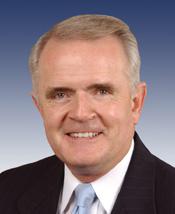
Mr. Speaker, I thank my friend, the gentlewoman from North Carolina, for yielding time to me. Mr. Speaker, I rise in support of the rule but in opposition to a legislative process which has allowed a…
Mr. Speaker, I thank my friend, the gentlewoman from North Carolina, for yielding time to me.
Mr. Speaker, I rise in support of the rule but in opposition to a legislative process which has allowed a critical wartime supplemental appropriation package to become a vehicle for billions of dollars in nonrelated war spending.
As a veteran of both Vietnam and the Persian Gulf wars, I know all too well how imperative adequate funding is to the success of any modern military campaign. When I hear our President and the Secretary of Defense rally behind a package of funding for military, I do not flinch in offering my sincere and strong support, no matter how great that price may be. Our brave men and women in uniform are making great sacrifices in the deserts of the Middle East every day and they deserve our support and the funding to help them achieve their mission and a victory.
However, when I learn of last-minute deals between Members of Congress and certain special interests which bog down this crucial defense spending package with non-war related gifts at the expense of my constituents' hard-earned tax dollars, I cannot help but question the entire process.
Today the airline industry will get billions more dollars in Federal aid without a full debate on the financial problems still plaguing that critical industry, even after this Congress gave them over $15 billion in aid in 2001.
Now, tourism in Nevada is the number one industry for us, and I work hard every day to see that certain economic reforms are enacted to benefit the hardworking Nevadans who rely on a healthy travel and tourism industry. However, I strongly disagree that an emergency supplemental spending package intended to fund our Nation's Armed Forces and provide necessary humanitarian aid to the Iraqi people suffering under Saddam Hussein's regime of tyranny is the proper vehicle for another Federal funding crutch for the airline industry without a full debate on this issue.
Mr. Speaker, while I will vote ``yes'' to support the overall bill, I want to register my strong opposition to the process which creates any delay in the expedient delivery of necessary funding to our Nation's brave servicemen and servicewomen fighting for freedom around the world.

Mr. Speaker, I very much appreciate my colleague yielding time to me. I cannot help but say to the House that later in the day I expect that I will have a lot of exchange with my very good friend,…
Mr. Speaker, I very much appreciate my colleague yielding time to me.
I cannot help but say to the House that later in the day I expect that I will have a lot of exchange with my very good friend, the gentleman from Wisconsin (Mr. Obey). I express my appreciation for the magnificent work that he and the gentleman from Florida (Mr. Young) have done together regarding this bill.
It is a war supplemental for the 2003 year. It is a process that will go forward today in a very, very positive way with both sides of the aisle expressing their support for our troops, both sides of the aisle responding I think positively to the need to make sure that funding goes forward effectively.
I cannot help, however, as I sit and listen to this discussion regarding open rules to share with my colleagues a conversation I had a moment ago with my colleague, the chairman, who was not really wringing his hands but he was saying to me, ``I cannot help but remember a decade I spent in the minority in the Florida Senate. I cannot help but remember all the time I spent as a Member of the House.'' Some, not all, of 40 years in this House, but a very big hunk of time, when the other side controlled, the other side of the aisle. And indeed, they are constantly talking about open rules the way they saw them, and beauty does lie in the eyes of the genuflector around this place.
I was reminded a moment ago of the gentlewoman from New York (Ms. Slaughter) in a parade that she participates in regularly, I understand, and as she came down the roadway in that parade that day, one of our fine staffers over here happened to flash up a sign that said ``Louise, more open rules, please.''
It is fascinating when one majority controls a place for more than 4 decades, and indeed, now comes here to the floor and complains so rather effectively about our learning so much from them, during the years they controlled it with such an iron fist.
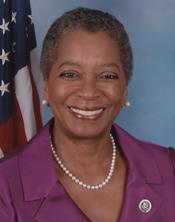
Mr. Speaker, I rise in opposition to the unfair rule for the FY-03 Supplemental Appropriations bill because it blocks members on my side from offering the Democratic Homeland Security Amendment to…
Mr. Speaker, I rise in opposition to the unfair rule for the FY-03 Supplemental Appropriations bill because it blocks members on my side from offering the Democratic Homeland Security Amendment to add $2.5 billion in needed, additional investments in homeland security to the supplemental bill.
Mr. Speaker, about half of the funds in the Democratic Homeland Security amendment go
to improving first response. This includes $300 million in additional funding for First Responders Grants. These funds would be used to pay for such important needs as training for police officers, firefighters, and emergency medical personnel, as well as, purchasing protective gear. The Democratic amendment also includes $197 million to protect military facilities; $241 million for nuclear security; and $722 million for port and infrastructure security.
As a member of the Select Homeland Committee on Homeland Security, I am keenly aware of the deficiencies that exist in funding for First Responders. Indeed, the bipartisan U.S. Conference of Mayors a week ago released a report which showed that cities would have to pay more than $21.4 million per week in additional security costs to close the $2 billion over 6 months during the increased security alert status brought on by the war with Iraq.
In my own area, the Virgin Islands, the local government frankly can't afford to contribute any additional dollars to strengthen our security because local economy continues to spiral downward. Moreover, we have additional needs in port security defense, as well as, training and equipment for our police and firefighters.
I urge my colleagues to this unfair rule and give our local communities a chance to receive the first responder funding that they badly need.

Mr. Speaker, one of the sad side effects of this unfair rule is that we will not be able to consider the Obey amendment to provide additional money for homeland security, and specifically, we will…
Mr. Speaker, one of the sad side effects of this unfair rule is that we will not be able to consider the Obey amendment to provide additional money for homeland security, and specifically, we will not be allowed to consider additional money for the protection of our sea ports of this Nation.
According to the CIA, it is more likely for a terrorist to sneak nuclear material into our ports than for a missile to reach our shores.
According to the prestigious task force headed by Senators Rudman and Hart, port security is a critical mandate which needs adequate funding.
And according to Steve Flynn, a highly respected security expert at the Council on Foreign Relations, an explosion from nuclear material smuggled into any American port would not only inflict devastating casualties, it would bring America to a grinding halt. Our economy would simply shut down.
We cannot check every container that comes to our ports every day, but there is much more that we can do. The Obey amendment would have allowed us to start to put in place security provisions overseas before the containers come to the United States, before they present a risk to our citizens, before they present a risk to our economy, before they present a risk to our national security. But we will not be allowed to consider that amendment because this closed rule would not allow a Democratic debate.
Show 1 more
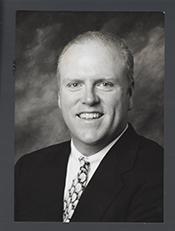
Mr. Speaker, I thank the gentleman for yielding time to me. I rise in opposition to this rule. While the Republicans will claim that this war supplemental is being offered on an open rule, meaning…
Mr. Speaker, I thank the gentleman for yielding time to me.
I rise in opposition to this rule. While the Republicans will claim that this war supplemental is being offered on an open rule, meaning anyone may amend or improve the bill, parliamentary
trickery proves this not to be the case at all. That is why I recommend a ``no'' vote on the rule so Democrats have an opportunity to offer an amendment to increase the homeland security portion of this war budget by $2.5 billion.
What are the Republicans afraid of? Voting against our domestic protection forces, our police and firefighters? Or maybe they stand quietly supportive of remarks of a prominent Republican Member of Congress, an appropriator, who said that the FDNY and the NYPD should work overtime for free. The rules of the House do not allow me to name the individual. Obviously he believes the loss of 23 police officers in New York City and 343 members of the FDNY was not sacrifice enough.
Congress needs to support our first line of defense abroad, our military; and we cannot forget our first line of defense at home, our police and firefighters.
Vote down this rule and allow for a vote on a real aid package to defend Americans right here in America.
Bill Text
Latest available legislative text
        [Congressional Bills 108th Congress]
[From the U.S. Government Publishing Office]
[H. Con. Res. 121 Introduced in House (IH)]

108th CONGRESS
1st Session
H. CON. RES. 121

Expressing the sense of Congress concerning United States and allied
Armed Forces personnel killed or wounded or taken captive while engaged
in the war on terrorism and the war with Iraq and offering deepest
sympathy to the families of those killed in action.

_______________________________________________________________________

IN THE HOUSE OF REPRESENTATIVES

March 26, 2003

Mr. Hastings of Florida submitted the following concurrent resolution;
which was referred to the Committee on Armed Services, and in addition
to the Committee on International Relations, for a period to be
subsequently determined by the Speaker, in each case for consideration
of such provisions as fall within the jurisdiction of the committee
concerned

_______________________________________________________________________

CONCURRENT RESOLUTION

Expressing the sense of Congress concerning United States and allied
Armed Forces personnel killed or wounded or taken captive while engaged
in the war on terrorism and the war with Iraq and offering deepest
sympathy to the families of those killed in action.

Whereas on September 20, 2001, in a joint session of Congress, the President of
the United States announced the start of the war on terrorism;
Whereas on March 19, 2003, the President of the United States ordered the
coalition force attack on Iraq to begin;
Whereas the valiant and dedicated members of the United States Armed Forces
consistently perform in an exceptionally professional manner befitting
an all-volunteer military force;
Whereas United States and allied forces are now undertaking courageous and
determined operations against the forces of Saddam Hussein's regime;
Whereas United States and allied forces have consistently displayed courage and
valor on the battlefield;
Whereas the Senate and House of Representatives and the American people have the
greatest pride in the members of the United States and allied armed
forces and strongly support them;
Whereas the ability of United States and allied forces to successfully perform
their mission requires the support of all nations;
Whereas the members of the United States Armed Forces and allied forces are to
be commended for their courage and valor;
Whereas the members of United States Armed Forces killed in action have paid the
ultimate price of war;
Whereas the valiant members of allied forces killed in action have paid the
ultimate price of war; and
Whereas the families of those killed in the war on terrorism and the war with
Iraq are deserving of the deepest sympathy of the American people: Now,
therefore, be it
Resolved by the House of Representatives (the Senate concurring),
That it is the sense of Congress that--
(1) those killed in action in the war on terrorism and the
war with Iraq be recognized for their ultimate sacrifice;
(2) those wounded in action in the war on terrorism and the
war with Iraq are to be recognized and commended for their
courage;
(3) those missing in action in the war with Iraq are to be
recognized and commended for their courage;
(4) those taken captive in the war with Iraq are to be
recognized and commended for their courage;
(5) the families of United States and allied service
members currently deployed are deserving of the unequivocal
support and appreciation of the Nation; and
(6) all citizens of the United States should extend their
deepest sympathy to the families of the members of the United
States and allied forces killed in action.
<all>