Recognizing and commending the continuing dedication, selfless service, and commitment of members of the Armed Forces and their families during the Global War on Terrorism and in defense of the United States.

Legislative Activity
Stay on top of the latest movement without scrolling through every action
Received in the Senate and Read twice and referred to the Committee on Armed Services.
March 6, 2003
View full timeline
Introduced in House
March 4, 2003
Referred to the House Committee on Armed Services.
March 4, 2003
Mr. Dreier asked unanimous consent That it be in order at any time on Wednesday, March 5, 2003, to consider in the House H.J. Res 27 and that the joint resolution be considered as read for amendment; be debatable for one hour equally divided and controlled; and that the previous question be considered as ordered on the joint resolution to final passage without intervening motion. Agreed to without objection.
March 4, 2003 • 7:06 PM
Consideration initiated by previous order.
March 5, 2003 • 12:18 PM
Considered by previous order. (consideration: CR H1591-1601)
March 5, 2003 • 12:18 PM
DEBATE - The House proceeded with one hour of debate on H.J. Res. 27.
March 5, 2003 • 12:19 PM
The previous question was ordered pursuant to a previous order of the House.
March 5, 2003 • 1:29 PM
POSTPONED VOTE - At the conclusion of debate, the yeas and nays were demanded and ordered. Pursuant to the provisions of clause 8, rule XX, the Chair announced that further proceedings on the motion would be postponed.
March 5, 2003 • 1:29 PM
Considered as unfinished business. (consideration: CR H1602)
March 5, 2003 • 2:00 PM
Passed/agreed to in House: On passage Passed by the Yeas and Nays: 426 - 0 (Roll no. 46).(text: CR H1591)
March 5, 2003 • 2:07 PM
Motion to reconsider laid on the table Agreed to without objection.
March 5, 2003 • 2:07 PM
On passage Passed by the Yeas and Nays: 426 - 0 (Roll no. 46). (text: CR H1591)
March 5, 2003 • 2:07 PM
Received in the Senate and Read twice and referred to the Committee on Armed Services.
March 6, 2003
Voting History
1 vote recorded • Roll call available
Floor Debate
21 membersWhat members said about H.J.Res. 27 on the floor
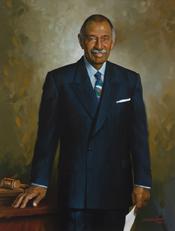 JCJDH
JCJDH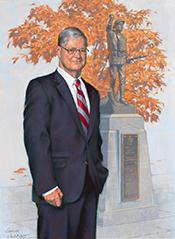 IS
IS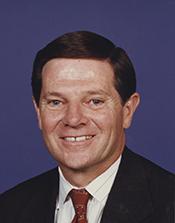 TD
TD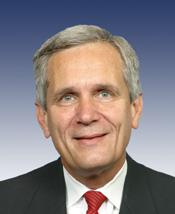 LD+16
LD+16
Floor Debate
21 membersWhat members said about H.J.Res. 27 on the floor
Mr. Speaker, we gather here for a well-deserved tribute to our troops in the Middle East. Yet just before this, we were debating the President's budget which cruelly cut $25 billion of veterans…
Mr. Speaker, we gather here for a well-deserved tribute to our troops in the Middle East. Yet just before this, we were debating the President's budget which cruelly cut $25 billion of veterans benefits, including disabled veterans. Is this how Republicans would honor those who have made great sacrifices in defense of our country? Is that how they would boost the morale of our current troops? Every major veterans organization has denounced these cuts as unconscionable, but now the pending business before us is a little bit different.
So I rise to reject these efforts to piggyback support for President Bush's dangerous policies on to a simple, but deserved, resolution supporting our troops. I trust the American people to see through this attempt to coerce endorsement of his ``preventive war'' doctrine.
I fully support our troops and offer my prayers for their safe return. I am an Army veteran myself; I care deeply about their well- being. And precisely for that reason, I cannot in good conscience vote for tonight's resolution, a carefully crafted document to force endorsement of President Bush's doctrine of preventive war, allowing him to attack countries whenever or wherever he chooses. I will not provide support for such a dangerous doctrine.
For years to come, it will unnecessarily put current and future members of our Armed Forces in harm's way, even when our national security is not really threatened.
Mr. Speaker, President Bush is about to unleash the dogs of war. He has set the clock ticking toward an unprecedented barrage of destruction dropped on a city of 6 million human beings. The barrage is oddly named the days of ``shock and awe.'' All Americans who hold human life precious should watch the clock run down, not with ``awe'' but with fear and trembling. The sad truth is that we are lurching towards an unnecessary war that President Bush seems determined to launch.
Apparently, therefore, the brave young men and women of our Armed Forces are about to head into harm's way. We all offer them our support as they try to do their duty, and we send our prayers for their safe return. But we must also be faithful to our duty, a duty entrusted exclusively to the Congress by our Founding Fathers. That is the solemn duty to decide whether the United States should go to war.
The Constitution's framers emphatically entrusted that decision to the Congress alone. They were adamant that the Executive not play a role--although once war began the Executive is the Commander-in-Chief to implement that decision. The Framers were so intent on excluding the President that they rejected an offer to share the power to declare war between the Congress and the Executive.
I know that President Bush, and many of my colleagues believe that the Congress properly authorized war against Iraq last Fall, pursuant to Article 1, Section 8 of the Constitution. I respectfully disagree. We have not performed our duty yet. Last fall Congress enacted a resolution that generally authorized the president to fight terrorism and to seek enforcement of previous U.N. Resolutions on Iraq. But in reality, that resolution bucked the duty constitutionally conferred on Congress to the President. It let the President decide to choose when and where and against whom to start a war. In short, it dodged the decision and sought to delegate an authority that may not be delegated.
The administration's supporters argue that legal precedents allow the Congress to provide an authorization of war that is functionally equivalent to the now rarely-used formal Declaration of War. That entirely misses the point. It is not the format which is at issue; it is ``who decides?''
It was clear, at that time, from the congressional debate, from Executive Branch statements, and from the resolution itself that the diplomatic route would be pursued first, by going through the U.N. Subsequently, in response to a broad national consensus, the U.S. spearheaded U.N. Security Council passage of Resolution 1441 that imposed a new inspection regime. In other words, it was clear last fall that the decision of whether to declare war was being put off for a later date.
In the months since then, it has become increasingly clear that the decision on going to war would turn on two crucial assessments. The first would be an assessment of the results of that inspection program.
The second assessment, and the ultimate judgment, would require weighing the implications of the inspection results and other information about what threat Iraq poses to the U.S. against the full costs--fiscal, diplomatic, casualties and increased terrorism--of going to war. Clearly these are not military judgments for a Commander-in- Chief. They are precisely the kind of complex national policy judgments that the Founding Fathers conferred on the Congress in matters of war and peace.
Yet in the present circumstances, the Congress has abdicated any role in that fateful decision. The entire world has been riveted on whether the American President would decide to declare war against Iraq. President Bush has brazenly told journalists and Members of Congress alike that it is his decision, and his decision alone. This is a perversion of the Constitution.
Even if one argues that Congress properly exercised its constitutional duties, and that the President thereby has all necessary authority to start a war the fundamental questions remain. ``Why war?'' ``Why now?'' And most importantly, ``Will waging war in Iraq make us more secure or less secure?''
Bush's war would have disastrous consequences for every American. War is about devastation, destruction and death. The American people are not bloodthirsty. We want war only if our country is in imminent danger. Otherwise, a war's human and economic costs are too great. The human devastation of death, injury and destruction is obvious. In addition, it will rob us of resources urgently needed by America's working families and less fortunate.
Even in terms of national security, an all-out war will rob Americans of hundreds of billions of dollars needed for the first line of defense in homeland security, on which we have made far too little progress since the tragedy of 9/11. As the President repeats his unverified mantra of ``threats to national security,'' cities across this land are laying off police, firemen, and emergency medical services teams--the so-call ``first responders'' to any new terrorist attack. They must do so because this Administration's ``first response'' to empty city treasuries across America has been one word: ``Tough.''
This is not merely a partisan spat, nor a Washington insiders' policy dispute. The citizens' crusade to stop an immoral war in Iraq has been nothing less than a noble struggle for our Nation's soul. Thus far, that struggle has not succeeded. But we will not give up. We must commit ourselves to stopping hostilities and re-weaving the torn fabric of international organizations with the same dedication and urgency with which we strove to stop segregation and the Vietnam war, and finally brought our Government to its senses.
President Bush repeatedly insists that for him ``war is a last resort.'' But his actions reveal that war was really his first choice, all along. His attempts to make it politically palatable by badgering, bullying and bribing countries into a counterfeit coalition have been a mere fig leaf transparent to the entire world.
President Bush has failed to present compelling evidence that Iraq currently is a threat to our national security. One rationale after another has been disproved. The President, Vice President and Secretary of Defense have presented a kaleidoscope of ever-changing rationale as they tried to stay one jump ahead of ``truth squads'' exposing their disinformation--at the U.N., among skeptical Members of Congress and the media, and even in their own intelligence agencies.
Americans have readily borne the burden of war when attacked or actually threatened. But America cannot, in good conscience, start a war so costly in blood and treasure simply on the basis of circumstantial evidence and speculation that, sometime in the unspecified future, Iraq may present an actual threat to the U.S.
Bush's war against Iraq is:
A war that will devastate a country of 26 million and cause damage that will take years to undo;
A war that will see many American casualties, and that could fracture our fragile economy;
A war that will destabilize the Middle East;
A war that will swell the ranks of terrorist recruits;
A war that will weaken our fight against terrorism, at home and abroad, and that will cost billions of dollars desperately needed for programs in Detroit and other cities;
A war that will set a terrible precedent, in a world of growing numbers of nuclear states, for any country to launch a preventive war against opponents deemed a possible future threat; and
A war not really wanted by the American people, our military commanders or our allies.
Worst of all, it is a war that, as the CIA admits, will only make it more likely that Saddam would unleash whatever unconventional weapons he does have against our troops, Israel and our other allies. There is no evidence Saddam seeks to commit suicide. We deterred him from using weapons of mass destruction during Desert Storm. If he faces destruction, however, Saddam may well seek to play Sampson and pull down the Temple for lethal revenge.
Last weekend, several of the Nation's leading newspapers seemed to suddenly discover all of these grave costs of war in Iraq. Article after article reported with an air of sudden discovery that:
The war would drastically increase the likelihood of Saddam's using weapons of mass destruction;
That it would almost certainly escalate dramatically terrorist attacks against Americans;
That many U.S. military commanders feared it would undermine the real war against terrorism;
That their could be extensive casualties among innocent Iraqi civilians; and
That, even following a quick ``military victory'' against Saddam, we could be mired in
an Iraqi quicksand of tribal feuds and guerrilla warfare for years.
I took cold comfort from the irony of the media's belated ``discoveries.'' It would have been far more useful to their readers if the media had discovered this costly side of the war ledger months earlier. Instead, like the Administration, most media coverage focused only on whether, absent other concerns, it was desirable to prevent Saddam's pursuit of armaments and remove his regime--as if there were no competing costs on the other side of the ledger to be carefully weighed in deciding whether war would be a net plus for America.
There is still time for President Bush to avoid starting the wrong war, in the wrong place, at the wrong time. There is still time--but precious little time--for the American people to speak out against a war that few of them support. If the war commences, there is time for it to be brought to a rapid end and areversion to diplomatic efforts and enhanced inspections.
We should remember the warning of General Anthony Zinni. A distinguished Marine Commandant and head of U.S. Central Command, which guards the Middle East, Zinni reminded us that military commanders know the full horrors of war and hesitate to plunge ahead unless the national interest is clearly at stake. On the other hand, Zinni warned, those who have never worn a uniform or seen combat often are the quickest to beat the drums of war.
Those are harsh words. The administration will condemn whoever utters them as partisan and unpatriotic--just as the Johnson White House condemned King's questioning of Vietnam. The Bush team has already spread that slander, in order to stop erosion of support for the war as the public learns the truth. Are the military veterans and retired generals opposed to this war unpatriotic? Are families of those who were killed on 9/11 and who oppose this war partisan? That is outrageous.
I know many of my colleagues have in good faith been convinced that Iraq is a threat to us now. But they have been the target of a Niagara of propaganda, especially the Vice President's early insistence that Saddam was involved in 9/11 and that Saddam had nuclear weapons now-- both of which claims have long been disavowed by our intelligence community. Many other assertions and premises used by the administration to ``market their product,'' in the revealing phrase of the White House Chief of staff, have crumbled under close scrutiny.
I would ask my colleagues who support the war to reconsider their view in light of these facts:
Almost the entire world is strongly against this war; this includes the majority of the citizens of even those countries formally part of the ``coalition'';
Every major city in America has gone on record against this war;
The U.S. Conference of Catholic Bishops, almost every major Protestant denomination, the American Labor movement and the NAACP are against this war;
Leading retired U.S. military commanders such as General Zinni, and General Schwarzkopf--in his original unvarnished views--have voiced opposition to this war;
Numerous active duty generals have told reporters off the record of their concerns about a war against Iraq; and
General Scowcroft, who was also President George Herbert Walker Bush's National Security Advisory is against this war.
And all of this opposition has arisen even before the war has started--an unprecedented phenomenon in human history. In view of these facts, I ask whether it is just possible that there is something amiss with the President's premises with his logic, and with his rejection of further effort to resolve the issues peacefully.
I urge my colleague to reflect on these powerful facts and join me in pressing President Bush to find another way--to follow the path of peace. As the Bible teaches, ``Blessed are the Peacemakers.''
Mr. Speaker, pursuant to the order of the House of Tuesday, March 4, 2003, I call up the joint resolution (H.J. Res. 27) recognizing and commending the continuing dedication, selfless service, and…
Mr. Speaker, pursuant to the order of the House of Tuesday, March 4, 2003, I call up the joint resolution (H.J. Res. 27) recognizing and commending the continuing dedication, selfless service, and commitment of members of the Armed Forces and their families during the Global War on Terrorism and in defense of the United States, and ask for its immediate consideration in the House.
Mr. Speaker, I ask unanimous consent that all Members may have 5 legislative days within which to revise and extend their remarks on the joint resolution under consideration.
Mr. Speaker, I yield myself such time as I may consume.
Mr. Speaker, since the start of the global war on terrorism, a saga has unfolded marked by the dedication, selfless service, and commitment of the members of the Armed Forces and their families. Now, on the eve of a potential war with Iraq, the Nation is about to ask our Armed Forces and their families for additional sacrifices.
For these reasons, my great colleague, the gentleman from Missouri (Mr. Skelton), and I thought it was only fitting that we offer this joint resolution to send a message to our Armed Forces of our support and appreciation for their magnificent efforts.
Mr. Speaker, the U.S. Armed Forces, a total force of active National Guard and Reserve volunteers, have conducted more than 17 months of courageous and successful operations against terrorism, not only in Afghanistan, but also worldwide. Beyond that, they have secured the U.S. homeland by performing various missions, including patrolling the Nation's airports, protecting the public at special events, and flying combat air patrols in the Nation's skies.
Today, more than 200,000 active duty personnel are already deployed to the Persian Gulf, and thousands of Reservists and National Guard members are on alert for mobilization or are deploying for a possible war with Iraq.
All these missions are in addition to other regular military requirements and have significantly increased the pace of operations and the stress on our forces. There have been no permanent increases in the size of the Armed Forces to meet these new requirements. Instead, our military forces are being required to work longer, harder, and smarter.
One enduring mark of the sacrifices being made in this war on terrorism by our men and women in uniform is that 67 American servicemembers have died defending the Nation, and 212 have been wounded or injured.
Untold sacrifices are being asked of the nearly 225,000 members of the National Guard and Reserve who have been mobilized for active duty since the start of the global war on terrorism. More than 174,000 of them remain on active duty, with thousands facing a second year of active duty away from their families and civilian employment.
America is able to make a substantial commitment of its citizen soldiers to this war because many of the Nation's employers, in the spirit of patriotism, are maintaining job security for those mobilized personnel and their families. Whether the members of the Armed Forces are active, Guard, or Reserve, their ability to perform their missions requires the continuing support and sacrifice of their families.
Mr. Speaker, the Nation is engaged in a global conflict that presents many
new and dangerous challenges to the members of the Armed Forces. It is a conflict that will require the Nation's unflinching resolve and commitment to provide the Nation's soldiers, sailors, airmen, and Marines with the necessary resources required for victory.
In that context, this joint resolution commends and expresses the gratitude of our Nation to all members of the United States Armed Forces, whether on active duty, in the National Guard, or in the Reserves, who are fighting the global war on terrorism; also, Mr. Speaker, to the employers who maintain the job security of their mobilized National Guard and Reserve employees; and also, importantly, to the families of those servicemembers who have borne the burden of separation from their loved ones and who have staunchly supported them during this war.
The joint resolution also expresses our condolences to the families of the brave American servicemembers who have lost their lives defending our Nation in the global war on terrorism, and it reaffirms that the Congress stands united with the President in this ongoing effort to defeat terrorism.
Mr. Speaker, I strongly urge my colleagues to support this joint resolution.
Mr. Speaker, I reserve the balance of my time.
Mr. Speaker, I want to thank my colleague for the sense of history and patriotism that he brings to this resolution.
Mr. Speaker, I yield 3 minutes to the gentleman from North Carolina (Mr. Hayes), the vice-chairman of the Subcommittee on Terrorism and Unconventional Warfare of the Committee on Armed Services.
Mr. Speaker, I yield 2 minutes to the gentlewoman from Virginia (Mrs. Jo Ann Davis) who represents Quantico Marine Base, Dahlgren Air Force Base, Fort Eustis, many other military installations and thousands and thousands of great service personnel.
Mr. Speaker, I yield 3 minutes to the gentleman from Illinois (Mr. Kirk) who is a veteran of the Gulf War and presently a U.S. Naval reservist.
Mr. Speaker, in Vietnam, guys on the ground used to refer to the jets overhead as fast movers, and today we always wondered about the comfortable life that they lead. So I was talking to the gentleman from California (Mr. Cunningham) and the gentleman from Nevada (Mr. Gibbons) about that very thing recently.
Mr. Speaker, I yield 3 minutes to the gentleman from Nevada (Mr. Gibbons) who piloted fast movers, that is, fighter aircraft in both Vietnam and the Gulf War, and who is a veteran of those two conflicts and a great leader in the Committee on Armed Services, and also a guy who represents Nellis Air Force Base and Also the Fallon Naval Air Station.
(Mr. GIBBONS asked and was given permission to revise and extend his remarks.)
Mr. Speaker, I yield 2 minutes to the distinguished gentleman from Iowa (Mr. King).
Mr. Speaker, I yield myself such time as I may consume to, say, to the gentleman who just spoke, the gentleman from Texas (Mr. Ortiz), that I remember the time when he and I and other members of the committee went down to Honduras when the 82nd Airborne jumped into Honduras to stiffen the spine of the Honduran government, which had seen an invasion of the Sandinistas along their border.
I will never forget, in a national press conference, with lots of cameras, when the gentleman from Texas (Mr. Ortiz) was asked the question, ``Don't you feel any sympathy with the Sandinistas, based on your ethnicity?'' The gentleman told them very simply that he was an American. And I remember him being in many, many inconvenient and difficult places to ensure that our troops were in good shape.
And let me also say, before I yield to the next speaker, and I know my great friend, the gentleman from Missouri (Mr. Skelton) and the gentleman from Texas (Mr. Ortiz) would agree with this strongly, that we are all very grateful to the employers. Part of this resolution is an expression of ``thank you'' and gratitude to all the employers in America, whether they are a six-man machine shop or a large corporation, with the accommodations that they give, that America's employers are giving to our reservists, to these citizen soldiers who drop that tool that they are using or get out from behind the wheel of that truck and put on the uniform of the United States and go off, in some cases, for an extended period of time to defend this Nation.
I can just tell my colleagues that there are lots and lots of examples of companies and small businesses which have bent over backwards to take care of those folks and make sure that that job is preserved for them, and going far beyond what is called for by the law and mandated by the law. So I just want to let them know that we really appreciate what they are doing. And I know the gentleman from Texas would agree with that, because there are lots of great employers in south Texas who have done the same thing. Are there not?
I yield to the gentleman from Texas.
Mr. Speaker, I greatly appreciate everything the gentleman is saying.
We will keep working.
Mr. Speaker, I yield 2 minutes to the distinguished gentleman from Florida (Mr. Foley).
Mr. Speaker, I yield 3 minutes to the gentleman from Indiana (Mr. Buyer), a Gulf War veteran and former very distinguished subcommittee chairman on the House Committee on Armed Services.
Mr. Speaker, I yield 3 minutes to the gentleman from Georgia (Mr. Gingrey).
Mr. Speaker, I yield myself such time as I may consume.
Mr. Speaker, this story of this massive mobilization which has been undertaken is a story of people. It is a story of families and a story of close-knit communities.
We have a group of folks in Operation Home Front in San Diego, California, which is a support group, lots of businesses, lots of great folks, community leaders and lots of community servants, who have gotten together to try to build a group that will be a support group for the families and all the folks who are still at home. They have done a wonderful job.
That model was started by, I believe, Roger Hedgecock, one of our radio talk show hosts, spread throughout San Diego County. I know that idea has spread throughout the country. It is representative of this great community that does find common ground in this very important first duty and first obligation of our government, which is to ensure the security of its people.
Mr. Speaker, I think there is nothing more descriptive of the support of our uniformed personnel than a letter which was written to a Marine sergeant, Benjamin Harris, by his wife. This letter could just as easily have been written to the battlefield at Gettysburg, sent to a base camp in Vietnam, the Chosin Reservoir during Korea, or the Guadalcanal beachhead during World War II:
``My Dearest Ben, I hope this letter finds you in good spirits. As I look into our son's eyes every day, I see you. I miss you every second we're apart, but there is a reason for our separation. You've been my hero for years, now it's time for the world to see you shine.
``Finally everyone will see all that you stand for, all that you're made of: pride, honor, strength, and a faith that shames most men. Though my heart aches without, I know what my duty as a Marine's wife calls for, and so I give you to our country, to our world, `to fight for right and freedom,' as a Marine's hymn states. I give you to the families who lost in the attacks on our country, and I give you to the rest of the world. Without men like you, people wouldn't have the freedom to sit down to dinner with their families, to tuck their children into bed at night knowing that they'll be safe. I understand the pain of separation is temporary. If I must give up the sound of your laughter for the sound of my tears, so be it. The sound of my tears then will give me strength as your laughter once did. They are tears of loneliness, anger and fear, but also of pride and love. You are the air I breathe, and while I am lost without you, I know you'll be home soon to find me. God speed, and God bless. Your loving wife, Erica.''
Mr. Speaker, that is the story of mobilizations that took place in the last century, that left 619,000 Americans dead on battlefields around the world. That is the story of the American mobilizations which have given freedom to hundreds of millions of people in this world, and which shortly may give freedom to millions more; and it cannot be done without the sacrifices that are manifested in thousands of letters, hundreds of thousands of letters like the one I just read.
To all my colleagues who contributed to this resolution, I want to thank them and thank my great partner in rebuilding our national defense, the gentleman from Missouri (Mr. Skelton).
Mr. Speaker, I reserve the balance of my time.
Mr. Speaker, I would like to ask unanimous consent and with the consent of my great colleague the gentleman from Missouri (Mr. Skelton) that we might take one of his minutes and thereby be able to yield 2 minutes to our closing speaker, the chairman of the Subcommittee on Total Force, the gentleman from New York (Mr. McHugh).
What we might do if it is okay with the gentleman from Missouri, perhaps he can continue with his
speakers and then we will wrap up with the gentleman from New York as we get close to the end.
Mr. Speaker, with great thanks and respect for my colleague the gentleman from Missouri (Mr. Skelton), I yield the balance of my time to the gentleman from New York (Mr. McHugh) who is the chairman of the Subcommittee on Total Force on Armed Services which has jurisdiction over all those important issues with respect to pay and bonuses and housing and the melding of our Reserve forces and our Guard forces and our active forces together, the guy who cares about over a million men and women in uniform.
Mr. Speaker, on that I demand the yeas and nays.
Mr. Speaker, I offer a concurrent resolution (H. Con. Res. 104) expressing the support and appreciation of the Nation for the President and the members of the Armed Forces who are participating in…
Mr. Speaker, I offer a concurrent resolution (H. Con. Res. 104) expressing the support and appreciation of the Nation for the President and the members of the Armed Forces who are participating in Operation Iraqi Freedom, and ask unanimous consent for its immediate consideration pursuant to the following order:
Debate on the concurrent resolution shall be limited to 2 hours, equally divided and controlled by myself and the gentleman from Missouri (Mr. Skelton), and the previous question shall be considered as ordered on the concurrent resolution to final adoption, without intervening motion or demand for a division of the question.
Mr. Speaker, will the gentleman yield?
Mr. Speaker, is the gentleman asking me if I am aware that the other body passed a resolution?
Yes.
That is true.
If the gentleman will yield further, yes, we would be open to including it.
Mr. Speaker, I would retract that and tell the gentleman that I would not be open to that. Would the gentleman yield further?
If the gentleman will continue to yield, Mr. Speaker, I just want to advise the gentleman that I read not only the resolution that was offered by the other body in 1991, but
also our resolution. We had a different resolution at that point, also.
I would just say to the gentleman that I think that the Members of this body have made a very fine statement, a very heartfelt statement commending our troops. I think it says the right thing. I applaud the gentleman for other things that he would like to see in a resolution. I think reasonable minds can differ.
I would hope that the gentleman would, in the spirit of bipartisan support for people that wear the uniform of the United States, not ask us to have precisely the same words as the other body, and simply spend a few minutes and go home. I would hope the gentleman would allow us to have our own resolution to express our own heartfelt support for those people, and let this body work its will.
No.
If the gentleman will continue to yield, Mr. Speaker, let me just say to the gentleman that we have some excellent commendations in this particular resolution.
Let me finish my statement, if I might.
We commend the President as Commander in Chief. That is something we did in 1991. Under the Constitution, he leads this military force. We commend the Members of the United States Armed Forces. We commend the families. We give them our sincere gratitude and appreciation.
I would think that any Member reading this resolution, and I would ask all Members to read it since the gentleman has called it into question, would agree that this resolution is an excellent resolution, and that it does all the things that we want to do. It would lead us all to wonder why the gentleman somehow wants it to say something else or follow some other example. It does not make a lot of sense.
I will look forward to that.
Mr. Speaker, I just want to say to the gentleman and to the gentleman who just spoke, there are hundreds of thousands of Americans in uniform putting themselves in very difficult positions for our freedom tonight. If they are watching this procedure, they are probably wondering, what in the heck are those guys doing? We have a commending vehicle.
I guess what I am saying is the answer is no to the gentleman from Ohio.
If the gentleman will continue to yield, Mr. Speaker, first, that restates the President's letter.
Second, a second point I would make to the gentleman is that we have been working, Democrats and Republicans, to put this resolution together. My colleague, the ranking member of the Committee on Armed Services, has been working on it. The gentleman's leadership has been working on it. The product that we have before us is a product of both sides.
I would just say to the gentleman if he has a disagreement with it and he thinks that it does not state his position, I would urge the gentleman to take time in this debate in the next several hours and explain his position; but nonetheless, let the rest of us in this House work our will and give our commendation to the troops. Obviously, we would all write it differently.
I look forward to the gentleman's statement.
Mr. Speaker, I yield myself such time as I may consume.
As I rise today, this country is embarked on a very noble endeavor. Last evening, military forces of the United States and our coalition allies commenced military operations to liberate the country of Iraq.
This is indeed a historic moment. Operation Iraqi Freedom marks the culmination of nearly 13 years of U.S. action in Iraq. Commencing with Iraq's invasion of Kuwait on August 2, 1990, through Operations Desert Shield and Desert Storm, through the coalition enforcement of the northern and southern no-fly zones, to Operation Desert Fox and beyond, the United States and our allies have for over a decade been required to deal with the deceit, brutality and duplicity of Saddam Hussein, both diplomatically and militarily.
Today Saddam's moment of truth has arrived. The path to his downfall began
when the Congress passed and President Clinton signed the Iraq Liberation Act of 1998, making it the policy of this Nation to support efforts to remove Saddam's regime from power and to promote a democratic government in Iraq. It continued last fall when Congress passed and President Bush signed House Joint Resolution 114 authorizing the use of military force in Iraq should it become necessary.
Since the passage of that resolution, President Bush has undertaken herculean efforts to avoid a conflict. The President aggressively pursued the unanimous passage of U.N. Security Council Resolution 1441, calling for Iraq to disarm or face grave consequences. Subsequently, the President has exhausted every diplomatic means available to make the United Nations Security Council enforce 1441 to no avail.
Today, the time for diplomacy has passed.
Mr. Speaker, the resolution before us today does three things. First, it expresses the support and appreciation of our Nation to the President for his firm leadership and decisive action in the conduct of the military operations currently underway in Iraq. It is because of his wisdom and judgment that Iraq will soon be a free Nation, a Nation without weapons of mass destruction, a Nation that will become a full and peaceful participant in the international community.
Second, this resolution expresses the support and appreciation of a Nation to our men and women in uniform. A few short weeks ago, the gentleman from Missouri (Mr. Skelton) and I brought forward H.J. Res. 27 commending the members of our Armed Forces and their families for the dedication to duty and service to country that they demonstrate each and every day around the world. Today we bring forward this resolution to show our support, admiration and thanks for the nearly 230,000 soldiers, sailors, airmen, marines and coast guardsmen who are participating in Operation Iraqi Freedom. Because of their dedication and devotion to duty, Operation Iraqi Freedom will be a success.
Finally, this resolution expresses support for the families who wait at home for their loved ones who have undertaken this mission. Without the love and support of the families, our military personnel could not focus on the serious task at hand in Iraq, and I want to express a special thanks to the families of those serving in Operation Iraqi Freedom. Their sacrifice will not be in vain.
Mr. Speaker, I urge my colleagues to show our support for our men and women in uniform by supporting this resolution.
Mr. Speaker, I reserve the balance of my time.
Mr. Speaker, I yield myself 2 minutes to respond to my friend from Missouri.
Mr. Speaker, I want to commend the gentleman from Missouri (Mr. Skelton) and all the members of our Committee on Armed Services, Republican and Democrat, who work every day to support the people in uniform who are protecting American freedom around the world.
Mr. Speaker, this great instrument of freedom, our Armed Forces, have saved the world and liberated hundreds of millions of people in three major conflicts, World War I, World War II and, of course, the Cold War that involved several smaller wars, smaller battles, that I call Vietnam and Korea, and we have liberated hundreds of millions of people.
The real product of our Army and our Navy and our Marine Corps and our Air Force is freedom, and shortly we are going to be liberating 23 million more people, Mr. Speaker.
Mr. Speaker, in that great book about Korea, it was called the Bridges of Toko-Ri, by James Michener, if my colleagues have read that book, watched that movie, they may recall that the hero was a carrier pilot, flew out and hit a set of bridges in Toko-Ri that they had gone after day after day and lost a lot of people, and in the end that pilot did not come back. The commander of that carrier air group stood on the deck of the carrier when it was clear he would not return and neither would those people who were sent out to rescue him, and he asked, where does America get these people who will join the U.S. Armed Forces and put themselves in a very dangerous position, in this case go off on a mission, fly into enemy territory, hit a very heavily defended target and come back and try to find that little postage stamp called an American aircraft carrier? Then he answered his own question: They come from the cities and the towns and the villages of this country, and they always have, and as long as they continue to come, we are going to be a free Nation.
Mr. Speaker, one of those people comes from Shelbina, Missouri.
Mr. Speaker, I yield 2 minutes to the gentleman from California (Mr. Cunningham), who was the top gun in Vietnam, nominated for the Congressional Medal of Honor, and a guy whose heart always travels with people that wear the uniform of the United States.
Mr. Speaker, I yield 1 minute to the gentleman from Texas (Mr. DeLay), the majority leader.
Mr. Speaker, I yield 3 minutes to the gentleman from California (Mr. Lewis), chairman of the appropriations Subcommittee on Defense and a guy who works every day on behalf of folks in uniform.
Mr. Speaker, I yield 3 minutes to the gentleman from Maryland (Mr. Bartlett), who is the chairman of the Subcommittee on Projection Forces.
Mr. Speaker, I yield 2 minutes to the gentleman from South Carolina (Mr. Wilson).
Mr. Speaker, I yield 2 minutes to the gentleman from Tennessee (Mr. Wamp).
(Mr. WAMP asked and was given permission to revise and extend his remarks.)
Mr. Speaker, I yield 2 minutes to the gentleman from Nevada (Mr. Gibbons), who was a fighter pilot in the Persian Gulf and in Vietnam.
(Mr. GIBBONS asked and was given permission to revise and extend his remarks.)
Mr. Speaker, I want to thank the gentleman from Rhode Island (Mr. Langevin) for his great service to the Committee on Armed Services.
I yield 3 minutes to the gentleman from Virginia (Mr. Schrock), another gentleman with great military expertise.
Mr. Speaker, I yield 2 minutes to the gentleman from Georgia (Mr. Isakson).
Mr. Speaker, I yield 2 minutes to the gentleman from Minnesota (Mr. Kline), a gentleman with great experience in the U.S. Marine Corps.
Mr. Speaker, I yield 4 minutes to the gentleman from Georgia (Mr. Collins).
Mr. Speaker, I thank the gentleman from New Jersey (Mr. Andrews) for his great work on the committee.
Mr. Speaker, I yield 3 minutes to the gentleman from Maryland (Mr. Gilchrest), who was a distinguished Marine rifleman in Vietnam.
Mr. Speaker, I yield 2 minutes to the gentleman from New Mexico (Mr. Pearce).
(Mr. PEARCE asked and was given permission to revise and extend his remarks.)
Mr. Speaker, I yield myself such time as I may consume. Mr. Speaker, I am pleased to join the chairman of the Committee on Armed Services, my friend, my colleague, the gentleman from California (Mr.…
Mr. Speaker, I yield myself such time as I may consume.
Mr. Speaker, I am pleased to join the chairman of the Committee on Armed Services, my friend, my colleague, the gentleman from California (Mr. Hunter), in support of House Joint Resolution 27. This bill recognizes and commends the dedication, the selfless service, and the commitment of our Armed Forces and their families, and especially those involved with the global war on terrorism.
Our Nation is at war with terrorists who would destroy our freedoms and liberties that are the foundation of America. Those who serve on the front lines of this war on terrorism are our men and women in uniform. When our Nation calls, it is her service men and women who volunteer to be the point of the spear, protecting the Nation's interests both here in America and abroad.
Afghanistan, Bosnia, Kosovo, the Philippines, Yemen, Georgia, these are just several of the regions in which our Armed Forces are serving today. They are in over 200 countries around the world protecting the peace and training militaries in counterterrorism operations, and in searching and hunting the al Qaeda terrorists in Afghanistan. These are just a few of the important missions that our soldiers and sailors, our airmen and Marines are called upon to do each day.
The Armed Forces have always been called upon to assist those protecting us here in the homeland. From patrolling the skies above our major cities and guarding important infrastructure and facilities, like bridges and water treatment facilities, to providing assistance to Border Patrol agents, our military is there to defend us.
Many called to service are citizen soldiers, National Guardsmen and Reservists, part-time volunteers who serve when they are called. A growing number of these citizen soldiers have been called to serve on multiple deployments over the past decade. Nearly 85,000 members of the National Guard and Reserve components have been mobilized for active duty since the start of the global war on terrorism. Last Friday, there were over 120,000 Reservists and National Guardsmen who were mobilized, many on their second year of active duty; and the number continues to rise.
As a matter of fact, Mr. Speaker, Company C, the 110th Engineers of the Missouri National Guard from my hometown of Lexington, has been mobilized to guard Whiteman Air Force Base in Missouri.
Our Reserve forces cannot fulfill their service obligations without the support of their families and employers. Employers have provided support in a number of ways, such as continuing to pay the difference between civilian pay and military pay, and providing health care coverage for the families left behind.
The support of these military families, active and Reserves, is also vital to deployed troops. Military families often face months of separation from their loved ones. Stories of a child being born while a parent is deployed and precious moments like birthdays and graduations and holidays being separated from families and friends are quite common. Yet these military families endure such hardships and sacrifices so these servicemembers can continue to proudly serve our Nation.
More than 65 servicemembers have died since the global war on terrorism began, and over 200 have been wounded or injured. These 65 individuals and their families made the ultimate sacrifice for freedom. Our thoughts and our prayers are with them.
While there are no words I can find to adequately express the Nation's appreciation for their sacrifices, our sympathies and our consolation go out to these families. The Nation will not forget the price these servicemembers paid to defend our country and to defend the freedoms that we all enjoy here in the United States of America.
Mr. Speaker, it is fitting that the citizens of America recognize the dedication and commitment of those who serve in the uniformed services and their families, and I thank the gentleman for offering this resolution.
Mr. Speaker, I reserve the balance of my time.
Mr. Speaker, I yield 1\1/2\ minutes to the gentleman from Texas (Mr. Frost).
Mr. Speaker, I yield 1\1/2\ minutes to the gentleman from Texas (Mr. Doggett).
Mr. Speaker, I yield 1\1/2\ minutes to the gentlewoman from Texas (Ms. Jackson-Lee).
(Ms. JACKSON-LEE of Texas asked and was given permission to revise and extend her remarks.)
Mr. Speaker, I yield 1\1/2\ minutes to the gentlewoman from California (Ms. Pelosi), the minority leader.
Mr. Speaker, I yield 1\1/2\ minutes to the gentleman from Texas (Mr. Ortiz).
(Mr. ORTIZ asked and was given permission to revise and extend his remarks.)
Mr. Speaker, it is my honor to yield 1\1/2\ minutes to the gentleman from Georgia (Mr. Marshall), who is a member of the Committee on Armed Services and also a veteran, a Ranger, from the Vietnam War.
Mr. Speaker, I yield 1\1/2\ minutes to the gentlewoman from California (Mrs. Davis), a member of the Committee on Armed Services.
Mr. Speaker, I yield 1\1/2\ minutes to the gentleman from New York (Mr. Israel), a member of the Committee on Armed Services.
Mr. Speaker, I yield myself such time as I may consume.
Mr. Speaker, it is a distinct honor to serve with the chairman, a veteran himself, who knows so well what we are honoring here today; and I thank the gentleman for his efforts and for his dedication and leadership.
Mr. Speaker, I yield 1\1/2\ minutes to the gentleman from American Samoa (Mr. Faleomavaega).
Mr. Speaker, that is quite all right. We do yield such minute.
Mr. Speaker, I yield 1\1/2\ minutes to the gentleman from New Jersey (Mr. Pascrell).
Mr. Speaker, I yield 1 minute to the gentlewoman from Guam (Mr. Bordallo).
Mr. Speaker, I yield 30 seconds to the gentleman from Illinois (Mr. Evans).
Mr. Speaker, I yield 1 minute to the gentleman from Illinois (Mr. Emanuel).
Mr. Speaker, I yield 1 minute to the gentleman from Texas (Mr. Green).
Mr. Speaker, I yield 1 minute to the gentleman from North Carolina (Mr. Etheridge).
Mr. Speaker, I yield 1 minute to the gentleman from Texas (Mr. Edwards).
Mr. Speaker, I yield myself such time as I may consume.
A number of years ago, I had the opportunity to go down to Norfolk Naval Base and watch the USS Theodore Roosevelt deploy for its 6-month deployment. There I saw the greatness of America aboard ship as the sailors would wave and also on the dock as the families, the husbands, the wives and the children, they also were and are part of the greatness of America.
Today we see the same scene, of all services, different colored uniforms, those who leave, the men and women being deployed, and of the families waving and saying good-bye, to the children who will not have their mother or their father who are in uniform with them for their birthday, for their graduation. This, of course, is a sacrifice of the military families.
We should remember that the young men and young women in uniform, their families, children, spouses, really form a backbone of greatness in our country. The gentleman from California (Mr. Hunter), my friend, the chairman of our committee, a veteran himself, we thank him for his leadership on this resolution as well as his leadership on the Committee on Armed Services. To all the Americans who are sharing in this worldwide global battle against terrorism, we wish them well.
Mr. Speaker, I yield back the balance of my time.
Mr. Speaker, I thank the gentleman from California (Mr. Hunter) and the gentleman from Missouri (Mr. Skelton) for bringing this resolution to the floor. Even though the hour is late, Members are…
Mr. Speaker, I thank the gentleman from California (Mr. Hunter) and the gentleman from Missouri (Mr. Skelton) for bringing this resolution to the floor.
Even though the hour is late, Members are willing to stay here because it is so important for the House of Representatives to express our support for our men and women in uniform, our troops in harm's way now, and as the minority leader said, those troops anywhere in the world and at home. And also to support their families for the sacrifices that they are making. It is tough on the families, probably tougher on the families than any other people. We are also here to commend the President for his strong leadership in bringing us to where we are today.
Our men and women in uniform need to understand why they are fighting and why they are risking their lives, and understand that this House supports them in that because in order to risk their lives, they have to understand that they are doing it for the right reasons.
Last night began a challenging time for our country as our Armed Forces went on the march against tyranny. It also signaled the time for our country to come together with singleness of purpose and speak with a single voice.
Under our Constitution, America speaks through the United States Congress, and last year we spoke out boldly and strongly from both political parties. We let the world know that the defenders of freedom are not going to allow the world's leading purveyor and practitioner of terror continue to spread his grip of fear.
Today, Congress is set to speak again for the American people. We want to honor the men and women of our Armed Forces who are conducting their mission with the utmost honor and courage as they defend our democracy.
We salute every person taking risks to confront terrorism and tyranny to expand the frontiers of freedom, and we salute the President for showing the world the power of strong, moral leadership.
We know that Saddam Hussein is seeking the means to murder millions in just a single moment, and he is consumed with hatred for America. We know that the war on terrorism will be fought here at home unless we summon the will to confront evil before it attacks. Free democratic nations must be willing to stop his evil aspirations. He is not a man with whom we can confer, consult, or convince. He is not a man we can trust. He has violated 17 United Nations resolutions. He is in material breach of multiple U.N. resolutions, and he has ignored the final ultimatum by the President of the United States.
Saddam Hussein once agreed to end his missile program. He agreed to stop building chemical weapons. He agreed to stop developing biological weapons. He agreed to end his nuclear weapons program. He agreed to stop brutalizing and oppressing his people. He agreed to do many, many other things; but every promise he made was a lie. Every agreement was a devious swindle. Every commitment was an expedient falsehood.
It was all a devilish strategy designed to escape accountability for past crimes and to buy the time to develop weapons for even greater crimes against humanity.
He turned the regime's resources to the awful purpose of developing terror weapons to spread the cruelty and oppression beyond his own borders. He welcomes terrorists to sanctuary and support within his own borders.
During the years that Saddam Hussein slow-walked the United Nations through his series of deceptions, his regime systematically brutalized the Iraqi people. He tortures children to punish their parents. He executes members of his government to enforce obedience. We can never know how many faceless victims have screamed out their last words to the uncaring ears of Saddam Hussein's torturers.
As a member of England's Labour Party recently laid out in chilling detail earlier this week, Saddam Hussein is a diabolical prodigy in the craft of evil. This member spoke of Iraqi citizens who witnessed men being forced into a machine intended to shred plastic. The men who went in head first were, in a tragic sense, the fortunate ones. The men who were sent to their death feet first, their final words were anguished screams for mercy. She told of women raped as Saddam Hussein's torturers made their husbands watch.
This is wickedness that by the grace of God the people of America will never know. We have not cornered the market on morality, but our policy of intervention to force an end to this evil is clearly a just cause, a worthy war and a principled stand.
Fortunately, President Bush is proceeding with courage and boldness. He is leading with moral clarity. He is fighting principled battles, and he is not backing down. We have to give President Bush our full support as he confronts this evil, and our men and women in uniform as they confront this evil.
This vote to support our Commander in Chief and our courageous troops in battle sends the right message that we are denying Saddam Hussein the power to take additional lives. We believe that in the teeth of terrorism, America must continue exporting the values, democratic institutions, and patterns of conduct that have built the strongest and fairest system of government and the most free society the world has ever seen.
We feel very deeply for all of the people trapped within autocratic regimes and born with repressive governments. And as defenders of freedom, we also owe the besieged people of Iraq the same hope we supplied to the people of Germany nearly 6 decades ago.
In the battle between freedom and terrorist tyranny, there is no middle ground. We look to the day, far off though it may be, when every person comes into this world with the full promise of their God-given rights upheld by the government of their birthplace. This is a bold vision and a noble goal, but the potential of the American people is not constrained by the timid boundaries of conventional thinking. We are called to far more than that. And due to the excellence and patriotism and bravery of our soldiers and their families, and the courage of the President with moral purpose, the liberation of Iraq has begun.
May God bless our President, may God bless our troops, may God bless our Nation.
Show 8 more
Mr. Speaker, reserving the right to object, the gentleman from Illinois (Mr. Hastert), the Speaker of the House, has rightly reminded us tonight of the events of 9/11. I think all of us remember the…
Mr. Speaker, reserving the right to object, the gentleman from Illinois (Mr. Hastert), the Speaker of the House, has rightly reminded us tonight of the events of 9/11. I think all of us remember the time that we stood together singing ``God bless America'' on the steps of this Capitol, unified in recognizing that what is involved here is bigger than us as individuals or as political parties, and how we joined with near unanimity in supporting the President on the war on terrorism.
Thanks to the good efforts of the gentleman from California (Mr. Hunter), we did this once again about 10 days ago, when he offered his resolution, H.J. Res. 27, ``commending the continuing dedication, selfless service, and commitment of members of the Armed Forces and their families during the Global War on Terrorism.'' At that time I rose, along with many colleagues, to support that resolution honoring our service members and to commend the gentleman from California (Mr. Hunter) for an effort that brought us together, rather than splitting us apart.
I doubt that we can offer too many resolutions for our servicemen and servicewomen, so I understand the gentleman's interest in offering a further resolution tonight. I would like nothing more than to see a similar unanimous vote in support of that resolution.
I would ask the gentleman under my reservation, since we have not yet even had this resolution printed for our review, if he is familiar with a resolution commending our troops that was authored by Senators Frist and Warner and Senators Daschle and Levin, and which was passed unanimously today in the United States Senate?
I yield to the gentleman from California.
Yes.
Is it correct that the gentleman's resolution is not the same as resolution S. Con. Res. 26?
I believe the gentleman's resolution omits clause 5 of Senate resolution S. Con. Res. 26, which says that the Congress ``joins all Americans in remembering those who lost their lives during Operation Desert Shield and Operation Desert Storm in 1991, and those still missing from that conflict, including Captain Scott Speicher of the United States Navy''.
Would the gentleman be open to amending his resolution to include that language from clause 5 of the Senate Con. Res. 26?
The gentleman would be open to including that language?
Mr. Speaker, I ask unanimous consent to add clause 5 of the Senate version, S. Con. Res. 26.
Let me just ask, and then I will be very brief, because I know it is late and the gentleman wishes to proceed.
The Senate, I am sure, acted, and not every word did I agree with, but they did act unanimously. It was good enough for the majority leader, Senator Frist and Senator Warner, chairman of the Armed Services Committee. Could we not dispense with this debate and simply take up, with the gentleman's approval, the entire Senate resolution and adopt it, and have every one of us saying not only the same thing in this House chamber but saying the same thing throughout the Capitol, that with one voice, we, the House and Senate, approve and applaud and support our troops?
Mr. Speaker, I respect the gentleman. Continuing under my reservation very briefly, it just seems to me we have heard so much about the need for us to speak with one voice that we could speak with one voice and do it promptly by taking verbatim what was good enough for Senators Frist and Warner.
But let me ask the gentleman one other question, since he talks about acting with unanimity. The gentleman has three enacting clauses in his resolution. Clause two commends the Members of the United States Armed Forces; Clause three commends their families. I think there is unanimous agreement for both of these.
Would the gentleman be open under his unanimous consent agreement to our proceeding now by unanimous consent to approve those two clauses, so that we could concentrate our debate in the only area that we have any difference, which are the words that the gentleman uses to approve the President's action with his first-strike policy in clause one?
Just one final question. The draft of this resolution, and I know there have been changes going on all night, but the draft that we Democrats were asked to approve late this afternoon was a little like the President's recent budget on Afghanistan, which he forgot to fund. The resolution draft we were offered as praising the troops largely forgot the troops.
I was wondering if the gentleman would have any objection to my putting into the Record the resolution draft that we were given this afternoon and asked to approve, which did not include in the ``whereas'' clauses much of anything about our servicemembers other than the first and last paragraphs. Most all of it seems to be about the President.
Added at our request, for the troops.
Mr. Speaker, I thank the gentleman. I will save the rest of my remarks for the debate.
I ask unanimous consent to include in the Record, Mr. Speaker, this type of unanimous consent request, which seeks only to place in the Record the draft of the resolution we Democrats were asked to concur in this afternoon, that it might be made part of the record so all could see it.
Mr. Speaker, it being apparent that the decision of 99 Members of the United States Senate is inadequate for some in this House, that they will not accept even placing in the Record at this point, at a very appropriate and proper point, the resolution they offered us, which treated the troops almost as an afterthought, since the goal was not to applaud the troops but the President; and recognizing their refusal to let us approve now unanimously what we all agreed to, that the Members of the Armed Forces and their families deserve commendation, even if we disagree with the civilian, political decision to institute a new first-strike policy, which will actually endanger our families, I recognize little ability to reach unanimity; and I will raise the rest of my concerns about the Administration's unfortunate new policy, which places so many in harm's way, in the course of the debate.
Mr. Speaker, I withdraw my reservation of objection.

Mr. Speaker, I thank the distinguished ranking member for yielding time and for his distinguished service on the committee and to our country, and I also commend the gentleman from California (Mr.…
Mr. Speaker, I thank the distinguished ranking member for yielding time and for his distinguished service on the committee and to our country, and I also commend the gentleman from California (Mr. Hunter).
In the previous day, a couple of weeks ago, we had a very fine resolution on the floor that they proposed that was worthy of the troops that we were honoring. I wish we had that resolution before us today.
Nonetheless, Mr. Speaker, I rise in support of this resolution which, in part, honors our courageous men and women in uniform. I disagree with the policy that took us to this war. I dispute some of the arguments used in favor of this resolution, and I am disappointed in some of the provisions in it, but even those objections cannot overcome the pride and appreciation that I have in our troops and the message that I want them to hear from us tonight of our support for them.
Tonight the thoughts and prayers of all Americans are with our military forces and their families. I think we should be honoring the military wherever they serve in our country tonight because they are all brave, courageous, patriotic and willing to make the sacrifice for our country.
Mr. Speaker, I certainly think we could have done better in this resolution, but do not let that stand in Members' way for us to give a resounding vote of support of appreciation and pride for our men and women in uniform.
Tonight we learned of the first casualties of this war. Sixteen American and British Marines have died in a tragic helicopter accident in Kuwait. I hope it is a comfort to the families who lost their loved ones that so many people mourn their loss and are praying for them at this sad time. There is no heavier burden for a President and no more solemn choice for this Nation than to send our young men and women into battle.
As Commander in Chief, President Bush has made that difficult decision. Despite our policy decisions, as Americans we stand behind our men and women in uniform. As Congress, charged by the U.S. Constitution with providing for the common defense, we pledge today to our Armed Forces and their families, they will have the support they need in this dangerous and difficult time, both to win the war and to secure the peace.
In recent weeks I have met with some of these courageous men and women. We have all been meeting with them over time; but as the war drew near, it was more poignant. I traveled with the gentleman from Missouri (Mr. Skelton), the ranking member of the Committee on Armed Services, to Whiteman Air Force Base in Missouri to meet with the B-2 crews that may soon be engaged over Iraq. They were again brave and patriotic. Everyone respected the gentleman from Missouri (Mr. Skelton), as Members can imagine; and everyone recognized what a great patriot he is in our country.
Three weeks ago, along with the gentleman from Pennsylvania (Mr. Murtha) and the gentleman from Ohio (Mr. Hobson), I traveled to Kuwait, Qatar, and Turkey to meet with the soldiers, sailors, airmen and Marines now risking their lives in Iraq. We brought with us Members' good wishes of appreciation and pride, and thanked them for their patriotism, courage and, willingness to make the ultimate sacrifice.
Our men and women in uniform are an inspiration. They have waved good-bye to their husbands, wives, and children; and they endure daily hardships over many months to enhance America's diplomatic leverage. They are focused on their mission, motivated by a profound love of country and prepared, yes, to make the ultimate sacrifice. They are the best-trained, best-equipped and best-led military force the world has ever seen; and every American is eternally indebted to these patriots.
During our visit to the Persian Gulf, we met a young soldier named Captain Jennifer Schulke of Fort Bliss, Texas. She commands a Patriot missile battery in Kuwait. With the precision and ease of an engineer, she described for us the capability of the weapons system she commands. But she spoke with even greater pride of something else, about her daughter back home. Her daughter will be 2 years old on March 27, and on her birthday her mother will be serving in a country halfway around the world. Captain Schulke is one of the countless mothers and fathers, husband and wives and sons and daughters in uniform making sacrifices American families can only begin to imagine. I thought of her today when we heard of the Scud attacks and the Patriot response. It is people like Captain Schulke who inspire us and insist that we must support our men and women in uniform.
Today we pray for their swift and safe return into the loving arms of their families. When they come home, we will honor them for the heroes they are. And if they do not come home, we will support their families and honor their heroic deeds. We also honor our men and women in uniform by proving ourselves worthy of their sacrifice when we uphold the democratic values they defend with their very lives.
As we protect and defend the American people, we must also protect and defend the Constitution and the civil liberties contained therein which we cherish. And we must treat honest debate for what it is, an expression of patriotism, not a violation of it. Open discussion of the great task before us does not give comfort to America's adversaries. No, on the contrary, it gives comfort and confidence to the American people who look to Congress to uphold the immutable values and ideals that define our American democracy.
Today, America's sons and daughters preparing to go into Iraq have answered the call of their country. In the days to come, let us build a future worthy of their sacrifice. May God bless our courageous forces and their brave families. May God bless America.
Mr. Speaker, I yield myself such time as I may consume. This is a solemn moment for this body. We are here this evening representing Americans all across our land, and we are here to say on their…
Mr. Speaker, I yield myself such time as I may consume.
This is a solemn moment for this body. We are here this evening representing Americans all across our land, and we are here to say on their behalf thank you to the young men and women who wear the uniform today, just as those veterans have done in yesteryear.
I appreciate the Speaker mentioning to this body that our colleague and friend the gentleman from Indiana (Mr. Buyer) has been called to Active Duty. We will remember him in our thoughts and prayers, just like we do every soldier, sailor, airman and marine who represents us in this struggle for freedom and the end of a regime that could cause great harm to the free world.
It is too bad that we have to have a resolution for our young men and women when they are in danger. Maybe we ought to pass one when there is a time for peace, when there is no conflict or a threat of conflict. It was the British poet Rudyard Kipling that put it so well in his poem ``Tommy'' when he said, It's Tommy this and Tommy that and throw them out the brute, but savior of his country when the guns begin to shoot.
I think we should show respect and thanks and appreciation to those who wear the uniform, who are trained daily, working daily, and, when they are called upon as they are now, be ready.
So I thank the gentleman from California (Mr. Hunter), my good friend and chairman, for his efforts. We have worked so well, as we did on a previous resolution just a few days ago, and sadly, the process by which we find ourselves here tonight has not met with full understanding. Nevertheless, we are here to commend those troops for what they are about to do and what they are doing on the field of battle this evening.
We unite as Americans in support of our troops, who are the truest expression of what this country stands for: courage, strength, compassion. They are the finest sons, daughters we have to offer the world as defenders of freedom, both in the United States of America, for the Iraqi people, as well as for those who love freedom across this globe.
I urge my colleagues to support this resolution. We will have a number of speakers, and as a result thereof, I will cut my remarks short, and I thank the gentleman from California for his efforts in this behalf.
Mr. Speaker, I reserve the balance of my time.
Mr. Speaker, I yield such time as she may consume to the gentlewoman from California (Ms. Pelosi), the minority leader.
Mr. Speaker, I yield 1 minute to the gentleman from Texas (Mr. Frost).
(Mr. FROST asked and was given permission to revise and extend his remarks.)
Mr. Speaker, I yield such time as he may consume to the gentleman from Maryland (Mr. Cardin).
(Mr. CARDIN asked and was given permission to revise and extend his remarks.)
Mr. Speaker, I yield 1 minute to the gentlewoman from California (Mrs. Tauscher).
Mr. Speaker, I yield 1 minute to the gentlewoman from Illinois (Ms. Schakowsky).
Mr. Speaker, I yield 1 minute to the gentleman from Illinois (Mr. Emanuel).
Mr. Speaker, I yield such time as she may consume to the gentlewoman from Michigan (Ms. Kilpatrick).
(Ms. KILPATRICK asked and was given permission to revise and extend her remarks.)
Mr. Speaker, I yield 1 minute to the gentlewoman from California (Ms. Lee).
Mr. Speaker, I yield 1 minute to the gentleman from Rhode Island (Mr. Langevin).
(Mr. LANGEVIN asked and was given permission to revise and extend his remarks.)
Mr. Speaker, I yield 1 minute to the gentleman from Washington (Mr. McDermott).
Mr. Speaker, I yield 2 minutes to the very distinguished gentleman from New York (Mr. Rangel).
(Mr. RANGEL asked and was given permission to revise and extend his remarks.)
Mr. Speaker, I yield 1\1/2\ minutes to the gentlewoman from California (Ms. Watson).
Mr. Speaker, I yield 1\1/2\ minutes to the gentleman from Texas (Mr. Turner), the ranking member of the new Select Committee on Homeland Security.
Mr. Speaker, I yield 1 minute to the gentlewoman from California (Ms. Waters).
Mr. Speaker, I yield 1 minute to the gentlewoman from California (Mrs. Davis).
Mr. Speaker, I yield 1 minute to the gentlewoman from Ohio (Mrs. Jones).
Mr. Speaker, I yield 1 minute to the gentlewoman from California (Ms. Eshoo).
Mr. Speaker, I yield 2 minutes to the gentleman from Georgia (Mr. Lewis).
Mr. Speaker, I yield 1 minute to the gentlewoman from Connecticut (Ms. DeLauro).
Mr. Speaker, I yield 2 minutes to the gentleman from Michigan (Mr. Conyers), the ranking member on the Committee on the Judiciary.
(Mr. CONYERS asked and was given permission to revise and extend his remarks.)
Mr. Speaker, I yield such time as he may consume to the gentleman from California (Mr. Baca).
(Mr. BACA asked and was given permission to revise and extend his remarks.)
Mr. Speaker, I yield 1 minute to the gentleman from New Jersey (Mr. Andrews).
(Mr. ANDREWS asked and was given permission to revise and extend his remarks.)
Mr. Speaker, I yield 2 minutes to the gentleman from Massachusetts (Mr. Frank).
Mr. Speaker, I yield 1 minute to the gentleman from Georgia (Mr. Scott).
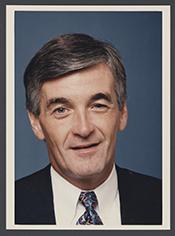
I thank the chairman for yielding, and I deeply appreciate the ranking member for yielding me some time as well. Mr. Speaker, it would be impossible for me to even begin to equal the eloquence of my…
I thank the chairman for yielding, and I deeply appreciate the ranking member for yielding me some time as well.
Mr. Speaker, it would be impossible for me to even begin to equal the eloquence of my colleagues who have spoken with such passion and such meaning over these past minutes with respect to the subject of this resolution. Our debt of gratitude certainly, as has been said time and time again, goes to the tremendous bipartisan leadership of two special individuals, two men in whom I hold so much admiration, the chairman the gentleman from California (Mr. Hunter) and, of course, the ranking member the gentleman from Missouri (Mr. Skelton).
This resolution in my mind, Mr. Speaker, would be warranted on any day of the week in any year you might choose. It is obviously particularly important now as we see the demands that we place upon these brave men and women increasingly grow each and every day.
I too have had a chance to witness these incredible sacrifices. I had the honor just a few weeks ago to travel with a number of my colleagues throughout the European theater, meeting with the Reservists and Guardists and the active component and talked to the folks who too often we forget about, too often we take for granted and do not understand the sacrifices that they leave behind.
The resolution speaks to it very eloquently: the hundreds upon hundreds of people already having given of their lives and by being wounded in combat, the dozens and dozens who have given their lives in its fullest measure, from the loss of life through the battle on terrorism, and yet never with a regret, never with anything more than pride and tears from their families. I think that this resolution, more than any others I have seen in many weeks on this floor, deserves the unanimous support of all of our colleagues; and I would certainly urge each and every one of the Members of this House to support it promptly here today.
Mr. Speaker, I rise in strong support of this joint resolution and commend Chairman Hunter and Rep. Skelton for bringing it to the floor.
Ever since the attack on the United States on September 11, 2001, the soldiers, sailors, airmen and marines of the U.S. military--be they active, National Guard, or reserve volunteers--have willingly gone into harm's way to carry out many courageous and successful operations against terrorism that have helped to make us at home safer and more secure.
Threescore or more of our military people have died, and hundreds have been wounded or injured so far in this Global War on Terrorism, but all remain committed to seeing the mission through to the end.
The fight against terrorism has added new missions to our Armed Forces that even prior to September 11th were greatly challenged. The 10th Mountain Division from Fort Drum in my district is a case in point. The deployment of division troops to the combat zone in Afghanistan had been matched by deployments of division units to Bosnia, Kosovo and the Sinai, as well as to homeland defense missions in the United States. As one 10th Division officer told the media: ``We like to say the sun never sets on the 10th Mountain Division patch. We are literally all over the map.''
During the 10th Mountain Division's deployment to Afghanistan, soldiers such as Staff Sergeant David A. Hruban, Staff Sergeant Randel Perez, Specialist Mark T. Henry, and Sergeant James Rissler of the Division's 1st Battalion, 87th Infantry, distinguished themselves in battle. Specialist Wayne Stanton, also of the Division's 1st Battalion, 87th Infantry, was wounded in the same battle and re-enlisted just last week, one year after being wounded, knowing full well that he may soon be redeployed to a combat zone. The heroism of these brave soldiers embodies the commitment and sacrifice of our military personnel.
The ability of our military personnel to sustain the war is closely related to the willingness of their families, and in the case of reservists their employers, to continue making sacrifices. This resolution is an effort to recognize and acknowledge that sacrifice.
Finally, Mr. Speaker, as we approach a possible war with Iraq, the Nation is about to ask our Armed Forces and their families for additional sacrifices. It is thus only right that all members support this joint resolution expressing our gratitude to those who are fighting for us, and reaffirming that Congress stands united with the President in the ongoing effort to defeat global terrorism.
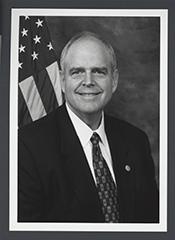
Mr. Speaker, I thank the gentleman for yielding time to me. Mr. Speaker, I appreciate the strong commitment and constant leadership of the chairman, and his doing everything, along with our friend,…
Mr. Speaker, I thank the gentleman for yielding time to me.
Mr. Speaker, I appreciate the strong commitment and constant leadership of the chairman, and his doing everything, along with our friend, the ranking member of the Committee, to provide the resources in problem-solving for our military that they so richly deserve.
Mr. Speaker, it is only fitting and timely that we take time to honor and commend the brave individuals serving in the U.S. Armed Forces. Today, as we go about our normal, everyday business, thousands of troops are currently deployed or are already in locations across the globe to protect and safeguard the freedom and liberty we hold so dear. They are nobly answering the call of duty, separated from their families, friends, and loved ones. While putting themselves in harm's way, they seek to root out the evil that we have seen on September 11, 2001, and other terrorist acts of the past few years. Elimination of terrorism and terrorists is their mission. It is clear that they will succeed.
Mr. Speaker, just yesterday I was at Fort Bragg and Pope Air Force Base in my district in North Carolina. There I saw thousands of Reservists preparing to deploy to undisclosed locations. Even though many of the 18th Airborne Corps, the 82nd, and Special Forces have already deployed, the post was a flurry of activity with mobile food tents, additional and temporary PXes, troops sleeping at night on cots in gymnasiums, and soldiers everywhere.
As these individuals, many of whom are members of the National Guard and Reserve, prepared to deploy, morale was high and they are ready.
I cannot express how proud I am of them and the entire military community in Fayetteville, North Carolina for their service, selfless attitude and sacrifice.
Nearly 225,000 members of the Guard and Reserve have been mobilized. It is important to recognize the support the employers of these folks have provided in this mobilization effort. For example, the Right Gear Bicycle Shop in Concord was a two-man small business until the second of the two men were deployed. This is vitally important because of the contribution that half of the workforce of this important small business provides.
Yesterday, I and my wife, Barbara, also met with spouses to discuss the impact that mobilization has on families. The support these individuals have provided for their loved ones and the hardships that they are enduring are to be recognized and commended. When they have problems this Congress must do all that it can to solve those problems.
Mr. Speaker, the tragic events of September 11, 2001 and prosecuting the
global war on terrorism has thrust our Nation's military into the spotlight and called to duty the brave men and women of the U.S. Armed Forces. U.S. citizens are rallying behind them in strong support of the harrowing mission they have been called on to perform.
While terrorists and dictators seek to weaken the American spirit, their murderous acts instead serve to unite us in a way that has not been seen in decades. The 8th District of North Carolina has long played a key role in our Nation's defense, and I am honored to be able to pay tribute to the brave soldiers, sailors, coasties and Marines in my State and across this wonderful Nation. May God protect them and their families as they fulfill their duty and may He provide them the strength to perform the mission they are called on to do. May God bless and protect our U.S. Armed Forces and the United States of America.
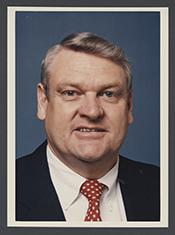
Mr. Speaker, I thank the gentleman for yielding me time. Mr. Speaker, I congratulate the gentleman from California (Chairman Hunter) and the gentleman from Missouri (Mr. Skelton) for bringing this…
Mr. Speaker, I thank the gentleman for yielding me time.
Mr. Speaker, I congratulate the gentleman from California (Chairman Hunter) and the gentleman from Missouri (Mr. Skelton) for bringing this resolution to the floor.
Mr. Speaker, in early February, the Speaker asked five of us to travel to the Middle East, first stopping in Kurdistan, on into Uzbekistan. We attempted to get into Afghanistan, but, due to bad weather, we were unable to; and also on into Kuwait city.
The purpose of that trip was to deliver a message from the Congress of the United States about the support that we have for Enduring Freedom and for the operation that is going on that they are carrying out today.
On our visit to each of the stops, we had four ways of expressing our gratitude. One, we had banners, banners that had inscribed the words from the President's State of the Union Address, when he addressed the troops and said, you believe in America, and America believes in you. Those banners were signed by hundreds of people, not just Members of Congress, but people from across the country who visited here in Washington. Each of those banners was signed by the Commander in Chief.
Another way that we had of expressing the gratitude of the Congress was a video, a 10-minute video which began with the Speaker of the House delivering a message personally, the Commanding General of Fort Benning, Georgia, people from the PX, people from the streets, also the gentlewoman from California (Ms. Harman), the gentleman from Georgia (Mr. Bishop), Vice President Dick Cheney, and ending by a message from the Commander in Chief, President Bush.
The third way that we expressed our gratitude from the Congress was with a flag. We presented each stop, each unit that we visited, with a flag that had been previously flown over the Capitol of the United States.
Five of us were traveling; the gentleman from New Jersey (Mr. Pascrell), the gentleman from Massachusetts (Mr. Capuano), the gentleman from Alabama (Mr. Everett), the gentleman from South Carolina (Mr. Wilson) and myself. Never once did we identify ourselves at any stop as other than Members of Congress. We did not carry a label by party, just Members of Congress, to express our gratitude.
The fourth way was there in person, to personally deliver the message. We never heard one complaint, and we shook the hands of thousands of men and women in uniform. Not one complaint, but a lot of fine compliments to the Congress and to the Commander in Chief. Proud to serve both.
But to our surprise in Uzbekistan, as we were presenting these gifts and expressions of gratitude of the Congress, they had a gift for the Congress. They had a flag that they had flown over the air base, K-2 in Uzbekistan, a forward operation base for Enduring Freedom. But not only did they fly it over the base, they put it aboard a C-130 gunship and flew it over Afghanistan, because they wanted to express to us their gratitude for what we do as Congress and for our Commander in Chief.
Should we not be doing that today in the same fashion that the five of us traveled, as Members of Congress; not by party label, just Members of Congress, proud to be so, and proud of our soldiers and our airmen, our sailors, our marines, our Coast Guard.
God bless each and every one, and God bless our Commander in Chief.
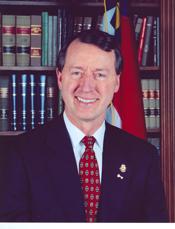
Mr. Speaker, I want to thank Chairman Hunter and Ranking Member Skelton for bringing this resolution to honor the men and women who are serving. I happen to represent in my district Fort Bragg and…
Mr. Speaker, I want to thank Chairman Hunter and Ranking Member Skelton for bringing this resolution to honor the men and women who are serving. I happen to represent in my district Fort Bragg and Polk, the two bases that are called the 911 posts in this country. Thousands of those men and women are now stationed around the world.
But in addition to what has been said, let me talk about a group of young folks who have not been spoken about today and that is the children of these men and women that have been deployed. They watch TV every night. They hear the stories. Our school personnel deal with them every day. They deserve our help each and every day. They deserve that we do the right thing as we honor the men and women who are serving. As we start our appropriations processes later, we have the obligation to make sure that the children of these men and women are taken care of, because they face some difficult times and our school personnel deal with them on a daily basis with many of the traumas that they face.
Mr. Speaker, I thank the gentlemen for the resolution and encourage it to my colleagues.
Mr. Speaker, I rise in strong support of this resolution to commend the members of the United States armed forces.
As a veteran of the United States Army, I know firsthand the contributions our military service personnel make in defense of our nation and the tremendous burden their families are forced to bear. Here in the U.S. House, I serve on the Army Caucus, and I work on a bipartisan basis to support our men and women in uniform. Our service personnel are dedicated, professional and deboted to duty. Congress must stand up for these brave men and women who risk their lives to defend our country, our ideals and our interests around the world.
I have the honor of representing the men and women of Fort Bragg and Pope Air Force Base. Fort Bragg is truly our nation's ``911'' base because when America is in trouble, our leaders pick up the phone and call Fort Bragg. The mission at Fort Bragg is to maintain the XVIII Airborne Corps as a strategic crisis response force, manned and trained to deploy rapidly by air, sea and land anywhere in the world, prepared to fight upon arrival and win. Co-located with Fort Bragg, Pope Air Force Base provides a unique synergy and has played a leading role in the development of U.S. tactics and air-power throughout history. Missions at Pope range from providing airlift and close air support to American armed forces to humanitarian missions flown all over the world. The men and women from these installations, their families and the entire community on a daily basis contribute whatever is asked of them for our country's safety and security.
Mr. Speaker, as America stands on the brink of war, hundreds of thousands of our military personnel have been deployed abroad. They need to know that Congress stands behind them, and this resolution is an appropriate expression of our support. I urge my colleagues to join me in passing this resolution.
Mr. Speaker, my congressional district lies a long way from the World Trade Center and the Pentagon, but on September 11 all of America was a victim of this deadly and unprovoked attack. The next…
Mr. Speaker, my congressional district lies a long way from the World Trade Center and the Pentagon, but on September 11 all of America was a victim of this deadly and unprovoked attack. The next day, my office was inundated with calls from young men and women ready to enlist in our Armed Forces to serve in the war against terrorism. Now almost 18 months later, these seasoned soldiers and sailors are on the front line of terrorism, having already served in places like Afghanistan, the Philippines and in the Horn of Africa. I salute their courage and selfless dedication.
Mr. Speaker, I would like to commend the young men and women of our nation and my district who risk their lives daily to protect our nation from global terrorist networks wishing to do us harm. Our men and women in uniform's selfless dedication embodies the spirit of America. I believe the extraordinary commitment of everday Americans to root out fanatics bent on destroying our way of life will make us successful in the war on terrorism.
This is the first war in our nation's history where we face an enemy that solely targets innocent civilians, regardless of their age, religion, race, or background. And when the call of duty went out to mobilize against this enemy, thousands enlisted and re-enlisted to fight this global threat.
A week after the attacks on America, a 40 year old constituent in my district called me begging to join the war on terrorism. He is a 40 year old married farmer and was willing to forsake his home and career to serve in the U.S. Army. And as you know, there are no ``leaves of absence'' when you farm. He was willing to give up his farm and accept a temporary separation from his wife to serve in our nation's armed forces. As you can imagine, he called me and wanted assistance in joining because the U.S. Army prohibits enlistments beyond 35 years of age and conforming to this policy he was denied enlistment. But, I commend his unusual, but not uncommon, willingness to serve our nation.
In my position as the Ranking Democratic Member of the House's Veteran's Affairs Committee, I have had numerous veterans approach me and personally volunteer to serve and fight in the war against these terrorists. Veterans as old as 85 have told me they would be willing to join the war on terrorism if their country ever called on them.
While those of us in Congress may differ on how best to deal with Iraq and North Korea, we stand absolutely united on the war on global terrorism and our support for our troops. And as the senior Democrat on the House's Veteran's Affairs Committee, I will do my part to ensure that when these troops return home they are entitled to the protections and benefits guaranteed to every veteran. Their selfless sacrifice and long absence from home must be rewarded. Just as we stand vigilant against any further terrorist acts we must stand together to protect the entitlements and benefits that protect the members of our armed services when they return home.
Show 11 more
Mr. Speaker, as a veteran I stand behind our troops, and I ask everyone to get together in the form of solidarity. Mr. Speaker, several months ago, when we voted on the President's Iraq resolution,…
Mr. Speaker, as a veteran I stand behind our troops, and I ask everyone to get together in the form of solidarity.
Mr. Speaker, several months ago, when we voted on the President's Iraq resolution, we all hoped war could be avoided, even though most of us believed deep down that it was a forgone conclusion. It was just a matter of when. Well, the day we all knew would come upon us. As we speak the U.S. Army 7th Calvary has engaged the enemy inside Iraq.
This is a difficult dilemma. We hope and pray that Saddam does not have any weapons of mass destruction to use against our troops. My faith teaches me that only those who are without sin should cast the first stone in conflict. We have cast the stone, and we'll just have to wait and see what the effects will be.
However, Mr. Speaker, none of that is important anymore. The most important issue we face as any war begins is how we are going to support our brave men and women in uniform. No matter how we feel about the prospect of waging war at this time, we must stand solidly behind our troops. Hundreds of soldiers from my district have already deployed. Thousands more from the Inland Empire and across California are heading to the Persian Gulf region. Even more Californians are serving our Nation in the Army, Navy, Air Force and Marines all over the World. It saddens me to think that some of these men and women will not return home to their mothers and fathers, to their sons and daughters, to their husbands and wives.
We can support our troops by keeping the promises we have made to our veterans, and by providing them with the benefits and healthcare that they have earned through their services to our Nation.
Mr. Speaker, as I think about the lives that may be lost in the coming days and weeks, I ask myself one question. Could this situation have been avoided? Although I cannot answer this question with 100 percent certainty, I have always believed that there was a diplomatic solution to the Iraq crisis. I believed that when I voted for a resolution in October authorizing the President to use our armed forces in support of any U.N. resolution mandating the disarmament of Saddam Hussein. Mr. Speaker, I still believe that now. Unfortunately, the diplomatic window is closed. Diplomacy no longer seems to be an option.
But I want my colleagues to hear me when I say this. Now is not the time to debate misguided or unsuccessful policies. Now is the time to come together and support our brave men and women in uniform. We must let them and their families know that we appreciate their sacrifice. Let us rally around our troops and show the world that our Nation stands united. I hope the unity that Members on both sides of the aisle are showing tonight sends a strong signal to our troops. We are thinking of you and praying for you.
Mr. Speaker, I do have one request. I ask my constituents, and every American, to light a candle and pray for our troops and pray for all the innocent victims of this war.
Mr. Speaker, I reserve the right to object. Mr. Speaker, I would say to the gentleman from California (Mr. Hunter), we are all patriots and we all want to support the troops, including our colleague.…
Mr. Speaker, I reserve the right to object.
Mr. Speaker, I would say to the gentleman from California (Mr. Hunter), we are all patriots and we all want to support the troops, including our colleague. We all want to support their families.
In hopes of trying to come to an agreement here, I am wondering if the gentleman would be willing to modify his unanimous consent request to include a more neutral resolution which supports the troops, as we all do, for their valiant and dedicated work, consistently performing in a professional manner; and which supports the families at this time of difficulty and trial?
Since I think unanimously there is a way that we can all agree on this, would the gentleman be prepared to support House Concurrent Resolution 105, which I left at the desk and which is at the desk there, which is a resolution that supports the troops, but does not require Members to agree with the policy in Iraq?
I yield to the gentleman from California.
Mr. Speaker, I reclaim my time.
To the gentleman, and he is a gentleman, I would like to say that we all agree that we want to support the troops. This resolution, however, or at least half of it, is not about the troops. At least half of it is about the war in Iraq, which is a matter of contention. We understand that. There are 133 Members of this House who voted against the Iraq resolution.
The gentleman has made his decision, and I regret the decision, which
Mr. Speaker, I think the gentleman is correct. I think this House should be able to give a commendation to the troops.
Mr. Speaker, I will withdraw my reservation of objection in the hopes that in the course of the debate we can clarify that while we all support the troops, there are many of us who have reservations about the wording of this resolution and it going beyond support for the troops.
I yield to the gentleman from Massachusetts.
Mr. FRANK OF Massachusetts. Mr. Speaker, I was glad to hear the gentleman from California respond to the gentleman from Ohio when the gentleman from Ohio referred to that part of the resolution which quotes the President's letter and said he disagreed with it in effect.
The response from the gentleman from California was that simply factually recounts the President's letter. If, in fact, he is saying this is not necessarily by this body an endorsement of that, but simply a recognition of the fact that the President says it, and this is on the record, I think that would help us advance this.
So I appreciate the gentleman from California having made that point that that particular phrase that the gentleman from Ohio mentioned is not the wording of this House. It is a reference to a fact that the President said that, and it does not reflect one way or the other what individual Members might think.
Mr. Speaker, I withdraw my reservation of objection.
Mr. Speaker, I thank the gentleman for yielding me time. I rise today in strong support of this resolution, and I commend all of our troops at home and abroad for their efforts in the war on…
Mr. Speaker, I thank the gentleman for yielding me time. I rise today in strong support of this resolution, and I commend all of our troops at home and abroad for their efforts in the war on terrorism.
For 17 months, the men and women of Armed Forces have fought in Afghanistan, protected our homeland and done everything our Nation has asked them to do. The war on terrorism continues to produce results such as the recent arrest of Khalid Shaikh Mohammed. But yesterday's bombing in the Philippines, which claimed innocent American lives, should remind us that this war is ongoing and unfinished.
Two weeks ago, I had the privilege of meeting three heroes of this ongoing war, and I was honored to introduce them before the Nevada State Legislature.
Captain Andra Kneip, a recipient of two Distinguished Flying Crosses and her husband, Major Scott Kneip, both of them A-10 fighter pilots, exemplify the great people serving our country. I also had the honor of introducing First Lieutenant Thomas J. Cahill and his family. Lieutenant Cahill was awarded one of the Nation's highest awards, the Silver Star, for flying his helicopter into withering fire to save the lives of three United States Army soldiers on the ground. These young men and women have heard their Nation's call and have responded accordingly.
Mr. Speaker, let there be no doubt that if our troops are called again in Iraq, America can expect nothing but the greatest efforts of the greatest military in the world.
There are other heros in the war on terrorism who should also be honored for making the ultimate sacrifice in defending our Nation from terrorism. Brave Nevadans, such as Jason Disney, Jason Bayer and Matthew Commons, along with all the other members of our military who have died defending our Nation, remind us of the treasured gift of freedom that they have bestowed upon all of us.
Mr. Speaker, it is appropriate that we commend our service members on behalf of a grateful Nation. And I know that the American people will continue to pour out their support for all of our troops. As a veteran of the Persian Gulf War, I remember and still appreciate the overwhelming support that was given to our troops and was shown by the American people. The letters, emails and packages sent a very powerful message to my comrades and me that America does care.
America supports the Guardsmen and Reservists who have put on the uniform to fight terror and protect our Nation. America supports the employers who have seen their best employees called into service. America supports the families who have watched their loved ones bravely answer the call to service. Let this resolution say to all our Nation's soldiers, sailors, Marines and airmen, America supports you.
Mr. Speaker, I stand in strong support of our troops and our families. Mr. Speaker, at this moment my prayers and thoughts are with the service men and women who are braving the fierceness of battle…
Mr. Speaker, I stand in strong support of our troops and our families.
Mr. Speaker, at this moment my prayers and thoughts are with the service men and women who are braving the fierceness of battle in the deserts of Iraq. My best wishes are with them and their families for a safe return home. I have no doubt that they will be victorious in their undertaking and perform their duties honorably and bravely.
I have a particularly soft spot in my heart for the service men and women serving in Michigan's National Guard and reserve units that are now activated to duty. They are providing a myriad of services and tasks on behalf of the war effort and in service to our nation.
The politics of war should stop when the first shot is fired and when the men and women who make up our armed forces move into the field of battle. Some Members in this chamber have taken exception to the Administration's handling of the Iraq crisis, and I include myself among those who have had strong reservations about our road to war. If this were a simple resolution expressing our support and best wishes for the safe return of our troops, it would have my complete and unquestioning support. As a Member of the House Appropriations Committee, I will do everything I can to make sure that our troops are provided with the equipment and resources necessary to ensure their safety and support their families.
But I have strong reservations about the course of action that took us into our present state of war. My position on this war has been plainly clear since the beginning, when the Administration first proposed using preemptive action against Iraq. I supported working through the United Nations and our allies and using all diplomatic means possible to disarm Saddam Hussein. I do not feel that the President stayed true to this path and exhausted all diplomatic means available. Therefore, I could not in good, moral conscious, vote ``yes'' for this resolution because it represents an affirmation of the policy of pre-emption. I strongly disagree with the application of a pre-emptive doctrine. It is counter to our values as a democratic nation and our American tradition.
Now that we are committed, our troops are bound to perform their mission effectively and destroy the Iraqi war machine. As they pursue their objective, they will encounter many perils as the war follows its course. I share with the President the wish that their job will be completed swiftly so that they will soon be returning home to their loved ones.
Mr. Speaker, I thank the chairman for yielding me this time, and I come to the floor as the proud son of an army sergeant, and I have a brother who is a colonel on active duty in the United States…
Mr. Speaker, I thank the chairman for yielding me this time, and I come to the floor as the proud son of an army sergeant, and I have a brother who is a colonel on active duty in the United States Army.
Mr. Speaker, I have served our Nation for 22 years, in war and in peace, and I think of my comrades who now find themselves once again on the desert floor. And I think not only about them, but those who also control the sky, who own the sea, who will take control of the beachheads, and also those who will build the theater of operations and those who support them Stateside and in other countries dispersed around the world.
I also come to the floor not only thinking of them, about also about the families that they leave behind, the loved one that keeps the watch fires burning, the children who are anxious for mom or dad to come home.
While we think of them, I want the country to focus on two individuals that are helping set the pace, and that is the gentleman from California (Chairman Hunter) and the gentleman from Missouri (Mr. Skelton). These are two individuals that lead the best bipartisan committee in the United States Congress; it is because of their leadership. The work that the gentlemen did after the Gulf War, all those hearings, all of their dedication to try to get the force structure right, to ensure the right munitions, to move from analog to digital, to make sure that the forces are highly mobile and very lethal, and that those munitions go downrange and hit their targets with precision, all that work the gentleman from Missouri (Mr. Skelton) and the gentleman from California (Chairman Hunter) did will see great dividends.
The world saw some of those dividends with regard to Afghanistan. The leadership of the gentlemen to make sure that those forces and special operations were trained and funded, believe me, it saved lives. So as today we want to pay respect and appreciation to those who find themselves in harm's way and to appreciate the sacrifice of the loved ones, I want to say thank you to the gentleman from California (Chairman Hunter) and the gentleman from Missouri (Mr. Skelton), and the staff that work for them, because the things that they have done when nobody was watching is going to save lives not only in Afghanistan, it could be on the Horn of Africa, it could be in the deserts of Iraq once again. I cannot say enough to pay respect to both gentlemen for what they have done.
Mr. Speaker, I thank the gentleman for yielding me time and for his extraordinary leadership on behalf of the men and women in uniform in his career in Congress. And I commend the gentleman from…
Mr. Speaker, I thank the gentleman for yielding me time and for his extraordinary leadership on behalf of the men and women in uniform in his career in Congress. And I commend the gentleman from California (Mr. Hunter) as well, the chairman of the committee, the two of them, for bringing this resolution to the floor, which I was proud to join my colleague, the gentlewoman from California (Ms. Harman) in being an early co-sponsor of.
Mr. Speaker, I had the privilege of going to Whiteman Air Force Base with our distinguished colleague, the gentleman from Missouri (Mr. Skelton) to say to the men and women in uniform there how proud we are of them, how proud we are of their patriotism, the sacrifice that they are willing to make. And this weekend I joined the gentleman from Ohio (Mr. Hobson) and the gentleman from Pennsylvania (Mr. Murtha) to visit our men and women in uniform in the Persian Gulf.
We had the privilege of representing both sides of the aisle to the young men and women there to say how proud again that we were of them and the sacrifice they were making.
All of us take pride in the many relationships we have with the military. My uncle died in the Battle of the Bulge. My family continues to be proud of the Purple Heart he received. Four of my brothers served, three in the active army, one in the reserve. So when we saw these young people there, it was bringing a lot of history to the conversation.
One young woman we met, Captain Jennifer Schulke, was the commander of the Patriot. She oversaw the Patriot missile. She is so talented, so in control of her situation, so smart, so wise, and so brave. We asked her about her life personally, and she told us that her little baby girl was going to be 2 years old on March 27. She, of course, will not be home for her daughter's birthday. Imagine the sacrifice that this young woman is making, not only with her life, possibly, but also being away from her family.
Mr. Speaker, the stories go on and on. The patriotism is endless. Wherever we stand on this war in terms of policy, we are united in our support and admiration for the men and women in uniform, for their courage, for their patriotism, and for the sacrifice they are willing to make for our country.
The Korean War Memorial has engraved on it, ``Freedom is not free.'' No one knows that better than the men and women in uniform.
Mr. Speaker, I thank the gentleman for yielding me this time, and I thank him and the gentleman from Missouri (Mr. Skelton), my good friend, the two of them, for bringing this resolution to the…
Mr. Speaker, I thank the gentleman for yielding me this time, and I thank him and the gentleman from Missouri (Mr. Skelton), my good friend, the two of them, for bringing this resolution to the floor.
We all remember the words of Thomas Jefferson: ``We hold these truths to be self-evident that all men are created equal, that they are endowed by their Creator with certain unalienable rights and among these are life, liberty, and the pursuit of happiness.''
And we remember the words of Abraham Lincoln: ``With malice toward none, with charity for all, let us work together to bind up the Nation's wounds.''
And another century passing by, we remember Martin Luther King, Jr. and his dream that little children will not
be judged by the color of their skin, but by the content of their character.
This great Nation of ours has seen periods of great joy, wretched despair, and great sacrifice. And still, we come, children of democracy, again here tonight to find our place in history. Our young men and women, once again on the front lines of history, once again in anticipation of great joy, although for some there will be wretched despair because some will not come home, we give them our praise and support for the sacrifice that they are now enduring as they bear the greatest burden of preserving and restoring freedom during this present crisis.
Mr. Speaker, I would like to close with a very familiar poem by a Canadian soldier during World War I who did not make it home:
``In Flanders fields the poppies blow
Between the crosses, row by row
That mark our place; and in the sky
The larks, still bravely singing, fly
Scarce heard amid the guns below.
``We are the Dead. Short days ago
We lived, felt dawn, saw sunset glow,
Loved and were loved, and now we lie
In Flanders fields.''
Those who lie in Flanders fields said,
``Take up our quarrel with the foe:
To you from failing hands we throw
The torch; be yours to hold it high.
If ye break faith with us who die
We shall not sleep, though poppies grow
In Flanders fields.''
The Americans in the Middle East are bearing the burden of the present crisis, and we come here tonight to mix and to mingle and to speak and to have differences, but the unity of this Congress, the unity of this Nation will linger for decades to come.
I stand here tonight to support the resolution.
Mr. Speaker, I thank my colleague for yielding me this time, and I rise in support of H.J. Res. 27, commending and expressing the gratitude of a grateful Nation to all members of the United States…
Mr. Speaker, I thank my colleague for yielding me this time, and I rise in support of H.J. Res. 27, commending and expressing the gratitude of a grateful Nation to all members of the United States Armed Forces, and particularly the members from the State of Iowa, which has a long history of combat in every single major battle that has taken place since 1846, when Iowa became a State.
Mr. Speaker, Iowa has 16 National Guard bases simply in just the Fifth District of Iowa, and many of those men and women are off now, away from their jobs and family, making their sacrifices and meeting their commitment as they volunteer alongside our full-time members of the Armed Services.
Iowans have suffered greatly over the years in defending our freedom and our
liberty. In particular, the small but mighty town of Red Oak, Iowa, which suffered the highest number of fatalities in combat in World War II on a per capita basis of any community in the United States of America. They were called together one night as a community to receive the announcement as a community that they had lost 20 members of that small community in one single battle in World War II.
That is the level of commitment that Iowa has had from all of its people in supporting our military, and we have strongly supported the members of our Armed Forces. Also, during the Civil War, our percentage of losses as a percentage of the population overall were higher than any other State in the Union.
Mr. Speaker, I wish to point out to the members of this Nation also that our President made a statement the other day in which he said there is only one person that orders our Armed forces into battle, and that is the one who hugs the widows and widowers of those who do not come back home. We also understand that is the same person who hugs the widows and widowers of those lost in the attacks on the World Trade Center, on the Pentagon, and from the crash in Pennsylvania. Mr. Speaker, while only one person orders them into battle, we all pray for their safety and their safe return.
Our Armed forces are a vanguard for freedom, and the sacrifices they give give hope to all people. There is no training and no equipment too good for our Armed Forces, and I stand here in great appreciation to Iowans and Americans who are defending our freedom and our liberty.
Mr. Speaker, I rise today in support of this resolution honoring our brave men and women of the armed services. Their duty and sacrifice are appreciated by all Americans, and it is right that we pay…
Mr. Speaker, I rise today in support of this resolution honoring our brave men and women of the armed services. Their duty and sacrifice are appreciated by all Americans, and it is right that we pay recognition to them today.
The post September 11th world demands increased vigilance on the part of our armed services. With these increased demands, the role of the National Guard is critical in providing the total force necessary to ensure our security. Over the past month, I have met with many National Guard and Reserve members from western Wisconsin who have been called up for service in the global war against terrorism.
Recently, I attended send-off ceremonies in Prairie Du Chien, Platteville, and Richland Center, Wisconsin for units of the Wisconsin National Guard that have been called to duty. These men and women and their families are answering the call of their country, even though some have been given very limited notice by the Department of Defense. In one instance, the time between alert and mobilization was only 2 days, making it increasingly difficult to make arrangements regarding family and work obligations. Every member of the Wisconsin National Guard, however, has reported enthusiastically and without hesitation. They are well-trained, well-motivated and, in short, very impressive individuals. Our country is fortunate to have the quality of individuals in our Armed Forces.
I want to particularly express my appreciation to the members and families of the 229th Engineer Company out of Prairie Du Chien and Platteville, the 829th Engineer Detachment out of Richland Center, and the 1158th Transportation Company with members from Tomah and Black River Falls. These units have been activated and are likely to be deployed overseas.
Over 2,200 members of the Wisconsin Air and Army National Guard are serving on Active Duty. The people of western Wisconsin are proud of their service and the service of all the men and women of our armed services during this important time in our Nation's history. Our appreciation also goes out to the families of these service members for their support and sacrifice during these challenging times.
The American people and the Congress of the United States stand behind our armed service members, and we know they will be successful in their mission.
Mr. Speaker, as the son of a marine who served during World War II in the First Division at Guadalcanal, and a brother who served in the United States Army, I rise in strong support of H.J. Res. 27,…
Mr. Speaker, as the son of a marine who served during World War II in the First Division at Guadalcanal, and a brother who served in the United States Army, I rise in strong support of H.J. Res. 27, a resolution introduced by Chairman Hunter, commending the members of the United States Armed Services.
We are all aware that we are well into the second year of operations Enduring Freedom and Noble Eagle. In addition, the United States military is deploying hundreds of thousands of troops to the Persian Gulf region. Finally, we are forward deploying additional units in the western Pacific to deter North Korean aggression. From protecting the homeland, winning the war on terrorism, to making the world safe from madmen like Saddam Hussein, the men and women of the United States Armed Services are serving this Nation well. We can all be very proud of their efforts and their sacrifice and that of their families.
I would like to also recognize the often overlooked role of the National Guard and components of the military. Tens of thousands of reservists and guardsmen from Florida are in Afghanistan and in the Middle East. I am continually impressed by these dedicated men and women who gladly go into harm's way to protect the Nation. Let us hope America recognizes our true heroes; not rock stars, not sports athletes, but the men and women who don the uniform of this great Nation who protect freedom everywhere, wherever they are called.
I want to thank Chairman Hunter, and of course the ranking member, the gentleman from Missouri (Mr. Skelton), for their outstanding leadership in military efforts and affairs. We are indeed proud in this House to have such capable and able people who understand what it is like to fight for this Nation; to fight in battle, to fight for freedom.
So, Mr. Speaker, I thank Chairman Hunter for giving me this opportunity to express my heartfelt thanks and profound gratitude to our service personnel, and especially to the mothers, daughters, sons, and husbands who willingly let them go to do the hardest job imaginable, to leave family and friends and loved ones, to travel overseas to defend the honor of this great land we call home.
Mr. Speaker, will the gentleman yield? Mr. Speaker, it is sadly too late for truth to be the first casualty of this war, because we have already had brave people killed. But truth is taking a beating…
Mr. Speaker, will the gentleman yield?
Mr. Speaker, it is sadly too late for truth to be the first casualty of this war, because we have already had brave people killed. But truth is taking a beating tonight.
We had the floor manager of this bill object to efforts to democratize the process and give Members more choice to make real votes in the name of letting the House work its will. He blocked unanimous consent requests that would have allowed amendments, that would have allowed separated votes, theoretically in the name of democracy. We had another gentleman from California come and say, ``let us not make this partisan,'' in defense of a resolution that is very partisan, that is drafted in a way that will minimize, rather than maximize, the goal Members pretend to want to be in favor of.
We have had Members who savaged Bill Clinton during the war in Kosovo, now announcing their convergence to the doctrine that once the guns start, the President is untouchable. Why? To use the unanimous admiration felt in this House for our troops for political purposes.
The gentleman from California who is managing the bill asked before, he said, people will be watching and they will say to us on the Democratic side, what are you doing? I will tell them what we were trying to do. We were trying to stop the Republicans from taking the troops politically hostage to serve the President's political purposes. We were trying not to allow the support that is unanimously felt for the troops, the admiration for their courage, the sympathy for the plight that their families are in; we did not want that used to puff up support that does not exist for decisions made by the President.
Sadly, we failed, because the majority used its control of this body, and so Members were put in an unfortunate position. But let us be very clear. Had the majority wanted to do it, there would have been a unanimous vote in this House, every Member voting, in support of the troops. The resolution, those parts of it that support the troops would have been unanimous. Unfortunately, partisanship has resulted in what will be a diminution in the vote that is cast for the support for the troops.
Bill Text
2 versions available
        [Congressional Bills 108th Congress]
[From the U.S. Government Publishing Office]
[H.J. Res. 27 Referred in Senate (RFS)]

1st Session
H. J. RES. 27

_______________________________________________________________________

IN THE SENATE OF THE UNITED STATES

March 6, 2003

Received; read twice and referred to the Committee on Armed Services

_______________________________________________________________________

JOINT RESOLUTION

Recognizing and commending the continuing dedication, selfless service,
and commitment of members of the Armed Forces and their families during
the Global War on Terrorism and in defense of the United States.

Whereas the Global War on Terrorism began in response to the unprovoked
terrorist attack on the United States

homeland on September 11, 2001, which resulted in the deaths of thousands
of United States citizens;

Whereas Al Qaeda, which attacked the United States on September 11, 2001,
remains a threat to the national security of the United States;
Whereas the members of the Armed Forces of the United States, a total force
comprised of active, National Guard, and Reserve personnel, have
undertaken more than 17 months of courageous and successful operations
against terrorism, not only in Afghanistan, but also worldwide;
Whereas since September 11, 2001, members of the United States Armed Forces have
promoted homeland security throughout the United States by performing
various missions, including providing security at the Nation's airports,
protecting the public at special events, and patrolling the Nation's
skies with combat air patrols;
Whereas members of the Armed Forces are helping around the world to train the
militaries of other nations in counter-terrorism operations;
Whereas these post-September 11, 2001, missions have been in addition to other
regular military missions and have been performed without any permanent
increase in the size of the Armed Forces;
Whereas more than 65 American servicemembers have died defending the Nation in
the Global War on Terrorism and more than 210 have been wounded or
injured;
Whereas nearly 225,000 members of the National Guard and Reserve components have
been mobilized for active duty since the start of the Global War on
Terrorism, of whom more than 166,000 remain on active duty, with
thousands facing a second year of active duty away from families and
civilian employment;
Whereas more than 200,000 active-duty personnel have already been deployed to
the Persian Gulf theater and thousands of Reservists and National Guard
members have been alerted for mobilization or are deploying for a
possible war with Iraq;
Whereas many employers in the Nation find their employees called to active duty
in the National Guard and Reserve, and are themselves called upon in the
spirit of patriotism to maintain job security for those mobilized
personnel and their families;
Whereas the ability of members of the Armed Forces to perform their missions
requires the support and sacrifice of their families and the commitment
to go wherever the Nation needs them;
Whereas the Nation is engaged in an unprecedented global conflict that presents
many new and dangerous challenges to the members of the Armed Forces;
and
Whereas this global conflict will require the Nation's unflinching resolve and
commitment to provide the Nation's soldiers, sailors, airmen, and
marines with the necessary resources required for victory: Now,
therefore, be it
Resolved by the Senate and House of Representatives of the United
States of America in Congress assembled, That Congress--
(1) commends, and expresses the gratitude of the Nation to,
all members of the United States Armed Forces (whether on
active duty, in the National Guard, or in the Reserves) who are
fighting the Global War on Terrorism;
(2) commends, and expresses the gratitude of the Nation to,
the employers who in the spirit of patriotism maintain the job
security of their mobilized National Guard and Reserve
employees;
(3) commends, and expresses the gratitude of the Nation to,
the families of those servicemembers who have borne the burden
of separation from their loved ones and who have staunchly
supported them during the conduct of the Global War on
Terrorism;
(4) expresses its condolences to the families of the brave
American servicemembers who have lost their lives defending the
Nation in the Global War on Terrorism; and
(5) reaffirms that it stands united with the President in
the ongoing effort to defeat global terrorism.

Passed the House of Representatives March 5, 2003.

Attest:

JEFF TRANDAHL,

Clerk.