Air Transportation Employees Assistance Act
Legislative Activity
Stay on top of the latest movement without scrolling through every action
Referred to the Subcommittee on Human Resources.
April 11, 2003
View full timeline
Introduced in House
April 2, 2003
Referred to the House Committee on Ways and Means.
April 2, 2003
Referred to the Subcommittee on Human Resources.
April 11, 2003
Floor Debate
24 membersWhat members said about H.R. 1553 on the floor
 PAD
PAD CWB
CWB JPM
JPM JK
JK MW+19
MW+19
Floor Debate
24 membersWhat members said about H.R. 1553 on the floor
Mr. Chairman, I offer an amendment. Mr. Chairman, this is an amendment that is long overdue. Those who are here would recall that in the aftermath of 9-11 when this House was rushing to approve a $15…
Mr. Chairman, I offer an amendment.
Mr. Chairman, this is an amendment that is long overdue. Those who are here would recall that in the aftermath of 9-11 when this House was rushing to approve a $15 billion package to help the airlines that we were told that there was not room or time, because it was so urgent to be done before the end of the week, to include the employees; but the gentleman from Missouri (Mr. Gephardt), the then-minority leader, and Speaker Hastert engaged in a colloquy where assurances were made that in the very near future in, and this was in September of 2001, that we would consider a bill for employee relief including financial assistance, ability to retain health insurance, training for those in the airline industry.
Since that time 150,000 airline industry employees have been laid off or furloughed, and we are told now by the industry that even if this package is approved, there is a high likelihood that we will see another 70,000 layoffs. Boeing is looking at 30,000 layoffs; and then there are a whole lot of associated industries, travel agents and others, who have been devastated. So this legislation would begin to redress that oversight by this Congress.
The interesting thing about this amendment is it is not in order under the bill, I am going to hear shortly, but this amendment, we would not have to borrow the money to pay for it. We have to borrow the money to send to Pakistan. We have to borrow the money to send to Turkey. We have to borrow for every other function of this bill. We have to borrow the money to build 6,000 schools in Iraq. We have to borrow the money to begin to provide universal health care in Iraq. But to provide extended unemployment benefits to 150,000, headed to more than 200,000, airline employees, we would not have to borrow a penny because the money is already on deposit in the unemployment trust fund.
It is true that the administration does not want to spend the $20- some-odd billion balance in that fund and does not want to extend this benefit to airline employees who have exhausted their unemployment; but the fact is we would not have to borrow the money to do it and it helps Americans. We are borrowing money to help people all around the world. Can we not do something for the airline employees?
The Senate has acted on this issue, and hopefully we will come to a conference agreement that will provide for this long-overdue benefit; but if the House would send a message tonight, if the committee would accept this and waive a point of order against it, again, not having to appropriate funds, only to authorize expenditure of funds from the trust fund, we would begin to help these people who have been sorely hurt by 9-11 and now by this war in Iraq.
Mr. Chairman, if I could speak to the point of order.
Mr. Chairman, I did last evening go to the Committee on Rules. There was a Republican member who was a principal sponsor of this legislation who was supposed to come to the Committee on Rules and ask for a waiver. He did not, but in his stead I asked the committee to protect this or, even better, to open up this section of the bill which goes to aviation and allow it to be amended outside of the rules of the appropriations process since this section of the bill was written totally, basically, behind closed doors. Unfortunately, apparently the Committee on Rules saw fit not to do that.
Mr. Chairman, I had hoped that this amendment would be accepted as noncontroversial. It would, at the end of a bill, insert a new section which basically simply recognizes the Constitution of the United States and the provisions of Article I, section 8. This has been reviewed by and edited by the Parliamentarian's Office and I understand that in its current form, it is in order. I had a previous version which was not in order.
It is very simple, and I will read it. Often we debate things that are too long to read, but this says, ``None of the funds in this Act may be used to initiate or launch military actions except as authorized by Article I, section 8 of the Constitution.''
Now, what does that mean? That means that we already have an outstanding authorization for these activities, which I opposed, which was not a declaration of war, but Congress did pass an authorization under the War Powers Act for current activities in the Middle East and any activities that might be pertinent to that. We have another outstanding authorization for anyone who has engaged in, aided, or abetted, or harbored those involved in 9/11. I think that pretty well covers any potential terrorist threat or harboring of terrorists or fugitives responsible for those sorts of actions around the world between those two resolutions.
So this simply says before the administration might use any of the $75 billion in this bill, which we are borrowing and delegating to them for a number of purposes, to engage in a military action outside of those two authorizations dealing with another part of the world or another country, that it would have to be compliant with the Constitution of the United States of America. I believe this is extraordinarily noncontroversial, and I would give the chairman an opportunity to accept it and save 2 minutes;
I probably have 2 minutes left. But he is not jumping to his feet, so I will keep talking for another 2 minutes.
Mr. Chairman, I find it hard to believe that this House, the people's House, would not feel that in borrowing and transmitting huge amounts of funds to the administration, would not want to protect its constitutional prerogatives and make certain that those funds were not used beyond the purposes of the already existing authorizations. So I would be puzzled if this House would reject this amendment, and I would wonder what they know that I do not know, or what plans to use this money in ways that are not already authorized by law might be out there; and that would cause me grave concern, particularly when I sometimes listen to the Secretary of Defense, who was then contradicted by the Secretary of State.
Mr. Chairman, will the gentlewoman yield?
Mr. Chairman, I had prior proposed legislation which would have required this House to fulfill its constitutional duties for this particular action, and some 30-some odd people saw fit to put their names on that. This amendment simply refers to the funds in this bill and future actions that are not authorized. So this is actually even more limited in its scope, but it does go directly to the obligations and duties of this House under Article I, section 8.
Mr. Chairman, will the gentleman yield?
Mr. Chairman, it is very clear what we are saying here. Military actions except as authorized, none of the funds may be used to initiate a launch. This is beyond those already authorized. I had other language which went to that; the Parliamentarian stripped it out. But this is clearly saying we have already authorized the current actions, we authorized them under the 9/11 resolution, Afghanistan and other actions. Those are authorized. This would be future actions outside the scope of the Iraq war, outside the scope of the Afghanistan war and/or the war on terrorism, whatever those might be, and Secretary Rumsfeld has an active mind.
Mr. Chairman, I will take part of the time to respond to the chairman, since he did not give me time.
Mr. Chairman, I resent the broad-scale implications about the ``proven linkage'' between Saddam Hussein. They have been able to put Saddam Hussein in the same sentence with al Qaeda; but the CIA, DIA and others have not been able to find or prove a single link, except for the group that he did not control up in the northern part of the country behind the Kurds, who have now been eradicated.
But there are proven links to the Saudis, there are proven links to the Pakistani intelligence service, there are proven links to others who in fact will receive assistance under this bill.
That aside, and we will not get back into that debate again here tonight, but I believe the gentleman mischaracterizes my amendment. This was raised in light of Secretary Rumsfeld threatening to take action against Syria. We have heard that ``real men go to Tehran'' and other things from this administration. I am concerned what adventures they might have in mind in terms of further preemptive wars.
I was trying to make the statement that before we fight any more preemptive wars, that we would live up to our authority under article 1, section 8, which we failed, and we failed the troops and the American people in the Congress in the matter of this current action, although it was authorized under other auspices by this Congress.
My other amendment is really simple. I know it will be opposed, but here it is.
This Congress authorized that we would make the American people safe by setting up National Guard weapons of mass destruction civil support teams in every State of the United States and the territories. Guess what, we have not delivered on that. We do not have enough money. We have been told there are budget constraints. We cannot afford a National Guard weapons of mass destruction civil support team in 17 States, including my own and that of the ranking member of the committee and a number of other States. We cannot afford it; yet we can send $1 billion unsolicited to Turkey.
As I said earlier on the floor tonight, the ambassador of Turkey said these funds were not solicited; they were a unilateral action on the part of the United States of America; essentially a gift or bribe, however we want to characterize it.
Would the American people not be better served by just reducing that by 20 percent? So 20 percent of the $1 billion that we are going to borrow and send to Turkey would be spent here in the United States of America for the National Guard to prevent destruction by weapons of mass destruction.
Now, I know we are going to hear, this would be an insult to the Turks and others. But is it not an insult to the American people that we are not making them as safe as we could? If Members want to talk about patriotism, damn it, protect our people here at home. If Members want to cast aspersions on me, I want this money to be spent in the United States of America. They want to send it to Turkey, plain and simple.
We are going to vote up or down on this. It is real simple. They will get up and say, oh, the Turks, the Turks. We either fund under the law what we said we would or what we were mandated to do, which we say we do not have the money to do, or we do not. This is the simple way to do it. The Turks would still get $800 million that they did not ask for.
Announcement by the Chairman pro tempore
Mr. Chairman, I demand a recorded vote.
Mr. Chairman, I reserve a point of order on the amendment. Mr. Chairman, will the gentleman yield? Mr. Chairman, I ask unanimous consent that further debate on the pending amendment offered by the…
Mr. Chairman, I reserve a point of order on the amendment.
Mr. Chairman, will the gentleman yield?
Mr. Chairman, I ask unanimous consent that further debate on the pending amendment offered by the gentleman from Massachusetts (Mr. McGovern) and any amendments thereto be limited to 40 minutes, to be equally divided and controlled by the proponent and myself as the opponent.
Mr. Chairman, if under his reservation the gentleman would continue to yield, I will do my best to make that work on my side.
If the gentleman would continue to yield, as to our Members so they can make some plans for the evening, while we will still continue and intend to complete this bill sometime tonight, I would ask the Chair that we not have any votes prior to 8 p.m., roll votes until 8, so Members can have time for dinner or whatever.
Mr. Chairman, I yield 3 minutes to the distinguished gentleman from Arizona (Mr. Kolbe).
(Mr. KOLBE asked and was given permission to revise and extend his remarks.)
Mr. Chairman, I yield 3 minutes to the distinguished gentleman from Virginia (Mr. Tom Davis).
Mr. Chairman, I yield 3 minutes to the gentleman from North Carolina (Mr. Ballenger).
Mr. Chairman, I yield 3 minutes to the gentleman from Indiana (Mr. Souder).
(Mr. SOUDER asked and was given permission to revise and extend his remarks.)
Mr. Chairman, I yield 3 minutes to the very distinguished gentleman from Florida (Mr. Mica).
Mr. Chairman, I would advise the Chair that I have only one remaining speaker to close, so I will reserve the balance of my time until the gentleman has concluded his time.
Mr. Chairman, I yield the balance of my time to my colleague, the gentleman from Florida (Mr. Lincoln Diaz-Balart), who will close.
(Mr. LINCOLN DIAZ-BALART of Florida asked and was given permission to revise and extend his remarks.)
Mr. Chairman, will the gentlewoman yield?
Mr. Chairman, we have reviewed this amendment and find that it is constructive and we are prepared to accept it.
Mr. Chairman, I make a point of order against the amendment because it proposes to change existing law and constitutes legislation in an appropriations bill, and therefore violates clause 2 of rule XXI.
The rule states in pertinent part: An amendment to a general appropriations bill shall not be in order if changing existing law.
The amendment imposes additional duties, and I ask for a ruling from the Chair.
Mr. Chairman, I make a point of order against the amendment because it provides an appropriation for an unauthorized program and therefore violates clause 2 of rule XXI.
Clause 2 of rule XXI states in pertinent part: an appropriation may not be in order as an amendment for an expenditure not previously authorized by law.
Mr. Chairman, the authorization for this program has not been signed into
law. The amendment, therefore, violates clause 2 of rule XXI; and I ask for a ruling from the Chair.
Mr. Chairman, I move to strike the last word.
I yield to the gentleman from Missouri, the very distinguished majority whip.
I yield to the gentleman from Arizona.
I wish to talk about this, Mr. Chairman. Are we talking 5 minutes on each of the 5 amendments, or 5 minutes total on the 5 amendments?
Mr. Chairman, I ask unanimous consent that debate on the pending amendment offered by the gentleman from New York (Mr. Crowley) be limited to 20 minutes, to be equally divided and controlled by the gentleman from New York (Mr. Crowley) as the proponent and myself as the opponent.
Mr. Chairman, I reserve the balance of my time.
Mr. Chairman, I yield the balance of my time to the gentleman from Arizona (Mr. Kolbe).
Mr. Chairman, I yield back the balance of my time.
Mr. Chairman, I make a point of order against the amendment because it proposes to change existing law and constitutes legislation in an appropriations bill and therefore violates clause 2 of rule XXI. The rule states in pertinent part: ``An amendment to a general appropriation bill shall not be in order if changing existing law.'' The amendment directly amends existing law. I ask for a ruling from the Chair.
Mr. Chairman, I rise in opposition to this amendment.
I am not exactly sure what the gentleman has in mind when he offers it, but I think I know what the effect would be. The effect would be if the U.S. troops managed to take Baghdad, but that they have not finished the operation in Basra, that they might not be able to move from Baghdad to Basra as a new military operation.
I yield to the gentleman from Oregon.
Mr. Chairman, reclaiming my time, I understand what the gentleman is saying, but oftentimes what one intends in a very simple amendment is not really the effect.
Now, if the gentleman is talking about no further military action without a declaration of war, and I think that is what he is talking about, because Article I, section 8 refers to declaring war, let me make the point that the United States has not declared war since World War II. Korea was a massive war, but there was no declaration of war. Vietnam was a massive war, but there was no declaration of war. We worked on resolutions passed by the Congress to authorize the President to take whatever steps necessary to protect American interests or whatever the purpose was at the time.
So what I am suggesting is that this is a mischievous amendment for those who are opposed to this war in Iraq. They certainly have a right to oppose the war, and I wish we did not have to go to war as well. But I know that if we do not take care of the problem before it gets out of control, then it becomes out of control.
Now, I want to say something about those who are opposed to the war, and again they have the right to be opposed to the war, although I do not think that they are supporting our troops very effectively.
I wanted to tell the gentleman that since the wounded soldiers have started coming back from Afghanistan and Iraq, something that my wife and I do on a regular basis is visit these soldiers, sailors, airmen, Marines, Coast Guardsmen in the military hospitals at every opportunity, especially if they have no family there with them. We have been doing that quite actively very recently.
I want to tell the gentleman a story about a young soldier who, when we entered his room, began to cry. Soldiers usually do not cry, but this soldier cried. My wife went over and hugged him and tried to console him. She did not do too well, although she normally does.
I went and talked to him, and asked, Are you in pain? He said, No, I am not
in pain. I said, The injury could be repaired? He said, Yes, they told me they could fix the injury. I asked, Well, why are you crying? He said, I am crying because I am watching the television, and I am watching the people out there on the streets objecting to my colleagues and myself being in harm's way.
He was crying because of the antiwar protestors. Again, they have the right to protest, but they offended this soldier, who had been wounded defending their right to do it. Now, I am not suggesting that this amendment is anything like that; but I am suggesting that it does lend credence to those who would like to portray the United States as being totally wrong in what we are doing.
I want to say to the gentleman, whatever his position is on this war, if we do not fight the terrorists there is no doubt what would happen. We have already proved that al Qaeda and Saddam Hussein are in bed together. That has already been proved in this military action. But if we do not prevent another September 11, another destruction of two main towers in New York or the Pentagon with the loss of thousands of lives, if we do not do something now to prevent it and it happens again, none of us will be able to excuse our way out of it for not having done what was necessary to keep it from happening again.
I am determined to do everything that I can do, and I hope that all of my colleagues in the House will as well. I heard their speeches after September 11, stating that they would do everything possible to prevent these events from ever happening again, and to rid the world of the threat of terrorism and those who support terrorism.
Mr. Chairman, I make a point of order against the amendment because it proposes to change existing law and constitute legislation in an appropriations bill and, therefore, violates clause 2 of rule XXI.
The rule states in pertinent part: An amendment to a general appropriations bill shall not be in order if changing existing law.
The amendment imposes additional duties and I ask for a ruling.
Mr. Chairman, I ask unanimous consent that further debate on the pending amendment offered by the gentleman from Michigan (Mr. Hoekstra) be limited to 20 minutes to be equally divided and controlled by the proponent and myself as the opponent.
Mr. Chairman, the gentleman is opposed, correct?
Mr. Chairman, I ask unanimous consent that half of my time be delegated to the gentleman from Wisconsin (Mr. Obey).
Mr. Chairman, I yield 3 minutes to the gentleman from Connecticut (Mr. Shays).
Mr. Chairman, I yield the balance of my time to the gentleman from New York (Mr. Walsh).
Mr. Chairman, I could not hear the unanimous consent request.
Maybe the gentleman from Wisconsin (Mr. Obey) would move to strike the last word.
Mr. Chairman, I move to strike the last word for the purpose of a colloquy.
I yield to the gentleman from Kentucky, chairman of the Subcommittee on Homeland Security of the Committee on Appropriations.
I yield to the gentleman from Florida.
I yield to the gentleman from New York.
Mr. Chairman, I make a point of order against the amendment because it proposes to change existing law and constitutes legislation in an appropriations bill and therefore violates clause 2 of rule XXI.
The rules state in pertinent part: ``An amendment to a general appropriation bill shall not be in order if changing existing law.'' The amendment imposes additional duties.
I ask for a ruling from the Chair.
Mr. Chairman, I make a point of order against the amendment because it proposes to change existing law and constitutes legislation in an appropriations bill and, therefore, violates clause 2 of rule XXI.
The rules state in pertinent part: ``An amendment to a general appropriation bill shall not be in order if changing existing law.'' The amendment imposes additional duties.
Mr. Chairman, I would insist on the comments being directed to the point of order rather than to the issue.
Mr. Chairman, I offer an amendment. Mr. Chairman, I yield myself 5 minutes. Mr. Chairman, I rise today to offer an amendment on behalf of the gentleman from Missouri (Mr. Skelton) and the gentlewoman…
Mr. Chairman, I offer an amendment.
Mr. Chairman, I yield myself 5 minutes.
Mr. Chairman, I rise today to offer an amendment on behalf of the gentleman from Missouri (Mr. Skelton) and the gentlewoman from Connecticut (Ms. DeLauro) to add $34 million to the Office of Domestic Preparedness for assistance to State and local first responders. I would have preferred to increase those funds by $61 million, but the Committee on Rules last night would not allow even that modest sum to go to our first responders.
This amendment is very simple. It adds $34 million for our first responders, and it strikes $61 million in military and security assistance for Colombia to pay for the increase. This supplemental contains more military aid for Colombia, in total $105 million, than the amount for first responders in 49 of the 50 States. At a time when our country faces an increased risk of terrorist attack, at a time when every dollar is needed to support the men and women who daily protect our communities from terrorism and other threats, this bill makes it clear they would be better off as a military or police officer in Bogota, Colombia, than Worcester, Massachusetts, Miami, Florida, or even New York City.
President Bush asked this Congress to refrain from attaching items not directly related to the emergency at hand. This bill is supposed to focus on Iraq and the region surrounding Iraq and on our own homeland security. So why is military aid for Colombia in this bill?
Scarcely 6 weeks ago, Congress passed an appropriations bill that contained over $500 million in military security and economic aid for Colombia. Have they already run out of that money? No. Most of it is not even in the pipeline yet. When this House returns from the April recess, the Subcommittee on Defense and the Subcommittee on Foreign Operations, Export Financing and Related Programs of the Committee on Appropriations will begin work on the fiscal year 2004 appropriations bills. The President has asked for more than $700 million in military security and economic aid for Colombia in those bills. I submit that Colombia is very well taken care of in the regular authorization and appropriations process.
If this House approves this amendment, the supplemental will still include $44 million in military and security assistance for Colombia. My amendment does not touch additional funds for hostage search and rescue missions in Colombia. This amendment does not touch funds to strengthen security for President Uribe, and it does not touch at least $25 million in other military assistance in this bill, funds which could be used for bomb detection, for extending the Colombian Government's control over zones of conflict, or for other purposes.
This amendment is a very modest increase for the men and women who are our front-line security right here at home, and a very modest reduction in military funds for Colombia.
Most of my colleagues know that I have grave concerns about our policy in Colombia. I am even more deeply concerned that we never seem to get an opportunity to debate that policy except when money is being slipped in through the back door in supplemental appropriation bills that are focused on other critical issues like the war in Iraq.
Members may disagree with me on our policy on Colombia, but they cannot disagree that these funds are needed more at home right now than they are needed in Colombia.
I just returned from 1 week in Colombia, and I saw first hand what the United Nations High Commissioner on Human Rights in Bogota just reported to the Human Rights Commission in Geneva. Violence and human rights crimes by the paramilitary guerillas are on the increase. Human rights
abuses and crimes by official government military and security forces are on the increase, and the links between the Colombian armed forces and the paramilitaries remain unchanged.
Mr. Chairman, the U.S. has more troops on the ground in Colombia than ever before, and Americans are dying in Colombia and our involvement is becoming increasingly directed in counterinsurgency efforts. These are serious matters. They deserve serious and full debate before we further escalate our involvement.
I know that the chairman of the Committee on Appropriations is concerned that terrorist groups like al Qaeda rely in part on drug money to finance their operations. Every Member of this House is concerned about that. But al Qaeda's drug money comes from South Asian poppy fields, not Colombia. In Colombia, drug money permeates all sectors of society. It helps finance Colombia's 40-year-old civil war. And let me suggest that one of the best ways to deal with the drug problem in America is by making certain that we have enough law enforcement officers on our own city streets.
So I would urge my colleagues to support this amendment, support our police, our firefighters and our public safety officers at home, to pass this amendment for their own hometown.
Mr. Chairman, I reserve the balance of my time.
Mr. Chairman, I yield 5 minutes to the gentleman from Missouri (Mr. Skelton), the distinguished ranking member on the Committee on Armed Services.
Mr. Chairman, I yield myself such time as I may consume.
I repeat, this amendment supports first responders. It does not touch $44 million of military aid in Colombia. A few weeks ago this Congress approved $500 million in military aid to Colombia, most of which is not even in the pipeline yet, and we can handle the rest of Colombia's needs and have this debate through the regular appropriations process.
Mr. Chairman, I yield 2 minutes to the gentlewoman from Connecticut (Ms. DeLauro), another cosponsor of this amendment.
Mr. Chairman, I need to repeat this, because I think we need to deal with facts here. Not one dime of search and rescue money is touched by my amendment. So we can disagree on policy, but we should stick to the facts.
Mr. Chairman, I yield 1 minute to the gentlewoman from California (Ms. Loretta Sanchez).
Mr. Chairman, I yield myself such time as I may consume.
Let we repeat again, we just approved a few weeks ago $500 million in military assistance to Colombia. Most of that is not even in the pipeline yet. Mr. Chairman, $44 million remains in the supplemental bill that is untouched. The President has requested an additional $700 million for this Congress to consider in the foreign ops and defense provisions bill. We are introducing this amendment because we care very much about our hometown security in the United States of America which is being shortchanged.
Mr. Chairman, I yield 2 minutes to the gentlewoman from Illinois (Ms. Schakowsky).
Mr. Chairman, I yield myself such time as I may consume.
I feel I need to repeat this one more time. This Congress just a few weeks ago approved $500 million for Colombia. Most of that is not even in the pipeline yet. In the supplemental, we do not touch $44 million. The President has requested an additional $700 million in mostly military aid. We are throwing more money at Colombia than Colombia can absorb. But in my city of Worcester, Massachusetts, they are laying off 20 police officers and 20 firefighters, and that is happening all over my State and all over this country. That means more drugs and more crime, and that is unacceptable.
Mr. Chairman, I yield 1\1/2\ minutes to the gentlewoman from California (Ms. Watson).
Mr. Chairman, I yield myself the balance of my time.
Mr. Chairman, the reason to support this amendment is simple: States and local governments are being forced to lay off critical first responders: police, firefighters, and emergency medical workers. The amount of funding in the committee-passed bill remains inadequate to meet these needs. Our amendment will help provide a modest increase for these men and women who carry the burden of protecting our hometowns from terrorism and other threats.
The costs of the Iraq conflict are steep and the needs of our own domestic security are critical. This supplemental request will likely not be the last to pay for war-related expenses. Many of us in Congress also share a deep concern about the costs of rebuilding Iraq and providing for its government in transition.
At this time, with the Nation at war, our priority must remain with these efforts. While the war with Iraq justifies emergency supplemental appropriations to support our troops overseas and to protect our security here at home, there is no such emergency with respect to Colombia that would justify deviating further from the regular order of the authorization and appropriations schedule, especially when our first responders remain in real need of additional funds.
As I have said over and over in this debate, we are throwing more money at Colombia than Colombia can absorb. But in all of our communities, even those that have risen in opposition to this amendment, there is a real need with our local law enforcement community among our first responders for additional funds so they can meet the security needs of their communities.
Mr. Chairman, this amendment in no way puts any of the efforts against counterterrorism or narcotics in Colombia at risk. What this amendment does, it strengthens our war against drugs and strengthens our war against crime and strengthens our security right here at home by providing more assistance to our local police officers.
As I have said before, in my home city of Worcester, Massachusetts, 20 police officers are about to be laid off, 20 firefighters are about to be laid off. That does not enhance the security of our community.
That is not unique. It is happening all over this country. We have an opportunity to respond to that crisis. This is the time to do it. This is a good amendment, this is a reasonable amendment, this is a modest amendment; and I would urge all of my colleagues on both sides of the aisle to support the McGovern-Skelton-DeLauro amendment.
Mr. Chairman, I yield back the balance of my time.
Mr. Chairman, I demand a recorded vote.
Mr. Chairman, I thank the gentleman for yielding me this time. I want to talk about this amendment which does affect both the defense chapter of this supplemental as well as the foreign assistance…
Mr. Chairman, I thank the gentleman for yielding me this time.
I want to talk about this amendment which does affect both the defense chapter of this supplemental as well as the foreign assistance chapter. The supplemental bill before the House today has the same level as the President's request for funding for Colombia in the Foreign Assistance Chapter. It includes $37 million foreign military financing and $34 million from the Andean Counterdrug Initiative. The McGovern amendment would cut $27 million from the Andean Counterdrug Initiative and $34 million from the funds in the Department of Defense Chapter. It leaves in the foreign military financing assistance and $7 million of the Andean Counterdrug Initiative.
Let me begin by saying about my opposition to the amendment that the funding in supplemental legislation for Colombia is subject to all of the restrictions and conditions that exist under current law. These funds are not exempt from those conditions. The funds are subject to human rights certifications. They are subject to coca spraying conditions, conditions on the use of U.S. helicopters, the rules of engagement, and there is more. In fact, let me emphasize to my colleagues that there is no provision in the foreign assistance legislation that is subject to more conditions than these funds, with the possible exception of those funds provided for the West Bank and Gaza.
I apparently do not need to remind the subcommittee that Colombia is South America's oldest democracy, but it is a country that is torn by decades of civil strife. It has endemic violence, corruption, deep socioeconomic inequities, weak institutions, and a serious economic recession, all exacerbated by the illicit drug production and trafficking. Drug profits play the motivating factor in inciting the terrorism that is killing 3,500 Colombian citizens every year. It is in the national interest of the United States to promote better stability in Colombia by helping it address these longstanding problems and confronting the socially corrosive drug industry.
But for the first time since becoming chairman of the Subcommittee on Foreign Operations, Export Financing and Related Programs, I have some good news to share with my colleagues. Our eradication efforts with President Uribe's administration and with his assistance are making a difference in Colombia.
The last half of 2002 and the first half of 2003 marks a turning point in the struggle by the United States and Colombia against narcotrafficking and terrorism. We have made significant progress; but as a result, the narcoterrorist groups have become desperate.
President Uribe and his senior administration officials, in office only since August of 2002, have demonstrated the will and the ability to fight narcotrafficking and terrorism at their roots. Therefore, the terrorists are now targeting him and other officials for assassination. Funding in this supplemental will provide much-needed security upgrades for official facilities and training for Colombian security personnel to reduce the threat of assassinations.
I would urge my colleagues to recognize the situation in Colombia, to recognize that U.S. national interest in a stable Colombia is important, to recognize that we are making a difference. Reducing U.S. support at this time would send the wrong message to the FARC and to the paramilitaries.
I urge my colleagues to oppose the McGovern amendment.
(Mrs. LOWEY was given permission to include a statement at this point in the Record.)
Mr. Chairman, I thank the gentleman for yielding me this time, the distinguished chairman of the full committee.
I understand that the gentleman from New York (Mr. Crowley) does intend to withdraw this amendment at the conclusion of this debate, but I do not think the remarks that were made with regard to Pakistan should stand without some comment, without some kind of rebuttal. I do understand and I do desire, as the gentleman from New Jersey (Mr. Pallone) and the gentleman from New York (Mr. Crowley) have spoken so eloquently about the conflict in South Asia between Pakistan and India, I desire as much as they do to have a satisfactory resolution to this conflict, to see that Kashmir no longer divides these two countries and provides a source of conflict of two nuclear superpowers on the Asian subcontinent.
But this is not about an amendment about favoring Pakistan over India. This is an amendment about Pakistan, and Pakistan is one of the most critical front-line states in this global war against terrorism. It has paid a very high price, including the lives of its soldiers because of its decision to side with the United States in the fight against the al Qaeda and terrorism. Their cooperation on terrorism has been excellent. Our nations have coordinated to apprehend nearly 500 suspected al Qaeda and Taliban operatives, including the operational commander, Khalid Sheikh Mohammed, and the September 11 conspirator, Ramzi bin al-Sheibh.
Mr. Chairman, this is not blood money. Some have talked about that with relation to some of the other countries for which money is being provided. This is not money to get their support in the war against Iraq. This is funds to help Pakistan help us prosecute the war against terrorism. The $175 million in foreign military financing in the committee's recommendations is going to increase Pakistan's capability to apprehend and disable terrorists hiding and operating on its own territory. In the regular 2003 appropriation bill, we included money for fixed and rotary wing transport, including C-130s and Cobra/Huey helicopters. This supplemental provides urgent items needed to counter al Qaeda and Taliban pockets in the border area with Afghanistan. Key equipment identified for counterterror operations during the most recent bilateral defense consultation discussions last fall include ground radars and communications equipment. Surveillance systems are needed for the border, and communications can improve with interoperability between our forces and those of Pakistan. The supplemental will also provide for procurement of 10 OH-58 D helicopter reconnaissance systems to interdict the terrorists and to provide for drug interdiction.
Mr. Chairman, let me just conclude by repeating what I said a moment ago. This is not about giving something to Pakistan because they have been supportive of us. This money is being given to help prosecute the war against terrorism. That is our war, and Pakistan is deeply engaged in that war, as has been evidenced by the seizures of people that we have made along the border. We need their continued involvement, and we need their support; and this amendment ought not to be adopted.
I yield to the gentleman from California.
Mr. Chairman, I thank the gentleman for his comments, and I think they summarize precisely my point, which is really this is not about India. It is about Pakistan and having them continue to be involved in the war against terrorism. And I agree with him that India remains a great democracy in the region.
Mr. Chairman, I rise in opposition to the amendment.
Mr. Chairman, we have been through this debate earlier today. We had a definitive vote on the issue of whether or not we should eliminate these funds for Turkey.
The case, I think, was made very effectively here on the floor of the House of Representatives about the importance of Turkey in this fight against Iraq, in this fight to protect our soldiers who are operating in northern Iraq.
One of the points I did not get to make today, however, is about the fragility of the Turkish economy. It is very fragile. They have been battered for years by the oil sanctions. They have been battered by the costs of the number of refugees who have come in from Iraq into Turkey. They have been battered by the loss of tourism. They have been battered by the world recession. This is a country that has a huge amount, over $75 billion of public debt.
There is no one that thinks that this $8 billion of loan guarantees that the funds we are talking about would buy for them can save them on its own; but it can buy them time until we can get past this conflict, until we can begin to make the economic reforms with the new government in that country, until we can get an agreement with the IMF and with the World Bank, until we can restructure some of those loans that they have.
But that cannot happen, Mr. Chairman, unless we have these funds made available to Turkey. Taking 20 percent of it out means at least a reduction of $2 billion in those loan guarantees. This is important money. It is important for the security of our troops who are operating in northern Iraq, it is important for the resupply of them, it is important for the supply of the humanitarian assistance going into northern Iraq, and it is important to maintain
the coalition that we find so important in fighting this struggle.
I would urge my colleagues to defeat this amendment as soundly as they defeated the previous amendment. We ought not to be reducing this money that is very important to maintaining our relationship with Turkey and maintaining Turkey's involvement in the war against terrorism and the war against Iraq.
I urge a ``no'' vote.
Mr. Chairman, I offer amendment No. 7. Mr. Chairman, this amendment would provide development assistance loans to Haiti. The amendment would require the United States to use its voice, vote, and…
Mr. Chairman, I offer amendment No. 7.
Mr. Chairman, this amendment would provide development assistance loans to Haiti. The amendment would require the United States to use its voice, vote, and influence to urge the Inter-American Development Bank to immediately resume lending to Haiti and disburse all previously approved loans.
There is no money being requested in this amendment. It is simply language. The Inter-American Development Bank is denying Haiti any access to loans for development assistance. Haiti has already had $145.9 million in development
loans approved by the IDB. These loans include $50 million for rural road development, $22.5 million for reorganization of the health sector, $54 million for potable water and sanitation, and $19.4 million for basic education programs.
Haiti could also qualify for an additional $317 million in new loans for development projects as well as a $50 million investment sector loan. However, the IDB is refusing to consider Haiti for any additional loans and has not even disbursed the loans that have been approved. The IDB effectively is denying Haiti access to critical development assistance.
This bill contains $1.7 billion to rebuild Iraq's infrastructure. The bill provides funds for health care services for 13 million Iraqis and finances repair or construction of 25,000 schools, 20,000 houses, and 3,000 miles of roads in Iraq. This bill also contains $105 million for Colombia, $300 million for reconstruction in Afghanistan, and $1 billion each for Israel, Jordan and Turkey.
Furthermore, the bill contains $85 million for the Eastern European countries of Poland, Hungary, the Czech Republic, Slovakia, Estonia, Latvia, Lithuania, Romania, Slovenia, and Bulgaria.
The bill even includes funds for the Centers for Disease Control and assistance to America's airline industry. The Haiti amendment will not increase the cost of this bill to the American taxpayers; it will simply instruct the IDB to resume normal lending to Haiti and disburse the loans that have already been approved.
Haiti is one of the most impoverished nations in the western hemisphere. It is more impoverished than Israel, Jordan, Turkey, and most of Eastern Europe. The Haiti amendment would allow Haiti to build roads and infrastructure and provide basic education and health care services to the Haitian people. Haiti deserves to be included in this bill.
It may be ruled out of order, and the Members on the other side of the aisle are not even listening. Haiti is not important. It is just another little black country in this western hemisphere. The members of the Congressional Black Caucus have done everything. We have pleaded. We are watching people starve and die right next door to us.
This Congress does not give a darn about Haiti. It would be very simple to waive the rules and include the language in this bill. It does not cost a dime. That would say to IDB just move the money that has already been approved. It may not be done, but it is wrong and it is immoral for us to sit and watch the children dying, the infrastructure in total disrepair, and to do nothing even though the loans have already been approved to Haiti for the past 5 or 6 years. It can be ruled out of order, but I will not go away on this issue; and this Congress ought to be ashamed of itself.
Point of Order
Mr. Chairman, on the point of order, I think the point was well made earlier today when our ranking member talked about the way we have been treated; and while the chairman and the majority party have waived points of order, have waived the rules so that they could have their amendments so they could do whatever it is they want to do on this bill, they basically closed us out.
Then of course the point that was made by the gentlewoman from Texas (Ms. Jackson-Lee) that they have waived the rules when they have wanted to, are points that are well made. On the point of order, while it could be considered legislating on an appropriation, it is not that it has not been done, it is not that it will cost any money, it is not that it will cost anything except the will of this body to say to the IDB, go ahead and disburse the money that has already been appropriated. It is not too much to ask of the other side of the aisle. On the point of order, I believe if the chairman was of the mind to do so, he could do so.
Mr. Chairman, I offer an amendment.
I certainly do, Mr. Chairman.
Mr. Chairman, the gentleman from Florida can insist on whatever he wants to insist on; I choose to speak on the point of order.
Mr. Chairman, the chairman is exercising his right to make this point of order. He has not been doing it this way all evening. I would dare say that he has indeed waived the rules when he found it convenient to do so. This would not be a precedent this evening.
This particular amendment that I am addressing would simply point out all of the funding that is being done in this supplemental appropriation, and it would raise the question of why if we are building schools and providing universal health care, if we are doing it in Afghanistan and Iraq, doing it in other countries that are not even associated with the war, why not do it right here at home in America?
Mr. Chairman, this amendment is an entitled amendment that would eliminate conflicts of interest, and would ensure that senior level executives in the administration could not use the conflict with Iraq to obtain financial benefits for companies with which they have been affiliated. Specifically, the amendment prohibits senior level officials in the administration from being present at or participating in any negotiations of contracts with companies in which they were senior managers or members of the board of directors within the last 4 years.
There has been a considerable amount of suspicion about the motives of this administration in pursuing a war with Iraq. Many Americans have expressed concerns that our country initiated military action in order to secure control of Iraqi oil fields and other Iraqi resources. While these suspicions are based on rumors and allegations, we in Congress should not do anything that would contribute to doubts about the sincerity of our country's motives.
Prior to the 2000 election, Vice President Dick Cheney spent 5 years as the chief executive of the Houston-based energy services company Halliburton. On March 24, 2003 Kellogg, Brown & Root, a Halliburton subsidiary, announced that it was awarded a contract by the U.S. Army Corps of Engineers to put out fires and make emergency repairs in Iraq's oil infrastructure. Prior to the onset of hostilities, Halliburton was one of the several company the administration invited to bid on up to $900 million in contracts to rebuild roads and bridges and other facilities in Iraq.
Although Halliburton declined to bid for a primary contract for reconstruction work in Iraq, the company's officials have indicated their interest and they are going to do it another way. They want to do it through subcontracting. Halliburton contracts and subcontracts in Iraq would create the appearance that the Vice President may be using his position to increase his former company's profit in time of war.
My amendment would protect the individuals who are advising the President on matters of war and peace from conflicts of interest. It would also help to eliminate the appearance of conflicts of interest at a time when the administration's decisions are affecting millions of lives around the world.
Mr. Chairman, I am sure this will be ruled out of order, and it may be embarrassing to some folks. It is a mild amendment. It does not prevent any company from getting a contract. It would simply take the person out of the room who is an adviser to the President who may be in the President's cabinet, who may be in a strategic position to help influence contracting. They would have to recuse themselves from those particular meetings.
Now, if we had the will and if we were interested about our image, and if we were interested in allaying the allegations and the fears that something is going on in the back room, we would indeed adopt this amendment.
I want to tell Members that there are too many people who believe that there are committees and advisory committees that are serving people in very key places and that on these committees we have folks who are looking for contracts who represent the defense industry. We have cronies and associates who are well placed.
This amendment would go a long way in improving our image and sending a message to the American people that we are not divvying up the spoils of this war in Iraq, and it would certainly say to our young men and women who are fighting for what they believe is protecting the freedoms of American people, it would say to them that they are not fighting so that someone could end up with some contracts.
Point of Order
Show 8 more
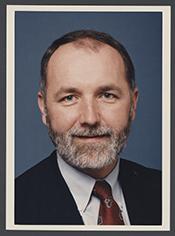
Mr. Chairman, I offer an amendment. Mr. Chairman, thousands of our Nation's troops woke up today with the express task of defending our country against Saddam Hussein's reign of terror in order to…
Mr. Chairman, I offer an amendment.
Mr. Chairman, thousands of our Nation's troops woke up today with the express task of defending our country against Saddam Hussein's reign of terror in order to protect the safety and freedom of his people, neighboring countries and other nations like ours across the globe.
Our Nation's founders tasked Congress with the authority and power to wage war and the responsibility to fund these efforts. The bill before us today appropriates additional money to fund the work of our men and women fighting in this war. This bill provides critical dollars for efforts to protect and defend the homeland security of the United States. It provides vital resources to first responders, law enforcement officials, and public health workers across the Nation who have developed safety plans to counter the increased national threat posed by terrorism.
The President asked that we keep this a clean bill. Unfortunately this emergency wartime supplemental appropriations bill also seeks to fund an extraneous program entirely unrelated to national defense, homeland security or counterterrorism efforts. Included in this supplemental is a $64 million deficiency appropriation for the Corporation for National and Community Service in order to make the corporation's AmeriCorps trust fund solvent.
The $64 million shortfall was incurred because of poor tracking procedures at the corporation and a recent decision by the Office of Management and Budget to change the way the corporation has been determining the amounts of funds available in the National Service Trust.
The funding was put into the defense supplemental at the 11th hour without the knowledge of the Speaker, the majority leader, the majority whip or the authorizing committee. I chair the subcommittee which has responsibility for oversight for the corporation. It said that this $64 million, if not appropriated in this supplemental, kids in the AmeriCorps program will suffer. We had an oversight hearing this week. That is not what the chairman of the Corporation for National Community Service told us this week. He said they have plenty of time to work through this with the authorizing committee to explain exactly what the accounting problems are, what the accounting issues have been, and most importantly, what they will put in place to make sure that this does not happen again. It is time for us to continue holding the corporation accountable for its performance.
I am pleased that they have now had a couple of years of clean audits. That is significant progress after the mismanagement of the corporation through much of the 1990s. But this latest example of where what the corporation is trying to do in managing its dollars and managing the resources and the commitments that it makes to young people across the Nation reinforces the need that the corporation needs oversight and that it has to get its books in order.
We have the time to make sure that we fully understand what is happening here and how the corporation intends to fix it. We do not at this point in time have to allocate $64 million to the trust fund on this supplemental bill.
The President wanted a clean bill. He said, let us focus on national security. Let us focus on the war. And let us focus on homeland security. That is what the President came to Congress with. That is what he said. This is not the bill. It gives $64 million. They may need it, but they have testified that they can get this money sometime in the future and make sure that they do not deprive any of our young people of the grant and the scholarships that they have earned through the AmeriCorps program.
We are working through a reauthorizations process. We want to get this program reauthorized. We want to reform it. This is one of the elements that should be part of a reform package and should not be dealt with in this supplemental package. Let us make sure that we do it right. Let us make sure that the corporation does it right before we give them $64 million through this supplemental. In the past they have shown that they have not been able to manage the corporation well. They have made improvements, but before we at the 11th hour sneak something into a supplemental bill, before we give them $64 million dollars, let us make sure that they get it right. Let us make sure that they are managing this agency in the way that we expect our dollars to be allocated.
I ask my colleagues to support this amendment and vote for this money when we determine that this is absolutely essential.
Mr. Chairman, I yield 2 minutes to the gentleman from Arizona (Mr. Flake).
Mr. Chairman, I yield myself 1 minute just to respond to my colleague from Connecticut.
As he well knows, this $64 million appropriation has nothing to do with enlisting people for this year to be a part of national service. That is a distortion of where this $64 million is going.
This $64 million is going for mismanagement of the trust fund and accounting changes that have not been fully examined by the authorizing committees to determine whether the problems have been fixed. My colleague knows very well that I support the reauthorization of the corporation, and we are working together on the reforms that need to be put in place so that we can be proud of the organization and the promise that they make to our young people.
This is to fix abuses within the program that have occurred, and this is not saying no to community service. This is saying a big yes to community service, but let us make sure that we do it right.
Mr. Chairman, I yield 2 minutes to the gentlewoman from Tennessee (Mrs. Blackburn).
Mr. Chairman, can I inquire how much time remains?
Mr. Chairman, I yield 1 minute to the gentleman from Georgia (Mr. Gingrey).
Mr. Chairman, I yield 2 minutes to the gentlewoman from Colorado (Mrs. Musgrave).
Mr. Chairman, I yield myself the balance of the time.
The myth has been repeated often that what we are doing tonight is taking money from young people who have served. That is not accurate.
In February, we put $100 million back into the trust, and the way that this works is that these young people work. They then have the opportunity within the next 7 years to claim their educational award. There is plenty of money in the trust fund to take care of any awards that are going to be coming due in the coming months.
The money is there. What is not there is the policies and the procedures within the corporation that will ensure that this does not happen again. It is called an antideficiency provision, where it is very possible that in the last year the corporation had made commitments for which there was not money that had been appropriated by this Congress.
That is a serious issue; and before we give the corporation $64 million, we ought to make sure that they have the proper procedures in place so that this does not happen, so that sometime in the future when young people do come to claim their education awards, that the money will not be there.
We do know right now that the money will be here. We had Les Lenkowsky come in and testify this week in front of the authorizing subcommittee, and he indicated this is not an immediate problem. This is something that we can work through. This is something that we can get done right; and rather than making sure that we get it done right, put it in the authorizing language, put it in the reauthorization, because I am expecting that there is going to be a significant bipartisan majority that is going to vote to reauthorize the corporation to make sure that we take this program, we reform it, we move it forward and we expand it.
There is no debate about whether this is a good program or not. This is an issue about management that says when we give an organization $64 million, we are going to make sure that they spend it in an appropriate way and that this Congress has done the appropriate oversight to make sure that the problems that we have uncovered in the past do not repeat themselves in the future. That is what this is about. Are we going to make sure that it is done correctly or are we going to give them more money before they are held fully accountable for their performance in the past?
Mr. Chairman, I yield back the balance of my time.

Mr. Chairman, I move to strike the last word, and I yield to the gentleman from Florida for a time request. I yield to the gentleman from Florida. Reserving the right to object, as I said earlier, we…
Mr. Chairman, I move to strike the last word, and I yield to the gentleman from Florida for a time request.
I yield to the gentleman from Florida.
Reserving the right to object, as I said earlier, we have over 40 amendments left to go. I understand this is an important amendment. We just had over an hour on an amendment from the gentleman from California (Mr. Cunningham) that was considered important. If we provide 40 minutes' time for this amendment, I do not want the expectation to be that we will do that for every other amendment. I would hope that we understand that this is the last amendment we would ask significant time for, and Members can expect us to ask unanimous consent in order to hold each future amendment to considerably less time than this.
I thank the gentleman.
Mr. Chairman, I move to strike the last word.
Mr. Chairman, in light of the recent colloquy, let me simply say that I am getting whiplash from trying to follow the lead of the majority party and the White House on the issue that was just under discussion.
We had before us earlier in the week this bill to essentially pay for the first downpayment on the Iraq war. We were trying to get additional money in the bill for homeland security so that we could protect ourselves at home from the retaliation that was likely to come from that involvement in the war.
The House Republican leadership would not see its way fit to allow us to even debate that amendment and come to a vote on the House floor; and yet they arbitrarily ordered the Committee on Appropriations to include the $3.5 billion bailout for the airline industry that was just discussed a moment ago. Then, after that happened, then the White House issued a statement saying that, in fact, the package before the House for airline bailout was too generous.
I am having a little difficulty following the lead of the majority and the lead of the White House because they seem to be working at cross purposes, and I am further confounded by the fact that this House is willing to consider a huge expenditure of funds like this with no hearings and to have it dealt with by a committee that has no special understanding of the problem; and it seems to me that a much better way, well, it just seems to me that we ought to be asking a fundamental question.
It seems to me we ought to be asking the question of whether or not we have a viable airline industry in this country. In my view, we have a bunch of let's-pretend capitalists who have to come to the government for a bailout every time something happens in the economy.
Now, they are essential to our national welfare and to our economic well-being. So I think we obviously need to keep the airline industry functioning, but I do not know how many times an airline has to go bankrupt before it is bankrupt. I do not know how many times they have to come to the taxpayers for additional money before we decide that a better way is to simply regulate them as a necessary public utility or as a public utility providing necessary service to the country, and that is what I really believe in the long term we ought to do.
But I also must protest the slap dash way that this issue has wound up on the appropriation bill because I find it quaint that the House Republican leadership would demand the House go one way while the White House seems to indicate it wants to go another way. It is pretty hard to follow that kind of leadership, and I admire the gentleman from Florida for being a good soldier and responding to the instructions of his leadership; but I would have a difficult time trying to explain this to any taxpayer, any of my constituents.
I would just hope that in the future we can do a better job of managing a problem like this, and I wish we could get to discuss the fundamentals on this issue rather than simply throwing more money at the problem.
We were told that we cannot throw more money at homeland security, and yet we are providing billions of dollars to the airline industry without doing one whit to help the employees of those same airlines.
I find that quaint. It is always the corporate part of the industry that gets the attention of Congress; and the working stiff sort of gets left in the caboose, if I can change transportation modes.
Mr. Chairman, I move to strike the last word.
Mr. Chairman, I would like to simply point out to the House that there are still, as near as I can count, 14 amendments remaining. If we are going to debate 14 amendments, Members can calculate for themselves how long we will be here.
That is all I have to say.
Amendment Offered by Mr. Rothman
Reserving the right to object, Mr. Chairman, I know that there are a number of people on this side of the aisle who want to participate in debate on this amendment. So I would ask whether the time arrangements could be adjusted so we would be guaranteed some time on this side of the aisle.
Yes, Mr. Chairman.
Mr. Chairman, I yield myself 1 minute.
Mr. Chairman, if you follow the logic of the last speaker, what you are saying is that we should provide in this bill $3.25 billion to the airline industry,
which we do not owe, but that we should not provide the funds in the bill to reimburse the volunteers for services, for which we do owe. I find that that makes no sense whatsoever.
The gentleman from New York (Mr. Walsh) is absolutely right. This is an obligation which government has. We should not blame the recipients, we should not blame the participants in this program for the screw-ups of the agency on their bookkeeping balances.
The fact is that this is totally defensible at a time when we are trying to encourage volunteerism, at a time when we are trying to encourage a sense of self-sacrifice. It would be a strange message indeed to say that we are not going to meet our obligations to the volunteers under this program.
Mr. Chairman, I yield 1 minute to the gentleman from Texas (Mr. Hinojosa).
Mr. Chairman, I yield my remaining time to the gentleman from California (Mr. George Miller).
Mr. Chairman, I am told that I am asking permission to strike the last word.
I yield to the gentleman from Michigan.
Reclaiming my time, Mr. Chairman, let me simply say that I appreciate the gentleman's comments and would simply say this. I share the wonder that we can be in the process of planning to provide universal health care in Iraq and provide a lot of education reconstruction as well.
I guess my view of it is this. If we are going to be bombing the devil out of a country, I suspect that we have a considerable moral obligation to the population afterwards to help repair the damage and to help repair the human misery. So I do not begrudge what we will be trying to do for the people of Iraq after this miserable war.
What I do hope, however, is that we will be able to reduce and perhaps eliminate future tax cuts that are contemplated right now here at home so that we can in fact provide universal health care for the people at home; so that we can in fact provide some school construction in our own districts; and so that we can in fact modernize hospitals in our own country. I think that is the proper way to do it, and I appreciate the gentleman's comments.
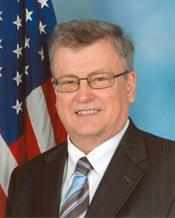
Mr. Chairman, first I think it is important that we review why we are in Colombia. Colombia is in our hemisphere and we cannot let it be overtaken by the narcoterrorists. Violence there in Colombia…
Mr. Chairman, first I think it is important that we review why we are in Colombia. Colombia is in our hemisphere and we cannot let it be overtaken by the narcoterrorists.
Violence there in Colombia is primarily because of U.S. and European drug addiction. Violence in the U.S., 20,000 deaths a year, far exceeds the terrorist deaths we have in the United States.
Colombia is an important trading partner. Colombia is a model of democracy, the oldest in South America. Colombia is an energy supplier to the U.S., a supply that has been basically blocked by the narcoterrorist attacks.
Now, the fundamental question. If we have all of these compelling reasons to be in Colombia, more than probably any other Nation where we have troops at this point, the question comes, why are we cutting it and what are we cutting? The gentleman from Massachusetts, who I consider a friend, we do not agree on this subject, but I know he has been down there as I have many times. We have looked at it. We do not agree on some fundamental facts. He sees the glass half empty, I see it half full. We have been making progress on human rights, we have been making progress on controlling the terrorism, and we need to make more aggressive progress and keep it up.
His amendment proposes to cut the funding that provides the intelligence base with which to do the rest of the operations. He did not cut the funding to protect President Uribe, which is critical. The man is under daily attack. They are trying to kill him like they killed his father, like they threatened his family. But we are going to cut the intelligence in this bill to protect Uribe.
We say that we want the Colombian units to go out and eradicate the drugs, but we want to cut with this amendment the money that would enable us to identify where the drugs are. We say we want to help the Colombians tackle the problem, but we are cutting with this amendment the military assistance from SOUTHCOM to help train those Colombian units. That is the $34 million he has in particular targeted, the money that goes to SOUTHCOM.
Now, General Hill from SOUTHCOM said that the terrorist threat coming from Colombia through the narcoterrorists is greater than the other terrorist threats. What does he mean precisely by that? Did he mean al Qaeda? No, he did not mean al Qaeda. There may be future ties to the money, as the gentleman from Massachusetts said, that the greatest funding of the al Qaeda has come from Asian heroin. However, Hamas, the Russian Mafia, and others have started to interconnect with the narcoterrorists.
Let us be blunt here. I have spent the last 2 years doing hearings on our north and south border. We have better control over Middle Eastern illegal immigrants right now, with the possible exception of at Detroit and Buffalo, than we do of our south border. We are completely vulnerable right now to terrorist attacks coming from Hispanic attacks, coming from the south, particularly the FARC and Mexican Mafia-type groups who are directed at us.
As we are more effective in Colombia, as we cut off this multibillion-dollar industry of selling narcotics to the United States, those groups are going to fight back. As they have developed with our money, with our drug users' in the United States money, as they have developed the shoulder packs with which to attack, as they have had the ability to shoot down our helicopters to go off and take down military forces in Colombia, as they bring that to our soil, we better be focused on Colombia. We better be going after those terrorist groups as well.
I strongly oppose this amendment which would cripple our operations.
The following is a letter to other Members of Congress sent online today by Chairman Tom Davis and me:
April 3, 2003.
Dear Colleague: We strongly encourage you to oppose the
McGovern Amendment to cut vitally needed assistance to
Colombia and the Andean region. In a time of war, withdrawing
American aid to help end political instability and conflict
in our own hemisphere is shortsighted and against our
national interests for several reasons:
Colombian Instability Directly Threatens U.S. National
Security: Political violence and instability in Colombia
threatens the security of the United States as much as the
instability in Iraq for which America is now engaged in war.
Three Americans have been held hostage in Colombia since
January by the FARC, which the State Department has
designated as a foreign terrorist organization. Other major
groups fighting against the democratically elected Government
of Colombia have also been designated as terrorist
organizations. Public reports recently revealed that Osama
bin Laden had visited the tri-border region in South America
to
meet with terrorists. The supplemental funding is directed to
a serious and proven national security threat in America's
own hemisphere.
Drug Eradication Efforts Are Succeeding: Nearly 20,000
Americans die each year of drug-induced causes--substantially
more than the toll terrorism has taken in the United States
to date. Last month, official estimates from both the CIA and
the United Nations indicated that the coca crop in Colombia
had declined substantially for the first time in years--as a
direct result of U.S.-funded drug control programs. Our
efforts have finally reached a turning point, and it would be
foolhardy to cut off the program just as it is beginning to
succeed.
Domestic Preparedness Funding Is Currently Available:
Currently appropriated funding is already available for
assistance in first responders and has not yet been
obligated.
Plan Colombia Aids Human Rights: The State Department's
annual Human Rights report this week examined violations of
human rights on all sides of the complex conflict in
Colombia. American assistance through Plan Colombia addresses
human rights issues by providing $230 million in aid to
directly improve human rights and administration of justice,
preserve the environment, and foster economic development.
Further, by bolstering political stability and the
acceleration of peace in Colombia American assistance aims to
end the root conflicts driving human rights violations. To
withdraw aid from Colombia will cause more, not less,
violence and more, not less, violations of human rights.
We strongly encourage you to oppose the McGovern Amendment.
Sincerely,
Tom Davis,
Chairman.
Mark E. Souder,
Chairman, Subcommittee on Criminal Justice, Drug Policy and
Human Resources.
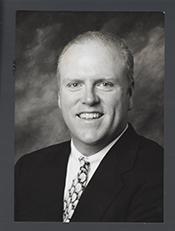
Mr. Chairman, I offer an amendment. Mr. Chairman, I yield myself such time as I may consume. I rise today in strong support of the amendment at the desk put forth by myself and the gentleman from New…
Mr. Chairman, I offer an amendment.
Mr. Chairman, I yield myself such time as I may consume.
I rise today in strong support of the amendment at the desk put forth by myself and the gentleman from New Jersey (Mr. Pallone).
India has been a strong ally in the war on terrorism, and has also felt the pain of terrorist attacks, as we have felt those same pains here in the United States. The most recent attack on India was last weekend, resulting in the brutal murder of 24 Hindus known as Pandits. The 24 murdered included women and children. This act of terrorism occurred in the Indian state of Jammu-Kashmir.
As we all know, last year Pakistani Islamic militants entered the Indian Parliament and opened fire, killing some of our colleagues in the Indian Parliament. I happened to be in India only 2 weeks after this horrific attack, and I can tell Members that I saw the bullets holes and blood-stained ground where militants killed our colleagues.
Even in the face of these facts, within the supplemental, Pakistan will receive $175 million for border security for their support on the international war against terrorism. They support the United States in our war against terrorism in Afghanistan and central Asia, but they are supporting the militias and terrorists who are crossing into India territory in Jammu-Kashmir every day and carrying out attacks on Indian civilians.
One hundred seventy-five million dollars for Pakistan is an award of support, when the true record shows that in spite of our substantial assistance to Pakistan, if President Bush and Prime Minister Blair pushed for a vote at the U.N. Security Council for the war on Iraq, the best we could have hoped for from Pakistan is they would have abstained.
While Pakistan has worked with the United States of late, they have continually also served as a destabilizing force in central Asia, including testing nuclear weaponry, threatening her neighbors, and funding and supporting terrorists who have crossed the border from Pakistan into India to perpetrate terrorist acts against Indian citizens.
Pakistan has made efforts to combat al Qaeda, and some members of that organization have been apprehended with their assistance. But other terrorist organizations allowed to operate within Pakistan's borders continue to spread extremist ideology and a visceral hatred of the United States.
Today I am asking that we limit foreign military financing aid to Pakistan to $100 million, in large part due to the failure of Pakistan to meet its commitments to combat terrorism. Last June General Musharraf pledged that he would halt all movement of Islamic militant infiltration into Kashmir and crack down on Pakistani supporters of militant organizations in the Kashmir region. While the general appeared to keep his word initially, last week's brutal attack on women and children demonstrates that his pledge has been forgotten.
Leaders of Pakistani terrorist organizations, organizations which have been designated as foreign terrorist organizations by our State Department, and who were previously arrested because of their terrorist activities, have since been released. The United States should not have two definitions of terrorism.
Terrorist organizations operating freely inside Pakistan, often with the tacit support of elements of the Pakistani Government, are focused on harming the United States and represent a grave threat to our national security interests.
I ask Members, is this the type of partner we want fighting with us in the war on terrorism, a country that is ruled by someone who came to power not by being elected but by seizing it, someone who has not clamped down on radical Islamic terrorism on his own soil, someone who has greatly contributed to the destabilization of that area of our globe through his testing of weapons of mass destruction and his refusal to rule out a first strike? It seems we are putting our immediate interests in front of our values.
India is the largest democracy in the world, and as the oldest democracy, we need to assist them so they can be free of terrorism, just as all nations want to be free of terrorism. This is a broad goal, but by not providing India with any funding or support in this bill, when they are affected by terrorism every day through cross-border incursions, I fear we are sending the message to other countries it is okay to support terrorists as long as they are not attacking the United States yet. Is this the message that we want to send to the world?
Today we have the opportunity to show the world that we will not look the other way while one nation allows terrorist acts to be committed on another sovereign nation.
Congress has a crucial responsibility to play in ensuring that U.S. funding is provided to countries fully committed to the war on terror. If we provide Pakistan with hundreds of millions of dollars, we must demand accountability and concrete actions that that country is doing all it can to eradicate terrorist organizations within its borders. We are providing $175 million for a partner that has been at best less than helpful and a destabilizing force in south Asia. I urge Members to limit Pakistan's foreign military assistance aid to $100 million from this account until we see real reforms in Pakistan, and pass these savings on to the homeland security account.
I thank the gentleman from New Jersey (Mr. Pallone) for sponsoring this.
Mr. Chairman, I reserve the balance of my time.
Mr. Chairman, I yield 4 minutes to the gentleman from New Jersey (Mr. Pallone).
Mr. Chairman, I want to say I appreciate the discussion. At this time I am prepared to withdraw my amendment.

Mr. Speaker, today, I have joined with Congressmen English, Ney, Hoyer, Dunn, Lipinski, Hart, Menendez, DeFazio and Weiner to introduce H.R. 1553, the Air Transportation Employees Assistance Act. I…
Mr. Speaker, today, I have joined with Congressmen English, Ney, Hoyer, Dunn, Lipinski, Hart, Menendez, DeFazio and Weiner to introduce H.R. 1553, the Air Transportation Employees Assistance Act. I strongly support this legislation to ensure that workers in the aviation industry are not asked to bear a disproportionate share of the costs of fighting terrorism and the war with Iraq. These are national responsibilities and should be borne by the entire nation. We have already recognized this principle and granted financial relief to airline companies and their stockholders. Now we should grant some relief to the workers of these companies who have lost their jobs as a consequence of terrorism and war.
The airlines were the weapons used by the terrorists of 9/11, and, as a consequence, the airlines have suffered serious financial damages-- from the groundings after 9/11, from the lost traffic which has never returned to pre 9/11 levels, from increased insurance costs, and from the loss of substantial revenues because of security limitations on the carriage of freight and mail.
The war with Iraq is also having a significant impact on the airlines, producing increased fuel costs, loss of revenue from the reluctance of passengers to fly, and from the need of our military to use the airlines' aircraft to carry troops and equipment to the war zone.
Shortly after September 11, Congress responded to the aviation industry's financial problems caused by terrorism, by passing a $15 billion package of direct assistance and loans. Now proposals are going forward to furnish $3.0 billion more to help the airlines meet the costs of a war with Iraq.
While I have supported these efforts to aid the industry for the problems created by terrorism and war, I, and many of my colleagues, are deeply disappointed that there has not been the same fair treatment of aviation industry employees who have also suffered from terrorism and war.
Even prior to the war with Iraq, the financial state of the airlines and the fate of their employees was deteriorating daily, as more than 150,000 industry employees were laid-off or furloughed. The situation has reached a crisis point and Congressional action is desperately needed to avert a total collapse of several air carriers and the elimination of thousands of jobs. The air carriers are now bleeding millions more each day as bookings plummet in the wake of the war. The airline industry predicts another 70,000 layoffs due to a severe drop in business resulting from the war. Moreover, Boeing, which already cut 30,000 workers due to aircraft order cancellations and deferrals following 9/11, says it will lay off nearly 1,000 more workers.
The issue of aiding aviation employees is not new. When we passed the $15 billion assistance bill soon after September 11, many of my colleagues and I insisted that if the airline companies were to be afforded relief, so should employees who had lost their jobs. The Republican Leadership told us that there was no time to develop a consensus proposal on employee relief, but on the House Floor, Speaker Hastert promised prompt consideration of employee relief, including financial assistance, ability to retain health insurance, and training for new careers. Regrettably, the Leadership has not followed through, and the House has never considered assistance for displaced airline employees.
Mr. Speaker, if the airline industry is entitled to special relief because it has suffered disproportionately from terrorism and war, its displaced workers are equally deserving of relief. Our bill will redress the imbalance, and help the industry's employees cope with difficulties arising from events outside their control. Our bill provides industry employees 26 additional weeks of unemployment benefits. Aviation industry employees were the first to be laid off after 9/11, and they were among the first to exhaust their state and federal jobless benefits. The current federal extension of those benefits as enacted earlier this year will soon expire, and it did not give any help to thousands of workers who had exhausted all their benefits. Aviation workers need and deserve our assistance as the war on terrorism causes a further contraction of the industry.
I urge my colleagues to support the Air Transportation Employees Assistance Act. We hope that it can be included in the Supplemental Appropriations Act which will soon be considered by the House.
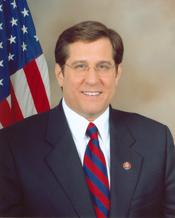
Mr. Chairman, I offer an amendment. Mr. Chairman, under current Transportation Security Administration restrictions, no general aviation aircraft can fly within 15 miles of the Washington Monument.…
Mr. Chairman, I offer an amendment.
Mr. Chairman, under current Transportation Security Administration restrictions, no general aviation aircraft can fly within 15 miles of the Washington Monument. So why, then, does New York City, the other target of the worst terrorist attack in the history of the United States, not have the very same safeguard being provided to it by the Transportation Security Administration against general aviation aircraft within 15 miles of New York City?
Before I continue, I want to make it clear to my colleagues that I am not talking about commercial aircraft, the 737s, 767s, and so forth that so many Americans depend on each day for travel into our Nation's major airports. What I am talking about are the smaller private aircraft that primarily operate out of smaller, general aviation airports such as Teterboro Airport in my congressional district in New Jersey. Those airports do not have the same Transportation Security Administration security procedures that the major airports have.
While these general aviation aircraft by themselves, because of their size, may not seem to be able to inflict a great deal of damage even if they were diverted into a building, if they were filled with chemical or biological agents they could potentially cause a tragedy greater than the one we had on September 11.
The restrictions that I am calling for, which would be the same restrictions that are now in place for Washington, D.C., would keep general aviation aircraft from flying within 15 miles of New York City, the other major target of al Qaeda. That would mean that no general aviation aircraft would be able to fly over Times Square, fly over the Empire State Building, over Giants Stadium in New Jersey, or over the Continental Arena.
There would be exemptions provided, and if one was provided to a general aviation aircraft, that aircraft, and by the way, these exemptions are available here in Washington, D.C., it simply requires those general aviation aircraft first to fly into what is called a gateway airport outside of the 15-mile restricted zone. There, the plane, pilot, passengers, and luggage would be inspected by Transportation Security Administration officials before these general aviation aircraft would be allowed to continue on to Teterboro or these other airports within 15 miles of Manhattan, such as JFK or LaGuardia. Again, these same restrictions are now in place for Washington, D.C., but not New York City.
Mr. Chairman, I urge my colleagues to stand with me and support my call for Homeland Security Secretary Tom Ridge and the Bush administration to immediately put into effect these new restrictions and protect the people of the New York metropolitan area, just as they have chosen to protect the people of Washington, D.C.
Government's number one responsibility is to protect the people. Security is the reason why general aviation aircraft are restricted in coming into airports within 15 miles of Washington, D.C. My amendment would seek the same restriction for general aviation aircraft which would seek to fly in without first being inspected outside the 15-mile zone flying into New York City.
Mr. Chairman, I regret that the Chair will rule that this amendment is not in order to be voted on tonight, so I will, for this evening, be withdrawing my amendment. But let it be clear, Mr. Chairman, I will continue to press my case and to press for the Transportation Security Administration and the Bush administration and the Department of Transportation to protect the people of the New York metropolitan area by enacting the same restrictions that they have deemed necessary over Washington, D.C.
Point of Order
As the Chair and my distinguished chairman may have heard earlier that I have withdrawn my amendment on the basis that the gentleman may very well be correct on that point of order, and I simply wanted to restate my intention to pursue this issue notwithstanding its order this evening.
Mr. Chairman, I withdraw the amendment.

Mr. Chairman, I thank the gentleman for yielding time to me, and I rise in strong opposition to the Hoekstra amendment. I want to associate myself with the remarks of my colleagues, the gentleman…
Mr. Chairman, I thank the gentleman for yielding time to me, and I rise in strong opposition to the Hoekstra amendment. I want to associate myself with the remarks of my colleagues, the gentleman from New York (Mr. Walsh) and the gentleman from Connecticut (Mr. Shays).
This amendment does, in fact, do great damage to those who have already earned their educational stipend. As my colleagues have pointed out, these individuals that have joined the Freedom Corps have joined AmeriCorps for the purposes of rendering service to our country and a bargain that we struck at the end of that service, a stipend that would be available.
Yes, it is true that apparently there has been some mismanagement in this program, but this administration has made this request for two reasons: one, they say to clean up and deal with the problems that have been discovered by the gentleman from Michigan (Mr. Hoekstra) and others; and the other is to pay the commitments that they already have.
These people have rendered their service. The stipend is due, and we ought not to break that faith because what we want to do is we have seen after 9-11 more and more people have offered to participate in the Freedom Corps, more and more people have offered to participate in service to the country; and for many of these individuals, that educational stipend is terribly important. It is now put on the footing that maybe a person got the stipend, maybe they do not. We are going to damage the reputation of this corps.
As my colleagues have pointed out, any of my colleagues who have visited these programs, these are rather remarkable young people from very different walks of life, from a cross section of our community; but for whatever reasons, they decide they are going to make this commitment of service and they do it to the elderly. They do it in education. They do it in public safety. They do it in health care. They do it in so many areas where our communities are in need.
Then when we meet them later in life, like so many of our Peace Corps volunteers, they have a little bit different cut to their jib, little bit different style because they have rendered that service and the pride that they carry with them of the time they spent with their colleagues in national service.
We ought to be encouraging this, and it would be a terrible, a terrible comment if we accept this amendment to simply take this money out and an amount of money at the time the administration is telling the Congress that we are trying to deal with those problems, but we are also trying to honor our pledges to these young people who have joined national service.
We have had debates in this Congress time and again about expanding national service, about having mandatory national service, having an alternative to the draft or to military service; and people on both sides of the aisle have recognized the value that is rendered by the people who engage in this service.
Yes, it is expensive; but we have constantly thought about how do we expand this so people invest in America. So they invest in their communities. So they invest in service to this country. This is not a message that we want to send. This is not a message we want to send after 9-11 when people are screaming to volunteer. This is not a time we want to send this message when people are offering, as was pointed out by the gentleman from Connecticut (Mr. Shays) and others, to help and assist some of these families.
Maybe it is working fine in Fort Campbell, but a lot of other facilities are in communities that do not have that kind of impact on the community; and these services are very helpful, certainly for those communities where the National Guard have been called up or the Reserves have been called up and families are away, their soldiers are away, and in those communities, they do not necessarily live in a military community, but they are rendering a service. Many of these people are trying to help them through these times. It is a very bad amendment.

Mr. Chairman, I appreciate what the gentleman who has offered this amendment has intended, and that is to assist our first responders, and we want to make certain that those who are protecting our…
Mr. Chairman, I appreciate what the gentleman who has offered this amendment has intended, and that is to assist our first responders, and we want to make certain that those who are protecting our streets, those who are protecting and defending our communities against the threat of terrorism have the adequate resources to do that. But this is, unfortunately, an ill-conceived amendment. It would do a great deal of damage.
I have chaired the Subcommittee on Criminal Justice and Drug Policy, and I can tell my colleagues that we finally have the opportunity, the glimmer of hope of bringing under control some of the devastation that is being wrought by the illegal narcotics that are being produced in Colombia. Today, Colombia provides 90 percent of the cocaine and 60 percent of the heroin sold or seized on America's streets. To put this in perspective for my colleagues, drug-related deaths in the United States now exceed homicides. Fifty American lives are lost every day. Before this day ends, 50 Americans will die in the streets and communities across our Nation, most of them young people, and most of the deaths are a result of drugs and narcotics coming from Colombia.
So this is a bad amendment and bad timing, because we have a President now who is supportive of our efforts to curb terrorism, to curb narcoterrorism, and to curb the narcotics that are coming into our streets and communities and killing countless Americans.
So I ask for my colleagues' careful consideration and defeat of the McGovern amendment. I know it is well-intended, but it is inappropriate at this time.
Mr. Chairman, will the gentleman yield?
I thank both the gentleman from Florida (Mr. Young) and the gentleman from Kentucky (Mr. Rogers), and I am pleased to engage in a colloquy with the chairman of the Subcommittee on Homeland Security, the gentleman from New York (Mr. Israel), and the gentleman from Florida (Mr. Young).
First of all, I want to thank both the gentleman from Florida (Mr. Young) and the gentleman from Kentucky (Mr. Rogers) and the Committee on Appropriations for bringing this supplemental appropriations measure to the floor. As my colleagues know, I was going to offer an amendment that would have provided $30 million for research, development, and the initial deployment of technology to protect our commercial aircraft from the threat posed by shoulder-fired missiles.
A terrorist attempting to attack a commercial aircraft is most likely to use a small portable surface-to-air missile. Unfortunately, there are thousands of these weapons worldwide that are available and obtainable on the black market. At least some 27 nonstate groups have these weapons. But there is military technology to defend against this particular potential threat, and the gentleman from New York (Mr. Israel) can elaborate on this issue.
Mr. Chairman, if the gentleman will continue to yield, I believe it is absolutely critical that Congress understand the threat of shoulder-fired missiles and respond now accordingly. Therefore, the focus of my amendment was to reduce the cost and use existing military technology and adapt that technology to the commercial aviation environment.
I have, however, decided not to offer the amendment tonight because I understand this issue will be addressed in conference, and it is also my understanding that the gentleman from Kentucky has agreed to support language in the conference report that would require the Transportation Security Administration to report to Congress within 30 days and that report will specify the financial and technical requirements of reducing the costs and also adapting existing military missile defense technology for deployment on our commercial aircraft.
I just want to thank again the gentleman from Kentucky and would ask the gentleman from Kentucky whether this is his understanding as well.
I thank the chairman both of the full committee and of the subcommittee.
Amendment Offered by Mr. Allen
Show 11 more
Mr. Chairman, I thank the gentleman from New York (Mr. Crowley) for offering this amendment, which I support. As was said, the amendment would strike $75 million of the $175 million in the foreign…
Mr. Chairman, I thank the gentleman from New York (Mr. Crowley) for offering this amendment, which I support.
As was said, the amendment would strike $75 million of the $175 million in the foreign military finance funding for Pakistan in this bill.
Mr. Chairman, although Pakistan has provided assistance to the United States in our fight against terrorism and in our efforts against al Qaeda, I cannot support military aid to Pakistan. Since a military coup stages by President Musharraf in 1999, Pakistan has been run by a military dictatorship. As a result of the coup, democracy sanctions were put in place that barred any U.S. military assistance to Pakistan. However, just 1 month ago,
under waiver authority that was granted to President Bush by Congress, he waived this coup-related sanction to allow $50 million in military assistance to Pakistan for their antiterrorism measures. Given the current military dictatorship and given that Pakistan just weeks ago received a significant sum of money in military aid, I support striking $75 million in military assistance in this bill and perhaps either returning it to the FMF fund or to reallocate this amendment to first providers or towards other priority homeland security needs.
In addition, it is encouraging that the Bush administration is starting to publicly acknowledge Pakistan's role in transferring nuclear equipment to North Korea. I would like to thank the Bush administration for imposing both contracting and licensing sanctions on the Khan Research Laboratories nuclear firm in Pakistan. They are no longer authorized to export to the United States. And I am encouraged by this first step on the part of the administration to both publicly recognize Pakistan's role in supporting North Korea's covert nuclear weapons program and to impose punitive sanctions accordingly.
Normally, because of Pakistan's nuclear transfer to North Korea, Symington sanctions barring U.S. military assistance to Pakistan would be automatic. However, Symington sanctions have been waived by the President, and military assistance continues to flow to Pakistan. I am disappointed that the administration continues to support military assistance to Pakistan when it is clear that Pakistan exchanged equipment with North Korea most likely for missiles to challenge India.
Again, Mr. Chairman, I cannot argue against the fact that Pakistan has been a friend of the U.S. in fighting against global terrorism. However, the case is much different when we look at Pakistan's own backyard of Kashmir. Terrorism and violence by Islamic militants in Kashmir have escalated to a devastating degree, and I am very concerned that military assistance to Pakistan will be used to perpetuate the terrorist acts in Kashmir and elsewhere throughout India.
Mr. Chairman, based on the history of our laws in place that prevent the U.S. from providing military assistance to Pakistan in certain situations, such as military dictatorship or transfer of nuclear equipment to other countries, and for all the related reasons that I have just detailed, as has the gentleman from New York (Mr. Crowley), striking $75 million in military assistance to Pakistan from this bill today is more than justified; and most importantly, it is important to recognize that any dollars that would be cut can be redirected to our own homeland security or to our own first responders and that really should be a priority rather than giving this money to Pakistan.
I support the amendment, and I want to thank the gentleman from New York (Mr. Crowley); and I would hope that the administration would pay more heed to these issues of Pakistan's anti-democratic policies and its transfer of nuclear technology.
Mr. Chairman, I move to strike the requisite number of words. Mr. Chairman, I chair the subcommittee on appropriations with responsibility for the Corporation for National Service and AmeriCorps, and…
Mr. Chairman, I move to strike the requisite number of words.
Mr. Chairman, I chair the subcommittee on appropriations with responsibility for the Corporation for National Service and AmeriCorps, and for that reason this appropriations issue is within our subcommittee's jurisdiction.
The gentleman who just spoke is the authorizing subcommittee chair, and so he has the authorizing jurisdiction. This is clearly an appropriations issue, not an authorization issue. And I just wanted to try to explain exactly what has happened.
The gentleman said that this is being done in the dark of the night, that the Speaker did not know, the majority did not know, the whip did not know. Well, that is just not the case.
I have a letter here on White House stationery, signed by the President of the United States. The letter was dated March 4 and it is to the Speaker. So the Speaker has had this about a month now. And the letter says:
``Dear Mr. Speaker, I ask the Congress to consider the
enclosed request for the Corporation for National and
Community Service. The request is needed to liquidate
legitimate prior year obligations for eligible participants
in the AmeriCorps program, to complete the implementation of
a comprehensive corrective action plan developed by CNCS to
strengthen financial management, and to provide flexibility
to support more than 50,000 AmeriCorps members in fiscal year
2003. This request will not increase fiscal year 2004
requests. The details of this request are set forth in the
enclosed letter from the director of OMB.'' Which I also
have.
Now, I understand the gentleman's frustration with this department. I have it also. I share responsibility with him, but that is no reason to deny the President's request. The President specifically asked that we move on this, and that is what I have done. These funds are set aside, are funds that are provided in a trust fund to these young people who volunteer to give their time to their community, to their country, and then they benefit from it at the end by receiving these funds. It is a stipend for their education. It is a wonderful program, full of idealism and altruism.
And imagine if you completed your service and realized that the commitment that was made to you to provide these stipends was not there. All that altruism, all that idealism, I think would turn pretty sour pretty fast.
So, Mr. Chairman, I will close by saying I respect the gentleman. I respect his thoughts on this. We work together very closely on this, but this is a direct request by the President of the United States and we are responding to that. So I would urge a no vote on the gentleman's amendment.
Mr. Chairman, I would remind my friend that the President of the United States requested these funds be made available as soon as possible. Here is the letter, it is a month old, to the Speaker of the House of Representatives.
The bill was circulated a week ago to all committees of jurisdiction. There
was no intent to do this in the dark of night. This was an honest response to an honest request from an honest President.
To paraphrase Mitch Daniels' letter, the Director of OMB, the $64 million requested is to liquidate legitimate prior-year obligations for eligible participants in the AmeriCorps program and to address this longstanding problem.
Mr. Chairman, after 9/11, the President appealed to our better instincts. He called on volunteerism across the country. This is the vehicle. It is the best vehicle. And now he has asked us to provide these funds to keep a promise. A promise is a promise. Support a wartime President who has the vision to see beyond the war. Vote ``no'' on the Hoekstra amendment.
Mr. Chairman, I offer an amendment. Mr. Chairman, my amendment today, the reason that I come to the floor today is that I object to the airline provisions being added to this bill because it is a…
Mr. Chairman, I offer an amendment.
Mr. Chairman, my amendment today, the reason that I come to the floor today is that I object to the airline provisions being added to this bill because it is a supplemental appropriation bill; and within an appropriation bill, we simply cannot do the things that we need to do long term for the airlines. All we do is ensure that they will be back 6 months later for a similar appropriation.
On an appropriation bill we cannot deal with tax relief, for example, and $25 for every $100 ticket is taxes and fees to the Federal Government. We cannot deal with that on an appropriation bill.
We cannot deal with regulatory relief as well. There are higher antitrust standards that apply to airlines that do not to other industries. We need to look at that. There are limits as far as access to equity capital that apply to the airlines that do not to other industries. Those we cannot deal with in a supplemental appropriation bill.
The reason for bringing this forward is to ensure that we simply do not appropriate an amount that ensures that we have the airlines come back and simply need the same thing 6 months, 8 months, a year from now; and that is surely what we will have if we go through with this.
We are turning the airlines into folks that want to compete under a regular business model into folks that simply will hire more lobbyists and rely on the generosity of taxpayers and appropriators forevermore. We are creating, unless we change this process, an Amtrak in the air where we simply, through appropriation, keep an industry going.
We cannot do that and for that purpose, I have agreed to enter into a colloquy with the gentleman from Missouri (Mr. Blunt) to talk about what we might do in the future.
Mr. Chairman, will the gentleman yield?
Mr. Chairman, I thank the gentleman for yielding to me. I thank the gentleman for this colloquy and discussion.
We simply cannot deal with the tremendous issues that we have to deal with in terms of tax relief, regulatory reform and to decide, as the gentleman from Missouri appropriately put it, what obligations the airlines actually have and what obligations should we, as general taxpayers or society, bear in terms of security costs; but we cannot have those discussions on appropriations measures.
We cannot wait in between bailouts every year or so to decide how much each airline gets to enact a formula. That is why we need to enter into these discussions in between, when the crisis is not right at hand; and with that understanding, I will agree to withdraw the amendment.
Mr. Chairman, I withdraw the amendment.
Mr. Chairman, I thank the gentleman for yielding me time.
I thank the gentleman from Michigan for bringing forward this amendment. For myself I am not sure this is a proper way to spend AmeriCorps funding, but certainly it is not the proper place as part of this bill. As the gentleman from Michigan (Mr. Hoekstra) correctly pointed out, for moving forward we need to have a vehicle where you can actually reform, where you can actually make changes, where you can actually do good things moving ahead. You cannot do that as part of the supplemental. Just like it was with the airline money. You cannot reform. You cannot do what you need to do as part of an emergency war supplemental.
What kind of message are we sending to our constituents and taxpayers across the country when we say that AmeriCorps funding, $64 million, needs to be part of a war supplemental? That just breeds the cynicism that it ought to. We should not be doing this. The amendment is justified. I would urge support of it and I thank the gentleman for bringing it forward.

Mr. Chairman, I thank the gentleman for yielding me this time. I think adopting this amendment would be a huge mistake for this House; so I rise in strong opposition to this amendment which proposes…
Mr. Chairman, I thank the gentleman for yielding me this time.
I think adopting this amendment would be a huge mistake for this House; so I rise in strong opposition to this amendment which proposes cutting vitally needed assistance to Colombia and the Andean region. Quite simply, now is not the time to turn our backs on the progress we are making against narcoterrorism in Colombia.
General James Hill, the commander of the U.S. Southern Command, said recently that the so-called narcoterrorists operating in Colombia and throughout Latin America fuel and fund worldwide terrorist organizations such as Hamas and Hezbollah. Our counternarcotics and counterterror initiatives in Colombia are finally beginning to bear fruit. For example, last month John Walters, the director of the Office of National Drug Policy, announced promising new estimates of coca eradication in Colombia, and these numbers do not account for the intensified spraying that has occurred since President Uribe took office in 2002. It would be foolish for us to send this message to the Colombian Government now and for us to derail this program just as it is beginning to succeed.
The administration has requested the allocation of supplemental funding to support the Uribe administration's commitment to stamp out terrorists, reduce the level of narcotics trafficking, and eventually eliminate his nation's supply of drugs. President Uribe's aggressive approach to counternarcotics and antiterrorist programs has seen significant results in a very short period of time.
Our 2003 funding was developed prior to President Uribe's taking office, and it is not sufficient to appropriately and effectively fund the current pace of our counternarcotics operations. Supplemental funding would provide Colombia with several essential tools and resources, including intelligence equipment to detect threats against U.S. and Colombian officials and increase capabilities to enhance existing eradication efforts.
After a recent visit with President Uribe in Bogota, I can tell the Members that the Colombian Government's commitment is strong. President Uribe's administration is working to enhance state presence in vast areas of the country that have lacked it for decades. They have the popular support of a vast majority of Colombians to beef up and spray eradication efforts, impose new taxes, to strengthen their police and military, and reform their beleaguered criminal justice system.
Of course, significant hurdles remain. The FARC, ELN, and AUC continue to hold sway over large portions of the countryside where there is little, if any, state presence. The narcotics terrorists have also shown no respect for human rights and do not value human rights. They have murdered and kidnapped innocent men and women and children including American citizens. As we prepare to reaffirm our commitment to the demand side of the war on drugs by reauthorizing drug policy legislation in this Congress, it is imperative that we continue to closely monitor both progress and setbacks on the supply side in Colombia.
With military intervention in Iraq under way and concerns about homeland security here at an all-time high, it is important we do not overlook the battle against narcoterrorism going on in Colombia. It is part and parcel of our international antiterrorist efforts.
The killing and kidnapping of Americans and the murderous bombing of a Colombia club frequented by families are the acts of a desperate band of outlaws.
Mr. Chairman, the Uribe administration has made more progress in 7 months than we have seen in many years. Vote ``no'' on this amendment.
Mr. Chairman, I offer an amendment. Mr. Chairman, I will not take all of my time. Mr. Chairman, Islamic terrorist groups served loud notice on 9/11 that they intend to kill as many Americans as…
Mr. Chairman, I offer an amendment.
Mr. Chairman, I will not take all of my time.
Mr. Chairman, Islamic terrorist groups served loud notice on 9/11 that they intend to kill as many Americans as possible. Yet the administration and this Congress is ignoring the most likely modes of attack. We are spending upwards of $100 billion on an antiballistic missile system supposedly to protect ourselves against a rogue nation like Iraq or Iran or North Korea that might want to launch two or three nuclear armed missiles at us. Yet such a nation would be unlikely to use missiles to attack us if they wanted to, because missiles have return addresses, and the leaders know that American retaliation would obliterate their country a half an hour later.
Rogue nations and terrorists that want to attack the United States with atomic weapons would more likely put those weapons on ships, sail the ships into American ports and detonate the atomic bombs. Not knowing against whom to retaliate, the United States would be helpless.
Every year 12 million shipping containers enter the United States. We inspect fewer than 2 percent of them. This amendment provides $15 billion for two purposes:
First, so that we can insist that no container in a foreign port is loaded on a ship bound to the United States until that container is searched, sealed and certified by American inspectors. If a country refuses access, it should be prohibited from shipping anything to the United States.
Second, the amendment provides funds to enable the Coast Guard to board and search every single ship before they get within 200 miles of American shores, and we must inspect at the border all cargo unloaded from ships in other North American ports. Only by inspecting every container before it is loaded onto a ship in a foreign port and by searching every ship before it gets close enough to our shores can we be reasonably assured that atomic bombs will not obliterate American cities.
Some will object that this will hinder commerce. But one atomic bomb would halt commerce instantly. Every port would be closed tight until these procedures could be put, too late, into place.
This would cost money, about $15 billion a year, but we can afford it. Unfortunately, the administration and Republicans in Congress prefer to squander hundreds of billions of dollars for tax cuts on the wealthy instead of protecting the lives of our people. We have to realize we are in a serious war that may last decades and we must start thinking and acting seriously.
In wartime the government must spend the money to defend the lives of its people or it violates the fundamental social contract. President Bush and Congress must honor that contract or forfeit the trust of the Nation.
So I ask that this amendment be allowed to be considered. I urge the Congress to meet its obligation and to fully fund the security measures to inspect every container and search every ship that is contained in this amendment.
Point of Order

Mr. Chairman, I offer an amendment. Mr. Chairman, I would like to register my strong support for ensuring that the supplemental appropriations legislation before us gives the President the critical…
Mr. Chairman, I offer an amendment.
Mr. Chairman, I would like to register my strong support for ensuring that the supplemental appropriations legislation before us gives the President the critical ability to defend the United States against the threat of weapons of mass destruction.
Two of the most effective ways to do that are to give the President the authority to use the Department of Defense funds to dismantle nuclear and chemical weapons facilities around the world, and to support efforts by the Department of Energy to prevent smuggling of weapons of mass destruction throughout the Middle East and central Asia.
The gentleman from South Carolina (Mr. Spratt), the gentleman from Texas (Mr. Edwards), and I have an amendment that would do just that. It provides the President with the authority that he has requested from Congress to expand the use of cooperative threat-reduction funds for projects and activities in countries outside the former Soviet Union.
My amendment also adds $55 million for Department of Energy nonproliferation programs; of that, $20 million for the Second Line of Defense Program to install radiation detection equipment at key transit points outside the former Soviet Union, and $35 million for materials protection control and accounting activities in regions of concern, including Iraq, should any dangerous agents be discovered there.
Both these provisions were contained in the Senate version of the supplemental, approved by the Senate Appropriations Committee just this past Tuesday. Additionally, CTR authority outside the former Soviet Union is urgently needed for the Defense Department to apply its unique knowledge and capabilities in places like Iraq if and when weapons of mass destruction are discovered.
The additional funds for the Department of Energy would allow for some of the same capability while also enhancing domestic security through radiation detection at transit points overseas.
Two years ago, former Senator Howard Baker and White House counsel Lloyd Cutler concluded, ``The most urgent unmet national security threat to the United States is the danger that weapons of mass destruction or weapons-usable material in Russia could be stolen and sold to terrorists or hostile nations and used against American troops abroad or citizens at home.''
Today, it could not be any clearer that our homeland is at risk and that our troops are getting ever closer to potential weapons of mass destruction.
Congress has the duty to let the President use DOD and DOE nonproliferation programs to protect our homeland and our troops.
I understand that my amendment is subject to a point of order and I will withdraw it; but I deeply urge my colleagues to support this provision in conference, and I urge my colleagues who are conferees to please re-insert this language and support it in the conference.
Mr. Chairman, I withdraw my amendment.

Mr. Chairman, I thank the gentleman for yielding me this time. I rise to support this amendment offered by the gentleman from Massachusetts (Mr. McGovern), my friend and co-sponsor. The previous…
Mr. Chairman, I thank the gentleman for yielding me this time.
I rise to support this amendment offered by the gentleman from Massachusetts (Mr. McGovern), my friend and co-sponsor.
The previous speaker spoke about national interest. This amendment provides at least some critical assistance to national interest, and that is of homeland security. Mr. Chairman, this supplemental bill that we are debating today is about the war in Iraq. It is about the crucial ongoing operations in the region of Afghanistan, and it is about protecting the American people from future acts of terrorism. This war is expensive, and its aftermath will be more expensive still. And I must tell the Members, Mr. Chairman, I have deep concerns and I am troubled so very much about the aftermath after we have a victory in Iraq because that of course will be the proof in the pudding as to whether the young men and young women's sacrifices have been in vain.
I commend the Committee on Appropriations for providing the funding to give our troops everything they need to win the war, and I commend them too for making a downpayment on the costs of reconstruction in Iraq. We in Congress and the American people must know that rebuilding that nation will require substantial and sustained commitment.
But we owe a commitment too to our first responders here in our own country. They are on the front lines of the war on terrorism right here at home. Our States remain underfunded for critical needs. The State of Missouri alone requires some $500 million to do the defense work concerning our first responders. And while this supplemental provides some funding for the States, it needs to do more.
This amendment would provide more funding for the first responders by decreasing the amount of military and counterdrug assistance going to Colombia. I have deep concerns about our Nation's involvement in the ongoing conflict there, but today my larger concern is about where we face a bigger danger, and that is right here in the United States of America. That justifies emergency spending.
This amendment, Mr. Chairman, allows funds for unforeseen needs in Colombia, notably search and rescue operations for the Americans held hostage, and increased security for President Uribe, who is trying so hard to bring peace to his nation. But, Mr. Chairman, on the other hand, Colombia's request can be and should be handled in regular order. There is simply no emergency that warrants funding for these other items and programs in this bill. Money is more urgently needed and it would be more appropriately spent in the supplemental supporting our first responders right here in the United States just as we support our troops.
I urge my colleagues to support this amendment, and I thank the gentleman from Massachusetts (Mr. McGovern) for his leadership.

Mr. Chairman, I move to strike the last word. Mr. Chairman, I ask unanimous consent to proceed out of order. To proceed out of order. According to the ruling of the Chair, only yourself and the…
Mr. Chairman, I move to strike the last word.
Mr. Chairman, I ask unanimous consent to proceed out of order.
To proceed out of order. According to the ruling of the Chair, only yourself and the gentleman from Wisconsin (Mr. Obey) can move to strike the last word.
Mr. Chairman, will the gentleman yield?
Mr. Chairman, I thank the gentleman for getting us over that procedural hurdle, and I will not take the entire 5 minutes.
Mr. Chairman, I was going to offer an amendment tonight on health care, but I decided not to because I am sure it will be ruled out of order under the process we are provided with here tonight. But I wanted to make this point here on the floor tonight.
There is a provision in the supplemental that just sort of baffles me. What the Republicans are proposing is that we provide universal health care coverage for the Iraqi people. This Republican supplemental proposes, and I quote, ``to facilitate rapid universal health care service delivery to the Iraqi population.''
I must ask why are they willing to do this when they have staunchly opposed universal coverage for the American people for years now? I understand that special provisions need to be included to care for the Iraqi citizens injured in war. But if we are going to provide universal health care to the Iraqi population, we should do the same for our people here at home.
Mr. Chairman, I submit the rest of my statement, along with my proposed amendment, for the Record.
Mr. Chairman, the 41.2 million Americans who lack coverage should not have to suffer from lack of quality health care any longer. And our heroic soldiers, who will soon become veterans, should not be denied future health care.
The GOP Budget Resolution, that we passed 2 weeks ago, will deny and increase the cost of VA care. In my home state of Michigan, 25,000 veterans will be adversely affected and 5,000 of these veterans reside in my district.
Instead of honoring their commitment to our soldiers, the Republicans are proposing universal health coverage for Iraq?
Maybe now they will finally stop blocking Democratic attempts to cover the 41.2 million Americans who go without health insurance, and maybe now they will join in our other efforts on the health care front, such as providing American seniors access to a true prescription drug benefit through Medicare.
Amendment to H.R. 1559, as Reported
Offered by Mr. Stupak of Michigan
Page 59, after line 25, insert the following:
Sec. 3002. None of the funds made available under chapter 4
of title I of this Act may be used for the provision of
universal health care to the Iraqi people beyond those
amounts needed to cover related physical injury to the Iraqi
people resulting from the war in Iraq and other diseases or
injuries caused by public health conditions resulting from
the war in Iraq.
Mr. Chairman, I offer an amendment. Mr. Chairman, I respectfully offer this amendment that calls for $8 of the $30 million provided for surface transportation security included in the supplemental…
Mr. Chairman, I offer an amendment.
Mr. Chairman, I respectfully offer this amendment that calls for $8 of the $30 million provided for surface transportation security included in the supplemental bill to be used for transit security. This germane amendment provides $8 million which will provide our transit agencies and transit work force the much needed resources to support our Nation's increased transit security needs. This $8 million in transit security funding will do three important things: first, require the Secretary of Homeland Security to determine the percentage of frontline transit employees who are in need of receiving training in emergency preparedness and response training.
Secondly, to provide funding for training programs for frontline transit employees, ensuring that these employees who are the eyes and ears of transportation systems are prepared to respond to emergency situations.
Thirdly, provide funding for ongoing vulnerability assessments which will continuously build on information collected, allowing for easier implementation of new technologies that will assist in averting terrorist attacks on all modes of public transportation. It will also provide for transit agencies to purchase security enhancement equipment. In addition, this funding will be used for the development and implementation of local and regional emergency preparedness plans that fully utilize localities' transportation resources.
For year, governments around the world have recognized that public transportation is a major terrorist target. Until 9/11 the United States has been largely spared the kind of terrorist campaigns waged against public surface transportation. However, we cannot wait for another tragedy to happen to prompt us to address our vulnerabilities. We must act now.
An October 2001 study released by the Mineta Institute, ``Protecting Public Surface Transportation Against Terrorism and Serious Crime,'' an executive overview cites that between 1920 and 2000 there have been approximately 900 terrorist attacks and other significant criminal incidents involving public surface transportation systems. However, all but 14 of these attacks occurred after 1970, the year that marks the beginning of modern terrorism.
Attacks against transportation and transportation infrastructures accounted for 42 percent of all international terrorist attacks, according to the most recent statistics provided by the USDOT Office of Intelligence and Security of 1998.
Mr. Chairman, we must provide resources to our transit work force and our transit agencies to help prepare them and ensure that they are able to protect the communities in which they serve.
I yield to the gentleman from Florida.
I thank the Chairman.
Mr. Chairman, I rise in support of the Hoekstra amendment to strike a non-emergency provision in this bill that provides $64 million in new funding for the Corporation for National Community Service.…
Mr. Chairman, I rise in support of the Hoekstra amendment to strike a non-emergency provision in this bill that provides $64 million in new funding for the Corporation for National Community Service.
Last month, the Administration requested $64 million in new funds for the Corporation to ``liquidate obligations incurred in previous years'' in the National Service Trust.
The Administration requested these new funds to make up for a shortfall that was incurred because of poor tracking procedures at the Corporation with regard to AmeriCorps participants and a recent decision by the Office of Management and Budget to change the way the Corporation has been determining the amount of funds available in the National Service Trust.
The purpose of the Administration's request is to ``complete the implementation of a comprehensive corrective action plan developed by CNCS to strengthen financial management of the Trust, change reporting procedures, and restore [National Service Trust] fund balances.''
While I will continue to work with President Bush and Mr. Hoekstra to reach agreement on a bill to reauthorize our national service laws-- this is not the right time or place to address Corporation financial difficulties.
Mr. Hoekstra is currently working on this very issue in his Subcommittee. In fact, he held a hearing this week on ``Performance, Accountability, and Reforms at the Corporation for National and Community Service.'' There was significant discussion on this $64 million shortfall.
I am concerned about adding money to the National Service Trust at this time because, we can't exactly figure out why there is a $64 million shortfall in the Trust, especially considering the language in section 129(f) of current law. Section 129(f) explicitly states that ``the Corporation may not approve positions as approved national service positions . . . for a fiscal year in excess of the number of such positions for which the Corporation has sufficient available funds in the National Service Trust for that fiscal year . . .''
In addition, the Committee on Education and the Workforce has been examining this issue and this provision was added to the supplemental without prior consultation with our Committee.
Accordingly, I believe that funding to eliminate the shortfall should be addressed after Mr. Hoekstra and other Members on our Committee have had time to make sure that these financial problems do not continue at the Corporation. This is a specific issue that will be examined during reauthorization and I ask my Colleagues to let the Committee do its work and to support the Hoekstra amendment.

Mr. Chairman, there is perhaps no free people and democratic government in the world that faces a more serious threat from terrorism, and specifically narcoterrorism, than the government of Colombia.…
Mr. Chairman, there is perhaps no free people and democratic government in the world that faces a more serious threat from terrorism, and specifically narcoterrorism, than the government of Colombia.
The narcoterrorists in Colombia, because of the fact that they are engaged in the drug traffic, have hundreds of millions, indeed, billions of dollars at their disposal to purchase the most deadly weapons available from rogue states and terrorist groups from throughout the world to cause the most serious damage conceivable.
Those billions of dollars available to the narcoterrorists in Colombia have made it possible for them to engage in a sustained campaign of extraordinary violence, of kidnapping, of the most horrible conceivable crimes again the Colombian people. Day in and day out the Colombian people and their democratically elected government are fighting the narcoterrorists in an extraordinary way, a valiant way, an admirable way.
What we are doing in this Congress, with the support of the President of the United States, and, indeed, his orientation and his leadership, is we are saying to the Colombian people and their democratically elected government that we support them in their effort against narcoterrorists who have billions of dollars for death and destruction at their service, at their disposal.
These tens of millions of dollars that we are discussing today may be able to be categorized, as they were by the sponsor of this amendment, as a modest proposal. But the challenge before the Colombian people is not a modest challenge, the challenge posed by the tens of thousands of murderers who engage in thousands of kidnappings each year, including, and I have the latest travel warning from the United States State Department, 26 Americans who are reported as kidnapped in recent months in Colombia.
Those terrorists have, as I said before, billions of dollars at their disposal. Yes, we are, in the words of the sponsor of this amendment, dealing with a modest, a modest amount, tens of millions of dollars in aid, for a democratically elected government that is fighting against the most violent terrorists perhaps on the face of the Earth today, terrorists that attack not only military personnel but civilians, and engage in systematic violence against a people who live in a democracy.
So I urge my colleagues to reject, to vote down this ill-timed and ill-conceived amendment and to support our leadership, to support the President, to support the efforts against narcoterrorism that are embodied in our support for the democratically elected government of Colombia.
Bill Text
Latest available legislative text
        [Congressional Bills 108th Congress]
[From the U.S. Government Publishing Office]
[H.R. 1553 Introduced in House (IH)]

108th CONGRESS
1st Session
H. R. 1553

To provide for additional temporary extended unemployment compensation
for certain displaced workers.

_______________________________________________________________________

IN THE HOUSE OF REPRESENTATIVES

April 2, 2003

Mr. English (for himself, Mr. Oberstar, Mr. Ney, Mr. Hoyer, Ms. Dunn,
Ms. Hart, Mr. Lipinski, Mr. DeFazio, Mr. Menendez, and Mr. Weiner)
introduced the following bill; which was referred to the Committee on
Ways and Means

_______________________________________________________________________

A BILL

To provide for additional temporary extended unemployment compensation
for certain displaced workers.

Be it enacted by the Senate and House of Representatives of the
United States of America in Congress assembled,

SECTION 1. SHORT TITLE.

This Act may be cited as the ``Air Transportation Employees
Assistance Act''.

SEC. 2. DEFINITIONS.

For purposes of this Act--
(1) the term ``eligible individual'' means an individual
whose eligibility for temporary extended unemployment
compensation is or would be based on the exhaustion of regular
compensation, entitlement to which was based in whole or in
part on qualifying employment performed during such
individual's base period;
(2) the term ``qualifying employment'', with respect to an
eligible individual, means employment--
(A) with an air carrier, at a facility at an
airport that involves the provision of transportation
to or from an airport, or with an upstream producer or
supplier for an air carrier; and
(B) as determined by the Secretary, separation from
which was due, in whole or in part, to--
(i) reductions in service by an air carrier
as a result of a terrorist action or security
measure;
(ii) a closure of an airport in the United
States as a result of a terrorist action or
security measure; or
(iii) a military conflict with Iraq that
has been authorized by Congress;
(3) the term ``air carrier'' means an air carrier that
holds a certificate issued under chapter 411 of title 49,
United States Code;
(4) the term ``upstream producer'' means a firm that
performs additional, value-added, production processes,
including firms that perform final assembly, finishing, or
packaging of articles, for another firm;
(5) the term ``supplier'' means a firm that produces
component parts for, or articles and contract services
considered to be a part of the production process or services
for, another firm;
(6) the term ``Secretary'' means the Secretary of Labor;
and
(7) the term ``terrorist action or security measure'' means
a terrorist attack on the United States on September 11, 2001,
or a security measure taken in response to such attack.

SEC. 3. ADDITIONAL TEMPORARY EXTENDED UNEMPLOYMENT BENEFITS FOR
ELIGIBLE EMPLOYEES.

In the case of an eligible employee, the Temporary Extended
Unemployment Compensation Act of 2002 (Public Law 107-147; 116 Stat.
21), as amended by Public Law 108-1 (117 Stat. 3), shall be applied as
if it had been amended in accordance with section 4.

SEC. 4. MODIFICATIONS.

(a) In General.--For purposes of section 3, the Temporary Extended
Unemployment Compensation Act of 2002 (Public Law 107-147; 116 Stat.
21), as amended by Public Law 108-1 (117 Stat. 3), shall be treated as
if it had been amended as provided in this section.
(b) Program Extension.--Deem section 208 of the Temporary Extended
Unemployment Compensation Act of 2002, as amended by Public Law 108-1
(117 Stat. 3), to be amended to read as follows:

``SEC. 208. APPLICABILITY.

``(a) In General.--Subject to subsection (b), an agreement entered
into under this Act shall apply to weeks of unemployment--
``(1) beginning after the date on which such agreement is
entered into; and
``(2) ending before December 29, 2003.
``(b) Transition for Amount Remaining in Account.--
``(1) In general.--Subject to paragraph (2), in the case of
an individual who has amounts remaining in an account
established under section 203 as of December 28, 2003,
temporary extended unemployment compensation shall continue to
be payable to such individual from such amounts for any week
beginning after such date for which the individual meets the
eligibility requirements of this Act, including such
compensation payable by reason of amounts deposited in such
account after such date pursuant to the application of
subsection (c) of such section.
``(2) Limitation.--No compensation shall be payable by
reason of paragraph (1) for any week beginning after December
26, 2004.''.
(c) Additional Weeks of Benefits.--Deem section 203 of the
Temporary Extended Unemployment Compensation Act of 2002, as amended by
Public Law 108-1 (117 Stat. 3), to be amended--
(1) in subsection (b)(1)--
(A) in subparagraph (A), by striking ``50'' and
inserting ``150''; and
(B) by striking ``13'' and inserting ``39''; and
(2) in subsection (c)(1), by inserting ``\1/3\ of'' after
``equal to''.
(d) Effective Date of Modifications Described in Subsection (c).--
(1) In general.--The amendments described in subsection
(c)--
(A) shall be deemed to have taken effect as if
included in the enactment of the Temporary Extended
Unemployment Compensation Act of 2002; but
(B) shall be treated as applying only with respect
to weeks of unemployment beginning on or after the date
of enactment this Act, subject to paragraph (2).
(2) Special rules.--In the case of an eligible individual
for whom a temporary extended unemployment account was
established before the date of enactment of this Act, the
Temporary Extended Unemployment Compensation Act of 2002 (as
amended by this Act) shall be applied subject to the following:
(A) Any amounts deposited in the individual's
temporary extended unemployment compensation account by
reason of section 203(c) of such Act (commonly known as
``TEUC-X amounts'') before the date of enactment of
this Act shall be treated as amounts deposited by
reason of section 203(b) of such Act (commonly known as
``TEUC amounts''), as deemed to have been amended by
subsection (c)(1).
(B) For purposes of determining whether the
individual is eligible for any TEUC-X amounts under
such Act, as deemed to be amended by this section--
(i) any determination made under section
203(c) of such Act before the application of
the amendment described in subsection (c)(2)
shall be disregarded; and
(ii) any such determination shall instead
be made by applying section 203(c) of such Act,
as deemed to be amended by subsection (c)(2)--
(I) as of the time that all amounts
established in such account in
accordance with section 203(b) of such
Act (as deemed to be amended under this
section, and including any amounts
described in subparagraph (A)) are in
fact exhausted, except that
(II) if such individual's account
was both augmented by and exhausted of
all TEUC-X amounts before the date of
enactment of this Act, such
determination shall be made as if
exhaustion (as described in section
203(c)(1) of such Act) had not occurred
until such date of enactment.
<all>