Dawson Family Community Protection Act
Legislative Activity
Stay on top of the latest movement without scrolling through every action
Sponsor introductory remarks on measure. (CR H8968)
September 30, 2003
View full timeline
Introduced in House
April 3, 2003
Sponsor introductory remarks on measure. (CR H2837-2838)
April 3, 2003
Referred to the Committee on Government Reform, and in addition to the Committee on Energy and Commerce, for a period to be subsequently determined by the Speaker, in each case for consideration of such provisions as fall within the jurisdiction of the committee concerned.
April 3, 2003
Referred to the Subcommittee on Health, for a period to be subsequently determined by the Chairman.
April 24, 2003
Referred to the Subcommittee on Criminal Justice, Drug Policy and Human Resources.
September 16, 2003
Sponsor introductory remarks on measure. (CR H8968)
September 30, 2003
Floor Debate
24 membersWhat members said about H.R. 1599 on the floor
 DRO
DRO CWB
CWB DJK
DJK JK
JK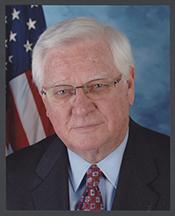 HR+19
HR+19
Floor Debate
24 membersWhat members said about H.R. 1599 on the floor
Mr. Chairman, I yield myself 11 minutes. Mr. Chairman, we have by the previous vote unfortunately short- circuited the democratic process in this House, and we have prevented us from having any…
Mr. Chairman, I yield myself 11 minutes.
Mr. Chairman, we have by the previous vote unfortunately short- circuited the democratic process in this House, and we have prevented us from having any really meaningful debate on this resolution today. Under the rule, we are going to be free to talk about providing additional money for homeland security. We just are not going to be able to put any amendments before the House that in any substantial way enhance homeland security, and I find that unfortunate.
I think that there is much in this bill that is good, and I wanted to congratulate the gentleman from Florida (Mr. Young), the chairman of the committee, because he has done his constitutional duty and he has seen to it that the 200-year-long responsibility of the Congress to keep a tight leash on the public purse has been maintained, and I congratulate him for it. I know that there are a lot of people in this town who do not like that, but that was his responsibility. That was his committee's responsibility, and we lived up to it; and I think the House can be proud of that.
I also think, frankly, that there are a couple of other occasions when Members of Congress wanted to unfairly intervene in executive prerogatives in this bill, and the committee correctly resisted those as well. So on that score I have no problem whatsoever with this bill.
My problem is that I think it is a missed opportunity to provide additional protection for people at home. We are engaged in a war in Iraq. The idea of that war is to make the world safer for the United States and other democracies. And it would seem to me that if we are going to engage in a war against Iraq, we ought to be battening down the hatches to the fullest extent possible here at home to protect against terrorist attacks; but we have been denied the opportunity to offer our amendment to do so. And I want to walk through with the House what it is that they have rejected because I am going to try to offer it again anyway at a later point in the process.
Perhaps the greatest challenge we face in dealing with terrorism is to monitor the more than 20,000 shipping containers that enter the United States each day. In our amendment, which we will seek to offer even though the rules sought to deny us, we tried to put $135 million in this bill so that we can institute at nine major ports around the world a system which we have now in the port of Rotterdam, which would enable us to install equipment so that we know that none of the containers in the 10 major ports in the world contain radioactive material which could be used to set off a dirty bomb within the United States. We think the House ought to support that.
We also want to put $87 million in this bill to strengthen our ability to deal with nuclear material which is stored right here in the United States. We want to provide $150 million to strengthen the capacity of State laboratories and EPA laboratories to deal with the aftermath of a chemical attack. We are better equipped to deal with a biological attack in the country at this point than we are to deal with a chemical attack.
We wanted to put sufficient funds into this bill so that we can take the vulnerability assessment that was done on Federal dams and waterways throughout the country and in fact act on that assessment and actually provide for the security upgrades that we need for those facilities. We need $108 million to do that.
Only weeks ago, the General Accounting Office completed a report indicating that there is a serious threat posed by the possibility of terrorists targeting U.S. chemical plants. We wanted to provide $75 million to initiate an assessment of that threat as recommended by the GAO. We have been denied the opportunity to do that. We also want to see to it that there is better coordination between the FDA and the USDA in determining what kinds of inspections have taken place and what inspections have not taken place with respect to a number of shipments of agricultural products and medical products that come into this country.
The Hart-Rudman report recommended the Federal Government provide funding to first responders to immediately clear the backlog of requests for protective gear for our local first responders. This legislation does not begin to lay a glove on the size of that problem.
We also have a problem in that the equipment used by our firemen and our policemen and our rescue workers at the local level are not interoperable, and so those groups cannot talk to each other.
Twenty years ago in this town when we had the Air Florida accident, we had rescue workers from Virginia, from Maryland, from the District of Columbia. They could not talk to each other on their emergency equipment because they were all on different wavelengths. That was 20 years ago. When we had that same problem at the Pentagon just about a year ago, we still had not improved the situation. No real progress in 20 years. It is about time we fix it. We want to in our amendment. We have been denied the opportunity.
We also wanted to provide $300 million in additional funding to the Office of Domestic Preparedness, which has been denied. We also wanted to provide sufficient funds to guarantee that every State in the Union has at least one National Guard Civil Support Team to back up first responders in case of terrorist attack emergencies. We have been denied the opportunity to do that. We wanted to provide $90 million to expand port and waterway safety systems. Right now the port of Norfolk has a sophisticated system and the port of San Diego is going to get that system later in the year; but we still have ports like Boston, Charleston, Philadelphia, Jacksonville, Baltimore, Honolulu, San Francisco, Los Angeles, Corpus Christie, San Juan, and Washington, D.C. where we need that equipment, but do not have it.
The Coast Guard indicates that in addition to all of that we have at least $900 million in needs that we ought to be helping local port authorities with and over the next 10 years those needs are estimated to be about $4.4 billion. We wanted to add $250 million to the 440 already in this bill to deal with that problem, and we have been denied that opportunity.
And we also take note of the fact that the Pentagon has identified more than $1 billion of unfunded security needs at military bases here at home, such as providing additional protection for family housing by building perimeter fencing. Our amendment wanted to put at least $200 million in here for that purpose. We have been denied the right to do so.
We wanted to increase the intelligence budget for the Department of Energy so that they can have a better surveillance operation with respect to countries like Iran and North Korea. We have been denied that opportunity. And we wanted to do a number of other things which I do not have time to discuss.
Let me simply say, despite the fact that the rule has denied us the opportunity to offer the amendment, I am going to attempt to offer that amendment anyway when we get to the 5-minute rule because I believe that this is so important for the security of this country. There is no reason for us to have a dispute on this issue. There is no reason to have a difference between Republicans and Democrats on a national security issue of this magnitude. I cannot believe that we do not have bipartisan support for this added money.
We found enough room to give $3 billion and more to the airlines, but not enough to provide $2.5 billion for homeland security. We find enough room in this bill to provide $7 billion in foreign aid to other countries including some bribe money to countries that voted with us in the United Nations who are adding virtually nothing to our security effort; and yet we are being denied the opportunity to provide $1 billion on the homeland security front. For that matter we know that our government policy is, and this is in writing, to provide health care, basic universal health care was the term, for 25 million people in Iraq.
We know that our government intends to repair 6,000 schools and 100 hospitals in Iraq. It would be nice if we could do the same thing here at home. We are not, obviously, being allowed to do that because of the majority party's lust for passing every tax cut known to man, but that is a debate for another day.
Today, as far as I am concerned, the critical hole in this bill is lack of sufficient funds for homeland security. We are going to try to do everything we can to fix that problem despite the lack of cooperation from the majority leadership. But I do want to, at the same time, thank the chairman of the committee for his personal cooperation in trying to make sure that this House at least met its constitutional responsibilities with respect to the power of the purse, and I congratulate him for that action.
Mr. Chairman, I yield such time as she may consume to the gentlewoman from New York (Mrs. Lowey).
(Mrs. LOWEY asked and was given permission to revise and extend her remarks.)
Mr. Chairman, I yield 2 minutes to the distinguished gentlewoman from Connecticut (Ms. DeLauro).
Mr. Chairman, I yield myself 2 minutes.
Mr. Chairman, I just want to correct the impression left by the previous speaker. The previous speaker said in committee earlier this week, and he has touched on it again today, he said that we had almost $19 billion in so-called ``unspent'' homeland security funds. The fact is, that is a fictional number. I want to show the Members why.
First, 34 percent of that number is found in a bill which we have not yet even enacted. We cannot expect localities to spend money we have not yet provided them.
Second, 10 percent of that so-called $19 billion in unspent money represents money in this supplemental which we have not yet passed. We cannot count money that we have not yet passed as part of the money localities have not yet spent.
Then, in the omnibus appropriation bill which we just passed in February, and we were supposed to pass it before October 1 but we did not get around to it until February, 30 percent of that so-called $19 billion in unspent money is in that omnibus bill.
It was only 2 weeks ago that the agency invited localities to apply for that money. The application time is not even closed yet. When we get down to the real, hard facts, only 26 percent of that $19 billion represents previously enacted money before February of this year. Of that 26 percent, only 4 percent is unobligated, and 22 percent of that is obligated.
Mr. Chairman, so much for the idea that there is ``enough in the pipeline.'' There is not nearly enough in the pipeline. Ask the mayors, ask the firemen, ask the police chiefs, ask the Coast Guard, ask the Department of Defense. They know there is not enough money in the pipeline.
Mr. Chairman, I yield 5 minutes to the distinguished gentleman from Pennsylvania (Mr. Murtha).
Mr. Chairman, I yield 2\1/2\ minutes to the distinguished gentleman from Washington (Mr. Dicks).
Mr. Chairman, I yield 2\1/2\ minutes to the distinguished gentlewoman from Ohio (Ms. Kaptur).
Mr. Chairman, I yield 2 minutes to the distinguished gentlewoman from Michigan (Ms. Kilpatrick).
Mr. Chairman, how much time do I have remaining?
Mr. Chairman, I yield 1\1/2\ minutes to the gentleman from Texas (Mr. Edwards).
Mr. Chairman, I yield 1 minute to the distinguished gentleman from Tennessee (Mr. Wamp).
Mr. Chairman, I yield 30 seconds to the gentleman from Washington (Mr. Dicks).
Mr. Chairman, there are several Members who wanted to speak, but let me yield myself the balance of the time.
Mr. Chairman, every Member of this House supports whatever is necessary to give our troops every dollar and every piece of equipment they need to come through this war successfully and unscathed, we hope; but there are other duties which this Congress has as well, and I believe that we are missing a huge opportunity to strengthen our defenses here at home.
I really believe that the people who died in the Pentagon and in Pennsylvania and the Twin Towers in New York were the last casualties from the 1991 war against Iraq. It was that war to which bin Laden responded, and it was because of his anger at the West for stationing troops on Saudi territory that he lashed out in his vicious attack on this country.
I think we have to recognize that there will be future bin Ladens, and if we are going to have an ultimately successful result from our attack on Iraq, we need to make certain that we do a much better job the next 10 years in battening down the hatches against terrorism than we did the past 10 years. That is why we wanted to offer this amendment today; and in my view, we will pay a price for not being able to provide these additional protections.
I yield to the gentleman from Washington.
Mr. Chairman, I thank the gentleman for his remarks, and I could not say it better myself.
Mr. Chairman, I yield back the balance of my time.
Mr. Chairman, I offer an amendment.
Mr. Chairman, this amendment attempts to add $2.5 billion in funding for homeland security. It seems to me that if we can undertake an effort that will provide basic health
care for Iraqis, 25 million Iraqis, if we can provide for the reconstruction of 6,000 schools in Iraq and 100 hospitals in Iraq, it seems to me that we can at least do the minimum necessary to batten down the hatches here at home and protect our communities, our ports, our first responders, our schools and our other citizens from potential terrorist attacks.
This amendment seeks to add $135 million to increase the sophistication of our anti-nuclear detection equipment in the 10 main ports around the world that ship over 50 percent of the shipping containers into the United States. We are incredibly vulnerable to the use of a dirty nuclear device in our ports, and this would be a major step forward in correcting that vulnerability.
We also want to spend $87 million to provide additional oversight of nuclear materials stored here in the United States so it is not reachable by terrorists.
We want to provide $150 million to upgrade the State public health departments and environmental laboratories in order to strengthen our ability to respond to chemical weapons attacks.
We want to provide additional funding to follow up on the site-by- site analyses of our vulnerability or of the vulnerability of our Federal dams and waterways across the country.
We want to provide $75 million to initiate assessments of the vulnerability of the U.S. chemical plants in the country.
We want to provide an additional $300 million for first responders and $150 million of that specifically for firefighter grants to raise that program up to its authorized level of $900 million.
We want to provide additional funding to our National Guard civil support team so that every State in the Union can have a qualified National Guard backup operation to supplement the actions of our first responders in case of terrorist attacks in our localities.
We want to see to it that the Coast Guard is expanded by at least 2,000 personnel beginning in October, rather than waiting until next April. The Coast Guard is stretched to the breaking point at this point.
We want to see to it that many of the other ports in the United States have the same detection equipment that is now available in Norfolk and will soon be available in San Diego.
We want to respond to the fact that the Coast Guard has estimated that we need $4.5 billion in additional funding for our local port authorities over the next 10 years. We want to provide an additional response to that.
We want to deal with the fact that today, if there were an attack on our tunnels, our Amtrak tunnels, in a number of cities across the country, that, in fact, the ability to evacuate people from those tunnels right now is extremely and dangerously limited. And I would point out that the size of this amendment is smaller than the amendment that is contained in the bill to provide aid to airlines. It is very much smaller, about a third the size of the foreign assistance that is contained in this bill for other countries.
This is the minimum that we ought to be doing. I originally submitted a list that would come up to almost $8 billion in what we regard as essential security, home front security operations that need to be undertaken. None of these ideas originate with us. They all originate with the agencies charged with the responsibility of protecting the security of the United States at home.
So, Mr. Chairman, I would urge that the Members of this House not lodge an objection to this amendment so that we can, in fact, at least have a debate on this issue. We are in the minority. We understand that we cannot expect to win on many votes around here, but at least in the people's House, we ought to be able to debate these issues. You already have 13 votes more than we have on this side of the aisle. You will most assuredly win; but at least take the gag off, and let us have the opportunity to have an up or down vote on something that ought to be a totally bipartisan effort.
Mr. Chairman, will the gentleman yield?
Mr. Chairman, in response to the gentleman from Kentucky, let me simply say that the Coast Guard has told us very clearly that if we provide this money now, they can get
these additional 2,000 people on board by October. They have also told us if we wait until the 2004 budget year that they cannot bring them on until April. That is a fact.
Fact number two. The gentleman talks of $1 billion in ODP money that is not spent. The fact is it is not spent because the application period is open until April 22. It cannot be spent until that application period is finished.
Thirdly, the fire grants for 2002. They are virtually all out. And for the fiscal 2003, the applications are still open, so again that money cannot be expected to be out of here. The agency assures us it will be out of here by June once the application period is finished.
So I think the gentleman is using a lot of interesting numbers to make a point that does not exist.
I thank the gentleman for yielding to me.
Mr. Chairman, will the gentleman continue to yield?
With all due respect, Mr. Chairman, we have answered those statements twice, and I also answered them earlier in the debate.
The fact is if Members think there is enough money being provided to protect the homeland, vote against the amendment. If they think there is not enough money, vote for it. But at least let us have a vote.
Against a defined need of $9 billion.
It is your administration running the show, not ours.
I most certainly do, Mr. Chairman.
Mr. Chairman, let me state what I understand the parliamentary situation to be. My understanding is that the rule under which we are operating waives section 302(c), 302(f) and section 311 of the Budget Act against the bill as reported, and clause 2 of rule XXI.
My understanding is that the rule provides, with respect to section 302(c), my understanding is that if the gentleman's interpretation of the rule is correct, that would mean that while the majority would get a waiver for its bill, even though the committee has not filed its 302(b) suballocations, the minority would not get a corresponding waiver.
My understanding with respect to section 302(f) is that if the gentleman's interpretation is correct, that would mean that despite the fact that the bill exceeds 302(a) or (b) allocations, that the majority's bill will still be allowed to come to the House floor but our amendment would not be able to, even though we are in precisely the same situation with respect to those allocations.
With respect to section 311, which prohibits consideration of a bill or amendments that exceed total spending in the deemed fiscal year 2003 budget resolution, if the gentleman's interpretation is to prevail, that would mean that the majority would be waiving requirements on this point for their bill but not for the minority's.
I cannot believe that the majority would intentionally produce such an unfair result, and so I therefore would urge the Chair to rule that the amendment is in order.
Mr. Chairman, I am most reluctant to do this, but in my view when the rights of the minority to offer a meaningful amendment on a bill of this nature, which goes to the very heart of our national security preparation, when the minority is denied an opportunity to even have such a proposal debated, I have no choice but to move to appeal the ruling of the Chair.
Mr. Chairman, I demand a recorded vote.
Mr. Chairman, I thank the gentleman for yielding time to me.
Mr. Chairman, I have been around this institution long enough to know what an amendment looks like when it does cut off and end the war because we voted that way to end the Vietnam War. I voted for that resolution, or for that amendment.
I also voted to require the President to come back to the Congress for a second vote before he went to war if the Security Council did not agree with his decision to go to war, so I think my position is clear. I think there are going to be very bad, long-term results from this war.
But having said that, I think it is incorrect for the gentleman to say that this amendment will, in effect, bring the troops home. It does no such thing. All it does is to say that we will not reimburse the Pentagon for money which has already largely been spent. It simply does not replenish those accounts. I do not think that that is a rational thing to do.
Secondly, I would point out one of my problems with this bill is that this bill already, in my view, substantially understates, and therefore substantially hides from public view, the full cost of this war. It is going to cost a lot more than the $70 billion in this bill today.
The effect of offering this amendment, in my view, would be to further mask the real cost of that war. I do not think that is a healthy thing to do. I think we are getting into some long-term costs associated with this war far in excess of what the Pentagon, the State Department, or the White House are admitting. I think this amendment simply further would play into that game.
Mr. Chairman, this amendment is not going to pass because, frankly, it does not do what it purports to do. I understand what the gentleman is trying to do; he is trying to find some way to express his views on the war, so in a sense this is a symbolic act. I respect him for that.
The fact is, Members need to be assured they understand exactly what it does and what it does not do. One thing it does not do, it does not bring the troops home.
Mr. Chairman, because she has laryngitis, I ask unanimous consent that the gentlewoman from New York (Mrs. Lowey) may be permitted to insert a statement in the Record at this point.
Mr. Chairman, I move to strike the requisite number of words.
Mr. Chairman, I do not want to get into a debate on this amendment, but I do want to object to something I just saw here on the House floor. We have been trying to work out cooperatively, between both sides of the aisle, arrangements on time. The gentleman from Ohio (Mr. Kucinich) was willing to limit his amendment, for instance, to 15 minutes. We now have a Republican amendment on which we have not yet been able to obtain time limits. The gentleman from Florida (Mr. Young) has been trying to manage the bill in a very fair way, and I have been trying to do what I can on this side as well.
I, frankly, find it offensive when an individual Member of the House objects to another Member of the House simply asking for an extension of time for a minute or so to ask a question. I want to put the House on notice that if that happens once more, I will guarantee that we will not finish this bill tonight.
Mr. Chairman, reserving the right to object, that arrangement as stated would provide that all of the time would be managed on that side of the aisle. Can we work it out so that some of it is assured to folks on this side of the aisle, regardless of which side of the question they are on?
I yield to the gentleman from Florida.
Mr. Chairman, that is agreeable. I withdraw my reservation of objection.
Mr. Chairman, I do not intend to speak on the amendment. I would just like to see us finish before 4 in the morning.
Mr. Chairman, I yield 4 minutes to the gentleman from Florida (Mr. Wexler).
Mr. Chairman, I yield 4 minutes to the distinguished gentleman from Virginia (Mr. Moran).
Mr. Chairman, I yield 4 minutes to the distinguished gentleman from Oregon (Mr. DeFazio).
Mr. Chairman, I yield 1 minute to the distinguished gentleman from Washington (Mr. Dicks).
Mr. Chairman, I yield 30 seconds to the distinguished gentleman from Texas (Mr. Edwards).
Mr. Chairman, I yield myself such time as I may consume. Mr. Chairman, today H.R. 1559 is before the Committee of the Whole House on the State of the Union to pay for the war in Iraq, the liberation…
Mr. Chairman, I yield myself such time as I may consume.
Mr. Chairman, today H.R. 1559 is before the Committee of the Whole House on the State of the Union to pay for the war in Iraq, the liberation of the people of Iraq, the destruction of a regime that threatens its own people, that persecutes its own people, that threatens its neighbors with weapons of mass destruction, that is a vicious, violent regime. We are at war today, and I want to say that American people can be, and I am sure they are, tremendously proud of the members of our Armed Forces.
I was paying tribute to the men and women who serve in our Armed Forces for their tremendous dedication and their courage and their commitment and their valor and the tremendous way in which they are carrying out their mission. All Americans are proud of what these young Americans are doing.
The Committee on Appropriations reported the bill with a recorded vote and every Member in the Committee voted yes: number one, to bring the bill to the floor; number two, to show our complete support of our American Armed Forces. And I am very proud of that. I want to thank the gentleman from Wisconsin (Mr. Obey), and I wanted to thank the members of both parties, on both sides of the political aisle on the Committee on Appropriations who worked together to produce this product that is very similar, Mr. Chairman, to what the President of the United States, the Commander in Chief, asked us to do. The major part of the appropriations provided in this bill are for the Department of Defense, and the military services, to pay for much of the activities that have already taken place and to provide additional funding to complete this effort to rid the world of a regime as the one we have seen for the last 20 years headed by Saddam Hussein.
Mr. Chairman, I am going to reserve the balance of my time at this point because I want the subcommittee chairmen who worked so hard to bring this package together to use a considerable amount of the time to explain the part of the bill on which they worked.
Mr. Chairman, I include for the Record the following tabular and extraneous material:
[GRAPHIC] [TIFF OMITTED] TH03AP03.001
[GRAPHIC] [TIFF OMITTED] TH03AP03.002
[GRAPHIC] [TIFF OMITTED] TH03AP03.003
[GRAPHIC] [TIFF OMITTED] TH03AP03.004
[GRAPHIC] [TIFF OMITTED] TH03AP03.005
Mr. Chairman, I reserve the balance of my time.
Mr. Chairman, I yield myself 1 minute.
I do so to again thank the gentleman from Wisconsin (Mr. Obey) for the cooperation that we enjoyed as we prepared this bill. And this is a clean bill, by the way. And I compliment the members of the House. A lot of Members came to us and asked for consideration to do something that they felt was important to do in this supplemental, and we explained that it was a war supplemental and explained why we were not going to be able to accept Member projects. There are no Member projects in this bill. This is a clean bill. It tracks what the President asked for, and I think the House can be very proud of that.
There are several major parts of the bill: the national defense part dealing with the war, the very important part of the bill dealing with homeland security, and another part of the bill that deals with support for our coalition partners. So we are going to explain those sections of the bill separately.
The largest part of the bill goes to the war, of course, and for national defense and for our troops to provide what they need to carry out their important mission.
Mr. Chairman, to present that part of the bill, I yield 5 minutes to the gentleman from California (Mr. Lewis), the very distinguished chairman of the Committee on Appropriations' Subcommittee on Defense, who does a tremendous job in presenting and providing information that we need to put these bills together.
Mr. Chairman, I yield myself 1 minute.
I do so to say that on September 11, 2001, America's world changed. As we entered the 21st century, everything changed. Our citizens came under attack from cowardly terrorists who killed thousands of innocent, and I repeat, innocent civilians. That war against terrorism has been ongoing very effectively.
Early this year, I recommended to the Committee on Appropriations a reorganizational structure that would create a subcommittee which would have the responsibility of dealing specifically with the security of our homeland. I asked the gentleman from Kentucky (Mr. Rogers) if he would chair that subcommittee. He is one of the outstanding leaders of our Committee on Appropriations, and he agreed to do that. They are well under way with their work.
Mr. Chairman, I yield 6 minutes to the gentleman from Kentucky (Mr. Rogers), the chairman of that very important Subcommittee on Homeland Security.
Mr. Chairman, I yield myself 1 minute.
I just want to point out that under the strong leadership of President Bush, we have developed a good coalition to fight this war against the regime of Saddam Hussein. We actually have 49 active members of the coalition, which is a larger group of countries supporting this effort than we had in Desert Storm in 1991.
So with the leadership of President Bush and the strong support that he has had from Prime Minister Blair, the Prime Minister of Spain, the Prime Minister of Australia, providing the strongest leadership, we have a good, strong coalition.
The next part of this bill has to do with financial support for some members of that coalition. But as I talk about the coalition, there is one group that has not had much recognition, and they really deserve it. That is Poland. Poland, a new member to NATO, an emergent country after the Soviet Union went away, actually was involved in one of the very first combat
missions in this action of the Iraqi freedom. That mission was the oil platforms in the gulf. Actually, their combat team took control of and are managing and defending those platforms that were sabotaged, that were wired for explosives.
Mr. Chairman, I yield 5 minutes to the gentleman from Arizona (Mr. Kolbe), the very distinguished chairman of the Subcommittee on Foreign Operations, Export Financing and Related Programs of the Committee on Appropriations, to discuss that part of the bill.
Mr. Chairman, I yield 2\1/2\ minutes to the gentleman from Michigan (Mr. Knollenberg), the very distinguished chairman of the Subcommittee on Military Construction of the Committee on Appropriations.
Mr. Chairman, I yield 1 minute to the very distinguished gentleman from New Jersey (Mr. Frelinghuysen), chairman of the Subcommittee on the District of Columbia of the Committee on Appropriations.
Mr. Chairman, I yield 2 minutes to the very distinguished member of the Committee on Appropriations, the gentleman from Iowa (Mr. Latham).
Mr. Chairman, will the gentleman yield?
I would like to respond that he is correct in his assessment of the situation, and I guarantee him that I would work as closely with him as I possibly can to accomplish what he wishes to accomplish.
The National Animal Disease Center modernization project is an important initiative, both for updating these facilities and particularly in light of the threats of agro- and bioterrorism. And I thank the gentleman for calling this to our attention today.
Mr. Chairman, I have just a brief closing statement. I reserve my time until the gentleman from Wisconsin (Mr. Obey) yields back his time.
Mr. Chairman, I yield myself the balance of the time.
I want to say, to the Members of the House, today my colleagues are exercising one of the most basic requirements of the Constitution, and that is to provide for the defense of our Nation. We will appropriate the funds today to do just that.
The situation is serious. Our young Americans are at risk on the battlefield. It is important that we provide everything that they need to conclude their mission and to replace whatever munitions have been used.
Mr. Chairman, I would just ask all Americans to join in a prayer asking God's blessing on all of those men and women who are performing that mission today, wherever they might be in this world, and also to ask God's blessings on the President of the United States, President Bush, the Commander in Chief, as he leads our Nation through these very difficult times.
Mr. Chairman, I yield back the balance of my time.
Mr. Chairman, I reserve a point of order on the amendment.
Mr. Chairman, I continue to reserve a point of order.
Mr. Chairman, I make a point of order against the amendment because it proposes to change existing law and constitutes legislation in an appropriations bill and therefore violates clause 2 of rule XXI.
The rule states in pertinent part: ``An amendment to a general appropriation bill shall not be in order if changing existing law.''
Mr. Chairman, I ask for a ruling from the Chair.
Mr. Chairman, reserving the right to object, and I only do so to engage the gentleman just very briefly, the gentleman and I have an understanding that I will not object to his request; I have no problem with that, but that we have an agreement that I would then ask unanimous consent to limit debate on this amendment, these amendments, to 15 minutes, 7\1/2\ minutes on each side.
Mr. Chairman, I withdraw my reservation of objection.
Mr. Chairman, I ask unanimous consent that further debate on the pending amendment offered by the gentleman from Ohio (Mr. Kucinich) and any amendments thereto be limited to 15 minutes to be equally divided and controlled by the proponent and myself, the opponent.
Mr. Chairman, if the gentleman will yield, I thought we had amended that. But that is okay with me; if the gentleman wants to do it 15 and 15, I have no problem with that either.
Mr. Chairman, I would restate my unanimous consent request that it be 15 minutes on each side rather than 7\1/2\ minutes on each side.
Mr. Chairman, I yield 10 minutes to the very distinguished gentleman from California (Mr. Lewis), chairman of the Subcommittee on Defense of the Committee on Appropriations.
Mr. Chairman, I yield 2 minutes to the distinguished gentleman from Washington (Mr. Dicks), a member of the Subcommittee on Defense of the Committee on Appropriations.
Mr. Chairman, I yield 3 minutes to the very distinguished gentleman from Wisconsin (Mr. Obey), the ranking member on the Committee on Appropriations.
Mr. Chairman, I yield 3 minutes to the gentleman from California (Mr. Cunningham), a member of the Subcommittee on Defense of the Committee on Appropriations.
Mr. Chairman, I appreciate the tenor of the gentleman's debate. I think this debate has been great all day long, and at a very high level.
For a closing statement in opposition to the amendment, I yield the balance of the time to the gentleman from California (Mr. Lewis).
Mr. Chairman, reserving the right to object, I reserve the right to object merely to inquire of the gentleman if he would be interested in reaching some agreement on a time limit, because this amendment has the potential to be very time consuming. And it is a very important amendment, but I would like to say to the gentleman that I do not want to limit any debate for those who desire to speak, but we need to finish this bill tonight. We have to have the weekend to prepare for the conference with the other body. So, would the gentleman be interested in discussing the possibility of a time limit?
I appreciate that.
Mr. Chairman, I withdraw my reservation of objection.
Mr. Chairman, I ask unanimous consent that further debate on the pending amendment offered by the gentleman from California (Mr. Cunningham), and any amendments thereto be limited to 40 minutes to be equally divided and controlled by the proponent of the amendment and myself as the opponent.
Mr. Chairman, I would be happy to ask unanimous consent that the gentleman from Wisconsin (Mr. Obey) as an opponent would share the 20 minutes. So the gentleman from Wisconsin would have 10 minutes and I would have 10 minutes.
Mr. Chairman, would the gentleman be interested in 25 minutes on each side? I think Members know how they are going to vote on this amendment right now, but we need to have the debate. I do not want to restrict the debate, but as the gentleman from Wisconsin stated, we would like to finish before we get accused of doing this in the wee hours of the night, and Members know that usual routine.
Mr. Chairman, I ask unanimous consent request that further debate on the pending amendment offered by the gentleman from California (Mr. Cunningham) be limited to 25 minutes on each side, to be equally divided and controlled by myself and the gentleman from California (Mr. Cunningham) as the proponent.
Mr. Chairman, I ask unanimous consent to yield half of my 25 minutes to the gentleman from Wisconsin (Mr. Obey) as an additional opponent to the amendment.
Mr. Chairman, I yield 3 minutes to the gentleman from Mississippi (Mr. Wicker).
(Mr. WICKER asked and was given permission to revise and extend his remarks.)
Mr. Chairman, I would like to inquire as to how much time is remaining for the proponent and the opponents.
Mr. Chairman, I yield 2\1/2\ minutes to the gentleman from Missouri (Mr. Blunt), the distinguished majority whip.
Mr. Chairman, I yield 2 minutes to the very distinguished gentleman from Nebraska (Mr. Bereuter), a leader in this House.
(Mr. BEREUTER asked and was given permission to revise and extend his remarks.)
Mr. Chairman, I yield 2 minutes to the gentleman from Illinois (Mr. Kirk), and I hope that everyone would pay close attention to someone who has a real-life experience on this issue.
Mr. Chairman, I offer two amendments and I ask unanimous consent they be considered en bloc. Mr. Chairman, I agree with the gentleman's request. Mr. Chairman, reserving the right to object, in the…
Mr. Chairman, I offer two amendments and I ask unanimous consent they be considered en bloc.
Mr. Chairman, I agree with the gentleman's request.
Mr. Chairman, reserving the right to object, in the interchange that we were having, I was momentarily distracted. The agreement that we had worked out earlier I understood was 15 minutes. I thought it was 15 minutes a side, instead of 7\1/2\ minutes a side.
Mr. Chairman, I would ask the gentleman if that would be acceptable to him.
Mr. Chairman, I yield myself 10 minutes.
We all stand here today hoping that no more American soldiers will be killed in Iraq. My amendment will do the most to prevent more American fatalities.
This amendment would bring the troops home immediately and safely. It will end this unjust and illegal war now.
The administration has spent $30.3 billion already on current military operations. This amendment will give the Pentagon another $10 billion to ensure the troops can be safely brought back home to their families. Out of the $59.6 billion for military operations, my amendment will leave $40.3 billion to pay for the war to date and to get the troops back home now. This amendment will save taxpayers $19.3 billion. The savings from the adventure in Iraq can be used for increased homeland security, education, health care, or veterans funds.
Mr. Chairman, I believe this war is not about defending the United States from the threat of Iraq, this war is not about the U.S. trying to save or liberate the Iraqi people, this war is not about an Iraqi nuclear threat. Iraq has no weapons of mass destruction that have been able to be detected by the U.N., and it would be most unfortunate if it was for our troops to find those weapons in combat when, by stepping back and letting the U.N. inspectors return, we could avoid that kind of confrontation and cataclysm.
None of us in this Chamber holds any brief for Saddam Hussein. He is a dictator, yet it is not the responsibility of the United States to oust the leaders of sovereign nations. There are many who want to see this Nation become more safe, but I think a good case can be made that the action against Iraq will not make this country more safe, it will make this country less safe. It will foster terrorism and it will increase anti-American feelings. We will continue to see more orange alerts as the threats against our Nation increase, and we will continue to see the hatred of America grow from people around the world.
This war is killing our troops. It is killing innocent Iraqi civilians. This war must end now. It was unjust when it started 2 weeks ago and it is still unjust today. The U.S. should get out now and try to save the lives of our troops and of innocent Iraqi citizens.
This is the ultimate support-the-troops amendment. There is no better way to ensure their safety than to bring them home now. I support the troops, but I oppose the war.
I am not the only Member of Congress to have taken such a position. On another war at another time with another President, the gentleman from Texas (Mr. DeLay) was quoted in The New York Times on May 7, 1999 as saying, ``While we may not support the President's ill-advised war, we do support our troops.''
My colleague from Texas, for whom I have the greatest respect, was referring to a different war, but he demonstrates the precedent for opposing the mission and supporting the troops. I believe he is a patriot and I believe he is a good American. In fact, I voted with him that year on a vote seeking to get the troops out of Kosovo.
On December 13, 1995, the House, under the control of Speaker Gingrich, considered H.R. 2770. The bill, a prohibition of funds for the deployment of forces in Bosnia, was introduced by Representative Dornan. Many leading Republicans, such as the gentleman from Texas (Mr. DeLay), the gentleman from Illinois (Mr. Hastert), the gentleman from California (Mr. Thomas), the gentleman from California (Mr. Hunter), and the gentleman from Illinois (Mr. Hyde), voted to cut off funds for the military action while the troops were deployed in Bosnia. In fact, 82 percent of the gentlemen and gentlewomen from the other side of the aisle voted to cut off funds while troops were deployed in Bosnia.
I urge my colleagues to read the Congressional Record of that day. I would quote:
``Mr. Speaker, I think it is disgraceful that Members would get up in the well of this House and talk about cutting the knees out from under the troops. No one wants to hurt the troops. No one wants to hurt the troops. We want to get the troops there out, and we do not want to send any more troops.''
That was our good friend, the gentleman from Colorado (Mr. Hefley).
Again, another quote:
``Mr. Speaker, I rise tonight with a troubled heart. I rise tonight to ask my colleagues to support our troops. Support them by bringing the 150 home. Bring them home now before we get into a mess like I personally had to live through 30 years ago.''
That was my good friend, the gentleman from Georgia (Mr. Norwood).
I believe that a ``no'' vote on this supplemental is patriotic, because this war is not about defending the United
States from a threat of Iraq. Iraq had nothing to do with 9-11. There has never been a link demonstrated of any credibility connecting Iraq to al Qaeda's work on 9-11. Iraq had nothing to do with the anthrax attack upon this country.
Iraq did not attack this country. Iraq does not have the military capability to attack this country. The United Nations had not been able to establish before their inspectors were withdrawn that Iraq in fact had weapons of mass destruction. Iraq was not acquiring nuclear material from Niger, as had been advanced by some in the administration.
This war is not about the U.S. trying to liberate the people of Iraq. It is not about an Iraqi nuclear threat. Ending this war now and resuming weapons inspections could salvage world opinion of the United States, which has been deteriorating since even the talk of war began. After all, the greatest threat to the United States at this time is terrorism. This war will breed terrorism.
I agree with those in this Congress who today have taken this floor to express concern about meeting the challenge of terrorism. But this war against Iraq and our occupation of Iraq will make America less safe, not more safe. This war will make America a target.
We all desire safety and security in this country. The only way that we can truly achieve that is to work cooperatively with the world community. We had the sympathies of the world after 9-11. Nation upon nation looked forward to cooperating with the United States after 9-11. This approach towards aggressive war has squandered the support of the world, the very support that we need to successfully meet the challenge of terrorism here at home.
Every dime that we spend to advance aggressive war in Iraq, or anywhere else in that region, for that matter, will require later on spending two dimes or $2 to secure our own Nation. I believe that now is the time for America to take a new direction, to turn away from aggressive war.
Mr. Chairman, we have been told that it is Iraq's possible possession of weapons of mass destruction which brings us into their borders and causes our troops to go throughout their cities. This country needs to confront the reality that there are many countries which possess or are pursuing or are capable of acquiring nuclear, chemical, or biological weapons or missile delivery systems.
As of 2000, there were 17 such nations with respect to nuclear weapons, 26 such nations with respect to chemical weapons, 20 with biological weapons, 17 with missile systems. The administration's nuclear posture review and their national security strategy taken together would put us towards confrontation with many nations of the world. Now is the time for us to reassess that.
This downpayment on this war, which is represented by this supplemental, is not simply a way of supporting the war; it is a way of supporting a policy which can only lead this Nation to disaster around the world. Now is the time to step back.
Mr. Chairman, I reserve the balance of my time.
Mr. Chairman, I yield myself such time as I may consume.
Mr. Chairman, this amendment points out that the administration has spent $30 billion already on current military operations. This amendment will give the Pentagon another $10 billion to ensure that the troops can be brought safely home to their families.
Out of the $59.6 billion for military operations, my amendment will leave $40 billion to pay for the war to date and to get the troops home now. I want to restate that $10 billion is there to ensure that the troops get home safely.
This amendment is a statement that we should end the war now and that we should bring our troops back home safely; that we can pay the bills that have already been incurred, but that we should not incur any more bills.
Mr. Chairman, I reserve the balance of my time.
Mr. Chairman, I yield myself such time as I may consume.
Mr. Chairman, I want to thank my good friend, the gentleman from California (Mr. Cunningham), for his remarks. I respect his service to our country, both in the military and in this Congress.
To my friend, the gentleman from Wisconsin (Mr. Obey): If I could have offered an amendment that would have required the President to bring the troops home now, I would have.
As my friend, the gentleman from Wisconsin (Mr. Obey) knows, the majority would not have permitted such an amendment, and that leaves me with two options. One, which is to do nothing. And considering the statements that I have made over the past year challenging this war, that is not going to happen. And the other is to offer the amendment before us now, which my colleague from Wisconsin understands does have a powerful symbolic impact, and, as I understand it, is limited by the limitations of the amendments process. But my amendment was crafted to ensure that the troops would have safe passage home, $10 billion to assure that they come home safely.
I yield to no one in my love for this country, in my commitment to the men and women who serve, and I honor similarly the patriotism which brings every Member of this House to this floor, their honest differences of opinion about the policies of this United States which have brought this country into Baghdad today.
This is an appropriate moment for us to stop and think whether or not aggressive warfare is consistent with the aspirations of this country, whether or not policies of preemption and unilateralism, as articulated in the National Security Strategy, will serve this country well in a complex world where so many nations possess biological, chemical, and nuclear weapons as well as the missile capability to deliver them.
This amendment seeks to create this discussion in this House at this moment as to whether or not this is the time in world history to seek to reengage the world community, which certainly understands America's concern, but to get that same world community which has shown sympathy for America in the past to join with us in once again going back to Iraq with U.N. inspectors instead of our troops, who we would never want to have to find weapons of mass destruction on the battlefield in combat used against them. It is much more appropriate to have inspectors determine whether or not such weapons exist, and if they do, to move to destroy them.
We need to find a way to reintegrate nations like Iraq and the others, which are hostile to this country at this point, back into the world community. We need to find a way to catch what I believe is an advancing tide of human unity which we see expressed all around the world with friends of ours who have stated their concern about the American position of aggressive war against Iraq.
This is a turning point in this country's history, and it is an important moment for us to ask questions about the direction we are going in. Because we are not only talking about Iraq here. We are not just talking about a down payment on a war. We are not just talking about the safety of our troops today. We are talking about the safety and security of the world, America's role in the world, our ability to keep America safe and secure in a climate with an administration that is determining that aggressive war is the way to achieve that.
I maintain that is always open to debate, and I want to thank the gentleman for providing me with this opportunity to raise this question on this floor.
We are all patriots. We all love our country. But one of the glories of this country is its first amendment, which provides not only for freedom of speech, but which provides for a national discussion on issues that are of urgent importance.
And I want to thank both the ranking member and the chair for ensuring that this happens on this issue, and I acknowledge that. And when it is appropriate, I will ask unanimous consent to withdraw the amendment out of respect for the heartfelt concerns expressed by my colleagues.
Mr. Chairman, out of respect for the troops and the concern that all of our Members have for them, whatever their position is on this war, I respectfully withdraw the amendment.
Mr. Chairman, I thank the gentleman for yielding time to me. I want to publicly thank the gentleman from Florida (Mr. Young) and the gentleman from Wisconsin (Mr. Obey) for the work they have done to…
Mr. Chairman, I thank the gentleman for yielding time to me.
I want to publicly thank the gentleman from Florida (Mr. Young) and the gentleman from Wisconsin (Mr. Obey) for the work they have done to get this supplemental bill to the floor as expeditiously as possible, in as good shape as it is, and with as little controversy as we have seen. There is certainly some disagreement.
Mr. Chairman, the recommendations of the foreign operations chapter of this supplemental total $7.4 billion. That is 2 percent, $184 million, less than was requested by the President. We have fulfilled the administration's funding request for Iraq and for the countries supporting the war on terrorism. Let me start by outlining where we do concur with the President's request.
The most urgent requirement in the foreign operations chapter is assistance for Iraq's people. One-third of the foreign operations chapter is for relief and reconstruction in Iraq. We have provided every penny the President requested, plus an additional $40 million. Therefore, we are asking the House to approve $2.5 billion for a new Iraq relief and reconstruction fund.
The Department of State, USAID, and the Treasury and Health and Human Resources Department could receive direct apportionments from the fund; but it does not go to the Department of Defense, which already, I think most of us would agree, has its hands full with winning the war and providing security in Iraq.
The immediate focus of the new fund would be provision of clean water, food, and care for displaced and vulnerable people. Soon thereafter, repairs of the degraded electricity and communications, health, and education systems would get under way. We anticipate that other donors and international organizations would eventually take over much of that work.
The remaining funding in this chapter is to be provided for countries supporting Operation Iraqi Freedom, or the broader war against terrorism. The committee has provided all of the funding that was requested for Israel, Jordan, Afghanistan, Pakistan, Colombia, and the rest of the 22 countries that are included in this supplemental.
While I understand there are many amendments that today will be aimed at cutting funds to one or more of these countries, I would like to emphasize that the President requested these funds to help the United States fight this war in Iraq. He is our Commander in Chief, and I ask my colleagues not to remove the tools he needs to win this war. That includes funding for our diplomatic efforts as well as our military operations.
The foreign operations chapter includes $9 million for loan guarantees to Israel, which are to be issued over the next 3 years. This is very similar to the multiyear loan guarantee package that we provided to Israel in 1992. These guarantees will bolster the nation's credit rating and help Israel implement the critical budget and economic reforms. They may also support the renewed peace process after the end of the conflict in Iraq.
Additionally, the foreign operations chapter includes $2.3 billion for the economic support fund. This total provides $700 million for Jordan. Jordan is particularly dependent on Iraqi oil. There is $300 million for Egypt which may be used for loan guarantees, not to exceed $2 billion, and $127 million is provided for Afghanistan to continue efforts to support security and economic development in that Nation. Also, $100 million is provided for a new Islamic partnership and outreach program.
Additionally, there is permissive language that allows the President to use up to $1 billion for Turkey that could subsidize some $8.5 billion of loan guarantees. The language of this bill requires the Secretary of State to assure Congress that Turkey is cooperating with the United States in Operation Iraqi Freedom, including facilitation of humanitarian assistance to Iraq, before authorizing the loan guarantees.
There is going to be a lot of discussion about this issue today, so let me just say now that Turkey is a longtime ally of the United States. It is a key front-line state in the war on terrorism. It is a democratic Muslim nation that is part of most of the Middle East and southern Europe. Obviously, it is a nation that has been significantly impacted by the conflict in Iraq, and it had significant economic problems before the conflict.
As Deputy Secretary Armitage said in testimony before our subcommittee, ``It would be the greatest of ironies if we spend all this energy, blood, and treasure and were successful in Iraq, only to turn around and see a longtime ally, Turkey, go bottom up because of economic weakness.''
The last part of the foreign operations chapter includes $2.1 billion for foreign military financing as requested, which improves defense capabilities of America's friends and allies. There is $406 million that is provided to Jordan to meet border security requirements to upgrade air bases, and $170 million is for training and equipping the new Afghan army.
Finally, within this section the FMF account includes $1 billion to help Israel strengthen its military and civil defenses.
There are programs for which we did not provide the full President's request. Chief among these is the U.S. Emergency Fund for Complex Emergencies. The President asked for $150 million for this new emergency fund, but we believe that this request should be considered within the context of the fiscal year 2004 appropriations and authorization processes.
As I said in our hearing last week with Deputy Secretary of State Armitage, in my view it is not appropriate to use the Iraq supplemental as a cover to assert agency jurisdiction or to implement untried concepts. The amount not provided for this new emergency fund was distributed among the international disaster assistance and emergency refugee accounts and the new Iraq relief and reconstruction fund.
Mr. Chairman, this is a brief summary of the recommendations contained within the foreign operations chapter of this supplemental. I believe the committee has developed a responsible product, and I ask for the support of the House.
Mr. Chairman, I move to strike the last word.
Mr. Chairman, I rise in opposition to the amendment. As the preceding speaker said, the gentleman who offers this amendment is somebody that I have the highest respect for. He is a true patriot, and no way would I impugn his motives. I just think the basis of this amendment is fundamentally wrong.
As I said the other day in the committee, this is one of those tough votes where I think we as Members have an obligation to not let our emotions run away with us but to do what is the right thing in order to prosecute the war and to carry out our national security and diplomatic objectives.
If I may I would like to provide a little bit of background. The bill language, as it is presented on the floor today, permits us to provide to Turkey, through permissive legislative language, $1 billion in economic support funds to Turkey which could be used by Turkey in turn to buy down the cost of private sector loans, that is, the credit subsidy that would sustain about $8.5 billion of loan guarantees.
The committee recommends this bill language but requires that the Secretary of State determine and notify Congress that Turkey is cooperating with the United States in Operation Iraqi Freedom, including the facilitation of humanitarian assistance. So this money does not get spent until that certification is made by the President.
The President, the administration, and the committee support the assistance in this bill because a strong and economically viable and a democratic Turkey is a model in the Middle East, and it is essential to U.S. strategic interests.
Turkey has been an ally of ours for the last half century. During the Korean War, the Turks were with us and suffered the highest per capita casualties of any partner in the Korean War coalition. They were with us in Vietnam. They were with us in 1991 in the Gulf War. They have been with us in Afghanistan. They helped us in Bosnia. They have been very helpful in the war against terrorism.
They have hosted Operation Northern Watch. That is the enforcement of the no-fly zone in the northern part of Iraq for the last 12 years. They are a member in good standing of the NATO alliance.
Turkey is also a democratic nation. It is one of the few Muslim nations that has built economic and military ties with Israel. Ankara has viewed this relation as important, as does Israel. After the conflict with Iraq ends, we will clearly need Turkey to play an important role in the Middle East peace process.
Obviously, the Turks have not done everything that we would have wished and may have been expected in Operation Iraqi Freedom; but we need to remember that they are a democracy,
and sometimes democracies can be messy, as we certainly know in our own body here.
The Turkish parliament did not support the executive by some three votes. They fell short of the absolute majority they needed to have; but in fairness, 90 percent of the population has been opposed to this war, and so it was an act of some courage for this new parliament, 80 percent of whom were new at the time they voted, to cast the votes they did; and as The Washington Post pointed out recently, the United States contributed to part of the problem with its own diplomatic errors leading up to the vote that took place.
Foreign affairs is, in part I think, understanding about being sensitive to other nations' views. We need to remember that Turkey does border Iraq, as well as Syria and Iran. We need to understand that the Iraq conflict and Kurdish issues are extraordinarily important domestic issues in this multiethnic nation. The refugee flows from Iraq in 1991 tragically led to a wave of terrorism that resulted in 30,000 Turkish deaths, and we can be sure that was very much on the minds of these people at the time they cast the votes that they did.
While they did not allow U.S. combat troops to cross into Iraq from Turkish territory, they are now supporting us in a number of important ways with intelligence support, with overflights by combat aircraft and missiles, the basing of helicopters in southeastern Turkey for medical evacuations, by allowing resupply of our troops by opening a northern front, and emergency landings of U.S. combat aircraft, and with humanitarian assistance that is now flowing regularly across the border into Iraq.
We have been firmly opposed to having Turkish military intervention in Iraq. The assistance in the supplemental provides an incentive for Turkish restraint. Should Turkey move into Iraq, the President would be able to withhold the funds in this bill.
Just yesterday, Secretary of State Powell completed talks in Turkey. He obtained formal Turkish agreement to allow overland supply of fuel, water and food to our forces in northern Iraq. The Secretary worked on repairing relations. He secured Turkish agreement on the flow of humanitarian supplies.
Mr. Chairman, for us to cast a positive vote on this amendment right now undercuts not only the President's diplomatic efforts but, yes, sadly undercuts our military forces in northern Iraq; and, Mr. Chairman, we should not do that. I urge my colleagues to vote against this amendment.
Mr. Chairman, I thank the gentleman for yielding me this time, and I want to compliment the gentleman from Florida (Mr. Young), the chairman of the full Committee on Appropriations who just spoke,…
Mr. Chairman, I thank the gentleman for yielding me this time, and I want to compliment the gentleman from Florida (Mr. Young), the chairman of the full Committee on Appropriations who just spoke, for having the foresight and vision and leadership to have taken on this very difficult chore of reorganizing the House to deal with homeland security. It was his leadership that created this new subcommittee that brought together authorities from other subcommittees into one place, and it is the right thing to do and he took the leadership to make it happen; and the other body then followed suit, followed the leadership of the gentleman from Florida (Mr. Young), the chairman of the Committee on Appropriations. We are fortunate to have him in the position that he is in.
Now, Mr. Chairman, this bill has plenty of money for homeland security. Could we spend more money? Yes, of course, we could. Are there fire departments and police departments and EMT departments out there that could use more money? Absolutely. Is there a role for the Federal Government in helping them meet their expenses? Yes. What is that role? Our role is to assist them to train and to have equipment and the like to help protect the Nation from threats. But of course, their main responsibility is to protect their hometown and their home State and, of course, we cannot and should not pay their entire budget.
Yet some would have us do that. Some would have us turn the homeland security funding mechanisms into another revenue sharing, so that States and localities could get huge sums of money without any real policy connection to a Federal role, and we must guard against that.
But in this bill, Mr. Chairman, there is plenty of money for homeland security. There is plenty of money backed
up in previous years that has not yet been spent that localities can have access to. But in this bill, there is $2.2 billion that is destined for our States and localities when they apply for it, for monies to go to their first responders; $2.2 billion to different grant programs that they can apply to the Secretary for, and those monies will be granted to the States and localities; and 80 percent of the money has to go to the local departments and not be funneled off by the States. So we think it is a substantial sum of money that will satisfy the need for the moment. We may see the need in short order for something else, but for the moment we think this is sufficient.
There is also $1.5 billion for the Secretary to use on the Federal level for such things as cargo and portal radiation monitors. These are in our Nation's seaports and our land ports to protect us from cargo containers that might contain nuclear materials or biological or chemical weapons. There is $193 million for just that. There is $100 million for additional staffing along the northern border with our neighbors in Canada. There is $35 million more for container security initiatives so that we can keep track of, find and keep track of container cargo that might be damaging. There is $235 million in this bill to help our local airports modify their premises to accommodate these huge x-ray machines that are checking our baggage. There is $85 million to help reimburse our local law enforcement and State law enforcement officers and National Guardsmen who have been providing increased security at the airports and other critical transportation sites. Most of this money is going to our localities, as it should. There is $40 million for the Transportation Security Administration's port security efforts, and there is $30 million for nonaviation surface transportation security initiatives. There is $185 million for the Immigration Service for overtime, and air and marine interdiction and detention and removal of people who should not be here.
Now, do the States and localities need more? Well, of course their budgets are tight. But I would point out to my colleagues that we still have $291 million of 2002 monies still available. There is $291 million yet unspent that we provided in fiscal year 02 that the States and localities have not even applied for. There is $566 million that we provided for State and local grants in the 03 omnibus bill. All of those monies are yet unspent. In the current supplemental, there is $2.2 billion that is destined for our localities, and in the 04 fiscal year that we are holding hearings on right now, and that bill will be passed sometime hopefully this summer, there is another several hundreds of millions of dollars.
All told, that is a combined total of $19 billion-plus over the 02-04 period, monies that are destined for localities, most of which has not even been applied for. So there is plenty of money in the pipeline for our States and localities. Sure, we would like to have more money perhaps one of these days, but for the moment we have plenty of money for our States and localities to apply for if they wish.
Mr. Chairman, I move to strike the last word.
Mr. Chairman, I rise in opposition to this amendment. The committee, as I said before in general debate, provided $3.5 billion for the Department of Homeland Security activities related to the war effort. This amendment would add another substantial amount of money to that figure, which at this moment in time is not necessary.
This bill, this supplemental bill we are talking about is only for a 3-month period of time. We will have plenty of time after that to look to the future, but for this 3-month window of time, I say to the Members, this money is adequate. Could we spend more? Of course, we can shovel money out the door, but we have tried to be reasonable and somewhat restrained in what we throw out the window here at this point in time. This is a 3-month expenditure we are talking about.
Taking some of the gentleman from Wisconsin's (Mr. Obey) specifics, for the Office of Domestic Preparedness, this is money for our local responders. We provide $2.2 billion. His amendment would add another 300, but I would point out to the Members that there is already almost $1 billion of money presently allocated that is unspent, laying there waiting for our communities to ask for that money.
And, number two, the 2004 budget request adds another $3.6 billion that likely will be appropriated and will be available beginning this October 1.
Now, the Coast Guard: We provide $630 million. His amendment would add $100 million more to hire 2,000 more people. We cannot bring 2,000 people on board that fast. The 2004 budget request includes funds for hiring new people and, undoubtedly, we will approve that. But for this 3-month period of time, this is unrealistic.
Now, for the Transportation Security Administration, we provide $390 million. The gentleman from Wisconsin (Mr. Obey) would add $250 million for port security grants. But the Coast Guard has $40 million in this supplemental to complete the port vulnerability assessments. We do not know what the ports need until we assess them, and that is what the Coast Guard is doing just this minute. They are going to come back and tell us what we will need for fiscal 2004 and we will provide it for them. They are going to tell us what we will need for the next 10 years. And the estimated cost over 10 years is $4.4 billion to harden the ports, and we will do that over the period of time. We cannot do it all at once.
The amendment provides another $150 million for firefighter assistance grants for which there was no request. We have already provided $1.1 billion in fiscal 2002 and 2003. And as I said, most of that money has not yet been passed out to the communities.
Mr. Chairman, I am just saying to my colleagues that there is plenty of money in the first responder pipeline for this 3-month period of time about which this bill addresses itself.
The amendment would provide $350 million for interoperable communications equipment between first responders. There was no request for that money. There is a need for interoperability, no doubt about it, but we have first got to develop regional and national standards before we spend zillions of dollars trying to communicate with each other. This has to be done on a regional basis. And the regionalization of that system is in the works even as we speak, but not quite yet ready.
The committee, I think, has adequately funded homeland security activities that were war related for this 3-month period of time. There is only 5 months left in the fiscal year to spend additional monies. There is plenty of money in the pipeline for our first responders. There is plenty of money in the bill for port security, including extending our port assessment to the 20 megaports in the other parts of the world from which we receive most of our shipments.
Mr. Chairman, I urge a ``no'' vote on this amendment.
Mr. Chairman, will the gentleman yield?
Mr. Chairman, let us just look at it. The fiscal 2002 grants, the money we appropriated a year and a half ago, $495 million for grants for our local communities to apply for, $291 million of that money is still lying there unspent. Nearly 60 percent of the fiscal 2002 monies are still available to communities, and the filing deadline is still available. It has been available since 2002, and the money is not applied for. What does the gentleman say about that?
Mr. Chairman, there is $291 million available for first responders from fiscal 2002. Why do you not apply for it?
Well, let us spend what we have already. If we need more, we will get it.
Show 8 more
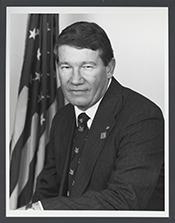
Mr. Chairman, I move to strike the last word. Mr. Chairman, let me speak to the gentlewoman that just spoke. There are ways in which I think we can come together. One of the areas, the gentleman from…
Mr. Chairman, I move to strike the last word.
Mr. Chairman, let me speak to the gentlewoman that just spoke. There are ways in which I think we can come together. One of the areas, the gentleman from Washington (Mr. Nethercutt) has an amendment coming up that gives preference to the United States in the rebuilding process over those nations that fought against us in the United Nations. That is American jobs, American construction. In California with our constituents, I think the gentlewoman and the caucus could support that.
The second thing, I think it is even more important, as one that opposed going into Haiti, as one that opposed going into Somalia after Adid, and I would tell the gentlewoman if she has been to Haiti, the Halie Selassie Highway, one can drive a truck in a pothole. It is terrible. Many of the conditions have not been improved, and even though I opposed going in there, the dollars that were already appropriated for that should be released to help, and I again opposed going into Haiti and Somalia. So I think it is even more important.
I would also inform the gentlewoman there is another way. I have an amendment on Turkey. Turkey stood against our troops going in from the north, stopped us from having a northern front, caused us to have to ship around all the way to the east side our troops. It cost American lives. We should send them a message. That is $1 billion that could be freed up. They did not ask for it, and Turkey gets a ton of money already in the foreign aid package. That is another way which I think we can help. I recently had it in homeland defense. Technicalities did not allow us to do that, but $1 billion in the general fund is a lot of money to work with, with us.
As far as the scholarships, the gentlewoman and I both support, and I personally believe, that a child that qualifies, that works hard should not be denied a college education or a general education as a result of their economic status, and they should be provided that.
Mr. Chairman, I thank the gentleman for yielding time to me.
Mr. Chairman, I do not doubt my friend's concern for the troops. I think that is genuine. However, I do debate the gentleman's point on the war. I will be specific.
First of all, there is no doubt, no doubt whatsoever that Saddam Hussein has contacts and is utilizing al Qaeda within Iraq. Just attend some of the intelligence briefings.
Second, as a combat veteran, the troops, sure, when we flew in Vietnam, we wanted to come home; but we also wanted to do our job. If we talk to the embedded reporters and listen to our men and women overseas, they want to finish the job, I would tell the gentleman.
Secondly, on the Subcommittee on Defense of the Committee on Appropriations, the gentleman's amendment does not bring the troops home. We are already spending fourth-quarter dollars. What the gentleman wants to do is not be able to even replenish those, which would weaken the state of national security in the long run.
I would tell the gentleman that Saddam Hussein today pays $5,000 to a family in Palestine that will take their 15-year-old child and blow themselves up in Israel. We have lost American citizens in that. I do not think we want to let that go.
If we listen to Saddam Hussein, he says he will attack us in the air, the sea, and the land. I would ask the gentleman to project Saddam Hussein, if we pull our troops back, project someone like this 5 years from now with a nuclear weapon. It would be devastating, and we would lose American souls, many thousands.
A lot of people say, what about Korea? Korea is a threat; but I want to tell the Members, they are not working every single day through Mujahedin, Hammas, Hezbollah, and al Qaeda to damage the United States. We need to finish this job, whether the gentleman agrees with it or not. We need to protect American citizens and those abroad for worldwide peace.
If we take Afghanistan, Iraq, Saudi Arabia, Egypt and bring them about with true democracies, this country is far better off than bringing our troops home and not dealing with this problem. If we do that, this problem will magnify in the Middle East, not depreciate.
Mr. Chairman, I ask unanimous consent that my amendment related to Turkey be considered at this point in the reading of the bill.
Mr. Chairman, if the gentleman will yield, I would say to my friend and my chairman that we have several speakers that are very passionate on this issue. To me, the debate of this issue is as important as its passage, and once those individuals do get allowed to speak, and I would encourage them not to take the 5 minutes, if the chairman would redress the issue then I would not object.
Mr. Chairman, I will choose to strike the last word at the end to close, and I would allow the other Members that wish to speak on this issue, and I would go to the gentleman.
Yes, the gentleman is going to strike the last word. I will strike the last word at the end so I will have time to close.
Okay. Then I will be recognized for the 5 minutes, Mr. Chairman.
Mr. Chairman, I truly believe that the United States needs the support of all allies. That includes Turkey. That includes France. That includes Germany. As many of us are upset at those countries for the actions that they took in the previous weeks, we need their help towards world peace in the future. They are aware of the damage that they have done to the United States and their allies and that some penalty is in order.
And as I stated before, the debate on this issue is just as important as the passage of the amendment. There needs to be some message sent to any country that chooses to put in harm's way American and allied soldiers that there will be a penalty. The message should be, ``Do not tread on me.''
Now, that does not mean that we do not want them as allies in the future. I would state, and I do not mean to demean Turkey by making this point, but merely to make a point, if my own daughters intentionally did something egregious, I am surely, Mr. Chairman, not going to raise their allowance. I love them. I want their love in the future. And the same goes for Turkey.
Secretary Colin Powell at this very moment is negotiating with Turkey, and he has made some great strides. I
think all the Members in this House respect Secretary Powell. But I would say, Mr. Chairman, that current negotiations and even positive steps do not forgive what has happened in the past with Turkey denying our troops access.
Turkey never asked for this money. The United States is asking to give them $1 billion. The United States is giving Turkey a ton of money in the foreign aid bill.
This is in the 2003 supplemental. The 2004 bill is coming up. There is a ton of money in there for Turkey. I am not asking to take this away, but should we reward a country for not only putting our men and women in harm's way, but actually causing the deaths of some of our troops?
By Turkey not allowing us to overfly Turkey and give overfly rights, there was an agreement, and they have done some overflights, but that was based on a previous agreement, but by not allowing our troops to launch from the north and out of Turkey, it denied us a northern front. It allowed Saddam Hussein to redeploy his troops and forced us to parachute in with our paratroopers a very lightly armed force to support the north; and I think this is wrong.
A foreign aid package should be for Turkey and our allies, but I would tell the gentleman that just like the gentleman from Kentucky (Mr. Rogers) a minute ago spoke against the Obey amendment, he used the analogy that this was only for 3 months, and I would use the same analogy here because in the 2004 budget, I do not object to the support for Turkey, if, if their parliament does not turn its back on the United States as they did in the past.
In 3 months, Saddam Hussein will be out of power. We will be on the road to democracy in Iraq and a free people, but can my colleagues imagine giving France preferential treatment on the reconstruction of Iraq? No, and there is an amendment coming up by the gentleman from Washington (Mr. Nethercutt) that will handle that; and I would encourage my colleagues to vote for that.
By the same means, do we reward Turkey? Do we give them an incentive for turning their backs on the United States even though they are opening up their borders with Colin Powell today? What they did in causing American lives to be lost, there needs to be a message sent and a penalty, Mr. Chairman. I would say the same is true with France and Germany as well.
Saddam Hussein did work with al Qaeda, and where he worked in al Qaeda is in the northeast portions of Iraq. By not allowing our northern front to go forward and launch out of that area, it allowed many of the terrorists and al Qaeda to launch out of that area.
I ask for the support of this amendment, Mr. Chairman.
Mr. Chairman, will the gentleman yield?
I have about six speakers for the amendment.
Mr. Chairman, I yield 4 minutes to the gentleman from Michigan (Mr. Rogers).
Mr. Chairman, I yield 2 minutes to the gentleman from Florida (Mr. Keller).
Mr. Chairman, I yield 2 minutes to the gentlewoman from Colorado (Mrs. Musgrave).
Mr. Chairman, I yield 2 minutes to the gentleman from Michigan (Mr. Hoekstra).
Mr. Chairman, I yield 4 minutes to the gentleman from Georgia (Mr. Kingston).
Mr. Chairman, I yield 2 minutes to the gentleman from North Carolina (Mr. Jones).
Mr. Chairman, I rise in strong support of this supplemental appropriations bill. I want to compliment the chairman and the chairman of the Subcommittee on Defense, the gentleman from Pennsylvania…
Mr. Chairman, I rise in strong support of this supplemental appropriations bill.
I want to compliment the chairman and the chairman of the Subcommittee on Defense, the gentleman from Pennsylvania (Mr. Murtha), for giving specificity to this bill in terms of how the money was appropriated. I think that was the right decision, defending the constitutional prerogatives of the legislative branch.
We are all proud of what our men and women are doing over in Iraq. The gentleman from California (Chairman Lewis) and I had a chance to visit right before the war started and to see the troops. It was truly outstanding.
We also had a chance to see the great work that is being done in the area of intelligence, the Predator, and all of the new capabilities that we have given our troops to know where the enemy is.
The thing that I am most proud of are the tremendous aerial capabilities that we have been able to provide with the B-2 bomber, the B-1, the B-52, giving smart weapons to them, smart conventional weapons which have worked so effectively in degrading the military capabilities of the Iraqis. We have seen this in the last few days with the collapse of the Medina and Baghdad divisions of the Republican Guard.
This is an enormously important bill because we have to replenish these smart weapons that we have used, because 10,000 smart weapons, precision weapons, have been used. We have flown over 21,000 sorties.
The one thing that is wrong with this bill is we have not done enough for homeland security. I completely concur with the gentleman from Wisconsin
(Mr. Obey), who has taken the time to go out and investigate the needs of all of these agencies. We are underfunding the security of the United States of America here at home by not adequately funding homeland security.
We are doing a great job in Iraq; we are doing a great job in Afghanistan, but we are only doing a marginal job here at home in terms of protecting our ports, our cities. This is us. This is our families. This is our children, our grandchildren. We have to get serious about this. This administration has to get serious about this.
They can not continue to not provide the resources necessary for homeland security. Maybe we will not correct it here today, but I guarantee you once the American people understand that we are not providing the necessary resources, they will make certain that we correct it and hopefully in a bipartisan fashion.
Mr. Chairman, I guarantee my colleague we are being careful, careful almost to the extent where I think we are leaving the country vulnerable, and I really do disagree.
I think we have got a responsibility to get a plan in all the States. We do not have all 50 States under the National Guard program, to give each State a unit in support of local officials in a crisis. We still do not have that done. There is a lot of things we need to do, and money is important in getting it done.
Mr. Chairman, will the gentleman yield?
Mr. Chairman, outside groups like the Council on Foreign Relations, Senator Rudman, Senator Hart, the Brookings Institute, they have looked at these numbers, and they have said they are completely inadequate to do the job. That is why we are so upset that we have not been offered the chance to present an amendment today.
The gentleman from Wisconsin (Mr. Obey) presented it in the full committee. It was a close vote. This is something that worries me deeply.
I think we do a great job in Iraq and in Afghanistan, but we are not doing the job we need to do right here at home to protect the United States of America; and it is not right, and we have got to do something better than that. I appreciate the gentleman yielding to me.
Mr. Chairman, I want to first of all again congratulate the gentleman from Florida (Chairman Young), the gentleman from California (Chairman Lewis), and the gentleman from Pennsylvania (Mr. Murtha) for the way they crafted this legislation. We have made the Defense Department be accountable for this money.
But I must say, cutting $19 million out of this fund, or $19 billion, excuse me, is not going to help the troops. We are in the middle of a war. This money must be replenished. We have used 10,000 precision weapons very effectively. We have these troops in the field, and they need to have the resources in order to complete this task and get this job done.
I do not mind people making their speeches and exhorting their position on the issues; but when it is going to hurt the people in the field, it is unacceptable. This will hurt the troops in the field. I urge the House to reject overwhelmingly the Kucinich amendment, which I will request a record vote on.
Mr. Chairman, I rise in opposition to the amendment.
The gentleman from California is a valued member of our subcommittee, and on almost all defense issues we agree. Unfortunately, today, I must rise in opposition to this amendment.
As everyone here knows, yesterday Secretary Powell met with the leadership of Turkey. Immediately following that meeting, the border was opened and supplies on trucks were flowing into northern Iraq for the U.S. forces that are there. These are supplies, not ammunition or weapons; but it is a significant step forward.
Also, we were able to use the air space of Turkey in order to bring in forces into northern Iraq by air lift. Bombers have flown into Iraq using turkey's airspace.
So I think they have made a very significant contribution, and people sometimes forget that 90 percent of the people in Turkey are opposed to this war. They are on the border with Iraq. It was much different in 1991 when Saddam Hussein was invading another country like Kuwait, and therefore, they could join as a NATO ally and work with the United States to get Saddam out of Kuwait. This is a different circumstance.
I think they have done almost everything they could. If 90 percent of the people in the United States were opposed to this war, we might not be there. I think we have to understand, this is a new government with a new parliament; and Turkey has been a reliable ally for many, many years.
This was in the President's budget request. Condoleezza Rice has written a letter to the gentleman from Florida (Mr. Young) expressing the support of the administration for keeping this money in this bill.
We also have to look at the long term. Once we get through with this war, and I hope and pray it is over very quickly, we are going to have to rebuild our alliances, not only with NATO, but with all the countries in the region; and I think showing some good faith at this point and supporting this $1 billion to help Turkey, who has serious financial problems that were caused by their participation in the original Gulf War in 1990 and 1991. They have been hurt economically by this because of humanitarian problems and economic problems that they are facing.
They desperately need this aid and assistance, and they are a democratic secular country that in my mind deserves the support of the United States. They have been involved with us in every military conflict since the Korean War and through Afghanistan; and on the floor of the House, to undercut the agreement that was reached just yesterday with Secretary Powell, I think, would be a terrible mistake.
We should show Turkey that we understand their problem and we want them to recover economically and we want them to work with us through NATO to be a good ally and a good friend. Please vote against the Cunningham amendment.
Mr. Chairman, I rise in strong opposition to the Cunningham amendment. Condoleezza Rice, the Assistant to the President for National Security Affairs, wrote us a letter:
``Secretary Powell addressed important military, political, and economic issues when he met this week with the Turkish leadership. Both sides agreed to an unimpeded flow of humanitarian aid to north Iraq, and access by American forces to supplies sent through Turkey. Turkey continues to grant overflight rights, and is committed to enhance cooperation on terrorist threats and possible refugee flows into the region, without moving additional Turkish military forces into Iraq. These are very positive steps.''
The President of the United States has requested this $1 billion. We will be acting like the Turkish Parliament acted if we cut this money out. It will be a mistake. This is not the way to rebuild and treat a NATO ally. Let us defeat the Cunningham amendment and move this bill forward.

Mr. Chairman, I rise in strong support of the bill. Mr. Chairman, I rise in support of this bill. I would like to take a moment to address two different sections of the Supplemental--foreign…
Mr. Chairman, I rise in strong support of the bill.
Mr. Chairman, I rise in support of this bill.
I would like to take a moment to address two different sections of the Supplemental--foreign assistance and support for first responders.
The Foreign Operations section provides $7.3 billion of the $7.5 billion requested. I think it is generally a good product, and I appreciate Chairman Kolbe's willingness to work with me on it.
As many of my colleagues know, I consider foreign aid to be an indispensable arm of our national security strategy. No place is this role more evident than in today's bill, which will help strengthen many of our allies in the coalition of the willing. I particularly support the funding for Israel, a key ally in the war on terrorism and a force for stability in the Middle East, as well as the assistance for Jordan, a country which has supported our cause at great risk to its own stability.
I am also pleased that this bill takes important steps to secure the role of the Department of State and the U.S. Agency for International Development in guiding spending for post-war relief and reconstruction. It has been clear to us for quite some time that the Department of Defense would like to take over the management of these funds. While the President requested that all Iraq relief and reconstruction dollars be provided in a form that would have allowed him to transfer them to any government agency with no Congressional input, this bill wisely allows the flexibility to use them only at USAID, the Department of State, the Department of the Treasury, and HHS--the four main agency implementers of our foreign assistance programs. The bill also makes clear the policy decisions regarding post-war relief and reconstruction should be made at the State Department--not anywhere else. Both of these provisions provide important precedents for similar situations that may arise in the future.
I do have a few concerns about the Foreign Operations section of the bill--primarily that
funding is provided for Colombia and the Philippines, despite the fact that they have no direct or indirect role in the conflict in Iraq. Congress has been admonished by the administration not to attach extraneous provisions to this bill, and I think these are two that could be better dealt with in the regular Fiscal Year 2004 process.
I strongly support the $700 million set-aside in the High-Risk Urban Areas category in the Office of Domestic Preparedness, an area of critical need. The administration requested $50 million for this purpose, an in the committee's mark on Tuesday the funding was raised to $700 million. This is excellent progress, but I still believe we must do more.
We have a responsibility to protect every American, wherever they live and wherever they serve this Nation around the globe.
But we know, based on experience and intelligence, that there are areas of higher risk than others in America. And it isn't always the most obvious places, like New York City, or Washington, DC, and the Pentagon.
It could be Orlando, where Disney World draws millions of visitors, or Fort Knox in Kentucky. It could be an attraction that symbolizes American culture like the Rock and Roll Hall of fame in Ohio, or a military installation like Quantico in Virginia.
Each of these places has political and cultural significance to our people and the world. We've seen that Al Qaeda has a diabolical sense of where to hit us--not only to take innocent life and destroy structures, but also to shake our confidence and our sense of America as a safe place.
For those reasons, there's an urgent need to provide funding for high-level risk areas, especially in urban centers. The administration, in its request, provided $50 million in funding for these needs. But $50 million isn't adequate. New York City spends that in 10 weeks alone--$5 million a week. The State of New York spends $7 million a week, mostly in New York City.
This funding is for needs nationally, and that's very important, but I want to mention just a few things that New York needs to do in order to protect the 11 million people who work in the city every day:
The city now has its own Counterterrorism Bureau in the police department that costs $200 million to run. Its one thousand officers are deployed in New York and around the world.
It's designing a communications system that will work from high-rise buildings to subways, that isn't reliant on a private carrier and has built-in redundancy so a failure at one point won't bring the whole communications systems to a halt. That will cost $120 million.
It needs $25 million to add HazMat units because the city isn't adequately prepared for a major chemical and/or biological incident.
It needs bigger and faster fireboats to help put out fires. For all of New York City's 575 miles of shoreline, there are 3 small fireboats. If, God forbid, there's an attack on a cruise ship, ferry, bridge or port, a large fireboat would be needed for rescue and fire control. A boat with large capacity is $15 million.
It also has immense training needs--among the 343 firefighters killed on September 11th were many of the department's most highly trained officers, who had accrued 4,400 years of collective experience and training. To recruit and train new firefighters will cost about $40 million.
And that's just New York--unfortunately, cities nationwide are forced to carry out similar costly measures to ensure their security. The U.S. Conference of Mayors estimates that cities are spending about $70 million a week, on top of their law enforcement budget, to deal with the increased threat level and security costs due to the war.
I want to thank the Chairman and Ranking Member for working hard to address these important needs, and to fund the High Risk Urban Areas category at $700 million.
We still need to do more. As a fire commissioner in my district said, referring to the color code alert system, ``we cannot go to color orange without seeing some color green.''
I hope we can work together through conference with the Senate, to help all our local areas--urban and rural--become as prepared as possible for any terrorist attack.
Mr. Chairman, I rise in opposition to this amendment.
There is no question that Turkey's initial refusal to allow the use of its territory had made prosecution of the war more difficult for us.
While I would characterize the vote of the Turkish Parliament as unfortunate and misguided, it happened. Sometimes we find the result of democratic deliberations inconvenient, but this was, in fact, the result. Despite that vote, the administration has requested $1 billion for Turkey. The justification, as presented by administration officials, is primarily economic. Turkey is in dire straits at the moment.
This is partly due to the war, and partly due to past economic policies. But regardless of the reason, the Turkish economy is teetering. They owe the IMF over $17 billion at the moment, and are financing most of their cash needs in short-term, high-interest debt. They have started down the path of economic reform, but they have a long way to go.
Now that the war is on, and Turkey has finally agreed to allow the positioning of supplies for our troops on its soil, the worst thing we could do is send a signal that we do not support Turkey. The circumstances surrounding this request may not be ideal, but our men and women in uniform are well into a tough battle for the future of Iraq, and Turkey's continued cooperation will help them.
Economic collapse of Turkey, coupled with a further breach in United States-Turkish relations which would result from passage of this amendment, would be absolutely disastrous to the war effort--and the peace effort that will come after. Turkey remains one of the few stable, democratic countries in the region, surrounded by unstable, authoritarian states. As a moderate Muslim state, strategically situated at the gateway to the Middle East, we simply cannot allow it to fail.
I urge my colleagues to defeat this amendment.

Mr. Chairman, I would like to begin my remarks by first expressing the deepest appreciation we have for the work that has been done between the gentleman from Florida (Chairman Young) and the…
Mr. Chairman, I would like to begin my remarks by first expressing the deepest appreciation we have for the work that has been done between the gentleman from Florida (Chairman Young) and the gentleman from Wisconsin (Mr. Obey), seeing that this bill that really is a work in response to the needs of our military forces who are fighting for freedom overseas. The way in which the House is responding today is a reflection of the best work of the House, perhaps demonstrated best in recent days by our all coming together to celebrate the freedom now that is being experienced by Jessica Lynch, the prisoner of war, this young American, who our forces made every effort to identify by way of location and made sure that she once again has the opportunity to breathe free.
This bill would not be in the condition it is in if it were not for the magnificent work of staff on both sides of the aisle. The growing relationship between David Morrison and Kevin Roper, working with the Committee's staff, is somewhat magnificent to see, even though it is not a surprise to most who have observed often our committee work.
In turn, however, there are others who deserve credit today, such as our personal staff, and all those people who spend endless hours to make sure that we get this work done in a timely fashion.
The bill before us has some $74.5 billion in supplemental funding that is designed in large form to make sure we can carry forward the war in a timely fashion and make sure that our forces do not run out of funding at this critical moment in our history. Of that $74.5 billion, approximately $62.5 goes to national defense matters. Within that package of funding, there is approximately one-half of it, a little over $30 billion, which really goes to money that has already been obligated and essentially spent; that is, the money that was required to deploy the forces, to mobilize the National Guard and Reserve, to train and equip for battle those men and women who are the backbone of our successful effort in Iraq. From there, there is little doubt that in the months ahead we will be called upon time and time again to make sure that the pipeline does not run dry, and that is the work of our committee. Working very closely with Members on both sides of the aisle, it has been my experience that this House is most responsive when our forces need them most.
So having said that, Mr. Chairman, the defense portion of this bill, which does spend as much money as I indicated, is going to be the least controversial of this bill. We will probably spend much of the day talking about other relatively smaller elements that are before us today. That piece of the bill that involves homeland defense will lead to a lot of discussion. And I would say to my colleagues on the other side of the aisle that the challenges that we face as they relate to homeland defense are challenges that really have come to our attention because of 9/11. They are primary in our mind.
But I would remind us also that this is not the last bill of the year. We are going to have more than one opportunity in the appropriations process to be responsive to the needs of protecting our homeland, and the committee will come together again when those items are before us, and I am sure respond in a bipartisan way.
There will be a good deal of discussion today regarding those elements that relate to Turkey's role in the struggle that is ahead of us; and the issues that flow around the foreign operations portion of the bill are difficult issues, but, indeed, those too can be handled through regular order.
In the months and the years ahead, we will be making decisions regarding the way we relate to those allies who are not nearly as responsive as we might have expected as we went about attempting to lay the foundation for freedom for the people of Iraq.
I am most pleased with the fact that this body today will give dramatic illustration that we can come together in time of need, in a nonpartisan way, on behalf of the men and women who are fighting for freedom in Iraq. In the final analysis, our purpose is to make certain that the children of Iraq have the same chance for opportunity and freedom that so many of us experience in this country because, by the grace of God, we happen to have been born here.
Mr. Chairman, I appreciate my colleague yielding me this time. I must say that the gentleman from Ohio (Mr. Kucinich), I know, is very sincerely serious about his position on this matter. I respect his position greatly.
I must say that I was one of those who believed deep in my heart that we would solve this problem by way of peace; that there was an avenue open for us to change the regime in Iraq, and at the same time do so without having to find ourselves in war.
That opportunity for peace closed. The door closed entirely when friends and allies of ours in Europe took a different position. When France decided to take the position they did, when Germany decided to take the position they did, there was no opportunity to find a peaceful solution.
In the meantime, this bill before us is designed to make sure that our troops will be fully supported as they go forward attempting to ensure the opportunity of freedom for the people of Iraq. It is absolutely certain by the time we get through this process before us that they will have an opportunity they have not had during all of the history of this brutal regime.
Indeed, it is difficult for me to understand my colleague's position. I happen to think he is absolutely wrong, but I have risen in part to support his right to express that position. That is what this debate is all about.
I hope at another day, another time, we will find a peaceful solution for dealing with people like Saddam Hussein. I just do not see that time in the near future.
Mr. Chairman, I very much appreciate my colleague yielding me this time and rise simply to say that I very much empathize with the position of my colleague, the gentleman from Ohio (Mr. Kucinich).
We happen to rather intensely disagree as to what role America is going to be playing in the world in the years
and months, perhaps decades, ahead. Our country remains, whether we like it or not, as the only remaining superpower in the world. We now spend dollars at a level, 380-plus billions of dollars to make sure that we are the strongest country in the world. Indeed, it is my view that those dollars are spent because we are the force for peace. If there is a country that, long term, is going to maintain the peace in the world, it is America. And it is the men and women of the very troops serving presently in the Middle East who reflect the best of the best, who are of course for peace.
This bill is designed to make sure that they can carry forward their job at this moment to its completion and do it well. Indeed, no force is more capable than these men and women. Their purpose, though, is to ensure that freedom becomes available to the people, the men and women, the mothers, the children of Iraq. Without their presence, Saddam Hussein would take us down the pathway towards appeasement. He would be the voice that says ``we ought to stand still for whatever time is necessary for me to rebuild my position of strength.'' He will say, ``I will find any another way to win one more time.'' This is not a plan of peace.
America is the voice for peace in the world. We need to recognize that. And because we need to recognize that, we must reject this amendment.
Mr. Chairman, I thank the gentleman from Florida (Chairman Young) for maintaining the Committee on Appropriations' constitutional right to appropriate, and for oversight, both to the gentleman from…
Mr. Chairman, I thank the gentleman from Florida (Chairman Young) for maintaining the Committee on Appropriations' constitutional right to appropriate, and for oversight, both to the gentleman from Florida (Mr. Young) and to our ranking member, the gentleman from Wisconsin (Mr. Obey) and our staffs for making sure that our constitutional rights as appropriators is preserved under this supplemental.
I rise in strong support of the supplemental, our troops, our men and women in the military who are fighting to support this country's and around the world's freedom. I rise also to support the Obey amendment that was not made in order. We must protect our homeland. We must protect our hometowns. And as was mentioned earlier in the chart displayed by the ranking member, the gentleman from Wisconsin (Mr. Obey), this supplemental does not do that yet, and we will have another opportunity in the 2004 budget and I hope we will do that.
I represent probably the largest body of water, of international waterway, in this country. The Ambassador Bridge is the busiest commercial border in this country, where a billion and a half commercial products cross that border every day; 40,000 businesses have trucks with hazmat materials on them. Three million people drive those trucks. And we must make sure that our homeland is protected, and we need this homeland money so that our local communities, our targeted communities, can have those dollars we need to protects our citizens, not just at the ports but around this country. And this supplemental does not do it. And I hope we will do it in our 2004 budget as we move forward to do that.
It is so important that we speak out to let Americans know that as we appropriate their tax dollars, we are not only taking care of Afghanistan, Iraq, helping with our other foreign allies, but we are doing what is necessary so that their children can be safe in their own homes, so that the mayors can have the resources they need. It is so important.
And I thank the gentleman from Florida (Chairman Young) and the gentleman from Wisconsin (Mr. Obey) and our staffs for bringing it to the floor in such a timely manner. This is a good supplemental at this time, and I urge my colleagues to support it.
I rise today to support H.R. 1559, the Emergency Supplemental Appropriations for FY2003. As a member of the Appropriations Committee and the Subcommittee on Foreign Operations, I am proud of the work that the committee was able to produce and thank Chairman Young and Ranking Member Obey, as well as Chairman Kolbe and Ranking Member Lowey of the Foreign Operations Subcommittee on Appropriations for their continued leadership.
Our nation is in a time of unparalleled needs. We are waging a war against Saddam Hussein and his regime, we are fighting a war on terrorism, while at the same time needing to respond to the needs to protect our homeland. This supplemental reflects what is at stake.
The supplemental includes $62.5 billion for military operations in Iraq and the war on terrorism. As an appropriator and a member of the United States Congress, let me say that I am committed to doing everything I can to make sure that our troops are provided with the equipment and resources necessary that will ensure their safety and their ability to mount an effective opposition in Iraq, that will ensure a successful and hopefully an expeditious end to military action. Let me state the utmost respect and admiration I have for our men and women in uniform and that my thoughts and prayers go out to all of them and their families during their difficult times.
I am also proud that this bill does not reflect the blanket check that the Administration originally sought, that would have created new accounts and provided the Administration with programming authority, without congressional oversight. I do not believe in writing blanket checks. As a Member of Congress and a member of the appropriations committee, I feel our role is more important than being just a bank. If we are to be successful in our important missions, Congress needs to be involved and be assured a say in how, where and to whom our money is going. I am happy that Members on both sides of the aisle were able to work together to ensure that Members retain congressional oversight during these important times.
While I support this important supplemental, it is not without certain reservations. First, this bill does not go far enough in providing the sufficient funds needed to protect our homeland. We have vital, unmet needs that need to be responded to effectively. We had a chance to do right, but the Republicans, unfortunately, have blocked an amendment by Congressman Obey that would have provided for $2.5 billion in additional funds for our homeland security needs.
These additional funds would have allowed us to address important issues, such as: increasing port security; protecting federal dams and waterways from terrorist attacks; protecting important food and medical equipment; strengthening the security of nuclear materials at home and abroad; and strengthening U.S. laboratories' ability to cope with a chemical attack.
I represent the 13th District of Michigan, which contains the largest international commercial border in the nation, with $1.5 billion in goods coming into our country every day. The City of Detroit has also been named as one of 10 cities likely to be targeted for a terrorist attack. Mr. Speaker, our security needs are immense here at home and we need to act responsibly. Refusing to allow Members a vote here on the House floor to increase funding for homeland security is an act of irresponsibility that could have adverse consequences.
These additional funds would have allowed government agencies to respond to the unmet needs that our nation's safety requires. Refusing to allow Members a vote here on the House floor to increase funding for homeland security is an act of irresponsibility and we are shortchanging, plain and simple.
Mr. Chairman, the American people look to us to do the job of the people and to protect and safeguard our homeland. It is time that our words and intentions are reflected in the amount of funds that we appropriate in the name of homeland security.
Finally, I also question the amount of funding we are providing for reconstruction and humanitarian needs in Iraq--$2.48 billion. With the war that presumably could last for weeks, maybe longer, the humanitarian needs and reconstruction needs will be great.
Mr. Chairman, I rise in support of H.R. 1559, Emergency Supplemental Appropriations for Fiscal Year 2003, including $62.5 billion for military operations in Iraq and the war on terrorism. In the…
Mr. Chairman, I rise in support of H.R. 1559, Emergency Supplemental Appropriations for Fiscal Year 2003, including $62.5 billion for military operations in Iraq and the war on terrorism.
In the months and years ahead, questions will persist as to whether alternatives to a U.S. military invasion might have succeeded in removing the threat posed by Iraq's weapons program. And there are important debates still to come about the postwar program for rebuilding Iraq, the multilateral cooperation we must secure to ensure a postwar transition to democracy, and the efforts our nation must resume to bring Israelis and Palestinians back to the negotiating table. This Congress must hold the President and our country to these critical objectives.
But today, our task is more straightforward: we are here to give our courageous men and women in uniform the support and the resources they need to carry out their mission swiftly, effectively, and decisively. I have no doubt that that support, in the form of this supplemental appropriations bill, will be provided with near unanimity later today.
This bill also must address the protection of our citizens here at home. This Administration has made a total supplemental appropriation request of $74.7 billion. Homeland Security accounts for less than 6 percent, or only $4.2 billion, of this total. The Republican leadership of the Appropriations Committee has made significant improvements in the Administration's request and has courageously refused to cede the Congress's responsibility to apportion spending to the discretion of the President or Secretary of Defense on any other executive officer. But the bill still falls short of our minimal homeland security needs, and unfortunately, the leadership of this body has rejected constructive efforts from our side of the aisle to improve it.
Let me give two examples: port security and support for first responders. Although Congress and the Bush administration have taken important steps to improve airline safety, very little has been done to secure the 361 seaports around our nation that receive nearly 21,000 containers a day from hundreds of overseas ports. Maritime shipping moves 95 percent of non-North American U.S. trade.
Testifying before Congress last August, Robert Bonner, Commissioner of Customs and Border Protection, said, ``There is virtually no security for what is the primary system to transport global trade . . . The impact (of an attack) on global trade and the global economy could be immediate and devastating--all nations would be affected.'' Despite the vital role seaports play in linking America to the world, both economically and militarily, port vulnerability studies for the nation's 50 largest ports are not scheduled to be completed for five more years.
The Coast Guard estimates the 10-year cost for port security improvements at $4.4 billion, and $963 million for the first year alone. In this time of crisis, we cannot afford to delay this effort. Despite no request from the Administration, Congress has appropriated $400 million for grants to critical ports to conduct vulnerability assessments and make needed security improvements. The Democratic amendment provides $250 million more to better meet the security requirements of our ports.
Our first responders are our first line of defense--the ones who intercept terrorist activities and are first on the scene in the event of disaster, putting their life-saving skills to work.
I have traveled throughout my district meeting with local leaders and first responders. They tell me that they need equipment, training, and funding to meet the demands of their new responsibilities. Yet, they still have not received the funding that they have been promised; in fact, they are facing funding cuts in the President's 2004 budget.
The Democratic amendment provides critical support, first, in securing interoperable communications equipment. Incompatible communications equipment hinders the ability of our first responders to adequately respond to disasters and costs lives. Only 40 percent of fire departments can communicate with police or EMS personnel. The technology to obtain interoperable communication equipment exists now. DHS is developing national guidelines. The Democratic amendment provides $350 million to be directed immediately through grants to this effort in our effort to correct a universally accepted need.
Fire fighter grants were authorized at a level of $900 million for Fiscal Year 2003, but funded $150 million below its authorized level. The Democratic proposal makes up this shortfall
by providing the additional $150 million to the grant program. This additional money would make up shortages in basic needs such as portable radios, self-contained breathing devices, and map coordinate systems.
Not only major metropolitan areas but also smaller communities located near critical infrastructure are faced with an increased burden of security as a result of the ongoing high threat level. The Democratic proposal provides $300 million through the Office of Domestic Preparedness to help these communities fund the heightened security requirements they must address. This additional $300 million would provide a total of $3.5 billion to ODP for Fiscal Year 2003, which is equal to the Administrations original Fiscal Year 2003 budget request.
Mr. Chairman, members of this House understand the importance of providing our troops with the resources they need. We stand united behind them today, and we remain steadfast in our faith in them and our support of their mission.
However, it is also our duty protect all of our citizens and to provide funding to ensure homeland safety and security. It is in that respect that the bill before us falls short. Having been denied the opportunity to strengthen this bill today, we on the Democratic side will persevere in future appropriations efforts, hopefully with bipartisan support, to address urgent priorities in homeland defense.
Point of Order

Mr. Chairman, I rise today in support of H.R. 1559, the fiscal year 2003 Emergency Wartime Supplemental Appropriations Act. I applaud the swift bipartisan effort that has brought this vital…
Mr. Chairman, I rise today in support of H.R. 1559, the fiscal year 2003 Emergency Wartime Supplemental Appropriations Act. I applaud the swift bipartisan effort that has brought this vital legislation to the floor so quickly. I also congratulate my colleagues on the Appropriations Committee for resisting the Administration's effort to wrest from the Congress its constitutional prerogative of overseeing all monies drawn from the Treasury. Our founding fathers rightly understood the need for accountability among the branches of government--even in times of crisis.
The funding provided in this bill is critical to ensuring that the brave men and women in our armed services have the tools and resources necessary to accomplish a swift, sure and decisive victory over tyranny and oppression in Iraq. Accordingly, Mr. Speaker, I urge my colleagues to vote in favor of H.R. 1559 and for the full and continuing support for our troops deployed in the war on terrorism.
The best of America, and thousands of the best from my home state of Texas--our men and women in uniform, active duty and reserve components alike--are now in harm's way in Iraq, on the high seas and at the far corners of the world. These brave Americans now risk their lives to confront the oppression, tyranny, and terrorism that plague and threaten the world and our nation.
One of America's finest tradition is our ability to draw together in support of our men and women in uniform when they are actively engaged in the defense of our freedom. American forces in the Iraqi theater fight not for narrow interests or for reasons of national pride. American soldiers, sailors, aviators, and Marines are engaged in combat today so that our people do not live in a world in which tyrants armed with weapons of horror hold free nations hostage, and in doing so threaten freedom itself.
Accordingly, it is our solemn obligation to stand solidly behind our soldiers, sailors, aviators and Marines and to give our men and women in uniform the full and complete support they must have in order to prevail in this war and come safely home. This wartime supplemental appropriations bill is an appropriate first step in fulfilling our obligation.
However, Mr. Speaker, like many of my colleagues, I am concerned that this bill is incomplete. It is merely a down payment on the war in Iraq and, more broadly, on the war on terrorism at home and abroad.
The noble effort currently underway to liberate Iraq from a tyrannical regime is but one front in the global war on terrorism.
The Department of Homeland Security has elevated the national threat level to ``High'' because of its belief that there is a high risk of terrorist attacks against U.S. targets as a consequence of the war in Iraq. Despite this level of alarm, the bill being considered by the House today does not provide adequate resources to secure our own communities
against the very real threats the government has told us we face.
H.R. 1559 does not provide the tools and resources needed by the brave men and women on the front lines in the event of a terrorist attack against our local cities and towns. We should ensure that state and local civil defense teams are established and equipped to meet the needs of our communities in the event of such a tragedy. We should provide all the necessary resources so that the firefighters, police officers and emergency medical personnel can effectively respond to any and all threats to the peace and security of our citizens.
H.R. 1559 does not provide sufficient resources to secure our nation's ports and infrastructure.
In virtually every one of our towns across this country is a water- treatment facility that ensures that each of us has safe drinking water. Virtually all of these water-treatment facilities are vulnerable to terrorist attack and so our most basic necessity of life--water--is not adequately secured. Despite this, the Administration did not seek and this bill does not provide one penny to better secure our water- treatment facilities.
In addition, our nation's ports are vulnerable, as are dams, bridges and tunnels throughout the country. Even so, this bill does not provide the resources needed to secure our country's critical infrastructure.
In a time during which the threat of the horrific use of weapons of mass destruction is very real, we have to step up and ensure that our state and local governments have the tools they need to respond effectively to chemical or biological terrorism. We must ensure that our front-line defenders have adequate training and are properly equipped to secure the safety of our friends and family at home.
While H.R. 1559 is a thoughtful, measured response to the needs of our armed forces on the field in Iraq, it does not provide tools that are critical to adequately secure our local communities--the places where Americans live and work, where we raise our children and care for our families.
I support H.R. 1559 as a first step, but I believe that we have a solemn obligation to do more. The preamble to the Constitution spells it out as well as one could: We are obliged to ``insure domestic Tranquility, provide for the common defence, promote the general Welfare, and secure the Blessings of Liberty to ourselves and our Posterity.''
Mr. Speaker, I will vote for H.R. 1559 in full and complete support of the brave men and women of our armed services in harm's way so far from home. But, Mr. Speaker, I also urge my colleagues on both sides of the aisle to do more--to vote to secure our cities and communities against the very real threats that they face every day during these uncertain times. Mr. Speaker, we must ``secure the Blessings of Liberty'' here at home with the same vigor and with the same measure of devotion that we have shown to bringing freedom to the people of Iraq.
Mr. Chairman, the issue of homeland security affects us all, and the need for adequate homeland security funding must be a priority for Congress. Perhaps no set of installations is more important to…
Mr. Chairman, the issue of homeland security affects us all, and the need for adequate homeland security funding must be a priority for Congress.
Perhaps no set of installations is more important to the economic well-being of the nation than our nation's port--and perhaps none is more vulnerable to the threat of a terrorist attack.
In California, the Ports of Los Angeles and Long Beach comprise the largest port complex in the nation, handling over 6 million cargo containers each year--over 15,000 each and every day. These containers represented more than $100 billion in goods entering the U.S. economy last year.
The threat of a terrorist device entering the port through one of those 6 million containers is very real, and the impact of such an attack at the Ports of Los Angeles and Long Beach would have far- reaching and devastating effects on our nation's economy.
For example, during the 10-day lock-out in July of last year by the pacific Maritime Association, the nation's economy lost an estimated $1 billion per day because container cargo was not moved. Container ships were anchored outside the breakwater at the port for several days, creating a backlog in ships waiting to berth and unload. Because of just 10 days of inactivity, container throughputs for the year were down nearly 10%.
The Ports of Los Angeles and Long Beach move cargo that is destined for businesses across the united States that have just-in-time inventory systems. These businesses, as far away as Michigan and Ohio, were affected by the port lock-out and slow-down. Some manufacturing lines cut back and furloughed employees during that port slow-down; some were forced to shut down.
A catastrophic terrorist event that shuts down the port for a significant period of time would have a disastrous impact on the U.S. economy.
The City of Los Angeles has responded aggressively to this threat. Following the terrorist attacks on September 11, 2001, Los Angeles Mayor James Hahn assembled an 18-member Seaport Security Task Force that included the U.S. Coast Guard and federal, state and local law enforcement officials, to devise a plan to assess the port's vulnerabilities and upgrade the port's security in case of terrorist attack.
Since that time, the port has invested more than $2 million to upgrade its security infrastructure, train additional port police, and acquire the necessary equipment to provide the required security at the container and cruise ship terminals and berths.
However, the port's importance is clearly national in scope, and the federal government should contribute its fair share for the increased security needs at the port.
How great is the port's need?
During the first round of Seaport Security Grants, the Port of Los Angeles identified $48 million in priority security improvements. Chief among these was the construction of a high-risk container inspection facility that would permit immediate inspections to take place on-site. Under current procedures, questionable containers must be transported along city streets and regional highways to the current inspection site located 15 miles north of the port.
Unfortunately, the Port of Los Angeles was awarded only $750,000 in federal money towards construction of a container inspection facility. The port has applied for $11 million under the second round of Seaport Security Grants. The security needs of the Port of Los Angeles and ports across the nation remain great. Until we make these needed security improvements, the Post of Los Angeles will remain just as vulnerable to a terrorist attack as on September 11. If a terrorist attack were to take place in Los Angeles or in any other of the nation's ports, we would be justly criticized for not having moved more quickly to provide the resources necessary.
I am pleased that H.R. 1559, the Emergency Supplemental Appropriations bill, contains funding for port security. But I would contend that the $35 million for container security provided in the bill is inadequate for the nation's needs in light of the fact that the Port of Los Angeles alone has identified $48 million of necessary security improvements, and the Coast Guard has indicated that $1 billion is probably a more realistic figure for what would be required to provide adequate port security across the U.S. this year.
As a member of the Appropriations Committee that considered this bill earlier in the week, I supported the Obey Amendment to add $250 million in port security funding. Had Congressman Obey been permitted to offer his amendment today, I would have voted for it on the House floor.
Mr. Chairman, I will support this bill today to provide our military leaders and our servicemen and women the tools they need to complete the job that has been given to them. Our military is strong, we support our military, and our military will prevail in the war in Iraq.
While making sure our forces are secure abroad, we must also strive to protect our people at home. The funding in this bill for port security is inadequate for the demonstrated need, and I will continue to fight with my Democratic colleagues for the necessary resources so our people, our commerce, and our economy will continue to be strong, too.
Show 11 more
Mr. Chairman, at a time of war Congress has no more important duty than to make sure that our military force have all the resources they need. However, Congress also has a duty to not use the war as…
Mr. Chairman, at a time of war Congress has no more important duty than to make sure that our military force have all the resources they need. However, Congress also has a duty to not use the war as cover for unnecessary and unconstitutional spending. This is especially true when war coincides with a period of economic downturn and growing federal deficits. Unfortunately, Congress today is derelict in its duty to the United States taxpayer. Instead of simply ensuring that our military has the necessary resources to accomplish its mission in Iraq, a mission which may very well be over before this money reaches the Pentagon, Congress has loaded this bill up with unconstitutional wasteful foreign aid and corporate welfare spending.
For example, this bill provides a hidden subsidy to vaccine manufacturers by transferring liability for injuries caused by the smallpox vaccine from the companies to the United States Taxpayer. It also provides $3.2 billion dollars for yet another government bailout of the airline industry, as well as a hidden subsidy to the airlines in the form of $235 million of taxpayer money to pay for costs associated with enhanced baggage screening. Mr. Speaker, there is no more constitutional reason for the taxpayer to protect what is, after all, the airlines' private property, than there is for the taxpayer to subsidize security costs at shopping malls or factories. Furthermore, the airlines could do a more efficient and effective job at providing security if they were freed from government rules and regulations. I remind my colleagues that it was government bureaucrats who disarmed airline pilots, thus leaving the pilots of the planes used in the September 11 attacks defenseless against the terrorists. I would also remind my colleagues that anti-gun fanatics in the federal bureaucracy continue to prevent pilots from carrying firearms.
Although generous to certain corporate interests, this bill actually contains less money than the administration requested for homeland security. One area of homeland security that Congress did not underfund is its own security; this bill provides the full amount requested to ensure the security of the Congress. Still, one could reasonably conclude from reading this bill that the security of Turkey, Pakistan, and Jordan are more important to Congress that the security of Houston, New York and other major American cities.
On foreign spending, this bill actually provides one billion dollars in foreign aid to Turkey--even though that country refused the U.S. request for cooperation in the war on Iraq. One billion dollars to a country that thumbed its nose at an American request for assistance? How is this possibly an appropriate expenditure of taxpayer money? Additionally, this ``war supplemental'' has provided cover for more of the same unconstitutional foreign aid spending. It provides 2.5 billion dollar for Iraqi reconstruction when Americans have been told repeatedly that reconstruction costs will be funded out of Iraqi oil revenues. It also ensures that the American taxpayer will subsidize large corporations that wish to do business in Iraq by making transactions with Iraq eligible for support from the Export-Import Bank. It sends grants and loans in excess of 11.5 billion dollars to Jordan, Israel, Egypt, and Afghanistan--above and beyond the money we already send them each year.
Incredibly, this bill sends 175 million dollars in aid to Pakistan even though it was reported
in April that Pakistan purchased ballistic missiles from North Korea! Furthermore, it is difficult to understand how $100 million to Colombia, $50 million to the Gaza Strip, and $200 million for ``Muslim outreach'' has anything to do with the current war in Iraq. Also, this bill spends $31 million to get the federal government into the television broadcasting business in the Middle East. With private American news networks like CNN available virtually everywhere on the globe, is there any justification to spend taxpayer money to create and fund competing state-run networks? Aren't state-run news networks one of the features of closed societies we have been most critical of in the past?
In conclusion, Mr. Chairman, H.R. 1559 endangers America's economy by engaging in pork-barrel spending and corporate welfare unrelated to national security. This bill endangers America's economic health by adding almost $80 billion to the already bloated federal deficit. Additions to the deficit endanger our financial independence because America will have to increase its reliance on foreign borrowers to finance our debt. H.R. 1599 also shortchanges Americans by giving lower priority to funding homeland security than to funding unreliable allies and projects, like the Middle Eastern TV Network, that will do nothing to enhance America's security. Therefore, I must oppose this bill.
Mr. Chairman, I salute the gentleman from Florida (Chairman Young), the gentleman from Wisconsin (Mr. Obey) and others who put this package together. It funds the war in Iraq, and I strongly support…
Mr. Chairman, I salute the gentleman from Florida (Chairman Young), the gentleman from Wisconsin (Mr. Obey) and others who put this package together. It funds the war in Iraq, and I strongly support that. And it funds some important homeland defense measures, and I support that. But I think this bill does not go far enough in protecting our homeland security and we have a responsibility to do something about that today.
The Obey amendment would provide $197 million for additional funding to protect our U.S. military installations and the families, the spouses of our soldiers fighting in Iraq, the children of our troops defending our country through their bravery and courage in Iraq. These projects only represented, these security upgrades, and I am talking about fences around our military installations, guard houses, ways in which we can responsibly protect those military bases and the families living there.
These projects in the Obey amendment represent only the top 16 percent of security needs requested by the Army, the Navy, the Air Force, and the Marines. This should be the least we should do. There is no reason, other than some artificial number established by the administration, why we should not spend just a bit more to make it safer for our families, our military families, living within our installations.
We cannot promise everything to our troops over in combat in Iraq. But the one thing we have an obligation to do for them is to say, if you will put your life on the line for our country in Iraq today, we will defend your children and your spouses back at home.
Mr. Chairman, I move to strike the requisite number of words.
I yield to the gentleman from Wisconsin.
I would be glad to yield to the gentleman from Kentucky.
I will be glad to yield to the gentleman from Wisconsin for a response.
I will yield briefly to the gentleman from Kentucky.
Mr. Chairman, reclaiming my time, let me say this. There are some problems that we should not wait to address, and I can think of few more important than the potential threat of nuclear terrorism exercised against major American cities.
It is frightening when one realizes the reality that a Coke can-size full of highly enriched uranium, put into a bomb, placed into one of 11 million ship containers that end up in major U.S. ports, God forbid if that were to happen and that bomb to be exploded in a major American port, 2 to 3 million American citizens could be killed instantly. Surely, surely, we would all agree in this House that we should do everything we can humanly do to prevent that sort of catastrophe from happening. Perhaps that is why President Bush has said protecting our homeland against nuclear terrorism should be of the highest national priority.
I think the Obey amendment does something about that potential threat of nuclear terrorism. By providing a little over $100 million, we can actually put in place at 10 megaports nuclear protection devices. So that if a terrorist were to try to put a nuclear bomb into a ship container, and keep in mind, Mr. Chairman, only 2 percent of ship containers are ever inspected before they come into major American ports, but these nuclear detection devices, funded by the Obey amendment, a technology developed by our Department of Energy, could be put in place in the next year or so, starting now, in the 10 major megaports that could protect our major American cities and the millions of people that live in them from the threat of a nuclear bomb being exploded in the hold of a cargo ship parked in New York harbor or New Orleans harbor or outside of Los Angeles or the city of Houston.
If we can spend $100 billion to fight a war in Iraq, which I support, and if we can have proposed a $374 billion dividend tax cut, which I do not support, certainly we could afford to spend another $135 million in this bill today to try to protect major American cities from nuclear terrorism. I urge support for the Obey amendment.
Mr. Chairman, if anyone has a right to be upset at the Turks, it is me. I represent Fort Hood, where the 4th Infantry Division is located, the division that was supposed to come down through Turkey. I had met with 50 of the spouses several weeks ago, and have been watching them live under the uncertainty of not knowing what will happen and where their husbands will be deployed.
But this is a well-intentioned but dangerous amendment. While not intended, it could put at greater risk thousands of military soldiers, sailors, airmen, and Marines in Iraq, including the 4th Infantry Division that was involved in this Turkish decision.
Let us support the President, and let us trust the President on this decision in time of war. Oppose the Cunningham amendment.

Mr. Chairman, I move to strike the requisite number of words. Mr. Chairman, I associate myself with the thoughtful comments just presented by my colleague from California and with comments made…
Mr. Chairman, I move to strike the requisite number of words.
Mr. Chairman, I associate myself with the thoughtful comments just presented by my colleague from California and with comments made earlier in this debate by the gentleman from Washington (Mr. Dicks) and the gentleman from Arizona (Mr. Kolbe).
Turkey is a democracy, as our Secretary of Defense often points out approvingly, Turkey is a NATO ally, and Turkey is a courageous supporter of Israel. I too regret the recent action by Turkey's Parliament, but I am pleased to see that what has followed is more promising. And I applaud our Secretary of State for visiting Turkey these past days to mend relations.
This is a good debate to have, Mr. Chairman, and an important vote to make on this floor. In that spirit, I wish the rule had permitted us to have a good debate on the amendment the gentleman from Wisconsin (Mr. Obey) had planned to offer, and a good vote on the proper level of homeland security funding for our first responders.
On that subject, I want to point out briefly that it is not just the level of responder funding, it is not just the top line that matters, it is the front line.
It is as important that Federal funds are delivered quickly to local police and fire departments, public health officials and other first responders on the front lines of our hometowns. When an earthquake or other natural disaster strikes in California, first responders rush in to secure the scene, render medical assistance and provide a hot meal and a cot. FEMA has programs in place to reimburse communities promptly for the costs they incur.
The point is this: The FEMA system has been thoroughly tested. We know it works and it serves our communities well.
A similar kind of system should be in place in preparation for possible acts of domestic terrorism which can have the same or worse impacts than a natural disaster. It is up to the Federal Government to make sure emergency response programs are extremely effective and efficient. After all, we are obligated by the Constitution to provide for the common defense, and part of the war theater is our hometowns.
Last week, Secretary Ridge put it this way in testimony before the Congress. ``I would like to engage both Chambers in a bipartisan way to see whether or not I can convince you that the formula we have used in the past shouldn't be the formula we use in the future.'' He continued: ``It doesn't take into consideration some of the special needs that certain communities have and certain States have that are substantially greater than others.''
Secretary Ridge has it right and I commend him for his willingness to acknowledge the problem and offer to work with Congress to fix it. The Secretary is saying what many of us have known for some time. It is not enough for Congress simply to write the check. The check needs to be delivered and cashed. And as of today, the dollars are not flowing.
There is a better way to do this, and I think it is the FEMA way. Secretary Ridge can and should exercise his authority to streamline and expedite his Department's funding process the FEMA way.
FEMA has long used emergency funds to support communities, individuals, and families in the face of a natural disaster. Under prior leadership, FEMA streamlined its assistance to individuals and families, cutting checks within 3 to 7 days of a disaster.
As a first step, Secretary Ridge should move the Department's Emergency Management Preparedness Grant program from the Office of Domestic Preparedness back to FEMA where experienced officials can process requests more quickly. Our emergency unpreparedness is a disaster waiting to happen, and we need to support our communities.
There are other steps to consider as well. All Federal first responder funds that have not yet been made available should be released, including $100 million available to Secretary Ridge for high- threat urban areas. He should determine where these areas are and get those funds out immediately. America's major metropolitan areas know their needs and can take steps to increase security now. We should not have to wait for a full-blown interagency process to tell us that a city like Los Angeles has critical infrastructure or a large population.
I not only represent that large urban area, but many small areas, where small amounts of dollars can make a big difference. And those dollars are needed now.
Wartime is not a time for business as usual. The war on terrorism is being fought on a number of fronts, including our hometowns. We would not send our troops to war in Iraq without the support, training, and equipment they deserve. We should do nothing less for those on the front lines here at home.
Mr. Chairman, I move to strike the requisite number of words. Mr. Chairman, I rise in support of the gentleman from California's amendment. I join many of my colleagues that feel anger and…
Mr. Chairman, I move to strike the requisite number of words.
Mr. Chairman, I rise in support of the gentleman from California's amendment. I join many of my colleagues that feel anger and frustration over the Turkish refusal to allow some 62,000 American troops to be based on their soil in order to open up the northern front against Iraq.
Mr. Chairman, Secretary Powell recently went to Ankara to meet with Turkish officials, and press reports on his mission indicate that Turkey has made some concessions allowing limited U.S. military and humanitarian resupply operations via its territory. These concessions are obviously vital to the safety of the Americans that are on the ground right now in northern Iraq and the overall success of the Iraq mission.
The supplemental bill addresses some of my concerns on the use of the $1 billion in aid to Turkey. There are legitimate restrictions on use of our aid. The Secretary of State is required to determine and to report to Congress that Turkey has met certain obligations such as certain economic responsibilities that the Turkish Government must meet and Turkey's cooperation in Operation Iraqi Freedom. I would like to see the report to Congress to address more than these issues, though, and to set benchmarks for what the Secretary can determine as Turkey's cooperation in Operation Iraqi Freedom. We have not seen all the details.
On the House floor last week, I called attention to several important issues that bear repeating and that should serve as the basis for additional conditional aid to Turkey. Turkey must agree to allow unfettered U.S. and/or international humanitarian aid transiting through and/or being staged in Turkish territory in support of the northern Iraqi Kurds. Turkey must explicitly agree not to cross into northern Iraq, as demanded by President Bush.
Turkey must agree that it will provide only logistical support to the humanitarian effort in the northern, and Turkey must agree to economic and banking reforms as specified by international lending institutions.
Finally, Turkey should agree to provide full minority rights to its citizens as stipulated in international and European conventions.
I know all these conditions have not been met, and the report is not clear about exactly what conditions are to be set, and I think we need to be careful and concerned about the fact that all of these conditions are not set forth before we provide any aid.
Turkey has been touted by some as a model of a Muslim, secular, democratic State; but it is often overlooked that Turkey's history of human rights abuses and aggression towards its neighbors is very long.
Turkey appears on every major U.S. and international human rights violator's lists every year. This is mainly due to their treatment of their minority citizens. The international community has repeatedly warned them that the brutal treatment of their Kurdish citizens and others jeopardizes their chances of entering the European Union.
Turkey also continues to join with Azerbaijan in illegally blockading Armenia. This is in direct violation of the U.S. Humanitarian Aid Corridors Act, which states the U.S. assistance may not be made available for any country whose government prohibits or otherwise restricts, directly or indirectly, the transport or delivery of U.S. humanitarian assistance.
Turkey has also flouted international law and U.S. criticism for 31 years, illegally occupying the northern third of Cyprus. And even though there was an effort in the last few weeks to try to come to a settlement, Turkey refused to be part of that settlement and there still is no settlement in Cyprus.
Now, these last few weeks have served as a wake-up call for many of us in the United States. We have seen the obvious contradictions I have spoken
about and have real questions about how we can afford giving American tax dollars to a country like Turkey that does not share our strategic vision and is not willing to share the burdens of dealing with the Iraqi regime. I understand that Secretary Powell and others on the Committee on Appropriations have made an effort to put some conditions on this aid, but I do not think it goes far enough. I think at this time, unless we have more restrictions put on the aid, that it is wrong for us to go ahead with this billion-dollar package.
For that reason, Mr. Chairman, I urge my colleagues to support the Cunningham amendment to cut the aid to Turkey unless Turkey shoulders its international responsibilities more correctly. And, more specifically, the American taxpayer should not be footing their loan bill or any other of their bills.
I yield to the gentleman from Massachusetts.

Mr. Chairman, I will vote for this defense supplemental without hesitation, but with regrets and concerns. To begin with, I regret that we have to be voting on this bill now. I thought the…
Mr. Chairman, I will vote for this defense supplemental without hesitation, but with regrets and concerns.
To begin with, I regret that we have to be voting on this bill now.
I thought the President's decision to begin military action in Iraq was premature. I thought it would have been better to allow more time for other measures, including coercive inspections, to accomplish the goal of disarming Saddam Hussein. However, Congress--by adopting the resolution authorizing the use of force--left it to the President to decide if and when military action would begin.
That is another source of regret. I opposed the resolution precisely because I thought it gave the President too much discretion about the timing of that action. But the resolution was enacted. And, now that military action has begun, it is necessary for Congress to consider the Administration's requests for funds to pay for it and for related purposes.
Our troops are in the field, actively engaged in operations that Congress has authorized. Under those circumstances, I cannot make them the victims of my regrets by failing to support this bill to provide them what they need to carry out those operations.
So much for my regrets. I also have strong concerns about some things that are in this bill and some things that were left out.
The bill does have many good features. For example, I am glad that the Appropriations Committee placed some important limits on the President's request before bringing the bill to the floor.
Among other things, the bill bars the Pentagon from controlling the over $2.5 billion it provides for humanitarian relief and reconstruction and instead designates the money for the State Department and other non-military agencies. The bill also reduces the President's request for no-strings-attached Pentagon funding from $63 billion to $25 billion by putting the rest of the funds into appropriate spending categories. Though the $25 billion still amounts to a signed check with the payee line left blank, it's an improvement over the request. Regardless of the Administration's preference, it remains the right and duty of Congress--not the White House--to decide how much money is allocated for what purpose.
On the other hand, I am concerned that the bill does not do enough in other areas. In particular, I voted against ordering the previous question on the rule, and against the rule itself, because it did not allow a straightforward vote on the Obey amendment to add more funding for homeland security.
The bill does include $4.25 billion for this purpose--slightly less than the President's request--but I think that is not nearly enough to meet the country's needs. Although many of our Republican colleagues would have you believe that states and localities are sitting on millions of dollars of unspent funds for first responders, my conversations with Colorado police chiefs, fire departments, and other first responders have convinced me that is not the case. Every time the Department of Homeland Security changes the official color-coded threat level, Colorado and the other States and localities are required to spend more money that they don't have. We are asking them to provide top-dollar security for our nation on a dime's worth of resources.
So, I am very concerned that the Republican leadership has denied us the opportunity to vote to correct the bill's deficiencies. The Obey amendment would have provided $2.5 billion in additional funds for our local first responders, for port security grants, for protection for our waterways and nuclear plants, for our National Guard and Reserves to provide assistance with chemical and biological weapons attacks, and for other homeland security needs.
I do not know how many of our colleagues would have joined me in supporting this amendment--and I will never know, because the Republican rule didn't permit a vote--but I know Colorado's first responders would have wanted it to be a majority. That's because homeland security is for Americans--it is not just for Democrats or Republicans. At a time when states and cities are suffering economically and crying out for federal assistance to meet their new and stepped-up homeland security obligations, I believe we must do more than we've done in this bill.
Nonetheless, as I said, I am voting for this bill without hesitation because its prompt passage is needed--not just to support our men and women in uniform as they fight, but also to lay the foundation for the harder mission of winning the peace after they have won the war.

Mr. Chairman, I rise in strong support of the McGovern Amendment. The war on drugs in Colombia should not receive funding in an emergency supplemental spending bill. Additional funding for Colombia…
Mr. Chairman, I rise in strong support of the McGovern Amendment. The war on drugs in Colombia should not receive funding in an emergency supplemental spending bill. Additional funding for Colombia should properly be considered as part of our regular appropriations process for fiscal year 2004. Muddling the important issues at stake in Colombia with an amorphous definition of terrorism and then burying the funding in a bill that is on a fast-track is not the way we should proceed.
I urge my colleagues to support this amendment.
The balance of my remarks relate to the underlying issue of war in Iraq and this Supplemental Appropriations bill.
I am one of the 133 Members of this body who cast a ``no'' vote on the resolution authorizing use of force against Iraq last October. I believed then as I do today that alternative means exist to deal with the threat posed by Saddam Hussein. I believed then as I do today that the world will not be a safer place because of this war. I believed then as I do today that the new Bush doctrine of preemptive military action threatens to further destabilize our world.
For those of us who voted against war in Iraq, this is an incredibly painful and difficult time. Many of our constituents are feeling angry and frustrated, powerless and hurt, worried and disappointed. We've been searching for ways to take meaningful steps toward peace, having failed to convince this President, a majority of this Congress and a majority of the American people that war in Iraq is not the right path. When I refer to the phrase ``meaningful steps toward peace,'' I have three very specific goals in mind. First, I deeply believe that the Bush policy of preemptive war must end, here and now.
Secondly, I believe that we must take immediate responsibility for rebuilding strong trusting relationships with the international community because too many of these relationships have been strained and damaged when this administration turned away from pursuit of a diplomatic resolution to this problem. Lastly, I believe that we must take immediate responsibility for rebuilding Iraq.
Throughout our history, the United States has been viewed by the world as a beacon of freedom and a pillar of democratic principle. While never perfect, we were admired for our openness, our charity and our commitment to liberty. Weary of war, we created, supported and enhanced international institutions and agreements to encourage peaceful solutions to world disagreements and conflicts. The United States was seen as a constructive force in the world. Right now we are seen by many as a destructive force in the world.
I stand here today to urge this President and this Congress to return to our tradition of constructiveness rather than destructiveness. We should be builders rather than destroyers.
A vote against this bill would do nothing to stop this war. If a ``no'' vote would stop the war, that is how I would vote. Rather, I urge Members and citizens to join me in the effort to become constructive as a nation, once again, to become builders, once again. This measure does contain resources to begin the rebuilding process. In light of these considerations, I expect to cast a vote to pass this bill.
We must rebuild and restore our relationships with our allies and our friends around the world. Our long term security rests in working cooperatively in a world community with international standards and laws, seeking peaceful solutions to the many challenges we face.
We must also rebuild Iraq. We can't back away now. American compassion, generosity and respect in Iraq are the essential first step in restoring trust between the United States and the Islamic world.
I said that we must construct and we must build rather than destroy. But, I make one exception to that statement. We must destroy
the doctrine of preemption. In fact the policy of preemption must be buried deep beneath the Iraqi desert, never to appear again. It is illegal and wrong and it harms American security far more than it helps. Beyond preemption lies the American way--democracy, diplomacy, cooperation and compassion.
Mr. Chairman, peace is not simply the absence of war. The seeds of peace must be planted and nurtured. A peaceful world must be tended. It is my hope that it is the rebirth of our true vision of America, in which we reject the ``got-it-alone'' mentality, reject preemption and endorse the hard work of building and growing a peaceful world.
Mr. Chairman, I rise today in opposition to this Supplemental Appropriations bill. I must admit that I opposed the war that this bill is funding. This war is the result of failed diplomacy. This war…
Mr. Chairman, I rise today in opposition to this Supplemental Appropriations bill. I must admit that I opposed the war that this bill is funding. This war is the result of failed diplomacy. This war cost us valuable allies, and now it is costing us our lives. It will also cost us--the American taxpayer--billions of dollars.
In the last Persian Gulf war, we relied on our allies. The war cost the U.S. about $61 billion, but almost all of it was reimbursed. The amount of money in this one Supplemental--larger than the entire cost of the first Persian Gulf war--is the largest Supplemental in history. At about $75 billion, this Supplemental is larger than the entire budget of the State of California.
My opposition to the war, however, is not the principal reason for my opposition to this bill today. I oppose the bill for two reasons: First, because it leaves our first responders at home--our ``troops'' on the homefront--without complete protection. Second, I don't believe this bill addresses another emergency--repairing U.S. relations with the international community and its representative organizations, such as the United Nations and NATO.
The Emergency that this bill supposedly addresses is American security. While we must remain concerned with the impact of international affairs on American security, first and foremost, American security begins at home. Our attention as Congress, must therefore be focused on protecting the territory of the United States from attack. That was the danger we faced on September 11th. That is the apparent reason that we intervened in Afghanistan and now Iraq, and in other countries across the globe.
This bill inadequately addresses the security needs of the United States. We are spending $62.5 billion for military activities in this bill, and only $4.25 billion for ``Homeland Security''. Our troops overseas should be secure in the knowledge that their loved ones here are safe from any form of domestic terrorism.
An amendment offered by the gentleman from Wisconsin would have addressed some of these needs, but the Republican leadership did not allow the amendment to be debated on the floor of the House.
This bill also purportedly addresses the future of rebuilding Iraq. It provides $2.4 billion for ``Relief and Reconstruction''. The sum is woefully inadequate to meet the needs of the Iraqi people. We, the United States, are in the process of bombing their country, destroying their infrastructure. And when the war is over (which I hope will be soon), we will ask them to rebuild and form their country into a democracy. This bill provides more money for another airline bail-out than it does to provide the foundations of an Iraqi democracy.
Moreover, the money for reconstruction in Iraq--which is supposed to cover a huge range of activities including health, education, transportation, rule of law, agriculture--comes with no apparent structure or oversight. The post-conflict reconstruction of Iraq can provide the U.S. an opportunity to rebuild its frayed alliances with the international community, an opportunity to work with the United Nations and to strengthen its credibility, credibility that was undermined by the unilateralist approach the Administration has taken previously towards Iraq. This bill shows no vision of an international civilian administration in post-conflict Iraq, one that will be crucial to winning the peace. This task, as has been demonstrated in Afghanistan, could be far more difficult than a successful war campaign.
My vote today is in no way a vote against American troops in the field. Their safety is foremost in my thoughts; I hope that they will return quickly to safety of their homes. My vote, rather, is a vote against the priorities of this Administration and the Republican majority, priorities that place an offensive war abroad above defensive protection at home. Priorities to place short-term, unilateral quick- fixes over international solutions which are sustainable in the longer- term.
This vote is about current U.S. foreign policy and about what direction we are heading in. I think that we are supporting the wrong priorities and are heading in the wrong direction, and that is why I am voting against this bill.
Mr. Chairman, I thank the gentleman from California for yielding me this time. I rise in support of this very important amendment. I think the debate itself is a very important one. It has been said…
Mr. Chairman, I thank the gentleman from California for yielding me this time.
I rise in support of this very important amendment. I think the debate itself is a very important one.
It has been said that this amendment is emotional. I am not sure where folks are coming from. A lot of what we do up here is certainly emotional, and certainly not everything we do up here is logical. But I will say this, in terms of the logic of this important amendment, if we can picture Baghdad and if we can picture the 3rd Infantry Division, the 3rd Infantry Division whose patch I am proudly wearing today because it was given to me by one of the military officer's wives back at Fort Stewart in Georgia, and I have the proud honor of representing the 3rd Infantry. Mr. Chairman, 18,000 troops right now are in the war theater who are my constituents.
Now, they have gone up the Euphrates River and they are a little bit southwest of Baghdad. Now, in the original game plan, the war plan, the 4th Infantry was to be on the north of Baghdad. The idea was that they would come over from the Turkish border and then they would be ready, and we would have Baghdad in kind of a pincher movement. We would have troops on the north, heavy armor; we would have troops on the south, heavy armor. Instead, what we have because of Turkey's wishy-washy position, because Turkey could not make up their mind, we have the 3rd Infantry Division fighting basically the full force of Baghdad on their own. Now there are folks from the 4th Infantry Division getting in place, but there has been anywhere from a 2-week to a 1-month delay.
So what I am saying to my colleagues is, you know what? Maybe if you were from Hinesville, Georgia, maybe if you were a member of the 3rd Infantry Division, maybe if you are looking at the Republican Guard in the face, maybe you have a right to show a little bit of emotion. For Members here to take kind of this intellectual high ground and suggest that the gentleman from California (Mr. Cunningham), who is one of our brave combat veterans of Vietnam, to suggest that he is not entitled to some emotion on a situation that regards troops in harm's way, I think that is somewhat of a slight.
But I want to say this to the gentleman from California: The gentleman is entitled to be emotional anytime he wants, and by golly, I think our folks from the 3rd Infantry Division are. I want to say this. Back in the 1970s, when the gentleman was in Vietnam, I am glad the gentleman was emotional.
But I want to address some of the logic here that people so proudly say they have. We have 49 countries in our coalition. I will ask Members, do my colleagues know how many of those are getting monetary support from the United States? Twenty-two of them. The reason why I point that out is many people are saying, this is no way to treat an ally. Well, wait a minute. If we are only giving money to 22, what about the others? Are they not entitled to it? Are they going to walk around saying, well, we have to question being allies of the United States of America because they did not give us money?
Now, it has been suggested that this is the only money for Turkey. Remember, this is $1 billion. We gave Turkey money just a month ago in our regular fiscal year 03 budget. We will be giving Turkey more money in our regular fiscal year 04 budget. We have given Turkey aid money for the past 5, maybe even 10 years. I am not sure of the exact number of years, and I am not sure of the exact level. I think it is in the $200 million range.
But people are coming up here acting like this is Turkey's one shot for money. It is not. It is a $1 billion support check. That is a lot of money.
If we support the Cunningham amendment, we will get a second shot at Turkey, for those of us who feel that we should support them. They are allies and I think we should have some level of support for them, but we might not need to do it right here, right now. Let us wait until the fiscal year 04 budget and take a look again.
Mr. Chairman, I congratulate the chairman of the committee for a fine job on a fine bill for the soldiers, sailors, and airmen of the United States military. I stand here as a friend of Turkey. I…
Mr. Chairman, I congratulate the chairman of the committee for a fine job on a fine bill for the soldiers, sailors, and airmen of the United States military.
I stand here as a friend of Turkey. I stand here as someone who looks to a strong relationship with Turkey in the years to come. I also stand here as a strong proponent of the Cunningham amendment.
I met Mr. Erdogan the weekend before he was to be elected. We talked to some of his top leaders and advisers, ministerial-level officials in the new government. We came to a conclusion when we were getting ready to leave that it was probably in the best interest, and maybe in the next 10 or 15 or 12 days there would be a vote and they would push for a vote, understanding the very clear consequence that if they did not do this vote, we believed and we believe today there will be more American casualties on the battlefield and more Iraqi citizens killed.
Instead of standing up and showing leadership in those 10 days, they decided to ride that wave of populism and avoid that vote. They had their chance to make a difference in this debate. Leadership would have solved this problem, and I understand they are a new government. I understand they have challenges with their IMF requirements, and they have challenges they need to meet in reforming their economy, and I understand that they have a struggling economy like our own.
But it is a concern to me that this money is in this bill at this time. This is a wartime supplemental. Our chairman graciously stood up earlier and said let us keep these troops in our thoughts and our prayers, and I was humbled by that. This bill is for the very brave patriots who fight for America today, and by no means should we underestimate what the Turkish decision by a democracy, who are still friends, but let us not underestimate what that decision did; it cost us more money, more time, and more American lives.
I find it offensive that we would put this money in this bill today on this floor. This is not the time nor is it the place to be debating the Turkey financial future or IMF or economic reform, or the fact that they helped us 50 years ago. Let us send a message to this new government that we are their friends, but there are consequences to being a part of democracy.
I met with the Ambassador to Turkey yesterday who said this money ``is not anything that they asked for,'' quote/unquote; that the money has nothing to do with any of the previous arrangements made on humanitarian aid supply, resupply or flyover, no bearing whatsoever. This has nothing, quote/unquote, to do with the war.
A State Department senior official said yesterday that Powell's visit did not get any new agreements, it reinforced old agreements with Turkey. Let us not get confused by the things that we will hear on this floor or by the letters that we receive. This is about old agreements and old relationships that we should value as allies. This should not be about a new billion dollars at a time when we have soldiers dying on the battlefield as a result of their decision.
Let us remind our friends in Turkey that they are allies of ours and they will continue to be, and even democracies can have differences; but sometimes there is a cost and a consequence to a decision to turn your back at a very critical time. This is not about a trade agreement or a company that got its privileges taken away in a copyright violation. This decision cost American lives.
Let us stand up today and let them remember that. They are going to continue to be our friends, and I am going to continue to be a supporter from Turkey. But I want them to understand that we can never tie these issues together. Some of this money will be used to bring home our dead. The fact that we are allowing this money to be in this bill is wrong. I would ask Members to stand up today and support the Cunningham amendment and let us save Turkey economic development for another day.

Mr. Chairman, I move to strike the last word. Mr. Chairman, I would first like to thank the gentleman from Florida (Chairman Young) and our ranking member. I think they have done the best job that…
Mr. Chairman, I move to strike the last word.
Mr. Chairman, I would first like to thank the gentleman from Florida (Chairman Young) and our ranking member. I think they have done the best job that could possibly be done, and I commend them for making sure the supplemental appropriation is not simply a slush fund giving the administration and Secretary Rumsfeld the ability to spend this money in any way that they wish to spend it. However, no matter how hard they have worked, this bill is not what it is made out to be.
This bill provides almost $78 billion in supplemental funds, some of which are not related to either the war in Iraq or homeland security. In addition to some funds for the war in Iraq, this bill includes money for Turkey, Israel, Poland, Hungary, Czechoslovakia, Estonia, Latvia, Slovakia, Romania, Slovania, Lithuania, and Bulgaria. In addition to the millions of dollars for all of those Eastern European countries, this bill includes generous sums of money for health care, rehabilitation, and the construction of new schools, housing, and transportation systems in Iraq and Afghanistan. Yet many communities right here in the United States of America are continuing to suffer from the effects of prolonged economic recession and deprivation, including job losses and a lack of investment in our cities and our rural communities.
Later on today I will be offering an amendment to encourage investment in our cities and in our rural communities and for economic development. I will also offer an amendment to encourage the Inter- American Development Bank to release money for Haiti, one of the poorest countries in the whole world right here in our own hemisphere. Mr. Chairman, I do not begrudge these countries. We have bombed and invaded. I do not begrudge them assistance in rebuilding, but I do resent attempts to define this bill as simply support for our soldiers.
This bill includes political money that simply rewards countries for voting with us in the United Nations. It includes money to subsidize the airlines. It includes money to the CDC and other funding that has nothing to do with the war in Iraq that it is supposed to be covering.
I can tell the Members what is not in this bill. There is not money for homeland security or money for our own ailing and broken education and health systems.
I will support this bill, but I will also speak up for the citizens of this country. Mr. Chairman, charity begins at home and spreads abroad. If I had my way, I would not only include in this language that would have forced the money from the Inter-American Development Bank to be passed on to Haiti that should have been done years ago, not only would I have an amendment for $5 billion that would deal with our ailing infrastructure systems right here in our own communities, urban communities and rural communities. I think I would even put $28 billion in here that the President is cutting from our veterans. Do not forget, those soldiers who are in Iraq today will be veterans some day, and they will need to have funds to cover all of those services that we are now cutting.
Mr. Chairman, the young lady who was just rescued, who was captured and was a prisoner of war found in the hospital, simply went into the service because she could not afford to pay for her education. She went into the service in order to be able to pay for her education; and now that she has been shot, now that she has been captured and rescued, when she gets home she has been offered a scholarship. She should have had a scholarship before she ever signed up, but that is what is wrong with our education system. It does not provide for all of those young people who wish to be educated.
Again, I respect the work that has been done; but I want this bill to include support for homeland security, support for our ailing communities, and language for Haiti.
Reserving the right to object, Mr. Chairman, I would like an idea how many Members are waiting to speak on which side of the issue, and whether that is an adequate amount of time. I yield to the…
Reserving the right to object, Mr. Chairman, I would like an idea how many Members are waiting to speak on which side of the issue, and whether that is an adequate amount of time.
I yield to the gentleman from California.
Mr. Chairman, on this side we have at least two or three.
I yield to the gentleman from Wisconsin.
Mr. Chairman, maybe a little more time is required on this amendment.
I yield to the gentleman from Florida.
Mr. Chairman, the problem is the uncertainty who will get to speak or not get to speak. Can we proceed a little further and then see if we can get a unanimous consent request? Maybe 25 minutes a side.
Mr. Chairman, I thank the gentleman for yielding me this time.
The debate has been a little surreal because we have had such impassioned speeches about Turkey as an ally and how could we do this to them, how could we deprive them of this money, which they did not ask for? The Turkish Ambassador, Faruk Logoglo, said yesterday, ``This is not something Turkey has asked for. It is a unilateral action by the U.S. administration.''
Mr. Chairman, this is $1 billion they did not ask for, they do not expect, and yet now it has become an imperative in this bill, making emergency wartime supplemental appropriations. Why? Why now? Why is it in this bill?
As the gentleman who spoke before me said, there will be a time and place to debate aid to Turkey and the many other worthy nations around the world who need United States assistance. But should not this bill be more focused?
Remember, we are borrowing every penny. Every penny of the $74 billion in this bill will be borrowed. We do not have the money in the bank somewhere. It is not coming from a contingency fund. It is going to be borrowed. So we should borrow $1 billion to send to Turkey who has not asked for it, and if we do not borrow the money to send to Turkey who has not asked for it, we are somehow penalizing them. I do not think they will see it that way. It does not sound like the Ambassador is going there.
There are other needs that are unmet in this bill. The gentleman from Wisconsin attempted to enhance homeland security, port security. I serve on the Subcommittee on Coast Guard and Maritime Transportation of the Committee on Transportation and Infrastructure, and the Committee on Homeland Security, and I can tell my colleagues, our ports are not safe. We have not done everything we need to do. We need more funds to make those ports safe. The most likely way of delivering a weapon of mass destruction
in the United States is not an intercontinental ballistic missile, it is a container on a rogue ship. That is how it will get here in all probability.
So why are we not making those investments? We could spend, if we need to borrow this extra $1 billion, there are a lot of ways to spend it. We could even spend it here at home. There is $3.4 billion in this bill to rebuild Iraq: 6,000 new schools, universal health insurance. Guess what? We have 44 million Americans uninsured. We have cut Medicaid in my State. I have thousands of Oregonians who do not have health insurance, that need work. Our schools are crumbling. We cannot run a full school year. We could take this $1 billion and spend it here in the United States of America. I have to question a lot of the foreign aid that is in this bill and the priorities that are being set here.
So therefore, I rise in support of the gentleman's amendment, and if this is successful, that would be good; and if not, I will offer an amendment later to reduce the funds to Turkey to fund National Guard weapons of mass destruction civil support teams which my State and 17 other States do not have, which have been authorized by this Congress, but we do not have enough money to fund them; but we can send $1 billion to a country that did not ask for it and does not want it.
Bill Text
Latest available legislative text
        [Congressional Bills 108th Congress]
[From the U.S. Government Publishing Office]
[H.R. 1599 Introduced in House (IH)]

108th CONGRESS
1st Session
H. R. 1599

To amend the Office of National Drug Control Policy Act Reauthorization
Act of 1998 to ensure that adequate funding is provided for certain
high intensity drug trafficking areas.

_______________________________________________________________________

IN THE HOUSE OF REPRESENTATIVES

April 3, 2003

Mr. Cummings (for himself and Mr. Souder) introduced the following
bill; which was referred to the Committee on Government Reform, and in
addition to the Committee on Energy and Commerce, for a period to be
subsequently determined by the Speaker, in each case for consideration
of such provisions as fall within the jurisdiction of the committee
concerned

_______________________________________________________________________

A BILL

To amend the Office of National Drug Control Policy Act Reauthorization
Act of 1998 to ensure that adequate funding is provided for certain
high intensity drug trafficking areas.

Be it enacted by the Senate and House of Representatives of the
United States of America in Congress assembled,

SECTION 1. SHORT TITLE.

This Act may be cited as the ``Dawson Family Community Protection
Act''.

SEC. 2. FINDINGS.

Congress finds the following:
(1) In the early morning hours of October 16, 2002, the
home of Carnell and Angela Dawson was firebombed in apparent
retaliation for Mrs. Dawson's notification of police about
persistent drug distribution activity in their East Baltimore
City neighborhood.
(2) The arson claimed the lives of Mr. and Mrs. Dawson and
their 5 young children, aged 9 to 14.
(3) The horrific murder of the Dawson family is a stark
example of domestic narco-terrorism.
(4) In all phases of counter-narcotics law enforcement--
from prevention to investigation to prosecution to reentry--the
voluntary cooperation of ordinary citizens is a critical
component.
(5) Voluntary cooperation is difficult for law enforcement
officials to obtain when citizens feel that cooperation carries
the risk of violent retaliation by illegal drug trafficking
organizations and their affiliates.
(6) Public confidence that law enforcement is doing all it
can to make communities safe is a prerequisite for voluntary
cooperation among people who may be subject to intimidation or
reprisal (or both).
(7) Witness protection programs are insufficient on their
own to provide security because many individuals and families
who strive everyday to make distressed neighborhoods livable
for their children, other relatives, and neighbors will resist
or refuse offers of relocation by local, State, and Federal
prosecutorial agencies and because, moreover, the continued
presence of strong individuals and families is critical to
preserving and strengthening the social fabric in such
communities.
(8) Where (as in certain sections of Baltimore City)
interstate trafficking of illegal drugs has severe ancillary
local consequences within areas designated as High Intensity
Drug Trafficking Areas, it is important that supplementary
HIDTA Program funds be committed to support initiatives aimed
at making the affected communities safe for the residents of
those communities and encouraging their cooperation with local,
State, and Federal law enforcement efforts to combat illegal
drug trafficking.

SEC. 3. FUNDING FOR CERTAIN HIGH INTENSITY DRUG TRAFFICKING AREAS.

(a) In General.--Section 707(d) of the Office of National Drug
Control Policy Act Reauthorization Act of 1998 (21 U.S.C. 1760(d);
Public Law 105-277; 112 Stat. 2681-670) is amended--
(1) by striking ``The Director'' and inserting the
following:
``(1) Limitation.--The Director''; and
(2) by adding at the end the following new paragraph:
``(2) Specific purposes.--The Director shall ensure that,
of the amounts appropriated for a fiscal year for the High
Intensity Drug Trafficking Areas Program, at least $1,000,000
is used in high intensity drug trafficking areas with severe
neighborhood safety and illegal drug distribution problems. The
funds shall be used--
``(A) to ensure the safety of neighborhoods and the
protection of communities, including the prevention of
the intimidation of potential witnesses of illegal drug
distribution and related activities; and
``(B) to combat illegal drug trafficking through
such methods as the Director considers appropriate,
such as establishing or operating (or both) a toll-free
telephone hotline for use by the public to provide
information about illegal drug-related activities.''.
<all>