Universal National Service Act of 2003
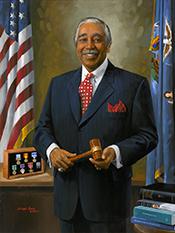 Rep. Charles B. Rangel (D-NY)
Legislative Activity
Stay on top of the latest movement without scrolling through every action
On motion to suspend the rules and pass the bill Failed by the Yeas and Nays: (2/3 required): 2 - 402 (Roll no. 494). (text: CR H8117-8118)
October 5, 2004 • 7:27 PM
View full timeline
Introduced in House
January 7, 2003
Referred to the House Committee on Armed Services.
January 7, 2003
Referred to the Subcommittee on Total Force.
February 3, 2003
Mr. McHugh moved to suspend the rules and pass the bill.
October 5, 2004 • 5:59 PM
Considered under suspension of the rules. (consideration: CR H8117-8130)
October 5, 2004 • 6:00 PM
DEBATE - The House proceeded with forty minutes of debate on H.R. 163.
October 5, 2004 • 6:00 PM
Failed of passage/not agreed to in House: On motion to suspend the rules and pass the bill Failed by the Yeas and Nays: (2/3 required): 2 - 402 (Roll no. 494).(text: CR H8117-8118)
October 5, 2004 • 7:27 PM
On motion to suspend the rules and pass the bill Failed by the Yeas and Nays: (2/3 required): 2 - 402 (Roll no. 494). (text: CR H8117-8118)
October 5, 2004 • 7:27 PM
Voting History
1 vote recorded • Roll call available
Floor Debate
21 membersWhat members said about H.R. 163 on the floor
 +16
+16
Floor Debate
21 membersWhat members said about H.R. 163 on the floor
Mr. Speaker, great interest has been generated by the publication of a document from the 11th of February 2003 entitled ``Topical Agenda''. It involves the Department of Defense Personnel and…
Mr. Speaker, I move to suspend the rules and pass the bill (H.R. 163) to provide for the common defense by requiring that all young persons in the United States, including women, perform a period of…
Mr. Speaker, I reserve the right to object. Mr. Speaker, I have a parliamentary inquiry. Mr. Speaker, I would like to inquire whether the proponent of this motion to suspend supports the bill, and,…
Mr. Speaker, I hate to rise in opposition to both leaderships on both sides of the aisle. I am probably the only one that is going to vote for a draft. I believe we have to start looking at this…
Mr. Speaker, I rise in opposition to H.R. 163, a bill to re-instate the draft. I oppose the draft and do not want to see it brought back. I added my name to this bill in order to promote an open,…
Show 8 more
Mr. Speaker, the bill we are voting on today has been used by Democrats to scare young voters and their parents with the lie of an impending draft. As a retired veteran of 31 years' service in the…
Mr. Speaker, bringing up a bill today, nearly 2 days since it was introduced without a hearing, to anybody in any committee, nothing, to just bring it up today, 3 days before the end of the session,…
Mr. Speaker, the Republican ploy is not going to work. Finally, it is out in the open. H.R. 163, which the administration denied for 18 months, that is the national service bill, is not going to go…
Mr. Speaker, I thank the gentleman from New York (Mr. McHugh) for bringing this to the floor. This is, I say in all disappointment, an incredible insult to the men and women who wear the uniform. Why…

Mr. Speaker, I rise today to talk about a very important subject for the young people of my district and America, the draft. This week, the Congress considered H.R. 163, Universal National Service…
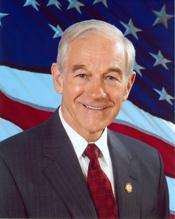
Mr. Speaker, I rise to oppose H.R. 163 in the strongest possible terms. The draft, whether for military purposes or for some form of ``national service,'' violates the basic moral principles of…
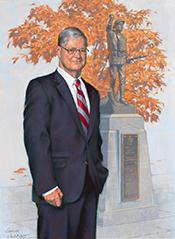
Mr. Speaker, I claim the time in opposition to this bill. Mr. Speaker, so I understand, am I entitled to the time in opposition? I am the ranking member of the Committee on Armed Services. Mr.…
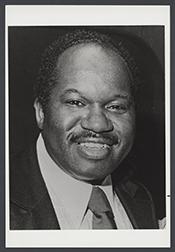
Mr. Speaker, I rise in opposition to the bill. Mr. Speaker, it is insulting and disgusting for the Republican Majority to make a joke of serious war and peace policy by bringing draft legislation to…
Show 11 more
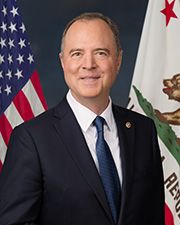
Mr. Speaker, I rise in strong opposition to H.R. 163. I do not believe that a reinstatement of the draft is necessary or desirable; nor do I believe that there is any support for a draft among my…

Mr. Speaker, I rise today to oppose H.R. 163, a bill to reinstate the draft. Rumors of a military draft have been flying around the Internet and the possibility has been discussed at millions of…
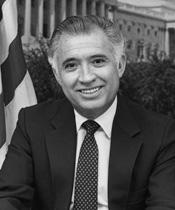
Mr. Speaker, I rise in opposition to the bill to reinstate a military draft in the United States. It is unfortunate that we find ourselves in this position . . . but it is not a matter of needing a…
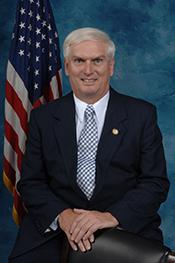
Mr. Speaker, I rise in opposition to this bill. With the modern technology found in most weapons today, the U.S. military needs a more highly educated force than it needed years ago. Also, the United…
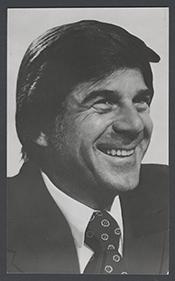
Mr. Speaker, I am an original cosponsor of the Rangel/ Conyers bill, the Universal National Service Act of 2003 (H.R. 163), which would reinstate a national draft. I would like to explain my support…
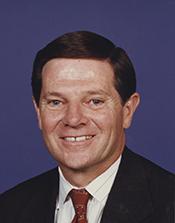
Mr. Speaker, sometimes, not always, but sometimes a bill comes to the floor of this House after a long deliberative examination of the facts surrounding a difficult issue with compelling arguments on…
Mr. Speaker, the gentleman from New York (Mr. Rangel) and I put this bill in in January of 2003 because we knew that not every American was at equal risk, that the wealthy would not go, and the war…

Mr. Speaker, well, I just want to echo the dean, and I want to congratulate the gentleman from New York (Mr. Rangel) for his courage. Frankly, let me say to my colleagues on the floor of the House,…
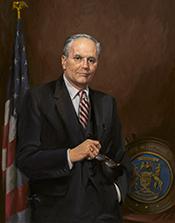
Mr. Speaker, I think this debate is pointing out something very important: This is a rich man's war and it is a poor man's fight. We have some of the finest young people in the world over there in…
Mr. Speaker, will the gentleman yield? Mr. Speaker, I would like to associate myself with the remarks of the gentleman and support his position. Mr. Speaker, I am an original cosponsor of the…
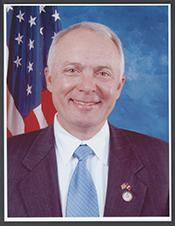
Mr. Speaker, I rise today in strong opposition to H.R. 163 and urge my colleagues to overwhelmingly reject not only this election year ``scare tactic'' but the increasingly archaic policy of…
Bill Text
Latest available legislative text
        [Congressional Bills 108th Congress]
[From the U.S. Government Publishing Office]
[H.R. 163 Introduced in House (IH)]

108th CONGRESS
1st Session
H. R. 163

To provide for the common defense by requiring that all young persons
in the United States, including women, perform a period of military
service or a period of civilian service in furtherance of the national
defense and homeland security, and for other purposes.

_______________________________________________________________________

IN THE HOUSE OF REPRESENTATIVES

January 7, 2003

Mr. Rangel (for himself, Mr. McDermott, Mr. Conyers, Mr. Lewis of
Georgia, Mr. Stark, and Mr. Abercrombie) introduced the following bill;
which was referred to the Committee on Armed Services

_______________________________________________________________________

A BILL

To provide for the common defense by requiring that all young persons
in the United States, including women, perform a period of military
service or a period of civilian service in furtherance of the national
defense and homeland security, and for other purposes.

Be it enacted by the Senate and House of Representatives of the
United States of America in Congress assembled,

SECTION 1. SHORT TITLE; TABLE OF CONTENTS.

(a) Short Title.--This Act may be cited as the ``Universal National
Service Act of 2003''.
(b) Table of Contents.--The table of contents for this Act is as
follows:

Sec. 1. Short title; table of contents.
Sec. 2. National service obligation.
Sec. 3. Two-year period of national service.
Sec. 4. Implementation by the President.
Sec. 5. Induction.
Sec. 6. Deferments and postponements.
Sec. 7. Induction exemptions.
Sec. 8. Conscientious objection.
Sec. 9. Discharge following national service.
Sec. 10. Registration of females under the Military Selective Service
Act.
Sec. 11. Relation of Act to registration and induction authority of
Military Selective Service Act.
Sec. 12. Definitions.

SEC. 2. NATIONAL SERVICE OBLIGATION.

(a) Obligation for Young Persons.--It is the obligation of every
citizen of the United States, and every other person residing in the
United States, who is between the ages of 18 and 26 to perform a period
of national service as prescribed in this Act unless exempted under the
provisions of this Act.
(b) Form of National Service.--National service under this Act
shall be performed either--
(1) as a member of an active or reverse component of the
uniformed services; or
(2) in a civilian capacity that, as determined by the
President, promotes the national defense, including national or
community service and homeland security.
(c) Induction Requirements.--The President shall provide for the
induction of persons covered by subsection (a) to perform national
service under this Act.
(d) Selection for Military Service.--Based upon the needs of the
uniformed services, the President shall--
(1) determine the number of persons covered by subsection
(a) whose service is to be performed as a member of an active
or reverse component of the uniformed services; and
(2) select the individuals among those persons who are to
be inducted for military service under this Act.
(e) Civilian Service.--Persons covered by subsection (a) who are
not selected for military service under subsection (d) shall perform
their national service obligation under this Act in a civilian capacity
pursuant to subsection (b)(2).

SEC. 3. TWO-YEAR PERIOD OF NATIONAL SERVICE.

(a) General Rule.--Except as otherwise provided in this section,
the period of national service performed by a person under this Act
shall be two years.
(b) Grounds for Extension.--At the discretion of the President, the
period of military service for a member of the uniformed services under
this Act may be extended--
(1) with the consent of the member, for the purpose of
furnishing hospitalization, medical, or surgical care for
injury or illness incurred in line of duty; or
(2) for the purpose of requiring the member to compensate
for any time lost to training for any cause.
(c) Early Termination.--The period of national service for a person
under this Act shall be terminated before the end of such period under
the following circumstances:
(1) The voluntary enlistment and active service of the
person in an active or reverse component of the uniformed
services for a period of at least two years, in which case the
period of basic military training and education actually served
by the person shall be counted toward the term of enlistment.
(2) The admission and service of the person as a cadet or
midshipman at the United States Military Academy, the United
States Naval Academy, the United States Air Force Academy, the
Coast Guard Academy, or the United States Merchant Marine
Academy.
(3) The enrollment and service of the person in an officer
candidate program, if the person has signed an agreement to
accept a Reserve commission in the appropriate service with an
obligation to serve  on active duty if such a commission is
offered upon completion of the program.
(4) Such other grounds as the President may establish.

SEC. 4. IMPLEMENTATION BY THE PRESIDENT.

(a) In General.--The President shall prescribe such regulations as
are necessary to carry out this Act.
(b) Matter To Be Covered by Regulations.--Such regulations shall
include specification of the following:
(1) The types of civilian service that may be performed for
a person's national service obligation under this Act.
(2) Standards for satisfactory performance of civilian
service and of penalties for failure to perform civilian
service satisfactorily.
(3) The manner in which persons shall be selected for
induction under this Act, including the manner in which those
selected will be notified of such selection.
(4) All other administrative matters in connection with the
induction of persons under this Act and the registration,
examination, and classification of such persons.
(5) A means to determine questions or claims with respect
to inclusion for, or exemption or deferment from induction
under this Act, including questions of conscientious objection.
(6) Standards for compensation and benefits for persons
performing their national service obligation under this Act
through civilian service.
(7) Such other matters as the President determines
necessary to carry out this Act.
(c) Use of Prior Act.--To the extent determined appropriate by the
President, the President may use for purposes of this Act the
procedures provided in the Military Selective Service Act (50 U.S.C.
App. 451 et seq.), including procedures for registration, selection,
and induction.

SEC. 5. INDUCTION.

(a) In General.--Every person subject to induction for national
service under this Act, except those whose training is deferred or
postponed in accordance with this Act, shall be called and inducted by
the President for such service at the time and place specified by the
President.
(b) Age Limits.--A person may be inducted under this Act only if
the person has attained the age of 18 and has not attained the age of
26.
(c) Voluntary Induction.--A person subject to induction under this
Act may volunteer for induction at a time other than the time at which
the person is otherwise called for induction.
(d) Examination; Classification.--Every person subject to induction
under this Act shall, before induction, be physically and mentally
examined and shall be classified as to fitness to perform national
service. The President may apply different classification standards for
fitness for military service and fitness for civilian service.

SEC. 6. DEFERMENTS AND POSTPONEMENTS.

(a) High School Students.--A person who is pursuing a standard
course of study, on a full-time basis, in a secondary school or similar
institution of learning shall be entitled to have induction under this
Act postponed until the person--
(1) obtains a high school diploma;
(2) ceases to pursue satisfactorily such course of study;
or
(3) attains the age of 20.
(b) Hardship and Disability.--Deferments from national service
under this Act may be made for--
(1) extreme hardship; or
(2) physical or mental disability.
(c) Training Capacity.--The President may postpone or suspend the
induction of persons for military service under this Act as necessary
to limit the number of persons receiving basic military training and
education to the maximum number that can be adequately trained.
(d) Termination.--No deferment or postponement of induction under
this Act shall continue after the cause of such deferment or
postponement ceases.

SEC. 7. INDUCTION EXEMPTIONS.

(a) Qualifications.-- No person may be inducted for military
service under this Act unless the person is acceptable to the Secretary
concerned for training and meets the same health and physical
qualifications applicable under section 505 of title 10, United States
Code, to persons seeking original enlistment in a regular component of
the Armed Forces.
(b) Other Military Service.--No person shall be liable for
induction under this Act who--
(1) is serving, or has served honorably for at least six
months, in any component of the uniformed services on active
duty; or
(2) is or becomes a cadet or midshipman at the United
States Military Academy, the United States Naval Academy, the
United States Air Force Academy, the Coast Guard Academy, the
United States  Merchant Marine Academy, a midshipman of a Navy
accredited State maritime academy, a member of the Senior Reserve
Officers' Training Corps, or the naval aviation college program, so
long as that person satisfactorily continues in and completes two years
training therein.

SEC. 8. CONSCIENTIOUS OBJECTION.

(a) Claims as Conscientious Objector.--Any person selected under
this Act for induction into the uniformed services who claims, because
of religious training and belief (as defined in section 6(j) of the
Military Selective Service Act (50 U.S.C. 456(j))), exemption from
combatant training included as part of that military service and whose
claim is sustained under such procedures as the President may
prescribe, shall, when inducted, participate in military service that
does not include any combatant training component.
(b) Transfer to Civilian Service.--Any such person whose claim is
sustained may, at the discretion of the President, be transferred to a
national service program for performance of such person's national
service obligation under this Act.

SEC. 9. DISCHARGE FOLLOWING NATIONAL SERVICE.

(a) Discharge.--Upon completion or termination of the obligation to
perform national service under this Act, a person shall be discharged
from the uniformed services or from civilian service, as the case may
be, and shall not be subject to any further service under this Act.
(b) Coordination With Other Authorities.--Nothing in this section
shall limit or prohibit the call to active service in the uniformed
services of any person who is a member of a regular or reserve
component of the uniformed services.

SEC. 10. REGISTRATION OF FEMALES UNDER THE MILITARY SELECTIVE SERVICE
ACT.

(a) Registration Required.--Section 3(a) of the Military Selective
Service Act (50 U.S.C. 453(a)) is amended--
(1) by striking ``male'' both places it appears;
(2) by inserting ``or herself'' after ``himself''; and
(3) by striking ``he'' and inserting ``the person''.
(b) Conforming Amendment.--Section 16(a) of the Military Selective
Service Act (50 U.S.C. App. 466(a)) is amended by striking ``men'' and
inserting ``persons''.

SEC. 11. RELATION OF ACT TO REGISTRATION AND INDUCTION AUTHORITY OF
MILITARY SELECTIVE SERVICE ACT.

(a) Registration.--Section 4 of the Military Selective Service Act
(50 U.S.C. App. 454) is amended by inserting after subsection (g) the
following new subsection:
``(h) This section does not apply with respect to the induction of
persons into the Armed Forces pursuant to the Universal National
Service Act of 2003.''.
(b) Induction.--Section 17(c) of the Military Selective Service Act
(50 U.S.C. App. 467(c)) is amended by striking ``now or hereafter'' and
all that follows through the period at the end and inserting ``inducted
pursuant to the Universal National Service Act of 2003.''.

SEC. 12. DEFINITIONS.

In this Act:
(1) The term ``military service'' means service performed
as a member of an active or reverse component of the uniformed
services.
(2) The term ``Secretary concerned'' means the Secretary of
Defense with respect to the Army, Navy, Air Force, and Marine
Corps, the Secretary of Homeland Security with respect to the
Coast Guard, the Secretary of Commerce, with respect to matters
concerning the National Oceanic and Atmospheric Administration,
and the Secretary of Health and Human Services, with respect to
matters concerning the Public Health Service.
(3) The term ``United States'', when used in a geographical
sense, means the several States, the District of Columbia,
Puerto Rico, the Virgin Islands, and Guam.
(4) The term ``uniformed services'' means the Army, Navy,
Air Force, Marine Corps, Coast Guard, commissioned corps of the
National Oceanic and Atmospheric Administration, and
commissioned corps of the Public Health Service.
<all>