Export Freedom to Cuba Act of 2003
Legislative Activity
Stay on top of the latest movement without scrolling through every action
Referred to the House Committee on International Relations.
May 13, 2003
View full timeline
Introduced in House
May 13, 2003
Referred to the House Committee on International Relations.
May 13, 2003
Floor Debate
24 membersWhat members said about H.R. 2071 on the floor
 TD
TD RM
RM EJIJF
EJIJF LD+19
LD+19
Floor Debate
24 membersWhat members said about H.R. 2071 on the floor
Mr. Chairman, as I understand this amendment, it basically strikes the new OMB circular A-76 and would be replaced by the old OMB circular A-76, which all the parties were complaining about prior to…
Mr. Chairman, as I understand this amendment, it basically strikes the new OMB circular A-76 and would be replaced by the old OMB circular A-76, which all the parties were complaining about prior to this time. So the question really before the House is, is the new circular which was met, after getting input from all of the stakeholders, with a number of unanimous agreements on how this should be changed and incorporated into this, after literally 700 comments were received in developing the guidelines, if this should be changed or should we go back to the old circular A-76.
Is that a correct understanding?
I yield to the gentleman from Maryland.
Reclaiming my time, I understand the gentleman's position. To be sure, all of us who have dealt with these issues, and I have, for a number of years, there are concerns about the way the administration has gone about competitive sourcing. Two major problems that come in: One we have fixed with this bill, and that is when the administration goes to competitive sourcing, there is a cost to that because you have to hire people to evaluate it. There are costs of the government looking and revamping how they would produce a service. You are evaluating the private sector to see how they would provide the service. There are costs to that, and right now those costs are not currently recaptured.
We have put language into the underlying legislation here through our committee that will, for the first time, have the Federal Government report on those costs so that they can be adequately waived.
The second is issue is, I think in some cases the administration is moving too fast, doing too much competitive sourcing, more than they can adequately handle and evaluate. We have heard there have been a couple high-profile instances where the administration has come forward and the evaluations have probably not been appropriate, and I think they are biting off more than they can chew. But I do not think that goes to the base of the A-76 reasonable or reasonable. I like the new procedure, or if there are revamps, I would prefer not to do it through this process. I would rather go back and evaluate it in committees. We have held hearings and are continuing to look at this.
Remember, competitive sourcing is not the same as out-sourcing or privatization. Its purpose is neither to downsize the workforce or to contract jobs out. It is about harnessing the benefits of competition to produce superior performance for the taxpayer, regardless of who performs a service. And in almost every instance where competitive sourcing is applied, the government ends up with a savings. Sometimes this is done by the government employees and the government groups who have gotten together and have retooled the way they provide the service and do it more efficiently. Sometimes it is done by an outside party coming in and showing that they can do it better.
There is no way to measure efficiency in government when you are a monopoly. But if you can go out, occasionally, to the private sector and say, what can you perform, it gives us a standard of performance, a measurement of efficiency that we would not have otherwise.
Now, there is a problem with this that I readily concede, and it troubles me, and it is one that the gentleman from Maryland (Mr. Van Hollen) and I have wrestled with. And that is, who wants to come work for the Federal government and dedicate a career to civil service if your job is going to be up for evaluation every 5 years, which is what the guidelines in last year's bill called for. Twenty percent every year was going to be looked at, of inherently non-governmental services that the government is providing, and we would see if it could be competitively sourced. And, basically, that meant on average every 5 years a person's job would be evaluated, and that hurts our recruitment. It hurts our retention.
Now, the fact of the matter is, in most cases where the outside parties win, Federal employees are offered rights of first refusal. In fact, that is spelled out better in the new A-76 circular. That if, in fact, the government is displaced by an outside firm, jobs are offered to the Federal employee government to provide that service so they are not out of work. They are no longer Federal employees. They lose some benefits; they pick up some benefits in some particular cases. But to be sure, there are instances that we wrestle with.
Now on May 29, the OMB published its final revisions of the A-76 process. These revisions were the first major overhaul to the competitive sourcing process in 20 years. And this came after all parties, but particularly Federal employees, were complaining about the old system, a system that we return to if this amendment passes.
What we have now is a product of a 2-year effort that includes discussions and negotiations with all stakeholders including Federal employee groups, private sector companies. As I stated before, more than 700 comments were taken into account in developing these new guidelines. They also incorporated the core recommendations of the Commercial Activities Panel. This panel, headed by the Comptroller General, conducted a year-long review of the competitive sourcing process and issued recommendations, most of them unanimous, for comprehensive changes to process. And I think we have to give that revamped process a chance to work before we willy-nilly throw it out and go back to the old process, which everyone was complaining about.
I think the new process is, in many ways, fair. The gentleman from Maryland (Mr. Van Hollen) and I disagree. I will address more of this later. I urge that we oppose the Van Hollen amendment which would take us back to the days that everyone was complaining about and just were not working efficiently.
Mr. Chairman, again, my friend from Maryland and I have fought a lot of battles on behalf of Federal employees. I represent a lot of Federal employees, as he does. We disagree about this particular amendment. I also represent a lot of contractors, and I also represent taxpayers who at the end of the day should be the major beneficiary from this because competitive sourcing, I think, means not less government or more government, it means more efficient government, and that is the goal of this. I hope the gentleman understands that it is a question of how we get to that.
Let me make a couple of comments. I believe this is better for Federal employees in the sense that the new OMB circular A-76 allows the government instead of just providing cost estimates that are compared against competition among the private sector, it almost puts the government at a disadvantage. This allows them to compete on the same field. It allows them to be more innovative in competing with the outside companies, and I think, therefore, more likely to prevail. Government basically has a chance to respond to the private sector on the same grounds, something they do not get under the current A-76 circular and something in our hearings has been something they have complained about. That is thrown out the window with the gentleman's amendment.
Secondly, since OMB circular A-76 is not a regulation but it is simply an OMB circular, OMB can put out another provision tomorrow with minor revisions that we cannot touch. It could be worse, it could be better, but they do not have to go through the hearing process that they did by law to arrive at the conclusion they did here. So they could come back, issue a new circular tomorrow that would be very similar, could be more onerous, and we could not stop that, and that is also a fear I have.
Right now we are in a mode where we are working with them where they are communicating with us, where they are making changes and reacting to some of the results of our hearings and congressional input. I fear if this goes, that the executive branch will exercise their prerogatives and will move ahead in something that I think could be more disadvantageous to Federal employees.
Finally, this process is fair in the sense that if the private vector wins a competition, the contractor has to give any displaced Federal employees a right of first refusal for jobs. The process provides for a 10 percent cost evaluation adjustment to the incumbent services provider, Federal employees in most instances, and Federal employees offers do not have to comply with small business requirements or in many cases have their past performance evaluated. Private sector companies do.
This is not about campaign contributions. I would add to the gentleman on the other side, contributions from unions have gone to the people who are for this amendment and for other dissimilar amendments. There are interest groups on all side of this issue, but let us do what is right for the taxpayers, let us do what is right for this country. Let us defeat the Van Hollen amendment.
Mr. Chairman, I do not know where to start with my friend from Florida on this. I guess we can compare endorsements of his position on this and mine. He has listed a group of unions, some of them Federal employee unions, some who have nothing to do with Federal employment who are interested, obviously, in protecting their membership. We understand that, and that is a noble purpose.
Our purpose here is not to protect contractors; it is not to protect employees. It is to protect the taxpayers. And that is what competitive sourcing is all about, and trying to do it in an appropriate way that does not destroy the Federal workforce. In some cases, as I have said before, I am not comfortable with every aspect of what the administration has done. But we are working hard and we have language in this underlying legislation that addresses some of those concerns.
The Aerospace Industries Association, the American Congress on Surveying and Mapping, American Electronics Association, U.S. Chamber of Congress, American Institute of Architects, Associated General Contractors of America, Business Executives for National Security, Contract Services Association of America, Design Professionals Coalition, Electronic Industries Alliance, and I can go on and on with National Defense Industrial Council and the National Federation of Independent Businesses support and oppose the gentleman's amendment. So we have groups on both sides that add value to this, and our job is to try to synthesize this.
Last year, I was part of a group in the House that struck down the administration's quotas, their goals that they were going to go out and competitively source a certain percentage. I thought that was wrong. I thought that was an overreach. I thought they were biting off more than they could realistically chew and manage. And I think in some cases where they are today that issue can be addressed, but I do not think the gentleman's amendment addresses those concerns.
This would hamstring the Office of Management and Budget's new competitive sourcing process that was arrived at after weighing 700 comments, after going through the union recommendations of a council that included labor leaders and other government personnel.
Competitive sourcing, also known as public-private competition, is simply a process of determining if the government's commercial functions, like computer services, food services or maintenance, should be performed by Federal agencies or by private sector companies. Our job is to try to get the best services for the taxpayer, the best value, the lowest-cost value, the overall best value. One of the problems with the gentleman's amendment is it strikes at the heart of best-value determinations.
The Hastings amendment limits the agency's use of best value in determining whether a commercial function should be performed in-house or by the private sector. This does not make sense in my judgment, because under our acquisition system, the government buys its more sophisticated goods and services using this best-value method. It permits the government to consider quality as well as cost, and that helps Federal employees, because the quality element has to be clearly set forth in the solicitation. And cost, of course, has to be a factor, but value is not new. It has been used for decades by the government, and it makes no sense to limit its use here.
Our Federal employees ought to be able to use their experience and their expertise in high-quality performance to their advantage in public-private competition, and the gentleman's amendment takes that away. That is a concern. I think it is well meaning, but I think it takes away the advantage that incumbents who were performing this have in terms of quality. Commercial entities and private citizens would not buy services without considering the quality, so why should the government? And the gentleman's amendment strikes that.
Now is not the time to tinker with these revisions in this setting, in my opinion. Again, the revisions are the product of more than 2 years of efforts. Seven hundred comments were considered in the development of the new procedures. They incorporated the core recommendations of the Commercial Activities Panel. This panel, again, headed by the Comptroller General in a year-long effort, reviewed the competitive sourcing process, which was clearly flawed, and which all sides, from Federal employees to contractors to
taxpayers, everyone felt it was flawed and needed revamping. They issued recommendations, this panel did, for comprehensive changes to the process. These efforts resulted in the revisions to Circular A-76, which the gentleman now wishes to strike. It was issued on May 29.
We have held hearings on this. I have some concerns, as the gentleman does, about this as well; but I would rather not throw literally the baby out with the bath water, good things like competitive sourcing that come with this. We recently held a hearing to examine the recent revisions to the competitive sourcing A-76 process, and the Comptroller General testified that significant savings result no matter who wins the competition.
The Office of Management and Budget has just submitted a report to Congress on the methods used by the administration to measure agency progress in implementing the competitive sourcing initiative. OMB has pledged to keep Congress fully apprised of that progress and to conduct the initiative in an open and transparent manner. Let us give them a chance.
And, again, we have put some underlying language in this bill that puts some strict reporting requirements on the costs to the government of competitive sourcing so we can come back and properly evaluate this. This is something we did not have before.
The Hastings amendment derails the administration's efforts to increase the efficiency of government operations. You can say you are for efficiency, you can say you are against wasteful spending, but if you cannot compare how the government is providing a service to how someone else may be able to provide that same service, I do not know how you get at the waste, fraud and abuse. Because waste, fraud and abuse does not come in neatly tied packages in line items and budgets. It is marbled throughout the bureaucracy in the way we do business.
Competitive sourcing, particularly the new A-76 Circular, gives our government employees an opportunity to compete on an even basis under the Federal Acquisition Regulation, something they cannot do now. Right now they have to come up with projections and respond to competitive sourcing on the part of the private sector; the private sector winner is then compared against the government price. This allows them to compete even up, to be more innovative, and to, in many cases, improve the way employees deliver that service.
In my experience, I have found that some of the best savings and efficiencies we get do not come from the managers in the Federal Government or the higher-ups. They come from that employee out the window who is doing the job every day that may come up with that key idea or innovation in the way we can do this.
The new A-76 circular takes that into account and basically gives additional empowerment to that employee at the window to be able to come forward with their ideas and incorporate those into the government bid. Under the old circular, that was not really the case.
I understand the gentleman's frustration. I think all of us feel a frustration, as I have said before. Our concern is constant competitive sourcing can hurt the recruitment and retention abilities to develop a strong Federal workforce, and yet it is a useful tool that needs to be employed. I think perhaps it has been overemployed. There are probably costs that we are not aware of at this point, but we have tried to get at this with underlying language, but I think the gentleman's amendment goes too far.
We want to harness the benefits of competition to produce superior performance for the taxpayer, regardless of who performs the service because at the end of the day, our job is to make sure that taxpayers are getting the best value for their dollar. The gentleman's amendment undermines our ability to do that, so I urge we vote against the Hastings amendment.
Mr. Chairman, I rise to strongly oppose the Flake amendment. I would like to make a series of points in response to some of what I have heard. First, what the gentleman from Arizona (Mr. Flake) does…
Mr. Chairman, I rise to strongly oppose the Flake amendment. I would like to make a series of points in response to some of what I have heard.
First, what the gentleman from Arizona (Mr. Flake) does is, in essence, invite lawlessness. It says that we will prohibit the Treasury Department from doing what the law says. It does not undo the law. It, in essence, prohibits the Treasury Department from enforcing the law. So this Congress would promote lawlessness.
Yes, it is illegal to travel to Cuba under certain circumstances, but we will look the other way. We will not allow that element of law enforcement within the Treasury Department to enforce our laws. What a slippery slope that is when we begin a process that says the law is the law, but we are not going to allow it to be enforced. What a slippery process that is.
To my dear friends who talk about the Soviet Union and how they fell because we went over there, the reality is the Soviet Union fell because they could not keep up with the arms race with the United States, and they decided internally on Glasnos and Perestroika. And when they unleashed those forces of opening, then the people of what was the Soviet Union began to move. But that crumbling began with from within, not from without.
I hear about failed policy, let me tell you about a failed policy. The failed policy is millions of visitors, millions upon millions of visitors from Canada and Mexico and Spain and other part of Europe and Latin America in the last decade and what has happened? Not one positive action towards democracy and human rights has taken place. That to me is a failed policy. It is a failed policy when prostitution flourishes inside of Cuba so that foreign tourists can take advantage of Cuban women. That to me is a failed policy.
It is a failed policy when we believe that by having millions of Americans go to Cuba and sun themselves on the beaches of Varadero, smoking a Cuban cigar, and sipping Cuban rum is the way in which we are going to liberate the Cuban people. What is incredible to me is the deafening silence of those who advocate these amendments, but when repression takes place in Cuba, they are virtually silent, and their silence is deafening.
I say that a vote for this amendment, particularly at this time, flies in the face of all of those who languish inside of Cuba who risked their liberty and their lives to make change within their country.
A vote to support this amendment is a vote to fund the Cuban economy and Cuban tyranny. A vote to support this amendment is a vote to support a regime that executed three men by firing squad after closed- door summary trials. A vote for this amendment is a vote to continue to fund the regime that brutally arrested and jailed over 75 activists this spring for doing nothing more than demanding human rights for their people.
A vote for this amendment is to say to those who languish in Castro's jails, we will go visit the beaches of Cuba, we will smoke the cigars that were mentioned here, but you will continue to languish in Castro's jail.
The Cuban government sentenced many of these innocent dissidents to 14 to 27 years in Cuban jails after holding one-day, closed-door summary trials. Our answer to that is, let us have a grand old time on Varadero Beach. That is our answer to all those who languish.
A vote to support this amendment is a vote to support the jailing of these activists who suffer without clean water, edible food, sanitary conditions and who languish in Castro's jails.
The tales emerging from their prison cells include allegations of beating, psychological torture, solitary confinement in jail cells infested with rats and scorpions.
The prison conditions are so deplorable that 15 Cuban dissidents who were jailed in the crackdown started a hunger strike to protest the inhuman conditions. In a letter explaining the protest, family members said that the
prison conditions had led them, the prisoners, to make the terrible decision to declare themselves on a hunger strike that compromises their health and, in many cases, even their lives.
So let us recall Raul Rivero, Miriam Leiva, Gisella Delgado and others that, in fact, their suffering and their languishing in those jails are responded to by us having more tourism.
Vote against this amendment. Vote against such an infamy and let us begin to speak up for those people who are risking their lives and liberty.
Travel Ban Amendment
To prohibit the use of funds to enforce the ban on travel to Cuba by U.S. Citizens.
Congress has already passed the law that supports the travel ban. This amendment would only create sloppy legislation. The amendment doesn't change the underlying law. Instead, the amendment would prevent Treasury from supporting the existing law.
The belief that Americans can change Castro through tourism flies in the face of evidence that millions of visitors from Canada, Mexico, Spain and other parts of Europe and Latin America visited Cuba in the last decade, without impacting one iota of positive change toward democracy and human rights.
Cuba Travel restrictions are constitutional, according to the Supreme Court [Regan vs. Wald 1984]. Other courts: the 9th Circuit 1996, and the 11th Cir. 2000, agreed.
Cuba has been on the list of state-sponsored terrorism since 1982 and remains on the list for supporting Foreign Terrorist Organizations, for providing safe haven to U.S. designated foreign terrorist organizations including the ELN and the FARC from Colombia. Cuba also continues to harbor fugitives from the U.S. justice system.
Due to the end of Soviet Subsidies and his disastrous economic policies, Castro is bankrupt. His lack of cash restricts his ability to engage or support anti-American actions around the world. Castro has used American tourist dollars to take the place of Soviet payments.
The money obtained from tourism is not invested to benefit the Cuban people. It is invested to reinforce a state security apparatus that is used in developing a tourism infrastructure which only benefits the government.
The tourism infrastructure doesn't benefit average Cubans. Instead, Castro sets aside hotels, beaches, stores, restaurants, even hospitals for foreigners, prohibiting Cubans from staying in those hotels and patronizing those facilities. American tourism under current conditions would freeze in place Castro's tourist apartheid.
The infusion of U.S. tourist dollars will provide the regime with a lifeline. Lifting the travel ban without securing meaningful changes in Cuba will: (1) Guarantees the continuation of the current totalitarian structures, and (2) Strengthen Castro's security forces.
amendment to end the embargo
Why would members of Congress even suggest ending the embargo at a time when we are seeing the worst wave of repression in Cuba since right after the Revolution? The State Department calls this new wave ``the most despicable act of political repression in the Americas in a decade.''
A vote to support this amendment is a vote to fund the Cuban economy and Cuban tyranny.
A vote to support this amendment is a vote to support a regime that executed three men by firing squad, after closed door summary trials.
A vote to support this amendment is a vote to support a brutal government which arrested and jailed over 75 activists this spring for doing nothing more than demanding human rights for their people.
A vote to support this amendment is a vote to support this massive crackdown and Cuban style justice, or more accurately, injustice. The Cuban government sentenced these innocent dissidents to 14 to 27 years in Cuban jails after holding one-day, closed door, summary trials.
A vote to support this amendment is a vote to support the jailing of these activists who suffer without clean water, edible food, and sanitary conditions and who languish in Castro's jail. The tales emerging from their prison cells include allegations of beatings, psychological torture, solitary confinement and jail cells infested with rats and scorpions.
The prison conditions are so deplorable that 15 Cuban dissidents, who were jailed in the crackdown, have started a hunger strike to protest the inhuman conditions. In a letter explaining the protest, family members said that the prison conditions, ``have led them (the prisoners) to make the terrible decision to declare themselves on a hunger strike, which compromises their health and even their lives.'' While the names of the dissidents on the hunger strike have not been published, the letter in support of the strike was signed by the wife of poet and dissident journalist Raul Rivero (sentenced to 20 years in jail), Miriam Leiva, wife of economist Oscar Espinosa Chepe (sentenced to 20 years in jail), and Gisella Delgado, the wife of activist Hector Palacios (sentenced to 25 years in jail).
A vote to support this amendment is a vote to support the government that has jailed Oscar Manuel Espinosa Chepe. Mr. Chepe, a Cuban economist and independent journalist, was sentenced to 20 years in jail for criticizing the Cuban government. At age 62 Mr. Chepe, according to the Lawyers' Committee for Human Rights, is suffering from a chronic kidney condition, a thoracic hernia, persistent hypertension, and severe weight loss. The Cuban government refused to provide him with medical treatment. Only when he was near death and only after intense international pressure, was he transferred to a hospital.
A vote to support this amendment is a vote to allow funds to flow to the government that jailed Oscar Elias Biscet. Dr. Biscet founded the Lawton Foundation for Human Rights, one of the first independent civic groups in Havana. On February 27, 1999 he was arrested for hanging the national flag sideways at a press conference and was sentenced to three years in jail. After his release, he organized seminars on the Universal Declaration of Human Rights for Cubans. And he was arrested again in December of 2002 for organizing these seminars. In April of this year he was sentenced to 25 years in jail and sent to a special state prison.
A vote to support this amendment is a vote to support the jailing of Marta Beatriz Roque Cabello. She is an economist and director of the Cuban Institute of Independent Economists and is the only woman who was detained. She is the recipient of the 2002 Heinz R. Pagels Human Rights of Scientists Award of the New York Academy of Sciences. In April, she was sentenced to 20 years in jail for her opposition work. She is in acute pain, has nausea attacks and the left part of her body has become numb, according to the opposition news agency CUBANET. In spite of her pain, she must sit on a stool throughout the day since prisoners are not allowed to stay in bed during the daytime.
I'll say again, a vote to support this amendment is a vote to support the tyranny and brutality of the Cuban government. The embargo is our strongest weapon against the Castro regime. Vote, ``no''' to this amendment. Show the men and women who suffer in Cuban jails for the right to freedom that we stand with them in their fight for human rights, justice, and a county free of dictatorship.
Mr. Chairman, I have great respect for the gentleman from Massachusetts (Mr. Delahunt), and we are working on a series of crucial issues in Latin America; but I have a fundamental disagreement with the gentleman certainly on the issue of Cuba and particularly on this amendment.
My two points that I want to make, number one, we hear a lot about Cuban-American families and their families in Cuba, and those of us who are Cuban Americans struggle with this all the time, the desire to help our families, at the same time propping up a regime that oppresses them.
But the amendment goes beyond that because the law permits remittances from non-Cuban Americans, from ordinary Americans who have no relationship to Cuba whatsoever, to make remittances into any Cuban individual inside of Cuba. Now that means that the potential for unlimited amounts of money by nonfamily members having no relationship with Cubans on the island to send monies into Cuba would be unlimited.
And when we know of Castro's history of his support of terrorism, of his harboring fugitives from the United States, imagine those who support those who think about that in our own country being able to send U.S. dollars into Cuba without restriction as to amounts or process, not for Cuban families, but ultimately for those who wish
us harm. That is the risk with the gentleman's amendment and that is the law of the land today. We, in fact, as Americans, can send money into Cuba, and you do not have to have any family inside of Cuba. To now permit unlimited amounts of that happening is against the national interest of the United States and the national security of the United States.
Finally, I would point out that yes, this does help the regime because not only can nonCubans send money, but at the same time what does Castro do, in order to be able to grab those dollars and for him to control its use inside of Cuba, the only way those dollars work are at government dollar stores which are at inflated prices and in essence, gouge the Cuban people. He does get the money and resources, and he gouges the Cuban people in doing so, but it is their only remedy under this totalitarianism. So ultimately, yes, the regime gets the money we are sending. Sending unlimited amounts without limitation and sending it to dollar stores inside of Cuba does not make sense. The amendment does not make sense.
Mr. Chairman, I claim the time in opposition to the amendment. Mr. Chairman, with all due respect to the gentleman from Colorado, and despite my great sympathy with his amendment, I cannot support…
Mr. Chairman, I claim the time in opposition to the amendment.
Mr. Chairman, with all due respect to the gentleman from Colorado, and despite my great sympathy with his amendment, I cannot support it. The amendment seeks to make across-the-board cuts in this bill, which we have carefully crafted to try to balance priorities. That means that had we received an allocation of lesser numbers, such as the gentleman effectively would create, we would have changed priorities, not done an across-the-board cut.
I certainly appreciate his desire, but let me state that what we have done in the bill is to go through and tighten and clamp down on everything that it was in my power to do, Mr. Chairman.
In doing so, we have tried to put as much money as possible where I believe we have some of the greatest need in this country and where the taxpayers have been paying through their fuel taxes at the gasoline and the diesel pump, namely, the highway construction program, which has a great backlog. It, unfortunately, would be affected most heavily by the gentleman's amendment. Some $428 million from highway construction programs would be lost under the gentleman's amendment. That would greatly diminish our ability to work upon the $400 billion backlog that we have throughout the country, the tens of thousands of dangerous bridges that we are trying to address through the funding in this bill.
There are other impacts upon other agencies, but most especially, it would affect the highway program which we have gone to great lengths to adjust priorities in this bill to try to give the taxpayers something for what they have been paying at the gasoline pump, namely, some improvements in the road situation that is costing taxpayers billions of dollars a year in lost income and in delays due to the heavy amount of congestion and difficulty they have in traffic.
So I have great sympathy for the proposal that the gentleman offers, but I rise in opposition to this amendment.
Mr. Chairman, I yield back the balance of my time.
Mr. Chairman, I rise to support the gentleman's amendment. I believe it is a common sense amendment. Amtrak says that with the allocation we have for them in this bill, they cannot operate at their current level. It is only common sense that they should look at the routes where they lose the most money, routes that cost them to run that do not have local support and do not have State support sufficient to justify the operation. That would enable them to focus their operations on the areas of the country where things make more sense. So I certainly support the gentleman's amendment, and I appreciate his offering it.
Mr. Chairman, will the gentleman yield?
I thank the gentleman for yielding. I would not claim the time in opposition because I do not oppose the amendment. As the gentleman indicated, I support it. I appreciate the Members that have worked together to transfer funds among some things that are all involved in the Bay Area of northern California and I know, as the gentleman and I have visited together about this, that there is a huge amount of local financial support that predominates far and away over any Federal funding anticipated.
I support the shifting of funds, and I appreciate the cooperation of Members toward this effort, knowing that it is all part of that interrelated Bay Area system as well.
Mr. Chairman, I wish to reserve a point of order on the amendment.
Mr. Chairman, I raise a point of order against the pending Maloney amendment No. 14 to H.R. 2989 on the grounds that this provision violates clause 5 of House rule XXI because it proposes a limitation on funds in a general appropriations bill for the administration of a tax or tariff.
The gentlewoman from New York is seeking to change existing law and prohibit taxes from being collected on payments made to those affected by the September 11 terrorist attacks. While, Mr. Chairman, we certainly all have tremendous sympathy for those who suffered losses from this tragic event, we should not be using appropriation bills, or seeking to use them, to establish new tax policy concerning payments to them or to any other individuals.
Yes, Mr. Chairman, I do.
Mr. Chairman, knowing no other Member to do so, I will claim the time in opposition, although I do not intend to speak on the amendment myself, but I will claim it for the purpose of yielding to any other Members that may wish to do so.
I claim the time in opposition.
Mr. Chairman, I yield myself such time as I may consume.
Mr. Chairman, I certainly appreciate the great passion, and it is passion that is well-placed, when we talk about the issue of pension plans for workers and trying to make sure that there is stability and some surety in those plans.
So I appreciate that, and I realize that this is an issue that is being hotly contested in court.
Now, I do not know enough about the intricacies of the argument to know whether I agree or disagree that the judge has properly followed the law or not. I do know, however, that it is really going to be questionable whether this amendment will accomplish the intended objective.
We have seen several amendments on this bill like that, Mr. Chairman, where people offer an amendment and they tell everybody this will be the effect of my amendment. But that does not make it so.
If you look at the text of the amendment actually offered, it says, and here we are talking about the Transportation and Treasury appropriation bill: ``None of the funds appropriated by this act may be used to assist in overturning the judicial ruling contained,'' and then it recites this court order that was issued out of the U.S. District Court for the Southern District of Illinois in this particular case regarding the pension plan of IBM.
Now, when the amendment says you cannot use funds from the Transportation-Treasury appropriation bill to assist in overturning the judicial ruling, what does that mean? Because, you see, Mr. Chairman, it is the Department of Justice that is involved in representing the government in this litigation.
The funds that are used to potentially file an appeal of this ruling are the funds of IBM, and they are the funds of the Justice Department. It is not the Treasury Department directly that is involved in this, although obviously anything that has to do with pension plans and tax rulings has implications for the Treasury Department.
But this amendment is not going to control what happens in that case. I realize it presents an opportunity for different Members to stand up and say what their position is about that particular ruling about pension plans, but I do not think this amendment is going to bring about the result that people desire.
This amendment does not control what the appellate court may or may not do with the order issued in this case. That is beyond us. We are not here to dictate to a court that this is what you must find. We are here to determine what the law is. The courts interpret the laws. If they do not do a good job, sometimes we will change the laws or do something related to that court.
But this bill is not ultimately going to control the disposition of that lawsuit. It ultimately will not control whether the underlying law is going to be changed or not. As the Committee on Appropriations, we do not make the tax laws. We do not make the pension laws. We have other committees in this Congress, the Committee on Ways and Means, the Committee on Education
and the Workforce, the Committee on Energy and Commerce, have roles in part of this. But it is not going to be decided in this bill.
So I think it is important for Members to understand that whether this amendment is adopted or not adopted is not going to control what the underlying pension law of the United States is. It is consuming time for the House to take up the debate, but we will take it as Members want to. There may be other Members who want to come down to the floor and talk about the amendment, to oppose it, just as we have some Members that have come to the floor to speak in favor of it. But I would not want anyone to think that we are actually deciding what will be the pension laws or the outcome of that particular litigation when we vote on what will happen with this amendment.
Mr. Chairman, having said that by way of explanation, I reserve the balance of my time.
Mr. Chairman, I reserve the balance of my time.
Mr. Chairman, I yield 2 minutes to the gentleman from New York (Mr. Houghton).
Mr. Chairman, I claim the time in opposition.
Mr. Chairman, I yield 5 minutes to the gentleman from Virginia (Mr. Davis), the chairman of the Committee on Government Reform.
Mr. Chairman, I yield 5 minutes to the gentleman from Texas (Mr. Sessions).
Mr. Chairman, I yield myself such time as I may consume.
I rise in opposition to the amendment. If my colleagues want to try to kill the bill, and all that it does for transportation in the United States, sure, go ahead and vote for the amendment because the amendment will be the reason for a veto of this bill if that amendment is part of the final product.
The statement of administration policy issued concerning this legislation reads as follows: ``The administration understands that an amendment may be offered on the House floor that would effectively shut down the administration's competitive sourcing initiative. If the final version of the bill contained such a provision, the President's senior advisors would recommend that he veto the bill.''
This bill is too important for that, Mr. Chairman. Anyone who does not think they are serious should look at the current dispute over the aviation reauthorization bill where there is much of the same issue, where people that are Federal employees want to guarantee that work that does not have to be performed by Federal employees nevertheless must be performed by them, and we are having fights over that. That is unfortunate because the taxpayers save money every time we go through the competitive sourcing process.
Typically, most of the time, the Federal employees get to keep the work, but they have to agree to do it in a manner that gets around some of the normal red tape that makes everything cost more typically when it is done by the Federal Government. This is our chance to get around that, but the amendment that is before us will kill that opportunity. It will kill the savings for taxpayers. And if this bill were to be vetoed because the amendments exceed it, bulldozers across the country would stop. Transportation projects would come to a halt if we did not have this bill done in time to have those continue.
Effectively, this amendment would kill competitive sourcing. The President's initiative will have real cost savings to the taxpayers. Recent A-76 competitions have resulted in savings of 20 to 30 percent. The Department of Defense alone expects to save $11 billion between 1997 and 2005 as a result of these competitions.
There are more savings like that in other agencies, but most of the Federal workforce will not ultimately be affected by these things, but we need the chance for the savings for the taxpayers. Mr. Chairman, I ask that this amendment be defeated.
Mr. Chairman, I yield the balance of my time to the gentleman from Virginia (Mr. Tom Davis), the chairman of the Committee on Government Reform.
Mr. Chairman, I yield myself such time as I may consume.
Mr. Chairman, we just went through much of this same debate. Whether you are saying you are totally restricting it or partially restricting it, we are really talking about the same thing on the competitive sourcing process, the A-76 process. First, the amendment the gentleman from Florida (Mr. Hastings) offers is not going to become law, because if it is in the bill, the President will veto the bill.
We have gone through this argument before in prior years. This is a very important initiative to the administration and to the taxpayers of the United States to allow the opportunity for government to be more efficient; to allow competitive sourcing that tells the private sector and the government sector, each of you sharpen your pencils and find the most cost-effective and efficient and successful way to do the work.
And typically we are not talking about things that are inherently governmental. We are talking about everything from food service contracts to building maintenance contracts, the kind of work that does not require someone to be a government employee either for issues of performance or safety or security. We are not competitive sourcing jobs that involve those areas.
If we want the taxpayers to save billions of dollars, if we want the typical savings of 20 to 30 percent, we should not be trying to restrict competition. Government too often claims a monopoly. We do this because we are the government and nobody has a chance to find a better way to do it. Give people that chance. Give people the opportunity. We should be defeating this amendment and allowing the administration to go forward with what is a very modest effort to improve the competitive sourcing process.
Mr. Chairman, I reserve the balance of my time.
Mr. Chairman, I yield such time as he may consume to the gentleman from Virginia (Mr. Tom Davis).
Mr. Chairman, I move that the Committee do now rise.
Mr. Chairman, I offer an amendment. Mr. Chairman, I yield myself such time as I may consume. The Flake-McGovern-Emerson-Delahunt amendment is very simple. It prohibits any funds in this bill from…
Mr. Chairman, I offer an amendment.
Mr. Chairman, I yield myself such time as I may consume.
The Flake-McGovern-Emerson-Delahunt amendment is very simple. It prohibits any funds in this bill from being used to enforce the regulations that restrict United States citizens from traveling to Cuba. Under current law, ordinary Americans cannot travel to Cuba unless they fit into narrowly defined categories and endure an arduous bureaucratic application and screening process.
In March of this year, while a sweeping crackdown in sentencing was going on in Cuba, the Office of Foreign Assets Control, under the direction of the State Department, eliminated the people-to-people category of travel licenses to Cuba. This is in direct opposition to the administration's stated intent to increase people-to-people contact with ordinary Cubans. My amendment would effectively end the travel ban and allow ordinary Americans to travel to Cuba and to take their ideals and values to ordinary Cubans.
This is an issue of freedom for Americans. Let me repeat that. This is an issue of freedom for Americans. We allow for freedom of travel to North Korea, to Iran, to Syria and to other countries where the human rights records are despicable and where animosity toward the U.S. is the basic foreign policy. Restricting travel to Cuba is not only ineffective, it curbs the basic American freedom to travel and to export American ideals and values.
This past March, the Castro regime carried out a sweeping crackdown on democracy and human rights activists, journalists, independent library operators and other dissidents who were exercising basic rights.
Following the roundup of more than 80 people, they were subjected to summary trials that flew in the face of justice and were sentenced to several years in the horrible Cuban prisons. These prison sentences carried terms of up to 28 years and, given the health of some of these individuals, they are in effect death sentences.
The gentleman from Florida (Mr. Lincoln Diaz-Balart) introduced a resolution that was quickly brought to the floor after this crackdown. Several of my Cuba Working Group colleagues and myself eagerly supported the Diaz-Balart resolution and joined him at these podiums in condemning the Castro regime and again demanding the release of Cuban political prisoners.
The crackdown left many speculating about Castro's timing and his motives. Some expressed shock and utter disappointment, as if Castro had at some point turned away from being the oppressive dictator that he is. I do not think many of us were surprised because, sadly, Castro has been doing this kind of thing for over 40 years.
There is an old saying, Mr. Chairman, ``if you want to keep getting what you're getting, just keep doing what you're doing.'' What we have been doing is isolating Cuba for more than 40 years. And what we have been getting is this kind of attitude from that regime. I do not think any of us ought to be surprised that Castro is not a reformed man. What we should not do is emulate Castro's heavy-handedness by curtailing the freedom of our own citizens.
Critics suggest that allowing Americans to travel to Cuba will provide the Castro regime with the financial resources it needs to sustain itself, but that regime has had enough resources to sustain itself for over 40 years, including beyond the post-Soviet era in which many predicted a sure demise within only months. That regime will sustain itself without American travelers going there, but ordinary Cubans will continue to be deprived of contact with Americans.
Whether we like it or not, Cuba's economic troubles will not lead to political instability. We should not base our policy on the hope that economic catastrophe will cause suffering, political unrest and ultimately political change. If we base our policy on this hope, we will be waiting a long, long time over and above the period that we have already waited. Instead, we ought to unleash the real source of American influence by allowing all Americans to travel freely to Cuba, just as Cuban-Americans are currently allowed to do.
In July of this year, 12 Cubans who fashioned a 1951 Chevy into a boat nearly made it to America, but they were sent back to Cuba after State Department officials reportedly negotiated 10-year prison terms with the Cuban government for these individuals. Upon returning to Cuba, I understand that six were promptly sentenced to these 10-year terms.
Keep in mind that this is our own State Department officials, the same ones who pore over applications for travel licenses and purport to know what is best for ordinary Americans who wish to travel to Cuba. Think about it. If you vote against this amendment, you are turning over your right as an American to travel to the same bureaucrats who do not have enough sense but to negotiate prison terms in Castro's jails for the Cubans it sends back to the island.
Under Democratic and Republican administrations, it has been a bedrock principle of American foreign policy that travel is a device that opens closed societies. American travelers are our best ambassadors. They carry the idea of freedom to people in Communist countries.
It is interesting to note that among the sentencing documents used by the Cuban government to consign nearly 80 political prisoners to jails in Cuba were written materials like Time Magazine, the Miami Herald, speeches by President Bush and other U.S. publications. These were considered subversive by the Castro regime.
Cubans want contact with Americans. Cuban dissidents regularly tell us that they oppose the travel ban because they believe that American travelers have a positive impact in Cuba.
It is time to listen to the Cuban people, and it is time to return to our basic American values. Americans deserve the freedom to travel to Cuba to see the island for themselves. I urge my colleagues to support the Flake-McGovern-Emerson-Delahunt amendment.
Mr. Chairman, I reserve the balance of my time.
Mr. Chairman, I yield 4 minutes to the gentleman from Massachusetts (Mr. McGovern).
Mr. Chairman, I yield 2 minutes to the gentleman from Michigan (Mr. Smith).
Mr. Chairman, I yield 5 minutes to the gentleman from Massachusetts (Mr. Delahunt), a man who has worked tirelessly on this issue for years.
Mr. Chairman, I yield 2 minutes to the gentlewoman from California (Ms. Solis).
Mr. Chairman, how much time remains on each side?
Mr. Chairman, I yield 3 minutes to the gentlewoman from Connecticut (Ms. DeLauro).
Mr. Chairman, I yield 2 minutes to the gentleman from California (Mr. Farr).
Mr. Chairman, I yield myself 5 minutes.
I just heard that those who support this amendment were silent when Castro jailed over 80 dissidents in Cuba just months ago. I would remind the gentleman from New Jersey that the same individuals who are here in support of this amendment came to the floor and argued on behalf of the Diaz-Balart amendment condemning Castro for this action. So we have stood firm, the Cuba Working Group, and others who support this amendment against the atrocities that have happened there.
I also wanted to respond to whether or not this is a good use of taxpayer dollars to actually use these dollars to enforce the travel ban as opposed to actually wage the war on terrorism.
The Office of Foreign Assets Control at the Treasury Department currently spends between 10 and 20 percent of its resources actually enforcing the Cuba travel ban. This is the office charged with the task of tracking down al Qaeda money, to actually shutting down the international war on terrorism, the financial war; yet they are spending over 10 percent of its resources tracking down, in essence, grandmothers from Iowa who are going on a biking trip to Cuba or the gentleman from Washington who spent less than 24 hours in Cuba to scatter his parents' ashes at the churches they built in the 1950s. The man returned home to a fine, enforced by the Office of Foreign Assets Control.
I would submit that if we are serious about the war on terrorism then we will stop this charade of actually limiting Americans' ability to travel.
Let us stipulate that Fidel Castro is a bad guy. He is a horrible guy, he is a thug, I have said it many times from this podium; but our hatred for Castro should not cause us to punch ourselves in the face, and that is what we are doing in essence here, by imposing upon the American people a ban on their right to travel. We simply should not do that.
It has been mentioned through here that some of the dissidents actually support what we are doing and with regard to travel. I should note here that many do not. In fact, I would submit that a majority do not. As Oswaldo
Paya has mentioned, the leader of the Varela Project and leading democracy activist said, we appeal to all foreigners who come to our country as tourists to show solidarity, to take part in demonstrations to support the opening up of Cuba.
Members have mentioned that some people go to Cuba just to lay on the beaches of Varadero. This is certainly true. Some of them, however, go down to protest or some go down to take books to independent libraries. We do not know who is going to. We should not pretend that we know, and for us to pretend that we do makes us look like Fidel Castro. Let him do this.
It is often submitted that if we lift this travel ban that surely Fidel Castro will impose his own. I have no doubt that he will, that he will try to limit those who are coming down to Cuba. He will try to determine who is a sunbather and who is a protestor. That is a policy befitting of Fidel Castro. It is not a policy befitting of this great country.
Mr. Chairman, I yield 1 minute to the gentleman from Massachusetts (Mr. Delahunt).
Mr. Chairman, has all time expired for the other side?
Mr. Chairman, I yield myself the balance of the time.
I appreciate the comments from the other side. I would maintain that none of us really know when Fidel Castro is telling the truth and when he is not.
I do not think that we should pretend that we do. I do not think we should even try. Therefore, we simply ought to adopt a policy that is right and consistent with our objectives. That is what ending the travel ban is all about. It is doing what is good policy regardless of whether we think Fidel Castro supports it or whether he does not.
I should mention there are others that have called for an end to the travel ban, other dissidents. Oscar Espinosa Chepe has been cited here a couple of times. This is a man I met just weeks before he was imprisoned in what for him may be a life sentence. He said, ``When the travel of Americans to Cuba is approved, the struggle for democracy and freedom will by no means end. To the contrary, these measures create better conditions to achieve these objectives.''
That is what we are trying to do here. We are trying to comport with the wishes of the dissident community in Cuba and to do what is right for us as well, to lift the ban on Americans to travel.
We need today to strike a blow for freedom. We can do that by allowing Americans to travel freely as they wish.
If it is freedom that we want for the Cuban people, let us start by exercising a little more of it ourselves by allowing our citizens to travel to Cuba and to take their values with them.
Mr. Chairman, I demand a recorded vote.
Mr. Chairman, I thank the gentleman for bringing this important amendment forward. We should not be in the business of limiting family charity. We should not tell Cuban Americans in this country how much they can send to their families in Cuba.
As the situation now is, individuals in Cuba are only given a certain amount that they can get through the government ration card. That does not allow for some to have meat in their diet. Allowing individuals to send money to their families simply allows that basic necessity. Unless there is a child under the age of 7, for example, you are denied milk. There is no powdered milk available for families without children under 7. This allows Cubans as a humanitarian gesture to obtain that.
Also, it should be mentioned, this is rarely enforced. I doubt anybody in opposition to the amendment believes that families sending in excess of $1,200 a year ought to be prosecuted. If we want respect for the law, let us bring the law into conformity with what is happening on a humanitarian basis.
Mr. Chairman, I claim the time in opposition to the amendment. Mr. Chairman, I yield myself such time as I may consume. Mr. Chairman, the number one policy objective of the Cuban dictatorship is…
Mr. Chairman, I claim the time in opposition to the amendment.
Mr. Chairman, I yield myself such time as I may consume.
Mr. Chairman, the number one policy objective of the Cuban dictatorship is obtaining U.S. mass tourism and the billions of dollars it would generate for the dictatorship.
Travel to Cuba is now legal, but with a license for humanitarian, educational or journalistic reasons. But mass U.S. tourism is the dream, the number one goal, of the dictatorship.
The gentleman from Arizona and those who are pushing for this goal here in Congress say that Castro fears tourism. ``Let's adopt a real get-tough policy toward Castro. Let's send him tourists and their dollars,'' they say. If Castro fears U.S. tourism and its billions of dollars, then why is obtaining U.S. tourism his number one objective? His views are very public about this goal. What did he have to say just 1 year ago when these amendments passed this House?
``The House of Representatives voted with determination and courage for three amendments that bring glory to that institution. We shall always be grateful for that gesture.''
That was the statement of the Cuban tyrant 1 year ago. To say that granting the dictator his number one policy goal is to get tough on the dictatorship, in my view, constitutes uncalled for cynicism.
We have an embargo against the Cuban dictatorship, Mr. Chairman, because it is in the national interest of the United States for there to be a transition to democracy in a country 90 miles from our shores.
It is in the U.S. national interest for there to be an end to a terrorist regime that has had the head of its Air Force indicted for murder 2 weeks ago, the head of its Navy indicted for drug trafficking, and which carries out aggressive espionage and infiltration operations on all branches of the U.S. Government, including this Congress, over 15 Cuban spies having been arrested in the last years alone, with dozens more having been expelled from the U.S. The FBI confirms that there is no more aggressive, hostile intelligence service in the United States than Castro's operation.
It is in the U.S. national interest for there to be an end to a regime that harbors hundreds of international terrorists and a large number of felony fugitives from the United States. And just as Europe told the dictatorships in Spain and Portugal in the 1970s that access to the European Economic Community, now the European Union, required democracy in those countries, and that requirement was fundamental to the democratic transitions in those countries once the dictator of 40 years, Franco, died in Spain and the dictator of even more time in power, Oliviera, died in Portugal, our policy of conditioning access to the U.S. market, including mass tourism, to the liberation of all political prisoners and concrete movement toward free elections in Cuba, in other words, retaining the embargo until the Cuban people free themselves from their chains, is absolutely fundamental.
It is in the U.S. national interest, Mr. Chairman, for there to be an end to a regime that has systematically attempted to derail and hamper U.S. intelligence efforts against international terrorism in the post- September 11 era, a regime that harbors countless international terrorists.
It is in the U.S. national interest for there to be an end to a regime that maintains a biological weapons program 90 miles from the shores of the United States.
In the last 6 months, yes, the Cuban people have witnessed the most brutal crackdown on courageous pro-democracy leaders and independent journalists, leaders like Marta Beatriz Roque and Dr. Oscar Elias Biscet and Jorge Luis Garcia Perez (Antunez), all of them who agree that it is fundamental that we maintain the U.S. embargo, including the travel restrictions.
As a consequence of this crackdown, the European Union has imposed travel restrictions and other sanctions on the dictatorship's henchmen. Important newspapers, such as the Los Angeles Times, have changed their prior positions on sanctions.
For example, the Los Angeles Times wrote, ``After years of calling for liberalized relations with Cuba, this editorial page must now urge American policymakers to hit the brakes. Fidel Castro has thrown up a roadblock that cannot be ignored. He sicced his political police on about 90 independent journalists, political dissidents and union activists.
Before Congress even thinks about loosening restrictions, it should demand that Castro free those rounded up and demonstrate that his nation is moving toward democracy and away from totalitarianism.''
That change of position by the Los Angeles Times was a call to conscience.
None of the political prisoners, either of the recent ones or those serving decades in the torture gulag, have been freed. Over a dozen are known to have begun hunger strikes to protest the inhumanity of their captivity. Some are near death.
What this moment calls for, Mr. Chairman, is for this Congress to bring glory to itself, but not by spending more dollars to the Cuban tyrant. No. Not a tyrant's kind of glory. But to insist on the release of all political prisoners and on concrete steps toward free elections before a single additional dollar is sent to the enslaved island.
That is the glory that this moment requires, the glory characteristic of the American people, liberator of oppressed nations and their sovereign free institution, this people's House, not the glory of a tyrant like the quote that we looked at before, a tyrant who dispatches his goons to terrorize and imprison unarmed men and women and who sends those who dare to dream of freedom to the firing squad after farcical sham trials.
Mr. Chairman, I thank President Bush for his veto threat regarding these uncalled-for amendments, but I ask my colleagues here to not make it necessary for the President to carry out his threat. I ask my colleagues to defeat these sad amendments.
Mr. Chairman, I am honored to yield 6 minutes to my distinguished friend and colleague, the gentlewoman from Florida (Ms. Ros-Lehtinen).
Mr. Chairman, I yield 2 minutes to the distinguished gentleman from New Jersey (Mr. Pallone).
Mr. Chairman, I yield 2 minutes to the distinguished gentleman from Florida (Mr. Feeney).
Mr. Chairman, I yield 4 minutes to the distinguished gentleman from South Florida (Mr. Mario Diaz- Balart).
Mr. Chairman, I yield 3 minutes to the gentleman from New Jersey (Mr. Smith), my good friend.
Mr. Chairman, I yield 5 minutes to the gentleman from New Jersey (Mr. Menendez), my good friend.
(Mr. MENENDEZ asked and was given permission to revise and extend his remarks.)
Mr. Chairman, I yield myself such time as I may consume.
Just a few points to clarify. Let us be clear, to remind our colleagues, for example, of who Dr. Oscar Elias Biscet is. There is no one more respected in Cuba today than Dr. Biscet. Dr. Biscet, because he is so respected by the Cuban people, has been sentenced to 25 years in the gulag. Dr. Biscet says that it would be unconscionable to lift the embargo, to alleviate the embargo in any way and to send the resources to the dictatorship.
This young man Antunez is serving 18 years because ever since he has been in high school he has been fighting for democracy in Cuba, and he says it would be unconscionable to send resources to the dictatorship.
Let us be clear and on and on, Marta Beatriz Roque, the leaders who represent the Cuban people, who are in prison, do not want resources sent.
The gentleman from Arizona (Mr. Flake), who keeps on saying that he knows that the dictator is a bad guy but he keeps on introducing amendments that would have the effect of sending billions of dollars to the dictator, has said this time that the dictator, and others have said, that he should not be believed, the dictator should not be believed when he says, yes, I want billions of dollars, I want billions of dollars. Imagine if the Flake theory would hold and every enemy of the United States now received billions of dollars from the United States because they are enemies of the United States and they cannot be believed because since they are really enemies of the United States, but we cannot believe enemies of the United States, it is good to send them billions of dollars. Imagine that theory.
Imagine that theory. That is the Flake theory and of the United States, billions of dollars. Do not believe enemies of the United States, billions of dollars. Let us vote down this amendment; and let us stand with the people in the Cuban prisons, and let us vote to support the sanctions until there are free elections in Cuba, Mr. Chairman.
Mr. Chairman, I rise to claim the time in opposition, and I yield 2\1/2\ minutes to the gentlewoman from Florida (Ms. Ros-Lehtinen).
Mr. Chairman, I yield 2\1/2\ minutes to the gentleman from New Jersey (Mr. Menendez).
(Mr. MENENDEZ asked and was given permission to revise and extend his remarks.)
Mr. Chairman, I yield 1 minute to the gentleman from Florida (Mr. Mario Diaz-Balart).
Mr. Chairman, I yield myself the balance of my time.
Mr. Chairman, debate has been brief, but I think informative on this matter. The reality is that every dollar that is sent in remittances is spent in stores. Since the economy is owned by the regime, the stores are owned by the regime. So obviously this is a delicate issue in the sense that many people obviously send remittances to their families knowing that their families have to spend the remittances in the dollar stores, and thus the remittances will end up in the hands of the regime that oppresses the Cuban people, including the families that receive the remittances.
But since it is a terrorist regime that engages in terrorist activities in addition to repression of its people, that is why these regulations, this balance, is in place. So again, there is a pattern here. The pattern is let us increase revenues to this dictatorship. Notice we are seeing on the floor today measures to increase revenues to the dictatorship. Whether they come on the floor and say the dictator is a bad guy, look at the actions. What are the effects of these amendments, to increase revenues for the dictatorship?
So we should vote down these amendments and take further steps. For example, when we asked in the resolution that has been alluded to before that the prisoners be released and elections be held, not one prisoner has been released, much less has an election been held. Let us insist on what we asked for, and not help the regime.
Mr. Chairman, I claim the time in opposition.
Mr. Chairman, I yield 2 minutes to the gentlewoman from Florida (Ms. Ros-Lehtinen).
Mr. Chairman, I yield myself 2 minutes.
What the March regulations by President Bush have sought to do is to eliminate fraud and abuse by those who, under the guise of promoting educational travel, and of course, that is legal to the communist island have used that as a subterfuge for other reasons, fraudulently abusing the regulations.
For example, here is a brochure. This is precisely what President Bush sought to eliminate in the March regulations. This is an 8- or 9- year-old girl with makeup, eyeliner, and lipstick. Unfortunately, the regime in Cuba encourages child prostitution and there is significant trafficking in that tourism. That is something that President Bush has sought to eliminate by entities using the guise of educational travel, for example, which promote this kind of sickening tourism.
Our colleague from Florida pointed out how blatant tourism also is encouraged under the guise of educational travel. Again, educational travel, cultural travel, that is legal, but what President Bush's regulations in March sought to do was to end the fraud and abuse of entities that are simply seeking to encourage revenue for the regime and in the process do horrendous things such as this.
Mr. Chairman, I reserve the balance of my time.
Mr. Chairman, I yield the balance of my time to the gentleman from Florida (Mr. Mario Diaz-Balart).
Show 8 more

Mr. Chairman, I offer an amendment. Mr. Chairman, I yield myself 8 minutes. Mr. Chairman, this amendment is designed to ensure that we have an even playing field when the Federal Government decides…
Mr. Chairman, I offer an amendment.
Mr. Chairman, I yield myself 8 minutes.
Mr. Chairman, this amendment is designed to ensure that we have an even playing field when the Federal Government decides to hold a competition to contract out Federal jobs and services to private contractors. It has been the long-standing policy of our government to allow for public-private competitions for those services that can be appropriately performed in the private sector, and that process is known as competitive sourcing and it is a good process. But as part of an ideologically-run agenda to contract out more and more Federal Government jobs, the Office of Management and Budget, on May 29, issued a new circular, a new ruling, and they rewrote the rules to tilt the playing field in favor of private contractors at the expense of Federal employees.
Now, Federal employees are happy to submit to competition. I have thousands of Federal employees in my congressional district and they are willing to compete with the private sector. But it is unfair to ask them to compete with one hand tied behind their back, and that is what the most recent OMB rewrite of the circular does; it stacks the decks against our public employees.
There are going to be 416,000 Federal employees that will have to submit to the new privatization process.
Now, under the current system, about 60 percent of the times when we have these private-public competitions, about 60 percent of the time, the Federal employees have won the bid. But according to the Private Contractors Association, the association that represents those who would be receiving the private contracts, according to them in their own written statements, if the rules are rewritten, the number of times the Federal employees could win would drop from about 60 percent to 10 percent of the time. Now, how can we predict that in advance if we have a fair process?
Well, the reason we can predict it in advance is it is not a fair process. It rigs the process against Federal employees, and it is a bad deal for taxpayers, because as taxpayers, what we want is the best deal for all of us, and to get the best deal, we want an even playing field. And if we rig the process in one way, it is not just unfair to Federal employees, it is unfair to taxpayers around this country, because they are not getting the best bang for their buck.
So what does this amendment do? What this amendment does is it gives the OMB, officials at the Office of Management and Budget, another chance to rewrite the rules. It would keep in place the A-76 rules that have governed the process right up to May 29 of this year. So it does not get rid of private-public competitions, it just says let us have a time out and take another look at these rules to make sure that they are fair.
In fact, it does not go as far as we have gone in this House earlier this year. In the Interior Appropriations, there was an amendment added that got through this House that actually prohibits the Department of the Interior from new contracting out in this coming year, to do new reviews in this year. This amendment does not go this far. This does not say no new contracting out. It just says let us play by the rules that we have been playing with up until May 29 until we have an opportunity to visit the flaws, revisit the flaws and look at the flaws in the new process.
What are some of those problems? Number 1, the new OMB circular does not even allow the Federal employees to submit their best bid. You have a streamlined, fast-track process. Now, the pro-contractor commercial activities panel have themselves said that Federal employees should have the right to submit their best bids because of the so-called most efficient organization process, the process by which Federal employees can also organize themselves flexibly so that they can compete on an even playing field, that that is designed to achieve efficiencies and promote higher levels of performance.
Well, if the new A-76 process is about performance and efficiencies and more competition, why is it designed so it does not allow Federal employees the ability to organize themselves to submit their best bids in the competition?
Another problem: The new circular does not require contractors to at least show as part of their bids that there are going to be appreciable savings. It would not require the contractors as part of the bidding process to at least promise the taxpayers some financial benefit, and that is a change. Up until May 29 of this year, we required that the private contractor submitting that bid show that they are going to achieve at least a 10 percent savings, or $10 million, whichever is less, over what is being done by the Federal employees. These contracting-out processes, these competitions cost us a fair amount of money and time and resources to organize it. We should, at the end of the day, at least be able to show the taxpayers that we are going to get a better deal than at the beginning of the day. That is what the old OMB circular did. The new one does not do that.
Another problem: It artificially inflates the cost of the Federal employees' bids. So right off the bat, if you are the Federal employees group, you are at a disadvantage because it arbitrarily assumes about a 12 percent overhead as part of your bid. Now, the Inspector General of the Department of Defense has said that the 12 percent overcharge arbitrarily slapped on in all the in-house bids is insupportable, and that either a new overhead rate must be established or an alternative methodology must be devised to allow overhead to be calculated on a competition-specific basis. In fact, there has been an egregious case recently showing how Federal employees, that their bid would have saved the taxpayers millions of dollars over a private sector bid, and the private sector company got the award, but it turned out that because they had miscalculated the overhead for the Federal employees, the taxpayers got burned.
So if the new A-76 process is being written to promote fair public competition, why does it so dramatically inflate the overhead cost for the in-house bids by Federal employees?
Another problem: It discourages the private sector from providing adequate health care benefits to its employees. In other words, in order to get the contract, the bid from the Federal Government, you in the private sector, in order to get yourself a better deal, you submit a package as part of your bid, it does not contain adequate health care benefits for your employees. Obviously, that saves you money. It essentially allows the jobs to be shipped out to somebody else who does not provide adequate benefits.
If that is not the intention, we in this body should do exactly what the Senate did on a bipartisan basis earlier this year in the Senate Defense Appropriations bill, where they said that if you are the private sector company and you are offering a bid that does not have adequate health care benefits, then the cost of health care benefits should not be considered as part of either bid. In other words, it should not be factored into the Federal employees' bid, and it should not be factored into the private contractor bid. That way, the private contractor would not achieve an unfair advantage by providing little or no health benefits to its employees.
So those are just some of the problems, Mr. Chairman. As I said, all we need to do is take a time out, let us play by the rules that were in effect up until May 29 of this year, and provide a little time to do the rest.
Mr. Chairman, I reserve the balance of my time.
Mr. Chairman, will the gentleman yield?
Mr. Chairman, there are certainly problems with the old A-76 that I believe should be corrected, but I also believe that the new A-76 is, in many parts, worse and creates a more unfair playing field for Federal employees.
Mr. Chairman, I yield myself such time as I may consume.
Mr. Chairman, let me respond briefly to a few of those points. There is no doubt that whenever we do these competitions, and I think these competitions are a good thing if done fairly, when we do these competitions, it does cost the taxpayer money just to set them up and run them. Just as the gentleman from Virginia (Mr. Tom Davis) has said, that is an expense.
That is why it is baffling to look at the new circular and see that, unlike the old version, the new circular does not require that the private contractor show some savings is going to be achieved from their bid. It used to be you had to show at least a 10 percent savings or $10 million or whichever is less. That is not part of it any more. And yet we will go through the expense of setting up these competitions and taking out the one provision that ensured some kind of savings for the taxpayer.
Number two, I share the gentleman's concern about the Federal employee who is planning a career, investing time and energy and knowledge in the Federal Government because the Federal employees can win the bid and the next day they could be subjected to another round. And within 5 years, it is required after 5 years that they be subjected to another round of competition. There is no such requirement placed on the private contractor.
There are many other issues. I just think it is time to send them back to the drawing board. They may have spent a lot of time on it, but they did not get it right. Let us let them get it right.
Mr. Chairman, I yield 5 minutes to the gentleman from California (Mr. Waxman), the ranking member of the Committee on Government Reform, someone who has spent a lot of time working on this issue as well and who has been pushing the issue of fairness to Federal employees.
Mr. Chairman, I yield myself the remaining time.
Mr. Chairman, I think one thing we agree on is that what we want is the best deal for the taxpayer, and the way to get the best deal for the taxpayer is to have a fair competition process between the Federal employees and between private contractors who are competing for that. That is how we get the best deal.
What this new circular does is tips the playing field in favor of private contractors. That is the only way the association of private contractors would be able to predict in advance now before any of the bids have been placed that Federal employees will only win 10 percent of the contracts in
the future, in contrast to about 60 percent now.
I outlined a specific series of fatally flawed problems with the new circular. I have not heard any response to any of them. One, Federal employees are not given the opportunity to come forward with their best bids; two, we are not guaranteed any savings under the new process, although we were under the other process; three, artificially inflated overhead costs in Federal employee bids that put them at a disadvantage. Many other problems, unfairness with regard to health benefits. Those are all problems.
I represent many Federal employees, and I know that the organization that represents Federal employees, the American Federal Government Employees Group, is against this new circular. They speak for their fellow Federal employees. This is a bad idea, and all we are asking in this amendment, not to get rid of the process. The idea of having a competitive process is a good one. It is good for the taxpayers, and when it is done fairly, it is good for everybody.
Let us go back to May 29. It still had problems but this does not fix it. This makes it worse. I urge my colleagues to vote in favor of this amendment.
Mr. Chairman, I demand a recorded vote.

Mr. Chairman, I thank my friend from Florida for yielding me time. Mr. Chairman, it is unconscionable that after the recent arrest and the sentencing of close to 80 dissident human right activists…
Mr. Chairman, I thank my friend from Florida for yielding me time.
Mr. Chairman, it is unconscionable that after the recent arrest and the sentencing of close to 80 dissident human right activists and opposition leaders by the Castro regime, that we would be here seeking to reward the dictatorship for its deplorable action, because, make no mistake, that is what this amendment seeks to do. It is going to provide it with much needed currency to continue this reign of terror.
It defies all understanding that as the most recent prisoners of conscience languish in squalid sells, devoid of any light, malnourished, denied medical attention, the response of the United States Congress to this would be to bestow to this pariah state another victory.
In the past, as we heard from the gentleman from Florida (Mr. Lincoln Diaz-Balart), the Castro dictatorship, Fidel Castro himself, has publicly thanked the U.S. House of Representatives for passing this amendment.
I wonder if Hector Raul Valle Hernandez, a political prisoner at Guantanamo, would be as understanding. Hector languishes in a tiny, dark, squalid isolation cell. He is malnourished. He is given contaminated water. As a result, he has an increasing number of parasites in his system and is denied any medical treatment. Since his arrest of March of this year, he has lost over 40 pounds. However, he does not succumb to this torture. He remains true to his principles and beliefs. Would he be as understanding about this vote?
Like Hector, we have Marta Beatriz Roque, Oscar Espinosa Chepe, Victor Rolando Arroyo, Hector Palacios, Omar Pernet Hernandez, Juan Carlos Gonzalez Leyva, and scores of other political prisoners, like Antunez, Jorge Luis Garcia Perez, and Dr. Oscar Elias Biscet, who truly deserves the Nobel Peace Prize.
Their bodies are weak, they are rapidly deteriorating; but their courage, their spirit, their commitment to a free Cuba from its enslavement is stronger than ever. What message would we be sending to these brave souls about our own commitment to their freedom?
What about our brothers and sisters just 90 miles away? Do they not bleed when they are stricken? Do they not cry out? Are they not entitled to freedom and democracy? Are they not entitled to security?
Even the European Union is realizing that its economic entanglements with Castro are not sound. In June of this year, the EU began restricting its contact with the dictatorship, citing deep concerns ``about its flagrant violations of human rights and of fundamental freedoms of members of the Cuban opposition and of independent journalists.''
Just last week, the Italian foreign minister, whose country, Italy, holds the EU presidency, stated, ``We have to say that the Cuban Government has not taken a single positive step to meet the goals that Europe has set and in fact the situation of human rights has worsened yet further.''
After years of unrestricted travel by these European tourists and officials, all of them from EU countries, countries with rich democratic traditions, has the situation of human rights in Cuba improved? No. They even say it has worsened.
So this leaves one to question the arguments raised by the proponents of this amendment about exporting democracy. Let us look at recent examples.
Georgetown University is planning an educational trip to Cuba. It cites as one of its stops El Valle de Vinales. El Valle de Vinales is a lush and beautiful valley, an environmental paradise. Not many Cubans living there. It is a wonderful tourist stop. How will being in this tourist stop help democracy grow in Cuba?
Then they highlight a tour of Old Havana and a tour of Cuba's Revolutionary Museum. Exactly to whom would the participants be exporting democracy in these visits?
And there is also a case of a delegation which traveled to Cuba just a few weeks ago. They received a license from OFAC to attend a religious retreat. It turns out that several of them were participating in a golf tournament. That was exporting democracy? OFAC is investigating this further.
Particularly revealing is the fact that when Members of Congress, certain Members of Congress, seek to travel to Cuba in order to visit political prisoners in their jail cells, rather than to meet with the dictator and his cronies, they are denied visas by the regime.
Just ask our colleagues, the gentleman from Virginia (Mr. Wolf) and the gentleman from New Jersey (Mr. Smith), Members who have made their reputation defending human rights and holding dictators accountable for their actions. One more than one occasion, they have tried to travel to Cuba with the expressed and limited purpose of engaging the peaceful and democratic pro-democracy forces within the island. But the regime has not allowed them to travel to Cuba.
Proponents of this amendment have also recently argued that it is needed by certain sectors of the U.S. economy which have been seriously affected by the terrorist attacks of September 11. My response to that is if we wanted to help the tourism industry, come to my district. Come visit Key West, come visit Miami Beach.
Also, we are talking about much-needed currency to a state sponsor of terrorism. We are engaged in an international war against terrorism. Cuba is engaged in a joint venture with the Iranian regime, having built a complex on the outskirts of Tehran to work on biological technology. The regime needs money to keep this program going. This amendment will help the regime get those funds.
The Cuban regime is also working in concert with other pariah states like Libya and Syria on what it terms ``scientific cooperation.'' Thus this amendment runs contrary to President Bush's commitment to deny terrorists the financing to carry out the attacks against the Americans and our American interests and allies. I ask our colleagues to reject this amendment, which will help Fidel Castro.
Mr. Chairman, I thank my colleague from Florida for yielding me this time, and I rise in opposition to the Delahunt amendment.
While well-intentioned, in practice this amendment would only serve as yet one more vehicle for the regime to get its hands on much-needed and much-valued hard currency. The goal of the existing controls on remittances is so that the average Cuban, who is denied access to basic necessities by the regime, in order for the dictatorship to provide it to foreign tourists, it is so that that average Cuban receives sufficient funds to survive.
Let me reiterate that the goal of the existing controls is to help the average Cuban receive funds for his needs. Certainly Castro does not care for his needs.
The amount has been carefully calibrated and reviewed at this moment, taking into consideration the purchasing power of the U.S. dollar relative to the economic realities on the island, the same realities and economic context which has prompted this Chamber time and time again, Mr. Chairman, to limit microcredit lending to small amounts benefiting the poorest of the poor. And they apply to the controls currently in place with respect to remittances in Cuba.
Removing the financial caps, as the Delahunt amendment seeks by prohibiting their enforcement, means more money for the corrupt regime to pocket. In removing all but one of the controls on the recipients of these remittances, the amendment creates an opening for individuals involved in illicit activities, for example, to receive U.S. currency. This amendment removes the safeguards that have been put in place and that are aimed at ensuring that transactions benefit those in need and cannot be manipulated by a terrorist regime starved for foreign currency.
In practice, this amendment redirects some of our U.S. currency flows to Cuba, which in turn the dictatorship can direct towards its friends, that is, rogue states such as Iran, Libya, and Syria. Denying terrorists and their sponsors the resources to continue their activities has become a critical pillar of U.S. policy in the aftermath of the deplorable acts of September 11.
If we really want to help the Cuban people, then deny their oppressor and vote ``no'' on the Delahunt Amendment.
Mr. Chairman, I rise in opposition to the Davis amendment. Earlier this year after careful review and examination of 4 years of data of so-called educational exchanges, the Departments of State and Treasury determined that nondegree travel is subject to manipulation and control by the Castro dictatorship and its tourism industries in order to meet the regime's political and economic agenda. The objective of the new regulations is for travel to support the Cuban people and not the dictatorship that enslaves and oppresses them day in and day out.
The Davis amendment seeks to repeal this restriction and allow the facade to continue. The regulations implemented in March of this year and which this amendment seeks to repeal are to prevent what Members see here. This is Varadero Beach in Cuba. This article, which appeared in the September 3 edition of the Washington Post Express goes on to say, ``The rumba party is not over yet for U.S. travelers to Cuba, but it may be time to grab that last dance.'' The article explains how the March regulations have sent the so-called nonprofits ``scrambling to redesign their tours'' to qualify under the legitimate categories of people-to-people exchanges. Just doctor up the brochures, they are still junkets, they are still for tourists, just dress it up so it appears to be an educational exchange, people to people.
Again, this picture is worth a thousand words because it clearly unveils what this amendment and others offered here today are truly about. It is not to educate the Cuban people about freedom and democracy, it is to have tourism dollars flow to Fidel Castro, and this is people-to-people contact. This is education. When tourists meet the cabana boy and he gives them a beach towel, they are going to export democracy to Cuba? No, they are going to fuel the Castro dictatorship regime which goes to oppress the Cuban people. Vote against the Davis amendment.
Mr. Chairman, let me respond to the gentleman from Florida for 1 minute regarding his observation that this was Castro's priority. I do not necessarily believe the words of Fidel Castro. I honestly…
Mr. Chairman, let me respond to the gentleman from Florida for 1 minute regarding his observation that this was Castro's priority. I do not necessarily believe the words of Fidel Castro. I honestly wonder if this crackdown that we all condemn was a canard to continue the policy of the Castro government to use the ban on travel and the economic embargo as an opportunity to sustain the government and the regime in power. But, as others have indicated, 40 years, more than 40 years and counting of a failed policy that has brought about no change in Cuba. That cannot be denied.
The magnitude of the failure of this policy is so colossal that it is inconceivable that we continue to pursue it. Because while it has not benefited the Cuban people, it has also diminished American freedoms. As the former Supreme Court Justice William Douglas once said, and I am quoting, ``Freedom of movement is the very essence of our free society, setting us apart. It often makes all other rights meaningful.''
Imagine travel police who tell you where you can go and how much you can spend when you are there, even if you simply want to scatter the ashes of a beloved parent like one American citizen did. That does not sound like America travel police, but it is. That is the reality. We have our own travel police. It is called the Office of Foreign Asset Control, or OFAC. They decide who will go to Cuba and who does not. They insist that you account to them what you did there when you arrived and what you spent. If they do not believe you, they can punish you. They have even threatened to garnish Social Security benefits from one individual.
We should all be offended as Americans by this policy.
So yes, this debate today is about democracy. It is all about democracy; our democracy as well as democracy in Cuba.
This amendment would end this affront to American liberty and American rights. What makes the curtailment of this freedom of Americans so particularly repugnant is the hypocrisy of the policy. For example, and others have alluded to it: Americans can travel today to Iran, to North Korea, the remaining members of the axis of evil club. And remember when Saddam Hussein was in power, you could go to Baghdad and use your American Express card. You cannot do it in Havana.
Those who would maintain the status quo and continue to deny Americans the freedom to travel proclaim that all Cuba has to do is to conduct free and fair elections, legalize all political parties, allow freedom of the press and association, permit the existence of independent labor unions, and then, we will restore to Americans their freedom to travel. Those are worthy goals.
Well, if the rights of Americans to travel are predicated on these standards, then how about Egypt, a one-party State where elections are a sham, where political and religious dissent is repressed, and freedom of the press is restricted. But for Egypt, the penalty, the penalty is $2 billion worth of American foreign aid every year.
What about Saudi Arabia, one of the most repressive regimes on earth according to our own State Department, where women can not drive, and where American soldiers could not practice their religion openly on Saudi soil.
Well, I have seen women driving in Cuba, and I have attended mass in Havana with Cuban dissidents. And 15 of the terrorists who attacked the United States on September 11 were from Saudi Arabia. There was not a Cuban among them. And yet, some of the most ardent proponents of the Cuba travel policy today vote for United States assistance to Saudi Arabia. Is it not time to end the hypocrisy? We ought not to be the land of the licensed, but the land of the free. Support the amendment.
Mr. Chairman, I thank the gentleman for yielding me the time, and I want to point out that I find it somewhat ironic that when we speak of the wives of Oscar Chepe and Hector Palacios, prominent leaders in the dissident movement in Cuba who are currently incarcerated in Cuban jails, for whom my colleague and I and members of the Cuba Working Group have advocated strenuously for their release and will continue to do so, that when references to their spouses are made, it is left to be suggested that they support the ban on travel, when the contrary is true.
Let me quote from Miriam Leiva, the wife of Oscar Espinosa Chepe: ``The visits of hundreds of thousands of North Americans to Cuba could contribute to the exchange of ideas and the progress of democracy.'' I know we all share that. Let us support this.
Mr. Chairman, I offer an amendment.
Mr. Chairman, I yield myself such time as I may consume.
This is a very simple amendment, Mr. Chairman. It does exactly the same thing as the one that I and the gentleman from Arizona (Mr. Flake) and
others offered last year and which passed the House overwhelmingly. It prohibits enforcement of the cap on remittances that can be sent to families in Cuba.
Not many people, I believe, are aware that an aspect of current policy regarding Cuba imposes limits on family charity. Let me just say that again. It is American policy to restrict the amount of financial support that Cuban Americans can send to their families on the island. U.S. law prohibits Americans from giving more than $1,200 a year to their Cuban families. I would suggest that this is shameful, especially for a Nation of immigrants like we have here in the United States.
Is there anything that defines American history or our heritage more than a first-generation family sending money back to the old country to buy food or medicine or clothing for loved ones in need? Such assistance is particularly critical in Cuba. Dollars from American relatives can make a huge difference in the quality of life for a Cuban family. One would think that American policy would be to encourage family assistance; but instead, the law, our law, views Cuban Americans who give too much help to their families as common criminals who can be fined up to $55,000 and sentenced to up to 10 years in prison.
Now, as the Treasury Department will readily tell us, the limits on remittances are rarely enforced. And after the House spoke so clearly last year on this particular amendment, the administration began to allow Cuban Americans who visit the island to bring more money with them. I think the amount is some $10,000, although it did retain the $1,200 limit per household per year. So I would suggest or conclude that even the White House recognizes that this policy is a pointless charade, which begs the question: Why have any limits on remittances at all?
It is important to understand this policy does nothing to hurt the Cuban Government. Nothing. Instead, it punishes American citizens by forcing them to violate the law, and as we have heard elsewhere today, causes disrespect for the rule of law. And it punishes their relatives in Cuba by denying them the opportunity for a better life because, and it cannot be repeated often enough, this money does not go to the Cuban Government. Remittances are direct aid to families in Cuba from ordinary people who care to ordinary people in need.
It is the official policy of the United States that you should only do just so much. This is wrong and it is unacceptable. Last week, President Bush said, and I am quoting him, ``Millions of acts of decency and kindness help define the true worth and the true strength of this great American Nation.'' We all agree with those sentiments. Our government should never seek to limit the kindness and the decency of the American people.
Ending the limit on remittances is one of the most kind and decent things we can do for the people of Cuba and for Cuban Americans here in the United States. We should do this. Support this amendment.
Mr. Chairman, I reserve the balance of my time.
Mr. Chairman, I yield 1 minute to the gentleman from Arizona (Mr. Flake).
Mr. Chairman, what is the time remaining?
Mr. Chairman, I yield 1 minute to the gentlewoman from California (Ms. Solis).
(Ms. SOLIS asked and was given permission to revise and extend her remarks.)
Mr. Chairman, I yield myself the balance of my time.
I agree with the gentleman, those prisoners should be released, and we will continue to work hopefully to secure their release. At the same time, the gentleman cannot deny the level and magnitude of the human rights abuses in Saudi Arabia, and we have to be equally as ardent and vociferous in our condemnation on what occurs in that society. We have to have a policy that is devoid of hypocrisy.
Let me go to the amendment very briefly. The reality is that Cuban Americans who travel to Cuba, and there are many of them and they go there frequently, they pour out of the Jose Marti Airport and embrace their relatives there. And the reality and truth is they do bring dollars with them far in excess of $1,200 a year, and I know if I had family in Cuba, I would do the same because family is first.
I recognize the Cuban community and the Cuban-American family believe in a sense of fairness. This is not to increase revenues for any government, it is to take care of people, families. When you are in Cuba and you are there and you are visiting not just with dissidents but ordinary Cubans, they tell you this is a life line to survive, and that is why we bring this amendment to legitimatize what is going on. We know the Treasury Department does not enforce this particular remittance, but it is to legitimatize the reality and support families everywhere.
Mr. Chairman, I demand a recorded vote.
Mr. Chairman, I offer an amendment. Mr. Chairman, I yield myself such time as I may consume. Mr. Chairman, this tripartisan amendment is cosponsored by the gentleman from California (Mr. George…
Mr. Chairman, I offer an amendment.
Mr. Chairman, I yield myself such time as I may consume.
Mr. Chairman, this tripartisan amendment is cosponsored by the gentleman from California (Mr. George Miller) who is the ranking member of the Committee on Education and the Workforce, the gentleman from New York (Mr. Hinchey), the gentleman from Illinois (Mr. Emanuel) and the gentleman from Minnesota (Mr. Gutknecht). This amendment also has the strong support of the AARP, the largest senior citizen group in this country representing over 35 million Americans, it has the support of the Pension Right Centers, and the IBM Employees Benefit Action Coalition.
This amendment is simple and straightforward. Five weeks ago, the Federal District Court for the Southern District of Illinois ruled that IBM's cash balance pension conversion violates Federal age discrimination law. The conversion, Judge Murphy found, violated the age discrimination provisions of ERISA because it discriminates against older workers.
This court decision confirms what millions of American workers have been saying for years and what hundreds of Members of Congress have also gone on record as stating. Conversions to cash balance pension plans discriminate against older workers, are illegal and must not be allowed to happen. This amendment would simply prevent the Federal Government from using any funding to assist in overturning the Federal district court ruling. That is what this amendment does.
By passing this amendment, we would not only be upholding the law, which is the least we can do, but we will also be standing with millions of workers who have lost, and are in danger of losing, 20, 30, 40, 50 percent of the pensions that they have been promised by their employers.
Mr. Chairman, why did Judge Murphy rule against the company and decide in favor of IBM employees? Let me just read a brief excerpt of what he wrote:
``In 1999, IBM opted for a `cash balance formula.' The plan's actuaries projected that this would produce annual savings of almost $500 million by 2009. These savings would result from reductions of up to 47 percent in future benefits that would be earned by older IBM employees. The 1999 cash balance formula violates the literal terms of the Employee Retirement Income Security Act, that is, ERISA. IBM's own age discrimination analysis illustrates the problem.'' That is from Judge Murphy.
Mr. Chairman, I became involved in this issue several years ago when many hundreds of IBM employees in Vermont contacted my office and told me that the pensions they had been promised by the company had been cut by 30 to 50 percent. Imagine that. Workers staying at a company through good times and bad times, providing loyalty to their employers, and then one day the company sends out a message which says, in so many words, thank you for your years of dedicated service, but forget about the promises that we made to you regarding the retirement that you and your family were anticipating. Thank you very much, but we've changed our minds, we've pulled the rug out from underneath you, we're cutting your pensions by up to 50 percent.
Yes, IBM had enough money to pay out a $260 million compensation package to former CEO Lou Gerstner, $260 million to one man, but they just could not keep their word to their long-term, dedicated employees. And, of course, it is not just IBM that we are talking about today. It is hundreds of companies that have done exactly the same thing. It is companies that have broken the law, discriminated against older American workers and slashed the pensions that those workers were promised.
Mr. Chairman, it is no secret that the middle class in this country is hurting. Americans are working longer hours for lower wages. Their health benefits are being cut. Corporate America has thrown millions of American workers out on the street as they move our manufacturing sector to China, to Mexico and anyplace that they can find where they hire people for pennies an hour. Meanwhile, in many instances, the CEOs of these very same companies make out like bandits.
Mr. Chairman, a segment of corporate America have destroyed American jobs, destroyed health care benefits and now they want to destroy the pension benefits that were promised to their workers. We must not allow that to happen. Even corporate America, even major campaign contributors, even folks who can spend huge sums of money by placing full-page ads in the New York Times and elsewhere, even those people have got to obey the law. That is what this amendment is about. It is about obeying the law and not engaging in actions that violate Federal age discrimination statutes. In our country, we have come a long way by ending discrimination based on race, gender and disabilities. And today we have got to make it crystal clear that we will not allow discrimination against older American workers. We will not allow the Treasury Department to use taxpayer dollars to support age discrimination.
Mr. Chairman, let us not forget that companies with defined benefit pension plans receive $89 billion a year in tax breaks to set up pension plans for their workers. Out of all of the tax breaks that companies in America receive, the tax break for pension plans is far and away the most generous. Congress and the Federal Government should not be providing taxpayer dollars for companies to commit age discrimination against its workers.
Mr. Chairman, it is very important for the House to support this amendment today. It is important, Mr. Chairman, because despite the fact that cash balance conversions have been found to be illegal in the courts, the Treasury Department is still pushing proposed regulations that, if enacted, would give the green light to these very same cash balance pension plans that the Federal court has ruled are illegal. Clearly, the Treasury Department is intent on pushing these illegal conversions by all means at its disposal, and we must not allow that to happen.
Mr. Chairman, just last year, over 300 Members of the House voted to require the Treasury Department to protect older workers in cash balance pension conversions. I thank all of them for their support for older American workers. In addition, over 200 Members of Congress recently wrote a letter to urge President Bush to withdraw the proposed cash balance regulations that are at issue here. Today we have the opportunity to once again show our support for American workers and oppose a plan which is unfair, immoral and illegal. I urge strong support for this amendment.
Mr. Chairman, I reserve the balance of my time.
Mr. Chairman, I yield myself such time as I may consume.
Let me just tell my colleagues how I came into this issue in the State of Vermont. I came into this issue when, several years ago, my phone lines bounced off the hook because large numbers of workers at the Vermont IBM plant in Essex Junction, Vermont, suddenly learned for the first time that the pensions that had been promised to them were going to be cut substantially and in some cases by up to 50 percent.
I became involved with these workers who stood up and said to the company, you made us a promise and when times were bad, we stayed with you, we didn't go someplace else. One of the reasons that we stayed with you is because you
had promised us a certain pension that we were basing our family retirement on. That is the promise that had been made. What these workers did is stood up, talked to their fellow IBM workers all over America and they fought back and they won some partial benefits as IBM made some rescissions in what they did, but they continued the fight. What they have said, and workers all over America have said, is we cannot discriminate against workers simply because they are old and move to cash balance.
Mr. Chairman, I yield 5 minutes to the gentleman from California (Mr. George Miller).
Mr. Chairman, I yield 3\1/4\ minutes to the gentleman from Illinois (Mr. Emanuel), who has played a very active role in this issue.
Mr. Chairman, I yield 5 minutes to the gentleman from Minnesota (Mr. Gutknecht), who has been a very active leader on this issue.
Mr. Chairman, I yield 2 minutes to the gentleman from Minnesota (Mr. Gutknecht).
Mr. Chairman, I yield back the balance of my time.
Mr. Chairman, I demand a recorded vote.
Mr. Chairman, I offer an amendment. Mr. Chairman, I yield myself such time as I may consume. Mr. Chairman, my amendment is a modest attempt to inject an objective standard into the Federal…
Mr. Chairman, I offer an amendment.
Mr. Chairman, I yield myself such time as I may consume.
Mr. Chairman, my amendment is a modest attempt to inject an objective standard into the Federal Government's Amtrak route funding decisions. Under the Amtrak Reform and Accountability Act of 1997, Federal financial assistance to cover operating losses incurred by Amtrak were to be eliminated by the year 2002. Sadly, Amtrak is nowhere near eliminating its need for Federal financial assistance to cover its operating losses. I cannot say we are any closer to achieving that goal now than we were in 1997.
The Amtrak Reform and Accountability Act of 1997 established and provided for an independent commission known as the Amtrak Reform Council, which was statutorily charged with evaluating Amtrak's performance and making recommendations for achieving further cost containment, productivity improvements, and financial reforms. Its work has not gone completely unnoticed by this Member. At least I believe one amendment and change should be made as a result of its report that was made in February 2002 to Members of Congress.
Appendix V of that report, which I have blown up for Members' consideration and will include for the Record, calculates in its last column what is known as the operating ratio for each of its 2001 routes.
My amendment simply states that based on each route's operation ratio, Amtrak either gets fiscal year 2004 Federal funding to operate the route or it does not. The routes highlighted in green on this chart will make the cut and receive Federal 2004 funding. Those are routes that recoup 50 cents in revenue which include State subsidies for each dollar in operating costs. The routes highlighted in red on this chart will not make the cut and will receive no fiscal year 2004 funding. I believe these routes unfairly stretch the pocketbooks of the American taxpayer and put the Amtrak system at risk.
This amendment is an honest and modest attempt to inject some objectivity into the Amtrak funding process. As Members can see, the lion's share of the corridor trains will stay in business in fiscal year 2004 under my amendment. That is because they show the greatest potential for ridership and for achieving the goal of the Amtrak Reform and Accountability Act of 1997 of eliminating Federal assistance to cover Amtrak's operating losses.
Six of the 19 long-distance trains will receive 2004 Federal funding under my amendment. Those that cannot show at least $1 for every $2 in cost will not. This amendment is more than reasonable. With it, Congress simply says any passenger route that fails to generate just $1 in revenue for $2 in cost is a route not worth keeping in the upcoming financial year. This amendment also involves more than just a concentration of funds on the most visible lines of Amtrak. It also involves America's trust.
The public must trust in what Congress is doing with their money. Amtrak is not a public welfare project. It provides a real service, it buys capital equipment, it owns a significant amount of real estate, and it holds substantial quantities of hard assets, all of which were once in the hands of the private sector.
My amendment is also about running a railroad. If we lay any claim to being a competent governing body capable of spending taxpayer money wisely, then we have to take the responsibility for the money and we have to make sure that the way it is spent is put to good use. Putting a cap on poor performance and the routes that do not make this revenue cut simply is something that Congress must step up to the plate and address. Allowing Amtrak to operate any and all unprofitable lines without any limitation forfeits far too much of our credibility with this body that we can run a railroad or be worthy stewards of the taxpayer money.
Mr. Chairman, I yield such time as he may consume to the gentleman from Oklahoma (Mr. Istook).
Mr. Chairman, I yield back the balance of my time.
Mr. Chairman, I appreciate the gentleman from Oklahoma (Mr. Istook) allowing me to stand in opposition to the Van Hollen amendment.
Today what we are talking about really is the opportunity for the taxpayer to be the winner in the work that is performed by and for the government. This amendment obviously would require that all public- private competitions be conducted under the old and wisely distrusted A-76 circular.
We, in Congress, had a hand in forming not only this Commercial Activities Panel, but I think that Congress needs to listen to the changes that took place back in May from this body.
Essentially, what they did is they went and looked at other areas of government that had been doing outsourcing in a positive way; what I might call best practices, a way to look at the way things should be done that would be better for not only government employees and also good for those who might be bidding, but, more importantly, to really get them up to date with the leading edge practices.
Essentially what happened was there were a lot of transparencies, a lot of things that were recognized that needed to be changed. Some of them had a time frame so that these competitions did not stretch on forever. But perhaps the most important part of applying this, and these changes, is that it is going to really offer a level playing field. That is entirely different than the old A-76 process.
Mr. Chairman, the old A-76 was essentially a competition where everyone bid and then the government was a part of that. These changes will create a level playing field that I think is better for government employees. Because what will happen is the competition will now be under the Federal acquisition regulations, which means that government will be able to respond to the best offer from the private sector. So the government will be able to now respond.
Those employees will now be given an opportunity to see that bid and to compete against that, which gives government employees a chance, not in the whole mix, but rather specifically against the best offer to where it is a real competition.
These are things that have been done in the Department of Defense for a number of years.
So instead of allowing the mix where government employees would be participating against eight or ten different proposals, they now have an opportunity, under the revision that came from this Commercial Activities Panel, to update the process and make it better. Government employees now have an opportunity to compete against what is seen as the best offer.
I disagree with the gentleman from Maryland. I think really what is trying to happen here is they are just trying to kill the whole process, cause a smoke screen when, in fact, we, as Members of Congress, should recognize that through a series of acts, that we have talked about and debated on the floor of the House of Representatives that we determine that the taxpayer needs the best that can come from these competitions. If it is government employees, so let it be. If it is not government employees, in a part of the business that is not inherently governmental, then it should go to whoever can do that best, who can do it at the best cost, who can provide it day in and day out to the best effort of what the taxpayer is.
I will tell my colleagues that I oppose the Van Hollen amendment because I believe that the commercial activities panel who offered many unanimous recommendations, unanimous recommendations from people all over, not only unions, but also other commercial bodies, people who know the business, people who know the marketplace, people who know what is fair so that the taxpayer can get the best dollar for what they paid for, they are the people who studied this, they are the people who made the recommendations, and they said they want to be fair, fairer, best practices, not only to government employees, but also those employees who might be in another company who are competing for something that is part of the business of the United States government that is not inherently governmental.
So the gentleman from Oklahoma, who is standing up today to oppose this unwise amendment, I stand with him, also. I stand with the chairman of the Committee on Government Reform who understands that we must defeat the Van Hollen amendment.
Mr. Chairman, I would like to thank the gentleman from Vermont for yielding me time. Mr. Chairman, it has been my privilege since I have been in public life to represent thousands of IBM employees in…
Mr. Chairman, I would like to thank the gentleman from Vermont for yielding me time.
Mr. Chairman, it has been my privilege since I have been in public life to represent thousands of IBM employees in Rochester, Minnesota. In fact, approximately 6,000. I do not know how much of the story has been told, but this is a serious subject.
Now, I come at this not only as a representative of over 6,000 IBMers, but I come at this as a former member of the Legislative Commission on Pensions and Retirement. So I am not saying I am an expert on pension policy, but this is something I probably know a little more about than the average Member of Congress.
As the gentleman from Illinois just said, the concept of these cash balance plans or defined contribution plans, modified defined contribution plans, is not necessarily a bad idea. For many younger employees who are going to change careers and jobs throughout their careers, this probably makes some sense. But the bottom line for older workers, workers who have been with a company for perhaps 20 years, this is a shameless attempt to try and steal pension money. Part of the reason that IBM lost that lawsuit in southern Illinois is because the facts did not support their position.
I want to talk a little bit about a different dimension to this, because I do also agree with the gentleman from Illinois; we can craft a plan that is a win-win situation, that would allow companies to convert their pension plans, with one caveat: that you give vested employees a choice.
Let me just read from the dictionary the definition of the term ``vested.'' The definition is ``settled, fixed or absolute; being without contingency, as in a vested right.''
The way you do this, Mr. Chairman, is you literally say to those employees who have been vested that you get a choice. The companies can make a conversion, if they want, for any new hires. They can even make a conversion for those employees who have not vested. But at the least, we ought to agree with this amendment that the Federal Government and its resources should not be used to appeal this particular case. This is a very important case.
Let me just talk to the Republicans for a minute. Understand, I am not sure that Republicans understand what is at stake here and who really is involved. We are not just talking about 6,000 IBMers; we are talking about literally hundreds of thousands of other people, most of them who are 45 years of age or older, who have been with a company for a very long time, many of them what we would call professional people, college-educated, technically trained people. Let me be very blunt: 75 percent of them vote Republican. They understand this issue, if it has happened to them or if they are afraid that it will happen to them.
In fact, go back to the issue of vested. TIAA-KREFF, when they put out a questionnaire or they put out some questions and answers when people sign up for their various pension plans, let me read Question 7 and the answer. I do not have to read the answer.
The question is, ``When do my plan contributions become vested?'' And then in parentheses it says ``i.e., owned by me.''
Now, what 6,000 IBMers found out, I should say probably 5,000 of them at least who were vested, what they found out is there is no legal definition of the word ``vested.''
They came into work one day and they had calculators. As part of their computer tool kit on their computers, they had pension calculators which would literally calculate for them how much their pension would be worth if they stayed with the company until they retired at age 65 or 66, whatever the age was. They could do their little calculation of how much their pension was worth.
All of a sudden they came in one day and IBM changed the pension plan. For a few days IBM made a huge mistake. They left the calculators on the employees' computer screens. They could
very quickly do the calculations in terms of how much the old pension plan was worth to them and then how much the new pension plan was worth to them.
They did not have to be computer experts to begin to figure out that all of a sudden they had lost, in some cases, hundreds of thousands of dollars' worth of pension benefits that they thought were vested.
Mr. Chairman, we should not mess with this. I agree with the chairman from Oklahoma. I do not think the Congress should be messing with this. I do not think the administration should be messing with this. I think this should be left to the courts.
He said, well, this is not pension law. But, understand, and I hope the gentleman from Oklahoma is paying attention here, because pension law is set in several different ways. First of all, it is what is in statute. It is also what is in rule. That is what we are concerned about.
The other thing we are concerned about that is really at issue today is in terms of precedent in the courts. In some respects, this administration is taking a wrong turn by getting involved in this issue. This is an explosive political issue. If you do not believe it, I would ask you to come to my hometown and have a town hall meeting, or have a committee meeting, if you want to hear from 6,000 IBMers.
This is a good amendment. This is the right thing to do. It ought to be included in this bill.
Mr. Chairman, I thank the gentleman for yielding me this time.
This is an ad, I say to my colleagues, that ran in today's New York Times and it ran in some other newspapers I think here on Capitol Hill as well. It says, ``Don't destroy America's pension system. Vote no on the Sanders amendment.'' It says, the Sanders amendment to the Treasury Appropriation bill threatens to outlaw vast numbers of pension plans.'' Well, that is just outrageous. That is simply not true. We do not outlaw any pension plans.
It goes on to say, ``Prevent pension plans from protecting employees' pensions against inflation while they wait to receive their benefits.'' That is not true. The Sanders amendment does not do that.
All this amendment does, I say to my colleagues, is it says the Federal Government, the Federal taxpayers should not join in this lawsuit against workers. I mean, these workers literally have had pension benefits stolen from them and we are saying, at least the administration should be kept from joining sides with the company. This is the most outrageous ad since the prescription drug ads that they were running a few weeks ago.
Now, the gentleman from Vermont (Mr. Sanders) and I agree on almost nothing, but twice a year we agree on two things. One is the prescription drug prices and the other is pension policy.
This is a good amendment. It ought to be included in this bill. It is outrageous for the administration to join sides with companies that are trying to steal from pensions.
I say to my colleagues, we have to understand, pensions are in trust. We had this when I was on the pension commission back in Minnesota. One year there was a firefighter from Winona who embezzled something like $200,000 from the Winona Firefighters Pension Fund. And both sides came in and said, it is not my money. It is not my money. The money that was embezzled belonged to the city, or it was not our money that was embezzled. And then, when the pension fund started to get better rates of return and they were making more money than they needed, then the groups were coming in and saying, wait a second. That is our money.
The fact of the matter is pension money does not belong to the company and it does not belong to the employees. It is in trust. And when they make these conversions, the real purpose is to take that money, in effect, out of the trust and put it on to the bottom line of the companies.
This is a good idea. This amendment should be added to this bill.
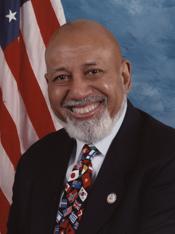
Mr. Chairman, I offer an amendment. Mr. Chairman, I yield myself such time as I may consume. Mr. Chairman, I rise today to offer an amendment that, if adopted, will ensure Federal employees are given…
Mr. Chairman, I offer an amendment.
Mr. Chairman, I yield myself such time as I may consume.
Mr. Chairman, I rise today to offer an amendment that, if adopted, will ensure Federal employees are given an opportunity to compete on a level playing field during the Office of Management and Budget's continued efforts to privatize the Federal workforce.
In early 2001, the Office of Management and Budget directed all agencies, regardless of their needs or missions, to review for privatization at least 425,000 Federal employee jobs. More than 32,000 Federal employees, I should note, reside and work in south Florida.
On May 29, 2003, OMB finalized its controversial rewrite of the privatization process. It is referred to and has been talked about here as OMB circular A-76. Unlike previous revisions, this latest effort has generated an enormous amount of bipartisan criticism because of the significant changes that have been wrought which put Federal employees at a competitive disadvantage.
Mr. Chairman, taking jobs away from Federal employees without giving them the chance to compete is wrong, period. Yet circular A-76 does just that. In fact, contractors have said in writing that they believe as a result of OMB's revisions to circular A-76, the number of competitions won by Federal employees will dramatically decrease from 60 percent to perhaps 10 percent.
The amendment that I am offering today ensures that Federal employees receive a fair shake in any public private competition. It is fair, balanced and is supported by the American Federation of Government Employees, the AFL-CIO and other major labor groups throughout the country.
Specifically, the amendment prohibits the use of funds appropriated by the Act to be used by OMB to require agencies to establish an inventory of inherently governmental activities performed by Federal employees or establish or implement any streamlined competition of less than 6 months.
The amendment also prohibits the use of funds to be used by OMB to conduct follow-up competitions for public-private competitions won by Federal employees, something not required in instances where services are contracted out, and the amendment still allows Federal agencies to experiment with outsourcing of information technology activities.
Mr. Chairman, my amendment does not impose a suspension on contracting out.
Instead, it is a fair compromise between the new OMB Circular A-76 and a complete prohibition against its use. I certainly hope that my colleagues will agree with me and vote ``yes'' on my amendment.
Mr. Chairman, I reserve the balance of my time.
Mr. Chairman, I yield myself such time as I may consume.
Mr. Chairman, my colleague from Oklahoma, the chairman of this committee, is most sincere, as have been other persons. The gentleman from Virginia (Mr. Tom Davis), for example, was here when the Van Hollen amendment was on the floor, which I might add I support very vigorously. That is the Van Hollen amendment. Both of them, and others, and I see the gentleman from Virginia (Mr. Tom Davis) rise again, are likely to speak of wasteful government spending. I agree with them; this government has its fair share of wasteful spending. What I do disagree with, what the gentleman from Oklahoma (Mr. Istook) just said is that if this measure is to pass that it will not become law because the President and his administration have indicated that they will veto the measure.
Mr. Chairman, I remind the gentleman from Oklahoma (Mr. Istook) that we have a constitutional responsibility here, as does the President. The President can veto anything he wants to; and if we are of a mind, with two-thirds of the vote, we can override a Presidential veto. So it can be overridden and can become law, and there is a substantial number of people who feel it ought to become law.
Now then, I also would ask the chairman to take into consideration when he and I came to the United States Congress in 1992. Shortly thereafter, in 1994, the majority won the right to control the House of Representatives. And among the things that they said that were going to cost less by privatizing were such things as the printing that is done here at the House of Representatives, or at least was at that time, and the folding offices and other offices that have now been outsourced.
In addition to the inherent danger that exists by not having an in- house family, I defy anybody in the House of Representatives to tell me that the printing of their newsletters and other matters does not cost more now that it has been privatized. And there are other examples of that. One of the worst would be the Federal Aviation Authority. I am here to tell my colleagues that all of us that fly do not want to get on airplanes knowing that the people on the ground controlling that airplane's direction went to the lowest bidder.
Somewhere along the line, we have to come to our senses. Auctioning off 425,000 Federal employee jobs to the lowest bidder is not the way to produce savings. If we are to say that public-private competitions will produce savings, then that is fine. But Federal employees have the right to compete for their jobs in a nonpredetermined way, where real savings win out over cutthroat politics.
Federal employees do not want a free ride. They want a fair shot. My amendment does not halt the administration's efforts to reduce wasteful government spending. And every one of us uses that rhetoric ought to be about the business of trying to reduce wasteful government spending, including that done by the House of Representatives. In fact, it allows agencies to move forward with the implementation of Circular A-76.
What my amendment does do is ensure that Federal employees are given equal footing to the contractors they are bidding against in public- private competitions. It is time for open hunting season on Federal employees to end. Only then will we fully recognize what best value and cost savings really are.
I challenge the subcommittee Chair, my good friend, and he is my good friend, the gentleman from Virginia (Mr. Tom Davis), to tell me how it is that we here in the House of Representatives know more about what is good for Federal employees than the American Federation of Government Employees, AFL-CIO, the American Federation of State, County, and Municipal Employees, the Communication Workers of America, the International Association of Firefighters, the International Association of Machinists, the International Brotherhood of Teamsters, the International Federation of Professional and Technical Engineers, the Service Employees Union of America, the National Association of Government Employees, National Treasury Employees Union, Professional Airways Systems Specialists, Service Employees Union, and the United Auto Workers.
Somewhere along the line, some of us need to recognize that these people who are Federal employees probably know at least as much as those of us who are Federal employees by election know. I suggest among other things that not only does the gentleman from Virginia (Mr. Tom Davis) represent contractors, but so do I and 433 other Members of the House of Representatives. And not only he represent Federal employees, but so do I and 433 other House of Representatives Members. We all represent the constituency in America that should have a fair shot at low-cost and less wasteful spending, which their A-76 does not guarantee. And so, Mr. Chairman, I ask support of my amendment.
Mr. Chairman, I yield back the balance of my time.
Mr. Chairman, I demand a recorded vote.
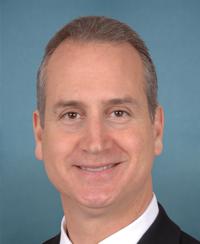
Mr. Chairman, I am actually amazed that we are even here discussing this issue. We are right now in the midst of a war against terrorism. Should we take steps that help fund anti-American terrorist…
Mr. Chairman, I am actually amazed that we are even here discussing this issue. We are right now in the midst of a war against terrorism. Should we take steps that help fund anti-American terrorist states, particularly one that is just 90 miles away from the United States?
Mr. Chairman, right after 9-11 during the joint session of Congress, President Bush spoke to Congress and he said ``Either you are with us or you are with the terrorists. From this day forward, any nation that continues to harbor or support terrorism will be regarded by the United States as a hostile regime.'' And yet, we are discussing an amendment that would provide billions of dollars to a terrorist anti-American regime, just 90 miles away from the United States.
Mr. Chairman, I hear, well, but we do business with China. Mr. Chairman, there are seven nations on the list of terrorist countries: Iran, Libya, North Korea, Sudan, Syria, Iraq, I guess that one is no longer on the list, and Cuba, a terrorist, anti-American thug just 90 miles away from the United States. But yet I hear, well, but if he had money, if he only had money, he would change. He would be different. He would do really good things with the people of Cuba and also would become a friendly nation.
But, Mr. Chairman, what did Mr. Castro, that terrorist thug, do when he did have money, when the Soviet Union gave him the funds, the billions of dollars that now this amendment hopes to replace? What did he do? He had troops in Africa. He was helping terrorists in Africa. He had troops in Grenada, and the U.S. actually invaded Grenada to liberate those people and there were Cuban troops there, terrorist Cuban troops there supporting that Communist regime. He was helping to fight democracies in Latin America. He was funding troops throughout the world. That is what he did when he had money.
Those who say the embargo has not worked, it sure has worked for the interests of the United States of America, because that man is not doing what he was doing: exporting terrorism. Now, he is limited, he is limited. But this amendment wants to give him billions of dollars so he can do what he does best: terrorism, anti-American terrorist activities. This is amazing to me, Mr. Chairman, that we would be discussing it right now.
The gentleman from Massachusetts (Mr. Delahunt) said we cannot believe what Castro says. I do not believe, I would say to the gentleman, what Castro says. I believe his deeds. Yes, he says that he wants to get rid of the embargo. Yes, he says that he wants to get rid of the travel ban. And yes, he congratulates the gentleman from Arizona (Mr. Flake) and others when he helped him in doing that. But his deeds also show that, Mr. Chairman.
Here, for example, he has sent out hundreds of thousands of flyers to travel agents, spending thousands and thousands of dollars on glitzy brochures saying, please get rid of the travel ban.
No, the record is clear. Let us not fund anti-American terrorist 90 miles away. Let us not fund a person who has said in Iran that he wants to get the United States to be on its knees. Let us not fund an enemy of the American people 90 miles away. Let us not support this amendment. Let us stand tall with the Cuban people who want to be free. Let us stand with the President of the United States in his war against international terrorism.
The way to do that is not by helping Castro, which is what this amendment will clearly do.
Mr. Chairman, just to respond to the gentlewoman from California (Ms. Solis), Cuba does receive medical equipment. The U.S. can send medical equipment. The gentlewoman might want to look at the law before she speaks in front of us.
Mr. Chairman, nobody wants to help the Cuban people more than the families of those Cuban people. And by the way, no one wants to help those people more than those Members who represent the families of those Cuban people here in Congress, and a few of us represent the bulk of them, the gentleman from New Jersey (Mr. Menendez), the gentlewoman from Florida (Ms. Ros-Lehtinen), the gentleman from Florida (Mr. Lincoln Diaz-Balart) and myself, and we get elected by those family members that these Members of Congress are saying that they want to help.
But what they understand is there is only one solution for the suffering of the Cuban people, and that is getting rid of the anti- American terrorist dictator, Fidel Castro. When we send more money that has to be sent to the government stores and goes to the government coffers so they can further their terrorist activities, that does not help the United States of America. It makes no sense to help fund a terrorist regime.
Mr. Chairman, the issues that the gentleman from Florida (Mr. Davis) mentioned are still legal without his amendment. The rule change was to get rid of abuses, and the abuses we are talking about are very unfortunate. They include pedophilia and sex tourism, and those are the abuses that the new rules were implemented to stop.
Let me be very clear. All these amendments that we are seeing today basically have one effect and one effect alone, to send more dollars to anti-American terrorist just 90 miles away from the United States who has said that he wants to destroy the United States, who has shot down unarmed American airplanes in international air space, and who has done everything in his power to enslave his people and to try to hurt the United States. All these amendments do is send more money to this terrorist regime at a time when we are at war with terrorists around the world.
I agree with our President when he said you are either with us or with the terrorists. These amendments, with all due respect, unfortunately, are sending more funds to a terrorist regime and this particular amendment gets rid of some regulations to stop abuse, including those that go to Cuba with the excuse of going for educational reasons, and they go unfortunately in many cases for sexual tourism, including the most tragic and savage of them all, including pedophilia, which is sanctioned by the government of Cuba.
Show 11 more
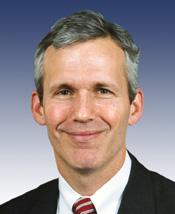
Mr. Chairman, I offer an amendment. Mr. Chairman, I yield myself 3\1/2\ minutes. Mr. Chairman, in March of this year, the Department of Treasury, Office of Foreign Asset Control, OFAC, proposed a…
Mr. Chairman, I offer an amendment.
Mr. Chairman, I yield myself 3\1/2\ minutes.
Mr. Chairman, in March of this year, the Department of Treasury, Office of Foreign Asset Control, OFAC, proposed a regulation which would end licenses for travel to Cuba for educational purposes unless the travel consisted exclusively of students taking formal case work. This amendment blocks that proposed regulation from taking effect by blocking any funding to enforce it.
Earlier this year I traveled to Cuba with the gentleman from Arizona (Mr. Kolbe). We met with governmental officials, the Bishop of the Methodist Church, leading dissidents, including Vladimir Roca, Espinosa Chepe, and others.
I left there struck by the horrific plight of the Cuban people who are living of abject poverty deprived of any freedom or liberty we tend to take for granted here. I left there struck by the enormous talent and potential of the Cuban people; and finally, I left there struck by how much we have in common, folks in my home, the Tampa Bay area and Florida, with the Cuban people.
I also left there with the resolve that because of the miserable relationship between the two countries, it is more important than ever that we as United States citizens reach out to the Cuban people to help them deal with this very horrific plight they are living in today. Shortly after I returned, the relationship between the two governments deteriorated even further with an unprecedented really horrific crackdown by Fidel Castro of some of the people I met with. Three of the people I met with have been sentenced to prison, perhaps for the rest of their lives, and countless others were sentenced to prison simply because of their fight for freedom.
I believe today what we need to do as the House of Representatives is to preserve the ability of United States citizens to travel to Cuba for purposeful contact with the Cuban people to help them help themselves. Educational institutions, churches, not-for-profits have been engaged in this type of travel for years under the educational license that OFAC provides.
The proposed regulation was proposed to punish Fidel Castro for the horrific things he has done. I think the House of Representatives should block that regulation because it, in effect, punishes the Cuban people. Let me cite some examples why: There are universities that are taking teachers down to meet with teachers in Cuba to have an exchange. That could be potentially blocked if this new regulation is not stopped. There are cultural exchanges where people in my community are trying to encourage artists and other creative people from Cuba to travel to the United States and people from the United States to travel to Cuba to build bridges. There are doctor-to-doctor exchanges focused on women health that have been taking place, and lawyer-to-lawyer exchanges focused on helping improve the civil justice system.
All these exchanges which clearly benefit the Cuban people could effectively be brought to an end if this regulation is not blocked. These are the type of exchanges and the purposeful type of travel to Cuba we should be encouraging at this time when Fidel Castro is engaged in a horrific crackdown of his own people. We should not be afraid to export democracy to Cuba, and I urge the House to adopt this amendment.
Mr. Chairman, I reserve the balance of my time.
Mr. Chairman, I yield myself 1 minute.
Mr. Chairman, I think it is clear this is not a debate about tourism, and it is not a debate about illicit activity. It is about whether certain kinds of educational activities can occur. It is fair to point out that there is abuse as the gentlewoman from Florida (Ms. Ros- Lehtinen) noticed.
I think both sides can agree that OFAC is perfectly willing to deny applications for licenses where they see fit. That is painfully clear. And where there is abuse and fraud, OFAC can do its job and deny a license. OFAC has the authority conferred upon it by Congress to impose both civil and criminal penalties in cases of fraud. That is not the issue.
The question is whether the types of examples I have cited, the exchanges where universities are taking teachers down there who do not happen to be students engaged in formal case work, instances where doctors or lawyers are going down there on a peer-to-peer basis should be allowed to continue. There can be no basis to deny that does benefit the Cuban people, and should be something that ought to be allowed to continue.
Mr. Chairman, I reserve the balance of my time.
Mr. Chairman, I yield myself the balance of my time.
I think it is perfectly clear this is not a debate about the types of illicit activity that have been mentioned on the other side. It is not a debate about terrorism. It is a debate about whether certain types of educational activities should be allowed to continue which I believe benefit the Cuban people, and there has been no suggestion to the contrary, a peer-type relationship.
We need to begin to help the Cuban people plant the seeds of democracy in their country. Goodness knows, it is a terrific task for them to undertake given how repressive this regime is. I saw firsthand the plight of the Cuban
people. My heart went out to them. We cannot ignore that. We need to reach out and use United States citizens to help build democracy, the same way democracy was built in this country.
Ultimately, people are the bridges between countries. It is those relationships that will once again, once Fidel Castro is gone, bring us closer to Cuba and help us grow together as democracies. We cannot build those relationships, we cannot see them grow unless we continue to have the type of purposeful travel, the type of contact that I have described today. And I would urge my colleagues to adopt this amendment, so we can continue, at a minimum, to allow people who are trying to help the Cuban people travel to Cuba to do so.
I urge the adoption of the amendment.
Mr. Chairman, I demand a recorded vote.

Mr. Chairman, I rise in opposition to the amendment offered by the gentleman from Texas. This amendment is designed to eliminate virtually all of Amtrak's long-distance train operations. If enacted,…
Mr. Chairman, I rise in opposition to the amendment offered by the gentleman from Texas. This amendment is designed to eliminate virtually all of Amtrak's long-distance train operations. If enacted, it would mean the end to our national system of intercity rail passenger service. The nation would be left with an unconnected collection of corridor-type services and whole regions of the nation would lose access to this mode of travel.
The amendment calls for eliminating any passenger train route where operating expenses are twice operating revenues as determined by the Amtrak Reform Council in its Final Report. At first blush, this might not seem all that unreasonable. The reality is, however, that what this amendment would accomplish is highly unreasonable. The gentleman from Texas ignores the fact that hardly any passenger train service in the world comes close to covering its cost. Most rail transit operators, for example, would be thrilled to have a 50 percent cost recovery factor. Let's look at the impact of adopting this amendment.
Intercity rail passenger service between New York City and Chicago would be eliminated, as Amtrak would have to drop its Lake Shore and Three Rivers services. Service between Washington, D.C. and Chicago likewise would disappear with the termination of the Capitol Limited and Cardinal trains. There would be no more rail passenger service from the East Coast to Amtrak's hub in Chicago, as the Pennsylvanian service between Philadelphia and Chicago would also be eliminated.
Service between Chicago and San Francisco on the California Zephyr would be history. As a result, rail travel through some of the most scenic parts of North America would be no more. Gone, too, would be the fabled City of New Orleans, as all service between Chicago and New Orleans would have to crease. Service between Chicago and Los Angeles via St. Louis, Little Rock, Dallas, and San Antonio would end with the elimination of the Texas Eagle. Service between Florida and Los Angeles on the Sunset Limited through New Orleans and Houston would also be axed. Amtrak's popular and scenic train along the West Coast between Seattle and Los Angeles, the Coast Starlight, also would be cut, as would Amtrak's Crescent train between New Orleans and New York via Atlanta and Washington.
With the exception of Amtrak's Silver services between New York and Florida and the Southwest Chief from Chicago to Los Angeles via Arizona, there would be no rail passenger train service in the Southern half of the nation. In fact, the only other long distance train that would survive would be the Empire Builder between Chicago and Seattle.
And the cuts are not limited to Amtrak's long-distance train operations. Under the route elimination criterion established by this amendment, passenger train services between Chicago and Milwaukee, Chicago and St. Louis, and Chicago and Pontiac, Michigan, also would have to be discontinued. These are critically important components of the Midwest High-speed Rail Initiative. It makes no sense whatsoever to stop service today when these corridors are leading candidates for significant upgrades for high-speed service.
If this amendment were to pass, many of America's largest cities would be left without any intercity rail passenger service including: Birmingham, Alabama; Little Rock, Arkansas; Phoenix, Arizona; Denver, Colorado; Atlanta,
Georgia; New Orleans, Louisiana; Omaha, Nebraska; Reno, Nevada; Cincinnati, Cleveland, and Toledo, Ohio; Austin, Dallas, El Paso, Houston, and San Antonio, Texas; and Salt Lake City, Utah.
And to what purpose? If this amendment were to pass, little, if anything, would be saved. Moreover, once these routes were gone, the remaining services would have to share a greater part of the cost burden. Another round of cutbacks would be sure to follow. There is a cascading effect as the connecting revenues lost from these services affect the financial performance of the remaining trains.
It also should be clear that once these routes are eliminated, they will be gone forever. The nation's freight railroads will be quick to take steps to ensure that passenger train services will not be reinstated. The freight railroads have long only grudgingly accommodated Amtrak's operations.
The loss of the long-distance train affects many who rely on these trains for trips between online city pairs. It is true that relatively few people use the trains for transcontinental travel, but millions of riders each year use them to travel between places other than the terminal cities. This travel will be lost and we will lose forever the ability to develop these intra-route corridors.
Finally, the approach taken by the Amtrak Reform Council to measure the route losses, is, in itself, flawed. Amtrak and the Federal Railway Administration have developed a more accurate measure of train performance, which takes into account downstream effects of route eliminations. Mr. Chairman, I remind my colleagues that the Amtrak Reform Council repeatedly erred in both assumptions and facts in its reports. In fact, each year of the ARC's existence, the House cut the ARC's budget to indicate its overwhelming displeasure with the ARC's clear agenda to attack Amtrak.
Therefore, this amendment must be rejected. It arrives at the wrong solution through flawed analyses. We need positive approaches to rebuilding and expanding our nation's intercity rail passenger system. We need to find ways to give Amtrak President, David Gunn, and his staff the resources needed to correct the years of neglect from a lack of funding.
I urge my colleagues to oppose the amendment.
Mr. Chairman, I yield back the balance of my time.

Mr. Chairman, I offer an amendment. Mr. Chairman, I yield myself such time as I may consume. This is a simple amendment. It says that none of the funds made available under this act may be used by…
Mr. Chairman, I offer an amendment.
Mr. Chairman, I yield myself such time as I may consume.
This is a simple amendment. It says that none of the funds made available under this act may be used by the National Railroad Passenger Corporation unless the corporation submits all quarterly and annual reports required by law in accordance with the standards applicable to reports under Public Law 107-204.
Public Law 107-204 is basically the Sarbanes-Oxley corporate reporting legislation that was passed after the Congress and the American people realized the extent of the problems brought about by the Enron scandal. In Enron, we had an instance where about $600 million, less than $1 billion, of investor money was lost through private investments in a corporation.
We have a corporation that was created, again the National Railroad Passenger Corporation, also known as Amtrak, almost every year for the last 4 or 5 years, they have lost $1 billion or in that neighborhood. Much of this is subsidized by the taxpayer. Hardworking Americans send their dollars to Washington, and not a whimper has been heard about the lost money or unaccounted-for money in Amtrak.
We passed a law that required corporations across the land, and Amtrak is a corporation, this rail corporation, even by its name I just cited, is a corporation and all this says, that existing current law, nothing new, nothing greater, that was passed by this Congress for transparency, for accountability, be also known and be it clear that Amtrak is required to report on the same basis.
We think it is very important. I will tell you why it is important. Again, as a member of the Subcommittee on Railroads under the Committee on Transportation and Infrastructure, let me just cite some of the things that the General Accounting Office 2000 report gave to our committee and to Congress. It found that Amtrak did not know its route- by-route costs of its mail and express program because it never separately identified these costs. It said in the report, according to an Amtrak official, Amtrak still has a long way to go in producing reliable mail and express financial information and in understanding the true cost of this business.
Again, Amtrak is a corporation that has a board of directors, it has an employee stock ownership plan, it has assets and liabilities, and it also has taxpayer money coming into the program. We cannot tell, according to the GAO report, its finances. So I think it is long overdue that we take a step such as this and require that they comply with existing law that all other corporations must comply with. The report further went on and looked at a review of Amtrak's expenditure of $2.2 billion in Federal funds from the 1997 Taxpayer Relief Act. It found that Amtrak could not determine how it was spending its Federal funds, nor was Amtrak able to ensure that its spending was allowed under Federal law.
So Amtrak, according to the Inspector General, does not even know what it is required to do under existing law. This is merely a clarifying, enunciating statement by this Congress that the same disclosure, the same standards that we require for corporations, it is clear that Amtrak as a corporation must also comply with. In fact, the report goes on to say that at one time Amtrak did not even have a process in place to review its spending practices. So we have questions again raised, and this is not something I made up. This is a General Accounting Office February 2000 report, telling us that there is not clarity in which laws or even which standards of reporting at Amtrak.
We are not creating any new law under this particular provision. What we are doing is saying that Amtrak, that is taking a huge amount of taxpayer money, in the billions, going into debt in addition to the money that Congress is appropriating in the billions, and we are not able to say that it even complies with existing law. So this is a requirement to have Amtrak comply with existing law.
Why should Amtrak not be held to the same standards and accountabilities and reporting requirements that Congress has imposed on corporate America? That is the question I leave before the House.
Point of Order
To the point?
Mr. Chairman, on this point, I am an authorizer, and I am very much aware that we do not want to authorize on appropriations measures, so we tried to craft this measure very carefully. In crafting it, we have used language that says, and again I quote from my amendment, in accordance with standards applicable to reports under Public Law 107-204. Public Law 107-204 is a law that applies to corporations in the United States of America. I have a copy of that here. Amtrak is the National Passenger Rail Corporation. It has a board of directors. It has an employee stock ownership plan. It has assets and liabilities. Additionally, it is taxpayer-funded. We have not gone outside of the parameters of existing law. There is a question, it appears from the General Accounting Office reports that I have cited, that Amtrak does not know what the bounds of the current laws are. This particular report was done prior to the passage of the Sarbanes-Oxley legislation, Public Law 107-204. Again we are not requiring any new legislation, any new law. We are stating again that none of the funds made available under this act would be used by this corporation unless the corporation submits their quarterly and annual reports as required by law and in accordance with the standards of an existing
law, merely clarifying, and I think it is an important point here that we make, that we do not go beyond any existing law requirements.

Mr. Chairman, I thank the gentleman for yielding me this time. I want to thank him so much for his battle on behalf of American working families and retirees for pension protection and safety that he…
Mr. Chairman, I thank the gentleman for yielding me this time. I want to thank him so much for his battle on behalf of American working families and retirees for pension protection and safety that he has led in this Congress now for a number of years.
Mr. Chairman, we are here again because of the relentless effort of this administration to empower corporations to cut the pensions of older workers in this country. If this amendment does not pass, the Treasury Department will go forward and provide a ruling that will make it safe for corporations to cut the pensions, the defined pension plans of older workers. Hundreds of corporations already have filed notice that they want to do this, they are simply waiting for the Treasury Department to make the ruling. We were here once before, and the Congress made a determination that this was unfair, it was inequitable, it was mean-spirited and it was damaging the economics of retirees and their ability to provide for their retirement.
The last time the gentleman led this effort, the General Accounting Office came forward and studied the impact of that effort and found that, in fact, many of these pensioners risked losing half of their pension. So the situation today is much the same as when the gentleman from Vermont first sounded the alarm a couple of years ago. But what has changed is, in fact, we now have a court opinion from the Federal District Court in the Southern District of Illinois that ruled, in fact, that IBM had violated the age discrimination protections when it changed its pension plan to accept a cash balance plan. What they did there was they ruled against older workers. They were going to deny older workers the pension benefits that they were entitled to, and they were going to get far less than younger workers were going to get, and that is age discrimination, because that is what they are doing. They are discriminating against older workers, 50, 55 years old, who have 15, 20 years at a company. Now, all of a sudden, they are going to find out that their pension plans have been cut in half.
What does that mean? That means that those people who have worked hard, made their plans for retirement, tried to develop their retirement nest egg so they could have a standard of living to carry them through their retirement years. All that is now threatened, and, essentially, it is gone. Because where does an older worker go to get back that pension benefit when they are 50, 55 years old with that company? They cannot do that. They cannot do that. That is the unfairness of this. That is why AARP, the American Association of Retired Persons, supports our amendment. That is why the Pension Rights Center supports the Sanders-Miller amendment. That is why they support this effort to bring equity to this effort.
What are we trying to say? Let the worker make a choice. Let the worker choose which benefit would help them the most. Companies under our legislation would still be allowed to convert to cash balances, but what they would not be allowed to do is to harm older workers and their families in the effort to do that. That is a significant amount of money to these workers. We have heard from workers all over the country who have e-mailed our office because they have heard that their company is thinking about this. We have heard from people in the financial industry, in the airline industry that have been through this, the telecommunications industry, industrial companies from all over the country who are now being made aware of the fact that they may lose their pensions.
Mr. Chairman, American families are reeling in this economic downturn. They are reeling from long-term unemployment, from rising health care premiums, from steep declines in their savings and the 401(k) investments that were lost in the bursting of the stock market bubble. These people are scrambling to keep their health care benefits, to keep their pension benefits and to keep their jobs. This Congress should not now come along and tell them that we are going to put their pensions at risk. We know that Americans, the baby boomers, people my age and others, who are thinking about retirement over the next 10 or 15 years are now starting to focus on whether or not they will be able to do that. The pension plans that the administration has in order, that the Treasury Department is trying to put in place, put all that at risk.
I would urge my colleagues, as they have in the past on a bipartisan basis, to support the Sanders-Miller-Emanuel-Gutknecht amendment to make sure that, in fact, those pension plans are not put at risk and those families are not put in that economic difficulty.

Mr. Chairman, I offer an amendment. Mr. Chairman, I yield myself such time as I may consume. Mr. Chairman, first I would like to thank my colleagues for their leadership on behalf of New York…
Mr. Chairman, I offer an amendment.
Mr. Chairman, I yield myself such time as I may consume.
Mr. Chairman, first I would like to thank my colleagues for their leadership on behalf of New York following the tragedy of 9/11.
I have never seen Congress so united and determined. We responded with a national commitment to help New York City rebuild. Part of this rebuilding effort was Federal grants to businesses and individuals in Lower Manhattan near Ground Zero.
Just yesterday the New York Times wrote of problems getting all of the aid to those who needed it most. But what is more disturbing is that after deserving victims of 9/11 got the aid, the IRS in a surprise announcement decided to take part of it away in taxes.
Many grant recipients accepted the aid and spent every penny, not knowing that they would have to pay taxes on it.
It is just unfair for these cash-strapped businesses and individuals to take another financial hit, a financial hit that the Joint Committee on Taxation estimates to be $268 million.
The IRS is taking back $268 million in Federal aid that the President pledged to New York City. This IRS decision has also had a ripple effect on other Federal benefits that survivors of 9/11 may receive.
Since many agencies rely on the IRS decision and definition of gross income, some recipients' eligibility for programs like Medicare, Medicaid, and Social Security may be in jeopardy.
The amendment that I am offering today with my colleague from New York (Mr. Nadler) would bar the use of any of the funds for 1 year for the IRS to enforce the decision to collect taxes on these grants to Lower Manhattan. After all, the Federal Government is supposed to be sending aid to disaster victims, not taking it away.
Taxing the grants violates the spirit of Federal disaster aid. This is not the first action that I and others have taken to right this wrong. Actually, it is the latest in a series of actions.
Along with others in the New York delegation, we have written IRS, the Secretary of Treasury, we have written the President, Speaker Hastert, and the leadership of the other body.
I have introduced bipartisan legislation. The Committee on Ways and Means is aware of the problem. The Congressional Research Service has done a memo. I have gone before the Committee on Rules seeking to add it as an amendment to H.R. 1308. And I am on the floor today with this amendment.
I ask my colleagues, who have the ultimate authority to decide who gets taxed, for their help. I am confident that it was never this Congress's intent to tax this disaster aid.
Making this amendment subject to a point of order means that this Congress has made a decision to continue to tax this 9/11 aid 2 days before the second anniversary of these attacks.
Mr. Chairman, I call upon my colleagues to support me with this amendment. It is fair. It was the intent of Congress.
Mr. Chairman, I yield 2 minutes to the gentleman from New York (Mr. Nadler).
Mr. Chairman, I do.
I very much respect my colleague's point of order, but could the gentleman please tell me how and when is this Congress going to act to return the hundreds of millions of dollars in aid promised to them after 9/11?
We have legislation before this House; we have been before the Committee on Rules with amendments trying to attach this to other legislation. We know that many on the other side of the aisle are calling for permanent tax relief in certain areas. We are asking for tax relief for the victims of 9/11.
It was truly not the intent of this Congress to tax their aid benefit packages. In fact, the IRS did not even tell them they were going to do this until the last minute. Most of them spent the money and now are in trouble taking out loans to repay. And, really, when they got the grants, they were well below what they lost. Now to come back and tax roughly a third of the grant is terribly unfair.
So I respectfully ask my colleagues, When will we be able to act on this legislation and return hundreds of millions of dollars in aid promised to the victims of 9/11?
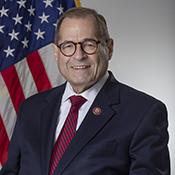
Mr. Chairman, I rise in strong support of this amendment that the gentlewoman from New York (Mrs. Maloney) and I are offering, which corrects an incredible injustice faced by some victims of the 9/…
Mr. Chairman, I rise in strong support of this amendment that the gentlewoman from New York (Mrs. Maloney) and I are offering, which corrects an incredible injustice faced by some victims of the 9/ 11 attacks.
Shortly after the attack, which occurred in my district on September 11, Congress moved quickly to ease the economic suffering of businesses and residents in Lower Manhattan.
Over $3 billion was appropriated through the Community Development Block Grant program specifically to assist residents and businesses in Lower Manhattan through a variety of grant programs to try to recover from the tremendous economic damage inflicted by the terrorists.
While such programs could never make these individuals and businesses whole after the devastating losses they suffered, these funds are an important first step in, and my constituents are truly grateful to the country for coming to their aid.
Incredibly, the Internal Revenue Service has announced that much of this money is subject to Federal taxation, effectively withdrawing some of the aid after it has already been given.
When we appropriated these funds in this House, it was incomprehensible that the Federal Government might provide assistance with one hand and take it away with the other. These funds are not profit. They are not income that should be taxed. They are funds intended to begin to defray some of the damages incurred by these businesses which were closed for months because guards stood on Canal Street saying ``You cannot go to these businesses. You cannot pass here.''
The aid that these businesses are getting are a tiny fraction of the economic damage they suffered because of the terrorists. Twenty percent have already closed their doors. Twenty percent of the small businesses in Lower Manhattan have gone bankrupt because of the inadequacy of the aid that we gave them to make them whole from the terrorists, and now we are taking away some of the money that we gave them.
Recipients of these funds were never asked to prepare a budget with the prospect of paying taxes on it in mind. Already near financial ruin, to place further economic demand on their budgets is simply cruel. This is an issue of fairness and common sense and decency to the people who took the hit for this country. I do not believe that anybody on either side of the aisle who voted for the economic aid to try to help the victims of the terrorism anticipated this taxation, and we ought to get rid of it.
Point of Order
Mr. Chairman, I do.
I would agree, obviously, with what the gentlewoman from New York, my coauthor of this amendment, just said. We have tried every different way.
The aid to small businesses is roughly about $539 million. This tax is taking it back about $268 million. I will concede that technically the point of order may stand, but the Committee on Rules of this House routinely waives all points of order; routinely waives most points of order. I would appeal to my colleague to withdraw his point of order. I appeal to my colleague to exercise discretion and not press his point of order so as not to victimize the victims a second time. Because that is what we are talking about here.
We have tried, the gentlewoman from New York and I and others in the New York delegation, to try to press this point to the Committee on Rules, in separate legislation, and to the IRS. I do not believe anybody anticipated that someone might come along and say this aid should be taxed. We would have put a sentence in the initial aid legislation 2 years ago, no one would have opposed it, and that would have been that.
No one anticipated this. This was completely shocking. No one anticipated the IRS would say that this money, which was a small recompense, with the average aid being about 10 to 15 percent of the loss, there is no profit or income here, it is 10 to 15 percent of the economic loss; but no one anticipated this would be taxed, so I urge that the point of order be withdrawn

Mr. Chairman, I rise in strong support of the Flake- McGovern-Emerson-Delahunt amendment to limit funding for the enforcement of the travel ban to Cuba. This amendment is offered on behalf of the…
Mr. Chairman, I rise in strong support of the Flake- McGovern-Emerson-Delahunt amendment to limit funding for the enforcement of the travel ban to Cuba. This amendment is offered on behalf of the 52-member bipartisan Cuba Working Group.
For 40 years, U.S. Cuba policy has violated the right of every American to travel freely. While Americans may travel to Vietnam, to China, and even to North Korea, they may not legally travel to Cuba.
For 40 years, the American people have been told that the sanctions against travel to Cuba, like other economic sanctions, will bring human rights and democracy to Cuba and the downfall of the Castro regime. This policy has failed, and it has failed miserably.
Currently, Cuba and the United States are engaged in a dangerous spiral of escalation and recrimination. The Cubans engage in a cruel crackdown against dissent on the island. The United States tightens the restrictions on travel and eliminates people-to-people educational and cultural exchanges.
At the very moment when the Cuban Government was trying to break the spirit of Cubans who dare to think differently, the United States Government restricted even further the exposure of Cubans to individuals and groups who could provide alternative information and provoke discussion, the American people. We need a better, more rational, more mature approach.
Mr. Chairman, Americans are a pragmatic and practical people. We like things that work, that do the job, that deliver results.
After 40 years of a failed policy on Cuba, it is long past time to try something else. If this policy was going to work, it would have worked by now. I believe that ending the ban on travel is one of the best steps we can take. I believe the Cuban people can benefit from more contact, not less, with the American people. Now is the time to invade Cuba with doctors and writers, teachers, students, business leaders, bicyclists, grandmothers, activists and more. They are, indeed, our very best ambassadors.
I agree with Human Rights Watch and Amnesty International that the 40-plus years of a U.S. policy of isolation has not contributed to the betterment of human rights in Cuba and, in many respects, has had a negative impact on human rights and that the travel ban should end.
I agree with the vast majority of dissidents living on the island, including Vladimiro Roca, president of the Cuban Social Democratic Party, and Oswaldo Paya, leader of the democratic reform movement known as the Varela Project, who have expressed their full support for an end on the ban on travel by Americans to Cuba.
I agree with independent journalist Miriam Leiva, wife of imprisoned dissident Oscar Espinosa Chepe, when she wrote to President Bush this May declaring: ``The visits of hundreds of thousands of North Americans to Cuba could contribute to the exchange of ideas and the progress of democracy.''
This amendment represents the bipartisan majority of this Congress and the majority view of the American people. It represents the mainstream view in this country.
For 3 consecutive years, this House has voted overwhelmingly to lift the ban on travel, only to have a small group of Members undermine the will of the House in conference committee. I would say to the leadership of this House, do not just talk about democracy; respect democracy. Respect the will of this House. Respect the Members of the greatest deliberative body in the world. Do not hide behind closed doors and secret negotiations. Do not hide behind rhetoric that questions the integrity of those who disagree with you.
The current policy has failed. It is time to take a new approach. Support the freedom of Americans to travel, support Cubans who want to interact and meet with Americans, support the bipartisan amendment to end the travel ban on Cuba.
Mr. Chairman, I rise today in strong support of the Flake Amendment to end the unnecessary and counterproductive ban on travel to Cuba, and I want to recognize and applaud both Mr. Flake and Mr.…
Mr. Chairman, I rise today in strong support of the Flake Amendment to end the unnecessary and counterproductive ban on travel to Cuba, and I want to recognize and applaud both Mr. Flake and Mr. Delahunt for their outstanding leadership on this issue and the agenda of the House Cuba Working Group. In fact, I am a proud sponsor of H.R. 2071, the Working Group's Export Freedom to Cuba Act, which would accomplish the same objective as this amendment, and would allow travel between the United States and Cuba. I have long supported normalizing relations with Cuba and frankly, Mr. Chairman, find it embarrassing that our policy has remained unchanged and stagnant in the 26 years since I first got involved in efforts to normalize relations. I wonder when the Administration will realize that November 9, 2003 marks 14 years since the end of the Cold War.
Americans do not need a license to travel half-way around the world to North Korea, Iraq and Iran, but the ``dangerous'' island nation of Cuba 90 miles off the coast of Florida requires stricter regulation. This policy seems particularly absurd when there is bi-partisan, bi- cameral support to end the embargo; most Americans oppose the trade and travel ban. Even Cuban Americans are divided on the issue.
In 2000, a Florida International University poll showed that 63 percent of Americans nationally and 75 percent of Americans of other than Cuban descent in Miami-Dade favor unrestricted travel to Cuba. We constantly seem to be moving backwards in our foreign policy, when our constituents are saying the opposite. Where is the logic in punishing Americans? A significant number of Representatives from both sides of the aisle actually agree on ending the travel ban. However, we are still unable to normalize travel and trade. In 1999 we granted permanent normalized trade relations
to China, but are still unable to travel and trade with Cuba freely. Whether or not other nations agree with the practices of the Cuban regime, they believe that our policy is ridiculous and outdated.
Mr. Speaker, the obsession with Cuba is two-fold: Those who support the travel ban are driven by 44-year-old memories of the revolution. Americans, who are eager to travel, are drawn to the rich, vibrant Cuban culture. Along with most of my constituents, I belong to the latter group which believes that we have much to learn from each other.
The Oakland City Council in 1998 passed a resolution to eliminate the trade sanctions against Cuba and the Bay Area has numerous sister-city relations with Cubans; these exchanges benefit students, arts initiatives, encourage humanitarian projects and research sharing for important diseases like HIV/AIDS, kidney failure and high blood pressure.
Farmers across the country are eager to engage in trade with Cuba as the U.S. economy continues to plummet.
The recent elimination of the people-to-people category, within the OFAC regulations, proves again how the administration is more concerned with maintaining a grudge than reinstating the American right to travel.
Mr. Chairman, not only does the travel and trade embargo undermine and contradict the values upon which our great country is based, but they are also very costly and logistically difficult to administer between the Departments of State, Treasury, and Commerce. We should not be persecuting Americans who are guilty of nothing more than a sense of curiosity and eagerness to learn and explore our island neighbor, Cuba.
Vote ``yes'' to promote democracy, vote for Americans freedom to travel, vote for the Flake amendment.
Mr. Chairman, I thank the gentleman from Arizona (Mr. Flake) for yielding me time. Let us face it. This is not a problem about Castro. This is a problem about us. We made this law. And this…
Mr. Chairman, I thank the gentleman from Arizona (Mr. Flake) for yielding me time.
Let us face it. This is not a problem about Castro. This is a problem about us. We made this law. And this administration wants to enforce this law. This is not about Fidel Castro. This is about the present administration and Members of Congress.
It is very interesting that those who do not want to lift this ban are also exempt from it. Cuban-Americans, can travel freely back without our country's permission. And as Members of Congress, you can travel to Cuba, but you cannot do that as a regular American citizen.
What has this law done? Has it prevented Americans from going to Cuba? Absolutely not. It is estimated 100,000 Americans went to Cuba last year, 75 percent of them went illegally. Why are they going to Cuba? It is only 90 miles off our coast. That is probably why they are not going to Iraq and North Korea and other places which the President identifies as the axis of evil, and our government does not ban you from going there.
They are also fascinated by the history Cuba played in the American Revolutionary War. They are fascinated by a country that wins music Emmys. They are fascinated by a country and culture that produces good rum and cigars, yet it is illegal for Americans to drink that rum or smoke those cigars. It is illegal for Americans to have fun. That is what this law says.
It is so un-American. It is so unpatriotic. It is so unenforceable. What are we going to do? Put everybody who went down there to ride bicycles, to dance, to drink mojitos in jail? That is not what our country can do. We cannot enforce this law. And to say that nobody can travel there, and when they will go illegally you will stop that, what you are doing is stopping the legitimate travel of educators, of doctors, of people in professions that want to go to try to upgrade humanity.
Human rights organizations are certainly going to know more about the abuses in Cuba by sending people who are interested in human rights as good ambassadors. The law now does not allow that to happen.
This is a good amendment. I thank the gentleman from Arizona (Mr. Flake) for introducing it, and I urge that all of us pass this amendment.
Mr. Chairman, I rise today in strong support of the Flake amendment regarding the Treasury Department's limitation of the right of Americans to travel.
This amendment is based on a core principle--that the policy of limiting the right of ordinary Americans to travel to Cuba, is an infringement of all Americans' right to travel anywhere they want at any time they choose.
Nevermind that the U.S. Cuba policy has been an outright failure for the last forty years. Nevermind that the travel ban prevents American businesses from creating jobs in Cuba and the United States, that it prevents Americans from sharing their best ideas and ideals with a close neighbor; and it does nothing to advance the cause of freedom and social justice.
The travel ban runs counter to the core Constitutional concept that the American right to travel is an absolute and non-negotiable right, a reflection of the free and open nature of our society.
If you believe in our constitutional rights, if you believe in the power of travel and trade, if you believe our citizens are the best ambassadors of American values, and if you agree with President Bush that engagement is the engine of liberty--then we need to pass this amendment legislation to legalize travel by Americans to Cuba.

Mr. Chairman, I thank the gentleman from Arizona. I am also a proud member of the working group, the Cuban working group that was established almost 2 years ago, and I have to tell my colleagues, as…
Mr. Chairman, I thank the gentleman from Arizona. I am also a proud member of the working group, the Cuban working group that was established almost 2 years ago, and I have to tell my colleagues, as someone from California, I am on the other side of the country, but I know that many in my district in Los Angeles and throughout California have had the chance to visit and also meet with people from Cuba. One of the things they tell me as a Congresswoman is that they would love to be able to go and spend more money there, to interact through educational programs, to visit different tourist sites there, but to engage with the people there.
On my visit there 2 years ago, I found it very striking that yes, indeed, the free market is working. It is working in Cuba. I visited a small restaurant where I sat with the family who owned their own restaurant. The money that we gave them in dollars was sufficient at the time. Maybe if we did more of that, they would be able to have a lot more, but we are not allowing for that. We need to lift the travel ban. Even in the State of California, where I served as a member of the Senate, our Senate members voted for a resolution to come to this House to say that we ought to lift the travel ban. By opening up our doors of education, culturally, and also economically, we have a lot to gain as well.
I had the opportunity to meet with other people from different countries in Cuba, from Canada and from Europe, and I saw that they are indeed taking advantage of helping to create a market base there, in different areas, and in agriculture, in the arts, and in the hotel and tourism industry. Why is not the United States, why cannot California engage in that by lifting this travel ban and allowing for the free flow of ideas and exchange, something that all of us here I think believe in.
When you say terrorism, I do not see that when I think about Cuba. I see hard-working people who want to be a part of our culture, the western civilization. I saw people wearing jeans, clothing that was reflective of people on our streets here in Washington,
D.C., and I think that they are earnestly looking for a lifting of this travel ban. I urge Members to do so.
Mr. Chairman, I am very proud to be a cosponsor of this amendment that would end the limit on remittances that Americans can send to households in Cuba.
I had a chance to visit Cuba, and I met several people there doing business on their own. I met a taxi driver, and I asked him a lot of questions. One of the things he told me was yes, he has to give a portion of that money to the government, but much of it stayed with him. I said, Really, how is that done?
He said that is how it is done. He pulled out a wad, maybe this thick, of dollars. And this is what is going on right now in Cuba. There is nothing wrong with that. This young man, in my opinion, was very happy that tourists like myself and others were able to visit and spend our dollars.
And yes, there are people right now who would love to send not only dollars but medical equipment to Cuba to help those that are ailing; but because of restrictions, we cannot do that. We cannot do that through normal channels. We are hurting the Cuban people, not the government, but the people. In my opinion, $300 every 3 months is not enough. $1,200 a year is not enough. $100 a month does not do it. I would say that we need to support this amendment.

Mr. Chairman, I thank the gentleman for yielding me time. Mr. Chairman, I rise in support of the Van Hollen amendment to the Transportation, Treasury Appropriations bill. The amendment of the…
Mr. Chairman, I thank the gentleman for yielding me time.
Mr. Chairman, I rise in support of the Van Hollen amendment to the Transportation, Treasury Appropriations bill.
The amendment of the gentleman from Maryland (Mr. Van Hollen) blocks the administration from using Federal funds to implement revisions to the A-76 process. In effect, it prevents the administration from paying politics with the civil service system, and it deserves my colleagues' strong support.
Now, this week the Brookings Institution reported on the true size of government. Unfortunately, the report is not surprising to those of us who have watched this administration's assault on the Federal workforce.
The Brookings Institution found that the shadow workforce of private contractors working for the Federal Government is now 16.7 million, which is 9.5 times as large as the civil service workforce.
This administration is not satisfied with a private contractor workforce of 16.7 million, so it is launching yet another attack on Federal employees.
Let me say to those conservatives who say, we want to shrink government, contracting out does not shrink government. It is public- funded jobs, but it is public-funded jobs in the private sector. Taxpayers are paying for it, but these people may not have any of the benefits, and they may not be saving us any money.
This administration is launching yet another attack on Federal employees because the vehicle for this assault is this obscure OMB circular called A-76, which the administration recently revised to accelerate the transfer of Federal jobs to the private sector.
This mad rush to privatize civil service is dangerous. When the government turns to poorly supervised private contractors, the potential for waste, fraud, and abuse soars.
This is not just my assessment. Just read the countless GAO reports on contractor abuses. The problem is so bad that contract management at DOD, the Department of Energy, and NASA, the three agencies that most heavily rely on private contractors, is on the GAO's list of high-risk Federal programs.
Mr. Chairman, the Office of Management and Budget's Statement of Administration Policy alleges that the Van Hollen amendment prohibits funding for public-private competitions. It does not. The Van Hollen amendment simply prohibits these competitions from being conducted under the newly revised rules giving it an unfair advantage to private contractors.
The Washington Monthly wrote last month, ``Even the Federal payroll can become a source of patronage. . . . Bush has proposed opening up 850,000 Federal jobs, about half of the total, to private contractors. And while doing so may or may not save taxpayers much money, it will divert taxpayer money out of the public sector and into private sector firms, where the GOP has a chance to steer contracts toward politically-connected firms.''
This is not shrinking government. This is using government for patronage. It does not create new private sector jobs. It creates private sector public-taxpayer-funded jobs.
Mr. Chairman, it is time to stop this destructive effort to give Federal jobs to private contractors who are campaign supporters. Vote yes on the Van Hollen amendment and stop this administration's war on Federal employees.
Bill Text
Latest available legislative text
        [Congressional Bills 108th Congress]
[From the U.S. Government Publishing Office]
[H.R. 2071 Introduced in House (IH)]

108th CONGRESS
1st Session
H. R. 2071

To allow travel between the United States and Cuba.

_______________________________________________________________________

IN THE HOUSE OF REPRESENTATIVES

May 13, 2003

Mr. Flake (for himself, Mr. Delahunt, Mr. Abercrombie, Ms. Baldwin, Mr.
Berman, Mr. Berry, Mrs. Biggert, Mr. Boozman, Mr. Brady of Texas, Mr.
Peterson of Minnesota, Mr. Camp, Mr. Clay, Mr. Costello, Mr. DeFazio,
Ms. DeLauro, Mr. Dooley of California, Mr. Doyle, Mrs. Emerson, Mr.
Farr, Mr. Graves, Mr. Greenwood, Mr. Herger, Mr. Hinchey, Mr. Houghton,
Mr. Johnson of Illinois, Mr. Kleczka, Mr. LaHood, Mr. Lampson, Mr.
Leach, Mr. Lynch, Mr. Manzullo, Mr. McGovern, Mr. Moore, Mr. Moran of
Kansas, Mr. Smith of Michigan, Mr. Nethercutt, Mr. Osborne, Mr. Otter,
Mr. Paul, Mr. Ramstad, Mr. Rangel, Mr. Rehberg, Mr. Ross, Mr. Ryan of
Wisconsin, Mr. Shays, Mr. Shimkus, Mr. Snyder, Ms. Solis, Mr. Stenholm,
Mr. Tanner, Mr. Thompson of California, Mr. Tiberi, Mr. Towns, Mr. Van
Hollen, and Mr. Whitfield) introduced the following bill; which was
referred to the Committee on International Relations

_______________________________________________________________________

A BILL

To allow travel between the United States and Cuba.

Be it enacted by the Senate and House of Representatives of the
United States of America in Congress assembled,

SECTION 1. SHORT TITLE.

This Act may be cited as the ``Export Freedom to Cuba Act of
2003''.

SEC. 2. TRAVEL TO CUBA.

(a) Freedom of Travel for United States Citizens and Legal
Residents.--Subject to section 3, the President shall not regulate or
prohibit, directly or indirectly, travel to or from Cuba by United
States citizens or legal residents, or any of the transactions incident
to such travel that are set forth in subsection (b).
(b) Transactions Incident to Travel.--The transactions referred to
in subsection (a) are--
(1) any transactions ordinarily incident to travel to or
from Cuba, including the importation into Cuba or the United
States of accompanied baggage for personal use only;
(2) any transactions ordinarily incident to travel or
maintenance within Cuba, including the payment of living
expenses and the acquisition of goods or services for personal
use;
(3) any transactions ordinarily incident to the
arrangement, promotion, or facilitation of travel to, from, or
within Cuba;
(4) any transactions incident to nonscheduled air, sea, or
land voyages, except that this paragraph does not authorize the
carriage of articles into Cuba or the United States except
accompanied baggage; and
(5) normal banking transactions incident to the activities
described in the preceding provisions of this subsection,
including the issuance, clearing, processing, or payment of
checks, drafts, travelers checks, credit or debit card
instruments, or similar instruments;
except that this section does not authorize the importation into the
United States of any goods for personal consumption acquired in Cuba.

SEC. 3. EXCEPTION.

The restrictions on authority contained in section 2 do not apply
in a case in which the United States is at war with Cuba, armed
hostilities between the two countries are in progress, or there is
imminent danger to the public health or the physical safety of United
States travelers.

SEC. 4. APPLICABILITY.

This Act applies to actions taken by the President before the date
of the enactment of this Act which are in effect on such date of
enactment, and to actions taken on or after such date.

SEC. 5. INAPPLICABILITY OF OTHER PROVISIONS.

This Act applies notwithstanding section 102(h) of the Cuban
Liberty and Democratic Solidarity (LIBERTAD) Act of 1996 (22 U.S.C.
6032(h)) and section 910(b) of the Trade Sanctions Reform and Export
Enhancement Act of 2000.
<all>