To provide that the actuarial value of the prescription drug benefits offered to Medicare eligible enrollees by a plan under the Federal employees health benefits program shall be at least equal to the actuarial value of the prescription drug benefits offered by such plan to its enrollees generally.
Legislative Activity
Stay on top of the latest movement without scrolling through every action
Committee on Governmental Affairs referred to Subcommittee on Financial Management, the Budget, and International Security.
August 1, 2003
View full timeline
Introduced in House
June 26, 2003
Sponsor introductory remarks on measure. (CR E1411)
June 26, 2003
Referred to the House Committee on Government Reform.
June 26, 2003
Mr. Davis, Tom moved to suspend the rules and pass the bill.
July 8, 2003 • 1:02 PM
Considered under suspension of the rules. (consideration: CR H6303-6309)
July 8, 2003 • 1:03 PM
DEBATE - The House proceeded with forty minutes of debate on H.R. 2631.
July 8, 2003 • 1:03 PM
Passed/agreed to in House: On motion to suspend the rules and pass the bill Agreed to by voice vote.(text: CR H6303-6304)
July 8, 2003 • 1:44 PM
On motion to suspend the rules and pass the bill Agreed to by voice vote. (text: CR H6303-6304)
July 8, 2003 • 1:44 PM
Motion to reconsider laid on the table Agreed to without objection.
July 8, 2003 • 1:44 PM
Received in the Senate and Read twice and referred to the Committee on Governmental Affairs.
July 9, 2003
Committee on Governmental Affairs referred to Subcommittee on Financial Management, the Budget, and International Security.
August 1, 2003
Floor Debate
24 membersWhat members said about H.R. 2631 on the floor
 WHF
WHF CG
CG RS
RS EMK
EMK MD+19
MD+19
Floor Debate
24 membersWhat members said about H.R. 2631 on the floor
Mr. President, today we stand on the threshold of a truly historic moment. Not for Republicans. Not for Democrats. Or for the House of Representatives. Or the United States Senate. But, for over 40…
Mr. President, today we stand on the threshold of a truly historic moment. Not for Republicans. Not for Democrats. Or for the House of Representatives. Or the United States Senate. But, for over 40 million American seniors and individuals with disabilities, who may finally be getting prescription drug coverage under Medicare.
Saturday morning, the House of Representatives passed H.R. 1, the ``Medicare Prescription Drug, Improvement, and Modernization Act of 2003.''
Also Saturday, President Bush called upon the Senate, once again, to finish the job. He urged us to send him legislation that will provide badly needed prescription drugs to seniors.
For years, Congress has debated whether, and how, to provide prescription drug coverage to seniors and to strengthen and improve the Medicare program. Now, it is time for us to Act.
Mr. President, this generation of seniors survived the depression, fought World War II, and helped make the United States into a prosperous and thriving Nation. Time and again, they stepped forward to serve. Now, is the time to fulfill our duty to that great generation. Now is the time to answer their call.
What President Lyndon Johnson said in 1965 still stands:
. . . No longer will this Nation refuse the hand of justice
to those who have given a lifetime of service and wisdom and
labor to the progress of this . . . country.
Let us not stay that hand of justice now. Let us not turn our back on America's seniors and individuals with disabilities.
There are nearly one quarter of a million seniors in my home State of Tennessee who have no prescription drug coverage. There are millions more across the Nation for whom this legislation, literally, means the difference between life and death. They cannot afford to wait any longer. I have treated thousands of Medicare patients. And I know firsthand that, without Medicare, millions of seniors would not have received needed medical services. Millions more would have faced financial ruin. Medicare has helped save and heal lives.
But this cherished program has failed to keep pace with medical and scientific progress. Prescription drugs are an integral part of modern medicine. They are as important as the surgeon's knife. Yet, they are not part of the Medicare program.
In the nearly four decades since the Medicare program was created, the American medical system has transformed from one focused on treating episodic illness in hospitals to one characterized by an increasing emphasis on managing and preventing chronic disease in outpatient settings with advanced medical technologies and prescription drugs. Life expectancy has increased by nearly ten years. Death rates associated with heart disease have been cut in half, and new treatments and diagnostic tools have improved survival rates for prostate, colon, and breast cancer. Our medical and scientific knowledge and, along with it, our ability to treat illness and disease has improved dramatically over the past four decades. Yet, Medicare itself has not kept pace with these dramatic changes. It has been too inflexible and bureaucratic. Designed for the 1960s health care system, it has been unable to adapt to changing medical practice. Medicare does not provide true preventive coverage, disease management, or protection against catastrophic health care costs.
As a result, we have today glaring and unacceptable gaps in the coverage that is available to seniors and individuals with disabilities--the most obvious of which is the lack of prescription drug coverage.
Over the past three decades, for example, the death rate from atherosclerosis has declined by over 70 percent and deaths from ischemic heart disease have declined more than 6 percent, largely due to the advent of beta blockers and ACE inhibitors. During the same period, death rates from emphysema have dropped nearly 60 percent due to new treatments involving anti-inflammatory medications and bronchodilators.
Today, over 600 medicines are under development to treat or prevent diabetes, cancer, heart disease, stroke, neurological diseases, and other debilitating illness. Nearly 400 drugs have been produced during the past decade alone.
But, under today's Medicare, these drugs simply are not available to seniors.
We must act to ensure that this generation of seniors, and the next, has access to the healing miracles of modern medicine. And we must act to provide our seniors, and the next generation of seniors, with true health care security: quality preventive care, affordable prescription drugs, protection from catastrophic health care costs, better coordinated care, disease management, and access to modern technology.
As voluntary prescription drug coverage the bipartisan bill we are debating today takes a major step in that direction. It devotes $400 billion over the next decade to adding a new, voluntary prescription drug benefit to the Medicare program. And it takes concrete steps to speed less expensive generic drugs to the market to help make prescription drugs more affordable for all Americans.
Within months after this legislation is signed into law, seniors will be able to get a voluntary Medicare-approved prescription drug discount card that will reduce the costs of their drugs by an estimated 10-25 percent. Lower income seniors will get an additional subsidy of $600 on top of these discounts to help them purchase needed medicines. Thus, seniors will get immediate relief even before the comprehensive drug benefit is fully implemented, with additional help for those who need it the most.
Beginning in 2006, seniors will have access to the new drug benefit. Those who wish to add the new prescription drug benefit to their traditional Medicare coverage will have that choice. The new drug benefit is completely voluntary and available to all seniors. Appropriately, it provides the most generous help to lower income seniors and those with catastrophic drug costs.
substantial assistance for lower income seniors
Seniors with incomes below 135 percent of the Federal poverty line ($11,648 for individuals and $14,965 for couples) will pay no premiums, no deductibles, and only a modest co-payment for their comprehensive coverage. Beneficiaries with incomes below 150 percent of poverty ($12,942 for individuals and $16,327 for couples) will pay only a portion of the premium and a $50 deductible. After that, the government will subsidize 85 percent of their drug costs.
In my home State, over 430,000 low income Medicare beneficiaries-- nearly half of all beneficiaries in Tennessee--will have exceptional prescription drug coverage under this bipartisan plan. One quarter of a million Tennessee seniors who today have no prescription drug coverage at all will gain access under this proposal, along with millions more across the Nation.
improvements to traditional medicare
The legislation also strengthens and improves the traditional Medicare Fee for Service program. It adds new preventive coverage for diabetes and cardiovascular disease. For the first time, Medicare will cover initial preventive physical examinations. And this agreement responds to the six percent of seniors with chronic disease who account for about 50 percent of all Medicare spending. The legislation will launch a series of major pilot programs on disease management and quality payment incentives that could result in dramatic improvements in the care of the most ill and the most needy. This will help us better target health care resources to those who require it most.
The legislation also puts in place national standards for electronic prescribing, along with incentives for doctors to fill prescriptions electronically. These reforms should dramatically improve medication therapy management, reduce medical errors, and improve patient safety.
As the Senator from Montana, the Ranking Member of the Senate Finance Committee, has said so eloquently during these past several days, this bill does nothing to destroy the existing Medicare program. In fact, it immensely strenghtnes the traditional Medicare program.
As my colleagues know, this legislation has received broad support from well over 350 organizations, including from the AARP--which represents 35 million seniors. In its letter of endorsement last week, the AARP also makes clear that, at a result of this legislation, ``millions of older Americans and their families will be helped by this legislation.'' In addition, AARP writes: ``The integrity of Medicare will be protected.''
new health care choices
Today, most seniors choose to enroll in the traditional Medicare Fee for Service program. But this may not be the best choice for all seniors, and it may not be the choice of all seniors in the future.
There are about five million seniors who are covered by private health plans under the Medicare program today. Beginning immediately, the legislation will strengthen Medicare's local HMO coverage. It will help stabilize and improve the coverage of those five million seniors in the current Medicare+Choice program. As a result, Medicare+Choice will become a more stable, secure, and strong option for those seniors who have already chosen to enroll in coordinated care plans.
This bipartisan plan also provides seniors with even more choices-- the choice to enroll in regional preferred provider organizations--or PPOs. The majority of Americans under age 65 get health coverage through PPOs. Most members of Congress, Federal employees, and Federal retirees also get coverage through PPOs. Employees covered by PPOs report high levels of satisfaction with their coverage. PPOs typically provide coverage for preventive care, chronic care management, disease management, and access to a broad range of doctors and hospitals.
Under the bipartisan agreement, seniors will have the opportunity to participate in these innovative plans if they choose.
Moreover, beginning in 2010, we will test on a limited basis whether these private health plans provide higher quality than traditional Medicare. We will also test whether Medicare private health plans are most cost effective than traditional Medicare. All beneficiaries will be protected during this test. And the demonstration cannot be expanded or extended unless Congress acts to do so.
Throughout, seniors will always be able to stay in the traditional Medicare program. And they will have the option of adding prescription drug coverage. Meanwhile, tomorrow's seniors, many of whom are covered through PPOs now, may choose to continue private coverage when they retire. We are looking down the road to prepare for the baby boom population. We need to be ready now, not scrambling when it is too late.
strengthening health care in rural america
This bill contains the most sweeping and strong rural provisions ever in a Medicare bill to come before this Congress. It also makes improvements to payments for graduate medical education and takes concrete measures to protect seniors' access to physicians.
For example, hospitals in my home State of Tennessee will receive $655 million under this legislation. Physicians, who otherwise would face real cuts next year of 4.4 percent, would instead see a 1.5 percent payment increase in both 2004 and 2005. I am very proud that the American Hospital Association, the Tennessee Medical Association, the American Hospital Association, the Tennessee Hospital Association, the American Association of Medical Colleges, and the Alliance for Specialty Medicine strongly support this legislation. The bill has also received strong support from the Rural Health Care Association, the Rural Hospital Coalition and the Coalition for Geographic Equity in Medicare.
controlling prescription drug costs
Some of my colleagues have said that this legislation does nothing to control prescription drug costs. I respectfully disagree.
First of all, under this bill, seniors will be able to get a drug discount card right away. They will be able to present their Medicare discount card to their pharmacist and receive a 10 to 25 percent cut right off of the top.
This bill also works to contain drug costs before the drugs get to the pharmacist's shelf. It does so in a number of ways. The bill speeds generic drugs to the market. It encourages competition
to lower prices, and it gives the Medicare recipient new power to comparison shop.
Let's start with the generic drug provisions. In 1984, Congress passed the Hatch-Waxman law to encourage cheaper generic drugs to come onto the market. Under that law, generic competition has flourished. When the law was passed, generics drugs were less than 20 percent of the market. Today, generic drugs represent nearly 50 percent of the entire market.
The Hatch-Waxman Act has been incredibly successful in allowing consumers to get low cost alternatives. But there have been some abuses. Therefore, we are moving to close loopholes in the system through this bill. And the core of the provisions build on the work of Senator Gregg and Senator Schumer.
Under the new system, a new drug applicant will receive only one 30- month stay of approval of a generic drug's application. This is a major change. Under the old system, drug companies could receive multiple stays of approval for generic rivals. Now, they will get one stay only.
The agreement takes additional steps to get generic drugs to the market faster--through which patients will get safe, effective, low cost generic drug alternatives to brand name medicines.
That is why this bill is supported by the Generic Pharmaceutical Association and the Coalition for a Competitive Pharmaceutical Market.
the bipartisan Medicare agreement also empowers drug plans to negotiate discounts from drug companies. The Congressional Budget Office says that this approach will enable drug plans to significantly control drug costs for their beneficiaries.
Moreover, the savings they negotiate will not be subject to Federal limits. They will be able to get the lowest prices possible, even if those prices are lower than those negotiated under Medicaid. The Congressional Budget Office has estimated that this provision alone will save $18 billion dollars.
Not only will the Medicare agreement help lower prices, it will help give consumers more information about their medical options. This bill expands Federal research into the comparative effects of different drugs and treatments.
With this new information, seniors will be able to comparison-shop in the medical marketplace, just like they would for any other product or service. Patients and their doctors will be able to compare treatment options and choose the course of action that best addresses their medical needs. And Medicare and health consumers will get better value for their money.
Health Savings Accounts
I am also very pleased that this legislation will make tax-preferred Health Savings Accounts available to all Americans. HSAs will help control costs over time, and give individuals the ability to better control their health care dollars and health care decisions.
I wish we could have gone even father. I wish we could have added provisions from the House bill that would have allowed individuals to roll over some funds each year from their flexible spending accounts. I also believe we must do more in the coming years to allow individuals to invest funds on a tax-free basis to meet their health care needs in retirement, just as we do with 401(k) plans and Individual Retirement Accounts. I am committed to coming back and addressing these issues in the years ahead.
Demographic and Structural Challenges
Our first priority must be to provide seniors with health security. But, at the same time, we know that Medicare also faces serious financial and demographic pressures in the coming years. Between now and 2030 the number of seniors will nearly double from 40 million to 77 million; the program's costs will more than double to nearly $450 billion annually, even before we add prescription drug coverage or improve other benefits; the number of taxpayers paying into the system to finance health coverage for seniors will drop from 4 today, to 2.4 by 2030; seniors, who represent 12 percent of the population today, will represent 22 percent of the population in 2030; and one last fact: each senior will be in the Medicare program longer. Life expectancy at age 65 will increase approximately 10 percent over the next 30 years.
The demographic underpinning has been defined: more seniors; each senior living longer; and fewer workers to support each senior.
So, while we need to act to provide prescription drug coverage to seniors, we also need to do so responsibly. This legislation takes an important first step in linking Medicare payments to quality. It also relies on competitive market forces to help control health care spending.
Moreover, for the first time in Medicare's history, we will ask those seniors who can afford to pay more for their coverage, to do so. And we will put in place more accurate and more transparent measurements of Medicare's fiscal strength--as well as special procedures for attempting to better control Medicare spending growth in the future.
These reforms do not go far enough for some of my colleagues. At the same time, they go too far for others. Overall, however, I believe this is a balanced, bipartisan bill that is worthy of the support of the United States Senate.
It is not a perfect bill. But, it is a meaningful step in the right direction. It will provide substantial relief from high prescription drug costs for millions of seniors. It will help rectify payment inequities for rural health care providers. And it will begin to inject into the Medicare program new health care choices and much needed flexibility so that seniors will have the option to choose the kind of health care coverage that best suits their needs.
Today, America is one step closer to being a more caring society for millions of seniors and individuals with disabilities struggling with high prescription drug costs and outdated, often inadequate medical care. Today, we are one step closer to providing real health security to seniors all across the Nation.
As a physician, I have written thousands of prescriptions that I knew would go unfilled because patients could not afford them. With this bill, that will change. As a senator, I have watched as a decades-old Medicare program has operated without flexibility, and without comprehensive and coordinated preventive care, disease management and catastrophic protection against high out-of-pocket medical costs. With this bill, that will change also.
This legislation is historic. By dramatically expanding opportunities for private sector innovation, it offers the possibility of genuine reform that can dramatically improve the quality of care available to seniors. At the same time, the legislation preserves traditional Medicare for those who choose it. It combines the best of the public and private sectors and gives today's seniors innovative health care options and positions Medicare to serve tomorrow's seniors as well.
This legislation is possible because of the work and dedication of every Member. I would like to take a moment to thank those whose commitment was critical to this effort. First and foremost, Chairman Charles Grassley and Ranking Member Max Baucus deserve credit. As does Senator John Breaux who joined me six years ago on the Bipartisan Commission on Medicare and again on this Conference Committee. All Members of the Conference Committee showed a degree of dedication and resolve seldom seen in either Chamber, especially Senators Hatch, Nickles, and Kyl. But we wouldn't have reached this point without building on the strong foundation laid by Members over the last several years, especially Senators Snowe, Jeffords, Gregg, Hagel, Ensign and Wyden. Finally, the Senate could not have done this alone. The House Leadership, Speaker Hastert and Leader DeLay, deserve special recognition, as does the Chairman of the Conference, Chairman Bill Thomas, and the Chairman of the House Energy and Commerce Committee, Chairman Billy Tauzin.
In closing, I would like to thank again every member of this body who has worked so hard on this legislation--not just in this year, but in the previous six years of our most recent effort to strengthen and improve Medicare. I urge every Senator to support this bill. I implore every Senator to avoid filibusters and other partisan political maneuvers that threaten the prescription drug coverage, and health
care security, our seniors need and deserve.
I yield the floor.
Mr. President, we bring debate to a close prior to a very historic vote in which we are making a decision whether to give 40 million seniors the opportunity, for the first time through Medicare-- the program that has been constructed and been used to give them health care security--whether for the first time these 40 million seniors will have access through that program to prescription drugs, to the tool which is the most powerful element of health care security today. Seniors don't have it. What we are voting on today is to give them that true health care security.
America's seniors have waited 38 years for this prescription drug benefit to be added to the Medicare Program, and today they are just moments away from prescription drug coverage that they desperately need and deserve.
It is clear that in this body there is a bipartisan majority--and I would say an overwhelming bipartisan majority--in favor of this Medicare Prescription Drug, Improvement, and Modernization
Act of 2003. Yet we have before us an attempt to block this body from expressing, through an up-or-down vote, their will to give seniors and individuals with disabilities access to affordable prescription drug coverage and, thus, stand in the way of health care security for those seniors.
We are about to vote on a cloture motion in an attempt to overcome this filibuster.
Later today, we are likely to face additional procedural hurdles that the minority has threatened to prevent passage of this bill. Make no mistake, these are not one and the same. The result of this filibuster and of the procedural points of order will be once again to deny these 40 million seniors access to modern prescription drug coverage, something they need and something they deserve.
In my own State of Tennessee, there are nearly one-quarter of a million seniors who right now have no prescription drug coverage. There are millions more all across the Nation for whom this legislation literally means life or death. Think hypertension, heart disease, chronic obstructive pulmonary disease, asthma, or emphysema, all for which we have effective prescription drugs which are not made available through our Medicare Program today. Our seniors cannot afford to wait longer. Then why wait? They cannot afford to wait. It is a matter of their health.
This generation of seniors did survive the Depression, did fight World War II, did help make the United States the prosperous and thriving Nation we have today. Again and again, they answered the call. Now is the time for us to fulfill our duty to that generation. Many of them are poor and many of them are sick. It is time to answer their call.
When he signed Medicare into law in 1965, President Johnson said:
No longer will this Nation refuse the hand of justice to
those who have given a lifetime of service and wisdom and
labor to the progress of this . . . country.
Let us not stay this hand of justice now. Let us not turn our back on America's seniors and individuals with disabilities. Our seniors deserve better than to be held hostage to Washington politics.
There is a life-or-death issue in many ways in this legislation for millions of Americans and they cannot wait. Opponents of this bill would deny coverage to essential medicines.
Mr. President, I will go on leader time for my remaining 2 minutes, if necessary.
What will people tell millions of Americans or millions of low-income seniors if we go home and say, no, you are not going to have access to prescription drugs that this bill would have made available or tell individuals with disabilities, no, you are not going to have access to the preventive care that is actually in this bill?
The elderly, the sick, and the disabled are now being told to wait for action in the future. Now is the time to act.
We will do it next year, some say, but our seniors tell us time is running out. People are waiting for help.
Just 2 days ago in my office was Dorthea Yancy of Lakewood, CO, a retired African-American woman who worked for years but lost her pension when her company went bankrupt. She needs our help now. Dorthea Yancy needs our help now.
We are an eyelash away from fulfilling our promise to seniors. I ask my colleagues not to thwart the overwhelmingly bipartisan majority in this body because of using the tactics of some sort of parliamentary maneuvering. Do not hold America's seniors hostage to Washington politics. Our seniors deserve better.
I want to close by just reading a statement issued today by the AARP on behalf of 35 million seniors that fine organization represents. This is from the AARP today, and I will close with this:
The fate of the landmark Medicare prescription drug bill
now stands in the hands of the U.S. Senate. More than a vote
is at stake. With the final passage in the Senate, the
Congress will honor a longstanding promise to 41 million
older and disabled Americans and their families by finally
adding a prescription drug benefit to Medicare. This bill
will help millions of people, especially those with low
incomes and high drug costs. It will strengthen Medicare by
adding this long overdue benefit and preserving the basic
structure of the Medicare program. We urge the Senate to act
to seize this historic opportunity and vote to pass this bill
now.
America's seniors are watching. America is watching. I urge my colleagues to do the right thing, to seize this historic opportunity, to vote up or down on this bipartisan legislation, and to pass this historic bill.
Cloture Motion
Mr. President, on behalf of myself and Senators Grassley, Baucus, and Breaux, pursuant to section 904 of the Congressional Budget Act of 1974, I move to waive the applicable sections of that act and the budget resolution for the consideration of the conference report.
Mr. President, I ask unanimous consent that there now be 2 hours of debate on the pending motion to waive, with that debate time equally divided between the two leaders or their designees; further, I ask consent that following that debate time, the Senate proceed to a vote on the motion to waive, with no amendments in order to the motion.
Mr. President, we will shortly begin debate for 2 hours, as we just agreed to, after which we will have the vote--approximately 2 hours from now.
I move to reconsider the vote.
Mr. President, I would like to state the plan for today. Under the previous order, the cloture vote will occur today at 12:30. The debate time until that vote is limited, and Members will only be…
Mr. President, I would like to state the plan for today. Under the previous order, the cloture vote will occur today at 12:30. The debate time until that vote is limited, and Members will only be allocated short debate times. The cloture vote on the conference report will be the first vote of the day. It is the leader's hope and expectation that cloture will be successful. Once cloture is invoked, the leader hopes we will be able to proceed to a vote on the passage of the Medicare prescription drug bill in very short order after that.
On our side, we are obviously going to start with the Senator from New Hampshire. But since the time is very tight, probably most Members would be limited to 5 minutes or less, beyond that of Senator Gregg. I would like to make sure people are very orderly as they come over here and ask me for time. I cannot speak for the Democratic side, but for the Republican side, it is very essential for people to be here and be ready to speak.
Does the Democratic whip wish to be recognized?
Mr. President, could I make an inquiry?
That is the point I wanted to make.
Mr. President, I yield 15 minutes to the Senator from New Hampshire.
Mr. President, I yield 5 minutes to the Senator from Wyoming. I urge people who are proponents of this bill and want me to yield them time to be here. When there is not anybody here, I will use some of that time, but I am very glad to quit and put my statements in the Record to accommodate my colleagues. It is just a case of if we don't want to waste any of this valuable time, get over here.
Mr. President, I yield the Senator 3 more minutes.
Mr. President, it is my privilege to give 5 minutes to the Senator from Montana, Mr. Baucus, whose cooperation with me and, hopefully, my cooperation with him has made this bipartisan agreement on Medicare possible to bring about what we need to do for seniors.
Mr. President, let me inquire of the Democrats. Could we have a Democrat speak?
Thank you very much.
I yield myself 30 seconds, before I yield to the Senator from Maine 7 minutes, for just a little bit of history and to applaud the Senator from Maine.
She was active in this issue of Medicare prescription drugs a long time before I was. But on July 25, 2001, we held our first meeting of what was called the tripartisan group. She was obviously part of that tripartisan group along with Senators Hatch, Jeffords, Breaux, and Grassley.
I remember that meeting we had. The AARP sent us a birthday cake with a pie-shaped piece cut out of it. Their admonition to the tripartisan group was: Fill in the missing piece. The missing piece of Medicare was prescription drugs.
The Senator from Maine has been very aggressive since July 25 in various ways, helping us fill in that piece of the pie. On August 1 of that year, we held a news conference, all five of us, announcing our plans for doing that. We have not exactly come out where we were a year ago. We probably have come out a lot better with the legislation we have before us. But regardless, the Senator from Maine was in on the ground floor, a long time before I was, on that issue.
I yield to the Senator from Maine 7 minutes.
I yield 5 minutes to the Senator from Arkansas. If there is no one on the other side to speak, I can give the Senator a little bit more.
I yield the Senator 1 additional minute.
Mr. President, I yield 6 minutes to Senator Breaux.
Mr. President, I should not take more than 5 minutes, so please tell me when 5 minutes are up.
This is the opportunity, a time of destiny, whether or not this Congress will deliver on the promises of the last three elections, the promises the other party has made as well. Thank God there are people in the Democratic Party who are working in a bipartisan way to deliver on the promises of that party as there are Republicans willing to deliver on the promises of the Republican Party.
Nothing gets done in this body without bipartisanship. This is bipartisan. We are putting aside partisanship. It is time the other side put aside rhetoric and complete our work on this bill for which the AARP says seniors have waited far too long.
This bill offers an affordable, universal prescription drug benefit. This bipartisan bill offers better coverage than today's Medigap policies plus Medicare. It also offers much more generous coverage for 14 million lower income seniors. And just to emphasize this point, this bill does not harm 6 million seniors, as the opponents of this legislation claim. That is political poppycock.
In fact, this bill protects the benefits for these 6 million and then adds generous prescription drug coverage for an additional 8 million. It expands coverage for lower income seniors, far more than anything offered today. This means that for about two in five seniors, this bill offers drug coverage with lower or no premiums, no coverage gap, and coverage of 85 to 95 percent of the cost of prescription drugs. And it is voluntary.
The opponents of this legislation happen to believe--and they sincerely believe--that Government should always force people into doing something. We want the right to choose for our seniors. Seniors can stay in traditional Medicare if they like what they have today and have full access to prescription drugs. There is also a guaranteed Government fallback if private plans might not go to all rural areas of America. This bill protects retiree benefits in the corporation from which they retired. Overall, we put $89 billion in this bill to protect retiree health coverage.
This bill also creates new choices similar to what Federal employees have for beneficiaries in a new revitalized Medicare Advantage Program. With respect to drug costs, the bill speeds the delivery of new generic drugs to the marketplace, lowering drug costs to Americans and not just those on Medicare.
Finally, the bill includes long overdue improvements in Medicare's complex regulations. It also revitalizes the rural health care safety net with the biggest package of rural payment improvements that Congress has ever done or seen. I urge my colleagues to put the interests of our seniors first and give them more choices and better benefits by supporting this bill.
Most importantly, we have brought this bill as far as we have over the last 4 or 5 years because of bipartisanship. I hope this body will not let the narrow partisanship of a few on the other side of the aisle destroy our efforts.
I yield the floor.
Mr. President, first of all, I should find out how much time we have left.
I yield myself such time as I might consume.
This may sound like a simple vote, to raise a point of order about a budget and how this fits into the budget. But what this vote is all about is whether or not we are going to have any bill whatsoever providing prescription drugs for seniors. That is what this next vote is all about because I believe if we get 60 votes like we did 70 votes on the cloture motion, we will be on our way to passage, in a bipartisan way--everything has been bipartisan on this bill, as far as I am concerned--in a bipartisan way, passage of this bill, so our seniors can have prescription drugs, so that the biggest hole that has ever existed in Medicare for the last 38 years is filled in.
So all the arguments can be made about this little budget deal or that little budget technicality, but this is a vote about keeping the promises of both political parties over the last three elections. I do not think we ought to pooh-pooh keeping the promises of the last election. People are cynical about political leaders anyway-- overpromising, not delivering on promises. This is our opportunity. This is one of the last two votes for this bill to go to the President of the United States.
So this vote is about our seniors, and also we can include Americans with disabilities. So a successful vote against overriding this point of order will gut the immediate funding we provide for prescription drug discount cards.
Much has been said by the opponents of this bill about not providing help to seniors fast enough. How many times, in the last 3 days, 4 days of debate on this bill have you heard the point: ``Well, this bill is not going to take effect for 2 years. I don't know why it can't take effect sooner''?
Now, that is not our choice. We pass a bill. You have to give some time for bureaucrats to implement it and write the regulations, and you want to do it right. So that is what they say: They need that amount of time, No. 1. No. 2, this bill takes effect immediately for part of it, and that part is the drug discount card for seniors and the disabled so they can get 15 to 25 percent discounts on drugs right away.
So apparently a discount card available to all seniors in less than 5 months, and also with a direct $600 subsidy to those with the lowest incomes, is something that opponents of this bill--crying in their beer all the time about this not doing enough for seniors or not taking effect soon enough--is a reason to block this bill.
They are talking out of both sides of their mouth when they say that. On the one hand, they say it is not going into effect soon enough, and then with the next vote we are going to have up, they are going to guarantee no drug benefit for years, and just with some little budget technicality on a procedure vote.
That is pretty ironic, that they would take that stand over the course of 4 days--argue that this bill is not going into effect soon enough, ignoring the discount card that starts immediately, and saying we are not doing enough--and then they are willing to block it on a technicality.
It seems to me that anybody who says we are not providing drug benefits quickly enough for our seniors and our disabled would vote to override this point of order so we can get to the next vote, final passage of this legislation.
Also, I just heard some of my colleagues from the other side of the aisle say this bill, in some instances, does not do enough for rural health care delivery. We provide $25 billion in this bill for rural providers to deal with the inequitable situation of the 30 States below the national average. That is because the formulas for doctors and hospitals in rural areas treat them less well, less equitably than the formulas for urban areas, because the assumption is in rural areas you can deliver health care for less costs.
But they are crying in their beer about maybe that is not doing well enough. And if they vote as 1 of the 41 who might keep us from overriding that point of order, then how can they talk out of both sides of their mouth--one time saying, ``We are not doing enough,'' and then, on the other hand, ``Kill this bill on this budget technicality''? Because just as soon as this bill passes, rural providers are going to get a great deal of help from this legislation.
Now, that help is not just for our providers because we feel sorry for doctors or hospitals. We are not being able to recruit doctors and maintain our hospitals in rural America. This $25 billion in this bill will strengthen our hospitals. It will give us an opportunity to recruit doctors.
So if you are 1 of the 41 who does not help us override this point of order, you are saying no to the recruitment of doctors in rural America. You are saying it is OK to close rural hospitals. Because you know what is going to happen right away if we do not pass this legislation--all the doctors of America are going to take a 4.5-percent cut in their reimbursement because of the way our formulas work. I do not
know how formulas such as that were written, but those formulas have an egregious impact upon the doctors.
I strongly disagree that that ought to happen and that we ought to have situations where medical doctors are fed up with working with Medicare patients and they just get out of the program. Then our seniors have fewer doctors to take care of their needs.
But if this bill passes, it is going to give relief to our doctors, not only stopping that 4.5-percent cut, it will give them a 1.5-percent increase in reimbursement.
It seems to me a vote against overriding the point of order is a vote against our rural hospitals every day because every day our hospitals are doing more with less. They serve our elderly. They serve the uninsured, those who live in some of the remotest parts of our country, and those who live in our cities as well because city hospitals have problems, too.
Are we going to tell those hospitals what they do every day in saving lives and improving patients' quality of life is not somehow important? I certainly hope not. But a vote against overriding this point of order is a thumb in the eyes of health care providers, in the eyes of the people who run our hospitals, the nurses who work there.
So this is going to be a vote against some of our neediest seniors. And the neediest of our seniors are those in nursing facilities who need physical therapy. They need occupational therapy, speech therapy. This bill, out of this $25 billion, provides a 2-year moratorium from the therapy cap that is in law today, which, basically, at $1,500 is saying, if you have a stroke, if you have some sort of major operation, you are only going to get physical therapy up to $1,500; and too bad after that.
Well, we take care of that in this legislation. But the people who vote against overriding this point of order are saying no to those neediest of seniors in the nursing homes who will be hit by this $1,500 cap and will not be able to get the physical therapy services they need.
We are at a point where all this effort about rural hospitals has been supported by an overwhelming majority in both the House and the Senate.
We heard our colleague, Senator Bennett of Utah, speak passionately about his daughter. His daughter is a speech therapist and knows all too well how nursing home residents benefit from therapies after they have suffered a stroke, heart attack, or maybe just a fall. Are we going to say to Senator Bennett's daughter that we don't need to delay these caps? Are we going to say to our seniors that access to physical therapy doesn't matter? I certainly hope not.
You will hear a lot about this vote being a comment on how we spend money in this Medicare bill. You will hear how this vote might be a vote against special interests in America. I ask my colleagues what they mean because if their seniors need immediate relief from high prescription drug bills, their hometown doctors need some help, their local hospitals need some help, their seniors recovering from stroke and heart attack need some help because they need more therapy, then I guess they should vote against these people.
That isn't what I hear from the other side of the aisle. They are the great humanitarians of the American political environment. They are concerned about all these people. Well, this next vote will show how concerned they are because they are voting against all these people who have need, most often the seniors of America who need prescription drugs.
I do not intend to vote against them and, in the process, hopefully get this bill to final passage.
I reserve the remainder of my time and yield the floor.
I yield whatever time he might consume, up to 5 minutes, to the Senator from Oklahoma.
I want to take 30 seconds and then yield 5 minutes to the Senator from Louisiana and then the Senator from Montana.
Before I do that, how many times have we heard from the other side of the aisle about this being a 1,000-page bill? I want them to read, if they know how to read: There are 678 pages here. I want to know how you folks can raise a point of order when you can't even count the number of pages in a bill? I yield the floor.
Mr. President, I yield myself such time as I might consume, and probably all of it.
Keeping the point of order means keeping the status quo. So I am asking my friends on the other side of the aisle, what is there about the status quo on Medicare that is good and acceptable? The lack of prescription drugs? The slowness in getting cheaper generic drugs out into the market? Arbitrary caps on physical therapists? Insufficient funding for rural hospitals and long waiting lines for seeing the doctors, if Medicare people can get in to see a doctor in rural America?
I ask my colleagues, is this status quo acceptable? Apparently it is, at least to the Senators who are refusing to waive the point of order.
I say nothing about Medicare's status quo is acceptable, not doctors' cuts, not decreasing hospital and home health payments, not the lack of access to health plans in rural areas such as
mine. And most of all, seniors' lack of access to prescription drugs for all these years is what I find to be most unacceptable about the reality of the status quo.
For those of you happy with the status quo, I say, try telling that to your doctors, your hospitals, and, most of all, to your seniors. You try telling these people that a technical point of order is more important than changing Medicare's status quo. I will not try, and I hope my colleagues will not try either.
Mr. President, I ask for the yeas and nays.
Mr. President, I rise in support of this conference report. I congratulate all those who have worked hard on it. It is a bill on which, I have to admit, I have mixed emotions. There are a lot of…
Mr. President, I rise in support of this conference report. I congratulate all those who have worked hard on it. It is a bill on which, I have to admit, I have mixed emotions. There are a lot of things in the bill I like and some things that I don't like.
One of the criticisms I have heard leveled against this bill is that it does harm to those who are in the Medicaid population, the very low- income, under 100 percent of poverty. The interesting thing is that some suggested it does harm because we have made people eligible for Medicaid now eligible for Medicare. Those are the dual eligibles.
One of the reasons we are doing so is because there are many on the other side of the aisle who wanted dual eligibles to be covered under Medicare. The copayment for those dual eligibles is the same as under Medicaid. It is $1 for generics and $3 for name brand drugs. That is hardly a very high cost for prescription drugs. And there are waivers of those copayments for people who are in nursing homes and have other sources of coverage. So what we have done is something that many on the other side wanted us to do, which is take people out of Medicare and put everyone over 65 in one program. That makes some sense, but it is an enormous cost to the Federal Government. We are picking up more of the cost of Medicaid now and that money out of the drug benefit had to come from somewhere.
So I argue that to accomplish one policy goal, we had to give up some subsidies to other seniors. But, clearly, it was a win by many of the Democrats who argued--Senator Baucus and others--that they had to have all dual eligibles covered. It is something they wanted. We have done that. I hope we will understand that the reason some of the money has been shifted to lower income was to accomplish what the other side wanted to accomplish.
I also say that, yes, I agree the standard benefit is not the most generous benefit out there. But what everybody here agreed to last year was $350 billion. This year it was $400 billion. I think everybody agreed that $100 billion should be targeted at two groups of people-- lower income individuals and high users of drugs. When you do that, and you provide $1 and $3 copays for people over 100 percent of poverty, and up to 150 percent of poverty $3 and $5 copays, what you are talking about is a very expensive program for low-income individuals.
Then, at the other end, you have the catastrophic program that picks up 95 percent of the cost of drugs after $3,600 is spent out of pocket--high users, sick people. We should be helping them with drug costs. When you throw those two pots in, there isn't a lot left for the standard benefit.
It was the idea, I think, that everybody here agrees that we need to focus the $400 billion on those in most need, whether it is need because of sickness or need because of financial condition. This bill does that. I would argue, sure, I think all of us would like to provide a more generous benefit. You have to remember, the rest of the people we are talking about--about 80 percent of them--have prescription drug coverage already. What we are allowing is for a lot of those people to have the drug coverage they have in addition to this being wrapped together to provide a much healthier benefit than just the basic benefit provided under this bill.
Seniors are not going to be just with this plan. In fact, the average senior in this country is going to have a much more enhanced plan available to them than what they have today as a result of this coverage.
I say to my conservative friends who are expressing concern about this bill, the most important thing in this bill, from my perspective, for conservatives is this plan allows for health savings accounts. Fundamentally, what health savings accounts will do is eventually change Medicare--not today, not even 5 or 10 years from now, but over the long term, once health savings accounts become what I believe they will become, which is the method of choice that the vast majority of people in this country will do in the private sector. Health savings accounts affect people under 65, the non-Medicare population. This will be a very popular plan in which millions of Americans will participate, and it will fundamentally change the insurance market in this country.
One thing we have seen from Medicare reform--if you want to call what we have done over the past 40 years Medicare reform--is it follows the private sector. A 1965 Blue Cross plan was the original Medicare bill because that was the standard state of the art in 1965. In the nineties, we changed Medicare to allow for HMOs. Why? Because the private sector adopted HMOs. Now we are doing PPOs. Why? Because the private sector moved from HMOs to PPOs, and in the future we will move to PPOs and health savings accounts in Medicare, and that, I believe, will be the long-term salvation of that program.
Mr. President, I yield myself such time as I may consume. Will the Chair please notify me when I have used 10 minutes?
Mr. President, I find this to be a little bit of a surreal experience, being here on the Senate floor and listening to all of the problems in this legislation, all about how it doesn't provide enough benefits and how we need to spend more money, and what is being offered is the budget point of order by the very people who want to spend more than what this bill does.
Someone is saying we are spending too much money--I think $4 billion or $5 billion--in 2004. We are not even spending the $400 billion allotted. It is a $395 billion bill. We are within the budget window over 10 years and also over 5 years. But in the first year we are not in the budget window. Why? Let's figure it out. If you are in for 5 and 10, what is the problem for the first year? The problem the first year is that the budget sets up a category for mandatory spending, and included in that was the money for Medicare.
Now, is the money that we have in this bill exceeding the money that we anticipated in the budget for Medicare? No. Well, wait a minute. If the money that we have in this bill doesn't exceed
what we had budgeted for Medicare, then why is it subject to a budget point of order? Well, because the money that we had budgeted for Medicare was eaten up by two Democrat initiatives that have swallowed up that money--unemployment extension, and FMAP, money to the States for their medical program. Because of those two expenditures--which I agree was done in a bipartisan way, and I tip my hat to the other side; it was clearly motivated by the other side of the aisle to spend this additional money--we have now blown through what we were going to spend on Medicare. Guess what. There is no money left in fiscal year 2004 for Medicare--any kind of spending in this bill.
So if we would have done anything in this year to spend money on Medicare, we would have exceeded the budget caps. So we have this thing tantamount to a gimmick, if you will, where we have exceeded the budget because of other spending having nothing to do with Medicare, and that leaves us liable to a budget point of order.
Now, I understand if you want to kill the bill--and I understand you do want to kill the bill--we had a vote on cloture. We had 70 votes, and it would have been 71 had Senator Shelby been here and his plane was able to get off the ground. But we had 70 votes not to block it on a procedural vote, to give the people of this country, through the Senate, an opportunity for an up-or-down vote as to whether this proposal is worthy. Seventy Members voted today that we were not going to use a procedural filibuster.
What is the next step? The next step is to use another procedural gimmick. In this case, as the Senator from New Mexico has pointed out, it truly is a gimmick because we are within what was contemplated when we passed the budget earlier this year for Medicare next year, but we have a technical problem because of other spending that has nothing to do with Medicare.
I say to my colleagues who are going to be casting their votes momentarily on this issue: If you want to block this vote procedurally, you had your chance. It was a vote on cloture. We are now postcloture. To put up another procedural gimmick--and this is truly a gimmick-- being offered by someone who for 57 out of the last 60 waivers of the Budget Act voted to waive the Budget Act and the 3 times they did not, they were not here to vote as a way to obstruct the Medicare bill at the 11th hour and the 59th minute, when they had voted for every single waiver that was available to be voted on, to use this to try to block this bill I think does not comport with the original vote which was not to filibuster this bill.
This is tantamount to another filibuster only it doesn't have the word attached to it. Maybe you can go back home and say: We didn't filibuster this bill; I voted to allow this bill to be considered. But, you know, there was this budget problem. Now by the way, I have never seen a budget problem that I didn't have a problem with waiving. I have waived it 57 times or 60 times this year on things a heck of a lot less important than prescription drugs for Medicare, and we routinely did it, but when it comes to Medicare, when it comes to $3 billion or $4 billion or $5 billion out of a $400 billion bill in the first year, because of a problem having nothing to do with Medicare, then I am going to find a problem, then I am going to be concerned about the budget when I voted to waive the Budget Act 60 times prior to that.
That dog doesn't hunt. That is just a procedural obstruction. I hope my colleagues who voted for the cloture motion will vote consistently. This is another vote on cloture. That is what this is. This is a procedural hurdle that has no substance or basis to it.
When the people who offer this procedural motion, concerned about the impact on the budget, and in all of their speeches talk about how much more money we should be spending, one wonders how sincere the budget concerns really are. Every person who has gotten up to support this budget point of order has said this bill falls short because it doesn't spend enough. Yet they are making a point of order on the budget which says we are spending too much.
This is the kind of shenanigans that goes on in the Senate, that goes on in Washington, DC, that the public, frankly, just doesn't understand. You are either for this bill or against this bill. If you want to block this bill, vote against cloture, but don't put up these gimmicks, rules that are in place to stop something from happening because you want to accomplish the opposite effect of the rule. The rule was put in place to save money. They are using the rule so they can spend money.
It shouldn't be any surprise that on another issue relating to this, we have a situation where many on the other side of the aisle have been critical of this noninterference issue. That is the provision that says the Federal Government is not going to negotiate a price for prescription drugs for everybody on Medicare. Why do we have this in place? Let me give you the policy.
We have this in place from a policy point of view because roughly 50 percent of all prescriptions in this country are going to be bought through Medicare--to have that kind of ``market power'' where the Federal Government will basically go in and dictate a price fix, price set to every pharmaceutical--most pharmaceutical, not every--most pharmaceutical products in this country.
Most Members of Congress are not for a command-and-control, one-size- fits-all drug price in America. Some are. Some would like to adopt the Canadian-style system, and some would like to adopt the German-style system, but we have made a decision that we believe it is better for the private sector insurance company, with big market share because there will not be very many of these plans--there will be big market share--to negotiate with the private sector drug companies for the best price they can get. And the better negotiators they are, the better premiums they can offer to their beneficiaries which means more enrollees. It is certainly their incentive to negotiate tough bargains with the pharmaceutical companies. They have the market power and the ability to negotiate.
It is different than giving the Government the ability to negotiate-- I shouldn't say negotiate, I should say dictate--the price they will pay for pharmaceuticals. We think the private sector should work, not the Government dictating prices. They compare it to the Veterans Administration. Yes, the Veterans Administration has such a proposal-- not a proposal; it is the law. It mandates a 24-percent reduction. Does that have any rhyme or reason to what the drug costs should be? No, it is just a flat 24 percent across the board. If you don't take that reimbursement, then you can't participate in Medicaid or any other Federal program. It is a heavy hammer. It is a very small part of the pharmaceutical industry.
I yield myself 3 additional minutes.
Mr. President, that is the policy. What is the history of this provision? It is very interesting. This proposal, which was criticized by Senator Daschle today, was introduced by Senator Daschle. This came from the Democrats' bill in the year 2000. This language, almost verbatim, was introduced by the Democratic leader, and now like lemmings, they are lining up saluting this as the worst thing they have ever seen. Yet it is their proposal, not just Senator Daschle's. It was also in Congressman Stark's bill in 2000, and again, in the Snowe-Wyden proposal, there was the exact language. It was in the tripartisan plan of last year. Actually, a version of this language appeared in the Senate bill that received 76 votes on the floor of the Senate.
I just wonder whether the degree of outrage is somehow inversely proportional to the actual complicity of the act. We see this huge amount of outrage, and yet we see complicity. In fact, it is their language that is in this bill. Why did they put it in? They put it in because they did not want to be charged with having Government price fixing. They didn't want to be accused in their proposal that it was going to be a command-and-control Government price fixing of pharmaceutical products.
What did they do? They said: We believe in competition. They wanted to be able to say that they have a competitive model, so they put in a competitive model. Let the private sector negotiate their incentives for the insurers to get lower costs out of the
pharmaceuticals, and there are incentives on the pharmaceuticals point to give volume discounts.
Let that mechanism work. Don't have the head of CMS, the Medicare Director in Washington, DC, dictate prices for everybody.
Let us not set those prices in the Senate. Let us let the marketplace work to squeeze cost and get efficiency out of the system. It is their idea. So, again, I suggest on two issues that have gotten a lot of talk, No. 1, the budget point of order, which is made to save money, is actually being used by the other side so they can spend more money. The major provision that has gotten the ire of so many, which is this noninterference with negotiating drug prices, is their proposal.
I suggest, as I had a conversation with one of my colleagues on the other side of the aisle a few moments ago, I understand the left hates this bill. As we saw from the House and we saw from some of our colleagues, a lot of the right hates this bill. Usually, things that come straight down the middle are usually where most Americans are and where most Americans would like us to go. That is what this bill does. I hope we have very strong support for it as a result.
Would the Chair notify me when I have 1 minute remaining. Mr. President, in a very short period of time, the Senate will be making a judgment about whether we are going to effectively close off any…
Would the Chair notify me when I have 1 minute remaining.
Mr. President, in a very short period of time, the Senate will be making a judgment about whether we are going to effectively close off any further debate on this legislation I hold in my hands. It was made available last week, on Friday, to the Members of the Senate on an issue of enormous importance and significance to every person in America. That is the question of Medicare and its future and how our seniors are going to get their prescription drugs.
It seems to me that out of consideration for our senior population and the importance of this issue, the Members of this body ought to know what is in it, what is going to benefit our senior citizens, and what is going to benefit the special interests. We think we ought to take a few more days, come back next week in the Senate and debate that issue, spend a couple weeks discussing it.
But our friends on the other side say no, they had to stay in all weekend--which I was glad to do. We had debate on Saturday, we had debate on Sunday, and now on Monday they are asking Members to vote on this measure.
I was not in the Senate at the time they passed Social Security, but I was here at the time we passed Medicare. The reason we created the Medicare system was because private insurance companies were not paying attention to the elderly in this country. We debated the issue for 5 years--not 4 days; 5 years--from 1960, 1961, 1962, 1963, 1964 and finally we passed it in 1965. When we passed the Medicare system in 1965, it was opposed by many on the other side of the aisle. It only got 12 Republican votes.
This is the party that is committed to Medicare and Social Security. Over the period of time I have been here, we have seen constant efforts to undermine Medicare. It was understood when we passed Medicare that there was not going to be a role for private industry to take over senior citizens in the Medicare system. Many of our elderly, who have worked a lifetime, brought the Nation out of the Depression, fought in the World Wars of this country, fought in Korea, and paid their dues to the Nation, are elderly and frail and many of them have illnesses. We know the private sector cherry-picks, takes the healthiest senior citizens and the younger senior citizen, makes a profit, and leaves the others out so they can never get any kind of protection. We rejected that as a nation, passed Medicare, and said everyone is a part of it.
That is why it is a beloved program in the United States. Seniors today, this morning, this afternoon, last night, know their doctor, know their health care delivery, have trust and confidence in Medicare. They do not want to risk that. This bill does. This bill does, make no mistake about it. It is the beginning of the unwinding of Medicare, the replacing of Medicare with the private sector and privatizing the Medicare system, make no mistake about it.
They are using--our friends on the other side--the words ``prescription drug program'' in order to carry this through. I have just listened to some of these statements. They say: ``Don't you want your parents tonight in different parts of the country to be able to get their prescription drugs in order to meet our responsibility?''
We have been trying to do that. And we did it pretty well--not as well as I would have liked--several months ago, in a bipartisan bill we created a prescription drug program. But the bill we have now has hijacked the prescription drug program and used it as an excuse to undermine the Medicare system, to require, effectively, or coerce our senior citizens to leave Medicare and to go into HMOs in order to be able to get the prescription drug program.
The subsidies that are provided for the HMOs are scandalous-- scandalous. We hear about ``free competition.'' There is no more free competition than the man in the Moon in this with the kind of subsidies that are given. And who is paying for those subsidies? The elderly people.
It is undermining the Medicare system in three different ways.
First of all, it undermines the Medicare system because of the unconscionable subsidies it gives to the HMOs, which will permit them to lower their premiums to draw and coerce seniors out of Medicare to go for HMOs.
Second, we have premium support. Premium support just means the costs for our seniors who remain in Medicare will be going up.
Is that what I say? Yes. But who else says it? The Medicare actuaries say there will be an explosion in the increase of the cost of premiums. Do we want to take that risk? Do we want to say, well, let's try an experiment with our nation's seniors? Why do we need an experiment when we know the premiums are going to go up?
The third is the undermining of employer-based systems through the HSAs. They tried it. They fought for it. It is an ideological commitment on the other side, and they have that included in the report.
All those three measures were not in the Senate bill but in the House bill. That is why the bill passed with only one vote in the House of Representatives. Imagine that. If this is such a wonderful bill, why would they only be able to pass it by one vote? That is all they passed it by the first time it came up in the House of Representatives. Then, after twisting arms, cajoling, effectively bribing Members in the House of Representatives, keeping the tab open for 3 hours, they were able to bring together and carry the vote on the repot by just four or five votes--this overwhelming new program that is so good for everyone? It passed by such a narrow margin. And now they are trying to jam it through the Senate.
We all know what is going on. It is the objective of our good friends on the other side; and that is the beginning of the dismantling of the Medicare system, make no mistake about it.
I was here when Medicare passed in 1965. I was here in 1964 when it failed. I remember the debate. I remember very clearly. And we are seeing, if this bill passes, the beginning of the unwinding of the Medicare system.
Now, you can say: Well, Senator, you are really extending yourself on this and your interpretation of the motivation on the other side. I am saying they want to undermine the Medicare system. And the next is going to be Social Security, make no mistake about it.
Is that what I say? No. This is just reported in the Washington Post this past week. Just read it. It does a lot better sometimes to read what the objective is in the White House and what their statements are rather than necessarily the speeches by some of our Members on the floor.
Here it is in the Washington Post, on page A-14: Presidential adviser said Bush is intent on being able to say that reworking Social Security is part of my mandate if he wins. This is it. President Bush aids reviving the long-shelved plan on Social Security. It is the privatization of Medicare. And next is Social Security. That has been their objective.
Now, Mr. President, we are strongly committed--when this bill fails or goes down, or a legitimate point of order is made--that we go back to the drawing boards. I am as strongly committed to get an effective prescription drug program as I was when I stood earlier this year when we passed a good program here in the Senate in a bipartisan way, and as I was when I stood with the Senator from Florida and the Senator from Georgia, Mr. Graham and Mr. Miller, when they fought for a good program here, and we got 52 votes for it.
But when we hear all this chatter over on the other side about, oh, my goodness, they are filibustering the bill, they filibustered that bill--Republicans filibustered that bill a year and a half ago. We got 52 votes. They would not let it pass. They refused to. It was a good bill.
So let's go back to the drawing boards. Let's go back to that conference. Sure, they will say: Well, we
can't. It is conferenced. They say we have Thanksgiving coming up. We can't do it. We would like to be home for Thanksgiving. But this is a matter of life and death for many of our senior citizens.
I thought I asked the Chair to inform me when I had 1 minute left.
Well, Mr. President, I hope we will not invoke cloture.
Will the Senator yield on that point?
Will the Senator yield on that issue?
Mr. President, I didn't hear a word from the chairman of the Finance Committee on what he is going to do or what this bill is going to do with regard to costs. Hello? Costs. There is virtual silence in this bill.
We know what is happening to the senior citizens. It is an issue of access to prescription drugs and it is an issue of cost. This bill does not meet its responsibility in terms of protecting our senior citizens with regard to the cost.
The Senator from Iowa mentioned the numbers of people who are going to be the losers. If the Senator has trouble with this, just ask the Budget Committee, not the Senator from Massachusetts. They said that 6 million seniors who are on Medicaid are going to lose their coverage. That isn't the Senator from Iowa or Massachusetts, that is the financial analysis. And 2.7 million retirees are going to be dropped, for a total loss of 9 million; almost 25 percent of the total retirees are going to be lost.
We can do better. We can do something about the escalation of cost, but they refuse to do it. Let's go back to the drawing board and do something that is worthwhile.
The Senate is on trial today. In a few moments we will vote to stop this charade. But I say this today: I am going to fight this bill with everything I have and, if necessarily, fight it tomorrow, next week, and next year. I will fight it for the nurse who paid into our hospital retirement fund for 20 years and the 3 million retirees like her who will lose their health insurance because of this bill. I will fight for the city workers in Springfield, MA, whose brave mayor plans to purchase cheaper prescription drugs from Canada for them and their families, an action that is illegal--do you understand?--illegal under this bill. I will fight for the widowed grandmother on Medicaid and the 7 million poor Americans like her who count every penny yet will pay more for their prescription drugs under this bill. And I will fight for the 36 million Medicare seniors who want to stay in the program they love with the doctors and the hospitals they choose.
I will fight to keep billions and billions of Medicare dollars that come out of your paycheck from lining the pocketbooks of the big drug companies and the HMOs. I will fight it for our honor as a nation that keeps its commitment to our seniors, the ones who fought our wars, raised our families, and built our economy.
The more the American people learn about this legislation, the less they like it. The more senior citizens learn, the more they oppose it. Let us not reverse the historic decision our country made in 1965. Let us not turn our backs on our senior citizens so that insurance companies and pharmaceutical companies can earn even higher profits. Let us reject this bill and come back and do the job right.
I withhold the remainder of my time.
Mr. President, I will just take a few moments to review for our colleagues what the implications of this bill will be for my State of Massachusetts. I can say that this is very typical of what is going to happen just about to every State. We have three MSA potentially eligible for premium support--the program that will raise premiums and effectively drive our seniors out of Medicare into the hands of the HMOs. We have three potentially eligible. We have 62,000 retirees who will lose their drug coverage. They are part of the 6 million nationally, and those figures are the figures that have been found by the Center for Budget and Policy Priorities. So we have 62,000 retirees who will lose their drug coverage. And 185,500 low-income elderly and disabled will pay more for prescription drugs. We have 60,000 low-income elderly and disabled who will fail the assets and income test in Massachusetts.
This conference reimposed the asset test, which we had eliminated here by 67 votes in the Senate. They reimposed it. So there are 2.8 million across the country, and 60,000 in my State, who will fail the asset test, and 34,920 seniors will pay more for Part B premiums.
In the few hours of this debate, the proponents of this legislation have described their proposal in the most benign and misleading terms. They say it gives seniors the freedom to choose among competing plans and gives protection to the poor seniors. They say this bill will lower drug prices through competition. They say at least it helps low-income seniors. They are absolutely wrong on all those counts.
Here is the truth: This is a partisan plan, I remind my friend from Iowa. You saw the vote over in the House of Representatives, what the Republican leadership had to do to coerce Members to pass it. That answers the question as to whether or not this is a partisan plan. This partisan program is out of the mainstream. The proposal damages Medicare and leaves the millions of senior citizens who rely on it without a lifeline. It is the first step toward a total dismantling of Medicare. In exchange for destroying Medicare, it offers senior citizens a paltry and inadequate drug benefit. The moment it is implemented, it will make 9 million senior citizens--almost a quarter of all senior citizens--worse off than they are today.
Senior citizens already have the most important choice they want--the choice of doctors and hospitals they trust. That is the choice they want, not higher premiums and premium support. Those are their choices if we pass this. They lose if they are forced to join HMOs and PPOs, or other programs that say an insurance company bureaucrat can choose their doctor for them.
Senior citizens already have the choice to join a private insurance plan competing with Medicare if they choose. But 9 out of 10 prefer to stay in Medicare. So they already have a choice and they are not taking it. But under this bill, you are providing so much in terms of effectively bribing them, and overpayments that they will eventually coerce those seniors. The bipartisan bill that passed the Senate provided additional choice, a program for regional PPOs. The conference adopted a right-wing House approach of ending Medicare as we know it and establishes a massive demonstration program that would subject 7 million senior citizens--1 out of 6--to a so-called premium support program.
Mr. President, I see the Senator from North Carolina here. He wanted some time.
I am glad to yield that to the Senator. I know he intended to speak.
How much time do we have?
I will be glad to wait until the Senator concludes, and then I will yield the remaining 3 minutes to my colleague from Massachusetts.
I ask unanimous consent that the order for the quorum call be rescinded. It is with a heavy heart I rise to speak against, and later vote against, this bill before the Senate. I campaigned in…
I ask unanimous consent that the order for the quorum call be rescinded.
It is with a heavy heart I rise to speak against, and later vote against, this bill before the Senate. I campaigned in Minnesota on the need for prescription drug coverage for senior citizens. I said consistently I would vote for a responsible bill. Something was better than nothing. I voted a few months ago for the Senate-passed bill despite considerable reservations. It was better than nothing.
That Senate bill contained my ``taste of their own medicine'' amendment which would require Members of Congress to live with the same prescription drug coverage as we have for seniors and other Medicare beneficiaries. That amendment, which passed the Senate by a vote of 93 to 3, was stripped out of the conference report as, evidently, some Members were promised it would be. That should tell the American people everything they need to know about this bill. It is not good enough for Congress.
Some Members of Congress are trying to sell this legislation as good for seniors and other Medicare beneficiaries of America, but it is not good enough for them to live under. That is the height of hypocrisy. It is good enough for the senior citizens of this country, it is the best we will vote to provide for them, but, sorry, we will pass on it for ourselves. Why is Congress opting out of this coverage if it is so good? Why is it only half as good as what Members voted to provide themselves and their families and their employees?
First, the program does not begin for 2 years, not until January of 2006. Until then, the senior citizens of America are going to have their opportunity to get another drug discount card. There is a novel idea. There are only how many dozens available already to seniors?
This one plays special favorites. A senior with an income above 150 percent of poverty, approximately $13,000 per year of income and approximately $16,000 a year for a couple--they get a drug discount card and nothing more. A single senior with an income just under that amount, by even a couple dollars, or a married couple with an income similar, just a few dollars under that cut off level, gets a drug discount card plus $600. It is all or nothing. Either $600 or nothing.
I am strongly in favor of helping low-income retirees but certainly on a more equitable basis than $600 or nothing. That is all that is available for seniors for the first 2 years.
I would think the administration and others who decry the bureaucratic ineptitude and want to dismantle whole structures of Government would say something about this kind of ridiculous delay. Two years from passage to inception, for what? To give insurance companies time to write insurance policies? Or to shortchange seniors for 2 years to get the 10-year costs of the bill down? What is the reason for this ridiculous delay?
Whatever it is, if a program such as this cannot be initiated for 2 years, that is a compelling reason to junk this program and find one better. Seniors of Minnesota and America have waited too long already to get good comprehensive prescription drug coverage. They should not be told they have to wait another 2 years before the program can even begin. That should be reason itself to find another way.
When it does begin, what does the average senior get? He or she pays an annual premium of about $420 with an annual deductible of $250 and a 25-percent copay for the next $2,000 in expenditures in that 1 year. In other words, $500 of the $2,000 of costs. So if you add those up--$420 premium, the $250 annual deductible, the copay of $500, the
senior is paying $1,170 of the first $2,250 annual costs for prescription drugs. In other words, just over half.
But the next $2,850 of the costs for that senior citizen in that single year have to be paid entirely by the senior, everything out of their own pockets. That means for the first $5,100 of annual expenses for prescription drugs--which is not, unfortunately, beyond the pale for many seniors--the senior citizen pays $4,020. The Senior pays for 80 percent of the first $5,100 of annual prescription drug expenses. Above that, catastrophic coverage kicks in and the program pays 95 percent of the balance for that year but then the next year it starts all over.
Something is better than nothing, but to delegate $400 billion over 10 years for coverage that seniors have to wait 2 years to begin and then they have to pay $4,000 of the first $5,100--all of that to save a little over $1,080 is something but it sure is not much.
If that were all the bill did, I still would support it reluctantly because something is better than nothing. Unfortunately, the bill does worse than that; 2.7 million seniors estimated by the Budget Office now covered under private plans will lose that private coverage and will be relegated to this coverage which is far inferior to what they have now. That would include an estimated 40,000 Minnesotans. People who worked all their lives for a private employer and are now covered under that plan would lose it and be shifted to something much worse for them and what they have now.
For over 7 million low-income elderly, the poorest of our poor senior citizens, they will pay more as they get shifted from Medicaid to Medicare. Their copay will increase and their choice of prescriptions will be reduced. That will affect almost 90,000 people in my State of Minnesota.
The worst result in this bill is a prescription for higher and higher drug prices for all Americans that all Americans will have to pay. All Americans will have to pay out of their own pockets for their own prescription drugs and they will have to pay out of their own pockets for this program and other Government programs because the way this bill is written, the drug companies profit and everyone else has to pay.
There will be no drug reimportation from Canada permitted unless the Secretary of Health and Human Services certifies the safety of all, which is something that the Secretary's predecessors in the previous two administrations did not do and this Secretary has indicated he will not do either.
It is a totally unrealistic requirement to put on a Secretary to give a blanket certification of the safety of everything that would transpire.
If the Secretary of Transportation had to provide that kind of guarantee for all air travel in the United States, we would not have an airline network functioning because no one could be expected to give that kind of guarantee.
But the people who wrote this bill were very clever. They will not prohibit reimportation themselves, even though that is the result they want. No. They pretend the opposite, that it is permitted if--if--the Secretary of Health and Human Services certifies safety, something they know he will not do.
The irony--or the absurdity really--is that according to Congressman Rahm Emanuel, one of the coauthors of the reimportation bill in the House of Representatives, the United States imports $14 billion worth of foreign-made drugs into the United States every year--$14 billion of prescription drugs that are manufactured in countries such as Ireland and elsewhere that are imported into the United States and distributed to U.S. pharmacies and then sold to American citizens.
Those exact same drugs are manufactured in exactly the same plants, in the exact same countries, such as Ireland, and are shipped into Canada and distributed to Canadian pharmacists; and the only difference--they are exactly the same; the same product, manufacturer, packaging--the only difference is in Canada the price is one-third what it is in the United States or one-fourth what it costs in the United States or even as little as one-fifth or less than what it costs in the United States.
That is the only difference: the price. Yet all of my colleagues who are free trade proponents and those over in the House want to repeal NAFTA just for prescription drugs, which is one of the areas where the American consumer would benefit most decidedly, enormously, from NAFTA, from free trade, from the ability to go to another country and take advantage of those lower prices.
No. Sorry. Under this legislation, the result will be you Americans must buy your drugs in the United States, and only in the United States, at prices two or three or four times the world market price.
Now, why are the prices so much lower in Canada than they are in this country? It is because the Canadian Government stands up for its citizens and negotiates prices that are lower and will not agree to prices that are exorbitant. And their citizens are the beneficiaries of these prices that are one-third, one-fourth, one-fifth of what they are in the United States--not even close approximations.
People say the Government ought to act more like a business, and they are right. What we are proposing the Government would do is exactly what large corporations which self-insure or HMOs do, which is to purchase volumes of prescription drugs at negotiated discounts of 30 percent, up to 50 percent. It is exactly what my colleague Bob Graham from Florida has pointed out, that the Veterans Administration does quite successfully, with fantastic savings for veterans and for the American taxpayers who pay for part of the cost of that program.
But not under this legislation. This legislation would prohibit what they call Government interference in price setting negotiations. Why? Well, once again, the words of the bill belie the intent and the result. It says: ``in order to further competition.'' What deception that is. It says, let a bunch of small-competitor plans offer nickel- and-dime savings, but prohibit the Government from insisting upon and getting 5 times, 10 times that amount of savings, savings that would benefit everyone in America--seniors and everyone else. Those price reductions would be reflected in domestic market prices.
The critics call it price fixing. Well, there is price fixing now in this country. It is the drug companies that are doing the price fixing. They are given monopolies, called patents, for 15 to 20 years or more. They set the prices, they raise the prices, and we have to pay the prices. But that kind of price fixing, I guess, is all right according to some who want to prohibit the Government from doing so.
Does anybody really believe Americans are going to be upset about paying lower prices for prescription drugs? Does anybody think consumers in America are going to say: Government is acting in a way that I don't support? In fact, it will be the opposite. People will say: Wow, my Government is doing something for me. My Government is standing up for me against these big corporate entities that I don't have the ability to face by myself. I don't have that purchasing power. I can't go to a drugstore and negotiate price. Even as a pharmacist I can't negotiate a different price. My Government is standing up for me the way the Canadian Government is standing up for their citizens. By golly, my Government is doing something right.
But the people who wrote this bill are so anti-Government that they will not even let Government do something right. They will not even let Government do something that would have enormous financial benefit for all the people of this country that would save them billions of dollars of expenditures because I guess it might contradict their ideological absolutism that Government does everything wrong.
Well, it also might cost the drug companies, the largest contributors to the Federal political campaigns--it might cost them, I guess, some of their millions of dollars of profits, coming out of the pockets of people we are supposed to represent.
It is a big victory, this bill, for the corporate drug dealers. You have to give them credit. All those lobbyists--what is it? They estimate there are six times the number of lobbyists for the pharmaceutical industry for every Member of this body. Well, it sure paid off for them this time. They won everything. They got uncontained price increases for years to come, a market group, 39 million seniors who will have help pay them, who will pay those
higher prices, and everyone else paying higher prices, and a captive market, where they are not even able to go someplace else and take advantage of lower prices elsewhere. The drug companies want everything.
The Medicare manipulators, they are the other winners. This bill is supposed to be about providing the best possible prescription drug coverage for senior citizens. Now we find out all these ambushes of various aspects of Medicare are tossed in that were not considered by the Senate, for which there were no hearings. And there were not votes on these matters. They were either put in the House bill or stuck in the conference committee behind closed doors where no one else could see what was going on.
The program reform in Congress has become like a drive-by shooting. With no forewarning, somebody picks a target, shoots a bunch of holes in it, and takes off. That is our version of reform. That is what we are doing here with no forethought.
Another example is special education. We have waited 3 years for so- called reform of special education, which is always used as the reason we cannot spend the money that is necessary to fulfill a 27-year old commitment. And then suddenly, last week, lo and behold, there was unanimous consent for 2 hours of debate, evenly divided, on IDEA reform, and, boom, we are going to have it done, boom, in time to go home and eat turkey.
Unfortunately, we produce enough turkeys right here with this legislation. Unfortunately, this bill we have before us is one of those turkeys. And I say that with no pleasure at all, given the importance of it. But this is a $400 billion turkey that gives first pickings and all the gravy to the corporate drug dealers and the big insurance companies and the big plan providers. Some seniors get the leftovers, and the American taxpayers get the neck and higher drug prices for themselves and higher payments through this program and others, subsidizing prices that are just exorbitant and that I would be ashamed to support.
There is a better bill that could be written. There is a better bill that could be passed. There is a better bill that could benefit the people of Minnesota and the people of this country. With a 2-year delay, we could come back next year and pass that bill and still enact it and get it implemented sooner than this one. That is the course of action we should take.
We should reject this conference report, not for nothing, but for something better because the American people deserve something much better than what is being foisted on them here.
I thank the Chair. I yield the floor.
Show 8 more

It is my understanding I have 7 minutes. Mr. President, I have listened carefully to the debate on H.R. 1 during the last few days. I regret to say I have heard many half-truths and…
It is my understanding I have 7 minutes.
Mr. President, I have listened carefully to the debate on H.R. 1 during the last few days.
I regret to say I have heard many half-truths and misrepresentations about our bill from the opponents of the legislation.
This simply won't stand.
We're reaching the point where twisted facts and wrong-headed reasoning have been repeated so often that even those who know better are no longer jarred to hear it.
As one of the conference committee members who actually wrote this bill, I find this untenable, because the opposition is just scaring and confusing Medicare beneficiaries.
The last thing any of us want is for critical decisions to be made in a climate of fear or in a fog of uncertainty.
Yes, this legislation is not perfect. But it is good.
I'll tell you why.
First, and most important, this bill provides all beneficiaries-- seniors and the disabled--with voluntary prescription drug coverage for the first time in almost 40 years.
Coverage for their medications is something Utah beneficiaries have sought for decades.
Not a day goes by that I do not receive a letter from some part of Utah beseeching Congress to pass this bill.
Second, that coverage will be immediate. Seniors wherever they may live, from St. George to Logan, from Tooele to Vernal and down to Blanding and Monticello, will be able to use a new drug card to get an immediate discount on their medications.
Third, the program is voluntary. We all know--as do the bill's opponents--that beneficiaries will not be forced to join this new drug program. If they are happy with the status quo, then things can stay as they are. If they want to participate in the new program--it will be there for them.
Fourth, H.R. 1 provides choice in coverage. Beneficiaries may stay in traditional Medicare and elect to take a stand-alone drug plan if they want one. Or they may receive their coverage through a local health plan or the new regional PPO plans offered through the new Medicare Advantage program.
How often does a Federal program offer people the range of choices that this bill creates?
Fifth, this bill preserves retiree health coverage. Close to one- quarter of the spending in this bill, approximately $89 billion, is dedicated to protecting retiree health benefits.
For the first time--and none too soon--Medicare will provide funding as an incentive for employers to continue retiree health coverage. Under this bill, no beneficiary will be forced to drop retiree health coverage and participate in the new prescription drug program.
Sixth, the conference agreement is good for rural America, which has gotten the short shrift under Medicare for some time.
We want to ensure that Medicare beneficiaries will have access to quality health care, no matter where they live. We also want rural providers, providers in Moab and Panguitch, providers in Price and Manti, providers who dispense vital health services to beneficiaries, to be properly reimbursed for their services. This legislation accomplishes those important goals.
Seventh--as I intend to amplify later--this legislation improves the Drug Price Competition and Patent Term Restoration Act of 1984, better known as Hatch-Waxman. The conference agreement strengthens the 1984 law so it is easier for everyone, including seniors and the disabled, to have timely access to less expensive, generic drugs.
Eighth, the Medicare agreement includes an appropriate response to the question of reimporting prescription drugs into the United States.
While we include the provisions contained in the legislation approved by the Senate, this agreement also requires the HHS Secretary to conduct an extensive study that identifies the barriers to implementing a drug reimportation program.
Many of my constituents have written, asking why they cannot use the lower cost medications from Canada. The answer is easy: it is just irresponsible for Congress to jeopardize public safety by allowing the unchecked reimportation of drugs. That is why I adamantly opposed the House policy.
If we truly care about our seniors and other patients who depend upon prescription drugs, we should not expose them to what amounts to pharmaceutical Russian roulette.
And, finally, we have done all we can to craft a bill that is as cost-conscious as possible, a bill that the Congressional Budget Office has certified stays within our budget, and a bill that minimizes bureaucracy whenever possible.
We have worked hard to write a measure that relies whenever possible on the private sector, not on exploding the size of big, Washington government.
Before I conclude, I would like to take a minute to refute some of the points that have been raised by the opponents of this legislation.
Yesterday, I heard my good friend from Massachusetts talking about how he feels that the Senate is being stampeded with a bad bill.
It is hard to argue we are being stampeded, when we have worked on this issue for almost 15 years.
I also have heard our colleague say this legislation dismantles the Medicare program and that the HMOs are going to make out like bandits. Again, that is simply not true. Guess who was one of the people who helped to bring about HMOs. None other than the senior Senator from Massachusetts.
This agreement improves the Medicare program by giving beneficiaries voluntary prescription drug coverage for the first time in 40 years-- that is a reaffirmation of Medicare, not a weakening of it.
We also give beneficiaries expanded choices in their health care coverage; they may remain in traditional Medicare or in their retiree health care plan. Or they may receive their coverage through local or regional plans offered to them through the new Medicare Advantage program.
Contrary to what my friend from Massachusetts says, no one will be forced into an HMO, and I hope that the American people are not buying that kind of scare tactic.
The other fallacy that I heard during this debate was that the premium support demonstration project, which would be conducted in only six metropolitan areas, is going to disadvantage beneficiaries who remain in traditional Medicare. I have heard it said that those premiums could go up by 10, 15 or 20 percent, even though we who wrote the bill know that the Part B premiums for traditional Medicare could not rise by any more than 5 percent over the regular premium.
This rhetoric is absolutely outrageous. If you look on page 254 of the conference report, you will see that it is not true. The legislative language speaks for itself:
``The amount of the adjustment under this subsection for months in a year shall not exceed 5 percent of the amount of the monthly premium.''
In addition, if a beneficiary is under 150% of poverty, there is no impact on premiums at all.
And I am really getting tired of Speaker Newt Gingrich's words being continuously misconstrued.
He never said, as my colleagues on the other side of the aisle like to assert, that he wanted Medicare to wither on the vine. What he did say is that the agency that controlled Medicare, HCFA, should wither on the vine because it was filled with bureaucrats that were strangling the program. That is a far cry from what they have been representing-- person after person after person.
He was arguing against large bureaucracies and for seniors to have more control over their health care.
I have saved the best for last: the accusations and allegations made against
the AARP, which are truly amazing to me. It is truly amazing how last year they were considered to be the greatest organization on Earth by folks on the other side of the aisle, but this year they are dirtier than dirt. That is just not true.
It is ironic that some in this Chamber are criticizing the AARP for supporting a bill that will provide drug coverage to Medicare beneficiaries.
What a difference a year makes! Last year, the AARP could do nothing wrong in the eyes of today's opponents.
Yet, suddenly the AARP is either greedy or being taken in like a bunch of half-wits. So much for honest disagreement among friends!
What has changed? What does AARP know that the opponents of S. 1 do not?
AARP knows that this may very well be our last chance to enact a program adding prescription drug coverage to Medicare.
AARP knows, as we all do, that this is not a perfect bill. But AARP also knows that this bill lays a solid foundation which we can refine in the future.
In the eyes of this Senator, AARP has made a courageous decision by endorsing our proposal and I greatly appreciate their support
In conclusion, I want to commend the chairman of the Senate Finance Committee, Chuck Grassley and the ranking minority member, Max Baucus on a job well done.
I also want to compliment the Majority Leader, Dr. Bill Frist, on his leadership in shepherding this bill through the Senate.
Today we will make history.
We will break gridlock. We will act decisively to help the people of this great country.
The citizens of this great country are counting on us to get the job done.
So, let us clear away all the parliamentary hurdles and pass H.R. 1.
It is the right thing to do.
One last thing. I have heard some of my colleagues who are opposed to this bill raise the issue that Government can do nothing to help restrain the growth of drug costs or bring drug costs down. Again, this is a misrepresentation of what the conference agreement actually does.
The conference bill specifies the Government ``may not interfere with the negotiations between drug manufacturers and pharmacies and PPO sponsors and may not require a particular formulary or institute a price structure.''
Opponents claim that provision, which originated with Democratic proposals, by the way, is a concession to the pharmaceutical industry. That is why it is so phony to hear these arguments. They are plain wrong. The noninterference provision is at the heart of the bill's structure for delivering prescription drug coverage. It is a good deal for consumers rather than price fixing by the CMS bureaucracy, which I believe is opening the door for universal health care. It is a misrepresentation of the language in this provision to argue otherwise.
Mr. President, I have listened to my dear friend and colleague from Massachusetts. I guess he wants us to spend another 15 years either trying to reform Medicare, improve Medicare or pass another prescription drug benefit program through the Congress.
We are putting up $400 billion over 10 years, for both a Medicare drug benefit, something that seniors currently do not have today, and Medicare program improvements. Medicare beneficiaries have a choice of whether or not they want to participate in this program. They may remain in traditional Medicare. And, to be honest with you, those remaining in traditional Medicare who end up participating in the comparative cost adjustment demonstration project will not see their premiums increase more than 5 percent.
I only have a few minutes, so I would like to finish my comments.
According to my colleague from Massachusetts, we are dismantling Medicare. That could not be further from the truth.
How can we say that--when we are improving and strengthening Medicare, we are giving Medicare beneficiaries a choice of coverage, and we are giving them $400 billion to help with their prescription drug coverage and Medicare benefits. These new choices include the plans created under the new Medicare Advantage Program, the stand-alone drug plan, the regional plans, the local plans--how on Earth is that dismantling Medicare? And this coming from one in this body who was one of the major proponents of HMOs, to begin with? I might add, I have been here long enough to have remembered that.
Next is Social Security? Nobody in this body wants to hurt Social Security, and the Senator from Massachusetts knows that. Since when does the Washington Post have the inside track on the Senate Republican agenda? Give me a break.
I am going to finish in just a minute.
Again, I think my friend from Massachusetts, as great a Senator as he is, is trying to scare senior citizens. And, frankly, I think to say let's just not pass this bill and let's go back to the drawing boards is just plain wrong. The Members of the Medicare conference have been meeting for hours and hours, days, weeks, months to figure out how to provide Medicare beneficiaries with the best drug coverage possible. There are Members of Congress who have been working on this issue, trying to get a bill signed into law, for close to 15 years. And we are almost at the finish line. Yet my good colleague wants to go back to another 15 years of floundering around on this issue.
Now, if beneficiaries did not have choice in drug coverage, maybe my friend from Massachusetts would have a point. But seniors will have choice in coverage. Why would we go back to the drawing board, especially after all the time and effort we have put in this legislation? We have before us a bill that really does so much for seniors. The AARP is coming out strongly behind this bill, because they know full well that it is the last train out of the station, it is the only way we can go. I urge my colleagues to support this legislation so Medicare beneficiaries can finally have what they have wanted for close to 40 years--comprehensive prescription drug coverage.
I yield the floor.
Mr. President, I would like to take a few minutes to rebut some of the points raised by the Senator from Massachusetts.
First, he mentioned he is concerned about the cost of this bill. Let me remind my friend from Massachusetts that last year, he supported a bill that would have not only cost $800 billion, it would have sunsetted the Medicare prescription drug benefit. How would that have helped senior citizens and other Medicare beneficiaries, especially the disabled?
Our bill costs $400 billion over 10 years and it is a permanent benefit.
He also mentioned retiree health benefits and how individuals are going to lose their coverage as a result of the bill. Let me correct that statement for the record. First, $89 billion--yes, I said $89 billion--is devoted to employer subsidies in order to preserve retiree health benefits, so individuals will not lose their retiree health coverage. We have gone from a drop-out rate of 37 percent in H.R. 1, to a drop-out rate of under 20 percent. Again, my colleague is simply using scare tactics.
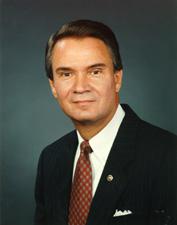
Mr. President, I thank the chairman of the committee. We have now come to the time of decision with regard to whether we are going to have the capacity to, in fact, reach a compromise on one of the…
Mr. President, I thank the chairman of the committee.
We have now come to the time of decision with regard to whether we are going to have the capacity to, in fact, reach a compromise on one of the great issues of the day; that is, whether the Congress has the political courage and political will to set aside partisan differences and to allow both sides to come together and reach agreement. We can argue about which party benefits from a Medicare reform bill and which party will suffer, but the real issue is not whether the Democratic Party or the Republican Party wins or whether the President gets to sign a bill that reforms Medicare in the Rose Garden. The real question before this institution on both sides of the aisle should be whether for once we can come together and craft a piece of legislation that creates a program that is substantially better than the 40 million seniors currently have under Medicare.
When Medicare was created in 1965, it was bipartisan. It was a change. Some say we should not change Medicare. I would argue that Democrats have never feared change. In 1935, when we wrote the Social Security Program under Franklin Roosevelt's leadership, Democrats changed the status quo. When we led in 1965 the effort to provide medical assistance for our Nation's seniors, we challenged the status quo. We stood up for change and created a new program. Today, over 38 years later, we have the opportunity to once again change a program which has served seniors well but not nearly as well as they deserve. Democrats should not fear that type of change.
Medicare today, on average, does not cover 47 percent of the average senior's health care costs in this country. Not one of us in this institution--our employees, Members of Congress--has health care insurance that is that deficient in what it does not cover. Forty-seven percent of those costs have to be borne by the senior citizen individually or, if they do not have enough money, by their children or their grandchildren or, if they become so poor,
they are put into the State Medicare Program for the poorest of the poor. That is unacceptable. That is not in keeping with the greatness of this Nation, to have a health care program for seniors that is that deficient.
This institution cannot let the perfect be the enemy of the good. This bill is not perfect, but this bill is good. We cannot let political pundits on both sides of the aisle who try to dictate what our choices are say, well, let's pass a Republican-only bill so that we can blame the failure of its passing on the Democrats. Neither can we allow Democratic political pundits to say to us we should not pass this bill for the reason that it would allow the President of the United States to sign it in the Rose Garden and that would be a political benefit for him.
If we cannot take good legislation and pass it and both claim credit for it, then, quite frankly, we should be doing something else. Good government is good politics. This is good government. This is a good bill.
There are two different approaches to solving health care. Some of my friends on the Republican side would say: The Government should have nothing to do with it. The private sector should do everything, keep the Government out of it, and we can design a program with the free enterprise system that will work just fine.
Unfortunately, there are some on my side who would say: No, the Government has to do everything. Government would have to do it all. The private sector cannot be involved at all.
Both of those approaches are incorrect. The best way to solve health care problems is to do what this bill does; that is, to combine the best of what government can do with the best of what the private sector can do and come up with legislation that says: Yes, the Federal Government can supervise it but not micromanage it. Yes, the Federal Government can help pay for it through the tax system--and this bill does that--but the private sector needs to be involved as well. The private sector can bring about innovation. They can come up with new ideas and new concepts faster than we can in the Congress and in the Federal bureaucracies here in Washington. The private sector can bring about a degree of competition which is sorely lacking under the current micromanaged system with 133,000 pages of rules and regulations. That does not allow innovation or competition. That is one of the reasons the program as we know it today, as good as it is, can be made a lot better.
The issue for our Nation's seniors is not just living longer lives; it is also about living better lives. For the first time, seniors will know that when they need prescription drugs, they will be available. Four hundred billion dollars will set up a structure where they will have insurance that covers prescription drugs, just as in 1965 when we made changes that said the Federal Government will help provide insurance to cover hospitalization, we said that for the first time the Federal Government will help with a program that will provide insurance coverage for doctors.
This is a good program. We should not fear change. This is a major step in the right direction.
Mr. President, I think one of the subjects that really united both Republicans and Democrats was the question about dual eligibles. There was a large number of seniors being treated as second- class citizens
of this country because, if they were poor, they were not in the Medicare Program. If they were poor, they were not allowed to get through the Medicare door, and for no other reason than they were poor.
Under that scenario, low-income seniors, maybe 80 years old, who worked all of their lives, but ended up in a very low-income status, were relegated to the Medicaid Program, where there was not a consistent amount of benefits for their health care programs. They were subject to the will and whims of the various State legislatures. Some treated them better, some treated them worse, and some didn't treat them hardly at all.
What we were able to do, which I thought was a priority for many Republicans because it was in the House bill--but it also was a priority for many Democrats in this body--was to say that we are going to bring those low-income seniors, for the first time, into the Federal Medicare Program. We did that. That is part of this bill. Those low- income seniors now are going to have the opportunity to be in the Federal Medicare Program. They will know what their benefits are. They will know, for the first time, they have access to prescription drugs, which is what I think the bill is all about. In addition, we were able to find an extra amount of money to help them with any type of copayments they might have.
Some States have high copayments; some States have no copayments on drugs. But what we were able to do was to say: Here is extra money for the purpose of helping States to reduce the copayments down to $1, if they are buying a generic drug and only $3 if they are buying a prescription drug. In addition to that, the subsidies and assistance we have for low-income seniors in general is extremely important.
Starting in April of this coming year, they will get a drug discount card. If they are low-income, they will start off with a $600 credit on that card, to be able to immediately have the benefit of something, where they have nothing at all today.
On balance, when you have a 150 percent of poverty and below special assistance program, when you have a discount card that starts in April, and all of the seniors, for the first time, will be in the same Federal program, I think that is significant. For the first time, we will say to seniors who are low income that you will no longer be treated as a second-class citizen and be different from all of the other seniors you know. You will be part of the Federal program and you will have access to prescription drugs.
Again, I think the question is, Have we designed a perfect bill? The answer is no. But I think when you look to associations such as AARP and the National Council on the Aging, we have a bill that merits their support.
Mr. President, we have reached that point where the debate is on the size of the bill and not the merits of the bill.
Let me just say, 38 years ago this Congress passed this document that I have in my hand for the first time. It was in 1965 that we enacted Medicare, which was a noble experiment. It was led by Democrats and signed into law by President Lyndon Johnson. It was, indeed, a change and a challenge. No one knew whether it was going to work. People could not be guaranteed it was going to serve the needs of America's seniors. But it was a chance worth taking. It was a change. I suggest today Democrats in particular should not fear change if it is aimed at improving a document that has served this country so well.
The only defect of this legislation was that it didn't do everything that it should have. For instance, while it covered doctors and it covered hospitals, it did not cover what at that time were new innovations in the area of prescription drugs. Members of Congress knew we had to take care of seniors going to the hospital. We had to take care of seniors seeing their doctors. But no one really thought that seniors getting prescription drugs was going to be that important.
Today we have the opportunity to correct what we did not do in 1965 and bring about a reform to this program which is greatly needed. I would just say that is why organizations such as the National Council on Aging, which represents all of these seniors who go to these senior centers throughout our States and congressional districts, as well as the AARP--and Democrats many times cite the AARP when they agreed with them. But now when they do not agree with them they find fault with the organization.
I suggest the Nation's largest organization representing over 35 million seniors has had their health economists and their lawyers carefully study the document that is before us and made a recommendation to those of us in Congress. They said this is something we support because it is indeed, on balance, the bill we should approve and send on to the President for signature.
Again, I say it is not a perfect bill. But, once again, we can't let the perfect be the enemy of the good. We also cannot let the political pundits of both of our parties suggest we cannot vote for this bill because somehow it may give credibility to the other party. I have actually heard that from both sides of the aisle. I think that would be a tragic mistake.
The issue today is not which political party wins. The issue today is whether we can craft legislation that allows America's 40 million seniors to come out a winner. I think on balance this bill does that because it combines the best of what government can do with the best of what the private sector can do.
Many on my side of the aisle think the Federal Government should do everything all the time. We can't do that. We can't do it very effectively. So I think it is important to note that on the other side of the aisle, many of them think the Federal Government should not do anything and that the private sector should do it all.
The truth lies, as most truthful matters lie, somewhere in between. The fact is, we ought to combine the best of
what Government can do with the best of what the private sector can do and create a new Medicare reform for the 21st century.
With regard to the points of order, I made it very clear the two points of order we are going to be voting to waive are not dealing with the so-called premium support language that is in the bill. It doesn't deal with the cost containment provisions that are in the bill. It doesn't deal with whether we are going to bring in the Medicare Program all low-income seniors who are currently in, under the State Medicare Program--it doesn't deal with any of that. It deals basically with the fact that we are spending more money in this legislation than the structure of the budget would allow us to do.
That is not uncommon, and the proper procedure is to have a waiver of those points of order, which is what we are going to be voting on.
The first point of order really lies because of the fact that we put more money to help the State Medicaid Programs, something that most people on my side of the aisle strongly supported, to make sure we help those programs make sure the drugs that they are going to still be involved in helping seniors with--that they will be able to help them to the maximum degree possible.
In addition, one of the other reasons the first point of order lies is because previously the Finance Committee helped the States with their unemployment insurance, something most people on my side of the aisle strongly supported. It is not sufficient for people to go back to our States and tell seniors that we somehow prevented this bill from being adopted because of a point of order that was very technical in its essence. I think people want to know where we stand on the merits of the bill. Are we for prescription drugs for the first time, for seniors, since 1965? Are we for giving them a program where the Federal Government pays 75 percent of their drug costs? Are they for or against a program that is going to give particular help and assistance to our Nation's low-income seniors, which is so terribly important? Are we for bringing low-income seniors into one standard national Medicare Program or are we not?
I would not want to go back and somehow argue the technical merits of the point of order and say this is why I could not vote for prescription drugs for seniors, a $400 billion package. There are going to be some on the more liberal wing and more conservative wing who will find reasons to be against this bill, but on balance it represents a centrist coalition, and I urge my colleagues to support it.

Mr. President, I yield myself 9 minutes. Mr. President, let me commend the Senator from Iowa, the Senator from Louisiana, the Senator from Montana, and others who have worked on this so very hard. I…
Mr. President, I yield myself 9 minutes.
Mr. President, let me commend the Senator from Iowa, the Senator from Louisiana, the Senator from Montana, and others who have worked on this so very hard. I want to express my gratitude to them for spending so much time on this issue.
Let me also briefly thank my own staff. I am not a member of the Finance Committee. But this issue transcends committees. This is legislation that all of us have a deep interest in. I thank Jim Fenton and Ben Berwick of my staff for the tremendous effort and time they have put in.
I spoke at some length on Friday about this issue. Let me divide the issue very quickly.
A prescription drugs benefit, I think, would pass 100 to 0. If we had a vote on the prescription drug benefit--you would hear speeches that it didn't go far enough and concerns about the donut hole and whether or not 150 percent of poverty was the right margin to be drawn--but I suspect all Members in the final analysis would support the initiation of a prescription drug benefit on the assumption that we would work to improve it in the years ahead.
If I were voting on that issue alone, I would stand here and raise concerns about matters included in that provision, but it would have my wholehearted support as a long overdue proposition. I won't dwell on that aspect of the legislation here this morning.
The second piece of this bill, however, is one that causes me concern. This second piece is more difficult to understand, it is less clear than just $400 billion for prescription drugs. The second part of this bill is a major change in Medicare. The program has been around for 38 years and is currently serving 41 million Americans. It is probably the most successful and the most wildly supported Federal program of the 20th century. I can't think of any program, except Social Security, which has been so widely supported. We are about to take that program which has worked so tremendously well, and I think disadvantage it significantly. Let me explain briefly why.
The sponsors of the legislation say they are not forcing seniors out of traditional Medicare. They claim they are simply creating competition as a result of offering seniors a choice. Let us talk about this so-called ``competition.''
Private plans under this bill will be reimbursed at a higher rate than traditional Medicare--9 percent higher. On top of that, this bill also makes available $12 billion in a slush fund to be used to lure private plans into the market on a corporate subsidy. You get a 9 percent differential and $12 billion. That is what you get to compete with Medicare. You do not have to have a Ph.D. in math or a Ph.D. in business law to understand that kind of an advantage certainly is not what I call a level playing field. It is not competition, it is a rigged game. The bill stacks the deck against traditional Medicaid and the effects are self-perpetuating. Traditional Medicare grows weaker, private plans grow stronger, forcing more beneficiaries out of the traditional programs and into the open arms of HMOs.
It is easy to get bogged down in the complexities of this bill. Let me state it simply: The weakening of the traditional Medicare Program caused by this bill will force seniors to pay more and face the prospect of fewer benefits.
Remember, Medicare initially said whether you are wealthier and healthier or poorer and sicker, we all work together. Now we are splitting off the wealthier and healthier and leaving the sicker and poorer on the side.
This bill will actually mean less choice, in many ways, for seniors. Seniors like the traditional Medicare Program precisely because it offers choice, the very thing the supporters of this bill claim to be providing. Under the current system, seniors have a choice of doctors. But that choice would soon disappear with a rise in private managed care plans.
I hope this prediction is wrong but I am fearful it is right. If this prediction is wrong, it most likely means seniors have elected not to move into private plans and HMOs will leave the market in many areas, as we have seen in the past with the Medicare+Choice plan, taking $12 billion with them that might have been used to reduce the cost of prescription drugs rather than provide a subsidy for the private plans to compete with Medicare.
Even more ironic is that this highly unfair system is being championed by self-proclaimed champions of free enterprise. This bill gives $12 billion to HMOs to unfairly compete and it does nothing to control drug prices. In fact, it actually prevents the Medicare Program from negotiating lower drug prices. Under law, Medicare is prevented from using its purchasing power to negotiate with drug companies for lower prices. What is wrong with letting free enterprise work here in order to lower drug prices?
If Medicare is so in need of reform, why in this bill are we subsidizing private companies and not allowing the Medicare beneficiaries to compete for lower drug prices? The reason is simple: The champions of free enterprise know that private plans cannot compete with traditional Medicare on a level playing field. The subsidies are necessary because Medicare is actually more efficient. Medicare delivers services at a lower cost.
In 2010, a provision included in this bill will go into effect that begins an experiment with our Nation's seniors. Why we are taking our seniors, the most vulnerable, and turning them into guinea pigs for an experiment is beyond me. That is what we are beginning to do. Given the unlevel playing field I have described, such a competition would further disadvantage the traditional Medicare Program.
The bill writes into it right now a cap of 5 percent premium increases for each year in regions effected by this premium support experiment. The bill anticipates premium increases even before we have tried the program, and they are going to take 6 million seniors and throw them into an experiment, a pilot program, the outcome of which has already been determined by the bill's authors when they talk of a cap at a 5 percent premium increase. How is Medicare going to compete then? The outcome is predetermined, forcing those seniors into a disadvantaged program. The weaker and the poorer and the sicker seniors will end up paying more or having benefits cut.
I am afraid we can only conclude one thing: The architects of the bill, with all due respect, spend billions of dollars not to reform Medicare, but to dismantle it. It puts patients out there to wither on the vine, as Newt Gingrich said 8 years ago. If the man who wanted that embraces this legislation, that could mean one of two things: Either his opinion has changed or this legislation really is intended to end Medicare. I submit that I see no evidence his opinion has changed.
We set out to add a prescription drug benefit to Medicare. I applaud that. We could have had a bipartisan bill that did just that. It could have been approved by this Chamber overwhelmingly. But instead, we are being asked to vote on a wolf in sheep's clothing.
The second part of the bill, the changes in Medicare that will effect 41 million seniors, two-thirds of whom make less than $80,000 and above $13,470, for those in that category, this bill offers disturbing alternatives.
For those reasons, I urge that when the cloture vote occurs, Members vote against it. We can do better. I applaud the efforts made, but we can do better on this legislation than we have done.
I don't believe I used all 9 minutes, but others have gone over 9 minute. I yield back my time for those on the Democratic side who would like to be heard on the legislation.
Mr. President, I commend my colleague from California. Bring that chart down here. Talk about alphabet soup, this is very instructive, it seems to me, in terms of why people are so confused about what is in this bill. There is incredible language here that even the most determined person to learn about this bill would be hard pressed. There it is.
I thank the Senator from California because she has laid out here a lexicon of language which would glaze over the eyes of the most determined people to try to sort out what this bill means.
One of the points the Senator made is worth noting again. This is not the end of a Congress. This is only the end of a session. If we were at the end of a Congress, I presume the argument made that we have no other choice, we can either do it now or it doesn't get done would be valid. Each new Congress has to begin all over. But we can actually come right back, pick up where we left off, and try to work this legislation out to serve a better interest.
I thank her for this. Some of this really needs further explanation. Let me say this--and I am being repetitive to some degree--the prescription drug piece of this is of concern to me. I was willing to accept the argument that having a prescription drug benefit of $400 billion over the next 10 years, while not perfect, was a start. If that is all we were voting on today, I would probably vote for it. What is not being discussed at any great length is the second half of the bill, which is very confusing to people because it has language in it that is unclear as to what the ramifications mean.
So people need to pay attention and understand that if we are just dealing with the second half of the bill, the Medicare-exclusive parts of Medicare, I think there would be a very different reaction in the Chamber to what we are proposing. I suspect the prescription drug benefit piece would pass overwhelmingly, and I suspect that a free- standing Medicare piece might not get 15 votes, when you consider what is being proposed.
You are absolutely prohibited, under this bill, from joining to go out and buy prescription drugs collectively. You are banned under this legislation. Under this legislation, of course, you are going to give a significant advantage in the competition because of the $12 billion subsidy. That is the reason the order holds here. This piece of legislation has a significant subsidy coming up to the private piece of this proposal. Nothing like that is being offered anywhere else.
In fact, a similar point of order was raised in July of last year--at the end of July of 2002--making the exact same point of order that has been made on this legislation. That point of order was raised by the majority leader and the chairman of the Finance Committee against the piece of legislation offered by Senators Graham, Miller, and Kennedy. There, the point of order was against section 302(f) of the Budget Act because it broke the budget ceilings.
That is what is being offered here for exactly the same reasons. It will be curious to see whether or not the people who felt so strongly about not waiving the Budget Act back then will do the same here.
This legislation being proposed, obviously, also makes it extremely difficult for people, down the road, to be able to have a prescription benefit plan that is going to be fair and balanced. I take note that none of these provisions, by the way, will go into effect rather immediately. You can impose many of the things we are talking about here in a matter of days if you are truly interested. Yet they are delaying it until 2006, until after the 2004 elections when, obviously, what happens to beneficiaries under the so-called fair competition-- Medicare, remember, was a program designed to take the wealthy and healthy and the poorer and sicker together, not to discriminate, and to provide for both of these constituencies. Over the years, that is why the program has been so successful. What is going to happen, of course, with this unfair competition of a 9-percent differential and a $12 billion subsidy is that those who are wealthier and healthier will spin off out of Medicare, and only the poor and the sicker will be left in the program; thus, raising the premium costs or reducing benefits. That is what is going to happen here. There is no doubt in my mind about where we are headed with this proposal. We have raised this point of order to suggest that there is a better way of crafting this legislation. We urge our colleagues to support the point of order when the vote occurs.
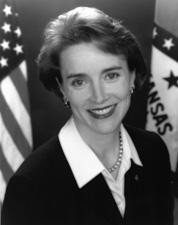
Mr. President, I rise to speak about the Medicare prescription drug coverage conference report before the Senate today. I do strongly believe this is a historic opportunity. I believe we should not…
Mr. President, I rise to speak about the Medicare prescription drug coverage conference report before the Senate today.
I do strongly believe this is a historic opportunity. I believe we should not let it pass by. This proposal represents a $400 billion expansion of the Medicare Program, the largest expansion of Medicare since it was created nearly 40 years ago.
While I intend to support this measure, I think what is most important at this juncture is to be honest with the American people. For me, it means being honest particularly with the people of Arkansas and the Arkansas seniors. This bill cannot be and will not be all things to all people. The bill will not provide free drugs for everyone. Some seniors, because we have talked about this for so long, have come to their own conclusion that what we were trying to get was free drugs for all seniors in this country.
I have to remind people we are in debt in our country up to our eyeballs, as far as the eye can see. We did not have an opportunity to provide free prescription drugs to all seniors in this country. Therefore, we have to do the best we can do right now with what we have. I am not pleased about the debt. I didn't support the last tax bill and I am scared to death of the debt we are creating for my twin boys who are 7 years old right now.
The fact is, in this year's budget we have $400 billion dedicated to American seniors. We have to do the best job we can to make that productive for them in this current circumstance because next year and the year after that, it will not be there; we will still be in debt up to our eyeballs.
We have a tremendous amount to do. This bill starts that. It is unfortunate the issue of adding a prescription drug benefit to Medicare has become so politicized. Several Democratic conferees, many of them experts on this issue in their very own right, were not permitted the opportunity to negotiate the final bill. They were conferees in name only. I join them in their frustration and how they feel. They have a right to be angry. It was wrong and unjust. They were prohibited from being part of this very important conference. This bill would have been better had they been involved.
Despite the flaws in this legislation and the partisan process we witnessed over the last few months, Democrats and seniors should be pleased that many of the principles we fought for are contained in this bill.
Is this the bill I would have written? Absolutely not. But there are components in this bill that are productive and move us forward. On behalf of our seniors, we must seize that opportunity.
The bill before the Senate today will provide all of the 453,438 Medicare beneficiaries in Arkansas with access to a Medicare prescription drug benefit for the first time in the history of the Medicare Program. Every senior will have access to a drug benefit to help them with the extraordinary cost of prescription drugs. Extraordinary.
Again, it is not all things to all people. If you find yourself in a position where you are well off and you do not have a lot of prescription drug costs, there may not be in here the most advantageous drug program for you, but for the sickest and the neediest of this country we have come a long way in this bill.
While the benefit is somewhat meager, I am confident we will improve on it in the future for those who maybe do not get the best return from this package. But this bill targets the sickest and the neediest of seniors, those with the highest drug costs and those who are in the lowest income category.
Because of the $400 billion limitation, that is where we have gone. When fiscal times improve, we should eliminate the gap in coverage. I am concerned about those seniors who will be hit with the gap in coverage and have to continue to pay their premiums. But the point is, every senior in Medicare in Arkansas will be able to choose to enroll in a new voluntary drug benefit while staying in the traditional Medicare Program. This is a huge victory. Seniors will not have to leave the Medicare they love to get a prescription drug benefit.
That is because the bill contains a fallback plan--a Government guaranteed plan or safety net--that will provide drug coverage should private, drug-only plans not come into their area.
We in Arkansas know a lot about that. We have seen what happens when Medicare+Choice comes in.
I am concerned that the fallback provision in this bill is not as strong as that which was passed in the Senate bill because it allows one prescription plan and one integrated plan to provide the drug benefit instead of two prescription plans.
I intend to work with my colleagues to fix this flaw before the drug benefit is enacted. I am glad that the conference agreement requires a national fallback contract, so that the Government fallback will always be there when necessary.
I thank the Senator from Iowa.
Mr. President, I have a lot more to say, and I hope I will have an opportunity to do it at some point.
I think the most important point to be made today is to talk about those who will be served. Over 170,700 beneficiaries in Arkansas will pay no premium for their prescription drug coverage and a nominal copay of no more than $2 for generic drugs and $5 for brand name drugs. They also will not have a gap in their drug coverage.
We are addressing some of the neediest individuals in our country at this juncture. Over 40,200 additional seniors in Arkansas will qualify for reduced premiums, lower deductibles and coinsurance, and no gaps in their drug coverage. All told, over 40 percent--over 40 percent--of Medicare beneficiaries in Arkansas will receive the much-needed special help.
This low-income assistance is of special importance to Arkansas' older women. Medicare seniors are disproportionately women and disproportionately poor, and will be served well by this special assistance.
There is much I would have done to strengthen the low-income provisions, such as not having an assets test for everyone and ensuring that Medicare could wrap around the cost-sharing requirements in the Medicare bill and that Medicaid could pay for prescription drugs not on the private plan's formulary.
I fought to include a new benefit providing screening for diabetes. The new diabetes screening benefit will help with the fact that approximately one third of the 7 million seniors with diabetes--or 2.3 million people--are undiagnosed.
They simply do not know that they have this very serious condition--a condition whose complications include heart disease, stroke, vision loss and blindness, amputations, and kidney disease.
This bill takes a number of steps to protect seniors' access to community pharmacies.
I worked hard to ensure that private PBMs must disclose any price concessions made available by manufacturers, that the Secretary of Health and Human Services has the authority to audit the financial statements and records of plans to ensure that they are complying with these disclosure requirements, and that the Federal Trade Commission study whether the PBMs that own their own mail order pharmacies have created higher drug prices for consumers.
In addition, private plans must allow any willing pharmacist to be a provider under its plan. And for the first time, local pharmacists will be allowed to offer 90-day prescriptions just like mail-order pharmacists.
These provisions are vital to rural hospitals, physicians, ambulance providers, home health providers, and rural health clinics in Arkansas. I have worked with my colleagues for a number of years on these provisions, and long-sought rural equity is finally achieved.
This bill also contains several good additions to the traditional Medicare Program that seeks to improve the health and well-being of seniors.
Among the provisions that I fought to include is my demonstration program on chronic care management that will help determine the healthy outcomes that result when a geriatrician is paid appropriately for caring for a patient with multiple chronic conditions.
I also fought to include coverage for insulin syringes. Roughly 40 percent of the senior population with diabetes--or 1.8 million seniors--use syringes to inject insulin into their bodies to control their diabetes every day.
Without coverage, syringe purchases--which can be especially expensive for seniors on fixed incomes--would not count towards cost- sharing and yearly maximum out-of-pocket expenses.
The low-income assistance in the Senate bill was much more generous. It helped 3 million more seniors. And I pledge to these seniors that I will continue to work on strengthening these provisions in the future.
I am pleased that the conference agreement provides financial incentives for employers to continue offering prescription drug coverage for their retirees.
I have received many calls this week from constituents who want to ensure they don't lose the health coverage they worked for their entire lives. It is frustrating that employers are already dropping retiree health coverage.
So I am glad this bill provides tax incentives to employers and unions so they don't drop drug coverage. Employer groups have told me that this bill will actually encourage them to retain rather than drop coverage in the future.
This bill also creates the most comprehensive rural package we've seen in years. By significantly decreasing or eliminating the disparities in Medicare payments that exist between rural and urban health care providers, seniors in rural areas will have better access to the care they need.
To conclude, we must seize this opportunity before it is too late. This is not the bill I would have written, but it is a step forward.
Yesterday, I talked with Cecil Malone, the president of the Arkansas AARP. We both agree that this moment must not be wasted. We must act now to get a benefit started. Once it is there, it can only get better.
I promise the seniors of Arkansas that I will work day in and day out to make this prescription drug plan better.
I will also work to preserve and protect the Medicare Program so it can continue to be a safety net for all those who are uninsurable in the private market--millions of seniors, individuals with disabilities, and people with kidney failure.
The Medicare Program has prevented these most vulnerable individuals from being uninsured. We must remember the Medicare Program's origins and mission as we proceed--and do no harm to it.
Finally, Mr. President, I thank Finance Chairman Grassley, Ranking Member Baucus, Senator Breaux, and the members of their staffs who worked so hard over the last several months to bring us to this historical moment.
This bill also ensures that seniors have convenient access to pharmacies
by adopting the same standard that TRICARE uses to determine access.
The bill also includes my provision to waive temporarily the late enrollment penalty for military retirees and their spouses who sign up for Medicare Part B and to permit year-round enrollment so that retirees can access the new benefits immediately.
I am glad that this bill takes some steps to contain the skyrocketing price of prescription drugs. One provision in the bill would help bring generic drugs to the market faster, and another provision would give the Government authority to create a system for the importation of drugs from Canada by pharmacists, wholesalers, and individuals once safety standards are met.
I have long supported drug reimportation but both the Clinton and Bush administrations have refused to implement drug reimportation authorized by Congress, citing concerns about drug safety.
I am glad this bill directs the Secretary of Health and Human Services to conduct a comprehensive study that identifies current problems with implementing the current reimportation law we already have on the books so Congress can enact a law that will allow reimportation to go forward.
Mr. President, there is a lot to be talked about here. I hope we will continue to work together to improve upon the shortcomings in this legislation as we work to see it implemented to make it a better program for current and future beneficiaries of the Medicare Program.
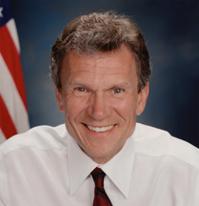
Mr. President, for purposes of time management under cloture, I designate Senator Reid, the Democratic whip, as the opposition manager. Mr. President, I make a point of order that H.R. 1, the pending…
Mr. President, for purposes of time management under cloture, I designate Senator Reid, the Democratic whip, as the opposition manager.
Mr. President, I make a point of order that H.R. 1, the pending conference report, violates section 311(a)(2) and section 302(f) of the Congressional Budget Act of 1974, among other reasons, because of the provisions related to premium support and health savings accounts.
Mr. President, I suggest the absence of a quorum.
Mr. President, I ask unanimous consent that the order for the quorum call be rescinded.
Mr. President, obviously the pending motion is now the matter before the Senate and the clock is ticking. I want to use some of the time at this point and reserve the remainder of time for those who wish to speak. I will, hopefully, reserve some time for myself at the end of the debate.
I make this motion recognizing there are a lot of concerns involving budgetary considerations on the legislation now pending. Those on the other side have expressed their understandable concern about the overall commitment in the budget to a new entitlement program, and I respect their position. It may be that on that basis alone, many of our Republican colleagues will want to vote against the motion to waive a budget point of order.
They will make the case that this is an entitlement that goes way beyond the $400 billion, that it is very likely this legislation could grow to $600, $800, $900 billion in the very near future, as other entitlements have on occasion. That is their right.
They will argue that this, as a new entitlement, provides very little cost control. On that I would agree, and I will come back to that point in a moment. So without a doubt, there are very important budgetary points of order to be made.
Technically, this budget point of order challenges the bill because it exceeds the 2004 budget authorization. It also challenges the allocation of resources within the jurisdiction of the Finance Committee. So those are the technical reasons.
I want to give my reasons for expressing the concern I have throughout the debate, and how it relates to this budget point of order. I don't challenge the $400 billion. Frankly, I don't think that it is adequate to provide a meaningful drug benefit. We have to do better than that. But that is another issue. What I challenge is why it is we are misallocating so many of the resources within that $400 billion budget pie. That is my concern; how it is that we can spend $6 billion on HSAs, health savings accounts, and at the same time tell our seniors they are going to have to pay $35 a month, 100 percent of the cost for drugs up to $250, 25 percent up to $2,250, 100 percent up to $5,100. Why are we going to tell them that when we have all this money for these special interests is something I can't understand.
I can't go to my senior citizens and tell them: You are going to have to suck it up and understand that sacrifice is something we are going to ask of you for the opportunity of the Government to pay 75 percent of your drug costs for a limited period of time throughout the year.
That is what we are saying. We have money for all these other accounts, but we don't have adequate resources dedicated to providing meaningful help to seniors. That is my first concern. We are simply not allocating the resources within that $400 billion to their maximum advantage.
But there is another concern as well. We all ought to be concerned, Republicans and Democrats, about this. We have taken virtually all the cost control mechanisms out of this bill. So those who are concerned about an exploding entitlement have a right to be concerned about what this is going to cost 10 years from now.
Ten years ago, we passed a bill by unanimous consent. I wish my colleagues all could have heard an eloquent speech made by the distinguished Senator from Florida about this in our caucus this morning. Ten years ago, on a bipartisan basis, we passed legislation providing not only a drug benefit to veterans but a cost containment mechanism for that benefit. We passed it unanimously. When we passed it, we basically said, we are going to allow the Government to negotiate the price for the VA, passing on the savings to veterans.
We have done that. And by most accounts, we have now cut the cost of veterans drugs in half. Senator Graham talked about being at a VA hospital in Florida on Veterans Day. He said: How much are you spending on drugs right now?
They said: $39 million, at that facility.
He said: If you couldn't negotiate, if you had no ability to negotiate on behalf of your veterans, what do you think the veterans would be spending?
They said: $71 million, almost twice as much.
How is it we can argue on behalf of veterans that we ought to keep their costs down but at the very same time, argue that senior citizens ought to bear the full cost of those drugs? You tell senior citizens sitting next to another one at a public meeting a year from now that we somehow just believed there was a distinction, that it was OK for seniors to spend twice as much as veterans.
I will fight every single day for the right of veterans to get the lowest cost for their drugs, but that same opportunity should be provided to every senior citizen as well.
So you are going to see an exploding cost. And you are going to see the misallocation of resources within that $400 billion, away from seniors and to so many other groups that I have to say even the most avid supporters of this legislation would say don't need it as much. Do healthy people who have access to an HSA really need help as much as a senior citizen who is struggling to pay their bills?
Isn't there a better way that we can allocate these resources to maximize the drug benefit for every citizen in the country today? The answer is, of course, yes. Why is it that we saw the need to exclude the single demonstrated ability on the part of a Federal program today, in the Veterans' Administration, to control the cost of drugs when it came to protecting drug prices for senior citizens? Why did we do that?
Unfortunately, that wasn't the only cost containment mechanism excluded. For all intents and purposes, we also took out reimportation. We don't have any real authority now to reimport lower cost American- made drugs into this country. I am told the reason we didn't is because the drug companies were overwhelmingly opposed. Keep in mind that a lot of these drugs are manufactured inside the United States, exported to be retailed outside the United States. So the irony is that drugs made inside the U.S. cannot be sold and brought back into the U.S. under this bill. I think it is a folly.
So the bottom line for those who are concerned about the exploding cost of an entitlement is this: I have news for you. You have a right to be concerned because we have not done anything to control costs in this legislation. We are going to woe the day we passed this without providing the same mechanism VA has to do just that. We are going to woe the day. We are also going to woe the day when we draw distinctions between seniors for absolutely no good reason. If it is good enough for veterans, it ought to be good enough for senior citizens across the board. But the drug companies don't like that either. Because they don't like it, it was excluded. So I make these points of order on four very specific points.
No. 1, we are not using that $400 billion we have allocated very well. We could do a whole lot better.
No. 2, there are specific programs in here that don't belong in here in the first place, have nothing to do with offering drugs to seniors; that are handouts to special interests and have no business in this bill.
No. 3, we do very little with cost containment. We exclude the most consequential leverage the Government has had in the past with a program as important as the VA. It passed unanimously on the Senate floor 10 years ago. Why is it excluded now? Because there was special interest opposition.
No. 4, we are going to woe the day when we put special interests ahead of the senior citizens in making these resource allocations in this legislation the way we have.
Mr. President, we can do better than this. We have to do better than this. I hope, on a bipartisan basis, we simply say we are going to ask that these provisions, these concerns be renegotiated.
I was one--and I will end here--who voted in favor of cloture. I am not desirous of extending debate unnecessarily and in a prolonged way. I wanted to make that point by voting for cloture.
But I must say, we expedite the day when we do the right thing with regard to the costs of drugs and with regard to a new system under Medicare. We expedite the day by voting against the motion to waive the point of order made by the distinguished majority leader.
So I hope those who claim fiscal responsibility as an important priority, those who want to maximize the bang for the buck for seniors in this legislation, those who are concerned about the distinctions we draw among senior citizens, will join with those who voted for and those who voted against cloture, against waiving this point of order.
I yield the floor.
I will yield time in just a moment to my colleagues. First, I will respond briefly to a point made by the distinguished Senator from New Mexico, Mr. Domenici. I am sorry he is not on the Senate floor. I wanted to respond to a comment he made. He said this was a frivolous point of order.
I remind my colleagues, this is precisely the point of order made by Senator Grassley and Senator Frist on two different motions last year. So I argue if it was appropriate last year, it would be appropriate this year. If it is frivolous this year, it would have been frivolous last year. Yet the distinguished Senator from New Mexico, and I might add, of course, my friend the distinguished Senator from Oklahoma, both voted in favor of the points of order last year when that precise point of order was made.
I ask unanimous consent that the rollcall involving both points of order be printed in the Record at this time.
I yield 10 minutes to the distinguished Senator from Florida.
Mr. President, how much time remains on either side?
Mr. President, this is our last chance to do something to control the exploding costs that are absolutely guaranteed to occur for seniors and for the Government unless we do something else. This is the last chance.
There are those who have just said this will kill the bill. Just to make sure everybody understands, this has nothing to do with killing the bill. What happens under Senate rules is that we will go back to S. 1 as an amendment to H.R. 1. That is the pending business. That was voted on, by the way, 76 to 21. So we go back, if we sustain this point of order, to the Senate-passed bill, which passed 76 to 21. We can send it to the House and ask for bipartisan support.
The distinguished Senator from Pennsylvania was saying that one of the concerns I raised was our ability to contain costs. And yes, he is right, we had an early bill that had the provision, this egregious provision in it prohibiting the Government from getting the best deal, just as Secretary Thompson has done with Cipro, just as we do with the Veterans Administration.
What he did not tell our colleagues is that every subsequent bill-- the last two bills we have introduced--did not have this provision in it. Why? Because we understand what an incredibly valuable tool it has been for the Veterans Administration.
So, Mr. President, if you want to control costs, if you want to make sure the senior citizens of this country have the ability to get the lowest price, if you are absolutely as concerned, as you say you are, about controlling the costs of this program, then you are going to vote to sustain this point of order.
This is our last chance.
I yield the floor.
I yield the remainder of my time.
Mr. President, with all due respect, while listening to some speakers, including the previous speaker, I would ask what bill they have been reading. It seems that they are referring to a bill which…
Mr. President, with all due respect, while listening to some speakers, including the previous speaker, I would ask what bill they have been reading. It seems that they are referring to a bill which is not the conference report before us today. They are discussing problems that might occur in the future. But the problems described are based on some other bill, not the bill before us, not the conference report.
The fact is that this legislation provides $400 billion for seniors. That is a $400 billion entitlement for U.S. seniors that they do not have today. I think we owe it to our American seniors to give them this $400 billion new entitlement for drug benefits. We are on the brink. We are close to passing it.
In each of the last several years, we have come close but we were not able to finish the job. I do not think we are going to have this opportunity again. I do not think the Budget Committee is going to set aside $400 billion again, particularly with the increasing budget deficits and current account deficits. We will not have this opportunity again.
This is a good bill. No bill is perfect. We are 535 Members of Congress. There are 535 people who have to work together to get something passed. This product before us today reflect this reality. It is $400 billion for seniors.
It is also much closer to the Senate bill than the House bill. I hear complaints that the conference report is not nearly as good as the Senate bill. These critics have not read the conference report. The conference report is better than the Senate bill in many respects. For example, dual eligibles. The conference report covers low-income dual eligibles through Medicare. I think most Senators agree this is a better policy than what was in the Senate bill.
We also have a solid fallback. It is wrong when Senators say there is no guaranteed prescription drug benefit to seniors. It is guaranteed in this bill. Fee for service is held harmless in this bill in all respects. So a senior can always get a standard prescription drug benefit under this bill. Whether one takes it from a PDP, a private drug plan, a PPO, or the fallback, this benefit is guaranteed for all seniors. Seniors will get their prescription drug benefits in this bill. It is guaranteed.
As I mentioned earlier, this benefit is an entitlement. It is a $400 billion entitlement expansion we have tried to pass in past years but are only able to get passed now.
I have heard some Senators claim that this is not the Senate bill because it contains something called premium support, and it has a so- called slush fund. Let me remind Senators, the so-called premium support is extremely watered down from what was in the House bill. It is time limited to 6 years. Only six cities will be demonstration projects. Low-income seniors in each of those six cities will be held harmless. They get full protection. In addition, the premiums for those who are not low income are limited to a 5 percent change. Fee for service Medicare is held harmless in all respects in those six cities where there may be a demonstration project. They are held harmless in all respects, except the
Part B premium may go up by no more than 5 percent. Any other change in these demonstration areas has to be enacted by Congress--enacted by to Congress to extend, enacted by Congress to expand, enacted by Congress to change.
What has happened in the past when we have had these demos? They have been repealed. They have not been extended. In 1997, Congress set up premium support demonstration projects. Congress then rushed in to repeal them as quickly as they possibly could. They were gone. The same will happen here. Do my colleagues know why? Because the dollars provided to private plans in the premium support demonstration areas will be much less than in other parts in the country. The private plans will not be able to survive.
Mark my word, those plans, those physicians, and those providers in the demonstration MSAs are going to come to Congress and ask us to repeal it.
Regarding this so-called $14 billion slush fund, $12 billion was in the Senate bill, which seventy-six Senators voted for. This is just $2 million more, and it does not come out of the $400 billion for drug benefits. That $400 billion for drug benefits is still there, but the conference report does have $2 billion more than the Senate bill, for which 76 Senators voted.
To close, I will return to my main point. This is a very good bill. We have the opportunity now to provide prescription drug benefits for seniors. We are not going to have this opportunity in the future. Beneficiaries have waited a long time for this benefit. This bill is much closer to the Senate bill than it is to the House bill. If we do not pass this now, I must ask you, what are we going to tell our seniors when they say to us, Mr. Senator, Ms. Senator, you told us you were going to give us prescription drug benefits but you found some reason to say no and you voted against it and did not give it to us; why did you give us the help you promised?
We have an obligation to help our seniors pass this legislation.
Mr. President, there is not a lot to say in 1 minute. I will do the best I can.
Essentially, we have $400 billion in prescription drugs for seniors. I do not see how in the world we can let that moment pass by.
It was said before that there are not enough low-income benefits for seniors. The previous speakers said that. They are wrong. One-third of our seniors will get such benefits under this bill that 95 percent of their benefits will be paid for. One-third of American seniors will find that 95 percent of their benefits are paid for. The allegation is there is no help for low-income seniors. That is just flat wrong.
There were a lot of other statements made by those opposed to this legislation that are flat wrong. Some say 10 million will be affected by premium support. Flat wrong. We asked CBO what the number is. They said 600 to 700 to 1 million.
Some people say 6 million were going to be hurt by Medicaid. Flat wrong. It is much less than that.
I strongly urge Senators to look at the facts. Vote for the bill and particularly vote against the points of order because those are mere technicalities. They don't go to the substance of the bill. It is important to pass this legislation now for seniors.
Mr. President, make no mistake about it, the issue before us--that is, whether a point of order should be sustained--is a vote about whether or not we provide prescription drug benefits to seniors. It is that simple.
If we fail to waive this point of order, this bill is dead, certainly for this year, probably for the next Congress. The very narrow issue before us is whether or not it is ``OK'' to spend roughly $4 billion more than the Budget Act previously allocated for the year 2004.
It is important to remember that this bill is totally within the Budget Committee's allocation for the 10-year period of $400 billion. So the narrow question is, Is it within the allocation for the year 2004?
Now, a couple points here. In 2004, dollars will be spent based upon various pieces of legislation. There is already legislation passed which allocates dollars for 2004. So the conference report itself does not break the 2004 cap, but, rather, it is the accumulation of the dollars in this bill plus previous bills which total up to exceeding the cap allowable for 2004 under the Budget Act by about $4 billion.
So the real question we are asking ourselves is, Are we going kill this bill--a bill for which the full $400 billion allocation does not violate the Budget Act--are we going to kill this bill on a mere technicality, a technical trap that any spending in 2004 has the effect of bringing this bill down?
Now, it makes no sense to do that because, clearly, we want, in this bill, to spend some money in 2004. What about the doctors in 2004? What about the hospitals in 2004? Are we to tell doctors and hospitals, because of a mere technicality, they do not get reimbursed in 2004? We will suspend payments for a year, but then, beginning in 2005, we could pick them up again? I do not think so.
I don't know what Senators are going to say to their seniors back home who vote to sustain the budget point of order to kill the bill because of some spending in 2004 for doctors and hospitals, denying them a prescription drug benefit because they killed the bill. I do not think many people in this body would like to do that.
This is a good bill. It is unfortunate that at this stage of the debate, where we are past the listening stage, an awful lot of Senators are not listening to each other. Rather, they are being rhetorical, they are making their rhetorical points, and they are trying to persuade I don't know who, but some people to certain points of view.
But if you look at the mere language of the bill, it is a good bill. It provides a prescription drug benefit for seniors, a huge benefit for low-income seniors. One-third of all seniors, under this legislation, are categorized as low-income, and they get the benefits of this bill.
We also added in more money for what is called the Medicaid wrap to help lower income folks even more than earlier was the case. We also added in money to help keep retiree coverage.
I think it is important to note that companies generally are reducing retiree coverage in America, irrespective of this bill. We have put in $88 billion to companies for retiree coverage, which means, clearly, that those companies are more likely to keep and retain coverage; that is, this legislation intends to encourage the retaining of coverage, not discouraging it.
So if this bill goes down, there are going to be more retirees who will lose their coverage. Senior citizens will not get the benefit of a drug benefit, particularly the lower income seniors will not get the benefit, and we will be doing our seniors a terrific disservice.
So tomorrow is another day. We can improve upon this bill. If the bill is killed, as it will be if this point of order is sustained, those who hope, ``well, maybe we can do better next year,'' I think should remember the admonition that a bird in the hand is worth two in the bush.
Next year is a very political year. It is 2004. It is a Presidential election year. It is almost impossible to predict the dynamics of next year. It depends on the economy. It depends upon foreign policy. It depends upon the Presidential election politics. And we all know that usually in a Presidential election year not much legislation of consequence passes. Usually, there is a lot of talking but not a lot of action.
I do not think we can afford passing up giving seniors a chance to get prescription drug benefits. So I urge Senators, on the technical matter before us, to vote to waive the point of order because it does not make much sense to me to let a technicality kill this bill.
Mr. President, I rise today to express my opposition to the conference report for H.R. 1, the Medicare Prescription Drug and Modernization Act of 2003. For far too long Medicare has lacked a…
Mr. President, I rise today to express my opposition to the conference report for H.R. 1, the Medicare Prescription Drug and Modernization Act of 2003.
For far too long Medicare has lacked a prescription drug benefit. The lack of this benefit has been the gaping hole in the Medicare safety net. I have consistently supported efforts to establish a meaningful Medicare prescription drug benefit. I supported S. 1, the Prescription Drug and Medicare Improvement Act of 2003, because it would have been an important step forward in meeting the prescription drug needs of seniors. I am extremely disappointed that instead of making improvements in the Senate-passed bill, the conference report is now a false promise to our seniors. Mr. President, the conference report contains too many flaws to warrant passage. The conference report lacks appropriate prescription drug coverage for seniors. Indeed, many seniors will be worse off under this proposal. The conference report also weakens the existing Medicare entitlement program.
The prescription drug coverage in this legislation is simply not comprehensive enough. Too small an allowance is provided within the legislation to establish a meaningful prescription drug benefit for seniors. Instead of reducing the size of the coverage gap, the conference report would require that seniors pay for all of their drug costs after their total drug spending reaches $2,250. Despite continuing to pay their premiums, they will not receive any additional support until they spend about $5,000. This gap is about twice as large as the gap that was contained in the Senate-passed bill. Why should seniors have to continue to pay premiums when they do not receive any benefits if they are in the gap? This coverage gap must be filled.
Mr. President, for too many seniors in Hawaii and across the nation, prescription drug coverage will be worse under the provisions in the conference report. Seniors who are currently provided prescription drugs through their state's Medicaid programs will have federally mandated copayments imposed on them. For example, Hawaii's seniors who have incomes of less than 100 percent of the poverty level and obtain their medications through Hawaii's Medicaid program will be worse off under this plan. They will now have to pay copayments to get their prescription medication. Hawaii's seniors are not alone. The Center for Budget and Policy Priorities believes that most of the 6.4 million individuals that have dual eligibility for Medicare and Medicaid will be charged more under the conference agreement for medication than under existing law.
I am afraid that too many low-income seniors will not be able to afford even these meager copayments. Those who cannot meet these copayments will be denied access to the medications they are currently being provided. Again, they will go without the treatment they need. In addition, the financial burden that the conference report places on states may lead to a reduction in other Medicaid services that states will no longer be able to afford, because of the substantial share of prescription drug costs that states will have to pay the federal government for seniors who are eligible for Medicare and Medicaid.
Mr. President, I am also concerned about the millions of retirees that will lose their existing coverage. We have seen over the past few years that there has been a disturbing trend of reducing benefits for retirees. Creating this voluntary benefit will only accelerate this trend. The intent of the legislation is to expand prescription drug coverage for seniors, not merely to shift the financial burden of existing coverage to the federal government. Many seniors will be forced to rely on Medicare, which will provide a less generous benefit than what they currently enjoy. It is estimated that 17,850 Medicare beneficiaries in my home state of Hawaii will lose their retiree health benefits as a result of the enactment of this legislation. If Medicare beneficiaries lose their employer-based coverage, they may have to pay more for a Medicare drug benefit that provides less comprehensive coverage. Despite the subsidies included in the conference report to encourage the continuation of existing coverage, it is estimated that approximately 2.5 million people will lose their coverage.
Mr. President, I along with Senators Warner, Allen, Mikulski, Sarbanes, Johnson, and Corzine requested that the conferees include our bill, S. 1369, in the conference report to ensure that present and future federal retirees receive the same level of prescription drug coverage. The government's Federal Employee Health Benefit (FEHBP) program for its employees and retirees stands as a model for all employer-sponsored health care plans. Our legislation would protect prescription drug benefits for federal retirees by ensuring parity for these benefits with other FEHBP subscribers. The other body approved companion legislation, H.R. 2631, on July 8, 2003. While the Medicare reform bill includes subsidies and tax credits to employers who retain existing drug benefits for their retirees, such incentives provide no guarantee of the FEHBP drug benefit for the government's own annuitants. If FEHBP is the model for this reform, the federal government must not drop or reduce drug benefits for retired FEHBP enrollees. Our legislation sends a message to other employer-sponsored plans that the federal government stands behind its commitment to retired workers. I will continue to work to bring about the enactment of this bill.
Mr. President, the cost containment provisions in the legislation provide a fast-track legislative process to cut Medicare benefits if general revenue funding for the entire Medicare program exceeds 45 percent. This arbitrary process is included while more meaningful provisions to control the costs of prescription drugs were left out. The conference report prevents the federal government from using the bargaining power of 40 million senior citizens to
bring down the cost of prescription drugs for the Medicare program.
Mr. President, the conference report weakens Medicare. It imposes means tests for Medicare Part B premiums and for low-income subsidies for the prescription drug benefit. This is the beginning of the end of Medicare being as a universal benefit. This is the first step towards means testing other parts of the existing Medicare program. Means tests place greater burdens on seniors. They also create administrative difficulties for the Centers for Medicare and Medicaid Services.
Even more objectionable is the assets test used to determine the low- income subsidies for the prescription drug benefit. The assets test is completely unrealistic. According to Families USA, the assets test will deny subsidies to 2.8 million very low-income seniors if they have even a small amount of assets. For example, the assets test disqualifies people who have household goods and personal effects worth more than $2,000. Medicare is an entitlement and participants should not be subjected to these demeaning means tests. Additional assistance should not be denied because they happen to have set money aside for future expenses.
Mr. President, this legislation also threatens existing Medicare benefits because it includes billions of dollars for subsidies for private plans. This increases premiums for seniors, raises government costs for health care, and damages the solvency of the Medicare trust fund.
Mr. President, I also want to express my disappointment that language similar to an amendment that I had offered, which was accepted as part of the manager's package for S. 1, was not included in the conference report. While I thank Chairman Grassley and ranking member Baucus for their assistance with this provision, it was not included in the conference report. My amendment would have allowed my home state of Hawaii to benefit from the increase in Medicaid disproportionate share hospital (DSH) payments included in the bill. Medicaid DSH payments are designed to provide additional support to hospitals that treat large numbers of Medicaid and uninsured patients. The Balanced Budget Act of 1997 (BBA) created specific DSH allotments for each state based on their actual DSH expenditures for fiscal year 1995. In 1994, the State of Hawaii implemented the QUEST demonstration program that was designed to reduce the number of uninsured and improve access to health care. The prior Medicaid DSH program was incorporated into QUEST. As a result of the demonstration program, Hawaii did not have DSH expenditures in 1995 and was not provided a DSH allotment.
The Medicare, Medicaid, and SCHIP Benefits Improvement and Protection Act of 2000 made further changes to the DSH program, which included the establishment of a floor for DSH allotments. However, states without allotments were again left out. Other states that have obtained waivers similar to Hawaii's waiver have retained their DSH allotments. Only two states, Hawaii and Tennessee, do not have DSH allotments.
The conference report provides that states without DSH allotments could receive additional assistance if their waiver was terminated or removed. While this may possibly benefit Tennessee, this language will prevent Hawaii from obtaining any additional Medicaid DSH support that is included in this bill. The conference report includes an additional $6.35 billion in Medicaid DSH relief to the states. Hawaii does not receive any of these funds. Hawaii's hospitals are struggling to meet the healthcare needs of the uninsured. Hawaii cannot continue to be left out. Additional DSH payments would help Hawaii hospitals to meet the rising health care needs of our communities and reinforce our health care safety net. All fifty states need to have access to this additional Medicaid DSH support. I will continue to work to correct this inequity.
Mr. President, as I said at the start of my remarks, this legislation is a false promise. Even if this conference report is enacted, we will need to enact follow up legislation to address the flaws in the bill. We will also have to repeal several of the provisions that weaken the existing Medicare program. Many have said this is an important step forward in the Medicare program. I disagree. This conference report takes too many elderly Americans backwards in terms of their benefits to constitute forward progress or forward thinking. Many people, particularly seniors, will eventually come to the conclusion that I have reached on the legislation and Congress will regret this rush to judgment. After reviewing the provisions in this legislation, I am disappointed that this bill is a false promise that undermines the existing Medicare program. Thank you, Mr. President.
Mr. Speaker, I move to suspend the rules and pass the bill (H.R. 2631) to provide that the actuarial value of the prescription drug benefits offered to Medicare eligible enrollees by a plan under the…
Mr. Speaker, I move to suspend the rules and pass the bill (H.R. 2631) to provide that the actuarial value of the prescription drug benefits offered to Medicare eligible enrollees by a plan under the Federal employees health benefits program shall be at least equal to the actuarial value of the prescription drug benefits offered by such plan to its enrollees generally.
Mr. Speaker, I ask unanimous consent that all Members may have 5 legislative days within which to revise and extend their remarks on the bill under consideration.
Mr. Speaker, I yield myself such time as I may consume.
Mr. Speaker, last week the House passed H.R. 1, the Medicare Prescription Drug and Modernization Act. Part of this bill recognizes and seeks to address one of the core concerns regarding adding a prescription drug benefit to Medicare; that is, with the implementation of such a benefit, lead employers who currently offer prescription drug coverage to their employees to stop doing so. Obviously, we do not want to put a government entitlement plan into operation and drive the private plans out of existence, or the costs over the long term to the taxpayers will go off the charts.
The bill addressed these concerns by providing subsidies to private employers and unions to encourage them to maintain prescription drug benefits for their retirees. With the help of the gentleman from California (Chairman Thomas), we were able to clarify that the Office of Personnel Management would also be eligible for these subsidies, something that I believe will lead to lower FEHBP premiums for all enrollees. However, I think it is necessary for us to go one step further.
Coming from northern Virginia, I represent over 50,000 Federal employees and retirees. As chairman of the House Committee on Government Reform, I am responsible for issues pertaining to Federal workers and retirees, along with the gentlewoman from Virginia (Mrs. Jo Ann Davis), the chairwoman of the Subcommittee on Civil Service. Thus, not only am I acutely aware of the challenges the Federal Government faces as an employer to recruit and retain quality employees, I am also very aware that Federal retirees are sometimes treated differently than current employees in ways that are not always equitable.
For example, current Federal employees are allowed to deduct their health insurance premiums from pretax dollars, but Federal retirees are not. I look at this issue from an employer's perspective. Remember: In addition to the large number of retirees already in FEHBP, 50 percent of the Federal workforce is eligible for retirement in the next several years. With H.R. 2631, we are telling the people that we are going to live up to our end of the bargain. We are saying that with regard to prescription drug benefits, Federal retirees will continue to be placed on par with current employees, that OPM will not reduce their benefits as opposed to the benefit offered to current employees.
In crafting H.R. 2631, I thought it was important to continue to allow OPM as much flexibility as possible in negotiating future prescription drug benefits. And for the record, Senator Akaka, my colleague in the other body, has offered similar legislation on the other side of the Capitol. Thus, H.R. 2631 does not require OPM to offer a specific dollar amount of coverage that has to be maintained; they can raise or they can lower benefits as they see fit through negotiations with individual plans, but they have to do it for all FEHBP enrollees to treat them the same, regardless of their age. In essence, we are simply telling OPM to continue to do what they have always done.
Mr. Speaker, in closing, I believe H.R. 2631 sends an important message to both Federal retirees and current Federal employees. It will be a helpful tool in our efforts to build and retain an effective Federal workforce and give these employees a career path and retirement they can depend on. Therefore, I urge all Members to support the passage of H.R. 2631.
Mr. Speaker, I reserve the balance of my time.
Mr. Speaker, I yield such time as she may consume to the gentlewoman from Virginia (Mrs. Jo Ann Davis), chairwoman of the Subcommittee on Civil Service.
Mr. Speaker, I yield such time as he may consume to the gentleman from Virginia (Mr. Wolf), a co-sponsor of this legislation and a leader in the fight for Federal employees' rights.
Mr. Speaker, I yield myself such time as I may consume.
Mr. Speaker, I would like to help the gentleman solve the puzzle. The fact of the matter is there are 1.25 million Medicare-eligible Federal employees and annuitants. Only 388 retired Members of Congress are in FEHBP. The majority of retired Members of Congress do not even take FEHBP. They are in other plans or have opted out of this.
The fact is they are eligible for that by virtue of their service here. This legislation was not crafted by Members looking after themselves. It was crafted with the help of the National Association of Retired Federal Employees. It was difficult to write out the 388 retired Members who happen to use this, which is a minority of the retired Members. Most Members do not use FEHBP. I want to clarify for the gentleman that in no way, shape or form was this for Members. In fact, this was called to our attention by the National Association of Retired Federal Employees. I do not know any other way to get at the problem.
I yield to the gentleman from Ohio.
Mr. Speaker, all it does is ensures that Federal retirees will be treated the same as current Federal employees in regard to the Federal Employee Health Benefit plan. Currently, they are not in some areas. The feeling is that with this other plan, that retirees could have a different benefit program and that creates some difficulty. So we are trying to even this up and give that assurance.
Most Members of Congress do not opt for FEHBP. That is what the record shows after this is done. So that is kind of a misnomer. It is a small percentage that ends up in FEHBP when they retire. A few do, I grant to the gentleman; but that is not the purpose.
Mr. Speaker, I yield 2 minutes to the gentleman from Pennsylvania (Mr. Murphy).
Mr. Speaker, how much time remains on each side?
Mr. Speaker, I yield 3 minutes to the gentleman from Virginia (Mr. Moran).
Mr. Speaker, I yield myself such time as I may consume to respond that The New York Times chart is absolutely wrong when it says Federal employees have no deductible for their prescription drug coverage. What they get is, they get a set amount of dollars, and it is a cafeteria style. They can spend it on prescription drugs, preventive care, HMOs or whatever. So there is certainly a cost to that. But the way the system is set up, it is a total health care program.
So when the gentleman gets up and quotes this New York Times article, it is entirely misleading. Of course there is a cost to Federal employees opting for that over something else.
The other underlying part of the bill that this body passed 2 weeks ago is the fact that we did not want to drive private programs out of existence. Should we drive the 60 percent of seniors that are currently satisfied with their prescription drug program out of existence, then the Federal Government ends up picking up the total tab, and the cost rises significantly.
We are setting an example with this legislation that we are, in fact, making sure that the FEHBP program is not driven out of existence; that we maintain the parity it has always had with existing Federal employees. And this program ought not be diminished. It is the same thing that we have incentivized in the program passed 2 weeks ago by the subsidies that are in that program as well.
Mr. Speaker, I reserve the balance of my time.
Mr. Speaker, I yield myself such time as I may consume, and let me just say in all candor that we have 1.25 million FEHBP employees covered by this, with 388 former Members of Congress. The vast majority of former Members do not even sign up for FEHBP, those who would be eligible for the plan passed by this body 2 weeks ago, and do not even use FEHBP, which is a more comprehensive option for retired Federal employees, including Members of Congress. So this really has nothing to do with Members of Congress.
The other question I pose is, why, when my colleagues on the other side of the aisle controlled this body for 40 years, did they not bring up any prescription drug benefit plan before this body for a vote? We have passed plans now the last 3 years, only this time has the Senate passed a plan as well, and we are giving meaningful relief to seniors who want it. It is a voluntary plan. It is not a perfect plan by any means, but it is within the budget limitations passed by this Congress. Their plan was outside the budget limitations.
I think we have to get real. I think we have a good deal for Americans in the plan that we passed 2 weeks ago. As we work with the Senate, we will try to refine it and make it better. I think this legislation today makes it better as well, recognizing that as we look at our Federal workforce, trying to make sure we have the right incentives to attract and retain the best and the brightest to fight for homeland security, to fight the battles for this country, to develop cures for cancer, that we are treating our employees well.
So I am very proud to support this legislation. I think it enhances and goes with the underlying theme of the legislation passed 2 weeks ago, and that is we do not want to drive current prescription drug benefit plans out of existence, which, if we do not pass this, we will be setting a terrible example here at the Federal level.
Mr. Speaker, I reserve the balance of my time.
Mr. Speaker, I reserve the balance of my time.
Mr. Speaker, I yield myself such time as I may consume to say two things. This vaunted Senate bill that passed a couple of weeks ago, Senator Akaka has also offered legislation in the Senate for their legislation as well. I think whatever happens under whoever's bill that passes, we want to ensure that we do not get that separation between the retired Federal employees and current employees in their health benefit premiums, and that is what this bill is about.
We had a spirited debate 2 weeks ago on a health benefit plan, and I do not think we need to continue to air this today. But I think this is good legislation, it is good protection for our retired Federal employees, and I urge my colleagues to support this legislation and thank them for the bipartisan support this bill is getting today.
Mr. Speaker, I reserve the balance of my time.
Mr. Speaker, I yield back the balance of my time.
Show 11 more

I thank the Chair. Mr. President, the real test of this bill, in the final analysis, is what it is really going to do for the senior population of the country. I know the arguments have been made…
I thank the Chair.
Mr. President, the real test of this bill, in the final analysis, is what it is really going to do for the senior population of the country. I know the arguments have been made forcefully that it is going to take $400 billion and give seniors something. But the test is not whether we are going to give them something, the test is whether or not we are going to do more harm than good.
I believe when we measure the overall impact of this legislation on seniors and on the overall Medicare system, the bottom line is this does more harm than good. That is why I believe the Senate should stop the bill where it is.
Obviously, we would like to pass a prescription drug benefit. All of us want that. This bill could be better. It could be better by being closer to what was sent out of the Senate which had the support of my colleague, Senator Kennedy, and others because it did more good than harm. But this bill moves in the wrong direction because while it was in the conference with the House, it was loaded up with major giveaways to the drug companies, insurance companies, and has put some measures in such as the restraint on the ability of the Federal Government to even negotiate for bulk purchases and thereby lower costs, which is an extraordinary reduction in the ability of the Government to try to constrain the costs overall of prescription drugs.
These are the reasons I think this bill does more harm than good:
No. 1, the prescription drug benefit for many is not
affordable, it is not comprehensive, and it is not
guaranteed. There are holes in coverage and complex rules.
The coverage gaps remain too high, and seniors are still
charged premiums even after their benefits shut down in the
so-called donut hole.
Seniors are not assured a Government fallback plan with a set national premium. So if there are places where you don't have HMOs or there are other problems, they are going to have increases in their premiums under Medicare. It seems we ought to have a fallback with some sort of fixed price that will be affordable. At least 3 million seniors are projected to lose their gold-plated retiree prescription drug plan and be forced into a lesser benefit under the Medicare plan.
The bill fails to adequately fix protections for low-income seniors and people with disabilities who currently rely on both Medicare and Medicaid for their coverage. That could cause as many as 6 million people to pay more money for fewer benefits.
For seniors who think this bill is only designed to give them new benefits, they are going to be shocked to
find that this legislation actually raises $25 billion in new revenue directly out of the pockets of senior citizens by increasing the costs for traditional Medicare coverage of doctor and hospital visits.
They will also be surprised to find out that while we are in such a rush to pass this bill, the benefit is not actually going to come to them until 2006. In the meantime, seniors get a disingenuous discount card. Most of them have four or five of the cards today anyway with the same amount of reduction, and it will give them no more discount than any of those handful of cards available to them in the marketplace now.
The question ought to be asked: Why are we not beginning a Medicare prescription drug benefit until 2006? It took 11 months to put the entire Medicare Program in place. Are we telling seniors we can't, in the age of computers, put a prescription drug benefit in place in a matter of months? Why 2006?
We all understand why. It has to do with the private companies and their taking time to ramp up, the amount of money they are going to get, and the unaffordability today.
One of the biggest failures of this bill is its silence on controlling the rising prices of prescription drugs. Without an effective means to restrain double-digit drug price increases, this bill does nothing to protect seniors from ever-growing out-of-pocket costs. When they are pushed off Medicare into HMOs and the HMOs raise the prices, seniors are going to be screaming about the increased cost of prescription drugs.
This bill prohibits the Government, as I mentioned earlier, from using its bulk purchasing power to negotiate volume discounts for Medicare prescription drugs. That doesn't make sense. In the State of Maine, they have done that with good results. It is interesting, they were taken to the Supreme Court and challenged in their right to do that, and the Supreme Court upheld their right to do that. As a consequence, they are able to provide more affordable prescription drugs to their citizens.
This bill is more about shifting medical costs to beneficiaries than actually reining in prescription drug costs.
In the name of private competition and to prevent the Federal Government from running the program, the Republicans came up with an unprecedented $12 billion slush fund to entice private plans to participate in this risky market. On top of giving them extra payments to participate, the bill does nothing to require that those private plans operate efficiently.
The Medicare Program in its entirety now spends only 2 percent of its total expenditures on administration. By contrast, many of the health plans in the private market often commit as much as 15 to 20 percent of their expenditures to administration. So every dollar that goes to administrative costs is a dollar not available to improve benefits for Medicare beneficiaries. Smart stewards of taxpayer funds ought to demand that private plans be more efficient if they want to participate.
So this bill is not just about adding a prescription drug benefit to Medicare, it is also a bill that represents an ideological excess by some who want to force the traditional Medicare Program down the path to privatization.
Under this bill, 7 million seniors will be given this choice: pay more for Medicare and get forced into an HMO, give up on choosing your own doctor and hospital or watch your bills skyrocket. This so-called premium support provision is, in my judgment, irresponsible and unfair.
The so-called cost containment provisions add insult to injury. By essentially placing a cap on future Medicare spending, this bill is going to attempt to force future Congresses to reconcile Medicare spending growth by cutting benefits, raising premiums, or increasing the payroll tax. I think that is unacceptable.
In addition, this bill squanders another $6 billion on tax breaks for wealthy people, and that is going to have an impact in harming Medicare. The reason is that when a tax-free, high-deductible, catastrophic health policy, known as a health savings account, is created, it is principally going to be used by those who have the money who can afford it. The result is it is going to undermine traditional Medicare by cherry-picking the healthiest people and the wealthiest seniors out of the risk pool, thereby raising premiums by as much as 60 percent for those who are left behind.
In the end, we have to ask ourselves who wins and who loses in this bill. I think I have shown how seniors lose. So who wins? Well, insurance companies, pharmaceutical companies, lobbyists, and special interests of every stripe: A $125 billion to $139 billion bonanza, and the stock market confirms it. My hope is we will go back to the table and come up with a measure closer to what the Senate originally did.
Mr. President, the Senator from Montana just admitted the case. He said it is much less than that. He is arguing over fewer people being hurt, not whether any are going to be hurt.
The question is, Why are people going to be hurt? How many people know there is going to be $25 billion raised in new revenue directly out of the pocket of senior citizens because we are going to increase the cost for the traditional Medicare coverage for doctor and hospital visits?
This is following right in the wake of the Energy bill. Same deal. You pick up the newspapers and you see a headline: Drug companies win in battle over prescription drugs. Who do you think lost if the drug companies won? The senior citizens.
There will be $139 billion or $125 billion, depending on which you read, of windfall profits to the drug companies. Why are the drug stocks going up the way they are? The difference between Medicare administrative costs, which are 2 percent, and drug company administrative costs, which are 15 to 20 percent, are now going to run roughshod over seniors who are going to be paying the additional administrative costs, and they are not going to get the benefit of lower cost drugs.
There is nothing in this legislation that lowers the cost of prescription drugs. Indeed, it is the opposite. By pushing seniors off Medicare into HMOs and giving them the tough choice that if they were to stay where they have the ability to, they are going to pay more, they are going to be picking up the additional cost. This is going to be like catastrophic insurance in the 1980s when they pass legislation they think is good and seniors find out how complicated it is and how much more they are paying, which is exactly why it has been set for 2006 for implementation. It took us 11 months to put the entire Medicare Program in place. Why can't we put a prescription drug benefit in place 2 months from now or 3 months from now? Why does it have to be 2006 after the 2004 election? This is one of the greatest giveaways that I have seen in this city in a long time.
We are not even going to allow Medicare to negotiate lower bulk prices. The State of Maine is allowed to do that. We have veterans who are allowed to do that. We have veterans in this country for whom the VA, in an almost unanimously adopted amendment in this body, can go out and do bulk purchasing. And we are not going to allow Medicare to bulk purchase and lower the prices.
We should vote no. This is wrong. It is a giveaway. It is a special interest bonanza.
Mr. President, there are a number of significant issues that have been raised in this debate over the last 48 hours. I remind our colleagues and our seniors who may be following this debate with some…
Mr. President, there are a number of significant issues that have been raised in this debate over the last 48 hours. I remind our colleagues and our seniors who may be following this debate with some interest that we have had this bill--this gigantic bill--for 4 days.
This is one of the most significant pieces of legislation that will come before this Congress certainly this year, but I would argue for many years to come. It is a wolf in sheep's clothing. We remember the old fairy tale about the wolf that couldn't get into the hen house or into the shepherd's enclosure to try to go after the hens and go after the sheep and kept trying and trying.
Finally, the wolf figured out that a frontal assault was just not going to work. People would see the wolf sneaking up on the hen house, sneaking up
behind the sheep, and they would scare them off and try to get him before he got the hens and the sheep.
The wolf got really smart. The wolf found some poor old sheep that hadn't quite made it back from the hills and, unfortunately, killed that sheep, got that sheepskin, and snuck in. When people saw it moving across the ground, they thought: That's just an old sheep.
Lo and behold, the wolf got to the hen house and the sheep, and that poor old farmer didn't have any hens or sheep left by the time the wolf got done.
Make no mistake, that is what is going on here. You can dress it up, you can talk about how significant a benefit it is going to turn out to be, how we are modernizing and changing Medicare for the 21st century, but remember that fairy tale. Fairy tales are rooted in ancient folk wisdom and experience, and what we have here is just a classic wolf in sheep's clothing.
There are many reasons to oppose this bill, and my colleagues have been going through them one after another. I think the bottom line is, No. 1, this bill does very little of what it actually advertises doing. It advertises it is going to be a sea change--a positive sea change-- for seniors, and that is not the case.
We have been fighting over prescription drug benefits for seniors for years. A decade ago, when I was working on behalf of the Clinton administration with respect to health care, we included a drug benefit. Some of you may remember that debate. That debate went down, and it went down for many reasons, but one was that it was a 1,300-page bill-- a bill that would guarantee health insurance to every American, a bill that would control prices so that we could actually afford health care for every American, and people said: Oh, my goodness, that is such a long bill; why, look at what the Clintons are trying to do. They are trying to change health care with that gigantic bill.
Remember, we produced that bill with a thousand people involved in the process. We vetted it with everybody. We brought it to the Capitol. It was done in the light of day. We produced a bill and then, of course, all the special interests got everybody confused about what was in the bill, and the bill went down even though, as it was going down, public opinion surveys were asking Americans: What is it you want in a bill?
They said: We want guaranteed affordable health care coverage and the ability to pick our doctor--all of which was in the bill.
It didn't do me any good to keep saying it because $300 million had been spent by the special interests for TV ads, radio ads, and newspaper ads--the whole 9 yards. Oh, my goodness, the bill was so big and so confusing and all these terrible things were going to happen.
Four days ago--4 days ago--we got this bill. I am looking through this bill trying to figure out, my goodness, how long it is. I know it is awfully heavy. I think it is about 1,200 pages. That is just to do something to Medicare. It is not to guarantee health insurance for children and working people. It is not to guarantee health insurance for people 55 to 65, who retired and who start, as you do when you get to 55, to have health kinks and problems and are not eligible for Medicare. It doesn't do anything for that.
It is a 1,200-page bill which we received 4 days ago, and I can guarantee you there are disputes on the floor of the Senate as to what is in it and what it means. Why is that? Because we haven't had a chance to examine and analyze it, and if we haven't, with our staff and our efforts over the last 4 days, I know the American people, particularly our seniors, haven't either.
There are many provisions in this bill that really need to be brought into the light of day. I will be voting against cloture, which is a parliamentary term to try to cut off debate, because I don't think we have had enough debate yet. I don't want anybody being surprised about what is really in this bill because there are going to be a lot of surprises.
The promise of reimporting drugs from Canada--which is really important in a place such as New York because we border Canada. A lot of my seniors from Watertown, Massena, or Plattsburgh go across the border and get those cheaper drugs. In this bill, that is going to continue to be a problem and a prohibition in reality, if not legally, because drug companies are going to be given the go-ahead to basically violate antitrust rules so they can cut back on the amount of drugs they send to Canada.
I don't blame the drug companies. They have a captive market in our country. Our tax dollars do the research at our great universities and research labs. Our tax dollars support the National Institutes of Health. Our tax dollars create the conditions in which drugs are given clinical trials to determine whether they help or hurt. We do all the work for the entire world for determining the efficacy of drugs, quality, and safety, and then other countries, such as Canada, Europe, and other places, bargain with the drug companies.
They say, OK, we have a big market. We have millions of people. It is kind of like Sam's Club, only think of it as the Canadian club or the European Union club. They bargain with these drug companies and they drive the prices down because they are going to buy in volume.
Should we not have an Uncle Sam's Club? Should not Uncle Sam be able to bargain with these drug companies? Apparently that is not what the backroom negotiators and writers of this legislation wanted because in the most wonderful example of Orwellian language, on page 53 of this bill, under a title called noninterference--I love that--it says in order to promote competition--there are magic words around here. It is said that competition is going to be promoted, while they create a monopoly, while they end antitrust, because they are setting up all kinds of special privileges for special interests. Nevertheless, we just hope nobody notices that.
So in order to promote competition under this part and in carrying out this part, the Secretary, No. 1, may not interfere with the negotiations between drug manufacturers and pharmacies and PDP sponsors--those are drug plans--and may not require a particular formulary--that is the list of the drugs one can get--or institute a price structure for the reimbursement of covered drugs.
Basically, what this means is the lid is off. Not only can we not get the drugs from Canada anymore because our drug companies will say to the poor Canadians, keep letting your pharmacists send them across the border and we are going to not send the drugs for the Canadian people. But we cannot even bargain. We cannot have an Uncle Sam's Club. We cannot get the volume discounts.
We have to look at who is doing what in this debate to figure out where the sheep are, where the hens are, and where the wolves are. One of the biggest wolves who has been after Medicare for as long as he has been in public life is our old friend, Newt Gingrich, former Speaker of the House, when he called for Medicare to wither on the vine.
Well, guess who showed up to try to whip those House Republicans in line to vote for this bill, which is why they had to leave the vote open for more than 3 hours, the longest time they had ever had to leave a vote open because basically, there was the wolf in sheep's clothing going up to the House Republicans and saying: Do not worry, we are going to say all of these good things about this bill, but just wait until we get our hands on it; just wait until we get into that hen house.
I do not blame them if that is what they believe. Nevertheless, we are the ones who are going to be paying the price.
I ask unanimous consent for an additional 2 minutes.
I will put a chart up that gives a short summary for any American, and particularly for any senior citizen, watching. This bill sacrifices seniors' interest to special interests.
Seniors need lower drug prices. Forget it. The drug industry wants higher profits.
Seniors need predictable premiums. Forget it. Managed care wants the flexibility to raise their rates even in the middle of the year.
Seniors need a choice of drugs. Forget it. The drug industry wants a restrictive formulary that pushes their brands.
Seniors need to keep their retirement benefits. Forget it. The private plans want a $12 billion slush fund so we are going to lose retiree health care.
Seniors want to stay in Medicare. Forget it because what is going to happen is that Medicare is going to get increasingly the health care plan for the sickest and the oldest of our seniors, which will make it more expensive. In this bill we are going to even see a constriction on the nondrug benefits for Medicare.
So one has to really watch what goes on around here. They have to follow it carefully. This is a bill that is bad for seniors, bad for America, and I hope my colleagues will stand against it.
I will be happy to yield. Mr. President, I yield myself as much time as I might consume. I urge my colleagues to vote to waive the budget point of order. I think I am correct--I haven't looked at…
I will be happy to yield.
Mr. President, I yield myself as much time as I might consume.
I urge my colleagues to vote to waive the budget point of order. I think I am correct--I haven't looked at numbers--I probably voted to make more points of order than almost anybody, maybe with the exception of my very good friend, the past chairman of the Budget Committee. I have always tried to maintain the integrity of the budget, but I think what we have here is a way of people saying: Let's vote for cloture, but maybe we can kill this bill indirectly; we will do it with a budget point of order and not to save money.
I wish the people were really concerned about the fiscal integrity of Medicare, but I don't think that is what is behind the proponents of these budget points of order.
As a matter of fact, in looking at past records, Senator Daschle, who made the budget point of order, has moved to waive a budget point of order 56 out of 60 times. Senator Kennedy has moved to waive a budget point of order 54 out of 57 times that he voted. In other words, some 97 percent of the time they always moved to waive the budget rules. I have always been on the opposite side. I am going to be on the opposite side of them this time because, frankly, I think they are just trying to kill the bill so the bill will come back later with more costs and be a lot more irresponsible.
If my memory serves me correctly, when we debated the budget this year on the floor of the Senate, there was an amendment to increase the $400 billion authorization or the reserve fund we put in the budget for prescription drugs and to improve Medicare. I believe Senator Kennedy and Senator Daschle supported an amendment to increase that figure to $600 billion. They were not successful.
My point is I think their effort today is not because they are concerned about this bill costing too much money. I think they are trying to figure out a way to bring this bill down so it can come back and cost more money. I just mention that.
What about the point of order? The budget said we would have up to $400 billion to spend for improving and strengthening Medicare, including providing prescription drugs. The bill that was reported out, according to CBO, meets that target. It scores at $395 billion. I happen to think it is going to cost more than that, but it is compliant with the rules set by the Budget Committee on its total spending and scored by the Congressional Budget Office.
There is a violation or budget point of order in 2004. What do I mean by that? It scores $3 billion more in 2004. What that relates to is when we pass a budget, we allocate so much money to each committee each year, and the Finance Committee has already spent all of its money. It spent all of its money because we passed unemployment compensation--a total of $4.7 billion in unemployment compensation in 2004 not assumed in the Budget Resolution. We spent an additional $10 billion in aid to the States that was not assumed in the budget resolution. There are some other things that we didn't do, so the Finance Committee is out of compliance now by about $3 billion with this bill.
What does this bill do in 2004 that costs money? The prescription drug proposal doesn't really get started in 2004 with the exception of the prescription discount drug card. The card, which offers all seniors a 15-, 20- or 25-percent of immediate savings in January of 2004 and provides a $600 benefit for low-income seniors. Seniors who have incomes less than 135 percent of poverty will get a card. I believe that card will be authorized in January of 2004 for $600. The beneficiary would have to make a copayment of 10 percent. So that costs money in 2004. I don't hear the opponents seeking to delay immediate relief for seniors and low-income seniors.
Further, there are other items that cost money in 2004. Providers receive assistance. Providers, who do I mean? I mean doctors, hospitals, rural hospitals--provisions that are supported very strongly by Members of both parties--rural add-ons, and so on. That is the bulk of this money, $3.8 billion. So if people don't want to spend that money, that is of interest, but my guess is that is not really the case.
My guess is people want to spend the money for rural health care areas.
I then heard the Democratic leader indicate his concern was also on the revenue side of the budget. There is a point of order because of health savings accounts. That is a $160 million revenue loss in 2004.
I understand some people do not like that particular provision of the bill. I happen to think it is a very good provision of the bill. If the supporters of this point of order prevail then the entire Medicare bill is going to be pulled down. Am I right to assume that their goal is to ensure that there will be no prescription drug coverage for low-income seniors because of that provision? I do not think so.
Now folks are stating that the bill has no cost containment. Well, I believe we have very different meanings of those words. The proponents of the point of order consider government price controls to be effective cost containment tools. I do not agree. I do agree that the legislation lacks real cost containment--I heard Senator Daschle say we did not have cost containment. This Senator worked very hard to get real cost containment. I wanted to put cost containment in that would require a supermajority vote to worsen Medicare's financial condition. If any future Congress had legislation before the body which would make the fiscal problems of Medicare, which are already significant, worse, there would be a vote, a 60-vote point of order. I was not successful in convincing our colleagues to include that fiscal restraint.
In fact, my primary opponent in creating real cost containment was Senator Baucus. He kept saying: I cannot pass that in my caucus. That will never pass. That is a nonstarter. You cannot get a supermajority on this entitlement. You will be curbing the growth of this entitlement. That is not done for other entitlements. I heard it over and over. We debated it for a long time. Well, the facts are that it is done for other entitlements. We have this rule in place today for Social Security. Social Security's entitlement status has never been in question as a result of a supermajority requirement.
I was not successful in getting stronger cost containment than what we have in this bill. I regret that. I wish that we would. I would be happy to pursue that in subsequent budget resolutions with the Democrat leader, but we were not successful in getting it in this package. I think the proponents of this point of order are not serious in their effort to control costs. In fact I am puzzled as to why the proponents of this point of order voted for cloture. Instead of opposing cloture they are trying to get around it the other way and say, we will just use a 60-vote budget point of order.
Seriously, I do not think their efforts are about budgets. I think it is a way to try and kill this bill. I may not support final passage of the bill because I am concerned about the total cost of the bill. But I do not think it should be because we are spending some money for rural hospitals or for doctors. I think doctors are getting like $600 million in 2004; rural hospitals and other providers are receiving money in 2004; and health savings accounts reduce revenues by $160 million in 2004.
The real reason the Finance Committee has exceeded its allocation in 2004 is because we spent $4.3 billion for unemployment compensation and because we spent $10 billion for aid to the States in 2004, neither of which were in the original budget resolution.
I reserve the remainder of my time.
Mr. President, I wish to add a couple of comments to my earlier statement. I noticed the Democrat leader, Senator Daschle, alluded to similar points of order being raised in July of 2002. That was raised and supported for a couple of reasons. One, the budget resolutions in 2002, that was based on the resolution that passed in 2001 for fiscal year 2002, said there is up to $300 billion in a bill that was reported out of Finance Committee that would strengthen and enhance Medicare.
In 2002, the Democrats were running the place. They did not report a Medicare bill out of the Finance Committee. They bypassed the Finance Committee. I was a member of that committee. I was incensed that we would just ignore the committee. Therefore, it violated the budget. One, I know it was not reported by committee. Also, it was just, here is the bill. I believe the bill was quite a lot larger than $300 billion. I am not sure if it was $570 billion or $600 billion. It was a lot more than $300 billion.
So there was a very legitimate reason. One, it was not reported out of committee. It did not have work done on it by the committee. It did not meet the overall structure or the framework. This bill that we have before us is within the $400 billion as reported by CBO. It did go through committee, both the Finance Committee and the Ways and Means Committee. It has been scored by CBO. At that time, I believe the bill we had on the floor of the Senate had not even been scored, or at least the details had not been scored, by CBO.
There was a legitimate reason to make a budget point of order. This, in my opinion, is not. By its very fact, as evidenced by most of the people who are promoting this budget point of order, they have almost all the time, 90-some percent of the time, opposed budget points of order when they have been raised in the past.
I yield the floor.
Mr. President, given my expanded amount of time, I would like to talk about two aspects of this. In 2001, first with Senators Zell Miller and Ted Kennedy, and then with Senator Gordon Smith, I…
Mr. President, given my expanded amount of time, I would like to talk about two aspects of this. In 2001, first with Senators Zell Miller and Ted Kennedy, and then with Senator Gordon Smith, I offered variations of a prescription drug bill to this Senate. In the case of the first legislation, there was, in fact, a point of order, precisely the one that is now before the Senate, offered against both of those provisions.
In the first instance, the vote to waive the point of order was 52, so the bill had a majority of the Members of the Senate prepared to support it, which would have meant we would not be having this debate today because senior citizens and disabled Americans would be going to the drugstore and getting their prescription drugs today.
The second bill which Senator Smith and I offered was very similar in structure to the one that is in this current legislation; I would say somewhat better and more public spirited but similar.
On that bill, there were 50 votes exactly not to waive the point of order. So this is not a unique, unusual, or inappropriate motion to make. It was made twice in 2001. In the one case, it denied passage of legislation. In the other case, on virtually the same bill we have before us today, it denied us the opportunity because we could not get the 60 votes in order to override the point of order.
What I really want to talk about, however, is the last point that my friend and fellow-departing Member of the Senate, Mr. Nickles, just said, and that was about the issue of cost containment. Senator Nickles has a definition of cost containment. That definition is that we will impose limits on the amount of funds which can be spent on the Medicare Program, the most prominently suggested approach being to say that if more than 45 percent of the nontrust fund monies of the Federal Government are going to be spent on Medicare, then there will be a complex Rube Goldberg of votes and countervotes to determine if that can occur.
If those limits are imposed, then the only way that 45-percent excess can be replaced are through things which are clearly going to be very onerous upon the Medicare beneficiaries, such as increasing the payroll tax or increasing the amount of premiums that seniors would pay.
The idea that we might go to general revenue as the means of meeting that excess is not allowable. It has to come out of the Medicare Program itself.
I have a different definition of what a cost control ought to be, and it is not a bureaucratic maze. It is a very straightforward, capitalist, free enterprise, marketplace approach. It also is not a new idea. In the early 1990s, this Senate passed legislation which authorized the administrator of the Veterans' Administration to negotiate with pharmaceutical companies on behalf of the VA. That bill was sponsored by Senator Alan Simpson, retired Republican from Wyoming; Senator and now-Governor Frank Murkowski of Alaska; retired Senator Alan Cranston from California, and our colleague today, Senator Jay Rockefeller. Those were the four sponsors.
When the bill came before the Senate, there was not a request for a recorded vote. It passed unanimously. So that does not sound like it was a very radical bill, given who its sponsors were, or that it raised any great cries in the Senate.
What has happened over the intervening decade plus since this legislation was passed? Well, here is a chart that shows some of the common prescriptions which are now being purchased by the VA under this legislation. Let us take one which I happen to know well because I take it myself, and that is Zocor. It was designed to control high cholesterol.
On Veterans' Day of this year, I spent the day at the VA hospital in Miami. A lot of the day was spent in the pharmaceutical dispensing area. I asked the question: What are you paying for Zocor? Well, the answer was 66 cents a tablet. I then asked what would it be if they went to the drugstore and bought the same identical tablet. It was $3.77.
I said: Is that illustrative of the kind of discounts you are able to negotiate? The answer was: No, it frankly is a little bit deeper than average. We, this year, will dispense about $39 million of prescription drugs through the Miami VA. I asked: If you went down to the drugstore and bought it at the same price that, for instance, seniors under Medicare would pay, what would it cost? It was $81 million. So there is more than a 50 percent discount--in some cases much more dramatic discounts.
The question that I think we should anticipate, so we had better ready with an answer, is the question: Why, in light of the success of the VA in providing for its 27 million eligibles--why do we have this in this legislation, under the clause ``noninterference?''
I might correct a statement I made yesterday when I said it was on page 54. In the final version of the printed conference report it is moved to page 53, lines 18 through 26. Here is what those lines say:
Noninterference. In order to promote competition under this
part and in carrying out this part, the Secretary--[who was
in the Chamber just a few moments ago]--(1) may not interfere
with the negotiations between drug manufacturers and
pharmacies and PDP--[which is the drug-only insurance policy]
sponsors; and (2) may not require a particular formulary or
institute a price structure for the reimbursement of covered
part D drugs.
What all that legalese means is that we are about to prohibit the Secretary of HHS from using the tremendous bargaining power which Medicare has, similar to the Veterans Administration, to accomplish for Medicare beneficiaries the same cost control that we are now achieving in the Veterans Administration.
Some people say: Why are we doing this? What is the reason we would have such diametrically different policies for two very similar groups of Americans?
One answer was: Well, veterans, they are a special class. There are not as many veterans; therefore, they will not have the impact.
I agree, veterans are a special group of Americans. They deserve to be honored. But so are the other members of the greatest generation. So are the wives who stayed home with the children while their husbands were fighting abroad.
The fact is, there are 27 million veterans eligible to get these reduced costs. When we pass this Medicare bill, until such time--and I am afraid it will not be very long--that we see a mass retreat of private pre-employers--that is the persons, the businesses that used to employ the current retirees--start to drop coverage--until that happens, there will be about 10 million to 12 million of the 40 million Medicare beneficiaries who are likely to take most advantage of this prescription drug benefit.
You can't tell me if 27 million veterans can take advantage of this program, and they have not brought the
pharmaceutical industry to its knees, that 10 to 12 million Medicare beneficiaries are going to cause that to occur.
I ask for an additional 5 minutes.
There is a question more serious than the question I just asked, and that is, How do we answer the question? This is Ms. Kitterage. She is 75 years old. She lives in Tamarac, FL. She has about $4,900 a year expenses over a range of prescription drugs. That is her annual expense. Here you see some of the vials of her prescription drugs.
This is not the case--at least I don't know it to be the case--but let's assume that Ms. Kitterage either is married or is a widow and that her husband was about her age, which would have meant that he would quite possibly have been one of our brave soldiers in the Korean war. As such, he would be eligible, as one of the veterans, to get the VA discounts. She is not eligible today. Because of this provision we are proposing to put into law, she will not be eligible in the future to get the benefit of Medicare's tremendous purchasing power.
I want to just leave this question. When we stand up before an audience of elderly Americans and Ms. Kitterage comes and asks this question: My husband is the same age I am; why is he able to buy prescription drugs at half the price that I have to pay because he can do it at the VA, that is the question we are going to be required to answer. I would like to offer that to my colleagues for a response. Would somebody please tell me what is the public policy that justifies utilizing the purchasing power of the VA to get these kinds of discounts?
Yet to the wives of the veterans we say: You have to pay the full amount. I can't find a justifiable reason for that.
I am a capitalist. I am a free enterpriser. I am a marketplace person. I don't believe in socialism. Why should we bring the marketplace to the veterans but bring the red flag of socialism to Medicare? I hope, during the course of this debate, we can engage on this issue because I think it is maybe the most central issue. If we did this one thing, if we eliminated this specific paragraph and wrote in the language that we did over 10 years ago for the VA, we would be doing the seniors of America a greater benefit than anything we are considering and we would be saving the American taxpayers an enormous amount of money, therefore avoiding further additions to our national debt.
Mr. President, I leave that question with you and hope during the course of this debate we will be engaged in answering.
Mr. President, first let me thank the chairman of the committee who has worked so hard in bringing this proposal to the Senate floor. Not only has this been a part of his activity lately, but also…
Mr. President, first let me thank the chairman of the committee who has worked so hard in bringing this proposal to the Senate floor. Not only has this been a part of his activity lately, but also the Energy bill. The Senator from Iowa deserves a great deal of support for what he has done.
I am very pleased to support this first real opportunity that we have had to modernize and strengthen Medicare, the first time in over 30 years. I am a little surprised at how negative some of our friends are in terms of being able to take this opportunity. Nobody suggests everything is perfect in this bill, but there is a lot of good in this bill. It is our opportunity to move forward and put in a program for the future.
Congress has no greater domestic challenge than strengthening and modernizing the Medicare Program and providing seniors with access to prescription drugs. Remember that the House and the Senate both passed a Medicare prescription drug bill earlier this year. It has taken Congress years to get to this point. This bill is not perfect, but I don't think we should miss this opportunity to take some good steps in bringing Medicare into line with modern medical practices. We can't allow the opportunity to pass
that will give us a chance to provide seniors with prescription drug access. We can't let that slip through our fingers because of partisan politics. Access to new technologies in Medicare currently takes an act of Congress. That is no way to run a program that cares for our elderly. We need to have a modern program in place. We need to improve the quality of care for our sickest seniors and ensure they have access to appropriate medications.
The current Medicare Program is outdated and inefficient. There is absolutely no effort to coordinate care for seniors with chronic illnesses with the most expensive prescription drug needs. Over 90 percent of Medicare dollars are spent caring for folks who have already gotten sick, the most expensive type of care. We only spend 10 percent of Medicare dollars on preventive medicine. We need to focus on those folks as 6 percent of the seniors account for 55 percent of Medicare costs.
Private plans are already making progress in implementing coordinated care programs. Medicare needs to catch up. This is our opportunity to not only allow for that but to provide for that.
It doesn't make sense that Medicare today will pay for extended hospital stays for ulcer surgery at a cost of about $28,000 per patient but will not pay for drugs that eliminate the cause of ulcers, drugs that cost about $500 a year. Another example how out of step with modern medicine Medicare has become is that it will pay many of the costs to treat a stroke which can be as high as $100,000. Yet Medicare does not cover blood thinning drugs that could prevent strokes that cost less than $1,000 a year.
We need to strengthen the Medicare Program and provide seniors with the ability to choose the type of health care plan that fits their individual needs, protections against catastrophic health costs, and assistance in purchasing necessary prescription drugs. We also have to ensure rural seniors have access to the same choices as urban seniors. The Federal Employees Health Benefits Plan has proven to be a good model for giving folks the same health plan choices no matter where they live. I plan to monitor the implementation of the new Medicare Advantage plans, PPOs, to ensure that rural seniors have access to the same type of choices as urban seniors. While it is true this bill currently fits within the $400 billion that has been set aside in the budget for Medicare, we all have concerns that it will cost more money than we anticipate.
It is important that we monitor spending carefully or we will be placing a huge burden on our children and grandchildren. There are specific cost containment provisions that do the following: Trustees are required to notify Congress when general revenues are used to fund 45 percent of the Medicare Program. If this situation is reported 2 years in a row, it is called Medicare funding warning. After a Medicare funding warning is issued, the President must submit a proposal to respond within 15 days of submitting his budget. An expedited legislative process is then laid out.
So it has taken years for Congress to agree to spend this $400 billion in Medicare. It could easily take another decade for Congress to learn how to control Medicare spending.
Mr. President, I thank the chairman. As I said, I happen to be cochair of the Senate rural health caucus. We have worked on provider equity issues for a very long time. We have introduced over time several pieces of legislation with our rural colleagues that comprehensively address the payment disparity in the Medicare Program for rural providers, hospitals, physicians, ambulances, home health agencies, and rural health clinics.
The majority of our health care plan has been incorporated into this Medicare prescription drug plan that is now before us, thanks very much to the chairman and ranking member. I am extremely pleased with the rural health provisions and thank Senator Grassley and Senator Baucus for their work. The rural hospital provisions in the Senate Medicare bill will make the equalization of the standardized amount permanent to hospitals; it will equalize Medicare disproportionate share payments. These payments assist hospitals where a large number of uninsured patients show up; it will lower the labor-related share from 71 to 62 percent.
Hospitals with fewer than 800 annual discharges will receive a 25- percent increase. It strengthens the Critical Access Hospital Program. In my State, for instance, many of the small towns cannot afford full- service hospitals, and we are moving toward critical access. This does a great deal with that issue.
The bill provides flexibility within the 25-bed limit for acute care and swing beds.
Not only is this a general movement forward with regard to Medicare and pharmaceuticals, but it does level the playing field for urban and rural areas.
I ask my colleagues to keep the big picture in mind as we debate this legislation. Seniors need assistance with prescription drugs now. Also, our rural health care delivery system cannot afford to wait for Congress any longer.
This bill is not perfect. No one said it is. We have concerns about the cost, but as I stated, we have plans to monitor the PPOs, to monitor the costs, to ensure seniors in rural areas have choices.
I do not believe we can walk away from the opportunity that is now on the table and its importance to seniors and providers. For these reasons, I strongly support the proposal before us.
I yield the floor.
I yield 5 minutes to the Senator from Pennsylvania.
Mr. President, my understanding is that the Senator from New York will be next. Following that, because we have taken shorter times, we will have two speakers in a row--the Senator from Arizona and the Senator from Texas.
I yield 5 minutes to the Senator from Arizona.
I yield 5 minutes to the Senator from Texas.
Under our agreement, we will slip over to that side and then Senator Hatch will be next.
Mr. President, I think we have agreement we would yield 7 minutes to the Senator from Utah and then 5 minutes to the majority whip.
Mr. President, I will react to some of the comments, particularly the fact there is emphasis in this bill for help for low income Medicare Beneficiaries. As we move forward, certainly in Medicare the costs obviously are going to get higher as more and more in this generation move into the category of Medicare eligibility.
This conference report contains a generous drug benefit for the dual eligible. There is no donut for low-income Medicare beneficiaries. They talk about people being less well off because of this. That is not the case. This bill guarantees all 6 million dual eligibles, the people eligible for both Medicare and Medicaid, access to prescription drugs.
Under the conference report, dual eligibles will have better access through Medicare, especially since State Medicaid Programs are increasingly imposing restrictions on patient access to drugs.
Further, States have the flexibility to provide coverage for classes of drugs, including over-the-counter medicines not covered by the Medicare Program. This bill ensures appeal rights for dual eligibles. Under this arrangement, duals will maintain appeal rights like all those in the Medicaid Program. Dual eligibles are a fragile population, certainly, and are well taken care of in this bill. The conference report recognizes and provides
generous coverage for those 6 million beneficiaries.
It is time for the partisan rhetoric to be put aside and we approve this bill.
Mr. President, I yield to the Senator from Utah for 3 minutes.
Mr. President, I yield 2 minutes to the Senator from Vermont.
Without objection.
Mr. President, could the Chair tell us how much time remains on each side?
I thank the Chair. I yield such time as he may consume to the chairman from Iowa.
I yield 3 minutes to the Senator from Louisiana.
Mr. President, I yield 1 minute to the Senator from Montana.
Mr. President, I rise to talk about the bill before us. When the Senate first voted on a prescription drug benefit for seniors back in June I offered an amendment. My amendment was simple. I proposed…
Mr. President, I rise to talk about the bill before us.
When the Senate first voted on a prescription drug benefit for seniors back in June I offered an amendment. My amendment was simple. I proposed that we give seniors a prescription drug benefit sooner rather than later. But that amendment was voted down by the Republican majority.
So now, under this conference report, the drug coverage doesn't start until January 2006 23 months from now. Yes, 2006.
So why so long? One clue is illustrated on this chart. Notice that Election Day is 11 months from now. And notice that the prolonged effective date for the drug benefit is conveniently well past election day.
I would like to remind my colleagues that the original Medicare plan was signed into law by President Johnson on July 30, 1965 and 11 months later July 1, 1966--all the people who were eligible for the program were enrolled in the program.
The entire system was created from scratch in 11 months.
I know the President is desperate to take credit for passing a prescription drug bill when he faces voters next year. But he does not want the many shortcomings in this plan to be fully evident to seniors until well after the election. My Republican friends are hoping that seniors won't find out what they don't get from this legislation until it is too late. It is almost a cruel joke.
When a prescription drug benefit is signed into law, all of our offices will be flooded with calls by seniors asking a simple question: ``How can I sign up for this benefit?'' They will have seen President Bush sign a bill with great fanfare, and they will have seen many Members of Congress crowding the stage with him, and everyone will say ``we have put a prescription drug benefit in place.''
And when seniors call to find out how soon they can receive the benefit, we will have to tell them ``2006.'' Sorry, President Bush's 2003 Medicare Prescription Drug plan will not start until 2006.
No one wants to provide a real Medicare prescription drug benefit to seniors more than the Democrats. After all, Democrats created Medicare, and we have protected it for decades.
Everyone knows that Republicans resisted the creation of Medicare and have opposed it ever since. It wasn't too long ago that former House Speaker Newt Gingrich expressed his desire to see Medicare ``wither on the vine.''
Well, the bill before us today is the first major step toward the disintegration of Medicare as we know it.
In reality, this bill isn't as much a benefit for seniors as it is a big benefit for HMOs and other private sector special interests who want to tear the Medicare program to pieces.
So, what is it specifically that the President is afraid seniors will find out before 2006?
Is the President afraid that seniors will realize they are going to pay at least $810 before they break even and get any benefit from this plan?
For many seniors that is more money than they spend on prescription drugs right now. Up to 30 percent of beneficiaries would pay more for enrolling in the plan than they would receive in actual benefits.
Is the President worried that seniors are going to discover that there is a huge gap in coverage?
Under this plan, a senior will pay a premium estimated at $35 a month, a $250 deductible, and 25 percent coinsurance payments until reaching $2,250 in drug expenses. What happens then? Seniors get no coverage. You heard me correctly nothing, zero.
That is right. At that point, seniors will continue to pay their premiums but they will also pay 100 percent of their drug costs. Only until they have reached the catastrophic limit of $5,100 in drug costs does any benefit return. And by that time, seniors will have incurred $3,600 in out-of-pocket spending. This is called the ``hole in the doughnut'' and it sure doesn't sound like such a good deal to me.
And remember that nowhere in this bill does it say that the premium is only $35. It could be significantly higher. The $35 figure is an estimate. We all know how good this administration has been at making estimates.
Is the President afraid that seniors will figure all this out? You bet he is.
Seniors deserve a much better program than what the Senate is considering right now, and they certainly deserve it before 2006.
There are some who will say we must have this gap in coverage because we only have $400 billion to work with. Well, I say if there are insufficient funds in the budget to give seniors real drug coverage, then it is the result of choices made by the President and his party. They chose to provide a massive tax cut to the wealthy the people who need it least and they chose it at the expense of Medicare.
What else is in this bill that the Republican's don't want seniors to find out about until 2006?
This bill will effectively destroy the Medicare program that has worked for almost 40 years. That is right. Say goodbye to Medicare as we know it.
This bill does not expand Medicare; it opens the door for HMOs to take over the program. And that means that seniors will be at the mercy of these HMOs. And as everyone knows, HMOs will not pay for all prescription drugs.
Under this bill, seniors will be limited to the prescription drugs covered by their drug plan or HMO. In order to keep costs down, these drug plans and HMOs will use something called a ``formulary.'' A formulary is a list of drugs that are covered under the health plan. If a particular drug is not on the formulary then it is not covered.
That means that after a senior has paid her premium and her deductible if she needs a certain medication not on the list used by her drug plan or HMO, then she will pay 100 percent of the cost of that medication.
Where is the benefit in that?
Mr. President, this bill goes to great lengths to prop up and protect HMOs at the expense of seniors. Included in this bill is something called the ``Stabilization Fund.'' It should be called the ``HMO Slush Fund.'' This fund is designed to ensure that HMOs succeed by offering artificially lower premiums and better benefits than traditional Medicare. This bill hands over $12 billion of taxpayer money for this effort.
This is $12 billion that could be used to close the coverage gap or lower the deductible but our Republican friends have made a choice to create a $12 billion slush fund for the insurance industry.
I want to spend a few minutes talking about the overall impact of this bill on seniors in the State I represent--New Jersey.
The most important reason why I am voting against this bill is because I am convinced that more seniors in my State will be hurt by this legislation than helped.
There are approximately 1.1 million seniors in New Jersey.
Currently 430,000 New Jersey retirees receive prescription drug coverage from their former employers. Because this bill provides a disincentive to employers to continue offering coverage to retirees, over 90,000 seniors in New Jersey will lose their existing drug coverage, which often offers more generous benefits.
This bill is also going to make poor seniors in my State worse off. In New Jersey, Medicaid covers the drug costs for seniors up to 100 percent of the federal poverty level. That is an income of approximately $9,000 a year for an individual or $12,000 a year for a couple.
In New Jersey, low-income seniors currently on Medicaid have access to whatever drugs they need and they don't have any co-pay for their prescriptions. Under this bill, however, they will now pay $1 per prescription for generic drugs and $3 per prescription for brand name drugs.
Low-income seniors tend to be in worse health and, as a result, they have higher annual drug spending. A senior with an annual income of $7,000 or $8,000 simply doesn't have the discretionary income to shell out $15 or $20 or $25 for the prescriptions that he or she may need.
That may not sound like a lot of money to my colleagues, but for low- income Americans, it can force them to choose between buying medication and buying food or buying medication and keeping the heat turned on in the winter.
Mr. President, this bill represents an enormous opportunity squandered. We had a real chance to do something right here. We had $400 billion to improve the lives of 34 million seniors, 14 million of whom don't have any prescription drug coverage right now. Frankly, we blew it.
When I look at this bill, I see a bill that makes seniors in New Jersey worse off.
I see a bill that makes poor seniors worse off.
I see a bill that takes away choices from seniors.
I see a bill that wastes taxpayer money on a slush fund for HMOs.
I see a bill that ``hides the ball'' until 2006.
And I see a bill that I cannot, in good conscience, support.
I yield the floor.
Mr. President, I thank the chairman for his most gracious remarks. As I said on Saturday, without his considerable efforts, determination, leadership, and willingness to work across party lines, we…
Mr. President, I thank the chairman for his most gracious remarks. As I said on Saturday, without his considerable efforts, determination, leadership, and willingness to work across party lines, we would not be where we are today. I want to congratulate him and commend him for the enormous leadership and support he has given to this issue as the chairman of the committee and throughout this process that has obviously been a difficult one.
I had the opportunity on Saturday to elaborate on my views with respect to this conference report. I think we are on a precipice of opportunity and ushering in a new era in the Medicare Program. While this conference report does not rise to the level of everyone's aspirations and expectations when it comes to prescription drugs, I think we have to understand that this report was melding some very disparate views in very disparate bills. We must, in the final analysis, measure these results for the millions of seniors who will benefit against the benchmark of the stagnation of the status quo.
The question is whether the status quo was preferable. Someone said you may have to fight a battle more than once to win it. We know how many battles we have fought on this issue over the last 5 or 6 years. How many more battles and how many more years will have to go by and at whose expense? I think we know at whose expense. It will be at the expense of the 10 million seniors who do not have prescription drug coverage currently. It will be at the expense of the 14 million seniors who are under the 150 percent of poverty level, who will now get a very generous level of support and subsidy to finance this most vital drug coverage.
This conference report embraces many of the critical benchmarks that we had established previously, the ones to which Chairman Grassley was referring with respect to the tripartisan bill that should have passed last year, a year ago. I was urging the Senate to pass that legislation. We lamented the loss of that opportunity, but that time has passed.
The Senate-passed bill was something we all preferred; there is no question about it. But I think we also understand the nature of conference committees. The key point to remember about this conference report is that it embraces the critical benchmarks and principles that we all championed: The prescription drug benefit would be universal, it would be voluntary, it would be permanent, it would be comprehensive, it would be affordable, there would be equal benefits across all
plans, there would be a Government fallback to ensure that every senior, regardless of where they live in America, would have access to affordable drug coverage, and we would target the most assistance to those most in need.
While this is not everything it could be or should be, we have to measure the results against the status quo.
I would like to focus for a few moments on one of the issues that has been talked about consistently and understandably so, the privatization of Medicare. There is no question that I certainly would not support anything that would lead to the privatization of Medicare. In fact, the Senate-passed bill had nothing in the feature of a premium support proposal. Now we have to discuss what is before the conference and what has actually changed from what was in the House-passed legislation. I think it is critical that we understand the differences in what is included in this conference report. The House-passed bill sought to provide for an open-ended, permanent nationwide privatization of Medicare through an untested and untried approach known as the premium support proposal. It is certainly no secret that I was totally opposed to that approach, as well as many of us here in the Senate. But it is also critical to know what is now being applied in this conference report, and there should be no mistake that this conference report puts an end to that proposal. It puts an end to that effort to privatize.
I certainly would have said the privatization approach in the House bill could have led us down the path of what the program of health care looked like prior to 1965 when Medicare was created, which was a patchwork delivery of health care to seniors in America. We don't want to go back to that; that would be a retreat. The House approach would have wild fluctuations in premiums, as we saw in the charts that were issued by CMS within the Department of Health and Human Services. There would be wild fluctuations not only between States but within States and even within congressional districts.
In response to that concern, I and 43 of my colleagues wrote a letter saying that it would be totally unacceptable--not only the open-ended, permanent nationwide system that the House-passed bill included but also even the narrowed-down version of a demonstration program that would have captured 10 million seniors. That was unacceptable.
I want to make clear where we are today. We have eliminated the whole approach of the House. Now, what is in this conference report as shown in this chart here today is one Federal demonstration program. That is what it is all about. Where the effort once centered on an open-ended national program that would have ultimately ended up in the wholesale undermining and destabilization of the Medicare Program, we now have a pared back demonstration project that would be limited to 46 metropolitan statistical areas; that certain criteria will be included which will determine those areas; but according to the Congressional Budget Office, based on that criteria that, in fact, it would not include more than 650,000 to 1 million seniors.
What we were talking about originally in the House-passed bill was a nationwide program, but we are now back to a pared-down demonstration project, and we include criteria that would limit the size of the demonstration project to 650,000 to 1 million, according to the Congressional Budget Office.
Also, there is protection for low income. Where the original proposal by the House had no protection for low income under 150 percent of poverty level, now they are protected as well. They will not be included in this demonstration project.
It is very important to understand some of those changes.
In addition, this program sunsets in 2016. It doesn't start until 2010. We obviously have time between now and then after passage of the legislation to address any further concerns. But we move the date from 2008 to 2010. There is an ending date--a sunset of 2016. No extensions are allowed without new legislative action.
There are six MSAs with criteria that I mentioned earlier. Now we are not talking about open-ended, nationwide; we are not talking about even 10 million seniors. We are talking about 650,000 to 1 million.
As far as any premium fluctuations, it is limited to 5 percent. Without the compounding, that would have had the net effect of having a 30-percent increase over 6 years. Now that would be phased in.
I should also mention that this demonstration project is phased in starting in 2010. It is not totally in place until 2015 and 2016. In 2016, it ends. Even with the 5 percent, it will be phased in over 4 years. It represents 5 percent each year. We have made substantial changes. It is a wholesale change of what was in the House proposal.
This is a limited Federal demonstration program that allows for the testing of perhaps new ideas. But nothing can be implemented--nothing can be done--until the Congress would want to address those issues based on the results from that demonstration project.
That is very important for Members of this Senate to understand in terms of the differences in scope, size, implementation effect, and what it would do to the underlying program.
Finally, one other additional point with respect to this demonstration project:
Also in this legislation we terminated the financial incentives that are offered to private plans participating in the demonstration when it begins in 2010. I think we have to understand what the true facts are.
This demonstration project will not undermine the underlying traditional Medicare Program as we know it. Obviously, it would be preferable not to have it in this legislation, but this is the essence of a compromise that is before us, and it is very limited in terms of size and scope.
I think it is important for Members of the Senate to realize that.
In the final analysis, I think we cannot lose this opportunity. This is an idea whose time has not only come, but it is long overdue.
I yield the floor.
Mr. President, I have been listening closely to our colleagues and their many statements of support or opposition to the Medicare Prescription Drug and Modernization Act of 2003. Some have said this…
Mr. President, I have been listening closely to our colleagues and their many statements of support or opposition to the Medicare Prescription Drug and Modernization Act of 2003.
Some have said this is the culmination of the debate we began last year. But this debate is much older than just a year, or even 2 years.
The debate as to whether, and if so how, to provide prescription drugs for the elderly through the Medicare program has been with us since the very beginning of the program.
Thirty-eight years ago, when this body engaged in the historic debate on the original Medicare bill, Senator Jacob Javits from the state of New York offered an amendment to ensure that Medicare beneficiaries would have access to prescription drugs. Senator Javits was asked to modify his amendment to a study that would examine the assurance of paying for drugs, methods of avoiding unnecessary utilization of drugs and mechanisms for controlling costs.
Now, almost 40 years later, they are still debating the very same issues that were part of the 1965 Javits debate. We should enact a prescription drug benefit today. The doom and gloom scenario painted by the bill's opponents is as exaggerated as the claims that this bill will solve all seniors' needs. It is time to put aside our differences for the good of all seniors. This is not a perfect bill, but it is a very good bill.
May I have an additional 1 minute?
Forty million seniors and disabled Americans need help now. They cannot afford to wait for a perfect program because it may never come. The bill provides the foundations we need. In the final analysis, I find there are more reasons to support this bill than to oppose it. I fear that if we do not take this golden opportunity, we will have lost it forever.
We have on one hand the opportunity to provide the largest benefit improvements to Medicare in nearly 40 years, including a comprehensive and universal prescription drug benefit.
On the other hand, we can turn away from the proposal before us today, and return yet again to the drawing board in search of perfection.
I believe it is time that we begin to offer a real benefit instead of more studies, more analysis and more delay. We should enact a prescription drug benefit today.
Let's take a moment to look at some of the issues, because I think it is worth dwelling on why I think we should vote in support of this measure.
Vermont already has one of the most generous prescription drug programs for the elderly and disabled.
As part of a waiver through the Medicaid program, Vermont expanded its ``V-Script'' state pharmacy assistance program and extended subsidized coverage to individuals at 250 percent of poverty, well above the income levels that provide subsidies in this measure.
In fact, the Vermont V-Script program is so generous that some have argued that people will be worse off with a less-generous Federal benefit. I don't think that's the case.
First, in today's economy there is no guarantee that Vermont will be able to continue its current level of support for the V-Script program.
But this bill dedicates almost $400 billion to the development of a universal prescription drug program, representing the largest expansion of the Medicare program since its inception.
This bill will guarantee a comprehensive and universal drug benefit to 41 million seniors in America.
That includes all 93,000 seniors in my own home state of Vermont. And, it guarantees the same coverage to the millions of baby-boomers who will soon rely on Medicare.
For 40,000 seniors in Vermont with limited savings and incomes below $13,470 for individuals and $18,180 for couples, the Federal Government will cover most of their drug costs. In fact, nearly one-third of all seniors nationwide will receive assistance for nearly 90 percent of their drug costs.
Additionally, Medicare, instead of Medicaid, will now assume the prescription drug costs for 21,767 Vermont beneficiaries who are eligible for both Medicare and Medicaid.
According to the Centers for Medicare and Medicaid Services, this will save Vermont $76 million over 8 years on prescription drug coverage for its Medicaid population.
Finally, the bill includes provisions that will allow States such as Vermont that have pharmacy assistance programs to augment, or ``wrap- around'' the Federal Medicare benefit with State resources.
In fact, there is nothing in the legislation that would preclude Vermont, should it wish, from using the savings to establish its own prescription drug plan as long as it meets the requirements of the bill.
Some of our colleagues have criticized this bill, arguing that it would lead to an increase in employers dropping or reducing prescription drug coverage for its retirees.
I have looked at the estimates put forth by the Congressional Budget Office and the employee benefit think tanks, and I am concerned with those numbers.
But again, it is important to consider this potential downside in light of what is already occurring.
The number of employers providing prescription drug benefits has already been steadily declining for years, and without this Federal guarantee those disenfranchised workers would not have any benefit at all.
In short, no senior, regardless of income, will go without prescription drug coverage in Vermont or throughout America once this legislation is enacted. That is, in part, why two of the largest national aging organizations such as AARP and the National Council of Older Americans supports this legislation.
And it why the Vermont AARP supports it as well.
Perhaps most important of all is the $25 billion for rural providers, ending years of unfair payments to rural hospitals, doctors and other providers.
This bill will ensure reliable access to health care services for seniors by better compensating health care providers.
I have already seen estimates that these rural provisions will provide Vermont hospitals with an additional $41 million over the next 10 years, and physicians will get a boost of $18 million in reimbursements over the next 2 years.
I have received many announcements from many Vermont constituents and stakeholders, including the Vermont AARP, the Fletcher Allen Health Center, the Vermont Association of Hospitals and Health Systems.
I am also glad that Chairman Grassley and ranking member Baucus have worked with me to address another inequity in the system.
Critical access hospitals provide care in some of the most underserved regions of Vermont, as is the case throughout rural America. These hospitals are small, yet serve as critical resources to their communities.
So I am pleased to see that the conferees retained a provision from the Senate measure that will allow critical access hospitals, such as Mt. Ascutney Hospital in Windsor, VT, to expand access to psychiatric and rehabilitative services to the most vulnerable citizens in that community.
Finally, I would like to acknowledge the conferees for retaining another key provision from the Senate bill that will begin a major demonstration on improving quality and patient outcomes for Medicare beneficiaries.
This is the result of several years of working in concert with Dr. Jack Wennberg at Dartmouth College to bring greater attention to the regional disparities in the consumption of health resources without the improvement in health outcomes to show for it.
I acknowledge the sentiments of many of my colleagues here today. I too agree that this is not the bill I would have written if I had infinite resources to do it.
This bill is not perfect. However, after all of the time that has been spent on trying to develop a Medicare plan for prescription drugs--38 years--it would be a missed opportunity if we reject this good beginning to comprehensive coverage.
By passing this bill, we are laying the foundation. A foundation that requires constant vigilance, as has the original Medicare program.
So in closing, I would like to urge my colleagues from both sides of the aisle to support this bill as we move forward.
This bill will establish a drug benefit that is universal, comprehensive, affordable, and sustainable.
This bill restores necessary and long-needed fairness to our physicians and providers in rural areas. And, the bill will improve the quality of care offered under Medicare.
I hope my colleagues will join me in voting for the measure.
I ask unanimous consent to have the following article printed in the Record.
I thank the Chair. Mr. President, this could and should be a day of common purpose, a day in which we are united, not divided, behind a vital and big goal; that is, giving senior Americans, who have…
I thank the Chair.
Mr. President, this could and should be a day of common purpose, a day in which we are united, not divided, behind a vital and big goal; that is, giving senior Americans, who have worked their whole lives, access to the prescription drugs they need to stay alive and well. This is a promise that Presidents and Members of Congress of both parties have made and failed to keep for years and years and years.
Since the vast majority of us agree on the outlines of a solution, we had the opportunity, and I believe the responsibility, to finally make good on those years of rhetoric and deliver a solid and sensible prescription drug benefit plan under Medicare.
Instead, this President and this Congress have rushed into this opening and have stuffed what was once a decent bill--the one that passed the Senate overwhelmingly earlier in the year--with irresponsible and hurtful ideas that, rather than strengthening Medicare, weaken it and that, rather than just offering prescription drug benefits to millions of seniors who need it, reduce the benefits that millions of seniors have today. It has given with one hand and taken with another.
So instead of being a day of common purpose, which we had here on the Senate floor when we passed a prescription drug benefit bill just a few months ago, this is a day of all too common partisan politics, ideological politics that has divided this Congress, diminished this Government, degraded our democracy, and, ultimately, disserves our people. It did not need to be this way.
Everybody knows what the problem is, and just about everybody agrees that it is serious. We live in the wealthiest and most advanced country in the world. Yet millions of our seniors have a health care plan that excludes what is now an essential component of modern medical treatment; that is, prescription drug benefits. It is a little like having a car warranty that covers everything but the engine.
America can do better. That is why I supported the landmark bill that overwhelmingly passed the Senate in July. Thanks to bipartisan leadership, we crafted a compromise that could have made a good downpayment for America's elderly. It was not perfect, but it was a good head start, a good start forward. Not everyone in my party supported that agreement. But I believed, despite its flaws, it was a necessary and worthy first step.
But a funny thing--or, rather, a bad thing--happened to that bill on the way to the conference. That solid, bipartisan bill was taken over by ideologues and others determined to stuff it full of pet, partisan projects that really end up hurting millions of seniors, lessening the coverage they have now, and threatening Medicare.
Unfortunately, the special interests were in the room and too many of our Democratic colleagues were out of the room. They used this bill as a vehicle for pushing into law a long list of things that had nothing to do with the basic goal, which was to provide prescription drug benefits under Medicare. In fact, this bill takes us two steps back for every one step forward. That is why I am opposing it.
Has the tone in Washington changed? Well, it has. It is more bitter than ever, more self-serving than ever, less constructive than ever. And I am afraid no simple prescription can cure the tone I am talking about; only real bipartisan leadership can.
As one who supported the original Senate version of the bill, I am not only disappointed at this outcome, I must say I am furious at it, furious because millions of seniors, desperate for the relief, have found their plight exploited, not alleviated.
I did not rush to this judgment. I wanted to support a solution. When the outlines of the bill began to emerge last week, I saw some provisions that I liked and some that troubled me. I wanted to fix them. I spoke to people on both sides. I made suggestions to the conferees about changes that might be made. But no changes were made. So, ultimately, I have no choice but to oppose this bill.
Let me just cite briefly some of the most significant provisions that I believe are wrong with the bill.
First, it would make millions of low-income seniors pay more for the drugs they are currently getting under Medicaid and give them a more narrow choice of drugs that will be covered. So it takes billions, in the so-called wraparound coverage that Medicaid would provide, from seniors for their drug benefits and gives those billions to HMOs to subsidize them as they move toward privatization of Medicare.
Second, it includes up to $16 billion in cuts for cancer care. Let me repeat that: $16 billion in cuts for cancer care. I have been hearing for months now from cancer patients and oncologists, cancer doctors, worried that this exactly might happen.
Third, it will spend billions of dollars by expressly prohibiting the Federal Government from negotiating the best possible price for prescription drugs.
Fourth, driven only--I would say primarily--by ideology, but because it is against all the evidence of what works, this bill will commit us to an overpriced version of privatized Medicare that would actually drive up costs for taxpayers, not lower them, and jeopardize the stability of the Medicare Program, which is one of the best programs the Government has provided seniors in America in the last century.
The fact is, Medicare as we know it is more efficient, more affordable, than the privatized version that is part of this bill.
In recent years, here are the facts: Costs per covered person have risen almost 10 percent for private insurers providing Medicare coverage or the Medicare substitute while Medicare has been able to limit those increases in costs to just over 4 percent. That means Medicare has been twice as good at holding down costs as the private insurance substitute. So why are we subsidizing, at greater cost, that alternative?
The array of people opposing this bill is broad. One group is the Democratic Leadership Council, sort of ``mother church'' of the moderate Democrats. The DLC referred to this bill as ``Medimess.''
Two points I want to make briefly. It says the bill misses a chance to reform the medical payment system to focus it on paying for quality care, not just care for our seniors. And, second, given limited funds, the DLC argues that the bill should have targeted and exclusively done this for the lowest income seniors and those seniors with the highest drug costs. Unfortunately, it did a lot more than that.
I have been moved in recent days by the complaints from cancer patients and AIDS patients and their families and advocates and psychiatric patients and their families and advocates who are convinced that the restricted list of drugs covered by Medicare, the so-called formulary--restricted as compared to what they are receiving now under Medicaid or under their retirement plans--will limit, ultimately, the lifespan of themselves or their loved ones.
The American people know, as I have heard their calls, that something is wrong with the bill that promises instant relief but does not help a single senior really until 2006.
Would you buy a drug with that kind of lag time? In fairness, there is at least one good thing to say about that delay. It means that when another President comes to occupy the Oval Office early in 2005, he can set about fixing the bill, if it passes before it goes into effect.
The proponents of this Medicare prescription drug bill have, in my opinion, tampered with America's seniors.
I ask unanimous consent for the 1 minute that Senator Dodd did not use. He delegated me to have that minute.
Proponents of this prescription drug bill have tampered with America's seniors. They have broken the seal on the compromise we had reached over the summer, emptied the contents of the legislative bottle, slipped in what I believe are a couple of poison pills, and put it back on the shelf for us to buy. America's seniors are not buying it. They know what is in the bottle. We shouldn't buy it either. I cannot and will not vote for this bill. I urge my colleagues to do the same.
I yield the floor.
The Medicare Prescription Drug Legislation
I thank the Senator from Iowa. Mr. President, I rise today to express my concerns about the proposal before us. I think it has to be put in the proper context. This is a $400 billion subsidy over the…
I thank the Senator from Iowa.
Mr. President, I rise today to express my concerns about the proposal before us. I think it has to be put in the proper context. This is a $400 billion subsidy over the 10 years that it exists, but over the actuarial life of this program, it is a $7 trillion subsidy--$7 trillion. It is not paid for.
Now, I have heard a number of speakers come to this floor and say this drug benefit is paid for by the senior citizens. Well, unlike the past, where seniors paid into their HI accounts, their health insurance accounts, and paid for their Medicare, that is not the case with this drug benefit. This drug benefit will be paid for essentially by working Americans who are working at the time that the seniors who benefit from the drug benefit receive that benefit.
The real concern arises when the baby boom generation, which is my generation, retires, because at that point we are going to have a massive influx of seniors into our system, and the cost that we--my generation--is going to put on the system is going to be dramatic.
It is so dramatic, in fact, that any child born today in the United States immediately arrives with a debt of $44,000, which is what that child will owe during their working life in order to pay for my and my contemporaries'--baby boomers'--benefits under Medicare, and we are going to take that $44,000 debt, which a child who is born today has, and we are going to add, with this bill, an additional $15,000--an additional $15,000--on top of the $44,000. That is why I have concerns about this bill.
I believe we need a drug benefit for seniors, for low-income seniors who cannot afford the drugs which they are presently receiving. I believe we need a drug benefit which addresses the problem of a senior who ends up, because of their drug costs, being wiped out of all their basic assets; a catastrophic drug benefit, in other words.
But while we move down the road toward that type of a drug benefit, we have to, at the same time, reform the underlying Medicare system so that it is affordable, so that my children and the children of other Members of the baby boom generation do not end up paying so much to support health care for us, the retired, that their lives are depredated, that their quality of life is reduced.
Under the bill before us, unfortunately, although it has an attempt to address the low-income issue, and although it has an attempt to address the catastrophic issue, there is no significant attempt to address the reform issue. So the practical effect of this bill is that it puts in place a massive new benefit without any control over the costs of the underlying Medicare system. And the effect of that is that the children of the seniors of tomorrow--basically, my children and my grandchildren and the children of anybody who was born after 1940--will end up paying a huge amount in order to support us in our retirement.
This bill, put quite simply, is the largest intergenerational tax increase in the history of this country, and it should not be sugarcoated. It is a massive tax increase being placed on working, young Americans and Americans who have not yet been born in order to support a drug benefit for retired Americans and Americans who are about to retire, without any underlying reform to try to control the cost so that tax is not so high that it overwhelms the ability of our children and our children's children to live the quality of life that we have lived.
It seems incredibly unfair for one generation to do this to another generation, for us to use our political clout because we are in office to benefit our generation at the expense of our children and our children's children. Yet that is what, essentially, this bill does. It attempts reform, but it does not accomplish reform. It claims to have, in the year 2010, some sort of competitive model, but the competitive model is PPOs. It says it has cost containment, but it really does not have cost containment at all.
Then, in one of the true ironies of the bill, it takes people who already have private plans which are paid for by the private sector and moves those people into public plans, so we end up paying almost $100 billion to subsidize private plans to stay private. What an outrageous approach. First we produce a plan that is going to cost our children $7 trillion over the next 10 years, and then we say we are going to pay $100 billion to the private sector to keep in place plans which they already plan to keep in place. They call that ``reform.'' Very hard to understand.
The way the drug benefit is structured, utilization is obviously going to go through the roof because there is no incentive for people to be conscientious purchasers; there is simply an incentive to go out and purchase. I suppose that is because this is some sort of drug initiative that makes it more likely drugs will be purchased. But to have no cost incentives in place to control the rate of growth of the drug plan through control utilization is foolish.
There are good parts to the bill. There is the savings account, but that is $6 billion. There is a physician increase payment. That is $6 billion. That is $12 billion over the 10 years. We could have afforded that. There is the rural initiative, $25 billion. That gets you up to $40 billion. That is still only one-tenth of the cost of the whole program. We are spending $400 billion over 10 years to do what the plan has valued at $40 billion of quality.
We could have gotten where we wanted to go if we had put in place a reasonable plan for low-income seniors, put in place a catastrophic plan so seniors would not have their income wiped out, assets wiped out by the cost of drugs, and at the same time put in place significant Medicare reform so that at the end of the day our children would know that, yes, they were going to have to pay more for their parents' drug costs but their parents were going to have to be more conscientious purchasers of health care and the health care system that was delivering those drug benefits to their parents was going to be more efficient and of a higher quality.
But that was not the process developed. The process developed, unfortunately, was developed to get us through the next election, to be able to say in the next election, we put in place a drug benefit at the expense of the children of tomorrow who will find during their working lives they are going to have to now pay $7 trillion of unfunded liability to support a program which has essentially no reform and no cost containment in it and, as a result, as I mentioned before, reflects the single largest tax increase in this country that one generation has put on another generation, a grossly unfair act and one that should embarrass us as a Congress and certainly does not fulfill the obligations we have as parents moving toward retirement.
This bill may well be well intentioned. I happen to think it is politically driven. But in the end, the results will be the same, whether it is well intentioned or politically driven. We will have put on the books a program which is going to cause our children and our children's children to have a lower quality of life than we have had. And we, as the people taking advantage of that program, will have been asked to take no actions that are responsible in the area of containing the costs of our health care delivery system.
As Republicans, we should be affronted by this. It goes against everything our party has always stood for, which is that government should be delivered in a responsible and efficient way--not in a way that simply throws money at an issue for the purposes of political gain. Unfortunately, we have chosen that second path in this bill and in the process we will be passing a tax increase that will cause our children and our children's children to have less of a quality of life than we have had.
I yield back the remainder of my time.

Reserving the right to object--of course, I will not object--I would like to be the next Democrat on the list to speak because Senator Daschle had committed that to me but he is not in the Chamber at…
Reserving the right to object--of course, I will not object--I would like to be the next Democrat on the list to speak because Senator Daschle had committed that to me but he is not in the Chamber at this time. I ask unanimous consent that I be the next Democrat to speak, up to 7 minutes, after Senator Graham, and of course yielding to the other side.
Mr. President, let me tell you where we are because people watching this debate may be confused on what has happened. On our side we have made a point of order against this bill because it busts the budget. Know where does it bust the budget? Does it bust the budget by giving a more generous prescription drug plan to our seniors? No. It busts the budget by giving away billions of dollars to the HMOs. It also busts the budget because it allows a big deduction from the wealthiest and healthiest people to set up what they call HSAs, health service accounts, and to be able to deduct that money. What that does is, it raises the premiums for everybody else, taking those people out of the insurance pool.
So make no mistake about it, when the Senator from Iowa says we are terrible on our side because we don't want to spend more money, we are willing to spend the funds on the senior citizens' prescription drug benefit. We are not willing to throw it away on HMOs and on the tax breaks for the wealthiest people who are already doing just fine, thank you very much.
Having said that, there is a real benefit to ensuring that this bill stops in its tracks by supporting this point of order. In order to do that, we have to vote no on the motion to waive it. So if we prevail, if the other side does not get 60 votes, this bill will go back and get started again. It will come back to us with a better prescription drug plan. It will come back to us with less confusion, less bureaucracy and the rest.
The underlying bill hurts seniors; 6 million of them will pay more for prescriptions than they do today. There is a cruel asset test in here where you may have to sell off your wedding band to get help. You may have to sell off your car if it is worth more than $4,500 to get help with prescription drugs. And it seems to me selling off family heirlooms is not something we want to do to our seniors.
In many of our States that have big metropolitan areas--and I see the Senators from Connecticut, Illinois, and New Jersey, I am from California--our seniors will be forced into demonstration projects. That means they will either have been forced into an HMO to get a better break on their monthly premium or have to pay more to stay in traditional Medicare where they have the choice of a doctor.
It increases Medicare premiums for middle and upper class people. Some people may say that is a great thing. Let me tell you a couple of bad things about that. Again, what will happen is, these people may well leave Medicare, which means the pool shrinks and the premiums go up for everybody else. The other problem is, these premiums are not indexed. If this had been in place in 1980, I think we figured it would be people with $33,000 a year who would have to pay higher premiums. We know that is a low number.
There will be confusion and fear. I will talk about that. And there will be large benefit shutdowns which are daunting and penalize innocent seniors.
I say to the occupant of the Chair, something maybe he has not yet found in this bill because, look at the size of this thing. This is the size of it. It is hard to lift it. If you look at this, hidden in there it says the Secretary of HHS can demand from the IRS your tax return or mine or any of our constituents to just make sure they are not cheating on a lot of the rules that go along with this.
In California, the minute this bill goes into effect, I have a lot of problems: 867,000 sick low-income seniors will have worse coverage; 250,000 retirees will lose their more generous prescription drug coverage; 296,000 fewer low-income seniors will qualify for low-income protections than under the Senate bill that I was pleased to vote for; 230,000 Medicare beneficiaries will pay higher Part B premiums; and 1.4 million seniors will be forced or could well be forced into one of those demonstration projects with HMOs.
I don't have a lot of time left so I want to leave you with this chart that I made up, sort of wrote it myself. A lot of it is in my own hand. I have to tell you, I used this chart on Saturday. My phones have been ringing off the hook. This is what the senior citizens now have to understand.
I would urge my colleagues to look at every expression on this chart and you tell me if you understand what these things are: Transitional assistance, there is one thing seniors better learn because they are transitioning into something different; MSAs, medical savings accounts; risk adjustment, you are going to hear about that; benefit shutdown, that is when you know longer have any benefit, and Senator Daschle was so eloquent on that point.
If you have $5,000 worth of prescriptions, you are going to have to pay $4,000 toward that $5,000. You can get a better deal with a discount card. If I was a local pharmacist, I would just say: Come on in, Medicare patients. I will give you a discount. Don't bother filling out all the forms that will be necessary with this so-called great benefit that the other side says they have given. There is a huge benefit shutdown.
Coverage gap is another expression to explain. There are copayments, risk corridors. You all know what HMOs are. You better know it well because there are going to be a lot more of them. There is MA-PD plans, plan retention funding; MA regions; donut holes--and you can't eat those donut holes; those are gaps in coverage--premiums, you all know what that means.
Let me tell you, it is going to be confusing. You won't know what group you fall in and what your premium is. Income related, HSAs, wraparounds, national bonus payments, stabilization funds--that is a nice name for the slush funds that are going to the HMOs, and one reason that budget point of order ought to be sustained--Medicare advantage competition, annual out-of-pocket threshold. Seniors, you better learn what that is. You are going to have to keep notes on every little penny you spend.
By the way, if you happen to be on a prescription drug that is not in the Medicare formulary, but it was in your Medicaid formulary--I don't even have the time to go through all this.
One of my favorites is ``clawback.'' Half of my colleagues probably don't know what that means. States are prohibited from helping their seniors who are very poor pay their copayments. The States are prohibited and they must pay back the Federal Government. So seniors, pick up the phone, call your Senator. Tell them to bring this bill back to the drawing board. It is a huge bill. Only a tiny portion of it is a prescription drug benefit.
Mr. President, let's get rid of this turkey in time for Thanksgiving.
I yield the floor.
Bill Text
3 versions available
        [Congressional Bills 108th Congress]
[From the U.S. Government Publishing Office]
[H.R. 2631 Referred in Senate (RFS)]

1st Session
H. R. 2631

_______________________________________________________________________

IN THE SENATE OF THE UNITED STATES

July 9, 2003

Received; read twice and referred to the Committee on Governmental
Affairs

_______________________________________________________________________

AN ACT

To provide that the actuarial value of the prescription drug benefits
offered to Medicare eligible enrollees by a plan under the Federal
employees health benefits program shall be at least equal to the
actuarial value of the prescription drug benefits offered by such plan
to its enrollees generally.

Be it enacted by the Senate and House of Representatives of the
United States of America in Congress assembled,

SECTION 1. NEGOTIATIONS BY THE OFFICE OF PERSONNEL MANAGEMENT.

Section 8902 of title 5, United States Code, is amended by adding
at the end the following:
``(p)(1) A contract may not be made or a plan approved which does
not offer to Medicare eligible enrollees prescription drug benefits the
actuarial value of which is at least equal to the actuarial value of
the prescription drug benefits which are offered to enrollees under the
plan generally.
``(2) For purposes of this subsection, the Director of the Office
of Personnel Management shall establish processes and methods for
determining the actuarial value of prescription drug benefits.''.

SEC. 2. EFFECTIVE DATE.

The amendment made by section 1 shall apply with respect to
contract years beginning after the date of enactment of this Act.

Passed the House of Representatives July 8, 2003.

Attest:

JEFF TRANDAHL,

Clerk.