Workers with Disabilities Opportunity Act
Legislative Activity
Stay on top of the latest movement without scrolling through every action
Referred to the Subcommittee on Health.
July 30, 2003
View full timeline
Introduced in House
July 23, 2003
Referred to the House Committee on Ways and Means.
July 23, 2003
Floor Debate
24 membersWhat members said about H.R. 2840 on the floor
 HJH
HJH RH
RH FJS
FJS TD
TD TE+19
TE+19
Floor Debate
24 membersWhat members said about H.R. 2840 on the floor
Mr. Chairman, I yield myself such time as I may consume. The final report of the 9/11 Commission made recommendations on how best to confront the threat of terrorism in the 21st century. Of these 44…
Mr. Chairman, I yield myself such time as I may consume.
The final report of the 9/11 Commission made recommendations on how best to confront the threat of terrorism in the 21st century. Of these 44 recommendations, one-third of them fell within the jurisdiction of the House Committee on International Relations.
H.R. 10 will prepare us to better respond to this threat using all available tools as recommended by the commission, including diplomacy, public diplomacy, international cooperation, foreign aid, sanctions, covert action, security enhancement, and military force when necessary. H.R. 10 goes beyond the mere urging of the issuance of a report or a ``sense of Congress'' as many of the other legislative initiatives propose.
It offers practical, focused, and concrete initiatives that take effect immediately. Although some foreign policy issues are addressed in the Menendez substitute, it mainly addresses only intelligence reform efforts while H.R. 10 delves more deeply into foreign policy and diplomacy efforts which, I might add, were developed in a bipartisan fashion with my good friend from California, the ranking member of the House Committee on International Relations.
For example, I refer Members to the response to the commission's recommendation to define and defend our ideals abroad. H.R. 10 places the emphasis on training, language proficiency, and a creative recruitment process to fulfill our various public diplomacy needs. The Menendez substitute has no comparable provisions.
The commission remarked on the need to develop a comprehensive coalition strategy against Islamist terrorism. The Menendez substitute offers no comparable response, while H.R. 10 has a series of provisions to strengthen the capabilities of the State Department to engage in multilateral diplomacy and to build working relationships with like- minded democratic nations.
Another difference between H.R. 10 and the Menendez substitute is how we propose to deal with countries that provide sanctuary for terrorists. H.R. 10 requires the President to develop a strategy to eliminate terrorist sanctuaries and, most importantly, requires that U.S. exports be regulated to countries that act as sanctuaries. The Menendez substitute includes no such provision.
Another example of how H.R. 10 translates the broad recommendations of the 9/11 Commission into concrete action is the creation of a terrorism interdiction initiative modeled after the successful proliferation security initiative, and the establishment of regional counterterrorism centers and terrorism prevention teams. The Menendez substitute contains no such provisions.
The commission could not have been clearer that targeting travel is at least as powerful a weapon against terrorists as targeting money. H.R. 10 includes specific language which expands two important programs that screen passengers and inspect passports and visas of U.S.-bound visitors prior to their departure at foreign airports. The Menendez substitute has no comparable provisions.
H.R. 10 also increases staffing and improves training of our consular officers who are the first line of defense in screening out potential terrorists. In addition, it increases penalties for convictions involving fraudulent government-issued visas and passports. Again, the Menendez substitute is silent.
In line with the 9/11 Commission's recommendations, H.R. 10 explicitly requires the State Department to make denial of terrorist mobility a top priority of the Department's chief counterterrorist official. No similar provision exists in the other legislative option.
With regard to Afghanistan, which is just 2 days away from its first national elections, the provisions included in H.R. 10 are far superior to those in the Menendez substitute. The commission concluded that the allocation of reconstruction funds in Afghanistan was too compartmentalized. We have solved that problem with the appointment of a coordinator tasked with broad authority. H.R. 10 also restates our commitment to the rule of law and vital education programs in Afghanistan.
Mr. Chairman, although the Menendez substitute represents a serious effort to address a few of the problems posed by terrorists to the security of this country, its unspoken premise is that difficult problems can be easily solved by the simple act of throwing money at them. In the final analysis, we cannot substitute money for careful thought, nor can we buy our way out of the difficult task of crafting wise and effective policies. H.R. 10 does not just throw money at the problem, it defines priorities by which to eliminate fragmented management and operations structures, redirecting resources to where they are most necessary in order to build intelligence capabilities to counter terrorist threats through the best possible means, exactly as the commission recommended. It is time to enact these concrete solutions to confront the threat head-on.
The National Commission on Terrorist Attacks upon the United States criticized the United States Government on is fragmented management and operations structures and questioned its ability to direct resources where necessary to best build intelligence capabilities to counter terrorist threats or to address broader issues of national security challenges. The final report issued 44 recommendations on how to best confront this threat. Of these 44 recommendations, one-third of them, or fifteen, fall within the jurisdiction of the House International Relations Committee.
In sum, these recommendations suggest that the United States use all tools available to respond to this threat, including: diplomacy, public diplomacy, international cooperation and coordination, foreign aid, sanctions, covert action, security enhancement and military force when necessary. With each of these instruments, the United States should focus its efforts on attacking terrorists and their organizations, preventing the continued growth of terrorism, and protecting against and preparing for future attacks.
H.R. 10 goes beyond the mere urging of the issuance of a report or a ``Sense of Congress,'' as many of the other legislative initiatives propose. It offers practical, focused and concrete initiatives that take effect immediately, rather than waiting for another study to determine whether the full recommendation of the Commission should be implemented. To put it simply, the authors of H.R. 10 did not stop reading the Commission's report halfway through, but instead, crafted thoughtful solutions to the tough recommendations. We took the abstract and made it concrete.
Although some foreign policy issues are addressed in the Menendez Amendment, it mainly addresses the first ``track'' on the intelligence reform efforts, while H.R. 10 delves more deeply into foreign policy and diplomacy efforts. In fact, many of the provisions of H.R. 10 were developed in a bipartisan fashion, gaining the expertise and guidance of my dear friend from California, the Ranking Member of
the House International Relations Committee, Tom Lantos.
For example, I refer you to the response to the Commission's recommendation to ``define and defend our ideals abroad,'' or conduct better public diplomacy. H.R. 10 places the emphasis on training and the creative recruitment process to find the skill-set needed, such as language proficiency, for the various public diplomacy needs. The Menendez Substitute does not offer anything more than reporting requirement or non-binding ``Sense of Congress'' language. H.R. 10 directs the State Department, in coordination with other government agencies involved with communications or public outreach, to collaborate on a strategic plan and conduct annual assessments to measure progress.
Expanded broadcasting to the Muslim world is too new to fairly evaluate. Sufficient time is necessary to determine the appropriate course corrections, if any. However, I recognize that professional, contemporary communications are ``a must'' as we compete against satellite networks feeding misleading news to the region.
The Commission remarked on the need to engage other nations in developing a comprehensive coalition strategy against Islamist terrorism. The Menendez Substitute offers virtually no response to this suggestion, while H.R. 10 has a series of provisions designated to specifically strengthen the capabilities of the State Department in the multilateral arena. It addresses the systemic weaknesses of the Department on the multilateral front by increasing training and education. H.R. 10 also addresses the importance of building working relationships with like-minded democratic nations through the work of such organizations as the Community of Democracies and through the establishment of a democracy caucus at the United Nations.
Another difference between H.R. 10 and the Menendez Substitute is how we propose to deal with countries that provide sanctuary to terrorists. H.R. 10 provides a clear policy statement on terrorist sanctuaries, requires the President to develop a strategy to address and eliminate terrorist sanctuaries and, most importantly, requires that U.S. exports be regulated to countries that are found to be terrorist sanctuaries. This provision puts meat on the bones. It directly implements the 9-11 Commission charge to ``use all elements of national power'' by saying that if a foreign country provides sanctuary for terrorists, then we will condition the trade of our goods and services with that country. There is no such provision in the Menendez Substitute. It contains only identical findings, non-binding policy language and a one-time report.
Another example of how H.R. 10 translates the broad recommendations of the 9-11 Commission into concrete actions is the creation of a Terrorism Interdiction Initiative, modeled after the successful Proliferation Security Initiative. The 9-11 Commission calls for expanded collaboration with other governments on terrorism. Other legislative initiatives only have ``Sense of Congress'' provisions suggesting the establishment of a contact group. By contrast, H.R. 10 mandates the negotiation, on a bilateral basis, of international agreements to secure global support, cooperation and coordination, and to maximize and integrate resources for attacking terrorists and terrorist organizations. It establishes specific requirements for these agreements under the Terrorism Interdiction Initiative which include ``Interdiction Principles;'' establishment of Regional Counter- terrorism Centers; and establishment of Terrorism Prevention Teams to address current and emerging terrorist threats.
On the important question of curtailing terrorist travel, the Menendez Substitute falls short of the provisions contained in H.R. 10. The Commission could not have been clearer that ``targeting travel is at least as powerful a weapon against terrorists as targeting money.'' H.R. 10 includes specific language which expands two important programs that screen passengers and inspect passports and visas of U.S.-bound visitors prior to their departure from foreign airports. This keeps terrorists away from our shores, and perhaps most importantly, it prevents those who want to do us harm from even boarding flights headed for the United States. The Menendez Substitute has no comparable provisions.
H.R. 10 also increases staffing and improves training of our consular officers who are the first line of defense in screening out potential terrorists. In addition, the legislation increases penalties for convictions involving fraudulent, government-issued visas and passports, Again, the Menendez Substitute does not address these problems.
In line with the 9-11 Commission's recommendation, H.R. 10 explicitly requires the State Department to make denial of terrorist mobility a top priority of the Department's chief counterterrorist official. No similar provision exists in other legislative options.
With regard to Afghanistan, which I might add is just two days away from its first national elections, the provisions included in H.R. 10 are far superior to the Mendendez Substitute. The Commission concluded that the allocation of reconstruction funds in Afghanistan was too compartmentalized. We have solved that problem with the appointment of a coordinator tasked with broad authority. H.R. 10 also restates our commitment to the rule of law and vital educational programs in Afghanistan.
Mr. Chairman, although the Mendendez Substitute represents a serious effort to address a few of the problems posed by terrorists to the security of the United States, its unspoken premise is that difficult problems can be easily solved by the simple act of throwing money at them. We have no shortage of examples of government programs were this approach has not only failed, but actually rendered our problems worse. Here, the greatest danger stems from the complacency that will result from our merely having increased spending while congratulating ourselves for having taken swift action.
In the final analysis, we cannot substitute money for careful thought, nor can we buy our way out of the difficult task of crafting wise and effective policies. H.R. 10 doesn't just throw money at the problem. Instead, it defines priorities by which to eliminate fragmented management and operations structures, redirecting resources to where they are most necessary in order to build intelligence capabilities to counter terrorist threats through the best possible means--exactly as the Commission recommended. It is time to enact these concrete solutions to confront the threat head-on.
Mr. Chairman, I reserve the balance of my time.
Mr. Chairman, I yield 2 minutes to the distinguished gentleman from New Jersey (Mr. Smith).
Mr. Chairman, I yield the balance of my time to the gentleman from California (Mr. Royce).
Mr. Chairman, I thank the gentlewoman for yielding me this time. I commend the chairman and the ranking member for their leadership. I rise today in opposition to H.R. 10, a partisan and wholly…
Mr. Chairman, I thank the gentlewoman for yielding me this time. I commend the chairman and the ranking member for their leadership.
I rise today in opposition to H.R. 10, a partisan and wholly inadequate bill, a pale shadow of the recommendations of the 9/11 Commission. It does not come close to addressing many of the key issues raised by the Commission. I should underscore that this is not an academic exercise, this is not about boxes on a bureaucratic organization chart, Mr. Chairman; these are life and death issues, as the families of more than 100 9/11 victims would attest.
Let us remember why we are here. There are well-publicized failures and shortcomings in our intelligence, failures of intelligence agencies to communicate in the days and months leading up to 9/11, absence of anyone coordinating activities, absence of self-criticality, accepting and perpetuating unfounded reports of weapons in Iraq. That is what we are trying to address.
But this legislation does not give the intelligence director the personnel and budgetary authority to coordinate activities or to direct communications. There is nothing in here to guarantee that the intelligence community does not, once again, fall victim to false assumptions and group think.
Furthermore, H.R. 10 includes other changes unjustified by the 9/11 Commission or by the committee's own findings.
I am grateful that the Committee on Rules has allowed the amendment of my colleague, the gentleman from New Jersey (Mr. Menendez) to come to the floor. It is clearly a superior alternative to H.R. 10 for many reasons, not the least of which it rejects the noxious provisions of H.R. 10 that would mindlessly shred civil liberties while sanctioning the outsourcing of torture of unconvicted terrorist suspects by transferring them to other countries with deplorable human rights records.
I urge my colleagues to reject H.R. 10 and to vote for the Menendez substitute.
Our constituents have asked Congress to reform the intelligence community because of a self-evident lack of coordination among agencies, a confirmed failure to communicate critical threat information, and repeated instances of the use of questionable assumptions and faulty conclusions in key intelligence assessments. The bill before us addresses none of these deficiencies in a meaningful way, and in many cases does not address the key problems at all.
With regard to this legislation's proposed budget and personnel authorities for the National Intelligence Director, I share the view expressed by 9/11 Commission chairman Tom Kean (Washington Post, October 1): ``This is not an area where one can compromise,'' he said. ``If you're not going to create a strong national intelligence director, with powers both appointive and over the budget, don't do it.''
serious flaws with h.r. 10
The bill before this House would also add other changes unjustified by the 9/11 Commission or by the committee's own findings. H.R. 10 fails to address the ongoing problems in the intelligence community with regard to information sharing. Congress must craft specific legislative language--not simply vague guidance to the executive branch--to create a mechanism for ensuring the sharing of information. I posed an amendment that would have done that by implementing the thoughtful, bipartisan solution incorporated in the Collins-Lieberman bill.
H.R. 10 also ignores the need for Congress to create an independent capability for judging the veracity of both finished assessments--be they NIE's or PDB's--and the sources that underpin those assessments. The executive branch's past failures in the area of ``Red Teams'' or ``Team B's'' have been well documented, including by the 9/11 Commission in its final report. Omitting this glaring necessity is simply irresponsible.
House Intelligence Committee Markup-up of H.R. 10: Bipartisan In Name
Only
With very few exceptions, H.R. 10 was not drafted in a bipartisan manner. During September's House Intelligence Committee mark-up of H.R. 10, a number of amendments offered were in the spirit of strengthening H.R. 10 and strengthening our capabilities against terrorists.
To be accurate, the Committee approved 3 amendments in a bipartisan fashion.
The Gentlelady from California, Jane Harman's amendment to add an independent Privacy and Civil Liberties Oversight Board, similar to a provision of S. 2845, passed on a bipartisan vote of 16-3. An amendment by Representative Gibbons to increase budget-reprogramming authority, modeled on the Intelligence Transformation Act (H.R. 4104), passed 12- 7. The Committee also accepted on a voice vote an amendment by U.S. Representatives Peterson and Boswell to strike a provision in Title V of H.R. 10 that would have allowed the President to ignore statutory direction and reorganize the Intelligence Community with only an up-or- down vote from Congress. Such a provision could conceivably be used to erase the reorganization of the intelligence community in Title I. It would also have undermined by HPSCI's oversight of intelligence community reorganization.
I note for the record that when the amended H.R. 10 went before the Rules Committee, these bipartisan provisions were stripped out, thus demolishing any claims that H.R. 10 was a bipartisan bill.
An independent bipartisan commission has determined that systemic problems across multiple agencies contributed to the 9/11 catastrophe, in particular, and that the essential problems that led to 9/11 remain unaddressed. The executive branch has not cleaned up its act. I certainly heard nothing in the multiple hearings in the HPSCI to convince me that the major problems have been solved.
Also, H.R. 10 makes no effort whatsoever to reform how the Congress handles our oversight functions in the national security arena. The Menendez substitute does begin to take some steps in this direction, but I hope my colleagues on both sides of the aisle understand that we have much more work to do in this area, as the Commission has made very clear in its final report.
Mistakenly, H.R. 10 provides new authority allowing the President to completely undo the intelligence reforms mandated by Congress. Under this provision a presidential plan to reorganize the intelligence community would be guaranteed an up or down vote, with no amendments, within 90 days of submission to Congress.
backsliding on human rights
Clearly, supporters of this bill learned nothing from the Abu Chraib prison debacle that stained our efforts in Iraq, when disclosed less than 6 months ago. H.R. 10 makes an exception to America's legal obligations under the U.N. Convention Against Torture and Other Forms of Cruel and Inhuman or Degrading Treatment or Punishment for some aliens as well as terrorists and criminals. Indeed, I have introduced a bill (H.R. 4951) that would allow independent monitoring and mandate that interrogations of prisoners and detainees in the war on terrorism be video recorded, something that I understand that Pentagon has finally started doing, albeit on a limited basis. This proposal in H.R. 10 to potentially sanction further abuse in third world countries is simply unconscionable and it should be categorically rejected by both the House and the Senate.
more erosion of civil liberties and personal privacy
H.R. 10 would allow the U.S. government to spy on individuals without proving they are connected to a foreign government or terrorist group. Since when did we decide to bring back the ``good old days'' of allowing our intelligence community to spy on Americans without impunity? We know what happened the last time we allowed our intelligence community to run amok here at home: spying on anti-war groups whose only agenda was to end
our nightmare in Vietnam and make the government accountable to the people it was created to serve. This is a back-door effort to create a domestic spy agency without any genuine public debate or examination of the perils of such a proposal, and it too should be roundly rejected.
collins-lieberman-mccain and shays-maloney: real bipartisan reform
Let me turn now to a more positive, bipartisan alternative to H.R. 10.
In my view, the Collins-Lieberman-McCain bill provides the best available vehicle for strengthening the intelligence community, and I support Mr. Memendez's substitute which is based on that. The 9/11 Commission and the 9/11 families have endorsed this approach and it was reported unanimously out of the Senate Government Affairs Committee, and our Senate colleagues are on the verge of passing that bill as we speak. The Administration also released a Statement of Administration Policy supporting that bill, albeit with some caveats.
The Menendez substitute to H.R. 10 establishes a National Intelligence Director with strong authorities over the Intelligence Community's budget and a decisive role in appointing the heads of all elements of the Intelligence Community. In this way, it is consistent with the recommendations of the 9/11 Commission. The creation of a strong National Intelligence Director with strong authorities over budgets and agency heads was also the number one recommendation of the bipartisan, bicameral Congressional Joint Inquiry into 9/11.
If the National Intelligence Director is going to have real power, he or she must have stronger budget and hiring authority than H.R. 10 proposes. The only way to get a dozen intelligence agencies to work together to help defeat the violent, extremist Islamic insurgency we are facing is to have a single director with real power.
The Menendez substitute also has the advantage of being a ``clean'' bill. It focuses exclusively on the 9/11 Commission's recommendations. In contrast, H.R. 10 is a 543-page bill loaded with provisions unrelated to the 9/11 Commission's recommendations. H.R. 10 makes changes to immigration laws that have nothing to do with the 9/11 Commission's recommendations, and are bad policy. Our legislative purpose must be to make American safer--not to undermine civil liberties, expand authorities for domestic spying, or erode the rights of immigrant communities.
Finally, the Collins-Lieberman-McCain bill is genuinely bipartisan, and thus the Menendez substitute is, by extension, bipartisan. Making America safer is not a Republican issue or a Democratic issue--it is an American issue. As my colleague, the Gentlelady from California, Ms. Harman, has observed on numerous occasions, terrorists are not going to check our party labels before they attack us.
I understand that the American Civil Liberties Union and other civil rights advocacy groups expressed concern about the Collins-Lieberman measure that was passed by the Senate. Specifically, the ACLU stated that ``senators failed to address concerns about the creation of an ``Information Sharing Network,'' a system that the ACLU said lacks privacy and civil liberties safeguards.'' I understand and share their concerns, but I believe the Menendez substitute--which does create a civil liberties board--addresses this issue. I will also encourage the House-Senate conferees on this legislation to strengthen these provisions as well.
I want to close by appealing to my colleagues to remember why we're here: to pass legislation that implements the recommendations of a bipartisan commission that was created out of both the pain and the hopes of the families of 9/11. Those families have endorsed the Collins-Lieberman Bill. They will freely admit it is not perfect, a sentiment I share. But they know, as I do, that it is a far superior proposal to the one we're debating today and it is for those reasons I urge my colleagues to support the Menendez substitute to H.R. 10.
Mr. Chairman, I yield myself such time as I may consume. Mr. Chairman, I rise in support of H.R. 10. On September 11, 2001, foreign terrorists attacked the United States without provocation in a…
Mr. Chairman, I yield myself such time as I may consume.
Mr. Chairman, I rise in support of H.R. 10. On September 11, 2001, foreign terrorists attacked the United States without provocation in a failed effort to crush our spirit and our resolve.
In the last 3 years Congress has taken bold bipartisan steps to strengthen the ability of the law enforcement intelligence community to protect the American people against future terrorist attacks. The Committee on the Judiciary has played a central role in addressing vulnerabilities that the terrorists exploited on 9/11.
Bipartisan passage of the PATRIOT Act, the Barbara Jordan Immigration Reform and Accountability Act, the Homeland Security Act, and other legislation have made America safer; but there is still much more work to be done.
In November of 2002 President Bush created the bipartisan 9/11 Commission. I supported the President's creation of this independent commission, and I am pleased that this bill implements and addresses its recommendations and findings. H.R. 10 provides specific legislative substance to those recommendations. First, the creation of the National Intelligence Director, then the establishment of a National counterterrorism Center in title I are reforms that will ensure that the wall of separation between intelligence and law enforcement is never again exploited by terrorists. In addition, section 1112 codifies the laudable efforts of the FBI to better assist and thwart terrorist attacks before they occur.
The Judiciary sections in title II enhance penalties for terrorism hoaxes; increase penalties for supporting, financing, or cooperating with terrorist organizations; expand the scope of laws that prohibit the shipments or use of weapons of mass destruction; provide additional funding to combat terrorist financing; and enhance the use of biometrics to reduce terrorist threats against air travel.
Several 9/11 hijackers either should not have been admitted to the United States or violated the terms of their visas. Title III of the legislation contains important provisions to enhance border security and reduce opportunities for terrorists who enter and stay in the United States. As the 9/11 staff report on terrorist travel declared, ``The challenge for national security in an age of terrorism is to prevent the people who may pose overwhelming risk from entering the United States undetected.''
The Judiciary sections of title III require Americans returning from most parts of the Western Hemisphere to possess passports; require Canadians seeking entry into the United States to present a passport or other secure identification; authorize additional immigration agents and investigators; reduce the risk of identity and document fraud; provide for the expedited removal of illegal aliens; limit asylum abuse by terrorists; and streamline the removal of terrorists and other criminal aliens. These provisions reflect both commission recommendations and
legislation that was pending in the House.
Finally, I am pleased that this legislation safeguards the privacy and civil liberties of all Americans. These provisions establish a privacy officer in the office of the NID; require Federal agencies to prepare a privacy impact analysis during rulemaking process; and direct the head of each Federal agency with law enforcement or antiterrorism functions to appoint a chief privacy officer.
The bill reflects careful, thoughtful and principled consideration of the 9/11 Commission's bipartisan recommendations and staff report. Unlike some other proposals, this legislation does not merely transcribe sometimes vague proposals. Rather, it does the hard work of implementing the 9/11 Commission's recommendations with the legislative clarity and depth they deserve.
H.R. 10 also received the full committee deliberation that the House committee process provides. The committee process greatly enhanced the quality of this legislation.
America has so far been spared another large-scale attack within our border since 9/11. Yet the terror in Beslan, Russia, just weeks ago chillingly reminds us that the global threat of terrorism has not receded nor has the need for vigilance and foresight.
While much has already been done, much remains to be done. Passage of H.R. 10 will make America safer still, and I urge my colleagues to support this legislation.
I am also happy to put in the Record, a letter dated October 7, 2004, from the 9/11 Families for a Secure America that states, ``we strongly support H.R. 10 and oppose all the alternatives that have been proposed. The reason is simple: H.R. 10 is the only bill that addresses the recommendations on pages 385-390 of the 9/11 Commission's report.'' I would include this letter in the Record at this point.
9/11 Families for a Secure America,
New York, New York, October 7, 2004.
Dear Members of the House of Representatives: Over the past
few weeks, several articles in the press and statements from
individuals have implied falsely that the families of victims
of the September 11, 2001, attacks support alternatives to
H.R. 10. Our organization, 9/11 Families for a Secure
America, represents hundreds of families of those murdered on
9/11, and we strongly support H.R. 10 and oppose all the
alternatives that have been proposed. The reason is simple:
H.R. 10 is the only bill that addresses the recommendations
on pages 385-90 of the 9/11 Commission's report.
Family members of 9/11 victims worked long and hard to have
an independent commission appointed to investigate the
attacks. Now that the Commission has completed its task and
presented Congress with its recommendations, we believe that
Congress must address all of the 41 recommendations,
including those relating to immigration policy. We will be
satisfied with nothing less.
All of the 9/11 family members with whom we have been in
contact agree that immigration reform is a key component of
the implementation of the Commission's recommendations.
Sadly, some of our elected officials have misled 9/11
families by convincing them that no legislation will pass
this year if we insist that immigration reform be part of it,
because immigration is simply ``too controversial.'' We are
appalled that any public official would suggest that national
security is ``too controversial'' to be addressed.
We applaud the House Leadership for making security their
top priority and we strongly urge all Members of the House to
support H.R. 10. We have read the immigration provisions in
H.R. 10, and we have compared them to the Commission's
recommendations. The provisions some have labeled
``extraneous and unrelated'' are, in fact, clearly and
directly related to the Commission's findings and to
preventing terrorist attacks in this country. The simple fact
is that if the 9/11 terrorists have not been able to enter
the United States and operate freely in our country--to
obtain driver's licenses (over 60 licenses for 19 hijackers),
open bank accounts, rent homes and cars, and board
airplanes--they would not have been able to murder our loved
ones. To pretend otherwise is hypocritical; but more
importantly, it is an invitation to future terrorist attacks.
Members of Congress have promised us repeatedly over the
last three years that they would honor our loved ones who
were murdered by implementing the reforms needed to ensure
that Americans will never again face the same horror we live
with every day. We ask you to stand by your promise and pass
H.R. 10, rather than dishonoring us and our loved ones to
protect a status quo that aided the murderers who tore apart
our families on September 11, 2001.
9/11 FSA Board of Directors
Peter & Jan Gadiel, Kent, CT, Parents of James, age 23.
Will Sekzer, Detective Sgt (ret'd) NYPD, Sunnyside, NY,
Father of Jason, age 31.
Diana Stewart, New Jersey, only wife of Michael Stewart.
Bill Doyle, Staten Island, NY, Father of Joseph.
Joan Molinaro, Staten Island, NY, Mother of Firefighter
Carl Molinaro.
Bruce DeCell, Staten Island, NY, Father in law of Mark
Petrocelli, age 28.
Sally Regenhard, Al Regenhard (Det. Sgt. NYPD, Ret'd),
Parents of Firefighter Christian Regenhard.
Grace Godshalk, Yardley, PA, Mother of William R. Godshalk,
age 35.
April D. Gallop, Virginia, Pentagon Survivor.
Lynn Faulkner, Ohio, Husband of Wendy Faulkner.
Colette Lafuente, Poughkeepsie, NY, Wife of Juan LaFuente,
WTC visitor.
Mr. Chairman, I reserve the balance of my time.
Mr. Chairman, I yield 2 minutes to the gentleman from Wisconsin (Mr. Green), my colleague.
Mr. Chairman, I yield 3 minutes to the gentleman from Ohio (Mr. Chabot), chairman of the Subcommittee on the Constitution.
Mr. Chairman, I yield 2 minutes to the gentleman from Texas (Mr. Smith).
Mr. Chairman, I yield myself the balance of my time to close.
Mr. Chairman, I have been listening to this debate since it began several hours ago. And those who are promoting the Menendez substitute, time and time again, criticize the base bill, H.R. 10, for extraneous and unrelated issues. Mr. Chairman, let me be blunt. Many of these extraneous and unrelated issues are designed to prevent terrorists from coming to our borders; or, if they get inside the United States, making sure that they do not game the system to be able to stay here and have the time to plot to do ill to America and its people and its values.
I would like to talk about a couple of these issues. First of all, aliens who apply for American drivers' licenses will have to present a passport. We know that the driver's license is the type of ID that is used at airports and other transportation facilities, as well as to prove a person's age when they are buying alcohol or tobacco. If the driver's license that is issued by a State Department of Motor Vehicles is based on phony and unsecure identification, then that person can use the result of the use of the phony and unsecure identification to be able to do a lot of things, including hijack airplanes and get on them and fly those airplanes into buildings.
We have heard a lot about some of the changes in the immigration law that are contained in the base bill but not in the Menendez substitute. Let me say that those changes in the immigration law are designed to get at people
who are criminals, and not United States citizens, and deal with them, like the deportation of criminal aliens and those that wish to use the asylum laws to game our system, like Sheikh Rahman did when he was plotting the bombing of the World Trade Center in 1993.
There is a difference between illegal aliens who wish to game the system and those that overstay their visas and those people from other countries who wish to come here to live legally and peacefully. And unless we tighten up the system, it is this latter group that are going to end up being tarred with the sins of the former group. The provisions in the base H.R. 10 bill that deal with expedited removal, et cetera, are designed to protect legal immigrants to the United States so that they do not have to pay for the sins of those who wish to commit crimes and acts of terrorism. That is why those provisions ought to stay in this bill and not be stricken out during the amendatory process.
The base bill is a good bill. It makes America safer than the Menendez substitute and the Senate-passed bill and ought to be approved.
Mr. Chairman, I yield back the balance of my time.
Mr. Chairman, I yield myself such time as I may consume. Mr. Chairman, I rise today in strong support of H.R. 10, the 9/11 Recommendations Implementation Act. The purpose of this landmark legislation…
Mr. Chairman, I yield myself such time as I may consume.
Mr. Chairman, I rise today in strong support of H.R. 10, the 9/11 Recommendations Implementation Act. The purpose of this landmark legislation is to address the problems and weaknesses identified by the National Commission on Terrorist Attacks Upon the United States by improving the intelligence and security operations of the Federal Government.
I am proud of what we have achieved in this legislation on behalf of the American people, who understandably are clamoring for change. It accomplishes the goal of revamping our intelligence network and makes other
changes necessary to protect our national security.
I would like to elaborate on a few of the provisions of the larger bill that fall within our jurisdiction at the Committee on Government Reform and why we believe they are critical to this effort.
One is executive reorganization authority for intelligence agencies. H.R. 10 would give the President the power to submit reorganization plans, limited to the intelligence community, to Congress for a guaranteed up-or-down vote.
We cannot afford to assume this legislation is a panacea that will somehow be the last word on intelligence reform. Reorganization authority is authority every President had government-wide from 1932 to 1984. It enables the executive branch to come forward with a plan that would come to Congress for an up-or-down vote without amendment. The President should have the ability to make further tweaks to the organization without having to worry about his proposal getting watered-down or just plain blocked in Congress over petty jurisdictional fights between committees. Congress, of course, retains the ultimate say.
We have enhanced information-sharing. This legislation would task the President with establishing a trusted and secure information-sharing environment to promote the sharing of intelligence information and to change the culture in the Federal Government from a ``need to know'' to a ``need to share'' basis. This initiative is the result of collaborative efforts of multiple committees of jurisdiction.
The rationale for this language is straightforward. As a Nation, we must be able to identify terrorist threats and defeat them. Our success depends on collecting, analyzing, and appropriately sharing information found in data bases, transactions, and other sources.
Streamlined financial disclosure for appointees in the intelligence community. Just about anyone who studies the Presidential appointments process realizes that it is broken. It takes too long to confirm individuals to key positions, and the process itself often drives away some of those best qualified to serve. Financial disclosure requirements are supposed to protect against conflicts of interest concerns; but they have become proxy statements for a nominee's net worth, with more detail than is necessary, extending the vetting process so that nominees cannot even move forward to Senate confirmation. This legislation would return to the original intent of financial disclosures.
An improved security clearance process. This legislation would assign security clearance management and oversight to the Office of the National Intelligence Director. The NID would set uniform standards and policies and require reciprocity among agencies. This would enable an individual with a top secret clearance at, say, Treasury to retain that clearance should he or she move to another agency.
Previous efforts to enforce reciprocity have failed, but this legislation finally addresses this important part of the process by putting an end to the time and money-wasting practice of redundant security clearance investigations and adjudications. This redundancy drives up the cost of doing business, and this cost is ultimately passed on to the taxpayers.
New Federal standards for identification cards and birth certificates. We need to have confidence that when someone shows a State driver's license to board a plane or a State birth certificate to get a passport, that the ID is valid. We need to know that people are who they say they are.
Is this a national ID card? No. We are simply saying the Federal Government must have documents that it can trust, and it is perfectly within its right to establish minimum standards for Federal acceptance.
This important provision would provide grant money to help States meet the new Federal guidelines and gives them 3 years to comply. Though States have made strides in improving the security of driver's licenses and identification since 9/11, the commission outlined the need to establish minimum standards as a framework for improvement.
This language was crafted with the assistance of the American Association of Motor Vehicle Administrators and the National Association For Public Health and Information Systems who administer these programs for the States. They have been hard at work developing studies, best practices and guidelines on this issue, especially since the terrorist attacks on our Nation; and this legislation closely follows those recommendations for action. Importantly, this provision is also strongly supported by the 9/11 victims' families.
A revitalized FBI workforce. H.R. 10 would provide for retention bonuses and critical pay authorities to help the FBI improve its intelligence directorate. It also would allow for delays in mandatory retirements and the creation of a Reserve Service so the agency can reactivate retired employees with very specialized skills.
The improvements to the operations of the Federal Government that are included in H.R. 10 are essential to making this country safer. I urge my colleagues to support this carefully crafted legislation.
Mr. Chairman, I reserve the balance of my time.
Mr. Chairman, I yield 2\1/2\ minutes to the gentleman from Indiana (Mr. Souder), an able member of our committee.
(Mr. SOUDER asked and was given permission to revise and extend his remarks.)
Mr. Chairman, I am happy to yield 2 minutes to the gentlewoman from Michigan (Mrs. Miller), the former Secretary of State of the State of Michigan.
Mr. Chairman, I would just say to my friend, unfortunately, other committees shared jurisdiction on this, so when the Committee on Rules wrote it, we did not get our committee language.
Mr. Chairman, I am happy to yield 1 minute to the gentleman from California (Mr. Lewis), the distinguished chairman of the Subcommittee on Defense of the Committee on Appropriations.
Mr. Chairman, I yield myself 30 seconds.
What abrogates our responsibility is taking the substitute that is offered by the other side. Basically we are saying to the other body, we are going to take your version and adopt your version. We have a lot of good ideas that emanate from this side of the Capitol. Those ideas will then go into a conference, and we can take the best of both.
The Congress does not abrogate their responsibility by allowing the President to submit for an up-or-down vote, the changes they wish to make in the intelligence community; we get to vote them up or down. But we do circumvent some of the jurisdictional battles that so often prolong these fights and make us very inefficient. I might add, this is authority that we had for Presidents for 50 years prior to 1984.
Mr. Chairman, I reserve the balance of my time.
Mr. Chairman, I reserve the balance of my time.
Mr. Chairman, I reserve the balance of my time as I have the right to close.
Mr. Chairman, I yield myself such time as I may consume.
Mr. Chairman, first of all, let me thank my friends on the other side in the committee for working cordially with us to improve this legislation. I know we have some disagreements.
I want to take up just a minute to correct what I think is misinformation about this legislation, namely, that some of the sections of this are not within the scope of the 9/11 Commission's report. I want to walk through the provisions that were added at the request of our committee. All of these initiatives were things that the committee had been working on to make our country safer prior to the release of the report, but they can also be traced to report language.
Our language on identity security, for example, is identified as an urgent need on page 309 of the report, where it says, ``The Federal Government should set standards for the issuance of birth certificates and sources of identification such as driver's licenses. Fraud in identity documents is no longer just a problem of theft. At many entry points to vulnerable facilities, including gates for boarding aircraft, sources of identification are the last opportunity to ensure that people are who they say they are and to check whether they are terrorists.''
Our language on appointments reform is in direct response to a finding in the report on page 422: ``Since a catastrophic event could occur with little or no notice, we should minimize as much as possible the disruption of national security policymaking during the change of administrations by accelerating the process for national security appointments.''
Our security clearance language is based both on work that we have been doing in the committee and the commission's report which said on page 422 that the Federal Government needs uniform application investigation in adjudication procedures, a single database to store clearance information, and an expedited clearing process for Presidential transition team personnel.
Our language to revitalize the FBI workforce responds to a finding in the report on page 425, where it says ``a specialized and integrated national security workforce should be established at the FBI consisting of agents, analysts, linguists, and surveillance specialists who are recruited, trained, rewarded, and retained to ensure a deep expertise in intelligence and national security.''
And our language on information-sharing and security addresses the commission's finding on page 400 that we need to unify the many participants in the counterterrorism effort and their knowledge in a network-based information-sharing system that transcends traditional governmental boundaries.
As you can see, Mr. Chairman, all of these provisions that were marked up by our committees and included in the version on H.R. 10 today are direct responses to problems or weaknesses identified by the 9/11 Commission.
I take exception to Members who think the other body had thorough knowledge and exhausted all of the ideas on this.
We look to a good conference where we can iron out some of these, but more importantly I think we thoroughly address some of the concerns raised by the commission. At a time when the terrorists are moving dollars electronically and communicating in nanoseconds, we have to give the executive branch a rapid response for additional reorganization changes as well.
I urge my colleagues to support H.R. 10 and reject the Menendez substitute.
Mr. Chairman, I yield back the balance of my time.
Mr. Chairman, the terrorist attacks on our homeland that occurred on September 11th, 2001 changed the world forever for all Americans. The collective national loss we felt on that day is no less…
Mr. Chairman, the terrorist attacks on our homeland that occurred on September 11th, 2001 changed the world forever for all Americans. The collective national loss we felt on that day is no less painful today, and ranks as one of the darkest moments in our national history. In that solemn hour, our President was rightly resolved to take the fight to the terrorists and not to stop until justice prevailed and the threat was mitigated.
Today, 3 years later, we are still very much engaged in the war on terror. Since the release of the 9/11 Commission report in July, the national media and many politicians have called for the immediate adoption of all the report's 41 recommendations, which is the path being taken by the other body. Mr. Chairman, I fear that we are moving too fast to implement a solution that does not match the problem. Moreover, election year politics are driving us to address the shortfalls between foreign and domestic intelligence by unwisely tinkering with the military. This could prove to have grave and unintended consequences to our troops currently in battle and our future military operations.
Long before the 9/11 Commission report hit bookstores and the commissioners launched their book tours, this Republican-led Congress and the Bush Administration took many measures designed to enhance our Nation's homeland security. I feel it is important to highlight these accomplishments that clearly illustrate Congress's dedication to keep our Nation safe. At an August hearing held by the House Permanent Select Committee on Intelligence, Vice-Chairman of the Commission, Lee Hamilton admitted that a lot of progress has been made in many areas, including hurting al Qaeda and inhibiting their ability to respond, while also beefing up security here at home. In fact, it has been disclosed that our security efforts have since prevented several post 9/11 terrorist incidents.
Furthermore, we have already taken action through Operations Enduring Freedom and Iraq Freedom to eliminate safe havens for terrorists in foreign lands--including Al Qaeda's top sanctuary, Afghanistan. Additionally, we have made progress in blocking sources of weapons of mass destruction from terrorists, including the elimination of the A.Q. Khan nuclear proliferation network and Libya's WMD and long-range missile programs.
On a more positive note, this legislation does encompass many of the recommendations adopted by the Committees on Armed Services and Intelligence to improve intelligence operations. This measure reforms the
intelligence community consistent with the framework established by the 9/11 Commission by creating a National Intelligence Director (NID) with substantial budget and personnel authority as well as a National Counterterrorism Center (NCTC).
Specifically, the NID will have expanded statutory, budgetary, and personnel powers over the National Intelligence Program (NIP). The NIP is composed of CIA, parts of the National Security Agency (NSA), the National Reconnaissance Office (NRO), the National Geospatial Agency (NGA), FBI, State, and Homeland Security. This excludes the Pentagon's joint military and tactical intelligence programs, which allows the Secretary of Defense to continue to directly support the joint and tactical requirements of military intelligence. The budget authorities given to the NID were carefully crafted to preserve the ability of the Secretary of Defense to rely on these agencies to provide the best military intelligence directly to combatant commanders, which in my view makes this superior to the other proposal adopted by the other body.
Mr. Chairman, it is important to note that the 9/11 Commission did not suggest that DoD management of intelligence agencies contributed to 9/11. In fact, when testifying before the House Armed Services Committee, Mr. Hamilton suggested that the military intelligence system is not broken. As such, it is imperative that we preserve the intelligence lifeline to our troops by ensuring that more bureaucracy, distance and unnecessary obstacles do not come between our troops and strategic and tactical intelligence; an increasingly critical tool in today's battlefield. Specifically, Mr. Hamilton said, ``I think the committee has helped us in understanding the importance of tactical military intelligence. And I think some of our recommendations can be refined.'' He also added, ``I think the questions that are being asked here are helpful to us and causes me to think that we need to refine some of our thinking in this very important area, and we will try to do that.''
Mr. Chairman, there are 158,000 troops currently in theater and their combatant commanders need to know they can count on the military chain of command to quickly access critical intelligence resources. As has been said before, first do no harm. The balance maintained in this bill can be literally a matter of life and death for these brave men and women serving overseas. My support of this legislation is predicated upon my strong reservations about the measure adopted by the other body, and with the hope that the provisions of H.R. 10 that I outlined will prevail in conference.
Mr. Chairman, the terrorist attacks on our homeland that occurred on September 11th, 2001 changed the world forever for all Americans. The collective national loss we felt on that day is no less painful today, and ranks as one of the darkest moments in our national history. In that solemn hour, our President was rightly resolved to take the fight to the terrorists and not to stop until justice prevailed and the threat was mitigated.
Today, three years later, we are still very much engaged in the war on terror. Since the release of the 9/11 Commission report in July, the national media and many politicians have called for the immediate adoption of all the report's 41 recommendations, which is the tact being taken by the other body. Mr. Chairman I fear that we are moving too fast to implement a solution that does not match the problem. Moreover, election year politics are driving us to address the shortfalls between foreign and domestic intelligence by unwisely tinkering with the military. This could prove to have grave and unintended consequences to our troops currently in battle and our future military operations.
Long before the 9/11 Commission report hit bookstores and the commissioners launched their book tours, this Republican-led Congress and the Bush Administration took many measures designed to enhance our nation's homeland security. I feel it is important to highlight these accomplishments that clearly illustrates Congress' dedication to keep our nation safe. At an August hearing held by the House Permanent Select Committee on Intelligence, Vice-Chairman of the Commission, Lee Hamilton admitted that a lot of progress has been made in many areas, including hurting Al
Qaeda and inhibiting their ability to respond, while also beefing up security here at home. In fact, it has been disclosed that our security efforts have since prevented several post 9/11 terrorist incidents.
Furthermore, we have already taken action through Operations Enduring Freedom and Iraqi Freedom to eliminate safe havens for terrorists in foreign lands--including Al Qaeda's top sanctuary, Afghanistan. Additionally, we have made progress in blocking sources of weapons of mass destruction from terrorists, including the elimination of the A.Q. Khan nuclear proliferation network and Libya's WMD and long-range missile programs.
On a more positive note, this legislation does encompass many of the recommendations adopted by the Committees on Armed Services and Intelligence to improve intelligence operations. This measure reforms the intelligence community consistent with the framework established by the 9/11 Commission by creating a National Intelligence Director (NID) with substantial budget and personnel authority as well as a National Counterterrorism Center (NCTC).
Specifically, the NID will have expanded statutory, budgetary, and personnel powers over the National Intelligence Program (NIP). The NIP is composed of CIA, parts of the National Security Agency (NSA), the National Reconnaissance Office (NRO), the National Geospatial Agency (NGA), FBI, State and Homeland Security. This excludes the Pentagon's joint military and tactical intelligence programs, which allows the Secretary of Defense to continue to directly support the joint and tactical requirements of military intelligence. The budget authorities given to the NID were carefully crafted to preserve the ability of the Secretary of Defense to rely on these agencies to the best military intelligence directly to combatant commanders, which in my view makes it superior to the other proposal adopted by the other body.
Mr. Chairman, it is important to note that the 9/11 Commission did not suggest that DoD management of intelligence agencies contributed to 9/11. In fact, when testifying before the House Armed Services Committee, Mr. Hamilton suggested that the military intelligence support is not broken. As such, it is imperative that we preserve the intelligence lifeline to our troops by ensuring that more bureaucracy, distance and unnecessary obstacles do not come between our troops and strategic and tactical intelligence; an increasingly critical tool in today's battlefield. Specifically, Mr. Hamilton said, ``I think the committee has helped us in understanding the importance of tactical military intelligence. And I think some of our recommendations can be refined.'' He also added, ``I think the questions that are being asked here are helpful to us and causes me to think that we need to refine some of our thinking in this very important area, and we will try to do that.
Mr. Chairman, there are 158,000 troops currently in theater and their combatant commanders need to know they can count on the military chain of command to quickly access critical intelligence resources. As has been said before, first do no harm. The balance maintained in this bill can be literally a matter of life and death for these brave men and women serving overseas. My support of this legislation is predicated upon my strong reservations about the measure adopted by the other body and with the hope that the provisions of H.R. 10 that I outlined will prevail in conference.
Show 8 more

Mr. Chairman, I yield myself such time as I may consume. Mr. Chairman, I rise in strong support of H.R. 10. In fact, I think one of the most important parts of this legislation deals with aviation…
Mr. Chairman, I yield myself such time as I may consume.
Mr. Chairman, I rise in strong support of H.R. 10. In fact, I think one of the most important parts of this legislation deals with aviation security. We have worked very hard over the past 2 years to try to come up with bipartisan solutions, things that really would make a difference. Many of those recommendations are contained in the 9/11 report.
Now, the 9/11 report is not perfect. It is put together by 10 people, and it does have some flaws in it. I want to talk about, unfortunately, the adoption and anatomy of adopting one of those flaws in the Menendez substitute which weakens the provisions of H.R. 10.
First of all, the Menendez substitute would strip vital provisions from H.R. 10. We have $60 million in mandatory funding for checkpoint explosive detection devices. Nothing is more important or no greater risk.
Actually, there are two risks. One is someone walking through a 1950s metal detector technology, metal detectors we have at our airports, with explosives strapped to themselves, and those metal detectors will not detect that. We need to deploy them now. The Menendez amendment strips that.
Second is biometric identification. We cannot tell today Mohammad Atta from Sam Hill. We need a biometric identification provision. We have a bipartisan provision, which the Menendez substitute drops from this bill.
Another potential threat is shoulder-launched missile nonproliferation programs. We have worked hard in a bipartisan fashion to eliminate that threat, and we have a four-part, well-thought-out, well-reasoned approach to dealing with that threat. Again, the Menendez substitute weakens and destroys things that we have been working on.
We have improvements in arming our pilots, one of the most effective protective measures, and secondary cockpit barriers. We paid attention to looking at those weaknesses. And also the Menendez substitute weakens international air marshal deployment.
So, again, I rise in strong support of the provisions of H.R. 10.
One of the things that I wanted to address tonight, and, unfortunately, it has even reached the presidential debates, to those uninformed candidates and some of my colleagues on this floor who continue to try to scare the traveling public to suggest that our air cargo carried in on a passenger aircraft is not screened and that we must take extreme measures and build a bureaucracy and march forward in different directions. As a result, they have put forward proposals that are not only unworkable, but would bring this Nation's economy to a grinding halt.
In fact, the facts are that we have a risk-based system in place now. Is it flawless? No. The facts are that building a larger TSA bureaucracy is not going to solve the problem. In fact, it will make the problem worse. The facts are that scaring people and running around the country and saying ``the sky is falling'' is just wrong and irresponsible.
Let us talk about the Menendez amendment and how it deals with hardened containers. Let me give you the anatomy of the development. Turn to page 393 of the report and see what the Commission recommended. Our committee has worked on these issues day and night, weekends, tirelessly, and our staff, since September 11, and even before that, on aviation security issues.
The Commission recommends, ``The TSA should require that every passenger aircraft carrying cargo must deploy at least one hardened container to carry any suspect cargo.''
That is not our recommendation. We met with these folks. Who in their right mind would allow suspect cargo on an aircraft? We have provisions already that do not allow ``suspect cargo'' on an aircraft. They also put ``one hardened container.'' What a goofy idea. ``One hardened container.''
First of all, the current law that we have a definition of and we have used again to define what we want is ``blast resistant container.'' So they just copied a recommendation without actually having it make sense.
Now, most of our aircraft that you fly on, a 737 that I fly on usually, an Airbus, regional jets that are our biggest proliferation of new aircraft, do not have aircraft containers. So what are we going to have to do, build one to put on there? They do not have containers. 737s have a container.
Think of how goofy this is. A 737, I am told, has 30 containers, so which container are we going to make blast resistant and allow suspicious cargo in violation of our current rules that do not even allow that? We are going to do ``eenie, meenie, minie, moe, in which one would the explosive cargo go?''
And I am pleased that the gentle-lady from California, Ms. Millender- McDonald, whose district includes the manufacturer of these containers, supported the testing proposal when it was unanimously approved by the Transportation Committee.
TSA is currently drafting new, comprehensive standards for air cargo security, which should be finalized in the next several weeks. TSA has in place risk based, layered air cargo security system.
These directives include key components on the Known Shipper Program, the Indirect Air Carrier Program, the Freight Assessment Program and other increased oversight initiatives.
In addition, the airline industry has taken steps to upgrade their extensive ``known shipper'' program, which is currently the basis for air cargo screening procedures.
Right now we have a risk-based security system that targets high-risk shipments for additional screening, and combines layers of security along the supply chain.
Contrary to rhetoric, the Department of Homeland Security pre-screens 100 percent of all cargo that comes into the United States and conducts 100 percent inspections of high-risk shipments.
Rushing ahead without carefully considering all the risks and all the implications of security mandates would be destructive to ongoing efforts and have far-reaching and damaging implications.
The Department of Homeland Security's (DHS) has warned that some mandates could ``damage their efforts to provide security in the aviation environment and ensure the smooth flow of legitimate goods and people.''
DHS has also warned that due to ``significant technology limitations,'' ``. . . there is no practical way to achieve 100 percent manual screening and inspection of all air cargo.''
Only with technology can we effectively screen air cargo. Why do we not have that technology--I ask Senator Patty Murray who in 2002 diverted R&D funds.
Therefore, given the lack of technology for screening air cargo, any mandate to screen 100 percent of cargo on passenger aircraft would require actual physical inspection of each piece of cargo placed aboard a passenger aircraft.
Now I know that my colleagues from the other side of the aisle would like this approach, because then we could hire thousands more screeners to do this work. According to the IG manual screening for weapons and explosives is the least effective means of detection.
This type of requirement would grind the transportation of air cargo to a virtual halt, or it would also result in a situation where passenger carriers would be denied the ability to transport cargo and guarantees the final nail in the bankruptcy coffin of our ailing major airlines.
Just as important, communities who rely on air cargo to receive much needed supplies, medicines, food, mail, and other necessities of life will be left high and dry.
We've spent $10 billion dollars since 9/11--just for passenger screening. And $6 billion of that on labor-costs alone--48,000 Federal screeners. All for a screening system that the DHS Inspector General reports fails to detect the most dangerous items most of the time.
We let the Fear-mongers push an unworkable deadline for baggage screening. Consequently, in our haste, we've wasted billions on ineffective, labor-intensive stand-alone and ineffective manual trace systems. If we had done it right in the first place, we would already have highly effective and highly efficient systems for passengers, baggage and cargo.
You would think that we would have learned from our mistakes--and not react in a knee jerk fashion. We need to be smarter about where we place our scarce and limited resources.
We must find the proper balance between enhancing air cargo security while ensuring that the flow of air commerce is not disrupted.
The Department of Homeland Security is doing all it can to find additional ways to enhance air cargo screening while technology catches up.
TSA budgeted about $55 million for fiscal year 2004 for research and development projects to enhance air cargo security.
Projects being funded include a pre-screening system to identify high-risk cargo, and technology and equipment to screen containerized air cargo and mail.
TSA also budgeted an additional $45 million in fiscal year 2004 for key initiatives in air cargo security oversight, including known shipper enhancements, canine explosives detection and 100 additional cargo inspectors.
And, both the House and the other body have allocated $75 million in research and development funds for air cargo security in fiscal year 2005.
Clearly air cargo security is being given much attention by both the Congress and the Administration.
Bottom line, the Department of Homeland Security is the proper entity to lead this effort and Congress should refrain from micro-managing this process.
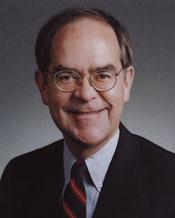
Mr. Chairman, I thank the gentleman from Missouri for the time. Mr. Chairman, this is an extremely important debate. All Americans have a stake in the outcome of this debate, and it is a fascinating…
Mr. Chairman, I thank the gentleman from Missouri for the time.
Mr. Chairman, this is an extremely important debate. All Americans have a stake in the outcome of this debate, and it is a fascinating set of issues because, on the one hand, basically supporting the provisions of the Menendez substitute, we have none other than the President of the United States, the 9/11 Commission, most all of the 9/11 families, 96 United States Senators, including all 51 Republican Senators. We have such a notable defense expert such as the chairman of the Senate Committee on Armed Services, Mr. Warner. That is on one side of the debate.
On the other side of the debate, in favor of H.R. 10, a bill that came out of nowhere, a purely partisan bill, we have the gentleman from California (Mr. Hunter), the chairman of the House Committee on Armed Services.
Now, which side would most House Members choose to support? The President, the 9/11 Commission, the 9/11 families, 96 Senators, 51 Republican Senators, including Senator Warner, or our colleague, the gentleman from California (Mr. Hunter)? I suggest that should be a pretty easy question for most Members of this House to decide.
What really matters is the substance, and our friend, the gentleman from California, has said many times, including in today's Wall Street Journal, that it is vitally important to preserve that link between the warfighter and intelligence asset. I could not agree with the gentleman from California more. I think all Members of the committee are in favor of preserving that link. I would submit to the gentleman that the White House and our President are in favor of preserving that link. That is why they have endorsed basically the Collins-Lieberman bill, which the closest thing we will be allowed to discuss is the Menendez substitute. They have not, to my knowledge, unless the gentleman has gotten a secret submission from the White House in the last few hours, supported the gentleman's approach.
So, for my friends on the other side of the aisle who are standing with our chairman, that puts the White House in a curious position. Are our colleagues on the other side of the aisle counting the White House as being incompetent and somehow supporting a bill that would do bad things to our troops? Or are they accusing the White House of being insincere and not really meaning their endorsement of Collins- Lieberman? Which is it? Because the two sides could not be more at odds.
The American people reading the newspapers today probably thought that the Congress of the United States is well on its way toward intelligence bipartisan reform. Well, if the wrecking crew that is being put forward on this side of the House has its way on this side of the Capitol building, there might not be a conference that can succeed at all. It is very important that the American people get reform so that we can be better protected.
I would urge the Members of this House to not just consider this a routine vote, not just to routinely go along with leadership. These are very complex issues. It is a lot to ask Members to read some 600-page bill that we got handed basically on Monday, a much longer bill than we were dealing with last week. Most of the committees that had jurisdiction were very poorly able to conduct their business.
As the gentleman knows, in the Committee on Armed Services, discussions of weapons of mass destruction was ruled to be nongermane. So, due to a technicality, the Committee on Armed Services was not allowed to discuss weapons of mass destruction issues. I would ask, what is more important than discussing such issues? What is a better forum than the House Committee on Armed Services? But we were not allowed to discuss it due to a technicality.
Other committees, the Permanent Select Committee on Intelligence, they adopted three amendments in the Permanent Select Committee on Intelligence on a bipartisan basis, but somehow all those amendments were struck before the bill got to the floor.
So the process has been an abomination. Not only did our chairman not consult the ranking member of this committee in formulating H.R. 10, the process has ignored weapons of mass destruction, has struck bipartisan amendments that were reached in other committees. That is not the right way to reform intelligence in this country.
The right way, I would suggest, is the way the other body did it, by working together in a calm and bipartisan fashion to achieve consensus such as a consensus they achieved yesterday with a 96-2 vote, complete unanimity among the Republicans, in agreement with the White House, but that, sadly, is not what we have on this side of the Capitol.
So I would urge my colleagues, in the strongest possible terms, support the Menendez amendment. Oppose H.R. 10, and do the right thing for our country.
Mr. Chairman, will the gentleman yield?
Mr. Chairman, the statement of administration policy said they supported H.R. 2840.
The Collins-Lieberman bill, and the closest thing we are allowed to vote on is the Menendez bill. As I said, the Menendez amendment is the closest thing we are allowed to vote on in the House.
Two corrections, Mr. Chairman.
First, the statement of administrative policy is dated September 28 endorses S. 2845. The closest thing we can vote on in the House to that is the Menendez amendment.
Also, in the Committee on Armed Services, we reported out the bill 59 to zero, but the real vote in committee was 33 to 26, a more closely divided issue.
Mr. Chairman, during floor debate on H.R. 10, Mr. Weldon referred to me as being ``untruthful'' regarding two matters: (a) White House support for, as I described it during the debate, ``basically the Collins-Lieberman bill; the closest thing to which we will be able to discuss is the Menendez substitute'', and (b) my description during the Armed Services Committee markup of H.R. 10 of a voice vote on an amendment I offered in another committee, the Government Reform Committee.
As I stated during the floor debate, but I was unsure the official reporter heard, since Mr. Weldon refused to yield time to me, I felt strongly Mr. Weldon was mistaken in his characterization.
(a) What is the White House's position? According to the White House's Statement of Administration Policy of Sept. 28, 2004, ``the Administration supports Senate passage of S. 2845 (the Collins- Lieberman bill).'' Since the Rules Committee did not allow the Collins- Lieberman bill to be voted on by the House, the Menendez substitute was the closest approximation of the Collins-Lieberman legislation. In fact, as described by the Rules Committee, the Menendez substitute ``merges two bills endorsed by the 9/11 Commission: Collins-Lieberman (S. 2845) . . . and McCain/Lieberman (S. 2774). . . .''
(b) What happened in the Government Reform Committee? The draft transcript of the Government Reform markup of Sept. 29, 2004 includes the following statement from Chairman Tom Davis on my amendment, ``In the opinion of the Chair, the ayes have it. I will ask for a rollcall on that.''
Later in the Government Reform markup, when I asked Chairman Davis for his recollection of the voice vote, he said, as reported in the draft transcript, ``Let the record show the ayes had it at the time, but I had the right to request a rollcall . . .''
In summary, it is clear from the record that the White House supports S. 2845, and that a voice vote in my favor occurred in the Government Reform Committee.

Mr. Chairman, I yield myself 4 minutes. Mr. Chairman, I thank the gentleman from Michigan (Mr. Hoekstra), the new chairman of the Permanent Select Committee on Intelligence, for the comments he just…
Mr. Chairman, I yield myself 4 minutes.
Mr. Chairman, I thank the gentleman from Michigan (Mr. Hoekstra), the new chairman of the Permanent Select Committee on Intelligence, for the comments he just made, not just about me and the members of the minority but about our staff. We work hard, and we welcome the fact that the winds of bipartisanship are again blowing through our committee. It is a good thing for America.
Mr. Chairman, I hail from California, the land of earthquakes. Yesterday, Washington experienced two near simultaneous earthquakes. In California, we would call that ``the big one.''
The first was the Duelfer report, which conclusively established that we invaded Iraq based on wrong intelligence. Four ancient chemical warheads, one vial of Botox and a centrifuge hidden under a rose bush in 1991 did not and do not constitute an imminent threat.
The second earthquake was last evening's spectacular 96-to-2 victory of the Collins-Lieberman-McCain legislation, S. 2845, implementing the 9/11 Commission recommendations. Kudos to Senators Collins and Lieberman, amazing legislators who presided over 2 days of markup and withstood votes on dozens of floor amendments over 6 days to produce an excellent bipartisan bill.
In contrast, Mr. Chairman, although this House was first to identify our intelligence gaps and could have played the leadership role in fixing them, we are playing catch-up. More than a year ago, former Permanent Select Committee on Intelligence Chairman Porter Goss and I sent a letter to George Tenet detailing our preliminary findings that ``there were significant deficiencies'' in our intelligence about Iraq's WMD capabilities and that the intelligence community's ``judgments were based on too many uncertainties.''
Last April, as we heard from our chairman, all nine Democrats on the House Permanent Select Committee on Intelligence introduced H.R. 4104 to provide ``Goldwater/Nichols''-style jointness for the intelligence community. Our bill put a dozen intelligence agencies with different rules, cultures and databases under one unified commander for the entire community just the way we put our military services under unified command. We are told our bill formed the basis for many of the 9/11 Commission recommendations on intelligence reform, including the creation of the National Intelligence Director.
Mr. Chairman, the concepts we will debate today were developed from a House bill. It started here, and it stalled here when the Permanent Select Committee on Intelligence majority took no action to mark up our bill. It remains stalled, Mr. Chairman, because the Republican leadership insists on pursuing a highly partisan process. Fortunately, the Menendez substitute has been made in order, and I urge its adoption.
S. 2845, the Collins-Lieberman-McCain bill, which would replace H.R. 10 if the Menendez amendment is adopted, provides full budget execution authority to the National Intelligence Director. In contrast, H.R. 10 creates an ``N-I-D'' but it is a ``Neutered Intelligence Director,'' passing funding through the NID without giving the NID adequate control.
S. 2845 provides for a National Counterterrorism Center with real power to integrate our counterterrorist operations. H.R. 10 reduces the NCTC's power. S. 2845 provides for an independent Privacy and Civil Liberties Board. H.R. 10 does not.
S. 2845 follows the excellent recommendations of the nonpartisan Markle Foundation and creates a trusted Information Sharing Network so that government agencies can connect the dots about the terrorists but not infringe on the civil liberties of law-abiding Americans. H.R. 10 has no such provision.
S. 2845 allows the public to see the overall amount we spend on intelligence by declassifying the top line,
something we did in 1997 and 1998 without jeopardizing national security. H.R. 10 insists on unnecessary secrecy.
In sum, Mr. Chairman, we are debating the wrong bill. In case anyone missed it, the terrorists did not check our party labels before they attacked us, and they certainly will not care whether we are Democrats or Republicans when they try to attack us again. Mr. Chairman, the American people want us to defend our country, not our turf.
Mr. Chairman, I reserve the balance of my time.
Mr. Chairman, I yield 2 minutes to the gentleman from Texas (Mr. Reyes), a excellent senior member of our committee.
Mr. Chairman, I yield myself 15 seconds.
Mr. Chairman, I would point out to my friend the last speaker that both in Collins-Lieberman and H.R. 10, the NID is not part of the White House, the Executive Office of the President. It is separate. I agree with his comments on that.
As far as the budget of the NID is concerned, tactical intelligence is totally exempted.
Mr. Chairman, it is my privilege to yield 2 minutes and 10 seconds to the gentleman from Iowa (Mr. Boswell), the ranking member on the Subcommittee on Human Intelligence, Analysis and Counterintelligence of the Permanent Select Committee on Intelligence.
(Ms. BOSWELL asked and was given permission to revise and extend his remarks.)
Mr. Chairman, it is my privilege to yield 2 minutes to the gentleman from Minnesota (Mr. Peterson), a member of our committee.
Mr. Chairman, I appreciate the comments of the last speaker and welcome him to the committee.
It is now my privilege to yield 2 minutes to the gentlewoman from California (Ms. Eshoo), who is ranking member on one of our subcommittees, a new member of our committee, and my California sister.
Mr. Chairman, it is my pleasure to yield 2 minutes to another committee member, the gentleman from New Jersey (Mr. Holt).
Mr. Chairman, it is now my privilege to yield 2 minutes to the gentleman from Maryland (Mr. Ruppersberger), a member of our committee.
Mr. Chairman, I yield 1\1/2\ minutes to the gentleman from California (Mr. Schiff).
Mr. Chairman, I yield myself the balance of my time to close the debate.
Mr. Chairman, previous speakers have detailed the strength of the Collins-Lieberman-McCain bill and the weaknesses of H.R. 10, and they have done an excellent job. I would like to close by reminding everyone what is at stake.
We have had multiple intelligence failures over the last 3 years with catastrophic consequences. We failed to anticipate and stop the attacks of September 11. Then our intelligence agencies failed to provide an accurate assessment of Iraq's weapons programs as was conclusively established with the release of the Duelfer Report. And we failed to predict the post-war looting and the strength of the post-war insurgency in Iraq.
The President seems to be in denial. He has not even acknowledged the existence of the Duelfer Report. But we cannot afford to be in denial. The terrorists are preparing their attacks right now. We need to act not as Democrats and not as Republicans, but as Americans.
A spokesman for the Speaker stated last week that the purpose of this exercise is to ``spank Democrats.'' I think the purpose of this exercise is to prevent, deter, and disrupt the next terrorist attack with the best intelligence we can field. I think the purpose of this exercise is to make America safer. I think the American people agree with me, and I urge us to adopt the bipartisan Menendez substitute.
Mr. Chairman, I yield back the balance of my time.
Mr. Chairman, I yield myself such time as I may consume. Mr. Chairman, I rise today in strong support of H.R. 10, the 9/11 Recommendations Implementation Act. Mr. Chairman, H.R. 10 is a bill that…
Mr. Chairman, I yield myself such time as I may consume.
Mr. Chairman, I rise today in strong support of H.R. 10, the 9/11 Recommendations Implementation Act.
Mr. Chairman, H.R. 10 is a bill that reforms the intelligence community of the United States. To be sure, this bill has provisions to improve our Nation's ability to prevent and prosecute terrorism, to improve border security, and to improve international security cooperation and coordination. But it is the specific focus of the intelligence reform that I wish to address.
This bill, very specifically and very wisely, implements the intelligence reform recommendations of the 9/11 Commission and the House/Senate Joint Inquiry Report. H.R. 10, for example, creates a National Intelligence Director who has dramatically improved authorities and capabilities to manage and coordinate the disparate efforts of the various intelligence components and elements of the United States Government. It makes the National Intelligence Director truly the leader of the entire community, and it makes this person responsible for the coordinated efforts of the entire community.
Some will say that H.R. 10 does not follow all of the recommendations of the 9/11 Commission. In constructing this bill, we critically reviewed the ramifications of one of their recommendations, declassifying the budget. We believe that the unintended negative consequences of such a move outweighed any possible benefits. Why, at a time of war, share any information that our enemies might find useful? I want to be clear to the American people. Structural changes and enhanced authorities cannot and will not ensure perfect knowledge about our enemies' plans and intentions. It is important to say that those who would do America harm are clever. They are very secretive. The asymmetric threats that they can both imagine and effect require us to be many fold better at defense than they need to be in offense. That said, I firmly believe the improvements provided in this bill will make significant improvements in the outcomes of our intelligence analysis, collection, and dissemination.
Mr. Chairman, I, like my colleagues on the other side of the aisle, want to ensure the strongest, most empowered intelligence director possible. It is with that specific intent that we met with negotiators from the other affected committees of the House and crafted what I consider to be a very strong bill. H.R. 10 addresses five major improvements for the intelligence community.
First and foremost, the bill creates an empowered National Intelligence Director who is the head of the intelligence community and who is the principal adviser to the President on all intelligence matters.
Second, it provides this new director with enhanced management authorities to coordinate and manage all aspects of intelligence operations. These new authorities are, I believe, unprecedented and strike a careful balance between the equities of the National Intelligence Director and the heads of the departments that contain the elements of the intelligence community.
Third, the National Intelligence Director is vested with the responsibility and authority to dramatically improve information- sharing of intelligence across the government.
Fourth, the National Intelligence Director is made responsible for strengthening intelligence analysis across the community.
And, finally, this bill creates a National counterterrorism Center. This center will be responsible for analyzing and integrating all intelligence pertaining to terrorism and counterterrorism.
Finally, I want to mention that this legislation also addresses several provisions for dramatically improving intelligence community training and education, particularly in the areas of foreign language expertise and analyst proficiency.
Mr. Chairman, I would also be remiss if I did not turn to the gentlewoman from California (Ms. Harman), ranking member of the Permanent Select Committee on Intelligence, and thank her for the intelligence reform legislation that she offered earlier this year. I hold in very high regard the bipartisan manner in which the gentlewoman from California (Ms. Harman) and her staff have worked with us on the intelligence provisions of H.R. 10 and look forward to working with her staff as we continue moving through this process, move through the process of a conference committee and bring a bill to the desk of the President.
Mr. Chairman, H.R. 10 is real reform of the intelligence community. It is far better and more well thought out than any other legislation we will address today. I urge my colleagues to vote ``yes'' on H.R. 10.
Mr. Chairman, I reserve the balance of my time.
Mr. Chairman, I yield 3 minutes to the distinguished gentleman from Missouri (Mr. Blunt), majority whip and a member of the Permanent Select Committee on Intelligence.
Mr. Chairman, I yield 2 minutes to the gentleman from California (Mr. Cunningham) a distinguished member of the committee and our ``top gun.''
Mr. Chairman, I yield 2 minutes to the gentlewoman from Virginia (Ms. Jo Ann Davis), a member of the committee.
Mr. Chairman, I yield 2 minutes to the distinguished
gentleman from Texas, (Mr. Thornberry), a member of the committee.
Mr. Chairman, I yield 2 minutes to the distinguished gentleman from Illinois (Mr. LaHood).
(Mr. LaHOOD asked and was given permission to revise and extend his remarks.)
Mr. Chairman, I yield 1 minute to the gentleman from Kansas (Mr. Tiahrt).
(Mr. TIAHRT asked and was given permission to revise and extend his remarks.)
Mr. Chairman, I yield 1 minute to the gentleman from New York (Mr. Sweeney), my colleague who has fought for the recovery of New York, and a member of the Select Committee on Homeland Security.
Mr. Chairman, I yield 1 minute to the gentleman from Georgia (Mr. Collins).
Mr. Chairman, I yield 1 minute to the gentleman from Pennsylvania (Mr. Weldon).
(Mr. WELDON of Pennsylvania asked and was given permission to revise and extend his remarks.)
Mr. Chairman, I yield myself such time as I may consume.
Mr. Chairman, I am disappointed by some of the partisan tone that at times permeates through this debate. The Permanent Select Committee on Intelligence has been racked by a series of failures over the last 13 years, not the last 3: the failure to anticipate the World Trade Center bombing in 1993; the failure to anticipate the attacks on our barracks in Saudi Arabia; the failure to anticipate the attack on the USS Cole or our embassies in Africa.
But there are many hard-working men and women in the CIA and in the intelligence community who have done a phenomenal job. This bill fixes the problems.
We would have had an opportunity in a bipartisan way to move this bill forward, but our colleagues on the other side of the aisle walked away from any bipartisan amendments and only wanted one.
Mr. Chairman, I yield back the balance of my time.

Mr. Chairman, I yield myself such time as I may consume. Mr. Chairman, I understand that my partner on the Committee on Armed Services, the gentleman from Missouri (Mr. Skelton), will have 15 minutes…
Mr. Chairman, I yield myself such time as I may consume.
Mr. Chairman, I understand that my partner on the Committee on Armed Services, the gentleman from Missouri (Mr. Skelton), will have 15 minutes also.
Mr. Chairman, we do have an opening statement, and we do have a number of Members who wish to speak on the bill.
Mr. Chairman, this is a very important piece of legislation, and the Committee on Armed Services had a very important role here. I think we want to applaud all the other committees that
participated in putting this bill together, but our role was to a large degree a protective role. It was a role of making sure that the men and women who are fighting right now in the war, fighting in theaters in Iraq and Afghanistan have that lifeline between themselves, whether it is a Special Forces team or a Marine platoon in Fallujah or an Army company in Tikrit, that they have that lifeline between the war fighters on the ground and our national platforms, including our aircrafts, our UAVs and our satellites; maintaining that lifeline of immediate information to the war fighters so they can prosecute this war against proper terror and protect their soldiers, sailors, airmen and Marines.
So when we look at this creation of the National Intelligence Director, which I think is a needed thing and is an important step for our country, a director who can set rules for the dissemination of intelligence and information across the broad scope of American agencies so that an agency that can use a piece of information is able to get it without having to go to great length. And so that our classification system, when you decide who is going to be allowed to listen to certain things or hear certain things, it has a set of rules so that they can see what they need to carry out their job in protecting our country.
The National Intelligence Director is going to do all of those things. He is also going to set this broad strategic plan and this blueprint for our intelligence apparatus, and he is going to develop the intelligence budget. And he is going to make sure that that budget is moved through the various wickets of the bureaucracy and ends up buying the right kind of things, developing the right kind of capabilities, and bringing to this important team the right kinds of people.
Now, the Department of Defense, but more specifically people on the ground who wear the uniform of the United States, have an enormous stake here. They need to have that lifeline of intelligence available at all times; and it needs to come from all different sources. So they need to sit at the table in partnership with the National Intelligence Director when we are talking about information that is going to make a difference on the battlefields. And in this bill, different from any other bill, we do that.
We maintain that partnership between people in uniform, and this direction comes from having lots of names, lots of discussions with people from war fighters in the field right up through the directors of our intelligence units. To do that, to make sure that that partnership is maintained, we have maintained the Department of Defense, not in developing the budget but in the execution chain of that budget so that you have informed buyers when you are buying things like satellites and other types of platforms, and also when you are choosing the head of these agencies like the NSA, the NRO, geospacial, so that while the Department of Defense could overrule the DCI in the old days, today it is going to be a true partnership. It is going to be true concurrence, where the National Intelligence Director and the Secretary of Defense need to concur on a decision or on a recommendation for the head of the NSA, very important intelligence apparatus.
So we have true concurrence, and that is another way to maintain this important partnership. Right now, Mr. Chairman, we have people sitting in rooms deciding where our intelligence assets are going to look next, whether they are going to look at some place over in Africa that is an important area or maybe some place up in the hills of Pakistan and they are making decisions as to what we look at next. And this partnership, this collaboration, is working and this bill today, Mr. Chairman, that we are producing as written does maintain that partnership. I would urge that everybody support it.
Mr. Chairman, I reserve the balance of my time.
Mr. Chairman, I yield 2 minutes to the gentleman from New Jersey (Mr. Saxton) who is the chairman of the Subcommittee on Terrorism, Unconventional Threats and Capabilities.
Mr. Chairman, I thank the gentleman, and I thank him for being one of the 59 members of the Committee on Armed Services who voted unanimously for the bill that is before us right now.
Mr. Chairman, I yield 3 minutes to the gentleman from Pennsylvania (Mr. Weldon), the vice chairman of the committee.
(Mr. WELDON of Pennsylvania asked and was given permission to revise and extend his remarks.)
Mr. Chairman, I yield myself such time as I may consume to thank the gentlewoman for voting for our bill.
Mr. Chairman, I yield 3 minutes to the gentleman from Georgia (Mr. Gingrey).
Mr. Chairman, I yield 2 minutes to the gentleman from South Carolina (Mr. Wilson), who has done a lot of work on this bill and who has been over to theater many times and has a personal stake in this war against terrorism.
Mr. Chairman, I yield myself the balance of my time.
Mr. Chairman, if people are looking at the Menendez substitute, which is going to come up here and is going to, in my estimation, tear apart that partnership that the military has with the intelligence agencies in maintaining the lifeline between our troops and their assets; if the American people are reading that, one thing that may strike them as just remarkable and somewhat illogical is the idea that we will reveal to the world, under the Menendez substitute, under, I guess, what is called a transparent government, our intelligence numbers, or how much we spend on intelligence.
This is a figure we have been trying to keep out of the hands of the bad guys for a long time. Americans who are looking at this bill as a response to the attack on 9/11 on American soil are probably puzzled as they watch from around the Nation saying, let me see, how are we possibly going to prevent an attack on America by telling the bad guys what our intelligence number is and allowing them to peel that onion back and then discover what our priorities are, and what our strengths are, and, ultimately, what our weaknesses are? That makes no sense whatsoever.
The provision we have carefully crafted here maintains that delicate balance for America's security. Support the base bill. Do it for our troops.
Mr. Chairman, I thank the gentleman for yielding me this time. As my colleagues know, the minority party always asks for a substitute to be made in order. To have asked for anything less than the…
Mr. Chairman, I thank the gentleman for yielding me this time.
As my colleagues know, the minority party always asks for a substitute to be made in order. To have asked for anything less than the 9/11 Commission's recommendations would have been to do a disservice not only to the 9/11 families but to the memories of over 2,900 people that were murdered on that fateful day over 3 years ago.
And I think there is a real consequence to enacting the Republican bill, legislation whose title suggests enactment of the 9/11 Commission report but that leaves us far short of where the 9/11 Commission and the families have said we need to be. Instead, the People's House needs to serve this Nation and those families well by truly protecting our country from further terrorist attacks. On this issue, we need to put partisanship aside.
I want to be perfectly clear to all my colleagues in the House about what exactly my substitute amendment is and what it does. My substitute is identical to the bipartisan Shays-Maloney substitute amendment that was taken before the Committee on Rules, endorsed by the 9/11 commissioners and the 9/11 families. That is, in essence, the Collins- Lieberman-McCain legislation that passed so rigorously yesterday in the Senate. In fact, the gentleman from Connecticut (Mr. Shays) and other Members wrote asking that the Shays-Maloney substitute be made in order, and I would suggest that the Committee on Rules did exactly that by making the Menendez substitute in order. And after a 96 to 2 vote yesterday in the Senate on legislation that is the essence of this substitute, the principles and provisions of this amendment are also supported by Senate Republicans and Senate and House Democrats.
Unfortunately, the House Republican bill, H.R. 10, includes provisions that are unnecessary, unrelated to the bill's stated purpose, which is the reorganization of the intelligence community aimed at strengthening the Nation against terrorist attack. In doing so, there are over 50 extraneous provisions that were not recommended by the Commission included in that bill, many of which are highly controversial.
H.R. 10 also leaves out many of the bipartisan recommendations of the unanimous 9/11 Commission. In fact, out of the 41 recommendations, it appears that only 11 are implemented; 15 are not implemented at all, and 15 others are done incompletely. In fact, the base bill that we consider today is weaker than the 9/11 Commission's recommendation, weaker than what the Senate passed. It does not provide the National Intelligence Director with budget execution authority and only provides the NID the unilateral authority to nominate the CIA Director. That is in direct contravention of the statement of administration policy put out by President Bush where he says that they support the Collins- Lieberman bill and specifically oppose any amendment that weakens the establishment of the NID with full, effective, meaningful budget authority and other authorities to manage the intelligence community, including the statutory authority for the newly created National Counterterrorism Center. They are running against the President on this.
The Director of the National Counterterrorism Center is not appointed by the President, not confirmed by the Senate, does not have budget authority or hiring authority. Their legislation does not create an information-sharing network, a new trusted network with common standards to share information within the intelligence community.
Their legislation only requires the Transportation Safety Administration to give priority to explosive detection, but it does not, as the commission called for, require improved detection capabilities.
Their legislation does not create an independent civil liberties board. It does not declassify the intelligence budget topline.
So, today, we have an opportunity to see who really supports the 9/11 Commission's recommendations and who does not. Those who support the 9/ 11 Commission's recommendations will have the opportunity to do so when the Menendez substitute comes to the floor. That is the one that has passed in the Senate. That is the one supported by a unanimous bipartisan vote of the 9/11 Commission. That is the one that is supported by the overwhelming majority of the 9/11 families. That is the one that best protects the Nation and creates the changes necessary to ensure that this Nation is safe, secure, as that Commission, after thousands of hours and thousands of pages, decided.
Mr. Chairman, as a senior member of the Committee on International Relations, I am shocked that the Republican bill falls well short of the Commission's recommendations. On four key international relations proposals designed to reduce the threat of terrorism, our Democratic amendment provides new money while the House Republican bill does virtually nothing. On prioritizing efforts in Afghanistan, reforming education in the Middle East, promoting American ideals abroad, encouraging economic development in the Middle East, our bill provides real support, and their bill does virtually nothing.
Like the 9/11 Commission's recommendations, the Menendez substitute protects the United States by taking real action to secure the peace in Afghanistan, the home of the Taliban and breeding ground for bin Laden and al Qaeda. Our bill puts new money on the table to fight terror and promote democracy in Afghanistan. Their bill asks for new reports. When will we learn that Osama bin Laden attacked the United States, not Saddam Hussein?
Like the 9/11 Commission's recommendations, the Menendez substitute recognizes that the gravest threat our Nation faces today is the potential for a nuclear weapon to land in the hands of terrorists. That is why we must stop the spread of nuclear weapons and secure the world's existing stockpiles. Our amendment requires a plan to do exactly that. It also pushes the administration to secure loose nuclear material in the former Soviet Union and allows for increased funding to deal with proliferation threats elsewhere.
At a time when this country has secured less weapons material in the 2 years after September 11 than in the 2 years before it, the House Republican bill only calls for a study.
Vote for the Menendez substitute, which embodies the 9/11 Commission's recommendations on international relations and nuclear nonproliferation. That is, in essence, the way in which we strengthen America.
And I thank the distinguished ranking Democrat for his very strong statement and his expertise, and I only wish that we can get our substitute passed because it embodies his views.

Mr. Chairman, I yield myself such time as I may consume. I rise to address those provisions of H.R. 10 favorably reported by the Committee on Financial Services that have been included in the…
Mr. Chairman, I yield myself such time as I may consume. I rise to address those provisions of H.R. 10 favorably reported by the Committee on Financial Services that have been included in the legislation that we are considering today. The committee's additions to H.R. 10 continue the work it, and Congress, began in the tense hours and days after the tragic attacks of September 11, 2001. During that unsettled time, the committee pulled together to produce comprehensive, bipartisan legislation that aimed to disrupt the financing of terrorism and to strengthen the country's anti-money laundering laws. That bill, H.R. 3004, later became title III, the anti-terror finance title of the USA PATRIOT Act, signed into law less than 7 weeks after the attacks.
It is a testament to that legislation that the 9/11 Commission report issued a month ago cited it with approval and said that on anti-terror finance and anti-money laundering issues, the various elements of the government generally are doing a good job.
But we must not be complacent. The 9/11 Commission's final report states that ``vigorous efforts to track terrorist financing must remain front and center in U.S. counterterrorism efforts.'' The commission urged Congress and both the law enforcement and intelligence communities to engage in an ongoing and rigorous examination of the financial system for ``loopholes that al Qaeda can exploit, and to close them as they are uncovered.''
In response to this challenge, the Committee on Financial Services assembled a bipartisan legislative package that centers on four broad themes: one, additional funding for the fight against terrorist financing; two, new tools for the government to combat terrorist financing schemes; three, improved international cooperation and coordination on anti-money laundering and counterterrorist financing initiatives; and, four, enhanced preparedness of the financial services sector in the event of another large-scale terrorist attack.
Among the key provisions in H.R. 10 that reflect contributions by the Committee on Financial Services are the following:
Technical amendments to the anti-terror finance title of the USA PATRIOT Act, which was largely drafted in the Committee on Financial Services;
Authorization of additional funding for Treasury's Financial Crimes Enforcement Network, which serves as the Federal Government's financial intelligence unit and plays a critical role in the collection and analysis of data on suspicious financial activity;
A reauthorization of the national anti-money laundering strategy, along with grants to State and local law enforcement agencies to investigate the financing of terror and other financial crimes;
Additional enforcement tools to prevent the counterfeiting of U.S. currency;
Enhanced authority for the SEC to respond to extraordinary market disruptions caused by terrorist attacks or other catastrophic events; and
Codification of strong interagency cooperation and communication on international financial standard-setting matters related to anti- terrorist financing where the Treasury Department is in the lead.
At the committee's markup last week, several thoughtful and largely noncontroversial amendments were adopted, including one offered by the gentlewoman from New York (Mrs. Kelly) that seeks to address the vulnerability identified by the 9/11 Commission of the international funds-transfer system to terrorist financing; related amendments by the gentlewoman from Illinois (Mrs. Biggert) and the gentleman from Illinois (Mr. Emanuel) to promote greater public-private coordination on preparedness issues relating to the financial services sector; an amendment offered by the gentlewoman from Illinois (Mrs. Biggert) and the gentleman from New York (Mr. King) to strengthen interagency cooperation and clarify negotiating authorities between the State Department and the Treasury Department with respect to international financial institutions and other multilateral financial policymaking bodies; and a bipartisan amendment offered by the gentleman from Illinois (Mr. Gutierrez) and the gentlewoman from New York (Mrs. Kelly) to prohibit Federal bank examiners who serve a lead role in the supervision of an insured depository institution from accepting employment with that institution for 1 year after leaving the government.
In sum, Mr. Chairman, the Financial Services Committee's contribution to H.R. 10 makes needed changes that respond directly to the 9/11 Commission's call for a continuous examination of the U.S. financial system to identify loopholes capable of being exploited by al Qaeda and other terrorist organizations, and to close those loopholes both at home and abroad.
As for the larger body of legislation, I support H.R. 10 and urge its swift passage, a speedy conference, and quick adoption of the conference report. That will require a lot of work over the next several weeks, but it is work that is absolutely vital to the security of our Nation.
Finally, I hope the conferees will be able to resist the suggestions of some that the final legislative package be limited strictly to reshuffling the intelligence community's architecture. There are very important pieces of anti-terror legislation in H.R. 10 from a number of committees of jurisdiction, and the fact that they do not deal precisely with who directs the course or funding of the intelligence community does not mean they are any less important, or that they can wait for another year.
Mr. Chairman, I reserve the balance of my time.
Mr. Chairman, I yield 3 minutes to the gentlewoman from Illinois (Mrs. Biggert).
Mr. Chairman, I yield 4 minutes to the gentleman from Alabama (Mr. Bachus), the chairman of the Financial Institutions and Consumer Credit Subcommittee.
Mr. Chairman, I yield 2\1/2\ minutes to the gentlewoman from Wyoming (Mrs. Cubin).
Mr. Chairman, I yield myself the balance of my time.
This section of the bill we are debating from the Committee on Financial Services was a great bipartisan effort. We had testimony from Lee Hamilton, our former colleague, who was praiseworthy of what our committee was able to do in the PATRIOT Act and moving forward and trying to deal with terrorist financing.
I think this process has been pretty good. I think that, overall, I understand over 200 Members have been able to offer amendments in the committee process, with regular order in the committee process. Our committee was no exception. I think the product that we have come up with in H.R. 10 is positive.
I yield to the gentleman from Massachusetts.
Mr. Chairman, I yield back my time.
Mr. Chairman, I yield myself 6 minutes. Mr. Chairman, I want to commend my chairman, the gentleman from California (Mr. Cox) for the bipartisan effort that he has put in with me on the Faster and…
Mr. Chairman, I yield myself 6 minutes.
Mr. Chairman, I want to commend my chairman, the gentleman from California (Mr. Cox) for the bipartisan effort that he has put in with me on the Faster and Smarter Funding For First Responders Act, which is included in H.R. 10. I might say it has been an honor and a pleasure to serve with him over the last 2 years in what is I think the most important challenge of our time: making America safe.
We took 2 bills and we made them into one. It was a truly bipartisan effort. We are going to, for the first time, use the billions of dollars in first responder grants to build the essential capabilities that we need in this country to make America safer. We do not know today what we are getting for our investment; we certainly do not know what progress we are making. That will change with this bill. Instead of basing funding on arbitrary formulas, we will, for the first time, base funding on the risk and vulnerabilities that our communities, our regions, and our States are facing.
The bill before us improves our grant system in 2 ways. It builds a system of planning and accountability that does not exist today, and it allocates a much higher percentage of first responder funds to the areas that face the greatest threats and vulnerabilities. I appreciate the good work the chairman and I have been able to do together on this bill, as well as the work of the other members of our committee.
Unfortunately, Mr. Chairman, there are many other issues of critical importance that have not been addressed in H.R. 10. The Menendez substitute is a much more comprehensive effort to implement all 41 recommendations of the bipartisan 9/11 Commission. H.R. 10 is, in fact, a missed opportunity to take concrete steps to win the war against our terrorist enemies.
As the bipartisan 9/11 Commission stated, and virtually everyone has agreed, to defeat radical Islamic terrorism over the long term requires pursuing three strategies simultaneously. First, we must aggressively attack the terrorist cells wherever they exist. Secondly, we must protect the homeland. And third, we must create conditions to prevent the rise of future terrorists. Any legislation that purports to implement the findings of the 9/11 Commission must contain meaningful provisions on all three strategies.
The 9/11 Commissioners have strongly urged that all 41 of their recommendations be enacted. Unfortunately, our Republican colleagues who drafted H.R. 10 did not heed the advice
of the 9/11 Commission. We looked at the recommendations of H.R. 10 and found that it implements only 10 of the 41 fully, it implements 15 of the recommendations only partially and, of the final 15, they are either completely ignored or dealt with in no meaningful way.
In contrast, the bipartisan bills coming out of the Senate and the Menendez substitute implement all of the recommendations of the 9/11 Commission. H.R. 10 falls short in moving us forward faster and stronger in the war on terror.
Three years after 9/11, Mr. Chairman, bin Laden, the enemy who attacked us, is still on the loose, and al Qaeda is expanding its reach. Just last week, General Abizaid warned us about the growing threat in the Middle East and Central Asia region. We must double our special forces to go after the terrorists in over 60 countries around the world.
Three years after 9/11, we still do not have a fully integrated terrorist watch list. Three years after 9/11, the government still checks the watch list on airline flights that come from overseas after the plane is in the air, rather than before the passengers board. And we still do not check all of the air cargo for explosives that fly on the airplanes with us every day.
The greatest threat, Mr. Chairman, we face is a nuclear weapon in the hands of a terrorist. Yet, 3 years after 9/11, we still have not installed sufficient numbers of radiation detectors to check all of the cargo containers that come into our country by sea, land, and air. Three years after 9/11, our first responders still cannot communicate with one another in the event of an emergency, even though technology exists that allows them to do so. Three years after 9/11, our intelligence agencies can still not communicate one with another and share an integrated database so that a border inspector or a law enforcement officer can identify whether the person standing before them is a suspected terrorist or not.
Three years after 9/11, we still have 120,000 hours of untranslated terrorist-related wiretaps at the FBI that may contain information about the next terrorist attack. Three years after 9/11, our borders are still porous. A recent investigation by our committee revealed that over 25,000 illegal immigrants from countries other than Mexico came into this country, were released on their own personal bond, and 90 percent of them never showed up again.
Mr. Chairman, it has been 2 years since we were attacked with anthrax here on Capitol Hill and the administration said we need anthrax vaccines to vaccinate up to 25 million Americans. Today, in our national stockpile, we have enough vaccine for anthrax to vaccinate 500 people.
It is all about choices. The fiscal year 2004 appropriation is $20 billion more than we spent in the year of 9/11. Last year alone, the top 1 percent of Americans by income received 4 times as much in tax cuts as we spent in increased funding for homeland security over that 4-year period. Just today on this floor, we moved to instruct the FY 2005 homeland security appropriations bill and in it, the President had requested a half a billion dollars more. Fortunately, we gave him $1 billion more, and yet we spend $1 billion every week in Iraq.
It is all a matter of priorities. And, Mr. Chairman, we must get our priorities straight and make America safe again.
Mr. Chairman, I reserve the balance of my time.
Mr. Chairman, I yield 2 minutes to the gentleman from New Jersey (Mr. Andrews).
(Mr. ANDREWS asked and was given permission to revise and extend his remarks.)
Mr. Chairman, I yield 1 minute to the gentlewoman from Texas (Ms. Jackson-Lee).
Mr. Chairman, I yield 1 minute to the gentlewoman from California (Ms. Loretta Sanchez), the chairman of the Subcommittee on Border Security and Infrastructure of the Select Committee on Homeland Security.
Show 11 more
Mr. Chairman, I rise today in strong support of the substitute amendment to bring the House bill in line with the bipartisan recommendations of the September 11th Commission. All Members of Congress…
Mr. Chairman, I rise today in strong support of the substitute amendment to bring the House bill in line with the bipartisan recommendations of the September 11th Commission.
All Members of Congress should reflect on the events that have brought us here. We lost over 3,000 Americans on 9/11. 30 families from my district lost loved ones on that day.
Our government failed us on 9/11. It failed John Ogonowski, the Captain of American Airlines Flight 11, a constituent of mine who lived in Dracut, Massachusetts. Captain Ogonowski was an Air Force pilot and a Vietnam Veteran. But because of the massive failure of intelligence, and our failure to stop the terrorists and secure the cockpit door, Captain Ogonowski became a ``sitting duck'' in the words of his wife Peg.
There are thousands of families we failed on 9/11. And many of them have turned their grief into resolve--they are demanding action so that no family suffers a similar tragedy because the failures of this government.
Some of those families are here in Washington today. On 9/11, Sally and Don Goodrich lost their son Peter, who lived with his wife Rachel in Sudbury, MA. Both Sally and Don are in Washington today urging that Congress move forward on the Commission's recommendations on a bipartisan basis as soon as possible.
Last week I met with Carrie Lemack of Framingham, MA, who along with Don Goodrich helped to found ``Families of September 11.'' Carrie and her sister, Danielle, lost their mom, Judy. Carrie came to Washington to attend the committee markups. She is urging Congress to put aside partisanship for once and do what we have to do to make America safer.
Loretta Filipov of Concord, MA, lost her husband Al on 9/11. Three years later, she believes the world is no safer. But as she says, ``I refuse to live in fear.'' She's been writing and calling members of Congress urging us to work together to make the belated changes that will make us safer.
After 9/11, all of us recognized the need to improve our intelligence--but it was the families who lost loved ones on 9/11 who demanded action. The 9/11 families are the reason we had a bipartisan 9/11 Commission in the first place.
In July, the September 1th Commission gave Congress a blueprint for action. Its report included 43 very specific recommendations to fix the problems in our intelligence community and improve our homeland defense. All of the recommendations were bipartisan and unanimous.
The Senate is working on a bipartisan basis to follow the recommendations. Unfortunately, the House is taking a different approach. The Republican leadership in the House has decided to play politics with our homeland security. H.R. 10 was introduced without consulting the minority and rushed through committees days later, giving members little opportunity to look over the bill. Yesterday, the Rules Committee met in an emergency session to hear testimony on amendments without informing the rest of us.
But even more important than the process is what's in the bill, and what's not in the bill. Simply stated, H.R. 10 fails to follow the recommendations of the 9/11 Commission. It ignores many of the important things we need to
do to keep our homeland safe. And at the same time, this partisan Republican bill also goes far beyond what the Commissioners recommended in curbing the civil liberties of American citizens in ways that won't make us any safer.
For example, one of the central recommendations of the 9/11 Commissioners was to establish a National Intelligence Director with full budgetary authority over our national intelligence agencies. The Senate bill upholds this recommendation. The House bill fails to give the NID the authority to establish national priorities and force bureaucracies to work together.
The September 11th Commissioners also recommended that we establish a Cabinet-level National Counterterrorism Center. The Senate bill does that. But again, the House bill doesn't give the new Center the authority to coordinate the war on terror.
The September 11th Commission recommend strengthening the programs that help us secure loose nuclear materials in Russia and around the world. The Senate bill does this--the House bill just calls for a study of the issue. Last week, I joined with Congresswoman Tauscher and Congressman Spratt in introducing a bill that would meet the 9/11 Commission's recommendations for developing a long-term nonproliferation strategy. Unfortunately, when the legislation was offered as an amendment in the Armed Services Committee last week, we were told that it wasn't germane.
The September 11th Commission called for doing more to exchange information on terrorists with trusted allies. The House bill is silent on this matter.
The September 11th Commission also urged Congress to improve aviation security--specifically, that we screen people for explosives and also put cargo in hardened containers. Again, the Senate accomplishes this while the House fails.
Finally, the September 11th Commission calls for a Civil Liberties Oversight Board. This provision is in the Senate bill but not the House bill. In fact, the House bill goes overboard in undermining civil liberties. Instead of reexamining the Patriot Act to see what is working and what goes too far, the Republican leadership has included new powers for law enforcement without even holding a hearing on them.
The Republicans knew that these provisions would prevent Congress from finding consensus, moving forward, and passing a bill before the elections. I would have hoped that, for once, the Republican leadership wouldn't have let politics get in the way of needed steps to improve our national security. Regrettably, it has. But the 9/11 families have waited three years for action, and it's not too late to follow the example and the recommendations of the 9/11 Commission and move forward in a bipartisan way.
This Congress created the September 11th Commission for a reason--to conduct an independent investigation into the terrorist attacks and recommend policy changes to ensure that they never occur again. The Senate bill takes these recommendations seriously. The House bill does not. I therefore urge my colleagues to support the Menendez substitute amendment and adopt the language in the Senate version of the bill.

Mr. Chairman, I rise in support of the substitute. Mr. Chairman, I thank the gentleman for yielding me this time and for his outstanding leadership in so many areas, especially health. We really…
Mr. Chairman, I rise in support of the substitute.
Mr. Chairman, I thank the gentleman for yielding me this time and for his outstanding leadership in so many areas, especially health. We really appreciate it.
Mr. Chairman, reform for our Nation's security and intelligence is now the sole responsibility of the House of Representatives. The other body, both sides of the aisle, unanimously, almost with complete and total support, passed the strongest intelligence reform in our Nation's history, with a vote of 96 to 2.
The Collins-Lieberman bill is before the House today in the form of a bipartisan substitute, the Menendez substitute. It will make our country safer by creating a strong national intelligence director with full personnel and budgetary authority and a National counterterrorism Center that will share intelligence.
Regrettably, the House leadership bill has no such authority. Last week, the 9/11 Commission chairman, Governor Kean said, ``If the National Intelligence Director does not have budgetary authority, you might as well not do anything.''
If we pass today the Collins-Lieberman-Menendez bill out of the House, we can get it to the President's desk for his signature before we adjourn. The bipartisan 9/11 Commission members support the substitute. The White House has lined up behind it. So has the 9/11 family members, the steering committee, as well as editorial boards across this Nation. The only lone wolf muddying the process with extraneous, unrelated, controversial provisions is the House Republican leadership.
The Commission made 41 recommendations. Of these, the House Republican leaders fully implemented only 11. This is the exact opposite of what the Commission recommended. They recommended a package. Instead of implementing the key Commission recommendations, the House Republican leaders added over 50 extraneous provisions that are not mentioned anywhere in the 9/11 Commission report. Even the President has asked the House leadership to strip these provisions out of the bill.
Mr. Chairman, I will place in the Record a letter from the White House in support of Collins-Lieberman, a Washington Times article, and an L.A. Times article that speaks to the administration's support for Collins-Lieberman and against the many add-ons that have been loaded on to the Republican bill. Some of the 50 extra provisions are innocuous, but many are controversial poison pills that will only sidetrack and delay the legislation.
The truth of the matter is that if the Republicans really cared about these extra provisions, they could have passed it 3 years ago or added it on later. Yesterday, Chairman Kean said that the Senate bill is a giant step forward and the right vehicle for our recommendations. He called the bill that passed out of the Senate that is before us today a dream, and if this is the dream, then I say that the House leadership bill is an absolute nightmare that will only delay and hurt the process and will make it harder for us to make this country safer and enact a law that implements the 41 recommendations of the 9/11 Commission.
The White House,
Washington, October 1, 2004.
To the Editors of the Washington Post: Yesterday's
Washington Post inaccurately reported that the Bush
Administration supports a provision in the House intelligence
reform bill that would permit the deportation of certain
foreign nationals to countries where they are likely to be
tortured.
The President did not propose and does not support this
provision. He has made clear that the United States stands
against and will not tolerate torture, and that the United
States remains committed to complying with its obligations
under the Convention Against Torture and Other Cruel, Inhuman
or Degrading Treatment or Punishment. Consistent with that
treaty, the United States does not expel, return or extradite
individuals to other countries where the United States
believes it is likely they will be tortured.
As the President has said, torture is wrong no matter where
it occurs, and the United States will continue to lead the
fight to eliminate it everywhere.
Sincerely,
Alberto R. Gonzales,
Counsel to the President.
Mr. Chairman, as I have said, I oppose H.R. 10. But I have to give the Financial Services Committee this: They didn't add anything affirmatively harmful to this bill. Indeed, several of these provisions are things that this body has passed before and I support, such as providing the SEC with increased emergency authority, or authorizing Treasury to produce secure currency for other countries.
Indeed, one provision of the bill builds on recent legislation I cosponsored. I worked with Rep. Kelly to pass an appropriation of $25 million in funding for FinCEN to make key technological improvements in FinCEN systems. This bill authorizes no-year funding for that purpose, and that is commendable.
Other provisions are unobjectionable, such as making technical corrections to money laundering statutes, or requiring Treasury to prepare an annual Money Laundering Strategy. These are things we should have done some time ago.
My bigger concern in this Committee is with what we have not done as we come to the end of this session. There is financial services legislation we should be passing--but the majority has failed to give this body a chance to vote on it.
The Financial Services Committee voted out legislation extending the Terrorism Risk Insurance Act--but the leadership has failed to bring this to the floor. This is critical to the district I represent. We were attacked on 9/11 and we cannot rebuild and remake our commercial district without terrorism insurance. Together with many of my colleagues I have signed a letter asking that TRIA be brought to the floor and I hope that can still happen.
Similarly, the Financial Services Committee voted out legislation revising the bankruptcy laws to provide an orderly unwinding of financial contracts. This legislation is strongly supported by the Treasury Department. But again, it's missing in action.
We must set better priorities. We should pass TRIA and netting in this Congress.
Mr. Chairman, I yield myself such time as I may consume. Mr. Chairman, the sections of this bill that are relevant to the jurisdiction of the Committee on Financial Services are useful ones and not…
Mr. Chairman, I yield myself such time as I may consume.
Mr. Chairman, the sections of this bill that are relevant to the jurisdiction of the Committee on Financial Services are useful ones and not controversial. Indeed, in our committee, as the chairman has mentioned, we adopted a couple of amendments which make some improvement. Some of them, while not directly related to terrorism, the amendment by the gentleman from Illinois (Mr. Gutierrez) and the gentlewoman from New York (Mrs. Kelly) regarding conflict of interest potential at the Comptroller of the Currency is a very good piece of legislation. It is not directly relevant to terrorism, although it does not detract.
But I am troubled by the choice the House is being forced to make on this in general. I believe that overall, the bill that will be offered by the gentleman from New Jersey, who will be speaking to it shortly, is a far better response to the terrible tragedy of 9/11 and subsequent than the bill that the majority has put forward. It reflects the deliberations of that 9/11 Commission far better on the central issues involving intelligence, involving the way in which the government is organized in the security areas. It has the potential to be genuinely bipartisan as we saw from the other body.
And, in fact, what we are being asked to do is something we have been asked to do all too often recently. What we ought to be doing is what was done in the Senate. We ought to have a bill before us that is amendable. That is what many of us asked to have before us. Instead, we get two packages, and in the end Members will have to choose all or nothing. I will choose the bill when we come to vote on the substitute that more nearly reflects the 9/11 Commission, indeed, very closely tracks the 9/11 Commission.
It has several advantages. It does follow the extensive deliberations of the 9/11 Commission in a thoroughly bipartisan manner. It also makes it likelier that we will get a law passed, because if the bill put forward by the majority passes, the differences between House and Senate versions will be quite substantial and the likelihood of a conference report being adopted before the election in time for that bill to go into effect this year will be slight.
I do not understand why we have not been able to follow in this bill and in
many others the normal democratic process in which a bill comes forward and we are able to amend it and vote on amendments. That is the way it used to be. I can remember when we would do that. Today, what we are told by the rule is you will choose one package or another, and neither package will be perfect. Given that choice, I much prefer the 9/11 bill as opposed to what we are being given by the majority as their version.
But I regret very much the continued loss of democracy in the House. I regret very much the failure to follow what a parliamentary democracy ought to follow. Bring a bill to the floor, and let it be amended. As we try to bring democracy to parts of the world that have not had it before, I fear that we set them a very poor example; and I have to hope, Mr. Chairman, that they are paying less attention to us than I would like to be able to say.
Mr. Chairman, I reserve the balance of my time.
Mr. Chairman, I yield 3\1/2\ minutes to the minority whip, the gentleman from Maryland (Mr. Hoyer).
Mr. Chairman, I yield 4 minutes to the gentleman from New Jersey (Mr. Menendez), who has been a leader on this issue and who is the author of the very important substitute amendment which genuinely embodies the recommendations of the 9/11 Commission.
(Mr. MENENDEZ asked and was given permission to revise and extend his remarks.)
Mr. Chairman, I yield 3 minutes to the gentleman from Illinois (Mr. Gutierrez), one of the members of the Committee on Financial Services who has been most active on this issue in a very informed way.
Mr. Chairman, I yield to the gentlewoman from New York (Mrs. Maloney), for the purpose of making a unanimous consent request.
(Mrs. MALONEY asked and was given permission to revise and extend her remarks.)
Mr. Chairman, I yield myself the balance of my time.
Mr. Chairman, you have heard from the gentleman from New Jersey and the gentleman from Maryland the criticisms of what are not in the majority's bill. Much of what the 9/11 Commission asked for is not in the bill. I want to talk to my objections about what is in their bill that was not in the 9/11 Commission report, and not just to the specifics, but the procedure.
The House has been put into a position time and time again of being given legislation, and it is kind of like being a dog given a pill. When people want to give medicine to a dog, they wrap it in something the dog wants to eat.
When the majority has controversial pieces of legislation that could not pass on their own, they wrap it in something which Members will be afraid to vote against. And that is what we have in this bill. Not in our section dealing with financial services, but in the majority's bill is an example of a tactic that has been used repeatedly. You take controversial things, things that ought to be fully debated, things that many Members would not support on their own, and you wrap them in something which has a great deal of political appeal to try and coerce Members into voting for it.
It is in repudiation of that tactic that I and many others, if the substitute fails, will vote against the basic bill, because I am tired of being given legislation that resembles nothing so much as a pill being fed to a dog.
Mr. Chairman, will the gentleman yield?
Mr. Chairman, I would like to make it clear that my criticisms do not extend to our part of the bill. I lament that the House in general has not followed the example we have set.

Mr. Chairman, I yield myself 3 minutes and 45 seconds. I rise in strong support of H.R. 10, the 9/11 Recommendations Implementation Act. Mr. Chairman, as chairman of the Select Committee on Homeland…
Mr. Chairman, I yield myself 3 minutes and 45 seconds.
I rise in strong support of H.R. 10, the 9/11 Recommendations Implementation Act.
Mr. Chairman, as chairman of the Select Committee on Homeland Security, I want to begin by thanking my ranking member, the gentleman from Texas (Mr. Turner). The significant portions of H.R. 10 that were produced by the Select Committee on Homeland Security will represent the lasting contribution of our retiring colleague, and he is to be congratulated for his hard work in this effort.
I am sponsoring this legislation, H.R. 10, because I believe it represents a significant step in our ongoing battle to protect our Nation from terrorism. It is a truly comprehensive response to the 9-11 Commission recommendations.
Although the Commission's report and its recommendations are only 2 months old, the Select Committee on Homeland Security has been working on these very issues for 2 entire years; issues such as reforming our first responder funding system, enhancing interoperable communications, integrating intelligence and operational information to better track terrorists and frustrate their planned attacks, and improving information-sharing and cyber security. All have been the work of this committee.
Building on this work in over 50 hearings over 2 years, the Select Committee on Homeland Security has held hearings this August with the 9/11 Commission. We took testimony from Chairman Kean and Vice Chairman Hamilton, and from the Secretary of the Department of Homeland Security, Tom Ridge, among others, about the substance of these recommendations and the substance of this legislation. Based on this work, the Select Committee on Homeland Security has included in this legislation several proposals that comprise the bulk of H.R. 10.
First, reform of first responder grant funding, Title V, subtitle (a) of H.R. 10, fully incorporates H.R. 3266, the Faster and Smarter Funding For First Responders Act. This legislation satisfies each and every one of the 9/11 Commission's recommendations concerning the delivery of Federal homeland security assistance to State and local governments. Of all the proposals to reform Federal terrorism preparedness funding, H.R. 10 best exemplifies the spirit and intent of the Commission's recommendations in this area.
Specifically, H.R. 10 will require the Department of Homeland Security to prioritize homeland security assistance grants based upon risk to persons and to critical infrastructure. That is a key Commission recommendation. H.R. 10 requires the Department of Homeland Security to establish specific and measurable essential capabilities for State and local government terrorism preparedness, based on the recommendations of a 25-member advisory body comprised of first responders themselves, another key Commission recommendation that will help to control and prioritize spending in this area.
H.R. 10 requires States to allocate their Department of Homeland Security grant funding according to these prioritized criteria, as the 9/11 Commission recommends. And, H.R. 10 guarantees that each State will receive a sufficient minimum amount each year.
Mr. Chairman, beyond the Commission's recommendations, the Select Committee on Homeland Security also found that billions of dollars authorized and appropriated by this Congress and granted by the Department of Homeland Security, intended for first responders, are stuck in the pipeline. That money is not being spent. Only 29 percent of the billions of dollars of assistance from 2003 that this Congress has authorized only 29 percent of that assistance from fiscal 2003 has yet been spent. This legislation will unclog that pipeline and make sure the money gets to the front lines, the men and women who need it most.
Mr. Chairman, I reserve the balance of my time.
Mr. Chairman, I yield 1\1/2\ minutes to the gentlewoman from Washington (Ms. Dunn), the vice chairman of the Select Committee on Homeland Security.
Mr. Chairman, I yield 1\1/2\ minutes to the gentleman from Texas (Mr. Thornberry), the chairman of the Subcommittee on Cyber Security, Science and Research and Development.
Mr. Chairman, I yield 1\1/2\ minutes to the gentleman from Arizona (Mr. Shadegg), the chairman of the Subcommittee on Emergency Preparedness and Response.
Mr. Chairman, I yield myself 1 minute.
H.R. 10 includes several different provisions that the Select Committee on Homeland Security produced and assisted in drafting in this final product.
One is the provisions responsive to the 9/11 Commission's concerns about terrorist travel. H.R. 10 includes specific activities to be undertaken by several Federal agencies. It establishes a program within DHS to focus exclusively on terrorist travel. It ensures that this critical information will be shared with frontline personnel at our borders, our ports, and our consulates.
The Menendez bill, unfortunately, does not include these vital provisions and simply requires DHS to submit a strategy. H.R. 10 and the Select Committee on Homeland Security produced recommendations, legislative recommendations, to increase the number of border patrol agents, immigration and customs and enforcement investigators on our Nation's borders.
The ranking minority member on the Select Committee on Homeland Security produced a very thorough report highlighting the vulnerability of our Nation's borders. This is a very real concern to which H.R. 10 responds, but the Menendez bill strips out all of these provisions.
Mr. Chairman, I yield such time as he may consume to the distinguished gentleman from Texas (Mr. DeLay), the majority leader.
Mr. Chairman, I move that the Committee do now rise.
Mr. Chairman, in July, the 9/11 Commission released its report. This report detailed the terrorist mindset, the hatred, the religious fanaticism, the unimaginable degree of commitment to harm us and…
Mr. Chairman, in July, the 9/11 Commission released its report. This report detailed the terrorist mindset, the hatred, the religious fanaticism, the unimaginable degree of commitment to harm us and destroy our culture. Today we are considering legislation based on the 9/11 Commission's recommendations that is making the most sweeping changes since the CIA was created more than 50 years ago. I believe the most important part of the bill is the creation of a national intelligence director for intelligence community management, which will unite the intelligence community, leaving the day-to-day duties of running individual agencies to their directors.
This legislation mandates a network designed to share information across agencies and promote the distribution of information. The legislation will also reduce the barriers of our domestic law enforcement and forward intelligence activities by creating a National Counterterrorism Center.
This bill has the strong support of all of the committees of jurisdictions, so I ask my fellow Members to give it their full support. September 11 showed us the danger of Islamic terrorism. It also taught us the deficiencies of our own system. It is important, as Members of Congress, we do not let it happen again, and for that reason I urge that we pass this legislation.
Mr. Chairman, I rise in strong support of H.R. 10--the 9/ 11 Recommendations Implementation Act.
On September 11, 2001, life in America was irreversibly changed. That day we were quickly drawn into a war to confront a threat we did not fully understand.
In July, after months of hearings and research, the 9-11 Commission released its report on the events leading up to, including, and following that infamous day. The report laid it all out in a straightforward manner that the public easily understand. I don't think any government publication has ever landed on the bestseller list, which speaks not only to the Commission's work but also the level of commitment of Americans to understanding and stemming terrorist activity. I'd like to thank the Commission for their work and also the families of the victims for their unwavering commitment to improving national security.
The 9-11 Commission report detailed the terrorist mindset; the hatred, the religious fanaticism, the unimaginable degree of commitment to do us harm and destroy our culture. Osama bin Ladin's Letter to America of November 24, 2002 states that the Islamic nation ``desires death more than you [America] desire life.''
The 9-11 report tells us that: ``Plans to attack the United States were developed with unwavering single-mindedness throughout the 1990s. Bin Ladin saw himself as called to . . . serve as the rallying point and organizer of a new kind of war to destroy America and bring the world to Islam.''
We are fighting a war like this country has never seen. A war against an enemy that doesn't value life, that does not in their own words ``differentiate between those dressed in military uniforms and civilians; they are all targets in this fatwa.'' This makes our job to literally protect our way of life much harder.
Today we are considering legislation that addresses the recommendations made by the 9/11 Commission. It proposes the most sweeping changes to our national security apparatus since the CIA was created more than 50 years ago. Most importantly, we are creating a position, the National Intelligence Director, that will have broad authority over the entire intelligence community. Divisions and tensions between the different intelligence agencies have hampered our ability to effectively target al Qaeda. This legislation will provide the authority necessary to unite the intelligence community and address problems before they materialize.
The new National Intelligence Director will have enhanced budgetary and personnel authority over the elements of the intelligence community--and will dedicate his full attention to the job of intelligence community management. This will leave the day to day duties of running intelligence agencies to their directors.
The 9-11 Commission identified deficiencies in the ability to share information that is essential to preventing future terrorist activities--and we are fixing that.
This legislation mandates the National Intelligence Director to create a network designed to share information across agencies and break down the barriers. There will be uniform security policies that will promote sharing information rather than hoarding it for one agency's use.
This legislation will also reduce the barriers between our domestic law enforcement activities and our foreign intelligence activities by creating a National Counter Terrorism Center.
There are many additional provisions in this act that will strengthen our capability to protect Americans at home and abroad.
This bill has the strong support of all the committees of jurisdiction.
So, I ask my fellow Members to give it their full support.
If Osama bin Ladin was here today, he would surely oppose it. For a divided intelligence community, and a divided America would allow him to operate more freely in carrying out his war against our culture and our people.
September 11, 2001 showed us in the danger of Islamic terrorism. It also taught us that deficiencies in our own system made it possible for terrorists to operate right under our noses.
Our most important duty as Members of Congress is to protect our Nation from ever experiencing that lesson again. For that reason, we must pass this legislation and improve our intelligence capabilities.
Mr. Chairman, I rise in support of the Menendez substitute. Mr. Chairman, I rise in support of the Menendez substitute because I believe that its provisions, like those in the Shays-Maloney bill,…
Mr. Chairman, I rise in support of the Menendez substitute.
Mr. Chairman, I rise in support of the Menendez substitute because I believe that its provisions, like those in the Shays-Maloney bill, better reflect the recommendations contained in the bipartisan 9/11 Commission Report: To improve our intelligence gathering and analytical capabilities and create ``an enhanced system of checks and balances'' to adequately protect civil liberties.
I regret, however, that the options before us today fail to fully embrace available technologies to modernize our driver's license and identification systems. Some States are taking action, for example, as some of my colleagues may have read in today's Washington Times and Washington Post; a plan to use embedded chip technology is currently under consideration in the Virginia legislature. Still, the pace of change remains slow and problems in our driver's license system persist.
The holes in our system continue to support a thriving black market for fake IDs, create security risks that are national in scope, and therefore warrant adequate Federal resources to repair.
The September 11th hijackings illuminated many holes in our domestic security, for example 13 of the 19 hijackers were able to obtain driver's licenses or ID cards, some from black market ``brokers'' who often charge $2,000 for a single fake license.
Utilizing chip technology and biometric identifiers will make a quantum leap in the efficiency of the system and make it significantly harder for criminals and terrorists to obtain fake licenses. Unfortunately, neither side of the aisle took full advantage of this opportunity to utilize on-card biometric technology to repair holes in the system.
In light of the currently available technologies, the bills being considered on the House floor today simply do not go far enough.
The on-card biometric technology we need to adopt in our driver's license system is not entirely new. Private companies and government agencies currently utilize embedded chips in their ID cards. The smart cards have been in use for years in the military with the Common Access Card, or CAC, and Congress sanctioned the use of on-card biometric technology in the US-VISIT visa program.
Both the 9/11 Commission Report and its predecessor, the Markle Foundation Task Force Report, hailed on-card biometrics as an excellent example of how technology can be used to improve the integrity of a number of identification documents.
Why not use it on our driver's licenses? The legislative solution I have proposed retains traditional State authority over non-commercial driver's licenses, but recognizes that disparate standards, outmoded technologies and inadequate security features create risks that are national in scope and therefore justify Federal resources and technical assistance.
Many states are open to adopting the technology, but they need Federal assistance to implement it.
Mr. Chairman, we must not delay any further. The time to act has come. A driver's license is a dangerous tool in the hands of a criminal, or worse, a terrorist. It allows them to easily travel on our roads, open bank accounts, rent vehicles, and take domestic flights. The driver's license has come to represent more than authorization to operate a motor vehicle; it imparts a stamp of legitimacy and is often taken as unquestionable proof of identity. Possession of a driver's license allows terrorists to easily travel and blend into the population.
Of course there are many out there who fear new uses of technology. Civil libertarians, conspiracy theorists and absolutists will attempt to characterize smart cards as a threat to individual privacy. In fact the opposite is true. By reducing identity theft (clearly a privacy concern), controlling access to personal data through encryption and proper regulations, and making it easier to create a digital paper trail on government employees who access your data, smart cards will actually reduce privacy violations.
Smart cards will not allow the government to track people's movements; the chips don't work that way. The best government could do in tracking your movements is maintain records of where and when you are asked to show your license, something it already does by writing down your driver's license number.
Of course it is difficult to completely allay the concerns of civil libertarians and privacy advocates, lest we do away with all forms of identification. But smart cards will not create invasion of privacy risks that do not already exist today. They will, however, significantly reduce the risk of identity theft, and correct current widespread abuses in the system. As an added benefit, the technology will make it easier for law enforcement officials to do their job by eliminating wasted time filling out paperwork, but it will not magically transform every law enforcement officer or civil servant into a voyeur or jackbooted thug bent on harassing you at every turn.
Mr. Chairman, I urge this Congress to take the next logical step and implement smart card and biometric technology in driver's licenses and ID cards. I look forward to working with relevant committees in advancing this important policy. In light of the serious problems that persist, we can't afford delay.

Mr. Chairman, I thank the distinguished ranking member of the House Select Committee on Intelligence for yielding me this time. Today I think it is an historic opportunity for the Congress to…
Mr. Chairman, I thank the distinguished ranking member of the House Select Committee on Intelligence for yielding me this time.
Today I think it is an historic opportunity for the Congress to confront the critical threats to our national security. But the House Republican leadership unfortunately has refused to address this problem in a comprehensive and bipartisan manner.
Last April, 6 long months ago, all 9 Democrats of the House Select Committee on Intelligence introduced a reform bill. We incorporated the lessons from the congressional joint inquiry into 9/11 and the intelligence failures on the Iraqi weapons of mass destruction. The 9/ 11 Commission, inspired by the families of the victims, built on our bill and they developed a comprehensive set of recommendations to overhaul the intelligence community.
The Senate, the other body, embraced the 9/11 Commission recommendations in a bipartisan manner by a vote of 96 to 2 and passed a bill that the 9/11 families support and the Commission fully endorsed. No amendment was accepted that reduced the authority of the national intelligence director or the mission of the National Counterterrorism Center. This is the bill I believe we should be voting on today.
Mr. Chairman, H.R. 10 is not such a bill. It is not endorsed by the 9/11 Commission, and it does not fulfill the mandate of the victims' families, as well as I think the hopes and aspirations of the American people.
Last week, at the House Select Committee on Intelligence markup, I offered an amendment to strengthen the quality of analysis in National Intelligence Estimates. That is the ultimate document that is offered to the President and to the Congress to rank and to determine what the threat is. Have we not learned, I say to my colleagues, the failures that were incorporated in that national intelligence estimate that led us to war, and this country is at war today.
I think we can do better. I believe that we should be emulating what the Senate has done, do this on a bipartisan basis. I do not believe this fits the bill.
Mr. Chairman, I rise with serious concerns about H.R. 10. Today we have a historic opportunity to confront the critical threats to our national security, but the House Republican leadership has refused to address this problem in a comprehensive, bipartisan manner.
Last April, all 6 months ago, Democrats of the House Intelligence Committee introduced an intelligence reform bill.
We incorporated the lessons from the Congressional Joint Inquiry into 9/11 and the intelligence failures on Iraqi weapons of mass destruction. The 9/11 Commission--inspired by the families of victims-- built on our bill and developed their comprehensive set of recommendations to overhaul our Intelligence Community and congressional oversight of intelligence.
The other body embraced the 9/11 Commission recommendations in a bipartisan manner, and by a vote of 96-2 passed the bill that the 9/11 families support and the 9/11 Commission fully endorsed. No amendment was accepted that reduced the authority of the National Intelligence Director, or the mission of the National Counter Terrorism Center. This is the bill we should be voting on today. H.R. 10 is not such a bill. It is not endorsed by the 9/11 Commission, and it doesn't fulfill the mandate of the victims' families and the American people.
Last week at the House Intelligence Committee, I offered an amendment to improve the quality of analysis in National Intelligence Estimates. The amendment required intelligence analysis to provide a better analysis of the quality of their sources and the uncertainties in their judgments. It was defeated on a party-line vote.
Ultimately, I supported Title I of H.R. 10 in Committee markup last week, because it contained 3 bipartisan amendments which made this bill a better reflection of the 9/11 Commission's recommendations.
The bill the Rules Committee brings to the floor today includes none of the bipartisan amendments passed, and rejects many of the core recommendation of the Commission.
This bill falls far short of the 9/11 Commission's recommendations-- far short of what the other body passed overwhelmingly. The National Intelligence Director doesn't have the necessary authorities to direct the intelligence community or to move resources when priorities change. The National Counter Terrorism Center will have a director without clout, with a limited mission, and with little ability to coordinate counter terrorism operations across the Federal Government.
And to make matters worse, the Republican leadership has included so- called ``poison pills '' in the bill--such as anti-immigration policies dressed up as counterterrorism, and a provision that could undue our treaty obligations under the Convention Against Torture. This is nothing but a cynical ploy, an attempt to label those Democrats who will not support this weak legislation as somehow ``weak'' against terrorism.
Mr. Chairman, our responsibility today is to strengthen our national security as the 9/11 Commission recommended. We can honor the 9/11 families and pass the bill they've been fighting for for 3 years. H.R. 10 simply isn't that bill.
Mr. Chairman, I yield myself such time as I may consume. Mr. Chairman, I rise in reluctant support of H.R. 10. Mr. Chairman, this bill is a bill to reorganize our Nation's intelligence community.…
Mr. Chairman, I yield myself such time as I may consume.
Mr. Chairman, I rise in reluctant support of H.R. 10. Mr. Chairman, this bill is a bill to reorganize our Nation's intelligence community. This bill proposes to reform the organization and structures of national intelligence capabilities in an effort to better protect us against catastrophic terrorist attacks similar to those of 9/11. Of course, that is a laudable goal.
The bill that is before us is far from perfect. Many of us on this side believe this bill does not go nearly far enough in revamping our national intelligence system. In addition, unnecessary provisions on immigration and the PATRIOT Act have been added.
This bill could and should be a better product. We can make it better if we adopt the Menendez substitute amendment which will bring the bill into line with the recommendations of the 9/11 Commission as well as the Collins-Lieberman-McCain bill in the Senate that was passed yesterday.
The bill before us creates a new National Intelligence Director with the authority to develop, manage, and reprogram the budget of the new intelligence.
The Menendez bill creates real budgetary power. The National Intelligence Director is authorized to transfer personnel and appoint key leaders throughout the intelligence community. Moreover, under this bill the National Intelligence Director is expected to establish the guidelines and priorities of the entire intelligence community. Better coordination is the aim of the Menendez substitute.
Mr. Chairman, the foremost concern that I have about the bill relates to battlefield intelligence. The soldiers, sailors, airmen and Marines are the ones on the front lines of the war on terror. We all know that. The intelligence community both serves and relies on them. Forward deployed, they are the ones collecting much of the intelligence. In fact, more than 80 percent of our Nation's intelligence capability is derived from Department of Defense resources. I am hoping that whatever conference agreement is achieved on this bill will recognize this and respect the role and unique responsibilities of the Secretary of Defense.
I do, however, want to register my unhappiness over the process that brought us to this point. This bill was written behind closed doors.
I would also like to note that although the Committee on Armed Services marked up this bill, several titles of the bill have made it to the House floor, Mr. Chairman, without any committee consideration of any committee of the House of Representatives. Moreover, several amendments adopted in the committee markup are not included in the text of the bill before us. That is just simply wrong.
One omission is the proposed creation of a civil liberties oversight board to oversee the issuance of intelligence-related legal and regulatory guidance to ensure consistency with our Nation's Constitution and our civil rights law.
Another provision that should be included in this bill would establish an independent Inspector General with the responsibility to investigate alleged fraud, waste and abuse under the new system and within the office of the National Intelligence Director. This is important, but it is not there.
Other provisions that should be in this bill would improve our national ability to reduce the proliferation of weapons of mass destruction around the world. We all know that it is the most dangerous, Damocles' sword that hangs over the head of the free world. H.R. 10 does not go far enough in curbing the flow of nuclear, chemical or biological weapons to terrorists. Robust counterproliferation programs, in my opinion, are essential to winning the war against terror.
In the end, Mr. Chairman, I believe all of us support a better intelligence capability, and toward that end, I will support H.R. 10. However, as I said earlier, reluctantly, in my view, though, this would be a much better, better bill now if the process that led to its consideration had been a full and bipartisan one.
We have a chance to improve this bill today. We can do it simply by adopting the Menendez substitute, and I urge my colleagues to support that amendment when it comes before this body.
Mr. Chairman, I reserve the balance of my time.
Mr. Chairman, I yield 5 minutes to the gentleman from Tennessee (Mr. Cooper).
Mr. Chairman, I yield 2 minutes to the gentleman from South Carolina (Mr. Spratt).
May I make an inquiry, Mr. Chairman, as to the time remaining?
Mr. Chairman, I yield 1 minute to the gentleman from Rhode Island (Mr. Langevin).
(Mr. LANGEVIN asked and was given permission to revise and extend his remarks.)
Mr. Chairman, I yield 15 seconds to the gentleman from Tennessee.
Mr. Chairman, I yield myself the balance of my time.
Let me make this prediction. Unless the Menendez substitute is adopted by this House, this bill, at the end of the day, will go nowhere and the United States of America will be without intelligence reform.
We saw what the Senate did, we know what the White House wants, we know what the families of 9/11 have endorsed. And I hate to say it, but this may lead to a graveyard for legislation.

Mr. Chairman, I yield myself 3\1/2\ minutes. (Mr. WAXMAN asked and was given permission to revise and extend his remarks.) Mr. Chairman, the House is taking up legislation of enormous importance: how…
Mr. Chairman, I yield myself 3\1/2\ minutes.
(Mr. WAXMAN asked and was given permission to revise and extend his remarks.)
Mr. Chairman, the House is taking up legislation of enormous importance: how to make our Nation safe from future terrorist attacks. Outside of this body the effort to protect our Nation has been a united, bipartisan effort. Against the odds, the 9/11 Commission produced unanimous recommendations about how to protect our Nation. The Senate has carried their work forward. By an overwhelming 96 to 2 vote, the Senate has approved legislation embodying the commission's recommendations. Unfortunately, this bipartisan process has been hijacked in the House.
There are just three numbers that you need to remember: 41 were the recommendations from the 9/11 Commission; 11 were the number of recommendations out of the 41 that they implemented; and 50 are the number of extraneous provisions inserted into the bill.
The missing components are no minor oversights. H.R. 10 does not give the National Intelligence Director the full authority recommended by the 9/11 Commission. It falls short on border security, on aviation security, and on emergency response.
During the first Presidential debate, both President Bush and Senator Kerry agreed that preventing nuclear proliferation was the single greatest threat facing our Nation, yet incredibly the Republican bill does not implement the recommendations for stopping nuclear proliferation.
For the next 30 minutes we are going to talk about the areas of the bill in the jurisdiction of the Committee on Government Reform. Here the same pattern emerges. Key recommendations from the 9/11 Commission are ignored, while damaging extraneous provisions are inserted.
One of the major recommendations of the 9/11 Commission was to improve information-sharing among intelligence agencies. In our committee we unanimously adopted an amendment to implement the information-sharing provisions recommended by the commission. These essential provisions, however, even though adopted unanimously by the committee, were dropped by the Republican leadership on the way to the House floor.
At the same time, H.R. 10 includes extraneous provisions that are both dangerous and controversial. In one provision, and most people may not even be aware of it, the legislation establishes a fast track legislative procedure that allows the executive branch to undo all of the bill enacted in the legislation. The President can then send legislation to Congress that reverses the reforms we have just enacted, and Congress would be prohibited from amending the President's proposal.
And here is another inexplicable extraneous provision. The bill actually repeals financial disclosure requirements for the intelligence agencies. Under this legislation, top intelligence officials no longer have to reveal if they own assets worth over $5 million, $25 million, or even $50 million.
The substitute amendment that will be offered by the gentleman from New Jersey (Mr. Menendez) addresses all of the Commission's recommendations, it has the same structure and provisions as the Senate legislation that passed 96 to 2. It is that legislation that we should be enacting today.
Mr. Chairman, I reserve the balance of my time.
Mr. Chairman, I am pleased at this time to yield 3\1/2\ minutes to the gentlewoman from New York (Mrs. Maloney) who has taken such a strong leadership role in this legislation and is a cosponsor of the Shays-Maloney bill, which is part of the Menendez substitute.
Mr. Chairman, I yield 2 minutes to the gentleman from Maryland (Mr. Van Hollen).
Mr. Chairman, I yield for the purpose of making a unanimous consent request to the gentleman from Virginia (Mr. Moran).
(Mr. MORAN of Virginia asked and was given permission to revise and extend his remarks.)
Mr. Chairman, I am pleased to yield 2 minutes to the gentleman from Massachusetts (Mr. Tierney), a member of the Committee on Government Reform.
Mr. Chairman, how much time remains?
Mr. Chairman, I yield 1 minute to the gentlewoman from Minnesota (Ms. McCollum).
Mr. Chairman, I yield 1 minute to the gentlewoman from the District of Columbia (Ms. Norton).
Mr. Chairman, I yield 1 minute to the gentleman from Massachusetts (Mr. Lynch).
Mr. Chairman, I yield myself the balance of my time.
Mr. Chairman, I just want to point out to my colleagues, we are talking about something of the most significant importance to this Nation. We should not allow politics to be played with this matter.
We have had a commission that was set up by a vote of the Congress. They came back with a unanimous recommendation. The other body adopted their recommendations unanimously, Democrats and Republicans. I strongly urge support for the Menendez substitute and a rejection of the Republican partisan bill.
Mr. Chairman, I urge rejection of H.R. 10 and support for the substitute amendment so we can be in sync with the bipartisan vote in the Senate and the bipartisan recommendations before us.
Mr. Chairman, I yield back the balance of my time.
Mr. Chairman, I rise today in support of H.R. 10, the 9/11 Recommendations Implementation Act and the provisions included in the legislation that ensure the privacy and integrity of Social Security…
Mr. Chairman, I rise today in support of H.R. 10, the 9/11 Recommendations Implementation Act and the provisions included in the legislation that ensure the privacy and integrity of Social Security numbers.
According to the 9-11 Commission report, ``secure identification should begin in the United States.'' A critical step toward that goal must include safeguarding the Social Security number from theft and misuse.
When the Social Security number--commonly known as the ``SSN''--was created 68 years ago, its only purpose was to tract a worker's earnings so that Social Security Taxes could be collected and benefits could be calculated. But today, use of the SSN is rampant.
Although SSNs are used for many legitimate purposes, their widespread use has made them very valuable to criminals. Someone who steals your Social Security number can literally steal your identity.
Victims can have their credit ruined, be harassed by bill collectors, be denied loans or even be mistakenly arrested because of the identity thief's crimes. And the number of victims is growing. In 2002 almost five percent of Americans were identity theft victims.
Worse yet, we have head repeated testimony on how terrorists use identity theft or fraudulently obtained SSNs to gain employment, engage in financial transactions and assimilate into our society. Preventing identity thieves from obtaining SSNs will help to protect Americans and our Nation from this threat.
For these reasons I introduced bipartisan legislation, H.R. 2971, the ``Social Security Number Privacy and Identity Theft Prevention Act of 2004.'' This legislation would restrict the sale and public display of SSNs, tighten procedures for issuing new SSNs, and establish penalties for violations.
This bill was unanimously approved by the Commission on Ways and Means on July 21, 2004. In addition, because of its far reaching impact, the bill was also referred to the Committees on Financial Services, Energy and Commerce, and Judiciary, whose thorough deliberations are necessary and important. Based on consultation with these committees, several provisions to ensure the privacy and integrity of SSNs have been included in the ``9/11 Recommendations Implementation Act.''
One provision would prohibit States from placing a person's full or partial SSN on a driver's license or ID card. While many States have done this voluntarily, it is only an option in other States. Enacting this provision will help prevent identity theft if a wallet is stolen or lost and help prevent rogue employees from accessing the SSN when a driver's license is presented for ID.
Two provisions would tighten the standards for issuing an SSN by preventing fraud in the process of assigning SSNs to newborns and requiring the Social Security Administration to verify birth certificates' authenticity. The Government Accountability Office's investigators showed how easy it would be for identity thieves or terrorists to get an official SSN by submitting a fraudulent birth certificate for a baby, and the Social Security Administration's Inspector General reported on lack of checks and balances and other weaknesses in the process parents use to sign up their newborns for an SSN while still in the hospital.
Another provision would limit the number of SSN replacement cards a person may receive to 3 per year and 10 per lifetime. Both the GAO and the SSA Inspector General recommended limiting SSN replacement cards to prevent their misuse by individuals working illegally in the United States or seeking to hide their identities.
Finally, two provisions would mandate studies on requiring photo ID when applying for Social Security benefits or an SSN card and on modifying the SSN to help employers identify individuals who are potentially not authorized to work in the United States.
Some of my colleagues may believe these provisions don't go far enough, and they're right. Providing for uses of SSNs that benefit the public while protecting these numbers from being used by criminals, or even terrorists, is a complex balancing act. There are powerful consumer and commerce benefits from business use of SSNs as a common identifier. It takes time to achieve legislation that is responsible, and balances privacy concerns with concerns over efficiency, but we are making progress.
Others would like see the Social Security card become an identification card, adding a photo or other biometric information encoded electronically in the card. Such proposals represent a new purpose for the Social Security card and a new role for the Social Security Administration. We must carefully consider the ramifications of such change, which the Ways and Means Subcommittee on Social Security will explore in hearings early next year.
The Social Security number measures in H.R. 10 are important steps in our fight to prevent terrorism. I urge my colleagues to support this bill.
Mr. Chairman, I yield myself such time as I may consume. (Mr. YOUNG of Alaska asked and was given permission to revise and extend his remarks.) Mr. Chairman, I rise to speak regarding H.R. 10, the…
Mr. Chairman, I yield myself such time as I may consume.
(Mr. YOUNG of Alaska asked and was given permission to revise and extend his remarks.)
Mr. Chairman, I rise to speak regarding H.R. 10, the 9/11 Recommendations Implementation Act.
I realize the importance of this legislation and understand the need for improving our intelligence gathering and coordination. The failure of our intelligence and law enforcement agencies to communicate has been demonstrated on numerous occasions. However, while there is no doubt that we must protect our country and our people from the threat of terrorism, we must also protect the viability of our economy. I want to stress that, the viability of our economy, and if we do not do so, especially in our Nation's transportation, the bad guys have won.
The Committee on Transportation and Infrastructure has worked very hard on a bipartisan basis for the last 3 years to develop the best transportation security possible. It was our committee that proposed and passed the first legislation to create the Transportation Security Administration, TSA. We have improved that legislation and moved other bills that improved security as well. We have exercised our oversight jurisdiction both thoroughly and prudently and with due respect to the concerns of the Department of Homeland Security and other federal agencies.
H.R. 10 contains new recommendations from our committee regarding improvements in aviation security and additional improvements in the area of maritime security. The Committee on Transportation and Infrastructure also reported recommendations regarding the funding of first responders.
Recently, I personally experienced how it felt to be on TSA's no-fly list when I was confused with another person with the same name. This was not a pleasant experience, but I was able to clear up the confusion fairly quickly and continued on my trip. H.R. 10 includes recommendations from the Committee on Transportation and Infrastructure that will provide travelers who are misidentified by the TSA an opportunity to appeal.
I have serious concerns regarding section 5027, encouraging the Committee on Rules to act on the recommendation regarding committee jurisdiction prior to the next Congress. This House should have an opportunity for full and fair debate on any changes to the structure of the standing committees or any changes to their jurisdiction. There should be regular order and a fair process for consideration of changes that could have seriously impacts on all the stakeholders and industries who will be affected by the way we exercise our jurisdiction and carry out our oversight.
The decision regarding the rules of the House should be made at the beginning of the next Congress. This is not a fight about turf as some might claim. It is about doing the best job for legislating that we can for the American people and that requires both expertise and balance. The committee with a single focus only on security, not balanced by concern for the economic and other consequences, could result in posing unreasonable burdens on the taxpayers and our economic base.
The current recommendations of the Select Committee on Homeland Security eliminate the ability of the Committee on Transportation and Infrastructure to exercise legislation or oversight jurisdiction over transportation security. The Select Committee on Homeland Security's recommendation has extremely serious consequences and deserves full consideration over the coming months.
Should this bill go to conference, I strongly encourage the conferees and the Committee on Rules to refrain from taking action that would prevent a full and fair debate on the changes to the rules. As we legislate to protect the homeland security in all areas of our national life, we must look at the whole picture and find the right balance between security and economic stability.
And may I respectfully suggest to the leadership of the House on both sides of the aisle and those that might be in the conference, and I will be one of them, if we, in fact, change the rules without going through the due process, I will vote and work against this legislation. Because if we disrupt our economic base, if we cannot continue the mission of moving our goods and people, then the bad guys have won. So we have to be very careful what we do. As we rush to judgment to pass a piece of legislation recommended by the 9/11 Commission, I will assure the Members that I want to study it very closely to make sure that we provide the security that is necessary but keep in mind the economic well-being of our people in this Nation.
Mr. Chairman, I reserve the balance of my time.
Mr. Chairman, I yield the balance of my time to the gentleman from Florida (Mr. Mica), and ask unanimous consent that he be allowed to control it.
Bill Text
Latest available legislative text
        [Congressional Bills 108th Congress]
[From the U.S. Government Publishing Office]
[H.R. 2840 Introduced in House (IH)]

108th CONGRESS
1st Session
H. R. 2840

To amend the Social Security Act to remove the limitation on the period
of Medicare eligibility for disabled workers.

_______________________________________________________________________

IN THE HOUSE OF REPRESENTATIVES

July 23, 2003

Mr. Stark (for himself, Mr. Matsui, Mr. Frank of Massachusetts, Mr.
Rahall, Mr. Cooper, Mr. Owens, Mr. McNulty, Mr. Sanders, Mr. Conyers,
Mr. Waxman, Mr. Jefferson, Mr. McDermott, Ms. Carson of Indiana, Mr.
Cummings, Mr. Hinchey, Mr. Serrano, Mr. Reyes, Mr. Murtha, Mr. Payne,
Mrs. Christensen, Mr. Green of Texas, Mr. Kildee, Mr. Gordon, Mr.
Kucinich, Mr. Frost, Mr. McGovern, Ms. DeLauro, Mr. Wexler, Mr. Hoyer,
Mrs. Maloney, Mr. Cardin, Mr. Abercrombie, Mr. Kennedy of Rhode Island,
Ms. Baldwin, Mr. Lantos, and Mr. Rush) introduced the following bill;
which was referred to the Committee on Ways and Means

_______________________________________________________________________

A BILL

To amend the Social Security Act to remove the limitation on the period
of Medicare eligibility for disabled workers.

Be it enacted by the Senate and House of Representatives of the
United States of America in Congress assembled,

SECTION 1. SHORT TITLE.

This Act may be cited as the ``Workers with Disabilities
Opportunity Act''.

SEC. 2. REMOVING LIMITATION ON PERIOD OF MEDICARE ELIGIBILITY FOR
DISABLED WORKERS.

(a) In General.--The next to last sentence of section 226(b) of the
Social Security Act (42 U.S.C. 426(b)) is amended by striking ``, but
not in excess of 78 such months''.
(b) Effective Date.--The amendment made by subsection (a) shall
take effect on October 1, 2003.
(c) Conforming Repeal.--Section 202(c) of the Ticket to Work and
Work Incentives Improvement Act of 1999 (Public Law 106-170; 113 Stat.
1894) is repealed.
<all>