Terrorist Penalties Enhancement Act of 2004
Legislative Activity
Stay on top of the latest movement without scrolling through every action
Placed on the Union Calendar, Calendar No. 353.
July 7, 2004
View full timeline
Introduced in House
July 25, 2003
Referred to the House Committee on the Judiciary.
July 25, 2003
Referred to the Subcommittee on Crime, Terrorism, and Homeland Security.
September 4, 2003
Subcommittee Hearings Held.
April 21, 2004
Subcommittee Consideration and Mark-up Session Held.
April 21, 2004
Forwarded by Subcommittee to Full Committee (Amended) by Voice Vote.
April 21, 2004
Reported (Amended) by the Committee on Judiciary. H. Rept. 108-588.
July 7, 2004
Placed on the Union Calendar, Calendar No. 353.
July 7, 2004
Floor Debate
24 membersWhat members said about H.R. 2934 on the floor
 FJS
FJS RC"
RC" LS
LS SJL
SJL JT+19
JT+19
Floor Debate
24 membersWhat members said about H.R. 2934 on the floor
Mr. Speaker, pursuant to House Resolution 766, I call up the bill (H.R. 4571) to amend Rule 11 of the Federal Rules of Civil Procedure to improve attorney accountability, and for other purposes, and…
Mr. Speaker, pursuant to House Resolution 766, I call up the bill (H.R. 4571) to amend Rule 11 of the Federal Rules of Civil Procedure to improve attorney accountability, and for other purposes, and ask for its immediate consideration.
Mr. Speaker, I yield myself such time as I may consume.
Mr. Speaker, recently President Bush said, ``We must protect small business owners and workers from the explosion of frivolous lawsuits that threaten jobs across America.'' Even Senator Kerry claims to support national legislation in which ``lawyers who file frivolous cases would face tough, mandatory sanctions, including a `three strikes and you're out' provision that forbids lawyers who file three frivolous cases from bringing another suit for the next 10 years.'' Well, help is on the way.
H.R. 4571, the Lawsuit Abuse Reduction Act, would restore mandatory sanctions and monetary penalties under Federal rule 11 of the Federal Rules of Civil Procedure for filing frivolous lawsuits and abusing the litigation process. It would also extend these same protections to cover State cases that a State judge determines to have interstate effects, and it would prevent forum shopping by requiring personal injury cases to be brought only where the plaintiff lives or was allegedly injured, or where the defendant's principal place of business is located.
H.R. 4571 will also apply a ``three strikes and you're out'' rule to attorneys who commit multiple rule 11 violations in Federal district court and impose mandatory civil sanctions for willful and intentional document destruction intended to obstruct the pending court proceeding. The bill would apply to lawsuits brought by individuals as well as businesses, and it expressly precludes the application of the bill to civil rights cases if applying the bill to such cases would bar or impede the assertion or development of new claims or remedies under Federal, State, or local civil rights law.
Today, frivolous lawsuits are legalized extortion. Without the threat of certain punishment for filing frivolous lawsuits, innocent people and small businesses will continue to face the harsh economic reality that simply paying off frivolous claims through monetary settlements is always cheaper than litigating the case until no fault is found.
No part of American society rests easy in a legal culture of fear. Churches are discouraging counseling by ministers. Children have learned to threaten teachers with lawsuits. Youth sports are shutting down in the face of lawsuits for injury or even hurt feelings. Monkey bars and other once-common equipment are now endangered species at playgrounds. As a result, children stay at home and get fat, and their parents sue the restaurants that serve them. The Girl Scouts in metro Detroit alone have to sell 36,000 boxes of cookies each year just to pay for liability insurance, 36,000 boxes of cookies.
Good Samaritans are told to hit the road. When one man routinely cleared a trail after snowstorms, the county had to ask him to stop. The supervisor of district operations wrote, ``If a person falls, you are more liable than if you had never plowed at all. Crazy world. Unfortunately, the times we are in allow for a much more litigious environment than common sense would dictate.''
Because existing rules against frivolous lawsuits are ineffective, the right to sue has not only been exploited by lawyers; it has been turned into one of the most destructive business models in the American economy. Today, personal injury lawyers can gamble on taking cases on a contingency-fee basis because they only need to win one in 10 to score the big judgment that would make up for the losses in other cases. We all live with the consequences, including higher taxes and insurance rates; chaos in our schools; doctors going out of business, limiting Americans' access to health care.
Small businesses and workers may suffer the most. The Nation's oldest ladder manufacturer, the family-owned John S. Tilley Ladders Company near Albany, New York, recently filed for bankruptcy protection and sold off most of its assets due to litigation costs. Founded in 1855, the Tilley firm could not handle the cost of liability insurance, which had risen from 6 percent of sales a decade ago to 29 percent, even though the company had never lost an actual court judgment.
Sadly, the Federal rule designed to deter frivolous lawsuits was gutted over 10 years ago; and today, we live with the results. Shockingly, rule 11 of the Federal Rules of Civil Procedure does not require sanctions or even allow monetary penalties against parties who bring frivolous lawsuits. Without certain punishment for those who bring frivolous lawsuits, and the threat of monetary penalties to compensate the victims of frivolous lawsuits, there is little incentive for lawsuit victims to spend time and money seeking sanctions for lawsuit abuse.
Rule 11 also does not allow sanctions for the abuses of the discovery process. Rule 11 as currently written even allows lawyers to avoid sanctions entirely from making frivolous claims by withdrawing them within 3 weeks. Such a rule actually encourages frivolous lawsuits because personal injury attorneys can file harassing pleadings, secure in the knowledge that they have nothing to lose. If someone objects, they can simply retreat without penalty. H.R. 4571 closes all of these loopholes.
Forum shopping further encourages frivolous litigation. Lax rules regarding where a lawsuit can be brought have turned certain parts of the country into lawsuit factories, the only factories that lose jobs rather than creating them. One of the Nation's wealthiest personal injury attorneys described what he calls ``magic jurisdictions'' as follows: ``What I call the `magic jurisdiction' is where the judiciary is elected with verdict money. The trial lawyers have established relationships with the judges that are elected. It's almost impossible to get a fair trial if you're a defendant in some of these places. Any lawyer fresh out of law school can walk in there and win the case, so it doesn't matter what the evidence or law is.'' H.R. 4571 would prevent the unfair practice of forum shopping that currently allows personal injury lawyers to sue wherever the most favorable court is.
Congress cannot sit back and allow the personal injury lawyers to bankrupt the very concept of personal responsibility that has made America great. I urge my colleagues to support this bipartisan legislation that will protect both America's values and its vital small businesses.
Mr. Speaker, I reserve the balance of my time.
Mr. Speaker, I yield 6 minutes to the gentleman from Texas (Mr. Smith).
Mr. Speaker, I yield 2 minutes to the gentleman from Ohio (Mr. Chabot).
Mr. Speaker, I yield myself 1 minute.
Mr. Speaker, the Judicial Conference has amnesia and they did not look back into the history of what happened between 1983 and 1993 when the rules that this bill proposes were in place.
In 1991, the Judicial Conference Advisory Committee on Civil Rule did a survey and reviewed Rule 11. At that time 751 Federal judges found that an overwhelming majority of them, 95 percent, believed Rule 11 did not impede development of the law; 72 percent believed that the benefits of the rule outweighed any additional requirement of judicial time; 81 percent believed that the 1983 version of Rule 11 had a positive effect on litigation in the Federal courts; and 80 percent believed that the rule should be retained in its then-current form. That is what the judges who were on the bench at the time this rule was in effect said.
The Judicial Conference ought to spend their time looking back at their own records and their own surveys rather than sending these types of letters advising us that what we are doing here is no good.
Mr. Speaker, I yield 2\1/2\ minutes to the gentleman from Florida (Mr. Keller).
Mr. Speaker, I yield 3 minutes to the gentlewoman from Pennsylvania (Ms. Hart).
Mr. Speaker, I yield 2 minutes to the gentleman from Georgia (Mr. Gingrey).
Mr. Speaker, I yield myself 2 minutes.
Mr. Speaker, I respect greatly the gentleman from Massachusetts (Mr. Markey), but when he armed his cannon, he pointed it at the wrong target. This bill has nothing to do with assault weapons or tax breaks or oil prices or the 9/11 Commission or catching Osama bin Laden or casualties in Iraq or whether the North Koreans have a nuclear weapon or not; nor does it deal with legitimate meritorious lawsuits.
What it does deal with is frivolous lawsuits, frivolous lawsuits as defined by the same Federal Rule of Civil Procedure that was on the books for 10 years, between 1983 and 1993, that 80 percent of the Federal judges when they were surveyed believed should be retained in its then current form. This bill does not restrict the access to the courts to anybody who has got a meritorious claim.
But what it does do is that it sanctions those lawyers who file frivolous lawsuits and deter them from filing frivolous lawsuits again. If we did not have sanctions against people, people would ignore the law. If there were no sanctions for driving 50 miles an hour over the speed limit or running a red light, I think it would be pretty dangerous for all of us when we went home. Because the sanctions that are currently in rule 11 have no deterrent effect against filing frivolous lawsuits, there are too many of them. We have heard about them in this debate.
What this bill does is simply go back to what happened prior to 1993, prevents forum shopping and says that, if a lawyer files repeated frivolous filings in the court three times, they are out. We have got to do that if we want to have our courts be used for the administration of justice rather than being a cover for those who wish to file frivolous papers.
Mr. Speaker, I yield 3 minutes to the gentleman from Texas (Mr. Smith).
Mr. Speaker, I yield myself the balance of my time.
Mr. Speaker, the gentleman from Texas (Mr. Smith) clearly stated that there is an exemption in this bill on civil rights law and this bill does not apply to the development of new civil rights laws. Further, the survey of the judges that I have referred to in the past, 95 percent of the 751 federal judges believe that the old Rule 11, which the gentleman from Virginia complains of, did not impede the development of the law. That is, 19 judges out of 20 said that the assertion that the gentleman from Virginia made was not correct in their opinion. That is why this bill is a good one and it ought to be passed.
Mr. Speaker, I yield back the balance of my time.
Amendment In The Nature Of A Substitute Offered By Mr. Turner of Texas
Mr. Speaker, I yield myself such time as I may consume.
Mr. Speaker, I rise in strong opposition to this substitute amendment which guts the bill.
Where to begin? I will begin with the title of the first section of the substitute. It is entitled ``Three Strikes and You're Out.'' But it is not true when we read the substitute. In fact, the substitute provides that following three violations of this provision, the court ``shall refer each such attorney to one or more appropriate State bar associations for disciplinary proceedings.'' Three strikes and you are still in.
The Democratic substitute does not say that the attorney shall be suspended from the practice of law. That is what the base bill says. The bill says that after three strikes ``The Federal District court shall suspend that attorney from the practice of law in that Federal District Court.''
The base bill follows through on its ``three strikes and you're out'' promise. The Democratic substitute says ``three strikes and you have a foul ball.''
But it gets worse. Not only are the filers of frivolous lawsuits not out after three strikes under the Democratic substitute, but the Democratic substitute even changes what a strike is under existing law. Currently Rule 11 contains four criteria that can lead to a Rule 11 violation. The Democratic substitute references only three, kind of like shrinking the strike zone.
Currently, Rule 11 allows sanctions against frivolous filers whose denials of factual contentions are not ``warranted on the evidence'' or are not ``reasonably based on the lack of information and belief.'' The Democratic substitute removes this protection from the victims of frivolous lawsuits under existing law. The Democratic substitute for the first time without penalty allows defendants to file papers with the court that include factual denials of allegations against them that are not warranted by the evidence and not reasonably based. In other words, misleading and unfactual filings end up getting a get-out-of- jail-free card under the Democratic substitute.
Instead, the substitute provides additional protection for defendants filing frivolous defenses that are not warranted by the evidence and not reasonably based. This is a step backward for victims of frivolous lawsuits under both State and Federal law.
Further, the base bill provides that those who file frivolous lawsuits can be made to pay all of the costs and attorneys' fees that are ``incurred as a direct result of filing of the pleading, motion, or other paper, that is the subject of the violation.'' The Democratic substitute does not include that critical language, which is necessary to make clear that those filing frivolous lawsuits must be made to pay the full costs imposed on their victim by the frivolous lawsuit.
The Democrat substitute also imposes complicated mandates on each State's judicial districts, requiring them to ``develop and implement a civil justice expense and delay reduction plan.'' The Democratic substitute requires States to implement these mandates under exceedingly complex requirements that span all the way from pages 10 to page 15 of the Democratic substitute and requires things like ``systematic, differential treatment of civil cases that tailors the level of individualized and case specific management,'' whatever that means. At a minimum, this is overly burdensome, and may be unconstitutional.
The Democratic substitute requires that States ``develop and implement'' these plans when the Supreme Court has held that ``Congress may not simply commandeer the States by directly compelling them to enact and enforce a Federal regulatory program.'' That is in New York v. The United States 1992. That is exactly what the Democratic substitute does without any justification under the Commerce Clause of the Constitution.
The Democratic substitute also completely overrides State laws regarding the sealing of records in all cases, including proceedings in which State laws protect the privacy of sexual abuse victims, including children. And let me repeat this: if the Democratic substitute passes and becomes law, State laws relative to the sealing of court records on sexual abuse cases, including those against minors, can be open to public scrutiny. Shame on you. This blunderbuss provision in the Democratic substitute covers State divorce proceedings, and even all criminal cases, without a showing of why State procedures are inadequate.
The Democratic substitute also retains rule 11's current ``free pass'' provision, which allows lawyers to avoid sanctions for making frivolous claims simply by withdrawing those claims within 21 days after a motion for sanctions has been filed.
Now, let us look at that. A frivolous claim or frivolous filing has been made. You have 21 days after you make it to withdraw it. But meantime, the opposite party has got to go to the legal expense to make the motion to the court to show that the claim is frivolous. And who ends up paying the bill on that? Not the lawyer who filed the frivolous claim, but the defendant and the defendant's lawyers; and that provision actually encourages frivolous lawsuits by allowing unlimited numbers of frivolous pleadings to be filed without penalty. Talk about a loophole big enough to drive the Queen Mary through, that is it.
The Democratic substitute also does not include the bill's essential provisions to prevent the unfair practice of forum shopping.
In short, the Democratic substitute does not provide for three strikes and you are out. It provides for three strikes and you get referred to the State Bar Association that can continue to let the offending attorney practice law. The Democratic substitute even weakens existing law that protects plaintiffs from defendants that file frivolous denials that are not warranted by the evidence and are not reasonably based. The substitute also fails to provide that attorneys' fees be awarded to cover the full costs of responding to a frivolous lawsuit, and the substitute also burdens the States by directly compelling them to enact and enforce a Federal regulatory program. It overrides State procedures governing the confidentiality of documents in the course of legal proceedings. That is more than three strikes against the Democratic substitute, and it should be soundly defeated.
Mr. Speaker, I reserve the balance of my time.
Mr. Speaker, I yield 3 minutes to the gentleman from Florida (Mr. Keller).
Mr. Speaker, I yield myself 2 minutes.
Mr. Speaker, we have debated this issue extensively and the venue for these types of personal injury cases are, one, the district where the plaintiff resides; two, the district where the injury occurred; or three, where the principal place of business of the defendant is located. Any one of these three criteria would trigger the venue.
Now, it is elemental under the corporation law of all 50 States that if a corporation that is incorporated elsewhere and that includes in any one of the other 49 States or in a foreign country, wants to do business in a State, it has to get a certificate of authority and appoint an agent for the service of process. And that is what is done with practically every multinational corporation or interstate corporation that does bills in the United States.
If they do not do that, then they do not have limited liability protection of the corporation law that applies. So the entire argument that is made by the gentleman from Washington (Mr. Inslee) and the gentleman from Texas (Mr. Turner) is a complete red herring.
Now, the two gentlemen have quoted extensively from a Congressional Research Service memorandum that was dated today. And it begins, ``This rushed memorandum discusses this issue.'' Well, the CRS is wrong upon occasion. And in yesterday's extension of remarks in the Congressional Record, I inserted into the Record correspondence that indicated that a similar rushed memorandum of the Congressional Research Service on the Marriage Protection Act was erroneous in nature. Wrong once, maybe wrong again.
Mr. Speaker, I reserve the balance of my time.
Mr. Speaker, I am prepared to close if the gentleman from Texas will yield back.
Mr. Speaker, I yield myself the balance of the time.
Mr. Speaker, the John Kerry for President campaign has endorsed national legislation in which ``lawyers who file frivolous cases would face tough, mandatory sanctions, including a `three strikes and you're out' provision that forbids lawyers who file three frivolous cases from bringing another suit for the next 10 years.''
Unfortunately, the Democratic substitute did not listen to what the Kerry campaign said and does not forbid lawyers who file three or more frivolous lawsuits from bringing future lawsuits. The substitute only provides that on three strikes the offending attorney will be referred to a bar association, and no action need be taken by the bar to discipline the lawyer.
The base bill, H.R. 4571, on the other hand, currently provides that an attorney who files frivolous lawsuits will be suspended for at least a year and perhaps much longer if the court deems it appropriate.
I would ask all Members to reject the Democratic substitute. This quote that I have given from the Kerry for President campaign and those that the gentleman from Florida (Mr. Keller) has quoted of Senator Edwards in Newsweek magazine of last December, the Republican bill has got the type of bipartisan support that is needed to deal with this problem.
I would urge a ``no'' vote on the substitute and passage of the base bill.
Mr. Speaker, I rise in opposition to the motion to recommit.
Mr. Speaker, I ask unanimous consent that all Members may have 5 legislative days within which to revise and extend their remarks and include extraneous material on H.R. 4571.
Mr. Speaker, the real outsourcing motion is the one which has been made by the gentlewoman from Connecticut (Ms. DeLauro). If this motion is adopted and this bill is enacted into law, it will cost American jobs. Anytime the cost of doing business in the United States goes up, the number of Americans with jobs will go down. This motion to recommit would increase the cost of doing business in this country and in the process lose American jobs.
I do not want to hear anybody who has argued in favor of this motion ever to come back and complain about the outsourcing of American jobs to foreign countries if this motion passes because this is the type of thing that will absolutely do that.
The motion to recommit defines the covered entities as those that have substantial business activities in this country, and hurting substantial business in American substantially hurts American workers. Stand up for American workers; vote down this motion to recommit. Stop the outsourcing of jobs by last-minute motions made on the floor with red herring arguments. Vote ``no'' on the motion to recommit.
Mr. Speaker, I yield back the balance of my time.
Mr. Speaker, on that I demand the yeas and nays.
Mr. Speaker, I yield myself such time as I may consume, and I rise to speak against the bill Mr. Speaker, I do not support the legislation because it will have a significant adverse effect on the…
Mr. Speaker, I yield myself such time as I may consume, and I rise to speak against the bill
Mr. Speaker, I do not support the legislation because it will have a significant adverse effect on the ability of unpopular plaintiffs to seek recourse in our courts, and it will operate to benefit foreign corporate defendants at the expense of domestic counterparts and will skew the playing field against injured victims.
Now, a lot of organizations oppose the bill, and I would like to read from a letter from the Judicial Conference of the United States, the Chief Justice of the United States presiding, in a letter to the committee chairman.
It says that ``section 2 of the bill would reinstitute a rule eliminated in 1993 upon the recommendation of the Judicial Conference, approved by the Supreme Court, and after review by Congress, because of the serious problems it engendered during a 10-year period of operation. Section 2 also would amend rule 11 of the Federal Rules of Civil Procedure in a manner consistent with the longstanding Judicial Conference policy opposing direct amendment of the Federal rules by legislation.''
The letter goes on to say that the bill ``would directly amend civil rule 11 to remove a court's discretion to impose sanctions on a frivolous filing and eliminate the rule's `safe-harbor' provisions. The bill undoes amendments to rule 11 that took effect on December 1, 1993, and would bring back the provisions that were first introduced in 1983
and removed from the rule in 1993, after a decade of signally bad experiences with the operation and effects of the 1983 rule.''
The Judicial Conference of the United States goes on to state: ``Like H.R. 4571, the 1983 version of rule 11 required sanctions for every violation of the rule. It spawned thousands of court decisions and generated widespread criticism. The rule was abused by resourceful lawyers, and an entire `cottage industry' developed that churned tremendously wasteful satellite litigation that had everything to do with strategic gamesmanship and little to do with underlying claims. Rule 11 motions came to be met with countermotions that sought rule 11 sanctions for making the original rule 11 motion.
``Some of the serious problems caused by the 1983 amendments to rule 11 included:
``Creating a significant incentive to file unmeritorious rule 11 motions by providing a possibility of monetary penalty.''
It goes on to cite other problems that occurred that were cured in 1993. The letter goes on: ``The 1993 amendments to rule 11 were designed to strike a fair and equitable balance between competing interests, remedy the major problems with the rule, and allow courts to focus on the merits of the underlying cases rather than on rule 11 motions.''
It goes on to say that the ``experience with the amended rule since 1993 has demonstrated a marked decline in rule 11 satellite litigation without any noticeable increase in the number of frivolous filings. In June 1995, the Federal Judicial Center conducted a survey of 1,130 lawyers and 148 judges on the effects of the 1993 rule 11 amendments . . . The Center found general satisfaction with the amended rule. It also found that more than 75 percent of the judges and lawyers would oppose a provision that would require a court to impose a sanction when the rule is violated. A majority of the judges and lawyers, both plaintiffs' and defendants' lawyers, believed that groundless litigation was handled effectively by judges.
``Undoing the 1993 rule 11 amendments, even though no serious problem has been brought to the Judicial Conference rules committee's attention, would frustrate the purpose and intent of the Rules Enabling Act.''
It goes on to criticize the provisions in section 3, the mandatory application to State laws, and section 4, the provision on forum shopping.
Mr. Speaker, in addition to the Judicial Conference, other organizations oppose the legislation. The NAACP, the Public Citizen, the Alliance for Justice, People for the American Way, the American Association of People with Disabilities, the Lawyers' Committee for Civil Rights Under Law, the American Bar Association, the National Conference of State Legislatures, National Partnership for Women, National Women's Law Center, the Center for Justice and Democracy, Consumers Union, National Association of Consumer Advocates, USAction, U.S. PIRG, and the NAACP Legal Defense Fund all oppose the legislation.
Mr. Speaker, one of the additional problems with the bill is the chilling effect it may have on bringing important, legitimate, unpopular actions. This is due to the fact that much of the impetus of the 1993 changes stemmed from abuses by defendants in civil rights cases, namely, that civil rights defendants were choosing to harass civil rights plaintiffs by filing a series of rule 11 motions intended to slow down and impede meritorious cases.
Although the bill states that the proposed rule 11 changes shall not be construed to ``bar or impede the assertion of new claims or remedies under Federal, State or local civil rights law,'' the language does not clearly and simply exempt civil rights and discrimination cases under current law, as should be the case. Determining what a new claim or remedy might be would just add to the litigation.
Certainly, it does not cover the fact that this bill and rule 11 do not offer an attorney the ability to appeal a rule 11 sanction. History has demonstrated that civil rights lawsuits are often extremely unpopular, particularly in certain parts of the country where some judges almost automatically consider civil rights cases as frivolous. In such courts, plaintiffs' attorneys could be unreasonably subject to sanctions, even suspensions, without appeal contrary to the purpose of rule 11.
Mr. Speaker, I reserve the balance of my time.
Mr. Speaker, I yield myself such time as I may consume to comment that the letter from the Judicial Conference of the United States outlining the survey results, showed a majority of judges, lawyers, both plaintiffs and defense lawyers, believed that groundless litigation was handled effectively by the judges and preferred the 1993 amendment.
Mr. Speaker, I submit herewith the letter from the Judicial Conference for the Record.
Judicial Conference of
the United States,
Washington, DC, July 9, 2004.
Hon. F. James Sensenbrenner, Jr.,
Chairman, Committee on the Judiciary, House of
Representatives, 2138 Rayburn House Office Building,
Washington, DC.
Dear Mr. Chairman: On behalf of the Judicial Conference, I
write to urge you to reconsider your position on the
``Lawsuit Abuse Reduction Act of 2004'' (H.R. 4571). [Section
2 of the bill would reinstitute a rule eliminated in 1993
upon the recommendation of the Judicial Conference, approval
by the Supreme Court, and after review by Congress, because
of the serious problems it engendered during a ten-year
period of operation. Section 2 also would amend Rule 11 of
the Federal Rules of Civil Procedure in a manner inconsistent
with the longstanding Judicial Conference [policy opposing
direct amendment of the federal rules by legislation.]
Section 3 of H.R. 4571 would apply the revised federal Rule
11 to certain state court actions, while section 4 would
amend the venue standards governing the filing of tort
actions in both the federal and state courts: Sections 3 and
4 implicate federal-state comity interests and raise
important policy and practical concerns.
section 2
[Section 2 would directly amend Civil Rule 11 to remove a
court's discretion to impose sanctions on a frivolous filing
and eliminate the rule's ``safe-harbor'' provisions. The bill
undoes amendments to Rule 11 that took effect on December 1,
1993, and would bring back the provisions that were first
introduced in 1983 and removed from the rule in 1993, after a
decade of signally bad experiences with the operation and
effects of the 1983 rule.
Like H.R. 4571, the 1983 version of Rule 11 required
sanctions for every violation of the rule. It spawned
thousands of court decisions and generated widespread
criticism. The rule was abused by resourceful lawyers, and an
entire ``cottage industry'' developed that churned
tremendously wasteful satellite litigation that had
everything to do with strategic gamesmanship and little to do
with underlying claims. Rule 11 motions came to be met with
counter motions that sought Rule 11 sanctions for making the
original Rule 11 motion.
[Some of the other serious problems caused by the 1983
amendments to Rule 11 included:
(1) Creating a significant incentive to file unmeritorious
Rule 11 motions by providing a possibility of monetary
penalty;
(2) engendering potential conflict of interest between
clients and their lawyers, who advised withdrawal of
particular claims despite the clients' preference;
(3) exacerbating tensions between lawyers; and
(4) providing little incentive, and perhaps a distinctive
disincentive, to abandon or withdraw a pleading or claim--and
thereby admit error--that lacked merit after determining that
it no longer was supportable in law or fact.
The 1993 amendments to Rule 11 were designed to strike a
fair and equitable balance between competing interests,
remedy the major problems with the rule, and allow courts to
focus on the merits of the underlying cases rather than on
Rule 11 motions. The rule establishes a safe harbor,
providing a party 21 days within which to withdraw a
particular claim or defense before sanctions can be imposed.
If the party fails to withdraw an allegedly frivolous claim
or defense within the 21 days, a court may impose sanctions,
including assessing reasonable attorney fees.] The 1983 Rule
11 authorized a court to sanction discovery-related abuse
under Rule 11, Rule 26(g), or Rule 37, which created
confusion. Under the 1993 amendments to Rule 11, sanctioning
of discovery-related abuse was limited to Rules 26 and 37,
which provide for sanctions that include awards for
reasonable attorney fees.
The 1993 amendments to Rule 11 culminated a long, critical
examination of the rule begun four years earlier. The
Advisory Committee on Civil Rules (Advisory Committee)
reviewed a significant number of empirical examinations of
the 1983 Rule 11, including three separate studies conducted
by the Federal Judicial Center in 1985, 1988, and 1991, a
Third Circuit Task Force report on Rule 11 in 1989, and a New
York State Bar Committee report in 1987. The Advisory
Committee took note of several book-length analyses of Rule
11 case law.
The 1991 Federal Judicial Center survey noted that most
federal judges believed that the 1983 version of Rule 11 had
positive effects. But the study also noted that most judges
found several other methods more effective than Rule 11 in
handling such litigation and, most significantly, that about
one-half of the judges reported that Rule 11 exacerbates
behavior between counsel. After reviewing the literature and
empirical studies of problems caused by the 1983 amendments
to Rule 11, the Advisory Committee issued in 1990 a
preliminary call for general comment on the operation and
effect of the rule. The response was substantial, calling for
a change in the rule.
The Advisory Committee concluded that the cost-shifting in
Rule 11 created an incentive for too many unnecessary Rule 11
motions. Amendments to Rule 11 were drafted. The Supreme
Court promulgated and transmitted the amendments to Congress
in May 1993 after extensive scrutiny and debate by the bench,
bar, and public in accordance with the Rules Enabling Act
process (28 U.S.C. Sec. Sec. 2071-2077).
[Experience with the amended rule since 1993 has
demonstrated a marked decline in Rule 11 satellite litigation
without any noticeable increase in the number of frivolous
filings. In June 1995, the Federal Judicial Center conducted
a survey of 1,130 lawyers and 148 judges on the effects of
the 1993 Rule 11 amendments. About 580 attorneys and 120
judges responded to the survey. The Center found general
satisfaction with the amended rule. It also found that more
than 75 percent of the judges and lawyers would oppose a
provision that would require a court to impose a sanction
when the rule is violated. A majority of the judges and
lawyers, both plaintiffs' and defendants' lawyers, believed
that groundless litigation was handled effectively by judges.
Undoing the 1993 Rule 11 amendments, even though no serious
problem has been brought to the Judicial Conference rules
committees' attention, would frustrate the purpose and intent
of the Rules Enabling Act. Section 2 of H.R. 4571 would
effectively reinstate the 1983 version of Rule 11 that proved
so contentious and wasted so much time and energy of the bar
and bench. Section 2, indeed, in some ways seems to go beyond
the provisions that created serious problems with the 1983
rule. It may cause even greater mischief. Rule 11 in its
present form has proven effective and should not be revised.]
sections 3 and 4
[Section 3 would extend the new requirements of a mandatory
Rule 11 to all state court litigation that the state court
deems, on motion, to affect interstate commerce.] Two
features of this provision stand out. First, it would
directly regulate the practice and procedure of state courts,
mandating a federal standard for the imposition of sanctions
for the filing of frivolous or
ungrounded complaints and other papers in state court. At
present, states have been free to adopt their own rules of
practice, including a version of Rule 11, if a state so
chooses. Second, section 3 does not specify the actions to
which it would apply. Rather, it imposes on state judges a
broad generalized test to determine whether or not federal
Rule 11 would apply in a given case. If enacted, this section
could affect the cost and duration of a very large number of
civil actions in state courts.
[Section 4 seeks to prevent forum shopping by specifying
the places where a plaintiff may bring a ``personal injury''
claim by imposing a federal standard for determining the
venue of state law personal injury claims, in both state and
federal court. Such a federal standard would displace
existing state venue rules or statutes.] It would also
significantly alter the statutes in title 28, United States
Code, that now govern venue (section 1391) and transfer of
venue (section 1404) in the federal courts.
The Judicial Conference opposes the enactment of H.R. 4571
for the reasons stated above as to section 2. Sections 3 and
4 would make important changes in the administration of civil
justice in both federal and state courts. The Judicial
Conference has not had the opportunity to formally assess the
advisability or impact of these sections, but notes that they
may substantially affect federal-state comity interests and
raise important policy and practical concerns.
The Judicial Conference greatly appreciates your
consideration of its views: If you or your staff have any
questions, please contact Michael W. Blommer, Assistant
Director, Office of Legislative Affairs, Administrative
Office of the U.S. Courts, at (202) 502-1700.
Sincerely,
Leonidas Ralph Mecham,
Secretary.
Mr. Speaker, I yield 4 minutes to the gentleman from California (Mr. BERMAN).
(Mr. BERMAN asked and was given permission to revise and extend his remarks.)
Mr. Speaker, I yield 4 minutes to the gentleman from North Carolina (Mr. Watt).
Mr. Speaker, I yield 4 minutes to the gentlewoman from California (Ms. Waters).
Mr. Speaker, I yield 4 minutes to the gentlewoman from Texas (Ms. Jackson-Lee).
Mr. Speaker, I yield 4\1/2\ minutes to the gentleman from Massachusetts (Mr. Markey).
Mr. Speaker, I yield 2 minutes to the gentleman from Washington (Mr. Inslee).
(Mr. INSLEE asked and was given permission to revise and extend his remarks.)
Mr. Speaker, I yield myself the balance of my time.
Mr. Speaker, as it has been indicated, there is a serious question in some cases of whether or not the forum shopping is limited, one, to a situation where they cannot file anywhere. But I want to quote from a letter from several civil rights organizations. It states: ``More than a decade ago civil rights organizations, including several of the undersigned organizations, worked to amend Rule 11 because the old rule unfairly discouraged meritorious civil rights claims. Nationwide surveys about the former rule found that motions for sanctions were most frequently sought and granted in civil rights cases.'' This bill ``seeks to take us back to the changes made in 1993 to Rule 11 and force litigants to operate under the terms that we fear, like the former rule we worked so hard to amend, will be used to punish and deter valid claims of discrimination. But'' this bill ``goes even further. Not content with changing rules for Federal courts, the bill extends its reach to State courts,'' where the problem of biased judges would even be more acute.
I would point out again that there is no appeal to these cases and this does not apply to cases under existing law that many judges feel are frivolous.
Mr. Speaker, I yield back the balance of my time.
Mr. Speaker, I thank the gentleman for yielding me time.
Mr. Speaker, there is a significant difference in the civil rights exemption in the underlying bill and this amendment. This amendment is vastly superior because it exempts all civil rights cases, not just those cases that are based on new or evolving law. Many of the cases brought under present laws are treated with hostility. Civil rights cases are often unpopular and some judges do not like to see them.
In fact, the Alliance For Justice had a report on Judge Pickering's hearing and said, ``At his hearing, Judge Pickering was asked about his record of strongly favoring defendants in employment cases. Incredibly, Judge Pickering defended his record by opining that almost no employment discrimination cases that come before the Federal courts have merit.''
Obviously, the problem is made worse when you expand the possibility to State courts, where local judges in some areas may have a civil bias. That is why the civil rights lawyers oppose the underlying bill because they do not want those kind of judges empowered to essentially allow mandatory sanctions to prevent those kind of cases from being brought in the first place.
I would hope that we would adopt the language in the substitute, but we should defeat the bill.
Mr. Speaker, I thank the gentleman from Wisconsin (Mr. Sensenbrenner), the chairman of the Committee on the Judiciary, for yielding me this time. Mr. Speaker, frivolous lawsuits bankrupt individuals,…
Mr. Speaker, I thank the gentleman from Wisconsin (Mr. Sensenbrenner), the chairman of the Committee on the Judiciary, for yielding me this time.
Mr. Speaker, frivolous lawsuits bankrupt individuals, ruin reputations, drive up insurance premiums, increase health care costs, and put a drag on the economy. Frivolous lawsuits are brought, for example, where there is no evidence that shows negligence on the part of the defendant. These nuisance lawsuits make a mockery of our legal system.
Of course, many Americans have legitimate legal grievances, from someone wrongly disfigured during an operation to a company responsible for contaminating a community's water supply. No one who deserves justice should be denied justice. However, gaming of a system by a few lawyers drives up the cost of doing business and drives down the integrity of the judicial system.
Let me give some examples. The Chief Executive Officer of San Antonio's Methodist Children's Hospital was sued after he stepped into a patient's hospital room and asked how he was doing. Of course, a jury cleared him of any wrongdoing.
A Pennsylvania man sued the Frito-Lay company, claiming that Doritos chips were ``inherently dangerous'' after one stuck in his throat. After 8 years of costly litigation, the Pennsylvania Supreme Court threw out the case, writing that there is ``a common sense notion that it is necessary to properly chew hard foodstuffs prior to swallowing.''
In a New Jersey Little League game, a player lost sight of a fly ball because of the sun. He was injured when the ball struck him in the eye. The coach was forced to hire a lawyer after the boy's parents sued. The coach settled the case for $25,000.
Today, almost any party can bring any suit in almost any jurisdiction. That is because plaintiffs and their attorneys simply have nothing to lose. All they want is for the defendant to settle. This is legalized extortion. It is lawsuit lottery.
Some lawyers file lawsuits for reasons that can only be described as absurd. They sue a theme park because its haunted houses are too scary. They sue the Weather Channel for an inaccurate forecast. And they sue McDonald's, claiming a hot pickle dropped from a hamburger caused a burn and mental jury.
Defendants, on the other hand, can unfairly lose their careers, their businesses and their reputations. In short, they can lose everything. This is not justice, and there is a remedy. The Lawsuit Abuse Reduction Act.
Mr. Speaker, this applies to both plaintiffs who file frivolous lawsuits merely to extort financial settlements and to defendants who unnecessarily prolong the legal process. If the judge determines a claim is frivolous, then they can order that person to pay the attorney's fees of the party who is the victim of their frivolous claim. This will make a lawyer think twice before he or she brings a lawsuit.
In addition, this legislation prevents forum shopping. It requires that personal injury claims be filed only where the plaintiff resides, where the injury occurred, or where the defendant's principal place of business is located. This provision addresses the growing problem of attorneys who shop around the country for judges who routinely award excessive amounts.
One of the Nation's wealthiest trial lawyers, Dickie Scruggs, has told us exactly how this abuse occurs, and the chairman of the Committee on the Judiciary used this example a while ago, but, quite frankly, it is just too good not to repeat.
Here is what one of the king of torts says about forum shopping: ``What I call `the magic jurisdiction.' It's where the judiciary is elected with verdict money, the trial lawyers have established relationships with the judges that are elected; they've got large populations of voters who are in on the
deal, they're getting their piece in many cases. It's almost impossible to get a fair trial if you're a defendant in some of these places. Any lawyer fresh out of law school can walk in there and win the case, so it doesn't matter what the evidence or law is.''
Mr. Speaker, I do not know how anyone can justify the continuation of this kind of abuse. One of these magic jurisdictions where trial lawyers flock is in my home State of Texas in Jefferson County. The Austin American Statesman noted that trial lawyers claim this is where ``juries pass down sizable judgments.'' Soaring medical liability insurance rates have followed, which has caused doctors to flee the area.
Mr. Speaker, forum shopping is a part of lawsuit abuses and we must pass legislation to stop it from occurring. The following organizations support H.R. 4571: American Tort Reform Association, National Association of Home Builders, National Association of Manufacturers, National Restaurant Association, National Federation of Independent Business, American Insurance Association, and the U.S. Chamber of Commerce.
Also, I might add, both Republican and Democratic presidential and vice presidential candidates are on record as wanting to stop frivolous lawsuits. So the Lawsuit Abuse Reduction Act is sensible reform that will help restore confidence to America's justice system.
Mr. Speaker, I want to add one point and address a concern that was raised by my friend from Virginia and that had to do with a letter he raised from the Judicial Conference. Well, the Judicial Conference does not exactly enhance their credibility when they take a position contrary to the judges that they purport to represent. And, in fact, in surveys taken by the Judicial Conference before the rule was changed in 1993, it found that 80 percent of the judges favored the rule that we seek to go back to. After the rule was changed and weakened, which we opposed, they took another survey and found a majority of judges, in fact almost a majority of trial lawyers, liked the original rule that we seek to go back to in this legislation.
So, Mr. Speaker, I urge my colleagues to support this bill.
Mr. Speaker, I thank the gentleman from Wisconsin for yielding me this time.
Mr. Speaker, let me respond to some of the concerns voiced by some of those who think they might oppose this bill. First of all, if a foreign corporation is involved, that does not prevent someone from having their day in court. The bill clearly says that it is where the plaintiff lives, and if one is a U.S. citizen, most likely they are going to live in the United States, or where the injury occurred, and the injury would have occurred in this country. So that takes care of their concerns there.
Another previous speaker from Massachusetts started off by talking about the ban on assault weapons. This bill has nothing to do with that, but we do attempt to ban frivolous lawsuits, and in that we are successful. But the gentleman from Massachusetts did make a good point, and I will embrace it entirely, and that is he acknowledged, which I thought was quite an admission, that today there are, in fact, even by his own standards, 11,000 frivolous lawsuits a year. He said they have come down. That is because of the asbestos lawsuits working their way through the various courts. Eleven thousand frivolous lawsuits filed today. I guarantee my colleagues that 99 percent of the American people think 11,000 frivolous lawsuits a year today is 11,000 frivolous lawsuits too many.
Another point I want to respond to, Mr. Speaker, was made by a gentleman who was concerned about the effect of this legislation on civil rights cases that might be filed. I want to assure him and others who might have that similar concern that if they look at section 5 of this bill, it reads: ``Nothing in this bill shall be construed to bar or impede the assertion or development of new claims or remedies under Federal, State, or local civil rights law.'' The reason it says ``new claims'' is because claims that already exist under current law obviously are not frivolous. There is a basis in law for filing those lawsuits. So we protect anybody who might file a civil rights lawsuit in this legislation. Furthermore, if there was some concern about that, one would think that it would have been raised in the full Committee on the Judiciary consideration of this bill. It was not mentioned and no amendments were offered on that point.
Lastly, Mr. Speaker, I also want to reassure not only my colleagues but those who might be listening to this debate that this is not a bill trying to
impugn the motives of all trial lawyers. In fact, the great majority of trial lawyers serve their profession and serve Americans honorably. We are talking about a very few attorneys who, quite frankly, abuse the system, who engage in legalized extortion, who file lawsuits for no other reason than they think someone can settle out of court and they are trying to extract money from them. That is the type of abuse we seek to stop in this bill, and that is the kind of abuse we intend to.
Finally, there are many pieces of legislation considered by this body where we can see where half of the American people might benefit, half might not benefit. But in this case we have at least 99 percent of the American people on one side and just a few lawyers on the other side. And it is very rare, I think, that we would have the vast majority of the American people so clearly favoring one cause, and that is the cause of trying to reduce frivolous lawsuits.
Mr. Speaker, I thank the chairman for yielding me this time.
Mr. Speaker, anyone who is worried about what frivolous lawsuits will do to them, their family, their friends, or their businesses ought to rush to oppose this Democratic substitute amendment. That is because it is an amendment that will do very little to prevent frivolous lawsuits.
The underlying bill makes several key changes that will deter lawyers from filing frivolous lawsuits. The substitute amendment before us strips all these away.
First, this legislation, the underlying legislation, allows the court to require an individual who files a frivolous lawsuit to pay attorneys' fees incurred as a result of the frivolous lawsuit. This provision obviously makes attorneys think twice before they file such a frivolous lawsuit. However, the Democratic substitute amendment does not include this key provision. In other words, there is no disincentive to file a frivolous lawsuit.
This also means that under the Democratic substitute, small business owners would still suffer from the cost of frivolous lawsuits. Individuals would still suffer because they would see their insurance premiums go up. They would see their health care costs rise. They would still see their reputations damaged, all because of wrongfully filed, frivolous lawsuits.
In other words, Mr. Speaker, this substitute amendment does not provide any relief to those who would get unfairly slapped with a frivolous lawsuit. Those victims would still have to pay their own legal fees.
Next, this substitute claims to have a ``three strikes and you are out'' provision. But if you look at it closely, as the chairman mentioned a while ago, there are no real consequences for the attorney who repeatedly files frivolous lawsuits.
Instead, the substitute merely requires a court to refer the offending attorney to his State bar association; and you can imagine that means that nothing is going to happen.
By contrast, the base bill requires that attorneys who fill frivolous claims face real consequence. Those attorneys can be barred from practicing in that Federal court for a year. That is a real disincentive to file frivolous lawsuits.
Also, the Democratic substitute we are considering now places heavy mandates on States. It requires a new regulatory scheme to deal with ``civil justice expense and delay'' issues. Mr. Speaker, I think that is a very nice but meaningless euphemism for frivolous lawsuits. The requirements would create a new bureaucratic nightmare instead of dealing with the real problem, which is of course frivolous lawsuits.
Finally, Mr. Speaker, the substitute amendment does nothing to address the problem of forum shopping and that is at least half the problem. We simply cannot continue to allow trial attorneys to flock to counties that will award unreasonably high verdicts to any plaintiff who walks in the door. This does too much damage to many Americans and it is, quite frankly, time to put a stop to this type of abuse.
Mr. Speaker, I urge my colleagues to oppose to substitute amendment and vote yes on the underlying bill which would deter lawsuit abuse.
I thank the distinguished gentleman for his leadership on this issue and a number of Members who have come to the floor to express their opposition to this legislation. Mr. Speaker, the prime place…
I thank the distinguished gentleman for his leadership on this issue and a number of Members who have come to the floor to express their opposition to this legislation.
Mr. Speaker, the prime place for the answer to the question of frivolous lawsuits has to be in our judicial system. I am not sure why Congress considers it necessary to interfere on a regular basis with the normal process of the court system. They have done that throughout the years of the leadership of the Republican agenda, particularly as relates to closing the door to the injured, to plaintiffs, with the representation that there are too many frivolous lawsuits.
They did it in product liability, so a child injured on the Nation's playground, their parents could not find their way into the courthouses and have the judges or juries make the decisions that are necessary on the facts that are presented.
In the bankruptcy setting, they attempted to alter the bankruptcy code so that those in the middle class would never be able to go in and file Chapter 11 as our large corporations have been able to do over the years. Why do we feel the necessity to think that we are the arbiter on frivolous lawsuits when we do not have the facts before us?
The legislation we have would reverse the changes to rule 11 of the Federal Rules of Civil Procedure that were made by the Judicial Conference in 1993 such that, one, sanctions against an attorney whose litigation tactics are determined to harass or cause unnecessary delay or cost or who has been determined to have made frivolous legal arguments or unwarranted factual assertions would become mandatory rather than discretionary to the court; two, discovery-related activity would be included within the scope of the rule; and, three, the rule would be extended to State cases affecting interstate commerce so that if a State judge decides that a case affects interstate commerce, he or she must apply rule 11 if violations are found.
This legislation strips State and Federal judges of their discretion in the area of applying rule 11 sanctions. Furthermore, it infringes on States' rights by forcing State courts to apply the rule if interstate commerce is affected. Why is the discretion of the judge not sufficient in discerning whether rule 11 sanctions should be assessed rather than having a must-apply rule implemented on them by eliminating from them the ability to review the facts?
Part of the legal justice system is the eye on the facts, the presence in the courtroom, the lawyers, plaintiffs, defendants, prosecutors, defense lawyers, fact finders in the jury, the judge; not an oversight body way up here in Washington that has no knowledge of what is going on in individual courthouses.
If this legislation moves forward in this body, it will be important for us to find out its effect on indigent plaintiffs or those who must hire an attorney strictly on a contingent-fee basis. Because the application of rule 11 would be mandatory, attorneys will have to enhance their legal fees to account for the additional risk that they will have to incur in filing lawsuits and the fact that they will have no opportunity to withdraw the suit due to a mistake. Mistakes do happen.
Overall, this legislation will deter indigent plaintiffs from seeking counsel to file meritorious claims given the potential of high legal fees. This goes right in the face, if you will, of contingent fees that have been so important to those that have been injured on their job, injured in catastrophic disasters, such as issues dealing with mobility. All of those questions, individuals will now be deterred because lawyers will have this enhanced, if you will, burden that could have been handled in the courthouse.
I have not seen a dearth of judges who have had the ability and the responsibility to throw out frivolous lawsuits, fear doing so. Yet we want to sit on the high and look down the mountain and interject into the courts in Texas, Louisiana, New York, Wisconsin, Georgia and States all around the Nation and legislate what judges already do--create a fair justice system.
The ``Benedict Arnold corporation'' refers to a company that in bad faith takes advantage of loopholes in our Tax Code to establish bank accounts or to ship jobs abroad for the main purpose of tax avoidance, I will support this provision in the motion to recommit.
Let me simply say, in closing, Mr. Speaker, this is a bad legislative initiative. I would ask my colleagues to oppose it. Give all the decisions back to the courthouse and let us have a fair judicial system for all.
Mr. Speaker, I rise in opposition to the base bill before the Committee of the Whole, H.R. 4571, the Lawsuit Abuse Reduction Act of 2004 and state my support for the substitute as offered by the gentleman from Texas, Mr. Turner.
As I mentioned during the Committee on the Judiciary's oversight hearing on this legislation and reiterated in my statement for the markup, one of the main functions of that body's oversight is to analyze potentially negative impact against the benefits that a legal process or piece of legislation will have on those affected. The base bill before the House today does not represent the product of careful analysis.
In the case of H.R. 4571, the Lawsuit Abuse Reduction Act, this legislation requires an overhaul in order to make it less of a misnomer--to reduce abuse rather than encourage it.
The goal of the tort reform legislation is to allow businesses to externalize, or shift, some of the cost of the injuries they cause to others. Tort law always assigns liability to the party in the best position to prevent an injury in the most reasonable and fair manner. In looking at the disparate impact that the new tort reform laws will have on ethnic minority groups, it is unconscionable that the burden will be placed on these groups--that are in the worst position to bear the liability costs.
When Congress considers pre-empting state laws, it must strike the appropriate balance between two competing values--local control and national uniformity. Local control is extremely important because we all believe, as did the Founders two centuries ago, that state governments are closer to the people and better able to assess needs and desires. National uniformity is also an important consideration, in federalism--Congress' exclusive jurisdiction over interstate commerce has allowed our economy to grow dramatically over the past 200 years.
This legislation would reverse the changes to Rule 11 of the Federal Rules of Civil Procedure (FRCP) that were made by the Judicial Conference in 1993 such that (1) sanctions against an attorney whose litigation tactics are determined to harass or cause unnecessary delay or cost or who has been determined to have made frivolous legal arguments or unwarranted factual assertions would become mandatory rather than discretionary to the court, (2) discovery-related activity would be included within the scope of the Rule, and (3) the Rule would be extended to state cases affecting interstate commerce so that if a state judge decides that a case affects interstate commerce, he or she must apply Rule 11 if violations are found.
This legislation strips state and federal judges of their discretion in the area of applying Rule 11 sanctions. Furthermore, it infringes States' rights by forcing state courts to apply the rule if interstate commerce is affected. Why is the discretion of the judge not sufficient in discerning whether Rule 11 sanctions should be assessed?
If this legislation moves forward in this body, it will be important for us to fund out its effect on indigent plaintiffs or those who must hire an attorney strictly on a contingent-fee basis. Because the application of Rule 11 would be mandatory, attorneys will pad their legal fees to account for the additional risk that they will have to incur in filing lawsuits and the fact that they will have no opportunity to withdraw the suit due to a mistake. Overall, this legislation will deter indigent plaintiffs from seeking counsel to file meritorious claims given the extremely high legal fees.
Furthermore, H.R. 4571, as drafted, would allow corporations that perform sham and non-economic transactions in order to enjoy economic benefits in this country. Therefore, I planned to offer an amendment that would preclude these entities from so benefiting.
The text of the amendment defined the term ``Benedict Arnold Corporation'' and proposed to prevent such companies from benefiting from the legal remedies that H.R. 4571 purports to offer.
The ``Benedict Arnold Corporation'' refers to a company that, in bad faith, takes advantage loopholes in our tax code to establish bank accounts or to ship jobs abroad for the main purpose of tax avoidance. A tax-exempt group that monitors corporate influence called ``Citizen Works'' has compiled a list of 25 Fortune 500 Corporations that have the most offshore tax-haven subsidiaries. The percentage of increase in the number of tax havens held by these corporations since 1997 ranges between 85.7 percent and 9,650 percent.
This significant increase in the number of corporate tax havens is no coincidence when we look at the benefits that can be found in doing sham business transactions. Some of these corporations are ``Benedict Arnolds'' because they have given up their American citizenship; however, they still conduct a substantial amount of their business in the United States and enjoy tax deductions of domestic corporations.
Such an amendment would preclude these corporations from enjoying the benefit of mandatory attorney sanctions for a Rule 11 violation. By forcing these corporate entities to fully litigate matters brought helps to put their true corporate identity into light and discourages them from performing as many domestic transactions that may be actionable for a claimant.
In the context of the Judiciary's consideration of the Terrorist Penalties Enhancement Act, H.R. 2934, my colleagues accepted an amendment that I offered that ensured that corporate felons were included in the list of individuals eligible for prosecution for committing terrorist offenses. The amendment that I would have offered for this bill has the same intent--to increase corporate accountability and to encourage corporate activity with integrity.
I ask that my colleagues support the substitute offered by Mr. Turner and defeat the base bill. We must carefully consider the long-term implications that this bill, as drafted, will have on indigent claimants, the trial attorney community, and facilitation or corporate fraud.
Mr. Speaker, I offer an amendment in the nature of a substitute. Mr. Speaker, I yield myself such time as I may consume. I offered a substitute, which I believe is much stronger in preventing…
Mr. Speaker, I offer an amendment in the nature of a substitute.
Mr. Speaker, I yield myself such time as I may consume.
I offered a substitute, which I believe is much stronger in preventing frivolous lawsuits than the bill offered to the House. In addition, it preserves the right that was mentioned earlier to sue a foreign corporation, which is jeopardized in the bill offered before us.
The Republican bill also weakens our civil rights laws by having a chilling effect upon suits relating to civil rights, and our substitute carves out an exception for civil rights litigation. But, most importantly, it does not eliminate the possibility that one may be unable to sue a foreign corporation in the United States.
First of all, our bill strengthens the provisions against frivolous lawsuits. Members on both sides of the aisle uniformly, unanimously agree that our laws and our rules of procedure must prohibit frivolous lawsuits. Our bill imposes a mandatory ``three strikes and you're out'' provision on frivolous pleadings and discovery violations. Thus, it is far more stringent than the Republican bill, which merely subjects these violations to mandatory payment of cost and fees. More importantly, our bill includes clear and specific civil rights carve outs so there will not be a chilling effect on these actions. We also amend the United States Code so that the change is not subject to future changes and modifications by the courts as the Republican bill would be.
Second, our bill limits the ability of corporate wrongdoers to conceal any conduct harmful to the public welfare by requiring that court records may not be sealed unless the court first enters a finding that such sealing is justified. This provision will help ensure that information on dangerous products and actions is made available to the public. A nearly identical provision passed by voice vote in the 107th Congress with the support of the gentleman from Wisconsin (Chairman Sensenbrenner). The Republican bill does not contain this very important protection.
Third, we provide that parties which destroy documents in connections with civil proceedings shall be punished with mandatory civil sanctions, held in contempt of court, and referred to the State bar for disciplinary proceedings. Again, this is far tougher than the Republican bill, which does not provide for contempt of court and disciplinary proceedings.
And, fourth, we specify that the Civil Justice Reform Act, which has been so successful in the Federal courts, be applied to all courts in order to speed up the pretrial process and to weed out junk lawsuits.
And, finally, unlike the Republican bill, our substitute does not have this new rule of jurisdiction that operates to make it impossible to sue a foreign corporation in this country and, further, by the absence of such provision, promotes corporations in our own country continuing this despicable process of relocating their headquarters overseas in order to avoid U.S. taxes, and now they will do so to avoid being sued. There is no reason to give these companies a windfall profit, windfall gain, at the expense of corporations who do the right thing and stay here at home.
This is a common sense substitute. It cracks down on frivolous lawsuits even more forcefully than the Republican bill. It preserves our antitrust laws and our ability to obtain justice against foreign corporations. It is a better bill, a stronger bill, and one that we would urge this House to substitute for the bill offered by our Republican colleagues.
Mr. Speaker, I reserve the balance of my time.
Mr. Speaker, I yield myself such time as I may consume.
I would remind the distinguished chairman that careful reading of our bill would reveal to him there is no safe harbor allowing any period of days, 21 or otherwise, to withdraw pleadings that may be frivolous. What we have done in our bill is we have amended the statute. We have provided a new statute against frivolous lawsuits; we do not disturb rule 11. We urge him to take a closer look at the bill and what we propose.
I would also suggest to the distinguished chairman that the provision in our bill to protect the public against automatic sealing of certain court records which may be important and contain important information that should be available to the public to protect the public against things like defective products and other things, the decision to seal is one that is in the hands of the court and the sealing must be justified clearly. In the cases of sexual abuse, that sealing is justified. I do not know any judge in the land that would not understand that. And, certainly, I do not see any judge taking the language that we have offered and overturning any State law or issuing any ruling contrary to State law that would not result in the sealing of sexual abuse cases.
The major principal defect in the Republican bill relates to the fact that you are unable to sue a foreign corporation because they attempt to change the law as it presently exists and to make the provision require that you file against a corporation where their principal place of business is. There are many foreign corporations that may be in the United States that do not have their principal place of business here; it is overseas. So the language that has been offered has the effect of denying a plaintiff with a genuine injury, not a frivolous lawsuit, but a genuine, valid lawsuit from being able to sue a foreign corporation.
That provision, perhaps the Republican drafters of their bill did not understand what they were doing with the language they offered, but that is the effect of it; and I think anyone who votes for the Republican bill and says that we are denying an American citizen the opportunity with a legitimate claim to file a suit in the United States against a foreign corporation is casting a vote they will regret.
I also think it is important to point out that the sanctions that are provided in the Democratic substitute are stronger than the provisions in the Republican bill. It is also, I think, important to point out that our sanctions apply to State courts where interstate commerce is involved. Your ``three strikes and you are out'' provision does not apply in State courts, perhaps, again, by drafting error; but it does not apply.
So we think it is very critical that this bill be the one the House adopts.
Mr. Speaker, I yield 5 minutes to the distinguished gentleman from New York (Mr. Weiner).
Mr. Speaker, I yield 2 minutes to the gentleman from Virginia (Mr. Scott).
Mr. Speaker, how much time remains on each side?
Mr. Speaker, I yield 3 minutes to the gentleman from Washington (Mr. Inslee).
(Mr. INSLEE asked and was given permission to revise and extend his remarks.)
Mr. Speaker, I yield 30 seconds to the gentleman from Washington (Mr. Inslee).
Mr. Speaker, do I close or does the chairman close?
Mr. Speaker, I yield myself such time as I may consume.
Mr. Speaker, let me say the language regarding the establishment of the forum is very clear in the Republican bill as the gentleman from Washington (Mr. Inslee) pointed out. It says the suit should be filed where the defendant has its principal place of business.
Now, the distinguished chairman says, well, the law has established that you can sue where somebody is registered to do business and all these foreign corporations have to register to do business.
That is not what the language offered in the Republican bill says. It does not say you can sue a foreign corporation in States where it is registered to do business. It says where its principal place of business is located, and many foreign corporations have no principal place.
I would suggest to the gentleman who offered up the quote of Senator Edwards, we agree with Senator Edwards. We should ban frivolous lawsuits, and the bill that we have offered does it more forcefully and effectively than the Republican bill does. At the end of the third strike under the Republican bill you can be barred in practicing law in that court. You are suspended. Under our bill, the third strike, you are referred to your State bar association for disciplinary proceedings, to include possible disbarment.
Now, under your bill a lawyer from New York can come down to east Texas and file a lawsuit and if it is frivolous then he gets barred from ever practicing law in the Eastern District of Texas again.
What good is that going to do for a New York lawyer who may never come back to east Texas anyway? What good will it do to say you cannot come to east Texas? Even if he has to come back he can send a law partner and let him file the frivolous lawsuit again.
If you want to get a lawyer's attention, you refer them to the State disciplinary board that governs their right to practice law in that State.
I practiced law for many years, and anytime a lawyer gets referred to the State bar association for disciplinary action, it is a serious thing. If a lawyer continues to file frivolous lawsuits, they should be disbarred; and then we would not have to worry about them running to another court to file another frivolous lawsuit where they had not already filed one before. They would not be practicing law.
So I would suggest, if my colleagues really want to get tough on frivolous lawsuits, they will support the Democratic substitute, and if they want to be sure that an American citizen who is injured in America has the right to sue a foreign corporation that was the perpetrator of a tortious act, they better vote against the Republican bill and vote for the substitute.
I know the gentleman from Wisconsin (Mr. Sensenbrenner) did not intend for that to be the effect, but that is the effect of the language that he has offered up today; and I would suggest that any Member on either side of the aisle would be well advised to vote against his bill to ensure that that does not occur to an American citizen who would be denied the right to file a lawsuit against a foreign corporation.
Mr. Speaker, I yield back the balance of my time.
Mr. Speaker, on that I demand the yeas and nays.
Show 8 more
Mr. Speaker, I do not support this legislation because it will have a significant, adverse impact on the ability of civil rights plaintiffs to seek recourse in our courts, it will operate to benefit…
Mr. Speaker, I do not support this legislation because it will have a significant, adverse impact on the ability of civil rights plaintiffs to seek recourse in our courts, it will operate to benefit foreign corporate defendants at the expense of their domestic counterparts, and it will massively skew the playing field against injured victims.
This bill must be bad given the number of organizations that are opposed to it. This list includes the United States Judicial Conference, the NAACP, Public Citizen, the Alliance for Justice, People for the American Way, the American Association of People with Disabilities, the Lawyers' Committee for Civil Rights Under Law, the American Bar Association, the National Conference on State Legislatures, National Partnership for Women, National Women's Law Center, the Center for Justice & Democracy, Consumers Union, National Association of Consumer Advocates, USAction, U.S. PIRG, and the NAACP Legal Defense Fund.
By requiring a mandatory sanctions regime that would apply to civil rights cases, H.R. 4571 will chill many legitimate and important civil rights actions. This is due to the fact that much if not most of the impetus for the 1993 changes stemmed from abuses by defendants in civil rights cases--namely that civil rights defendants were choosing to harass civil rights plaintiffs by filing a series of rule 11 motions intended to slow down and impede meritorious cases.
Although the bill states that the proposed rule 11 changes shall not be construed to ``bar or impede the assertion or development of new claims or remedies under Federal, State, or local civil rights law,'' the language does not clearly and simply exempt civil rights and discrimination cases, as should be the case. Determining what a ``new claim or remedy'' is will be a daunting and complex issue for most courts and clearly does not cover all civil rights cases in any event.
Section 4, the ``forum shopping'' provision, would operate to provide a litigation and financial windfall to foreign corporations at the expense of their domestic competitors. This is because, instead of permitting claims to be filed wherever a corporation does business or has minimum contacts, as most state long-arm statutes provide, the bill only permits the suit to be brought where the defendant's principal place of business is located--in the case of a foreign corporation, that does not exist in the United States.
If a U.S. citizen is harmed by a product produced or manufactured by a foreign competitor, under H.R. 4571 the harmed U.S. citizen could have no recourse against a foreign corporation, whereas he or she would have recourse against a comparable U.S. corporation. This is unfair to both the U.S. citizen and all U.S. companies that compete against the foreign firm.
I urge you to vote ``no'' to this poorly drafted and unfair piece of legislation.
September 13, 2004.
Dear Representative: We, the undersigned civil rights
groups, urge you to vote against H.R. 4571 and H.R. 3369. If
enacted, these bills will embolden some to unlawfully
discriminate without fear of being held accountable. This
legislation will turn back the progress civil rights
organizations have made to achieve equal rights under the law
these past decades.
Currently, Rule 11 of the Federal Rules of Civil Procedure
gives judges discretion to determine whether a claim or
defense is frivolous and if so, the appropriate sanctions for
such a filing. H.R. 4571 would take away the judge's
discretion to impose sanctions and changes Rule 11 of the
Federal Rules of Civil Procedure in significant ways that
will harm victims of discrimination. By removing the ``safe
harbor'' provision that allows a party to withdraw or amend
the claim or defense that an opponent argues violates Rule 11
and making sanctions more severe and mandatory, the bill will
trigger additional, contentious judicial proceedings that
have little to do with the merits of the claims. Thus even
civil rights plaintiffs who pursue their legitimate claims
with the heightened risk of severe sanctions, may give up at
the hands of litigious defendants who employ a rope-a-dope
technique to simply wear out their opponents.
Our concerns about the threat to civil rights cases posted
by H.R. 4571 are well founded and based on real life
experience. More than a decade ago, civil rights
organizations--including several of the undersigned
organizations--worked to amend Rule 11 because the old rule
unfairly discouraged meritorious civil rights claims.
Nationwide surveys about the former rule found that motions
for sanctions were most frequently sought and granted in
civil rights cases. Expressing his concern about the former
Rule 11, the Honorable Robert L. Carter, United States
District Court Judge for the Southern District of New York,
noted, ``I have no doubt that the Supreme Court's opportunity
to pronounce separate schools inherently unequal [in Brown v.
Board of Education] would have been delayed for a decade had
my colleagues and I been required, upon pain of potential
sanctions to plead our legal theory explicitly from the
start.''
H.R. 4571 seeks to take back the changes made in 1993 to
Rule 11 and force litigants to operate under the terms that
we fear, like the former rule we worked so hard to amend,
will be used to punish and deter valid claims of
discrimination. But H.R. 4571 goes even further. Not content
with changing the rules for federal courts, the bill extends
its reach to State court cases. Upon motion, the court is
required to assess the costs of the action ``to the
interstate economy.'' If the court determines that the state
court action ``affects interstate commerce,'' Rule 11 of the
Federal Rules of Civil Procedure ``shall apply to such
action.'' Imagining the proceedings necessary to determine
whether a particular state court action ``affects interstate
commerce'' is mind-boggling. Moreover, the total disregard
for federalism is astounding.
We also oppose H.R. 3369, the ``Nonprofit Athletic
Organization Protection Act.'' This bill gives immunity to
nonprofit athletic organizations. The scope of the
legislation could protect an organization that violates
federal or state law by discriminating against an athlete on
the basis of race, gender, disability or other protections
given under federal or state law. No evidence has been
presented that nonprofit athletic organizations need such
protection. Coaches and other volunteers are already
protected from liability under the 1997 Volunteer Protection
Act.
We understand that members of Congress who oppose H.R. 3369
risk being accused of siding with ``trial lawyers'' over
``Little Leagues,'' particularly this election season. But it
is not the ``trial lawyers'' that need your protection; it is
the players themselves and others who may be discriminated
against and may have no recourse under this bill who need
your protection. Therefore, we respectfully ask you to oppose
the bill.
If you have any questions or need more information, please
contact Hilary O. Shelton, Director, NAACP Washington Bureau,
202.463.2940 or Sandy Brantley, Legislative Counsel, Alliance
for Justice, 202.822.6070.
Sincerely,
Alliance for Justice, American Association of People with
Disabilities (AAPD), Lawyers' Committee for Civil
Rights Under Law, National Association for the
Advancement of Colored People (NAACP), National
Partnership for Women, National Women's Law
Center, People For the American Way, USAction, U.S.
Public Interest Research Group (U.S. PIRG).
Mr. Speaker, there is a fatal defect in this bill, and that fatal defect is that it would essentially refuse to give American citizens relief if they were injured by a foreign corporation's clear and…
Mr. Speaker, there is a fatal defect in this bill, and that fatal defect is that it would essentially refuse to give American citizens relief if they were injured by a foreign corporation's clear and palpable negligence. The defect in this bill is that, if you live in Seattle, you are hurt in Portland by a failure of a Tokyo corporation, this bill says you cannot bring a claim anywhere in the United States against a Japanese corporation that injured you unless that corporation happens to have a retail outlet in the State where you live or where the accident happened.
And this is a very serious matter. If one lives in Seattle, if they are injured in Portland, and the product that injures them is made in Germany or Japan or England, they are out of luck. They are now shielding out-of-U.S. corporations.
I understand the Republican Party's infatuation with outsourcing, but I do not understand why they would expose Americans and say they cannot bring a claim against somebody that makes a foreign car or foreign construction equipment that injures them.
If my colleagues think I am just sort of blowing smoke here, I want to read from the Congressional Research Service memo on this subject. It says: ``However, if a defendant's principal place of business was not in the United States, then this option,'' meaning suing here, ``could not be exercised in the United States court. Consequently, it would appear that in certain circumstances, the United States citizen or resident injured in this country would not have a judicial forum in the United States in which to seek relief.''
What this bill is, is the Foreign Corporation Protection Act. And for the life of me, I cannot figure out why they would want on the Republican side of the aisle to deny American citizens an avenue in an American court under the American judicial system some right of protection when a foreign corporation hurts them. What is the possible rationale for that?
We need to fix this or reject it.
Mr. Speaker, we do have an honest debate and an honest difference of opinion between the two parties here and it is rather stark.
Democrats believe that if a Japanese car manufactured in Japan, the brakes fail and injured you or your family and it is through negligence of the manufacturer, you ought to be able to have redress in an American court.
The Republicans want to outsource that to the Japanese courts and make you fly to Tokyo to file your lawsuit.
If a German car blows up and burns you and your family to a crisp, Democrats believe you ought to be able to go to the American judicial system and have relief. Republicans believe you should outsource your claims to the German courts. But it gets worse than that.
If a French car fails and injures your family, Democrats believe you should go to an American court and get American justice. Republicans believe you can outsource that even to the French. We do not even have french fries in our cafeteria any more, but you would be happy to send Americans to the French judicial system.
Now, the gentleman from Texas (Mr. Smith) took issue with what I was saying about this claim, and I want to explain to you why this is.
First, I want to tell you that the Congressional Research Service, the bipartisan, nonpartisan referee of these matters, agrees with exactly what I have said when they said, ``Consequently it would appear that in certain circumstances a United States citizen or resident injured in this country would not have a judicial forum in the United States in which to seek relief.''
The jury is closed and out. The verdict is in. Your policies have outsourced a lot of jobs, but we do not understand why you want to outsource judicial activity for American citizens. Now, why is that?
It is because there is an error apparently in drafting. I do not know if you really intended this but this is what you accomplished, and the reason is even though the statute, and excuse me if I am technical for a moment but this is an important issue. It is Americans' judicial rights. Even where the statute suggests on its face that it would allow an American to sue in any one of three places, where you live or where you are hurt or where the principal place of the business is that hurt you, there is a constitutional principle that says if that corporation does not have a minimal contact where you live or where the injury occurs you cannot sue under the United States Constitution in either one of those circumstances.
That is why the Congressional Research Service, the bipartisan or nonpartisan Congressional Research Service, has concluded that the Republican bill wants to outsource our judicial system to the German, French and Japanese judicial systems. That makes no sense whatsoever, and, frankly, I would invite a response to this as to why you would want to do that.
The Japanese, they build some okay cars, not as good as American cars of course, but their judicial system is not one that we should have to be exposed to in America. Americans should have access to the American judicial system. We should pass this substitute.
Mr. Speaker, I have tremendous respect for the chairman but
in this case the Congressional Research Service is right. Here is where they are right. It is a constitutional principle that a court in Washington, for instance, does not have jurisdiction over a Japanese corporation if they do not have minimal contact with Washington; for instance, if they do not have a retail outlet in Washington. So if a Washington resident is injured by a Japanese car, and they have got an enormous retail outlet down in California but their principal place of business, which is the language you chose in this statute, is in Tokyo, you are out of luck as an American. And I am betting on CRS on this one.
Mr. Speaker, we have a delicious debate before us because we Democrats believe if Stanley Tool tries to avoid taxes by moving to Bermuda and their tool blows up and puts out your eye, an American ought to have access to the American judicial system in front of an American jury.
The Republicans want to outsource the job to Bermuda. If a corporation goes to France and a product blows up and hurts you, we Democrats believe Americans ought to have access to the Americans judicial system. The Republicans want to outsource the jury system to Paris. We do not even have French fries in our cafeteria anymore, and the other side is outsourcing our jobs to France. The same applies to Germany and every other country. The other side has outsourced enough jobs; we are not going to allow the outsourcing of our jury system, too. Support this motion.
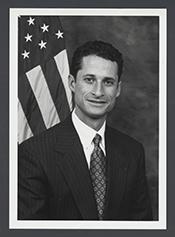
Mr. Speaker, I thank the gentleman for yielding me this time. It frequently falls upon me as a nonlawyer on the Committee on the Judiciary to try to sort through the facts of these things and try to…
Mr. Speaker, I thank the gentleman for yielding me this time. It frequently falls upon me as a nonlawyer on the Committee on the Judiciary to try to sort through the facts of these things and try to reduce them into small words that those of us who are nonlawyers can understand. But I was taken by one fact that was articulated by one of my colleagues on the other side that according to a recent survey, 80 percent of the American people are against frivolous lawsuits. I would love to know who the 20 percent are that like frivolous lawsuits so that we can have a focus group with them. They are probably lawyers of some sort, I would imagine.
First, let me just say we rarely have an opportunity to take a look at a proposal before us today and look at almost an identical proposal that was the law of the land between 1983 and 1993. Then, too, there was an effort to unclog the courts of frivolous lawsuits; then, too, the Judicial Conference, not this body, the Judicial Conference said we have to try to come up with some rules.
What was the effect? The effect was not reducing the amount of frivolous lawsuits; it was adding a whole new level of litigation around frivolous lawsuits. Rather than simply having a
judge say, that is frivolous, it is out of here, let us move on with the case, you then had suits and countersuits over whether or not something was frivolous, because it was elevated with the changes that were made in that decade.
We also found that an unintended consequence, and I think even my colleagues acknowledge that it was unintended by their effort, albeit insubstantial, to carve out civil rights suits, we found that when you were bringing a novel, new kind of suit, you found yourself being charged with making a frivolous lawsuit. Civil rights cases is just one of them. We also saw the same thing could have or did happen when you sued tobacco companies to recover for States.
And today, I would dare say that someone who brought a case that is being brought in New York today, suing the country of Saudi Arabia for their culpability in the September 11 attacks, someone could come before a judge and say this is a frivolous lawsuit because it represents no precedent, it has never been tried before and, therefore, should be dismissed.
Obviously, it did not have that effect in that 10 years of clearing out the docket of frivolous lawsuits. If anything, it increased them.
Secondly, we have heard frequently the matrix drawn between frivolous lawsuits, increase of litigation, and insurance rates. I looked at the bill fairly carefully. Nowhere does it require that insurance rates go down, so I will have to assume the same thing will happen upon passage of this bill, although the passage will not happen, because the other body will never take up such a bill, that you will put in the restrictions of average Americans getting into court and then, lo and behold, insurance rates keep going up and up and up, because that is what happened in California, and that is what happened in Florida. So if my colleagues think that by voting for this bill they will be reducing insurance rates, nothing could be further from the truth.
There has been some back-and-forth about this notion of venue shopping: you can only bring an action in the defendant's, not the person who is bringing the case, the defendant's principal place of business. Well, again, I have very talented lawyers on both sides of this, but the Congressional Research Service, the American Law Division, hardly a pantheon of partisanship, hardly the place to go to get the talking points for Fox News or for whoever guys think lies, they write, ``If a defendant's principal place of business was not the United States, then this option could not be exercised in a United States court. Consequently, it would appear that in certain circumstances, a United States citizen or resident injured in this country would not have a judicial forum in the United States in which to seek relief.''
That is what a relatively unbiased analysis of this thing looks like; but even if it is not, what problem are you trying to solve? You should allow Americans to take their cases where they are most appropriate, not where you believe it should be.
Now, let me conclude with this thought. I heard a couple of times on the campaign trail President Bush talked about not having a Washington- based, one-size-fits-all solution for our Nation's problems. There is another way to do this. There is another way. There is a way to look at cases that have individual facts, have individual people, take them before an individual, say a judge; or take those cases before a group of individuals, say six or nine or 12 individual Americans from their community, and allow them to vet the different sides of the argument and allow that to be the decision-making process. It is called the American justice system, and as contemptuous as my colleagues on the other side of the aisle are that you could actually have a judge that has the common sense to make a decision or a jury that has the common sense to make a decision, or whether you can possibly have two lawyers in the adversarial proceeding get the truth out, we here in Washington have to say, this one size fits all.
Well, fortunately, this one size will only be in this one House and will never be the law of this one land.
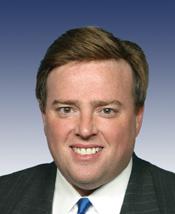
Mr. Speaker, I rise today in strong support of the Lawsuit Abuse Reduction Act of 2004. The overriding central purpose of this legislation is to prevent frivolous lawsuits from being filed in the…
Mr. Speaker, I rise today in strong support of the Lawsuit Abuse Reduction Act of 2004. The overriding central purpose of this legislation is to prevent frivolous lawsuits from being filed in the first place. To achieve this, we provide for tough, mandatory sanctions, including a three strikes and you are out penalty, which I authored.
Now should Members vote for this legislation? To determine that answer, may I suggest that Members consider three questions:
First, do Members believe frivolous lawsuits waste good people's time and money?
Second, should lawyers who bring frivolous lawsuits face tough mandatory sanctions?
Third, when a court has determined that an attorney has brought at least three frivolous lawsuits under Rule 11, should there be a three strikes and you are out penalty?
If the answers to those questions are yes, Members should vote in favor of this legislation. In fact, I will take it a step further and tell Members flat out that the answers to those questions are yes, at least according to Senator John Edwards, a Democrat from North Carolina, who was a plaintiff's personal injury attorney.
On December 15, 2003, Newsweek magazine published an article written by Senator John Edwards where he said, ``Frivolous lawsuits waste good people's time and hurt the real victims. Lawyers who bringing frivolous cases should face tough, mandatory sanctions, with a `three strikes' penalty.''
Mr. Speaker, I agree, and that is precisely what this legislation does. Congress should act today in a bipartisan manner to prevent and punish frivolous lawsuits. We should care about each more and sue each other less. I urge my colleagues to vote yes on the Lawsuit Abuse Reduction Act of 2004.
Mr. Speaker, I thank the gentleman from Wisconsin (Mr. Sensenbrenner) for yielding me time.
I rise today in opposition to the Democratic substitute and I will address the three or four strikes and you are out provision of the Democratic substitute. I would like to begin by pointing out what the Democratic White House hopefuls have said about this issue.
Senator John Edwards published an article in Newsweek Magazine on December 15, 2003, where he says, ``Frivolous lawsuits waste good people's time and hurt the real victims. Lawyers who bring frivolous cases should face tough mandatory sanctions with a three strikes penalty.''
He also told the Washington Post on May 20, 2003, ``We need to prevent and punish frivolous lawsuits. Lawyers who file frivolous lawsuits should face tough mandatory sanctions. Lawyers who file three frivolous cases should be forbidden to bring another suit for the next 10 years. In other words, three strikes and you are out.''
That is not what the Democratic substitute says. The Democratic substitute only provides that on three strikes the offending attorney will be referred to a bar association and no action need be taken by the bar to discipline the attorney under the substitute. That is not what Senator Edwards said. Senator Edwards did not say, three strikes and we are going to put a letter in your personnel file. He did not say, three strikes and we will send a diplomat from the U.N. to talk to you. He did not say, three strikes and we will refer this matter to a State bar association where they will not be required to take any disciplinary action.
Could it be that when it comes to cracking down on frivolous lawsuits with a tough three strikes and you are out penalty that the White House presidential candidate were for it before they were against it? Could this be an example of flip-flopping? Do we really have, in fact, two Americas, one America where we see very tough campaign rhetoric about cracking down with mandatory sanctions and a three strikes and you are out penalty and another America where we see watered-down liberal legislation on the floor of Congress?
I think there should be one America, one America where we prevent and punish frivolous lawsuits, not just with words but with actions. I urge my colleagues to vote no on this Democrat substitute.
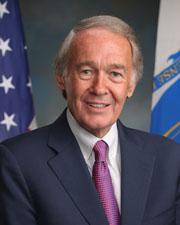
I thank the gentleman for yielding me this time. Mr. Speaker, just think for a second what is going on in the world this week. The assault weapons ban expired yesterday, freeing the way for an…
I thank the gentleman for yielding me this time.
Mr. Speaker, just think for a second what is going on in the world this week.
The assault weapons ban expired yesterday, freeing the way for an assault weapons buying frenzy. The Republican Congress refuses to allow a vote on extending the ban on the sale of assault weapons.
Companies all over America continue to offshore American jobs to foreign countries with tax breaks as incentives that the Republicans refuse to take off the books.
Oil prices remain sky high, with analysts expecting them to stay sky high for the foreseeable future, but the Republicans have no plan to protect American consumers from being tipped upside down as they pay gasoline prices and home heating oil prices.
The 9/11 Commission has come back with recommendations that they insist that Congress pass to make sure there is not a repetition of 9/ 11. The Republican Party refuses to bring those bills out here on the floor.
Osama bin Laden is still at large, and just last week, we had a videotape from his top deputy threatening further attacks on the United States.
We have 1,000 troops who have died in Iraq. We have suffered 5,000 wounded in Iraq, and no end in sight.
North Korea may have exploded a nuclear bomb this week. South Korea is now enriching uranium and plutonium.
So what has the Republican United States Congress decided to do this week? What important issue are we debating? Will it be Iraq? Will it be terrorism? Will it be oil prices? Will it be a stagnant economy? No.
The Republicans have decided that this week, 3 weeks before we adjourn, is lawsuit abuse week, so that we can deny families in our country that have been injured by large corporations from being able to sue those corporations for the damage they did to the children, to the families. And the centerpiece is this Lawsuit Abuse Reduction Act that really should be called the Legislative Abuse Expansion Act.
This bill contains unconstitutional provisions that would force every State court to implement entirely new court rules and procedures. The bill contains unfunded mandates that would force States to conduct an inquiry about what the outcome of the case will be before discovery and trial have even taken place. How is the court supposed to know that? If a case is not lucky enough to be brought before Judge Carnac, the court may have to subpoena witnesses, hold evidentiary hearings and ask the individuals involved to the litigation proceeding to spend time and money on the new ``pretrial trial'' mandated by this bill to block individuals from suing corporations who have hurt American families.
The simple fact is that the amount of civil litigation in this country is not expanding. The Justice Department's Bureau of Justice Statistics and National Center for State Courts track civil cases and verdicts in the Nation's 75 largest counties. They reported in April that, in the last decade, the number of cases has gone down, not up. The bureau reported that the number of general civil cases disposed of by trial in the Nation's largest counties declined from 22,000 in 1992 to 11,000 in 2001, a 47 percent decline.
There is no urgency on this issue. There has been a 47 percent decline in these kind of cases. The plaintiffs won about half the time. And the overall median award was $37,000 in 2001, down from $65,000 in 1992.
Why are we taking these bills up when there is no litigation explosion? Why are we running roughshod over the rights of the States to set rules? Why are we restricting the flexibility of judges to protect ordinary families in our country?
There is only one reason why, because the Republican Party wants to shut down the access that every citizen currently has to our legal system to seek justice and compensation when they have been harmed by the actions of a wealthy corporation. That is what this is all about. Vote ``no'' on this legislation.
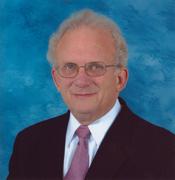
Mr. Speaker, I wonder if the majority ever steps back for a second and looks at the situation that they are in. They run around asking the Committee on the Judiciary in the House to pass legislation…
Mr. Speaker, I wonder if the majority ever steps back for a second and looks at the situation that they are in. They run around asking the Committee on the Judiciary in the House to pass legislation stripping Federal courts of jurisdiction, including the U.S. Supreme Court of jurisdiction, to decide fundamental constitutional questions presented under the U.S. Constitution, and at the same time they run around asking the Committee on the Judiciary of the House and the House of Representatives to pass bills writing the venue laws for personal injury actions brought in State court.
This is Federal intrusion in areas traditionally reserved for the States and an effort to reverse everything that Marbury v. Madison and all of its subsequent cases have said with respect to the Federal Judiciary's role in dealing with questions arising under the Constitution.
My friend, the very able chairman of the Committee on the Judiciary, says on the question of frivolous lawsuits, help is on the way. But the truth is, help is not on the way for those who are looking for it. The germ of a good idea, mandatory sanctions for filing of frivolous pleadings or frivolous motions, improved by an amendment by the gentleman from Florida (Mr. Keller), to say that where an attorney is responsible for three such frivolous filings he is subject to suspension, that to be reviewed by an appellate court so that there are real teeth and deterrence to the filing of frivolous lawsuits, is combined with an overreaching, egregious effort to exchange the venue laws of 50 State legislatures and the courts of those States with respect to personal injury actions, any of which could be corrected by those State legislatures on their own in matters having no serious Federal interest.
Once again, the Republican majority, as it has done consistently for the past 10 years in the area of tort reform, overreaches. It takes a good idea, adds so many outrageous and overreaching provisions to that good idea that the other House ignores it.
Let us go back and look at a little history. In 1994, the Republicans came down with their Contract For America, and one of them was tort reform. I will give a classic example. In the committee they eliminate joint and several liability. There are arguments for it and there are arguments against it. Either the plaintiff who is not able to recover and made whole is hurt, or some defendant is potentially liable for the entire judgment, even though he is only partially responsible.
In the Committee on Rules two amendments are offered; one to take care of the minor tort feasers, the people who are involved in a relatively small amount of the negligent conduct that produced the injury; and the other one to wipe out that rule. The Republican majority, fearful that the compromise proposal might pass the House, does not allow the rule for that amendment to go through and, instead, allows the one to simply reinstate the existing law.
In that bill, which of course never passed the Senate, in the medical malpractice legislation, where they resisted any effort to make the caps on pain and suffering relevant to today's costs and today's times and the current situation, whether it is on class action lawsuits, where they sought to suck up all State actions without any balance, they have consistently overreached. And the result, as they are doing with this bill, of overreaching is that we lose a chance to make some improvement in the present system to deal effectively, in this case with frivolous lawsuits, because they want everything or they want the issue, and end up with nothing.
Mr. Speaker, I offer a motion to recommit. I am opposed to the bill in its current form, Mr. Speaker. Mr. Speaker, this motion to recommit is designed to help address the problem of domestic…
Mr. Speaker, I offer a motion to recommit.
I am opposed to the bill in its current form, Mr. Speaker.
Mr. Speaker, this motion to recommit is designed to help address the problem of domestic corporations reincorporating abroad for the express purpose of avoiding new U.S. taxes and now new legal liability.
As we fight terrorism at home and abroad, when we have hundreds of thousands of troops in harm's way and are trying to find the resources to equip our first responders and ensure the safety of our ports and air transit, the last thing we should be doing is passing legislation that helps what are essentially corporate tax dodgers.
With increasing frequency, companies are setting up shell corporations in places like Bermuda while continuing to be owned by U.S. shareholders and doing business in the United States. The only difference is that this new so-called foreign company escapes substantial tax liability. What these companies have done is a slap in the face of every company which has chosen to stay in America and of every citizen who faithfully pays their taxes.
In my State of Connecticut, Stanley Works once considered incorporating in Bermuda to keep up with their competitors who had already moved overseas. But they changed their mind. They did the right thing.
But the bill before us provides a litigation and financial windfall to corporate expatriates at the expense of companies like Stanley Works. Instead of permitting claims to be filed wherever a corporation does business, or has
minimum contacts, this bill requires the suit to be brought where the defendant's principal place of business is located. Perhaps that makes some sort of sense in the abstract, but in the case of a corporate expatriate what that means is that in most cases claims could only be filed in places like Bermuda under their liability laws.
It is bad enough that these companies are essentially cheating on their taxes by arguing, rather unconvincingly, that they are not American companies. But for them to use this rationale to escape liability is outrageous. This is unfair to the victims, and unfair to the domestic company who would be forced to compete against these companies.
The Congressional Research Service has analyzed this bill and wrote: ``In certain circumstances a United States citizen injured in this country would not have the judicial forum in the United States in which to seek relief.'' In other words, in certain cases, American citizens would have no judicial recourse whatsoever.
These are American companies flouting American tax law. They do business here in the United States, and they should be subject to our laws, period. So my motion to recommit amends the underlying bill to say the new limitations on jurisdiction and venue do not apply to a corporate expatriate company. This is a modest, commonsense change to address the irresponsible actions of a handful of companies. It is time for these companies to live up to their obligations as American corporate citizens. I urge my colleagues to vote ``yes'' on this motion to recommit.
Mr. Speaker, I yield 1 minute to the gentleman from Washington (Mr. Inslee).
(Mr. INSLEE asked and was given permission to revise and extend his remarks.)
Mr. Speaker, I urge my colleagues to support this motion to recommit, and I want to thank the gentlewoman from Texas (Ms. Jackson-Lee), who is a member of the Committee on the Judiciary who was going to offer this motion in committee.
Mr. Speaker, I demand a recorded vote.

Mr. Speaker, I rise in strong opposition both to this bill and to the process which produced it. H.R. 4571 would make fundamental changes to the Rule 11 sanctions process without our even receiving…
Mr. Speaker, I rise in strong opposition both to this bill and to the process which produced it. H.R. 4571 would make fundamental changes to the Rule 11 sanctions process without our even receiving the benefit of input from either the Judicial Conference or the Supreme Court.
Mr. Speaker, it is obvious that the proponents of this legislation do not want to hear from our judges because they know that the vast majority of our judges do not agree with this bill. As a matter of fact, I think that this bill could appropriately be named big business versus the people.
Mr. Speaker, big businesses pay expensive lawyers by the hour to protect their interests. Trial lawyers handling many of these cases that are being termed frivolous are paid only if they win.
I would like to quote John Q. Quinn, a veteran trial lawyer from Houston, who sees this as a make-or-break election issue in an article that appeared in the Los Angeles Times. ``Corporate America is in charge these days. They control the White House, the Congress and the Supreme Court. But so far they do not control the right to trial by jury. That is the only place where ordinary citizens can go and have their complaints heard,'' Quinn said. I further quote him when he said ``Ordinary people cannot hire lobbyists in Washington, but in the courtroom they get an equal chance to stand up against a corporation.''
Now the Chamber of Commerce and big corporate America, spending millions of dollars in public relations campaigns, would have Members believe that the number of civil cases have risen and thus the number of frivolous lawsuits, but that is simply not the case. I would like to further quote this Los Angeles Times article which said, ``The Justice Department's Bureau of Justice Statistics and the National Center for State Courts track civil trials and verdicts in the Nation's 75 largest counties. In April, the bureau reported in the last decade the number of cases have gone down, not up.''
The number of general civil cases disposed of by trial in the Nation's largest counties declined from 22,451 in 1992 to 11,908 in 2001. That is a 47 percent decline. The plaintiffs won about half the time, and the overall median award was $37,000 in 2001, down from $65,000 in 1992.
These cases included automobile accidents, medical malpractice and product liability claims. About one-third of the cases involved contract claims which typically involve one business against each other. Mr. Speaker, we are talking about ordinary people. We are talking about people who get up every day and go to work, common folk who just earn sometimes entry-level wages. We are talking about people who could be harmed in an automobile accident or on the job working at a company that does not care about their safety, where they can lose a limb, their eyes, they could be killed. They could lose their lives.
Are we going to prevent the ability of these people to be heard and have their day in court? Big business may not want to accept liability, but it must; and we cannot live in a country where we have big business, because they
have money, come to the Congress of the United States and produce legislation that would prevent the average, little person from having their day in court and being heard by a jury.
Show 11 more

Mr. Speaker, I thank the gentleman for yielding me this time. Let me first agree with my colleagues on both sides of the aisle that I do not think anybody really likes frivolous litigation, and this…
Mr. Speaker, I thank the gentleman for yielding me this time.
Let me first agree with my colleagues on both sides of the aisle that I do not think anybody really likes frivolous litigation, and this bill provides an opportunity for people to get up and say that. I think if we were to ask either the Republican or the Democratic nominees for President and Vice President that are out there running, all of them will say, no, I do not like frivolous litigation.
The problem here is that my colleagues just do not want to be confused by the facts, because this bill is going to do more to encourage frivolous litigation, potentially, than it is going to do to discourage frivolous litigation. The Judicial Conference of the United States has made that clear in the letter that has been introduced into the
Record in which they say that the provisions of this bill, which go back to the rules that were in effect prior to 1983, those rules were changed because they spawned a whole cottage industry of litigation related to frivolous lawsuits.
So even if this were going to discourage frivolous lawsuits, which they say it would not, you are going to engender a whole new set of problems because what they say happened was Rule 11 motions came to be met with countermotions that sought Rule 11 sanctions for making the original Rule 11 motion. What sense does that make that we would set up a system to encourage people to file countermotions against each other claiming that the other side was frivolous in what they were doing in the lawsuit?
The Judicial Conference is clear that this bill would provide incentives to encourage litigants to keep a frivolous claim in court because if they ever withdrew the frivolous claim, it in effect would be a concession that it was frivolous. So somebody files a lawsuit, realizes they have a bad claim, then has no way of getting out of it because they are afraid to withdraw the claim because somebody is going to hit them with sanctions, and the fact that they withdrew the claim is an admission that it was a frivolous claim. It is going to set up situations where lawyers are put in conflicts of interest with their clients because the client wants to pursue a claim that may be frivolous, the lawyer does not want to pursue it, realizes that the claim is frivolous and cannot back out of it without getting into a conflict of interest with their client. All of that is outlined in the letter from the Judicial Conference.
This is not really about doing something that is going to discourage frivolous lawsuits, this bill is going to encourage frivolous lawsuits and encourage pursuit of frivolous lawsuits in a way that the Judicial Conference has outlined clearly.
There seems to be this mentality, I hate frivolous lawsuits and do not confuse me with the facts because that is not what I am interested in. We should vote this bill down and keep the rules in place that are there that allow judges to make reasonable decisions in their courts.

Mr. Speaker, I thank the gentleman from Wisconsin (Chairman Sensenbrenner) for bringing this bill up today, and I rise in support of the legislation. Interestingly enough, every Member who has spoken…
Mr. Speaker, I thank the gentleman from Wisconsin (Chairman Sensenbrenner) for bringing this bill up today, and I rise in support of the legislation.
Interestingly enough, every Member who has spoken in support of the legislation today is an attorney, me included. In my private practice, I represented small businesses, businesses which employed four or five people on the average.
I recall very clearly their concerns when they came to see me and my colleagues. It was, unfortunately, the fear of lawsuits. Retail businesses today are not opening at the rate they probably should be because of fear of lawsuits. Our economic recovery has begun, but it would be moving along much more quickly but for fear of lawsuits.
We have the opportunity today to prevent many of those lawsuits, lawsuits that are frivolous. This bill will in no way effect anyone who has a legitimate lawsuit. It will only affect those who do not; those who waste money and resources, those who cause a lot of job loss. The Lawsuit Abuse Reduction Act of 2004 will provide for appropriate sanctions against frivolous lawsuits. That means it will provide for fewer frivolous lawsuits.
This bill applies to cases brought by individuals as well as by businesses both big and small, including business claims filed to harass competitors and gain market share. The bill applies to both plaintiffs and defendants if what they are filing is a frivolous action. Polls show that Americans overwhelmingly support legislation barring frivolous lawsuits.
A recent poll showed that 83 percent of likely voters believe there are too many lawsuits in America; 76 percent believe lawsuit abuse results in increased prices for goods and services; and 73 percent of Americans support requiring sanctions against attorneys who file frivolous lawsuits, and that is what this legislation does.
Frivolous lawsuits make businesses and workers suffer. This year the Nation's older ladder manufacturer, a family-owned company in New York, filed for bankruptcy protection and sold off most of its assets due to litigation costs. The company was founded in 1855, but it could not handle the cost of liability insurance which had risen from 6 percent of their sales to nearly 30 percent today, even though the company never actually lost a court judgment. The company owner said, ``We could see the handwriting on the wall, and just want to end this whole thing.''
Let us pass this legislation and make sure that our U.S. manufacturing sector stays strong.
It is our error if we fail to protect them today. Our manufacturing sector, which has been the envy of the world, finds itself mired in a slow recovery due to the cost of many lawsuits.
I encourage my colleagues to support this legislation. It has been costly to our business sector and especially costly to jobs.
Mr. Speaker, I am pleased to support the Lawsuit Abuse Reduction Act, H.R. 4571, that addresses the problem of frivolous lawsuits in a constitutional manner. As an OB-GYN, I am very aware of the…
Mr. Speaker, I am pleased to support the Lawsuit Abuse Reduction Act, H.R. 4571, that addresses the problem of frivolous lawsuits in a constitutional manner. As an OB-GYN, I am very aware of the damage frivolous litigation is causing small businesses and medical practitioners. Frivolous lawsuits filed by unscrupulous trial lawyers can drive small businesses into bankruptcy and force doctors to abandon their medical practice. These lawsuits inflict the greatest danger on consumers who must pay more for goods and services and medical patients who cannot find needed medical services in their communities.
H.R. 4571 reduces frivolous lawsuits by exercising Congress's constitutional authority to establish rule of civil procedure for federal courts. Specifically, H.R. 4571 restores mandatory sanctions for attorneys who file frivolous lawsuits. Among other sanctions, attorneys who file frivolous lawsuits may be required to pay the other side's attorneys fees. The possibility of having to pay attorneys fees is an important factor in discouraging ``nuisance'' suits--lawsuits filed in the hopes of extorting cash settlements from defendants who have decided it is better to settle quickly than face the possibility of a lengthy and costly legal proceedings. This form of legal blackmail is one of the most abhorrent practices plaguing our legal system today. I am pleased to see Congress taking action to address it.
H.R. 4571 also ends the practice of forum shopping. Forum shopping is an abuse of Federal ``diversity jurisdiction'' that allows a trial attorney to pick a venue known for awarding large cash awards for spurious claims. All too often, a plaintiff's attorney will choose a forum that has a very tenuous or insignificant relation to the main case, but has a reputation for awarding huge victories to the plaintiff's bar. Forum shopping is especially a problem in class action suits. H.R. 4571 addresses this problem by requiring cases be filed in the Federal district or State where the plaintiff resides, the State or Federal district where the plaintiff was injured or the State or Federal district where the defendant's principal place of business is located.
Mr. Speaker, frivolous lawsuits endanger small business across the country. I am pleased to see Congress today addressing the
litigation crisis, not by attempting to nationalize tort law, but by exercising our constitutional authority over the rules of Federal civil procedure and diversity jurisdiction. I, therefore, urge all my colleagues to support H.R. 4571, the Lawsuit Abuse Reduction Act.
Mr. Speaker, I rise today in opposition to H.R. 4571, the misnamed ``Frivolous Lawsuit Reduction Act,'' and in support of the Turner substitute. Mr. Speaker, the 11,000 frivolous lawsuits filed…
Mr. Speaker, I rise today in opposition to H.R. 4571, the misnamed ``Frivolous Lawsuit Reduction Act,'' and in support of the Turner substitute.
Mr. Speaker, the 11,000 frivolous lawsuits filed yearly are a burden on our court system, which interfere with the administration of justice, and cost U.S. taxpayers millions of dollars each year. I fully support commonsense reform.
H.R. 4571 was drafted by and for large corporations and special interests with unlimited legal resources. It denies justice to injured Americans by limiting them from getting their day in court. That's wrong, Mr. Speaker. It does nothing to help consumers, Mr. Speaker, and targets innocent victims instead of holding responsible those who recklessly or negligently harm others.
The bill also unfairly benefits foreign corporations because it only permits a lawsuit to be filed where the corporation's principal place of business is located, making it more difficult to pursue a personal injury or product liability action against a foreign corporation in the United States. That's also wrong, Mr. Speaker, and it's not the kind of reform that America needs.
The Turner substitute is measured and tough on abuse of the system, while also protecting the rights of injured victims to receive the compensation they deserve. In fact, the substitute's ``three-strikes- and-you're-out'' provisions forbid frivolous filing attorneys from bringing another suit for 10 years. For a first violation the substitute would hold the attorney in contempt. For the second violation the substitute imposes a mandatory fine. And for a third and final violation, a ``third strike,'' you're out. That's tough, Mr. Speaker, and a commonsense approach to frivolous litigation that everyone should support.
The substitute also contains a civil rights carve-out, so that citizens who want to bring new civil rights cases can do so. It contains expedited disposition provisions to weed out junk lawsuits, enhances sanctions for document destruction, and protects injured parties and consumers. Finally, it eliminates the provision in the underlying bill that provides a windfall to foreign or ``Benedict Arnold'' corporations to the disadvantage of their U.S. competitors.
The Turner substitute is tough, Mr. Speaker, it's fair, and it provides real reform while preserving access to the courts for millions of Americans. I urge my colleagues to support it.
Mr. Speaker, I am profoundly concerned about the erosion of the independence and statehood role in our judicial system. This bill is just another attack on access to the courts, and the latest…
Mr. Speaker, I am profoundly concerned about the erosion of the independence and statehood role in our judicial system. This bill is just another attack on access to the courts, and the latest attempt to override existing State laws. At this rate, we will have a justice system available only to corporate America. Litigation costs already make the courts unavailable for the average person and small business. This bill takes our country further in the wrong direction.
This bill will not ``take back the courts'' for plaintiffs. To the contrary, Congress continues to block access to justice. Imagine a system that leaves the tobacco industry unchecked. Imagine the number of unnecessary deaths if the trial bar could not keep unsafe tires off our cars. Or a justice system that fails to uncover contamination of public water supplies. We need the private sector. The trial bar plays an important role in the protection of American consumers. Yet, I dare say, we are going in the wrong direction.
In another all-too-familiar pattern for this Congress, this bill is another court-stripping measure limiting judicial discretion. From civil rights claims to constitutional challenges, this Congress strips courts of their ability to hear cases. Congress--not a judge sitting in a courtroom--wants to decide if a case is meritorious. Congress--not a judge--will establish inflexible guidelines and impose mandatory sanctions for lawyers. Congress is trying to micromanage the judicial system as well as state judiciaries.
We talk a lot in this Chamber about respecting States' rights. Yet, this bill represents an unprecedented invasion into the traditional jurisdiction of State courts. This unwarranted intrusion into States' rights is wrong. States should be able to set their own rules for the game, including those governing the professional conduct of lawyers. Let's not waste any more time undermining the principles of federalism on a piecemeal basis. Why not simply abolish the 10th Amendment? The bill's sponsors claim an agenda of reform--this is not reform. This is about reeling in the wrong direction.
For all these reasons, I urge my colleagues to reject H.R. 4571 and support the Democratic substitute offered by my colleague from Texas.
Mr. Speaker, I rise in opposition to the so-called Lawsuit Abuse Reduction Act, Nonprofit Athletic Organization Protection Act, and Volunteer Pilot Organization Protection Act. The Republicans are…
Mr. Speaker, I rise in opposition to the so-called Lawsuit Abuse Reduction Act, Nonprofit Athletic Organization Protection Act, and Volunteer Pilot Organization Protection Act. The Republicans are now so desperate to run against trial lawyers in this election that they have turned against our judicial system, student athletes, and countless other Americans.
Almost all volunteers, including coaches, are already protected from frivolous lawsuits by the Volunteer Protection Act of 1997, but the Republicans want to go beyond the better judgment and bipartisan consensus of 1997 in order to create an election-year issue.
Under the athletic organization act, an organization like the NCAA could violate title IX by failing to provide equal opportunities for female athletes, or court violate civil rights, anti-trust, or labor laws, and not be held accountable in court.
The 1997 Volunteer Protection Act rightly excluded volunteers who operate ``a motor vehicle, vessel [or] aircraft'' from legal immunity for negligence because volunteerism has to be encouraged without sacrificing the rights of injured parties. The pilot organization protection act destroys this balance by holding most pilots to one standard but allowing volunteer pilots to escape liability for negligence.
The Lawsuit Abuse Protection Act hurts all Americans by exposing them and their attorneys to motions intended to harass them and slow down the legal process, a tactic often used by wealthy defendants in civil rights trials. This is one of many reasons why the U.S. Judicial Conference, headed by Chief Justice William Rehnquist, opposes this bill. H.R. 4571 is also unconstitutional, because it forces every state court to implement new court rules and procedures, even though Congress has no jurisdiction over state courts.
Mr. Speaker, I am happy to stand up for our Constitution, judicial system, athletes, and all Americans by voting ``no'' on these three bills. If that makes me a friend of the trial lawyers, then I proudly stand with Thurgood Marshall, William Jennings Bryan, and Abraham Lincoln over Tom DeLay and George W. Bush.
Mr. Speaker, I thank the gentleman for yielding me this time. Over the past decade, our Nation has witnessed an explosion of civil lawsuits. Large jury awards and settlements have produced an ever-…
Mr. Speaker, I thank the gentleman for yielding me this time.
Over the past decade, our Nation has witnessed an explosion of civil lawsuits. Large jury awards and settlements have produced an ever- growing number of actions in Federal and State courts, costing the American people more than $200 billion each year and really drastically reshaping our civil justice system.
Tort liability was developed to hold responsible those parties who injure or harm others through actions determined to be negligent or reckless or careless. However, civil actions are increasingly being used to harass and threaten and manipulate innocent parties, undermining the credibility and traditional notions of justice in this country.
In 1993, Rule 11 of the Federal Rules of Civil Procedure, the Federal safeguard against Federal lawsuits, was weakened, thereby making frivolous claims easier to file. Those changes to Rule 11 provided judges with more leeway to avoid sanctioning attorneys who filed meritless claims.
For example, the rule changes allowed trial attorneys a 21-day ``safe-harbor period'' to correct or withdraw meritless claims without fear of penalty, often at the expense of innocent defendants.
While a number of initiatives have been introduced in Congress to reform specific aspects of the tort system, such as medical malpractice reform, small business reform, and product liability reform, or the 18- year Statute of Repose, the legislation that is being offered on the floor today seeks to reduce frivolous lawsuits on a broader scale.
Restoring Rule 11, with its intended authority and expanding its applicability, the Lawsuit Abuse Reduction Act will put teeth back into the safeguard against frivolous claims. This legislation will remove the safe-harbor provision I mentioned before, it would authorize judges to impose sanctions, including monetary, against attorneys and parties who file meritless claims, it would extend sanctions to discovery, and it would extend Rule 11 claims that affect interstate commerce.
Mr. Speaker, I would strongly urge my colleagues to support this legislation.

Mr. Speaker, I rise today in support of H.R. 4571, the Lawsuit Abuse Reduction Act. Last year, I introduced legislation to address the escalating problems that accompany frivolous lawsuits, the Class…
Mr. Speaker, I rise today in support of H.R. 4571, the Lawsuit Abuse Reduction Act.
Last year, I introduced legislation to address the escalating problems that accompany frivolous lawsuits, the Class Action Fairness Act. This legislation would reform the Federal rules that govern class actions so that truly interstate lawsuits would be heard in Federal courts, like the Framers envisioned. The current class action rules provide an opportunity for opportunistic lawyers to game the system and extort money from legitimate businesses.
The abuse of the class action process is just one example of how the current litigious atmosphere in our country threatens to undermine the growth and innovation that has characterized our great Nation since its founding. Frivolous lawsuits force businesses to waste time and resources that could otherwise be spent on new products, new services, or innovative procedures that could reduce the costs of goods and services for consumers.
Small businesses rank the cost and availability of liability insurance second only to the costs of health care as their top priority. Not coincidentally, both of these problems are fueled by frivolous lawsuits.
H.R. 4571 is another commonsense approach to combat frivolous lawsuits. It would restore mandatory sanctions for filing frivolous lawsuits and allow monetary sanctions, including attorney's fees and compensatory costs, against any party making a frivolous claim. H.R. 4571 would also allow sanctions for abuse of the discovery process, and would abolish the current ``free pass'' provision that allows lawyers to avoid sanctions if they withdraw the frivolous claim within 21 days after a motion for sanctions has been filed.
By restoring strong penalties against those that file frivolous claims, the Lawsuit Abuse Reduction Act will give businesses the freedom to devote their resources to doing business, rather than wasting their resources defending frivolous litigation.
I urge my colleagues to support this important legislation.
I thank the gentleman for yielding me this time. Mr. Speaker, I rise in very strong support of LARA, the Lawsuit Abuse Reduction Act of 2004. Mr. Speaker, as many of my colleagues know, during this…
I thank the gentleman for yielding me this time.
Mr. Speaker, I rise in very strong support of LARA, the Lawsuit Abuse Reduction Act of 2004.
Mr. Speaker, as many of my colleagues know, during this recent August recess, I spent about 10 days in court defending myself against an alleged medical malpractice suit. I am not sure whether this fits the definition, this particular suit, of a frivolous lawsuit, but after the plaintiff's attorneys presented their evidence, over 8 days, to the jury, the trial judge ruled in favor of me and my two partners in my OB/GYN group on a directed verdict. Her decision was based on the fact that there was no evidence whatsoever presented of proximate causation.
I was willing to defend myself in that lawsuit, but a lot of physicians are not. Many times they are faced with what truly are frivolous lawsuits, and they are sometimes encouraged by their malpractice carrier, if it is determined by the carrier that the cost of defending a lawsuit even though it is frivolous is more than what the settlement amount would be, then they are encouraged and oftentimes do settle. It makes the problem that much worse.
Obviously, this problem and what this law addresses is not just unique to the medical profession. There are 600,000 small business men and women in this country who are literally being put out of business because of frivolous lawsuits and, yes, further loss of jobs, which the other side wants to talk about so often and we are concerned about as well. It is time to end this nonsense of frivolous lawsuits.
As the gentlewoman from Pennsylvania said a few minutes ago, 80 percent of the American public agree with us on this issue. Let us get together, both sides of the aisle, and pass this good, commonsense legislation.
Mr. Speaker, a vote for this bill is a vote for a rule-- rule 11--that it had become an impediment to practicing law, not an impediment to frivolous suits as its proponents would have you think. The…
Mr. Speaker, a vote for this bill is a vote for a rule-- rule 11--that it had become an impediment to practicing law, not an impediment to frivolous suits as its proponents would have you think.
The bill before us today seeks to turn back the clock. Eleven years ago, Congress rewrote rule 11 to get rid of mandatory sanctions for frivolous filings because mandatory sanctions had not helped stop frivolous filings and in some cases made them worse. Why then are we going backward today? And if we are going to turn back the clock, why can't we turn back the clock to the unprecedented economic prosperity of the Clinton administration--where we had a balanced budget and a budget surplus, where we had reduced welfare roles and respect on the international stage, and where we had 100,000 new cops on the street and the lowest crime rate in decades.
If we are dead-set on turning back the clock, why must we turn it back to a system that was proven not to work? We tried mandatory sanctions for 10 years. After 10 years with mandatory sanctions, Federal courts recommended against them because they were widely abused and actually added to the wasteful litigating they were intended to prevent.
Our court system is not perfect by any stretch of the imagination. We need to meaningfully address the burden that frivolous lawsuits are placing on our courts and on our society. However, this bill does not provide any new answers; instead it takes us backward to a solution we know doesn't work.
Mr. Speaker, H.R. 4571 is a thinly veiled attack on the trial lawyers at the expense of injured plaintiffs. By requiring mandatory sanctions that would apply to civil rights cases, H.R. 4571 will…
Mr. Speaker, H.R. 4571 is a thinly veiled attack on the trial lawyers at the expense of injured plaintiffs. By requiring mandatory sanctions that would apply to civil rights cases, H.R. 4571 will prohibit many legitimate and important civil rights actions from being filed.
No one wants frivolous abuses of our court system. There is no need to sacrifice the rights of individuals to do so. I vote in support of a substitute amendment offered by Congressman Turner that will protect the civil rights of individuals and against H.R. 4571.
Bill Text
2 versions available
        [Congressional Bills 108th Congress]
[From the U.S. Government Publishing Office]
[H.R. 2934 Reported in House (RH)]

Union Calendar No. 353
108th CONGRESS
2d Session
H. R. 2934

[Report No. 108-588]

To increase criminal penalties relating to terrorist murders, deny
Federal benefits to terrorists, and for other purposes.

_______________________________________________________________________

IN THE HOUSE OF REPRESENTATIVES

July 25, 2003

Mr. Carter introduced the following bill; which was referred to the
Committee on the Judiciary

July 7, 2004

Additional sponsors: Mrs. Musgrave, Mr. Coble, Mr. Jenkins, Mr. Barrett
of South Carolina, Mr. Norwood, Mr. Bonilla, Mr. Thornberry, Mr.
Wicker, Mr. Pearce, Mr. Burgess, Mr. Gerlach, Mrs. Cubin, Mr.
Neugebauer, Mr. Garrett of New Jersey, Mr. Porter, Mr. McCotter, Mr.
Tiahrt, Mr. Wilson of South Carolina, Mr. Gibbons, Mr. Everett, Mr.
Rogers of Alabama, Ms. Granger, Mr. Collins, Mr. Feeney, Mr. Burns, Mr.
Brady of Texas, Mr. Shimkus, Mr. Baker, Mr. Cannon, Mrs. Miller of
Michigan, Ms. Ginny Brown-Waite of Florida, Ms. Harris, Mr. Cole, Mr.
Kline, Mr. Peterson of Pennsylvania, Mr. Otter, Mr. Weller, Mr. Putnam,
Mr. Tancredo, Mr. Hefley, Mr. Pombo, Mr. Hayworth, Mr. Hensarling, Mr.
Doolittle, Mr. Sullivan, Mr. Franks of Arizona, Mr. King of Iowa, Mr.
DeLay, Mr. Tauzin, Mr. Barton of Texas, Mr. Sessions, Mr. Reynolds, Mr.
Akin, Mr. Turner of Texas, Mr. Blunt, Mr. Bonner, Mr. Smith of Texas,
Mr. Crane, Mr. Keller, Mr. Schrock, Mr. Greenwood, Mr. Beauprez, Mr.
Deal of Georgia, Mr. Tom Davis of Virginia, Mr. Murphy, Mr. Nunes, Mr.
Rehberg, Mr. Forbes, Mr. Miller of Florida, Mr. Goodlatte, Mr. Lincoln
Diaz-Balart of Florida, Mr. Mario Diaz-Balart of Florida, Mr. Chocola,
Mrs. Northup, Mr. Cantor, Mr. Shadegg, Mr. Frost, Mr. Green of
Wisconsin, Mr. Ryun of Kansas, Mr. Chabot, Mr. Gallegly, Mr. McHugh,
Mr. Culberson, and Mr. Fossella

July 7, 2004

Reported with an amendment, committed to the Committee of the Whole
House on the State of the Union, and ordered to be printed
[Strike out all after the enacting clause and insert the part printed
in italic]
[For text of introduced bill, see copy of bill as introduced on July
25, 2003]

_______________________________________________________________________

A BILL

To increase criminal penalties relating to terrorist murders, deny
Federal benefits to terrorists, and for other purposes.

Be it enacted by the Senate and House of Representatives of the
United States of America in Congress assembled,

SECTION 1. SHORT TITLE.

This Act may be cited as the ``Terrorist Penalties Enhancement Act
of 2004''.

SEC. 2. PENALTIES FOR TERRORIST OFFENSES RESULTING IN DEATH; DENIAL OF
FEDERAL BENEFITS TO TERRORISTS.

(a) In General.--Chapter 113B of title 18, United States Code, is
amended by adding at the end the following:
``Sec. 2339D. Terrorist offenses resulting in death
``(a) Whoever, in the course of committing a terrorist offense,
engages in conduct that results in the death of a person, shall be
punished by death or imprisoned for any term of years or for life.
``(b) As used in this section, the term `terrorist offense' means--
``(1) a Federal felony offense that is--
``(A) a Federal crime of terrorism as defined in
section 2332b(g) except to the extent such crime is an
offense under section 1363; or
``(B) an offense under this chapter, section 175,
175b, 229, or 831, or section 236 of the Atomic Energy
Act of 1954; or
``(2) a Federal offense that is an attempt or conspiracy to
commit an offense described in paragraph (1).
``Sec. 2339E. Denial of Federal benefits to terrorists
``(a) An individual or corporation who is convicted of a terrorist
offense (as defined in section 2339D) shall, as provided by the court
on motion of the Government, be ineligible for any or all Federal
benefits for any term of years or for life.
``(b) As used in this section, the term `Federal benefit' has the
meaning given that term in section 421(d) of the Controlled Substances
Act, and also includes any assistance or benefit described in section
115(a) of the Personal Responsibility and Work Opportunity
Reconciliation Act of 1996, with the same limitations and to the same
extent as provided in section 115 of that Act with respect to denials
of benefits and assistance to which that section applies.''.
(b) Conforming Amendment to Table of Sections.--The table of
sections at the beginning of the chapter 113B of title 18, United
States Code, is amended by adding at the end the following new items:

``2339D. Terrorist offenses resulting in death.
``2339E. Denial of federal benefits to terrorists.''.
(c) Aggravating Factor in Death Penalty Cases.--Section 3592(c)(1)
of title 18, United States Code, is amended by inserting ``section
2339D (terrorist offenses resulting in death),'' after
``destruction),''.

SEC. 3. DEATH PENALTY IN CERTAIN AIR PIRACY CASES OCCURRING BEFORE
ENACTMENT OF THE FEDERAL DEATH PENALTY ACT OF 1994.

Section 60003 of the Violent Crime Control and Law Enforcement Act
of 1994, (Public Law 103-322), is amended, as of the time of its
enactment, by adding at the end the following:
``(c) Death Penalty Procedures for Certain Previous Aircraft Piracy
Violations.--An individual convicted of violating section 46502 of
title 49, United States Code, or its predecessor, may be sentenced to
death in accordance with the procedures established in chapter 228 of
title 18, United States Code, if for any offense committed before the
enactment of the Violent Crime Control and Law Enforcement Act of 1994
(Public Law 103-322), but after the enactment of the Antihijacking Act
of 1974 (Public Law 93-366), it is determined by the finder of fact,
before consideration of the factors set forth in sections 3591(a)(2)
and 3592(a) and (c) of title 18, United States Code, that one or more
of the factors set forth in former section 46503(c)(2) of title 49,
United States Code, or its predecessor, has been proven by the
Government to exist, beyond a reasonable doubt, and that none of the
factors set forth in former section 46503(c)(1) of title 49, United
States Code, or its predecessor, has been proven by the defendant to
exist, by a preponderance of the information. The meaning of the term
`especially heinous, cruel, or depraved', as used in the factor set
forth in former section 46503(c)(2)(B)(iv) of title 49, United States
Code, or its predecessor, shall be narrowed by adding the limiting
language `in that it involved torture or serious physical abuse to the
victim', and shall be construed as when that term is used in section
3592(c)(6) of title 18, United States Code.''.

Union Calendar No. 353

108th CONGRESS

2d Session

H. R. 2934

[Report No. 108-588]

_______________________________________________________________________

A BILL

To increase criminal penalties relating to terrorist murders, deny
Federal benefits to terrorists, and for other purposes.

_______________________________________________________________________

July 7, 2004

Reported with an amendment, committed to the Committee of the Whole
House on the State of the Union, and ordered to be printed