To direct the Secretary of Homeland Security to establish an independent panel to assess the homeland security needs of the National Capital Region.
Legislative Activity
Stay on top of the latest movement without scrolling through every action
Referred to the House Committee on Homeland Security (Select).
November 21, 2003
View full timeline
Introduced in House
November 21, 2003
Referred to the House Committee on Homeland Security (Select).
November 21, 2003
Floor Debate
24 membersWhat members said about H.R. 3583 on the floor
 RP
RP PAD
PAD EHN
EHN FJS
FJS CHS+19
Floor Debate
24 membersWhat members said about H.R. 3583 on the floor
Mr. Chairman, the 9/11 Recommendations Implementation Act (H.R. 10) is yet another attempt to address the threat of terrorism by giving more money and power to the federal bureaucracy. Most of the…
Mr. Chairman, the 9/11 Recommendations Implementation Act (H.R. 10) is yet another attempt to address the threat of terrorism by giving more money and power to the federal bureaucracy. Most of the reforms contained in this bill will not make America safer, though they definitely will make us less free. H.R. 10 also wastes American taxpayer money on unconstitutional and ineffective foreign aid programs. Congress should make America safer by expanding liberty and refocusing our foreign policy on defending this nation's vital interests, rather than expanding the welfare state and wasting American blood and treasure on quixotic crusades to ``democratize'' the world.
Disturbingly, H.R. 10 creates a de facto national ID card by mandating new federal requirements that standardize state-issued drivers licenses and birth certificates and even require including biometric identifiers in such documents. State drivers license information will be stored in a national database, which will include information about an individual's driving record!
Nationalizing standards for drivers licenses and birth certificates, and linking them together via a national database, creates a national ID system pure and simple. Proponents of the national ID understand that the public remains wary of the scheme, so they attempt to claim they're merely creating new standards for existing state IDs. Nonsense! This legislation imposes federal standards in a federal bill, and it creates a federalized ID regardless of whether the ID itself is still stamped with the name of your state. It is just a matter of time until those who refuse to carry the new licenses will be denied the ability to drive or board an airplane. Domestic travel restrictions are the hallmark of authoritarian states, not free republics.
The national ID will be used to track the movements of American citizens, not just terrorists. Subjecting every citizen to surveillance actually diverts resources away from tracking and apprehending terrorist in favor of needless snooping on innocent Americans. This is what happened with ``suspicious activity reports'' required by the Bank Secrecy Act. Thanks to BSA mandates, federal officials are forced to waste countless hours snooping through the private financial transactions of innocent Americans merely because those transactions exceeded $10,000.
Furthermore, the Federal Government has no constitutional authority to require law-abiding Americans to present any form of identification before engaging in private transactions (e.g. getting a job, opening a bank account, or seeking medical assistance). Nothing in our Constitution can reasonably be construed to allow government officials to demand identification from individuals who are not suspected of any crime.
H.R. 10 also broadens the definition of terrorism contained in the PATRIOT Act. H.R. 10 characterizes terrorism as acts intended ``to influence the policy of a government by intimidation or coercion.'' Under this broad definition, a scuffle at an otherwise peaceful pro- life demonstration might allow the federal government to label the sponsoring organization and its members as terrorists. Before dismissing these concerns, my colleagues should remember the abuse of Internal Revenue Service power by both Democratic and Republican administrations to punish political opponents, or the use of the Racketeer Influenced and Corrupt Organizations (RICO) Act on anti- abortion activists. It is entirely possible that a future administration will use the new surveillance powers granted in this bill to harm people holding unpopular political views.
Congress could promote both liberty and security by encouraging private property owners to take more responsibility to protect themselves and their property. Congress could enhance safety by removing the roadblocks thrown up by the misnamed Transportation Security Agency that prevent the full implementation of the armed pilots program. I cosponsored an amendment with my colleague from Virginia, Mr. Goode, to do just that, and I am disappointed it was ruled out of order.
I am also disappointed the Financial Services Committee rejected my amendment to conform the regulations governing the filing of suspicious activities reports with the requirements of the U.S. Constitution. This amendment not only would have ensured greater privacy protection, but it also would have enabled law enforcement to better focus on people who truly pose a threat to our safety.
Immediately after the attack on September 11, 2001, I introduced several pieces of legislation designed to help fight terrorism and secure the United States, including a bill to allow airline pilots to carry firearms and a bill that would have expedited the hiring of Federal Bureau of Investigation (FBI) translators to support counterterrorism investigations and operations. I also introduced a bill to authorize the president to issue letters of marque and reprisal to bring to justice those who committed the attacks of September 11, 2001, and other similar acts of war planned for the future.
The foreign policy provisions of H.R. 10 are similarly objectionable and should be strongly opposed. I have spoken before about the serious shortcomings of the 9/11 Commission, upon whose report this legislation is based. I find it incredible that in the 500-plus page report there is not one mention of how our interventionist foreign policy creates enemies abroad who then seek to harm us. Until we consider the root causes of terrorism, beyond the jingoistic explanations offered thus far, we will not defeat terrorism and we will not be safer.
Among the most ill-considered foreign policy components of H.R. 10 is a section providing for the United States to increase support for an expansion of the United Nations ``Democracy Caucus.'' Worse still, the bill encourages further integration of that United Nations body into our State department. The last thing we should do if we hope to make our country safer from terrorism is expand our involvement in the United Nations.
This bill contains a provision to train American diplomats to be more sensitive and attuned to the United Nations, the Organization for Security and Cooperation in Europe (OSCE)--which will be in the U.S. to monitor our elections next month--and other international non- governmental organizations (NGOs). even worse, this legislation actually will create an ``ambassador-at-large'' position
solely to work with non-governmental organizations overseas. It hardly promotes democracy abroad to accord equal status to NGOs, which, after all, are un-elected foreign pressure groups that, therefore, have no popular legitimacy whatsoever. Once again, we are saying one thing and doing the opposite.
This bill also increases our counterproductive practice of sending United States' taxpayer money abroad to prop up selected foreign media, which inexplicably are referred to as ``independent media.'' This is an unconstitutional misuse of tax money. Additionally does anyone believe that citizens of countries where the U.S. subsidizes certain media outlets take kindly to, or take seriously, such media? How would Americans feel if they knew that publications taking a certain editorial line were financed by foreign governments? We cannot refer to foreign media funded by the U.S. government as ``independent media.'' The U.S. government should never be in the business of funding the media, either at home or abroad.
Finally, I am skeptical about the reorganization of the intelligence community in this legislation. In creating an entire new bureaucracy, the National Intelligence Director, we are adding yet another layer of bureaucracy to our already bloated federal government. Yet, we are supposed to believe that even more of the same kind of government that failed us on September 11, 2001 will make us safer. At best, this is wishful thinking. The constitutional function of our intelligence community is to protect the United States from foreign attack. Ever since its creation by the National Security Act of 1947, the Central Intelligence Agency (CIA) has been meddling in affairs that have nothing to do with the security of the United States. Considering the CIA's overthrow of Iranian leader Mohammed Mossadeq in the 1950s, and the CIA's training of the Muhajadin jihadists in Afghanistan in the 1980s, it is entirely possible the actions of the CIA abroad have actually made us less safe and more vulnerable to foreign attack. It would be best to confine our intelligence community to the defense of our territory from foreign attack. This may well mean turning intelligence functions over to the Department of Defense, where they belong.
For all of these reasons, Mr. Chairman, I vigorously oppose H.R. 10. It represents the worst approach to combating terrorism--more federal bureaucracy, more foreign intervention, and less liberty for the American people.
Mr. Chairman, I rise today to discuss H.R. 10, the legislation that ostensibly implements the recommendations made by the independent commission that investigated the federal government's failure to…
Mr. Chairman, I rise today to discuss H.R. 10, the legislation that ostensibly implements the recommendations made by the independent commission that investigated the federal government's failure to prevent the terrorist attacks of September 11, 2001.
Let me say at the outset that this bill is certainly not perfect. But, I am pleased it includes a number of critical aviation security improvements I have pushed for.
It also includes the core recommendation made by the 9/11 Commission to create a National Intelligence Director to centralize coordination and oversight of the disparate branches of our intelligence community.
Therefore, despite some flaws, I will vote for H.R. 10, with the hope that its shortcomings can be resolved in the conference with the Senate.
I want to expand on my comments about the aviation security provisions in H.R. 10. I am pleased that this bill provides $60 million over two years for the deployment of checkpoint explosive detection equipment. The bill also directs the Transportation Security Administration (TSA) to give priority to developing, testing, improving, and deploying equipment at screening checkpoints that will be able to detect nonmetallic weapons and explosives on individuals and in their baggage.
This bill would implement the 9/11 Commission recommendation that TSA not wait until the issues surrounding a successor to the CAPPS program are resolved before utilizing all available government terrorist watch lists to prescreen passengers boarding an aircraft. The air carriers currently manage the ``no-fly'' and ``automatic selectee'' lists that they receive from TSA. Because the airlines have access to these lists, some government agencies are unwilling to give their watch lists to TSA because they are reluctant to share intelligence information with private firms. This problem will be resolved when TSA takes over the passenger pre-screening function, as mandated by this bill.
Perimeter security is still a weak link in aviation security as evidenced by the recent events at the Orlando airport in which workers were charged with sneaking drugs and guns aboard commercial aircraft. Importantly, the bill requires TSA to submit a study to Congress on airport perimeter security to determine the feasibility of access control technologies and procedures, as well as an assessment of the feasibility of physically screening all individuals prior to entry into secure areas of an airport.
With regard to strategic planning, the bill requires the Department of Homeland Security to develop a risk-based strategic plan to protect transportation assets in general, and aviation assets in particular. The bill would also require the TSA to develop a threat matrix that outlines each threat to the civil aviation system, and the layers of security to respond to that threat. A strong strategic planning process may avert any future ``failures of imagination'' as cited by the Commission.
The bill also incorporates H.R. 4914, the Aviation Biometic Technology Utilization Act, which I introduced with Chairman Mica. Biometric technologies can improve aviation security, and the TSA must act quickly to promulgate guidelines and standards for biometrics so that airports can equip with biometric access control technology.
In addition, the bill incorporates H.R. 4056, the Commercial Aviation MANPADS Defense Act of 2004, which I also introduced with Chairman Mica. MANPADS have been used against commercial airplanes and we must do what we can to reduce the threat of MANPADS by working to reduce their availability and developing plans to secure airports and the aircrafts arriving and departing from airports against MANPADS attacks.
The bill contains several other important provisions including a pilot program to determine whether federal flight deck officers can be permitted to carry weapons on their persons, as well as directing TSA to: conduct a pilot program for the use of blast resistant cargo containers; continue its efforts to develop technology to screen cargo; conduct a study on the viability of technologies that would provide discreet methods of communication for flight cabin crew to notify pilots in the event of a security breach, and a study on the costs and benefits associated with the use of secondary flight deck barriers. In addition, I am pleased a provision was included to require the Director of the Federal Air Marshal Service to develop operational procedures that ensure the anonymity of Federal air marshals.
I am also pleased that this legislation implements the core recommendation of the 9/11 Commission--creation of a National Intelligence Director. While the bill may not create quite as robust an NID as the Senate legislation, it does represent a useful step in bringing accountability to the intelligence community and improving coordination.
Despite the aviation security provisions I mentioned previously, there are shortcomings in the transportation security provisions of H.R. 10. For example, there is no money to deploy explosive detection systems to screen checked baggage. In the security bill approved by the House Transportation and Infrastructure Committee, on which I sit, we included an additional $250 million in mandatory spending to deploy these critical devices. Unfortunately, this provision was stripped out of the version of H.R. 10 on the floor today. Further, H.R. 10 does next to nothing to improve rail, mass transit, or port security. These shortcomings need to be addressed in the conference with the Senate.
I am also concerned that H.R. 10 is weak on combating the proliferation of weapons of mass destruction. The bill just requires a study of how to strengthen our non-proliferation programs. We don't need another study. We already know what needs to be done. In 2001, a bipartisan commission recommended tripling funding to $3 billion a year for programs to help secure nuclear materials around the world from terrorists. The non-proliferation programs under Nunn-Lugar should also be expanded beyond the states of the former Soviet Union in order to secure nuclear materials in other countries, notably Pakistan. The non- proliferation provisions of H.R. 10 should be strengthened in conference.
I am opposed to a provision in H.R. 10 that would violate U.S. obligations under the Convention on Torture by allowing the U.S. to deport suspects to countries that might torture them. While I supported an amendment that was adopted during consideration of H.R. 10 to slightly improve the provision in H.R. 10 authorizing deportation of suspects to countries with atrocious human rights records so it wasn't quite as objectionable, I would rather see the provision removed all together during the conference with the Senate.
I am concerned that the civil liberties protections in H.R. 10 are too weak. H.R. 10 creates a Civil Liberties Protection Officer that is appointed by and reports to the NID, which means he or she is not independent. Under these circumstances, the officer is unlikely to provide robust protection for civil liberties. By contrast, the 9/11 Commission and the Senate legislation propose an independent Privacy and Civil Liberties Oversight Board. The Senate legislation also includes an Office for Civil Rights and Civil Liberties as well as a Privacy Officer within the National Intelligence Authority. The Board would continually review legislation, regulations and policies for their impact on privacy and civil liberties. The Board would be required to issue reports to Congress at least twice a year and to make the reports available to the public. I hope that the Senate
provisions on civil liberties oversight will be included in any final legislation that emerges from conference.
Finally, I have serious concerns about a number of provisions in H.R. 10 that will expand the law enforcement powers of the federal government. As one who voted against the so-called USA PATRIOT Act because of my concerns about its impact on the civil liberties of average American citizens, I am concerned that H.R. 10 will unnecessarily expand the reach of the federal government in ways that are not necessary to defeat terrorists, but will pose a lasting threat to the rights we are guaranteed under the U.S. Constitution. I would rather that these provisions be considered carefully by Congress next year during the debate over whether to renew the PATRIOT Act rather than having them slipped into H.R. 10 with little debate.
Mr. Chairman, I thank the gentleman for yielding me this time, and I thank the gentleman from New Jersey (Mr. Andrews) and the gentleman from Pennsylvania (Mr. Weldon) for this amendment. I have an…
Mr. Chairman, I thank the gentleman for yielding me this time, and I thank the gentleman from New Jersey (Mr. Andrews) and the gentleman from Pennsylvania (Mr. Weldon) for this amendment.
I have an amendment pending in a package we have not gotten to. My pending amendment would in fact have relevant regions across the United States, whether within the same State or not, engage functionally in what I think this amendment would do. I would have a coordinator and the coordinator could be chosen by whoever were the various officials, whether across State lines or within a State.
Yes, it is true that the national capital region is the model for how it should be done. Here we have three States: Maryland, Virginia and the District of Columbia. The portions of those States closest to where the security is of greatest need and where the Federal presence is, because the Federal presence is as much in Virginia, Maryland and the District of Columbia, and in some cases more so, witness the Pentagon. This region has a long history of cooperating.
But after 9/11, even that long history of cooperation was not enough. Because of the uniqueness of the national capital region, Congress has said there has to be a paid coordinator for this region. Other regions, of course, would almost surely not have the Federal Government paying for the coordinator. The reason that the coordinator is paid for here is because virtually the entire Federal presence is located here.
But I have worried that what a coordinator would do is not being done in these regions. I appreciate what these Members have done. They have leaped over the title and essentially said do it, or at least do some of it, such as information-sharing. Other areas of their amendment make it clear that what Congress wants is coordination across State lines if necessary and certainly across regional lines.
I think minimally what this amendment wants is what the country needs, and I hope because this is a bipartisan amendment that it will pass; it will pave the way for the next step which would be of course coordinators for the various regions. Again, I thank the gentleman from Pennsylvania (Mr. Weldon) and the gentleman from New Jersey (Mr. Andrews) for their amendment.
Mr. Chairman, I yield myself such time as I may consume.
Mr. Chairman, I oppose this amendment with regret. I believe every Member of the national capital region and everyone who cares about the security of the national capital region should oppose this amendment as well.
Normally, I would have absolutely no problem with a study. This study and this amendment, both the original bill and the amendment are called study of an expansion of area of jurisdiction of Office of National Capital Region Coordination. That is the special coordinator I just spoke about in the last amendment.
The amendment itself suggests the conclusion: expansion. This is not the time to even think about diluting the area defined by law as the national capital region. It has not happened haphazardly. I did offer to work with my colleagues from the greater region. I think an objective study that was done by the region, the agencies that have the expertise, and the gentleman has indicated that he knows that the GSA has it, yes homeland security might be useful. I am a member of both committees. The last thing I want to do is give the Committee on Homeland Security, which has existing mandates to report back to Congress, something else to do, something which I think is absolutely unnecessary.
The expertise exists within the government, and this is something that
does not require legislation at all. The resources that protect the national capital region we need to expand, not think about diluting. When we talk about this region, understand what we are talking about. We are talking about the Pentagon, the CIA, NIH, Arlington Cemetery, Andrews, Fort Belvoir, the FBI Academy, Goddard Space Center, the FDA. We are not talking about the District of Columbia. It goes without saying that is going to be protected. The greater Federal presence is found in nearby Maryland, Northern Virginia, and Montgomery and Prince George's counties.
What expense we have to go through just to protect this region I do not want to even talk about, but it includes the flyover, the guards we have to send out. We have to send them out if there were an agency somewhere out in the region.
The GSA and the National Capital Planning Commission have consistently been against sprawl of government agencies. It is already 6,000 square miles. We are talking way out into Maryland and Virginia, Loudoun, Prince William, Fairfax. They have opposed it because of security, commuting, taxpayer cost-saving reasons. They have consistently said we have to keep as many agencies as possible within this region. It is much harder to protect Federal facilities; and therefore they say, whether you are talking about embassies or Federal agencies, they ought to be within this region.
When there is an alert, they have to send them wherever the facility is. For economies of scale, we want to in fact keep agencies concentrated. If Members want a study, I am willing to study; but they do not need to come before this Congress and ask for an expensive study to be done, distracting the Department of Homeland Security from what it has already on its plate.
I am willing to work with the gentleman, but I think we do not need a new study at taxpayers' expense beyond what we already have the ability to do. The agencies that are within the national capital area, the coordination that we do now needs far greater focus and far greater resources. It is clear what the gentleman wants. I oppose this amendment.
Mr. Chairman, I reserve the balance of my time.
Mr. Chairman, how much time do I have remaining?
Mr. Chairman, I yield 30 seconds to the gentleman from Virginia (Mr. Moran).
Mr. Chairman, I yield myself such time as I may consume. Mr. Chairman, this is not an issue of humanitarian application of our immigration refugee laws. It is an issue of securing our borders. None…
Mr. Chairman, I yield myself such time as I may consume.
Mr. Chairman, this is not an issue of humanitarian application of our immigration refugee laws. It is an issue of securing our borders. None of the people the gentleman from New Jersey described would be subject to this if they have come to the United States and entered legally with a claim of persecution under the Refugee Act or a claim of asylum because of what is going on in their home country.
Simply stated, the amendment of the gentleman from New Jersey would strike the expedited removal provisions of this bill. The expedited removal provisions say that the provision of existing law shall be used when the INS picks up somebody who is illegally in this country and who has not been here for 5 years or more.
What is going on is that there are a lot of non-Mexicans that are coming across the southern border. Many of these people come from the Middle East. Without having the expedited removal procedures that are contained in this law, we are stuck with these people. This is a tremendous security threat to the United States. And what the provision that the gentleman from New Jersey seeks to strike is a provision that says that you do not have to jump through all kinds of legal hoops to get these people who have illegally entered the United States out of our country or who have entered legally and have overstayed their visas. It is as simple as that. This is a question of border security. It is not a question of persecuting all of the list of people that the gentleman from New Jersey talked about.
If you want secure borders in this country, the only vote on the Smith amendment is ``no.''
Mr. Chairman, I reserve the balance of my time.
Mr. Chairman, parliamentary inquiry. Has the time of the gentleman from New Jersey expired?
Mr. Chairman, I yield the balance of my time to the gentleman from Indiana (Mr. Hostettler), chairman of the Immigration, Border Security, and Claims Subcommittee.
(Mr. HOSTETTLER asked and was given permission to revise and extend his remarks.)
Mr. Chairman, I demand a recorded vote.
Mr. Chairman, I yield myself such time as I may consume.
Mr. Chairman, I want to quote from the 9/11 Commission staff report entitled 9/11 and Terrorist Travel. The staff found that a number of terrorists have abused the asylum system and that once terrorists have entered the United States, their next challenge was to find a way to remain here. The primary method was immigration fraud, concocting bogus political asylum stories when they arrive.
This amendment strikes a good-faith effort to try to prevent these people from gaming the system.
The 9th Circuit Court of Appeals, which deals with the border States of Arizona and California, has made it difficult for immigration judges to deny fraudulent asylum application by terrorists and simply by scam artists. In their recent decisions, the 9th Circuit has failed to give deference to the adverse credibility determination of immigration judges in asylum cases, and as a result, many fraudulent applications have been approved.
The role of an appeals court is not to make a judgment on the credibility of the witnesses. That is done by the trial court. And here the immigration judges have determined that some of these applicants have no credibility, and yet the 9th Circuit says their determination really does not mean anything.
Even worse, the 9th Circuit has created a disturbing precedent that has made it easier for suspected terrorists to receive asylum. The Circuit has held that punishment inflicted on account of perceived membership in a terrorist group may constitute persecution on account of the political opinion of that terrorist group. Aliens who have been arrested in the United States on suspicion of being members of terrorist organizations have received asylum because of alleged fear of persecution if returned because of an affiliation with these groups. Talk about circular reasoning.
A member of the Board of Immigration Appeals complains that if a terrorist organization arose in this country aimed at the violent overthrow of the Federal Government through a program of murder of government and law enforcement officials and federal judges, it would appear that government suppression of this organization would be an act of persecution in the 9th Circuit. Being a guerilla is not a form of political opinion. Being a guerrilla means being engaged in acts of violence and illegality.
All the bill does is overturn the precedent of the 9th Circuit and provide a list of factors that an immigration judge can consider in assessing the credibility of the applicant, such as the demeanor, candor, and consistency of the witness.
What the gentleman from New Jersey is proposing to do is to say that if the witness has bad demeanor, no candor, and no consistency, they have got to grant the petition for asylum. And that is wrong and the amendment should be defeated.
Mr. Chairman, I reserve the balance of my time.
I object, Mr. Chairman.
Mr. Chairman, I yield myself 30 seconds.
Mr. Chairman, what this amendment does is it allows liars to get asylum, because under the Smith amendment, somebody that an immigration judge determines is lying through his teeth and has no candor cannot take into consideration in determining the decision the fact that the judge has determined that the applicant has lied.
That is wrong. An ``aye'' vote protects liars. A ``no'' vote allows the judge to make a determination on candor.
Mr. Chairman, I yield the balance of the time to the gentleman from Indiana (Mr. Hostettler).
Mr. Speaker, I demand a separate vote on amendment No. 14 offered by the gentleman from New Jersey (Mr. Smith).
Mr. Chairman, I offer an amendment. Mr. Chairman, I yield myself 2 minutes. Mr. Chairman, section 3006 would make one of the most sweeping, unfair changes in immigration policy in the last decade…
Mr. Chairman, I offer an amendment.
Mr. Chairman, I yield myself 2 minutes.
Mr. Chairman, section 3006 would make one of the most sweeping, unfair changes in immigration policy in the last decade and, if enacted, would pose life-threatening consequences for asylum seekers, trafficking victims, men, women and children. Section 3006 would radically alter existing law with respect to expedited removal, and it would mandate that any noncitizen found in the U.S. be summarily deported if an immigration officer determined that the person had not been inspected upon entry to the country and could not prove to the immigration officer that he or she had been living in the U.S. for more than 5 years.
This mandate, Mr. Chairman, effectively transforms what was a discretionary program managed by Homeland Security and requires them to impose this procedure anywhere, including in the interior of the U.S.
Section 3006 would be especially harmful for women and children who are escaping a range of gender-related persecutions such as rape, sexual slavery, trafficking and honor killings since persons scarred by such trauma often require time before they can step forward to express their claims.
Mr. Chairman, section 3006 would provide for a super-expedited process of removing these people from the United States, with virtually no right of review, thus eviscerating protections that Congress has provided over the last several years for such victims in the Victims of Trafficking and Violence Protection Act which I was the prime sponsor of and is the law of the land.
Mr. Chairman, I want all of my colleagues to know that President Bush, in his SAP which came out yesterday, made it very clear that he is against this provision. The Bush administration wants this out. I call on Members on both sides of the aisle, Democrats and Republicans, to vote for my amendment which would strip it. Also, there are some 40 organizations, the U.S. Catholic Conference of Bishops; National Association of Evangelicals; Refugees International; and Human Rights First--a whole array from the left, right, middle, and everywhere else, who say this is an unwarranted change, an unfair change in our immigration policy. It does not belong in here. The 9/11 Commission did not ask for it.
Mr. Chairman, I yield 2 minutes to my good
friend and colleague, the gentleman from California (Mr. Berman).
Mr. Chairman, I yield the balance of my time to the distinguished gentleman from Florida (Mr. Lincoln Diaz-Balart).
Mr. Chairman, I yield myself 2 minutes.
Mr. Chairman, section 3007 would make sweeping changes, again, to our asylum law that the drafters erroneously contend would stop terrorists from being granted asylum. I think Members should remember that under the Immigration and Nationality Act, terrorists are ineligible for asylum. Worse than being unnecessary, Mr. Chairman, this section would erect a number of brand-new barriers to winning asylum claims that are likely to prevent bona fide refugees from receiving the protection of asylum in the United States, and they will result in bona fide refugees being returned to their persecutors. This stacks the deck against refugees.
Let me just point out to my colleagues that in section 3007, asylum officers and immigration judges would be encouraged to deny an asylum claim simply because the applicant was unable to recall or recount information later in the process that she did not mention when she initially encountered an immigration officer. Asylum applicants, particularly survivors of torture, rape, forced abortion or sterilization may not be comfortable telling this information to a uniformed male inspection officer at an airport. Asylum applicants in that setting may not be provided with appropriate interpreters and may be understandably fearful of discussing their problems about their home countries in detail. They are frightened people, especially trafficking victims.
In section 3007 there is also, amazingly, a demeanor standard which flies in the face of our American standards. If somebody looks down during the asylum interview and does not somehow convey honesty, when one has been tortured, when they have been a victim of trafficking, when they have been hurt emotionally, psychologically, and physically, they could be denied asylum. Sometimes, talking to somebody who is a uniformed member of our service, they may be intimidated.
Also, and this is the central problem with this language, Mr. Chairman, it changes what is in the Refugee convention. There are five reasons why people can get asylum: race, nationality, religion, the Members know what they are. This changes it so that the applicant must prove it is the central reason. Asking asylum seekers to read the minds of their persecutors is absurd on its face. This will mean many people who are true asylum seekers, that should get it, will not get it.
Mr. Chairman, I yield 1 minute to the gentleman from Florida (Mr. Lincoln Diaz-Balart).
Mr. Chairman, I yield 30 seconds to the distinguished gentleman from Hawaii (Mr. Abercrombie).
(Mr. ABERCROMBIE asked and was given permission to revise and extend his remarks.)
Mr. Chairman, because I have so many requests for time and will not get to all of them, I ask unanimous consent to extend this debate by 5 minutes equally divided between the proponent and opponent.
Mr. Chairman, I yield 45 seconds to the gentleman from Maryland (Mr. Cardin), who is the vice chairman of the Helsinki Commission, on which I serve as well.
Mr. Chairman, I yield the balance of my time to the gentleman from California (Mr. Berman).
Mr. Speaker, I demand a recorded vote.
Show 8 more
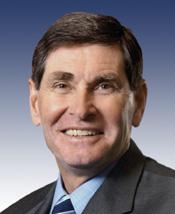
Mr. Chairman, Benjamin Franklin once said: The way to be safe is never to be secure. We must never be content in the ways things have always been, but consistently look for new ways to achieve…
Mr. Chairman, Benjamin Franklin once said: The way to be safe is never to be secure. We must never be content in the ways things have always been, but consistently look for new ways to achieve security in our homeland. For this, I am pleased to support H.R. 10, the 9/11 Recommendations Implementation Act. I believe this legislation will provide for the much needed reorganization and new tools to help our Nation prepare and defend against further terrorist attacks.
After the horrific attacks of September 11th, it was evident that our Government needed to be transformed to meet the new challenges of this dangerous world. Soon after 9/11, and under the leadership of President Bush, various agencies with homeland security roles throughout the government were brought under the control and vision of a single Department, with the creation of the Department of Homeland Security. The hope was to break down the existing barriers and create more cooperation and communication in this critical field.
Congress is continuing this effort to improve our homeland security with the passage of H.R. 10. This legislation clearly recognizes that the United States can no longer afford to think of defending the homeland as being the responsibility of just one Department--be it Homeland Security, Justice or Defense. Many aspects of our government and society, from the FBI, to DOD's Northern Command, the Intelligence Community, the Treasury Department, Immigration, local law enforcement, our corporate partners, and the academic community all have important roles to play. All of these players must work together, in concert, to achieve the real results worthy of this great nation.
The 9/11 Commission, which is the basis of this legislation, found that government institutions failed to adapt to the threat of terrorism for more than a decade, enabling the terrorists failed to exploit deep institutional failings within our government. These failures, in part, stemmed from a strict stove-piped structure.
Our enemy is asymmetrical and unconcerned about such things as the internal structural uneasiness of sharing information inside the Intelligence Community and between other organizations. However, our enemies will certainly do everything they can to benefit from this ingrained culture--to the detriment of our society.
The 9/11 Commission concluded that: ``the September 11th attacks fell into the void between the foreign and domestic threats.''
The Report continues: ``Information was not shared, sometimes inadvertently or because of legal misunderstandings. Analysis was not pooled. Effective operations were not launched. Often the handoffs of information were lost across the divide separating the foreign and domestic agencies of the government. . . . Action officers should have drawn on all available knowledge in the government. This management should have ensured that information was shared and duties were clearly assigned across agencies, and across the foreign-domestic divide.''
Although people have levied fault on the CIA and FBI, I believe we must not single out individual agencies. Instead, we should use our energies to focus on the culture and structure of our government. As the 9/11 Commission report continues:
The problem is nearly intractable because of the way the
government is currently structured. Lines of operational
authority run to the expanding executive departments, and
they are guarded for understandable reasons: the DCI commands
the CIA's personnel overseas; the secretary of defense will
not yield to others in conveying commands to military forces;
the Justice Department will not give up the responsibility of
deciding whether to seek arrest warrants. But the result is
that each agency or department needs its own intelligence
apparatus to support the performance of its duties. It is
hard to break down stovepipes when there are so many stoves
that are legally and political entitled to have cast-iron
pipes of their own.
The problem is clear: stove-piping of resources and responsibilities, along with not sharing the information or analysis collected is hindering our Nation's ability to remain secure. Instead of stove- piping, we must increase the flow of information inside and between government agencies while still protecting vital sources. If we are going to achieve a greater level of security in this nation, we need to break down the barriers to homeland security. We must not be bogged down in a need-to-know mentality, but most rise to a need-to-share focus.
The 9/11 Commission Recommendations bears out this solution. Repeatedly, the Commission calls for unity and the unifying of efforts across the government. It calls for unifying strategic intelligence and operational planning against Islamist terrorists across the foreign- domestic divide with a new National Counterterrorism Center. Unifying the intelligence community with a new National Intelligence Director. And, unifying the many participants in the counterterrorism efforts.
The old ways of thinking about and organizing our government have failed us. We have been confined by a vision of the past. Of local vs. federal, of domestic vs. foreign intelligence, of national security vs. law enforcement.
We instead need to focus on unity of purpose and on communication, collaboration and coordination that transcends our old structure. Only by working together, as a single unit, can we be secure. And I believe that H.R. 10 is the right step forward in doing just that.
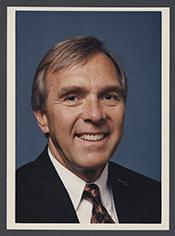
Mr. Chairman, it is clear that our current intelligence system has failed us in recent years. I do not doubt the capacities of individual analysts within our intelligence agencies and know them to be…
Mr. Chairman, it is clear that our current intelligence system has failed us in recent years.
I do not doubt the capacities of individual analysts within our intelligence agencies and know them to be talented and capable individuals. But the configuration of the present intelligence system has denied our leaders the information we need to adequately warn of and respond to terrorist threat.
Our current intelligence structure dates to the National Security Act of 1947. It is a structure directed to a threat that no longer exists, the Soviet Union. We won the Cold War and it is time to reconfigure our intelligence capabilities to fight the next major threat of our generation, the threat of international terrorism.
The bill before us, H.R. 10, responds substantively to the broad range of recommendations offered by the 9/11 Commission. It creates a strong National Intelligence Director with strengthened budget authorities and new flexibility to redirect funding to urgent needs. All management of tasking, collection, analysis and dissemination of intelligence will be centralized within the office of the NID.
At the same time, the legislation acknowledges the very real requirements of the largest user of national intelligence products, the Department of Defense. H.R. 10 maintains full support for DOD during a time of war--efforts to integrate our national intelligence effort should not come at the expense of the requirements of warfighters. Indeed the 9/11 Report recommended that DOD military intelligence programs should remain part of that Department's responsibility.
We should reject the criticisms we have heard today about the scope of the House bill. The House shouldn't be a rubber stamp for legislation considered by the other body, any more than the other body should be the rubber stamp for the broad recommendations of the 9/11 Commission. Passage of this bill today will allow both chambers to move to conference to reconcile the differences between the two pieces of legislation.
Similarly, I disagree with the notion argued here today that because opponents consider certain provisions to somehow be ``extraneous,'' we should refuse to consider them. The preface to the 9/11 Report succinctly describes the mandate of the Commission: ``How did this happen, and how can we avoid such a tragedy again?'' Such also is our mandate--and we should not consider our work done with a retooling of our intelligence apparatus.
The scope of Public Law 107-306, establishing the 9/11 Commission, was far broader than an examination of the intelligence agencies. It directed an investigation of the ``facts and circumstances relating to the terrorists attacks of September 11, 2001, including those relating to intelligence agencies, law enforcement agencies, diplomacy, immigration issues and border control, the flow of assets to terrorist organizations, commercial aviation, the role of congressional oversight and resource allocation, and other areas determined relevant by the Commission.''
Improvements to our border security, restrictions on terrorist travel and enhanced authorities to deport illegal aliens all respond to the concerns raised in the 9/11 Report and all provide substantive improvements to the security of our nation.
Intelligence reform only matters if we are able to do something with the information our agencies gather. A strong and effective National Intelligence Director is only relevant if we give other agencies of the government the tools they need to act on that improved intelligence.
It would be irresponsible for Congress to take a pass on acting on the clear security deficiencies described in the 9/11 Report and H.R. 10 answers that challenge.
In my decade of service in this institution, I have taken seriously my responsibility to cautiously weigh the consequences of our action on the Constitutional rights of citizens and to carefully evaluate the expansion of federal powers. I reflect on the perspective of that service as I consider H.R. 10.
H.R. 10 takes a significant step forward in recognizing this inherent tension in a democracy by requiring the National Intelligence Director to appoint a Civil Liberties Protection Officer to be responsible for ensuring that privacy and civil liberties are protected. All proposed and final rules would also be subject to an assessment of privacy rights. I believe this legislation achieves the necessary balance between protecting our society and protecting individuals.
There will still be more to do--both bodies have a responsibility to reorganize internally to consolidate congressional oversight. I am concerned that the other body has adopted a process that is a hollow semblance of the recommendations of the 9/11 Commission. Far from consolidating oversight, amendments adopted by the other body will have the effect of pretending at consolidation while continuing business as usual. This should not stand and the House must take the lead in demonstrating the resolve to actually act upon the
call of the Commission to streamline oversight by the legislative branch.
I encourage my colleagues to support this measure so that we may take the next step of moving this legislation to conference with the other body and producing a final product that will comprehensively address the range of recommendations presented by the 9/11 Commission.
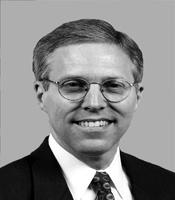
Mr. Chairman, I claim the time in opposition to the amendment. Mr. Chairman, the gentleman from Nevada (Mr. Porter) offers an amendment that points to the very important relationships between our…
Mr. Chairman, I claim the time in opposition to the amendment.
Mr. Chairman, the gentleman from Nevada (Mr. Porter) offers an amendment that points to the very important relationships between our homeland security and what goes on in our private sector.
The 9/11 Commission recognized the critical role that the private sector plays in protecting our citizens from harm. The commission did not make the recommendations contained in the gentleman's amendment, but rather, one of the core recommendations of the 9/11 Commission did deal with the subject matter of the gentleman's amendment; and that is the recommendation to enhance preparedness for all disasters and emergencies, including acts of terrorism in the private sector.
They specifically recommended that the Department of Homeland Security promote the adoption of private sector preparedness standards that have been developed by the American National Standards Institute.
Once again, like many of the other recommendations of the 9/11 Commission, H.R. 10 includes no provisions to deal with the need for standards for private sector preparedness. In the aftermath of the 9/11 attacks, the commission found that many of the tenants of the World Trade Center were unprepared for the catastrophic events that occurred. Many businesses did not regularly practice evacuation drills. Few had alternative communication systems, and many firms lacked the ability to identify who was working on that particular day.
The Democratic substitute offered by the gentleman from New Jersey (Mr. Menendez), like the Private Sector Preparedness Act which I introduced back in July, establishes a program to ensure the safety and security of citizens while they are at work. It would provide businesses with the guidance they need to develop evacuation plans to account for all of their employees and to get back in business as soon as possible following a disaster.
We understand that 85 percent of all critical infrastructure in our country is owned and operated by the private sector. It is, therefore, clear that a national standard is necessary to guarantee the safety of the American people. Yet, despite this very apparent and critical need, H.R. 10 fails to adopt in this 9/11 Commission's recommendations and, therefore, leaves a glaring gap in our Nation's security.
I commend the gentleman for his amendment. I think that it is one that the department could, under existing law in the Homeland Security Act, carry out, but the effect of the amendment will be to urge the department to recognize the critical role of the private sector in our preparedness for terrorist instances. And it will also, I think, point out to the department that we must make an even greater effort to ensure that, as we impose security, we do not jeopardize the movement of commerce, the movement of trade; we do not jeopardize tourism, which is so vitally important to this country, particularly to the district and the State represented by the gentleman who offered the amendment.
Mr. Chairman, I reserve the balance of my time.
Mr. Chairman, I yield myself such time as I may consume.
The distinguished Speaker said he is baffled by some of the complaints that were heard by those of us who supported the Menendez substitute. I think our complaints are easy to understand.
We feel very strongly that the 9/11 Commission presented us with a package of 41 recommendations that the Commission and their cochairs all said are important. H.R. 10 only fully implements 11 of those recommendations. The Republican bill only implements 15 of them partially, and the Republican bill ignores or only mentions in passing the other 15 recommendations.
The substitute that we offered on this floor implements all of the recommendations. It does it in an effective way, and it makes the kind of commitment that Democrats have argued for the last 2 years must be made to make America safe.
We are investing today $20 billion more on homeland security than we did prior to 9/11, but in the last fiscal year, when we were investing that additional $20 billion, we were investing four times that in tax cuts for American families who make over $1 million a year. That is the wrong choice, it is the wrong priority, and our bill moves faster, it moves stronger in protecting the homeland than H.R. 10 offered by the Republican leadership.
For that reason, we believe that the Senate bill, which passed yesterday, which reflects the contents of the Menendez substitute that was on this floor yesterday, is the superior alternative to helping America stay safe; and we hope that when this bill goes to conference that the provisions of the Senate bill that are absent in H.R. 10 will be added to the final product and come back to this floor with a conference committee report that clearly reflects the wisdom and the intent of the bipartisan 9/11 Commission and the work that they did so well.
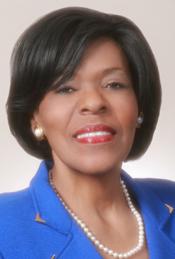
Mr. Chairman, I rise in opposition to H.R. 10, the 9/ 11 Recommendations Implementation Act. I do so not because I disagree on the urgent need to reform our intelligence infrastructure. On the…
Mr. Chairman, I rise in opposition to H.R. 10, the 9/ 11 Recommendations Implementation Act. I do so not because I disagree on the urgent need to reform our intelligence infrastructure. On the contrary, the 9/11 Commission clearly, articulately and convincingly makes a compelling case that the U.S. intelligence network is in great need of overhauling.
My reasons for voting against the measure deal less with the concept of intelligence reform and more with the substance of the bill we are considering today. The measure before us today is improperly titled. The ``9/11 Recommendations Implementation Act'' should really be re- titled as the ``Immigration Reform Act of 2004.''
I am particularly sensitive to issues of homeland security and intelligence capabilities. My district encompasses the majority of the City of Detroit, which borders our northern neighbor--Canada. Detroit is the Motor City capital of the world, and as such, we are economically dependent on the cross-border auto trade transported through the Port of Detroit. Securing the critical infrastructure such as the
Ambassador Bridge, the Detroit-Windsor Tunnel, and the Port of Detroit is vital to the economic wellbeing of our city, region, state, and nation. Protecting the rights of way of these thoroughfares is critical to the health of the American automobile industry, the largest industry in the manufacturing sector. Protecting these assets against terrorist attack is so important that the City of Detroit is one of the few major cities in the United States that has created an Office of Homeland Security. Matters of homeland security and enhanced intelligence capabilities are urgent concerns to my district and they should not be trivialized. The Republican Leadership in this chamber had the opportunity to stitch together a bill that would strengthen the nation's intelligence apparatus, but frankly it has ``pooched'' the job. The Leadership has confused the 9/11 Commission's urging to enhance America's security apparatus with its predilection to crackdown on the nation's immigrants.
The only area where the bill makes its mark on strengthening the intelligence community is the establishment of a National Intelligence Director (NID). But all progress at intelligence reform ends there-- with the creation of NID. We create a position but gives the person occupying it no powers and no authority to implement any significant changes in the intelligence bureaucracy. For example, the NID has no budget authority, no hiring authority, and on reprogramming authority. By establishing a position of power without authority to hire or fire or to control the budget, we are in fact creating a paper tiger, a position with a lot of roar and no bite. The members of the 9/11 Commission have expressed their support for a strong NID, but the bill crafted by the Republican leadership fails to meet their expectations.
This bill does very little in the way of strengthening the intelligence community. It goes a long way in turning the U.S. immigration system upside down. I support immigration reform, but we should not be enacting such sweeping changes under a bill whose purpose is to reform and reorganize the intelligence community. The Republican Leadership is confused. It took its eye off the goal of intelligence reform and moved forward with a bill that cracks down on immigrants.
Let me highlight some of the more egregious provisions of this bill. The ``Lone Wolf'' provision would remove the requirement that non- citizen targets of secret intelligence surveillance be connected to a foreign power. The bill would permit the deportation of individuals to countries lacking a functioning government--an issue that is currently before the U.S. Supreme Court. The bill makes asylum claims more restrictive. The bill restricts the use of internationally accepted consular identification cards. Immigrants are being used as a wedge issue in this presidential election year. The bill is designed to mobilize the base vote of neo-isolationists and not the legitimate security concerns confronting our country and our countrymen and women.
By using immigration as a wedge issue, we are distracted from taking a thoughtful approach to improving our intelligence capability. We are undermining our efforts to combat terrorism. Many on my side of the aisle will be voting to support this bill in order to move the process forward in the hope that a final product will be closer to the bill that was approved in the other chamber. My vote today is based on the substance and the merit of the provisions contained in this bill before us today. If a conference agreement can produce a bill that truly strengthens our intelligence community, it will have my support. Today, I must cast my vote against the passage of H.R. 10.
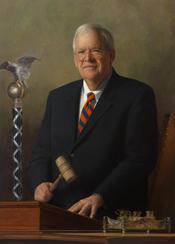
Mr. Chairman, I rise in support of the 9/11 Recommendations Implementation Act. I urge all of my colleagues on both sides of the aisle to support it. I want to thank those who brought good ideas to…
Mr. Chairman, I rise in support of the 9/11 Recommendations Implementation Act. I urge all of my colleagues on both sides of the aisle to support it. I want to thank those who brought good ideas to the process to make this country safer.
I want to thank the 9/11 Commission for their recommendations and the stellar work of both the chairman and the vice chairman of that committee over a long period of time to take the
interest of this Nation at heart, to try to craft recommendations that make this country safer against terrorists.
I want to thank the chairmen and ranking members of the committees of jurisdiction in this House of Representatives. They have done an incredible job. They have come together. They have worked hard and, by and large, on a bipartisan basis to find good answers to tough problems. They have worked hard to provide us with their best ideas on how to implement these recommendations.
Some of my colleagues on the other side of the aisle complained about the process, and I must admit that I am baffled by those complaints. We had countless hearings during the August recess in every committee of jurisdiction. We had 20-some hearings on this issue in the last couple of months. We have had an open amendment process at the committee level, and we carefully considered the ideas of the commission and of the committees' chairmen, and we came up with a response that will make this country safer.
Some have complained that we are going too slow. Some have complained that we are going too fast. Some said our bill was too strong. Others said this bill is too weak. Some have complained because it is simply their nature to complain. Despite the complaints, I am proud of this work product.
This legislation will make this country safer. It will make our families safer. It will ensure the safety of our children and our parents. It is comprehensive. It reforms the government to make it more effective in battling terrorists that want to do harm to this country. It creates a National Intelligence Director. The new position will have full budget authority. It creates the National Counterterrorism Center and a Joint Intelligence Community Council. It improves terrorism prevention and prosecution so that we can get the terrorists and those who help them before they get us.
It improves border security. It makes it harder for terrorists to travel to America.
One provision that has drawn quite a bit of attention deals with the convention against torture. We do not condone torture in this country or any other country, but we do not want known terrorists and criminals living among us either.
The courts have said criminal aliens and terrorists cannot be held indefinitely in the United States, but the convention against torture says we cannot deport some people back to their own country if they ask for political asylum because of torture.
In 500 cases, the Justice Department has been forced to release alien terrorists and other international criminals whom they cannot detain and they cannot deport. I do not think that makes any sense. If you find a rattlesnake in your backyard, you should not be forced to release it in your front yard.
We have reached a common-sense solution to this problem by giving the Justice Department the power to continue to hold those terrorists and those alien criminals.
These are the kinds of solutions that my colleagues will find in our bill. They will not find it in the minority's alternative.
Why is this type of provision so controversial? To me, it just makes sense.
Yes, we disagree with the other body when it comes to making our intelligence budget public. We believe that telling our enemies how much we spend on certain intelligence programs diminishes our national security. Why should we give those who want to do us harm any information that might help them?
Yesterday, I met with three women who lost loved ones in the 9/11 attacks. I can only imagine the pain that they feel every day, and I know the passion that they bring to this debate today. We share their sense of loss. We share their commitment to making this country, this Nation, safer.
I have a simple message for them. We will get this job done. The process will work. We will pass a bill today that implements the 9/11 Commission recommendations. We will appoint conferees that will hammer out a good conference report that will be signed by the President of the United States.
Yes, at the end of the day, we will enact a law that will make our country safer, this America, the United States of America, and the people that live in it proud.
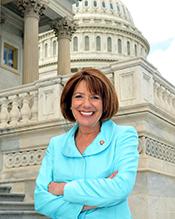
Mr. Chairman, I must regretfully rise in opposition to the Ose amendment, which has been sprung on us this afternoon without any notice or prior opportunity to discuss the issues. As a member of the…
Mr. Chairman, I must regretfully rise in opposition to the Ose amendment, which has been sprung on us this afternoon without any notice or prior opportunity to discuss the issues.
As a member of the Armed Services Committee, I have spent hundreds of hours devoted to the issues surrounding Homeland Security. Situated as my district is in San Diego, I am concerned to secure not only our border but also our busy port and ship-building facilities located on San Diego Bay, which is crossed by a dramatic bridge, our international airport, and our numerous military installations which are the home bases for nuclear carriers and nuclear submarine. We have much to be proud of--and much to protect.
It is challenging to us all to prioritize actions that we can take with our Homeland Security dollars to provide increased security against past and likely focal points for terrorists. It is important that we assure that scarce resources are devoted to the kinds of actions that will in fact keep our borders safe from known entry points for terrorists.
The measure before us to expedite the long-proposed triple border fence overturns years of effort on the part of the local communities along the border, civic groups, and elected representatives to come to consensus with the Border Patrol about appropriate means to enhance and strengthen the existing fence.
Fortunately, during the past ten years since the inauguration of Operation Gatekeeper, the numbers of illegal border crossers in the area under consideration has dropped 80 percent.
Nonetheless, I agree that the present quality of the single fence needs updating at least to the highest quality of fence construction proposed and already implemented along adjacent border areas. Moreover, I have been assured by local high tech companies which provide sophisticated technology for other homeland security needs that much more could be done with electronic surveillance and detection.
Similar views have been officially expressed by the California Coastal Commission, which has jurisdiction in this area, and by the California Coastal Conservancy which has a $6 million road and access improvement project in this area.
In the past, the California Border Patrol has been unwilling to pursue any alternative proposals other than the one which has been so thoroughly rejected by state and local interest groups. Their view has been ``my way, and it's a highway.''
However, since its February vote to object to the proposal, the California Coastal Commission has been working with the Department of Homeland Security's office of Homeland Security, Customs and Border Protection in charge of construction to resolve this issue. I understand the parties met in April to discuss their views and that both parties expected and have planned to continue this effort at a meeting on October 26, 2004, to continue the ongoing negotiations. Perhaps the author was unaware of this plan. I believe we must support this effort.
It is no surprise that the Ose amendment waives all powers of the Clean Air Act; the Clean Water Act; the Protection of Wetlands; the Floodplain Management; the Coastal Zone Management Act; the Resource Conservation and Recovery Act; the Comprehensive Environmental Response, Compensation, Liability Act as amended by Emergency Planning and Community Right-To-Know Act; the Farmland Protection Policy Act; the Endangered Species Act; the Migratory Bird Treaty Act; the National Historic Preservation Act; the Native American Graves Protection and Repatriation Act; and the Archeological Resources Protection Act.
That is because this proposal is so overwhelmingly threatening to the sensitive lands that would be destroyed as to offend all of these acts.
Above all, this wholesale destruction is unnecessary. I would welcome continued work with the affected parties, most particularly with the Immigration and Naturalization Service, to find a solution to their staffing needs that does not destroy millions of dollars of prior investment by California in these sensitive areas. We must use our scarce Homeland Security dollars in projects that are focused on major areas where there are large numbers of border crossers who might become a threat from terrorists.
San Diego deserves to be protected, but we have many areas in need of new programs and technology that will address likely targets.
I urge your defeat of this proposal at this time and your willingness to work together toward a reasoned proposal.
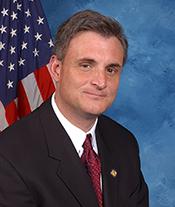
Mr. Chairman, I yield myself such time as I may consume. I thank the gentleman from Pennsylvania (Mr. Weldon) for offering this amendment. His wealth of experience on the front lines in the first…
Mr. Chairman, I yield myself such time as I may consume.
I thank the gentleman from Pennsylvania (Mr. Weldon) for offering this amendment. His wealth of experience on the front lines in the first responder community shows, once again; and I am honored to join with him in this amendment.
I thank the gentleman for his years of dedication to first responders in this country, long before Members talked about them on this floor.
The gentleman from Pennsylvania and I share a geographic area. Our districts are separated only by a river. If, God forbid, there were a terrorist attack, a mass crime, a natural disaster, his constituents and mine would be responsible for responding to it. We are proud of the fact that locally in our area there is cooperation. But the fact of the matter is cooperation now happens by accident, not by design; and our amendment is to change that. It requires that the director of FEMA do three things: first, that the director of FEMA catalog examples of cooperative agreements and compacts around the country.
Second, it requires that the FEMA director issue guidance on best practices, what is working. We are going to hear from the gentlewoman from the District of Columbia (Ms. Norton) talk about the capital area plan that is working very, very well.
Thirdly, it requires an up-to-date accessible inventory of Federal resources that would be available. In the golden hour that takes place after such an attack or disaster, we do not have weeks or months to study a problem. The chiefs on the ground have to decide right there and then what to do. By making this resource available to them, I think we will save lives and minimize disaster. I thank the gentleman for offering this amendment, and I hope Members on both sides of the aisle will vote a resounding ``yes.''
Mr. Chairman, I reserve the balance of my time.
Mr. Chairman, I yield such time as she may consume to the gentlewoman from the District of Columbia (Ms. Norton), whose capital area response plan has set the model for how to go about this regional planning and serves as an example to others.
Mr. Chairman, I yield myself the balance of my time.
Mr. Chairman, I thank the gentleman from Pennsylvania (Mr. Weldon) for his efforts. I also thank Mr. Dozor from the gentleman's staff, and Mr. Knotts from mine for their great effort.
Mr. Chairman, I yield back the balance of my time.
Mr. Chairman, I rise today in strong support of efforts that have been taken to address the concerns of the private security industry in the 9/11 Recommendations Implementation Act. Under the wise guidance of the Judiciary Committee leadership, provisions have been included in this bill that will have a positive effect on the overall dependability of private security services. While I would contend that these provisions do not go far enough, they are a clear improvement, and I urge my colleagues to support their inclusion in the law.
The relevant provisions, which were included in H.R. 10 with industry-wide support, allow private security guard companies to have access to federal background checks unless prohibited by their home state, and also provide for the creation of a national clearinghouse to be used in processing these requests. Federal background checks will ensure a safer, more secure private security industry, and will allow private security companies to protect themselves against the increased liability that could come with hiring an individual with a relevant criminal history. In addition, the realization of the national clearinghouse is absolutely essential, given the excessive delays that are often incurred within the varied state systems that are currently used in processing these background check requests.
While allowing private security companies to receive criminal background information on prospective employees through a streamlined process is certainly a positive development, I contend that more should be done to secure this vital industry. Background checks should be required for all private security guards, to ensure that dangerous criminals and terrorists are never employed in positions of such power and responsibility.
Again, I thank the Chairman and Ranking Member of the Judiciary Committee for their efforts in addressing this important issue, and I hope to continue working with them in the future to ensure that all of our nation's assets are adequately secured.
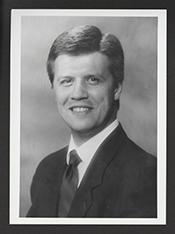
Mr. Chairman, I thank the chairman of the full committee for yielding me this time. I join the gentleman from Wisconsin (Chairman Sensenbrenner) in opposing this amendment, which would take a vital…
Mr. Chairman, I thank the chairman of the full committee for yielding me this time.
I join the gentleman from Wisconsin (Chairman Sensenbrenner) in opposing this amendment, which would take a vital tool out of the hands of our Border Patrol in keeping foreign terrorists out of the United States.
As it is distressingly easy for aliens to illegally cross our borders, it would also be relatively easy for terrorists to enter. The Border Patrol recently released data that in just the period from last October through this June, over 44,000 non-Mexican aliens were caught trying to cross the northern or southern borders, including eight from Afghanistan, six from Algeria, 13 from Egypt, 20 from Indonesia, 10 from Iran, 55 from Israel, 122 from Pakistan, six from Saudi Arabia, six from Syria, 22 from Turkey, and two from Yemen. A South African woman alleged to be a terrorist on the terrorist watch list recently indicated that she had crossed the border illegally from Mexico.
What happens to these aliens when they are intercepted? They go through a ``revolving door'' when we release them because of a lack of detention space. Then we hold out some desperate hope that they will appear for their immigration court hearings months afterward. However, the Department of Justice's Office of the Inspector General found that the INS was not able to remove 87 percent of aliens with final orders of removal who were not detained. And, worse yet, 94 percent of nondetained aliens from state sponsors of terrorism who had final removal orders could not be located for their deportation. In an age of terrorism, this is just unacceptable.
There is no good reason not to subject illegal aliens who have crossed the border illegally to immediate deportation. These aliens, if they have been in the U.S. less than 10 years, have no right to seek cancellation of removal unless they are making a claim of asylum. Once again, unless they are making a claim of asylum and can show a credible fear of persecution, there is no reason not to subject them to expedited removal.
And, in fact, the amendment that just recently passed in the House, previously, removes the 1-year limitation in the base bill for convention against torture and asylum relief. So those who seek relief from convention against torture and for asylum will not be harmed by the bill.
So the amendment must be rejected so that we can allow for the expedited removal of individuals who would do us harm. I urge my colleagues to vote against the amendment.
Mr. Chairman, I join the gentleman from Wisconsin (Chairman Sensenbrenner) in opposing this amendment. We must remember that terrorists continually try to abuse our asylum system. For example, in 1993, Mir Aimal Kansi murdered two CIA employees at CIA headquarters and Ramzi Yousef masterminded the first World Trade Center attack after they were free after applying for asylum. Just weeks ago, Shahawar Matin Siraj was arrested in New York City for plotting to bomb a subway station. Siraj was freed after applying for asylum.
As the gentleman from Wisconsin (Chairman Sensenbrenner) stated, the Ninth Circuit has adopted a body of circuit law that is essentially preventing immigration judges from finding that asylum applicants are lying by severely limiting the factors, such as their inconsistencies and demeanor, that the immigration judge can consider in finding aliens untruthful.
Given that government attorneys are not allowed to ask the foreign government about the facts regarding the asylum claimants, about the only evidence available to the government on which to deny an asylum application is the perceived truthfulness of the applicant's testimony.
If a criminal jury can sentence a United States citizen who is a criminal defendant to life imprisonment or execution based on their not believing the American citizen's defendant's story, certainly an immigration judge can deny an alien asylum on the same basis.
The bill would overturn this ridiculous precedent used by the Ninth Circuit. The bill provides a list of factors that an immigration judge can consider in determining truthfulness.
Oppose the Smith amendment.
Show 11 more

Mr. Chairman, I rise today in opposition to H.R. 10, the so-called 9/11 Recommendations Implementation Act. At a time when our national security is at risk and our brave troops are fighting overseas,…
Mr. Chairman, I rise today in opposition to H.R. 10, the so-called 9/11 Recommendations Implementation Act. At a time when our national security is at risk and our brave troops are fighting overseas, it is shameful that the Republican leadership has chosen to present a partisan bill that does not effectively implement the recommendations of the bipartisan 9/11 Commission. In fact, of the Commission's 41 recommendations, H.R. 10 only fully implemented eleven. Fifteen are not implemented at all, and another 15 are incomplete.
On the other hand, many of the provisions in H.R. 10 go far beyond the recommendations of the September 11th Commission. This is obviously an attempt by the Republican leadership to insert previously rejected proposals into this important bill at the final hour. In fact, the 9/11 Commission's Republican Chairman, Thomas Kean, said that the contentious provisions were being promoted by ``people who don't want the intelligence legislation to pass.'' Former Representative Lee Hamilton, the Commission's vice chairman, said, ``Consideration of controversial provisions at this late hour can harm our shared purpose.'' The Family Steering Committee of the victims of September 11th is concerned that if H.R. 10 is passed by the House, ``the hard work of the Commission and the dedication of the 9/11 families will be undermined, as will the safety of our nation.''
Many of the controversial and mean-spirited measures included in this bill are extremely harmful to immigrants, asylum-seekers, and refugees. These measures have been included although they do not make our nation any safer. H.R. 10 allows immigration officials to deport foreign nationals for whatever reason they see fit, devoid of judicial review, to countries that openly use torture when interrogating prisoners.
Unbelievably, H.R. 10 places an extreme burden of proof on asylum- seekers, many of whom have been victims of brutality in their native lands, requiring them to provide evidence that he or she would be tortured if returned to his or her point of origin. This violates the current standards established under the U.N. Convention Against Torture already in place. And what kind of message does it send to our troops engaged in combat? If the United States is seen by the world as being willing to outsource torture, how can we be sure that our military men and women captured overseas will be treated decently?
In addition, H.R. 10 would further undermine the right to basic due process protections for non-citizens by prohibiting habeas corpus review of many immigration decisions and by prohibiting federal courts from granting stays of deportation while cases are pending.
This bill even includes language blocking use of matricula consular cards, for identification purposes, even though the House voted to allow their use. This provision has nothing to do with the 9/11 Commission and protecting national security. It is simply an irrelevant action.
Furthermore, this legislation does not properly refocus our intelligence efforts on Afghanistan, the nation which harbored the terrorists who attacked us on September 11, as the 9/11 Commission recommended. H.R. 10 also does not include Commission recommendations to provide strong budgetary authority for the newly-created National Intelligence Director, protect civil liberties through the creation of an effective and independent civil liberties board, or address the need for Congressional reform. That is simply unacceptable.
I supported the Menendez amendment which institutes the recommendations of the 9/11 Commission, is a closer reflection of the bipartisan legislation passed in the Senate, and does not include the dangerous and extraneous provisions in H.R. 10. Unfortunately, that amendment was not successful; but fortunately those conferees will have one more opportunity to get it right. We should now support the Senate bill and move to protect our nation's safety while preserving the beliefs and traditions of liberty and freedom we cherish. H.R. 10 does not make the United States as safe as it can be. I urge my colleagues to vote no on H.R. 10.
Mr. Chairman, I offer an amendment. Mr. Chairman, I ask unanimous consent that my amendment be modified in the form at the desk. Mr. Chairman, will the gentleman yield? Perhaps I can elucidate. The…
Mr. Chairman, I offer an amendment.
Mr. Chairman, I ask unanimous consent that my amendment be modified in the form at the desk.
Mr. Chairman, will the gentleman yield?
Perhaps I can elucidate. The point of adding that particular provision is that, given the crush of time, I am a little bit concerned that we did not cover everything. There is no purpose here to include Davis-Bacon or employment or employee things. This is strictly an effort to remove impediments to the construction of this security fence.
If the gentleman will yield further, as they relate to the fence, that is my intention.
Mr. Chairman, I yield myself such time as I may consume.
Mr. Chairman, the purpose of this amendment is to secure our southern border immediately south of San Diego by completing the security fence that this Congress authorized and that President Clinton signed back in September of 1996. The rationale for this is very straightforward. Construction of this fence reduces illegal immigration. The Border Patrol has told us that the construction of the fence to date has reduced illegal immigration in that area by 80 percent.
The gentleman from California (Mr. Berman) just 5 minutes ago talked about an integrated border security system that accomplishes just that, and this fence is part of that. Construction of the fence serves to protect our country from potential terrorist activity.
I have a letter from the Secretary of the Navy here to our good friend, the gentleman from California (Mr. Hunter), that I will enter into the Record that highlights exactly that point relative to the naval base 4 miles north of the site in question.
Construction of this fence is part of an integrated border security system identified in the 9/11 Commission report as a priority. I am not making this stuff up. This is part of an integrated border security system that this country has previously authorized that has been bogged down for 8 years in getting completed.
I regret, I truly do regret, the impact this may have on environmental or cultural resources, but we need to make a choice. The votes we post will be clear: Are we for protecting this country by completing this fence, or are we not?
Mr. Chairman, I reserve the balance of my time.
Mr. Chairman, I yield myself such time as I may consume.
Mr. Chairman, before I yield to my good friend from San Diego, I want to make a point that the exemptions offered in section C of my amendment shall also incorporate section 102(c) of title I, subtitle A of the 1997 Omnibus Appropriations Act, that is Public Law 104-208, in its entirety.
I will say there is a meeting that is going to take place in 2 weeks. It will be the sixteenth meeting this year alone trying to move this project forward. I think the meetings now take place so they can schedule more meetings. We need to get this finished.
Mr. Chairman, I yield 90 seconds to my friend, the gentleman from San Diego, California (Mr. Hunter).
Mr. Chairman, I yield myself 10 seconds.
The original authorization to build this fence gave the Attorney General the opportunity to waive all of these things the previous speaker voted for. You cannot have it both ways. You are either for protecting this country or you are not.
Mr. Chairman, I yield myself such time as I may consume.
Two speakers go, we had someone on that side talking about negotiations, that there are negotiations pending. The fact of the matter is negotiations have been going on for 6 years, and we are no closer to a solution. We had a speaker just previous from Oregon stand up and make an argument for doing nothing. I am sorry, I do not understand that.
Mr. Chairman, I ask unanimous consent to extend the debate time on each side for 1 minute.
Mr. Chairman, I yield 1 minute to the gentleman from San Diego, California (Mr. Cunningham).
Mr. Chairman, I yield the remainder of my time to the gentleman from California (Mr. Dreier), the chairman of the Committee on Rules and the champion in California on immigration issues and protecting our country.
(Mr. DREIER asked and was given permission to revise and extend his remarks.)
Mr. Chairman, I offer an amendment. Mr. Chairman, I yield myself such time as I may consume. Mr. Chairman, I offer an amendment to H.R. 10 that will recognize the importance of the private sector and…
Mr. Chairman, I offer an amendment.
Mr. Chairman, I yield myself such time as I may consume.
Mr. Chairman, I offer an amendment to H.R. 10 that will recognize the importance of the private sector and the tourism industry in particular in our Nation's homeland security.
I, like many Members here today in this great body, have read the 9/ 11 report and am anxious to act on its findings.
I would like to quote from that report: ``The mandate of the Homeland Security Department does not end with the government. The Department is also responsible for working with the private sector to ensure preparedness.''
It also says, the ``private sector preparedness is not a luxury. It is a cost of doing business in the post 9/11 world.''
Mr. Chairman, we currently have a Special Assistant to the Secretary for the Private Sector, before the report was published, and unfortunately, the report says we still are not helping the private sector enough.
As an example, the Las Vegas community in the great State of Nevada, we had applied for the Urban Area Security Initiatives Grants and determined that, initially, we did not qualify because we are a small State of approximately 2 million people. With further research, they realized that we have 38 million tourists that visit the great State of Nevada annually. That is an example where there are some challenges with the current law.
We need to promote this position to give it the weight, to make sure private industry is helped and encouraged in its effort to enhance homeland security while staying in business, protecting their employees and their customers.
Again, as I read the 9/11 report, it mentioned how easily the terrorists mingled with the 500 million people who travel across our borders every year and with the hundreds of millions more who travel internally in this country. As I said, Nevada has close to 38 million visitors a year.
The report has some excellent ideas on how to improve transportation and border security, and I look forward to passing those suggestions. But the travel and tourism industry is the number one, number two and number three industry in every State of the union. It is the common element of the private sector in every community. Domestic travellers spend close to $500 billion annually in this country. Foreign tourism contributes $80 billion to our economy. Tourism generates close to $95 billion in taxes, and tourism in our country supports 7.2 million jobs, generating $158 billion in payroll.
As a matter of fact, Las Vegas is the bellwether for an ever-changing and improving economy, creating close to 40,000 new jobs alone in the last year.
Mr. Chairman, my amendment ensures that the DHS has a senior official that recognizes the importance of this industry and all industry and provides liaison with other Federal agencies active on this very important issues.
Our small businesses, their employees, their customers deserve to have their needs count when homeland security decisions are made.
It is important to note that this amendment does not cost the Federal Government in additional dollars or disrupt the operation of any agencies. Mr. Chairman, I urge the House to pass my amendment.
Mr. Chairman, I reserve the balance of my time.
Mr. Chairman, I yield myself such time as I may consume.
Mr. Chairman, I appreciate the comments from my colleague. I will conclude by stating the importance of this is for the safety first of those visiting and traveling to our communities, providing the expertise from those individuals that deal with, on a daily basis, the handling of millions and millions of visitors to our great State and to our country and to the businesses that do the same.
Mr. Chairman, I yield the balance of my time to the gentleman from Illinois (Mr. Hastert).

Mr. Speaker, I offer a motion to recommit. I am, Mr. Speaker, in its current form. Mr. Speaker, this is a very simple motion to recommit. It replaces the House language with the language that passed…
Mr. Speaker, I offer a motion to recommit.
I am, Mr. Speaker, in its current form.
Mr. Speaker, this is a very simple motion to recommit. It replaces the House language with the language that passed the Senate on an overwhelming vote of 96 to 2.
Parliamentary Inquiry
Yes, there is.
Yes. It is at the desk.
Mr. Speaker, this motion to recommit replaces the House language with the language that passed the Senate in an overwhelming vote of 96 to 2.
As we have debated the merits of H.R. 10, it has become clear that the bill is fundamentally flawed, and it will certainly take a conference to work out major differences. We do not need to take that path.
After the attacks of September 11, Congress created a bipartisan commission to examine the causes of the attack and make recommendations for reform. This commission put aside partisan differences to make 41 unanimous recommendations for making our country safer. The other body acted, largely in a bipartisan manner, and the bipartisan 9/11 Commission Caucus in the House has been working with the 9/11 families and the commission since the recommendations were released.
Our job should be to enact these recommendations. The only question we should ask is what can we do to make America safer, and the only answer is to enact the recommendations of the 9/11 Commission.
Unfortunately, H.R. 10 does not do this. There are 41 recommendations made by the 9/11 Commission. H.R. 10 fully implements only 11 of the 41 recommendations.
At the Presidential debates last week, President Bush and Senator Kerry were asked what was the greatest threat facing the Nation. They gave the same answer: nuclear proliferation.
Yet, incredibly, H.R. 10 does not implement the 9/11 Commission's recommendations for stopping nuclear proliferation; and the bill falls short in other key areas, such as border security, aviation security, and emergency response.
It is not hard to see what is going on. Some say that the real goal of the Republican leadership is to pass a bill that cannot be reconciled with the Senate bill before the election. The Republican leadership knows that after the elections, when the political pressure is off, the prospects for reform will vanish.
This is our moment. We need to act now. We have this window of opportunity and we must take it; and that is exactly what this motion to recommit does. It is the same language that passed the Senate 96 to 2. Every single Republican Senator voted for the bill and virtually every single Democratic Senator. The motion implements all of the recommendations of the 9/11 Commission, and it includes no poison pills.
If we pass this motion, there will be no difference between the House and the Senate language. This legislation can go right to the President's desk for signature. We can be in the Rose Garden tomorrow for a signing ceremony.
If there are other provisions that the House wants to enact, they will have every opportunity they want to put them on separate pieces of legislation before this House.
This past week, our offices have all been visited by the 9/11 families. The 9/11 families have been through a terrible ordeal, but they have turned their grief into action and their personal tragedy into public service. More than 3 years after 9/11, it is time to honor their commitment to ensuring that other American families never have to walk in their shoes.
This motion to recommit is our best hope for a solution right now. All we have to do is vote ``yes'' and vote to make our Nation safer. Vote to support the motion to recommit.
Mr. Speaker, I yield the remaining time to my distinguished colleague, the gentlewoman from California (Ms. Harman).
Mr. Speaker, I demand a recorded vote.
Mr. Chairman, I offer an amendment. Mr. Chairman, I yield myself 2 minutes. This amendment, which is the text of H.R. 3583, will establish a study to provide an objective analysis of whether the…
Mr. Chairman, I offer an amendment.
Mr. Chairman, I yield myself 2 minutes.
This amendment, which is the text of H.R. 3583, will establish a study to provide an objective analysis of whether the current capabilities of the infrastructure in the region around our Nation's capital are adequate in the event of a mass casualty disaster.
I have worked closely with the gentleman from Maryland (Mr. Cardin), the gentlewoman from Virginia (Mrs. Jo Ann Davis), and I have worked closely on this legislation; and we are very pleased by the wide bipartisan support of our colleagues in Maryland, Washington, and Virginia.
This amendment calls upon the Secretary of Homeland Security to create a commission to report to Congress its findings. In particular, I have looked forward to working with the gentlewoman from the District of Columbia (Ms. Norton) to address her concerns concerning the implementation of this amendment. I will commit to the gentlewoman to ensure that the GSA will have major input into the study, that it will not predispose an alteration of the definition of the national capital region, and that it will assess existing emergency response capabilities among the public and private sectors in the District of Columbia, Maryland and Virginia, what capabilities would be necessary in the event of a mass casualty incident and recommendations to correct any shortfalls.
This commission will specifically study the major Federal interstate highways out of America's capital. Normal rush hour traffic around our Nation's capital can last as long as 4 hours. In the event of a terrorist attack or other emergency in Washington, D.C., millions of people would be unable to evacuate and get home to their families.
In June 2003, the Metropolitan Washington Council of Governments Board urged Congress to analyze whether the current definition of the national capital region meets current needs. I am pleased that they support this amendment.
I would also like to recognize an important local health care provider, Adventist HealthCare. Adventist HealthCare has two hospitals, Washington Adventist Hospital in Takoma Park and Shady Grove Adventist in Rockville, along two of the designated evacuation routes developed by the D.C. Division of Transportation. Adventist HealthCare has independently committed to invest over $360 million to develop and begin implementing a comprehensive plan to ensure that they are prepared for the potential of a mass casualty event.
Cooperation and coordination between relevant Federal Government agencies, such as the Department of Homeland Security, Health and Human Services, and private sectors, are very important.
Mr. Chairman, I reserve the balance of my time.
Mr. Chairman, I yield 1 minute to the gentleman from Maryland (Mr. Cardin).
Mr. Chairman, I yield 1 minute to the gentlewoman from Virginia (Mrs. Jo Ann Davis).
Mr. Chairman, I yield 30 seconds to the gentleman from Michigan (Mr. Hoekstra), the chairman of the Permanent Select Committee on Intelligence.
Mr. Chairman, I yield myself such time as I may consume.
Mr. Chairman, on 9/11, our world changed. What used to be adequate for the greater metropolitan area of Washington, which is defined by the national capital region, generally, what was adequate then may not be adequate now.
This is a very simple amendment. It simply asks for a commission to study; we need to look at what the national capital area represents, and is the infrastructure here adequate to meet the kind of a terrorist attack that we might anticipate in the future? It is a very simple amendment, sir.
Mr. Chairman, I yield back the balance of my time.
Mr. Chairman, I offer an amendment. Mr. Chairman, I yield myself such time as I may consume. I thank my good friend from New Jersey (Mr. Andrews) for cosponsoring this amendment. The gentleman has…
Mr. Chairman, I offer an amendment.
Mr. Chairman, I yield myself such time as I may consume.
I thank my good friend from New Jersey (Mr. Andrews) for cosponsoring this amendment. The gentleman has been a leader on homeland security and emergency response issues long before 9/11. In fact, we first met when he was the solicitor for the Camden County Firefighters Association and I was county commissioner across the river. We have worked together on first responder issues since then.
This amendment is critically important, Mr. Chairman, because it requires the Federal Government to establish what should have been established years ago, and that is a process of identifying emergency preparedness compacts. Many of our regions like the Washington area region have already established multistate, multicounty jurisdictional plans to respond to natural and manmade disasters; but that is not the case around the country.
This bill requires us to inventory those plans that are in place and do work to encourage and establish models that other jurisdictions can use. But it goes beyond that, Mr. Chairman, because this bill also requires an inventory of assets and resources that local emergency responders can call upon if and when a disaster occurs.
I can recall, Mr. Chairman, during the tenure of my time in Congress, I have been on site at most disasters personally. I was walking the freeways of the San Francisco and Oakland area after the earthquake 10 years ago with the chiefs of the San Francisco and Oakland Fire Departments, and they were looking for people who were allegedly still trapped in vehicles sandwiched in-between those two levels of the freeway that had come down on top of each other. I said to the chiefs, why are you not using thermal imagers, and they said to me, what are thermal imagers? They had no idea that the Defense Department had developed that technology 10 years earlier. They could have used that to very quickly identify people who were still alive.
This bill requires a computerized inventory of those kinds of assets that are available that are not easily identified.
I think Chief Morris in Oklahoma City, another good friend of mine, who responded to the terrorist attack on the Federal Building in Oklahoma City, when the chief arrived he needed structural engineers. He had children at day care that were trapped. He needed specialized advice on how to deal with the potential of chemical and biological agents. He had none of that available to him.
Through this amendment, not only will we do the regional preplanning and require these compacts to be established, but we will also have an inventory of the available technologies that first responders can use that chief officers on the scenes of situations like Oklahoma City or the World Trade Center or any other incident in America can make available to them from the Federal or State governments.
It is a good amendment. I think it makes common sense, and I hope all of our colleagues will support it.
Mr. Chairman, I reserve the balance of my time.
Mr. Chairman, I yield myself the balance of my time.
In closing, I thank the gentleman from New Jersey (Mr. Andrews). This is a bipartisan amendment. I would just say to Members I am going to ask for a recorded vote here because I introduced legislation almost a dozen years ago to require our FEMA agency to establish a computerized inventory. Twelve years later, it is still not done. As a reinforcement of this part of the bill, I am going to ask for a show of support from my colleagues.
Mr. Chairman, I yield back the balance of my time.
Mr. Chairman, I demand a recorded vote.
Mr. Chairman, I think this is a good amendment. I support the amendment. This is an amendment we would like to have in the en bloc amendment. But having this study available for the national capital…
Mr. Chairman, I think this is a good amendment. I support the amendment. This is an amendment we would like to have in the en bloc amendment. But having this study available for the national capital region is helpful. I think it is the right thing to do, but it is also helpful in determining and developing a case study which could be used in other areas.
I support the amendment.
Mr. Speaker, I have a parliamentary inquiry.
Mr. Speaker, is there a motion, or is there a copy of the motion available at the desk?
Could we have a copy, please?
Mr. Speaker, I rise in opposition to the motion to recommit.
Mr. Speaker, I rise in opposition to the motion to recommit with instructions to strike the text of H.R. 10, as amended, and insert the text of the Maloney substitute.
We have heard much about the efforts in the other body which resulted in the passage of the National Intelligence Reform Act of 2004 by a vote of 96 to 2. I have congratulated the sponsors of the bill, Senator Collins, the Chair of the Committee on Government Affairs, and Senator Joe Lieberman, the committee's ranking Democrat member, for their accomplishments.
Over 6 days of debate, the other body placed its mark on the Collins- Lieberman bill. As I predicted, that bill has grown in size with the inclusion of scores of amendments becoming more like H.R. 10, not in just title I, but throughout the bill. The House has now spent the better part of 2 days considering H.R. 10. We have put our imprint on the recommendations of the 9/11 Commission. We will soon have the opportunity to reconcile the two bills in conference.
Lee Hamilton, the 9/11 Commission's vice chairman and a former distinguished chairman of both the House Permanent Select Committee on Intelligence and the Committee on International Relations, also stated what should be obvious: that as the Senate and House conduct the normal legislative process, each body would refine and put their imprint on the commission's recommendations. He said that at the September 28 press conference, and it is what he is reported to have said on other occasions. The commission's recommendations are not set in stone. That is what the other body has done during its many days of consideration of S. 2845, and it is exactly what the House has done.
The motion to recommit represents another attempt to legislate by playing ``follow the other body.'' This process began weeks ago when some said the House should pass the Collins-Lieberman bill, as introduced. Then it was, the House should pass the Collins-Lieberman bill as reported by committee. Yesterday it was, the House should pass a little bit of Collins-Lieberman and a little bit of Lieberman-McCain. And today, what the House should pass is what may be the Senate bill, but this is what it looks like: 300 pages, 400 pages of stuff that has been blacked out, hand-written in, with Senators' names on it. Will those be part of the bill?
The House is better than that. While some may have been busy watching the other body, our committees and Members have methodically held hearings, introduced legislation, and amended and improved H.R. 10.
Mr. Speaker, H.R. 10 is a comprehensive bill. H.R. 10 effectively implements the framework of recommendations contained in the report of the 9/11 Commission, especially its core recommendations regarding restructuring the intelligence community. H.R. 10 is the work of the House, not following the other body.
Mr. Speaker, for these reasons, for the integrity of the House, I urge my colleagues to join me in opposing the motion to recommit and pass H.R. 10.
Mr. Speaker, I demand a recorded vote.
Mr. Chairman, I have a parliamentary inquiry. Mr. Chairman, on the definition of ``any other laws or requirements,'' does that broaden it to every law in America? Mr. Chairman, I reserve the right to…
Mr. Chairman, I have a parliamentary inquiry.
Mr. Chairman, on the definition of ``any other laws or requirements,'' does that broaden it to every law in America?
Mr. Chairman, I reserve the right to object.
I yield to the gentleman from California.
Mr. Chairman, reclaiming my time, it will not go to legislative intent. It will go to what you have stated in words here, and it says ``any other laws or requirements.'' Any.
Mr. Chairman, reclaiming my time, that delay the construction
of barriers, there could be all kinds of other reasons that are unrelated to just your waiving the environmental requirements.
Mr. Chairman, reclaiming my time, I think the intent here is to waive a lot of laws so you can get this done in an expeditious manner. I think you are opening up a Pandora's Box. It is going to give you so many lawsuits that you are never going to get the project done.
I object.
Mr. Chairman, I claim the time in opposition to this amendment.
Mr. Chairman, I yield myself 1 minute.
Mr. Chairman, there is no problem that is broken that needs to be fixed. There is nobody opposed to the process of getting this fence built. The problem with this amendment is you create a whole ability to have more lawsuits filed and you give a message that the environmental laws are not necessary.
The process is working. In 2 weeks, the Homeland Security Office is meeting with the California Coastal Commission where they have laid out all of the road map for how to get it done. The fact of the letter that was just submitted for the Record, the Navy never asked that any of these environmental laws be waived. We built a fence around the Naval Postgraduate School in Monterey by abiding by all the laws, including the Coastal Commission laws.
So this is a made-up issue to try to get a recorded vote to show that, if you support the environment, you are for terrorism. Nothing in the 9/11 Commission report recommended this amendment. It is totally unnecessary.
I would just tell you that the process is working and what you see in this amendment is trying to subvert it.
Mr. Chairman, I yield 1 minute to the gentleman from Michigan (Mr. Kildee).
Mr. Chairman, I yield 1 minute to the gentlewoman from California (Ms. Solis).
Mr. Chairman, I yield 1 minute to the gentleman from Oregon (Mr. Blumenauer).
Mr. Chairman, I yield myself the remaining time.
Look, you have been able to build almost this entire fence without the waiving of any environmental laws. The record that the gentleman showed there just a moment ago gave the Attorney General the authority to waive NEPA and ESEA. You are now going into a whole complicated series of laws, including the protection of Bald Eagles, Indian rights and things like that, Superfund issues.
I have been involved with these issues for a long, long time, living on the coast. And I will tell the gentleman that what he is opening up is a can of worms for lawsuits and complaints and so on.
This is not the wise way to go with this amendment, and I object to the amendment and will ask for a recorded vote on it.
Mr. Chairman, I yield 50 seconds to the gentleman from Washington (Mr. Inslee).
(Mr. INSLEE asked and was given permission to revise and extend his remarks.)
Mr. Chairman, I yield myself the remaining time.
Let me say it straight. Nobody is against building this fence. It is just, why waive all of these rules? We have built 14 miles of this fence without having to waive any rules. I do not think it is necessary. I think it is a guise and a political maneuver.
Mr. Chairman, I demand a recorded vote.
Mr. Chairman, I strongly urge my colleagues to oppose the Ose amendment which will exempt the construction of the proposed security barrier in the San Diego area from most Federal environmental laws,…
Mr. Chairman, I strongly urge my colleagues to oppose the Ose amendment which will exempt the construction of the proposed security barrier in the San Diego area from most Federal environmental laws, regulations and executive orders, including four that specifically and directly impact Indian tribes.
The Ose amendment would waive the requirements of the National Historic Preservation Act of 1966, the Native American Graves Protection and Repatriation Act of 1990, the 1996 Executive Order 13007 on sacred sites and the Archeological Resources Protection Act of 1979.
These Federal requirements were enacted by Congress and implemented by Democratic and Republican administrations to fulfill promises we made to native Americans that their places of worship, resting places for the deceased, and religious freedom will not be disturbed or intruded upon again and, instead, will be protected and preserved.
This amendment undermines those laws by precluding tribal consultations on Native American burial grounds, religious shrines, and cultural and historical sites located in the construction area.
I urge my colleagues to vote ``no'' on the Ose amendment.
Mr. Chairman, I include for the Record the following letter:
National Congress of
American Indians,
Washington, DC, October 7, 2004.
Hon. Chairman Sensenbrenner,
House Judiciary Chairman.
Honorable James Sensenbrenner: We have become aware that a
proposed amendment to H.R. 10, ``The 9/11 Recommendations
Implementation Act'', would undermine two federal statutes
designed to preserve and protect Native American cultural
heritage.
NCAI is extremely sensitive to the issues of protecting our
homeland. Tribes play a vital role in protecting our borders
with over 200 miles of United States border located on tribal
lands and with 38 tribes on or near international borders.
Additionally, significant numbers of tribes are located near
critical infrastructure, including missile silos, chemical
depots, dams and nuclear power plants.
Native peoples have proven their unwavering commitment to
protecting this country. Currently, 19,761 American Indians
and Alaskan Natives are serving in the military, and as noted
by many members of Congress, Native Americans serve in the
United States military at higher rates than any other ethnic
group.
The Native American Graves Protection and Repatriation Act
of 1990 (NAGPRA), P.L. 101-601, 24 U.S.C. 3002), was enacted
to protect fragile tribal cultures from exploitation. It was
designed to address the flagrant violation of the ``civil
rights of America's first citizens'' 136 C.R. Sec. 17174.
Furthermore, Congress has expressly stated in statue that
it viewed NAGPRA as part part of its trust responsibility to
Indian tribes and people, specifically stating that it
``reflects the unique relationship between the Federal
Government and Indian tribes'' 25 U.S.C.A. Sec. 3010.
The destruction of culturally sensitive sites is
irreversible and unconscionable. The proposed amendment of
Representative Ose would undermine the very foundation of
NAGPRA and the National Historic Preservation Act of 1966 (16
U.S.C. 470 et seq.). At the very least we would expect that a
consultation process be considered in any legislation that
would affect cultural sites. We urge you oppose any
amendments that would undermine our rights to protect and
preserve our cultural heritage.
Sincerely,
Tex G. Hall.
Mr. Chairman, our antiquated federal pay system does not adequately account for the unique needs of federal law enforcement officers. For example, the current salary, including all overtime payments,…
Mr. Chairman, our antiquated federal pay system does not adequately account for the unique needs of federal law enforcement officers.
For example, the current salary, including all overtime payments, for a FBI Special Agent in San Francisco is $56,453. But even a ``low- income home'' within a 60 to 90 minute commute from San Francisco costs $300,000, requiring a mandatory income of $86,000. As a result, agents commonly face four hour daily commutes on top of their regular ten hour plus shifts. Because staffing decisions are based on the needs of the nation, today many federal law enforcement officers are being asked to live beyond their means in order to serve their country.
Mr. Chairman, the 9/11 Commission Report's specific policy recommendations are underpinned by two important general conclusions. First, that the FBI is central to the war on terrorism and second, the need to provide adequate resources to FBI Agents. In fact, on pages 425-426 of their report, the 9/11 Commission says:
A specialized and integrated national security workforce
should be established at the FBI consisting of agents,
analysts, linguist, and surveillance specialists who are
recruited, trained, rewarded, and retained to ensure the
development of an institutional culture imbued with a deep
expertise in intelligence and national security.
Mr. Chairman, developing and maintaining an ``institutional culture imbued with deep expertise'' is severely undermined by the Bureau's inability to retain highly skilled agents in high-cost of living areas. Often, agents will seek to transfer out of high-cost of living areas, like New York, San Francisco, and Los Angeles, to name a few. The disincentive to stay in high-cost of living areas makes it more difficult for the FBI to recruit the best agents to serve in supervisory positions, and thus creates an obstacle to creating the type of institutional culture the Report calls for. If the high-cost of living in certain areas was mitigated, this disincentive could be removed, and it would be easier to create a more healthy seniority system that would allow a strong intelligence culture to flourish.
Also on page 426, the 9/11 Commission says ``The FBI should fully implement a recruiting, hiring, and selection process for agents and analysts that enhances its ability to target and attract individuals with educational and professional backgrounds in intelligence, international relations, language, technology, and other relevant skills.''
Mr. Chairman, the status quo's inability to fairly compensate FBI agents in high-cost areas is undermining the Bureau's ability to recruit and retain highly skilled individuals in crucial locations. For instance, cities such as New York, Los Angeles, and San Francisco are uniquely vulnerable to terrorist threats. The Report makes it clear that Congress must undertake efforts to ensure that the FBI is able to attract and retain employees possessing high-level skills. These employees must be fairly compensated with consideration of the cost of living in these areas in order for the Bureau to retain their services.
Mr. Chairman, H.R. 10 takes a positive first step by providing recruitment and retention bonuses to federal law enforcement, particularly the FBI. However, it is imperative that this Congress act on fundamental pay reform in an expeditious manner.
Mr. Chairman, I rise to express my concern on the course our Congress has taken. We had a clear choice before us to have passed the Menendez substitute, a bipartisan approach that followed the…
Mr. Chairman, I rise to express my concern on the course our Congress has taken.
We had a clear choice before us to have passed the Menendez substitute, a bipartisan approach that followed the recommendations of the 9/11 Commission--a Commission that for three years studied the vulnerabilities of our national intelligence community and homeland security and then provided thoughtful, nonpartisan recommendations.
Or pass a partisan House Republican bill that was slapped together in a matter of months to address immediate political measures.
Unfortunately, this Republican led Congress chose the quick fix.
It is important to note that the Senate took these same nonpartisan recommendations to heart and passed a bipartisan bill overwhelmingly 96-2.
As legislators and as leaders of this country, our job is incomplete. We will be revisiting these measures again--and again--until we get it right.
Because, Mr. Chairman, we cannot afford to get this wrong. At stake is the safety and security of the American people and the future of our children.
H.R. 10 implements only eleven of the forty-one 9/11 Commission recommendations. However, included in this legislation are more than fifty extraneous provisions not recommended by the 9/11 Commission.
As a senior member on the House Transportation and Infrastructure Committee, I am appalled that this legislation has not done more to protect our ports, our national transit systems and our overall transportation infrastructure.
These are obvious vulnerabilities that are not being addressed! Think about the not so obvious vulnerabilities that are being overlooked!
It was our transportation vulnerabilities that the 9/11 terrorists used to attack us on that fateful day and it is likely that it will be transportation that these terrorists will target again.
Aside from the Aviation Subcommittee, our Full Committee was not consulted on the drafting of this bill and I believe that some of the aviation provisions do not go far enough.
For example, H.R. 10 simply states that priority be given to improved explosive detection. This is disingenuous. As the Menendez substitute clearly states all high-risk passengers must be screened for explosives until the explosive detection technology is improved. We must be clear and we must be direct when we address the security of the American people.
On that note, I would like to commend one provision that is in this bill. H.R. 10 took the Commission's recommendation on blast resistant containers and language that I recently introduced to create a blast resistant container pilot program that integrates this technology with our aviation system. This is an important step and one that is long over due.
Since 9/11, the Transportation and Infrastructure has embraced a bipartisan approach in reviewing and addressing the transportation vulnerabilities that face our Nation.
We have accomplished much.
Last week our Committee unanimously reported a bipartisan transit security bill last week that would provide critically needed funding for security improvements for our public transit systems.
Unfortunately, these measures will not be included or addressed in
Bill Text
Latest available legislative text
        [Congressional Bills 108th Congress]
[From the U.S. Government Publishing Office]
[H.R. 3583 Introduced in House (IH)]

108th CONGRESS
1st Session
H. R. 3583

To direct the Secretary of Homeland Security to establish an
independent panel to assess the homeland security needs of the National
Capital Region.

_______________________________________________________________________

IN THE HOUSE OF REPRESENTATIVES

November 21, 2003

Mr. Bartlett of Maryland (for himself, Mr. Wynn, Mr. Gilchrest, Mr.
Cardin, Mr. Hoyer, Mr. Van Hollen, Mrs. Jo Ann Davis of Virginia, Ms.
Norton, Mr. Goode, Mr. Ruppersberger, and Mr. Cummings) introduced the
following bill; which was referred to the Select Committee on Homeland
Security

_______________________________________________________________________

A BILL

To direct the Secretary of Homeland Security to establish an
independent panel to assess the homeland security needs of the National
Capital Region.

Be it enacted by the Senate and House of Representatives of the
United States of America in Congress assembled,

SECTION 1. HOMELAND SECURITY NEEDS OF NATIONAL CAPITAL REGION.

(a) Establishment of Independent Panel.--The Secretary of Homeland
Security shall establish an independent panel to assess the homeland
security needs of the National Capital Region.
(b) Duties of Panel.--The panel shall--
(1) evaluate the definition of National Capital Region used
by the Department of Homeland Security to determine whether the
definition should be modified to include additional areas,
including jurisdictions in the States of Maryland and Virginia
along Interstate Routes 270, 95, and 66;
(2) determine whether jurisdictions in the States of
Maryland and Virginia along Interstate Routes 270, 95, and 66
should be taking actions to prepare for the possibility of a
terrorist attack in the National Capital Region, including the
construction of facilities to accommodate the needs of the
National Capital Region in the event of a terrorist attack; and
(3) if the panel determines under paragraph (2) that
actions should be taken by jurisdictions along Interstate
Routes 270, 95, and 66, make recommendations for appropriate
funding to permit the actions to be taken as expeditiously as
possible.
(c) Composition of Panel.--The panel shall include representatives
of the jurisdictions that comprise the National Capital Region and the
jurisdictions to be considered for inclusion in the National Capital
Region under subsection (b)(1).
(d) Report to Congress.--Not later than 18 months after the date of
the first meeting of the panel, the panel shall transmit to the
Secretary and Congress a report containing the recommendations of the
panel.
<all>