Waiving points of order against the conference report to accompany the bill (S. 3) to prohibit the procedure commonly known as partial-birth abortion.

Legislative Activity
Stay on top of the latest movement without scrolling through every action
Motion to reconsider laid on the table Agreed to without objection.
October 2, 2003 • 11:23 AM
View full timeline
Introduced in House
October 1, 2003
The House Committee on Rules reported an original measure, H. Rept. 108-290, by Mrs. Myrick.
October 1, 2003
All points of order against the conference report and against its consideration are waived. The conference report shall be considered as read when called up for consideration.
October 1, 2003 • 5:23 PM
Placed on the House Calendar, Calendar No. 107.
October 1, 2003
Considered as privileged matter. (consideration: CR H9135-9142)
October 2, 2003 • 10:18 AM
DEBATE - The House proceeded with one hour of debate on H. Res. 383.
October 2, 2003 • 10:18 AM
The previous question was ordered without objection.
October 2, 2003 • 11:23 AM
Passed/agreed to in House: On agreeing to the resolution Agreed to by voice vote.(text: CR H9135)
October 2, 2003 • 11:23 AM
On agreeing to the resolution Agreed to by voice vote. (text: CR H9135)
October 2, 2003 • 11:23 AM
Motion to reconsider laid on the table Agreed to without objection.
October 2, 2003 • 11:23 AM
Floor Debate
24 membersWhat members said about H.Res. 383 on the floor
 JN
JN LMS
LMS FJSSWM
 SC+19
SC+19
Floor Debate
24 membersWhat members said about H.Res. 383 on the floor
Mr. Speaker, I yield myself such time as I may consume. Mr. Speaker, today we have a very bad combination: Members of Congress who want to play doctor and Members of Congress who want to play Supreme…
Mr. Speaker, I yield myself such time as I may consume.
Mr. Speaker, today we have a very bad combination: Members of Congress who want to play doctor and Members of Congress who want to play Supreme Court. When we put the two together, we have a description for some very bad medicine for the women of this country.
Today's vote is different from previous votes. Every Member of this House should understand that this is not a free vote. This legislation will become law unless we stop it. We cannot count on the Senate, we cannot count on the President, and remember that this President is trying to pack the Supreme Court with reactionary justices. If this bill becomes law, it will be the first time since Roe vs. Wade was decided that Congress will have acted to criminalize the constitutional right to choose.
No one should think it will end here. This is only the first, not the last, bill that people who want to turn back the clock will bring forward. If my colleagues do not believe that this bill is intended as a direct assault on Roe, they should ask themselves why was a nonbinding statement supporting the right to choose pursuant to Roe and opposing efforts to overturn it dropped from the bill in the conference committee? Do not be fooled. Do not listen to what they say. Look at what they are doing.
Although this bill is blatantly and facially unconstitutional, the Supreme Court's decision striking down an almost identical Nebraska statute was a close vote. This administration is determined to pack the Court with justices committed to eliminating the fundamental right to keep government out of the most personal decisions involving women's life and health. So even though this bill is blatantly unconstitutional according to the Supreme Court, one cannot count on the Supreme Court maintaining that view if the President succeeds in packing it with reactionaries, which is why this bill is before us.
We will not find the term ``partial birth abortion'' in any medical textbook. The authors of this legislation prefer the language of propaganda to the language of science.
For one thing, the rhetoric behind this bill is really a rhetoric aimed at late-term abortion, at fetuses that look like human beings, that are almost born; late-term fetuses, as people understand the term. The fact is, though, that if we want to ban late-term abortions, I do not think there will be many people in this Chamber who would oppose that. Forty-one States have done so against almost no opposition.
The Supreme Court has said that we have the power to ban abortions after viability. Most States have done so. If the horror that is to be addressed, the alleged horror that is to be addressed is as described, just put in a bill that says no abortions after fetal viability. Very few people would oppose it. It would pass, and that would take care of the problem. But that amendment was also defeated in conference because that is not the intent here.
One of the problems with this bill from a constitutional point of view is that the term is so vaguely defined that it could easily refer to various different procedures that are necessary in second trimester, not late term, but second trimester, pre-viability abortions, when there are certain health problems attendant on the pregnancy. This bill is intended to forbid that, too, and to chill doctors from performing certain techniques which may be the best from a health point of view in second trimester abortions lest they have
a prosecution under this bill, even though it is not clearly defined.
This bill reads as if the authors carefully studied the Supreme Court's decisions and then went out of their way to thumb their noses at 30 years of clear law. Unless the authors think that when the Court has made repeated and clear statements over 30 years of what the Constitution requires that the Court was just pulling our leg, this bill must be considered facially unconstitutional.
Outrageously, both from a substantive point of view and a constitutional point of view, there is no health exception. A partial birth abortion as defined would be prohibited even where necessary to preserve the health of the mother. That is just outrageous on its face. But, in addition to this, the Supreme Court has repeatedly said that we must have a health exception in a bill even with respect to post- viability abortions if that bill is going to be constitutional. We cannot prohibit abortions or abortion procedures necessary to save the life or health of the mother.
The exception for a woman's life in this bill is so narrow that it violates the Constitution and will place doctors in the position of trying to guess just how grave a danger to her life a pregnancy must pose to a woman before they can be confident that protecting her will not result in jail time.
I know that some of my colleagues do not like the clear requirements of the Constitution, but that is the law of the land, and no amount of rhetoric will change that. The drafters of this bill, as the distinguished chairman said a few minutes ago, say that the findings included in the bill, the findings that so-called partial birth abortions are never medically necessary, that these findings get around the constitutional requirement as established by the Supreme Court, that a medical procedure necessary to preserve the life or health of a woman cannot be denied. But Congress is not a doctor, and certainly Congress is not the doctor in a particular procedure performed on a particular woman. Only her doctor, who knows her medical condition, can decide what is medically necessary.
The Supreme Court has made clear that it is not interested in Congress' findings of fact, despite what the distinguished chairman said. Boerne and other cases, though they pay lip service to Congress' findings of fact, toss them out routinely. The Supreme Court will not ignore the significant body of medical opinion contradicting what the sponsors of the bill say.
Many supporters of this bill think all abortion is infanticide. They are entitled to their view, but it is not the mainstream view. This bill would foist this fringe belief on American women. This bill would criminalize abortions in the second trimester and turn doctors treating women with dangerously deformed fetuses, those that can never be born alive, into criminals.
We could prohibit post-viability abortions in situations in which a woman's life and health is not in jeopardy, but this bill does not do that. That is where the abortion itself would not put the woman's life or health in jeopardy. But that is not what this bill does. Forty-one States, as I said already, ban post-viability abortions. Almost nobody would oppose that bill. But that is not this bill.
Randall Terry, the founder of Operation Rescue, and one of the most radical opponents of a woman's right to choose, has called this bill a political scam and a public relations gold mine. He is right. The real purpose of this bill is not as we have been told, to save babies, but to save elections. Unfortunately, today, women's health takes a back seat to politics and political extremism.
Hopefully, the Constitution still serves as a bulwark against such efforts. Regrettably, we cannot be sure the current efforts to pack the courts will not succeed. We should all vote today as if women's lives depend on it. They do. And I hope this Chamber, this House will reject this bill, as it ought to.
Mr. Speaker, I reserve the balance of my time.
Mr. Speaker, I yield myself 1 minute to comment on some of what we just heard.
Mr. Speaker, the American Medical Women's Association, an organization of 10,000 women physicians and medical students dedicated to promoting women's health and advancing women in medicine, states, ``We recognize this legislation is an attempt to ban a procedure that in some circumstances is the safest and most appropriate alternative available to save the life and health of the woman.''
The American Public Health Association with 50,000 members from over 50 public health occupations writes the same. So to say it is universally recognized that there is no medical necessity for the procedures described in this bill or perhaps described in the imprecise definition of this bill is not correct.
Mr. Speaker, I yield 1\1/2\ minutes to the gentlewoman from Wisconsin (Ms. Baldwin).
Mr. Speaker, I yield 2\1/2\ minutes to the gentlewoman from California (Ms. Lofgren).
Mr. Speaker, I yield 2 minutes to the gentlewoman from California (Ms. Linda T. Sanchez).
Mr. Speaker, I yield 2\1/2\ minutes to the gentlewoman from California (Ms. Watson).
Mr. Speaker, I yield 3 minutes to the distinguished gentlewoman from Texas (Ms. Jackson-Lee).
(Ms. JACKSON-LEE of Texas asked and was given permission to revise and extend her remarks.)
Announcement By The Speaker Pro Tempore
Mr. Speaker, I am pleased to yield 3 minutes to the distinguished gentlewoman from New York (Mrs. Lowey).
Mr. Speaker, I yield 1\1/2\ minutes to the distinguished gentlewoman from California (Ms. Lee).
Mr. Speaker, I yield myself the balance of my time.
Mr. Speaker, we have heard repeatedly, including from the last speaker, that so-called partial-birth abortion is never a necessary procedure to save the life and health of the mother, but fact is the American College of Obstetricians and Gynecologists, and I am reading now from the committee report, minority views, ``the leading professional association of physicians who specialize in the health care of women, has concluded that the D & X'' procedure, which is one procedure described by partial-birth abortion, ``is a safe procedure and may be the safest option for some women. ACOG has explained that intact D & E, including D & X, is a minor, and often safer, variant of the `traditional' nonintact D & E. ACOG has also stated that D & X `may be the best or most appropriate procedure in a particular circumstance to save the life or preserve the health of a woman. Only the physician, in consultation with the patient and based on her circumstances, can make this decision.' ''
That is why relying on this kind of medical evidence, ``the Supreme Court concluded in Stenberg that `significant medical authority supports the proposition that in some circumstances D & X would be the safest procedure.' Indeed, the Court concluded that `a statute that altogether forbids D & X creates a significant health risk.' ''
So much for the so-called findings in this bill, the Supreme Court has already thrown them in the trash basket.
That is why, in addition to the American College of Obstetricians and Gynecologists, numerous other medical groups have publicly opposed attempts by Congress to pass this legislation, and among those which have labeled this legislation as injurious to women's health, and therefore they oppose it, are the American Public Health Association, the American Nurses Association, the American Medical Women's Association, the California Medical Association, the American College of Nurse Practitioners, the Association of Reproductive Health Professionals, the Association of Schools of Public Health, the National Association of Nurse Practitioners in Reproductive Health. And, finally, ``contrary to the claims of the sponsors of'' this bill, ``the American Medical Association does not support any criminal abortion ban legislation.''
So, Mr. Speaker, the Supreme Court has already said, in so many words, that any legislation that altogether forbids some of the kinds of procedures that would be described by this legislation creates a significant health risk for women, and, therefore, is unconstitutional.
Mr. Speaker, I said a moment ago that the arguments that this is never a medically necessary procedure are refuted by all the different medical groups that I named and by the specific findings of the Supreme Court in the Stenberg case. And all the nonsense about findings by Congress will not avail to make this bill constitutional against the finding by the Supreme Court. This is a Supreme Court that does not care that much about findings by Congress anyway, and that has said, in so many words, that a statute that altogether forbids D & X, one of the procedures that clearly would be outlawed by this bill, creates a significant health risk and an unconstitutional health risk.
So this bill is clearly unconstitutional. It is unconstitutional because it does not give people a right to do what the physician and the patient regard as the safest procedure to save the health and life of the mother, which the Supreme Court says they must do. But beyond that, this is clearly an assault on Roe v. Wade, whatever else anybody may say.
If it is not an assault on Roe, if it is not deliberately an assault, getting the nose under the camel's tent to try to ban all abortions, to try to say that women should not have the right to make this choice, to try to say that the men and women in this Chamber have more to say about a woman's health choice than she does herself, then why did the conferees, the members of the conference, remove the nonbinding language that said this did not attack Roe v. Wade? Because they were a little more honest. The Senate was a little more honest than the people in this House are being. They recognize this for what it is, an attack on Roe v. Wade, and, frankly, the majority Members of the House also wanted to remove that language, and they were honest the day before yesterday.
So, Mr. Speaker, the current Supreme Court clearly considers this unconstitutional. A future Supreme Court packed with reactionary appointees by the President might not. This puts at risk the right of women to choose. And the fundamental question here is, as it has always been, there are fundamentally different religious views about when life begins, about what is appropriate and what is not appropriate, and we are all entitled to our views, be they motivated by religion or moral fervor or whatever. What we are not entitled to do is to use the force of law to impose the religious views of some people on other people who do not agree with that and to say to a woman they must risk their life, they must risk their health because we do not think it is right for them to have an abortion. That is what this is about.
That is what this is about. The right to choose is the key right here, and this bill is a direct assault on that. Therefore, we ought to oppose it. It will be a sad day when this House passes this bill.
Mr. Speaker, I yield back the balance of my time.
Mr. Speaker, I thank the gentlewoman from North Carolina for yielding me the customary 30 minutes, and I yield myself such time as I may consume. (Ms. SLAUGHTER asked and was given permission to…
Mr. Speaker, I thank the gentlewoman from North Carolina for yielding me the customary 30 minutes, and I yield myself such time as I may consume.
(Ms. SLAUGHTER asked and was given permission to revise and extend her remarks.)
Mr. Speaker, it is indeed a historic day for America, for more, I think, than most people in here realize. For the first time in the history of the Republic, the Congress of the United States is poised to outlaw a medical procedure. A majority that wants the government off everybody's backs, wants to preserve privacy, is inserting itself between a woman and her family and her physician.
I wonder what is next. Perhaps they will decide that one cannot have a hysterectomy during child-bearing years, even though one may have some serious disease, or maybe we will outlaw vasectomies. That would be something we could do in here today too. And maybe we would not even like gallbladder operations. Who knows? There may be some reason we would not want to do those. All of them are pretty gruesome to describe.
Mr. Speaker, yesterday was the beginning of a new fiscal year and only three of the 13 bills appropriating funds for the new year have been signed into law. Millions of Americans are unemployed. Jobs continue steadily to disappear. More families living in poverty for the second year in a row, another historic day for America that has not happened before. Tens of millions of families live without any health insurance. The Federal debt is projected to reach $5 trillion. Thousands of American troops are in Iraq working in dangerous conditions. And instead of addressing these pressing issues, we are once again considering legislation that violates fundamental constitutional rights and threatens women's health.
Three years ago, the United States Supreme Court settled this issue, they thought once and for all, when it struck down similar legislation that banned safe and effective abortion procedures. The Court again confirmed the constitutional foundation of women's reproductive rights as recognized in Roe v. Wade and reaffirmed 2 decades later in Planned Parenthood of Southeastern Pennsylvania v. Casey. At the end of their last term, in the Lawrence v. Texas decision, the Court relied on the right to privacy that was recognized in Roe.
Despite the minor tinkering of the conference committee, S. 3 still suffers from the same constitutional flaws as the Nebraska statute thrown out by the Supreme Court, and this one we hope will meet the same fate. The ban on medical procedures is vague and overbroad and does not contain an exception to perform the procedure when a woman's health is threatened, and it goes so far as to give the father of the fetus the right to sue the woman or the doctor for money damages, even if he is not married to her or if he beats her or rapes her.
Obstetricians and gynecologists say that the term ``partial-birth abortion'' is not a medical term, and they are right. It is a political creation. We will not find the definition of the procedure that S. 3 seeks to ban in a medical dictionary or textbook. The nonmedical language in S. 3 could cover at least two different kinds of procedures, one of which is the most commonly used abortion procedure. This vague and overbroad definition would create so much confusion in the medical community that doctors would not know which medical procedure might land them in jail, and we should not make our doctors criminals.
S. 3 brazenly seeks to sidestep the Constitution. The Supreme Court has plainly determined that the Constitution requires an exception when the woman's health is endangered. Pages and pages of congressional findings will not change or will not fulfill the constitutional demand to protect a woman's health.
The authors of this bill hope that the Federal courts, most especially the Supreme Court, will defer to these congressional findings and waive this constitutional requirement. But the Court has squarely said that ``the power to interpret the Constitution in a case of controversy remains in the judiciary.'' And the Court has said that simply because Congress makes a conclusion does not necessarily make it so. Just because the findings in the bill assert that there is no medical reason for a health exception does not make that true, and it does not change the demands of the Constitution.
Last June, when the House first considered this bill, Ruth Marcus noted in The Washington Post that ``just as Clarence Thomas wrote in a different context that, if Congress `could make a statute constitutional simply by finding that black is white or that freedom is slavery, then judicial review would be an elaborate farce.' ''
Despite what politicians may say, the American College of Obstetricians and Gynecologists, the doctors who perform these procedures, say that the procedure this bill seeks to proscribe
``may be the best or most appropriate procedure in a particular circumstance to save the life,'' I want to emphasize that, ``to save the life or preserve the health of a woman,'' and that ``only the physician, in consultation with the patient and based on her circumstances, can make this decision,'' not the Congress of the United States. We are not physicians here. I think we think we are omnipotent; we are not. Medical professionals in every Federal court in the country that has heard this issue, except for one, all have agreed that these are safe procedures and they may, in fact, be the safest procedure in some circumstances.
This, as I pointed out before, is the first time in the history of this Republic that Congress is banning a specific medical procedure. Physicians, and not politicians and pundits, should provide women and their families with medical advice. Women and their families, not the government, should make these difficult and private and medical decisions.
This bill would deprive doctors of the ability to care for their patients. By outlawing safe and effective medical procedures, Congress would subject women to more dangerous medical procedures, putting their health and their lives in jeopardy. Do we really want to do that? Women deserve the best medical care based on the circumstances of their particular situation. Instead of making abortion more difficult and dangerous, we should pass legislation that helps reduce the need for abortions; but we will not do that, by reducing the number of intended pregnancies. We should increase the funding for title X, and health insurance should cover contraception. It covers Viagra. Why not contraception? Emergency contraception should be more available. And research on other contraceptive methods should be fostered.
So why are we here today considering a rule for an unconstitutional bill? Richard Posner, Chief Justice of the U.S. Court of Appeals of the 7th Circuit who was appointed by President Reagan, gave us the answer when he wrote that the proponents of similar legislation ``are concerned with making a statement in an ongoing war for public opinion, though an incidental effect may be to discourage late-term abortions. The statement is that fetal life is more valuable than women's health.'' Let me say that last sentence again: ``The statement is that fetal life is more valuable than women's health.'' Judge Posner went on, writing that ``if a statute burdens constitutional rights and all that can be said on its behalf is that it is the vehicle that legislators have chosen for expressing their hostility to the rights, the burden is undue.''
The deliberate actions of the conference committee underscore the real aim of the bill. The majority of the other body passed a version, S. 3, that said, ``The decision of the Supreme Court in Roe v. Wade was appropriate and secures an important constitutional right, and such decision should not be overturned.'' Tuesday evening, the conference committee, along party lines, quickly stripped the Roe-supportive language out of the bill. This emphasizes the true purpose of the legislation: targeting a woman's right to privacy, with the hope that a Supreme Court with a new justice or two will weaken or reverse Roe. A Washington Post article said it plainly: ``The political agenda is clear. Ken Connor, president of the conservative Family Research Council, spelled it out in an e-mail after the Senate voted last March. With this bill,'' he wrote, ``we are beginning to dismantle, brick by brick, the deadly edifice created by Roe v. Wade.''
As a mother, grandmother, and a long-time advocate for women's health, I strongly believe that this bill is a threat to women's health, and an attempt to whittle away at a woman's constitutional right to her privacy and control of her body. I urge my colleagues to oppose this rule and to oppose S. 3.
Mr. Speaker, I reserve the balance of my time.
Mr. Speaker, I yield 3 minutes to the gentlewoman from California (Ms. Woolsey).
(Ms. WOOLSEY asked and was given permission to revise and extend her remarks.)
Mr. Speaker, I yield 3\1/2\ minutes to the gentleman from Maryland (Mr. Hoyer).
Mr. Speaker, I yield 2 minutes to the gentlewoman from New York (Mrs. Maloney).
Mr. Speaker, I yield 3 minutes and 30 seconds to the gentlewoman from the District of Columbia (Ms. Norton).
Mr. Speaker, I yield myself 30 seconds.
Mr. Speaker, I need really to respond to the previous speaker.
First, Roe v. Wade does not allow abortions after the first trimester without a doctor's permission. These are fetuses in many cases with no brains, with no lungs, who may live for a moment or two. These are not children that are born and run around the room.
It is outrageous to stigmatize women who have had this procedure so that they can protect their fertility system so that maybe they, too, can have 12 children and not have to stop with one. Have a little compassion.
Mr. Speaker, I yield 3 minutes to the gentleman from Texas (Mr. Edwards).
Mr. Speaker, does the gentlewoman from North Carolina (Mrs. Myrick) have any further speakers?
Mr. Speaker, I yield 3\1/2\ minutes to the gentleman from Virginia (Mr. Scott).
Mr. Speaker, may I inquire how much time is left on either side.
Mr. Speaker, do I understand the gentlewoman has no more speakers?
Mr. Speaker, I yield myself the balance of our time.
First, let me say that no one is advocating the killing of disabled children. That is offensive to all of us. The fact is that a fetus that is being born with no brain or one with no lungs is one that will not live. I believe even the OB/GYN would admit to that.
Let me then go on to say that this decision to terminate a pregnancy in the late term is an agonizing decision. Parents who have carried a child to late term desperately want that child. In many cases, they have already named that child. Listen to the story of Viki Wilson and her family.
She told in her own words: ``In the spring of 1994, I was pregnant and expecting Abigail, my third child. My husband, Bill, an emergency room physician, had delivered our other children, and would do it again this time. At 36 weeks of pregnancy, however, all of our dreams and happy expectations came crashing down around us. My doctor ordered an ultrasound that detected what all of my previous prenatal testing had failed to detect, an encephalocoele. Approximately two-thirds of my daughter's brain had formed outside her skull. What I thought were big, healthy, strong baby movements were in fact seizures.
``My doctor sent me to several specialists, including a perinatologist,'' I am sorry, I am so upset about this I can hardly speak, ``a pediatric radiologist and a geneticist, in a desperate attempt to find a way to save her. But everyone agreed, she would not survive outside my body. They also feared that as the pregnancy progressed, before I went into labor, she would probably die from the increased compression in her brain.
``Our doctors explained our options, which included labor and delivery, C-section, or termination of pregnancy. Because of the size of her anomaly, the doctors feared that my uterus might rupture in the birthing process, possibly rendering me sterile. The doctors also recommended against a C-section, because they could not justify the risks to my health when there was not hope of saving Abigail.'' No hope of saving Abigail.
``We agonized over our options. Both Bill and I are medical professionals. I am a registered nurse, and Bill is a physician. So we understood the medical risks inherent in each of our options. After discussing our situation extensively and reflecting on our options, we made the difficult decision to undergo an intact D&E.
``Losing Abigail was the hardest thing that ever happened to us in our lives, but I am grateful,'' I am grateful, ``that Bill and I were able to make this decision ourselves and that we were given all of our medical options. There will be families in the future faced with this tragedy. Please allow us to have access to the medical procedures we need. Do not complicate the tragedies we already face.''
Oppose this bill.
Mr. Speaker, pursuant to House Resolution 383, I call up the conference report accompanying the Senate bill (S. 3) to prohibit the procedure commonly known as partial-birth abortion, and ask for its…
Mr. Speaker, pursuant to House Resolution 383, I call up the conference report accompanying the Senate bill (S. 3) to prohibit the procedure commonly known as partial-birth abortion, and ask for its immediate consideration.
Mr. Speaker, I ask unanimous consent that all Members may have 5 legislative days within which to revise and extend their remarks and include extraneous material on S. 3, the conference report currently under consideration.
Mr. Speaker, I yield myself such time as I may consume.
Mr. Speaker, the Partial-Birth Abortion Ban Act of 2003 would prohibit the gruesome and inhumane procedure known as partial-birth abortion that unfortunately we are now all too familiar with. An abortionist who violates this ban would be subject to fines, a maximum of 2 years imprisonment, or both. This ban includes an exception for those situations in which a partial-birth abortion is deemed necessary to save the life of the mother.
After two Presidential vetoes, this ban will finally become law and the performance of this barbaric procedure will come to an end. I am pleased to bring this conference report, which is the product of a House and Senate conference meeting held earlier this week, before the House. This bill, nearly identical to this conference report, passed the House of Representatives this summer by a 282 to 139 vote, and language identical to H.R. 760 passed the House last year by a 274 to 151 vote.
A partial-birth abortion is an unsafe procedure that is never medically necessary and should be prohibited. Contrary to the claims of partial-birth abortion advocates, this brutal procedure remains an untested, unproven, and potentially dangerous procedure that has never been embraced by the medical profession. As a result, the United States Congress, after receiving and reviewing extensive evidence, voted to ban partial-birth abortions during the 104th, 105th, and 106th Congress, and at least 27 States enacted bans on this procedure. Unfortunately, the two Federal bans that reached President Clinton's desk were promptly vetoed.
In June 2000, the United States Supreme Court struck down Nebraska's partial-birth abortion ban, which was similar, but not identical, to bans previously passed by Congress. In Stenberg v. Carhart, the court concluded that Nebraska's ban did not clearly distinguish the prohibited procedure from other more commonly performed second- trimester abortion procedures. The court also held, on the basis of the highly disputed factual findings of the district court, that the law was required to include an exception for partial-birth abortions deemed necessary to preserve the health of a woman.
The conference report's new definition of a partial-birth abortion addresses the court's first concern by more clearly defining the prohibited procedure than the statute at issue in Stenberg. The conference report also addresses the court's second objection to the Nebraska law by including extensive congressional findings, based upon medical evidence received in a series of legislative hearings, that, contrary to the factual findings of the district court in Stenberg, partial-birth abortion is never medically necessary to preserve a woman's health, poses serious risk to a woman's health, and, in fact, is below the requisite standard of medical care.
The conference report's lack of a health exception is based upon Congress' factual determination that partial birth abortion is a dangerous procedure that does not serve the health of any woman. The Supreme Court has a long history, particularly in the area of civil rights, of deferring to Congress' factual conclusions. In doing so, the Court has recognized that Congress' institutional structure makes it better suited than the Judiciary to assess facts based upon which it will make policy determinations. Indeed, the Supreme Court has recognized that, as an institution, ``Congress is far better equipped than the Judiciary to amass and evaluate vast amounts of data bearing upon complex issues.'' As Justice Rehnquist has stated, the Court must be ``particularly careful not to substitute its judgment of what is desirable for that of Congress or its own evaluation of evidence for a reasonable evaluation by the legislative branch.''
Thus, in Katzenback v. Morgan, while addressing section 4(e) of the Voting Rights Act of 1965, the Court deferred to Congress' factual determination that section 4(e) would assist the Puerto Rican community in gaining nondiscriminatory treatment in public services, stating, ``It is not for us to review the congressional resolution of the various issues it had before it to consider. Rather, it is enough that we are able to perceive a basis upon which the Congress might resolve the conflict as it did.''
Similarly, in Fullilove v. Klutznick, when reviewing the minority business enterprise provision of the Public Works Employment Act of 1977, the Court repeatedly cited and deferred to the legislative record the factual conclusions of Congress to uphold the provisions as an appropriate exercise of congressional authority.
The conference report's critics cite to Boerne v. Flores for support of their argument that the Court will strike this ban down. Yet Boerne addressed Congress' authority to determine the scope of rights protected by the Constitution, not the issue of whether Congress' factual determinations should be overruled by a court.
In Boerne, the Court explicitly confirmed that Congress' factual conclusion should be granted great weight, stating that it is for Congress in the first instance to determine whether and what legislation is needed to secure the guarantees of the 14th amendment and its conclusions are entitled to much deference, and that this judicial deference in most cases is based not on the state of the legislative record Congress compiles but on due regard for the decision of the body constitutionally appointed to decide.
Boerne does not stand for the proposition that Congress is bound to reach the same factual conclusions as the trial court did in Stenberg, particularly when Congress has reviewed extensive credible evidence, evidence that is more complete than the evidentiary record facing the Stenberg trial court, that directly contradicts the trial court's conclusions.
Substantial evidence presented and compiled at extensive congressional hearings, much of which was compiled after the District Court hearing in Stenberg and thus not included in the Stenberg trial record, demonstrates that a partial birth abortion is never necessary to preserve the health of a woman. The vast majority of partial birth abortions are performed on normal babies during normal pregnancies. Obstetricians who regularly treat patients suffering from serious medical complications during pregnancy or serious life-threatening fetal abnormalities utilize established, safe medical procedures, not the partial birth abortion procedure.
Previous bills that were nearly identical to this conference report enjoyed overwhelming support from Members of both parties precisely because of the barbaric nature of the procedure and the dangers it poses to women who undergo it. Implicitly approving such a brutal and inhumane procedure by choosing not to prohibit it will further coarsen society to the humanity of not only newborns but all vulnerable and innocent human life. Fortunately, we are only weeks if not days away from putting an end to partial birth abortions. I urge my colleagues to vote for this conference report.
Mr. Speaker, I reserve the balance of my time.
Mr. Speaker, I yield 5 minutes to the gentleman from Ohio (Mr. Chabot), the chairman of the Subcommittee on the Constitution.
Mr. Speaker, I yield 1 minute to the gentlewoman from Tennessee (Mrs. Blackburn).
Mr. Speaker, I yield 2 minutes to the gentleman from Virginia (Mr. Forbes).
Mr. Speaker, I yield 2 minutes to the gentlewoman from Pennsylvania (Ms. Hart).
Mr. Speaker, I yield 1 minute to the gentleman from Pennsylvania (Mr. Pitts).
Mr. Speaker, I yield 2 minutes to the gentleman from Wisconsin (Mr. Ryan).
Mr. Speaker, will the gentleman yield?
Mr. Speaker, I commend the gentleman from Wisconsin for bringing this diagram to the floor of the House so that we may be able to graphically see how a partial-birth abortion is performed. The difference between a partial-birth abortion, which this bill will ban, and first-degree murder is three inches. Three inches. That is why this bill is not a travesty. This bill is a serious attempt to get rid of a gruesome and barbaric procedure. Anyone who does not think this procedure is gruesome and barbaric ought to look at the diagram that the gentleman from Wisconsin has presented to the House.
Mr. Speaker, the next two speakers on our side are medical doctors. We have heard a lot about people playing doctor here.
Mr. Speaker, I yield 1 minute to the gentleman from Georgia (Mr. Gingrey), M.D.
Mr. Speaker, I yield 1 minute to the gentleman from Texas (Mr. Burgess), M.D., for another medical opinion.
Mr. Speaker, I yield the balance of my time to the distinguished majority leader, the gentleman from Texas (Mr. DeLay).
Mr. Speaker, I object to the vote on the ground that a quorum is not present and make the point of order that a quorum is not present.
Mr. Speaker, by direction of the Committee on Rules, I call up House Resolution 383 and ask for its immediate consideration. Mr. Speaker, for purposes of debate only, I yield the customary 30 minutes…
Mr. Speaker, by direction of the Committee on Rules, I call up House Resolution 383 and ask for its immediate consideration.
Mr. Speaker, for purposes of debate only, I yield the customary 30 minutes to the gentlewoman from New York (Ms. Slaughter), pending which I yield myself such time as I may consume. During consideration of this resolution, all time yielded is for the purposes of debate.
Mr. Speaker, on Wednesday the Committee on Rules met and granted a rule to provide for the customary 1 hour of consideration for the Partial-Birth Abortion Ban Conference Report of 2003.
The rule waives all points of order against the conference report to accompany S. 3 and against its consideration. It also provides that the conference report shall be considered as read.
This conference report makes it illegal in the United States for a physician to perform a partial-birth abortion. As an original cosponsor of this legislation, I am very pleased to see this conference report reach the floor of the House of Representatives. I have been waiting for this day to come since 1995.
I am sure that President Bush is eagerly awaiting the opportunity to put an end to this horrific act of human violence by signing this legislation into law. Finally, we have a President in the White House who will not veto this monumental legislation.
I also want to thank my colleagues on the other side of the Rotunda for passing this important legislation. I must say, as a mother and a grandmother, it is astonishing to me that this horrible practice is even remotely legal in America today, and as we will no doubt hear on the floor today, it is practiced all too often in there country.
Partial-birth abortion is the procedure where a pregnant woman's cervix is forcibly dilated over a 3-day period. On the third day, her child is pulled, feet first, through the birth canal until his or her entire body, except for the head, is outside the womb. The head is held inside the womb by the woman's cervix, and while the fetus is stuck in this position, dangling partly out of the woman's body and just a few inches from a completed birth, the abortionist inserts scissors into the base of the baby's skull, and the scissors are opened, creating a hole in the baby's head. The skull is either then crushed with instruments or a suction catheter is inserted into the hole and the baby's brain is suctioned out. Since the head is now small enough to slip through the mother's cervix, the now lifeless body is pulled the rest of the way out of its mother and the baby's corpse is discarded, usually as medical waste.
The vast majority of partial-birth abortions are performed on healthy babies and healthy mothers. Congressional findings have shown that the procedure is not medically necessary and actually poses a significant threat to the mother's health and her future fertility.
This conference report would also punish those who perform the procedure with fines and prison terms of up to 2 years. Husbands or parents of women younger than 18 would be able to sue for damages.
Although language banning this procedure was struck down in the past by the Supreme Court, this new legislation has been tailored to address the Court's concerns. The five-justice majority in Stenberg v. Carhart thought that Nebraska's definition of partial-birth abortion was vague and could be construed to cover not only abortions in which the baby is mostly delivered alive before being killed, but also the more common ``dilation and evacuation,'' D & E method. The conference report defines partial-birth abortion as an abortion in which ``the person performing the abortion deliberately and intentionally vaginally delivers a living fetus until, in the case of a head-first presentation, the entire fetal head is outside the body of the mother, or in the case of breech presentation, any part of the fetal trunk past the naval is outside the body of the mother for the purpose of performing an overt act that the person knows will kill the partially delivered living fetus.''
The tighter definition not only clarifies the procedure so that the court will not reject it, it also draws attention to the violence of partial-birth abortion by describing how far out the baby can be. We have changed the bill, adding findings of fact to overcome constitutional barriers, and I am confident it will survive judicial review.
This is a historic day for the American people. A civilized society cannot tolerate the barbaric nature of the partial-birth abortion procedure. Mr. Speaker, the public wants this bill in overwhelming numbers, believing in their hearts that we as a Nation are better than this. We are a better people. To that end, I urge my colleagues to support the rule and the underlying conference report.
Mr. Speaker, I reserve the balance of my time.
Mr. Speaker, I am pleased to yield 1\1/2\ minutes to the gentlewoman from Colorado (Mrs. Musgrave).
(Mrs. MUSGRAVE asked and was given permission to revise and extend her remarks.)
Mr. Speaker, I am pleased to yield 2 minutes to the gentleman from Kentucky (Mr. Lewis).
Mr. Speaker, I yield 1 minute to the gentleman from Maryland (Mr. Bartlett).
(Mr. BARTLETT of Maryland asked and was given permission to revise and extend his remarks.)
Mr. Speaker, I yield 2 minutes and 10 seconds to the gentleman from New Jersey (Mr. Smith).
Mr. Speaker, I yield 2 minutes to the gentleman from Arizona (Mr. Renzi).
Mr. Speaker, I yield 1 minute to the gentlewoman from Virginia (Mrs. Jo Ann Davis).
Mr. Speaker, I have about five more speakers.
Mr. Speaker, I yield 1 minute to the gentleman from New Jersey (Mr. Garrett).
Mr. Speaker, I yield 2 minutes to the gentleman from Pennsylvania (Mr. Toomey).
Mr. Speaker, I yield 2\1/2\ minutes to the gentleman from Oklahoma (Mr. Sullivan).
Mr. Speaker, I yield 2 minutes to the gentleman from Georgia (Mr. Gingrey).
I just have one more speaker.
Mr. Speaker, I yield 2 minutes to the gentleman from New Jersey (Mr. Smith).
Mr. Speaker, I yield myself such time as I may consume.
We have had a lot of debate this morning on this issue, and we will have a lot more debate on this issue as we go through the actual bill and not just the rule; and I hope the American people can see what we are talking about. I still find it very hard to believe as a mother, a grandmother, and a great-grandmother that anybody could allow this horrific procedure to happen to their child.
So I urge my colleagues to vote in favor of the rule and to vote in favor of the underlying legislation so it can finally be passed into law and signed by our President.
Mr. Speaker, I yield back the balance of my time, and I move the previous question on the resolution.
The previous question was ordered.
Mr. Speaker, I thank the gentleman for yielding me this time and for his leadership on this important issue. It has been almost a decade since the gruesome practice of partial birth abortion escaped…
Mr. Speaker, I thank the gentleman for yielding me this time and for his leadership on this important issue.
It has been almost a decade since the gruesome practice of partial birth abortion escaped the shadowy corners of the abortion clinics and was revealed to the public. In the years that followed, we have seen an overwhelming majority of the American people, many in the medical community, and a bipartisan coalition of lawmakers at all levels of government push for an end to this barbaric procedure.
In fact, the first initiative in Congress to ban partial birth abortions started with a small group of us back in 1995. When I first learned that these horrific acts were occurring, I thought for sure that they would be outlawed at least by the time we celebrated the new millennium. Yet Presidential vetoes, confounding court decisions, and tenacious partial birth abortion advocates have maintained this particularly troubling form of abortion in this country.
We stand here today, having overcome many obstacles, with a strong bipartisan majority in the House ready to stop a procedure that is akin to infanticide, with a President willing to stand up for the culture of life in America, with constitutional legislation that should satisfy any unbiased and open-minded court.
Of course, we will still hear vocal protests on the floor today and in the courts once this bill becomes law. Contrary to the claims of partial birth abortion advocates, however, this barbaric procedure has never been embraced by the mainstream medical community and remains untested, unproven, and absolutely dangerous.
The most common assertion that a partial birth abortion is necessary to preserve the health of the mother is simply inconsistent with the overwhelming weight of authority. Virtually all evidence, including information we obtained at extensive legislative hearings, demonstrates that partial birth abortion is dangerous to women and is never medically necessary to preserve a woman's health. In fact, according to the American Medical Association, and I quote, ``There is no consensus among obstetricians about its use;'' and, ``It is not in the medical textbooks.''
Even Dr. Warren Hern, the author of the standard textbook on abortion procedures, has testified that he had ``very serious reservations about this procedure,'' and he would ``dispute any statement that this is the safest procedure to use.''
Those who continue to espouse the view that partial-birth abortion may be the most appropriate abortion procedure for some women in some circumstances have failed to identify such circumstances. Most in the mainstream medical community continue to view partial-birth abortion as nothing more than an experimental procedure, the safety and efficacy of which has never been confirmed. The American Association of American Physicians and Surgeons wrote to me earlier this year and stated ``partial-birth abortion has no medical indications. We can conceive of no circumstance in which it would be needed to save the life or preserve the health of a mother.'' Clearly, women deserve better than this.
Partial-birth abortion is also brutal and inhumane to the nearly-born infant. Virtually all of the infants subjected to this procedure are alive and feel excruciating pain. In fact, the infant's perception of painful stimuli at this stage of development is more intense than that of newborn infants and older children.
In testimony to the Senate Committee on the Judiciary, Brenda Pratt Schaefer, a registered nurse, captured the true horror of partial-birth abortion. Ms. Schaefer observed Dr. Martin Haskell, who first introduced this rogue procedure to the abortion community over 10 years ago, use the partial-birth abortion procedure on at least three different babies. Describing what she saw performed on a child who was 26\1/2\ weeks along, she testified, ``Dr. Haskell went in with forceps and grabbed the baby's legs and pulled them down into the birth canal, then delivered together the baby's body and the arms, everything but the head. The doctor kept the head right inside the uterus. The baby's little fingers were clasping and unclasping and his little
feet were kicking. Then the doctor stuck the scissors in the back of his head and the baby's arms jerked out like a startle reaction, like a flinch, like a baby does when he thinks he is going to fall. The doctor opened up the scissors, stuck a high-powered suction tube into the opening and sucked the baby's brains out. Now the baby went completely limp. He cut the umbilical cord and delivered the placenta. He threw the baby in a pan along with the placenta and the instruments he had just used. I saw the baby move in the pan. I asked another nurse and she said it was just reflexes. That baby boy had the most perfect, angelic face I think I have ever seen in my life.'' That is what this nurse said when she saw this happen.
I ask my colleagues in the House to quickly approve our conference report so we may send this important legislation to the President. Every day that we delay is another day that an unborn baby boy suffers unconscionably. Every day that we delay is another day that a baby girl's life is brutally ended. Every day that we delay is another day that we continue to live this national tragedy.
Show 8 more

Mr. Speaker, partial birth abortion is but the tip of an ugly and an unseemly iceberg. Just below the surface, the surface appeal of choice is a reality almost too horrific and cruel to contemplate,…
Mr. Speaker, partial birth abortion is but the tip of an ugly and an unseemly iceberg.
Just below the surface, the surface appeal of choice is a reality almost too horrific and cruel to contemplate, let alone face. Yet we persist in our illusions and denial, ever enabled by clever marketing, biased news reporting, and the cheap sophistry of choice.
Let us be clear. Abortion is child abuse, and it exploits women.
Women deserve better than having their babies stabbed, cut, decapitated, or poisoned. Women deserve nonviolent, life-affirming, positive alternatives to abortion.
Thirty years after Roe, the national debate about partial birth abortion has finally pierced the multiple layers of euphemisms and collective denial to reveal child battering in the extreme. The cover- up is over, and the dirty secret concerning abortion methods is finally getting the scrutiny that will usher in reform and protective statutes.
Mr. Speaker, there is nothing compassionate nor benign about stabbing babies in the brain with scissors so their brains can be sucked out. In like manner, there is nothing compassionate or benign about other methods of abortion, like injections of chemical poison that burn and blister or dismemberment by suction machines 20 to 30 times more powerful than household vacuum cleaners.
The loss of children's lives since Roe has been staggering, Mr. Speaker: 44.4 million babies dead. Picture this: Two days ago 56,292 fans packed into Yankee Stadium for the play-offs. The number of children killed since Roe would fill Yankee Stadium to capacity each and every day for 788 days. The shear number of children destroyed is numbing.
Then there is the terrible toll that abortion imposes on women. A new organization, Mr. Speaker, Silent No More, organized by women who have had abortions, including actress Jennifer O'Neill, shatters the myth that abortion somehow benefits women. ``We are the face of women exploited,'' they say.
Women need real love, genuine compassion, and their voice will ultimately be heard. Mr. Speaker, the cover-up is over.
Mr. Speaker, I thank my good friend for yielding me the time.
Mr. Speaker, let me just make this very clear. The other side cannot have it both ways. The gentleman from Maryland (Mr. Hoyer) and the gentleman from Texas (Mr. Edwards) argue that this legislation will not stop a single abortion, while the gentlewoman from New York (Mrs. Maloney) and the gentlewoman from the District of Columbia (Ms. Norton) took to the floor and argued that it would ban all abortions after 12 weeks. They cannot have it both ways.
Let us be very clear. Let us have intellectual honesty in this debate. We are trying to proscribe a horrific procedure wherein a baby who is partially born, only to have his or her brain jabbed with a scissors or some other sharp instrument and his or her brains are sucked out, thereby killing that child. This was invented by the abortion industry as a way of precluding what they considered a ``dreaded complication,'' that is, late-term abortions where babies actually survive and go on to be adopted in many cases.
There have been many instances where babies survive an hour, 2 hours or longer. Some survive and are adopted, having survived later-term abortions. Partial birth abortion ensures that there is no survivor. They set out to kill the baby. The abortionist succeeds in his task.
Let me also point out that the gentlewoman from New York (Ms. Slaughter), my good friend, argued that partial-birth abortions are performed on
disabled children. First of all, I resent the fact that somebody would suggest that a disabled child ought to be executed in this fashion. The Americans with Disability Act and all the other disability legislation finally brought us to the point where we recognized disabled people as just as human, just as alive, just as entitled to the best possible life imaginable as everyone else. To say that somehow the disabled ought to have this method reserved for them because, of course, they are disabled, I think, is unconscionable.
Let me also say, Ron FitzSimmons from the Abortion lobby made it very clear Pro-Abortion side ``lied through our teeth'' about for whom this method was intended. It is intended for later-term, second-trimester and third-trimester abortions. They lied through their teeth about who it was these were performed on. And how often they are performed.
Most of the kids who are killed with partial-birth abortion methods are perfectly healthy, perfectly normal, and those kids, like their disabled brothers and sisters, should not be executed in this terrible way or in any other way.

Mr. Speaker, it has now been more than a decade since partial-birth abortion was first exposed for the horrific and violent act that it is. In that time, tens of thousands of healthy babies have been…
Mr. Speaker, it has now been more than a decade since partial-birth abortion was first exposed for the horrific and violent act that it is. In that time, tens of thousands of healthy babies have been brutally killed as they exited the birth canal--just moments from their first breath.
Then, as now, the details of the partial-birth abortion procedure led to public outrage among the American people. The most recent poll on this issue found that 70 percent of the public favors the ban we will vote on today.
How can it be that it has taken more than 10 years to ban a procedure so many Americans find outright repugnant and immoral? Twice, Congress has passed similar legislation, only to be voted by the previous administration.
Today, I am grateful for the courageous stand of our current president, President George W. Bush, who, earlier this year in his State of the Union Address, called on Congress to pass the ban on partial-birth abortions. It is an honor to serve alongside this great president, and I look forward to his quick signature on this bill.
As we consider the partial-birth abortion ban conference report today, I'd like to address some of the misconceptions being circulated by those opposed to this bill.
Planned Parenthood, NARAL and others are claiming S. 3, The Partial Birth Abortion Ban Act, will ``halt safe, pre-viability abortions from occurring, which violates a woman's right to choose.'' This is simply false. S. 3 was crafted carefully to ensure its constitutionality. It addresses the concerns cited in the Supreme Court's Stenberg v. Carhart decision, which struck down Nebraska's ban on partial-birth abortion, that the definition of partial-birth abortion was too vague and could prohibit a common abortion procedure known as dilation and evacuation abortions. Today's bill corrects any potential for misinterpretation by specifically defining partial-birth abortion as:
The person performing the abortion deliberately and
intentionally vaginally delivers a living fetus until, in the
case of a head-first presentation, the entire fetal head is
outside the body of the mother, or in the case of breech
presentation, any part of the fetal trunk past the navel is
outside the body of the mother for the purpose of performing
an overt act that the person knows will kill the partially
delivered living fetus.
Secondly, some proponents of partial-birth abortion are advocating for a ``health'' of the mother exception in the bill. Such an exception is unnecessary, as the findings in the bill point out. The first section of S. 3 contains Congress's 14 factual findings that, based upon extensive medical evidence compiled during congressional hearings, a partial-birth abortion is never necessary to preserve the health of a woman. In fact, the highly regarded American Medical Association has said the procedure is ``not good medicine'' and is ``not medically indicated'' in any situation. A more narrow ``life of the mother'' exception is included in the bill, which would allow partial-birth abortions in cases where it is necessary to save the life of the mother.
As we vote on final passage of the Partial Birth Abortion Ban Act today, let us keep in mind the faces of the babies whose lives might be saved as a result of this bill. Many newspapers around the country have recently run stories about new 4-D ultrasound technology that is able to photograph very real-life pictures of the baby in the womb. Gracing the tops of the stories have been pictures of a perfectly formed baby in the womb with a smile on her face. The baby looks so different than it does just a short time later after its birth. Who could possibly look at these pictures and still support the killing of such beautiful babies by the violent death of scissors being stabbed in the baby's head?
The long-awaited passage of the Partial Birth Abortion Ban Act today is a historic event, the answer to much prayer, and the result of the work of thousands of heroes across this country. I thank my colleagues in the House, Congressman Chabot, and Chairman Sensenbrenner, for their dedication to passing this bill. I also thank our House Leadership for making this bill a priority for so many years. Finally, I urge my colleagues to support this conference report and end the reprehensible procedure known as partial-birth abortion.
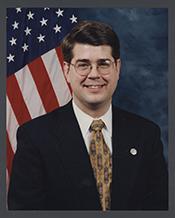
Mr. Speaker, I rise in strong support of the conference report for the Partial Birth Abortion Ban Act of 2003 (H.R. 760/S. 3). I am proud to support the effective compromise that has been reached on…
Mr. Speaker, I rise in strong support of the conference report for the Partial Birth Abortion Ban Act of 2003 (H.R. 760/S. 3).
I am proud to support the effective compromise that has been reached on behalf of thousands of women and children in our nation. Enacting this legislation has been a long, hard road for many dedicated Members of Congress and concerned citizens across America. I commend Chairman Chabot for his tireless efforts to debate and pass this legislation, and President Bush for his commitment to sign it into law to protect human life.
The grisly facts of the partial-birth abortion procedure are well known. Suffice it to say that the life and value of a child should not hinge on 3 inches--the 3 inches before a child takes its first breath or before a child meets the abortionist's knife. Partial-birth abortion has visited untold horror upon thousands of women and children since its inception. It would be impossible to count the physical and emotional cost of this procedure for the women who have experienced it, much less the little children who are killed before they have a chance at life.
One such experience merits recounting because of its undeniable message for the protection of human life. In 1993, a nurse practitioner named Brenda Pratt Shafer was working in an abortion clinic. She was a pro-choice nurse who quit her job the day after she witnessed a partial-birth abortion. She told Members of Congress that ``what I saw is branded
forever on my mind . . . the woman wanted to see her baby [after the procedure], so they cleaned up the baby and put it in a blanket and handed the baby to her. She cried the whole time, and she kept saying, `I'm so sorry, please forgive me!' I was crying too. I couldn't take it. The baby boy had the most perfect, angelic face I have ever seen.'' Her testimony stands as a powerful witness for every Member of Congress to vote to ban this procedure in our nation.
Another significant testimony comes from a doctor who was asked to care for a baby who had undergone a partial-birth abortion and was still breathing. Dr. Hanes Swingle wrote his eyewitness account for the Washington Times: ``I admitted this slightly premature infant [to the Neonatal Intensive Care Unit]. His head was collapsed in on itself . . . I did my exam (no other anomalies were noted) . . . then pronounced the baby dead about an hour later. Normally, when a child is about to die and the parents are not present, one of the staff holds the child. No one held this baby, a fact that I regret to this day. His mother's life was never at risk.'' Dr. Hanes concluded that partial-birth abortions must be banned ``simply because it is the right thing to do.''
Three years ago, the Supreme Court ruled 5 to 4 that my home state of Nebraska's ban on partial-birth abortion was unconstitutional. Justice Scalia wrote in his dissent that ``the notion that the Constitution prohibits the States from simply banning this visibly brutal means of eliminating our half-born posterity is quite simply absurd.'' Passage of the conference report today will clearly show that the Congress stands with Justice Scalia and the many other Americans who respect the sanctity of human life.
It amazes me that in the year 2003, the United States still permits this procedure--this act of death. The Alan Guttmacher Institute, the research arm of Planned Parenthood, reported this year that the number of partial-birth abortions performed in our nation tripled between the years 1996 and 2000. Estimates were that about 650 such abortions were performed in 1996, and now 2,200 are performed annually.
Former President Clinton shamed our nation and broke faith with women and children by twice vetoing the Partial-Birth Abortion Ban Act. I am proud that President Bush will reverse this record and uphold the promise of human life and dignity in America. I urge all of my colleagues to join him in this goal by voting for the conference report on the Partial-Birth Abortion Ban Act.
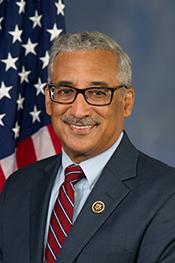
Mr. Speaker, I rise in opposition to the rule and to the underlying bill. Let us make it clear, the conference report and the bill before us will not prohibit any abortions. Alternative bills which…
Mr. Speaker, I rise in opposition to the rule and to the underlying bill.
Let us make it clear, the conference report and the bill before us will not prohibit any abortions. Alternative bills which would have outlawed late-term abortions have been rejected by the majority. This bill will not prevent any abortions.
The bill will prohibit a procedure. The abortion can still take place using another procedure, and I am not going to inflame the debate by describing in explicit detail the alternative procedures that may be used.
But I will point out that Nebraska had a law banning the so-called partial-birth abortion procedure. Three years ago the United States Supreme Court held that that law was unconstitutional. The Supreme Court said five times in its majority opinion and other times in concurring opinions, that in order to make a partial-birth abortion ban constitutional, the law must contain a health exception to allow the procedure where it is necessary in appropriate medical judgment for the preservation of life or health of the mother. That is what five Supreme Court Justices said is necessary to make the bill constitutional. All five are still on the Supreme Court.
In that case the Court said, The question before us is whether Nebraska's statute making criminal the performance of a partial-birth abortion violates the Federal Constitution. We conclude it does for at least two independent reasons.
They went on to say that the first reason was that it lacks the exception for the preservation of the health of the mother. The Court said, ``Subsequent to viability, the State may, if it chooses, regulate or even prescribe abortion,'' and then they put this in italics, ``except where as necessary in appropriate medical judgment for the preservation of life or health of the mother.''
It goes on to say that the governing standard requires an exception, now listen up, because now they put it in quotes, ``where it is necessary in the appropriate medical judgment, for the preservation of the life or health of the mother.''
The Court continues talking about the health exception by saying that ``our cases have repeatedly invalidated statutes that in the process of regulating the methods of abortion impose significant health risks.'' They make it clear that risking a woman's health is the same, whether it happens to arise from regulating a particular method of abortion or from barring abortion entirely.
Just in case we did not get it, the Court said again, ``By no means must the State grant physicians unfettered discretion in their selection of abortion methods. But where substantial medical authority supports the proposition that banning a particular abortion procedure could endanger a woman's health, Casey requires that the statute include a health exception where the procedure is `necessary in the appropriate medical judgment for the preservation of life or health of the mother.' ''
Now, the record clearly reflects that there is substantial medical authority supporting the use in some cases of this procedure.
Mr. Speaker, whatever our views are on the underlying issue of abortion, we ought to read the decision and apply the law.
Mr. Speaker, whatever our views are on the underlying issue of abortion, we ought to read the decision and apply the law. The Supreme Court in one decision said at least five times that the health exception must be included for the statute to be constitutional.
Furthermore, they put the exact phrase to be used, ``necessary, in appropriate medical judgment, for the preservation of the life or the health of the mother,'' in plain text, in italics and in quotations.
Here we have a bill without the health exception. It is clearly unconstitutional, and we ought to reject the rule and the bill.

Mr. Speaker, I rise in strong opposition to this deceptive and dangerous conference report S. 3, brought to the floor today to ban what anti-choice lawmakers claim to be the so-called…
Mr. Speaker, I rise in strong opposition to this deceptive and dangerous conference report S. 3, brought to the floor today to ban what anti-choice lawmakers claim to be the so-called ``partial-birth'' abortion procedure. There is no medical procedure called a ``partial birth'' abortion. It is a political term, not a medical one. That is why what's happening today is so dangerous.
If this bill becomes law, it will be the first time since Roe v. Wade that performing an abortion procedure will be deemed a criminal act. Even more alarming, it will be the first time in this nation's history, that Congress will have ever banned a particular medical procedure. Make no mistake about it, what this bill does is put Congress in the position of making life and death medical decisions appropriately left to physicians.
Instead of dealing with the more pressing issues of the day--like the 44 million people who lack health insurance in this country, the 9 million people without jobs, or bringing our troops safely home from the war in Iraq--we are instead debating a safe medical procedure that is used only in very rare instances when a doctor determines it is the only procedure that can best protect the life or health of the woman.
In 2000, the Supreme Court struck down a Nebraska abortion ban, identical to this bill, as unconstitutional in Stenberg v. Carhart. The court found that the law unconstitutionally burdened a woman's right to choose by banning safe abortion procedures; and it lacked the constitutionally required exception to protect women's health. Both these constitutional flaws remain the bill before us today. This bill still lacks any health exception and remains vague so that it may be used to ban other safe abortion procedures in the future.
Anti-choice lawmakers have made claims today that the majority of Americans are in favor of banning what they understand to be partial birth abortions. But, a recent ABC News poll, found that 61% of Americans were in fact opposed to this legislation when they are informed that it lacks a health exception for a woman.
The most telling argument in this debate comes from our nation's medical community. They oppose this legislation. The American Medical Association, the American College of Obstetricians and Gynecologists, the American Medical Women's Association, the American Nurses Association and the American Public Health Association all oppose this ban. They know full well that it will override their medical decision- making in an unprecedented and potentially life-threatening way.
I believe that a woman's right to choose is a private and very personal choice, and should continue to remain that way. Women's decisions about their reproductive health--especially when it comes to something as personal as abortion--should between a woman, her family and her physician--not the U.S. Congress.
I ask my colleagues to stand up for the privacy of women and oppose unwarranted interferences in their personal decisions. I also ask my colleagues to recognize that the vast majority of us in Congress have no medical training and are in no way qualified to choose among particular medical procedures. Doctors should be making medical determinations, not politicians. Vote no on this bill.

Mr. Speaker, let us be crystal clear about what this House is doing today. We are making a medical judgment. That ought to be of deep concern to every American who believes that the Federal…
Mr. Speaker, let us be crystal clear about what this House is doing today. We are making a medical judgment. That ought to be of deep concern to every American who believes that the Federal Government has no business injecting itself into the middle of the doctor-patient relationship. If we pass this partial-birth abortion conference report, elected representatives of the people of the United States, not the medical community, not doctors, not trained persons, will be telling every American woman that she cannot obtain certain medical procedures that are currently legal and available to her. If that does not trouble you, this should: this conference report is patently unconstitutional.
The proponents of this conference report are literally trying to paper over Supreme Court precedent in direct contradiction of the Supreme Court's decision 3 years ago in Stenberg v. Carhart. This conference report deliberately excludes an exception for cases in which a woman's health is in jeopardy. Instead, the proponents of this conference report have added dozens of pages of congressional findings that conclude that the prescribed abortion procedure is never medically necessary. The distinguished gentlewoman from New York (Ms. Slaughter) quoted Justice Thomas in saying that that would not work and could not work.
Mr. Speaker, I do not believe that anyone here believes that abortion is a desired outcome to a woman's pregnancy; no one believes that. I think without question that this belief is even stronger when an abortion is obtained in the later stages of pregnancy. However, Mr. Speaker, the fact of the matter is, this legislation, and I have said it before and I will say it again, would not prevent one abortion.
This legislation will not prevent one abortion, not one. Why? Because it leaves in place other procedures. That is because, while it claims to ban a specific medical procedure performed in the most tragic of circumstances, it leaves other means of terminating a pregnancy in place. To that extent, this legislation is without effect.
I would challenge any proponent of this legislation to tell me why it prohibits the termination of a pregnancy. I understand the proponents say it prohibits a procedure, but there will be not one proponent because it will not be medically justifiable to say so, that it precludes the termination of a pregnancy at any stage.
Unfortunately, Mr. Speaker, this House has again missed an important opportunity to seize what common ground exists in this difficult issue. The bipartisan Late-Term Abortion Restriction Act, which failed on this floor, which I co-sponsored this year, addresses the heart of the matter: the termination of pregnancy in the late stages of pregnancy. That legislation would have precluded all late-term abortions by any method except to save the life or protect the health of the mother.
It is clear that the conference report before us is nothing but a veiled attempt to undermine the Supreme Court's landmark ruling in Roe versus Wade. It will fail. It will fail in the courts. How else can one explain the conferee's decision to strip out the Senate language reaffirming Roe? I hope my colleagues reject this bill.
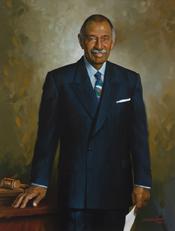
Mr. Speaker, today we are once again considering a deceptive, extreme, and a blatantly unconstitutional attempt to sensationalize the abortion debate through heated rhetoric. If this bill passes…
Mr. Speaker, today we are once again considering a deceptive, extreme, and a blatantly unconstitutional attempt to sensationalize the abortion debate through heated rhetoric. If this bill passes today it will be the first time since the passage of Roe v. Wade that the Congress will steal the right of women and their families to decide matters of their own health care in consultation with their doctors. This is not just an issue of women's rights anymore--this is an issue of preserving the privacy of all Americans to keep the government out of their Doctor's office.
Just three years ago, the Supreme Court decided Stenberg v. Carhart, in which the Court held unconstitutional a Nebraska statute banning so- called ``partial-birth'' abortions.
The Court invalidated the Nebraska law for two independent reasons: (1) it did not contain an exception to protect the health of the woman, and (2) it placed an ``undue burden'' on a woman's right to choose by banning the most common type of 2nd-trimester abortion procedure.
S. 3 shows complete disregard for the Count's decision in Stenberg and suffers from the same two constitutional defects. It's as if the drafters went out of their way to thumb their nose at the Court.
First, there is no question that S. 3 lacks an exception to safeguard women's health, which the Supreme Court unequivocally said was a fatal flaw in any restriction on abortion.
Even the Ashcroft Department of Justice recognizes that, in order for any abortion regulation to be constitutional, it must contain an exception to protect the woman's life and health.
This legislation attempts to justify its lack of a health exception by summarily asserting in the bill's ``findings'' that the banned procedure is ``never medically necessary.'' Not only are these findings demonstrably false, they do nothing to rehabilitate the bill's unconstitutionality.
Much as the drafters may wish it to be otherwise, Congress cannot make a law constitutional simply by making ``findings'' that contradict the direct holding of a Court decision.
Simply stated, the bill's failure to include an exception to protect women's health will make it ``Dead On Arrival'' the minute it is challenged in court.
Second, the bill's definition of ``partial-birth abortion'' is so vague, overbroad, and internally contradictory that it would ban safe, pre-viability abortions in violation of woman's right to choose.
But even if the bill covered only a single, late-term abortion procedure--which it does not--the bill would still endanger women's health by banning a procedure that the American College of Obstetricians and Gynecologists has recognized ``may be the best or most appropriate procedure in a particular circumstance to save the life or preserve the health of a woman.''
Congress should not take decisions about medical treatment out of the hands of doctors and families. But that is exactly what this bill sets out to do.
This legislation is a facially unconstitutional attempt to roll back a woman's right to choose. Fifteen pages of erroneous ``findings'' cannot change this sow's ear into a silk purse and rehabilitate this bill that puts politics ahead of women's health.
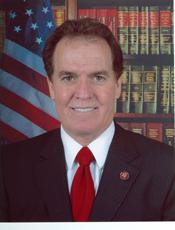
Mr. Speaker, I thank the gentlewoman from North Carolina for yielding time to me; and Mr. Speaker, let me just say in regard to some of the comments that the gentleman from Virginia just made in…
Mr. Speaker, I thank the gentlewoman from North Carolina for yielding time to me; and Mr. Speaker, let me just say in regard to some of the comments that the gentleman from Virginia just made in regard to this ban on partial-birth abortion only eliminating one method of a late-term abortion, and he said he would not describe some of the other procedures of late-term abortion, and I wish maybe he had because I, as a physician, as an OB/GYN physician, do not know of any other procedures, late-term procedures that would result in the death of a child at this stage of pregnancy, and we are talking about infants, that are well past the point of viability.
We are talking about, in some instances, 4\1/2\-, 5-pound babies, that that pregnancy cannot be terminated, and resulting in a dead baby without doing a destructive procedure known as partial-birth abortion. It literally is the only option left for a woman who wants to choose death for her child in the third trimester. If you do a cesarean section, you have got the problem of delivering a live child. If you induce labor, you have the problem of having a live child, and that problem means that you cannot perform an abortion.
This is what it is all about, and the gentleman from Texas on the other side spoke a few minutes ago about the dirty little secret, the dirty little secret of this not banning late-term abortion. It certainly does when we eliminate this abhorrent procedure known as partial-birth abortion.
This question that keeps coming up about the health exception, how in the world could anybody consider that it would be a healthy thing to put a mother through this kind of procedure in the third trimester. It is not healthy. It is totally unhealthy. It is a complete farce.
I urge the adoption of the rule, and let us get on and pass this ban. It is time.
Mr. Speaker, I thank the gentleman for yielding me this time.
Mr. Speaker let me just say this. What we are hearing from the opposition over and over again is that this is an attack on Roe v. Wade. It is not an attack on Roe. I will stand here and tell the Members that I think that January 22, 1973, will live on as a day in infamy, and I wish it had never happened, but this is not an attack on Roe v. Wade. This is an attack on one procedure, one abhorrent procedure called partial-birth abortion.
The other side wants to say that there is no medical terminology of ``partial-birth abortion.'' It is as much a medical terminology as to say taking somebody's appendix out or a gallbladder out is medical terminology. I do not know what euphemism they want to use for this procedure, but this is a partial-birth abortion. Someone said earlier that it is akin to infanticide. I am not a legal scholar, but to me it is infanticide because when one delivers that human outside the mother's womb, and it has a beating heart, it no longer is a fetus. It is an infant, and if they kill it at that point, and that is what partial-birth abortion is, then that is infanticide.
Vote for this conference report, both sides of the aisle.
Show 11 more
Mr. Speaker, this bill is not a serious attempt to save babies. It is a cynical attempt to make political points. Do you know what? There is a dirty little secret about this bill that is starting to…
Mr. Speaker, this bill is not a serious attempt to save babies. It is a cynical attempt to make political points. Do you know what? There is a dirty little secret about this bill that is starting to get out, and that secret is that this bill does not outlaw late-term abortions. Let me repeat that.
Under this bill, late-term abortions under Federal law, will still be perfectly legal. Why do I say that? Very simply, because this bill only outlaws one late-term abortion procedure, while allowing all others to remain perfectly legal. For 8 years, I have asked on this floor the supporters of this bill to explain why they did not want to put in this bill an outlaw of all late-term abortion procedures like I helped do in the Texas legislature 13 years ago.
I think probably the honest answer to that was given by Ralph Reed a number of years ago when he said, ``the partial-birth abortion bill is a silver political bullet.'' And I think the people in America who should truly be upset about this bill and the effort to pass it for 8 years, are not just the pro-choice people. It should be the genuine, decent pro-life people who in their own heart have been misled to believe that
this bill would actually outlaw late-term abortions. It does not. And that is a dirty little secret that is starting to get out, even in the pro-life community.
In fact, let us go to a statement made just 2 weeks ago by Randall Terry, who is the founder of Operation Rescue, an ardently pro-life organization. This is what Mr. Terry, a pro-life citizen, said, ``This bill, if it becomes law, may not save one child's life.''
Yes, Mr. Speaker, the dirty little secret is getting out. There is another little secret that is getting out about this bill, and that is that it is absolutely, patently unconstitutional. So those who have pushed this bill have pushed a false promise on their pro-life constituents.
Why is it unconstitutional? It is as clear as the Supreme Court can say. When it puts a decision in italics, I think it is trying to make it a very clear point to those who would read it; but for those who cannot understand it, let me read Justice O'Conner's statement from the Stenberg v. Carhart decision in 2000, which outlawed a bill almost exactly like this.
``States may substantially regulate and even prescribe abortion, but any such regulation or prescription must,'' not maybe, ``must contain an exception for instances,'' and this was in italics, ``where it is necessary, in appropriate medical judgment, for the preservation of life or health of the mother.''
Well, guess what, unlike the constitutional bill I passed in the Texas legislature 17 years ago abolishing all late-term abortion procedures, but constitutional because we had a health exception, this bill refuses to have a health exception, even when the mother's health is at risk.
This bill is a false promise. It will harm good decent women in this country, and it should be defeated.

My colleagues, after commemorating the 30th anniversary of the Supreme Court's decision in Roe v. Wade just 9 months ago, we are reminded again that a woman's right to choose is never secure. In the…
My colleagues, after commemorating the 30th anniversary of the Supreme Court's decision in Roe v. Wade just 9 months ago, we are reminded again that a woman's right to choose is never secure. In the debate today over so-called partial-birth abortion, do not ever forget this is about Roe v. Wade. We are here because supporters of this bill disagree with the Supreme Court.
Let us be clear. This is not about outlawing one method of abortion. It is about restricting access to safe medical procedures throughout an entire pregnancy. Ultimately, it is about the right of all women to choose. Proponents of this legislation want to overturn Roe v. Wade and Stenberg v. Carhart and go back to the days when women had no options, when they left the country or died in back alleys.
In reflecting on the long debate over this bill starting in 1995, I remember something that I heard Justice Sandra Day O'Connor say once. She said that she was drawn to the law because she saw the role it plays in shaping our society. ``I don't think law often leads society,'' she said. ``It really is a statement of society's beliefs in a way.''
The proponents of this bill and I would likely agree with Justice O'Connor, except I believe that Roe v. Wade continues to express our society's beliefs, and they do not.
Roe said that the decision to terminate a pregnancy is private and personal and should be made by a woman and her family and her clergy without undue interference from the Government. I and the American people still believe that, supporters of this bill do not. Roe and Stenberg said that a woman must never be forced to sacrifice her life or damage her health in order to bring a pregnancy to term. The woman's health must come first and be protected throughout her pregnancy. I and the American people still believe this, supporters of the bill do not.
And Roe and Stenberg said that determinations about viability and health risks must be made for each woman by her physician. A blanket Government decree about medicine is irresponsible and dangerous. I and the American people still believe that, supporters of the bill do not.
I urge my colleagues to not be fooled today by those who claim that sufficient changes have been made so that this bill agrees with the principles outlined in Roe and Stenberg. Make no mistake. The bill before us today still does not contain the health exception, which means it is still unconstitutional. It still bans abortion throughout pregnancy, which means it is still unconstitutional. Congress is wrong to pass this by ban, and the President would be wrong to sign it. Mr. Speaker, we believe that women matter. We believe that their health and lives are irreplaceable and worth protecting. That is why we oppose this ban. I urge my colleagues to respect the law of the land and support the values in Roe v. Wade and Stenberg v. Carhart. Leave decisions in the hands of families. Protect the health of women.

Mr. Speaker, I rise today in strong opposition to the so-called ``partial birth abortion'' legislation before us today. Neither the Congress nor the courts should tell a woman how to manage her…
Mr. Speaker, I rise today in strong opposition to the so-called ``partial birth abortion'' legislation before us today.
Neither the Congress nor the courts should tell a woman how to manage her health or reproductive care. Unfortunately, what should be a private matter between a woman and her doctor has become a political football.
Doctors, not politicians, should decide which surgical procedures are appropriate when a woman's health is in jeopardy. The anti-choice proponents of the bill have used highly misleading statements to cloak the true purpose of this bill--which is to scare doctors and deny women the right to choose a safe and legal abortion.
Here are the facts:
The bill does not ban only one procedure. ``Partial-birth'' is a political term, not a medical term. These bans are designed to inflame the abortion debate through heated, graphic rhetoric. In describing what is banned, the bill does not reference a recognized, established medical procedure. It does not exclude other procedures. In fact, the bill's language is deliberately vague, banning safe and common procedures.
The bill is not a ``late term'' abortion ban. Because the bill lacks any mention of fetal viability, it would ban abortions throughout pregnancy. In Roe v. Wade and its companion case, Doe v. Bolton, the Supreme Court held that a woman has the right to choose legal abortion until viability. The Court said that states may ban abortion after that time, as long as exceptions are made to protect a woman's life or her health. In fact, 41 states have laws that address post-viability abortions. The legislation now before Congress is designed, in part, to deceive lawmakers and the American public about when abortions occur. Don't be fooled.
The bill is not constitutional. In 2000, the Supreme Court found Nebraska's so called ``partial birth'' abortion ban unconstitutional in Carhart v. Stenberg. The Court found that: (1) the law unconstitutionally burdened a woman's right to choose by banning safe abortion procedures; and (2) it lacked the constitutionally required exception to protect women's health. These flaws are present in the bill now before Congress. The bill still lacks any health exception, and its deliberately vague language still bans more than one procedure.
These bans are not supported by the medical community. Contrary to repeated anti-choice claims, the American Medical Association does not support this legislation. Furthermore, respected health organizations such as the American College of Obstetricians and Gynecologists, the American Medical Women's Association, the American Nurses Association and the American Public Health Association oppose these bans.
I urge my colleagues to reject this bill that turns back the clock on womens' rights in this country.

Mr. Speaker, I rise today in strong support of the Partial Birth Abortion Ban Act. I commend Mr. Chabot and Sen. Santorum for introducing this important legislation, and the conferees for their…
Mr. Speaker, I rise today in strong support of the Partial Birth Abortion Ban Act. I commend Mr. Chabot and Sen. Santorum for introducing this important legislation, and the conferees for their leadership in protecting the life of the unborn.
As elected representatives, banning what is probably the most hideous medical procedures that could ever be performed may be one of the most important things we can do.
Mythical reports by a few journalists indicate that partial-birth abortions are generally performed in cases in which the baby has profound disorders or the mother faces a dire physical threat.
But hard facts indicated that this horrific practice is far more common than its proponents will admit. In truth, this piece-by-piece abortion is performed thousands of times annually, and the vast majority are performed on healthy babies of healthy mothers.
It must be outlawed.
Today, many will repeatedly give us the details of this so-called ``medical procedure.''
Instead, I would refer my colleagues to these medically accurate images. Doctors have described to us how the baby is pulled partly out of the mother's body, only inches from a completed birth and how an abortionist inserts scissors into the skull creating a hole where the baby's brain can be suctioned out. We have all seen pictures of the lifeless body pulled from the mother and tossed away like trash.
After seeing this, why debate? Partial Birth abortion is murder--the devil is in the details. This isn't about a woman's right to choose. This is about a child's right to live. And no compassionate person wants to see a woman suffer the personal tragedy of abortion. Women deserve better than partial-birth abortion.
I would say that the choice is simple, but there is no choice inherent in our duty to ensure that the sanctity of human life is never compromised. The unborn child has no voice and cannot protect itself. It is up to all of us to guarantee their voices are heard and their right to life is protected.
I urge my colleagues to help protect the lives of the most innocent, helpless and defenseless among us and support the Partial Birth Abortion Ban Act.
Mr. SMITH of Texas. Mr. Speaker, I support S. 3, the ``Partial Birth Abortion Ban Act of 2003.''
This bill prohibits a heinous and inhumane procedure. Partial birth abortions are a procedure in which a fully viable child is killed just inches from being fully delivered.
This procedure is inhumane and barbaric, and has no place in a civilized society.
Also, a partial birth abortion is not safe for women, and is never necessary to preserve the health of the mother. Unlike other abortion procedures, partial birth abortion involves killing a child that is no longer in the womb.
I strongly support the passage of this conference report.

Mr. Speaker, I thank the gentlewoman for New York (Ms. Slaughter) for her steadfast work to preserve a woman's right to choose, as this bill does not, and to keep us from endangering that right from…
Mr. Speaker, I thank the gentlewoman for New York (Ms. Slaughter) for her steadfast work to preserve a woman's right to choose, as this bill does not, and to keep us from endangering that right from the thirteenth week on. And that is what this bill does.
I want to speak to the constitutional issues. I understand where many Americans are on what they think is misnamed partial birth abortion. You know, that is a 1984 gamut, call something what it is not, trying to focus the American people on a viable baby being aborted as it comes out of its mother's womb. My friends, that is not this bill.
This bill is a virtual twin of a bill in Nebraska law that was struck down 3 years ago by the Supreme Court in Stenberg versus Carhart. This is a redux of that unconstitutional law. And though there have been some attempts to fiddle with the bill in those terms, there is not a dime's worth of difference between this law and the Nebraska law.
Now, the Republicans are not as dumb as they look. They have read the decision. They are not even trying to ban one procedure. They are trying to dip into the second trimester, and, boy, have they done it. And Ms. and Mrs. America do understand that, beginning with the thirteenth week, the procedures most commonly used and understood to be the safest procedures for performing abortions after the thirteenth week would be banned by this bill. In the law we say it is unconstitutionally vague. That means it is so broad that it goes beyond what might be legal. Of course, this would not be legal because it has no health exception.
The majority is trying to practice medicine without a license. It certainly is not capable of practicing law without a license, because each and every time this and similar bills have been overturned. Worse, there is no health exception. It is as if Roe versus Wade never said that in order to be constitutional there always had to be a health exception. These folks just slide right over that.
I want to leave you with the words of the Supreme Court in Carhart, because you are going to be hearing them again. This is not my Supreme Court, this is a conservative Supreme Court. And it said, ``Using this law some present prosecutors and future attorneys general may choose to pursue physicians who use the most commonly used method for performing previability, second trimester abortions. All those who perform abortion procedures using that method must fear prosecution, conviction, and imprisonment. The result is an undue burden upon a woman's right to make an abortion decision. We must quickly find the statute unconstitutional.''
It was unconstitutional 3 years ago, my friends. It is unconstitutional today, even if we enact it.

Mr. Speaker, here we are at the end of the fiscal year with important unfinished work for the House of Representatives. Our fiscal year budget is not complete, our seniors do not have a prescription…
Mr. Speaker, here we are at the end of the fiscal year with important unfinished work for the House of Representatives. Our fiscal year budget is not complete, our seniors do not have a prescription drug benefit, and our local communities still need support in the war against terror, to list only a few of the unfinished pieces of business that we have before us.
Yet, what does the majority decide to bring to the floor? A bill that everyone knows will not pass the muster of the Supreme Court. Because there is no exemption to protect a woman's health, this bill not only fails to meet moral requirements, it fails to meet constitutional requirements.
We have a moral obligation to protect and promote women's health, not endanger it. In fact, our debate should be about measures to reduce the number of unintended pregnancies and ensuring that all pregnant women have affordable access to the care they need so they can deliver healthy babies.
The Supreme Court has been clear. Our laws cannot take away a woman's right to a safe and accepted medical procedure when her health is in danger; and yet the antichoice lobby chooses to once again waste our valuable time pushing legislation that politicizes women's health and chips away at a woman's constitutional right to choose an appropriate lifesaving medical procedure.
As we know, a pregnancy can go tragically wrong in the final stages; and in these unimaginable circumstances, a woman must not be required to risk her health and future fertility by continuing a dangerous pregnancy. I am not a doctor, so I am not going to stand here and pretend that I have the necessary expertise to make medical decisions for my constituents, nor should any Member of the House, nor any Federal agency. Instead, I want every woman in my district and in this Nation to have access to the procedure she and her physician feel are the safest and most appropriate for her particular situation.
Let us be honest. The debate today is not about aborting viable, healthy children. Few late-term abortions occur, and those that do are tragically necessary to save the life or health of the mother. This debate is really about limiting a woman's right to privacy and restricting access to constitutionally protected medical procedures. The American people must know that while the necessary work of the House of Representatives remains undone, we are here debating a bill that makes an unconstitutional attempt to chip away at a woman's right to access for a particular medical procedure.
Mr. Speaker, I urge my colleagues to oppose this rule and oppose this conference report.

Mr. Speaker, I want to thank the chairman of the Committee on the Judiciary, the gentleman from Wisconsin (Mr. Sensenbrenner), for the work, long, long work that he has placed into this bill. The…
Mr. Speaker, I want to thank the chairman of the Committee on the Judiciary, the gentleman from Wisconsin (Mr. Sensenbrenner), for the work, long, long work that he has placed into this bill. The people of the United States owe the chairman a great debt; and more importantly, children owe the gentleman a great debt for his work on this issue.
Mr. Speaker, at the end of this long debate that actually began 10 years ago, the opponents of the Partial-Birth
Abortion Ban Act tell us that this bill will not save a single life. And I think we have to admit, it is a limited bill. After all, when we pass this bill, abortion will stay legal, its practitioners will remain in business, and heaven will still be crowded with America's invisible orphans. But its limitations are beside the point. Because like the children it protects, Mr. Speaker, the Partial-Birth Abortion Ban Act may be small, but not insignificant.
Make no mistake about it: our action today represents a big pivot in America's difficult answer to the abortion question. After a generation of bitter rhetoric, the American people have turned away from the divisive politics of abortion and embraced the inclusive politics of life.
Over the last 10 years, Americans on all sides of the abortion debate have learned about the partial-birth abortion procedure. They have recoiled at its barbarism and decided it has no place in a moral society. They have called on us to answer the muted cries of the innocent. Their message to us today and our message to the world is very simple: we can do better. For pregnant mothers, however desperate; for unborn children, however unwanted; and for our compassionate Nation, however divided. America can do better for them all, starting with the overdue prohibition on this cruel, dangerous, and medically unnecessary procedure.
But this, I say to my colleagues, is not a day of celebration. Passing this bill will be a victory, to be sure, but a victory for humanity, not just one side of this debate. It will be a victory for the democratic process, which the American people have engaged one heart at a time, not through the heat of public argument, but through the warmth of private conversation. And it will be a victory for a Nation of good and honest people who brought to this debate a thoroughly American respect for every opinion and for every life.
America can do better, Mr. Speaker, and by passing this bill today, at long last, we will.

Mr. Speaker, I think it is important that America understand what is going on here today. This is more about 30-second ads in the next political campaign than it is about what is right and wrong. I…
Mr. Speaker, I think it is important that America understand what is going on here today. This is more about 30-second ads in the next political campaign than it is about what is right and wrong.
I was a member of the conference committee, and we offered to reach across the aisle and do something that I think we can all agree on, which is to say that late-term abortions should not be an elective procedure; and I actually strongly believe that. You should not have a late-term abortion unless there is some overwhelming need, either you are going to die or there is going to be a very serious health consequence if it is not done. Only then, if that is not the case, does the government have a right to step in.
I look at this bill and I see the findings are just not correct. To say that this is never medically necessary is simply not true.
Mr. Speaker, the Congressmen in the conference committee and here in the House talk about these circumstances as if they actually knew what was going on. As it turns out, I actually know Vicki Wilson personally. Her mother-in-law, Susie Wilson, and I served together on the board of supervisors, and I remember when Susie found out that her daughter-in- law's pregnancy had gone terribly wrong. It was in the eighth month. They found out that the child they hoped to have, they had picked a name already, Abigail, that the brains had formed completely outside the cranium. There was no way that they were going to have a healthy child. And so the question soon became how was Vicki going to survive this, number one; and, number two, survive it so she and her husband, Bill, who is also a doctor, might have a child. They wanted to have a daughter.
Susie Wilson called me and my colleague on the board, Dianne McKenna, throughout the 2 days that this procedure, which, by the way, is not called partial-birth in the medical terminology, was going on; and Susie stayed with her daughter-in-law throughout the procedure.
To say that a bunch of Congressmen know what is best for this family is really an insult to the American people, and especially to women. So American women, watch out, these Congressmen are wanting to decide whether you survive and have a chance to have another child, and really to make the most personal decision for you instead of you making it with your husband and doctor. I think it is wrong, and I hope that we turn this bill down.
Mr. Speaker, I thank the gentlewoman for yielding me this time. Mr. Speaker, I rise today to express my support for the conference report on the Partial-Birth Abortion Ban Act of 2003. For nearly a…
Mr. Speaker, I thank the gentlewoman for yielding me this time.
Mr. Speaker, I rise today to express my support for the conference report on the Partial-Birth Abortion Ban Act
of 2003. For nearly a decade, Congress has attempted to see this legislation become law, and I am pleased that we will again be affirming the message that partial-birth abortion is wrong.
There is overwhelming support in the second district of Kentucky and across the Nation for a ban on partial-birth abortions. Eight versions of a partial-birth abortion ban have passed the House since the 104th Congress. This body also passed multiple overrides of Presidential vetoes on this issue during the Clinton administration. Throughout this time, we have seen numerous State legislatures take similar action and vote to end the savage practice of partial-birth abortions in their States.
There is a clear and consistent mandate throughout the Nation: partial-birth abortion is wrong and must be prohibited by law.
I realize that the issue of abortion is difficult and powerfully divisive for many Americans. There are well-intentioned, intelligent people on both sides of this debate who will continue to disagree. But I am deeply concerned about the value our society places on human life when we tolerate this practice, brutally denying a defenseless, unborn child its right to life. By condoning abortion, and especially the brutal practice and procedure of a partial-birth abortion, our greater human condition is significantly cheapened.
I am pleased that so many of my colleagues are taking a stand and acting in support of this legislation. This conference report demonstrates the bicameral and often bipartisan commitment of lawmakers in the 108th Congress to protect the sanctity of human life by outlawing a procedure that devalues and violently terminates its potential. I am also encouraged knowing that at this time we have an administration that is willing to take positive action and sign this ban into law.
The late Mother Teresa of Calcutta once said, ``The greatest destroyer of peace is abortion because if a mother can kill her own child, what is left for me to kill you and you to kill me? There is nothing between.'' It is time we act strongly and unmistakably and vote once again to preserve life and ban this gruesome, inhuman practice.

Mr. Speaker, one of my fundamental principles is that government not interfere with the basic freedoms for individuals and their families. A basic freedom is the health of women, which necessarily…
Mr. Speaker, one of my fundamental principles is that government not interfere with the basic freedoms for individuals and their families. A basic freedom is the health of women, which necessarily includes reproductive health choices.
This legislation threatens that freedom by inappropriately intervening in the decision making of patients and their doctors. It goes beyond restricting the procedure. It ignores real needs of women and their families. This procedure has long been accepted and is at times the only practice available to protect a woman's life and her ability to safely have a healthy baby in the future.
Years ago when we first started debating this legislation, I was struck by real cases of real families that would be devastated by this amendment. Sadly, nothing has changed. Real families would still be devastated.
The broad language is likely to be used as a wedge in further eroding reproductive choices. No one can predict what this Supreme Court will do, let alone a future one. This language would fly in the face of a previous ruling against Nebraska's legislation and could be a vehicle for judicial reinterpretation which would further restrict reproductive freedom. This legislation is part of an insidious ongoing assault to erode reproductive freedoms and would perpetuate a trend, as shocking as it is unfortunate, of Congress imposing its theology on our citizens regardless of people's own strongly held beliefs and individual needs.
Earlier this Congress, because of the Republican leadership's theological clash with science, voted to make it illegal to use potentially life saving therapies to help with Alzheimer's- and Parkinson's-like degenerative and traumatic diseases leaving people crippled and dying. The vote was not just to deny scientific research here, but deny the benefits if developed anywhere else. They would make all our loved ones suffer in their zeal to make a point.
People who oppose abortion should not have one. Nothing would make me happier than for every woman to have the knowledge, well-being, medical care and luck so that there would never be a need for an abortion. Until such a day comes, it is wrong to prevent a woman's doctor from offering professional skills so that she and her family can determine the safest and most appropriate medical care.

Mr. Speaker, I rise today in strong opposition to the conference report to ban so-called partial-birth abortions. Regrettably, Congress poised to pass, and the President is prepared to sign, a bill…
Mr. Speaker, I rise today in strong opposition to the conference report to ban so-called partial-birth abortions.
Regrettably, Congress poised to pass, and the President is prepared to sign, a bill that can only be described as unconstitutional.
I urge my colleagues not to be deceived by this legislation.
Partial birth is not a medical, factual, or legal term. Let's be frank--it is a political term.
This is not a debate about so-called partial-birth abortion or late- term abortion. This is a debate about efforts to roll back a woman's constitutional right to choose whether or not to have an abortion.
The so-called partial birth abortion ban contained in this bill is intended to erode the protections of Roe v. Wade and I believe will be found unconstitutional by the courts.
Even the sense of the Senate language included in the Senate-passed bill reaffirming Roe v. Wade has been stripped out of this bill.
Supporters of this bill argue that language defining the partial- birth abortion procedure has been tightened and that findings included stating that the procedure is never necessary to protect a woman's health.
This is simply smoke and mirrors. The bill is unconstitutional for the same reasons the Supreme Court struck down similar laws. Women are entitled to the right to the safest abortion procedure available. To ban one particular procedure is to deny women--in consultation with their doctor--that right.
Just as its authors intended, this bill would apply well before viability, banning a safe method of abortion that is often used in the second trimester.
In addition, it fails to include language providing an exception to protect the health of the mother.
I am distressed that more than 30 years after the Supreme Court's historic Roe decision, we are considering legislative measures that could revert us back to the time of dangerous back alley abortions.
Before voting, I hope that my colleagues will remember the struggles women faced before Roe.
Let us not forget the women who were injured or who died from unsafe procedures. This bill could well return us to that era again.
I urge my colleagues to uphold a woman's constitutional right to choose by voting against final passage of this conference report.
Bill Text
2 versions available
        [Congressional Bills 108th Congress]
[From the U.S. Government Publishing Office]
[H. Res. 383 Engrossed in House (EH)]

In the House of Representatives, U.S.,

October 2, 2003.
Resolved, That upon adoption of this resolution it shall be in order to
consider the conference report to accompany the bill (S. 3) to prohibit the
procedure commonly known as partial-birth abortion. All points of order against
the conference report and against its consideration are waived. The conference
report shall be considered as read.
Attest:

Clerk.