Relating to the liberation of the Iraqi people and the valiant service of the United States Armed Forces and Coalition forces.
Legislative Activity
Stay on top of the latest movement without scrolling through every action
On agreeing to the resolution Agreed to by recorded vote: 327 - 93, 7 Present (Roll no. 64). (text: CR H1142)
March 17, 2004 • 7:46 PM
View full timeline
Introduced in House
March 11, 2004
Referred to the Committee on International Relations, and in addition to the Committee on Armed Services, for a period to be subsequently determined by the Speaker, in each case for consideration of such provisions as fall within the jurisdiction of the committee concerned.
March 11, 2004
Rules Committee Resolution H. Res. 561 Reported to House. Rule provides for consideration of H. Res. 557 with 4 hours of general debate. Previous question shall be considered as ordered without intervening motions except motion to recommit. Section 2 of the resolution provides that during consideration of H. Res. 557, notwithstanding the operation of the previous question, the Chair may postpone further consideration of the resolution to a time designated by the Speaker. Measure will be considered read. Bill is closed to amendments.
March 16, 2004 • 7:35 PM
Rule H. Res. 561 passed House.
March 17, 2004 • 12:28 PM
Considered under the provisions of rule H. Res. 561. (consideration: CR H1122-1129, H1130-1133, H1142-1202)
March 17, 2004 • 2:08 PM
Rule provides for consideration of H. Res. 557 with 4 hours of general debate. Previous question shall be considered as ordered without intervening motions except motion to recommit. Section 2 of the resolution provides that during consideration of H. Res. 557, notwithstanding the operation of the previous question, the Chair may postpone further consideration of the resolution to a time designated by the Speaker. Measure will be considered read. Bill is closed to amendments.
March 17, 2004 • 2:08 PM
DEBATE - Pursuant to the provisions of H. Res. 561, the House proceeded with 4 hours of debate on H. Res. 557.
March 17, 2004 • 2:08 PM
The previous question was ordered pursuant to the rule.
March 17, 2004 • 7:26 PM
Passed/agreed to in House: On agreeing to the resolution Agreed to by recorded vote: 327 - 93, 7 Present (Roll no. 64).(text: CR H1142)
March 17, 2004 • 7:46 PM
Motion to reconsider laid on the table Agreed to without objection.
March 17, 2004 • 7:46 PM
On agreeing to the resolution Agreed to by recorded vote: 327 - 93, 7 Present (Roll no. 64). (text: CR H1142)
March 17, 2004 • 7:46 PM
Voting History
1 vote recorded • Roll call available
Floor Debate
21 membersWhat members said about H.Res. 557 on the floor
 JAL
JAL DD
DD PJG
PJG IS
IS TL+16
TL+16
Floor Debate
21 membersWhat members said about H.Res. 557 on the floor
Mr. Speaker, the measure before us contains many consentaneous American thoughts: Recognition that Saddam was a despot of tyrannical proportions; support for a process of democratic self- governance…
Mr. Speaker, the measure before us contains many consentaneous American thoughts: Recognition that Saddam was a despot of tyrannical proportions; support for a process of democratic self- governance in Iraq; and, profoundly, appreciation for the sacrifice and commitment of Americans serving in our armed forces in these very troubling, indeed dangerous, times.
But as widely accepted as these notions are, care must be taken in this debate to underscore what this resolution is not. It cannot be read either as a Gulf of Tonkin-like resolution giving the Executive a blank check for future actions or considered an indication of Congressional approval of executive action to date.
Many in Congress, perhaps a majority, would be willing to vote for a more expansive resolution, but such is not before us today. Nonetheless, the subject matter of this resolution necessitates a review of what has transpired since the Congress, without my support, authorized military intervention in Iraq a year and a half ago.
All of us recognize that Iraq is a judgmental quagmire. Thoughtful Americans are conflicted. The President has a case for the actions he has taken. But I feel obliged to make clear why I continue not to find it compelling and indicate, in as constructive a way as I am able, the problems that a lengthy occupation may yield and present a theoretical framework and the case for timely disengagement.
Perspective is difficult to apply to current events or for that matter life itself. But it is important to attempt to frame the discussion of the war in which we are engaged in relation to our history, to the development of knowledge (particularly science), and to our relations with other countries.
First our history. In the broadest sense the political history of America has encompassed four great debates. The first was the question of whether a country could be established based on the rights of man. The second was about definitions: whether the concept of ``man'' included individuals who were neither male nor pale. It took over a century, a civil war and suffrage and civil rights movements to bring full meaning to the universal language of the Declaration of Independence. With courage and sacrifice Americans finally came together to embrace the democratic notion that consent of the governed lacked legitimacy unless all individuals of all backgrounds had rights of citizenship.
The third debate is about opportunity, whether individual rights can be protected if every citizen doesn't have a fair crack at the American dream. There are many on-going elements of the opportunity debate, which in the 20th century was symbolized by the New Deal initiatives of Franklin Roosevelt and the counter-weight of the Reagan revolution. But I would like to emphasize an aspect of this debate which gets little attention because it is taken for granted, and that is the role of public education. All young Americans not only have access to public education, they are required by law to attend public schools or comparable alternatives. As society becomes more complicated, educational opportunity becomes increasingly central to advancing social opportunity. And as we look at the narrow schooling provided by madrasses abroad it becomes apparent that how and what others teach has relevance to the security of Americans at home.
The fourth debate is symbolized by Hiroshima and Nagasaki and revolves around the question of whether any right can be valid if it is not underpinned by a right to peace.
In these debates the role of foreign policy is critical, and even when we've looked inward it has been with an eye to establishing a shining city-state on a hill, a beacon for all.
The greatest legislated act in American and perhaps human history is the Declaration of Independence. The universality of its principles constitutes the cornerstone of historic American idealism in foreign as well as domestic policy.
As architect of the Declaration, Jefferson--while never a member of Congress--was our greatest legislator. And as the architect of the Louisiana Purchase, he stands as our greatest
diplomat-president. The precept implicit in the Declaration and the Louisiana Purchase is the notion of individual rights and collective decision-making by a people entrusted with the capacity to make sovereign decisions.
Jefferson was the philosophical godson of John Locke, who borrowed from Thomas Hobbes the 17th century paradigm of a state of Nature where, according to Hobbes, life was nasty, brutish and short.
Hobbes had a pessimistic view of human nature. Self-centered man could not escape from the jungle of human relations. Locke, on the other hand, was an optimist. He also assumed that man was self- centered, but, unlike Hobbes, he believed that individuals were rational enough to recognize the necessity of accommodating the self- interest of others. Civil society--the condition where rules would govern disputes and third-party arbitration would exist--was thus possible as well as necessary.
Whether or not the theoretical constructs that political philosophers relied on three centuries ago have relevance to real life on the planet, then or now, the progress of science has made man's efforts to protect the rights of individuals and society more difficult today. In one of the most profound social observations of the 20th century, Einstein noted that splitting the atom changed everything save our mode of thinking.
Physics has brought us nuclear energy and perhaps a way to help live a modern life without reliance on fossil fuels. Biology has brought us the capacity to extend the life of man by several and perhaps many decades. But just as splitting the atom has a dark side--nuclear weapons--splitting genes has ominous implications, too--the ability to manufacture diseases for which there may be no antidote. Hence the obvious: at no time in human history is there a greater obligation for people in public life to appeal to the higher rather than lower angels of our nature.
This is particularly the case as the world has smallened and friction between peoples has increased in economics, politics and, most profoundly, religion.
Perhaps the most thoughtful speech ever given in Iowa was delivered four decades ago by the Oxford historian, Arnold Toynbee. A decade earlier, Winston Churchill chose a small Midwestern college in Fulton, Missouri, to warn of the dangers of Soviet expansionism; an ``Iron Curtain,'' he said, had descended on Eastern Europe. Toynbee picked Grinnell College to chastise Marxists for shallowly looking at history through the lens of economic determinism and Americans for assuming, in part because of the civil rights movement then underway, that the most contentious issues in the world related to race. Toynbee argued that at this stage in history conflict would more likely erupt because of religious differentiations than economic or racial ones. As we look at the Middle East, at Northern Ireland, at the Balkans, at the divisions between Pakistan and India, Toynbee's observation appears to be vindicated.
Expanding on Toynbee, Samuel Huntington of Harvard has propounded a theory of international relations over the past several decades that suggests that the next great wars are less likely to represent battles between countries than clashes between various civilizations.
Given Toynbee's predictions and Huntington's civilization-clash paradigm, it is appropriate to return to Jefferson, who at the public level strove assiduously to protect individual freedom of religion and at the private level believed that what mattered most was not nuanced differences between religions or denominations, but the moral threads common to all creeds. In terms of guides to individual behavior, it is impressive, for instance, that the Ten Commandments underpin Islam as well as Judaism and Christianity. And the Confucian doctrine of ``shu,'' which asserts that moral behavior should be premised on not doing unto others what one would not have done to oneself, is an inverted kind of Golden Rule.
Despite the fact that history is rife with examples where religious differentiations have caused and intensified conflicts, there is no credible substitute for the constructive role of faith-based convictions. Conflict may be envisioned, but it can be constrained if individuals are taught the most esoteric of precepts: loving, or at least not hating, one's neighbor.
Ironically, genocide, which is disproportionately a 20th century phenomenon, is about weapons of lesser lethality: machetes, bullets, poisonous gas.
But if mankind can't prevent killing up close, the question must be pondered whether there can be any optimism that the world can avoid a cataclysmic exchange from afar of weapons of mass destruction, which would make the greatest crime of mankind to date, genocide, the second- to-last crime in human history. It is simply a short stop from genocide--the killing one at a time of millions--to ``global-cide''-- the end in a single stroke of all life on the planet.
In recognition of the 20th century's experience with Holocaust and other brutal genocides, from Cambodia to Rwanda, we have no choice except to change our mode of thinking. Man's instinct to hate must be curbed and social wisdom applied to the new challenges science has thrown at man.
In this context, I want to stress a second challenge of science that has nothing to do with war and arms making but is clearly the largest foreign policy issue of our day. It is the problem of disease. In Iraq more than 500 Americans and perhaps as many as 20,000 Iraqis have been killed in the past year. But over the last two decades 20 million people have died of AIDS and 40 million are infected with HIV. In Africa, Southeast Asia, and Southern Russia, AIDS has hurdled well beyond the groups considered most vulnerable in the U.S. In many countries children are infected through mothers at birth and in several countries a 15-year-old girl is far more likely to have the disease than a 15-year-old boy. We simply must expand resources to stop this disease abroad before it stops our families at home.
Not that everything in the world is dark or unraveling. Promising political breakthroughs are occurring between India and Pakistan; in the civil war in Sri Lanka; in Libya, where Muammar Khaddafi may be giving up a quest for nuclear weapons; and even with North Korea, as six-party talks unfold. Several of these bits of good international news are developing without a central U.S. role; several will require our leadership. My only advice to the Executive is to meet every positive step of others with at least two steps of our own. Progressive change from suspect leaders cannot be sustained if peoples of various societies are not convinced that America prefers extending carrots to applying bullying tactics. We simply can't wait for tomorrow to respond to good omens today. This is especially true of a country like Libya where backsliding is so easy. It may be more difficult with the hermit country--North Korea--simply because paranoia and anti-Americanism run so irrationally deep in the people as well as the government. But constructive steps, especially of a humanitarian dimension, can be taken.
Iowa also has brought some good news to the world. In January I attended the World Economic Forum in Davos, Switzerland, and a Conference on the Prevention of Genocide in Stockholm, Sweden. In conversations with Europeans the depth of anti-American sentiment becomes quickly evident. But when asked what state I represent, I was impressed with the sincerity of the positive responses when I indicated I was from Iowa. Everyone knew of Iowa because of the caucuses. In Iowa the caucus process seems a bit mysterious. In other states it is very mysterious, and in Europe it is a full blown mystery. But people in Europe were deeply impressed that individuals seeking the most important political position in the world had to come to the homes and schools and offices of private citizens who, with real care, reviewed their credentials and platforms.
For many years I have had reservations about the caucus system because the ballot is not secret and because participation is not as large as in a traditional primary. But I feel obligated to reconsider and, as a Republican, must tip my hat to the Iowa Democrats for the thoughtfulness with which they advanced American democracy and spotlighted our values for the world. Abroad, people followed but did not necessarily identify with the individual candidates, but everyone was impressed with the process and the care with which citizens carried out their duties.
It is instructive to put the current tension in transatlantic relations in historical perspective. With regard to the profoundest issue--war and peace--attitudes on each side of the ocean have come full circle over the five centuries of interaction.
The U.S. was founded by immigrants seeking refuge from religious persecution and a spate of seemingly senseless wars among European countries and principalities. The new Americans sought to distance themselves from the violence and religious intolerance of the Continent. It was with the greatest reluctance that in 1917 a pioneer country, which had been convulsed with the magnitude of a westward moving Manifest Destiny, determined that blocking a Kaiser's ambitions called for intervention in European affairs.
In the wake of a war trumpeted to end all wars, America retreated into political isolation in the 1920's. After inspiring its creation, we refused to join the League of Nations; and after expanding trade in industrial and agricultural products, we succumbed to economic protectionism in the 1930's. Only a direct attack on our territory caused us to enter World War II.
Today, it is Europe which is looking inward, pre-occupied with its manifest destiny, political integration made feasible by a growing economic union. Increasingly secular Europeans desire to separate themselves from an America that appears to them to be too unilateralist and quick to go to war, too fundamentalist and
thus blind to tolerance, and too simplistic to realize that conflicts with religious overtones are the most traumatic to manage.
When speaking to constituents of the rationale for and against the Iraq War, I have over the past couple of years referenced a set of books that held particular currency in the 1960's: the Alexandria Quartet by Lawrence Durrell. Each of the four books describes the same set of events in inter-war Egypt from the perspective of a different character. While the events are the same, the stories that unfold are profoundly different, causing the reader to recognize that one person's perspective is at best a snapshot of reality. A clear picture cannot be pieced together without looking through the lens of a multiplicity of eyes and experiences.
The Moslem experience gives substantially less weight than the Western experience to the two cataclysmic wars of the 20th century. Despite Lawrence's involvement in Arabia and the battles between Allied forces and Rommel's tanks, the engagements in the Middle East and North Africa were skirmishes compared with the struggles in Europe and the Far East. Not only do Moslems see the 20th century differently from Westerners, but Europeans and Americans have drawn different strategic parallels in the application of common experience to current challenges in the Middle East.
In the immediate aftermath of the First World War, historians and political strategists in Europe rightly concluded that the European alliance system had been too rigid and the assassination of a relatively minor figure, an archduke, should not have precipitated a war of such devastating consequences. Hence European leaders in the 1930's falsely concluded that historical wisdom necessitated initial accommodation with Hitler's adventurism. Too little flexibility caused one war; too little spine led to Munich. In the current context, President Bush sees himself as Churchill rather than Chamberlain, but Europeans see 9/11 as more analogous to the shots fired at Archduke Ferdinand than as a cause for a doctrine of preemption or war with Iraq, a war that could too easily spring into a clash of civilizations. Second guessing is always conjectural because history gives few second chances. Unlike football, downs aren't repeated.
Accordingly, the challenge today on both sides of the Atlantic is to put debate about going to war behind and work together to figure out how we proceed from here. A lot of polite observations have been made that European leaders seem less angry about American decisions related to Iraq this year compared to the differences expressed during the pre- war buildup. This may appear that way on the surface, but my sense is that European judgment, if anything, is more solidified and definitive today. Europeans may have become resigned that events have unfolded without their concurrence. By the same token, frustration that their advice has been discounted has caused anti-American anger to metastasize into anti-American smugness. Europeans believe that their skepticism has been vindicated by events. The stark good-versus-evil clarity that Washington policy makers seek appears to Europeans to be un-nuanced, unsophisticated, and unappreciative of differing judgments.
Americans countenance criticism of our President and his policies by fellow Americans, but we are not so tolerant of foreign dissent. The assumption in Washington is that Continental leaders deliberately sought to undercut U.S. leadership in the world community and that, in particular, the refusal of the French and Germans to support the President's position in the Security Council and NATO has made matters more dangerous for our troops and reconciliation more difficult in the current post-war setting.
On our side of the Atlantic, the sense exists that French and German political judgment has not only been at variance with American ideas but that a concerted effort was made on the Continent to triangulate the terrorist challenge and take advantage of America's dilemma. By distancing themselves from Washington, Paris and Bonn are seen to be encouraging the re-direction of Moslem discord. Whereas the rhetoric of Osama Bin Laden and other extremists was initially anti-Western, it is now more exclusively anti-U.S. The opportunity to transplant America's commercial as well as political position in parts of the world consumed with anti-Americanism appears not to have been lost on the European political-industrial elite.
With all of the attention given to the new transatlantic tensions, the implications of the Iraq war on Russia have received short shrift. But the new European antagonism to America has not gone unnoticed in Moscow. The cleavage between Washington and Europe and the preoccupation of America with the Middle East clearly give Putin a freer hand to advance a less democratic and more nationalistic set of policies at home. This is one reason why it is so important that America and NATO demonstrate then can work together in such areas as Afghanistan, where strategic common ground exists.
Likewise, the priority we have given to Iraq as well as North Korea, two charter members of the so-called ``Axis of Evil,'' means that we have been implicitly forced to subordinate trade and human rights issues with China. China's support, or at least not opposition, in international strategic affairs, has become so central to Administration policy makers that Beijing has been able to downgrade U.S. concerns about the historic shifts taking place in trade terms. A Chinese trade surplus with the U.S. that now exceeds $10 billion a month and an undervalued currency pegged to the dollar that makes flexible trade adjustments impossible are simply not being given the attention they deserve.
Economics and politics have seldom been more intertwined. Yet underappreciated is the prospect that a protectionist backlash of 1930's dimensions could develop if our political policies fail and our government loses respect in the world. Analogously, a political backlash could sweep the country if Washington doesn't develop institutional reforms to protect the political system from vulnerabilities to single-issue and special-interest constituencies. At a time when our foreign policy appears too attentive to ideological forces and too prone to rely on proxy empowered corporations to advance the national interest, Congress has an obligation to aggressively provide oversight of the contracting as well as intelligence judgments advanced by the Executive. Just as committees to review a new intelligence inadequacies are in order, so is a new committee to oversee government contracting related to operations in Iraq and Afghanistan. The professionalism and integrity of government decision- making about issues of war and peace must be above reproach. The country can afford neither ideological posturing nor war profiteering.
As for the dilemma of the moment, policy makers have been caught philosophically short. As mistaken as the overestimation of Saddam's WMD capacities was, the greater judgmental error may relate to the political pressure applied to the intelligence community on the issue of Iraqi complicity in the plane strikes on 9/11. Initially, the CIA straightforwardly noted that there was no credible evidence of Iraqi involvement. Then, under obvious pressure, it changed its stance and in presentation after presentation to Congress ominously suggested they had an ``evolving'' view of the role of Iraq, despite, to date, producing nothing of a definitive nature to show why the community changed its initial representation. Hence, the decision to go to war was against the backdrop of public opinion polls showing 60 percent of the American people believed significant Iraqi involvement existed in the 9/11 attack.
Compounding this lack of forthrightness, where the intelligence community knew the situation but refused publicly to differ with the political decision makers, was a judgment showing doubtful understanding of Moslem attitudes. The notion that American forces would be welcomed in Iraq as a liberating force with the well- intentioned option to reshape over time Iraqi political institutions was a mistake of profound proportions. Now, given the anarchy that has mushroomed in the country, Washington is swept by occupation analogies of World War II. Japan and Germany, it is noted, were occupied for more than five years after hostilities ceased. Hence, many are suggesting, we must be prepared to stay at least this long in Iraq.
I have seldom been more apprehensive about an historical analogy. Japan and Germany were the instigators of war; their citizens understood this. Iraqis don't see it this way. They see the U.S. as the aggressor. Images form Al-Jazeera portray a country under siege. In the Moslem world Iraq looks more like a police-cordoned West Bank than a great and ancient society on the move to a better life. Outsiders are viewed as unwanted intruders acting out of great power self-interest, unrespectful of the culture and values of the country being occupied. The irony that it is Shi'a clerics, not American statesmen, who are pushing for democratic elections at this time is not lost on the Iraqis or the Moslem world.
More profoundly, I am amazed that pundits haven't caught on to the possibility that the only thing worse than being wrong in our intelligence assessments of Iraqi WMD would have been if we had been right and thereby taken the risk of precipitating a retaliatory BW attack against Israel or possibly an American city. Biological weapons in the control of petty potentates is mad science in the hands of mad men. To go to war against a country with BW weapons, especially if the initiator has no knowledge where they are, is to hazard more than a clash of civilizations; it is to instigate a potential challenge to the maintenance of civilization itself.
In any regard, if a WMD rationale for intervention can't be established, we must not allow the democracy case to founder. To authorize an additional $80 billion for Iraq and
not be able to find the means to conduct timely elections is preposterous.
Legitimacy is critical for all countries. There may be times and circumstances in which the U.S. national interest requires action without a U.N. sanction. But the U.N. is ignored at great risk, especially when the international community is at odds with a nation state's policies. The U.N.'s help, for instance, could be significant at this point in facilitating elections and helping legitimize new governing structures. If a commitment to a time frame for democratic elections isn't soon forthcoming, the Administration may see an escalation of violence in Iraq led by the Shi'a in the South, thus adding to the traumas precipitated by Saddam's old henchmen and foreign trouble makers in the Sunni triangle to the north, where disorder is so prevalent today.
The judgment call Washington must make is whether to employ something closer to a ``get in/get out'' strategy or one of prolonged occupation. Each approach caries risk, with the likelihood of a certain amount of disorder developing whenever the American presence is reduced. Whether that disorder becomes less deep with time or whether time allows anarchist forces to organize more vigorously and lay claim to a legitimizing nationalist mantle is conjectural.
In the realm of policy timing can often be as important as substance. Just as Senator Dirksen once noted that a billion dollars here and a billion dollars there and pretty soon you're talking about real money, in foreign affairs a week here and a week there can soon add up to a policy dilemma.
The difficulty of timing was underscored this week when some in Washington charged the newly elected Spanish Government with ``appeasement'' for its announced intention to withdraw its forces from Iraq in the wake of last week's bombings in Madrid unless the U.N. role in Iraq is broadened. The language of appeasement may appropriately describe the lack of resolve of Western leaders when they refused to stand up to Hitler's growing power in the 1930s, but it may not be as fair to apply such a term to Spanish policy today. Indeed, doing so may carry irresponsible implications because fear of its connotations may make disengagement more difficult if the country or forces of an occupying power are ever under attack. For instance, if ``appeasement'' is considered the dominant potential issue, U.S. policy makers relinquish their sovereign discretion and instead could give terrorists the determinative say when we will disengage from Iraq. A few radicals could with relative ease launch a steady dose of terrorist attacks on our civilian and armed services personnel and ``force'' us to stay or then be in a position to argue when we eventually leave that they forced us out. That is why it is so critical that we lay out a basis for withdrawal that has nothing to do with the terrorist behavior of Iraqi radicals and everything to do with the establishment of a freely elected leadership.
On the issue of the timing of the hand-over of civil authority I give less judgmental weight in the Iraqi circumstance to historical analogies to the post-war occupation of Japan and Germany and more to a personal anecdote about the manner the Vietnam war came to be concluded. Early in my career in Congress, I was invited to the Library of Congress to join a small group of historians to listen to a lecture by Henry Kissinger about the negotiations that led to the end of that war. The night before the lecture, I perused one of Secretary Kissinger's autobiographic tomes and came across a paragraph that so startled me that I asked him about it in the seminar that followed the lecture. Kissinger wrote that in December 1968, shortly after Richard Nixon had asked him to be his National Security Council director, he met with the President-elect to discuss the direction of the new administration's foreign policy. They determined together, he noted, that their policy would be to get out of Vietnam. So I asked him why they didn't just proceed to do that. Kissinger looked at me for a moment and then uttered words I will never forget. ``Young man,'' he said, ``we meant with honor.'' I then asked him if ``honor'' required escalation. ``Absolutely,'' he responded.
In governance, judgment to be good must be timely. The course of history and attitudes toward America would be very different today if the Nixon administration had acted forthrightly on its own judgment. In Iraq, where we are fast becoming a magnet of instability rather than a force of stability, we must not hesitate. If the issue is democracy, let's hold elections with dispatch and use the democratic transition as the rationalization for deep troop reductions.
If we maintain a heavy presence much longer our president could find himself in a dilemma of the kind Lyndon Johnson and Richard Nixon came to know too well. There are circumstances in life where the small can humble the powerful. This has the makings of one. Despite the overwhelming nature of our military victory and the courageous commitment and sacrifice of our armed forces, policies can fail if the timing of disengagement is wrong.
This is why clarity of purpose and flexibility of response are so crucial. And why the neo-con mantra--``we must see this through''-- deserves review. Hasty withdrawal is problemsome; orderly, philosophically cogent decisions to wind down the military dimension of our presence in Iraq should, however, be our highest national interest priority. Democratic elections are the key. They can be held in relatively short order (at least by year's end; preferably earlier) if there is a will and commitment to do so. But the longer we heed the advice of those who want to hold onto power in Iraq, the harder it will be to avert increased terrorism here and abroad.
Here I would like to return to what in most contexts must be considered a rather esoteric paradigm: the Hobbesian notion of a state of nature. Terrorism is a military or, more precisely, militant tool of anarchy. It is the desire of terrorists to make Iraqi society a social jungle, a state of nature where anarchy rather than law rules. Legitimacy of government in this setting can perhaps be precipitated but it cannot be imposed from the outside. Outside pressure is less convincing when it appears to be presented by a singular authority-- i.e., the United States. One of the reasons so many countries prefer a strong U.N. role is that such a role not only provides greater legitimization of intervention but greater legitimization of processes leading to a new government. U.S. slighting of the U.N. undercuts governmental legitimizing efforts and causes the entirety of the Moslem world to become more antagonistic to our country.
For our part, we have gotten caught in a web of events we can influence but not control. In the end, legitimacy of any new government in Iraq will depend on consent of the governed. The only wise U.S. policy is to steamroll ahead with a constitutional framework of democratic elections with a pre-announced strategy of large-scale troop withdrawals commencing somewhat before or just after elections are held.
In conclusion, let me suggest a corollary to Lord Acton's maxim that power corrupts and absolute power tends to corrupt absolutely. The Leach corollary is that military power tempts and excessive power tends to tempt excessively. America's enormous military strength is critical at this stage in history. But while we are obligated to recognize that its maintenance is imperative, we must also realize that its utilization may not fit, and may indeed be counter-productive, in certain strategic settings. We have to use more than just our own eyes and rely on more that just our own expertise if in turbulent times we are to manage prudently the affairs of state.
Analogies between all wars exist, but comparisons between Iraq and Vietnam are frail. What must be understood is not that Iraq could be as bad as Vietnam; rather, that it could be far worse. Vietnam, after all, involved no WMD issues; and while the North was predominantly Buddhist and the South Catholic, there were no implications of a world-wide religious struggle; nor of a conflict that might last many decades, if not centuries. The issue at the time was Communism and fear that if Vietnam fell, neighboring governments would topple like dominoes. In retrospect, the real domino lesson of Vietnam was about political decision-making. Once the patriotic flag was raised, stands taken, words uttered, one doubtful decision precipitated another, and the pride of politicians did not allow a change of course until the people demanded common sense reconsideration.
In this context, there is an aspect of this resolution that deserves reflective review. It is true, as the resolution asserts, that Iraq and the world are better off without Saddam Hussein ensconced in power. But it is not necessarily true that our country and the world are safer if the overthrow of one thug leads to the creation of millions of rebels with a cause.
It would be a mistake of historical proportions if respectful relations not only between America and the Moslem world but between America and its traditional allies were to rupture. We are obligated to see that they don't.
Mr. Speaker, by direction of the Committee on Rules, I call up House Resolution 561 and ask for its immediate consideration. Mr. Speaker, for purposes of debate only, I yield the customary 30 minutes…
Mr. Speaker, by direction of the Committee on Rules, I call up House Resolution 561 and ask for its immediate consideration.
Mr. Speaker, for purposes of debate only, I yield the customary 30 minutes to my friend, the gentleman from Fort Lauderdale (Mr. Hastings) pending which I yield myself such time as I may consume. During consideration of this resolution, all time yielded is for the purposes of debate only.
Mr. Speaker, 1 year ago, our brave servicemen and -women began a military operation that brought freedom for tens of millions, toppled one of the most despicable regimes in the history of the world, and strengthened the national security for the American people.
Operation Iraqi Freedom was, and continues to be, a military success of the highest order. Within 4 weeks from the start of operations on March 19 of last year, the U.S. military had won unqualified victory. Saddam Hussein and his Baathist regime could no longer terrorize the Iraqi people who were finally free to act, do and say as they pleased for the first time in decades.
Mr. Speaker, there is no question that Saddam Hussein endangered world security. He posed a threat to his people, his region and the international community. Trusting the intentions of a man who started two wars, gassed his own people, and supported international terrorism would have been grossly irresponsible.
As weapons inspector David Kay has said, we know Saddam Hussein wanted weapons of mass destruction, we know he was attempting to resuscitate his illicit programs, and we know with certainty who he viewed his greatest enemy to be.
In a world where Iran can buy its way to a nuclear program with assistance from Pakistan's top nuclear scientist, combined with Saddam's access to illicit oil revenue, the fact that weapons of mass destruction have not yet been found in Iraq is hardly proof that Saddam Hussein did not want to severely hurt our country. Moreover, American national security has been solidified by the military action that was undertaken last year.
Mr. Speaker, does anyone really believe that Iran would be cooperating with international nuclear inspectors today if we had not launched this military operation? Does anyone really believe that North Korea would be engaged in six-party talks over the future of their nuclear program if the United States had not deposed Saddam Hussein? Does anyone really believe that Muammar Qaddafi, as recalcitrant in his defiance to the international community as ever a dictator has been, would have willingly come to the United States and Britain and declared that he wanted to end his illicit weapons programs had the American military not marched into Baghdad?
Mr. Speaker, Operation Iraqi Freedom sent an unmistakable signal to the rest of the world's tyrannical leaders: Either play by the rules or face the consequences.
Now, the events of September 11 taught us that we cannot allow threats to arrive on our shores before we combat them. If other Nations wish to keep their head in the sand about the dangers of proliferation and terrorism, that is their prerogative, but we cannot and could not afford to take that chance.
To those who complain of the cost of war and its aftermath, I simply will note that estimates of the cost of containing Saddam and his successors, as some have argued we should have done, are upwards of six times the dollar amount we have spent on war and reconstruction thus far, and significantly higher in terms of human lives lost.
Because of the heroic action of our military, the Iraqi threat has been mitigated efficiently and a new dawn has begun for the people of Iraq.
Earlier this month, Iraqi leaders signed the transitional administrative law into effect. It establishes an Iraqi law, a bill of fundamental human rights and paves the way for Iraqi democracy.
Perhaps more important than the signing of the law itself, was the agreement of Suni, Shiite, and Kurdish leaders to sign the document. While differences amongst them remain, and the road ahead will be difficult, it is clear they are acting with the best interests of the new Iraq and its people firmly in mind.
I should say our colleague, the gentlewoman from Ohio (Ms. Pryce) is going to, in her remarks today, tell a
very moving story about the fact that these very, very disparate groups have been able to come together sharing this pursued goal.
The Iraqi people themselves are clearly enjoying their newfound freedoms under the transitional government. Poll results released just yesterday demonstrate that not only do a significant majority of Iraqis feel they are much better off than they were under Saddam Hussein's reign, but the extremely high level of participation in the poll demonstrates their desire to exercise their right to speak their minds, something that was unthinkable under the tyranny of Saddam Hussein.
Such progress has only been possible because of the tireless commitment of our Armed Forces and those of the 34 nations assisting us to provide security on the ground in Iraq.
It is dangerous territory; and the forces of evil, whether they be Ba'athist remnants or infiltrated al-Qaeda sympathizers, are a constant threat. In the past year, we have lost over 550 of our best and brightest Americans, with another 3,190 wounded. That number, as it is in any conflict, is too high. Without question, we owe the soldiers we have lost, the soldiers who remain, and their families, an enormous debt of gratitude. Mr. Speaker, that is exactly what this resolution marking this first anniversary is designed to do. If there is any solace, it is knowing that because of their actions, America and the world are safer places today with Saddam Hussein's regime dismantled.
Because of our military, the people of Iraq have a bright future, where Sunni, Shiite, and Kurd alike can dream of being treated equally, of electing their representatives, of owning a prosperous business, and being free to say, worship, and read what they want.
Mr. Speaker, it would be all too easy for the United States to leave Iraq now and let the Iraqi people fend for themselves. Avoiding conflict is the path of least resistance and is always politically expedient. But unlike previous conflict, terrorism cannot be contained. It has no boundaries. It has no rules. One day it strikes Baghdad, the next Madrid. The only recipe for success in this war is our resolve to defeat threats where we see them and promote democracy where we can.
Mr. Speaker, true success in the war on terror is taking place right now on the ground in Baghdad and Kabul. By supporting, securing, and strengthening the democratic governments of Iraq and Afghanistan, we are promoting greater equality within those countries as well as providing forums for those who feel disaffected to air they grievances without picking up arms. As open and transparent governments spread throughout the world, the precursor ingredients for terrorism, anger, and fanaticism will dissipate. That will be the continuing legacy of Operation Iraqi Freedom.
Mr. Speaker, I strongly support this rule and the underlying resolution, which not only affirms the actions that the United States undertook a year ago, but provides every Member of this body the opportunity to reaffirm their own personal commitment to winning the war against terrorism, our commitment to democracy in Iraq, and, most important, to our troops in the field.
Mr. Speaker, it is my hope that this resolution will enjoy strong bipartisan support. That is our goal. I also hope, Mr. Speaker, that as soon as we pass this resolution that we will immediately have it translated in Arabic so that Saddam Hussein can read it in his cell and be reminded constantly of what we and the victims are regularly reminded of. Thanks to our military, Mr. Speaker, Saddam Hussein does have time to read that.
Mr. Speaker, I reserve the balance of my time.
Mr. Speaker, I yield myself 1 minute. I want to engage my colleague from Missouri in a colloquy.
There is no Member of this House who is more highly regarded in the area of national security than our friend, the gentleman from Missouri (Mr. Skelton). I am privileged to be a native of the Show Me State, and he has done us all very proud.
I know at the end of the day he will want to support this resolution, Mr. Speaker, because this resolution does exactly, exactly what my friend just stated in his closing remarks: recognizing our troops.
Now, we had no intention of offending anyone in drafting the resolution. In fact, we thought it was so noncontroversial that it would be an appropriate thing to move it forward.
I yield to the gentleman from Missouri.
Reclaiming my time, Mr. Speaker, let me just say that I completely understand that he would like to have had input; and that is one of the reasons we, in fact, did provide an opportunity, which is unusual, in consideration of this rule, for a motion to recommit for Members of the minority, if in fact that was the case.
Mr. Speaker, I yield 3 minutes to the gentleman from Atlanta, Georgia (Mr. Linder), my very good friend and the chairman of the Subcommittee on Technology and the House of the Committee on Rules.
Mr. Speaker, I yield myself such time as I may consume.
It is true that the United States of America has had a bipartisan foreign policy. This resolution is not about foreign policy. This resolution is not about foreign policy, this is a resolution that is simply designed to congratulate our troops. I do not understand why there is any controversy on it. As I said earlier and as I said in the Committee on Rules last night, we are sorry if anyone was offended over the fact that Members of the minority were not offered a chance to have input. I said to a number of my colleagues, that is one of the reasons that we have in fact made in order a motion to recommit that will allow the minority at the end of the bill an opportunity to cast a vote on that.
Mr. Speaker, I yield 3 minutes to the gentlewoman from Ohio (Ms. Pryce) who has done a phenomenal job of focusing on the rights of women. She chairs our Republican Conference and the Subcommittee on Legislative and Budget Process Reform for the Committee on Rules.
Mr. Speaker, I yield myself such time as I may consume.
Mr. Speaker, I would like to simply say that again, we did not have a goal of offending Members on this. This is not about foreign policy, this is about commending our troops.
Mr. Speaker, this resolution is 2\1/2\ pages long, okay. I am going to share with our colleagues the resolved clause.
Resolved, That the House of Representatives
(1) affirms that the United States and the world have been
made safer with the removal of Saddam Hussein and his regime
from power in Iraq;
(2) commends the Iraqi people for their courage in the face
of unspeakable oppression and brutality inflicted on them by
Saddam Hussein's regime;
(3) commends the Iraqi people on the adoption of Iraq's
interim constitution; and
(4) commends the members of the U.S. Armed Forces and
coalition forces for liberating Iraq and expresses its
gratitude for their valiant service.
That is what this resolution is all about.
Mr. Speaker, I am pleased to yield 2 minutes to the gentlewoman from North Carolina (Mrs. Myrick), the very distinguished Chair of the Republican Study Committee.
Mr. Speaker, let me just say that my friend from California is one of the greatest patriots in this institution. I hold him in the highest regard. I believe very strongly in the need for us to pursue a bipartisan foreign policy. Let me just say that, again, we had no intention of offending anyone in the crafting of this resolution, and it should be a nonpartisan resolution itself. At the end of the day because we found that controversy came forward in the Committee on Rules last night beyond the request that was made by Chairman Hyde, we did in fact offer a motion to recommit for members of the minority.
But I do believe again that this resolution is designed to do nothing more than commend the troops and the people of Iraq. That is what it is designed to do. It has nothing to do with our foreign policy. This here marks the first anniversary of this very, very successful effort. I think that what we are trying to do here is, in a bipartisan way, acknowledges that.
Mr. Speaker, I am happy to yield 3 minutes to my very good friend from Miami, Florida (Mr. Lincoln Diaz-Balart), an able member of the Committee on Rules.
Mr. Speaker, I yield 2 minutes to the gentlewoman from Brentwood, Tennessee (Mrs. Blackburn), a very able new Member of this body.
Mr. Speaker, I understand that there is going to be a motion for an adjournment vote here, and I just wanted to, before we proceed with that, inquire how many speakers the gentleman has remaining for the debate as we prepare to go into this.
Mr. Speaker, I rise in support of H. Res. 557 and claim the time set aside for us under the rule, and I yield myself such time as I may consume. Mr. Speaker, our President, having exhausted all other…
Mr. Speaker, I rise in support of H. Res. 557 and claim the time set aside for us under the rule, and I yield myself such time as I may consume.
Mr. Speaker, our President, having exhausted all other options, made the decision to take action against Saddam Hussein and the threat posed by his evil tyranny. During that course, the debate about that, this House was presented with an overwhelming body of evidence detailing the brutal inhumanity of Saddam Hussein and his regime, the suffering of the Iraqi people under his repressive dictatorship, the threat that Saddam presented to his neighbors and to the world, and indeed the piles of bodies in neighboring countries he left behind. Today, now that Saddam has been removed from power and the mass graves, the secret laboratories, the vast military stockpiles, missile capacities that he had, have all been exposed to the world, the world is a safer place. Certainly the Iraqi people, all Iraqi people, have a new hope for a better future today than they did just a year ago. Just a year ago. What a remarkable accomplishment by our troops and the coalition.
Yet we continue to hear claims from some that the liberation of Iraq, no matter how worthy the result, no matter how necessary to improving U.S. national security, was somehow a flawed endeavor. Yes, it was hard, but they claim it was a flawed endeavor because the intelligence that the United States had prior to the war was not perfect.
Some apparently feel that either the Intelligence Community was pressured by the administration into stating that Iraq was a threat or the Intelligence Community did not really believe Iraq was a threat but the administration misused the intelligence provided to it. The truth is neither of those are correct. But that has not deterred some conspiratorially critics from contorting themselves, trying to make both arguments simultaneously.
Looking back about a year and a half ago, while the Intelligence Community was focused heavily on Iraq, the President stated that Saddam was ``a grave and growing threat.'' And he was right. Today we have the benefit of hindsight, of a presence on the ground in Iraq, and of the thousands of hours of studying all there is to study on the prewar intelligence picture of Iraq, and we have barely begun to get that job finished.
Taking advantage of all these benefits, I would like to share my assessment so far, and I would note that the Permanent Select Committee on Intelligence of the House, and I know of the Senate also, is underway in coming forward with a formal review of all this, which I hope we will be able to share with our colleagues before too long. That is our plan.
The intelligence picture of Iraq, of the threat Iraq posed to its neighbors and to the United States, including the assessment of Iraq's weapons of mass destruction, was entirely consistent over a period of almost a decade. The assessment is consistent in the finished intelligence and the daily current intelligence pieces from the mid- 1990s onward. It is consistent in the classified records that have been provided to the House Permanent Select Committee on
Intelligence over the past year. So I have to conclude on that basis alone, if the intelligence adjustments regarding Iraq were the result of political pressure or manipulation, any such machinations must have occurred in the middle of the 1990s. But I do not believe that that is the case. Therefore, if the intelligence picture is unchanging, was there a change in the substance or tone used by this administration to describe that threat? We do not need to go to the Intelligence Community or to any classified records to answer that question. We just need to compare public statements that have been made, and they are available to the world.
In 2003 President Bush said this: ``Today, the gravest danger in the war on terror, the gravest danger facing America and the world, is outlaw regimes that seek and possess nuclear, chemical, and biological weapons. These regimes could use such weapons for blackmail, terror, and mass murder. They could give or sell those weapons to terrorist allies who would use them without the least hesitation.''
In 1998 then President Bill Clinton said: ``In the next century,'' which is now, ``the community of nations may see more and more the very kind of threat Iraq poses now, a rogue state with weapons of mass destruction, ready to use them or provide them to terrorists . . . who traveled the world . . . if we fail to respond today, Saddam . . . will be emboldened tomorrow by the knowledge that they can act with impunity.''
And again in 1998, then President Bill Clinton said: ``There should be no doubt, Saddam's ability to produce and deliver weapons of mass destruction poses a grave threat to the peace of that region and the security of the world . . . His regime threatens the safety of his people, the stability of his region and the security of all the rest of us.'' President Clinton, 1998.
Fast forward, 2003, President Bush: ``Some have said we must not act until the threat is imminent. Since when have terrorists and tyrants announced their intentions, politely putting us on notice before they strike . . . Trusting in the sanity and restraint of Saddam Hussein is not a strategy, and it is not an option.''
Actually, there is not a lot of difference in the leadership that was taking place in this country on the question of the threat that Saddam Hussein and his regime and weapons of mass destruction that might be at his disposal were to the rest of us. It is pretty clear that that was a consistent view.
So, were the intelligence assessments perfect? No. In fact, comparing the intelligence assessment to what has been found in Iraq today, it is clear there were insufficiencies in our intelligence capabilities and they are of concern to us, and on a bipartisan basis we are looking into that. What was the cause of these insufficiencies? Perhaps Iraq, under Saddam, was a difficult target. It was sort of a denied area. There was a ruthless security apparatus there that made information gathering inside the country extremely difficult, very dangerous. We also know that Iraq instituted a truly massive denial and deception program designed to mislead anyone attempting to learn about Saddam's weapons of mass destruction and related programs. Virtually everybody who tried found out that he was involved in denial and deception. So these factors made intelligence collection a little difficult, but it is the tough job that intelligence is there for.
So, what else? I found that cuts in intelligence resources, personnel, and political support in the mid-1990s made many aspects of the intelligence mission in Iraq even more impossible than what we are up against.
Where were these cuts most severe? In the case of Iraq, it turns out it was the decline in our intelligence capabilities that hurt the most. Human intelligence is where we get more than pictures, more than fragments. We get insight into the plans and intentions of our target. What is going on in the minds of the troublemakers? And without good human intelligence, HUMINT, as we call it, it is very difficult indeed to get an accurate picture of what an adversary is up to.
Yet from 1991 to 1998, a time of cutbacks for military and intelligence resources across the board, our human intelligence capabilities suffered dramatically. The number of officers collecting information shrank by about a quarter; the number of operating locations overseas dropped by about a third; reporting sources declined by almost 40 percent; and the number of intelligence reports produced were cut in half or thereabouts.
So we add on top of that the politically correct ``nice spies'' guidelines that were posed in 1995, the risk aversion problem, and we begin to see why information in Iraq was so hard to come by. Good information about plans and intentions, the eyes and ears, just were not sufficient.
So despite these severe limitations, I think the scorecard shows that the United States Intelligence Community provided the best assessment it could. And referring Members to the Director of Central Intelligence's recent speech at Georgetown, the assessments were not as far wrong as some critics of the war would have us believe.
In the final analysis, I think it is important that we get it right. Saddam was a threat. The United Nations believed he was a threat. The vast majority of the Western nations, even those outside of the U.S.- led coalition, believed he was a threat. The U.S. Intelligence Community assessed consistently that Saddam was a threat. The previous administration told the American people that Saddam was a threat. And it has been the official policy of the United States to seek regime change in Iraq since 1998 across two administrations. The difference between 1998 and 2003 is that President Bush took the bold action necessary to address a grave threat where others before him did not. The world is a safer place for it.
Freedom is not free. The purpose of this resolution is to recognize the hardships that the men and women who are doing the dangerous, risky work of protecting our freedoms, the people in our military services, the people in the coalition, the people who are taking risks. After a year, we are here to say, you are doing great work, keep it up, we are so grateful.
We are also including some applause for the people of Iraq who have gone through miserable times and now have some hope, and they have completed the remarkable achievement of a temporary constitution already. This is the sign of a spirited people who are looking for a better life.
This resolution simply says that and commends that. I believe we can all agree that these are the times that we can get together and say, well done, more to do, let us get on with it.
Mr. Speaker, I reserve the balance of my time.
Mr. Speaker, I yield 4 minutes to the distinguished gentleman from Michigan (Mr. Hoekstra), and chairman of one of our critical subcommittees.
Mr. Speaker, I yield 4 minutes to the distinguished gentleman from Nevada (Mr. Gibbons), a member of our committee and the chairman of a subcommittee as well.
(Mr. GIBBONS asked and was given permission to revise and extend his remarks.)
Mr. Speaker, I yield 4 minutes to the distinguished gentleman from Illinois (Mr. LaHood), who is also a subcommittee chairman of the committee.
(Mr. LaHOOD asked and was given permission to revise and extend his remarks.)
Mr. Speaker, I truly wish that I could support this rule. National security is a bipartisan, or actually a nonpartisan, issue. And when we commend the troops, all of us, all of us have a stake. Every…
Mr. Speaker, I truly wish that I could support this rule. National security is a bipartisan, or actually a nonpartisan, issue. And when we commend the troops, all of us, all of us have a stake. Every congressional district has a stake in commending the troops.
As a matter of fact, small town and rural America have furnished 46 percent and 43 percent of the deaths in Afghanistan and in Iraq. So all of us, whether we are from small towns or large cities, have a stake in a resolution commending the troops, and we should have been consulted about it. I am sorry for that.
Now, more than that, while we commend the troops, I would also have, had I been consulted, recommended that we do our best to protect our troops by including more body armor and extra up-armored Humvees, of which we still do not have enough in Iraq. As a matter of fact, Mr. Speaker, I received from the United States Army a letter indicating that there are unfunded requirements for the extra up-armored Humvees and the body armor, which is so necessary.
I would also have recommended that we have complete, timely, and high-quality health care to treat the wounds and injuries for those who have served, and to recognize those who pay the sacrifice, whether it be in wounds, injuries, or, sadly, deaths.
I would also have recognized the contributions of and the sacrifices of the families of our servicemen and -women, particularly in the Guard and Reserve. I would have recognized the efforts to improve our intelligence gaps that our troops need and so that they be better protected in the future. And I would have recognized and recommended the sufficient up-front funding for our military operations so we can ensure the safety and well-being of our troops.
Mr. Speaker, I would also have included the fact that there should have been better planning for the postwar period. I sent two letters to the President, one on September 4, 2002, and another 2 days before the attack on Iraq, both of which I include in the Record.
Mr. Speaker, I think that all of us should have been at least brought to the table and all of us had an opportunity to write this resolution. I am so proud of our troops, whether they be from Missouri or Maine or wherever they are from. This is the best military our country has ever seen. And I think every Member of Congress, both sides of the aisle, should have had the opportunity to say thank you, we are proud of you, and God bless you.
Mr. Speaker, here follows the letters to which I referred earlier in my comments:
House of Representatives,
Committee on Armed Services,
Washington, DC, September 4, 2002.
The President,
The White House,
Washington, DC.
Dear Mr. President: Thank you for inviting me to the
briefing this morning. I share your concern about the
continuing threat posed by Saddam Hussein and his efforts to
produce weapons of mass destruction (WMD). I would like to
offer my assistance as the administration considers how to
deal with this threat.
Before Congress can authorize any military action that
might be part of the administration's plan, we must have
answers to more questions than were able to be raised at
today's meeting. Our constitutional duty requires us to
ensure that all implications of such action are considered in
advance. The case has not yet been fully made as to what the
threat is, why military force is an appropriate way of
addressing the threat, and why action must occur now. In
short, Congress and the American people must be clear on your
strategic vision before we can authorize a specific course of
action. I believe, like Clausewitz, that in strategy there is
an ``imperative . . . not to take the first step without
considering the last.''
Your strategy for dealing with Iraq must address the
fundamental questions of the threat, the method of acting,
and the timing. Furthermore, any strategy to eliminate Iraqi
WMD must also address several component issues, each of which
raises critical questions.
1. How to manage Iraq's transition to a stable post-Saddam
regime
As I mentioned to you this morning, this is a crucial
question for administration strategy to answer in advance of
any military action. I have no doubt that our military would
decisively defeat Iraq's forces and remove Saddam. But like
the proverbial dog chasing the car down the road, we must
consider what we would do after we caught it.
As Sun-Tzu said in the classic strategic treatise, The Art
of War, ``To win victory is
easy; to preserve its fruits, difficult.'' Military planners
and political leaders alike new this in World War II.
Planning for the occupation of Germany and Japan--two
economically viable, technologically sophisticated nations--
took place well in advance of the end of the war. The
extreme difficulty of occupying Iraq with its history of
autocratic rule, its balkanized ethnic tensions, and its
isolated economic system argues both for careful
consideration of the benefits and risks of undertaking
military action and for detailed advanced occupation
planning if such military action is approved.
Specifically, your strategy must consider the form of a
replacement regime and take seriously the possibility that
this regime might be rejected by the Iraqi people, leading to
civil unrest and even anarchy. The effort must be to craft a
stable regime that will be geopolitically preferable to
Saddam and will incorporate the disparate interests of all
groups within Iraq--Shi'a, Sunni, and Kurd. We must also plan
now for what to do with members of the Baath party that
continue to support Saddam and with the scientists and
engineers who have expertise born of the Iraqi WMD program.
All these efforts require careful planning and long-term
commitment of manpower and resources. The American people
must be clear about the amount of money and the number of
soldiers that will have to be devoted to this effort for many
years to come.
2. How to ensure the action in Iraq does not undermine
international support for the broader war on terrorism
In planning for military operations in Iraq, we cannot
ignore the lack of international support to date. Pre-emptive
action against Iraq is currently vocally opposed by many of
our allies and friends throughout the world and particularly
in the Middle East.
When we are seen as acting against the concerns of large
numbers of our friends, it calls into question the ``humble''
approach to international relations you espoused during the
presidential campaign. More than that, it has several
potentially damaging long-term consequences. First, it risks
losing the large number of partners needed to prosecute the
global war on terrorism. To ferret terrorists groups out of
their many hiding places, we must have broad allied support.
Second, it risks seriously damaging U.S. moral legitimacy,
potentially providing states like India and Pakistan with a
preemptive option that could drive long-standing conflicts
beyond containable bounds.
Finally and perhaps most dangerously, actions without broad
Arab support may inflame the sources of terrorism, causing
unrest and anger throughout the Muslim world. This dynamic
will be worse if Iraq attacks Israel--perhaps with weapons of
mass destruction--and draws them into the conflict. Iran,
which has the potential to seize a reformist path, may well
move away from the United States in the face of attacks that
could next be taken against them. Together, these dynamics
will make achieving peace in the Middle East more difficult
and may well provide the rationale for more terrorist attacks
against Americans.
These concerns do not make military action in Iraq
untenable. They do, however, highlight the depth and
importance of the issues to be addressed before we strike. We
need to ensure that in taking out Saddam, we don't win the
battle and lose the war.
3. How to ensure that the United States can execute this
operation successfully as well as its other military
missions
As you are well aware, Mr. President, the consideration of
military action against Iraq comes at a time when U.S. forces
are actively engaged throughout the world in a range of
missions. Given the operational pressures these forces
currently face, we must ask what the risks and trade-offs
will be of defeating Iraq, particularly if Iraqi forces mass
in Baghdad for urban operations. How many casualties must the
American people be prepared to take in a worst-case scenario?
What will the impact of sustained operations be on so-called
high-demand, low-density assets? What military operations
might we have to forego because of continued demands in Iraq?
Will we still be prepared for the range of other threats that
might emerge throughout the world? With little allied support
and contributions, will we still be able to maintain military
spending on transformational technologies and on sound
quality of life for our forces if we are bearing a huge
wartime cost alone? What will be the impact on the domestic
economy of these resources drains and of the long-term costs
of reconstructing Iraq? These questions must be answered
before any military action commences so that the American
people understand the risks and the sacrifices involved.
I ask these questions only to highlight the complexity of
the undertaking and the need for Congress, the American
people, and our friends around the world to understand
exactly what is at stake and why we must act now. Only such a
comprehensive strategic approach will ensure that we commit
U.S. troops consciously and with full knowledge of the range
of challenges we face--both in the initial campaign and in
the long aftermath to follow. Even a strategy that has
military action as its centerpiece will require great
diplomatic efforts to ensure its success. I look forward to
hearing the administration's answers and to working with you
to find the best course of action.
Sincerely,
Ike Skelton,
Ranking Democrat.
Mr. Speaker, will the gentleman yield?
Mr. Speaker, I would have thought it a mere courtesy of saying, Would the gentleman from Missouri like to read this over and add or make recommendations? I would love to have been there in order to support the gentleman from California.
Mr. Speaker, I yield myself such time as I may consume. Mr. Speaker, the resolution we are considering today is deeply flawed. The way it was handled was meant to be divisive, and it has achieved…
Mr. Speaker, I yield myself such time as I may consume.
Mr. Speaker, the resolution we are considering today is deeply flawed. The way it was handled was meant to be divisive, and it has achieved that goal. None of us in this House knows if next January we will have a Kerry administration or a Bush administration, but we do know that whoever is in the White House must ensure the success of U.S. policy in Europe. Success in time of war requires cohesion and unity. We do not need a divisive, partisan resolution. This may be the way to prepare a Republican tax bill, but it is not the way to prepare a foreign policy resolution to win broad bipartisan support.
Mr. Speaker, the conflict in Iraq should not be a partisan issue. The soldiers who are fighting in Iraq are Democrats and Republicans and Independents. The soldiers who are wounded and killed in Iraq are Democrats and Republicans and Independents. The families who grieve for their sons and daughters who died in Iraq are Democrats and Republicans and Independents. The citizens of this country who are paying for this war are Democrats and Republicans and Independents.
Mr. Speaker, it is totally unacceptable that not a single amendment to this resolution was made in order. This was a Republican resolution, drafted with partisan intent by the Republican leadership. Many of us in this House who have been committed to and who have worked for a bipartisan foreign policy for decades know that this is a slap in our face.
A resolution that commends our troops ought to receive the unanimous support of this body, but this resolution has been written specifically to prevent that result.
Mr. Speaker, war is a time for shared sacrifice, a time when we are all united in a common struggle. This is not shared sacrifice. Some Americans are being killed, some are being wounded, some are asked to leave their families and risk their lives far from home; and some at the very top of the income scale are being asked to accept massive tax cuts.
Mr. Speaker, this resolution commends the troops, but it does not acknowledge the supreme sacrifice of many who are fighting. This resolution makes no reference to the more than 550 service men and women who have died in Iraq. It makes no reference to the thousands more who have been wounded. It offers no condolences to the families of those who have been killed. It makes no reference to the sacrifices of the families whose members are away from them serving in Iraq for many months or over a year. It makes no reference to the many civilian and humanitarian workers who risk their lives daily. It makes no reference to the contribution of our allies who have thousands of troops in Iraq, and it makes no mention of the death and casualties they have suffered. And it makes no reference to the Iraqi civilians who have lost their lives and suffered injuries, including dozens who were killed today.
Mr. Speaker, there are other serious omissions in this resolution. We should spend our time today debating substantive legislation to fix these problems. The American people have not sent us here just to be an ``amen'' chorus for this administration. There are serious problems, and we should be debating serious solutions.
There is no mention in this resolution of the flawed intelligence that was the basis of the administration's argument for going to war in the first place. We should be debating the establishment of a truly independent commission to examine the shortcomings of U.S. intelligence and the way it was used.
The members of this commission must not be appointed solely by the President, and the commission should make its findings known before Election Day. Only a truly independent investigation, and an investigation that the American people perceive to be independent, can bridge the credibility
gap in our intelligence both here at home and abroad.
The failure of this Congress to deal with the problems facing our intelligence agencies will ultimately harm our national security, the war against terrorism, and our fight against the proliferation of weapons of mass destruction.
Mr. Speaker, we are commending our troops but we are not taking action that we can and should take to make their lives and to make the lives of their loved ones easier. The sacrifices being made by our National Guard and reservists in Iraq and elsewhere are extraordinary. Many National Guard and Reserve families have suffered serious financial losses because of the pay gap between their military pay when they are called up and their private sector pay. With longer rotations, Guard and Reserve families are facing dramatically increased financial burdens while their loved ones risk their lives far away from home. One of the consequences is a serious problem with reenlistments in the Reserves and the National Guard.
My legislation, H.R. 1345, legislation that I introduced 1 year ago this week, would fill that pay gap. My bill would ensure that government and private sector employees can continue to defend our country without being forced to worry about their families facing financial disaster.
Words of support for our troops ring hollow when substantive legislation to improve their conditions is sandbagged by the leadership on the other side.
Mr. Speaker, I very much regret that this resolution in its present form is brought before the House today. This should be a time for bipartisan unity and cohesion, not a time for partisanship. This should be a time for us to deal substantively with serious problems we face in Iraq and in our foreign policy. This should be a time for us to take serious action to help our service men and women. All of us join in commending our brave men and women of our Armed Forces.
Mr. Speaker, I reserve the balance of my time.
Mr. Speaker, I yield 3 minutes to the gentleman from Maryland (Mr. Hoyer), our distinguished whip.
Mr. Speaker, before yielding to the gentleman from Florida, let me remind the gentleman from Wisconsin that national unity and cohesion are not matters of parliamentary procedure. They are at the core of uniting the United States and the American people at a time of war.
Mr. Speaker, I am pleased to yield 1\1/2\ minutes to the gentleman from Florida (Mr. Wexler), a distinguished member of the committee.
Mr. Speaker, I am pleased to yield 2 minutes to the gentleman from New Jersey (Mr. Menendez), the distinguished chairman of the Democratic Caucus and an important member of the Committee on International Relations.
(Mr. MENENDEZ asked and was given permission to revise and extend his remarks.)
Mr. Speaker, I yield 2 minutes to the distinguished gentleman from New York (Mr. Ackerman), ranking member of the Subcommittee on the Middle East and Central Asia of the Committee on International Relations.
(Mr. ACKERMAN asked and was given permission to revise and extend his remarks.)
Mr. Speaker, I yield 1\1/2\ minutes to the gentleman from Ohio (Mr. Brown), a distinguished member of the committee.
Mr. Speaker, I yield 1\1/2\ minutes to the gentleman from California (Mr. Sherman), the distinguished ranking member of the Subcommittee on International Terrorism, Nonproliferation and Human Rights.
(Mr. SHERMAN asked and was given permission to revise and extend his remarks.)
Mr. Speaker, I am pleased to yield 1\1/2\ minutes to the gentleman from New York (Mr. Meeks), a distinguished member of the committee.
Mr. Speaker, I am pleased to yield 1\1/2\ minutes to the gentleman from New York (Mr. Engel), a
distinguished member of the committee.
Mr. Speaker, I am pleased to yield 1\1/2\ minutes to the gentlewoman from California (Ms. Lee), a valued member of our committee.
Mr. Speaker, I yield 1\1/2\ minutes to the gentleman from Oregon (Mr. Blumenauer), a valued member of our committee.
Mr. Speaker, I yield 1\1/2\ minutes to the gentleman from California (Mr. Schiff), my colleague and a distinguished member of the committee.
Mr. Speaker, I yield 1\1/4\ minutes to the gentlewoman from California (Ms. Watson), my good friend and distinguished colleague.
Mr. Speaker, I yield 1\1/4\ minutes to the gentlewoman from Minnesota (Ms. McCollum), our last speaker.
Mr. Speaker, pursuant to the rule, I designate each of the following three Members to control \1/2\ hour of time allotted to me under the rule: \1/2\ hour for the gentleman from Missouri (Mr. Skelton), \1/2\ hour for the gentlewoman from California (Ms. Harman), and \1/2\ hour for the gentleman from Pennsylvania (Mr. Murtha).
Show 8 more
Mr. Speaker, I yield myself such time as I may consume. Mr. Speaker, this is the opportunity for Members of the Committee on Armed Services to talk about our piece of this important resolution, and…
Mr. Speaker, I yield myself such time as I may consume.
Mr. Speaker, this is the opportunity for Members of the Committee on Armed Services to talk about our piece of this important resolution, and that is, I think, the most gratifying part of this resolution, which I think we can all join together on and that is commending our great troops who have been carrying out this effort in Iraq.
Mr. Speaker, from the time when they spearheaded this drive up from Kuwait up through the choke points in Nasarea with the Marines out to the east and the Army, the 101st Airborne and the 3rd Infantry Division further to the west and worked up to those choke points at some places where RPGs were coming like volleys of high-tech arrows at those convoys of Humvees and trucks and tanks, to where they got up and went past the bridges before they could be blown, took the positions in the dams before the electronics could be executed to blow those places, and launched one of the most rapid-moving attacks in the history of warfare, with great heroism and great accomplishment, from those days to today when our troops are in this AO, this area of operation, not as much as attackers but in this case defenders of the new freedom of the Iraqi people, and hooking up pipelines and sanitary systems and getting children to school and opening up medical clinics, our people in uniform have performed heroically.
The most important message we can send from the United States House of Representatives is, you did a great job, America's people in uniform. You did a wonderful job for our country. And what you are doing has great value and
will enure to our freedom over the coming decades as well as the freedom of the world.
So, Mr. Speaker, we stand together and even united in commending our troops. I am glad that my colleague, the gentleman from Missouri (Mr. Skelton), is here as my partner on this committee to also commend the troops for the great job that they have done.
Mr. Speaker, I want to thank my colleague for his thoughtful statement, and I yield for a unanimous consent request to the gentleman from Florida (Mr. Shaw).
(Mr. SHAW asked and was given permission to revise and extend his remarks.)
Mr. Speaker, I yield 4 minutes to the gentleman from New Jersey (Mr. Saxton), who is the chairman of the Subcommittee on Terrorism, Unconventional Threats and Capabilities, who spends more time with the troops than he does with us.
Mr. Speaker, I yield 2 minutes to the very distinguished gentleman from California (Mr. McKeon).
Mr. Speaker, I yield myself such time as I may consume to let my colleagues know that all Humvees are manufactured unarmored. They are basically big Jeeps, and this Congress has been rushing to armor Humvees in the wake of the new threat known as the IED, the remotely detonated device. We put some $400 million in the last supplemental to pay for that armor.
I just would say to my colleagues, it would have been great if they could have voted with us on that one because that is the funding supplemental that paid for the arming of the Humvees.
I yield to the gentleman from Massachusetts.
Mr. Speaker, reclaiming my time, the idea that you do not armor vehicles because it is not done already at the factory makes no logic to me.
I would urge the gentleman to work with me to continue to armor them, because we are shipping steel in there now.
Mr. Speaker, I yield 2 minutes to the gentleman from Missouri (Mr. Akin).
Mr. Speaker, I yield 2 minutes to the distinguished gentleman from Virginia (Mr. Forbes).
Mr. Speaker, I yield 1\3/4\ minutes to the distinguished gentleman from South Carolina (Mr. Wilson).
Mr. Speaker, I yield 1\3/4\ minutes to the gentleman from Colorado (Mr. Hefley), who provides all those quality-of-life issues to our uniformed services.
Mr. Speaker, I yield for the purpose of making a unanimous consent request to the gentleman from Iowa (Mr. Leach).
(Mr. LEACH asked and was given permission to revise and extend his remarks.)
Mr. Speaker, I yield 1\3/4\ minutes to the gentleman from Oklahoma (Mr. Cole), a very distinguished member of the Committee on Armed Services.
Mr. Speaker, I yield myself such time as I may consume.
Mr. Speaker, I would just remind my colleagues if I am reading the same resolution they are, this resolution and I quote, commends the Members of the United States Armed Forces and Coalition forces for liberating Iraq and expresses its gratitude for their valiant service to our country. That is not a political statement, that is a commendation, and it should be from all of us, Democrats and Republicans.
I do not read politics into that, and nobody else should.
Mr. Speaker, I yield 1\3/4\ minutes to the gentleman from Georgia (Mr. Gingrey).
Mr. Speaker, I yield 1\3/4\ minutes to the gentlewoman from Michigan (Mrs. Miller).
Mr. Speaker, I proudly yield 1\3/4\ minutes to the gentleman from Ohio (Mr. Turner), a member of our committee.
Mr. Speaker, I would just take a minute to remind my colleague that every single soldier in Iraq has body armor as does every single civilian worker in Iraq and that the gentleman who just spoke voted against the very supplemental that sent that body armor to Iraq.
Mr. Speaker, I yield 2 minutes to the gentleman from North Carolina (Mr. Hayes), who has spent so much time with the troops and is home to the 82nd Airborne, the All-American Division.
Mr. Speaker, I yield 1 minute to the gentleman from California (Mr. Calvert), a most distinguished member of the committee.
Mr. Speaker, I yield myself such time as I may consume.
Let me just make a point to the gentleman who just spoke, that every Member in this House received a personal invitation from me for classified briefings dealing directly with our intelligence agencies with the opportunity to ask any question they wanted to ask so that when they made the vote on whether or not we should go into Iraq, they could make an informed vote. I presume that the gentleman accepted that opportunity and made an informed vote based on his own understanding of what the situation was. Let me just reiterate that every person in uniform in Iraq has full body armor, as does every civil servant.
Mr. Speaker, I yield 1\1/2\ minutes to the distinguished gentlewoman from New Mexico (Mrs. Wilson).
Mr. Speaker, I reserve the balance of my time
Mr. Speaker, I yield myself the balance of my time.
This is a picture that Mr. Stavenas of our staff took of a reenlistment ceremony at Saddam Hussein's spider hole in Iraq. It symbolizes the willingness of our military, our soldiers, our people in uniform, to come back under very difficult circumstances and reenlist and continue to fight this wonderful fight for the United States and for freedom. And our soldiers have done a great job for us, and this resolution is commending those soldiers. All those people who wore the uniform of the United States supported our country at a time of need and are continuing to undertake the biggest deployment right now, redeployment, since World War II.
Let us all stand behind them, Republicans and Democrats, cast off the partisan positions that have been taken today on the House floor, and let them know that we support them.
Mr. Speaker, I yield back the balance of my time.
Mr. Speaker, I yield myself such time as I may consume. Mr. Speaker, I rise today to pay tribute to the greatest asset our Nation has known, those heroes, and they are heroes, that we call on every…
Mr. Speaker, I yield myself such time as I may consume.
Mr. Speaker, I rise today to pay tribute to the greatest asset our Nation has known, those heroes, and they are heroes, that we call on every time when we need courage and effectiveness on the battlefield, the incredible American soldiers, sailors, airmen, and Marines that reflect the best attributes of those who have served before them; and they are a wonderful reflection of America across our country. So we thank them and we honor them.
Like many Members, I have had the privilege of traveling to Iraq twice, this last time with our minority leader, the gentlewoman from California (Ms. Pelosi), and with the gentleman from North Carolina (Mr. Hayes) from the Committee on Armed Services.
And what was clear is that our men and women are doing an extraordinary job in the most trying of circumstances. They are superbly trained, superbly led, and are just the finest force in the world. We owe them a great debt of gratitude.
We also owe the same to more than 550 families of those who have given the ultimate sacrifice to our Nation in Iraq. But what was also clear in my trips, there was no effective or realistic planning done for the aftermath of the military invasion of Iraq. We did a superb job on the battlefield; but since that time, sadly, as I warned the President in two letters, September 4, 2002, and then one a couple of days before the actual invasion, I feared the outcome and I warned the administration in these letters about what the potential consequences might be of getting the post-war wrong.
Sadly now, we are seeing those consequences come home to roost, and some of the issues that I raised in those letters are sadly coming to pass today.
While the Iraqis now have an interim constitution and we should congratulate them for that, it is no clearer now than it was back in November, when the timetable for transformation was laid out, who will take over on June 30. Now it looks like there will be no status of forces agreement negotiated before that time. Let me tell my colleagues, a status of forces agreement is very important because it can establish limitations. It could establish rules of engagement that make it more difficult for our forces to protect themselves.
Perhaps most dangerously we see more signs of ethnic and religious strife, raising the possibility of a civil war in Iraq. I truly hope that does not happen, but the tensions are growing, and there are insurgents and foreign fighters who have fanned those flames. Today's most deadly and tragic bombing of the hotel in Baghdad seems to be the only recent sign of this. We need to do a better job in planning. Everything we have worked to achieve in Iraq will be undermined if we do not figure out who we are turning sovereignty over to on June 30 and how to manage the transition in a way that avoids civil war.
These are dangerous times. This is not an easy day for our troops or for the leadership in our country, and that is why I raise these issues, Mr. Speaker. The security of the Iraqi people, the security of our troops, the stability in the region, and even our own national security depends on doing this right.
I will support this resolution because I support the men and women who are sacrificing daily, and I support those families who are fighting the insurgency in making Iraq secure, but I urge the administration to do the hard planning, to figure out quickly what will happen after June 30 to hold off a potential civil war, and we cannot have that.
We must not let last year's military victory become a long-term defeat because of more failures due to the tough planning ahead. June 30 is a date that must be taken very seriously by our country. We must make sure there is a stable Iraqi transition, and that it works; because if it does not work, if there is civil war, all of the sacrifices of those young men and women in uniform, whether wounded or killed, and the families that have grieved and shared their burdens with them, will have been in vain. We really, really cannot afford to have that.
So let us praise the troops. And every American should be proud of them as I am.
Mr. Speaker, I reserve the balance of my time
Mr. Speaker, I yield 2 minutes to the gentlewoman, formerly from Missouri, now from California (Ms. Waters).
Mr. Speaker, I yield 2 minutes to the gentleman from Massachusetts (Mr. Meehan), the ranking member of our Subcommittee on Terrorism, Unconventional Threats and Capabilities.
Mr. Speaker, I yield 2 minutes to the gentlewoman from California (Mrs. Tauscher).
Mr. Speaker, I yield 1 minute to the gentlewoman from Guam (Mr. Bordallo).
Mr. Speaker, I yield 1 minute to the gentlewoman from Illinois (Ms. Schakowsky).
Mr. Speaker, I yield 1\1/2\ minutes to the gentleman from Texas (Mr. Green).
(Mr. GREEN of Texas asked and was given permission to revise and extend his remarks, and include extraneous material.)
Mr. Speaker, I yield 1 minute to the gentleman from Michigan (Mr. Levin).
(Mr. LEVIN asked and was given permission to revise and extend his remarks.)
Mr. Speaker, I yield 1\1/2\ minutes to the gentleman from New Jersey (Mr. Andrews).
(Mr. ANDREWS asked and was given permission to revise and extend his remarks.)
Mr. Speaker, I yield 1 minute to the gentleman from New York (Mr. Nadler).
(Mr. NADLER asked and was given permission to revise and extend his remarks.)
Mr. Speaker, I yield 1 minute to the gentleman from California (Mr. Becerra).
Mr. Speaker, I yield 1\1/2\ minutes to the gentleman from Rhode Island (Mr. Langevin).
(Mr. LANGEVIN asked and was given permission to revise and extend his remarks.)
Mr. Speaker, it gives me pleasure to yield 3 minutes to the gentleman from California (Mr. Waxman), the ranking member on the Committee on Government Reform.
Mr. Speaker, I yield myself such time as I may consume.
National security is not only a bipartisan effort, it is truly a nonpartisan effort. On the Committee on Armed Services, under the chairmanship of the gentleman from California (Mr. Hunter), we do our very best to be bipartisan in nature. And, frankly, it concerns me a great deal that no Democrat was even asked to make a recommendation on what might or might not be in this resolution. I would have included several items including reference to the families. I would have included reference to those who have paid the ultimate sacrifice. I would have included a wish that the transition on June 30 be done correctly. And I would include that there should be increased international participation.
But I was not given that opportunity. Young men and young women from Democratic homes and from Republican homes and from Independent homes have paid the ultimate sacrifice. And I think it is incumbent upon everyone that offers such a serious resolution as this to give everybody an opportunity to make recommendations and to help write it.
Mr. Speaker, I reserve the balance of my time
Mr. Speaker, I have no further requests for time, and I would relinquish to the next group that has jurisdiction for the next hour.
Mr. Speaker, pursuant to House Resolution 561, I call up the resolution (H. Res. 557) relating to the liberation of the Iraqi people and the valiant service of the United States Armed Forces and…
Mr. Speaker, pursuant to House Resolution 561, I call up the resolution (H. Res. 557) relating to the liberation of the Iraqi people and the valiant service of the United States Armed Forces and Coalition forces, and ask for its immediate consideration.
Mr. Speaker, I ask unanimous consent that all Members may have 5 legislative days within which to revise and extend their remarks and to include extraneous material on the resolution under consideration.
Mr. Speaker, I yield myself such time as I may consume.
Mr. Speaker, this is an important moment in our history. We are in the middle of a war the like of which has not been seen in recorded history. Everybody is a combatant, and the enemy works by night and works through cowardice. We do not see them. It is not like when Hitler marched through Europe with the blitzkrieg, where you could see the enemy. The enemy extends from New York City to Madrid to Indonesia. And if ever there was a time for this country, the United States of America, to be unified, as the gentleman from Pennsylvania (Mr. Murtha) said earlier, it is now.
Now, there are two aspects to this issue that we have here today. One is the procedure by which we got here, and that is controversial and has evoked some harsh words. And the other aspect, the one that I choose to dwell on, is the substance of the resolution.
The resolution, it seems to me, is simple, straightforward and one that everybody can support. It does four things. It congratulates the Iraqi people on withstanding the torture, the brutality, and the oppression that Saddam Hussein has visited on that country for so long.
It affirms that the United States and the world has been made safer with the removal of Saddam Hussein and his regime. And I understand there are some who doubt that and wish to contest that. I would suggest to them that they look at Libya and they consider that Libya has given up its pretenses to have weapons of mass destruction, its capacity to develop nuclear weapons, and is rejoining the community of nations without a shot being fired. And anyone who doubts that that is not a direct result of our intervention in Iraq, seems to me, is not a very good logician nor a student of history.
The other two things the resolution does is commend the Iraqi people on the adoption of an interim constitution. This, Mr. Speaker, is a miracle. You have Sunnis, you have Shiites, you have Kurds who have been at each other's throats for a long, long time. You have them coming together in a period of 9 weeks reaching a constitutional document. Not perfect, but a giant leap forward from where they were. This is an immense contribution towards democratizing the volatile Middle East, and they deserve recognition.
And, of course, this resolution commends the United States Armed Forces and the Coalition for their valor and their courage in the war in the Middle East.
Now, those things, it seems to me, everybody can support. And regardless of our disagreements on process, regardless of our concerns about how we got here, I would ask, in the spirit of, dare I say, patriotism, sticking up for our country, never mind our ruffled feelings, justified or not, let us stand as one with our military people who are fighting this war, this strange, weird, deadly war, where all of us should be Americans, not Republicans and not Democrats.
Mr. Speaker, the vote in Spain was a great victory for al Qaeda, but it was simply a battle, it was not the war. The war will be a long, long war; and the voices of appeasement are being heard in Europe, but there are other voices, some from the past, voices like Churchill, voices like de Gaulle and voices like Roosevelt that caution resistance, resistance to tyranny. I would ask that Members read the resolution. It is very simple, very straightforward; read it and then put your bruised feelings aside and support it.
If we want to go into bruised feelings, both sides have ample cause, we certainly do, being called, and I say this in sorrow not anger, crooks and liars and having it suggested that the war was started by the President. Those kinds of ideas are not conducive to getting together and embracing each other in the unity that must prevail if we are to win. We do not dare lose this war. What can we do to help win it? I ask Members that, and I ask my friends on the other side of the aisle to give it heartfelt thought and support this resolution.
Mr. Speaker, I reserve the balance of my time.
Mr. Speaker, I am pleased to yield 3 minutes to the distinguished gentlewoman from Florida (Ms. Ros-Lehtinen).
Mr. Speaker, I am pleased to yield 2 minutes to the distinguished gentlewoman from Florida (Ms. Harris).
(Ms. HARRIS asked and was given permission to revise and extend her remarks.)
Mr. Speaker, I yield myself 30 seconds.
I would just like to comment on the use of the word ``imminent.'' I wonder when the aircraft smashed into the World Trade Center, what was imminent. That morning? The day before? See, when we are dealing with suicide bombers, ``imminence'' is a rather difficult term to apply to circumstances. Sometimes by the time one finds out it is imminent, they are dead.
Mr. Speaker, I yield 2 minutes to the distinguished gentlewoman from Virginia (Mrs. Jo Ann Davis).
Mr. Speaker, I yield myself such time as I may consume.
I was fascinated by the remarks of the last gentleman. We have been checking records of people who have strong views on this subject, and I find the gentleman has voted 11 times to cut the intelligence budget. That is pretty consistent, and I give him an A for consistency. He also voted against the supplemental to provide the wherewithal for the troops to be fully equipped. And so, as I say, the gentleman talks a very robust military, but he does not quite follow up with supporting funding for our intelligence.
I yield to the gentleman from Ohio.
Mr. Speaker, the gentleman said what is not in our resolution. I will tell the Members what is not in. The 11 votes he voted to cut funds for intelligence, his vote against the supplemental. And so to talk out of one side of his mouth for a vigorous military and that they should be supplied, and then to deny them the wherewithal to do it, it seems to me is standing on two stools. It is a great way to get a political hernia.
Mr. Speaker, I yield 2 minutes to the gentlewoman from New York (Mrs. Kelly).
Mr. Speaker, I am very pleased to yield 2 minutes to the learned gentleman from Georgia (Mr. Norwood).
Mr. Speaker, I am very pleased to yield 3\1/2\ minutes to the distinguished gentleman from New Jersey (Mr. Smith).
Mr. Speaker, I am pleased to yield 2 minutes to the distinguished gentleman from California (Mr. Rohrabacher).
Mr. Speaker, I yield 30 minutes of my time to the gentleman from California (Mr. Hunter), the chairman of the House Committee on Armed Services, and 30 minutes to the gentleman from Florida (Mr. Goss), the chairman of the House Permanent Select Committee on Intelligence, for purposes of control.
Mr. Speaker, I yield myself such time as I may consume. Mr. Speaker, I say to the distinguished chairman of the Committee on Rules, my very good friend, that I thank him for yielding me this time,…
Mr. Speaker, I yield myself such time as I may consume.
Mr. Speaker, I say to the distinguished chairman of the Committee on Rules, my very good friend, that I thank him for yielding me this time, and had it been intended that this would be a bipartisan resolution, then Members in the minority would have been included in drafting this resolution.
Mr. Speaker, I yield 3 minutes to the gentleman from Missouri (Mr. Skelton), the distinguished ranking member of the Committee on Armed Services.
Mr. Speaker, I yield myself 4\1/2\ minutes.
Mr. Speaker, I oppose this closed rule because it works against the values and principles for which American citizens are risking their lives in Iraq and Afghanistan on this very day.
We are fighting for democracy abroad, but we will not allow democracy on the floor of the House of Representatives of the United States. The fact of the matter is, if this had not been a political document, every Member of this House would follow the line, ``Commends the members of the United States Armed Forces and Coalition Forces for liberating Iraq and expresses its gratitude for their valiant service.'' But that is not all that is in this resolution.
This is not about stopping consideration of the underlying resolution. It is a pleasure to take the time to pay tribute to the men and women who distinguish themselves daily in selfless service to this Nation. I do this, as do all Members on both sides of the aisle, at every available occasion. But there are other important matters that are not addressed in this resolution. And the fact that we were not included in its drafting allows them to be pronounced during the course of opposing this rule as well as in general debate.
We have not, for example, recognized the efforts of our National Guardsmen and Reserves, who have left friends and families and civilian jobs to serve in Iraq. But this completely closed rule does not give all Members of the House of Representatives the opportunity to commemorate the outstanding service of all those who have served in Iraq and Afghanistan.
Once this institution was considered one of the world's greatest deliberative bodies, and its Members were statespersons rather than professional self-promoters. Once Members of Congress were brimming with ideas befitting a proud democracy. But no more, Mr. Speaker. To all of my colleagues who showed up last night at the Committee on Rules with amendments that they thought could strengthen this resolution, I apologize to you for the majority's disdain for your contributions.
Actually, I had an amendment to this resolution that urged the President to provide Congress a straightforward and honest assessment of our past and future commitments in Iraq, as well as recognizing the selfless acts of the men and women in our service, who we all love and adore and applaud for their courage on a daily basis.
These are some of the many questions for which we are all seeking answers from the administration. Even
more, there are questions to which Congress has a constitutional responsibility and obligation to raise and demand answers.
Mr. Speaker, I asked myself last night as the Committee on Rules Republicans passed yet another closed rule, and 11 have been closed, 1 has been open this year, which stifles debate and shuts off meaningful contributions from all of the Members of this Chamber, I asked myself, What is the problem? The problem is that the majority has introduced this resolution for political reasons. C-SPAN will broadcast today's speeches and Fox News will run stories professing the patriotism of those on the other side of the aisle. Thus, the Republican majority hopes to disguise the neglect and misdirection they have shown in governing by not making this a bipartisan effort.
The Republicans have not established a record which helps all Americans, and are relying on photos ops and waving the American flag to get themselves reelected. It would be much more patriotic to address the perennially underfunded veterans affairs health care system. By the Bush administration's own estimate, their policies will exclude approximately 500,000 veterans from the VA health care system by 2005. This is shameful. President Bush also proposed an increase in pay fees and copayments in an effort to shift the burden onto the backs of veterans and drive an additional 1 million veterans from the system. It is shameful.
Our troops should be taken care of when we send them into battle, and be given the respect they have earned when we bring them home. America's veterans fight and fought for our freedoms, they should not have to fight for their benefits.
As the Republicans continue to protect the wealthy and act like show horses in front of the cameras, Democrats are working for the men and women in uniform and our veterans today as well as in the future. We will continue to applaud them.
Mr. Speaker, I yield 5 minutes to the gentleman from Massachusetts (Mr. McGovern) who has fought aggressively for open rules on the Committee on Rules.
Mr. Speaker, I yield myself 30 seconds.
Mr. Speaker, I would say to the chairman of the Committee on Rules, if this is not about foreign policy, then how is it that the chairman of the jurisdictional foreign policy committee brought it to the Committee on Rules? If it is not about foreign policy, why is the language for the Iraqi Liberation Act of 1998 referenced in this resolution? If it is not about foreign policy, why is the mention of the 16 previously adopted United Nations Security Council resolutions in this matter? If it is not about foreign policy, why is the Authorization for Use of Military Force Against Iraq Resolution 2002 referenced in this resolution? The other side of the aisle is trying to defend the indefensible.
Mr. Speaker, I yield 3 minutes to the gentleman from California (Mr. Lantos), the ranking member of the Committee on International Relations, who may be able to tell us why it is not about foreign policy.
Mr. Speaker, I yield myself 15 seconds to say to my distinguished friend from Florida that I do not believe that the families of the people of Spain or Morocco or Turkey where bombs have gone off feel safer. So maybe they are in this world.
Mr. Speaker, I am privileged to yield 3\1/2\ minutes to my good friend from California (Ms. Harman), the distinguished ranking member of the Permanent Select Committee on Intelligence with whom I work regularly.
Mr. Speaker, I am privileged to yield 2 minutes to the distinguished gentlewoman from California (Ms. Lee), who also had an amendment that would have strengthened this matter had it been permitted by the Committee on Rules.
Three and possibly four, Mr. Speaker.
I thank the gentleman for yielding me this time. Mr. Speaker, I do represent Fort Bragg and Pope Air Force Base, the epicenter of the universe. I rise with great pride and admiration to support this…
I thank the gentleman for yielding me this time.
Mr. Speaker, I do represent Fort Bragg and Pope Air Force Base, the epicenter of the universe. I rise with great pride and admiration to support this resolution because of those troops.
The tragic events in Spain last week and in Iraq today remind us that terrorism is an ongoing threat to people around the world. However, today we live in a world that was different just 1 year ago. The Iraqi people were living under a tyrant, a brutal dictator who gassed his own people. The U.S. military victory in Iraq was unprecedented in military history. Our brave men and women in uniform liberated 24 million Iraqi people in just 3 weeks. Because of the actions and sacrifices of our troops, the regime of Saddam Hussein has been deposed and Iraq is on the path to becoming a free and prosperous nation.
The U.S. military victory in Iraq was truly unprecedented. On March 19, 2003, offensive operations began with air strikes against Iraqi leadership positions. Operation Iraqi Freedom was executed with a combination of precision, speed, and force that stunned our enemy. Soldiers and Marines, many from my home State of North Carolina, charged to Baghdad across 350 miles of hostile territory in one of the fastest military advances in the history of warfare. I am proud of those soldiers at Fort Bragg and Pope Air Force Base and other posts around this wonderful country. The Hussein regime fell on April 9. By April 15 after only 27 days of offensive operations, coalition forces were in relative control of all major Iraqi cities.
I would like to highlight some of those military victories. Coalition forces carried out hundreds of raids and thousands of patrols seizing caches of enemy weapons and massive amounts of ammunition that can no longer be used against our troops or innocent civilians. As of February, 44 of the 55 most wanted Iraqi leaders are dead or in custody.
In addition to bringing down Saddam's regime with great skill, courage and speed, we can also be proud that our military conducted operations with minimal collateral damage to the country's infrastructure. No neighboring countries were hit with Scud missiles, as was the case in the first Gulf War.
Mr. Speaker, when I was in Iraq, Command Sergeant Major Gainey gave me the following quote: ``You have never lived until you have almost died. For those of us that have been deployed or fought for it, freedom has a
special flavor the protected will never know.''
God bless our troops and protect them.
Mr. Speaker, I represent Fort Bragg and Pope Air Force Base and I rise in strong support of this resolution. The tragic events in Spain last week and in Iraq today remind us that terrorism is an ongoing threat to people around the world. However, today we live in a world that was different just one year ago. The Iraqi people were living under a tyrant, a brutal dictator who gassed his own people. The U.S. military victory in Iraq was unprecedented in military history. Our brave men and women in uniform liberated 24 million Iraqi people in just three weeks. Because of the actions and sacrifices of our troops, the regime of Saddam Hussein has been deposed and Iraq is on the path to becoming a free and prosperous nation.
The U.S. military victory in Iraq was truly unprecedented. On March 19, 2003, offensive operations began with air strikes against Iraq leadership positions. Operation Iraqi Freedom was executed with a combination of precision, speed and force that stunned our enemy.
Soldiers and Marines, many from my home State of North Carolina, charged to Baghdad across 350 miles of hostile territory in one of the fastest military advances in the history of warfare. I am particularly proud of the soldiers, airmen, special operations forces and others from Ft. Bragg and Pope Air Force base in my district in North Carolina. The Hussein regime fell on April 9, 2003 and by April 15 after only 27 days of offensive operations, coalition forces were in relative control of all major Iraqi cities, including Baghdad, Basra, Mosul, Kirkuk and Tikrit. Iraqi political and military leadership had collapsed.
I would like to highlight some of our military victories. Coalition forces carried out hundreds of raids and thousands of patrols, seizing caches of enemy weapons and massive amounts of ammunition that can no longer be used against our troops or innocent civilians. As of February 2004, 44 of the 55 most wanted former Iraqi leaders are dead or in custody, as well as thousands of other Baath Party loyalists and terrorists.
In addition to bringing down Saddam's regime with great skill, courage and speed, we can also be proud that our military conducted operations with minimal collateral damage to the country's infrastructure. No neighboring countries were hit with Scud missiles as was the case in the first Gulf War. There were virtually no instances of civilian casualties, nor were there large masses of fleeing refugees. Bridges were captured intact and rail lines protected. Dams were taken whole and villages were not flooded. Oil fields were protected and we denied Saddam's regime the opportunity to ignite widespread oil field fires. Of 250 wells in the key sections of the Rumaila oil field, only nine were detonated, causing just seven fires.
Operation Iraqi Freedom will go down in military annals as a truly unprecedented offensive. The Saddam Hussein regime was not a government of benevolence; it was a reign of terror. The U.S. men and women in uniform have deposed of that terror with their remarkable achievements.
Mr. Speaker, I have been to Iraq twice: the first time right after major combat operations ceased and we witnessed a country just beginning to consider life in the post Saddam era. The second time I visited was just this past month. Along with Leader Pelosi and Ranking Member Skelton, we saw incredible progress being made. Command Sergeant Major Joe Gainey, one of the outstanding soldiers with whom we met, shared with me his favorite quote. I would like to share it with you:
You have never lived . . .
Until you have almost died.
For those of us that have been deployed or fought for it,
Freedom has a special flavor . . .
The protected will never know.
Our military success is about that freedom.
Mr. Speaker, I extend my heartfelt thanks and admiration to our men and women in uniform for their service and success. May God protect and bless them as they secure freedom for Iraq and protect freedom for America.
Mr. Speaker, I rise first and foremost to thank the men and women of the Armed Forces serving bravely in Iraq, Afghanistan and literally all over the world. I supported the resolution to authorize…
Mr. Speaker, I rise first and foremost to thank the men and women of the Armed Forces serving bravely in Iraq, Afghanistan and literally all over the world. I supported the resolution to authorize the war, and in the supplemental request I continue to support those troops and their work, but I must express my continued concerns about the safety of the troops and the haphazard way the administration has proceeded in Iraq.
Mr. Speaker, we have no end game in sight. Our exit strategy is murky, and our efforts to help this fledgling democracy seem to be going nowhere. When this war began last year, it became clear our troops do not have the
life-saving body armor and vehicle armor they needed. Even with the passage of the Iraq supplemental last November, there are still too many soldiers at risk, and we are experiencing increasing reports of street fire, mines and ambushes aimed at our troops. It is unconscionable that they continue to lack the protective gear they need.
On yesterday's evening news, Houston's CBS affiliate KHOU reported there are still a number of Humvees in Iraq without bulletproof armor, and I will include for the Record the news report. In fact, there are Humvees on the streets of Houston that have more safety features than the ones being used by our troops, according to the report. These vehicles are intended to transport soldiers and defend them in the war zone, and the last thing we should hear is soldiers' complaints that their family's sedans are safer than the military's soft-sided Humvees.
A year ago today, we started a war to remove an evil man from power; but in doing so, the lives of our troops are unnecessarily jeopardized by sending them into harm's way without proper armor and underequipped vehicles. Our troops are doing a dangerous job, and I hope the administration will correct these problems.
[From KHOU.com, Mar. 17, 2004]
Up Close: Military Leadership Little Soft on Vehicle Protection
(By Dave Fehling)
As we approach the 1-year anniversary of the war in Iraq,
we're learning more about an additional risk to our troops
overseas. Thin-skinned vehicles not designed for combat are
currently being driven by hundreds of soldiers in Iraq right
now. And several service men have been killed, including one
from League City. 11 News looks at the shortage of armor and
the rush to fix what some call a deadly miscalculation.
Last October, 20-year-old paratrooper John Hart phoned his
parents from Iraq and whispered words that shook them. He
felt exposed in his softsided humvee, the same kind in which
friends already had been killed or wounded in ambushes. The
vehicle offered less protection than the family sedan.
``We were thinking about how best to address it,'' says
John's father, Brian Hart, ``when we got news the following
week that John had been killed in an ambush.''
John Hart was shot to death in his unarmored humvee, along
with Lieutenant David Bernstein, fifth in his class at West
Point.
Diane Elliott lives in fear that her husband is also an
easy target in his unarmored humvee. ``A bullet came through
the humvee and through the back of his seat,'' she says. ``He
said there was a bullet hole, just barely missed his head.''
That was the second time Army reserve Captain Roger Elliott
escaped death in a canvas covered humvee in Baghdad.
The first time he got hit by a homemade bomb. ``They said
it hit the humvee, rolled off and hit the ground, and it blew
a big hole in the ground,'' says Elliot. ``Here's the humvee,
and screws and nails and everything flying, just goes right
through it.''
Captain Elliott's Purple Heart arrived in an ammo box,
along with his wife's wedding anniversary gifts.
Bullets, nails and shrapnel go right through the vast
majority of humvees in Iraq because they were designed to
transport soldiers, not to protect them.
A factory near Cincinnati is the only plant in the world
that produces armored humvees. ``This is what we end up with.
Fully armored doors, armored perimeter, turret,'' says a
factory worker. ``Underbody capable of defeating a
landmine.''
And windows that stop bullets. It's the kind of protection
soldiers are asking for, and dying for.
``It's maddening,'' says Brian Hart. ``It's absolutely
maddening.''
Maddening for John Hart's father, for Roger Elliot's wife.
``How could you not know you need armored humvees when you're
going into a war?'' asks Diane Elliott.
And maddening for the parents of Texas National Guardsman
Nathan Feenstra who says their son was sent to Iraq with old
soft sided humvees, and without new bullet proof vests that
have saved an untold number of lives since the war began.
``Basically, they're saying they've done all they can for
now, `It's too late for your unit, but we are preparing for
the next group going into Iraq,' '' says John Feenstra. ``I
said that's not good enough.''
The Feenstras write letters to military leadership, and
pray their son comes home alive.
Brian Hart is pressing congress to press the Army to speed
up production. The plan in Ohio is boosting output. But some
lawmakers are outraged. And the republican chairman of the
Senate Armed Services Committee called the shortage of
armored humvees ``unacceptable.''
The Army Vice Chief of Staff told Congress in September
more armored humvees weren't sent to Iraq because ``To be
honest, we just didn't expect this level of violence.''
Back in May there were only about 235 armored humvees in
Iraq. The army now wants more than 3,000. But it's expected
to take until summer of 2005 before the Army gets all the
beefed up humvees it wants.
To Brian Hart who made a promise to his son and to the
soldiers who brought home his son's body, that's not good
enough.
The army says it's rushed all available armored humvees to
Iraq, and is sending 6,000 kits to toughen up standard
humvees. It's also speeding up production of new armored
vehicles.
Meanwhile many soldiers are improvising, using steel
plates, rubber mats and sandbags to harden their humvees
against attacks.
Mr. Speaker, I am indignant, I am insulted, and I am embarrassed that no one came to me and asked me about this resolution. Nobody said, Do you have any input? Nobody has supported this war. The…
Mr. Speaker, I am indignant, I am insulted, and I am embarrassed that no one came to me and asked me about this resolution. Nobody said, Do you have any input? Nobody has supported this war. The gentleman from California (Mr. Lewis) and I put a bill on this floor that only 16 people voted against. And I am embarrassed that my colleague would come up with a partisan resolution saying whatever was said without any consultation to the Democrats, particularly me, who has voted so strongly for the defense of this country.
I go home and people criticize me for my position on the war. One fellow said to me, Never in history have so many been misled by so few. And, unfortunately, he was talking about me. He believed that I had misled him. I believed there were weapons of mass destruction in Iraq. I believed there was imminent danger to this country. And the reason we go to war is because there is a core danger to our national security. We do not go to war because they drained the swamps in Iraq.
I do not think anybody needs to question the Congress who supports the troops in Iraq or anyplace else. We voted continuously and overwhelmingly for the troops. We have tried to make sure they had what they needed, even though there were mistakes made in the original deployment.
There were many shortages that we saw. And we made sure when we went over there, a number of us went over there, we found those shortages, reported them to the Department of Defense; and we started to rectify those shortages.
We know there were changes that before our subcommittee an Under Secretary of Defense came forward and said this war will cost nothing. This war will be paid for by the oil revenues of the Iraqis. We know that in the last war our allies came up with $60 billion. We know that this time we have come up with $150 billion to pay for this war from the United States. We are paying much of the expense of the allies in this war.
This is not the time to divide the country. We are talking about we have got the lowest level of support internationally than we have ever had. All the polls indicate that overseas we are discredited. We are discredited because they do not believe what we say.
It is hard to comprehend. I read not long ago where Dean Acheson went to France and he went to France to talk about the Cuban missile crisis. And when he went to France, he said, I have got proof. He talked to President de Gaulle, and President de Gaulle was not one of our best supporters. He said, I have got photos here which will show you that we have missiles in Cuba. This was during the missile crisis. President de Gaulle said, I do not need to see those photos. I will take the word of the President of the United States.
Now, that is the problem we face. We need to come together. I hope that this resolution will be withdrawn and that we will change a few words in it that would make it unified for the whole country.
For instance, is it safer today in Spain? Is it safer in the Middle East? These are the things that I worry about. Just by putting something on paper you cannot say it is safe. It is just like the President, I am sure he thought the war was over when he said the war is over. I am sure when he made the announcement he thought the war was over, but that does not make it over. And putting it on paper does not mean that we are out of this with this conflict.
We need the support of allies. We need the support, the solid support of this Congress. This is a long-term fight. I had members of the State Department over before with me in my office and they were telling me about the transition. This is going to be a very, very difficult transition. I do not say it was a shotgun wedding, but I would say we put together something where it is going to be very difficult to get the Iraqi people to agree when you have the divisions that you have in Iraq.
So we are going to need everybody's support, not only in Congress; but we are going to need the people of the world's support because it is such a difficult issue for us to face.
I am in it for the long run. Any money that they need, any equipment
they need, anything they need, I am going to be there in front, the gentleman from California (Mr. Lewis) and I, and all the rest of the committee and all the rest of the Members of Congress. Because everybody wants to support the troops. But you put it on paper, it does not mean that the troops are safer.
Now, I had two young women come to my office. Both of them had lost their husbands. One had two children, one had one child. I have lost six from my district. And they are from a very poor family. And they came in and they went to Walter Reed and they took gifts out to the wounded at Walter Reed.
Many of us have been out there. The gentleman from Florida (Mr. Young) has been out there; the gentleman from California (Mr. Lewis) has been out there. All of us have been out to Walter Reed. And this one young woman, 22 years old with a child said, You know, I got married, I got pregnant. Then my husband was deployed and I had a baby. He was killed and I had a baby. She said, I should not have to live my whole life in one year.
We support the troops. All of us support the troops. But we cannot get up here and divide the Nation at this time. This should be a bipartisan resolution. And I would hope we will be able to work that out so that everyone can vote for a resolution that shows this great country is united.
Mr. Speaker, I yield myself 3 minutes. Mr. Speaker, I came here to talk about how we can improve this resolution, but I would like to say to the able gentleman from Florida (Chairman Goss), the…
Mr. Speaker, I yield myself 3 minutes.
Mr. Speaker, I came here to talk about how we can improve this resolution, but I would like to say to the able gentleman from Florida (Chairman Goss), the chairman of our committee, that some of the things he just said in his opening remarks might deserve amplification. It is true that during the 1990s, overwhelming bipartisan majorities in both Houses of Congress approved cuts in funding for intelligence. So strong was this bipartisan position that often no one called for a recorded vote; Intelligence budgets were approved on a simple voice vote. The gentleman from Florida (Mr. Goss) is correct that overseas intelligence operations were canceled and that the core of our overseas intelligence operations declined by about 25 percent. But what he failed to mention is that those cuts were ordered by the 41st President, President Bush. They were supported by more than 95 percent of Republicans in Congress, including the gentleman from Florida (Chairman Goss).
What I am here to say today, however, is that this resolution could be improved if it called for steps now on a bipartisan basis to fix what are obvious intelligence problems. In addition to commending our troops, we should be calling for action to make them safer.
Had I been consulted on this resolution, I would have suggested adding a clause calling on the President to acknowledge the obvious problems with our intelligence and to take steps to fix those problems now. Had I been consulted, I would have insisted on adding language applauding the brave and
dedicated cadre of people serving in Iraq and around the world as intelligence officers. They work in the shadows with little thanks and recognition.
Mr. Speaker, the terrorists are clearly not waiting for us to fix our intelligence, witness today's tragic bombing in Iraq and last week's bigger tragedy in Madrid. The insurgents in Iraq are not waiting for us to fix our intelligence. Ask the young men and women at Walter Reed Hospital.
The North Koreans and Iranians are not waiting for us to fix our intelligence. Their nuclear weapons programs are far more advanced than Iraq's ever were. As the gentleman from Florida (Mr. Goss), the chairman of our committee, acknowledged this morning, the world is not safe just because we removed a brutal dictator. We all know this. It will not be safer until we fix our intelligence.
After deep study on the Select Committee on Intelligence, it is clear to me that our senior leaders remain in a deep state of denial. There are no discernible signs from the President or the Vice President acknowledging the obvious flaws in our intelligence systems and committing our country to fix the problems now. Force protection in Iraq depends on accurate, timely, and actionable intelligence to counter terrorism and insurgency. We must do better.
Mr. Speaker, I reserve the balance of my time.
Mr. Speaker, I applaud the bipartisan comments of the last speaker, and I yield to the gentleman from Maryland (Mr. Cardin) for a unanimous consent request.
(Mr. CARDIN asked and was given permission to revise and extend his remarks.)
Mr. Speaker, it is my pleasure to yield 2 minutes to the gentleman from Texas (Mr. Reyes), a member of the Committee on Intelligence and ranking member on the Subcommittee on Strategic Forces of the House Committee on Armed Services.
Mr. Speaker, I yield to the gentleman from California (Mr. George Miller) for a unanimous consent request.
(Mr. GEORGE MILLER of California asked and was given permission to revise and extend his remarks.)
Mr. Speaker, I yield 2 minutes to the gentleman from Iowa (Mr. Boswell), the ranking member on the House Permanent Select Committee on Intelligence Subcommittee on Human Intelligence.
(Mr. BOSWELL asked and was given permission to revise and extend his remarks.)
Mr. Speaker, I commend the last speaker for his wonderful remarks.
Mr. Speaker, I yield 2 minutes to the gentlewoman from California (Ms. Eshoo), the ranking member on the House Permanent Select Committee on Intelligence Subcommittee on Intelligence Policy and National Security.
Mr. Speaker, I yield 2 minutes to the gentleman from Maryland (Mr. Ruppersberger), our able rookie.
Mr. Speaker, I yield to the gentlewoman from California (Ms. Lofgren) for a unanimous consent request.
(Ms. LOFGREN asked and was given permission to revise and extend her remarks.)
Mr. Speaker, I yield 2 minutes to the gentleman from North Carolina (Mr. Price).
(Mr. PRICE of North Carolina asked and was given permission to revise and extend his remarks.)
Mr. Speaker, I yield 2 minutes to the gentlewoman from California (Ms. Woolsey), my classmate and colleague.
Mr. Speaker, it is my extreme pleasure to yield 2 minutes to the gentleman from Massachusetts (Mr. Markey).
Mr. Speaker, it is my pleasure to yield 2 minutes to the gentleman from New Jersey (Mr. Holt), another able member of our committee.
Mr. Speaker, I would point out to the last speaker that I think this resolution should include words of praise for the members of the intelligence community who take risks on our behalf in Iraq.
Mr. Speaker, it is my pleasure to yield 2 minutes to the gentleman from Massachusetts (Mr. Frank).
Show 11 more

Mr. Speaker, I rise in opposition to the undemocratic, completely closed rule, and in opposition to House Resolution 557. Mr. Speaker, like all of my colleagues, I have tremendous respect for the men…
Mr. Speaker, I rise in opposition to the undemocratic, completely closed rule, and in opposition to House Resolution 557.
Mr. Speaker, like all of my colleagues, I have tremendous respect for the men and women of our Armed Forces who are bearing the burden of this military action in Iraq. My support and my commitment to them and their families are unwavering. I will work to ensure that they remain the best trained, the best led, and the best equipped military force in the world. I am grateful and humbled by their courage, endurance and sacrifice, and I honor them not just today but every day, and I only wish this House was considering today a truly bipartisan resolution that properly honored our troops.
Unfortunately, once again this House is claiming to honor our troops without devoting the necessary resources for their safety or for their support. House Resolution 557 will do nothing to ensure that every one of our military personnel, including our National Guard and reservists serving on the front lines in Iraq will be fully equipped with the latest body armor. Instead, many families of our troops are buying and shipping that protection overseas to their loved ones, out of their own pockets with no hope for reimbursement. This is unacceptable, and we should fix it.
This resolution will do nothing to close the pay gap for our reservists and National Guard members who have been called away from their civilian jobs to serve in Iraq. Their families are struggling, going into debt as a result of their patriotic service. Yet the leadership of this House, unlike the other body, resists funding commonsense solutions to the problems caused by these overlong activations. This is unacceptable, and we should fix it.
This resolution contributes nothing towards fully funding our military construction needs so that all our military personnel have decent housing and facilities in which to live, train, and work. This is unacceptable, and we should fix it.
Mr. Speaker, I support our troops. I want to help the suffering people of Iraq live and prosper in a safe and secure nation. I want them to have the opportunity to choose their own government, one where every Iraqi may worship as he or she chooses, and every man, woman and child can live out their lives. But 1 year and $120 billion later, we face continuing hostilities in Iraq, with no end in sight.
This resolution fails to mention that the war in Iraq was justified by this administration on the threat of weapons of mass destruction. Why? Because just like the experts tried to tell us for months before the war, we now know there are no weapons of mass destruction in Iraq.
I do not believe we needed to send over 150,000 American troops to Iraq to confirm that fact. Mr. Speaker, 566 soldiers, sailors, airmen and marines have died, and over 3,200 more have been wounded. Thousands of Iraqi men, women and children have perished, and scores of other civilians and nationals have been killed since we entered Iraq. There is no mention, no remembrance for them in this resolution.
Today the American taxpayer is still paying for almost all of the cost of Iraq without the least idea of how much the war has cost to date or how much it will cost in the future. In fact, the operations in Iraq are not even included in the President's budget. We still do not have a truly independent commission to provide a full accounting of the events leading up to the war and the nature of the intelligence of policymaking that led the Bush administration to go to war.
Mr. Speaker, 1 year later the United States is more isolated than ever in the world. Terrorist networks are proliferating, including new networks in Iraq and Europe. And our troops abroad and our first responders at home are overstretched, underfunded, and overburdened.
I am glad Saddam Hussein no longer has the power to torment the Iraqi people, but unlike the claim made in this resolution, I do not believe that the world is a safer, less dangerous place than it was 12 months ago.
This resolution is more about what the Republican leadership wants us to forget about the past year: the costs, the bloated contracts, no weapons, no ties to al Qaeda, the flawed intelligence, the wounded and the dead.
I urge all my colleagues to remember and vote against this undemocratic rule and vote against this bill.
Mr. Speaker, the Resolution before us correctly points out the atrocities that Saddam Hussein perpetuated against his own people and the importance to Iraq's future to be free from the oppression of…
Mr. Speaker, the Resolution before us correctly points out the atrocities that Saddam Hussein perpetuated against his own people and the importance to Iraq's future to be free from the oppression of Saddam Hussein. The Resolution properly commends the members of the U.S. Armed Forces for their valiant service. They have made tremendous sacrifices on behalf of their country and have served longer deployments than expected. I extend my condolences to the family members of U.S. soldiers and civilian personnel who have lost their lives in Iraq, as well as to the many thousands of soldiers that were wounded in Iraq. I also express my sorrow and regret for the deaths in Iraq of Coalition forces and United Nations personnel, as well as for the unknown number of Iraqi civilians and other noncombatants that perished in the war. Congress and the Administration have a obligation to provide our troops with all the resources necessary to carry out their ongoing mission.
I am pleased that Iraqi Governing Council has adopted an interim constitution, and that the Council, in cooperation with the international community, is establishing war crimes tribunals in Iraq to create a historical record of the war crimes and crimes against humanity committed by Saddam Hussein and his regime. We must establish an accurate and complete factual record of these crimes, so that we can punish the offenders and deter future war crimes by government officials against their own population.
My support for this resolution in no way signifies my views on other issues beyond the scope of this resolution. This resolution does not offer a complete and balanced chronology of events that led to the U.S. invasion of Iraq. I am most disappointed that both before and after the war in Iraq the United States consistently failed to broadly engage the international community. The Administration is only belatedly seeking international support for our reconstruction efforts in Iraq.
Because of these failures, Americans have paid a heavy price. It is primarily American troops stationed in Iraq that face continuing attacks. It is our taxpayers that are being asked to almost exclusively pay the cost to rebuild Iraq, and these costs are mounting every day. Iraq is already facing a difficult transition in establishing a democracy that operates under the rule of law and protects minority rights. The U.S. must show enough flexibility in working with our allies to effectively help Iraq during this critical transition period, so that other countries will pledge both troops and funds to alleviate the burden on our American soldiers and taxpayers. Ultimately, the best way that we can support our troops is to reach out more aggressively to the international community, establish order and security in Iraq, and transfer authority to the Iraqis in a responsible manner.
Although I support the Resolution, I regret that it was not in order to consider a Motion to Recommit with instructions. The Motion to Recommit would have allowed us to strengthen the resolution by urging the President to: give our troops in Iraq all of the equipment
needed to keep them safe; provide the health care and benefits our wounded servicemen and women earned when they come home as veterans; recognize the key contributions made by our Reserve and Guard components, many of which came from my Congressional district in Maryland.
This Motion would have also asked the President to acknowledge that there were serious deficiencies in United States pre-war intelligence on Iraq, particularly in light of the failure to find any evidence of WMD programs, and to take action to improve our intelligence community so that United States troops are better protected and informed for future conflicts.
Finally, the Motion would have asked the President to seek broader international support for the reconstruction of Iraq, and to take steps to correct the deficiencies of the U.S. Government to plan adequately for the post-war occupation of Iraq.
We should have improved this Resolution to more accurately reflect our ongoing objectives in our involvement in Iraq.
Mr. Speaker, I rise in strong support of H. Res. 557, and I thank the gentleman from Florida for yielding me this time. Mr. Speaker, our military and coalition forces, as well as our intelligence…
Mr. Speaker, I rise in strong support of H. Res. 557, and I thank the gentleman from Florida for yielding me this time.
Mr. Speaker, our military and coalition forces, as well as our intelligence community, are all working tirelessly to protect this Nation 7 days a week, 24 hours a day.
A year ago, the United States led a military coalition to disarm Saddam Hussein. Saddam Hussein's regime committed horrible atrocities; and Saddam was a threat, a grave and increasing threat to his country, his region, and to the world. Yesterday, Mr. Speaker, marked the 16th anniversary of Saddam's use of chemical weapons on the Kurdish citizens of Iraq. Sixteen years ago, Mr. Speaker, as a result of this atrocity, 5,000 Kurdish Iraqis died. Saddam was indeed a terrorist in his own nation. Thanks to our efforts, Saddam Hussein will never commit such atrocities again.
There is no doubt, Mr. Speaker, we are all safer without this tyrant in power. Our decision to go to war in Iraq was based on our intelligence about Saddam's threat to world security.
As chairman of the Subcommittee on Human Intelligence, Analysis and Counterintelligence, I know the substantial investment now being made in our intelligence community to meet the demands of the global war on terrorism. Our intelligence community is aggressively rebuilding its capabilities that withered during the mid-1990s. Our clandestine service dropped by 25 percent, and nearly one-third of our overseas offices were closed. Our overall intelligence reporting fell by almost 50 percent during that period of time. Language skills were slow to develop, limiting our ability to infiltrate rogue organizations or intercept messages encrypted in tribal dialect and regional tongues. We effectively lost our ability to see and hear in many of the world's most dangerous places. Our intelligence community provided the best information and analysis on Iraq that it could, given the reduced collection, language shortfalls, and Iraq's active denial and deception programs.
Every one from David Kay to the Director of Central Intelligence, George Tenet, has stated that analysts did not and would not change their judgment to meet policy objectives.
Some argue that judgments in the October 2002 National Intelligence Estimate on Iraq's Continuing Programs of Weapons of Mass Destruction Programs were flawed. They point to the report's statement that ``Iraq has chemical and biological weapons.'' However, this is only the first six words of the second sentence in the declassified portion of the report. The rest of the sentence reads, ``as well as missiles with range in excess of U.N. restrictions and, if left unchecked, Iraq probably will have a nuclear weapon during this decade.''
Critics also fail to mention judgments made by Dr. Kay and the Iraqi Survey Group regarding their findings in Iraq: ``We judge that Iraq has continued its weapons of mass destruction programs in defiance of U.N. resolutions and restrictions.'' Quote: ``Although we assess that Saddam does not yet have nuclear weapons or sufficient material to make any, he remains intent on acquiring them.''
Yes, chemical or biological weapons stockpiling have not been found, but secret laboratories have. And, yes, Iraq appears not to have reconstructed its nuclear program, but the Iraq survey group uncovered documents that revealed Saddam's intent to make nuclear weapons.
Intelligence analysts seldom, if ever, are 100 percent perfect. This is the nature of the business. Intelligence officers collect the dots and analysts attempt to connect them. Given the reduced resources and inadequate insight into Iraq, I say the picture we drew from a limited amount of dots was pretty good.
And we were right to take action. Every day intelligence officers make tough judgment calls and dangerous operations are conducted. We must support them. We must support our troops in the ongoing efforts to protect our Nation.
I support House Resolution 557 and strongly urge its adoption.
Mr. Speaker, I rise in support of House Resolution 557, recognizing the liberation of the Iraqi people and the valiant services of American and coalition forces. In the years since the United States…
Mr. Speaker, I rise in support of House Resolution 557, recognizing the liberation of the Iraqi people and the valiant services of American and coalition forces.
In the years since the United States led a coalition of willing States to disarm Saddam Hussein, we have arrested a dictator that killed hundreds of thousands, possibly as many as 1 million people, during his reign. We have returned children to school and given the Iraqi people a new destiny.
I have been to Iraq several times. It continues to be a dangerous place. Iraq is also a complicated place. There has been a considerable amount of debate and attention to what we knew before we went to war and how well our intelligence is measuring up with the realities on the ground in Iraq.
I would like to take this time to clarify the record on a number of charges that have been levied against both the administration and our intelligence community.
A number of Members who voted for the Iraq war resolution claim they did so because they were fooled by the President who overstated the threat from Iraq. In fact, some suggest that the administration knew Iraq did not have weapons of mass destruction and went to war regardless of the facts. These critics do not understand the difference between intelligence and policy formation.
The President considered the intelligence in Iraq and calculated the risk of engaging in a conflict with Iraq and decided war was just. He took action, and we are all safer as a result. Some argue that the President portrayed Iraq as an ``imminent threat,'' that the administration misled the American public by overstating the threat posed by Iraq. This is what he said in January 2003, 2 months before the war: ``Some have said we must not act until the threat is imminent. Since when have terrorists and tyrants announced their intentions, politely putting us on notice before they strike? If this threat is permitted to fully and suddenly emerge, all actions, all words, and all recriminations would come too late. Trusting in the sanity and restraint of Saddam Hussein is not a strategy and it is not an option.''
In fact, this President's statements on Iraq are not all that different from the previous President and his administration's remarks when they discussed the threat posed by Iraq: ``If we fail to respond today, Hussein and all those who would follow in his footsteps will be emboldened tomorrow by the knowledge that they can act with impunity.'' And: ``What if he fails to comply and we fail to act? Some day, some way, I guarantee you, he will use the arsenal.''
These were President Clinton's words in August of 1998.
Another quote: ``And, indeed, we have information that Iraq has assisted in the chemical weapons activity in Sudan. We had information linking bin Laden to the Sudanese regime and the Al Shifa plant.'' These words were written by former National Security Adviser Sandy Berger.
Another quote: ``Sometimes the United States has to act alone or at least has to act first. Sometimes we cannot let other countries have a veto on our foreign policy.'' That was a quote from President Clinton during his election campaign.
President Bush used the best intelligence available, as it had been suggested by the former administration, that Iraq was a threat, a growing threat. The removal of Saddam Hussein and his evil regime from power was a policy endorsed by both sides of the aisle for more than a decade. This menace became even more of a concern when examined through the lens of September 11. Saddam is gone. The world is better because of it.
Mr. Speaker, we can argue the morality of war all day, but terrorists do not possess the same concern, as we saw again today. They act, and they act brutally. Iraq represents another front on the global war on terrorism. Iraq also represented a dangerous threat to the region and the world. This country witnessed the consequence of failing to act strongly against terrorism on September 11, 2001.
Mr. Speaker, I thank the gentleman from Illinois (Chairman Hyde) for authoring this very important resolution. Mr. Speaker, much of the dark and unseemly world of Saddam Hussein is only now coming to…
Mr. Speaker, I thank the gentleman from Illinois (Chairman Hyde) for authoring this very important resolution.
Mr. Speaker, much of the dark and unseemly world of Saddam Hussein is only now coming to light, and it is significantly worse than many of us had thought. The fact that as many as 400,000 victims were systematically brutalized and raped and tortured to death ranks the Hussein dictatorship as one of the worst in modern history. Had the United States and coalition forces not gone in to liberate Iraq, there is no doubt whatsoever that the killing fields would have continued unabated and that tens of thousands Iraquis or more would have met a terrible fate.
Mr. Speaker, on the issue of chemical weapons, we know that chemical weapons used by the Iraqis are not mere conjecture. Hussein used weapons of mass destruction and used them with impunity both in the Iran-Iraq war and he used them against the Kurds. We know for a fact, according to Human Rights Watch and many other organizations and the U.S. Department of State, that upwards of 5,000 Kurdish people died a horrific death from those chemical attacks. There have also been, as my colleagues know, a staggering number of disappearances, believed to range between 250,000 to 290,000.
Mr. Speaker, the Armed Forces of the United States and our coalition partners have conducted themselves in Iraq with incredible valor, professionalism, and commitment. Our forces and those of our allies are peacemakers. We often talk about peacekeepers, soldiers who go in when the situation, while volatile, presents the opportunity to ensure that the combatants can be separated. Our men and women went into Iraq and they ``made'' the peace. They are peacemakers in a place in the world where peace was an oxymoron.
The recently adopted interim Iraqui constitution, Mr. Speaker, will more likely get further worked once the new assembly is up and running next year, is historic; a constitution which articulates basic fundamental human rights and the rule of law in the Middle East. After Israel, which has an excellent constitution, we now have Iraq. And I think there is a great opportunity for democracy to break out and the rule to be respected and that also mitigates the danger of Iraq which now is a peacemaker itself to its friends and allies in the region.
Finally, just let me say, a previous speaker talked about shame when it comes to our veterans and our men and women who are returning home. I chair the House Committee on Veterans' Affairs. We have seen, since the Bush Presidency began, and it continues the trend line of the late 1990s, more than a 30 percent increase in health care funding and we will increase it again this year, and we will do so significantly.
President Bush has signed no less than 16 separate bills to enhance, to expand veterans benefits. The Veterans Benefits Act of 2003 was signed on December 16. There were seven titles to it, filled with very important provisions to enhance veterans benefits. The Veterans Education and Benefits Act contains a 46 percent increase in the GI Bill, 46 percent increase in college funding. I know, because I authored it. I was the prime sponsor of the bill. With no fanfare whatsoever, this President signed that legislation and 15 other bills into law.
Mr. Speaker, I would hope that these trying to use veterans issues as a political football would cease on this floor today. We are trying, in a bipartisan way, to meet the obligations and the needs of our veterans. I stand committed to that. This party, and I would say to my friends on the other side of the aisle, to do so as well, we should all be pro-veteran, and we are matching our words and our rhetoric with funding and with responsive and responsible laws.

Mr. Speaker, I rise in opposition to this resolution. Mr. Speaker, once again, the Republican leadership in the House of Representatives has taken an issue of bipartisan concern and turned it into an…
Mr. Speaker, I rise in opposition to this resolution.
Mr. Speaker, once again, the Republican leadership in the House of Representatives has taken an issue of bipartisan concern and turned it into an occasion for partisan division.
On the 1-year anniversary of the beginning of Operation Iraqi Freedom, the leadership introduced a bill that claims to honor our troops--at the same time that our Armed Forces and veterans are being shortchanged in the budget that is under consideration in this body.
I strongly oppose this resolution for two important reasons.
First, it fails to properly acknowledge and honor the American troops who are serving, have died, or have been injured in this war.
And secondly, it is a blatant attempt to cover-up the fact that American soldiers went to war in Iraq because Iraq allegedly had weapons of mass destruction that threatened America. And yet no such weapons have since been found in Iraq.
Our troops--National Guard and Reserve and regular forces alike-- deserve more than one line in a resolution on the first anniversary of a war. Their service and their sacrifice deserve to be honored, and more importantly they deserve the resources to help them succeed with the greatest degree of safety possible.
Had Democrats been afforded the opportunity to modify this resolution, we would have offered our sincere condolences to the families of the more than 500 soldiers killed and thousands wounded in Iraq, given our troops in Iraq the body armor and armored vehicles they need to keep them safe, and continued to press for a true international coalition to relieve the United States of its nearly unilateral burden in Iraq.
I am a proud cosponsor of the Democratic Salute to Veterans and the Armed Forces Act, a comprehensive package of benefits designed to honor the contributions of those who have served America in the Armed Forces. The legislation ensures that those who are serving today have incentives to continue serving, those who served in previous conflicts are properly honored, and those who choose to serve in the future are coming into a system that is the best in the world.
As I said at the outset, I also oppose this resolution because it is a blatant attempt by the Bush administration to distort the public's understanding of why America went to war.
Americans did not die in Iraq to punish Saddam Hussein for his reprehensible and vile actions, such as gassing the Kurds in 1988 or flooding the Arab marshlands. Those actions clearly did not pose an imminent threat to the security of the United States, especially not in the year 2003. And yet those are the actions that this partisan House resolution today speaks to. Americans would not have believed that those actions warranted a military attack in Iraq last year.
President Bush warned Americans that Iraq posed an imminent threat to the security of the United States that could only be deflected by a unilateral military strike against Iraq. Today, the House seeks to bury this crucial piece of history.
The President provided intelligence that has not been discredited to justify the attack on Iraq. It must never be forgotten that American soldiers attacked Iraq because the President said that it had weapons of mass destruction that endangered our security.
The Republican leadership sponsored this resolution today hoping to later attack Democrats who vote against it. But I for one will not join them in their partisan charade that brings shame on the People's House. My Democratic colleagues and I will continue to articulate our concerns for America's armed forces, for America's veterans, and for America's security.
Mr. Speaker, I thank the chairman for yielding me the time. Mr. Speaker, I have had the privilege of traveling to Iraq twice in the last few months to visit our troops and to thank them for the job…
Mr. Speaker, I thank the chairman for yielding me the time.
Mr. Speaker, I have had the privilege of traveling to Iraq twice in the last few months to visit our troops and to thank them for the job they are doing, as well as to see firsthand the progress that is being made by both the Iraqis and the international coalition in providing security and growing stability to the Nation.
I was amazed to see and hear some of the very real and significant success stories that our forces are accomplishing. When one travels by air, for example, over Iraq, it is easy to realize that 65 percent of the Iraqi people live off the land. Many are accomplished farmers, but others are being aided by the efforts of the American soldiers and by American generosity.
In Iraq, the Iraqi Ministry of Agriculture once ran a 400-acre farm not far from where Saddam Hussein was captured. It was called Saddam Farm, and it produced a harvest that benefited only Saddam Hussein and his family. Today, the Army is helping Iraqis establish the nation's very first cooperative farm on that 400 acres. Iraqi farming families are also being helped by the generosity of the American citizens who have donated some $20,000 worth of seeds, and the Army has distributed them.
Throughout my travels in Iraq, I have found Iraqi children with smiles on their faces. It is remarkable to think that they are living in freedom for the first time. They know it and they like it. Like many children throughout the world, Iraqis enjoy the sport of soccer, and I have seen Iraqi children kicking soccer balls on the playing fields and vacant lots and empty streets. American troops have undertaken projects to give soccer balls to some of the poorer Iraqi children who may not be able to obtain for themselves. For example, the 501st Forward Support Battalion undertook one
project and gave away 150 soccer balls to kids in Baghdad. The 101st Airborne also distributed soccer balls in the north.
Perhaps the greatest and most noteworthy accomplishment that I have seen in Iraq, however, is the increase in the level of security and stability for the Iraqi people. Unfortunately, there are still those that want to see a free Iraq fail, but for our troops, many changes in the Iraqi lifestyle have been evident. In many other areas, security and stability are succeeding because of the efforts of the international coalition forces and the Iraqis themselves.
Iraq's security forces have grown tremendously in the last year since they were first created. The Iraqi Department of Border Enforcement now employs 80,000 Iraqis and 9,000 border enforcement agents, as well as to monitor the nation's 3600-kilometer border. More than 11,000 experienced policemen now patrol Iraq, and another several thousand Iraqi policemen will join their ranks by the end of this year.
There is still much to be done in Iraq, but the fact of the matter is that there are many success stories, many more than one reads in the morning newspaper or sees on daily television reports, and certainly many more than I have time to outline here.
The successes I spoke of and the countless others not only are helping Iraq to become more stable, but they are helping Iraqis to provide for that security and stability. Ultimately, the sooner Iraq is run and secured by Iraqis, the sooner our great troops will come home.
I am proud to stand here today and commend the Iraqi people for their courage and to say again thank you to our troops for a great job well done.
Mr. Speaker, I thank my friend from Florida for yielding me this time and commend him for his service in this Congress and particularly his excellent service on the House Permanent Select Committee…
Mr. Speaker, I thank my friend from Florida for yielding me this time and commend him for his service in this Congress and particularly his excellent service on the House Permanent Select Committee on Intelligence.
Mr. Speaker, I think it is appropriate to consider a resolution on the eve of the Iraq war anniversary. I agree that the world has much to be glad about with the fall of Saddam Hussein and the end of his despotic regime. And I certainly hope that the Iraqi people will create a transparent, democratic form of government for the first time in their history, a chance that they have now that Saddam Hussein is no longer in power. I for one, and I believe this entire Congress, will stand by them and must stand by them and support them as they make this transition. We must stay the course.
But there is more to this subject on the first anniversary of the Iraq war than H. Res. 557 acknowledges. Much more. On the anniversary of our military action in Iraq, we need to be talking about more. That is why many of us wanted an open rule and certainly an open process so that we could contribute to the language contained in this resolution.
As ranking member of one of the key committees with jurisdiction over this subject, that is, the House Permanent Select Committee on Intelligence, I would have welcomed the opportunity to share some of my ideas to fashion a great resolution which I believe would have passed this body unanimously. I consider myself a passionate bipartisan on questions of defense, national security, and intelligence; and I think that my ideas, if I had had a chance to communicate them, would have been accepted.
For example, I am one of many Members here who has visited Walter Reed to see the wounded from Iraq. These are very courageous kids. Thousands have been wounded. I would have liked us to acknowledge them and their courage.
I visited the families in my district who have lost family members in Iraq. I would have liked to acknowledge those losses and those families.
I have visited Iraq twice. Some have been there more. In addition to acknowledging our troops, I would have liked to acknowledge the intelligence community personnel who take such risks on our behalf and the civilians working selflessly there.
I worked in 1999 and 2000 as a member of the National Commission on Terrorism chaired by Jerry Bremer, Ambassador L. Paul Bremer. I might have liked to acknowledge him and his selfless service in Iraq.
Finally, Mr. Speaker, it is clear to me, and I will address this along with other Intelligence Committee members later in the debate, that I would have liked to acknowledge the important role that intelligence products play in force protection now in Iraq and why those products need to be better. In my view, Mr. Speaker, and I think many would share this, good intelligence is a force protection issue.
And so it seems to me on the first anniversary of our action in Iraq that we should acknowledge the need for better intelligence products and the need for this administration to fix right now, not next year but right now, the way we source and analyze intelligence. That is a suggestion I also would have made on a bipartisan basis if I had been permitted to participate.
In conclusion, Mr. Speaker, it seems to me that as we commemorate the first anniversary of the action in Iraq, we need actions and not just words.
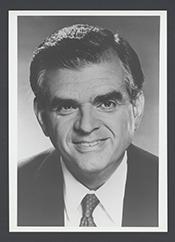
Mr. Speaker, I rise in support of House Resolution 557, recognizing American and coalition forces in Iraq and the liberation of the Iraqi people. The American people should know and believe that the…
Mr. Speaker, I rise in support of House Resolution 557, recognizing American and coalition forces in Iraq and the liberation of the Iraqi people.
The American people should know and believe that the President brought the U.S. into this war to oust Saddam Hussein and bring freedom in that part of the world with 34 coalition partners, and that was a good decision. Many of us supported the President and voted to provide emergency supplemental funding for military operations in Iraq. These were the resources that financed the capture of additional Saddam regime loyalists and Saddam himself and provided funding to protect our troops.
As a matter of fact, the lion's share of the money went to the troops and the other went to rebuilding the country, opening schools, opening hospitals, putting electricity on line, opening businesses. The people of Iraq love America because of their newfound freedom, their newfound hope, and their newfound opportunities.
Many of us voted for the war resolution because we believed it was the right thing to do, and many of us voted for the supplemental funding because we believed it was the right thing to do.
We have heard all the claims that the intelligence community's analysis was politicized and analytical judgments were made to advance the administration's policy. The same judgment and analysis was given to President Clinton who used that analysis to take limited action against Saddam. The point is that both Presidents received the same intelligence. The only difference is that President Bush took serious and meaningful action against Saddam Hussein.
In my opinion, critics have not given the intelligence community a fair shake, and it is obvious from some of those who do not even serve on the committee come down here and criticize when they have not had the benefit that many of us have had of serving on the committee. That is unfortunate. They have failed to highlight those judgments on UAVs, ballistic missiles, illicit procurement networks that have been found and confirmed in Iraq. They have failed to highlight those judgments about the presence in Iraq of terrorist elements associated with al Qaeda.
It is fine to highlight real problems and propose real solutions to fix them, but we have yet to hear that from the critics. Telling analysts not to make tough judgments is not a viable solution. Rebuilding our intelligence community and providing them with the resources needed to fight the global war on terrorism seems more appropriate.
I support our troops and our intelligence community, people who work in dark places in the world but never get any credit for the work that they do. The credit goes in some cases to politicians and government officials, but those people in dark places who are doing the hard work deserve the credit. No politician can take credit for capturing Saddam. That credit goes to the intelligence community and the military, and those of us that have supported them with our votes on this floor to give them the money to do it. Also I think they deserve the credit, and the critics need to really, I think, examine what they are saying.
Congratulations to those in the intelligence community and the military community for liberating Iraq, freeing the people and giving them hope and opportunity, and for that reason, I support I think a very well-worded and -constructed resolution.
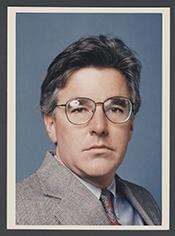
Mr. Speaker, I thank the gentleman for yielding me the time, and it is unfortunate that this resolution has become so political because I think clearly all of us should have been able to sit down and…
Mr. Speaker, I thank the gentleman for yielding me the time, and it is unfortunate that this resolution has become so political because I think clearly all of us should have been able to sit down and come up with a resolution that would be united and that would send a clear voice to all of the world how much we support our troops.
We are going to have 4 hours of debate, and there are so many important things we should be discussing, like the fact that we failed to provide our troops with critical protection and equipment that they need, from interceptive body armor to anti-jamming devices, to armored humvees.
Yesterday, I met with Brian Hart, the father of Private First Class John Hart who was killed in Iraq last October when the unarmored humvee that he was patrolling in was ambushed and sprayed with bullets. Just days before his death, Pfc. Hart called his father and told him how unsafe he felt riding around in humvees that lacked bulletproof shielding or reinforced doors.
The story of John Hart is all too familiar. A couple of months ago, the Defense Department stated that 29 American troops had been killed and 290 wounded on attacks on humvees. Now I hear they are not even tracking those numbers anymore, but I do know that of the 18 soldiers killed in Iraq from Massachusetts, 6 died in unarmored humvees or trucks.
Look at this chart. Almost 80 percent of the 12,500 humvees deployed in Operation Enduring Freedom and Iraqi Freedom lack reinforced windows and doors. The evidence here is overwhelming that we have not gotten what our troops need fast enough.
And what bothers me is that the Army did not even begin to address this shortage until August 2003, 3 months after President Bush announced the end of the war in Iraq. The Secretary of the Army says that they will get this done by August; but as of today no new orders have been placed, leaving our troops, many of them, in this vulnerable position, in unarmed vehicles. August just is not good enough.
For too long, the Army has dragged its feet because it failed to consider quick, effective alternatives to uparmoring Humvees like installing add-on armor kits.
If we purchased more add-on kits and reached out to other vendors, we can get these Humvees armored now.
Recently, 25,000 Marines deployed to Iraq and Afghanistan and took with them 3,000
trucks and Humvees, all of which have been armored with protective plating. The Commandant of the Marine Corps, General Hagee, understood that installing temporary add-on kits provides a quick, easy alternative to uparmoring Humvees in depots at home. So Gen. Hagee purchased $9 million worth of add-on armor kits to outfit Humvees before he sent his Marines back into the battlefield.
I have introduced a resolution urging the Defense Department to use whatever means possible to armor these Humvees as quickly as they can.
If we truly want to support our Armed Forces, this would provide them with the critical protection and equipment they deserve!
Mr. Speaker, will the gentleman yield?
Mr. Speaker, that is precisely why I could not vote for it. We were supposed to have this money appropriated. We have troops over there in unarmed vehicles. It is inexcusable.
Mr. Speaker, I yield 6 minutes to the distinguished gentleman from Pennsylvania (Mr. Murtha), the ranking member of the Subcommittee on Defense of the Committee on Appropriations, who has absolutely…
Mr. Speaker, I yield 6 minutes to the distinguished gentleman from Pennsylvania (Mr. Murtha), the ranking member of the Subcommittee on Defense of the Committee on Appropriations, who has absolutely no peer in the House of Representatives in being in support of the troops in Iraq and the armed services before and during and after Iraq.
Mr. Speaker, I yield myself the balance of my time.
Mr. Speaker, the last speaker, who is my good friend and the chairperson of the Permanent Select Committee on Intelligence and the ranking member of the Committee on Rules on which he and I serve, just made the comment that he was not consulted. I say to my good friend that he is an original cosponsor of the legislation: the gentleman from Illinois (Mr. Hyde), the gentleman from Texas (Mr. DeLay), the gentleman from Missouri (Mr. Blunt), the gentlewoman from Ohio (Ms. Pryce), the gentleman from Florida (Mr. Goss), and the gentleman from California (Mr. Hunter).
Now, that said, my good friend had the privilege that the gentleman from Pennsylvania (Mr. Murtha) and the gentleman from Missouri (Mr. Skelton) did not have, and that was even to be original co-sponsors even if they were not consulted.
Mr. Speaker, I will be asking for a ``no'' vote on the previous question because I feel this totally closed rule is just plain wrong. There is not one single opportunity for any Member of the House to offer an amendment to this resolution, not even on the motion to recommit.
Oddly enough, when the current House Republican leadership was in the minority, a motion to recommit without instructions was one of the things they complained most about. Now, here they are doing the very thing they said was so wrong and offensive at that time. Where will the sanctimony end?
The war in Iraq is one of the most serious issues facing our Nation today. Anything that speaks to this matter on the floor of the U.S. House of Representatives should be done, as the gentleman from Pennsylvania (Mr. Murtha) said, in a way that allows all responsible viewpoints to be considered. That is what democracy is all about.
This rule simply gags that process. Ironic, do you not think, when we are exporting democracy to Iraq.
Mr. Speaker, this is not about stopping consideration of the underlying resolution. I am not aware of one single Member of this body who does not support and praise the incredibly brave men and women who are in harm's way in Iraq.
I believe we can all agree wholeheartedly on supporting our soldiers, but there are other important matters that are not addressed in this resolution, issues that many in this House want to include in this resolution.
Therefore, if the previous question is defeated, I will offer an amendment to the rule that will allow the motion to recommit to contain instructions.
Mr. Speaker, I ask unanimous consent to submit for the Record immediately prior to the vote on the previous question a description of the motion to recommit that will be offered if the previous question is defeated and the rule is amended to allow instructions.
Mr. Speaker, on that I demand the yeas and nays.
Mr. Speaker, I demand a recorded vote.
Bill Text
2 versions available
        [Congressional Bills 108th Congress]
[From the U.S. Government Publishing Office]
[H. Res. 557 Engrossed in House (EH)]

In the House of Representatives, U.S.,

March 17, 2004.
Whereas Saddam Hussein and his regime committed crimes against humanity,
systematically violating the human rights of Iraqis and citizens of
other countries;
Whereas Saddam Hussein's terror regime subjected the Iraqi people to murder,
torture, rape, and amputation;
Whereas on March 16, 1988, Saddam Hussein's regime had and unleashed weapons of
mass destruction against Kurdish citizens, killing nearly 5,000 of them;
Whereas as many as 270 mass grave sites, containing the remains of as many as
400,000 victims of Saddam Hussein's regime, have been found in Iraq;
Whereas rape was used to intimidate the Iraqi population, with victims often
raped in front of their families;
Whereas the regime punished the Marsh Arabs by draining the marshlands, which
created hundreds of thousands of refugees and caused an ecological
catastrophe;
Whereas the Iraq Liberation Act of 1998 (Public Law 105-338), passed by the
House of Representatives by a vote of 360 to 38, made it United States
policy to support efforts to remove from power the regime headed by
Saddam Hussein;
Whereas with the Iraqi regime failing to comply with 16 previously adopted
United Nations Security Council resolutions, the Security Council
unanimously approved Resolution 1441 on November 8, 2002, declaring that
Iraq ``has been and remains in material breach of its obligations under
relevant resolutions, including resolution 687 (1991), in particular
through Iraq's failure to cooperate with United Nations inspectors'';
and
Whereas on October 10, 2002, the House of Representatives passed the
Authorization for Use of Military Force Against Iraq Resolution of 2002
(Public Law 107-243) and on March 19, 2003, the United States initiated
military operations in Iraq: Now, therefore, be it
Resolved, That the House of Representatives--
(1) affirms that the United States and the world have been made
safer with the removal of Saddam Hussein and his regime from power in
Iraq;
(2) commends the Iraqi people for their courage in the face of
unspeakable oppression and brutality inflicted on them by Saddam
Hussein's regime;
(3) commends the Iraqi people on the adoption of Iraq's interim
constitution; and
(4) commends the members of the United States Armed Forces and
Coalition forces for liberating Iraq and expresses its gratitude for
their valiant service.
Attest:

Clerk.