Higher-Risk Impaired Driver Act
Legislative Activity
Stay on top of the latest movement without scrolling through every action
Read twice and referred to the Committee on Environment and Public Works.
May 22, 2003
View full timeline
Introduced in Senate
May 22, 2003
Sponsor introductory remarks on measure. (CR S7054)
May 22, 2003
Read twice and referred to the Committee on Environment and Public Works.
May 22, 2003
Floor Debate
23 membersWhat members said about S. 1141 on the floor
 DF
DF PM
PM JFK
JFK AS
AS JB+18
JB+18
Floor Debate
23 membersWhat members said about S. 1141 on the floor
Mr. President, I rise today to introduce a bill to prevent unnecessary hardship for ranching families in the Sierra Nevada Mountains. This summer, restrictions imposed for the Yosemite Toad and…
Mr. President, I rise today to introduce a bill to prevent unnecessary hardship for ranching families in the Sierra Nevada Mountains.
This summer, restrictions imposed for the Yosemite Toad and willow flycatcher will force about fifteen to thirty ranchers off the land that they have long used for grazing.
This bill requires the Forest Service to explore all the options available to avoid this outcome. For example, the bill makes it easier for the Forest Service to offer ranchers suitable alternative grazing land.
Besides alternative grazing arrangements, the Forest Service should look at fencing, active management of the cattle, and other options. If none of these alternatives are feasible, the bill provides relief for the most seriously affected ranchers.
The bill would allow ranchers to keep using 15 parcels of land during this calendar year where Yosemite Toad and willow flycatcher restrictions would otherwise make grazing unworkable. For many other ranches, where grazing and the species could coexist with some adjustments, environmental protections would fully remain in place.
I urge the Forest Service to quickly devise a long-term strategy to promote the coexistence of ranchers and the species. The Forest Service should work proactively with the Fish and Wildlife Service to establish a conservation plan for the species--with the goal of avoiding the need for any listing of it.
I believe that if the regulatory agencies collect better information on the Yosemite Toad and the willow flycatcher, we can find ways to protect the species without completely shutting down long-term ranching operations. I am committed to expediting these long-term solutions.
Mr. President, I rise to introduce the ``Unaccompanied Alien Child Protection Act of 2003,'' bipartisan legislation to reform the way the Federal Government treats unaccompanied alien children who are in Federal immigration custody. I am pleased to be joined by my colleagues, Senators Brownback, Voinovich, Kennedy, Cantwell, DeWine, Feingold, and Lautenberg in introducing this important measure.
Approximately 5,000 foreign-born children under the age of 18 enter the United States each year unaccompanied by parents or other legal guardians. These children are among the most vulnerable of the immigrant population.
Many have often entered the country under traumatic circumstances. They are young and alone, subject to abuse and exploitation. They are often unable to articulate their fears, their views, or testify to their needs as accurately as adults can.
Despite these facts, U.S. Immigration laws and policies have been developed and implemented without regard for their effect on children, particularly on unaccompanied alien children.
Under current immigration law, these children are forced to struggle through a system designed primarily for adults, even though they lack the capacity to understand nuances legal principles and procedures. Children who may very well be eligible for relief are often vulnerable to being deported back to the very life-threatening situations from which they fled--before they are even able to make their cases before the Department of Homeland Security or an immigration judge.
Prior to March 1, 2003, the Immigration Naturalization Service, INS, had responsibility for the care, custody, and treatment of unaccompanied alien children. Too often, the INS, fell short in fulfilling the protection side of these responsibilities.
The legislation that I am introducing today builds on Section 462 of Public Law 107-296, the ``Homeland Security Act of 2002'', which provided for the transfer of responsibility for the care
and placement of unaccompanied alien children from the now-abolished INS to the Office of Refugee Resettlement, ORR, within the Department of Health and Human Services. This provision was based on S. 121, comprehensive legislation relating to unaccompanied alien children that I introduced at the beginning of the 107th Congress.
With the enactment of the Homeland Security Act, we set into motion the centralization of responsibility for the care and custody of unaccompanied alien children in the Office of Refugee Resettlement. The first phase of this transfer of responsibility occurred on March 1, 2003. Once the transition is completed, we have finally resolved the conflict of interest inherent in the former system.
I am pleased that the provision transferring responsibility for the care and custody of unaccompanied alien children was contained in the Homeland Security Act. Its inclusion in the new law was an important first step in reforming the way unaccompanied alien children are treated. It was a key provision for two reasons: First, it will help ensure that the Secretary of Homeland Security is not burdened with policy issues unrelated to the threat of terrorism. The new Department has a huge and important mission and its attention should be focused on that mission. Second, it recognizes that the Federal Government has a special responsibility to protect these children who are in federal custody. The INS did not always live up that responsibility.
But, the transfer of authority to the ORR--by itself--is not enough to ensure that these children are properly treated. Congress now has a responsibilty to go beyond the simple transfer and set the priorities for ORR and its new jurisdiction over unaccompanied foreign-born minors.
A number of other important reforms that were contained in last year's S. 121 were left out of the Homeland Security Act. Enactment of these reforms will be crucial if we truly are to reform the manner in which these children are treated. As I mentioned, the Unaccompanied Alien Child Protection Act of 2003 builds on the Homeland Security Act in two ways: First, it would make a number of technical and conforming changes in law to bring about the smooth transfer of the INS's unaccompanied alien child-related functions to ORR. Second, it would make a number of more substantive reforms in law with respect the respect to the treatment of these children--reforms that are designed to ensure that such children are treated with fairness and compassion.
Other provisions include those that would keep children who are criminals or who pose a threat to national security under the custody of the Department of Homeland Security rather than transfer responsibility of them to the ORR.
I first became involved in this issue when I heard about a young 15- year old Chinese girl who stood before a U.S. immigration court facing deportation proceedings. She had found her way to the United States as a stowaway in a container ship captured off of Guam, hoping to escape the repression she had experienced in her home country.
She had been placed on a boat bound for the United States by her very own parents, fleeing China's rigid family planning laws, Under these laws, she was denied citizenship, education, and medical care. She came to this country alone and desperate.
And what did our immigration authorities do when they found her? The INS detained her in a juvenile jail in Portland, OR, for 8 months before her asylum hearing, and 4 months after she was granted asylum.
At her asylum hearing, the young girl stood before a judge, unrepresented by counsel, confused, and unable to understand the proceedings against her. She could not wipe away the tears from her face because her hands were chained to her waist. According to a lawyer who later came to represent her, ``her only crime was that her parents had put her on a boat so she could get a better life over here.''
While the young girl eventually received asylum in our country, she unnecessarily faced an ordeal no child should bear under our immigration system. This young Chinese girl represents only one of 5,000 foreign-born children who, without parents or legal guardians to protect them, are discovered in the United States each year in need of protection. This, is unacceptable treatment. We have a responsibility to do better than this.
Central throughout the Unaccompanied Alien Child Protection Act of 2003 are two concepts: 1. The United States Government has a fundamental responsibility to protect unaccompanied children in its custody; and 2. in all proceedings and actions, the government should have as a high priority protecting the interests of these children, most of whom are unable to understand the nature of the proceedings in which they are involved.
This bill would ensure that children who are apprehended by immigration authorities are treated humanely and appropriately by: ensuring that eligible unaccompanied alien children are promptly placed in the custody of Office of Refugee Resettlement after they are encountered by immigration officials; ensuring that the children have counsel to represent them in immigration proceedings and matters; authorizing the Director of ORR to provide guardians ad litem for the children to look after their interests; establishing clear guidelines and uniformity for detention alternatives such as shelter care, foster care, and other child custody arrangements; establishing minimum standards for detention and alternative settings that take into account the special needs of children; improving such children's access to existing options for permanent protection when U.S. immigration and child welfare authorities believe such protection is warranted; setting forth procedures that immigration officers should follow when apprehending unaccompanied alien children at the United states border or at United States ports of entry; establishing procedures to ensure that the true age of an alien who claims to be under the age of 18 is determined; ensuring that the Department of Homeland Security, rather than the Office of Refugee Resettlement, maintain custody over children who are either criminals or threats to national security; and establishing procedures to ensure that certain unaccompanied alien children from Mexico or Canada, encountered along the United States border, are returned to their homes, subject to formal agreements between the United States and those countries providing for their safe return without undue delay.
Without enactment of my legislation, none of these important parameters would be placed on the Office of Refugee Resettlement or the Department of Homeland Security.
This bill also includes provisions that provide for the safety of the significant number of unaccompanied alien children who are victims of smuggling or trafficking rings. For example, 2 years ago, Phanupong Khaisri, a 2-year old Thai child, was brought to the United States by two individuals falsely claiming to be his parents, but who were actually part of a major alien trafficking ring.
The INS was prepared to deport the child back to Thailand. It was not until Members of Congress and the local Thai community had intervened, however, that the INS decided to allow the child to remain in the United States until the agency could provide proper medical attention and determine what course of action would be in his best interest.
The Unaccompanied Alien Child Protection Act aims to prevent situations like this from recurring. Moreover, the legislation would ensure that children are released into safe and humane environments while awaiting a determination of their status when that is appropriate, and it would ensure that the children are protected from smugglers, traffickers, or others who might exploit them.
Further, it would require the ORR to take steps to ensure that unaccompanied alien children are protected from smugglers or others who may wish to do them harm, and authorizes reimbursement for State and local expenses associated with caring for unaccompanied alien children.
Children, even more than adults, have incredible difficulty understanding the complexities of the immigration system without the assistance of counsel. Despite this reality, most children in immigration custody are overlooked and unrepresented. Without legal representation, children are at risk of being returned to their home
countries where they may face further human rights abuses.
The Unaccompanied Alien Child Protection Act of 20032 would require that all unaccompanied alien children in Federal custody by reason of their immigration status have counsel to represent them in any immigration proceedings involving them. It would vest in the Director of ORR responsibility for ensuring that the children have counsel, and it would provide the Director power to establish an infrastructure for developing a system to recruit and support pro bono counsel who can represent these children without cost to them or to the government.
It provides, as a last resort, that counsel could be provided for the children at government expense, capping the fees that such counsel could charge in the event that the government pays for such counsel.
This bill would authorize, but not mandate, the Director of ORR to put into place a system of guardians ad litem who would help the court in determining the best interests of children in U.S. custody.
The vast majority of unaccompanied alien children have been forced to maneuver the immigration system without any representation or without any assistance. This is unacceptable. It results in many children participating in a system without any understanding of the process they are undergoing or the ramifications of their situation.
Under this section, the guardian ad litem would not be working ``for the child.'' Nor would he or she be working for the Department of Homeland Security. Instead, he or she would be an impartial observer reporting to the court and to the Office of Refugee Resettlement on what he or she thinks is in the best interest of the child.
The guardians ad litem system could be modeled after any of a number of systems already existing in juvenile courts throughout the American juvenile justice system. This system is not a novel legal concept, but one that is trusted and already in place in every state in proceedings involving juveniles.
Imagine the fear of a foreign-born child, in the United States alone without a parent or guardian. Imagine that child being thrust into a system she did not understand, given no legal aid, placed in jail that housed juveniles with serious criminal convictions. Mr. President, I find it hard to believe that our country would have allowed innocent children to be treated in such a manner.
That is why my colleagues and I are introducing this legislation today. The Unaccompanied Alien Child Protection Act of 2003 will help our country fulfill the special obligation to these children.
I am proud to have the support of the United States Conference of Catholic Bishops, the Women's Commission on Refugee Women and Children, the Lutheran Immigration and Refugee Service, the American Bar Association, the United National High Commissioner for Refugees, and many other organizations with whom I have worked closely to develop this legislation.
I urge my colleagues to join me by cosponsoring this important measure and ensuring that these reforms are finally enacted.
I ask unanimous consent that the text of the bill be printed in the Record.
Mr. President, I rise today to offer legislation to provide lawful permanent residence status to Esidronio Arreola-Saucedo, Maria Elena Cobian Arreola, Nayely Bibiana Arreola, and Cindy Jael Arreola, Mexican nationals who live in the Fresno area of California.
Mr. and Mrs. Arreola have lived in he United States for nearly 20 years. They are the parents of Nayely and Cindy, who also stand to benefit from this legislation. The Arreolas also have three United States citizens children: Roberto, who is 11 year old; Daniel, who is 8; and Saray, their youngest daughter, who is six-years old. Today, Mr. and Mrs. Arreola, and her children face deportation.
The story of the Arreola family is quite compelling and I believe they merit Congress' special consideration for humanitarian relief. The Arreolas are in uncertain situation in part because of grievous errors committed by their previous counsel, who has since been disbarred. In fact, the attorney's conduct was so egregious that it compelled an immigration judge to write the Executive Office of Immigration Review seeking his disbarment for the legal detriment he caused his immigrant clients.
Mr. Arreola has lived in the United States since 1986. He was an agricultural migrant worker in the fields of California for several years, and as such would have been eligible for permanent residence through the Seasonal Agricultural Workers, SAW, program had he known that he could apply for it. Mrs. Arreola was living in the United States at the time she became pregnant with her daughter Cindy, but returned to Mexico to give birth to Cindy to avoid any problems with the Immigration and Naturalization Service. It is quite likely that the family would have qualified for cancellation of removal but for the conduct of their previous attorney.
Perhaps one of the most compelling reasons for permitting the family to remain in the United States is the devastating impact their deportation would have on their children: three of whom are U.S. citizens; the other two have lived in the United States virtually all of their lives. This country is the only the country they really know.
Nayely, the oldest child, is a junior in high school. She is an outstanding student with a 3.91 Grade Point Average who ranks fourth in her class of approximately 300 students. At her relatively young age, Nayely has demonstrated a strong commitment to the ideals of citizenship in her adopted country. She has worked hard to achieve her full potential both in her academic endeavors and through the service she provides her community.
Nayely is a member of Advancement Via Individual Determination, AVID, a college preparatory program in which students commit to determining their own futures through achieving a college degree. Nayely is also President of the key Club, a community service organization. She helps mentor freshmen and participates in several other student organizations in her school. Perhaps the greatest hardship to this family if she is forced to return to Mexico will be her lost opportunity to realize here dreams and further contribute to her community and to this country.
As the principal of her high school wrote, ``[s]he epitomizes what we seek to instill in all of our students. She has accepted the challenges and has made a commitment to better her future, to better her life, and to better herself through education.''
It is clear to me that Nayely feels a strong sense of responsibility for her community and country. By all indication, this is the case as well for all of the members of her fine family.
I understand that the Arreolas also have other family who are lawful permanent residents here in the United States. Mrs. Arreola also has three brothers who are U.S. citizens and Mr. Arreola has a sister who is a U.S. citizen. It is my understanding that they do not have any family to whom they might return in Mexico.
According to immigration authorities, this family has never had any problems with law enforcement. I am told that they have filed their taxes for every year from 1990 to the present. They have always worked hard to support themselves. As I previously mentioned, Mr. Arreola was previously employed as a farmworker, but now has his own business repairing electronics. His business has been successful enough to enable him to purchase a home for his family.
It seems so clear to me that this family has embraced the American dream and their continued presence in our country would do so much to enhance the values we hold dear. Enactment of the legislation I have introduced today will enable the Arreolas to continue to make significant contributions to their community and to the United States as well.
I ask unanimous consent that the letter of Xavier De La Torre, Principal of Granite Hills High School, as well as the numerous letters of support our office has received from members of the Porterville community be entered into the Record. I also ask unanimous consent that Nayely's essay entitled ``If I Could Change the World,'' which she wrote at age 15, be printed in the Record.
Mr. President, today I rise to introduce legislation to do what should have been done decades ago: fully ban asbestos in the United States. I am introducing the Ban Asbestos in America Act of 2003 to…
Mr. President, today I rise to introduce legislation to do what should have been done decades ago: fully ban asbestos in the United States. I am introducing the Ban Asbestos in America Act of 2003 to prohibit this known carcinogen from being used to manufacture products in this country. The bill also bans imports of asbestos products from other countries where asbestos is still legal. I am pleased that Senators Baucus, Boxer, Cantwell, Dayton, Jeffords and Leahy are original cosponsors of this important legislation.
The primary purpose of the Ban Asbestos in America Act of 2003 is to require the Environmental Protection Agency, EPA, to ban the substance within two years. Most people think that asbestos has already been banned. In fact, in 1989 EPA finalized regulations to phase out and ban the substance by 1997. But in 1991, the 5th Circuit Court of Appeals overturned EPA's ban, arguing that EPA did not ``first evaluate and then reject the less burdensome alternatives'' under the Toxic Substances Control Act. Unfortunately, the first Bush Administration did not appeal the decision to the Supreme Court. While new uses of asbestos were banned, existing ones were not.
As a result, it is still legal in 2003 to construct buildings in the United States with asbestos cement shingles and to treat them with asbestos roof coatings. It is still legal to construct new water systems using asbestos cement pipes imported from other countries. It is still legal for cars and trucks to be made and serviced with asbestos brake pads and clutch facings.
Asbestos is still not banned, and as a result, we're still using it. According to the U.S. Geological Survey, in 2001, businesses in this country consumed 26 million pounds of chrysotile asbestos to make roofing products, gaskets, friction materials and other products. Last month, my staff walked into a local home improvement store and bought off the shelf roofing sealants made with asbestos. In addition, we are still importing asbestos products from other countries, many of which have less stringent environmental and public health standards.
Everyone knows that asbestos is harmful. The term asbestos, like arsenic, lead, mercury or DDT, is synonymous with poison. Asbestos may well be the most regulated toxic substance that federal and state agencies have ever dealt with. At least eleven different Federal statutes address asbestos. The EPA, Occupational Safety and Health Administration, OSHA, Mine Safety and Health Administration and Consumer Product Safety Commission are only some of the Federal agencies tasked with implementing rules to protect workers and consumers from the dangers of this substance.
But the sheer volume of rules and regulations in place does not guarantee that public health and the environment are being adequately protected. We have significant evidence suggesting that because asbestos is still not banned, we're still not safe from its dangers. I'd like to highlight some of this evidence for my colleagues.
First, workers in this country are still being exposed to dangerous levels of asbestos. According to OSHA, ``An estimated 1.3 million employees in construction and general industry face significant asbestos exposure on the job. Heaviest exposures occur in the construction industry, particularly during the removal of asbestos during renovation or demolition. Employees are also likely to be exposed during the manufacture of asbestos products, such as textiles, friction products, insulation, and other building materials, and during automotive brake and clutch repair work.''
It is important to remember that there is no known safe threshold level of asbestos exposure. OSHA's permissible exposure limit of 0.1 fibers per cubic centimeter is based on technical measurement limitations. OSHA's limit assumes that workers exposed to this concentration have a lifetime exposure risk of 3 to 5 in 1,000 for cancer and 2 in 1,000 for asbestosis. This is a very high risk compared to the cancer risk levels that are considered acceptable for some environmental cleanups.
The extent to which workers are exposed to dangerous levels of asbestos is especially troublesome when one considers the frequency with which OSHA's standards are violated. On July 31, 2001, I chaired a Senate Health, Education, Labor and Pensions hearing on asbestos and workplace safety. At the hearing I learned from OSHA that since 1995, the agency had cited employers for violations of its asbestos standards 15,691 times. This is astounding given the known dangers of asbestos and the high risks of disease even when OSHA's exposure limit is being met.
As follow-up to the hearing, I asked OSHA to provide more information about asbestos-related violations. In an October 17, 2001 letter to me, Mr. John Henshaw, Assistant Secretary for Occupational Safety and Health, wrote that between fiscal year 1996 and fiscal year 2001, OSHA conducted a total of 190,971 inspections generating a total of 427,786 violations. Of these, 3,000 inspections and 15,691 violations involved asbestos. According to Mr. Henshaw, about 2 percent of inspections and 4 percent of violations were asbestos-related. In his letter to me, Mr. Henshaw wrote, ``OSHA does not consider any level to be an acceptable noncompliance level. We strive for 100 percent compliance.'' Despite OSHA's best intentions, workers are still being exposed to dangerous levels of asbestos.
It is also important to consider that the vast majority of workplaces where asbestos exposure occurs, such as construction jobs and auto repair shops, are not regularly inspected by OSHA. The Administration conducts inspections only in response to complaints or as a result of referrals from law enforcement or the media. Many more violations of the standard occur in the real world than are actually recorded by regulators. Many employees likely do not contact OSHA about potential asbestos exposure on the job because they think asbestos has been banned long ago and is no longer a problem.
But asbestos in the workplace is clearly still a problem. Recent news investigations provide more evidence that workers are being exposed to dangerous levels of this mineral. According to an article in the Seattle Post-Intelligencer on November 16, 2000, ``During the past three months, the P-I collected samples of dust from floors, work areas and tool bins in 31 brake-repair garages in Baltimore, Boston, Chicago, Denver, Richmond, Seattle, and Washington, D.C. Asbestos, almost exclusively chrysotile, which has been used for decades in brakes, was detected in 21 of the locations. The amount of asbestos in the dust ranged from 2.26 percent to 63.8 percent.''
When dust with these concentrations of asbestos in them is disturbed, airborne concentrations of asbestos occur that are well above OSHA's permissible exposure limit of 0.1 fiber per cubic centimeter. Under current OSHA regulations, if airborne asbestos concentrations exceed this level, employers must conduct air monitoring, take measures to reduce asbestos emissions, post warning signs and record concentrations of airborne asbestos. Workers are supposed to wear respirators and protective clothing and are required to undergo long term medical monitoring.
Now I recognize that much of the exposure to asbestos in the workplace comes from asbestos products installed years, and in many cases, decades ago. By one estimate, about 30 million tons of asbestos was used in this country between 1900 and 1980. Asbestos in place, in our buildings, schools and homes, will be with us for decades to come.
But given the known dangers of this mineral, why are we still using it? Why are we still adding it to products on purpose when there are perfectly acceptable substitutes? In retrospect, it is tragic that asbestos was so widely used during the 20th century, for the
economic and public health impacts have been disastrous. One very important step in overcoming the problems caused by asbestos is to stop adding to the problem--however incrementally--by continuing to use this dangerous mineral in products on purpose.
I'd like to point out some additional evidence supporting the need to ban asbestos in the United States and to raise awareness about this issue. Most of my colleagues are familiar with the tragedy in Libby, MT, where hundreds of workers and their families suffer from asbestos- related diseases caused by exposure to asbestos-tainted vermiculite.
For decades, the W.R. Grace mine in Libby supplied about 80 percent of the vermiculite used in this country. W.R. Grace very successfully marketed its product, without any warning labels, even though the company was well aware its product was contaminated with this known carcinogen. Asbestos-contaminated ore was shipped to more than 300 sites around the country for processing and use in industrial and consumer products. According to the EPA, 14 of these sites are so contaminated with asbestos that they still need to be cleaned up, even though the Libby mine closed in 1990. While this is a problem that came from a small mining town in Montana, the ramifications and consequences are clearly national in scope.
In addition, vermiculite from Libby is still around and is still a threat to public health. It is estimated that tens of millions of homes, schools and businesses contain insulation made with Libby vermiculite, known as Zonolite. A recent study conducted for EPA, entitled Asbestos Exposure Assessment for Vermiculite Attic Insulation, found that Zonolite in homes today contains up to 2 percent asbestos. This study included tests on Zonolite insulation from Seattle Public Utilities and from a home in Washington State. It found that when this insulation was disturbed, airborne concentrations of 3.3 asbestos fibers per cubic centimeters were measured. In other words, handling Zonolite asbestos can cause levels of asbestos in the air that significantly exceed OSHA's exposure limit for workers. Even more troubling, perhaps, the study found ``vermiculite that tests non-detect for asbestos by bulk analysis can still generate airborne asbestos concentrations when disturbed.'' When vermiculite without significant amounts of asbestos in bulk was disturbed, concentrations of asbestos in the air up to 0.5 fibers per cubic centimeters were detected. This means that even vermiculite with only trace amounts of asbestos in bulk can generate unhealthy concentrations of asbestos in the air.
Yesterday EPA launched a national consumer education campaign warning people not to disturb Zonolite attic insulation if they have it in their homes. The agency also warned people not to let their children play in attics with vermiculite for fear of asbestos exposure. EPA has developed a consumer education brochure and has created an asbestos hotline for people to call for more information. The Agency for Toxic Substances and Disease Registry and National Institute for Occupational Safety and Health have joined EPA in this education effort by creating materials to educate consumers and workers about the dangers of asbestos-contaminated vermiculite.
While we need to ensure that we are no longer adding asbestos to our products on purpose, we also need to ensure that asbestos in harmful concentrations isn't ending up in our consumer products by accident. I am glad EPA, ATSDR and NIOSH are now proactively reaching out to consumers and workers to warn them to stay away from vermiculite attic insulation. This is an important first step in dealing with just one aspect of the legacy created by W.R. Grace in Libby.
There is another important reason to ban asbestos that I would like to share with my colleagues. As I mentioned previously, the United States is still importing products that contain asbestos. Unfortunately, we do not have precise statistics on which products coming into this country contain the deadly mineral. The Department of Commerce's import database does not distinguish between asbestos- containing products and products containing asbestos substitutes. According to the U.S. International Trade Commission, in 2002 this country imported more than 44,000 tons of asbestos-cement products, some of which may have contained cellulose instead of asbestos.
With increased globalization and international trade, U.S. imports of asbestos containing consumer and industrial products will continue to rise--unless we prohibit these products from crossing our borders in the first place.
Although we do not have accurate numbers for the extent to which asbestos products are flowing across our borders, we do know that asbestos is being heavily marketed to developing countries. According to an August 2, 1999 USA Today article, ``As asbestos demand has plummeted in the industrialized world the past 25 years, it has soared in many developing nations and formerly communist countries. Its use in these countries is largely unregulated, haphazard and deadly.''
A more recent editorial in the Canadian Medical Association Journal compares the asbestos industry to the tobacco industry. The February 20, 2001 article by Doctors Joseph LaDou, Philip Landrigan, John C. Bailar III, Vito Foa and Arthur Frank reads:
``The commercial tactics of the asbestos industry are very similar to those of the tobacco industry. In the absence of international sanctions, losses resulting from reduced cigarette consumption in the developed countries are offset by heavy selling to developing nations. In a similar fashion, the developed world has responded to the asbestos health catastrophe with a progressive ban on the use of asbestos. In response, the asbestos industry is progressively transferring its commercial activities and the health hazards to the developing countries.''
Banning asbestos in the United States sends an important message to the rest of the world. The asbestos industry will no longer be able to justify its marketing to developing countries by pointing out that asbestos is still legal in the U.S., and therefore, it must be safe. More than 30 countries have already banned asbestos, and it is time for this country to follow suit. It is our moral responsibility as the world's strongest economy, the most powerful Nation and a leader in environmental protection and public health to ban this harmful substance.
That is why today I am introducing the Ban Asbestos in America Act. The legislation has five main parts. First, this bill protects public health by doing what the EPA tried to do 14 years ago: ban asbestos in the United States. The legislation requires EPA to ban it within two years of passage of the Act. As under the regulations EPA finalized in 1989, companies may file for an exemption to the ban if there is no substitute material available.
Second, the bill requires EPA to convene a Blue Ribbon Panel on asbestos policy and to have the National Academy of Sciences conduct an asbestos study. In response to the 2001 EPA Inspector General's report on Libby, Montana, the EPA promised to convene a Blue Ribbon Panel on asbestos and non-regulated fibers. But instead of convening a high level panel, EPA hired a non-profit organization, the Global Environment and Technology Foundation, to develop an asbestos policies focus group. Just yesterday EPA released GETF's Asbestos Strategies Report. I am very pleased that the Report recommends several aspects of the Ban Asbestos in America Act, including that Congress pass legislation to ban asbestos.
While the recommendations are certainly helpful in providing guidance to EPA, Congress and other federal agencies on the next steps to address asbestos, the GETF report does not replace a full fledged Blue Ribbon Panel. The Ban Asbestos in America Act codifies creation of a Blue Ribbon Panel as EPA first committed to in 2001. The panel will include participation from the Department of Labor and the Consumer Product Safety Commission. It will review the current laws and rules in place to protect workers and consumers, and make recommendations for improving protections within 2 years of passage of the Act.
In addition, the bill calls for EPA to have the NAS conduct a study on the current state of the science relating to the human health effects of exposure to asbestos and other durable fibers. The NAS study shall also include recommendations for a uniform system of asbestos exposure standards and for a uniform system to create protocols to
detect and measure asbestos. As I mentioned previously, asbestos is regulated under multiple statutes. There are different standards within EPA and across Federal agencies, and agencies rely on different protocols to identify the substance. The NAS shall be required to submit the study to EPA, other federal agencies and Congress within 18 months of passage of the Act.
Third, the legislation requires a survey to determine which products contain asbestos, either on purpose or as a contaminant. EPA will be required to conduct this review with input from the Department of Labor, the Consumer Product Safety Commission and the International Trade Commission.
The bill directs the EPA to conduct a survey on the status of asbestos-containing products, such as roofing materials, brake pads and gaskets, which contain asbestos on purpose. EPA must also study contaminant-asbestos products, such as some insulation and horticultural products, which contain asbestos as a contaminant of another substance. The study will examine how people use these products and the extent to which people are exposed to harmful levels of asbestos. The study must be finalized within 18 months to inform the Blue Ribbon Panel and the education campaign.
Fourth, based on the results of the study, EPA shall conduct a public education campaign to increase awareness of the dangers posed by asbestos-containing products and contaminant-asbestos products, including those in homes and workplaces. The agency shall give priority to those products posing the greatest risk, as determined by the study required by the bill. The education campaign must be conducted within 2 years of passage of the bill.
EPA and the Consumer Product Safety Commission shall still be required to conduct a national education campaign about vermiculite insulation within 6 months of passage of the Act. As many as 35 million homes and businesses may contain asbestos-contaminated insulation made with vermiculite from Libby. This requirement is still in the bill despite EPA's recent announcement of an education campaign about vermiculite attic insulation. This will ensure EPA's long-term commitment to educating the public.
Finally, the Ban Asbestos in America Act increases the federal commitment to finding new treatments for the terrible diseases caused by asbestos. At least 2,000 people per year die from mesothelioma, a deadly cancer of the lining of the lungs and internal organs caused by exposure to asbestos. The legislation would direct the head of NIH to ``expand, intensify and coordinate programs for the conduct and support of research on diseases caused by exposure to asbestos.'' The Centers for Disease Control would be required to create a National Mesothelioma Registry to improve tracking of the disease, which in many cases goes undiagnosed and thus unrecorded. In addition, the bill creates 10 mesothelioma treatment centers around the country to improve treatments for and awareness of this fatal cancer.
Our hope is that by continuing to work together, we will build support for the Ban Asbestos in America Act. If we can get this legislation passed, fewer people will be exposed to asbestos, fewer people will contract asbestos diseases in the first place, and those who already have asbestos diseases will receive treatments to prolong and improve quality of life. I urge my colleagues to support this important legislation.
In the meantime, we should do all we can to ensure that the rules in place to protect workers, consumers and schoolchildren from asbestos are followed and are strengthened if necessary. We also need to make sure that Federal agencies are given adequate resources to fully implement Congress' many mandates.
I ask unanimous consent that the text of the Ban Asbestos in America Act of 2003 be printed in the Record.
Mr. President, I rise today with my colleague, Ms. Snowe, to introduce the Fishing Quota Act of 2003, legislation to establish national criteria governing the use of individual fishing quota IFQ…
Mr. President, I rise today with my colleague, Ms. Snowe, to introduce the Fishing Quota Act of 2003, legislation to establish national criteria governing the use of individual fishing quota IFQ systems. Work began in earnest on this bipartisan bill in the Commerce Committee last spring, as the expiration of the national moratorium on the use of IFQs approached, and small boat fishermen voiced concerns that existing legislative criteria governing the use of IFQs would not offer sufficient protection to communities. I would like to thank Subcommittee Chair Snowe for her efforts to work with me and with other members of the Commerce Committee on this legislation, which draws from separate IFQ legislation that both Senator Snowe and I introduced beginning in the 106th Congress.
The IFQ moratorium established under the 1996 Sustainable Fisheries Act was set to expire September 30, 2000. Senator Snowe and I supported a 2-year extension of that moratorium to allow for hearings and full consultation with affected groups on the issues surrounding IFQs. Our discussions focused on the need to provide regional flexibility to use IFQs as a management tool, while providing national ``rules of the road.'' Such rules of the road would ensure IFQ systems developed after expiration of the moratorium are adopted with the support of the fishery, allocate quota fairly and equitably, address region-specific needs, further the conservation and management goals of the Magnuson- Stevens Act, prevent consolidation of quota, address the needs of small fishing communities, and recognize both the public nature of the resource and that issuance of an IFQ does not give rise to a compensable property right.
To develop such rules, we worked with fellow Commerce Committee members, including Senators Breaux, Lott, Boxer, Stevens, and Cantwell, consulted with interested groups, and obtained technical advice from the National Marine Fisheries Service. While New England has historically been opposed to IFQs, other regions are interested in utilizing IFQ programs in certain fisheries. I believe the resulting bill provides a balance between the need to provide national policy guidance that considers the concerns of communities and harvesters, but allows for development of IFQ systems, where appropriate, on a fishery- by-fishery basis. This preserves the balanced regional approach to fishery management that Congress intended in the Magnuson-Stevens Act. I also want to clarify that this bill does not authorize the establishment of ``processor quota,'' and relates only to issuance of harvester quota.
The bill Senator Snowe and I are introducing today sets forth a set of national criteria that councils wishing to adopt IFQs would follow. Importantly, this bill contains a provision that directs councils to consider the use of community or area-based approaches and strategies that would preserve the vitality of small fishing communities, including the allocation of quota to a fishing community. It also directs councils to consider use of other management measures, including those that would facilitate formation of fishery cooperative arrangements, taking account of the dependence of coastal communities on these fisheries.
This bill addresses many of the concerns raised by fishermen, and I understand the many concerns of small fisherman in New England regarding the use of IFQs. I believe this bill gives fishermen the power to decide whether to implement an IFQ program and ensures that those who do will operate under a fair system. First, no region could implement an IFQ system without approval of a two-thirds majority of eligible permit holders through a referendum process run by the Secretary of Commerce. In addition, any IFQ system developed under the legislation would have to meet a set of national criteria. These national criteria would include: (1) ensuring a fair and equitable initial allocation of quota, including the establishment of an appeals process for qualification and allocation decisions, taking into account present and historic participation in the fishery; (2) establishing limits necessary to prevent inequitable concentration of quota share; (3) preventing any person from acquiring an ``excessive share''; (4) considering allocation of a portion of the annual harvest specifically to small fishermen, skippers, crew members, fishing communities, or categories of vessels or gear types; and (5) providing for revocation of quota if the owner is no longer an active fisherman.
I also believe this bill responds to concerns that IFQ systems would undermine the national interest in conserving fishery resources held in the public trust. In order to respond to those concerns, the bill would: (1) specify that an IFQ is a permit under the Magnuson-Stevens Act and does not confer any right of compensation or any right, title or interest to any fish before it is harvested; (2) established that the quota expires after 10 years, unless extended by a fishery management plan; (3) require that the systems promote management measures to improve the conservation and management of the fishery, including reduction of bycatch; (4) provide for regular review and evaluation of the system, including specifying actions to be taken for any failure to meet the criteria; (5) require that the systems provide for effective enforcement, monitoring, and management, including use of observers; and (6) require that quota be revoked from individuals found to be subject to civil penalties under section 308 of the Magnuson- Stevens Act.
The bill also would require a 5-year recurring independent review of IFQ systems by the National Research Council, to: (1) evaluate the effectiveness of such systems and determine who the systems contribute to improved management, conservation and safety; (2) evaluate the social, economic and biological consequences of the systems, including economic impacts on fishing communities; (3) evaluate the costs of implementation; and (4) provide recommendations to ensure the systems meet Magnuson-Stevens Act requirements and the goals of the plans.
I believe this legislation provides guidelines for the use of IFQs that will help ensure the health of our marine fisheries. During the last reauthorization of the Magnuson-Stevens Act, our
Nation's fisheries were at a crossroads, and action was required to remedy our marine resource management problems, to preserve the way of life in our coastal communities, and to promote the sustainable use and conservation of our marine resources for future generations and for the economic good of the Nation. We must stay the course, and this bill will help us do just that. I remain committed to the goal of establishing biologically and economically sustainable fisheries so that fishing will continue to be an important part of the culture and economy of coastal communities throughout Massachusetts, as well as the economy of the Nation.
Mr. President, there are now nearly 200,000 American veterans today who are forced to wait at least 6 months for their first visit with a Department of Veterans Affairs physician. Despite having served their country and been promised health benefits, these veterans are receiving deferred and rationed health care because of chronic underfunding and bureaucratic red tape. It amounts to a broken promise with men and women who have served in our armed forces. To help ensure that our veterans receive the care they need and have been guaranteed, today I am pleased to introduce the Veterans' Prescription Drug Reform Act of 2003.
Veterans enrolled in the VA health care program are entitled to a prescription drug benefit. This is an essential benefit given the importance of pharmaceuticals in health care today. However, there's a bureaucratic catch: the benefit only applies to prescriptions written by a VA physician, and there are nearly 200,000 veterans who now wait 6 months or longer for their first visit with a VA physician. For those veterans in need of medicine and waiting months on end to see a VA physician, the benefit has little value.
The VA has reported to Congress that, while it has no exact figure, it estimates that tens of thousands of the veterans now on the waiting list are there primarily to access their prescription drug benefit. In many of these cases, veterans have already seen a private physician and have a prescription. But in order to use the VA pharmacy and receive their prescription benefit, these individuals must duplicate their health care visits and see a VA physician. This delays health care benefits for far too many veterans.
The Veterans' Prescription Drug Reform Act of 2003 would permit veterans already on the waiting list to fill a prescription written by a private physician at the VA pharmacy.
Specifically, the Veterans' Prescription Drug Reform Act of 2003 would give the Secretary of Veterans Affairs the authority to permit veterans on the waiting list for their first appointment with a VA physician at the date of enactment to use the VA pharmacy to fill prescriptions written by a private physician. It would also preserve the core healthcare mission of the VA by limiting this initiative only to those currently waiting for their first appointment. The proposal calls for a report to Congress in 1 year so that its potential expansion can be evaluated.
The Secretary of Veterans Affairs has told Congress that he would support such a proposal, and I look forward to working with Senator Harkin, who joins me in sponsoring this legislation, and my other colleagues in the Senate on this common-sense approach to reducing the lengthy wait-lines for veterans' healthcare.
I ask unanimous consent that the text of the bill be printed in the Record.
Mr. President, I am pleased today to join with my colleagues, Senators Johnson and Smith, as well as the cosponsors of our legislation, Senators Akaka, Baucus, Bingaman, Cantwell, Daschle, Murray, and Stabenow in introducing the Native American Small Business Development Act.
As many of my colleagues are aware, last Congress the Committee on Small Business and Entrepreneurship unanimously passed nearly identical legislation, S. 2335, yet the bill was not taken up by the full Senate. Today, Senator Johnson, Senator Smith and I are reintroducing this bill because we recognize that there is an even a greater need for this legislation on tribal lands across the Nation. The economy continues to slump, access to capital is even more limited, and state funding for small business initiatives is being pulled back.
According to a report released by the U.S. Census Bureau, the ``three year average poverty rate for American Indians and Alaska Natives [from 1998-2000] was 25.9 percent. Higher than for any other race groups.'' With an unemployment rate well above the national average and household income at just three-quarters of the national average, Native American communities need a commitment from the Federal government that we will help them, particularly during these difficult economic times. To reaffirm this commitment, the Johnson-Kerry-Smith bill provides Native Americans the resources they need to take advantage of the opportunities of entrepreneurship.
Mr. President, this legislation bears the same name as legislation that recently passed the House, H.R. 1166, which was reintroduced by Congressman Tom Udall, a recognized leader in promoting the interests of American Indians. I would like to thank Congressman Udall for his work in stewarding the Native American Small Business Development Act through the House, this Congress and last, and for his assistance in working with Senators Johnson and Smith and me in drafting the Senate version of our legislation. And I would specifically like to thank Senator Smith for his continued support on this issue.
I would again like to thank the National Indian Business Association, the National Center for American Indian Enterprise Development, the Association of Small Business Development Centers, the Oregon Native American Business Entrepreneurial Network (ONABEN), Native American Management Services, Inc., and all of the tribes that met with us or provided information to help in the drafting of this legislation.
The Senate version of the Native American Small Business Development Act, while incorporating the heart of the Udall legislation, is more comprehensive and provides greater assistance to Native American communities. Senator Johnson, who serves on the Indian Affairs Committee, and I, as the lead Democrat on the Senate Committee on Small Business and Entrepreneurship, were able to combine the resources and experiences of our committees in developing this legislation.
Mr. President, our need to fashion a more comprehensive business assistance package for Native American small businesses stems in part from a growing lack of commitment from the Small Business Administration (SBA) to our Native American communities under this Administration.
While I applaud the Bush Administration for responding to congressional requests by including $1 million in the Administration's FY 2003 budget request for Native American outreach, I was disappointed that it did not seek the full level of $2.5 million requested in a letter I sent with my colleagues Senators Daschle, Wellstone, Johnson, Bingaman and Baucus. Our request specifically sought funding for the SBA's Tribal Business Information Center (TBIC) program, an initiative started and successfully operated under the Clinton Administration. The TBIC program was designed to address the unique conditions faced by American Indians when they seek to start or expand small businesses.
Mr. President, I am disappointed that the Administration has eliminated all funding for Native American outreach in FY2004. With an average unemployment rate on reservations as high as 43 percent, it is inconceivable that two years of outreach is sufficient to have met our shared goal of building sustainable economic opportunities in those communities.
Mr. President, I do not believe that anyone in this Congress would dispute that economic development in Indian Country has often been difficult to achieve and that one important way to help American Indians who live on reservations is to provide them with assistance to open and run their own small businesses. Helping Native Americans open and run small businesses not only instills a sense of pride in the owner and his or her community, it also provides much-needed job opportunities, as well as other economic benefits.
Although underfunded, the TBIC program has provided assistance to a number of small businesses on Indian reservations. TBICs have the support of the American Indian communities they serve because they provide desperately
needed, culturally tailored business development assistance in those communities. The Administration should be seeking to strengthen its commitment to programs that assist Native American communities. Unfortunately, the SBA cut off TBIC funding on March 31, 2002, and now 14 months later, has not met a request by a bipartisan group of Senators to begin the reprogramming process in order to keep the TBICs open.
The Native American Small Business Development Act will ensure that the SBA's programs to assist Native American communities cannot be dissolved by making the SBA's Office of Native American Affairs (ONAA) and its Assistant Administrator permanent. Our legislation would also create a statutory grant program, known as the Native American Development grant program, to assist Native Americans. It would also establish two pilot programs to try new means of assisting Native American communities and require Native American communities to be consulted regarding the future of SBA programs designed to assist them. In short, this legislation will ensure that our Native American communities receive the adequate assistance they need to help start and grow small businesses.
The ONAA will be responsible for helping Native Americans and Native American communities start, operate, and grow small businesses; develop management and technical skills; seek out Federal procurement opportunities; increase employment opportunities through the start and expansion of small business concerns; and increase their access to capital markets.
To be selected to serve as the Assistant Administrator for ONAA, a candidate must have knowledge of Native American cultures and experience providing culturally tailored small business development assistance to Native Americans. Under our legislation, the Assistant Administrator would be statutorily required to consult with Tribal Colleges and Tribal Governments, Alaska Native Corporations (ANC) and Native Hawaiian Organizations (NHO) when carrying out responsibilities under this legislation, which would give Native American communities a true voice within the SBA. The Assistant Administrator for ONAA would be responsible for administering the Native American Development program and the pilot programs created by the Native American Small Business Development Act.
The Native American Development program is designed to be the SBA's primary program for providing business development assistance to Native American communities. To offer this support, to the SBA will provide financial assistance in establish and keep Native American Business Centers (NABC) in operation. Financial assistance under the Native American Development program would be available to Tribal Governments and Tribal Colleges. Unlike the SBA's TBIC program, however, ANCs and NHOs would also be eligible for the grants.
NABCs would address the unique conditions faced by reservation-based American Indians, as well as Native Hawaiians and Native Alaskans, in their efforts to create, develop and expand small business concerns. Grant funding would be used by the NABCs to provide culturally tailored financial education assistance, management education assistance, and marketing education assistance.
The first pilot program under the legislation establishes a Native American development grant. This grant is modeled after the Udall legislation and is designed to bring the expertise of SBA's Small Business Development Centers (SBDC) to Native American Communities. Additionally, any private nonprofit organization, which has members of an Indian tribe comprising a majority of its board of governors or is an NHO or an ANC, may also apply for the grant. Nonprofits were included in the Senate version thanks to the thoughtful input of Senator Cantwell. Many American Indian communities in Washington state are served by an organization called ONABEN, which provides SBDC-like services to Native American communities in Washington, Oregon, Idaho, and California. Organizations like ONABEN, which also has the strong support of Senator Smith, should be encouraged to continue their good work assisting Native American communities, and including them in the grant program available to SBDCs was an important addition to the legislation.
Finally, our legislation establishes a second pilot program to try a unique experiment in Indian Country. Grant funding would be made available to establish American Indian Tribal Assistance Centers. These centers will consist of joint entitles, such as a partnership between an NABC, a Native American development center (which receive grants from the Department of Commerce) and possibly an SBDC. The purpose of this grant is to coordinate experts from various entities to provide culturally tailored business development assistance to prospective and current owners of small business concerns on or near Tribal Lands.
Mr. President, I would again like to thank Senators Johnson and Smith and all of the cosponsors of this important legislation to assist our Native American communities. I would also, again like to thank Congressman Udall for taking the lead in the House on providing critical assistance for small businesses in Native American communities. I would urge all of my colleagues to cosponsor this legislation to help us fulfill our commitment to Native American communities.
Mr. President, I have sought recognition to comment on legislation I am introducing today to provide a cost-of-living, COLA, adjustment for certain veterans' benefits programs. This COLA adjustment…
Mr. President, I have sought recognition to comment on legislation I am introducing today to provide a cost-of-living, COLA, adjustment for certain veterans' benefits programs. This COLA adjustment would affect payments made to nearly 3 million Department of Veterans Affairs, VA, beneficiaries, and would be reflected in beneficiary checks that are received in January 2004, and thereafter.
An annual cost-of-living adjustment in veterans benefits is an important tool which protects veterans' cash-transfer benefits against the corrosive effects of inflation. The principal programs affected by the adjustment would be compensation paid to disabled veterans, and dependency and indemnity compensation, DIC, payments made to the surviving spouses, minor children and other dependents of persons who died in service, or who died after service as a result of service- connected injuries or diseases.
The President's budget anticipates inflation to be at a two percent level at the close of this year as measured by the consumer price index, CPI, published by the Department of Labor's Bureau of Labor Statistics. If inflation is held to the 2 percent level, that will be the level of COLA adjustment under this legislation since it ties the increase directly to the CPI increase as measured by the Department of Labor. Whatever the CPI increase eventually turns out to be, however, veterans' and survivors' benefits payments must be protected by being increased by a like amount. The Congress already concurred with that judgment with the recent passage of the budget resolution; that resolution sets aside the funds necessary to finance the COLA increase envisioned by this legislation.
I ask my colleagues to support this vital legislation.
I yield the floor, and I ask unanimous consent that the text of the bill be printed in the Record.
Mr. President, I have sought recognition to comment on legislation I have introduced today to further honor the sacrifices made by the family members of those who were killed or injured in service to our country. As we celebrate the victory won on the battlefield in Iraq, we must remember that the loss of American lives-- even a relative few--was a sobering price to pay.
The loss of life in service is most acutely felt by the spouses and children left behind. For them, we must make every effort--however inadequate that effort might be in comparison to the enormity of their loss--to recognize their needs. This bill attempts to do so by increasing educational assistance benefits for survivors, by providing additional dependency and indemnity compensation payments for
bereaved families, by authorizing a remarried spouse to be buried in a national cemetery with his or her deceased veteran-spouse, and by providing health, training and compensation benefits to children of certain veterans who served in or near the Korean demilitarized zone, DMZ, in the late 1960s, and who were born with Agent Orange-induced spina bifida.
The legislation I introduce today would increase the rate of monthly Survivors' and Dependents' Education Assistance, DEA, benefits from $680 to $985. DEA benefits are provided to the spouses and children of veterans who were killed, or profoundly wounded, in service. The increase I propose today would create parity between DEA benefits and veterans' educational assistance, Montgomery GI Bill, benefits. Such parity was recommended by a recent Department of Veterans Affairs, VA, program evaluation and is dictated by the common sense observation that college tuition is no less expensive for widows and orphans than it is for veterans.
Under this legislation, DEA-eligible survivors, like Montgomery GI Bill beneficiaries, would receive an aggregate of $35,460 worth of education benefits--$985 monthly for a total of 36 months. Thus, both veterans and survivors would have the resources necessary to meet the average cost of tuition, fees, and room and board at four-year, public institutions of higher learning. As was stated by VA's Deputy Secretary, Dr. Leo Mackay, at a Committee on Veterans Affairs hearing on June 28, 2001, VA ``believe[s] it is only fair that these benefits should be at the same level as those provided to veterans.'' VA estimates that a monthly benefit at that level will entice 90% of eligible persons to use the benefit.
This legislation would also put into effect a key policy recommendation made by a VA-contracted study examining the adequacy of survivors' Dependency and Indemnification Compensation, DIC, benefit. The 2001 study called for the DIC benefit--the basic rate of which is now set at $948 per month--to be increased by $250 per month during the 5-year period following the death of a veteran to further ease the transition of surviving spouses with dependent children. The contractor study based its recommendations on the reported income needs and expenses of DIC recipients; it found that spouses with children reported higher levels of unmet need than spouses without children-- even though spouses with dependent children already receive an additional $237 in monthly DIC benefits per child. In short, the contractor found that while widows with children are already afforded additional DIC benefits, they need more.
In July 2001, VA estimated that there were approximately 14,500 surviving spouses with dependent children. Reading the profiles of some of the young men and women who lost their lives in Iraq, I know that several spouses will, sadly, be added to that number. This provision of my bill is a small way to further recognize the needs of families based on an objective assessment of what those needs are.
Section four of this bill would codify a practice that VA routinely allows through a waiver process. Under current practice, when the remarried widow of a deceased veteran dies, her second husband must grant VA permission before VA will allow, under a waiver process, the widow to be buried in a national cemetery with her deceased veteran- husband. A woman, for example, who was married for 50 years to a World War II veteran and who remarries late in life after her first husband dies should not have to depend on a waiver process to ensure burial with her first husband. Remarried spouses whose second marriages end due to death or divorce have a statutory right to burial with their deceased veteran-spouse. The same statutory right should be afforded to remarried spouses who, though married at death, never lost their desire to be united with a prior spouse already at rest in a national cemetery.
Finally, my legislation would provide benefits to spina bifida children of veterans who served in or near the Korean DMZ between 1967 and 1969. Benefits would be provided on the same basis, and under the same rationale, as they are to children of Vietnam veterans who are born with spina bifida. In 1996, Congress authorized benefits for Vietnam children born with spina bifida based on evidence reported by the Institute of Medicine of an association between exposure to Agent Orange and the appearance of the birth defect spina bifida in a veteran's offspring. The same contaminant found in Agent Orange-- dioxin--was also used to clear brush in and near the Korean DMZ during the late 1960s. Indeed, veterans who served near the Korean DMZ during that time are already presumed by VA to have been exposed to herbicides, unless military records demonstrate otherwise, and they are, accordingly, already awarded compensation on a presumptive basis if they fall ill from conditions presumed by law to be presumptively service-connected for Vietnam veterans. VA, however, exercises no such latitude in addressing the needs of the children of Korean DMZ veterans born with spina bifida. It should--and this bill would direct VA to do so.
I first learned of this inequity from Mr. John Ruzalski, a resident of Hawley, PA. Mr. Ruzalski is a Korean DMZ veteran whose 27-year-old son suffers from spina bifida. I am grateful to Mr. Ruzalski for his service in Korea, and for bringing this matter to light, and am hopeful that the Congress can reward his vigilance on behalf of his son. Clearly, it makes no sense for VA to presume that Korean DMZ veterans should be treated like Vietnam veterans for purposes of compensating the veteran's service-related illnesses and yet treat their spina bifida children differently.
In summary, the provisions of this legislation will make a difference in the lives of those who fallen servicemembers loved even more than country--their families. I ask my colleagues for their support.
I ask unanimous consent that the text of this bill be printed in the Record.
Mr. President, as Chairman of the Committee on Veterans' Affairs, I have today introduced, at the request of the Secretary of Veterans Affairs, S.1133, the proposed ``Veterans Programs Improvement Act of 2003.'' The Secretary of Veterans Affairs has submitted this proposed legislation to the President of the Senate by letter dated April 25, 2003.
My introduction of this measure is in keeping with the policy which I have adopted of generally introducing--so that there will be specific bills to which my colleagues and others may direct their attention and comments--all Administration-proposed draft legislation referred to the Committee on Veterans' Affairs. Thus, I reserve the right to support or oppose the provisions of, as well as any amendment to, this legislation.
I ask unanimous consent that the text of the bill be printed in the Record, together with the transmittal letter and a section-by-section analysis which accompanied it.
Mr. President, as Chairman of the Committee on Veterans' Affairs, I have sought recognition today to introduce legislation that would restate, revise and update the Soldiers' and Sailors' Civil Relief Act of 1940, SSCRA.
The SSCRA, in summary, suspends some of the legal obligations incurred by military personnel prior to entry into the service so that they might give their full attention to military duty. As was stated by the Supreme Court in LeMaistre v. Leffers, 333 U.S. 1, 6, 1948, SSCRA is to be read ``with an eye friendly to those who dropped their
affairs to answer their country's call.'' With operations in Iraq now wrapping up, it is an appropriate time for a review of this World War II-vintage legislation to see how it might be modified to better address the needs of 21st Century servicemen and women.
I should mention at this point that I am aware that a bill to revise the SSCRA, H.R. 100, is currently pending in the House, and that my colleague from Georgia, Senator Zell Miller, has introduced companion legislation in the Senate as S. 792. My legislation is similar to H.R. 100 and S. 792, but it contains modifications and additions to those bills as suggested by reservists and their families, the Department of Defense, and by other groups. It is my intention to work with Senator Miller to craft legislation that incorporates the best features of the two bills.
This legislation would rename SSCRA the ``Servicemembers' Civil Relief Act'' to reflect that the Armed Forces are made up now of more than just soldiers and sailors, and keep in place the core protections that have been features of SSCRA for decades: stays of civil proceedings during a person's period of military service; an interest rate cap of 6 percent on debts incurred before active duty; protection from eviction and termination of pre-service residential leases; and legal residency protection. But it would also add several new provisions to this core.
Currently, the Higher Education Act of 1965 prohibits the SSCRA's 6 percent interest cap from applying to Federally-insured student loans. This bill would remove that prohibition. It would also require institutions of higher education to permit students who are called to active duty to return and complete classes at no additional cost.
In addition, SSCRA now precludes evictions from premises occupied by servicemembers having a monthly rent $1200 or less. This $1200 ceiling was set in 1991; it has not been adjusted since. This legislation would raise the rent ceiling to $1950 or the amount of a servicemember's basic allowance for housing, whichever is higher. It would thereby take post-1991 inflation into account, and avoid the need for frequent amendments to the law since housing allowances are adjusted annually based on housing costs in the area where the servicemember is assigned.
When the SSCRA was originally enacted in 1940, automobiles were not commonly leased. That, of course, has changed; many people now choose leasing as a way to finance their personal transportation needs. This legislation would protect servicemembers who have leased cars--just as it does those who had chosen the more traditional form of auto financing--in two ways. First, it would prohibit lessors, like purchase financers, from repossessing personal property for nonpayment or breach without court action. Second, it would allow servicemembers called to active duty to terminate automobile leases just as they can real property leases.
This bill also takes steps to offer some protection to professionals and small business owners who are called to active duty. It would include the practice of law among the ``professional services'' for which professional liability insurance obligations could be suspended subject to mandatory reinstatement. It would also authorize the Secretary of Defense to designate other professional callings that would be subject to these protections. And it would protect the assets of small business owners during military service if the servicemember is personally liable for trade or business debts.
Since 1940, the Soldiers' and Sailors' Civil Relief Act has provided important protections to the men and women who wear the uniform. But 60-plus years later, it is time for Congress to take a critical look at this law and revise it to reflect changes in our society since it was originally enacted. With the assistance of the Department of Defense, the National Guard Bureau, the Enlisted Association of the National Guard, and the Small Business Administration, the staff of the Committee on Veterans' Affairs, most notably Mr. David Goetz, the Committee's Associate Counsel, has undertaken the painstaking review that has yielded this rather extensive bill. It is my intention to seek further comment and then guide this important reform legislation to enactment.
I ask unanimous consent that the text of the bill be printed in the Record.
Mr. President, I rise today to introduce the Trade Adjustment Assistance for Communities Act of 2003. This legislation is co-sponsored by Senators Baucus, Rockefeller, Daschle, Murray, Cantwell,…
Mr. President, I rise today to introduce the Trade Adjustment Assistance for Communities Act of 2003. This legislation is co-sponsored by Senators Baucus, Rockefeller, Daschle, Murray, Cantwell, Dayton, Lieberman, Lincoln, and Feinstein.
Companion legislation will be introduced in the House by Congressman Sander Levin tomorrow.
I first introduced Trade Adjustment Assistance legislation in the last Congress, and I was very pleased when that legislation--the provisions relating to both individuals and communities--passed the Senate as part of the Trade Act of 2002. I would like to take this opportunity to thank all of my colleagues for their efforts in making this happen. But I would like to thank Senator Baucus in particular for making Trade Adjustment Assistance one of his priorities last session and pushing on it to the very end. And I would also like to thank Senator Grassley for understanding the importance of Trade Adjustment Assistance to the ongoing trade debate, and his decision to make it part of the trade package that went through Congress.
But I also have to express my disappointment with the way the process ended. In spite of the bi-partisan consensus that formed around Trade Adjustment Assistance during the negotiations last year and the efforts of my colleagues, I regret to say that the provisions related to communities did not make it out of conference. I can not tell you why this happened. However, I can tell you that it is incredibly naive to ignore the problems that are occurring right now across the country and not understand what it means for our country's long-term economic interests. Look at the newspaper and you will see that in many communities, people are pretty much out of work for good, at least when you look at the jobs they had and the wages they were making. And as the lay-offs have expanded, the impact the lay-offs have had on entire communities have become more pronounced. Now it is not just the individuals who are struggling, but the communities in which hundreds or thousands of people live, all because a company or a group of companies have closed their doors for good.
From what I can tell from statements some of my colleagues have made in committee or on the floor of the Senate, this is really nothing more than tough luck. This is the way markets work and you simply make do with what you have. I disagree completely. From where I sit you can't just let individuals who have worked their whole life at a company, who have played by the rules for their entire life, who have committed their entire life to keeping their communities intact, be reduced to little more than hope that something will change for the better. They deserve more than that. You also can't let the communities where these people live just die, because they form the foundation of what we are as a society. These are the networks that have lasted generations, that connect us, and define who we are. I firmly believe we need to do everything we can for these folks and the communities where they live, simply because we owe them something for what they have given us and our country. I believe we have a responsibility to give these communities a shot at a new future. The legislation I am introducing today does just that.
Let me make it clear that writing this legislation is not an abstract exercise. For me, this is about my friends and neighbors that I have known for years. Right now, in my hometown of Silver City, NM, I have folks that I grew up with, wondering what they are going to do next.
Over the last few years the copper mines closed, and then the businesses that supported the copper mines closed, and then the tax base began to disappear, and then services started to be cut, and it seems to everyone like the whole community has been caught in a downward spiral. In spite of what some of my colleagues might claim, this is not because of lack of effort on the part of the people of Silver City. These people are not content with the way things are. On the contrary, they are trying desperately to change direction. They have ideas about where they want to go and what they need to do to make things better. They have acted on these ideas to the best of their ability. And I want to commend them for that. But right now they are stuck because there is no money available to get things started, to take the first step so other steps can be taken afterward.
And this is the way it is across the country in a good many communities just like Silver City. I strongly believe this has to change. We have let things stand just the way they are for far too long. The status quo is not acceptable, and it is time for Congress to make a serious effort to change how we manage these kinds of problems.
My interest in Trade Adjustment Assistance actually began in November, 1997 when Levi-Strauss announced its decision to close most of its plants in the United States and transfer production to other countries. Levi-Strauss decided to close two plants in New Mexico one in Albuquerque and one in Roswell--with the Roswell facility alone losing close to 600 workers. This number didn't even include the contract workers and other folks that relied on Levi Strauss for their living. They lost their jobs as well. 600 plus individuals would be a significant blow in any town, but in a town of 50,000 people--which is what Roswell--is with a workforce of only 25,000 people, this lay-off was truly devastating. What exactly were these people going to do? Where could they go to get work so they could pay their mortgage, pay for health care, pay for their kids' education? Sure, some of them could be re-trained through Trade Adjustment Assistance, but the question that was on everyone's mind was: retrained for what? What do you re-train 600 people for when there are no other jobs available in town, and no new companies coming into town?
The questions surrounding what happened in Roswell--actually, what should have happened in Roswell if we had more effective Trade Adjustment Assistance policies in place--combined with other plant closures across the country in towns just like Roswell, made me ask what actually could be done to help individuals and communities adapt to this kind of collective crisis. In cooperation with Senators Roth and Moynihan, who were the Chair and Ranking Member of the Finance Committee at the time, I requested studies from the General Accounting Office on the over-all efficacy of Trade Adjustment Assistance program. I also asked them to study how communities across the country had responded to the changes that derive from international trade agreements and globalization.
I have to say that the answers we got back from the General Accounting Office were not very encouraging. To begin with, the Trade Adjustment Assistance for individuals program suffered from inconsistencies, incoherence, and a general lack of accountability. Some states managed their programs well, but others--my home State of New Mexico being one--did not. There was no Trade Adjustment Assistance for Communities program at the time, but in analyzing how particular communities responded to economic crises, the General Accounting Office report clearly stated that government funds available for economic recovery efforts were limited and the road to real recovery was difficult even when funds were available. There were no ``best practices'', no obvious answers, to refer to because success had been so limited. In most cases, there was no way out of the downward spiral at all.
But over time some individual lessons appeared, and interestingly enough, those lessons were very similar to the ones we learned in Roswell. Among other things, technical assistance is needed early on in the process to ensure that a community-wide recovery strategy can be developed. Funding needs to be made available to assist in strategic planning. Individual and institutional differences need to be bridged in the community so there is a tangible collective interest in the strategic plan. Short-term, medium-term, and long-term funding needs to be available for communities to use as they pursue their economic strategy. U.S. government agencies need to cooperate to ensure that their efforts are not duplicative or contradictory. State governments need to be involved in the recovery process to encourage cooperation where there has been none before.
I admit that it is very difficult to make sure all these things happen, especially in communities that are struggling to stay on an even keel. Clearly much of the burden for the activities fall on communities, because they are the ones that have to decide what is best for them. And that is the way it should be. But Congress can play a role in helping communities attain the
goals they have set for themselves, and I believe the bill I am introducing today offers a very good start. The key components of the legislation are as follows: First, the legislation establishes a Trade Adjustment Assistance for Communities Program at the Department of Commerce, signaling that communities that are negatively impacted by trade are deserving of a separate stream of funds to help them through their economic crisis. Ideally this program will be located at the Economic Development Administration, which has the expertise and experience to manage a program of this type.
Second, the legislation establishes a U.S. government inter-agency Trade Adjustment Assistance for Communities working group, the goal being to ensure that agencies work in cooperation to assist communities negatively impacted by trade, integrating personnel, activities, and resources as they respond to existing or anticipated problems.
Third, the legislation provides funding for strategic planning and development grants for communities negatively impacted by trade. As written, there is no limit on the funds that a community can receive. Instead, the level of funding is determined by the individual needs of each community, the coherence of their strategic plan, and the cooperation that exists among the stakeholders applying for the grant.
Fourth, the legislation allows funding from programs at other agencies to be used in concurrence with Trade Adjustment Assistance for Communities funding, and, furthermore, allows Federal funding to be used to fulfill most non-Federal matching requirements that exist. In the past, some economic development efforts have been stopped in their tracks because communities don't have the matching funds necessary to get grants. This legislation would give communities that are now suffering under serious financial constraints some initial flexibility in their effort to get funding.
Fifth, the legislation gives preference to rural communities in funding guidelines, since these are the communities that have the fewest options available to them as they attempt to respond to trade related problems.
Sixth, the legislation authorizes $350 million per year for the Trade Adjustment Assistance for Communities program, essentially doubling the funds that are currently available for economic adjustment in the United States. I believe this amount is consistent with the needs that we see of communities across the United States.
Seventh, the legislation establishes a lookback to January 1998, allowing communities that were negatively impacted by trade and have yet to overcome their problems an opportunity to obtain funds and begin their recovery.
Finally, the legislation establishes a set of new triggers for eligibility that are designed to help not only communities that have been negatively impacted by trade, but also communities that have experienced some negative impacts but want to set a new course so any future impacts will be limited. This approach is far different than anything that has been done before in Trade Adjustment Assistance legislation--far different even than the legislation that my colleagues and I introduced last year--and is designed specifically to avoid the criticism that Trade Adjustment Assistance is really nothing but ``death insurance''.
The inclusion of the category of ``affected domestic producers'' as a trigger, for example, would allow certain companies to work with their communities to create a coherent strategic plan to renovate or construct basic or advanced infrastructure, diversify the local economy, attract new investment, and encourage long-term economic stability and global competitiveness--all this before a company is closed and the entire community is affected. The inclusion of TAA for firms as a trigger would allow restructuring at a firm to occur in tandem with restructuring in a community. The inclusion of TAA for workers as a trigger would allow funds to be directed into a community at the initial onset of problems at a company--at the moment when lay- offs are first occurring--not when the problems are so far down the line that there is very little that can be done about it.
Let me say straight out that this legislation cannot be considered a substitute for a strong trade or manufacturing policy. But I do believe this legislation is complementary to those policies. From where I sit, there will always be individuals and communities negatively impacted by trade, and it is incumbent upon Congress to ensure that these individuals and communities are treated with the respect they deserve and with the strategic economic interests of our country in mind. The economic ideology that suggests we just let things take their course and things will work out the way they are supposed to is, from my perspective, wrongheaded and misguided. The fact is we must look very carefully at the changes that are occurring to our national economy as a result of globalization and position ourselves to do better than we are now.
This legislation carves out an area of real need and addresses it in a coherent, comprehensive, and innovative fashion. If enacted, it will have an immediate, concrete, and important impact on communities across the country. Every State in the country would benefit from the legislation. It will allow communities to take charge of the future and contribute to the economic welfare of the Nation. It is a practical approach that is designed to keep our communities intact and our country competitive and strong. I urge my colleagues to support it.
Show 8 more
Mr. President, I rise today in support of the Trade Adjustment Assistance for Communities Act of 2003. I want to commend Senator Bingaman for introducing this bill today. He has been a strong…
Mr. President, I rise today in support of the Trade Adjustment Assistance for Communities Act of 2003.
I want to commend Senator Bingaman for introducing this bill today. He has been a strong advocate of Trade Adjustment Assistance and a strong voice for communities that need a helping hand facing the challenges of the global economy.
Trade and trade-opening policies create benefits for our country. But that fact should not keep us from acknowledging that the benefits of trade are seldom evenly distributed. In fact, there can be losers from trade, even when the economy as a whole is better off.
In 1962, President Kennedy said that ``those injured by . . . trade competition should not be required to bear the full brunt of the impact.'' ``There is an obligation,'' he said, for the Federal Government ``to render assistance to those who suffer as a result of national trade policy.''
That year, President Kennedy and a bipartisan majority of Congress created Trade Adjustment Assistance--a program designed to help those who are displaced by trade policy to retrain and get back on their feet.
Last year, with help of another bipartisan majority of Congress, we passed the Trade Adjustment Assistance Reform Act of 2002--a historic expansion of the TAA program.
The Trade Adjustment Assistance for Communities Act continues to build on this important tradition by creating a new TAA program for communities.
In a recent study, the General Accounting Office found that, even with TAA benefits available to displaced workers, the loss of a major employer can have ripple effects on the local economy.
In addition to the direct job losses, local economies can experience reduced tax revenues, reduced sales by the closed plant's supplier firms and by local retailers, and rising social services costs. Until they can attract well-paying new jobs, these communities can face extended periods of economic distress.
This is especially true in smaller and rural communities, such as we have in Montana. These communities may not have a lot of job opportunities for displaced workers, even with TAA retraining. Indeed, one of the main criticisms of the current TAS program has been that it does nothing to make sure there are jobs for workers at the end of the retraining process.
There are a number of Federal programs out there that might offer some help. They are all over the map--in Commerce, Treasury, Labor, Agriculture, HUD and the SBA, just to name a few. But these communities have no way to start, no go-to person or resource to guide them through this maze of potential help. And the Federal Government doesn't make it any easier. There is very little coordination of response among the various agencies. Finally, even if communities can find
these Federal resources, most existing programs are not tailored to the special needs of trade-impacted communities.
This bill tries to make Federal economic assistance work better for trade-impacted distressed communities in a few simple ways.
It creates a single office responsible for coordinating the Federal response.
It creates a simple trigger process to identify potentially eligible communities and bring appropriate resources to their attention.
It gives communities the technical assistance they need to develop a strategic plan--basically a roadmap for economic recovery. That helps ensure that Federal resources are being used in the most coordinated and cost-effective way possible.
Finally, it makes sure that there are expertise and resources tailored to the special needs of trade-impacted communities.
I am pleased to be a cosponsor of this bill. I hope we will be able to consider it in the Finance Committee this year.
Mr. President, I rise today to introduce the Trade Adjustment Assistance for Firms Reorganization Act.
The Trade Adjustment Assistance for Firms program assists hundreds of mostly small and medium-sized manufacturing and agricultural companies in Montana and nationwide when they face layoffs and lost sales due to import competition. Qualifying companies develop adjustment plans and receive technical assistance to become more competitive, so they can retain and expand employment.
The program is very cost effective. It requires the firms being helped to match the Federal assistance with their own funds, and it pays the government back in Federal and State tax revenues when the firms succeed.
Currently, TAA for Firms clients receive assistance preparing petitions and adjustment plans from twelve Trade Adjustment Assistance Centers, which are Commerce Department contractors. Program and policy decisions are made by a small Headquarters staff in Commerce's Economic Development Administration. This organizational structure is efficient and has served the program well for many years.
For example, TAA for Firms is helping Montola Growers from Culbertson, Montana, to develop cosmetic applications for its rapeseed oil. The program is helping Pyramid Mountain Lumber of Seeley Lake, MT to upgrade its production process and train employees to use new process controls. And it is helping Porterbilt Company of Hamilton to expand its product line.
Last year, in the Trade Act of 2002, a bipartisan majority of Congress voted to reauthorize this important program for seven years and to increase its authorized funding level. The program seemed headed toward some years of smooth sailing. But it turns out that is not the case.
For reasons unrelated to TAA for Firms, EDA is about to move all its Headquarters program operations to its six regional offices, with a policy office in Washington. For TAA for Firms, that means clients will get the same local services from the TAACs, but decisions will be made in six regional offices and the national policy office--a net increase in layers of government. The likely result is more personnel needed to run the program, less centralized and consistent decision making, and less accountability--all without any likely improvement in customer service.
The organizational structure of TAA for Firms is not broken and it doesn't need to be fixed. This bill preserves the existing efficient management structure of the TAA for Firms program. Instead of moving the program out of Commerce Headquarters entirely, it simply moves the program to a different part of the Commerce Department. That way it can continue to be centrally managed with a minimal staff.
Under this bill, administration of TAA for Firms will move from the Economic Development Administration at the Department of Commerce to DOC's International Trade Administration.
Relocating the program to ITA makes a lot more sense that dividing it up among seven different EDA offices, for several reasons. First, ITA has experience running this program, which was located there prior to 1990. Second, relocating TAA for Firms to ITA will result in fewer layers of government and more centralized and accountable program management. It also creates synergies by allowing better coordination of the TAA for Firms program with other trade and trade remedy programs administered by ITA. And it enhances the ability of the Finance Committee to carry out its oversight responsibilities for this program and for trade policy in general.
I want to thank Senators Rockefeller, Bingaman, Dayton, and Murray who have joined me in co-sponsoring this bill. This is a simple matter of good, sensible government and I encourage more of my colleagues to lend it their support. I urge Chairman Grassley to take up this bill in the Finance Committee as soon as possible.
I ask unanimous consent that the text of the bill be printed in the Record.
Mr. President, I rise today to introduce, on behalf of my self and Senator McCain, the Middle East Trade and Engagement Act of 2003.
For more than a thousand years, the most important trade route in the world ran through the heart of the
Middle East. The Silk Road that linked the Western world with China wound its way through what is today Egypt, Iraq, Jordan, Turkey, and a host of other countries in the Middle East.
Merchants who traveled either direction along the Silk Road brought with them not only their goods for sale, but also their ideas and culture. In this way, all peoples from the West through the East were enriched with both money and knowledge.
But in modern times, the countries of the Middle East have retreated from their historically critical role in world trade. Today, few countries in the Middle East engage fully in the global trading system.
Many are not members of the World Trade Organization. Many have high barriers to international trade and investment. Their economies have suffered as a result. A declining share of world trade and investment has led to decades of deepening poverty and slow job creation in the countries of the Middle East.
At the same time, they have been experiencing population growth rates among the highest in the world. That means that a growing number of young people will be entering the workforce to look for jobs that don't now exist.
The United States cannot stand idly by as a generation of young people in the Middle East grows up to discover that there is no meaningful work for them, and that they have no way to provide for a family of their own.
The problem will only get worse if we don't act now. As the rest of the world continues to liberalize its trade, the countries of the Middle East will only be left further behind.
That is why we're today introducing the Middle East Trade and Engagement ACt of 2003. Under this Act, countries in the Middle East will be given preferential access to the U.S. market.
This is not a one-way street. Countries must meet certain conditions. They must support our war on terrorism, and they must pursue economic reforms. Only then will they reap the benefits of this legislation.
Our proposal can have an immediate impact. Opening our markets to the countries of the Middle East will encourage higher levels of trade and direct investment in those countries. And we know it can be a success because if has worked before in other regions. Our bill is modeled on successful programs that increased economic development in sub-Saharan Africa and the Andean countries.
This legislation will do the same for the countries of the Middle East. Increased economic development in that region means jobs for the young and the unemployed, some of whom may otherwise be recruited by our enemies in the war on terrorism.
By helping to strengthen these economies, we also increase the number of people who can afford to purchase American products and services. That means increased export opportunities for American businesses and more jobs for American farmers and workers.
President Bush recently announced an initiative to create a free trade area for the United States and the countries of the Middle East by the year 2013. This is a good long-term goal. But the people in the Middle East need our help now. They need jobs now, not ten years from now.
The Middle East Trade and Engagement Act would bring the benefits of trade to the people of the countries in the Middle East in a much shorter time. It would also help those countries make the economic reforms they'll need to make before a free trade area can become a realistic option.
And just as trade in the time of the Silk Road allowed the exchange of ideas and culture as well as goods, increased trade now can strengthen ties between the United States and the countries in the Middle East.
Now, in the Aftermath of the war in Iraq, the whole world's attention is focused on the Middle East. It is the ideal time for the United States to engage these countries in a comprehensive way and help bring them more fully into the global trading system.
I hope that my colleagues will join Senator McCain and me in cosponsoring this important legislation, and I hope we will have a change to consider this in the Finance Committee this year.
I ask unanimous consent that the text of the bill be printed in the Record.

Mr. President, I am pleased today to introduce the Settlement Encouragement and Fairness Act of 2003. This bill provides that when plaintiffs bring a lawsuit that acts as a catalyst for a change in…
Mr. President, I am pleased today to introduce the Settlement Encouragement and Fairness Act of 2003. This bill provides that when plaintiffs bring a lawsuit that acts as a catalyst for a change in position by the opposing party, they will be considered the ``prevailing party'' for purposes of recovering attorneys' fees under Federal law. The bill will help ensure that people who are the victims of civil rights, environmental and worker rights' abuses can obtain legal representation to enforce their rights.
Over the course of our history, Congress has often enacted laws encouraging private litigants to implement public policy through our court system. An integral part of many such laws are provisions that help individuals obtain adequate legal representation by providing that the defendants will pay the plaintiffs' attorneys fees in cases were the plaintiff prevails. In laws involving public accommodations, housing, labor, disabilities, age discrimination, violence against women, voting rights, pollution and others, Congress has acted over and over again to empower private litigants in their pursuit of justice. Presently, there are over two hundred statutory fee-shifting provisions that allow for some sort of payment of attorneys' fees to a prevailing plaintiff.
Until 2001, in interpreting these fee-shifting statutes in cases where a settlement was reached before trial, nine circuit courts of appeals embraced the ``catalyst theory'' to determine whether attorneys' fees could be obtained. The catalyst theory required the payment of fees where the lawsuit caused a change in the position or conduct of the defendant. Only one circuit court, the Fourth Circuit, applied a more narrow definition of prevailing party, requiring a judgment or a court approved settlement in order for a plaintiff to obtain attorneys' fees.
In Buckhannon Board of Care & Home Inc. v. West Virginia Department of Health and Human Services (2001), a case arising out of the Fourth Circuit, the U.S. Supreme Court ruled, in a 5-4 decision, that plaintiffs may recover attorneys' fees from defendants only if they have been awarded relief by a court, not if they prevailed through a voluntary change in the defendant's behavior or a private settlement. The Buckhannon ruling eliminated the catalyst theory for all fee shifting statutes in federal law.
The bill I introduce today restores the catalyst theory that the vast majority of courts had approved prior to the Buckhannon decision as a basis for seeking attorneys fees under Federal fee shifting statutes. It provides a new definition of ``prevailing party'' for all such statutes to encompass the common situation where defendants alter their conduct after a lawsuit has commenced but without waiting for a court order requiring them to do so. This critical change in the definition of ``prevailing party'' will allow attorneys representing clients who cannot otherwise afford to hire a lawyer to recover their costs and to be paid a reasonable rate for their work.
The Buckhannon case itself illustrates the need for this legislation. Buckhannon Board and Care Home in West Virginia, an operator of assisted living residences, failed a state inspection because some residents were incapable of ``self-preservation'' as defined by state law. After receiving orders to close its facilities, Buckhannon sued the state seeking declaratory and injunctive relief that the ``self- preservation'' requirement violated the Fair Housing Amendments Act and the Americans with Disabilities Act. While the lawsuit was pending but before the court ruled, the state legislature eliminated the ``self- preservation'' requirement.
Imagine how the plaintiffs felt when they learned that their lawsuit had forced a change in the law not only for their own case but also for all of the other individuals who had been subject to the improper self- preservation doctrine. If ever there was a complete and total victory caused by litigation, this was it. But, as Casey Stengall once said, ``It ain't over 'til it's over.'' Once the state legislature changed the law, the District Court granted defendant's motion to dismiss the case as moot and denied Buckhannon's request for attorneys' fees. The court ruled that the legislative action did not amount to a judicially required change in position that would permit Buckhannon to be considered a ``prevailing party'' in the case. On appeal, the Court of Appeals for the Fourth Circuit and then the U.S. Supreme Court denied attorneys' fees for the plaintiffs, ruling that because the change in the defendants' conduct was voluntary rather than ordered by the court, Buckhannon was not a prevailing party.
I believe the narrow definition of ``prevailing party'' endorsed by the Buckhannon decision will result in many injustices going unchallenged. Indeed, in calculating whether to take a case, an attorney for a plaintiff will have to consider not only the chances of losing, but the chances of winning too easily. If businesses or individuals are able to engage in egregious conduct, refuse to change their behavior without a lawsuit being filed against them, and then avoid paying attorneys' fees by changing their conduct on the eve of trial, the effect will be that
some lawyers will decide they cannot afford to take a case even if the claims are very strong.
Imagine a case involving a legitimate claim of housing discrimination where, after many months, perhaps even years of work, as the attorney who labored for the plaintiff prepares into the evening for opening statements, the attorney learns that the defendant has admitted its wrongful conduct and offered substantial compensation and a promise to change its practices. This offer came about only because of the spotlight the lawsuit put on the defendant and the possibility of a large jury verdict. This would be a complete victory for the plaintiff, but under Buckhannon, the attorney who labored for years to bring about this result may not be paid. Later, if the same defendant returns to discriminatory practices, the next plaintiff might very well not be able to find competent counsel who will take the case.
Ironically, the failure to correct the Buckhannon decision could lead to plaintiffs' attorneys dragging out law suits far beyond a point in time where the parties could reach a fair settlement, in order to insure that they meet the Buckhannon definition of ``prevailing party.'' This will increase the costs of litigation and discourage settlement. Simply put, Buckhannon creates unnatural tensions between attorneys and clients and may even push attorneys to not act in the best interest of their clients.
Certainly we can do better. Congress has passed important laws to protect the public in the work place and in our communities; we must ensure that these laws can be enforced, when necessary, in court. The Settlement Encouragement and Fairness Act of 2003 will help insure that all our citizens have the ability to meaningfully challenge injustice.
Mr. President, today I introduce the ``Involuntary Bankruptcy Improvement Act,'' along with Senator Leahy, the ranking member of the Judiciary Committee, and my colleague Senator Kohl, the senior Senator from Wisconsin. This bill addresses the growing problem of the use of involuntary bankruptcy petitions as a means to harass public officials. A similar bill has been introduced in the other body by the Chairman of the House Judiciary Committee. I believe this bill should be enacted on its own as soon as possible or, if necessary, be a part of any bankruptcy-related legislation that goes through the Congress this year.
Involuntary bankruptcy petitions are a rarely used, but legitimate, creditor tool to prevent the wasting of an asset that would otherwise be available to satisfy creditor claims. Unfortunately, tax protestors and others with real or imagined grievances against the government have filed fraudulent involuntary bankruptcy petitions against government officials as a way to harass and harm them. This problem came to my attention recently because of a case in my home State of Wisconsin.
In that case, a man named Steven Magritz undertook a vendetta against thirty-six Ozaukee County officials after the County pursued a foreclosure action against him for failing to pay taxes by filing involuntary bankruptcy petitions against those officials. Although the petitions were ultimately dismissed and Magritz was convicted of criminal slander and sentenced to five years in prison, the petitions had, and are still having, an impact on the credit ratings of the officials.
Current law provides for punitive damages to be assessed against someone who files an erroneous petition of this kind. But because bankruptcy filings are public records and credit reporting agencies include information in their reports for ten years, erroneous or fraudulent filings can have a devastating impact on the credit ratings of the individuals involved even if the perpetrator is punished. The local government officials that were the subject of this vendetta have had great difficulty in obtaining loans or refinancing their homes.
Although a comprehensive study of this problem has not been done, I understand that fraudulent involuntary bankruptcy petitions have been filed against federal district court judges in Ohio and Maine, a U.S. Attorney in Maine, and IRS agents in Ohio. A district in California reported that over 10 percent of the involuntary bankruptcy petitions filed in recent years were likely filed in bad faith.
The bill I am introducing today will address this problem in two ways. First, it requires the bankruptcy court on motion of the debtor to expunge from the court's file all records relating to the filing of an involuntary petition and any references to such petition, if 1. the debtor is an individual; 2. the petition is dismissed; and 3. the petition is false or contains a materially false, fictitious, or fraudulent statement.
Second, the bill authorizes a bankruptcy court to prohibit credit reporting agencies from issuing a consumer report that contains any information relating to an involuntary bankruptcy petition or to the case commenced by such petition where the debtor is an individual and the court has dismissed the petition.
These steps will retain involuntary bankruptcy as a legitimate tool to preserve debtor assets, but will allow the courts to address the real harm that can befall an innocent victim of harassment. I urge my colleagues to support this reasonable and necessary reform of the bankruptcy laws. I ask unanimous consent that the text of the bill be printed in the Record.
Mr. President, today I am re-introducing legislation that will improve the effectiveness of one of the most successful programs we have to help Americans get affordable housing, the Low-Income…
Mr. President, today I am re-introducing legislation that will improve the effectiveness of one of the most successful programs we have to help Americans get affordable housing, the Low-Income Housing Tax Credit. I am proud to be joined in this effort by my esteemed colleagues, Senators Hatch and Jeffords.
The need for affordable housing is as great today as ever. The generally accepted definition of affordability is for a household to pay no more than 30 percent of annual income on housing. Today, twelve million renter and homeowner households pay more than 50 percent toward housing costs. In fact, nowhere in the country can a family with one minimum wage worker afford the rent on a two-bedroom apartment.
The Low-Income Housing Tax Credit was created in 1986 to attract private sector capital to the affordable housing market. It has been the major engine for financing the production of low-income multi- family housing. The program offers developers and investors in affordable housing credit against their federal income tax in return for their investment. Since its inception, the Low-Income Housing Tax Credit has assisted in the development and availability of roughly 850,000 new and rehabilitated units of affordable housing.
In the fall of 2000, the Internal Revenue Service isssued its first guidance in the program's 16-year history. That guidance was issued in the form of several technical advice memoranda, or TAMs, and specified which development costs will be eligible and ineligible for the credit, known as eligible basis.
TAMs are not official guidance, reviewed by the Treasury Department, but instead, are IRS legal opinions providing direction to IRS agents conducting audits. They are not citable in court proceedings because they are not official guidance. In the absence of official guidance, TAMs could be taken as the official government position. In fact, that is exactly what is happening.
The problem is that the IRS's position is contrary to common industry practice, and eliminates many reasonable, legitimate and necessary costs from the tax credit. This has caused uncertainty among investors as to whether the credits for which they have paid, will be realized. Moreover, these guidelines could adversely affect the ability of States to target affordable housing to those who need it the most.
It is important to understand, this legislation will not increase the pool of low-income housing tax credits. The Internal Revenue Code sets the maximum amount of credits that States may allocate to developers of affordable housing properties. Thanks to legislation that we enacted in 2000, the amount available to each State has increased from $1.50 to $1.75 times the State's population. That 40 percent increase is expected to produce about 30,000 more units a year. Since the unmet demand for affordable housing is many times greater than what can be built with the help of the credit, our legislation should not affect revenues. In fact, the only way for this legislation to have a revenue impact is if the legislation makes it easier for the states to use the credits we intend for them to have under present law.
What this legislation does do, however, is very important. To understand its importance, it may be useful to have a little background on how the low-income housing tax credit works.
In economic terms, the credit is equity financing which replaces a portion of debt that would otherwise be necessary to finance a property. By replacing debt, credits work to reduce interest costs. This allows a property owner to offer lower rents than otherwise would be the case.
The most unique feature of the program is that state housing finance agencies award Federal tax credits to developers of rental housing. Since these agencies have considerable flexibility in how they distribute the credits, developers compete for the limited number of tax credits by submitting project proposals. The agencies rate the proposals, and allocate credits to individual properties based on criteria provided in the Internal Revenue Code, and on the state's particular housing needs and priorities.
The Internal Revenue Code also limits the amount of credits a state may allocate to a particular property. The limit is determined as percentage of the basis of a property. The basis is, generally speaking, the cost of constructing a building that is part of an affordable housing project. Non-federally subsidized new construction may receive a 9 percent credit. Existing buildings and new buildings receiving other federal subsidies may get a 4 percent credit.
The IRS takes the position that certain construction costs should not be included in basis. This position makes a large number of affordable housing properties financially unfeasible, and weakens the economics of those that still pass minimum underwriting requirements. The loss of equity would surely affect the properties that serve the lowest income tenants, provide higher levels of service, or operate in high cost areas. The reason that this is problematic is simple. Reducing the amount of credits does not reduce the development costs. It merely alters the source of financing from equity to debt, forcing either higher rents or lower quality construction.
Apparently, the Treasury Department and Internal Revenue Service agree that this is an issue worthy of review, as both agencies have included it in their business plan. Last year, the IRS issued new guidance on one of the items addressed by the TAMs, but there does not appear to be a full review of the effect of the positions set forth in the TAMs anytime soon.
This legislation would amend the Internal Revenue Code to specify that certain associated development costs are to be included in eligible basis. In many cases, the largest item excluded from eligible basis under the TAMs is ``impact fees.'' Impact fees are fees required by the government ``as a condition to the development'' and considered ineligible because they are one- time costs, unlike building permits that need to be renewed each time a building is built. These fees cover a wide range of infrastructure improvements including sewer lines, schools, and roads. Certainly, whether or not they are includable in basis for the purpose of calculating the amount of tax credit, these costs will be incurred and will impact the economics of the property. As I mentioned previously, the IRS has recently addressed the inclusion of impact fees in eligible basis, but not other costs directly related to building construction.
Other items that would be severely restricted or excluded from eligible basis under the interpretations expressed in the TAMs are site preparation costs, development fees, professional fees related to developing the property, and construction financing costs. The legislation we are introducing today will clarify that any cost incurred in preparing a site which is reasonably related to the development of a qualified low-income housing property, any reasonable fee paid to the developer, any professional fee relating to an item includable in basis, and any cost of financing attributable to construction of the building is includable in basis for the purpose of calculating the maximum amount of credit a state may allocate to a low- income housing property.
The intent of these clarifications is simply to codify common industry practice before the issuance of the TAMs. Not only will the legislation allow the low-income tax credit program to provide better quality hosing at lower rental rates than would be possible if the positions taken in the TAMs are followed, but clarification will help simplify administration of the credit by giving both taxpayers and the Internal Revenue Service a clearer statement of the standards that apply in calculating credit amounts.
Our economy is not doing as well as we would like, and there is a significant likelihood that we are going to need even more affordable housing in
the not too distant future. We should be proud that we increased the amount of low-income housing tax credits that will be available to help finance this housing. What we need to do now is to make sure that these credits are used as efficiently as possible to provide housing for those who need it the most. The legislation we are introducing today will help achieve that goal.
I ask unanimous consent that the text of this bill be printed in the Record.
Mr. President, today, I am proud to introduce, along with my colleagues Senator DeWine and Senator Feinstein, legislation which will make our roads safer and last longer. Anyone who has ever shared…
Mr. President, today, I am proud to introduce, along with my colleagues Senator DeWine and Senator Feinstein, legislation which will make our roads safer and last longer. Anyone who has ever shared the road with a large tractor trailer truck has wondered whether the truck driver is aware of the smaller vehicles around the truck. Anyone who has seen the third trailer on a triple-trailer truck swinging around like the tail end of a snake knows that these trucks are to be avoided.
The State of New Jersey sees its share of the Nation's truck traffic, but, incidentally, not its share of federal highway dollars. We are concerned about these 53-foot, 80,000-pound vehicles on our highways and the pressure from other states to increase weight and length limitations to allow bigger trucks to come through our State. This
makes truck safety even more important to New Jersey drivers.
Twelve years ago, I got a provision into the highway reauthorization bill we call ``ICE-TEA'' to ban triple-trailer trucks and other so- called ``longer combination vehicles'', LCVs, from New Jersey and most other States. At that time and ever since, the trucking industry has fought to defeat and repeal this ban, under the guise of arguments for ``states' rights'' and ``unfair re-distribution of business to railroads.'' But these are not rational arguments for allowing bigger and heavier trucks as well as triple-trailer trucks on our roads. Additionally, the trucking industry's proclaimed hardships have not materialized. In fact, the trucking companies have survived the current laws quite well, and trucks have refined their role in our national freight transportation system.
Our bill, the ``Safe Highways and Infrastructure Preservation Act, will extend the current limited ban which only applies to our 44,000- mile Interstate Highway System to the entire 156,000-mile National Highway System, NHS. This extension will make more roads safer and will further reduce the wear and tear of our highways and bridges.
Bigger trucks are not safe. The U.S. Department of Transportation has determined that multi-trailer trucks are likely to be involved in more fatal crashes--11 percent more--than today's single-trailer trucks. By expanding the limits on triples and other longer combination vehicles to the entire NHS--including more than 2,000 miles of highway in New Jersey--the Safe Highways and Infrastructure Protection Act will save lives and prevent further deterioration of our roads and bridges.
Triple-trailers and other LCVs do more damage to our roads and bridges but don't come close to paying associated maintenance and repair costs. The fees, tolls and gasoline taxes paid by the operator of a 100,000-pound truck only covers 40 percent of the cost of the damage that truck does to our roads and bridges. The rest of the taxpayers make up the difference. I believe that motorists should not have to share the road with these dangerous behemoths and pay for the extra damage they cause.
I thank my colleagues Senator DeWine and Senator Feinstein for joining me in sponsoring this important legislation, and I look forward to working with my colleagues in the Congress to improve the highway safety and increase the remaining life of our country's roads and bridges.
Mr. President, today Senator Mike DeWine of Ohio and I are helping to make a big stride in re-arming our country in the war against drunk driving. Together, we have introduced two pieces of legislation which will help reduce the number of civilian casualties in this war by arming our government safety officials with the weapons they need to keep drunk drivers off of our roads.
First, I am proud to be a cosponsor of Senator DeWine's legislation on improving enforcement of drunk driving laws. There are some good drunk driving laws on the books and they should not be ignored. Since September 11, 2001, much of our country's law enforcement focus has been on ensuring the security of citizens from terrorist attack. This legislation will ensure that efforts to reduce drunk driving are not given short shrift. Almost 18,000 people died last year in alcohol- related motor vehicle traffic crashes, and we must not neglect the safety of our highways. This bill provides needed resources for law enforcement and will deter people from drinking and driving to begin with.
Second, I am proud to introduce, along with Senator DeWine, legislation targeting higher-risk drivers. This includes repeat offenders and drivers with blood alcohol concentration levels of 0.15 percent or higher. Once these offenders are caught, we need to make sure they don't fall through the cracks in the legal system. These criminals should not be behind the wheel--I believe they are a menace to our society, and we should not tolerate their existence.
I have long been interested in making our roads and highways safer. During my previous tenure, I saw to it that the Federal government took responsibility for reducing the number of fatalities due to drunk driving. I authored laws to increase the minimum drinking age for alcoholic beverages from 18 to 21, and to encourage States to establish .08 percent as the blood alcohol concentration standard for drunk driving nationwide. These laws have made our roads and highways safer and my hope is that they have saved many precious lives.
I feel that the Federal Government needs to take a strong leadership role to reduce alcohol-impaired driving. States cannot deal with these problems in a comprehensive manner. We have passed legislation encouraging states to establish tougher standards for highways safety and drunk driving, but: 32 States still don't have a primary enforcement safety belt law; 11 States still have not adopted the .08 percent Blood Alcohol Content (BAC) standard; 24 States still don't have an open container law; and 27 States still don't have a repeat offender law for drunk driving offenses.
I am particularly disappointed that my home State of New Jersey has not yet adopted the .08 percent BAC standard. At risk are millions of dollars in Federal highway funding that our State desperately needs to repair and improve our roads and bridges. Here in Congress, I fight desperately for this funding. But the State puts this funding at risk rather than make a sensible safety choice and adopt a .08 percent BAC standard. This is why I feel that the Federal Government needs to take a leadership role in setting policies that will save lives by reducing drunk driving.
I feel that States need stronger ``encouragement'' to address these important highway safety issues. We have already tried threatening withholding highway construction funds, but if we allow a loophole for States to recover the funds within 4 years; maybe that still is not enough encouragement.
Now it is time to take the next step in getting drunk drivers off our roads. I look forward to working with Senator DeWine and the rest of my colleagues in the Senate to reduce the 18,000 alcohol-related traffic fatalities that occur each year. I urge my colleagues to join me and Senator DeWine in supporting both of these important pieces of legislation.
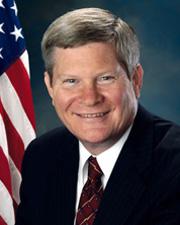
Mr. President, today, I proudly join with Senator Kerry and Senator Smith to reintroduce the Native American Small Business Development Act. This important legislation is designed to help American…
Mr. President, today, I proudly join with Senator Kerry and Senator Smith to reintroduce the Native American Small Business Development Act. This important legislation is designed to help American Indians, Alaska Natives, and Native Hawaiians to overcome barriers which inhibit business development and job creation. We greatly appreciate the support of the distinguished Senators who join us in sponsoring the legislation including Senators: Akaka, Baucus, Bingaman, Daschle, Cantwell, Murray, Stabenow.
The communities served this initiative represent some of the most traditionally isolated, disadvantaged, and underserved populations in our country. Despite the unique and persistent challenges to business development in these areas, many of the supportive services the federal government provides to entrepreneurs are not available in these distressed regions. The
Native American Small Business Development Act endeavors to develop and disseminate culturally tailored business assistance to assure Native American businesses may secure and sustain long-term success.
Native American communities continue to struggle with the social, economic, and cultural repercussions derived from persistent and pervasive poverty and unemployment. A recent report released by the U.S. Census Bureau, entitled Poverty in the United States: 2000, indicates that the ``three year average poverty rate for American Indians and Alaska Natives [from 1998-2000] was 25.9 percent. Higher than for any other race groups.''
The Native American Small Business Development Act is a deliberate effort to enhance the availability of technical assistance to support entrepreneurship in Indian Country. The communities served by this initiative represent some of the most traditionally isolated, disadvantaged, and underserved populations in our country.
Too many Native American communities are plagued by feelings of hopelessness and helplessness. We must work to transform this disappointment and discouragement into a sensible, workable, strategy for economic opportunity.
According to U.S. Department of Commerce census data, unemployment rates on Indian Lands in the continental United States range up to 80 percent compared to 5.6 percent for the U.S. as a whole. Census data also show that the poverty rate for Native Americans during the late 1990s was 26 percent, compared to the national average of 12 percent. In fact, overall, Native American household income is only three- quarters of the national average.
This disparity is particularly evident in my home state of South Dakota where Native Americans represent over 8 percent of the State's population. While the overall State economy is relatively strong with a low 3.1 percent unemployment rate, the Native American population continues to suffer. South Dakota counties with Indian Reservations are ranked by the U.S. Census Bureau as among the most impoverished in the United States.
Among the achievements included in the bill is the establishment of a statutory office within the U.S. Small Business Administration to focus on concerns specific to Native American populations. The Office of Native American Affairs will serve as an advocate in the SBA for the interests of Native Americans. In addition to administering the Native American Development Program, the Assistant Administrator will consult with Tribal Colleges, Tribal Governments, Alaska Native Corporations and Native Hawaiian Organizations to enhance the development and implementation of culturally specific approaches to support the growth and prosperity of Native American small businesses.
Furthermore, the Act creates the Native American Development Program to provide necessary business development assistance. These services are vital to establish and support small businesses. The Federal Government currently invests to provide these services in communities throughout the country. It is past time for these services to be integrated into our efforts to promote self-sufficiency and economic development in Indian Country.
In addition, we recognize that in order to remain competitive, businesses and entrepreneurs must be innovative and flexible to change. This legislation reflects the needs of businesses, tribes, and regional interests to pursue unique approaches that will complement local needs and improve the overall quality of services. Two pilot programs are integrated in this approach to promote new and creative solutions to assist American Indians to awaken economic opportunities in their communities.
We must strive to eliminate the impediments that stifle Native American entrepreneurs. By providing business planning services and technical assistance to potential and existing small businesses, we can unlock the capacity for individuals and families to pursue their dreams of business ownership. Not only will these efforts combat poverty and unemployment, but they will bring new services and opportunities to communities that enhance the quality of life for local families.
We must also work to improve access to investment capital to support economic and community development for Native Americans. As the Chairman of the Senate Banking Financial Institutions Subcommittee, I am conducting hearings last year to identify opportunities and techniques which may foster greater access to capital markets for Tribal and Native American entities.
Together, these initiatives will help to turn an important corner as we endeavor to enhance the livelihood of the First Americans.
I would like to thank Congressman Udall for his leadership in the U.S. House of Representatives in bringing these issues to the forefront and for his cooperation on this historic legislation. I would like to thank Senator John Kerry, the Ranking Member of the Senate Small Business and Entrepreneurship Committee, for his hard work on this legislation and his serious commitment to these critical issues. In addition, I would like to express my sincere appreciation to Senator Smith for his strong support of this effort. We are grateful to the many cosponsors who join us in introducing the bill today.
I encourage the Senate to fully consider this historic legislation and to work expeditiously to enact it into law. The Native American Small Business Development Act will forge a more hopeful and prosperous future for Native American families and communities. By investing in adequate infrastructure and by making the appropriate tools available, we can empower individuals to pursue, achieve, and sustain economic opportunities that enrich their lives and their communities. The American dream will never be fully realized until it becomes a reality for all Americans. This legislation is critical to ensuring that economic growth and economic opportunity permeate the lives of Native American families.
I ask unanimous consent that the text of the bill be printed in the Record.
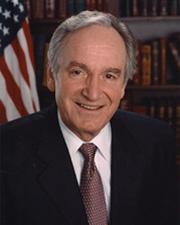
Mr. President, today I am introducing the Meat and Poultry Pathogen Reduction Act of 2003. This legislation, commonly known as Kevin's Law, is dedicated to the memory of 2-year-old Kevin Kowalcyk,…
Mr. President, today I am introducing the Meat and Poultry Pathogen Reduction Act of 2003. This legislation, commonly known as Kevin's Law, is dedicated to the memory of 2-year-old Kevin Kowalcyk, who died in 2001 after eating a hamburger contaminated with E.coli H7:0157 bacteria. Passage of this bill is vital because on December 6, 2001, the 5th Circuit Court of Appeals upheld and expanded an earlier District Court decision that removes the U.S. Department of Agriculture's, USDA, authority to enforce its Pathogen Performance Standard for Salmonella. The 5th Circuit's decision in Supreme Beef v. USDA, Supreme, seriously undermines the sweeping food safety changes adopted by USDA in its 1996 Hazard Analysis Critical Control Point and Pathogen Reduction, HACCP, rule.
More recently, there was another court case that calls into question USDA's authority to enforce its microbiological performance standards. A company called Nebraska Beef sued USDA after the Department tried to shut down the plant for numerous alleged food safety violations. The judge in the case granted a temporary restraining order, preventing USDA to take enforcement action.
According the 5th Circuit's opinion in Supreme and the Nebraska Beef decision, today, there is nothing USDA could do to shut down a meat grinding plant that insists on using low-quality, potentially contaminated trimmings. These decisions seriously undermine the new meat and poultry inspection system.
The Pathogen Reduction Rule recognized that bacterial and viral pathogens were the foremost food safety threat in America, responsible for 5,000 deaths, 325,000 hospitalizations and 76 million illnesses each year. To address the threat of foodborne illness, USDA developed a modern inspection system based on two fundamental principles.
The first was that industry has the primary responsibility to determine how to produce the safest products possible. Industry had to examine their plants and determine how to control contamination at every step of the food production process, from the moment a product arrives at their door until the moment it leaves their plant.
The second, even more crucial principle was that plants nationwide must reduce levels of dangerous pathogens in meat and poultry products. To ensure the new inspection system accomplished this, USDA developed Pathogen Performance Standards. These standards provide targets for reducing pathogens and require all USDA-inspected facilities to meet them. Facilities failing to meet a standard are shut down until they create a corrective action plan to meet the standard.
So far, USDA has only issued one Pathogen Performance Standard, for Salmonella. The vast majority of plants in the U.S. have been able to meet the new standard, so it is clearly workable. In addition, USDA reports that Salmonella levels for meat and poultry products have fallen substantially. Therefore the Salmonella standard has been successful. The 5th Circuit Court's and the Nebraska Beef decisions threaten to destroy this success and set our food safety system back years.
The other major problem is we have an industry dead set on striking down USDA's authority to enforce meat and poultry pathogen standards. Ever since the original Supreme decision, I have spent untold hours trying to find a compromise that will allow us to ensure we have enforceable, science-based standards for pathogens in meat and poultry products. I have introduced bills to address this issue and I have even worked with industry leaders to reach a reasonable compromise.
However, despite repeated attempts to address industry concerns, industry has continually backtracked and moved the finish line. Many times, I have made changes in my legislation to address their ``pressing'' concern of the moment only to have them come back and say we hadn't gone far enough. We cannot let a few bullies in the meat and poultry industry place our children, our families at a increased risk of getting ill or dying, because some of the industry want to backtrack on food safety.
In addition, the recent announcement that a cow in Alberta, Canada tested positive for bovine spongiform encephalopathy, BSE, otherwise known as ``mad cow disease'', provoked the U.S. government to immediately close the U.S.-Canadian border for the trade at beer and beef products. I applaud the current Administration for taking this action to ensure the safety of our Nation's food supply until more information is made available about the true extent of the problem.
And without downplaying the seriousness of that horrible disease, I think its necessary to look at the impact of BSE in light of other food borne illnesses. Researchers believe that BSE is linked to variable Creutzfeldt-Jakob,
vCJD, disease. Since its onset in Britain in 1995, 129 people have died worldwide from vCJD. Foodborne pathogens, on the other hand, have cause 5000 deaths, 125,000 hospitalizations, and 76 million illnesses each year. The numbers speak for themselves.
The swift and comprehensive response provoked by a single diseased cow in a neighboring country stands in stark contrast to the way our government currently responds to outbreaks of foodbornes illness in our country today. USDA has the ability to shut down the trade from the biggest importer of beef into out country on suspicions of possible food safety problems, but cannot even temporarily shut down one plant that USDA knows has problems.
I plan to seek every opportunity to get this language enacted. I think it is essential, both to ensuring the modernization of our food safety system, and ensuring consumers that we are making progress in reducing dangerous pathogens.
I hope that both parties, and both houses of Congress will be able to act to pass this legislation without delay. The public's confidence in our meat and poultry inspection system is at stake.
I ask unanimous consent that the text of the bill be printed in the Record.

Mr. President, today I am pleased to introduce the ``Medicare Physician Payment Equity Act of 2003,'' a bill that corrects a long-standing inequity in Medicare reimbursement to rural physicians. I am…
Mr. President, today I am pleased to introduce the ``Medicare Physician Payment Equity Act of 2003,'' a bill that corrects a long-standing inequity in Medicare reimbursement to rural physicians. I am delighted that my colleagues, Senators Jeffords, Grassley, Lincoln, and Bingaman have joined me in addressing this issue and introducing this bill.
Although many Americans are not aware of it, Medicare currently reimburses physicians practicing in many
rural areas at a lower rate than those practicing in more densely populated areas. A complicated formula, the geographic physician cost index, reimburses physicians according to presumed regional differences in the costs of their work, practice expenses, and medical liability insurance premiums. But in almost every case, this formula penalizes physicians who practice in rural settings.
As a result, the unfortunate effect of the current formula is that it may contribute to regional disparities in access to health care. Rural areas tend to have fewer physicians, fewer hospitals and patients often have less access to subspecialty care. Penalizing doctors who practice in rural settings by paying them substantially less than their urban colleagues may contribute to this inequity in access to care.
According to the Rural Policy Research Institute, the Medicare payment for an intermediate office outpatient visit in 2003 is 30 percent higher in New York City, $59.33, than it is in St. George, UT, $45.75, and the reimbursement for an emergency room visit is 22 percent higher in New York City, $161.82, than it is in St. George, UT, $131.96.
Proponents of this system that pays doctors differently for the same work claim that the purchasing power of physician compensation should be similar regardless of where the work is performed. But others, and I am one of them, believe that doctors should be compensated equally and appropriately for their work regardless of where that work is performed. I believe that it is time that we provide physicians with equal pay for equal work. Physicians deserve it and their patients do also. After all, the citizen in Utah pays Federal taxes at the same rate as the citizen in New York. Why should the citizen in Utah receive cheaper service?
The practice expense component of the geographic physician cost index also penalizes rural physicians and their patients. Proponents of the current system claim that it is more expensive for doctors to practice medicine in urban areas where the cost of living is higher and the cost of paying employees is thought to be higher. The practice expense geographic physician cost index rewards physicians in these ``high practice expense'' areas by reimbursing physician services at a higher rate.
While it might be tempting to think that practice expenses in urban areas are higher than those in rural areas, this is not necessarily the case. Rural physicians sometimes must offer higher wages to attract nurses and technicians to work in their communities. Furthermore, the formula that is used to calculate the geographic practice expense does not take certain key elements into consideration. Volume discounts can result in lower costs for capital goods and supplies in densely populated areas. Furthermore, a physician in a rural area who purchases an expensive, but necessary piece of equipment, such as an ultrasound machine, may use that equipment less frequently than a physician from a densely populated area. As a result, the rural doctor may not be able to pay for the capital investment as quickly as the urban physician. The practice expense for the rural physician in such a case is higher.
In fact, we have known for years that additional resources are sometimes necessary to attract doctors to practice in rural settings. Physicians, nurses and allied health professionals are less prevalent and hospitals are fewer and farther between in rural settings. In some cases, certain services and subspecialty care are not available at all. For this reason, Federal and State programs have offered tuition payment and loan forgiveness programs to student physicians who agree to practice in underserved areas, many of which are rural.
Federal payment policy with respect to physician services delivered in rural and underserved areas has been described as contradictory-- paying bonuses to physicians for practicing in rural and underserved areas on the one hand while devaluing physician clinical decision- making and patient services in rural areas less, on the other. The bottom line is this: For many years we have found it difficult in this country to increase access to health care and improve the quality of health care in rural communities. Penalizing physicians for practicing in rural settings just does not make sense.
All Medicare beneficiaries, whether they live in an urban or rural area, deserve excellent health care and access to outstanding doctors. The bill I am introducing today, the Medicare Physician Payment Act, addresses current disparities by creating a system that reimburses physicians equitably regardless of where they practice. The bill addresses all three components of the geographic physician cost index, work, practice expense, and medical liability costs, by increasing reimbursement for physicians in disadvantaged areas over a three-year period and by eliminating disparities in reimbursement altogether in the year four. If we pass this bill, doctors will no longer be discouraged from practicing in the rural communities that desperately need their services. I look forward to working with my colleagues in the 108th Congress to pass this legislation.
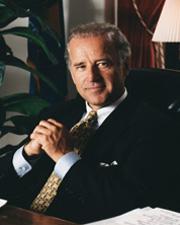
Mr. President, I rise today to help introduce a bill with my good friend from California that will bring new and needed tools to the battle to end violence against children in America, whether it…
Mr. President, I rise today to help introduce a bill with my good friend from California that will bring new and needed tools to the battle to end violence against children in America, whether it takes place inside the home or out on the street. Today, Senator Boxer and I are introducing the Violence Against Children Act, VACA, which provides a comprehensive approach to prevent crimes against children, treat child victims, and prosecute those who harm our Nation's children.
In 1994, this body passed a piece of legislation that I authored, the Violence Against Women Act. When we passed this landmark legislation, we said as a Congress, and as a Nation as a whole, that domestic violence is not a family problem to be dealt with quietly behind the scenes, but a national crisis in need of a coordinated response from law enforcement, the courts and the medical community. Backed by almost one and half billion dollars of Federal funds, the Violence Against Women Act spurred a sea change on the Federal, State and local levels in how police, prosecutors, judges, medical personnel and others, process and handle cases of domestic abuse, sexual assault and stalking. Most importantly, the Violence Against Women Act also made it clear that victims of domestic violence and sexual assault were, in fact, victims: Victims who deserved the full extend of this Nation's medical and legal resources. The Violence Against Children Act, offered by Senator Boxer and myself today, is designed to bring this same type of concentered focus and coordinated response to end all child abuse, the most heinous and incomprehensible form of violence against the most vulnerable people in our lives.
Last year in my state of Delaware there were 1,073 substantiated cases of child abuse and neglect--46 percent were cases of neglect, 31 percent were cases of abuse and 12 percent were cases of sexual abuse. Nationally, 3.9 million of the nation's 22.3 million children between the ages of 12 and 17 have been seriously physically assaulted. One in three girls and one in five boys are sexually abused before the age of 18. One study recently reported that in 2000, the homicide rate for U.S. infants is almost equal to the murder rate of teens. As stunning as these numbers are, we should be aware that these numbers are not the totals. Like incidents of domestic violence, we know that violence against children is under-reported. We also know that violence against kids cuts across all lines--it happens to children of doctors and lawyers, not just to poor children. We must do more to protect our children, and with the Violence Against Children Act we can.
Designed to be a comprehensive measure, the Violence Against Children Act will fight the battle against child abuse on a number of fronts: by providing states with new resources, law enforcement with additional tools and families with more places to turn to for help. What specifically the legislation do? The Violence Against Children Act has three major provisions; 1. it deters crime by toughening Federal criminal penalties for crimes against children; 2. it requires the Federal Government to provide investigative, forensic and prosecutorial assistance to states working on cases of violent crimes against children; and 3. it authorizes two new grant programs--one
aimed at providing more resources to state and local law enforcement for training, creating new courts and enforcement units focused solely on child crimes, and a second grant program for local governments and nonprofit organizations to provide emergency medical treatment and counseling for child victims, to increase the number of mental health professionals who specialize in child victims, and to establish child abuse and crime prevention programs.
The Violence Against Children Act also encourages State and localities to take affirmative steps to fight crimes against children by conditioning receipt of grant monies on three points: 1. creating a statewide Amber Alert system to alert the public immediately after a child abduction has been discovered; 2. creating Safe Haven programs which allow parents to leave newborn babies for whom they cannot care in hospital emergency room anonymously and without fear of penalty; and 3. improving data gathering so that police, treatment providers and policy makers get a clearer view of the circumstances surrounding child crimes. We need to stop nibbling around the edges with piecemeal legislation that tackles just one aspect of child abuse or child exploitation. The Violence Against Children Act takes into account the larger landscape and provides wide-reaching tools and resources. I feel certain that once my colleagues become aware of this effort, this bill will gather broad and bipartisan support.
Recently the Nation was stunned and relieved at the return of Elizabeth Smart to her parents Ed and Lois. As a father and grandfather my heart went out to them. I don't want to read about these types of cases anymore. My State of Delaware has an Amber Alert system in place. Delaware has a Safe Haven law. Not every State has these critical tools at their disposal. Senator Boxer and I are introducing the Violence Against Children Act for a reason. We must do everything that we can to prevent crimes against children and, if God forbid they do occur, we must do everything we can to treat the victims and their families and prosecute their perpetrators to the fullest extent of the law. As one child advocates succinctly said, ``a civilized society says children matter.'' The Violence Against Children Act says loud and clear, kids matter.
Show 11 more

Mr. President, I rise today, along with Senator Kerry, to introduce the Fishing Quota Act of 2003 which will address one of the most complex policy questions in fisheries management--fishing quotas.…
Mr. President, I rise today, along with Senator Kerry, to introduce the Fishing Quota Act of 2003 which will address one of the most complex policy questions in fisheries management--fishing quotas. This bill will amend the Magnuson-Stevens Fishery Conservation and Management Act to authorize the establishment of new fishing quota systems. This legislation will in no way whatsoever force Fishing Quota programs upon any regional fishery management council and this is not a mandate to use Fishing Quota programs. Rather, it is intended to provide the councils with an additional conservation and management tool.
Fishing Quota programs can drastically change the face of fishing communities and the fundamental principles of conservation and management. Therefore, this legislation was developed in a careful and meaningful manner over the span of many years with significant input and participation from all of the many affected and interested parties.
In 1996, Congress reauthorized the Magnuson-Stevens Fishery Conservation and Management Act through enactment of the Sustainable Fisheries Act, SFA. The SFA contained the most substantial improvements to fisheries conservation since the original passage of the Magnuson- Stevens Act in 1976. More specifically, the SFA included a five year moratorium on new fishing quota programs and required the National Academy of Sciences, NAS, to study and report on the issue.
In 1999, the NAS issued its report, Sharing the Fish, which contained a number of critically important recommendations addressing the social, economic, and biological aspects of Fishing Quota programs. The Fishing Quota Act of 2003 incorporates many of the recommendations in this report and provides the regional councils with the flexibility to adopt additional NAS recommendations.
During the 106th Congress, the Subcommittee on Oceans and Fisheries traveled across the country and held six hearings on reauthorizing the Magnuson-Stevens Act. We began the process in Washington, DC, and then visited fishing communities in Maine, Louisiana, Alaska, Washington, and Massachusetts. During the course of those hearings, we heard official testimony from over 70 witnesses and received statements from many more fishermen during open microphone sessions at each field hearing. The Subcommittee heard the comments, views, and recommendations of Federal and State officials, regional council chairmen and members, other fisheries managers, commercial and recreational fishermen, members of the conservation community, and many other interested in these important issues. After these hearings, I introduced the Individual Fishing Quota Act of 2001, S. 637, at the beginning of the 107th Congress beginning the legislative dialogue. Since then, we have heard from many stakeholders who assisted the Subcommittee in shaping and re-shaping this bill.
The Fishing Quota Act of 2003 creates a framework under which fishery management plans, FMPs, or plan amendments may establish a new fishing quota system. As with other components of fisheries conservation and management, there is no ``one-size-fits-all'' solution to Fishing Quota programs. Therefore, this bill sets certain conditions under which Fishing Quota programs may be developed, if such a program is desired. In doing so, it clearly provides the regional fishery management councils and the affected fishermen with the flexibility to shape any new Fishing Quota program to fit the needs of the fishery.
The bill ensures that any regional council which establishes a new fishing quota program will promote sustainable management of the fishery; require fair and equitable allocation of fishing quotas; minimize negative social and economic impacts on local coastal communities; ensure adequate enforcement of the system; and take into account present participation and historical fishing practices of the relevant fishery. Additionally, the bill requires the Secretary of Commerce to conduct referenda to ensure that those most affected by fishing quotas will have the opportunity to formally approve the adoption of any new fishing quota program by a two-thirds vote.
This bill authorizes the potential allocation of fishing quotas to fishing vessel owners, fishermen, and crew members who are citizens of the United States. In addition, participation in the fishery is required for a person to obtain quota. Moreover, this bill permits councils to allocate quota shares to entry-level fishermen, small vessel owners, or crew members who may not otherwise be eligible for individual quotas. While this bill authorizes the transfer of fishing quotas, it requires the regional councils to define and prohibit an excess accumulation of quota shares.
This is a good bill which allows Fishing Quota programs to be created where they are needed and desired. The Fishing Quota Act of 2003 incorporates many of the suggestions we heard from those men and women who fish for a living and those who are most affected by the law and its regulations. I appreciate the participation of Senator Kerry and all the impacted stakeholders who assisted in drafting this legislation. I look forward to moving this bill through the legislative process toward final passage.
I ask unanimous consent that the text of the bill be printed in the Record.

Mr. President, I am very pleased to introduce the Champlain Valley National Heritage Act of 2003. I am joined by Senator Leahy and Senators Schumer and Clinton of New York. This bill will establish a…
Mr. President, I am very pleased to introduce the Champlain Valley National Heritage Act of 2003. I am joined by Senator Leahy and Senators Schumer and Clinton of New York. This bill will establish a National Heritage Partnership within the Champlain Valley. Passage of this bill will culminate a process to enhance the incredible cultural resources of the Champlain Valley.
The Champlain Valley of Vermont and New York has one of the richest and most intact collections of historic resources in the United States. Fort Ticonderoga still stands where it has for centuries, at the scene of numerous battles critical to the birth of our Nation. Revolutionary gunboats have recently been found fully intact on the bottom of Lake Champlain. Our cemeteries are the permanent resting place for great explorers, soldiers and sailors. The United States and Canada would not exist today but for events that occurred in this region.
We in Vermont and New York take great pride in our history. We preserve it, honor it and show it off to visitors from around the world. These visitors are also very important to our economy. Tourism is among the most important industries in this region and has much potential for growth.
The Champlain Valley Heritage Partnership will bring together more than one hundred local groups working to preserve and promote our heritage. Up to $2 million a year will be made available from the National Park Service through the Lake Champlain Basin Program to support local efforts to preserve and interpret our heritage and present it to the world. Most of the funding will be given to small communities to help preserve their heritage and develop economic opportunities.
This project has taken many years for me to bring to the point of introducing legislation. This has been time well spent working at the grass-roots level to develop a framework to direct federal resources to where it will do the most good. I am confident that we have found the best model. This will be a true partnership that supports each member but does not impose any new federal requirements.
The Champlain Valley National Heritage Partnership will preserve our historic resources, interpret and teach about the events that shaped our nation and will be an engine for economic growth. I am hopeful that this bill, which was considered by the Senate last year, will become law during this Congress.
I ask unanimous consent that the text of the bill be printed in the Record.
Mr. President, I am pleased to join with my colleagues Senators Hatch, Grassley, Lincoln, and Bingaman in introducing the Medicare Physician Payment Equity Act of 2003. This bill corrects a longstanding inequity in the Medicare Part B reimbursement methodology that pays rural physicians less than what is received by physicians for more densely populated areas who provide the same exact service. I am pleased that we are able to offer a legislative solution to this payment inequity.
Establishing Medicare reimbursement for physician services is a complex process and many factors go into setting rates. Without going into all of the intricacies of how fees are set, let me note that, for any specific service, the physician fee schedule has three components-- physician work, practice expenses, and the cost of malpractice insurance. Each of these components is further subjected to a geographic adjustment, which is lower for rural areas than for urban areas.
In my own State of Vermont, we face a chronic shortage of doctors in our rural areas. Yet, when we need to find a physician for a rural clinic, we compete in a national market to find providers. The inequities in payments these physicians receive, however, makes it all the more difficult to recruit and retain physicians. Rural physicians have the same training, spend the same time with patients, and manage the same office pressures as their urban counterparts. Their work should be valued equally, and that is what this bill accomplishes.
I've heard from many people in Vermont about this issue. Tim Thompson, M.D., President of the Vermont Medical Society, expressed his concern that while Vermonters pay the same premiums as other Americans to support the Medicare program, our doctors are paid less. This occurs without regard to the quality or efficiency of health care services they provide. In fact, according to the Center for Medicare Services, Vermont physicians provide the second highest quality care in the country, but the State is ranked forty-fourth in payments per Medicare beneficiary. We should do more to reward quality health care regardless of whether it is provided in an urban or rural setting. The Vermont Medical Society has told me that they strongly support the Medicare Physician Payment Equity Act of 2003 as an important first step in reducing the existing inequities in payment levels.
I look forward to working with my colleagues to pass the Medicare Physician Payment Equity Act of 2003.

Mr. President, I rise today to introduce legislation recognizing the historical significance of downtown Sainte Genevieve, MO. Sainte Genevieve was the first European settlement west of the…
Mr. President, I rise today to introduce legislation recognizing the historical significance of downtown Sainte Genevieve, MO. Sainte Genevieve was the first European settlement west of the Mississippi River, and still contains many structures and artifacts that have survived from its rich early history. Establishing this area as a unit of the National Park System will provide an unparalleled opportunity for Americans to be educated about our Nation's colonial past.
Sainte Genevieve was founded by French settlers in 1735. These early pioneers traveled south from French Canada, and built the rare French Colonial style structures that remain in place to this day. Today, the city contains an invaluable wealth of Native American and French Colonial sites, artifacts, and architecture. Perhaps most impressively, downtown Sainte Genevieve contains three of only five poteaux-en-Terre, post in the ground, vertical log French homes remaining in North America, dating from approximately 1800.
In addition to the historic downtown district, the area adjacent to Sainte Genevieve is rich in historic sites. The ``Grand Champ'' common field of the French colonists still retains its original field land pattern. The area's saline salt springs were an important industry source for Native American and European settlers. And nearby ceremonial mounds are evidence of a prehistoric Native American village.
This area is a truly valuable asset to the State of Missouri, and I feel that it is only fair to share it with the entire Nation by establishing the French Colonial Heritage Area as a unit of the National Park System. My legislation would take the first step toward such an establishment by directing the National Park Service to conduct a study of the historic features of Sainte Genevieve. After a thorough study, I am confident that the National Park Service will determine that Sainte Genevieve is the best tool with which to tell the important and fascinating story of the French in the New World.
Mr. President, in these times of economic distress and hardship we must focus our efforts to assist the more impoverished regions of our country. With this in mind, it is my pleasure to rise today to introduce, on behalf of President Bush, the Economic Development Administration Reauthorization Act of 2003.
This bill will allow the Economic Development Administration, commonly known as the EDA, to assist communities in the development of their local economy. Simply put, it will help to bring jobs to our cities and towns by reauthorizing the mission of the EDA, while focusing the Administration's efforts on localized economic growth.
EDA was established under the Public Works and Economic Development Act of 1965. Throughout the near forty years of its existence, EDA has helped to generate employment, retain existing jobs, and stimulate industrial and commercial growth in rural and urban areas of the nation that experience high unemployment, low income or other severe economic distress.
EDA has consistently been guided by the basic principle that `distressed communities must be empowered to develop and implement their own economic development and revitalization strategies'. To achieve these goals, EDA works in partnership with State and local governments by providing Federal grants to public and private nonprofit organizations, regional economic development agencies and Indian tribes.
This bill seeks to improve the coordination, flexibility, and performance of EDA. It focuses on methods to ensure that EDA can more easily work in coordination with other agencies involved in economic development, such as the Army Corps of Engineers or the Department of Labor. It attempts to improve EDA's ability to respond to rapidly changing economic conditions within regions and it highlights the need to focus on the performance of grantees--whether grantees actually increase jobs and economic growth.
During the last decade, in my home State of Missouri, EDA has implemented over 300 projects and invested more than $115 million into my state's economy. These projects have included improvements to the Cornerstone Industrial Park in St. Louis, the renovation of a blighted neighborhood outside Kansas City, and construction assistance for the Center for Emerging Technologies in St. Louis. EDA assistance in Missouri has truly been a boon to local investment and economic growth. Reauthorization of EDA will enable future projects like these throughout our country for years to come.
In this time of economic difficulty, strong partnership between federal and local governments are crucial. My hope is that through a sustained focus on spurring growth in our economy through continued support of the EDA, we can surmount the economic challenges of today and prepare the way for a more prosperous future.
I ask unanimous consent that the text of the bill be printed in the Record.

Mr. President, it is a privilege to join Senator Feinstein in the introduction of the Unaccompanied Alien Child Protection Act, and I commend her long-standing commitment to this issue. In recent…
Mr. President, it is a privilege to join Senator Feinstein in the introduction of the Unaccompanied Alien Child Protection Act, and I commend her long-standing commitment to this issue.
In recent years, increasing numbers of foreign-born children have come to the United States, unaccompanied by their parents or their guardians. Last year, more than 5,000 arrived, and the numbers have continued to rise this year. Some are fleeing from armed conflict or other dangerous conditions in their home countries. Others are fleeing from human rights abuses, including forced recruitment as soldiers, slavery, child labor, prostitution, or forced marriage. Still others escape to the United States because they have been abused or abandoned by their parents or care givers. Additional numbers are brought to the United States by a family friend or relative, by paid smugglers, or by traffickers involved in organized crime.
Regardless of how they arrive, these children often enter our country after traumatic experiences, speaking little to no English, and unaware of their rights under U.S. law. They may well be good candidates for asylum, but they have no way to apply for it, and they are left to represent themselves in an immigration court against experienced trial lawyers for INS.
Their plight is exacerbated by the fact that when they arrive, they are frequently detained. Many of them languish for long periods in shelters designed for short-term use, without access to translators, telephones, or medical care and other vital services. But these are the ``fortunate'' ones, compared to many others detained, with dangerous criminals, put in handcuffs, shackles, strip-searched, and required to wear prison uniforms.
Shamefully, this is happening every day in the United States of America. It's no wonder other countries criticize us for hypocrisy on human rights.
Last year, in the Homeland Security Act, we took the important first step of transferring responsibility for the care and custody of these children to the Office of Refugee Resettlement in the Department of Health and Human Services. This office has decades of experience working with foreign-born children and can easily include the care of these unaccompanied children in its existing functions.
That Act, however, left out critical safeguards for these children. The legislation we are introducing corrects these omissions. It addresses many of the problems facing unaccompanied children and will help bring our treatment of them in line with international standards.
Essential to these efforts is providing an appointed counsel and a special guardian to assist them. Statistics demonstrate that applications for asylum are four times more likely to be granted when represented by counsel. Yet, less than half of the children in INS custody are represented by an attorney.
Children are given appointed counsel in important non-immigration cases, and they should be afforded the same right in immigration cases. In addition, a special guardian can be indispensable in identifying the needs of a child when language and cultural barriers prevent an attorney from communicating effectively with the child.
Our bill will require that these vulnerable children receive the representation they need to see that their rights are protected, and the care they deserve to see their needs are properly considered as they go through complicated immigration proceedings.
The vast majority of these children are not criminals, and they should not be treated as criminals. We must prevent the use of detention in these cases. Children who are not a danger to others or a flight risk should be released to their families or appropriate care- givers. Our bill requires the release of children whenever possible, and supports the expanded use of shelters and foster care for children who do not have such care givers. Other needed protections in the bill will establish standards for detention, better training for immigration personnel on these issues, and more effective opportunities for permanent protection.
We look forward to working with our colleagues to enact these long overdue
safeguards. It is time to end the gross abuses in our current immigration system and to ensure that the best interests of these children are fully protected and respected.
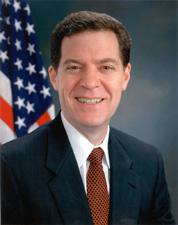
Mr. President, I am honored to join my distinguished colleagues, Senators Feinstein and Voinovich, to introduce this important piece of legislation that will address an area of our immigration law…
Mr. President, I am honored to join my distinguished colleagues, Senators Feinstein and Voinovich, to introduce this important piece of legislation that will address an area of our immigration law that is sorely neglected--unaccompanied alien children. Currently, these children face a legal loophole that can leave them in a confusing maze of technicalities, none of which actually help the child or the nation. This bill will fix that problem through several very straightforward remedies.
Last year, through the Homeland Security Act, the responsibility for the care and custody of unaccompanied alien children was transferred from the now-defunct Immigration and Naturalization Service to the Department of Health and Human Services's Office of Refugee Resettlement. This was an important step in the right direction, but it did not accomplish everything we had hoped to do last year. That is why I am pleased to join my colleagues in taking one more crack at providing safeguards for these vulnerable children.
These safeguards are simple, but to the point. This legislation will ensure that the transfer of responsibilities mandated last year actually occurs in an orderly manner. It will remind Federal authorities to keep in mind the special needs and circumstances of unaccompanied children. It will ensure that these children have access to competent counsel and guardians ad litem when appropriate. Minimum standards for the care and custody of these unaccompanied alien children will be established, and the procedures for access to permanent protection for abused, abandoned or neglected children will be reformed. Finally, the legislation will require an annual report to Congress to ensure these provisions are being carried out faithfully.
But that is all simply the legalese surrounding this issue. What's truly important are the children. That's the whole point of this legislation, and why I--and all of my colleagues who are cosponsors-- got involved and are committed to seeing this legislation pass. It is the children who suffer, through no fault of their own, if they're run through the legal system in the United States without any accounting for their unique situation as children.
Last year, the Senate Judiciary Committee held a hearing on this topic, inviting Senator Feinstein to speak--her testimony and the testimony of the children who came, moved me to cosponsor the bill that very day. I still remember the story the Senator told of a young girl from China, standing before a judge, unable to speak the language, her arms shackled to her sides, crying. That sort of situation is shameful.
Or how about the case of Edwin Munoz, a Honduran youth who testified last year during this hearing? His story was simple but appalling: abandoned by his parents at age 7, he was left in the care of a cousin, who beat him mercilessly. At 13, he finally escaped, and hitchhiked alone to the United States. I can only imagine how frightening that experience was--but unfortunately it was only the start: once he arrived in the U.S., he was thrown into a San Diego juvenile facility filled with violent offenders. Without a lawyer or court-appointed guardian for weeks, this became a nightmare of taunts from the other inmates and being shackled each time he had to appear in court.
These are children--not common criminals--and they should not be treated as such. They should be treated as children.
The main purpose of our legislation is to ensure just that--that children who come to the United States are still treated as children. That does not mean that they will escape a proper and appropriate accounting and ruling on whether they may stay or not--it simply means that their age and circumstances will be considered at all times.
I therefore urge my colleagues to support this critically important legislation. We are still the Nation described upon the Statue of Liberty--let's ensure our legal system remembers this point as well.
Mr. President, today Senator Mike DeWine of Ohio and I are helping to make a big stride in re-arming our country in the war against drunk driving. Together, we have introduced two pieces of…
Mr. President, today Senator Mike DeWine of Ohio and I are helping to make a big stride in re-arming our country in the war against drunk driving. Together, we have introduced two pieces of legislation which will help reduce the number of civilian casualties in this war by arming our government safety officials with the weapons they need to keep drunk drivers off of our roads.
First, I am proud to be a cosponsor of Senator DeWine's legislation on improving enforcement of drunk driving laws. There are some good drunk driving laws on the books and they should not be ignored. Since September 11, 2001, much of our country's law enforcement focus has been on ensuring the security of citizens from terrorist attack. This legislation will ensure that efforts to reduce drunk driving are not given short shrift. Almost 18,000 people died last year in alcohol- related motor vehicle traffic crashes, and we must not neglect the safety of our highways. This bill provides needed resources for law enforcement and will deter people from drinking and driving to begin with.
Second, I am proud to introduce, along with Senator DeWine, legislation targeting higher-risk drivers. This includes repeat offenders and drivers with blood alcohol concentration levels of 0.15 percent or higher. Once these offenders are caught, we need to make sure they don't fall through the cracks in the legal system. These criminals should not be behind the wheel--I believe they are a menace to our society, and we should not tolerate their existence.
I have long been interested in making our roads and highways safer. During my previous tenure, I saw to it that the Federal government took responsibility for reducing the number of fatalities due to drunk driving. I authored laws to increase the minimum drinking age for alcoholic beverages from 18 to 21, and to encourage States to establish .08 percent as the blood alcohol concentration standard for drunk driving nationwide. These laws have made our roads and highways safer and my hope is that they have saved many precious lives.
I feel that the Federal Government needs to take a strong leadership role to reduce alcohol-impaired driving. States cannot deal with these problems in a comprehensive manner. We have passed legislation encouraging states to establish tougher standards for highways safety and drunk driving, but: 32 States still don't have a primary enforcement safety belt law; 11 States still have not adopted the .08 percent Blood Alcohol Content (BAC) standard; 24 States still don't have an open container law; and 27 States still don't have a repeat offender law for drunk driving offenses.
I am particularly disappointed that my home State of New Jersey has not yet adopted the .08 percent BAC standard. At risk are millions of dollars in Federal highway funding that our State desperately needs to repair and improve our roads and bridges. Here in Congress, I fight desperately for this funding. But the State puts this funding at risk rather than make a sensible safety choice and adopt a .08 percent BAC standard. This is why I feel that the Federal Government needs to take a leadership role in setting policies that will save lives by reducing drunk driving.
I feel that States need stronger ``encouragement'' to address these important highway safety issues. We have already tried threatening withholding highway construction funds, but if we allow a loophole for States to recover the funds within 4 years; maybe that still is not enough encouragement.
Now it is time to take the next step in getting drunk drivers off our roads. I look forward to working with Senator DeWine and the rest of my colleagues in the Senate to reduce the 18,000 alcohol-related traffic fatalities that occur each year. I urge my colleagues to join me and Senator DeWine in supporting both of these important pieces of legislation.
Mr. President, my colleagues Senators DeWine and Voinovich of Ohio, Senator Stabenow of Michigan, and I are pleased to introduce the Great Lakes Water Quality Indicators and Monitoring Act. This bill…
Mr. President, my colleagues Senators DeWine and Voinovich of Ohio, Senator Stabenow of Michigan, and I are pleased to introduce the Great Lakes Water Quality Indicators and Monitoring Act. This bill will provide science-based assessments of the health of the Great Lakes and whether restoration projects are working. The bill directs the Environmental Protection Agency to develop indicators of Great Lakes water quality and related environmental factors and a comprehensive network to monitor those indicators.
The Great Lakes contain almost 20 percent of the world's fresh water. Millions of people rely on the lakes for drinking water, for economic livelihoods such as fishing and shipping, and for recreational opportunities, including swimming and boating. But the Great Lakes have suffered from decades of toxic discharges, urban and agricultural runoff, and other environmental challenges. We've made some progress in improving water quality, but we know we have a long way to go.
The stewards of the lakes at the Federal, State, and local levels use a variety of methods to determine the health of the Great Lakes and whether they are improving. For example, EPA and the Fish and Wildlife Service monitor the accumulation of chemicals in Great Lakes fish. The National Oceanic and Atmospheric Administration detects changes in the ecosystem from space-based satellites and waterborne buoys. The Geological Survey samples stream flow and quality, and the states inspect for compliance with water quality standards.
But these efforts to collect scientific data are largely voluntary and suffer from a lack of funding and coordination. They use inconsistent methods that often produce incompatible results.
This week, members of the Great Lakes Task Force released a General Accounting Office report on Great Lakes environmental programs. GAO looked at almost 200 Federal and State programs and found that a lack of coordination, poorly defined goals, and insufficient data make it difficult to evaluate the success of these programs. GAO found that there are no data collected regularly throughout the Great Lakes, and that the existing data are inadequate to determine whether water quality and other environmental conditions are improving.
In 1990, I authored the Great Lakes Critical Programs Act, which strengthened the water quality standards in the Great Lakes region. This year, Congress passed the Great Lakes Legacy Act, to speed the cleanup of contaminated bottom sediment. But we haven't established a way to evaluate the impact of these measures.
A restoration program is only as good as its ability to demonstrate results. To show results, we need science-based indicators of water quality and related environmental factors, and we need to monitor those indicators regularly throughout the ecosystem.
GAO recommends that EPA's Great Lakes National Program Office lead an effort to develop indicators and a monitoring network. Our bill gives that office the mandate to work with other federal agencies and Canada to identify and measure water quality and other environmental factors on a regular basis. The initial set of data collected through this network will serve as a benchmark against which to measure future improvements. Those measurements will help us make decisions on how to steer future restoration efforts. With a clear picture of how the Great Lakes are changing, we can change course when needed and spend public funds on the most pressing demands.
This bill serves a second purpose--it provides EPA with dedicated funding to make sure that data collection can begin in a timely manner and be carried out consistently and comprehensively as long as the Great Lakes are in need.
I encourage my colleagues to support this bill and help speed its passage.
I ask unanimous consent that the text of the bill be printed in the Record.

Mr. President, today I join Senator Baucus in introducing the Middle East Trade and Engagement Act of 2003. Our legislation would permit eligible countries in the greater Middle East to gain greater…
Mr. President, today I join Senator Baucus in introducing the Middle East Trade and Engagement Act of 2003. Our legislation would permit eligible countries in the greater Middle East to gain greater access to American markets through the duty-free treatment of certain exports, and ultimately to negotiate free trade agreements with the United States. It would condition broader trade relations on fundamental political and economic reforms, cooperation in the fight against terrorism, and support for the Israeli-Palestinian peace process, among other issues, in order to promote liberalization and reform across the Arab and Muslim worlds.
Free trade is a powerful tool for opening up closed societies, if leaders in the greater Middle East are willing to make necessary and overdue political and economic reforms. It is past time for nations in the region to join the global economy, and for rulers to lead increasingly restive populations in the direction of democracy and free markets.
Today, the countries of the Middle East account for a small percentage of non-energy sector trade for the United States. With the exception of oil, most Arab nations barely trade with each other, much less with the rest of the world, and many still maintain a hostile economic boycott on Israel--policies that isolate the Middle East from the global economy and perpetuate conflict instead of building prosperity. The wave of free-market reform and democratization that swept Europe, Latin America, Asia, and parts of Africa in the 1980s and 1990s has left most of the Middle East untouched and unchanged.
America's interest in economic opening and political liberalization in the region requires a new level of engagement with the countries of the greater Middle East, premised on the acceleration and active implementation of a host of reforms without which prosperity and democracy are not possible. Our legislation would tie preferential trade access to American markets to progress towards adoption of these reforms, as well as meaningful progress on human rights protections, decisive movement towards democracy, full cooperation in the war on terrorism, and an end to the primary, secondary, and tertiary economic boycott of Israel.
Our bill is modeled on the success of the Andean Trade Preferences Act and the African Growth and Opportunity Act. Ideally, enactment of the bill we are introducing today would create a regime of duty-free trade in a number of goods from the greater Middle East. Such a trade preference program would encourage and often require eligible nations to undertake the kind of significant economic reforms that ultimately lead to free trade agreements, as President Bush has called for and which we support.
The Andean Trade Preferences Act was created to expand the economies of Bolivia, Colombia, Ecuador, and Peru. By granting duty-free and reduced rate treatment to various products from these nations, we took action to strengthen the fragile economies of the region, expand their export bases, and provide Andean farmers and workers with legitimate employment outside of the drug trade. It has worked. The trade agreement created new industries in the region outside of the drug trade and expanded the economies of the region which helped to create legitimate jobs. We foresee similar effects from this legislation on parts of the Middle East, if leaders have the courage and vision to complement progress on trade with internal political and economic reforms.
Reform in the Arab and Muslim worlds requires not just greater trade but accelerated political and economic liberalization, including respect for fundamental human freedom. It is my hope that the spirit and effect of our legislation will help move countries of the greater Middle East in that direction.

Mr. President, I rise to introduce the Veterans Burial Benefits Improvement Act. During the upcoming Memorial Day holiday, we will honor our U.S. soldiers who died in the name of their country. These…
Mr. President, I rise to introduce the Veterans Burial Benefits Improvement Act.
During the upcoming Memorial Day holiday, we will honor our U.S. soldiers who died in the name of their country. These service men and women are America's true heroes and on this day we pay tribute to their courage and sacrifice. Some have given their lives for our country. All have given their time and dedication to ensure our country remains the land of the free and the home of the brave. We owe a special debt of gratitude to each and every one of them.
This holiday serves as an important reminder that our nation has a sacred commitment to honor the promises made to soldiers when they signed up to serve our country. As the Ranking Member of the Senate Appropriations Subcommittee that funds veterans programs, I fight hard to make sure promises made to our service men and women are promises kept. These promises include access to quality, affordable health care and a proper burial for our veterans.
I am deeply concerned that burial benefits for the families of our wounded or disabled veterans have not kept up with inflation and rising funeral costs. We are losing over 1,000 World War II veterans each day, but Congress has failed to increase veterans' burial benefits to keep up with rising costs and inflation. While these benefits were never intended to cover the full costs of burial, they now pay for only a fraction of what they covered in 1973, when the Federal Government first started paying burial benefits for our veterans.
I want to thank my colleagues on the Veterans' Affairs Committee for working with me in the 107th Congress. Together, we were able to increase modestly the service-connected benefit from $1,500 to $2,000, and the plot allowance from $150 to $300. While I believe these increases are a step in the right direction, they are not a substitute for the amounts included in my bill.
That's why I am again introducing the Veterans Burial Benefits Improvement Act. This bill will increase burial benefits to cover the same percentage of funeral costs as they did in 1973. It will also provide for these benefits to be increased annually to keep up with inflation.
In 1973, the service-connected benefit paid for 72 percent of veterans' funeral costs. Today, this benefit covers just 39 percent of funeral costs. My bill will increase the service-connected benefit from $2,000 to $3,713, bringing it back up to the original 72 percent level.
In 1973, the non-service connected benefit paid for 22 percent of funeral costs. It has not been increased since 1978, and today it covers just 6 percent of funeral costs. My bill will increase the non- service connected benefit from $300 to $1,135, bringing it back up to the original 22 percent level.
In 1973, the plot allowance paid for 13 percent of veterans' funeral costs. Yet it now covers just 3 percent of funeral costs. My bill will increase the plot allowance from $300 to $670, bringing it back up to the original 13 percent level.
Finally, the Veterans Burial Benefits Improvement Act will also ensure that these burial benefits are adjusted for inflation annually, so veterans won't have to fight this fight again.
This legislation is just one way to honor our Nation's service men and women. I want to thank the millions of veterans, Marylanders, and people across the nation for their patriotism, devotion, and commitment to honoring the true meaning of Memorial Day. U.S. soldiers from every generation have shared in the duty of defending America and protecting our freedom. For these sacrifices, America is eternally grateful.
I ask unanimous consent that the text of this legislation, and letters from several veterans' advocacy groups supporting it, be printed in the Record.

Mr. President, I am pleased to join Senator Harkin today in introducing Kevin's Law, which is an essential piece of legislation that will clarify the U.S. Department of Agriculture's authority to…
Mr. President, I am pleased to join Senator Harkin today in introducing Kevin's Law, which is an essential piece of legislation that will clarify the U.S. Department of Agriculture's authority to enforce pathogen reduction standards in meat and poultry products.
Our country has been blessed with one of the safest and most abundant food supplies in the world. However, we can do better. While food may never be completely free of risk, we must strive to make our food as safe as possible. Foodborne illnesses and hazards are still a significant problem that cannot be passively dismissed.
The Centers for Disease Control and Prevention estimate as many as 76 million people suffer from foodborne illnesses each year. Of those individuals, approximately 325,000 will be hospitalized and more than 5,000 will die. With emerging pathogens, broader distribution patterns, an increasing volume of food imports, and changing consumption patterns, this situation is not likely to improve without decisive action.
Foodborne illnesses can have devastating effects on certain populations in our society. Children are especially vulnerable. Because their immune systems are not fully developed, they are at greater risk for developing life-threatening or fatal complications associated with foodborne illnesses. Quite simply, a child's lower weight means that it takes a smaller quantity of pathogens to make a child sick than it would a healthy adult. The elderly and those with compromised immune systems are also at high risk for developing life-threatening conditions associated with foodborne illnesses.
A key tool for addressing foodborne illness in this country has been the USDA's pathogen reduction/hazard analysis and critical control point, PR/HACCP, regulations that were phased in beginning in January 1998. Under these regulations, USDA developed a scientific approach aimed at protecting consumers from foodborne pathogens. Instead of a system based on sight, smell, and touch, USDA moved to a system that would successfully detect harmful pathogens whether visible or not.
A major part of this system includes testing for harmful pathogens, such as salmonella. USDA uses the data from this testing to determine if meat and poultry plants are producing products that are safe to consume.
USDA's pathogen testing regulations have provided consumers with increased confidence in the safety of meat and poultry products. However, in December of 2001, the Fifth Circuit Court of Appeals upheld an earlier district court decision that removes the USDA's authority to enforce its pathogen standards for salmonella. The result of this court case is that USDA can no longer ensure that meat and poultry plants comply with pathogen standards. This creates a significant risk that meat and poultry products contaminated with common but potentially deadly pathogens will be sold to unsuspecting consumers.
The legislation we are introducing today will clarify USDA's authority to enforce strong safety standards for contamination in meat and poultry products. Specifically, this legislation will provide the Secretary of Agriculture with the clear authority to control for pathogens and enforce pathogen performance standards for meat and poultry products. Only with this authority will the Secretary of Agriculture be able to ensure the safety of the meat and poultry products sold in this country.
We must work together to ensure that USDA has the necessary authority
to enforce pathogen performance standards that will protect public health. Let's not turn our back on food safety and consumer protection at such a critical time for food safety and security. I encourage my colleagues to join this effort to protect our food supply and public health.

Mr. President, today I am introducing the Violence Against Children Act of 2003. The legislation, modeled on the successful Violence Against Women Act, will both toughen Federal penalties for crimes…
Mr. President, today I am introducing the Violence Against Children Act of 2003. The legislation, modeled on the successful Violence Against Women Act, will both toughen Federal penalties for crimes against children and assist local communities in their efforts to fight violence against children. It has been endorsed by over 100 prominent individuals and organizations.
We were all horrified by the tragic murders of Samantha Runion and Danielle van Dam. We were horrified by the kidnaping of Elizabeth Smart, Erica Pratt, and Nichole Taylor Timmons who were snatched right from their homes. We were horrified by the kidnaping and rape of Jacqueline Marris and Tamara Brooks.
But there are thousands more stories we do not hear--thousands of children who each year are victims of sexual molestation, kidnaping, murder--thousands of children whose stories do not make the nightly news--thousands of children and thousands of families who suffer in silence and often without help.
In fact, 71 percent of all sex crime victims are under the age of 18--and 38 percent of all kidnaping victims are under age 18. Those between the ages of 12 and 17 are over two times more likely to be victims of a violent crime than adults. And as alarming as those statistics are, according to a study published in 1999, only 28 percent of all crimes against children are actually reported.
While we are horrified by these and other stories, we must not let them paralyze us. We must do for children what we have done on behalf of women, by changing attitudes and changing the culture. The Violence Against Children Act would create a new Federal criminal statute for willfully injuring or attempting to injure any person under the age of 18. Those who injure a child or try to will be imprisoned for up to 10 years and fined. And if the crime is kidnaping, aggravated sexual abuse, or murder, the maximum penalty will be life in prison.
In addition to enhanced penalties for crimes against children, the Violence Against Children Act provides Federal assistance--including technical, forensic, and prosecutorial assistance--to any State, Indian tribe, or local government that requests assistance with a violent felony against a child. The bill also establishes a grant program to help local police and prosecutors to strengthen effective law enforcement and prosecution for these crimes.
This Act builds upon the Protect Act, recently signed into law, by requiring that States have an Amber Alert system to help locate missing children in order to qualify for the local law enforcement grants. In addition, to cut down on the number of abused and neglected children, states are required to have a Safe Haven program that would allow parents to leave newborn babies in hospital emergency rooms, anonymously and with no fear of penalty. These requirements will ensure that states take action to improve systems that can protect our Nation's children.
I am pleased to be joined in this effort by Senator Biden, who I teamed up with over a decade ago in introducing the Violence Against Women Act. And Representative Millender-McDonald is the sponsor of the House bill.
This is a critical issue to safeguard our children and youth nationwide. I urge my colleagues to cosponsor this bill.
I ask unanimous consent to print in the Record a section-by-section summary of the bill and a list of those who have endorsed it.
Bill Text
Latest available legislative text
        [Congressional Bills 108th Congress]
[From the U.S. Government Publishing Office]
[S. 1141 Introduced in Senate (IS)]

108th CONGRESS
1st Session
S. 1141

To amend title 23, United States Code, to increase penalties for
individuals who operate motor vehicles while intoxicated or under the
influence of alcohol.

_______________________________________________________________________

IN THE SENATE OF THE UNITED STATES

May 22, 2003

Mr. Lautenberg (for himself and Mr. DeWine) introduced the following
bill; which was read twice and referred to the Committee on Environment
and Public Works

_______________________________________________________________________

A BILL

To amend title 23, United States Code, to increase penalties for
individuals who operate motor vehicles while intoxicated or under the
influence of alcohol.

Be it enacted by the Senate and House of Representatives of the
United States of America in Congress assembled,

SECTION 1. SHORT TITLE.

This Act may be cited as the ``Higher-Risk Impaired Driver Act''.

SEC. 2. FINDINGS.

The Congress finds the following:
(1) Of the total 42,850 people who died in motor vehicle
traffic crashes in the United States during 2002, alcohol-
related traffic deaths accounted for 42 percent--preliminary
data shows that 17,970 people died in these crashes.
(2) Alcohol-related traffic fatalities in the United States
have been rising since 1999.
(3) About one-third of all drivers arrested or convicted of
driving under the influence are repeat offenders.
(4) A report released by the alcohol industry showed that
58 percent of alcohol-related traffic fatalities in 2001
involved drivers with a blood alcohol concentration level of
.15 percent and above.
(5) Research funded by the alcohol industry has concluded
that repeat offenders of alcohol-impaired driving laws and
first offenders with high blood alcohol concentration (BAC)
levels are at greatest risk of committing a subsequent drunk
driving offense.
(6) It should be the policy of the federal government,
among other aims, to target these repeat offenders and high BAC
level offenders to help reduce the risk of fatality due to
alcohol-impaired driving.

SEC. 3. INCREASED PENALTIES.

(a) In General.--Chapter I of title 23, United States Code, is
amended by adding at the end the following:
``Sec. 165. Increased penalties for higher risk drivers for driving
while intoxicated or driving under the influence
``(a) Definitions.--In this section, the following definitions
apply:
``(1) Blood alcohol concentration.--The term `blood alcohol
concentration' means grams of alcohol per 100 milliliters of
blood or the equivalent grams of alcohol per 210 liters of
breath.
``(2) Driving while intoxicated; driving under the
influence.--The terms `driving while intoxicated' and `driving
under the influence' mean driving or being in actual physical
control of a motor vehicle while having a blood alcohol
concentration above the permitted limit as established by each
State.
``(3) License suspension.--The term `license suspension'
means the suspension of all driving privileges.
``(4) Motor vehicle.--The term `motor vehicle' means a
vehicle driven or drawn by mechanical power and manufactured
primarily for use on public highways but does not include a
vehicle operated solely on a rail line or a commercial vehicle.
``(5) Higher-risk impaired driver law.--
``(A) The term `higher-risk impaired driver law'
means a State law that provides, as a minimum penalty,
that an individual described in subparagraph (B)
shall--
``(i) receive a driver's license suspension
for not less than 1 year, including a complete
ban on driving for not less than 90 days and
for the remainder of the license suspension
period and prior to the issuance of a
probational hardship or work permit license, be
required to install a certified alcohol
ignition interlock device;
``(ii) have the motor vehicle driven at the
time of arrest impounded or immobilized for not
less than 90 days and for the remainder of the
license suspension period require the
installation of a certified alcohol ignition
interlock device on the vehicle;
``(iii) be subject to an assessment by a
certified substance abuse official of the State
that assesses the individual's degree of abuse
of alcohol and assigned to a treatment program or impaired driving
education program as determined by the assessment;
``(iv) be imprisoned for not less than 10
days, have an electronic monitoring device for
not less than 100 days, or be assigned to a
DUI/DWI specialty facility for not less than 30
days;
``(v) be fined a minimum of $1,000, with
the proceeds of such funds to be used by the
State or local jurisdiction for impaired
driving related prevention, enforcement, and
prosecution programs, or for the development or
maintenance of a tracking system of offenders
driving while impaired;
``(vi) if the arrest resulted from
involvement in a crash, pay court-mandated
restitution to the victims of the crash;
``(vii) be placed on probation by the court
for a period of not less than 2 years;
``(viii) if diagnosed with a substance
abuse problem, during the first year of the
probation period referred to in clause
(vii), attend a treatment program for a period of 12 consecutive months
sponsored by a State certified substance abuse treatment agency and
meet with a case manager at least once each month; and
``(ix) be required by the court to attend a
victim impact panel, if such a panel is
available.
``(B) An individual referred to in subparagraph (A)
is an individual who--
``(i) is convicted of a second or
subsequent offense for driving while
intoxicated or driving under the influence
within a minimum of 5 consecutive years;
``(ii) is convicted of a driving while
intoxicated or driving under the influence with
a blood alcohol concentration of 0.15 percent
or greater;
``(iii) is convicted of a driving-while-
suspended offense if the suspension was the
result of a conviction for driving under the
influence; or
``(iv) refuses a blood alcohol
concentration test while under arrest or
investigation for involvement in a fatal or
serious injury crash.
``(6) Special dui/dwi facility.--The term `special DUI/DWI
facility' means a facility that houses and treats offenders
arrested for driving while impaired and allows such offenders
to work and/or attend school.
``(7) Victim impact panel.--The term `victim impact panel'
means a group of impaired driving victims who speak to
offenders about impaired driving. The purpose of the panel is
to change attitudes and behaviors in order to deter impaired
driving recidivism.
``(b) Withholding of Funds.--
``(1) Fiscal year 2008.--On October 1, 2007, if a State has
not enacted or is not enforcing a higher-risk impaired driver
law, the Secretary shall withhold 2 percent of the amount
required to be apportioned for Federal-aid highways to the
State on that date under each of paragraphs (1), (3), and (4)
of section 104(b).
``(2) Fiscal year 2009.--On October 1, 2008, if a State has
not enacted or is not enforcing a higher-risk impaired driver
law, the Secretary shall withhold 4 percent of the amount
required to be apportioned for Federal-aid highways to the
State on that date under each of paragraphs (1), (3), and (4)
of section 104(b).
``(3) Fiscal year 2010.--On October 1, 2009, if a State has
not enacted or is not enforcing a higher-risk impaired driver
law, the Secretary shall withhold 6 percent of the amount
required to be apportioned for Federal-aid highways to the
State on that date under each of paragraphs (1), (3), and (4)
of section 104(b).
``(4) Fiscal year 2011.--On October 1, 2010, and on October
1 of each year thereafter, if a State has not enacted or is not
enforcing a higher-risk impaired driving law, the Secretary
shall withhold 8 percent of the amount required to be
apportioned for Federal-aid highways to the State on that date
under each of paragraphs (1), (3), and (4) of section
104(b).''.
<all>