Chesapeake Bay Environmental Education Pilot Program Act
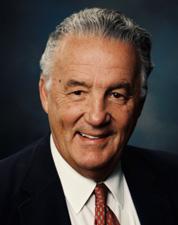 Sen. Paul S. Sarbanes (D-MD)
Legislative Activity
Stay on top of the latest movement without scrolling through every action
Read twice and referred to the Committee on Health, Education, Labor, and Pensions. (text of measure as introduced: CR S5064-5065)
April 9, 2003
View full timeline
Introduced in Senate
April 9, 2003
Sponsor introductory remarks on measure. (CR S5062-5064)
April 9, 2003
Read twice and referred to the Committee on Health, Education, Labor, and Pensions. (text of measure as introduced: CR S5064-5065)
April 9, 2003
Floor Debate
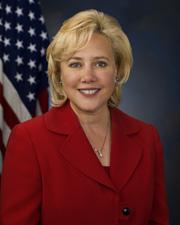
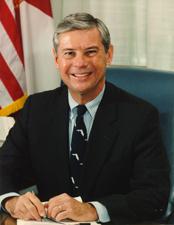
17 membersWhat members said about S. 828 on the floor


 +12
+12
Floor Debate
17 membersWhat members said about S. 828 on the floor
Mr. President, today I am introducing a package of five measures to sustain and, indeed, renew the Federal commitment to restoring the water quality and living resources of the Chesapeake Bay…
Mr. President, today I am introducing a package of targeted, affordable tax relief provisions designed to help the Nation's small businesses during this time of economic stagnation. After the Easter…
Mr. President, I rise today to offer a private bill on behalf of Tanya Andrea Goudeau and her family to grant Tanya immediate relative status. The Goudeaus adopted Tanya in 2001, but due to…
Mr. President, I rise today with my Finance Committee colleague, Senator Lincoln, to introduce the The Mortgage Insurance Fairness Act. This legislation will extend the mortgage interest tax…
Mr. President, I rise today with my friend and colleague from Rhode Island, Mr. Chafee, and a bipartisan group of co- sponsors to introduce the Immigrant Children's Health Improvement Act of 2003.…
Show 8 more

Mr. President, I rise today to introduce legislation that will provide much-needed grants for transitional housing services to victims of domestic violence who are brave enough to leave an abusive…

Mr. President, I am pleased to join with Senator Kyl today to introduce the Northern Arizona National Forest Land Exchange Act of 2003. This bill facilitates an exchange of over 50,000 acres of…

Mr. President, today I rise to reintroduce a bill that is enormously important to veterans in my State of West Virginia and to all veterans across this great Nation. The bill I am reintroducing will…

Mr. President, today, I am pleased to join with Senator McCain to introduce the Northern Arizona National Forest Land Exchange Act of 2003. This bill, which facilitates a large and very complex land…

Mr. President, it is a privilege to join Senator Graham and Senator Chafee in introducing the Immigrant Children's Health Insurance Act, which will benefit tens of thousands of immigrant children and…

Mr. President, I rise today to introduce the ``Corporate Accountability in Bankruptcy Act.'' This bill would clarify that the bonuses and other excessive compensation of corporate directors and…
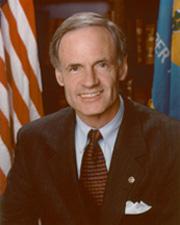
Mr. President, today along with Senators Lincoln Chafee and Judd Gregg, I am introducing comprehensive legislation to reduce harmful emissions from our Nation's power plants. Developed after…

Mr. President, on behalf of myself and Senators Murray, Kennedy, Mikulski, Durbin, Leahy, Akaka, Feingold and Boxer, I am introducing the Fair Pay Act. April 15, tax day, is also Equal Pay Day. If…
Show 4 more
Mr. President, I rise to introduce the Water Adjudication Fee Fairness Act. This bill would require the Federal Government to pay the same filing fees and costs associated with state water rights…

Mr. President, I am pleased to join with Senator Carper today to introduce the Clean Air Planning Act of 2003. Congress needs to advance four-pollutant legislation that offers the best chance for…

Mr. President, I rise today for myself, Senator Ensign, Senator Hatch, and Senator Bennett to introduce this bill, which will establish a National Heritage Route in eastern Nevada and western Utah.…
Mr. President, I rise today to introduce the bipartisan Commission on the Accountability and Review of Federal Agencies, CARFA, Act. We need accountability in Federal spending. With our Nation at war…
Bill Text
Latest available legislative text
        [Congressional Bills 108th Congress]
[From the U.S. Government Publishing Office]
[S. 828 Introduced in Senate (IS)]

108th CONGRESS
1st Session
S. 828

To amend the Elementary and Secondary Education Act of 1965 to
establish a pilot program to make grants to eligible institutions to
develop, demonstrate, or disseminate information on practices, methods,
or techniques relating to environmental education and training in the
Chesapeake Bay watershed.

_______________________________________________________________________

IN THE SENATE OF THE UNITED STATES

April 9, 2003

Mr. Sarbanes (for himself, Mr. Warner, Mr. Allen, and Ms. Mikulski)
introduced the following bill; which was read twice and referred to the
Committee on Health, Education, Labor, and Pensions

_______________________________________________________________________

A BILL

To amend the Elementary and Secondary Education Act of 1965 to
establish a pilot program to make grants to eligible institutions to
develop, demonstrate, or disseminate information on practices, methods,
or techniques relating to environmental education and training in the
Chesapeake Bay watershed.

Be it enacted by the Senate and House of Representatives of the
United States of America in Congress assembled,

SECTION 1. SHORT TITLE.

This Act may be cited as the ``Chesapeake Bay Environmental
Education Pilot Program Act''.

SEC. 2. FINDINGS.

Congress finds that--
(1) increasing public environmental awareness and
understanding through formal environmental education and
meaningful bay or stream field experiences are vital parts of
the effort to protect and restore the Chesapeake Bay ecosystem;
(2) using the Chesapeake Bay watershed as an integrating
context for learning can help--
(A) advance student learning skills;
(B) improve academic achievement in core academic
subjects; and
(C)(i) encourage positive behavior of students in
school; and
(ii) encourage environmental stewardship in school
and in the community; and
(3) the Federal Government, acting through the Secretary of
Education, should work with the Under Secretary for Oceans and
Atmosphere, the Chesapeake Executive Council, State educational
agencies, elementary schools and secondary schools, and
nonprofit educational and environmental organizations to
support development of curricula, teacher training, special
projects, and other activities, to increase understanding of
the Chesapeake Bay watershed and to improve awareness of
environmental problems.

SEC. 3. CHESAPEAKE BAY ENVIRONMENTAL EDUCATION AND TRAINING GRANT PILOT
PROGRAM.

Title IV of the Elementary and Secondary Education Act of 1965 (20
U.S.C. 7101 et seq.) is amended by adding at the end the following:

``PART D--CHESAPEAKE BAY ENVIRONMENTAL EDUCATION AND TRAINING GRANT
PILOT PROGRAM

``SEC. 4401. DEFINITIONS.

``In this part:
``(1) Bay watershed state.--The term `Bay Watershed State'
means each of the States of Delaware, Maryland, New York,
Pennsylvania, Virginia, and West Virginia, and the District of
Columbia.
``(2) Chesapeake executive council.--The term `Chesapeake
Executive Council' has the meaning given the term in section
307(e) of the National Oceanic and Atmospheric Administration
Authorization Act of 1992 (15 U.S.C. 1511d(e)).
``(3) Eligible institution.--The term `eligible
institution' means--
``(A) a public elementary school or secondary
school located in a Bay Watershed State; and
``(B) a nonprofit environmental or educational
organization located in a Bay Watershed State.
``(4) Program.--The term `Program' means the Chesapeake Bay
Environmental Education and Training Grant Pilot Program
established under section 4402.

``SEC. 4402. CHESAPEAKE BAY ENVIRONMENTAL EDUCATION AND TRAINING GRANT
PILOT PROGRAM.

``(a) In General.--The Secretary shall establish a grant program,
to be known as the `Chesapeake Bay Environmental Education and Training
Grant Pilot Program', to make grants to eligible institutions to pay
the Federal share of the cost of developing, demonstrating, or
disseminating information on practices, methods, or techniques relating
to environmental education and training in the Chesapeake Bay
watershed.
``(b) Federal Share.--The Federal share referred to in subsection
(a) shall be 50 percent.
``(c) Administration.--The Secretary may offer to enter into a
cooperative agreement or contract with the National Fish and Wildlife
Foundation established by the National Fish and Wildlife Foundation
Establishment Act (16 U.S.C. 3701 et seq.), the Under Secretary for
Oceans and Atmosphere, a State educational agency, or a nonprofit
organization that carries out environmental education and training
programs, for administration of the Program.
``(d) Use of Funds.--An eligible institution that receives a grant
under the Program shall use the funds made available through the grant
to carry out a project consisting of--
``(1) design, demonstration, or dissemination of
environmental curricula, including development of educational
tools or materials;
``(2) design or demonstration of field practices, methods,
or techniques, including--
``(A) assessments of environmental or ecological
conditions; and
``(B) analyses of environmental pollution or other
natural resource problems;
``(3) understanding and assessment of a specific
environmental issue or a specific environmental problem;
``(4) provision of training or related education for
teachers or other educational personnel, including provision of
programs or curricula to meet the needs of students in various
age groups or at various grade levels;
``(5) provision of an environmental education seminar,
teleconference, or workshop for environmental education
professionals or environmental education students, or provision
of a computer network for such professionals and students;
``(6) provision of on-the-ground activities involving
students and teachers, such as--
``(A) riparian forest buffer restoration; and
``(B) volunteer water quality monitoring at
schools;
``(7) provision of a Chesapeake Bay or stream outdoor
educational experience; or
``(8) development of distance learning or other courses or
workshops that are acceptable in all Bay Watershed States and
apply throughout the Chesapeake Bay watershed.
``(e) Required Elements of Program.--In carrying out the Program,
the Secretary shall--
``(1) solicit applications for projects;
``(2) select suitable projects from among the projects
proposed;
``(3) supervise projects;
``(4) evaluate the results of projects; and
``(5) disseminate information on the effectiveness and
feasibility of the practices, methods, and techniques addressed
by the projects.
``(f) Solicitation of Applications.--Not later than 90 days after
the date on which amounts are first made available to carry out this
part, and each year thereafter, the Secretary shall publish a notice of
solicitation for applications for grants under the Program that
specifies the information to be included in each application.
``(g) Applications.--To be eligible to receive a grant under the
Program, an eligible institution shall submit an application to the
Secretary at such time, in such form, and containing such information
as the Secretary may require.
``(h) Priority in Selection of Projects.--In making grants under
the Program, the Secretary shall give priority to an applicant that
proposes a project that will develop--
``(1) a new or significantly improved environmental
education practice, method, or technique, in multiple
disciplines, or a program that assists appropriate entities and
individuals in meeting Federal or State academic standards
relating to environmental education;
``(2) an environmental education practice, method, or
technique that may have wide application; and
``(3) an environmental education practice, method, or
technique that addresses a skill or scientific field identified
as a priority by the Chesapeake Executive Council.
``(i) Maximum Amount of Grants.--Under the Program, the maximum
amount of a grant shall be $50,000.
``(j) Notification.--Not later than 3 days before making a grant
under this part, the Secretary shall provide notification of the grant
to the appropriate committees of Congress.
``(k) Regulations.--Not later than 1 year after the date of
enactment of the Chesapeake Bay Environmental Education Pilot Program
Act, the Secretary shall promulgate regulations concerning
implementation of the Program.

``SEC. 4403. EVALUATION AND REPORT.

``(a) Evaluation.--Not later than December 31, 2007, the Secretary
shall enter into a contract with an entity that is not the recipient of
a grant under this part to conduct a detailed evaluation of the
Program. In conducting the evaluation, the Secretary shall determine
whether the quality of content, delivery, and outcome of the Program
warrant continued support of the Program.
``(b) Report.--Not later than December 31, 2007, the Secretary
shall submit a report to the appropriate committees of Congress
containing the results of the evaluation.

``SEC. 4404. AUTHORIZATION OF APPROPRIATIONS.

``(a) In General.--There is authorized to be appropriated to carry
out this part $6,000,000 for each of fiscal years 2004 through 2007.
``(b) Administrative Expenses.--Of the amounts made available under
subsection (a) for each fiscal year, not more than 10 percent may be
used for administrative expenses.''.
<all>